Readers’ wildlife photos

June 17, 2024 • 8:15 am

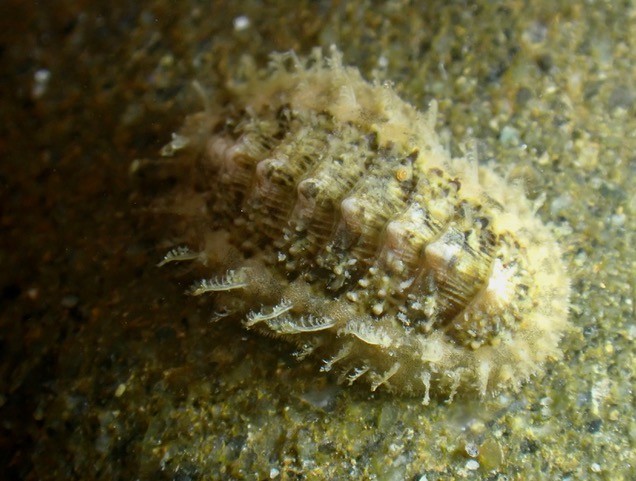
Today’s batch of marine-life photos comes from math professor Abigail Thompson at UC Davis. We’ve met her before (in 2018) when she was widely and publicly demonized for simply writing a piece criticizing diversity statements (see this post, which is missing many links). But today we see her photographic skills with pictures of nudibranchs and other marine invertebrates. As she says, “I spend a lot of time up to my knees in cold water.”  Abby’s captions and IDs are indented, and you can click on the photos to enlarge them. And remember that nudibranchs are molluscs.

These are all from the same 1-mile stretch of Northern California coastline during the past year.   The pictures are mostly  taken from above the water, at low tide.  Most are of sea-slugs, beautiful animals with a terrible (common) name (although nudibranch sounds a bit better), with some ID help from inaturalist.   Lots more pictures here or at inaturalist.

Ectopleura marina A hydroid, a (very small) animal that just stays put:

Acanthodoris rhodoceras, nudibranch:

Aeolidia loui, nudibranch:

Polycera atra, nudibranch:

Phidiana hiltoni, nudibranch:

Eurylepta californica, a species of marine flatworm:

Triopha catalinae, nudibranch:

Crassadoma gigantea,  actually, a not-very-big scallop.   The black dots are eyes:

Epactis handi, a fairly rare (and beautiful) anemone:

Doto kya (probably), nudibranch:

Equipment: One photo was with an iPhone through a microscope, but the rest were taken with an Olympus TG-6 or -7, the almost-indestructible tidepoolers favorite, with a sensational macro setting (I did manage to destroy the TG-6, but it took real effort).

Note: Three new photos added by readers’ request:

Coast-in-a-fog; that’s a deer in the middle.   They come down to the water at night (for salt?) so if you’re out very early in the morning you see them there:

View towards Pt. Reyes from the top of a ridge:

 I think those are pelicans on top of the rocks, at sunset:

Readers’ wildlife photos

March 19, 2024 • 8:15 am

Today we have the seventh and final installment of Robert Lang‘s recent trip to Antarctica in a small boat, and there are videos as well as photos. Robert’s notes are indented, and you can enlarge the photos by clicking on them.

Antarctica Part 7: Other Wildlife

Birds—penguins and flyers—and mammals—pinnipeds and cetaceans—are the stars of the Antarctic, but there is plenty of other wildlife to be seen if one looks carefully. Underpinning the entire Antarctic ecosystem is the Antarctic krill (Euphausia superba), whose total biomass is estimated to be half a billion metric tons. While we often saw animals feeding on them in the open water, we could only infer their presence from the feeding behavior; they’re too small to see (from a shallow angle, that is—overhead imagery has captured vast swarms). But we did find one in a tidepool. They’re tiny: just a few cm long.

Even smaller, and lower-down on the food chain, are copepods (class Copepoda), seen here also in a tidepool along with some red algae (Phyllophora sp.). These are about the size of a grain of rice.

Copepods and krill both eat phytoplankton; krill also eat copepods. Another of their predators is the smooth comb jelly (phylum Ctenphora, order Beroidae). We saw this one swimming just below the surface near our Zodiac; the boat driver successfully maneuvered to let people on both sides of the boat see the comb jelly while avoiding the outboard motor turning it into comb marmalade.

The shoreline of the Peninsula and its islands tends to be pretty barren, as the rocks are regularly pounded by ice and waves, but we saw an Antarctic sea urchin (Sterechinus neumeyeri) tucked into a crevice just at the waterline.

In the bay of Deception Island (the volcanic caldera), we saw quite a few brittle stars (class Ophiuroidea) washed up dead. Since there were warm-water vents all along the shore, we wondered if it just got too hot for them.

On shore, there’s not much permanent life, but there’s plenty of residue of prior life, including quite a few relics of the whaling days—not just human relics, but also whale bones that were left behind. Here’s an old whaling boat with some whale vertebrae in the foreground.

There are only two vascular plants in Antarctica, but there’s quite a range of lichen to be found on the rocks. These are two from King George Island, one with cup-like stalks, and another bringing a splash of bright color to the normally gray landscape.

I’ll close with an image of the not-terribly-elusive Red Penguin; we saw several flocks over the course of two weeks, typically waddling along their age-old trackways after migrating there from their giant floating rookeries. We saw them at some remove several times, but kept our own respectful distance, not wanting to disrupt their natural behaviors.

And this brings our Antarctic journey to an end.

Readers’ wildlife photos

March 18, 2024 • 8:15 am

Today’s photos come from Borneo courtesy of reader Daniel Shoskes. His notes are indented, and you can enlarge the photos by clicking on them.

Just back from an incredible trip to Borneo. Just a smattering of the photos. Please forgive the lack of precision in species naming; I did my best to get the names from our guides.

First, a video of his whole trip can be seen here.

Orangutans (Pongo pygmaeus):

Bornean Bearded Pig (Sus barbatus):

Silvered leaf monkey (Trachypithecus cristatus):

Pit viper:

Macaque:

Flying squirrel climbing a tree (I have an amazing video of it gliding):

Macaque striking a Review #2 pose:

Sun Bear (Helarctos malayanus), smallest species of bear:

Proboscis monkeys (Nasalis larvatus):

Juvenile female, nose not as pronounced:

Green sea turtle (Chelonia mydas) laying eggs and getting measured and tagged:

Newly hatched turtles about to be released to the sea:

Macaque mother and baby:

Crocodile with monitor lizard in its mouth:

Oriental pied hornbill (Anthracoceros albirostris):

Monitor lizard:

Black-and-red broadbill (Cymbirhynchus macrorhynchos):

Rhinoceros hornbill (Buceros rhinoceros) :

Rhinoceros beetle:

An insect eating bat (species unknown) curled up asleep inside a banana leaf:

Tiger leech (Haemadipsa picta). Amazing to see: when you exhale near them they lunge towards the CO2:

Red leaf monkey (Presbytis rubicunda):

Readers’ wildlife photos

June 7, 2023 • 8:15 am

Today we have another photo-and-text story, this time on earthworms (a favorite of Darwin), concocted by Athayde Tonhasca Júnior. His captions are indented, and you can enlarge the photos by clicking on them.

Underground influencers

“Everything is connected” is the sort of vacuous New Age twaddle churned out by the self-help industry. And yet, stuff and nonsense often holds a grain of truth. For example, we would have to look hard to find a connection between earthworms and bees. But such an association exists, and it is of consequence for pollination services.

Earthworms (mainly of the family Lumbricidae, which includes most European species) are immensely important for the functioning of some terrestrial ecosystems. Their tunnels channel air, water and nutrients into deep layers of the soil, and facilitate root penetration. Their work improves soil structure and reduces runoff, thus decreasing the rates of erosion. By eating soil, plant litter and other materials (depending on the species), earthworms break down organic matter, helping decomposers such as bacteria and fungi release nutrients into the soil. Their food intake, 2 to 20 tonnes of organic matter/ha/year, ends up as castings (worm excrement), which are rich in nitrogen, phosphorus, potassium, magnesium and calcium, all minerals essential for plant growth. Thanks to their relentless burrowing, soil mixing and fertilizing, earthworms are important to soil formation, and consequently vital to plants and every organism that depends on them. You can learn a great deal more about these indefatigable diggers from The Earthworm Society of Britain.

The common earthworm (Lumbricus terrestris) © Fir0002/Flagstaffotos, Wikimedia Commons:

The value of earthworms was not lost on Charles Darwin. His 1881 book, The formation of vegetable mould, through the action of worms, published a few months before his death, was a revelation to the general public about the importance of these secretive and poorly known animals. The book was a huge success, selling 6,000 copies in the first year, more than On the Origin of Species when it was first published.

Darwin and his worms in a caricature from Punch, 1882:

Darwin calculated that in 10 years, castings from 0.4 ha (one acre) of soil would form a 5 cm-thick layer of top soil (what he called ‘vegetable mould’). In his book’s closing paragraph, Darwin justified calling earthworms ‘nature’s ploughs’: ‘The plough is one of the most ancient and most valuable of mans (sic) inventions; but long before he existed the land was in fact regularly ploughed, and still continues to be thus ploughed by earth-worms. It may be doubted whether there are many other animals which have played so important a part in the history of the world, as have these lowly organised creatures.’

Diagram of the formation of vegetable mould. Darwin, 1838. Proceedings of the Geological Society of London 2: 274-576:

Considering earthworms’ impressive portfolio as nature’s engineers, we may think they are indispensable, or useful, everywhere. But they are not.

About 10,000 years ago, northern North America was overwhelmed by a vast ice sheet. If there were earthworms in the region, they were killed by the glaciation because there were none when the ice receded. So northern North America was earthworm-free until European settlers started to bring in plants and soil, which inevitably introduced worms such as the ‘night crawler’, the local name for the common earthworm Lumbricus terrestris.

American farmers and gardeners benefited from ‘nature’s ploughs’ as much as Europeans did, but it was a matter of time until earthworms made their way to native habitats such as hardwood forests. And in those environments, earthworms were not welcome at all.

The top layer of the forest floor – known as the litter layer – consists of leaves, bark and stems at different stages of decomposition. In North American native forests, the litter layer is broken down slowly, mainly by millipedes and mites. Organic material accumulates as blanket sheets, which are essential habitats for many insects, amphibians, birds, and flowers.

Deep litter mound at the base of a pine tree © Hood, USDA Forest Service.:

When earthworms move in, the litter layer is consumed in two shakes of a duck’s tail. Decomposition accelerates dramatically, so that nutrients that have been slowly accumulating are released quickly; plants cannot absorb them all. With the loss of litter cover and nutrients, the understory fauna and flora become depleted. Dwindling understory plant biomass has secondary consequences; deer will have no option but to munch on young trees, and non-native plants may take advantage of the impoverished conditions to spread out. These problems worsened after the arrival of the Asian jumping worm (Amynthas agrestis), an earthworm native to Japan and Korea.

But the negative impact of earthworms is not restricted to the litter layer. In Canada, the abundance, biomass, and species richness of the insect fauna above ground are lower in forest plots with invasive earthworms than in earthworm-free areas. Insect abundance was reduced by 61% where earthworm biomass was highest (Jochum et al., 2022).

Effects of earthworm-invasion status on herbivore richness (morphospecies), left; biomass (mg/m2), centre; and abundance (log10 individuals/m2), right, in Alberta, Canada © Jochum et al., 2022:

The reasons for these effects are not known. Scarcity of some plants or altered soil conditions in earthworm areas may reduce the abundance and survival of herbivore and soil-dwelling invertebrates, which may affect the food chain. Invasive earthworms can decrease the concentrations of some plant metabolites used against leaf-chewing insects, so changes in plant chemistry may be involved.

Would this hoverfly be affected by the works of earthworms? Probably yes © Forest Wander, Wikimedia Commons:

Even more worryingly, there is strong evidence that earthworm activity increases emissions of greenhouse gases. Dendrobaena octaedra, another earthworm native to Europe, seems to be spreading in Canadian boreal forests, which are important carbon reservoirs. Wherever this earthworm is found, some of the carbon stock in the forest floor is lost in the form of carbon dioxide. So many soil ecologists have rightly voiced their concerns about a ‘global worming’.

A schematic illustration of invasive earthworm effects on ecosystems that were free of earthworms (left figure) © Ferlian et al., 2017:


The shenanigans of Darwin’s ‘nature’s ploughs’ in northern North America are cautionary tales about species taken to where they do not belong. Few could have expected that earthworms, so beneficial to species and habitats in the Old Continent, are detrimental elsewhere. The buff-tailed bumble bee (Bombus terrestris) and the European honey bee (Apis mellifera) are protagonists of similar tales.

The unpredictability of outcomes is a concern. Only a fraction of invasive species are harmful, but those that are can be disastrous.

Kudzu (Pueraria spp.), ‘the vine that ate the South’, was purposely introduced into the United States for erosion control, but became an environmental nightmare. It is spreading at an estimated rate of 610 km2/year © Scott Ehardt, Wikimedia Commons:


JAC Addition:  Here I’m posing (in 2008) with Darwin’s “wormstone” at Down House, his home in Kent. As Darwin Online notes, Darwin used this to “measure the rate of sinking of the stone due to the actions of earthworms.” The site adds, “The stone now at Down House was reconstructed by Horace Darwin’s Cambridge Instrument Company in 1929 when Down House became a museum open to the public.”

Readers’ wildlife photos

January 17, 2023 • 8:15 am

Today’s photos are a batch of microorganisms and small creatures sent in by reader Mary Rasmussen. Her captions and narrative are indented, and you can enlarge the photos by clicking on them.

If there’s water, there’s probably something living in it.

I collected a half gallon of water, muck, detritus, rocks, a tiny aquatic plant and 3 snails from some very shallow temporary pools along the Lake Michigan shore. Lake Michigan’s depth varies year-to-year. The pools sometimes last a few years and sometimes just a few weeks. This year the lake level was down and the pools dried up by the end of summer.

I put the water etc. in a 12 inch square glass aquarium with an L.E.D. light on top. These are the creatures living in the water that I was able to photograph.

The last 2 photos are Seed Shrimp that were living in 2 inches of water that had collected in a truck rut in a gravel road.

Aquatic Sowbugs (order: Isopoda) a freshwater crustacean, lived at the bottom of the tank, feeding on organic matter.

Two Hydra (phylum Cnidaria, class Hydrozoa, genus Hydra) After a month there were many of these predators in the tank. I could watch them for hours.

Hydra don’t show any signs of deteriorating with age, and there is speculation that they may be immortal. (I’m sorry but I can’t identify that creature on the left.)

Hydra with bud. The bud is a clone of the parent and will break free when mature.

A freshwater snail laid a trail of eggs on the aquarium wall. These are close to hatching.

Male Cyclops (Cyclops bicuspidatus), the dominant cyclopoid species in Lake Michigan has a single red eye.

Female Cyclops carrying two egg sacs.

Seed Shrimps (subphylum Crustacea, class Ostracoda) have a hard shell and use their antennae to move through the water. These were barely visible in the water of a truck rut.

I used a Nikon D500 camera with three off-camera flashes. For larger creatures (Sowbug, Hydra) I used a Nikkor 105mm macro lens with extension tubes. For smaller creatures (snail eggs, Cyclops, See Shrimp) I used a Laowa 25mm f/2.8 2.5-5X Ultra Macro lens with extension tubes.


Reader’s wildlife photos (and videos)

December 17, 2022 • 8:15 am

Today we have photos of a swell trip taken by Robert Lang, physicist and origami master. (I believe it was this trip, sponsored by New Scientist and Steppes Travel, and featuring Richard Dawkins as lecturer) Robert’s notes and IDs are indented, and you can click on the photos to enlarge them.

Hawaii Wildlife

We spent a week sailing around the Hawaiian islands. We saw quite a few birds, both endemic and introduced, but I didn’t get many good pictures of the endemics; most of them were too skittish and/or stayed in heavy leaf cover. But I did get this Saffron Finch (Sicalis flaveola), which is an introduced species, but was too pretty to pass up.

We also did some kayaking along sea cliffs. I loved the brilliance of this Red Pencil Urchin (Heterocentrotus mamillatus), which was just above the waterline.

At one point, the ship we were on spotted a pod of Pantropical Spotted Dolphins (Stenella attenuate). As we revved up the engine, they joined us to surf the bow wave.

The highlights of the trip were two snorkeling excursions. First, a night snorkel with Reef Manta Rays (Mobula alfredi). The organizers set up surfboard with lights, which attracted plankton; the plankton attracted the rays, which did repeated somersaults just underneath us—literally less than a foot away. This picture is a screen capture:

But I hope you will able to see the video:

Later we did a day snorkel on Lahaina with Green Sea Turtles (Chelonia mydas). There were quite a few people in the water (as you will see in the video), but they just ignored us, coming up to the surface for a breath, then heading back down.


We’d arrived on the big island of Hawai’I while one of the volcanos, Mauna Loa, was undergoing an eruption (note, this is not the volcano with all of the telescopes on it—that’s Mauna Kea). We only saw lava distantly from the plane on the way in, but the ash in the sky gave us some beautiful sunrises and sunsets.

Robert didn’t ask me to put this up, but I couldn’t resist.  He sent it while on the trip, with the remark, “Richard had a slide in one of his talks comparing embryonic development to origami, which was why he pulled me in as a visual aid when that slide came up. That was, of course, great fun.  Charming fellow, I gather he’s done some biological something-or-other in his day.”

Finally, since Mauna Loa is having one of its rare eruptions on the Big Island, I asked Robert if he saw it directly. He responded:

We did see the eruption from afar, from the plane while flying in. (Pic below.) One of the days we drove up to within a mile of the flow, but it was fogged in so we couldn’t see anything.
What a great gig for Richard! I’m jealous.

True facts about sea cucumbers (and their butts)

October 20, 2022 • 2:00 pm

Here’s one of ZeFrank’s (pronounced “zay-Frank’s”) biologically informed videos, this time about sea cucumbers—echinoderms in the class Holothuroidea.

Note the new caveat at the beginning: “True Facts is not appropriate for children nor for adults who don’t act like children.”  These would be great to show to an introductory class on biological diversity, but ZeFrank’s humor might harm people! On the other hand, as ZeFrank turns out more videos, they get better and better, with more—yes—true facts leavened with humor and accompanied by terrific videos.

Watch it! Unless you’re an invertebrate biologist or fond of authentic Chinese food, which incorporates holorthuroideans in some dishes (I can’t stomach them), you won’t know much about this group. In this video, ZeFrank’s 6-year-old side is evinced by his obsession with the butts of these creatures. (Don’t miss the bit at 11:10.)

It is a fascinating group! Does anybody know who ZeFrank is?