Readers’ wildlife photos

November 9, 2025 • 8:15 am

Today’s photos come from Neil Dawe, who sent them with a note: “My wife and I spent three weeks in the UK travelling over 1500 miles this past spring/summer spending most of our time in smaller villages and towns but we did manage to visit a few areas specifically for wildlife, and the Bempton Cliffs was one of those.”  Neil’s captions and IDs are indented, and you can enlarge the photos by clicking on them. 

Reader’s Wildlife Photos by Neil K Dawe, Vancouver Island, BC

Bempton Cliffs

This past May my wife and I had the opportunity to visit the Bempton Cliffs in the East Riding of Yorkshire, England, an important part of the Flamborough and Filey Coast Special Protected Area (SPA). It is a spectacular site—a true wonder of the avian world—known especially for its over 300,000 seabirds that arrive there to nest each spring.

I had visited these chalk cliffs some 50 years ago and recall few other people there and my ability to, perhaps foolishly, crawl to the cliff edge for photographs. On our recent visit, we were two of an estimated 5,000 visitors walking the clifftop paths and viewing birds from the safe, now well-fenced viewpoints dotted along the cliff edge.

The Bempton Cliffs run about 10 km (6 miles) from Flamborough Head north and, in spots, are over 100 m (330 feet) high. In this first photo (a), the sea arch and cliffs at Staple Newk are visible. The following photo (b) shows the extent of the cliffs looking to the south from about one-third of the way along the cliff trail from the north end (note the group of people at one of the observation points):

The sea arch cliffs support most of the nesting Northern Gannets (Morus bassanus) at Bempton. This is the only mainland breeding colony of gannets in England with over 15,000 occupied sites in the SPA. During my first visit, I recall watching with awe as these huge birds would plunge-dive into the North Sea from heights of over 40 m (130 ft) feeding on surface-schooling fish and squid, such as mackerel and short-finned squid (Illex illecebrosus). We saw none of that feeding behaviour this year and apparently it’s now quite a rare sight to see them foraging near the cliffs. The likely depletion of local fish stocks due to climate change and over-fishing means the gannet has to forage further away to find the shoals of fish they need:

With a wingspan of over 170 cm (67 in), the gannet is the largest seabird nesting at Bempton Cliffs.

A gannet pair with one adult tending the nest while the other takes some rest time:

A gannet arrives with nesting material to add to the nest while its mate incubates the one egg:

The Black-legged Kittiwake (Rissa tridactyla), a small pelagic gull with a wingspan just under a meter, has over 44,000 pairs nesting along the cliff ledges of the SPA. This is also the most abundant gull globally, although its numbers have declined by about 40% since the 1970s:

Black-legged Kittiwakes at the nest. Kittiwakes normally lay 1–2 eggs and both the male and female incubate. The bird on the far right had 2 eggs in the nest; one egg can just be seen in the photo:

The Guillemot (Uria aalge), known in North America as Common Murre, is the most abundant nester in the SPA with around 112,000 individuals followed by the Razorbill (Alca torda) at over 45,000 breeding individuals. Here both species are at their cliff edge nest sites, the lighter, blackish-brown plumage Guillemots and the Razorbills with the black plumage:

Guillemot pair on gently-sloping, vegetated ground. Most Guillemot nest sites are on cliff ledges and less commonly on soil or other substrates. One egg is laid and the pair share incubation duties equally:

Razorbill on a cliff edge:

Razorbill pair on their cliff ledge nest site. One egg is normally laid and, like the Guillemot, both the female and male share the incubation duties:

Atlantic Puffins (Fratercula arctica) at Bempton Cliffs nest primarily in rock crevices, unlike most UK sites where burrows are used. They lay one egg and both adults incubate. Although there are an estimated 3,100 individuals here at the SPA, finding a puffin required searching for the proverbial needle in a haystack. We did, however, find 9 individuals including this fellow:

This photo shows mainly Razorbills on their cliff face nest sites but one puffin is visible.  Can you find it?:

Here it is:

The last seabird we found at the Bempton Cliffs is a “tube-nose” species, the Northern Fulmar (Fulmarus glacialis); about 1,200 individuals have been counted at the SPA. Fulmars look much like gulls but are related to petrels and albatrosses. Their “tube-noses” are prominent tubular nostrils, and can be seen as the black area at the base of the top of the short bill on this individual. Since fulmars can spend up to 10 months on the open ocean, only coming ashore to breed, they drink seawater. They have a special gland that extracts the excess salt from their bloodstream and excretes it through these nostrils. The nostrils also enhance their sense of smell, leading them to food sources:

Northern Fulmars at their nest site under a rock ledge.

For the camera aficionados, I used a SONY RX10 iv with its Zeiss 24–600 mm zoom lens and 1”-type 20 Megapixel sensor for all the photographs.
Readers’ wildlife photos

November 2, 2025 • 8:15 am

Athayde Tonhasca Júnior is back with a photo travelogue—the first of three parts.  Athayde’s captions are indented, and you can enlarge the photos by clicking on them.

Chapada Diamantina, Part I

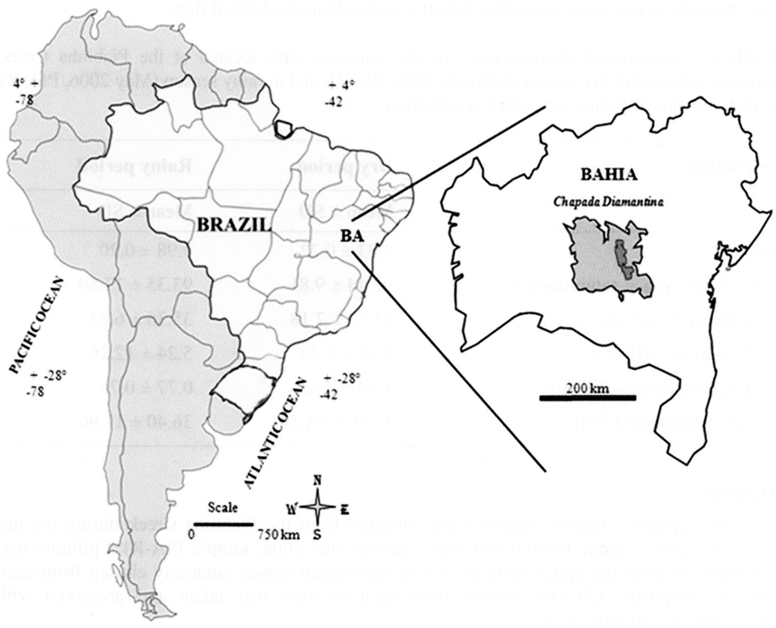
Last year I invited WEIT readers to join me in a photographic tour of Serra da Capivara, a spectacular national park sited deep in the Brazilian caatinga, a semi-arid ecosystem that hosts exceptional levels of biodiversity and endemism. Today we will visit another ecological gem in the same geographical region: Chapada Diamantina, a 38,000 km2 expanse of rocky plateaus (chapadas), caves, forests, caatinga, grassland and savanna in Bahia State.

Chapada Diamantina region, northeastern Brazil © Ferrari et al., 2009:

We begin at Lapa Doce, or Sweet Cave, located in the municipality of Iraquara, the ‘speleological capital’ of Brazil. There are 1,694 cave systems in the region: one of them, Toca da Boa Vista, is the longest cave in South America, extending for 114 km. Lapa Doce is part of a 42-km network of caves, many yet to be explored and mapped; a ~1 km segment is open to guided visitation.

The cave’s entrance is hidden at the bottom of this collapsed doline (a bowl-shaped depression formed by dissolved limestone), aka sinkhole. Note the ribbed rock surface, a telltale sign of an oceanic past:

The bottom of the doline with a typical karst formation (a landscape largely shaped by water-dissolved rock). The temperature here is considerably cooler than at ground level:

The ‘melting’ effect of water on carbonate rocks:

This sign along the path to the cave precludes blaming language barriers for inappropriate behaviour inside the cave:

Cave entrance on the right. The two figures in red are human-size dummies planted there to give us a sense of scale:

Into the cave. The path is flanked by outlandish formations such as this floating jellyfish, illuminated by our three torches:

A monster from the underworld. By slowly swinging his torch up and down, our guide Raimundo made it open and shut its maw:

Lapa Doce was formed by a subterranean river that carved the limestone. The gallery is 60 m wide and 25 m high at the widest points:

If your torch goes kaput, you will need to use the rope that borders the path (seen on the bottom right) to guide you out. With no artificial light the darkness is absolute and disorientating:

Readers’ wildlife photos

October 23, 2025 • 8:15 am

This is the last batch of photos I have.  If you don’t want this feature to go extinct, and have some good wildlife photo, please send ’em in. Thanks!

Here we have a batch of beach photos from reader Taryn Overton. There is one introductory caption and two captions about birds, both indented below, and you can enlarge the photos by clicking on them:

This set of photos is from the same beach in Naples, Florida spanning 2022-2025.  All were around the time of sunset – nature’s color palette never disappoints!

Snowy Egret (Egretta thula) wading in the shallows:

Great White Egret (Ardea alba) silhouette:

Readers’ wildlife photos

October 21, 2025 • 8:15 am

Send in your photos if you have some good ones, please. Thanks!

Today’s landscape photos come from reader Jim Blilie. Jim’s descriptions are indented, and you can enlarge the photos by clicking on them.

I’ve been having some fun participating in a Facebook group for black and white landscape photography.  I’ve been revisiting many of my old images in software (Lightroom), creating what you might think of as “new prints” in black and white only.

These are all landscape photos from Washington and Oregon.

First a group from Cannon Beach, Oregon, a favorite retreat for us when the summer weather at our home in Klickitat County, Washington gets too hot:

Then three from the Palouse, the rolling loess-soil, wheat-growing region of Washington State (primarily) near Pullman, Washington, where our son, Jamie is now a junior studying engineering at Washington State University:

Then a photo of Mount Hood taken in winter from our place:

Norway Maple (Acer platanoides) leaves taken this past spring in Oregon:

Finally:  A photo of Baker Lake, taken in September 1989 on a kayaking trip.  This is scanned Tri-X Pan film:

Readers’ wildlife photos

October 17, 2025 • 8:30 am

Today we have the seventh installment of Ephraim Heller’s July trip to Brazil.  Ephraim’s captions are indented, and you can enlarge the photos by clicking on them.

These photos are from my July 2025 trip to Brazil’s Amazon river and the Pantanal, the world’s largest tropical wetland area and the world’s largest flooded grasslands. Today I include photos of miscellaneous critters not otherwise categorized.

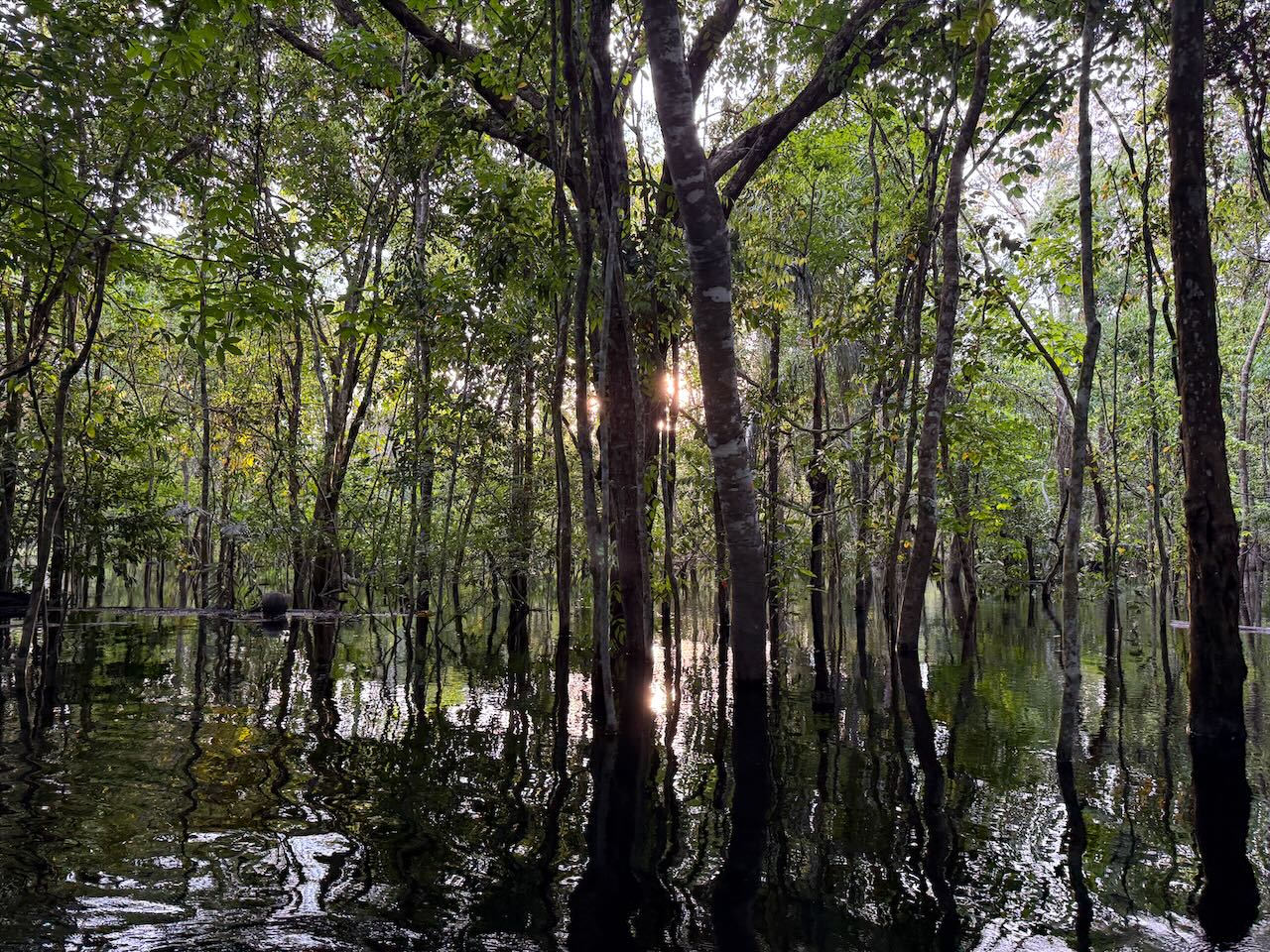
The Amazon is undammed (although there are many dams on its tributaries) and during the rainy season the river overflows its banks to flood endless forests in its watershed. One of the memorable activities of our trip was canoeing through a forest:

Amazon river dolphin (Inia geoffrensis), also known as the pink river dolphin. They are born grey and acquire their pink color with age. Their final hue is influenced by many things, including behavior, diet, and how close their capillaries are to the skin. They can modify the shape of their melon (the bulbous forehead structure) to change the direction, size, and frequency of their echolocation pulses. Their brains are 40% larger than human brains, likely explaining why they do not use social media:

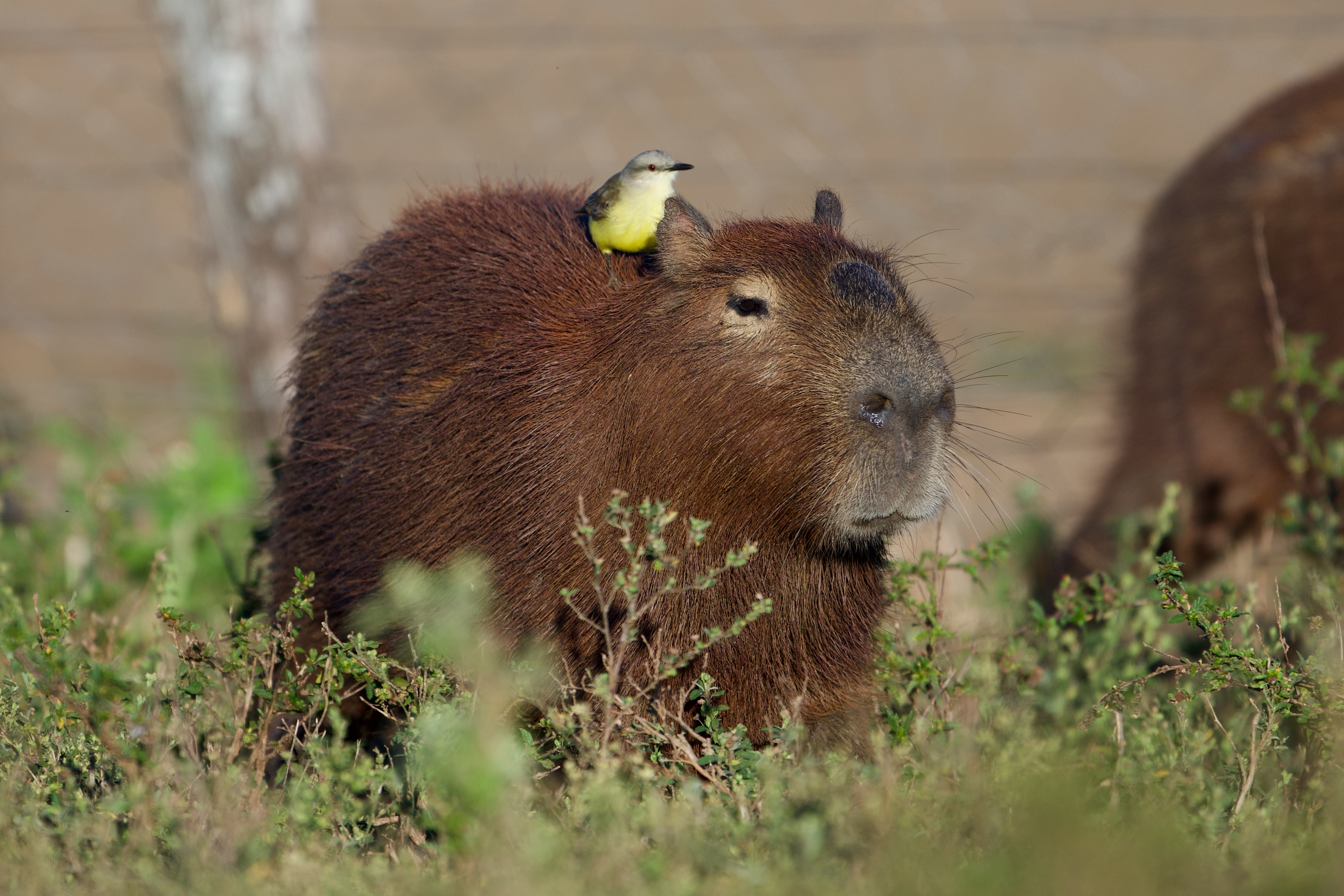
Capybara (Hydrochoerus hydrochaeris) and cattle tyrant (Machetornis rixosa). The world’s largest rodent. Capybaras practice autocoprophagy, consuming their own protein-rich morning feces to maximize nutrient extraction from their cellulose-heavy plant diet. This behavior, combined with their ability to regurgitate food for re-chewing (similar to cattle), allows them to efficiently digest tough grasses and aquatic vegetation. Delightful:

Giant river otter (Pteronura brasiliensis).  These are the apex predators of South American rivers. They are the most vocal of the otter species and possess a rich vocabulary. They recognize each other using throat markings that are unique to each individual. They require about 9 pounds of fish daily. While I consider our North American river otters to be cute, I found the appearance of the giant river otters to be disturbing, with crazed, sinister eyes and a somewhat Frankensteinian build. When not hunting and eating, the otters we observed spent a lot of time literally beating the bushes on land. Perhaps a reader can explain this behavior?:

Polka-dot tree frog (Boana punctatus). The polka-dot tree frog represents the first documented case of fluorescence in any amphibian species, discovered when researchers observed their bright blue-green glow under ultraviolet light. This fluorescence is produced by three unique molecules, hyloin-L1, hyloin-L2, and hyloin-G1, found in the frog’s lymph tissue, skin, and glandular secretions. These compounds belong to the dihydroisoquinolinone family and represent a completely new chemistry for animal fluorescence:

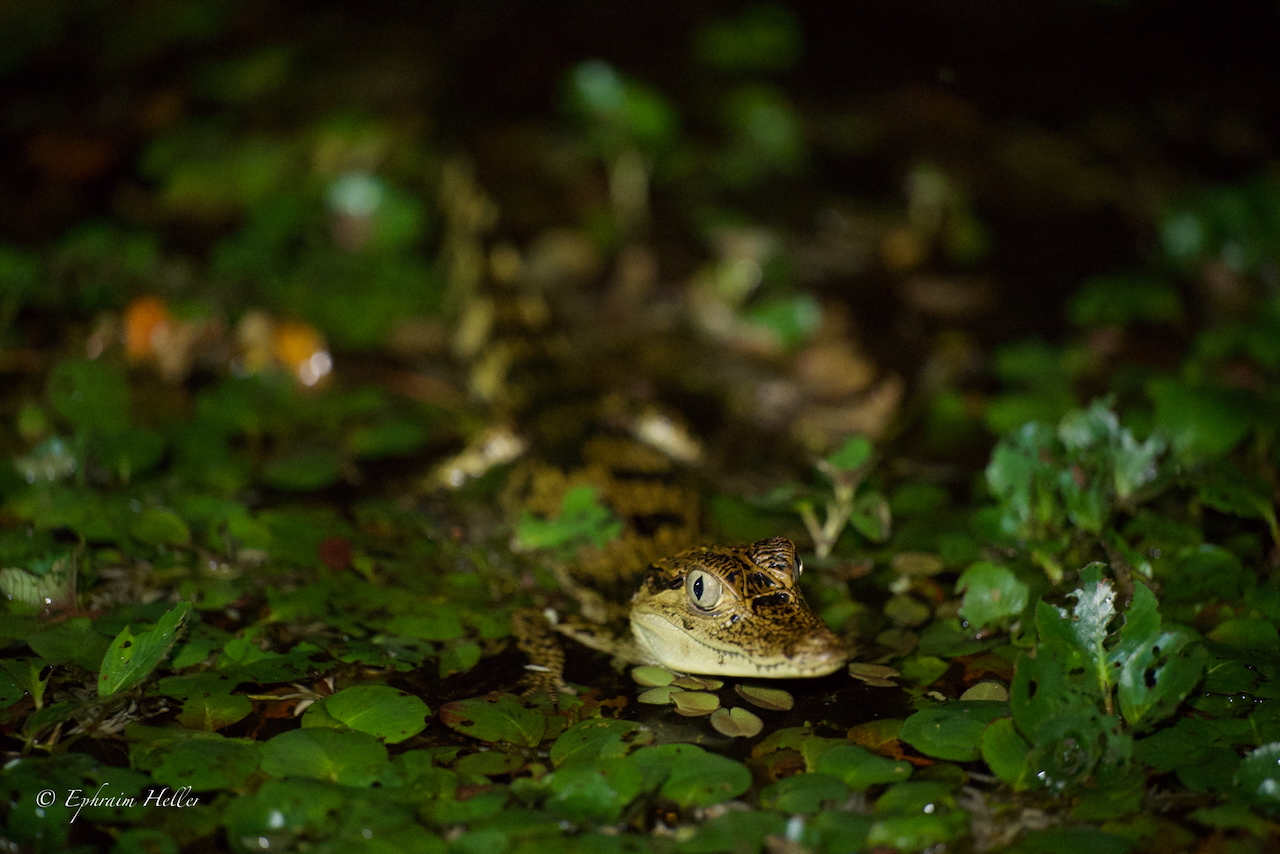
Finally, a baby spectacled caiman (Caiman crocodilus). Spectacled caimans use nine different vocalizations and 13 visual displays to communicate. Males also communicate by moving their tail to a certain position, such as making it vertical or arched. Juveniles vocalize when in distress and adult females emit calls to warn young of threats. This is one of the few nighttime flash photographs I took with which I am happy:

Readers’ wildlife photos

October 12, 2025 • 8:15 am

UC Davis ecologist Susan Harrison is back with some photos from Oregon. Her captions and IDs are indented, and you can enlarge the photos by clicking on them.

An Oregon rift valley and its lakes and birds

Summer Lake and Lake Abert in arid central Oregon are the remnants of an enormous Pleistocene water body called Lake Chewaucan.  They lie in broad and angular-walled valleys formed by tectonic pulling apart of the earth’s crust. Summer Lake is now nearly dry from water withdrawals, but the spring-fed wetlands at its northern end are protected as a wildlife refuge.  Lake Abert, a few miles east, is a shallow and briny terminal lake fed by the Chewaucan River.  Both lakes are important stopovers for migratory birds.

Lake Abert, east shore:

Summer Lake,seen from Winter Rim to its west; wetlands are in the center, the mostly dry lake bed is to the right, and the green circles are the center-pivot irrigation that uses much of the lake’s inflow:

Lake Abert is especially important to Wilson’s Phalaropes (Phalaropus tricolor), for which brine shrimp gobbled at salty lakes are their primary migratory fuel. They are the tiny shorebirds swimming in mad circles in the foreground.  American Avocets (Recurvirostra americana) and ducks (probably Cinnamon Teal, Spatula cyanoptera) are behind them. I couldn’t get closer without sinking deep into lakeshore muck.

Wilson’s Phalaropes:

Bonaparte’s Gulls (Chroicocephalus philadelphia) and various ducks, also at Lake Abert:

The rest of the photos are from Summer Lake and its surroundings.

American White Pelicans (Pelecanus erythrorhynchos), Black-necked Stilts (Himantopus mexicanus), and the Winter Rim escarpment in the background:

Great Egrets (Ardea alba) against the same backdrop:

Northern Harrier (Circus hudsonius):

Forster’s Terns (Sterna forsteri):

Long-billed Dowitchers (Limnodromus scolopaceus):

Coot (Fulica americana):

Yellow-headed Blackbird (Xanthocephalus xanthocephalus):

Great Horned Owl (Bubo virginianus), juvenile begging to its parents:

This region is also known for its prehistory.  Besides various petroglyphs, there is a site known as Paisley Caves where the traces of ancient occupancy include bones of camels, horses, and bison, and possibly the oldest DNA evidence of human habitation in North America (14,300 BP), although the latter finding is controversial.

Entrance to Paisley Caves, just above which is an active Golden Eagle (Aquila chrysaetos) nest:

Cave interior:

View from cave:

Readers’ wildlife photos

October 6, 2025 • 8:20 am

Today we have photos from New Zealand taken by reader Todd: birds, landscapes, and even a tuatara. His captions are indented and you can enlarge the photos by clicking on them.

Here are a few photos from a trip I took earlier this year to New Zealand. It’s a very beautiful country with many unique species of birds (many of which seem to have evolved a spherical body plan).

As you will see from the descriptions I (sadly) have no formal biology training, but I’ll do my best.

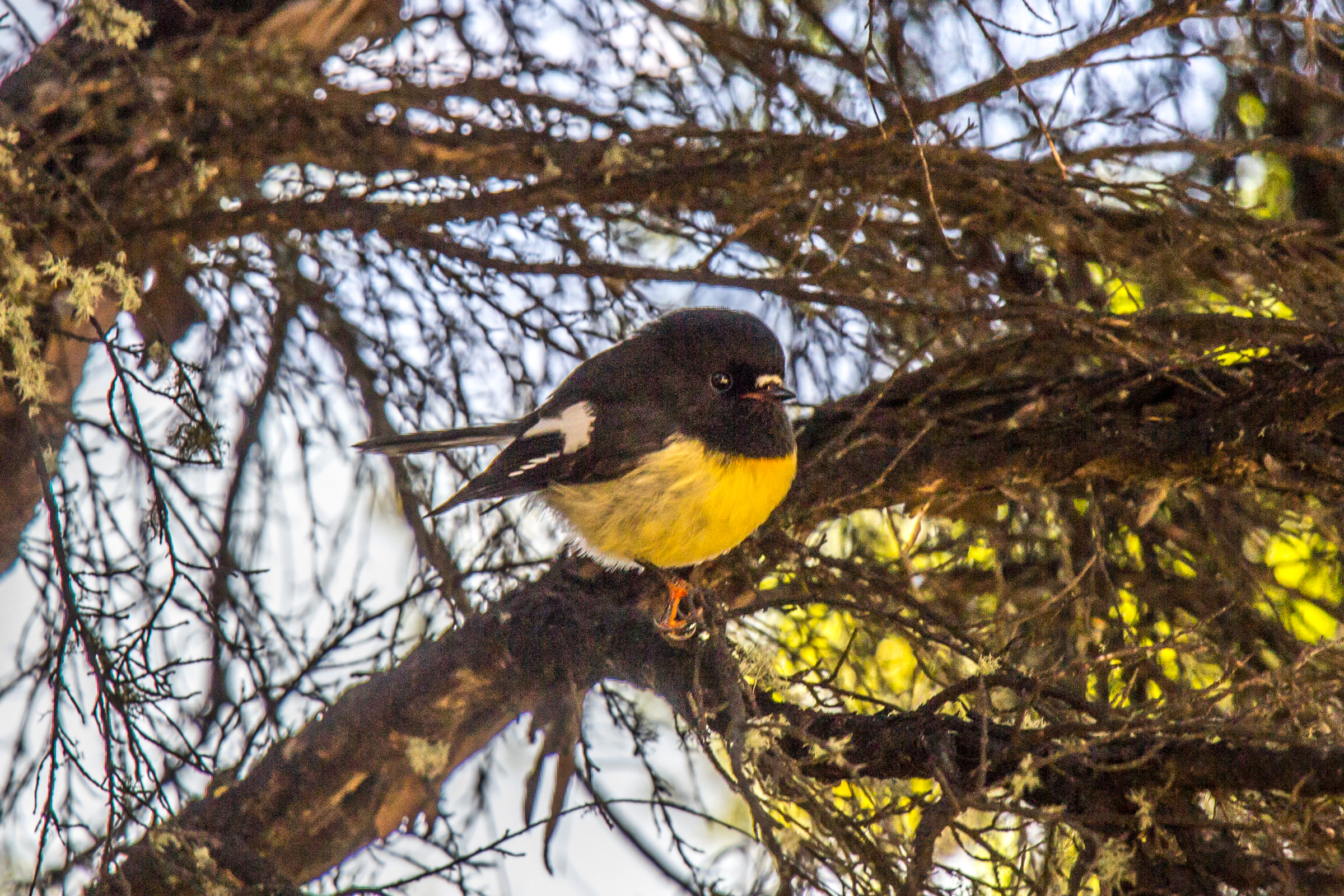
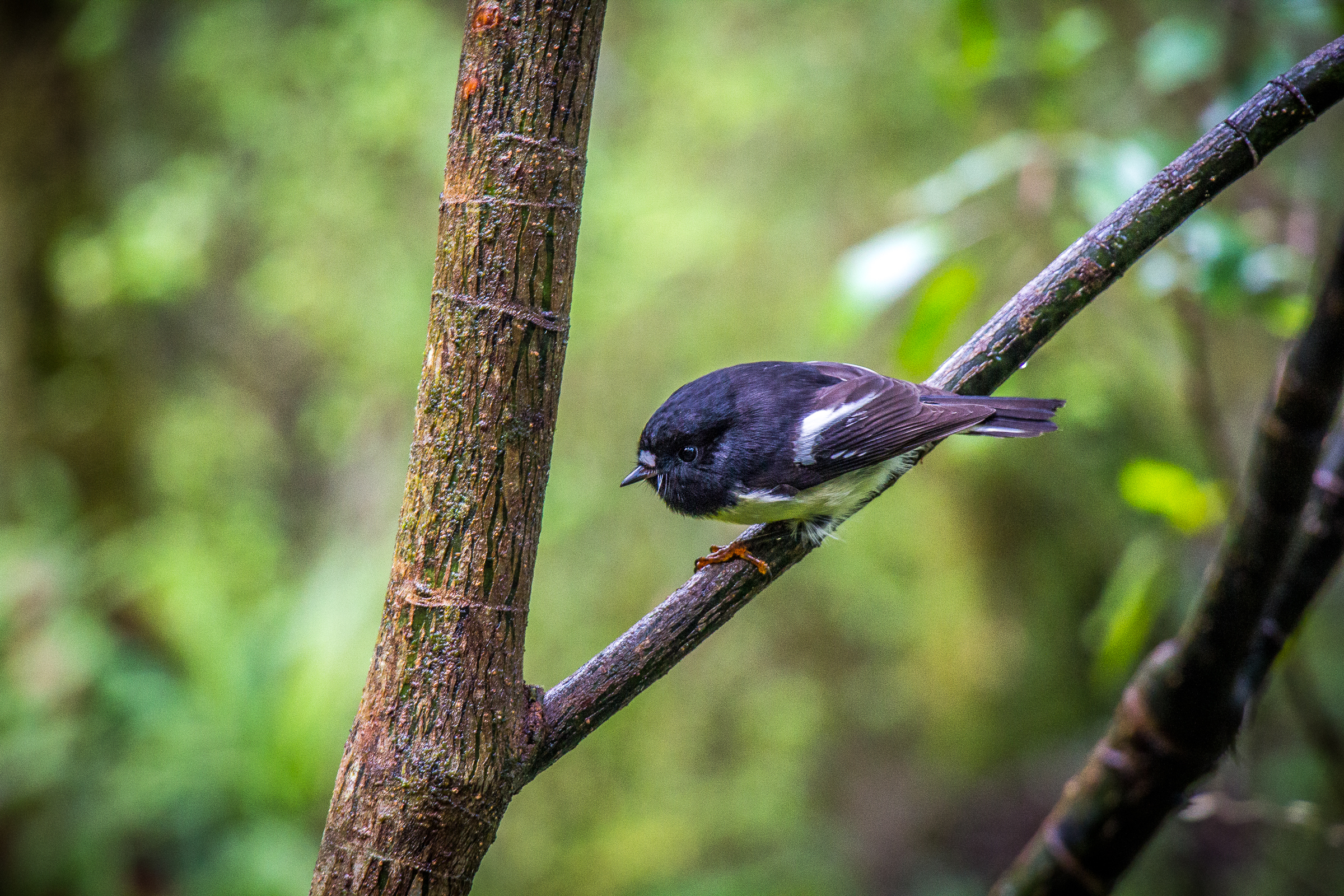
This is a tomtit (Petroica macrocephala). I put it at about a 5 out of 5 on the roundness scale:

These are one of my favorite New Zealand birds (despite being only moderately round) … New Zealand fantails (Rhipidura fuliginosa). They flit around in the manner of butterflies using their tails as air brakes all the while emitting squeaks that sound like someone squeezing a dog toy. The second bird looks angry, but it’s just squeaking:

These potato-shaped birds are Wekas (Gallirallus australis). They can’t fly so they stomp around like they mean business instead. They seem to have no innate fear, which might explain their status as a vulnerable species:

Red-Billed Gulls (Chroicocephalus novaehollandiae scopulinus) on the coast. I’ve included it because I thought the picture was pretty:

The Eurasian Blackbird (Turdus merula) is an introduced species, which probably explains its utter lack of sphericality:

These beautiful parrots are Kākās (Nestor meridionalis). They were photographed at Zealandia an enclosed eco-sanctuary near Wellington (there’s a perimeter fence to keep out the possums, weasels and cats). They are wild birds, but are attracted to the sanctuary thanks to feeders:

I think this is a North Island Robin (Petroica longipes). This tiny orb landed next to me and I was lucky to get its photo before it took off again:

Not the best picture, but I’m pretty sure this is a New Zealand bellbird (Anthornis melanura). I’ll bet it was named before Star Wars came out because its call sounds exactly like the sounds made by R2D2 and not like a bell at all:

I was stopped by the side of the road taking photos of the scenery, when I heard a ‘thunk’ and turned around to find a Kea (Nestor notabilis) on the roof of my Kia. I was initially thrilled, but like a bad house guest who overstays their welcome it soon became clear its true intent was to strip the rental car for parts it could fence on the black market. The Kea is universally described as “mischievous”, but I think people are just trying to be polite:

Tuatara (Sphenodon punctatus) – This reptile looks like a tiny dinosaur, and for good reason … it’s the sole surviving member of a group of ancient reptiles that lived alongside dinosaurs:

A lagniappe, the most famous shrub in all of New Zealand: The Wanaka Tree. The setting shows off the beauty of this wonderful country: