Readers’ wildlife photos

December 5, 2025 • 8:15 am

Send in your photos, please!

Today mathematician Abby Thompson from UC Davis graces us with tidepool pictures from California. Her captions and IDs are indented, and you can enlarge her photos by clicking on them.

A few more photos from November tidepools in Northern California:

Subfamily Syllinae (family Syllidae)I like the red eyes on the worms in this family:

Heptacarpus sitchensis (Red-banded transparent shrimp):

Oligocottus snyderi (fluffy sculpin)  This is one of the tidepool fish that gets transfixed by a flashlight:

A close-up of the fluffy sculpin’s eye:

There are two species of worms in this photo.   One I’ve posted before is the feathery one, from the family SabellidaeThe other is possibly some species of ribbon worm.  I like the photo because it looks kind-of balletic:

Aeolidia loui (nudibranch) Those two small black dots may be eye spots, I’m not sure. There are two much fainter spots further forward and farther apart which are also contenders.   They have primitive eyes, not usually very visible, which are believed only to distinguish light and dark:

Fissurellidea bimaculata (Two-spotted keyhole limpet) The “keyhole” is the hole in the top of the animal.   There’s a small shell surrounding the hole.  The shell is always much smaller than the body in this species, but in this one the shell is entirely covered by the mantle:

Ophiothrix spiculata (Western spiny brittle star):

Genus Littorina (periwinkle) There are several species of periwinkles in the high intertidal zone. I’m not sure which this is, but he posed nicely:

Sunset over the Point Reyes peninsula:

The first picture was taken through a microscope on an iphone and the last was also with an iphone.   For the rest I used an Olympus TG-7, in microscope mode, with a lot of extra lights.  I got some help with IDs from inaturalist.

Readers’ wildlife photos

November 28, 2025 • 8:15 am

Today’s photos come from reader Jim Blilie. Jim’s captions and IDs are indented, and you can enlarge the photos by clicking on them.

I haven’t been getting “out” much since July when I badly injured my gimpy left knee.  Full knee replacement is coming but It’s not clear yet exactly when.

I’ve been having some fun participating in a Facebook group for black and white landscape photography.  I’ve been revisiting many of my old images in software (Lightroom), creating what you might think of as “new prints” in black and white only.

These are all landscape photos from Washington and Oregon.

First a group from Cannon Beach, Oregon, a favorite retreat for us when the summer weather at our home in Klickitat County, Washington gets too hot.

Then three from the Palouse, the rolling loess-soil, wheat-growing region of Washington State (primarily) near Pullman, Washington, where our son Jamie is now a junior studying engineering at Washington State University.

A photo of Mount Hood taken in winter from our place.

A photo of Norway Maple (Acer platanoides) leaves taken this past spring in Oregon.

Finally:  A photo of Baker Lake, taken in September 1989 on a kayaking trip.  This is scanned Tri-X Pan film.

Readers’ wildlife photos

November 19, 2025 • 8:15 am

Hooray! I received two batches of photos last night, so we can keep going until Thursday, at least.

Today’s photos are from David Riddell; his captions and IDs are indented, and you can enlarge the photos by clicking on them.  These photos were taken last weekend.

Went out last Saturday on a seabird-watching “pelagic” trip off the east coast of New Zealand’s North Island.  The weather was looking marginal, but we’d postponed twice and really wanted to get out there, so set out at dawn from the small seaside town of Whangamata, heading for the deep water where the open ocean specialists live.  In the end we saw 19 “tubenose” species (Procellariiformes: the albatrosses, petrels, shearwaters and their relatives), plus little blue penguins (Eudyptula minor).

After about three hours the slow, old fishing boat we’d chartered arrived off the edge of the Continental Shelf, beyond Mayor Island. This is an extinct volcano, known for its cliffs of solid, glossy black obsidian, once traded throughout the country by Maori, who made cutting tools out of it.  The mainland behind has almost entirely disappeared in the murk along the horizon

Chopped-up fish bits thrown off the back of the boat soon had a mixed flock of birds gathering to enjoy the feast. Most were flesh-footed shearwaters (Ardenna carneipes), but other species were among them.  There’s a black petrel (Procellaria parkinsoni) right of centre in the picture below, with the bone-coloured bill:

Flesh-footed shearwaters of course have pinkish legs and feet, as well as slightly pinkish, dark-tipped bills. They breed widely on islands off north-eastern New Zealand, as well as off Australia and in the Indian Ocean, though numbers globally are declining:

Black petrels on the other hand have dark feet, and are slightly bigger and blacker. They used to breed widely on the New Zealand mainland but are now confined to two islands north-east of Auckland.  Population estimates range between 20,000 and 38,000.  Their Maori name is taiko, which some may remember from some previous photos of mine posted here. It is also the name of a much rarer bird in the Chatham Islands:

Squabbles over the fish bits grew quite intense! This is a black petrel being pursued by a flesh-footed shearwater:

It was a good day to test identification skills on the dark seabirds. This one is a grey-faced petrel (Pterodroma gouldi), which breed on islands around northern New Zealand, as well as a few mainland sites:

Another dark species, and possibly the bird of the day, was this short-tailed shearwater (Ardenna tenuirostris). They may be the world’s most abundant seabird, with an estimated population of 23 million birds, breeding on islands around southern Australia, though few make it across the Tasman Sea to New Zealand.  It’s like a smaller, daintier version of the sooty shearwater (Ardenna grisea) which is almost as abundant, breeding in huge numbers around southern New Zealand, as well as off Australia, Chile and the Falklands.  One of those was seen on Saturday as well, though I missed it myself:

After a while the big guns arrived, drawn in by the smell of the fish. Four albatross species were seen, with white-capped mollymawks (Thalassarche cauta) the most numerous:

There were also several Antipodean albatrosses (Diomedea antipodensis), the local form of wandering albatross (D. exulans), from which it was recently split.  This one is a Gibson’s albatross (D. a. gibsoni); one of the nominate subspecies also turned up:

Hanging out at the back of the feeding frenzy were a few New Zealand storm petrels (Fregetta maoriana). They were two small and distant to get decent photos with my ancient camera, but I thought I’d throw this in just to show they were there.  As I posted here previously, these were believed to be extinct until rediscovered in 2003, more than a century after the previous confirmed sighting.  Since the clearing of rats and cats from their breeding ground on Little Barrier Island their numbers have boomed – until recently they were mainly seen north of Auckland, but we saw five, further south in the Bay of Plenty:

Closer inshore was a different suite of birds, and it was a delight to see several little shearwaters (Puffinus assimilis) fly past. These are normally scattered in ones and twos, and don’t hang around boats like some of the other petrels and shearwaters:

Readers’ wildlife photos

November 13, 2025 • 8:15 am

We’re running low, but fortunately today we have some nice photos from around Hudson Bay, all taken by Ephraim Heller. Ephraim’s captions and IDs are indented, and you can enlarge the photos by clicking on them.

I visited Churchill, Manitoba on Hudson Bay in late October / early November for wildlife photography. This was my second visit to the Churchill area. Neither trip met my expectations for wildlife viewing, but I did get a few good shots to share with WEIT readers.

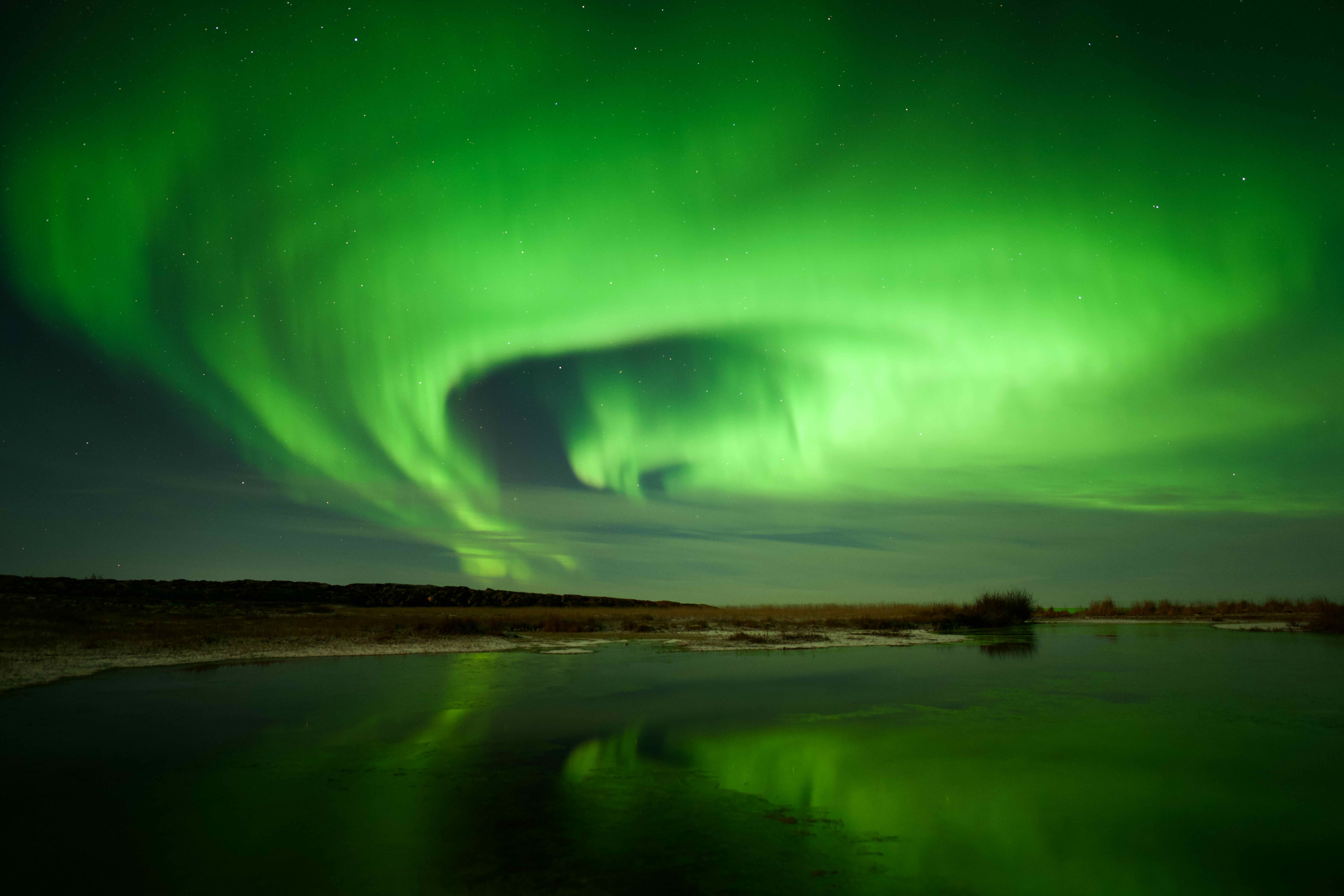
One night was clear and I had a ten minute window to capture the aurora borealis before it faded:

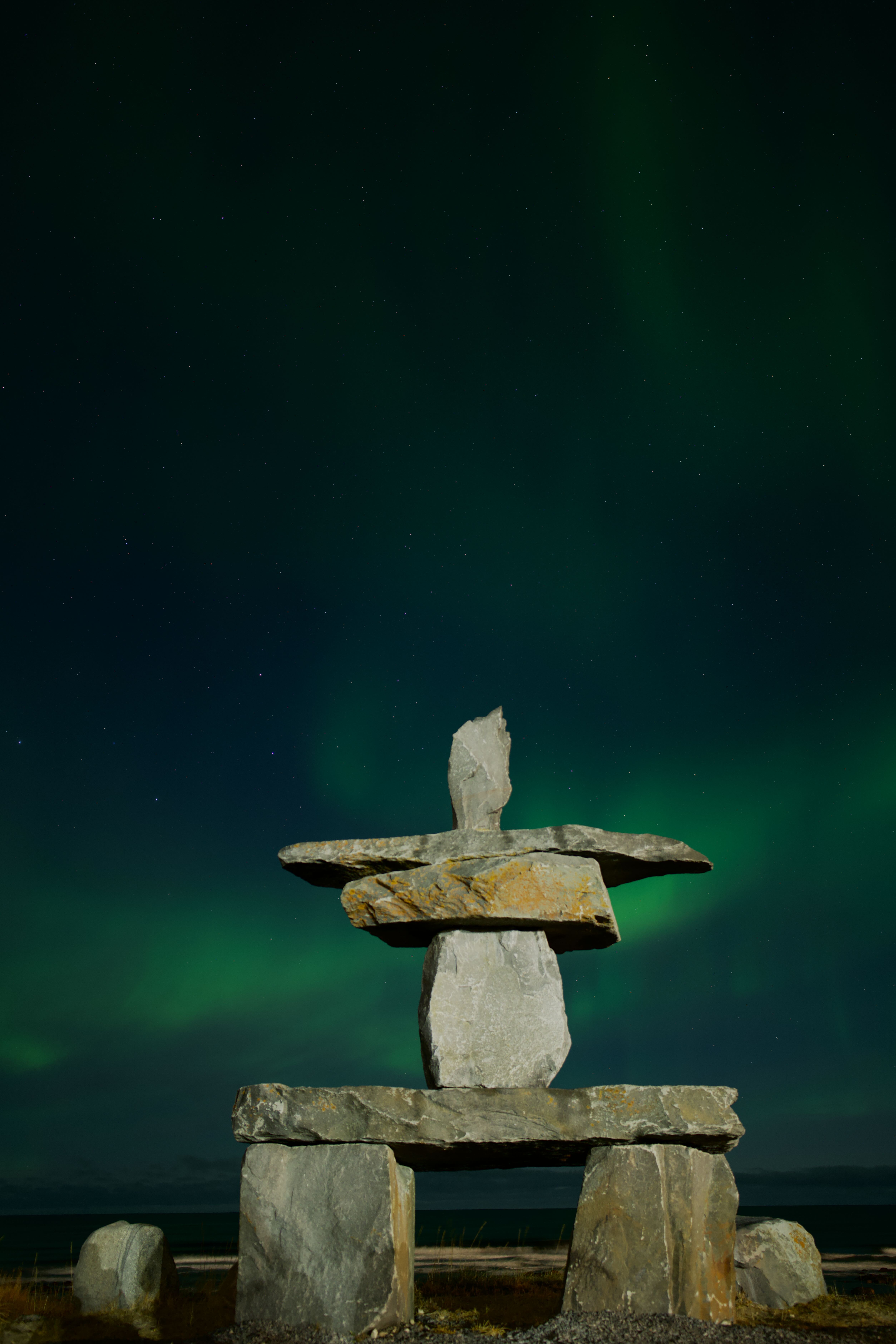
As the aurora faded I shot this Inukshuk, which is a traditional Inuit stone marker used as a navigation aid, marker for travel routes, fishing place, hunting ground, and location of reverence or memorial significance. The word “inukshuk” means “in the likeness of a human.”:

The wreck of the MV Ithaca, which ran aground in 1960:

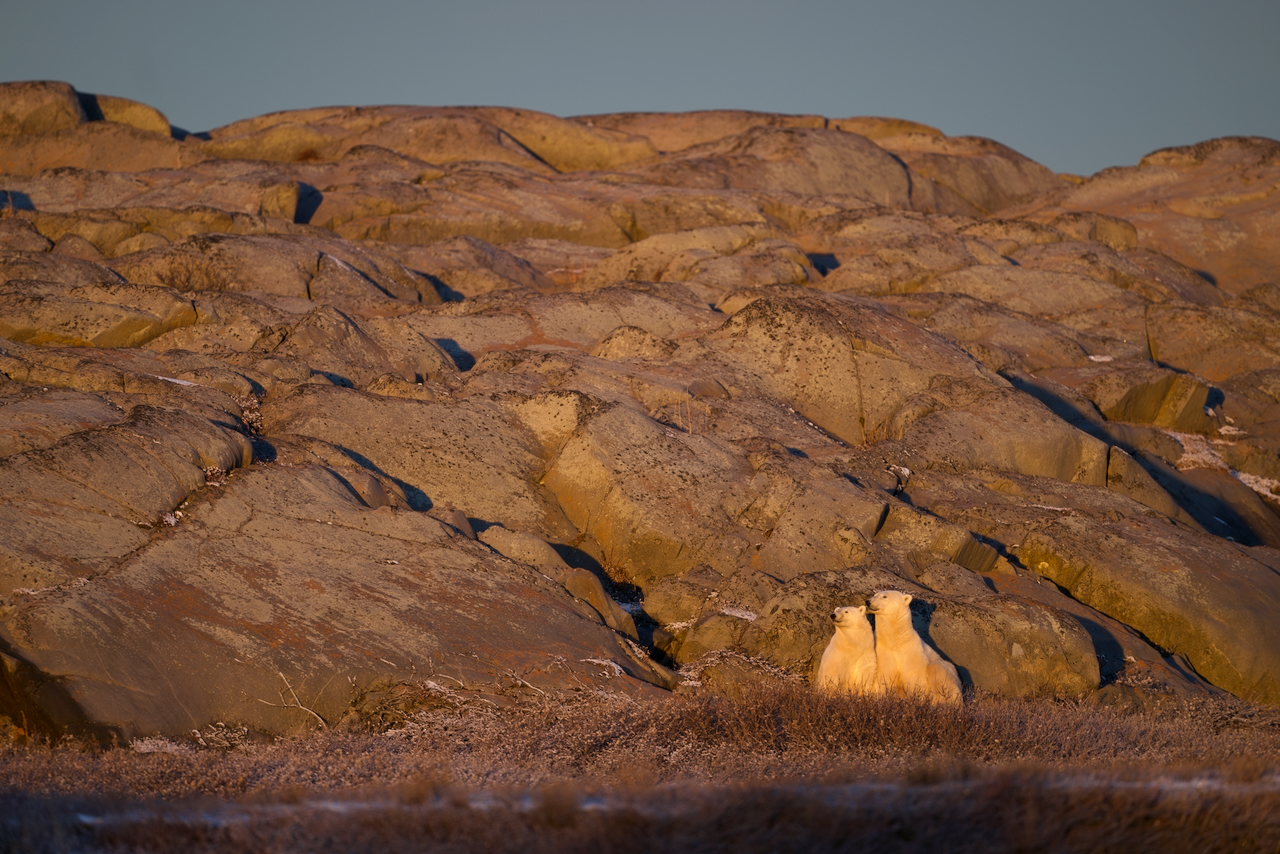
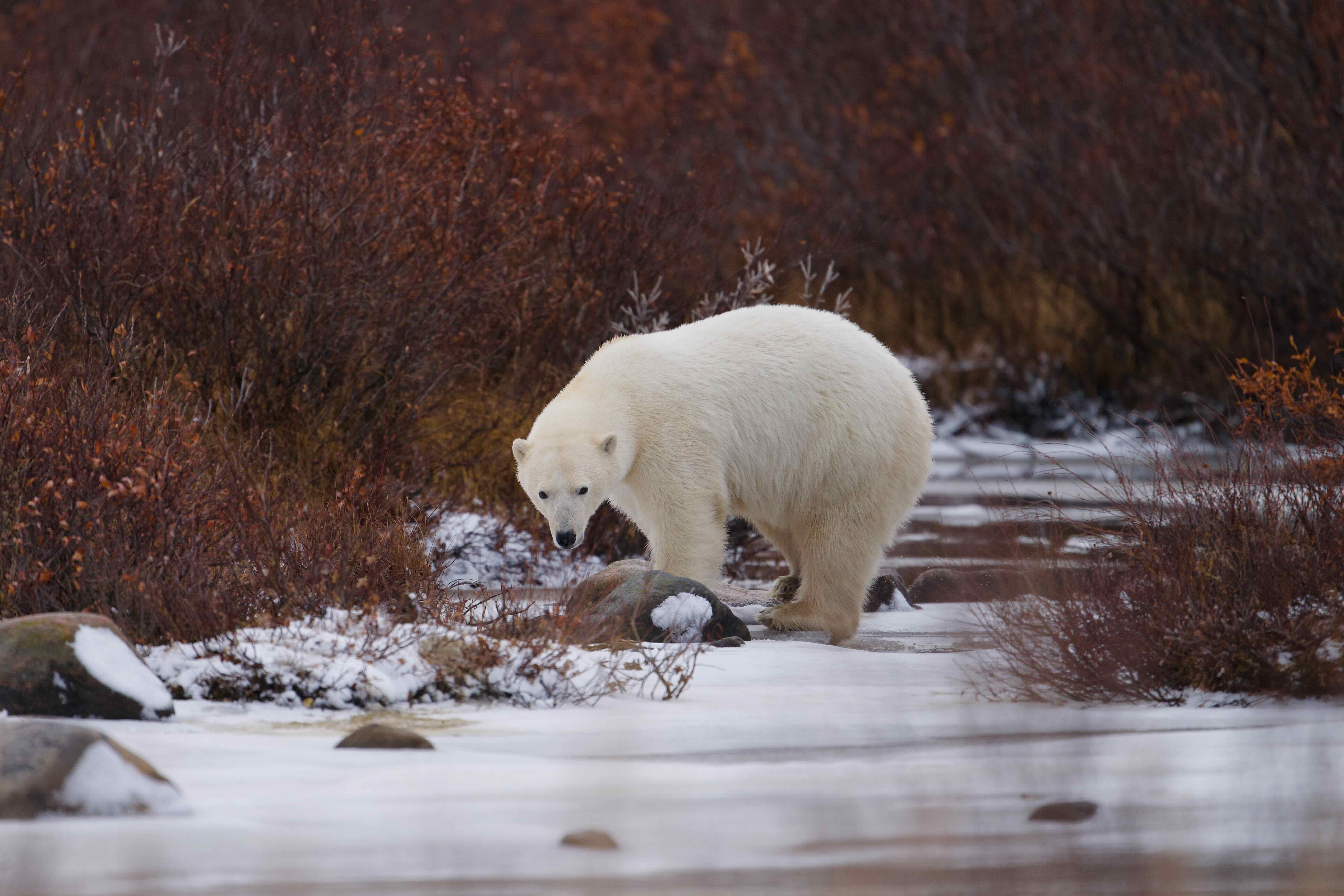
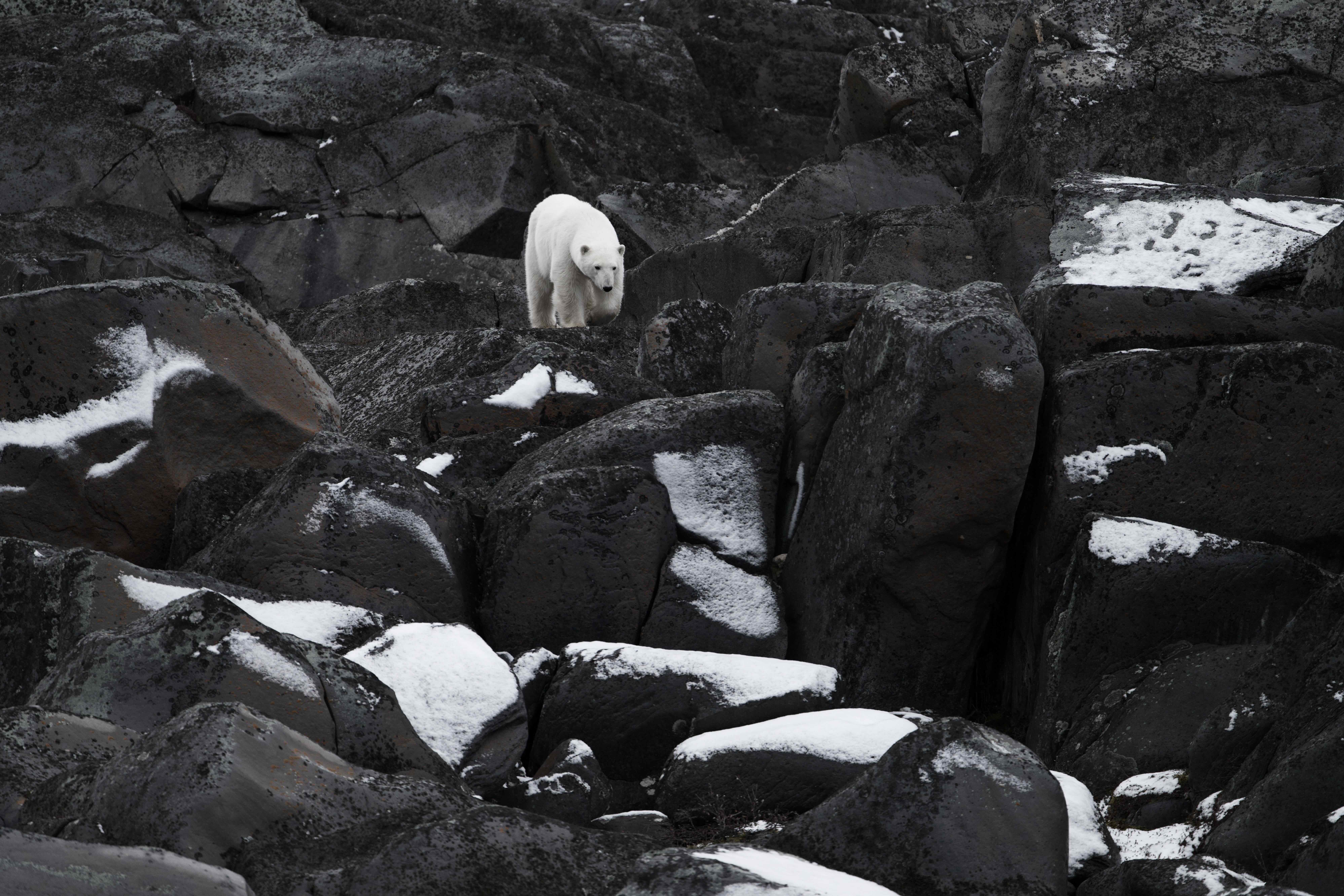
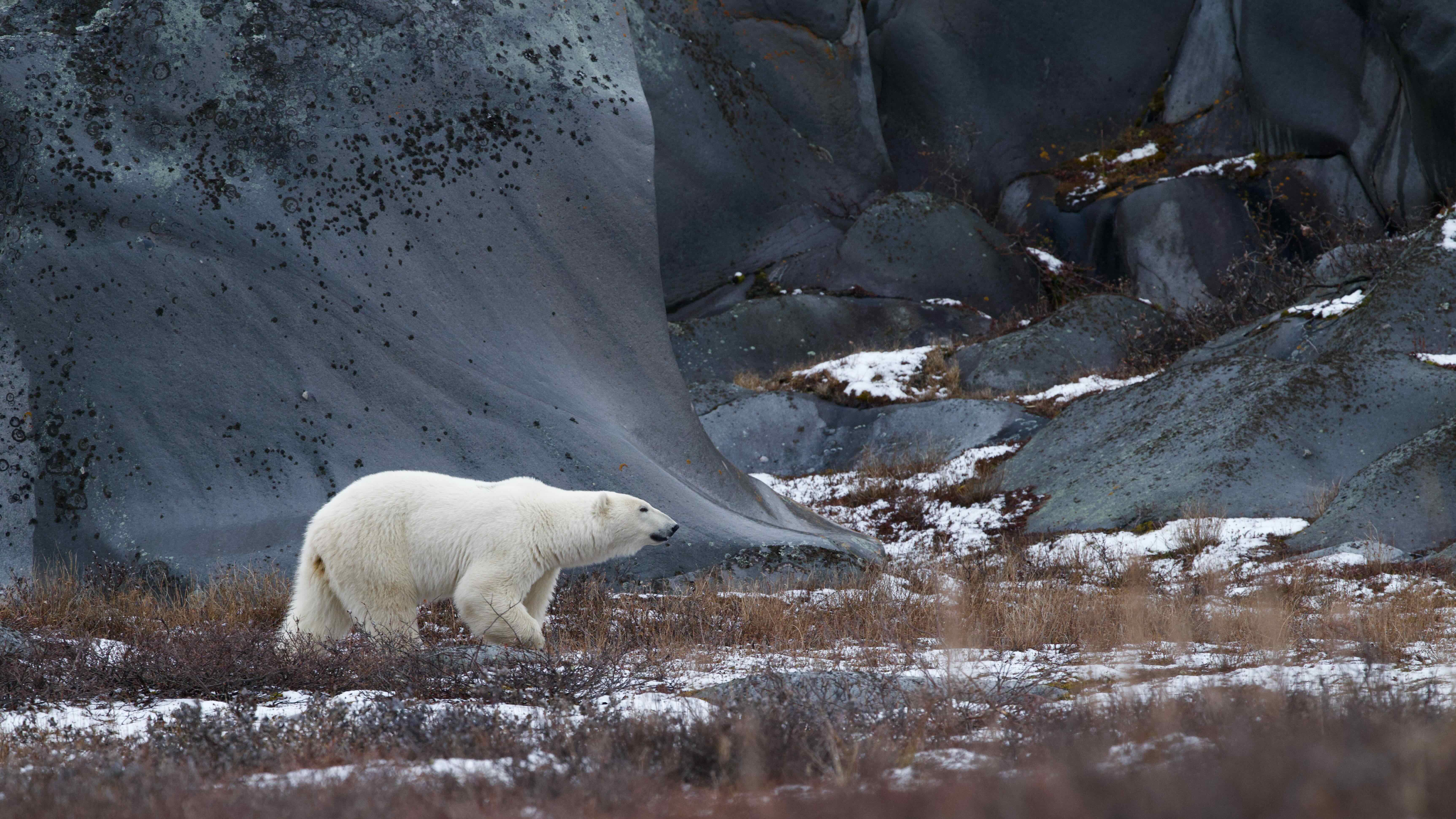
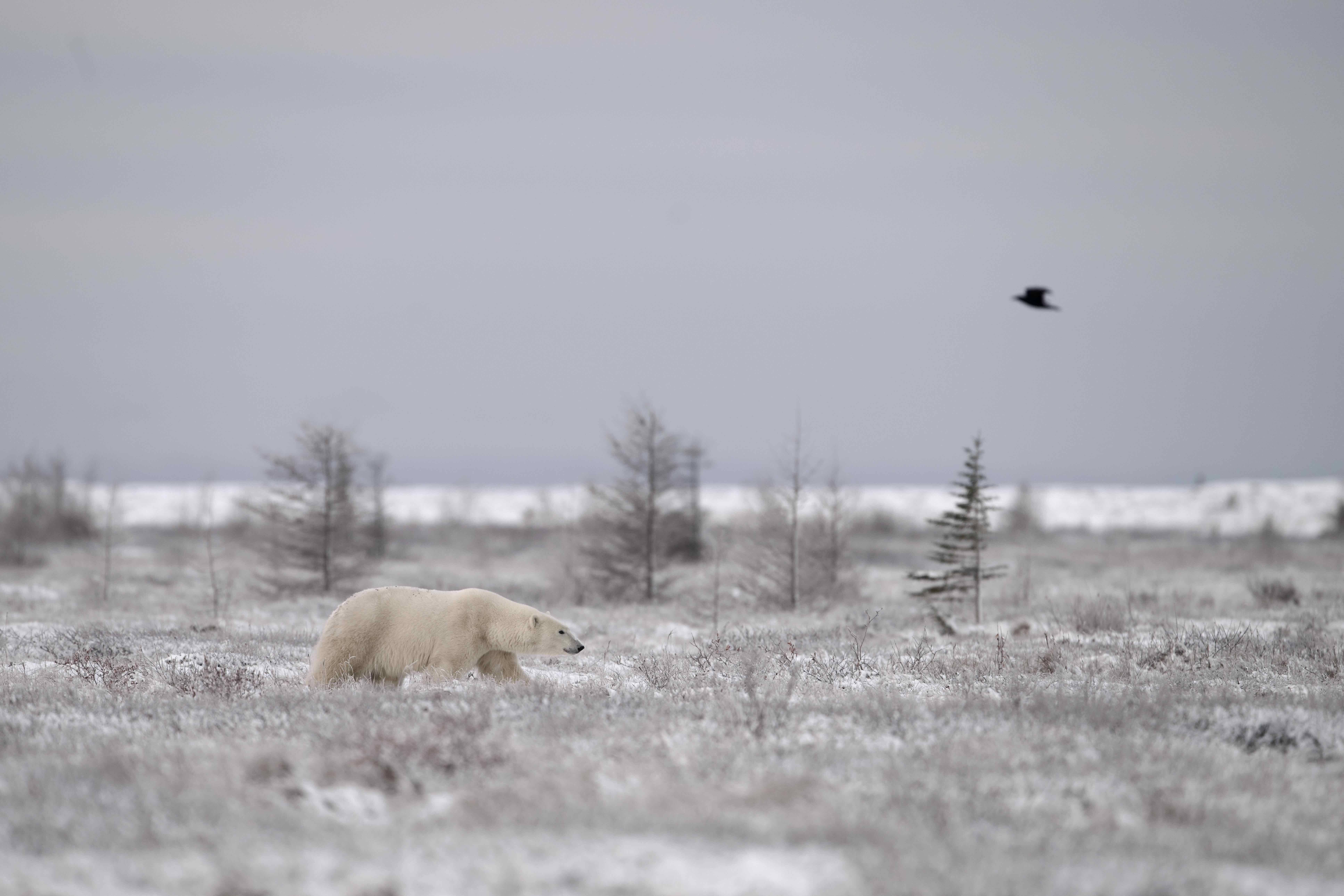
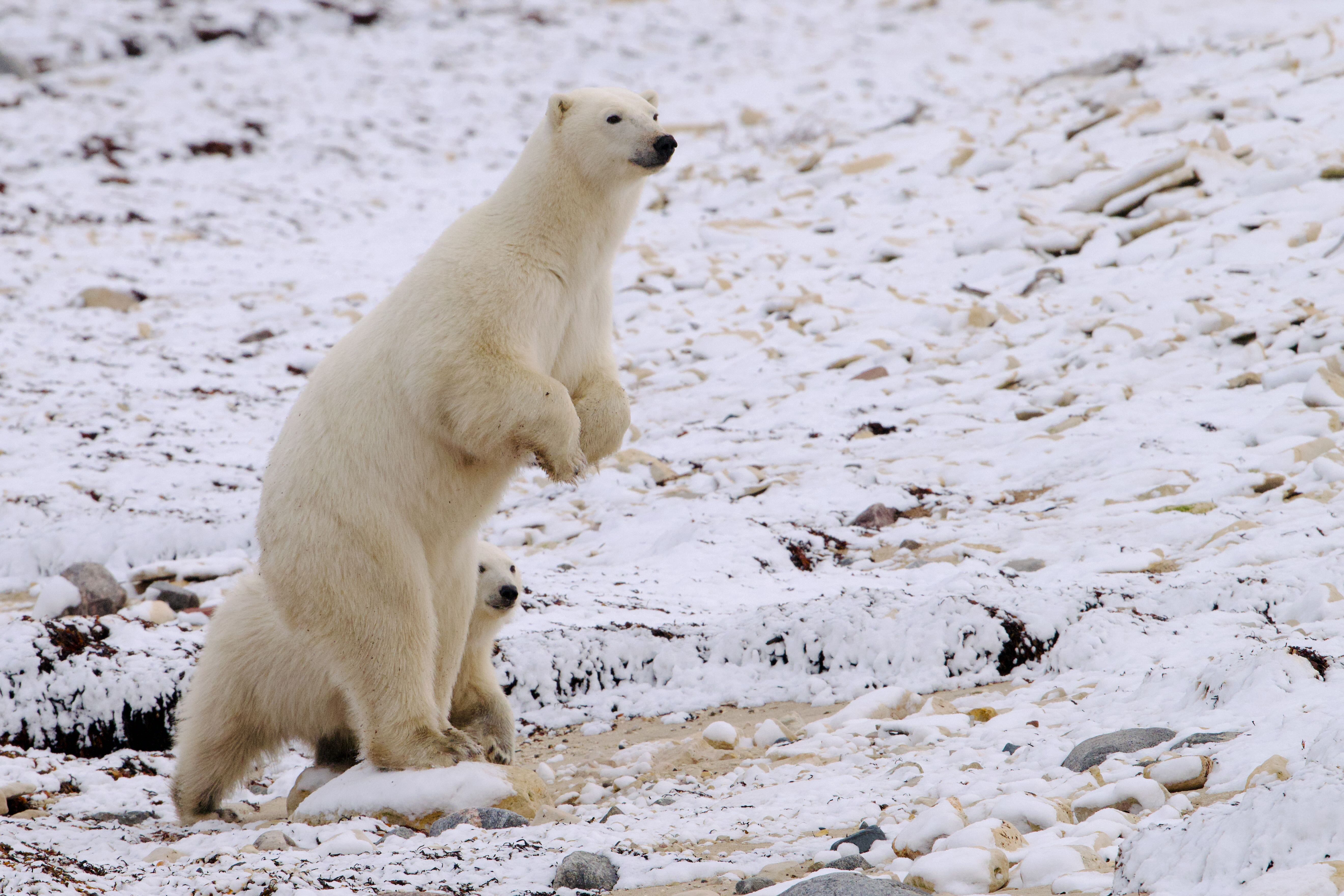
Polar bears (Ursus maritimus) are the reason tourists come to Churchill. The primary food of the Churchill polar bears is ring seals and their primary hunting method is called still-hunting, an ambush tactic where polar bears wait by seal breathing holes in the ice. Ring seals maintain 10 to 15 open breathing holes in the ice throughout the winter by using their sharp claws. They surface every 5 to 15 minutes to breathe. Polar bears use their sensitive sense of smell to locate these holes. Bears wait motionless for many hours for a seal to surface. When a seal pokes its nose up from the water, the bear grabs the seal’s head and… well, you can guess:

Obviously, still-hunting can only be done on ice. Hudson Bay is one of the Arctic regions where sea ice melts completely each summer, forcing all polar bears ashore for an extended fasting period (other Arctic populations live and hunt on ice year-round). The Western Hudson Bay population experiences one of the longest ice-free periods of any polar bear population, historically lasting 3-4 months from late July through early November. This seasonal pattern creates what researchers describe as a “walking hibernation,” where bears must survive entirely on fat reserves accumulated during their seal-hunting season on the ice:

The local Churchill population is in decline. Extended ice-free periods due to climate change and unusual weather are blamed. Particularly hard hit are adult females and cubs, as pregnant females often lack the food necessary to successfully birth and raise cubs:

Polar bears congregate around Churchill due to its protrusion into Hudson Bay. The counterclockwise currents in Hudson Bay deposit melting ice along the coast in summer, where most bears come ashore. In autumn, these same currents cause ice floes to accumulate. Additionally, the Churchill, Nelson, and Hayes Rivers discharge freshwater into shallow coastal waters, and since freshwater freezes at higher temperatures than saltwater, ice forms earlier in this location. This early freeze-up attracts hungry bears eager to return to hunting after months of fasting:

Unfortunately, it is expected that ice-free periods may soon exceed critical fasting thresholds and that extirpation may be inevitable for the Hudson Bay populations that require seasonal ice. 2024 set a record of 198 ice-free days in Southern Hudson Bay:

The willow ptarmigan (Lagopus lagopus) undergoes a complete molt from brown in summer to white with black tail in winter:

The genus name Lagopus means “hare-footed,” referring to the feathers that completely cover their feet all the way to the tips of their toes. The feathers on the soles of their feet increase the weight-bearing surface area of their feet, acting as bird snowshoes so that they can walk on top of snow and also providing thermal insulation. Like other grouse, willow ptarmigans excavate snow burrows for roosting:

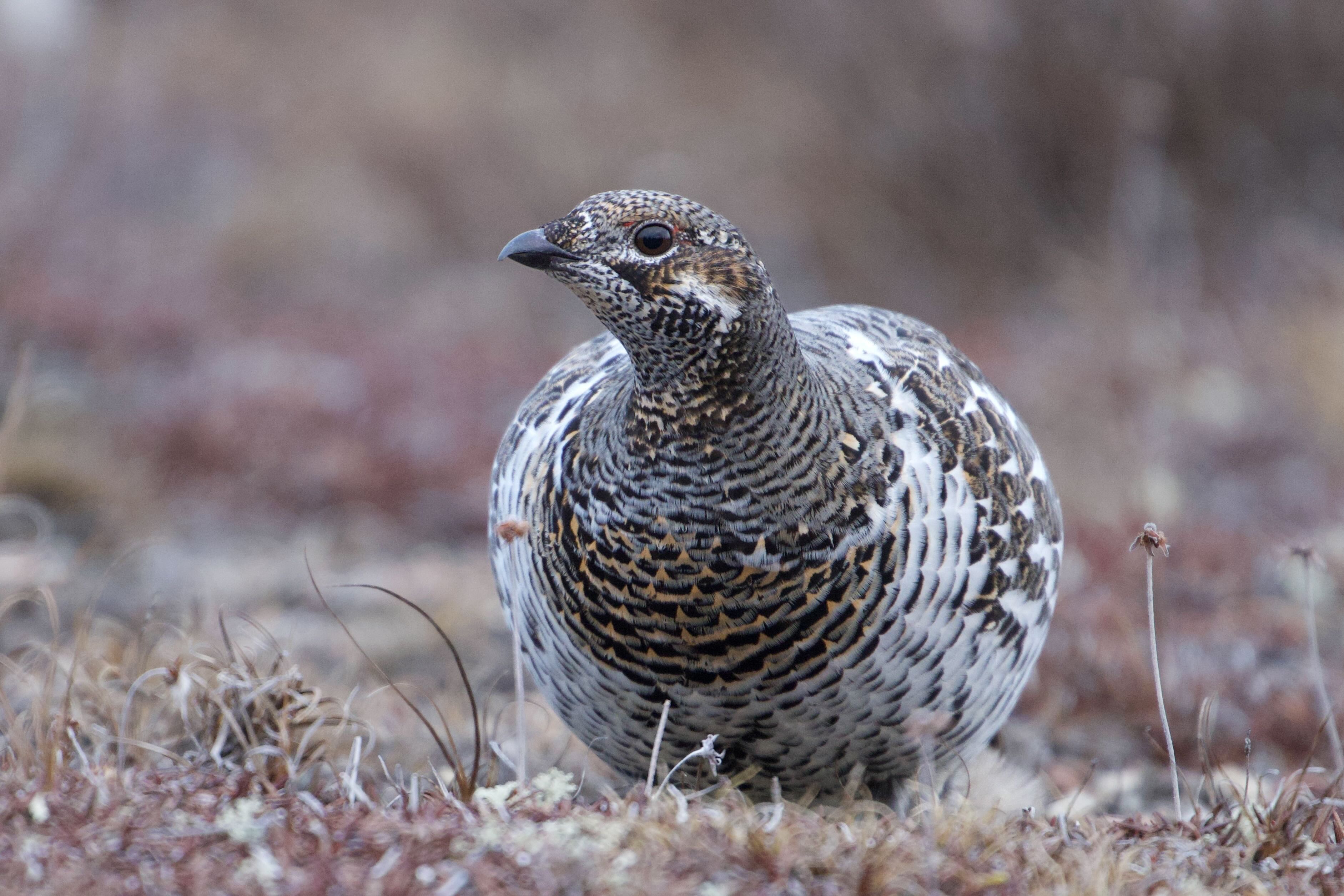
The spruce grouse (Canachites canadensis) survives winter on a diet of conifer needles. These needles are low in protein and extremely difficult to digest due to high cellulose content. To accommodate this diet, the spruce grouse’s digestive system enlarges during the winter:

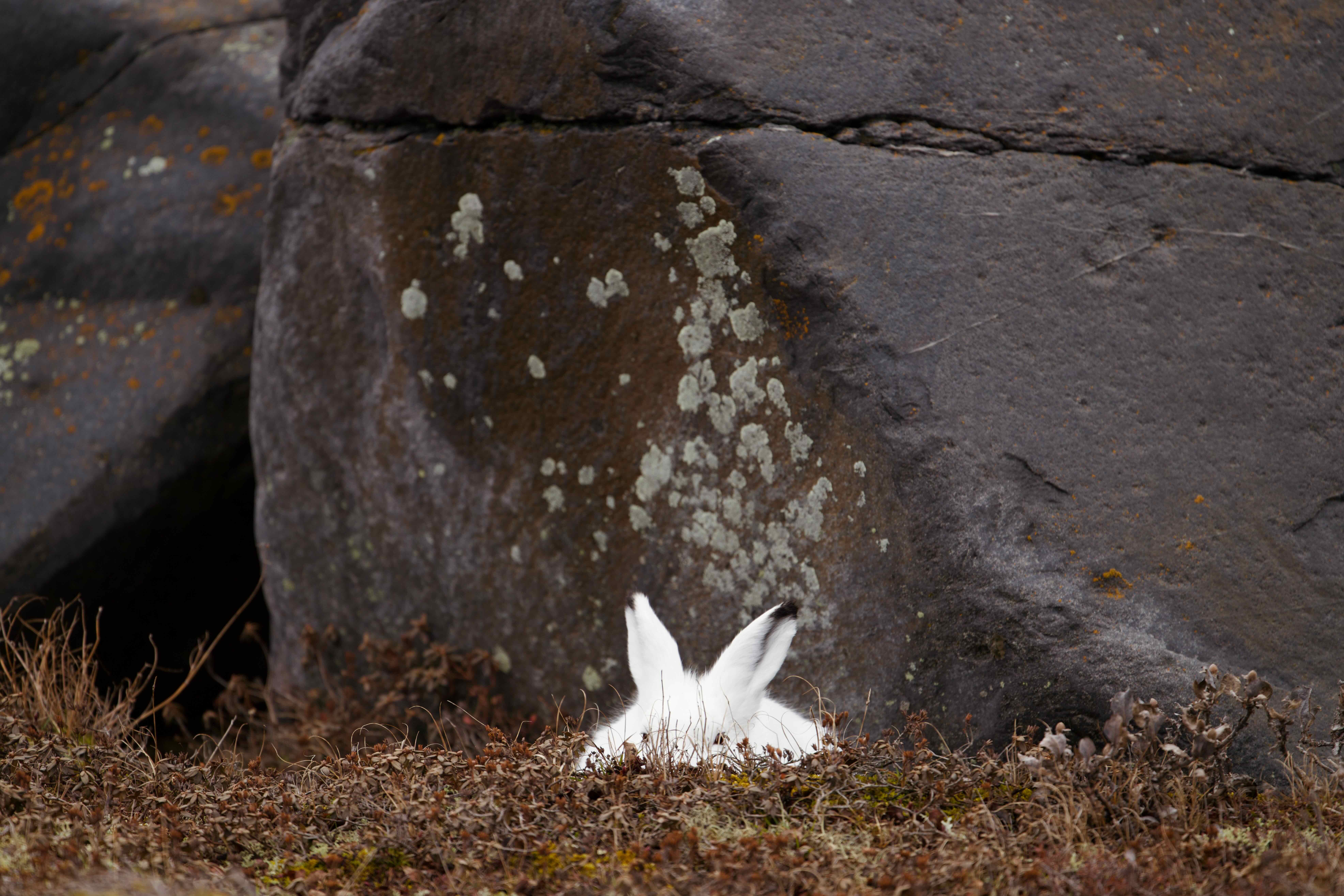
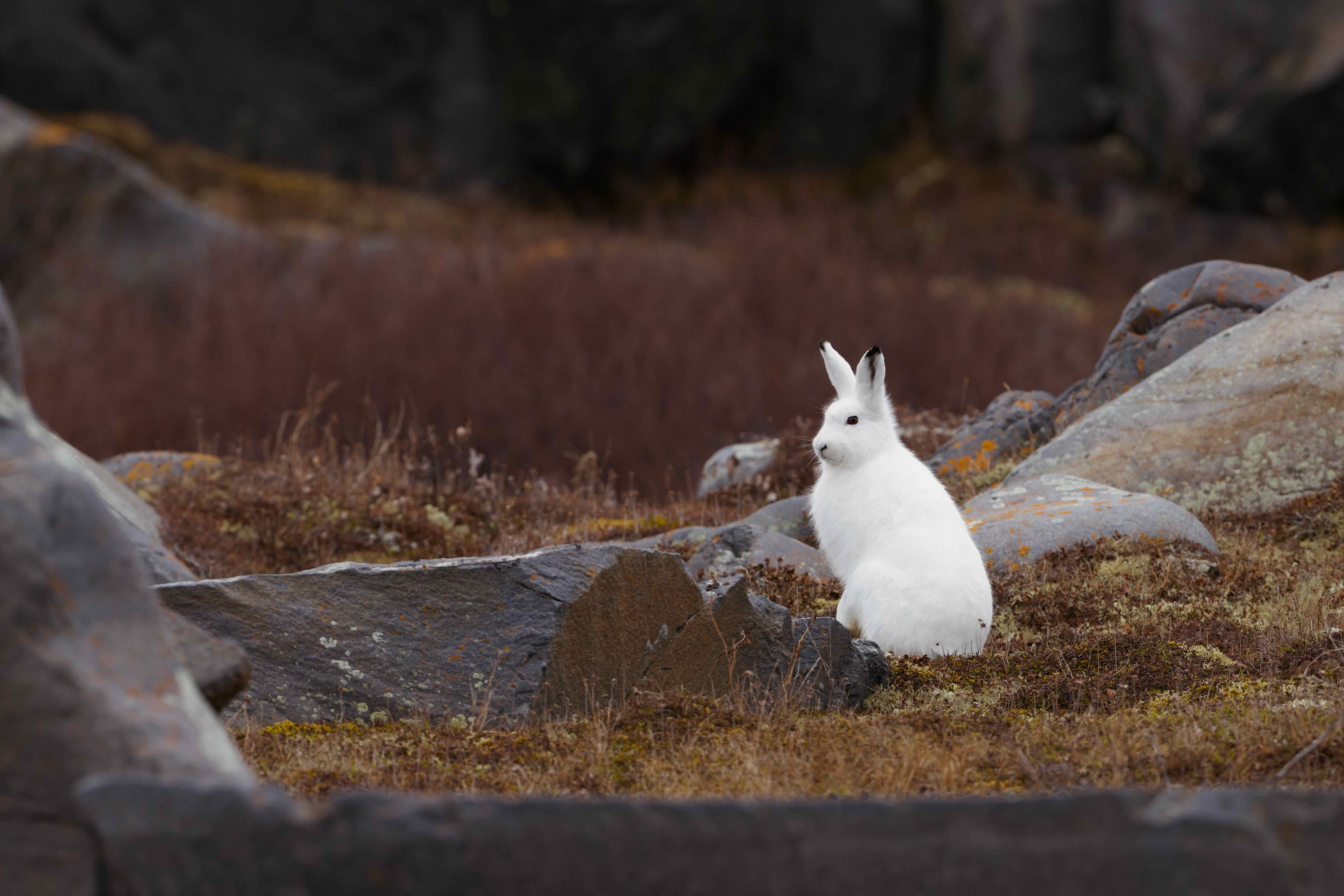
Arctic hares (Lepus arcticus) maintain normal body temperature (38.9°C) during the winter while despite a depressed basal metabolic rate. A reduced surface area to volume ratio through their compact body structure, combined with insulation from their thick fur and ~20 weight % body fat, enables them to maintain homeostasis:

Willows comprise the hares’ primary food source in the barren arctic. They consume every part of willow shrubs, including bark, twigs, roots, leaves, and buds. While generally solitary animals, arctic hares “flock” during winter months. Groups can range from dozens to as many as 3,000 individuals, huddling for warmth and moving as a single body:

Readers’ wildlife photos

November 12, 2025 • 8:15 am

We’re down to one more contribution, and then the tank runs dry. Please send in your GOOD photos, preferably a related group instead of singletons.

Today’s penultimate photo-and-text post comes from Athayde Tonhasca Júnior, and is part III of a series of his visit to a park in Brazil (see parts 1 and 2 here and here). Athayde’s captions are indented, and you can enlarge his photos by clicking on them.

Chapada Diamantina – III

About 70 km from Lapa Doce, we arrive at Lençóis (len-soh-iss), the main gateway to Chapada Diamantina National Park.

The village of Lençóis was established around 1845 with the discovery of diamonds along the Lençóis river (pictured) and other watercourses in the region. This was a magnet to adventurers, deserters, runaways, visionaries, petty criminals, big criminals, women of ill repute, preachers, government officials and other ne’er-do-wells. Like any hard work carried out during most of Brazilian history, diamond panning was done by slaves, who built the bridge over the river:

Between 1845 and 1871, Lençóis was the world’s largest diamond producer. At the height of its wealth, the town had a cinema, two newspapers and a French vice-consulate. Here, the former residence of a local nabob:

Things become to unravel in the 1860s, with the progressive depletion of diamonds. But the death knell came in 1865 with the discovery of diamonds in South Africa. Most people left and the town quickly fell into decay. Fortune turned again in the 1990s when outsiders discovered the region’s natural beauty. Today, luxury hotels, B&Bs, dozens of tourism agencies and restaurants cater to national and foreign tourists:

A view of Chapada Diamantina National Park. The 152,000-ha park was created in 1985 with the help of American biologist Roy Funch, who arrived in the area in 1978 and still works as a local guide. The park comprises caatinga xerophytic formations, cerrado (a type of tropical savanna) Atlantic Forest vegetation, meadows and rocky plateaus (chapadas):

Detail of lithophytes (plants that grow on bare rock) on a plateau top. This local flora has high degrees of diversity and endemism, but it is still poorly known. An open field for a beginner botanist:

Most park visitors head for the waterfalls and natural pools (of outstanding beauty), but we wanted to explore the caatinga, a UNESCO designated biosphere reserve and one of the world’s less studied biomes. All the ‘dead’ vegetation in this photo will spring to life at the first seasonal rainfall:

These two cacti are some of the caatinga‘s most ubiquitous sights: mandacaru (Cereus jamacaru) on the left, and xique-xique (Xiquexique gounellei). They both look disagreeable desert denizens to be kept at arm’s length, but there’s more to them than their sharp, painful thorns. These cacti are important fodder for cattle, goats and sheep in times of water scarcity (they are scorched slightly before being given to animals). Mandacaru‘s fruit feeds humans and wildlife, and its woody stem is valued in carpentry for its resistance to termites. Xique-xique flour can be added to goat’s milk for the production of yogurt with supposedly better probiotic quality:

This ‘stone’ is a tuber of a umbuzeiro tree (Spondias tuberosa), a natural water reservoir. The tuber network of a single tree can store up to 3,000 l of water during the dry season. The umbuzeiro fruit is consumed by wildlife and humans, and it’s sold in local markets:

We wrap up with a moqueca (moh-keh-kah), a seafood stew (fish or prawns) that is a must in the Brazilian cuisine and that best reflects its African, native American and Portuguese heritages. There are regional variations, but this moqueca was made with fish in a base of tomatoes, peppers, onions, garlic, palm oil and coconut milk. Urucum (Bixa orellana) pigment was added for colour, and chopped coriander sprinkled on top. Served with rice, pirão (a thick cream made with cassava flour and fish stock) and farofa (toasted cassava flour, onions, spices and nuts from a local palm tree). A fabulous dish from Nega and Jéssica, owners of Duas Irmãs (two sisters) restaurant.

After a gruesome 420-km drive dodging colossal potholes and nihilistic, homicidal motorists, we arrived back to Salvador, Bahia State’s capital and Brazil’s capital until 1763. The city is rich in cultural traditions, but like in any of the country’s big cities, you’d better mind your wallet, phone, empty alleys and overtly friendly strangers. As the natives say, Brasil não é para amadores – Brazil is not for amateurs:

Readers’ wildlife photos

November 11, 2025 • 8:15 am

Today UC Davis ecologist Susan Harrison sends us photos of birds she snapped in Massachusetts. Susan’s captions and IDs are indented, and you can enlarge the photos by clicking on them.

. . . and send in your photos as we’re running low.

November at a bird feeder in New Salem, Massachusetts

On a November visit to the ‘Five Colleges’ of western Massachusetts, it was too late to see either peak fall colors or migrating songbirds.   My photographic urges turned to the resident (non-migratory) songbirds and small mammals, many of whom were hungrily frequenting a bird feeder at my friend’s house on a nearly-freezing day in New Salem. Settling on a cozy covered porch, overlooking the wildly busy feeder that hung next to a Red Oak (Quercus rubra) branch, I was able to catch pictures of some common East Coast birds that had previously eluded me – particularly the first two species, which can be shy and fast-moving.

Blue Jay (Cyanocitta cristata):

Tufted Titmouse (Baeolophus bicolor):

Mourning Dove (Zenaida macroura):

Northern Cardinal (Cardinalis cardinalis):

Red-bellied Woodpecker (Melanerpes carolinus):

Feeder scenes:

Eastern Gray Squirrel (Sciurus carolinensis); although I had been surprised to see one of these striking black rodents in western Washington State, this melanistic form is apparently common in parts of the species’ native range in northeastern North America:

American Red Squirrel (Tamiasciurus hudsonicus):

Habitat photo from the Quabbin Reservoir overlook:

Readers’ wildlife photos

November 9, 2025 • 8:15 am

Today’s photos come from Neil Dawe, who sent them with a note: “My wife and I spent three weeks in the UK travelling over 1500 miles this past spring/summer spending most of our time in smaller villages and towns but we did manage to visit a few areas specifically for wildlife, and the Bempton Cliffs was one of those.”  Neil’s captions and IDs are indented, and you can enlarge the photos by clicking on them. 

Reader’s Wildlife Photos by Neil K Dawe, Vancouver Island, BC

Bempton Cliffs

This past May my wife and I had the opportunity to visit the Bempton Cliffs in the East Riding of Yorkshire, England, an important part of the Flamborough and Filey Coast Special Protected Area (SPA). It is a spectacular site—a true wonder of the avian world—known especially for its over 300,000 seabirds that arrive there to nest each spring.

I had visited these chalk cliffs some 50 years ago and recall few other people there and my ability to, perhaps foolishly, crawl to the cliff edge for photographs. On our recent visit, we were two of an estimated 5,000 visitors walking the clifftop paths and viewing birds from the safe, now well-fenced viewpoints dotted along the cliff edge.

The Bempton Cliffs run about 10 km (6 miles) from Flamborough Head north and, in spots, are over 100 m (330 feet) high. In this first photo (a), the sea arch and cliffs at Staple Newk are visible. The following photo (b) shows the extent of the cliffs looking to the south from about one-third of the way along the cliff trail from the north end (note the group of people at one of the observation points):

The sea arch cliffs support most of the nesting Northern Gannets (Morus bassanus) at Bempton. This is the only mainland breeding colony of gannets in England with over 15,000 occupied sites in the SPA. During my first visit, I recall watching with awe as these huge birds would plunge-dive into the North Sea from heights of over 40 m (130 ft) feeding on surface-schooling fish and squid, such as mackerel and short-finned squid (Illex illecebrosus). We saw none of that feeding behaviour this year and apparently it’s now quite a rare sight to see them foraging near the cliffs. The likely depletion of local fish stocks due to climate change and over-fishing means the gannet has to forage further away to find the shoals of fish they need:

With a wingspan of over 170 cm (67 in), the gannet is the largest seabird nesting at Bempton Cliffs.

A gannet pair with one adult tending the nest while the other takes some rest time:

A gannet arrives with nesting material to add to the nest while its mate incubates the one egg:

The Black-legged Kittiwake (Rissa tridactyla), a small pelagic gull with a wingspan just under a meter, has over 44,000 pairs nesting along the cliff ledges of the SPA. This is also the most abundant gull globally, although its numbers have declined by about 40% since the 1970s:

Black-legged Kittiwakes at the nest. Kittiwakes normally lay 1–2 eggs and both the male and female incubate. The bird on the far right had 2 eggs in the nest; one egg can just be seen in the photo:

The Guillemot (Uria aalge), known in North America as Common Murre, is the most abundant nester in the SPA with around 112,000 individuals followed by the Razorbill (Alca torda) at over 45,000 breeding individuals. Here both species are at their cliff edge nest sites, the lighter, blackish-brown plumage Guillemots and the Razorbills with the black plumage:

Guillemot pair on gently-sloping, vegetated ground. Most Guillemot nest sites are on cliff ledges and less commonly on soil or other substrates. One egg is laid and the pair share incubation duties equally:

Razorbill on a cliff edge:

Razorbill pair on their cliff ledge nest site. One egg is normally laid and, like the Guillemot, both the female and male share the incubation duties:

Atlantic Puffins (Fratercula arctica) at Bempton Cliffs nest primarily in rock crevices, unlike most UK sites where burrows are used. They lay one egg and both adults incubate. Although there are an estimated 3,100 individuals here at the SPA, finding a puffin required searching for the proverbial needle in a haystack. We did, however, find 9 individuals including this fellow:

This photo shows mainly Razorbills on their cliff face nest sites but one puffin is visible.  Can you find it?:

Here it is:

The last seabird we found at the Bempton Cliffs is a “tube-nose” species, the Northern Fulmar (Fulmarus glacialis); about 1,200 individuals have been counted at the SPA. Fulmars look much like gulls but are related to petrels and albatrosses. Their “tube-noses” are prominent tubular nostrils, and can be seen as the black area at the base of the top of the short bill on this individual. Since fulmars can spend up to 10 months on the open ocean, only coming ashore to breed, they drink seawater. They have a special gland that extracts the excess salt from their bloodstream and excretes it through these nostrils. The nostrils also enhance their sense of smell, leading them to food sources:

Northern Fulmars at their nest site under a rock ledge.

For the camera aficionados, I used a SONY RX10 iv with its Zeiss 24–600 mm zoom lens and 1”-type 20 Megapixel sensor for all the photographs.