Why Evolution is True is a blog written by Jerry Coyne, centered on evolution and biology but also dealing with diverse topics like politics, culture, and cats.
Hari Sridhar, a Fellow of the Konrad Lorenz Institute, has, with others, launched a new site called Reflections on Papers Past. Here’s the site’s aim (read more at the link):
Reflections on Papers Past is a collection of back-stories and recollections about famous scientific papers in ecology, evolution, behaviour and conservation.
The personal back-story of this project can be found here.
Allen Orr and I were honored to have one of our papers included in this pantheon (see below), which is on the site as a long interview I did with Hari a while back.
The site’s blurb and links on the front page are below:
Reflections on Papers Past is a collection of back-stories and recollections about famous scientific papers in Ecology, Evolution, Behaviour and Conservation based on interviews with their authors. To find out more about the project click here.
Full interviews with authors about the making of their papers and the papers’ fates after publication
If you’re an organismal biologist, you might scan the list of papers (divided by field) and get the skinny on them.
I’d completely forgotten about my interview, as it took place over three years ago. It concerns what is probably my most-cited paper, Coyne and Orr 1989, which was called “Patterns of speciation in Drosophila“, appeared in Evolution, and can be found here (the pdf is here). It was an attempt, which met with some success, to figure out how species form in this genus of flies by looking at the reproductive barriers between pairs of species and correlating the strength of those barriers with the estimated divergence time taken from molecular differences. (There was an update with new data in 1997.) This could give us an idea of how fast genetic barriers form between populations, and which barriers evolve fastest.
As I said, I believe this is my most-cited paper, but my most cited scientific publication is surely going to be the book Speciation, also written with my student Allen Orr, a terrific scion and great collaborator (he’s now a professor at the University of Rochester.) I’m only guessing about citations here because I no longer check them.
At any rate, if you click below, you’ll see Hari’s interview with me. It’s long and may not be of interest to non-scientists.
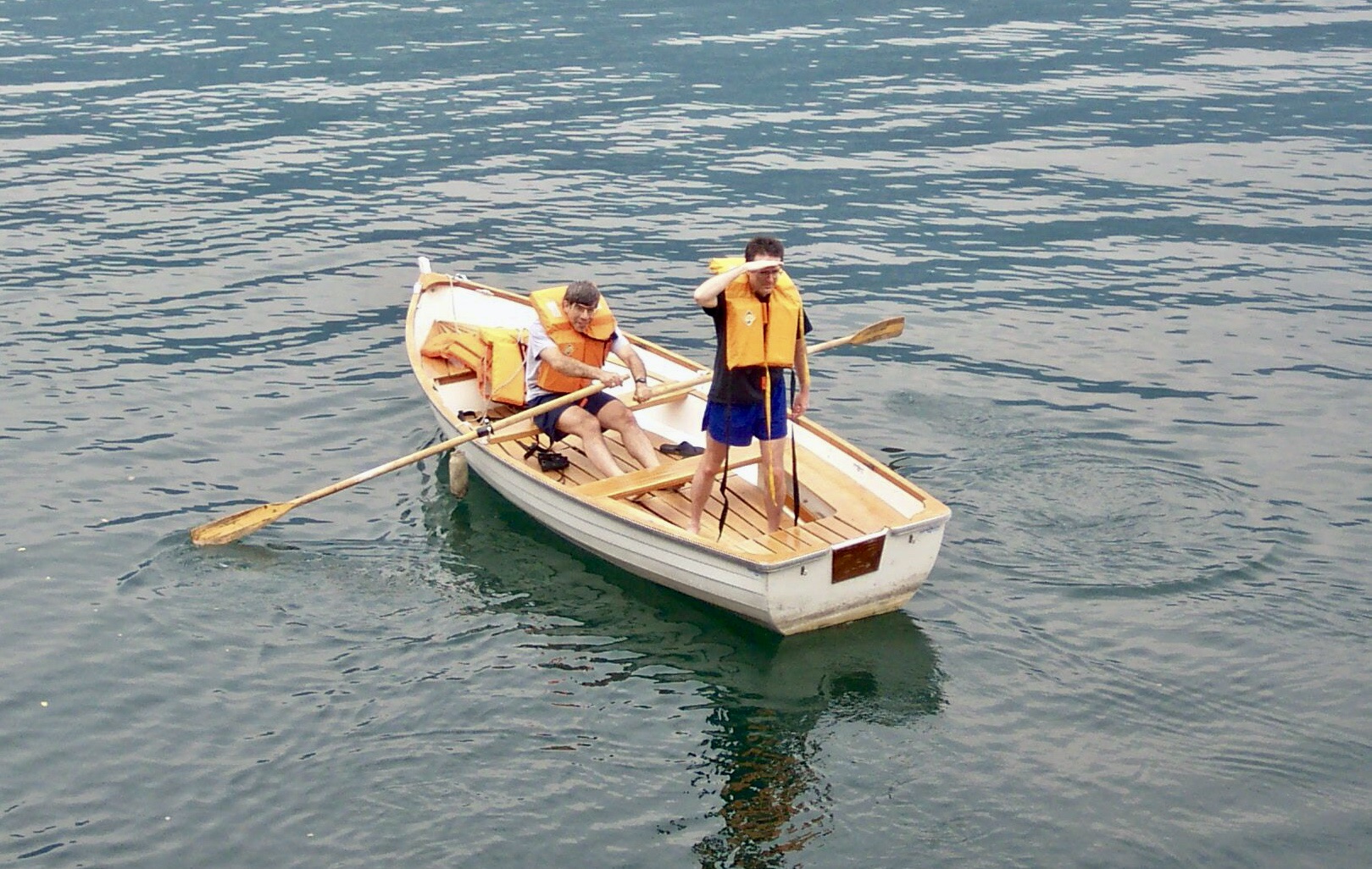
A couple of pictures from yore of Allen and me. The first one is when we enacted a mock squabble in Bellagio, Italy (2001), where we both received Rockefeller Foundation Fellowships to plan and start writing the book Speciation. But yes, there were disagreements, though not as violent as this. The book came out in 2009 and I am prouder of it than any other piece of science I produced (I can’t speak for Allen).
Relaxing on Lake Como. Fellows stay at the Villa Serbelloni, a mansion now owned by the Rockefeller Foundation and open to tourists only for guided tours. (George Clooney’s mansion is nearby.) The Foundation affords artists and scholars a month of freedom (and luxury) to work without interruption, save the lovely breakfasts and dinners and breaks for drinks. (You specify your lunch on a checklist filled out at breakfast, and they bring it to your door to enjoy while working or roaming the extensive and beautiful gardens.) Allen and I got a LOT done in that month. Our partners got to come to Italy, too, and we dedicated Speciation to them (they had projects to do as well.)
The Foundation also had two rowboats:
An aquatic jaunt during lunch. Allen shows the way, though of course he’s looking backwards
One more picture of Orr and me, taken at the Evolution meetings in Portland, Oregon in 2001. He was the outgoing President of the Society for the Study of Evolution, and I was the incoming President. This was before Portland became woke and went down the drain:
The Biological Species Concept, or “BSC,” was devised and refined by evolutionist Ernst Mayr in the 1930s and 1940s as a way to conceptualize the distinct groups—”species”—that we see in most plants and animals. It runs as follows (in my words), which also includes how we conceptualize different biological species.
A biological species consists of a group of populations that, where they coexist in nature, exchange genes through reproduction. Two populations that coexist in one area but do not exchange genes are considered members of different biological species.
One of the advantages of the BSC is that it enables us to immediately solve the species problem that eluded Darwin: why is nature divided up into distinct clusters rather than existing as a continuum, clusters most visible where they coexist? Under the BSC, the problem of the “origin of species” simply becomes the problem of “the origin of those barriers that prevent interbreeding”—and that is a tractable problem. Again, see Coyne and Orr for our best take on how these clusters form.
Of course there are problems with this concept (it’s not an a priori definition, but an attempt to conceptualize in words what we see in nature). These problems include judging populations that live in different areas like islands of an archipelago, how we deal with groups that hybridize just a little where they coexist, and, most important for this article, what we do with species that are asexual, lacking the possibility of exchanging genes. We discuss all these issues in the first chapter of my book Speciation (2009) written with Allen Orr, but one issue we didn’t resolve properly was that of asexual organisms.
So what about those pesky “asexual” organisms? How can we conceptualize species in groups like bacteria? Well, the first thing we need to determine is whether they form distinguishable clusters like birds or turtles. If they don’t, then there’s no need to conceptualize nonexistent clumps. In our 2009 book, we reviewed the literature, which was scant at that time, and decided that the evidence was mixed about whether bacteria (considered asexual) formed species, but there are surely some clumps among them. So we restricted the rest of the book to sexually-reproducing organisms. Still, bacterial “species” are given names, like E. coli, but do all bacteria considered E. coli really comprise members of a distinct cluster? If so, how?
The literature has expanded since then, and the paper below, which I’d missed and which is now seven years old, makes a pretty good case that in bacteria, at least, there are species, and, more important, they are conceptualized in a way similar to that of the BSC. In other words, there are bacterial clusters, and each cluster is characterized by its ability to exchange genes among individuals. Members of different clusters, however, don’t exchange genes. In other words, bacteria do consist largely of genetically isolated clusters. The authors, though examining only bacteria (there are other asexually reproducing organisms, like bdelloid rotifers), conclude that life in general conforms to the BSC. That’s a bit too expansive a conclusion (see the title!), but their results for bacteria seem good.
The key to this paper is recognizing that bacteria are not in fact completely asexual, though they often reproduce that way. But they also have a form of sex in which genomes of two different individuals can sidle up to each other and recombine to produce new genes. This process, called homologous recombination, occurs via cell-to-cell contact or transfer of DNA through tubes (“pili”) connecting different individuals. This process is called conjugation.
Here’s a photo from Wikipedia showing two bacterial cells moving DNA through pili:
This file is licensed under the Creative Commons Attribution-Share Alike 4.0 International license.
This movement is one-way: the DNA (a single chromosome with double-stranded DNA) from one individual moves to the other. After that, there can occur a form of “sexual” reproduction in which different copies of the same gene can line up and recombine, producing a new gene. A similar process happens during meiosis (gamete formation) in sexually-reproducing organisms.
In bacteria this mixing-up between similar genes is called homologousrecombination because it changes the composition of a gene by recombining its DNA with the DNA from a similar gene in another bacterium. There are other forms of DNA exchange in bacteria in which a bit of DNA or a “plasmid” from one individual simply inserts itself somewhere else in the genome of another individual, but this is not recombination in the traditional sense, for it doesn’t involve two different copies of the same gene recombining to form a new gene. The paper by Bobay and Ochman deals with homologous recombination,
Their method of determining whether two individuals in a named bacterial species can recombine their DNA in this way is complicated, and I’d best leave it for the experts here. But I will say that it involves showing that individuals in a group share the same variants in a given gene segment (10,000 bases were sequenced) as do other individuals in a group. For example, in one ten-base stretch of DNA, an individual may have GTTACTCTAA, another would have GTTAGTCTAA, and another GTTACTCTAC, and still another GTTACTAC, representing combinations of DNA bases that could occur by recombination.
If you see this pattern among individuals of a named bacterial species, that’s indicative that homologous recombination—bacterial “sex”—is going on. This form of recombination is called “homoplasic” recombination because the variants all come via mutation from a single original genome present in the individual that founded the species.
One alternative is that we are dealing with two related species in which similar DNA sequences only look as if they’ve undergone homologous recombination because two groups shared a common ancestor and then the descendants had similar (“convergent”) mutations. This, called “nonhomoplasic recombination”, is not caused by genetic exchange.
The authors have ways to distinguish these two types of recombination, and devise a ratio they call “h/m”, showing the ratio of the degree of homoplasic recombination (true sex) from nonhomoplasic recombination (independent mutations in different groups that superficially mimic sex). The higher the h/m ratio, the more sex individuals in that group are having.
The authors calculated h/m ratios for 91 named bacterial “species”, using, of course, a large number of genomes sequences for each species, because one needs to survey the variation among individuals in that 10,000-base segment. (They also did simulations to verify that they could tell “h” from “m”.) It turns out that over half of the 91 named bacterial species they examined conformed to biological species in which there was evidence of “h” recombination among individuals. Here’s one below, in which the h/m ratio increases. reaching an asymptote, as they looked at more strains. (This increases your power of detecting shared variants). 54 of the 91 named bacterial species looked like this, so the BSC holds for at least half of named bacterial species, and the authors sampled widely in bacteria.
A biological species in bacteria:
Here’s what was thought to be one species but, when they added more strains, they saw two clusters, one that behaved as like the one above, but the other, relative to the other group, showed very low h/m ratios, indicating that the two groups didn’t have homologous recombination between them. That is, they were different “biological species”. When they took out the low h/m group, B. pseudomallei behaved nicely. Here, then, we have two species that were given the same name, perhaps because they had similar morphologies or culturing requirements, or because the genetic distance between them (indicating the time of separation) was pretty low, suggesting a recent origin. These “cryptic species” were seen in 21 of the 91 named bacterial species.
Two biological species in bacteria that went under one name:
And the third group by itself had low h/m ratios no matter how many strains they included, so that there was no ability to assess gene flow at all—perhaps because these species simply don’t undergo any homologous recombination. Here’s one:
Thus 73/91 groups tested showed patterns consistent with a reproductive-isolation based species concept.
To test that their method did indeed detect groups analogous to biological species in more familiar animals, the authors did the same kind of h/m test for two pairs of related but clearly distinct biological species; one was the related species Drosophila melanogaster and D. simulans, and the other Homo sapiens and the chimp Pan troglodytes. As you see below, they were able to detect reproductive isolation between the group using a similar 10,000 base-pair fragment. (In all cases they looked at many replicates of the species on the left and a single sequence for the species on the right, which is why the “other” species forms a straight line: we have one sequence compared to many sequences in the other species, and all comparisons show a low h/m ratio.)
Humans vs. chimps, also good biological species:
The conclusion, then, is that the BSC is pretty good in conceptualizing species in bacteria: there are groups that exchange gene segments, and other groups (different “species”) that do not exchange DNA via homologous recombination. Remember: all of this was judged from looking at DNA sequences, not seeing gene exchange directly.
The big conclusion (from the paper):
That species can be universally defined based on gene flow implies that many of the same factors are operating in the process of speciation across all lifeforms. Differences in genomic properties (such as ploidy, recombination frequencies, and reproduction, and rates of gene acquisition) and demographic parameters (such as population sizes, geographic distribution, and rates of migration) will impact the pace at which microbes speciate relative to sexual organisms. However, the application of a single genomic-based BSC criterion to delineate species makes it possible to define species and study speciation under a similar framework across the tree of life.
Well, they need to look at other putatively asexual groups to see if this method also shows the existence of interbreeding groups reproductively isolated from other such groups, but at least for bacteria we see that many of them form clusters. Two questions remain:
1.) What is “speciation” in bacteria, then? One of the paper’s most intriguing results is that if you take pairs of bacterial “species”, the degree of reproductive isolation between them isn’t positively correlated with the time separating them, as judged by the “genetic distance”, or whole-genome divergence, between them. This is hard to understand because it implies that, unlike sexually reproducing organisms like fruit flies and mammals, reproductive barriers don’t form as a simple byproduct of the time of divergence from their common ancestor. This is the case because in those groups reproductive barriers are usually byproduct of divergence between populations by natural selection and genetic drift, which drive species apart genetically as time passes.
Why isn’t this the case in bacteria? I have no idea! My only suggestion is that “species formation” might be so quick in bacteria that you simply don’t get a correlation of time with reproductive isolation. That would imply that it’s virtually instantaneous.
2.) Why do bacteria form clusters? In more familiar animals, clusters arise because after reproductive barriers arise, an interbreeding group is free to adapt to its environment without “pollution” from other species that would efface the clusters. The genetic divergence is reflected in not just reproductive isolation, but in the way organisms look or behave. This may also be true in bacteria: each cluster might represent a group adapted to a particular ecological niche. This would be hard to test for naturally-occurring bacteria, but might be tested in pathogenic bacteria, whose habitat (us) is more easily studied. As I recall, each bacterial species does its own thing in its own way, but that’s not really an answer to the question.
A final note: this paper was difficult, and I may have made some errors in summarizing its results. (I could read it only twice before I had to write about it here.) Perhaps the authors will read my summary and correct any mistakes.
Yesterday Carl Zimmer wrote a piece for the NYT on species concepts and conservation. Both Greg and I, who discussed the piece and are coauthoring our take on it, found that while Zimmer does not take a position on species concepts (which is good thing), it does have a theme. And the theme seems to be this: that conserving biological diversity depends critically on what biologists decide a “species” is. Now this argument is not, in our view, correct, because you can conserve biological diversity regardless of your species concept, even though some biologists seem to feel that we must be conserving species. If you take that latter point of view, which we see as misguided, then you’re screwed, as there are, as Zimmer notes, dozens of species concepts, and each will lead you to a different decision about populations of an animal or plant. Is a population of owls long isolated on an island a different species from its relatives? That is largely a subjective judgment.
As we mentioned above, Zimmer does not sign on to any particular species concept, which is okay, as different concepts are useful for different purposes. But he often neglects to tell us when a judgment about whether a population is a different species (and presumably worth conserving) is pretty much subjective, which is often the case for populations that are geographically isolated from one another. That is, he implies that once we hit on a species concept, problems of subjectivity largely disappear, which isn’t the case. We would recommend that readers take in chapter 7 of Why Evolution is True, which Jerry immodestly thinks is the best existing popular discussion of speciation, but since few are going to do that, we’ll briefly reiterate what we, as evolutionists, use as a species concept.
Click to read:
As Jerry emphasizes in WEIT, the species concept one uses depends on what question one is asking. To evolutionists, the main question about the diversity of nature is this: “Why is it lumpy?” That is, why do animals and plants appear not as a continuum, but in pretty discrete groups. Look at the birds out your window and see if you have any problem telling which is which. And so it is with most animals and plants—so long as they live in the same place, i.e., are “sympatric”. (For populations that are not sympatric, but live in different areas—i.e., “allopatric”—problems arise. and these are the problems that Zimmer describes in his piece.
At any rate, the explanation for the lumpiness in one area began to be solved when biologists adopted what we call the “biological species concept”, or BSC, devised by several biologists in the 1930s, notably Ernst Mayr. (Zimmer describes him as a “German ornithologist” but he really was a German-American evolutionist—the “Darwin of the 20th century”—who held forth on far more things than birds.) The BSC is basically this:
Two populations are members of different species if they live in the same area in nature but do not produce fertile hybrids in that area.
That is, they do not exchange genes because of what we call “reproductive isolating barriers” (RIBs) that prevent genetic interchange. These barriers keep populations distinct, and allow them to undergo evolutionary divergence without being held back by gene flow. It is this feature—reproductive isolation—that leads to nature’s lumpiness, and it is the origin of these barriers that explains, to an evolutionist, the origin of species.
It turns out that these barriers usually form when populations evolve in different places. Then, when the evolutionary divergence has proceeded to the extent that there is reproductive isolation between the populations when they come back together in sympatry, we now have evolved two species from a single ancestor. RIBs come in many forms: hybrid inviability, hybrid sterility (the mule), ecological isolation (related species prefer to live in different sub-areas of the environment, or are confined there, and thus do not meet), temporal isolation, so that populations mate at different times (common in marine organisms), and differences in mate preference, so members of each species prefer to mate with individuals of their own “kind,” forming substantial barriers to gene flow.
If we can understand how one ancestral species forms two populations that cannot exchange genes, then we’ve solved the problem of the origin of species—a problem that, despite the title of his great book, Darwin didn’t come close to resolving. Now most evolutionists realize that the answer is the origin of RIBs. In fact, neither of us have ever found a scientific paper on how species form that doesn’t involve the origin of RIBs: a tacit but telling admission that the BSC is the answer to most questions about speciation.
The problems that Zimmer outlines largely involve animal populations that are geographically isolated from one another, so the BSC can’t really be applied: the populations don’t coexist. Some of them, like the giraffe populations, breed with each other like gangbusters in zoos, but that’s a very weak test of conspecificity, because some species that live in the same area without interbreeding have their RIBs broken down in captivity (this is true of many fruit flies and of species isolated by ecological preferences). One thing we can say is that if two populations in captivity produce hybrids, but that those hybrids are inviable or sterile, then, yes, they are members of different species. But breeding in captivity, something usually impossible to test, is at best a one-way test.
In 2016, Jerry wrote about the giraffes here: the populations, which look different, live in complete geographic isolation, but breed like crazy in zoos, producing viable and fertile offspring. What do we call them? We don’t know, but we’d say that they’re subspecies rather than full species. It’s a judgment call. The non-BSC people have simply raised the rank of all the traditional giraffe subspecies to species. Nothing prevents people from wanting to conserve subspecies– we sure do! People tried desperately to conserve the two subspecies of white rhinos, well before it became fashionable to raise the subspecies to species.
The giraffes demonstrate the near impossibility of using a species concept when you want to conserve populations. Our own view would be to save all the populations, regardless of whether you call them species, subspecies, or simply different populations.
There are measures, other than breeding data, like genetic difference between populations, that can serve as a proxy for biological speciation. If we know that populations usually produce sterile hybrids when the difference in their DNA is greater than X%, then the “greater than X% criterion”, as used in European frogs by Christophe Dufresnes, is fine. Here’s what Zimmer says:
In recent years, Christophe Dufresnes, a herpetologist at Nanjing Forestry University in China, has used this concept to classify different species of frogs in Europe.
Some of the groups of frogs interbred a lot, whereas others had no hybrids at all. By analyzing their DNA, Dr. Dufresnes found that groups with a recent ancestor — that is, those that were more closely related — readily produced hybrids. He estimates that it takes about six million years of diverging evolution for two groups of frogs to become unable to interbreed — in other words, to become two distinct species.
“This is very cool,” Dr. Dufresnes said. “Now we know what the threshold is to deem them species or not.”’
Well, Dufresnes is still using a proxy for the BSC, but his concept of conspecificity: the “ready production of hybrids”, is a bit off. In fruit flies, species can readily produce fertile hybrids in vials in the lab yet they don’t do so in nature. Still, Dufresnes’ approach is better than just judging by genetic distance alone, or, worse, by the degree of morphological difference between isolated populations, which may be the worst way to make a species call.
Zimmer describes the intriguing finding that polar bears and brown bears have had several episodes of genetic exchange over the last 120,000 years even though they split from a common ancestor about half a million years ago. What do we call them? Our view is that they are biological species that have had their ecological isolation (polar bears “prefer” to live in colder habitats) broken down several times by climate change. The fact that there is historical gene exchange doesn’t mean that reproductive barriers don’t exist, for speciation can be either fully or partly reversible if RIBs change—in this case by changes in ecological isolation caused by climate change.
But our point is that we don’t have to make a a strict call about whether brown bears and polar bears are different species before we can decide whether to protect them as separate entities, or only protect one of them. Conservation decisions shouldn’t rest heavily on a particular species definition; rather, we have to decide exactly what we want to conserve: nature’s lumps (biological species), geographically isolated populations of a single species, like the giraffes, or even just populations of a single species that differ by one or a few traits, like color. As Zimmer quotes:
“They [the two bears] clearly demand separate strategies for conservation management,” Dr. Shapiro said. “It makes sense to me to consider them distinct species.”
But separate management strategies do not demand that they be considered distinct species– US law allows protection of subspecies and “distinct population segments” of vertebrates. From the ESA: “(16) The term “species” includes any subspecies of fish or wildlife or plants, and any distinct population segment of any species of vertebrate fish or wildlife which interbreeds when mature.” In other words, conservation strategies don’t depend on fixing on a hard definition of “species.”
Zimmer writes this on barn owls:
Even a common species like the barn owl — found on every continent except Antarctica, as well as remote islands — is a source of disagreement.
The conservation group BirdLife International recognizes barn owls as a species, Tyto alba, that lives across the world. But another influential inventory, called the Clements Checklist of Birds of the World, carves off the barn owls that live on an Indian Ocean island chain as their own species, Tyto deroepstorffi. Yet another recognizes the barn owls in Australia and New Guinea as Tyto delicatula. And a fourth splits Tyto alba into four species, each covering its own broad swath of the planet.
This is no big deal: it’s just the standard difficulty of ranking allopatric populations. We can just call all the populations members of a “superspecies” and then try to keep all the populations from going extinct. This strategy will of course conserve both genetic diversity and the presence of endemic wildlife.
Zimmer mentions a botanist who is using a “triage” method:
Thomas Wells, a botanist at the University of Oxford, is concerned that debates about the nature of species are slowing down the work of discovering new ones. Taxonomy is traditionally a slow process, especially for plants. It can take decades for a new species of plant to be formally named in a scientific publication after it is first discovered. That sluggish pace is unacceptable, he said, when three out of four undescribed species of plants are already threatened with extinction.
Dr. Wells and his colleagues are developing a new method to speed up the process. They are taking photographs of plants both in the wild and in museum collections and using computer programs to spot samples that seem to cluster together because they have similar shapes. They’re also rapidly sequencing DNA from the samples to see if they cluster together genetically.
If they get clear clusters from approaches such as these, they call the plants a new species. The method — which Dr. Wells calls a “rough and ready” triage in our age of extinctions — may make it possible for his team to describe more than 100 new species of plants each year.
A triage approach is fine– there are many approaches to trying to document and preserve biodiversity quickly. But the clear implication that debates about species concepts delay publication is just wrong. The delays discussed by Wells are all about collecting decent samples of specimens, which takes time! We have both written about the importance of museum collections, including continued collecting, for understanding and conserving biodiversity. So, we are all for accelerating collection and description of biological diversity — before it’s gone, and to try to prevent its loss.
We’ll come to an end now, but we find Zimmer’s discussion somewhat incomplete, and for the reasons we mentioned at the beginning. First, conservation need not depend on what biologists call a “species”. Second, for populations that are geographically isolated, any decision on species status will usually be arbitrary, and so we can leave aside applying fixed species concepts and instead decide what it is, exactly, that we want to conserve. We might want to save as much genetic variation as we can, or perhaps conserve morphological traits (based of course on genetic variation) that affect how a species looks or lives (e.g. coat color in mice), or even evolutionary history as reflected in genetic distance. But none of this relies particularly heavily on adhering to a particular species concept.
What we have below (click on headline for free access) is a review in Nature by Denis Noble of a new book by Philip Ball, How Life Works: A User’s Guide to the New Biology, which has garnered good reviews and is currently #1 in rankings of books on developmental biology. The Amazon summary promises that the book will revise our view of life:
A cutting-edge new vision of biology that will revise our concept of what life itself is, how to enhance it, and what possibilities it offers.
Biology is undergoing a quiet but profound transformation. Several aspects of the standard picture of how life works—the idea of the genome as a blueprint, of genes as instructions for building an organism, of proteins as precisely tailored molecular machines, of cells as entities with fixed identities, and more—have been exposed as incomplete, misleading, or wrong.. . .
I haven’t read it yet, though I will (I have several books ahead of it, including the galleys of Richard Dawkins’s new book, for which I’m to provide a blurb). Instead, I will review a review: Denis Noble’s review published a few days ago. (That’s the screenshot below.) Admittedly, it’s a review of a review, but Noble gives his take on the book’s importance, and in so doing reveals his own idea that neo-Darwinism is not only impoverished, but misguided in important ways. And, as usual, Noble proves himself misguided.
In some ways it’s unfortunate that Noble was chosen as a reviewer, as the man, while having a sterling reputation in physiology and systems biology, is largely ignorant of neo-Darwinism, and yet has spent a lot of the last decade trying to claim that neo-Darwinism is grossly inadequate to explain the features and evolutionary changes of organisms. You can see all my critiques of Noble here, but I’ll just quote briefly from the latest to give you a flavor of how he attacks modern evolutionary theory:
The gene-centered view of evolution is wrong [This is connected with #2.]
Evolution is not a gradual gene-by-gene process but is macromutational.
Scientists have not been able to create new species in the lab or greenhouse, and we haven’t seen speciation occurring in nature.
I then assessed each claim in order:
Wrong, partly right but irrelevant, wrong, almost completely wrong, and totally wrong (speciation is my own area).
And yet Noble continues to bang on about “the broken paradigm of Neo-Darwinism,” which happens to be the subtitle of his new article (below) in IAI News, usually a respectable website run by the Institute of Art and Ideas.
And yes, Noble’s banging persists in his review of Ball’s book. The criticisms I level will be against Noble’s claims, as I can’t verify whether he’s accurately characterizing Ball’s views or spouting his (Noble’s) own misguided views.
The problem with Noble;s review is twofold: the stuff he says is new and revolutionary is either old and well known, or it’s new and unsubstantiated. Here are a few of his quotes (indented and in italics) and my take (flush left):
First, Noble’s introduction to the book, which is okay until Noble tries to explicate it:
So long as we insist that cells are computers and genes are their code,” writes Ball, life might as well be “sprinkled with invisible magic”. But, reality “is far more interesting and wonderful”, as he explains in this must-read user’s guide for biologists and non-biologists alike.
On to Noble’s asseverations:
When the human genome was sequenced in 2001, many thought that it would prove to be an ‘instruction manual’ for life. But the genome turned out to be no blueprint. In fact, most genes don’t have a pre-set function that can be determined from their DNA sequence.
Well, the genome is more or less a blueprint for life, for it encodes for how an organism will develop when the products of its genome, during development, interact with the environment—both internal and external—to produce an organism. Dawkins has emphasized, though, that the genome is better thought of as “recipe” or “program” for life, and his characterization is actually more accurate (you can “reverse engineer” a blueprint from a house and engineer a house from a blueprint—it works both ways—but you can’t reverse engineer a recipe from a cake or a DNA sequence from an organism.) The DNA of a robin zygote in its egg will produce an organism that looks and behaves like a robin, while that of a starling will produce a starling. You can’t change the environment to make one of them become the other. Yes, the external environment (food, temperature, and so on) can ultimately affect the traits of an organism, but it is the DNA itself, not the environment, that is the thing that changes via natural selection. It is the DNA itself that is passed on, and is potentially immortal. And the results of natural selection are coded in the genome. (Of course the “environment” of an organism can be internal, too, but much of the internal environment, including epigenetic changes that affect gene function are themselves coded by the DNA.)
As for genes not having a “pre-set function that can be determined from their DNA sequence,” this is either wrong or old hat. First, it is true that at this point we don’t always know how a gene functions from its DNA sequence alone, much less how it could change the organism if it mutates. This is a matter of ignorance that will eventually be solved. As for “pre-set function”, what does Noble mean by “pre-set”? A single gene can participate in many developmental pathways, and if it mutates, it can change development in unpredictable ways, and in ways you couldn’t even predict from what that gene “normally” does. The gene causing Huntington’s chorea, a fatal neurodegenerative disease, has a function that’s largely unknown but is thought to affect neuron transport. But it also has repeated sections of the DNA (CAGCAGCAG. . . . .), and mutations that increase the number CAG repeats can cause the disease when they exceed a certain threshold.
But the “Huntington’s gene” is not there to cause disease, of course. It interacts with dozens or even hundreds of other genes in ways we don’t understand. What is its “pre-set” function? The question is meaningless. And was does “pre-set” mean, anyway?
The second sentence in the bit above is garbled and ambiguous, and at any rate doesn’t refute the notion that the genome is indeed the “instruction manual for life.”
But wait: there’s more!
Instead, genes’ activity — whether they are expressed or not, for instance, or the length of protein that they encode — depends on myriad external factors, from the diet to the environment in which the organism develops. And each trait can be influenced by many genes. For example, mutations in almost 300 genes have been identified as indicating a risk that a person will develop schizophrenia.
It’s therefore a huge oversimplification, notes Ball, to say that genes cause this trait or that disease. The reality is that organisms are extremely robust, and a particular function can often be performed even when key genes are removed. For instance, although the HCN4 gene encodes a protein that acts as the heart’s primary pacemaker, the heart retains its rhythm even if the gene is mutated.
“Polygeny,” or the view that traits can be affected by many genes, is something I learned in first-year genetics in 1968. But some “traits” or diseases are the product of single genes, like the trait of getting Huntington’s Chorea of sickle-cell disease. But many diseases, like high blood pressure and heart disease, can be caused by many genes. And it’s not just diseases. Whether your earlobes are attached to your face or are free is based on a single gene, and eye color, to a large extent, is too (see this list for other single-gene alternative traits).
As far as the HCN4 gene goes, mutations may allow it to have a rhythm, but many mutations in that gene cause abnormal rhythms.and can even bring on death through heart attacks. No, the gene is not robust to mutations, and I can’t understand where Noble’s statement comes from. It appears to be wrong. (I am not attributing it to Ball here.)
More:
Classic views of evolution should also be questioned. Evolution is often regarded as “a slow affair of letting random mutations change one amino acid for another and seeing what effect it produces”. But in fact, proteins are typically made up of several sections called modules — reshuffling, duplicating and tinkering with these modules is a common way to produce a useful new protein.
This is not a revision of the “classic” view of evolution because we’ve known about domain-swapping for some time. For example, the “antifreeze” proteins of Arctic and Antarctic fish can involve changes in the number of repeats in the enzyme trypsinogen, which normally has nothing to do with preventing freezing. Or, antifreeze proteins can arise via the cobbling together of bits of different known genes, or from bits of the unknown genes, or even be transferred via horizontal acquisition from other species. Yes, this happens, but it’s not the only way by a long shot that evolution occurs. In fact, now that we can sequence DNA, we’ve found that many adaptive changes in organisms are based in changes in single genes or their regulatory regions, and not swapping of modules. Here’s a figure from a short and nice summary by Sarah Tishkoff from 2015 showing single genes involved in various adaptations that have occurred in one species—our own. The traits are given at the top, and the genes involved are by the symbols. For example, though several genes can involve skin pigmentation, mutations in just one of them can make a detectable change.
Global distribution of locally adaptive traits. Adaptation to diverse environments during human evolution has resulted in phenotypes that are at the extremes of the global distribution. Fumagalli et al. have integrated scans of natural selection and GWAS to identify genetic loci associated with adaptation to an Arctic environment.ILLUSTRATION: A. CUADRA/SCIENCE AND MEAGAN RUBEL/UNIV. OF PENNSYLVANIA
At any rate, we can nevertheless regard shuffling of domains (or even horizontal gene transfer from other species) as mutations, and the new mutated gene then evolves according to its effect on the replication of the gene. No revision of neo-Darwinism or its mathematics is involved. New ways of changing genes haven’t really revised our view of how evolution works, even when we’re talking about the “neutral theory” instead of natural selection.
These mutations, by the way, contra Noble, are still “random”—that is, they occur irrespective of whether they’d be useful in the new environment—and although they can make big changes in the organism’s physiology or appearance, can nevertheless evolve slowly. A gene with a big effect need not evolve quickly, for the rate of evolution depends not on the effect on the organism’s appearance, physiology, and so on, but on its effect on the organisms’s reproductive capacity. And these things need not be correlated.
Later in the book, Ball grapples with the philosophical question of what makes an organism alive. Agency — the ability of an organism to bring about change to itself or its environment to achieve a goal — is the author’s central focus. Such agency, he argues, is attributable to whole organisms, not just to their genomes. Genes, proteins and processes such as evolution don’t have goals, but a person certainly does. So, too, do plants and bacteria, on more-simple levels — a bacterium might avoid some stimuli and be drawn to others, for instance. Dethroning the genome in this way contests the current standard thinking about biology, and I think that such a challenge is sorely needed.
Ball is not alone in calling for a drastic rethink of how scientists discuss biology. There has been a flurry of publications in this vein in the past year, written by me and others2–4. All outline reasons to redefine what genes do. All highlight the physiological processes by which organisms control their genomes. And all argue that agency and purpose are definitive characteristics of life that have been overlooked in conventional, gene-centric views of biology.
This passage verges on the teleological. For surely organisms don’t have “goals” when they evolve. If a mutation arises that increases the rate of replication of a gene form (say one increasing tolerance to low oxygen in humans living in the Himalaya), it will sweep through the population via natural selection. If it reduces oxygen binding, it will be kicked out of the population. Can we say that increased oxygen usage is a “goal”? No, it’s simply what happens, and I suspect there are other ways to adapt to high altitude, like getting darker skin. To characterize organisms as evolving to meet goals, as Noble implies here, is a gross misunderstanding of the process.
Yes, the organism is the “interactor”, as Dawkins puts it: the object whose interaction with its environment determines what gene mutations will be useful. But without the “replicator”—the genes in the genome—evolution cannot occur. The whole process of adaptation, involving the interaction of a “random” process (mutation) and a “deterministic” one (natural selection), is what produces the appearance of purpose. But that doesn’t mean, at least in any sense with which we use the word, that “purpose” is what makes organisms alive.
But the appearance of “purpose” as a result of natural selection brings up another point, one that Dawkins makes—or so I remember. I believe that he once defined life as “those entities that evolve by natural selection.” I can’t be sure of that, but it’s as good a definition of life as any, as it involves organisms having replicators, interacting “bodies”, and differential reproduction. (According to that definition, by the way, viruses are alive.) So if you connect natural selection with purpose, one might say, “Life consists of those organisms who have evolved to look as if as if they had a purpose.” But I prefer Dawkins’s definition because it’s more fundamental.
At the end, Noble says that this “new view of life” will help us cure diseases more readily:
This burst of activity represents a frustrated thought that “it is time to become impatient with the old view”, as Ball says. Genetics alone cannot help us to understand and treat many of the diseases that cause the biggest health-care burdens, such as schizophrenia, cardiovascular diseases and cancer. These conditions are physiological at their core, the author points out — despite having genetic components, they are nonetheless caused by cellular processes going awry. Those holistic processes are what we must understand, if we are to find cures.
I haven’t heard anybody say that “genetics alone can help us treat complex diseases”. You don’t treat heart disease by looking for genes (though you can with some cancers.) But genetics can surely help! For genetic engineering is on the way, and at least some diseases, like sickle-cell anemia, will soon be “curable” by detecting the mutated genes in embryos or eggs and then fixing the mutation with CRISPR. And advancesin genetics are surely helping us cure cancer—see this article. But of course some diseases, even those with a genetic component, need environmental interventions: so called “holistic” cures. There may, for example, be a genetically-based propensity to get strep throat. But if you get it, you don’t worry about genes, you take some penicillin or other antibiotic. (Curiously, the form of Streptococcus that causes strep throat doesn’t seem to have evolved resistance to the drug!)
Overall, I don’t see much new in Noble’s take on evolution—just a bunch of puffery and regurgitation of what we already know. Perhaps people need to know about this stuff in a popular book, but, after all, Noble’s piece was written for scientists, for it appears in Nature.
Despite repeated claims in the last few years that neo-Darwinism is moribund or even dead, it still refuses to lie down. Happy Darwin Day!
Addendum by Greg Mayer: For those interested in the distinction between the blueprint (wrong) and recipe (on the right track) analogies for the genome, I wrote a post explicating the difference, citing and quoting Richard, here at WEIT; the post also explains why the Wikipedia article about “Epigenetics” is definitionally wrong; see especially the link to this paper by David Haig.
by Greg Mayer One of the points I stress to students in my evolution class is that development is epigenetic: organisms develop from a less differentiated state to a more differentiated state. In modern terms, genes, the intraembryonic environment, and the extraembryonic environment interact to produce the organism through a sequence of stages going from an undeveloped to a mature state. . .
Here’s some Friday “gee whiz” evolution. A video showing what the maker, who speaks in what I think is Hindi) considers the “Top Ten Invisible Animals in the World”. But you don’t have to understand Hindi to marvel at how evolution has led to crypsis (camouflage). Note that it involves a combination of evolution of both morphology and behavior.
The list given:
Video Summary:-
1. Oak Leaf Butterfly
2. The Right Eyed Flounder
3. The Buff-Tip Moth
4. The Devil Scarpion Fish
5. Dacorator Crab
6. Eastern Screech Owl
7. Pygmy SeaHorse
8. Leaf Tailed Geeko
9. Leaf Insect
10. Leptocephalus
I occasionally get questions like this one: “What do you consider the most convincing evidence for evolution?” My answer is usually “the fossil record combined with dating methods,” but I often add that “the evidence from biogeography is so convincing that I’ve never seen a creationist even try to rebut it.” (You can see some of the biogeographic evidence in chapter 4 of Why Evolution is True, and I give the fossil evidence in Chapter 2.)
And if someone asks me, “What’s the most convincing evidence for human evolution?”, I’d also give the first answer above. That’s because the temporally ordered record of human evolution shows a fairly clear progression from the morphology of an ape somewhat like a chimp (i.e., our common ancestor with the chimp and bonobo that lived about 6.4 million years ago). It’s not a straight line pathway, and we don’t know all the details, for human evolution, like all evolution, is a branching bush, and some branches went extinct.
When I was on a BBC Three show, “Conspiracy Road Trip,” with each of us assigned to convince a group of British creationists of the truth of one bit of evolution (mine was to dispel Noah’s Ark and the great flood scenario), the most convincing evidence to the creationists was the presentation of an evolutionary series of hominin skulls by Tim at White at Berkeley. That bit begins at 42:26 in the video below (I appear earlier).
This week I got a note from an upset parent whose child attended a religious school where the kid was told that humans could not possibly have descended from apes. I responded that humans were apes, and we descended from a common ancestor with chimps (and from other ancestors with other primates)—an ancestor that, I suspect, looked rather chimplike. (It is of course a misconception that we descended from living chimps.)
I tried to help the parent by giving him evidence for human evolution, and that included this photo from the Smithsonian, posted on Talk Origins, Doug Theobald’s site), showing (with the exception of the skull at the top left corner), various hominin skulls laid out in temporal order.
Note that the skull at upper left is the skull of a modern chimp, so it doesn’t really belong with the others. It’s just there for comparison. But look how things change over time: the face gets pulled back, the teeth get smaller, the brow ridges shrink, and most evident, the braincase gets larger.
Creationists have big trouble with this because they don’t know where to draw the line between “apes” and “humans”. Some maintain that every fossil earlier than some arbitrary one (say a Homo habilis) is an “ape”, while everything after that is simply a human (they might even say “a malformed human”!) But that tactic is so arbitrary and capricious that it’s not convincing even to some of the British creationists above.
I like the photo simply because it’s a wonderful piece of evidence for human evolution, with the skulls laid out in temporal order. (Now they’ve eliminated the “robust” hominins, and that would confuse things a bit though it would be more accurate, for the robust hominins are still hominins. It also leaves out more recently discovered fossils such as Homo floresiensis, the tiny “hobbit” hominin that went extinct about 50,000 years ago.
Also, we don’t know that this is the line of evolution to modern humans (and it probably isn’t), but it does show gradual change over time that’s undoubtedly genetic, and that is what evolution means. We do not see fossils resembling modern humans 3 million years ago, but we see them now. The earliest hominin skulls we see resemble the skulls of early apes, and gradually evolve into skulls that look like those those of modern humans. What better evidence of human evolution could we wish for? I’m always amazed that fossils really exist, and also that human fossils are especially rare—yet there are enough of them to provide convincing evidence that our species evolved from a common ancestor with other apes.
Putting the chimp skull in the figure does cause some confusion, as described at Anthropology.net by Kambiz Kamrani:
I have some slight problems with this image, though. The biggest problem, and a common misconception I see in regards to understanding human evolution, is the whole we descended from chimpanzees train of thought. This image compounds it. The lineage of primates that have become the chimpanzees have been evolving independently of the human lineage. And because the non-human primate fossil record is rather spotty — it is hard to see these types of trends and transitions that we see in the above image happen along in chimpanzees.
Working on that note, this composition implies that our ancestral form was a chimp and once the chimp and human lines diverged then humans went through many natural selection events while chimps just remained stagnant as chimps. That’s wrong. Chimps and humans share a common ape ancestor.
But if you point out that the modern chimp skull is simply there for comparison, and that in all likelihood is fairly similar to the skull of our common ancestor with modern chimps, the problem disappears. Still, many people think that we evolved from modern chimps, and it takes some doing to dispel that idea by explaining the branching pattern of evolution and the idea of common ancestry. Those are a bit harder.
Reader Mary sent me a video by the incomparable ZeFrank, and it’s a lovely one, a full 15 minutes about crabs with lots of great video and accurate biology. Mary said this:
Really good one with lots of interesting evolutionary implications!
There’s all kind of cool stuff about coconut crabs, the famous migrating red crabs of Christmas Island, hermit crabs, sponge crabs, decorator crabs, boxer crabs (don’t miss these!), spider crabs, fiddler crabs And yes, there’s evolution: straight adaptation in morphology and behavior by natural selection, sexual selection, and evolutionary tradeoffs.