Readers’ wildlife photos

November 13, 2025 • 8:15 am

We’re running low, but fortunately today we have some nice photos from around Hudson Bay, all taken by Ephraim Heller. Ephraim’s captions and IDs are indented, and you can enlarge the photos by clicking on them.

I visited Churchill, Manitoba on Hudson Bay in late October / early November for wildlife photography. This was my second visit to the Churchill area. Neither trip met my expectations for wildlife viewing, but I did get a few good shots to share with WEIT readers.

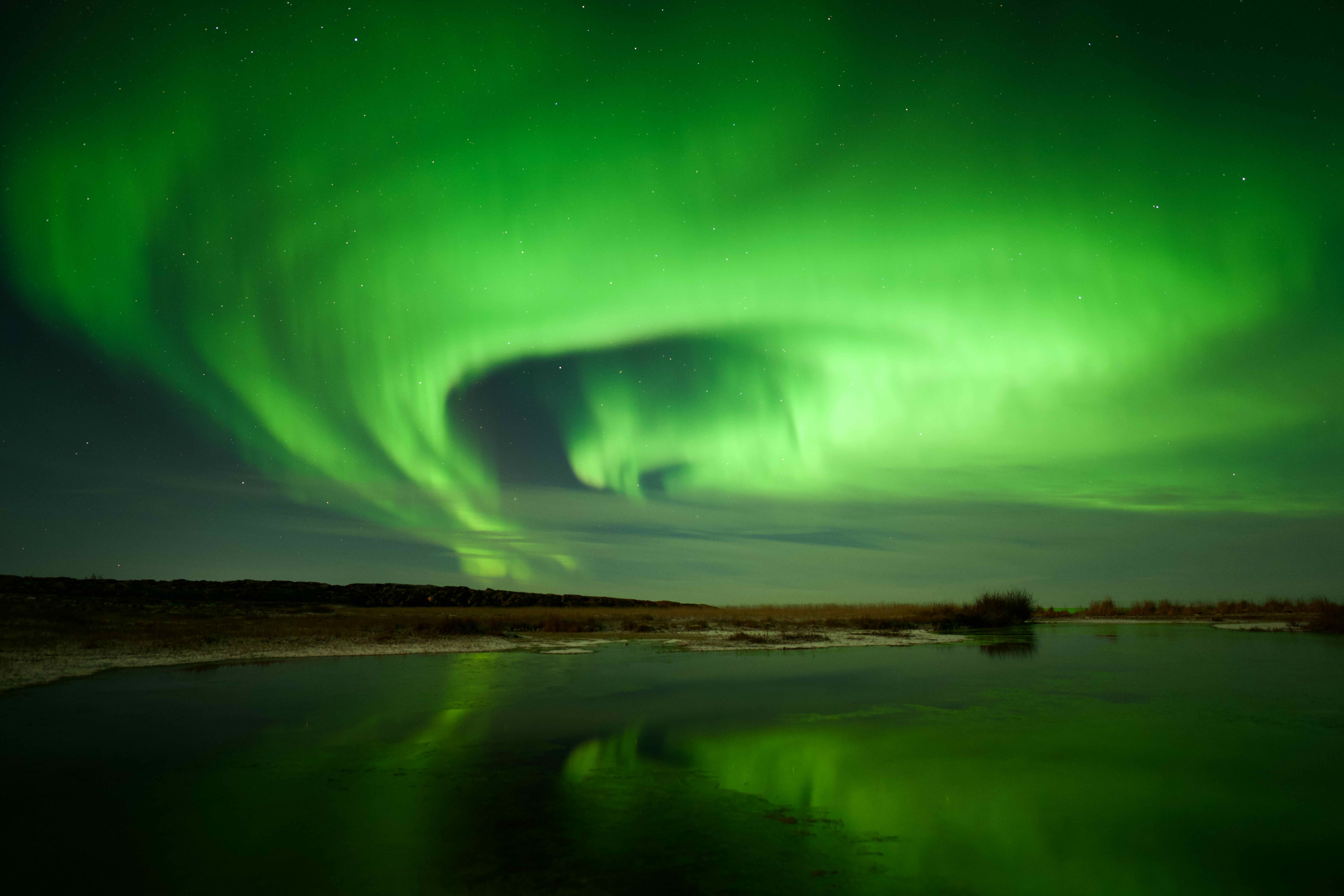
One night was clear and I had a ten minute window to capture the aurora borealis before it faded:
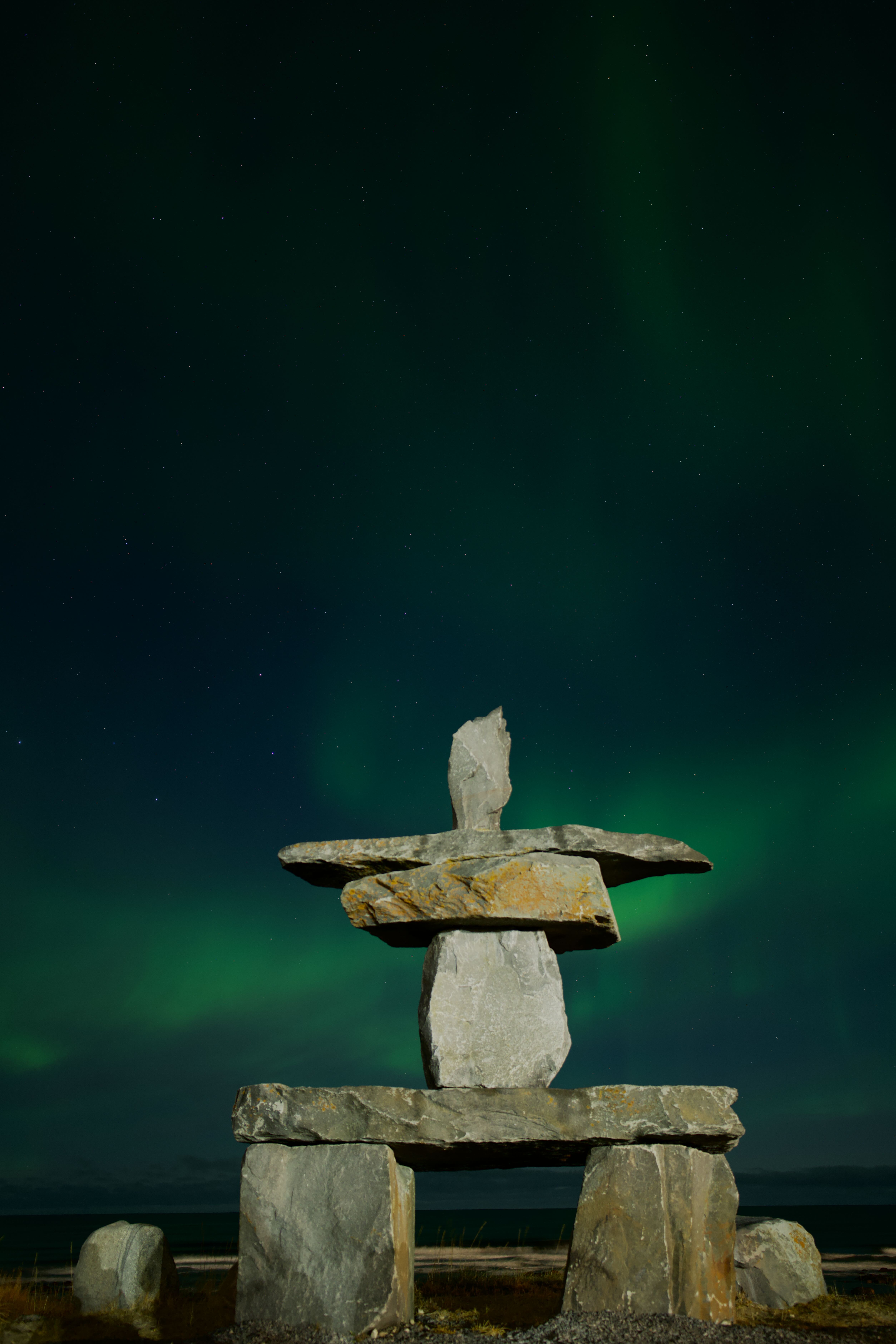
As the aurora faded I shot this Inukshuk, which is a traditional Inuit stone marker used as a navigation aid, marker for travel routes, fishing place, hunting ground, and location of reverence or memorial significance. The word “inukshuk” means “in the likeness of a human.”:
The wreck of the MV Ithaca, which ran aground in 1960:

Polar bears (Ursus maritimus) are the reason tourists come to Churchill. The primary food of the Churchill polar bears is ring seals and their primary hunting method is called still-hunting, an ambush tactic where polar bears wait by seal breathing holes in the ice. Ring seals maintain 10 to 15 open breathing holes in the ice throughout the winter by using their sharp claws. They surface every 5 to 15 minutes to breathe. Polar bears use their sensitive sense of smell to locate these holes. Bears wait motionless for many hours for a seal to surface. When a seal pokes its nose up from the water, the bear grabs the seal’s head and… well, you can guess:
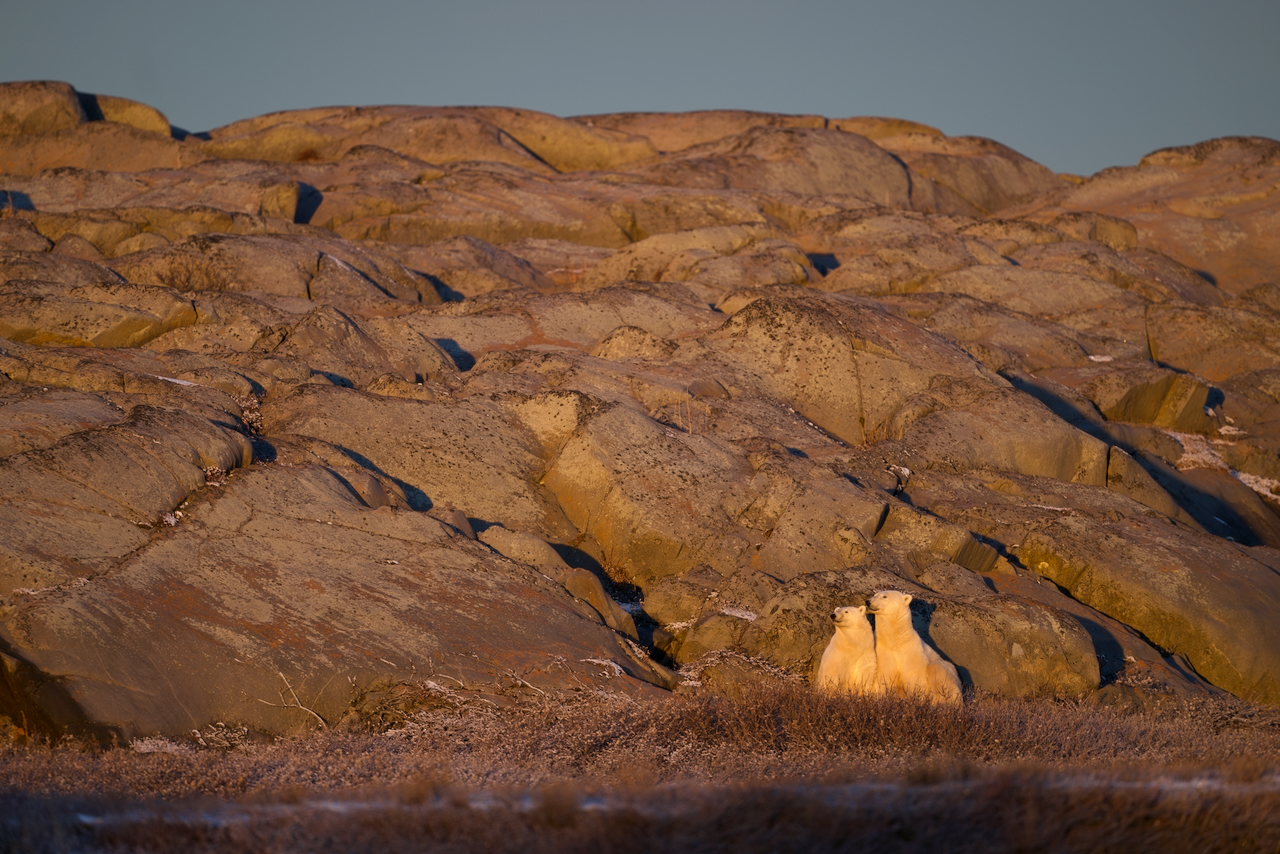
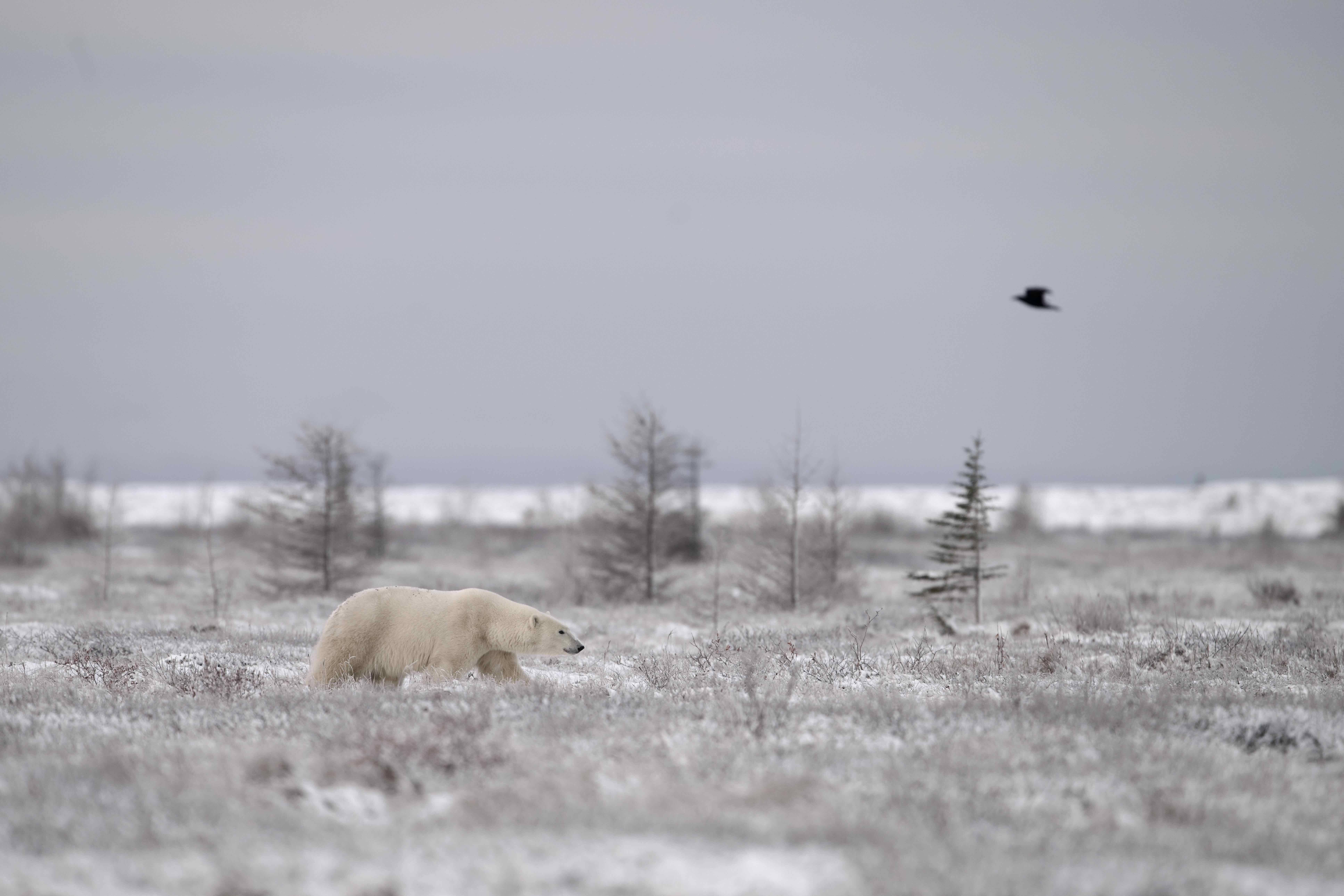
Obviously, still-hunting can only be done on ice. Hudson Bay is one of the Arctic regions where sea ice melts completely each summer, forcing all polar bears ashore for an extended fasting period (other Arctic populations live and hunt on ice year-round). The Western Hudson Bay population experiences one of the longest ice-free periods of any polar bear population, historically lasting 3-4 months from late July through early November. This seasonal pattern creates what researchers describe as a “walking hibernation,” where bears must survive entirely on fat reserves accumulated during their seal-hunting season on the ice:
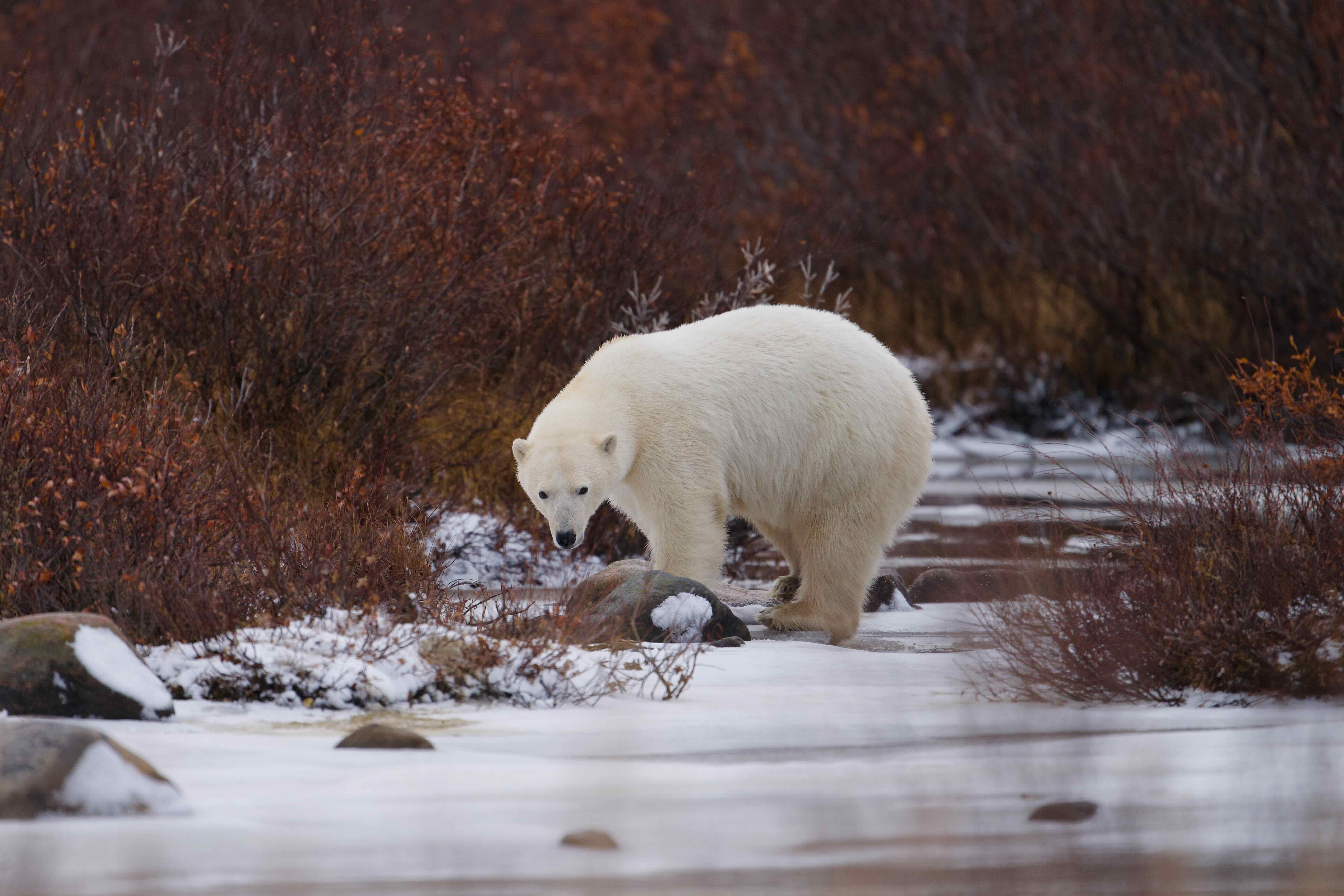
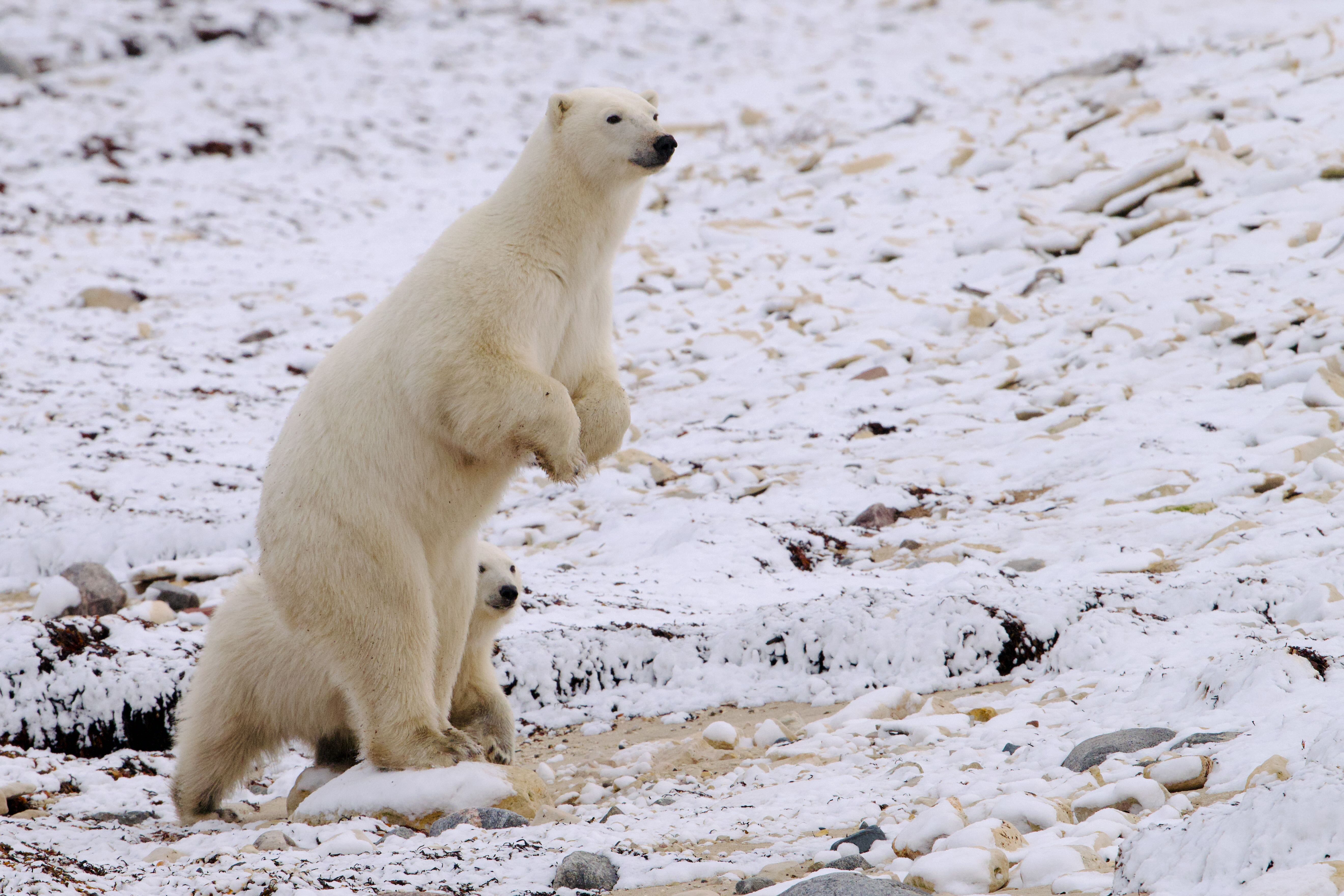
The local Churchill population is in decline. Extended ice-free periods due to climate change and unusual weather are blamed. Particularly hard hit are adult females and cubs, as pregnant females often lack the food necessary to successfully birth and raise cubs:
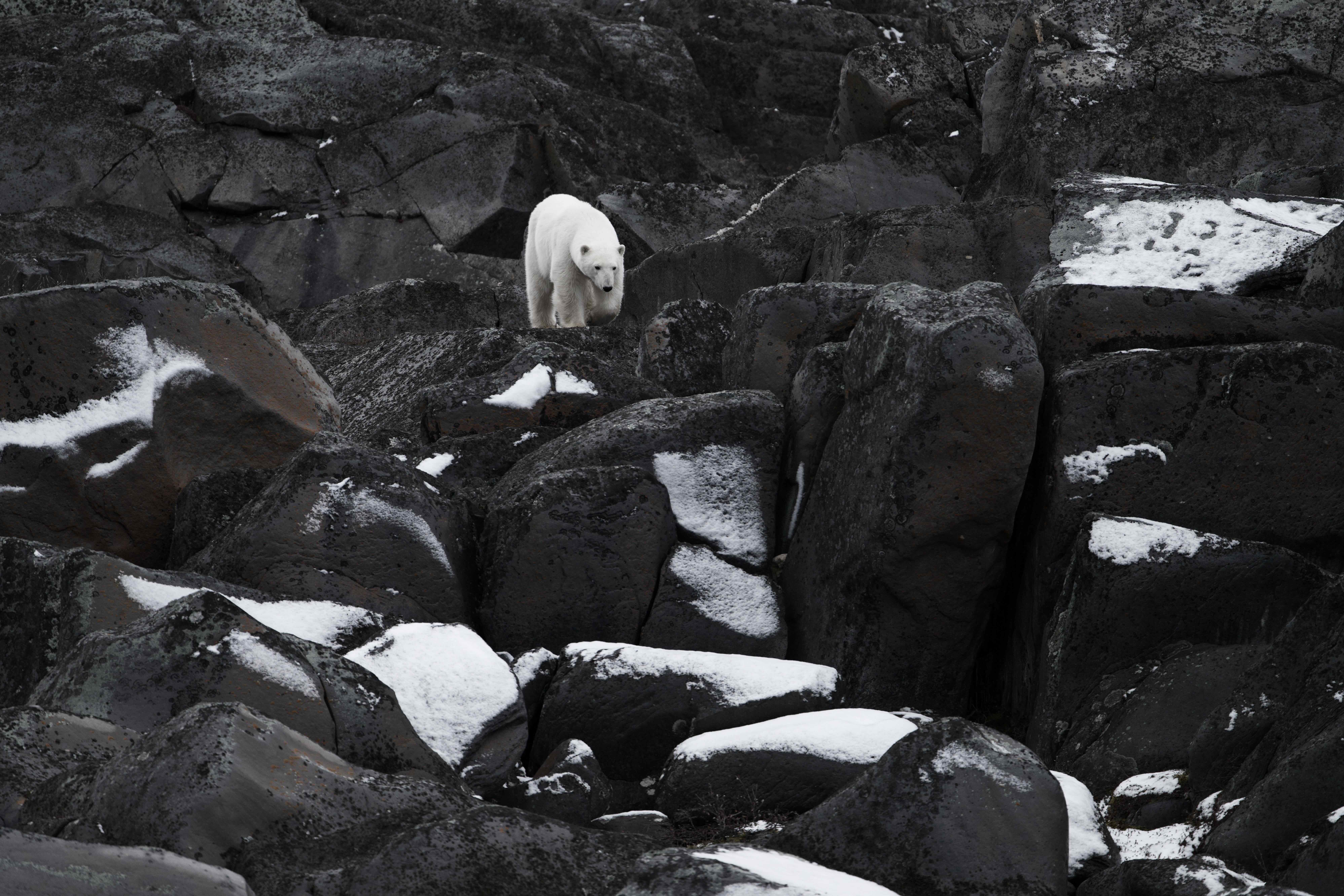
Polar bears congregate around Churchill due to its protrusion into Hudson Bay. The counterclockwise currents in Hudson Bay deposit melting ice along the coast in summer, where most bears come ashore. In autumn, these same currents cause ice floes to accumulate. Additionally, the Churchill, Nelson, and Hayes Rivers discharge freshwater into shallow coastal waters, and since freshwater freezes at higher temperatures than saltwater, ice forms earlier in this location. This early freeze-up attracts hungry bears eager to return to hunting after months of fasting:
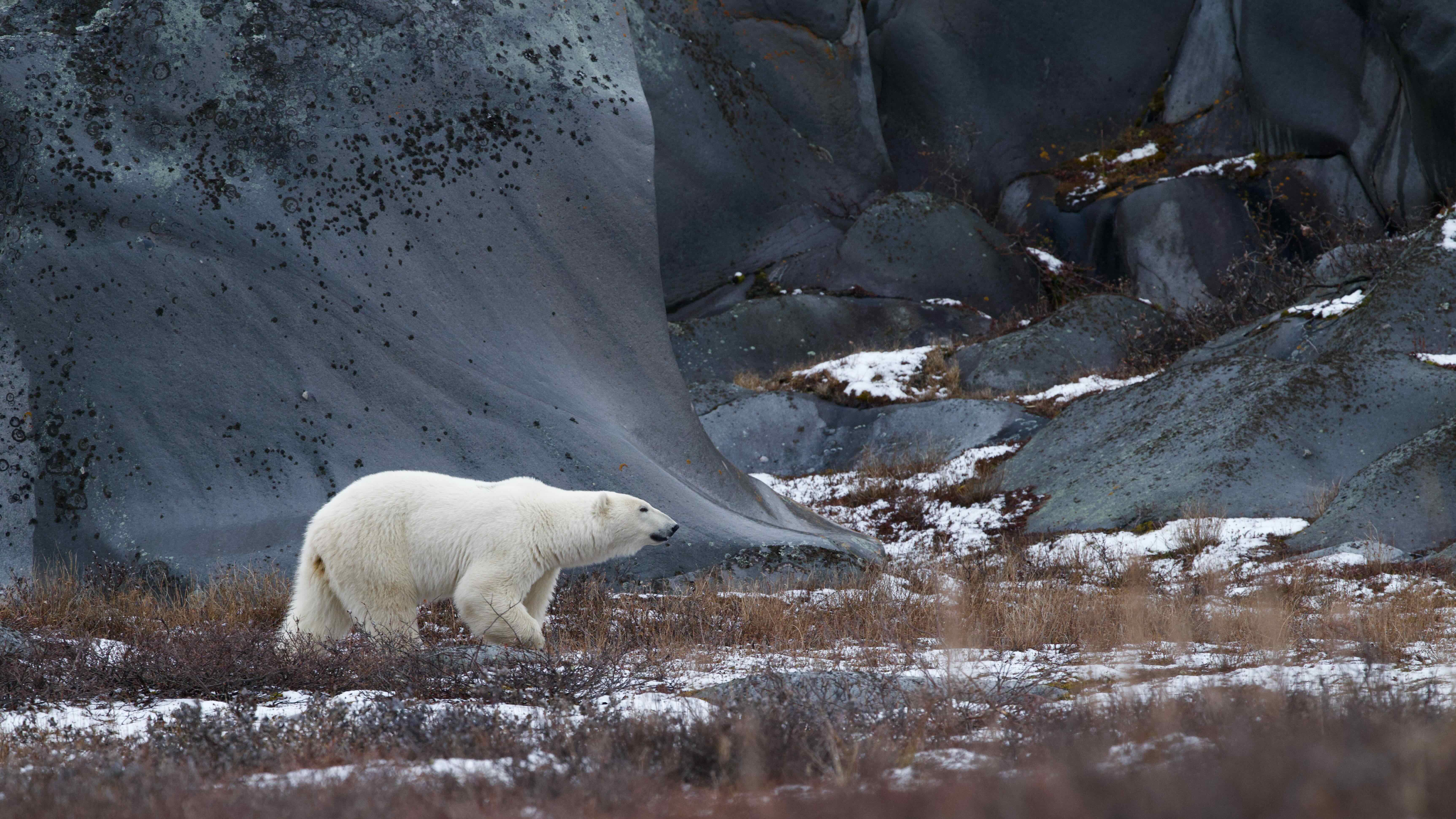
Unfortunately, it is expected that ice-free periods may soon exceed critical fasting thresholds and that extirpation may be inevitable for the Hudson Bay populations that require seasonal ice. 2024 set a record of 198 ice-free days in Southern Hudson Bay:
The willow ptarmigan (Lagopus lagopus) undergoes a complete molt from brown in summer to white with black tail in winter:

The genus name Lagopus means “hare-footed,” referring to the feathers that completely cover their feet all the way to the tips of their toes. The feathers on the soles of their feet increase the weight-bearing surface area of their feet, acting as bird snowshoes so that they can walk on top of snow and also providing thermal insulation. Like other grouse, willow ptarmigans excavate snow burrows for roosting:

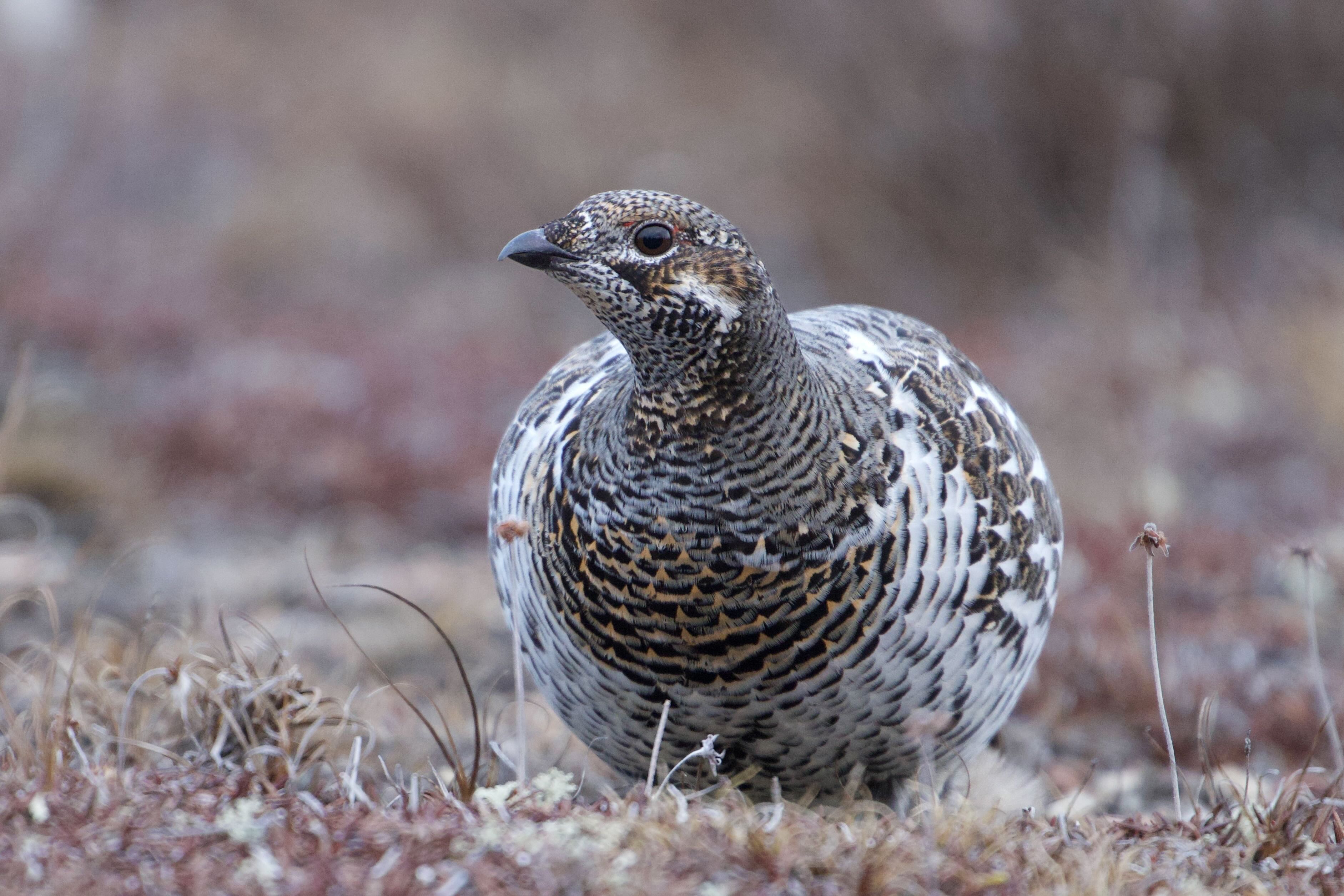
The spruce grouse (Canachites canadensis) survives winter on a diet of conifer needles. These needles are low in protein and extremely difficult to digest due to high cellulose content. To accommodate this diet, the spruce grouse’s digestive system enlarges during the winter:
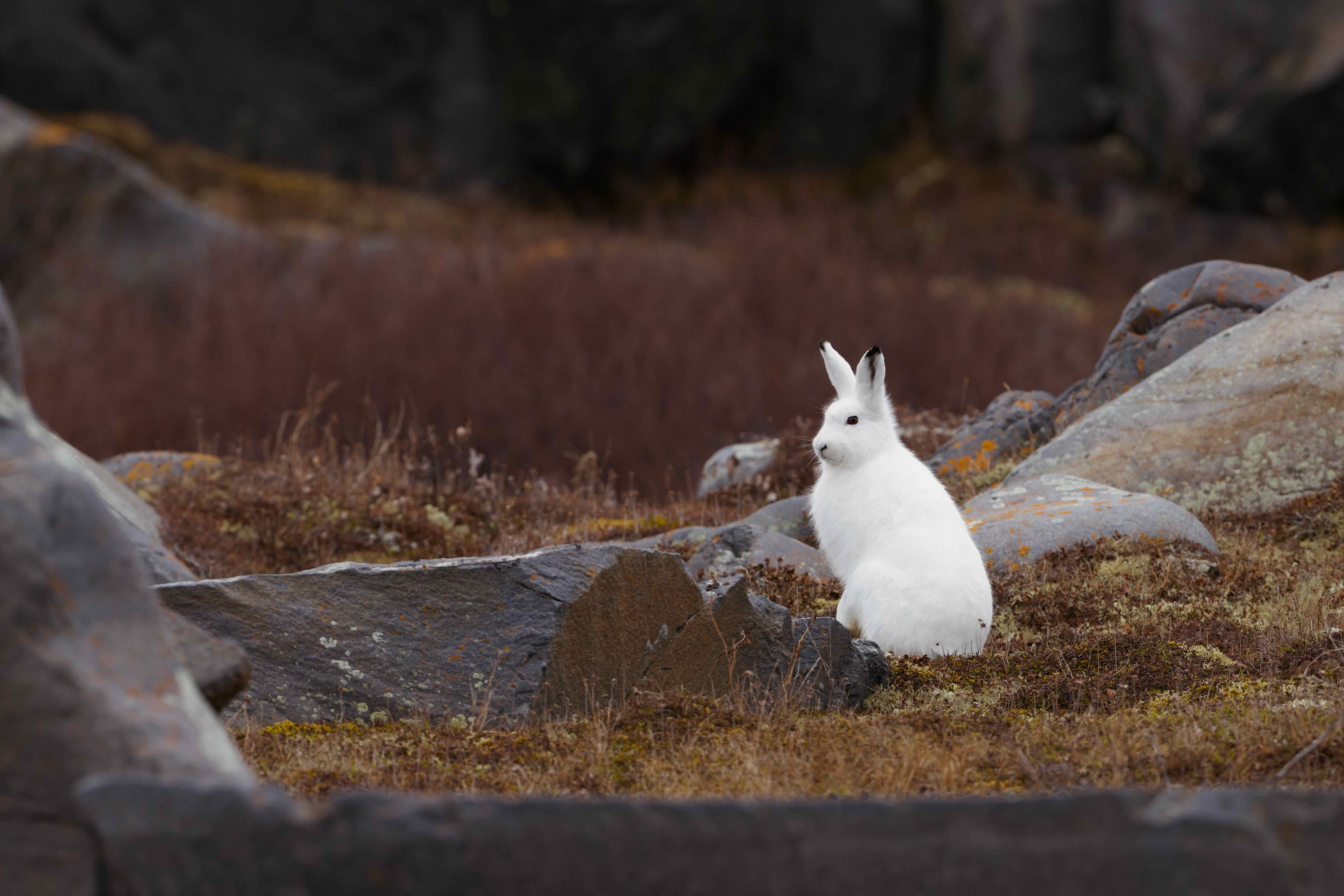
Arctic hares (Lepus arcticus) maintain normal body temperature (38.9°C) during the winter while despite a depressed basal metabolic rate. A reduced surface area to volume ratio through their compact body structure, combined with insulation from their thick fur and ~20 weight % body fat, enables them to maintain homeostasis:
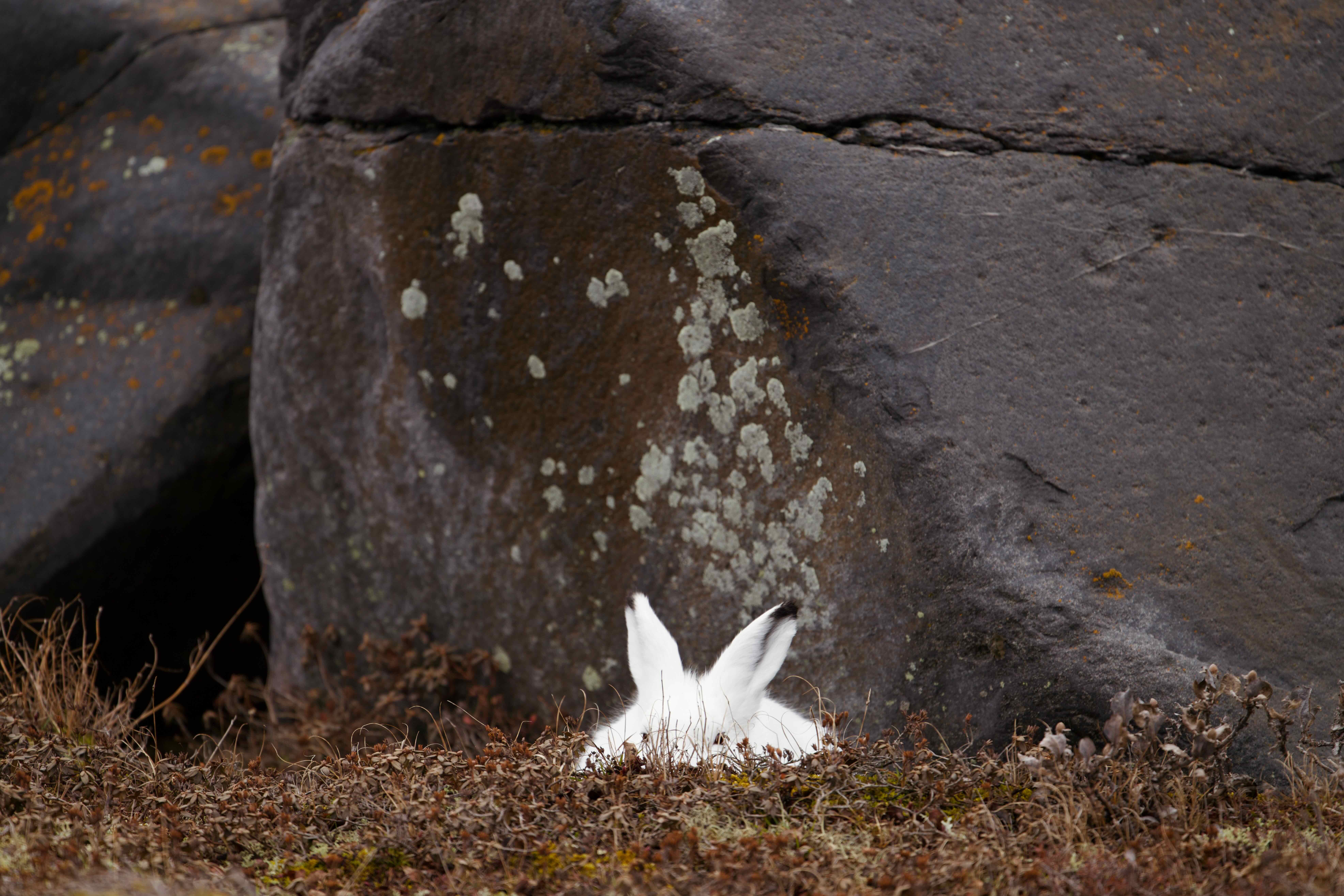
Willows comprise the hares’ primary food source in the barren arctic. They consume every part of willow shrubs, including bark, twigs, roots, leaves, and buds. While generally solitary animals, arctic hares “flock” during winter months. Groups can range from dozens to as many as 3,000 individuals, huddling for warmth and moving as a single body:
Readers’ wildlife photos

November 11, 2025 • 8:15 am

Today UC Davis ecologist Susan Harrison sends us photos of birds she snapped in Massachusetts. Susan’s captions and IDs are indented, and you can enlarge the photos by clicking on them.

. . . and send in your photos as we’re running low.

November at a bird feeder in New Salem, Massachusetts

On a November visit to the ‘Five Colleges’ of western Massachusetts, it was too late to see either peak fall colors or migrating songbirds.   My photographic urges turned to the resident (non-migratory) songbirds and small mammals, many of whom were hungrily frequenting a bird feeder at my friend’s house on a nearly-freezing day in New Salem. Settling on a cozy covered porch, overlooking the wildly busy feeder that hung next to a Red Oak (Quercus rubra) branch, I was able to catch pictures of some common East Coast birds that had previously eluded me – particularly the first two species, which can be shy and fast-moving.

Blue Jay (Cyanocitta cristata):

Tufted Titmouse (Baeolophus bicolor):

Mourning Dove (Zenaida macroura):

Northern Cardinal (Cardinalis cardinalis):

Red-bellied Woodpecker (Melanerpes carolinus):

Feeder scenes:

Eastern Gray Squirrel (Sciurus carolinensis); although I had been surprised to see one of these striking black rodents in western Washington State, this melanistic form is apparently common in parts of the species’ native range in northeastern North America:

American Red Squirrel (Tamiasciurus hudsonicus):

Habitat photo from the Quabbin Reservoir overlook:

Readers’ wildlife photos

November 8, 2025 • 8:15 am

Yo, people: we’re down to only one more batch of photos, and then this feature will disappear.  Today I’ll put up the singletons or doubletons that readers have contributed from time to time. Send in your photos. Captions of photos are indented, and you can enlarge them by clicking on them.

First, from Tara Tanaka (FB page here, Flickr page here and Vimeo page here), a barred owl (Strix varia):

We are in an exceptional drought here in Tallahassee. I had just put fresh water in the bird bath for the third time today when I looked out the window to see the first ever Barred Owl on the bath arriving for what would be about ten sips of water.

From Robert Lang, who submitted a “spot the” photo of a rattlesnake that was too easy. I’ll show the original, the reveal, and a video:

This is a pretty easy Spot The… entry—it’s Find the Southern Pacific Rattlesnake (Crotalus oreganus helleri) , encountered along the Gabrielino Trail above the Jet Propulsion Laboratory in Pasadena (which was my employer many years ago—um, JPL, not the snake). It was noteworthy for having the longest set of rattles I’ve seen on one of our local rattlers.
Attached is the “find-the-“ photo and a close-up showing the rattles. Also, if interesting, here’s a short video. It was very mellow; never rattled, despite all the people walking by (it’s a popular trail).
I’m sure you can spot the snake in this one:

The “reveal”:

. . . and a video:

From Laura Prail in Duluth, Minnesota. It looks to me like an older buck of the white-tailed deer (Odocoileus virginianus):

We just had this fellow wander through our yard, taken with an I-phone through our front window. 

Readers’ wildlife photographs

October 25, 2025 • 8:15 am

Ecologist Susan Harrison has contributed some photos of bears, owls, and other critters in an “October Surprise” contribution. Susan’s captions and IDs are indented, and you can enlarge her photos by clicking on them.

October Surprises

…no, not the political kind

Rounding a corner on a recent hike near Ashland, OR, I was startled to come face-to-face with a Black Bear (Ursus americanus).  She glared and began walking toward me, while her half-grown cub rustled among the dry leaves downslope of the trail.  Lowering my eyes, I backed away, and when she stopped advancing I managed a few photos.  She eventually retreated to the trailside and watched me and a mountain biker pass by, evidently convinced of our harmlessness.

Black Bear:

This bear’s habitat and one of its chow sources, the berries of Madrone (Arbutus menziesii):

Until then, the most charismatic creature I saw recently was a Burrowing Owl (Athene cunicularia), hanging around a set of artificial owl burrows on some conserved grasslands near Davis, CA.  These little owls typically usurp the homes of Ground Squirrels (Spermophilus beecheyi).  To boost owl numbers, people have taken to constructing owl burrows using cinderblocks, PVC pipe and other materials. Constructed burrows don’t always attract owls, and it was especially surprising to see this lone owl at the burrows in the non-nesting season.  He or she alternated hiding in the tall grass and popping out to perch briefly on fences, all the while keeping an eye upward for hawks.

Burrowing Owl:

A lesser but still enjoyable surprise this fall was that our yard received two “first ever for the yard” visitors, a Cassin’s Vireo (Vireo cassinii) and a Lincoln’s Sparrow (Melospiza lincolnii).

Cassin’s Vireo:

Lincoln’s Sparrow:

Very early one morning when my cats had persuaded me to let them outside, a slightly menacing surprise was a Great Horned Owl (Bubo virginianus) parked on top of the neighbor’s tree, singing away and presumably waiting for small to medium-sized mammals.  We went indoors.

Great Horned Owl:

On a brief visit to friends in Bellingham, WA, black squirrels were an unexpected sight.  These are melanistic Eastern Gray Squirrels (Sciurus carolinensis) that were introduced to this area around 1900.   Per Wikipedia, a single dominant mutation causes both their color and higher cold tolerance.  I think they are rather beautiful.

Bellingham black squirrel:

Readers’ wildlife photos

October 22, 2025 • 8:15 am

Today’s wi8ldlife photos came from Charles Dunlop, who notes that they were taken in Costa Rica in 2019.  I’ve indented his brief captions, and my own IDs are in brackets. Some of the animals are unidentified, so feel free to weigh in in the comments. You can enlarge the photos by clicking on them.

Violet sabrewing [Campylopterus hemileucurus]:

Scorpion under black light:

Snake seen on night walk in Monteverde:

Coati [Nasua sp.]:

Crested guan [Penelope purpurascens]:

Cherrie’s tanager [Ramphocelus passerinii costaricensis]:

Iguana [Iguana sp.]:

Capuchin monkey [Cebus sp.]:

Jesus Christ Lizard [Common basilisk, Basiliscus basiliscus]:

Agouti [Dasyprocta sp.]:

White-throated magpie-jay [Cyanocorax formosus]:

Howler monkey [Alouatta palliata]::

Readers’ wildlife photos

October 14, 2025 • 8:15 am

Charles Dunlop sent some photos with a short intro.  His brief IDs (without species names) are below, and click to enlarge the photos. (I’ve linked to species when I can identify them, but readers can help in the comments.)

Attached are some photos that I took in Costa Rica in 2019. 

Black-bellied hummingbird:


Blue Morpho butterfly:

Big Cats, La Paz:

Jaguar, La Paz:

Frog, La Paz:

Resplendent Quetzal:

Millipede:

Bananaquit:

Crab:

Iguana sp.:

Crocodile:

Readers’ wildlife photos

September 10, 2025 • 9:00 am

Well, we’ve pretty much run out of contributions with multiple photos, but we have a few good contributions with smaller numbers of photos. I’ll put a few of them together here, but we’re gonna go dry after tomorrow unless someone steps up.  Thanks.

All readers’ narratives or IDs are indented, and you can enlarge the photos by clicking on them:

From Rachel Sperling:

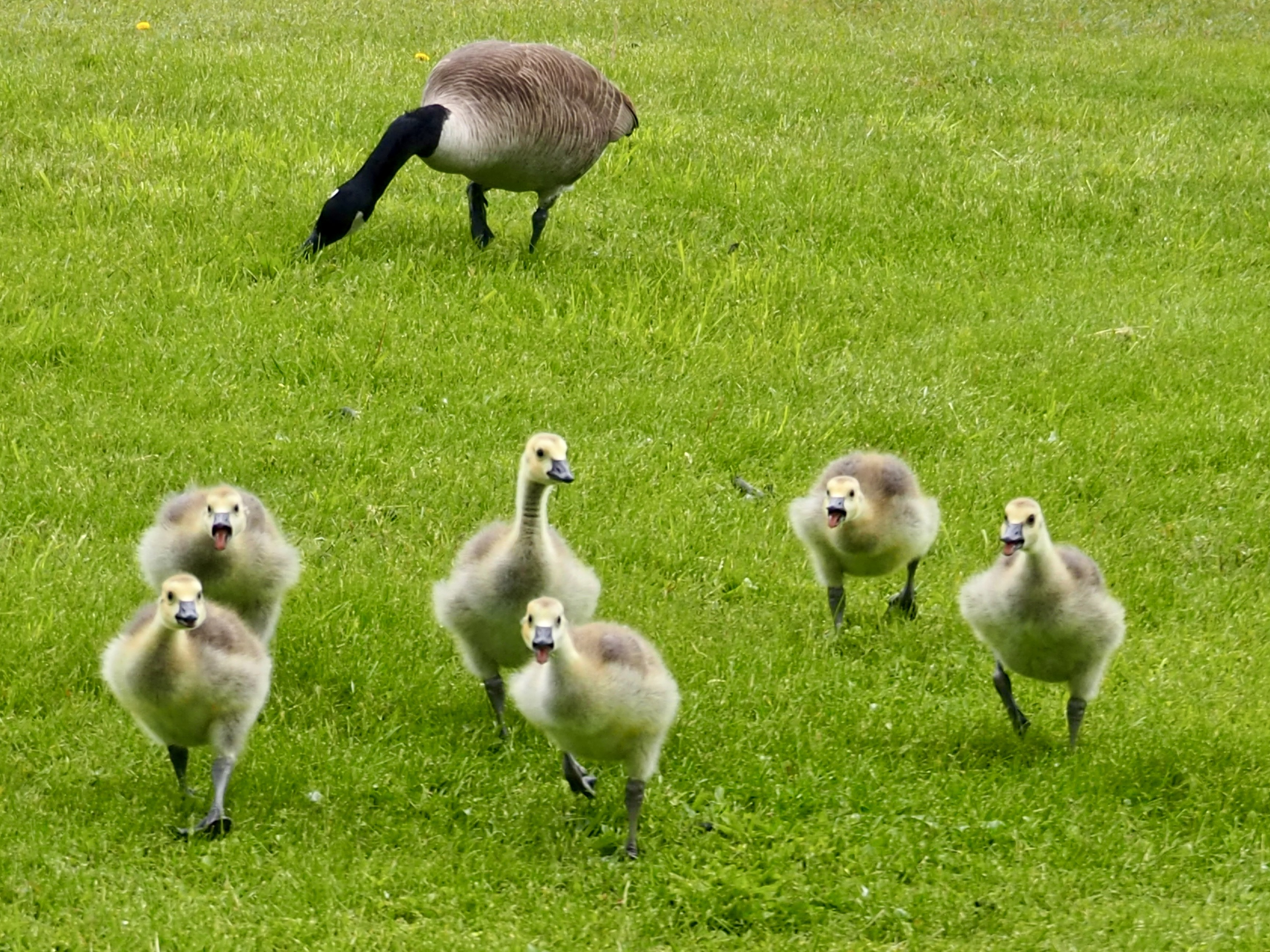
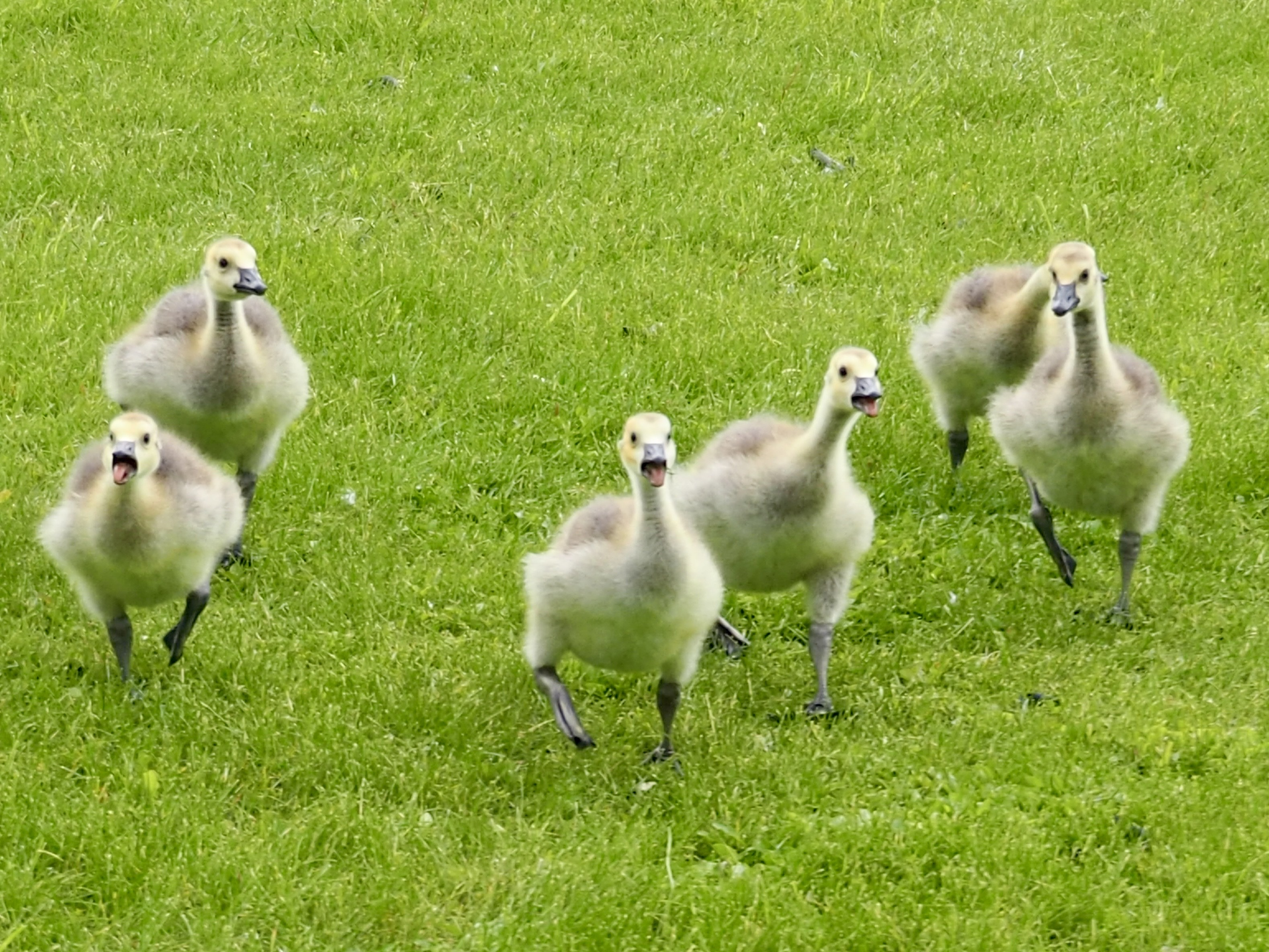
I’m sorry these photos aren’t higher quality but the subjects refused to stand still. Back in May a friend and I were hiking the Appalachian Trail in New Jersey when we came upon a family of Canada geese (Branta canadensis) by a pond close to Highpoint State Park. I thought we were at a respectful distance, but apparently the goslings thought otherwise because they charged. The parents just stood back and let their kids handle things (which is good parenting, I guess). Anyway, we backed away quickly but for a few moments it seemed we were in some very cute danger. Actually, we were more afraid the goslings would run into the nearby street but they stopped once we were in retreat.

Rabbits from reader Bryan Lepore, Eastern cottontails (Sylvilagus floridanus)

These little ones are in mid-ish Massachusetts in my backyard.  Cottontail are in the genus Sylvilagus, which is in the family Leporidae. I should have been more exited – Lepore!

First photo June 26; second photo June 29 [2025]

From Paul T.:

At or near my house.  West side of Madison WI. Just taken with my phone.  Three white-tailed deer (Odocoileus virginianus) last winter and sandhill cranes (Antigone canadensis) last spring.  Last month’s wild turkeys (Meleagris gallopavo)—four strutting their stuff, and one outside my window.

And some bald eagles (Haliaeetus leucocephalus) from Christopher Moss:

Not terribly good, as they are cropped to the centre of the original, despite using a 750mm lens. I had noticed something black on the frozen pond, and when the eagle landed to investigate I realised something had died there. The crows were squawking a lot and I wondered if it was one of their number.