Why Evolution is True is a blog written by Jerry Coyne, centered on evolution and biology but also dealing with diverse topics like politics, culture, and cats.
My friend Andrew Berry, who teaches and advises students at Harvard and writes about the history of science, is one lucky git. He’s regularly invited to lecture on Harvard alumni and student trips, and just recently returned from a trip to Tanzania and Rwanda. The group saw many things, but Andrew highlights two of them in this post: zebras and mountain gorillas. His narrative and IDs are indented, and you can enlarge his photos by clicking on them.
Here are some photos from a recent trip to Tanzania (Serengeti) and Rwanda (Five Volcanoes National Park). Rather than submitting a whole slate of safari inevitables (lions, giraffes, elephants, the usual suspects), I am focusing on two especially wonderful species, zebra and mountain gorilla.
Zebras. We’re too accustomed to seeing zebras, they’re too familiar. That familiarity has robbed them of the recognition they deserve: as the craziest-, zaniest-, grooviest-looking animals on the planet. A pony in black & white striped pajamas. A Martian visiting planet earth would, I suspect, be unimpressed by the range of animal color diversity they encounter: a lot of beiges, and browns, and grays. The occasional sexually selected bird might raise a Martian eye brow. But zebras?! These would have our Martian beaming excited messages home. We should ponder zebras anew. Equine escapees from a Keystone Cops jail? Surreal emanations of a mind capable of traveling far beyond the imaginings of Magritte? Psychedelic album art from the ‘60s?
These are plains zebra, one of three zebra species. Zebra taxonomy has over the years been a little fraught – what constitutes a species, what a sub-species? — but today the plains zebra is classified as Equus quagga. This seems at first sight anomalous because the Quagga was traditionally presumed to be an extinct zebra relative. Limited in its distribution to South Africa, the last known Quagga died in Amsterdam zoo in 1883. The Quagga’s striping was decidedly half-hearted – it lacks that full-on B & W commitment of the true plains zebra.
It might look distinct and fail to compete on the striping front, but the Quagga is in fact merely a form of the plains zebra. Ancient DNA sequencing studies from museum material reveal that Quaggas are nested within the plains zebra family tree, meaning that Quaggas and plains zebras are members of the same species. What, then, should we call the combined species? Here the rules of Zoological Nomenclature come into play. When two groups are combined, we use the *oldest* name that was applied to either of them. In this case, the first formal description was of Equus quagga. The plains zebra was formally designated Equus burchelli in 1824, but the Quagga was named E. quagga as early as 1785 by the Dutch naturalist Pieter Boddaert (who was in frequent correspondence with Carl Linnaeus, the Swedish father of modern taxonomy). And, in taxonomy, precedence is based on antiquity: old trumps new, even when “new” is 1824: all plains zebra, including the Quagga, are E. quagga. “Quagga” apparently derives from the Khoikhoi word for zebra, which is onomatopoeic, resembling the quagga’s call.
Why the stripes? A recent paper describes this as a biological problem “with too many solutions.” A recent review concluded that there are no fewer than eighteen hypotheses out there to explain zebra striping! The most popular idea – some form of crypsis or camouflage – was perhaps first expressed in Rudyard Kipling’s ‘Just So’ stories. “With standing half in the shade and half out of it, and what with the slippery-slidy shadows of the trees falling on them, the Giraffe grew blotchy, and the Zebra grew stripy.” But University of Bristol biologist Tim Caro, who’s written an entire book on the subject, dismisses this and 16 other hypotheses. Sexual selection? No, says Caro, because you expect sexual dimorphism (differences between the sexes) when sexual selection is operating (think peacock and peahen: flamboyant and drab). No marked sexual dimorphism in zebra.
Caro comes to an unexpected conclusion. (The epigraph at the beginning of his book comes from Sherlock Holmes: “When you have eliminated the impossible, whatever remains, however improbable, must be the truth”). He thinks that zebra stripes evolved to reduce the impact of biting flies (which – think tsetse – are often disease-carrying in Africa). Experiments indicate that flies are indeed averse to landing on surfaces with contrasting color patterns. Here, from a 2020 paper, is data on the flight trajectories of flies approaching horses clad in “coats” with different patterns. The red lines on the left represent individual fly’s trajectories. On the right, the gray line is for a horse coat in a plain, solid color; the red, blue, and green ones for various striped or checkered coat patterns. Flies approaching the plain, solid color are around twice as likely to approach close enough for a landing relative to flies approaching the striped/checkered coats.
Overall, this suggests that the selective pressures driving zebra stripiness lie in the specifics of the biting flies’ visual systems. Weirder and weirder. And perhaps appropriate: Earth’s most surreal inhabitants are made that way by the quirks and limitations of dipteran vision. Magritte would love it. Stay tuned for further developments!
************************
Mountain Gorillas
Gorillas, our closest living relative after Chimpanzees, have a most recent common ancestor with humans about 10 million years ago. Today, there are two recognized species, Eastern and Western Gorillas (Gorilla beringei and G. gorilla, respectively), which separated about 1.75 million years ago. Mountain Gorillas (Gorilla beringei beringei) are a subspecies of the Eastern species. Mountain Gorillas, which, when last censused a few year ago, numbered only 1,000 individuals or so, exist in two populations, one in Uganda’s Bwindi Impenetrable National Park, and the other in the Virunga volcanic mountains of Central/East Africa. I visited one of the latter populations, in Rwanda’s Five Volcanoes National Park.
Mountain Gorillas were famously studied first by George Schaller and then by Dian Fossey. Together, they established the baseline for long term primatological studies of the species. Critically, they demystified Gorillas: gone was the belligerent King Kong image; instead, they are Gentle Giants, King of Vegetarians. Fossey went on from Gorilla science to Gorilla advocacy, championing her Gorillas in an intensely personal way. Her work was supported by National Geographic: a true synergism with the magazine gaining great copy and remarkable images of Fossey in the field with her Gorillas, and Fossey gaining research support and a prominent mouthpiece for her conservation message. These conservation priorities – complete with aggressive anti-poaching measures — were prompted in part by the death in 1978 at the hands of poachers of a male gorilla, Digit, a particular favorite of hers. She was murdered at her field site in the Virungas in 1985, possibly by those she had antagonized in her campaign against poaching. She was buried there, beside Digit. Fossey was a divisive figure for sure, but she did a great deal of important pioneering science and is probably responsible for the conservation success story that the Mountain Gorillas represent today.
Fossey’s 1988 book, Gorillas in the Mist, remains a classic of field biology. The movie of her life, with the same title, starring Sigourney Weaver, came out just three years after her death. Recommended: plenty of the film was made on location in the spectacular forests of the Virungas.
Part of that conservation strategy is to bring money in via eco-tourism. I was impressed by how well this is organized in Rwanda. Many groups of Gorillas have been habituated to humans, a process first started by Fossey. Primatologists need to habituate the animals to their presence if they are to study them; and habituation is necessary too if tourists are to be able to get close to the Gorillas.
The Five Volcanoes National Park permits groups of no more than eight tourists, appropriately accompanied by guides and trackers, to visit specified groups of Gorillas. Each encounter lasts no longer than one hour. I visited the Mutobo group close to Fossey’s Karisoke research camp. The team guiding my group was enterprising and patient – it’s not easy going through the dense vegetation – and passionately concerned about the well being of their charges. Masks on. The last thing we wanted to do was to transmit a human disease to our close relatives.
I was surprised how powerful and affecting it was to spend an hour in the company of Mutobo’s group: we encountered the mighty, massive silver back, a couple of reproductive females, and several hyper-active juveniles. The humanness of the scene was unmistakable: an excited and active baby trying to induce Mum or Dad to play, when they – we’ve all been there – were much keener on taking a nice early afternoon nap.
An up-close-&-personal encounter with our Great Ape relatives is a sobering experience: we are different, for sure, but also disconcertingly similar in so many ways. Traditionally, we tell the story of Darwin’s ‘Eureka!’ moment in the Galapagos Islands when he noted the adaptive differences among the bills of the birds – Darwin’s finches – and started to think about a process, evolution, that could account for the planet’s biological diversity. In fact, Darwin realized the significance of the Galapagos finches only in retrospect. An unsung key moment of the Darwin story was, I believe, more important in his journey of scientific discovery. Shortly after returning from the Beagle voyage, he spent time, in the London Zoological Gardens, with the first living Great Ape ever brought to London, a juvenile female Orang (another Great Ape species that is slightly more distantly related to us than Gorillas) called Jenny. We know from his notebooks that Darwin was flabbergasted by the humanness of this animal. We are no different from Darwin on this: a close encounter with great apes is sure to reinforce the sense that we humans are an embedded part of nature, rather than somehow disconnected from it. My Darwin-meets-Jenny experience took place in the Virungas. A special privilege. And I was pleased too to be able to visit the site of Fossey’s camp and to pay my respects to her final resting place, beside her beloved Digit.
The plaque marking Fossey’s grave includes her local name, Nyiramachabelli, meaning ‘Woman who lives alone on the mountain’
Today we have the eighth and last set of photos from reader Ephraim Heller’s recent trip to Africa. His notes and captions are indented, and you can enlarge his photos by clicking on them:
Here is the final installment of my virtual safari. These photos were taken in Tanzania in April 2025. Most are from the Serengeti National Park with a few from the Ngorongoro Conservation Area.
African bush elephants (Loxodonta africana) in a field of spring flowers in the Ngorongoro Crater:
Elephant at dawn:
Thomson’s gazelle (Eudorcas thomsonii) sparring over territory in the Ngorongoro Crater:
I’m enchanted by the playfulness of Banded mongoose (Mungos mungo), so I include a few facts courtesy of Wikipedia:
Banded mongooses live in mixed-sex groups of 5–75 individuals with an average of around 20 individuals. Groups sleep together at night in underground dens, often abandoned termite mounds, and change dens frequently (every 2–3 days). Relations between groups are highly aggressive and mongooses are sometimes killed and injured during intergroup encounters. Banded mongooses feed primarily on insects, myriapods, small reptiles, and birds. Millipedes and beetles make up most of their diet, but they also commonly eat ants, crickets, termites, grasshoppers, caterpillars, earwigs and snails. Other prey items of the mongoose includes mice, rats, frogs, lizards, small snakes, ground birds and the eggs of both birds and reptiles. Banded mongoose forage in groups, but each member searches for food alone; however they work as a team when dealing with venomous snakes such as cobras:
The spotted hyena (Crocuta crocuta), also known as the laughing hyena. Wikipedia reports:
The spotted hyena is the most social of the Carnivora in that it has the largest group sizes and most complex social behaviours. Its social organisation is unlike that of any other carnivore, bearing closer resemblance to that of cercopithecine primates (baboons and macaques) with respect to group size, hierarchical structure, and frequency of social interaction among both kin and unrelated group-mates. The social system of the spotted hyena is openly competitive, with access to kills, mating opportunities and the time of dispersal for males depending on the ability to dominate other clan-members and form ally networks. Females provide only for their own cubs rather than assist each other, and males display no paternal care. However, the spotted hyena is also very cooperative with their clan-mates; often hunting, eating, and resting together, and making use of their numeracy and communication skills to fight off a common enemy. Spotted hyena society is matriarchal; females are larger than males and dominate them:
We’re running low on this feature, so please send in some good photos. I won’t beg again for a while.
Today we have photos from Africa by Loretta Michaels. Her captions and IDs are indented, and you can enlarge the photos by clicking on them.
Brief Introduction: I used to do a lot of business in Africa and so I almost always tried to tack on a weekend safari of some sort while there. Most of these times I had only my iphone to take pictures, unlike the bigger safari vacations my husband & I take with all our camera gear.
While in Dar es Salaam on business, I spent a weekend on Chumbe Island, just off the coast of Zanzibar. One of the more bizarre sightings was a Coconut Crab (Birgus latro), the largest land crab in the world, which is able to climb coconut palms and easily crack coconuts with its claws. These crabs also eat fleshy fruit and even prey on smaller crabs. This species of crabs has evolved to live on land from the sea, returning to water only to lay their eggs. On land, they live in underground holes made with fibers from coconut husks, and are generally only spotted at night. An adult crab can reach one meter in length. It has a curled-under abdomen that makes it look like a lobster. Coconut crabs supposedly have very tasty meat, so, unfortunately, they are hunted:
Three nicely aligned bush elephants (Loxodonta africana) I saw during a trip to Zambia:
A nice female African lion (Panthera leo), spotted during a night drive in Zambia:
A Komodo Dragon (Varanus komodoensis) spotted during a drive:
Two white rhino (Ceratotherium simum) in Nairobi National Park, a 45 square mile wildlife sanctuary established in 1946 just outside Nairobi:
Lunchtime at the Lilayi Elephant Nursery just outside Lusaka, Zambia. The baby elephants are just adorable to watch, especially as they come running in from the fields when they see it’s feeding time:
A Golden Monkey (Cercopithecus mitis kandti) spotted in Volcanoes National Park in Rwanda:
A mother and baby mountain gorilla (Gorilla beringei beringei) in Volcanoes National Park in Rwanda, just outside Kigali. It is one of two subspecies of the Eastern Gorilla. The other population lives in the Congo. The park is one of the 3 homes of the endangered mountain gorillas within the Virunga Mountains:
Dominant male gorilla in Volcanoes National Park:
Variable Sunbird (Cinnyris venustus) in Rwanda. The sunbirds are a group of small Old Worldpasserinebirds which feed largely on nectar, although they will also take insects, especially when feeding young. Flight is fast and direct on their short wings. Most species can take nectar by hovering like a hummingbird, but usually perch to feed most of the time:
The Naturalistic Fallacy, which most of you surely know, it the erroneous equation of what does exist with what should exist. Discussed extensively by Hume, it is the false equation of “is” with “ought”. In biology, it takes the form of observing some behavior in animals that is similar to a behavior in humans, and then justifying or saying the human behavior “natural” or “good” because we see it in other species.
But this is a bad argument, for it cuts both ways. After all, animals show a lot of behavior that would be considered reprehensible or even immoral in humans. In fact, Joan Roughgarden wrote a book, Evolution’s Rainbow, which describes sex and gender diversity in nature as an explicit way of justifying similar behaviors in humans as good—because they are natural. I reviewed the book for TLS and wrote this bit (review no longer online but I can send a copy).
Coyne, J. A. 2004. Charm schools. (Review of Evolution’s Rainbow, by Joan Roughgarden). Times Literary Supplement, London. July 30, 2004 (No. 5287), p. 5.
But regardless of the truth of Darwin’s theory, should we consult nature to determine which of our behaviours are to be considered normal or moral? Homosexuality may indeed occur in species other than our own, but so do infanticide, robbery and extra-pair copulation. If the gay cause is somehow boosted by parallels from nature, then so are the causes of child-killers, thieves and adulterers. And given the cultural milieu in which human sexuality and gender are expressed, how closely can we compare ourselves to other species? In what sense does a fish who changes sex resemble a transgendered person? The fish presumably experiences neither distressing feelings about inhabiting the wrong body, nor ostracism by other fish. In some baboons, the only males who show homosexual behaviour are those denied access to females by more dominant males. How can this possibly be equated to human homosexuality?
The step from “natural” to “ethical” is even riskier. As the philosopher G. E. Moore argued, identifying what is good or right by using any natural property is committing the “naturalistic fallacy”: there is no valid way to deduce “ought” from “is”. If no animals showed homosexual behaviour, would discrimination against gay humans be more justified? Certainly not. Roughgarden’s philosophical strategy is as problematic as her biological one.
Now a 2022 paper in Nature Communications had the potential to demonstrate the same fallacy, but fortunately the authors went to great lengths to avoid that The same, however, is not true of a new take on this paper in a new article in ZME Science, which gave a précis of the paper and stepped on the Fallacy’s tail.
First the Nature paper itself, which you can access by clicking on the article below, or by reading the pdf here.
It’s a good paper on the evolution and phylogeny of “same-sex sexual behavior” in mammals, which they define as “transient courtship or mating interactions between members of the same sex“.
Note that it’s “transient,” which explicitly excludes homosexuality, most notably in humans, which is a persistent sexual attraction to members of one’s own biological sex. This form of transient sexual interaction is surprisingly common—a conservative estimate is 4% of all animal species, and, as the authors say, [includes] “all main groups from invertebrates such as insects, spiders, echinoderms, and nematodes, to vertebrates such as fish, amphibians, reptiles, birds, and mammals.”
Now there are two ways to explain a behavior that seems on its face maladaptive. Why would you engage in sexual behavior that doesn’t involve passing on your genes? One hypothesis is that it’s just a nonadaptive byproduct of other behaviors: a general drive to mate when the appropriate mates aren’t available, or simply mistaken identity. But the authors investigate two hypotheses that it is adaptive, and give some tentative evidence for that.
First, the results:
The authors did a comprehensive survey of same-sex behavior (defined above) in 2546 species of mammals, and superimposed species with and without such behavior on their phylogenetic tree. The object was to see how many times the behavior evolved independently, and whether it was present in the common ancestor of a group (and thus could be passed along to its descendants). Here’s one of those phylogenies with the caption. (You needn’t worry about the details or summary, as I’ll give it below).
(from paper) Phylogenetic distribution of the presence of same-sex sexual behaviour in males and females in the subset III (see methods). The state of the mammalian ancestral nodes was assessed using maximum likelihood estimation (black: same-sex sexual behaviour displayed by females; yellow: same-sex sexual behaviour displayed by males; purple: same-sex sexual behaviour displayed by both sexes). The silhouettes of representative mammals (downloaded from http://www.phylopic.org) illustrate the main mammalian clades. They have a Public Domain license without copyright (http://creativecommons.org/licenses/by/3.0).
A summary:
The behavior was reported in 261 mammalian species
Same-sex sexual behavior appears to be equally common in males and females, and the behavior in both sexes tends to be correlated across groups. That is, male and female same-sex behavior is more likely to both appear in the same species than if it either were distributed randomly among groups.
It was not possible tell, using phylogenetic analysis, whether same-sex behavior was likely to be a trait in the ancestor of all mammals, but was NOT likely to be a trait in the ancestor of all placental mammals.
The behavior seems to have evolved independently in many lineages, so same-sex sexual behavior seems to be a case of “convergent evolution.”
The behavior is correlated with whether or not a species is social. If it is social, there’s a significantly higher probability of same-sex sexual behavior. (Remember that this is a correlation and doesn’t imply that sociality prompts the evolution of such behavior. The behavior could simply result from iondividuals in social species being closer to other individuals than those in non-social species.)
The common ancestor of all primates does seem to have possessed same-sex sexual behavior.
The association of same-sex sexual behavior with sociality leads the authors to conclude that the behavior evolved by natural selection as a way to enforce inter-individual harmony required by sociality. They mention two such advantages:
1.) Same-sex sexual behavior is a way of creating and maintaining social bonds between individuals in a group; it’s a bonding mechanism.
2.) The behavior could also help prevent or resolve conflicts between members of a group, allowing a hierarchy to develop without injury of death to group members.
The authors mention that these effects have been demonstrated in some species like bottlenose dolphins and American bison, but I’m not familiar with this work, and such conclusions seem to me to be extraordinarily difficult to arrive at. However, I’ll take the authors’ word for it.
The authors are, to be sure, careful in their conclusions. First, they note that nonadaptive hypotheses, like “mistaken identity” could also contribute to the behavior.
Second, and the big one, they note that the behavior they studied is not the same as homosexual behavior like we find in humans. They do add, however, that it humans do show same-sex sexual behavior in humans (I presume they’re referring to “bisexual” people who have sex with both males and females). From the paper:
However, same-sex sexual behaviour is operationally defined here as any temporary sexual contact between members of the same sex2. This behaviour should be distinguished from homosexuality as a more permanent same sex preference, as found in humans. For this reason, our findings cannot be used to infer the evolution of sexual orientation, identity, and preference or the prevalence of homosexuality as categories of sexual beings Nevertheless, even taking into account this cautionary note, by using phylogenetic inference, our study may provide a potential explanation on the evolutionary history of the occurrence of same-sex sexual behaviour in humans.
They may be right, but I think they should have added that even if same-sex sexual behavior was rare or nonexistent in mammals, its existence in humans is not made “ethical” or “natural” in our species. That would be an example of the naturalistic fallacy, and I emphasize that they do not commit it. I’d would also emphasize, as I did above, that any sexual behavior between consenting human adults is not for us to judge, regardless of whether or not other species show it, and that such behaviors are fine so long as they’re legal. We don’t need to justify same-sex sexual behavior in humans by seeing it elsewhere in nature. But perhaps this stuff doesn’t belong in a scientific paper. But I want to emphasize it here, as I did in my review of Roughgarden’s book.
As I said, the authors don’t commit the naturalistic fallacy, but the new ZME Science paper below comes close to it. Click headline to read:
Up until the end, this article is okay, but then it can’t resist diving into our own species (bolding is mine).
However, the researchers distinguish between SSSB and sexual orientation. While SSSB involves occasional same-sex interactions, sexual orientation encompasses consistent patterns of attraction and identity, particularly prominent in humans.
While SSSB in animals supports the naturalness of such behaviors, human experiences of sexuality include layers of identity, culture, and personal meaning that go beyond biological explanations. Homosexuality in humans often involves stable sexual orientations and relationships, distinct from the transient or context-dependent SSSB observed in some animal species.
Ultimately, the widespread occurrence of SSSB in mammals, especially primates, strongly suggests that such behaviors are natural and adaptive. Normalizing same-sex behavior as a part of this spectrum aligns with both biological evidence and a broader understanding of human social and emotional complexity.
The last paragraph explicitly says that the results show that homosexuality (one of “such behaviors”) is “natural and adaptive”, as are all “same-sex behaviors” in humans. The Nature paper says nothing of the sort. The authors of the Nature paper explicitly exclude homosexuality as not a behavior they studied, but ZME Science lumps it in with other same-sex sexual behaviors, dwspite homosexuality being very different from SSSB.
Again, you do NOT need to justify same-sex sexual behavior, whether it be transient or permanent, by finding examples in the natural world. If we didn’t find any other species with homosexual behavior, would that make it wrong or bad in humans? Of course not! “Is” does not equal “ought,” and I’ll add the corollary that “not is” does not equal “not ought”. The Nature paper is valuable it looking at the evolution of a behavior and testing hypotheses about its adaptiveness, but of course adaptiveness or evolution has nothing to do with the ethics of behaviors between consenting human adults.
These are additional photos from reader Loretta Michaels trip to the tropics (part 1 is here). Her IDs and identifications (the binomials are from me) are indented, and you can enlarge the photos by clicking on them. Some of the IDs weren’t supplied, so readers are welcome to try their hand. From Loretta:
These were taken in Oct/Nov 2024 on the Upper Amazon in Peru, as part of a boat trip around the region. If you wanted to add this to my description, I use a Sony DSC-RX10 M4 (a fantastic camera that for some reason Sony has discontinued, much to the disappointment of fans.)
Three more: The first one is a rare hybrid of a white-fronted capuchin and a red uakari (Cacajao sp.); when we visited a village, an old lady was caring for this juvenile, and said it had just shown up one day. Our guide was amazed, he’d never seen one. The other two are poison dart frogs:
Here are some photos from a new contributor, Loretta Michaels. Her IDs and identifications (the binomials are from me) are indented, and you can enlarge the photos by clicking on them.
These were taken in Oct/Nov 2024 on the Upper Amazon in Peru, as part of a boat trip around the region. If you wanted to add this to my description, I use a Sony DSC-RX10 M4 (a fantastic camera that for some reason Sony has discontinued, much to the disappointment of fans.)
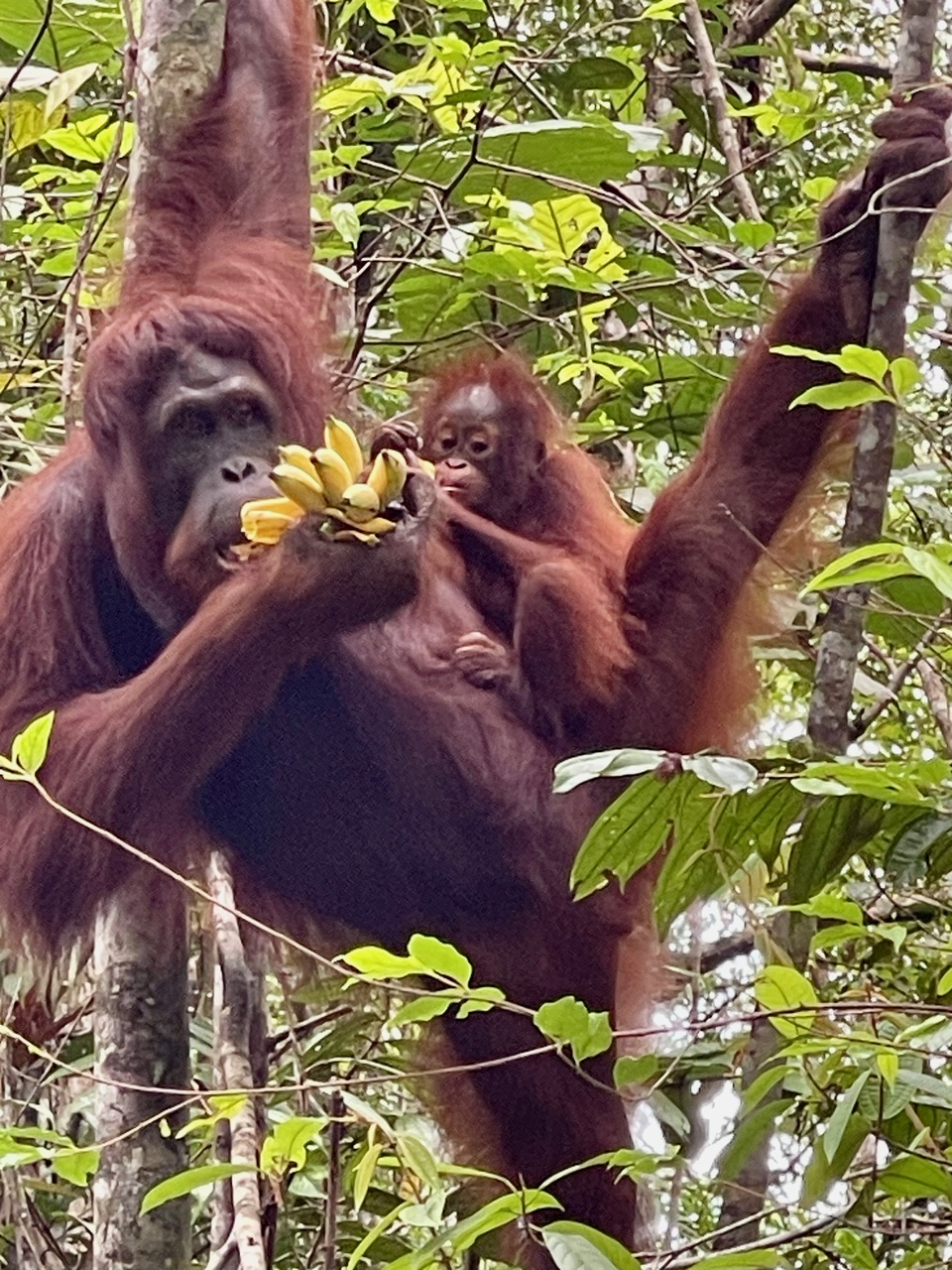
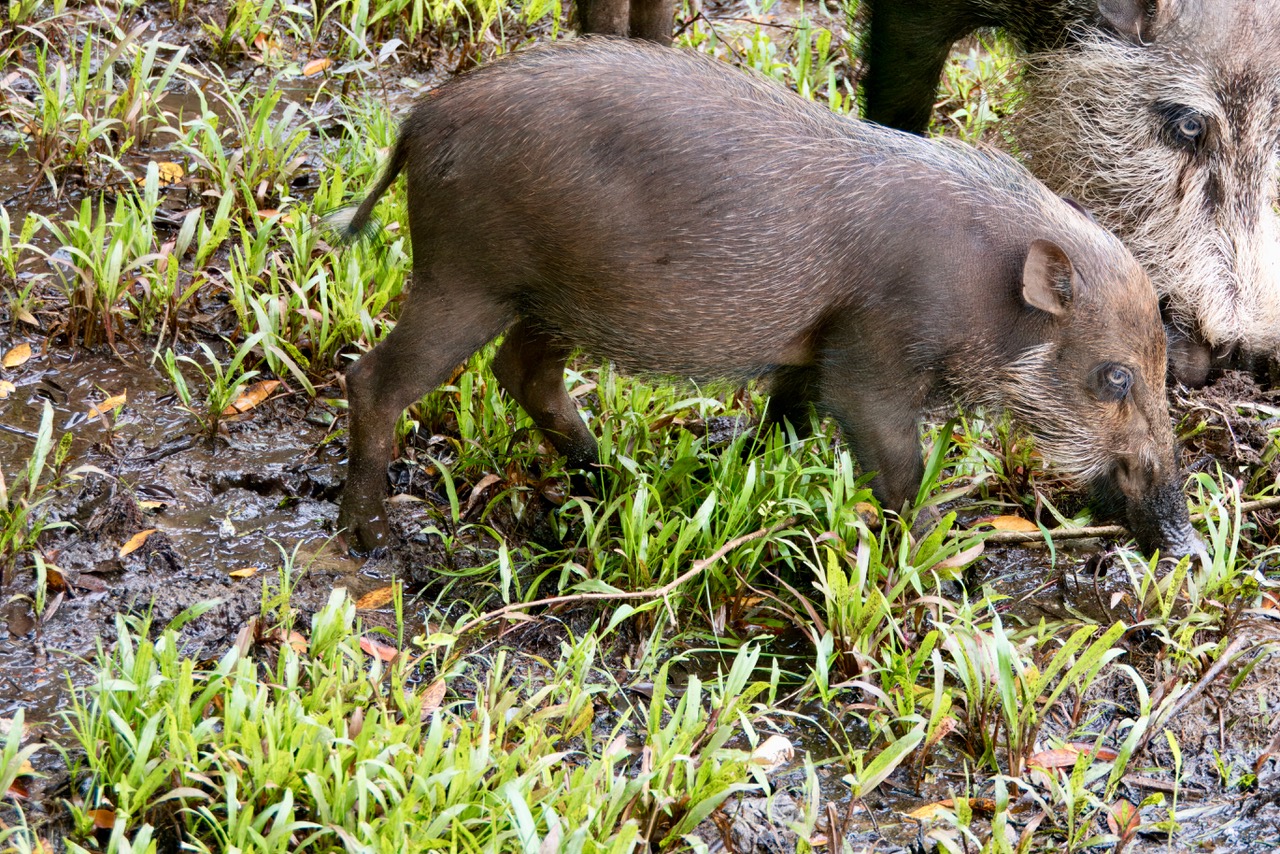
Today’s photos come from Borneo courtesy of reader Daniel Shoskes. His notes are indented, and you can enlarge the photos by clicking on them.
Just back from an incredible trip to Borneo. Just a smattering of the photos. Please forgive the lack of precision in species naming; I did my best to get the names from our guides.
First, a video of his whole trip can be seen here.