
Today we have part 2 of Jan Malik’s photos from New York State (part 1 is here). Jan’s captions and IDs are indented, and you can enlarge his photos by clicking on them. Here’s his intro to both sets:
It is a little tradition of mine to spend at least one day each fall watching raptors from an exposed ledge on Millbrook Mountain, which is a part of the Shawangunk Ridge, NY. I would call it a “hawk watch”, but hawks are attracted on their way south by the nearby Hudson River, which is a much better navigational aid. Instead, a whole day is spent observing vultures. This year the foliage was not at its best and the light was below average, so I’m mixing pictures from the past couple of years.
The cliff is home to a mix of about 50 Turkey vultures (Cathartes aura) and Black vultures (Coragyps atratus), our only Northeast vultures. Neither the California condor nor the King vulture makes it here, and the peculiar Crested Caracara, half vulture-half hawk, doesn’t live north of Texas.
I think of vultures as an “underrepresented minority” of the avian world, with charismatic eagles, feisty ducks, or cute songbirds capturing nearly all the attention of birdwatching crowds, while these humble aerial sanitation workers remain in the shadows, unjustly. At least, with the large population of deer in the Northeast combined with vehicular traffic, their food supply is abundant:
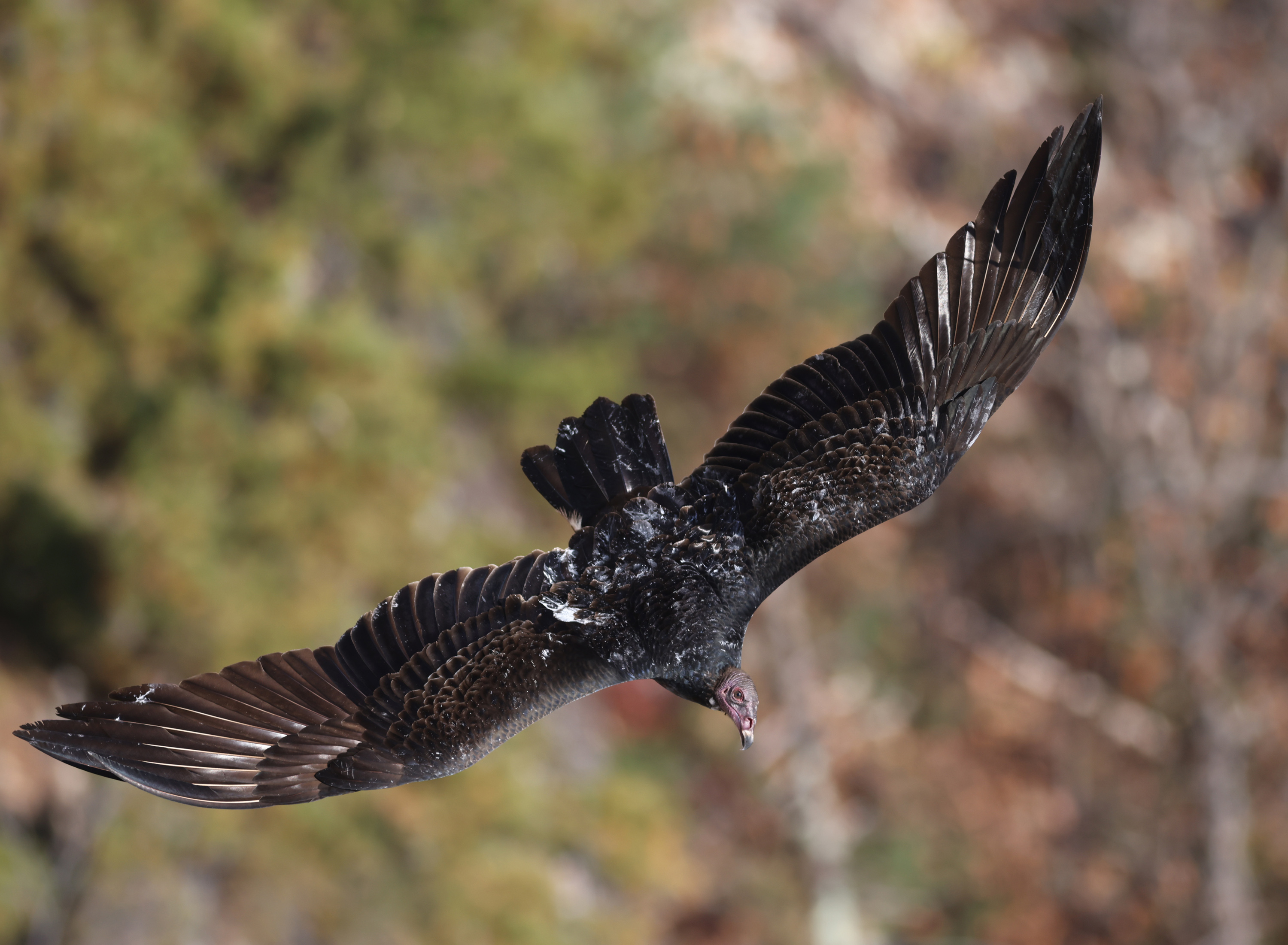
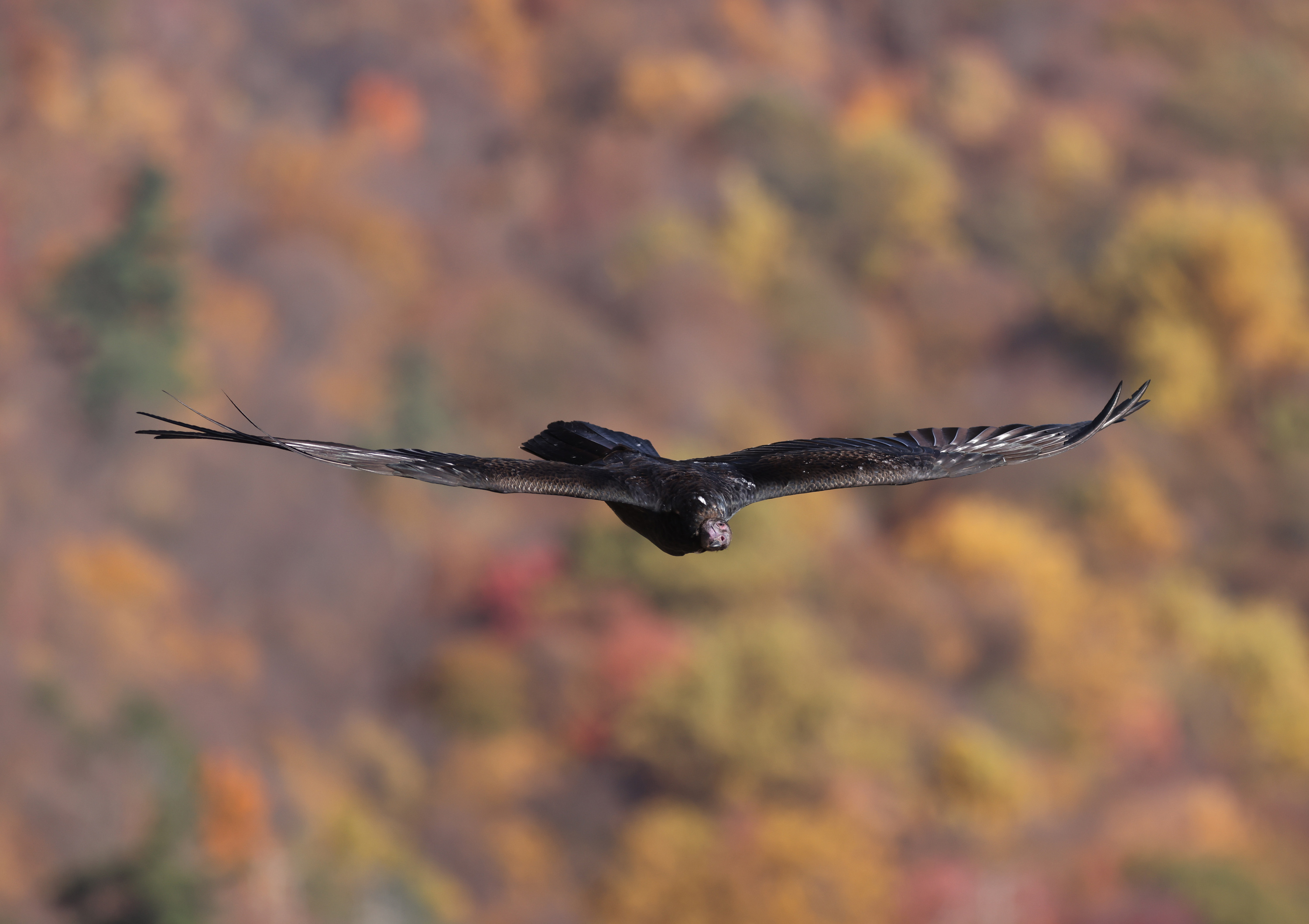
This is an immature Turkey vulture, with its head not quite as red as in the adults. It is looking up, since while they feel safe when soaring, they may be occasionally harassed by other local inhabitants on the Ridge:
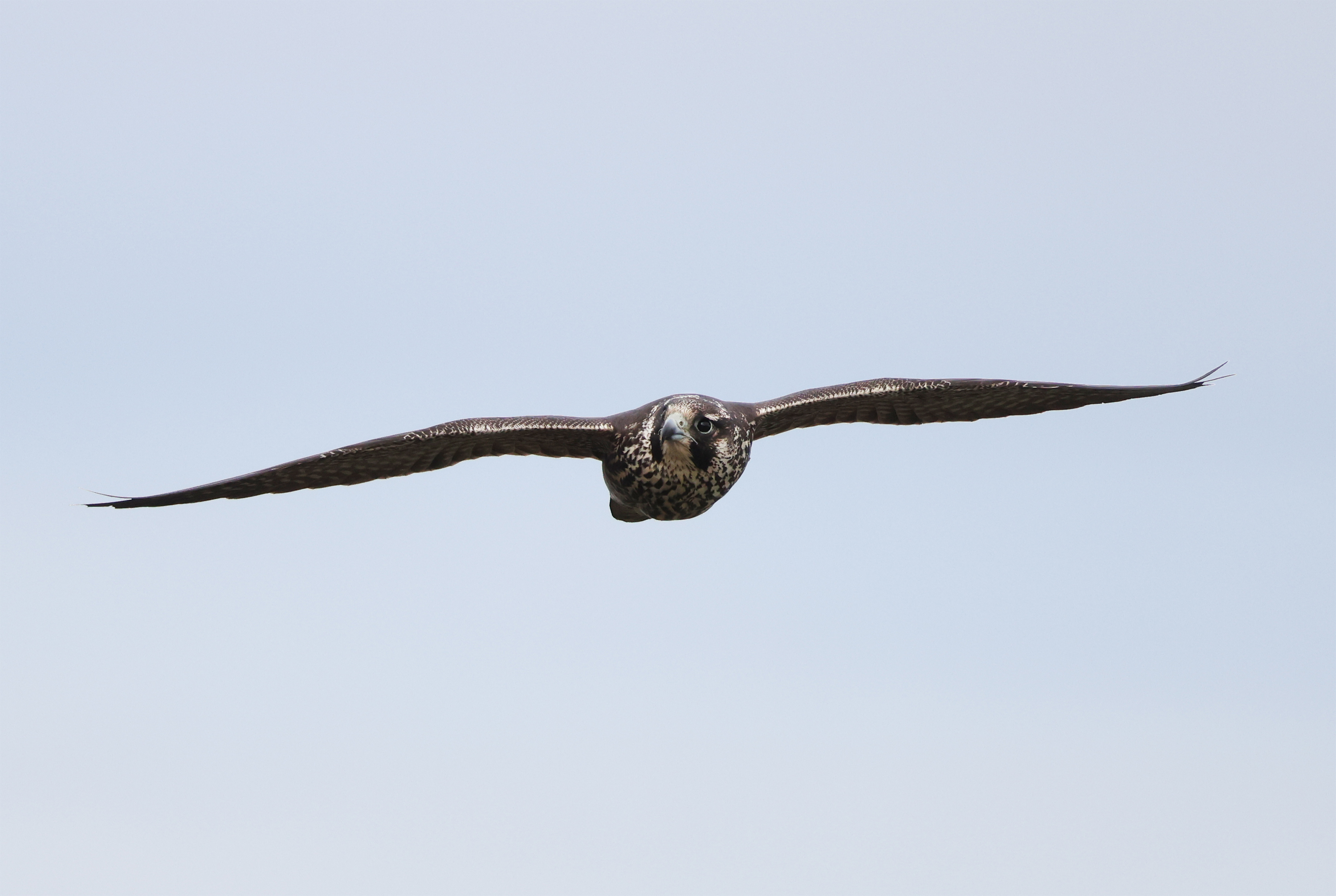
One of them, quite aggressive, is a resident Peregrine falcon (Falco peregrinus). I see it every time I visit these cliffs, but to photograph a lightning-fast bird is difficult. This being outside their nesting season, it didn’t dive-bomb a human intruder with the intention of scalping or eye-gouging, but simply zoomed past:
Occasionally, Bald eagles (Haliaeetus leucocephalus) also use the Shawangunk Ridge for navigation:

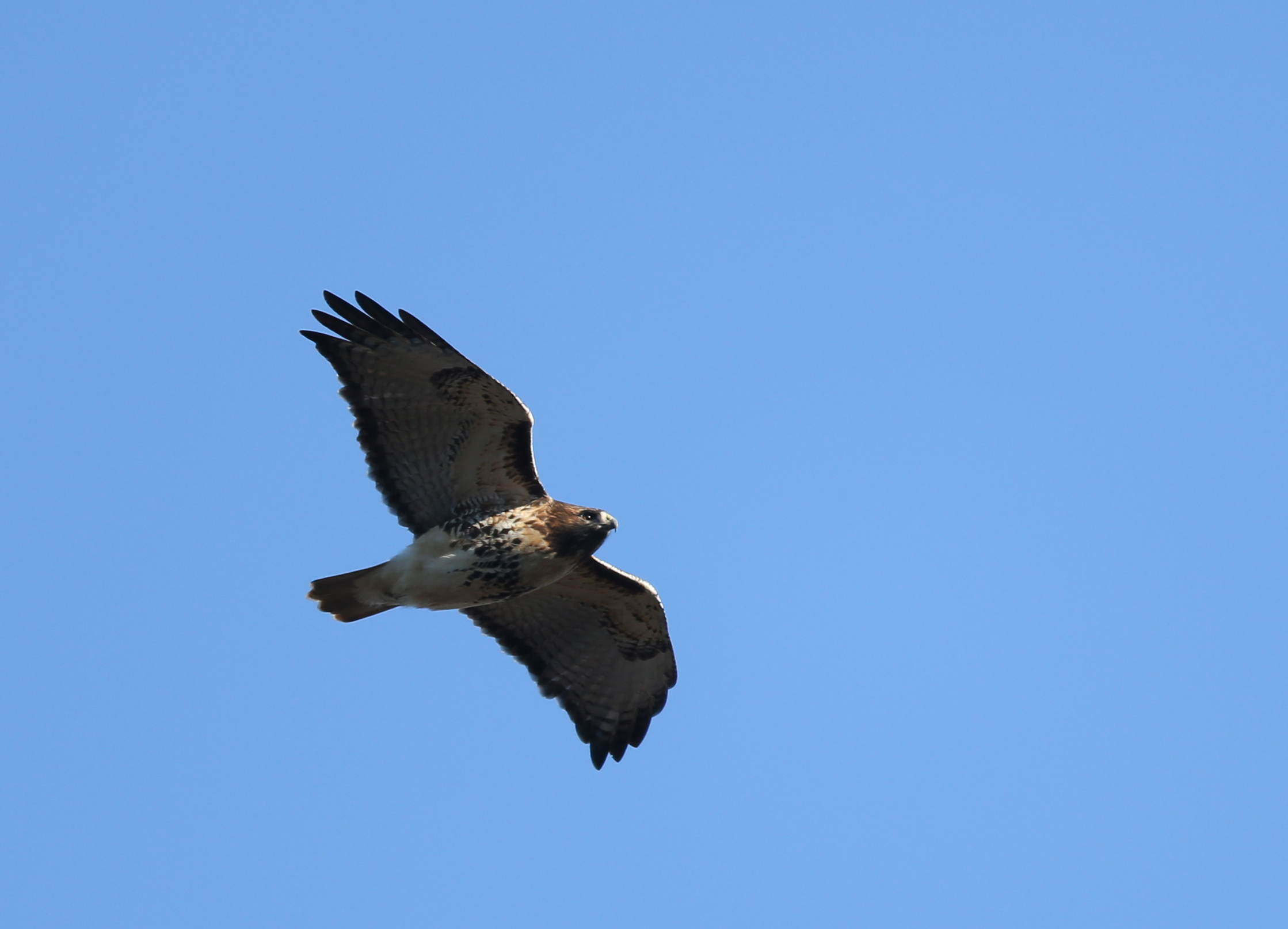
Other raptors, like this Red-tailed hawk (Buteo jamaicensis) also pass by, but usually high above the Ridge:
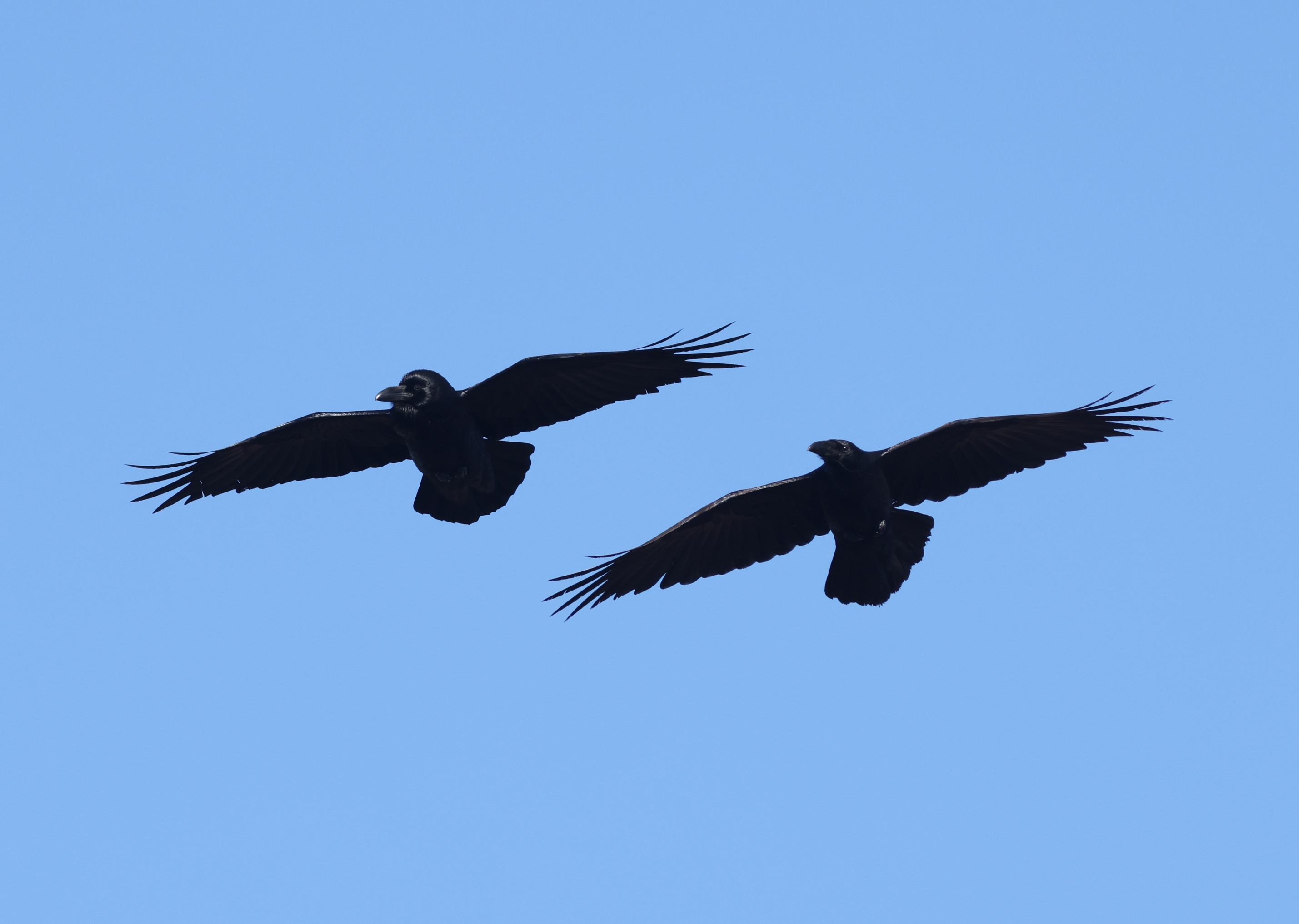
The largest songbird, the Common Raven (Corvus corax) also lives on the ridge, and a mated pair can engage in their synchronous flight even in the fall:
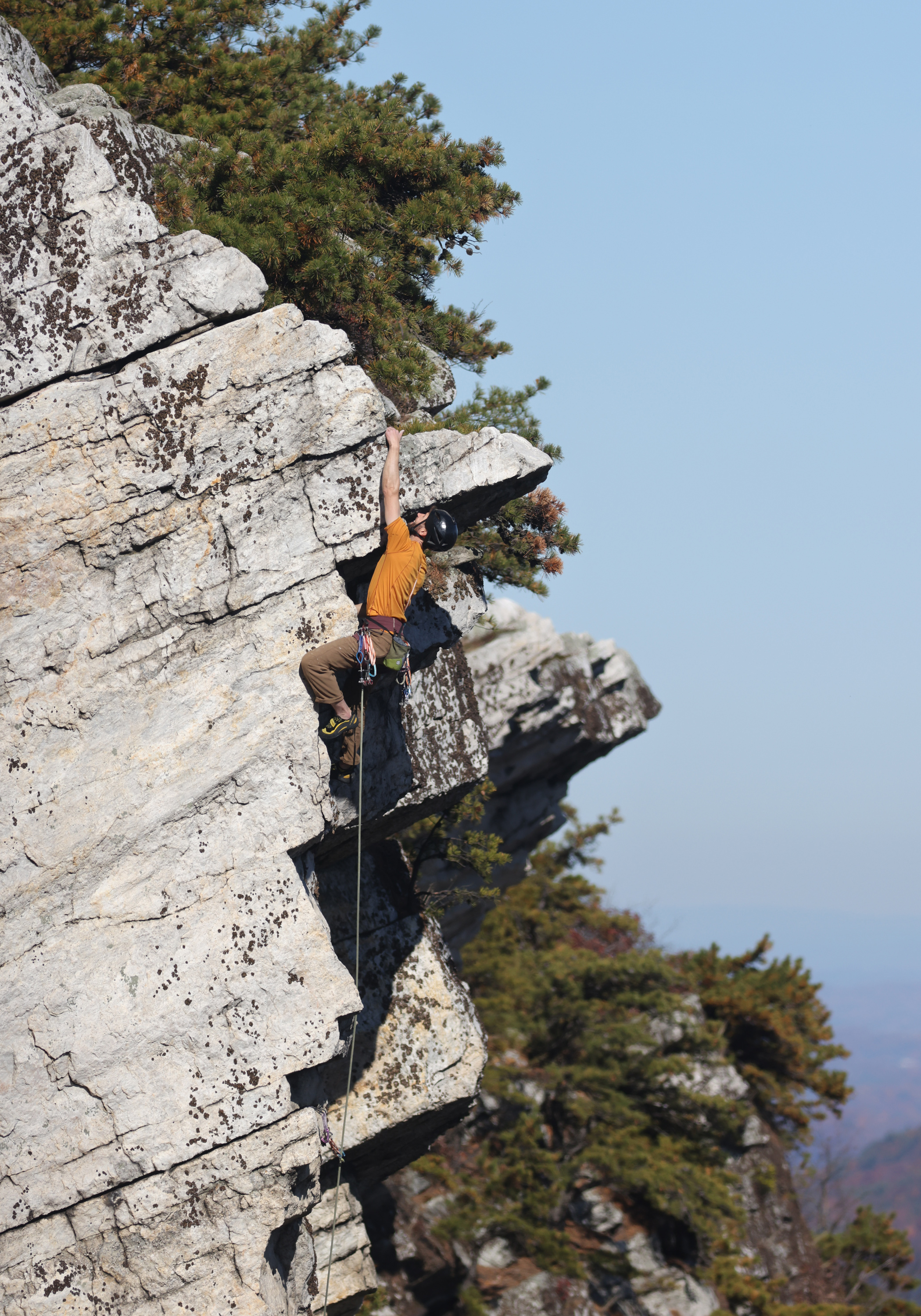
The Gunks being the best climbing area of the Northeast (de gustibus..) let’s not forget about the local hominid variety, the Homo verticalis. This one is scaling an arête on the route “Nectar Vector” 5.12b/c R, a pretty bold climb. That letter “R” (as in scaRy or an R-rated movie) will scare off an average gym climber:
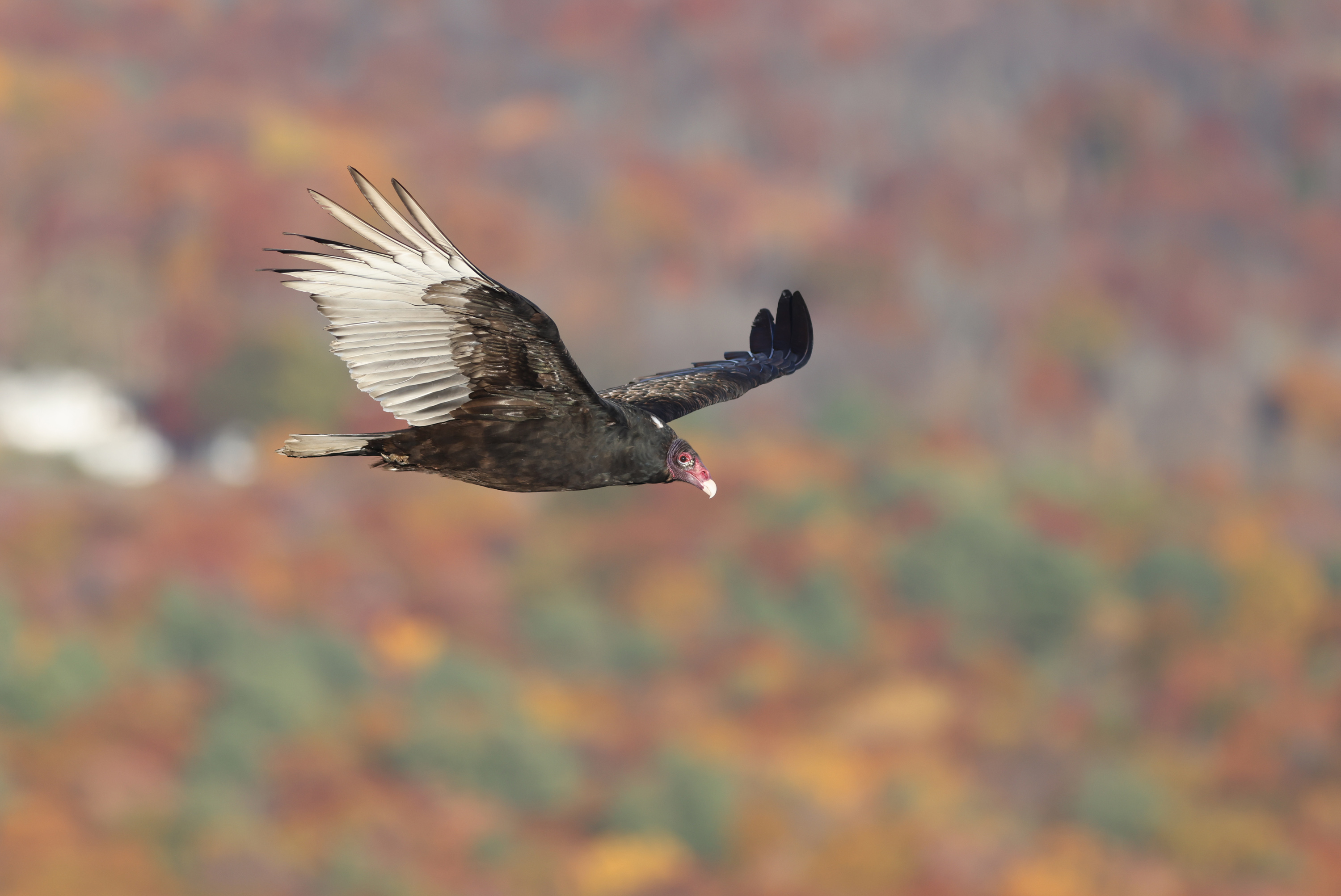
But humans aside, vultures are the most visible vertebrates on the Ridge:
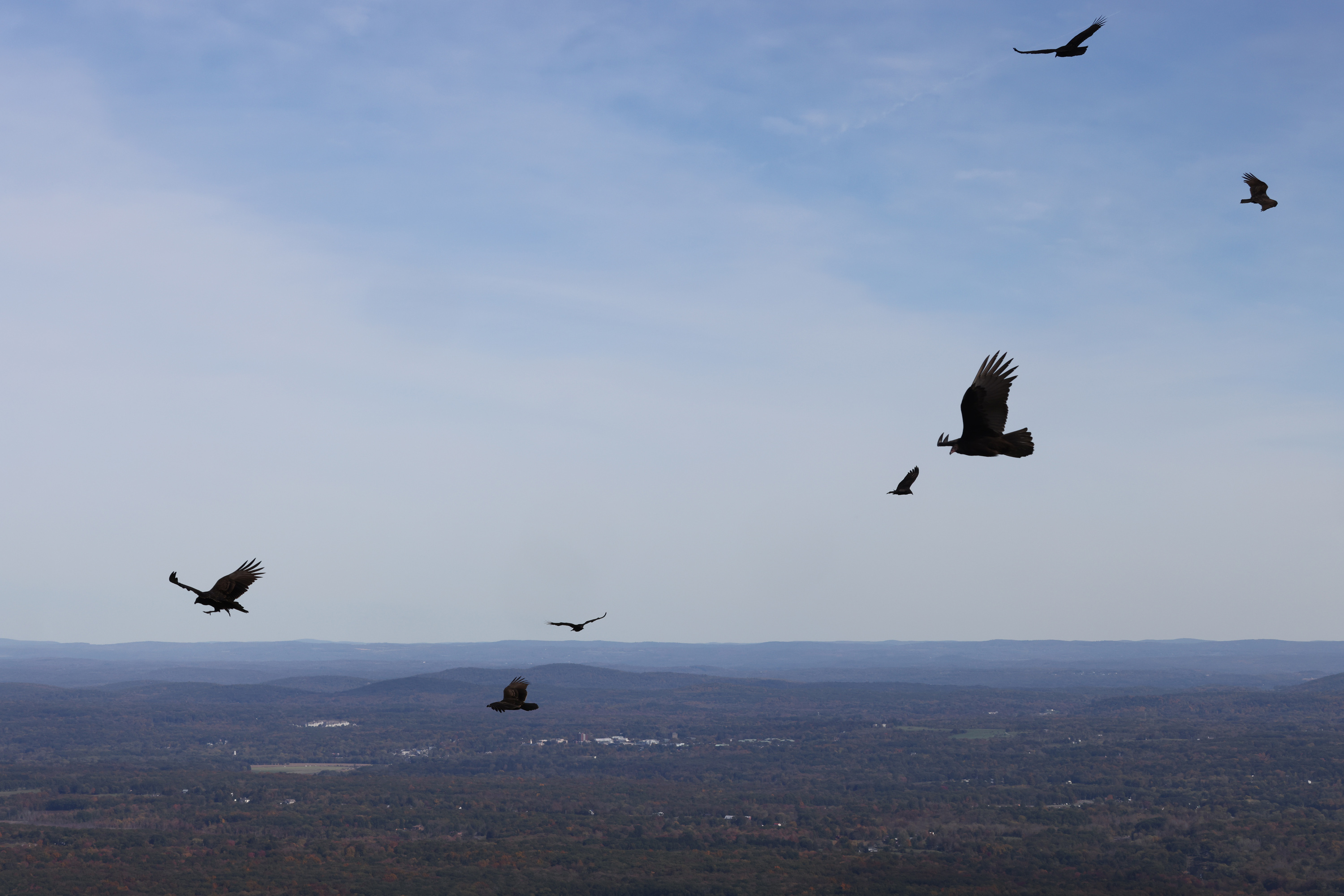
In good flying weather, one can be surrounded by many vultures who sometimes form a “kettle”, circling on thermals to gain altitude. The swish of wind on your face from them flying within several feet is unforgettable:
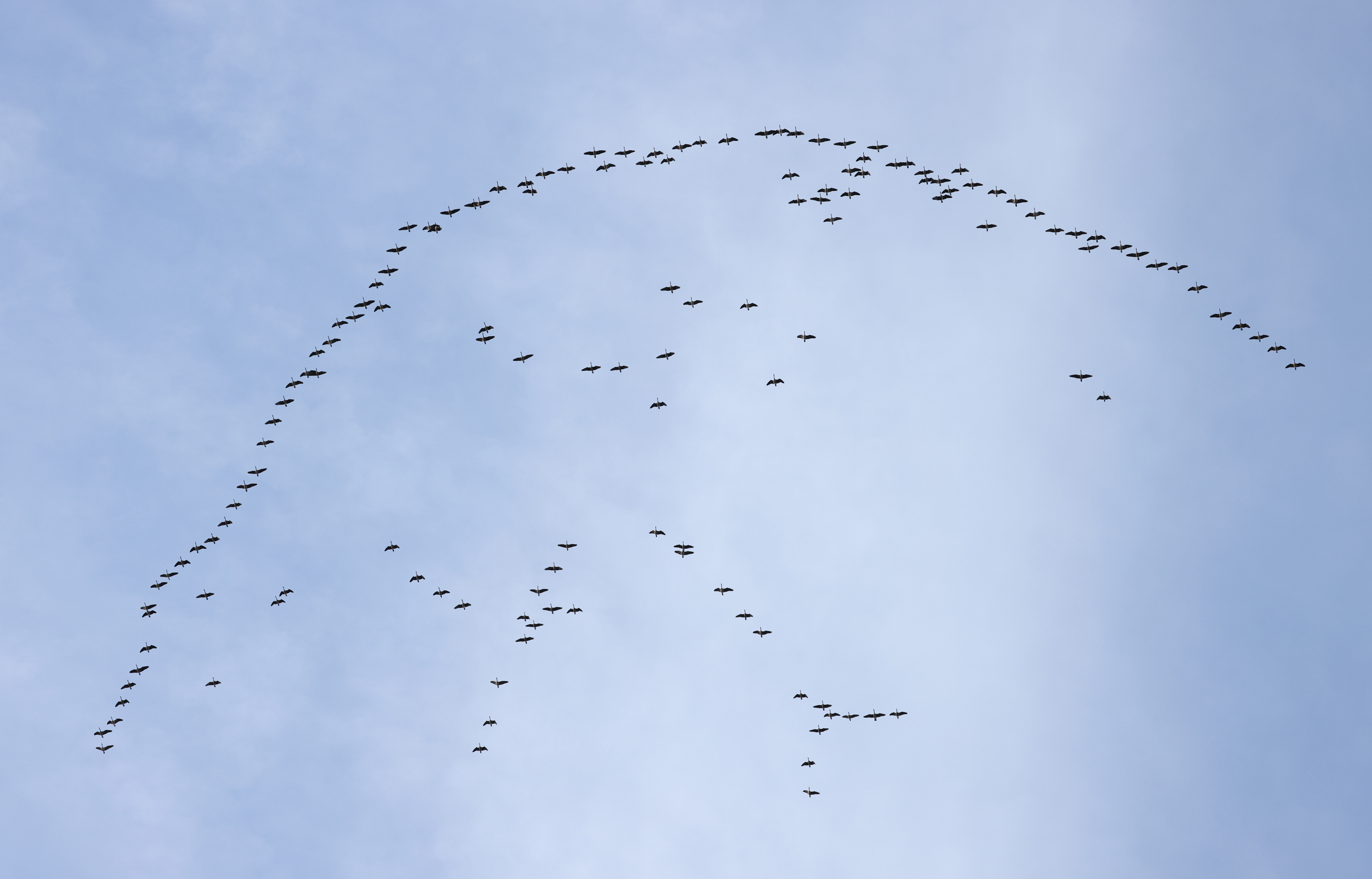
As usual in the fall, Canada geese form skeins flying south above the Ridge:
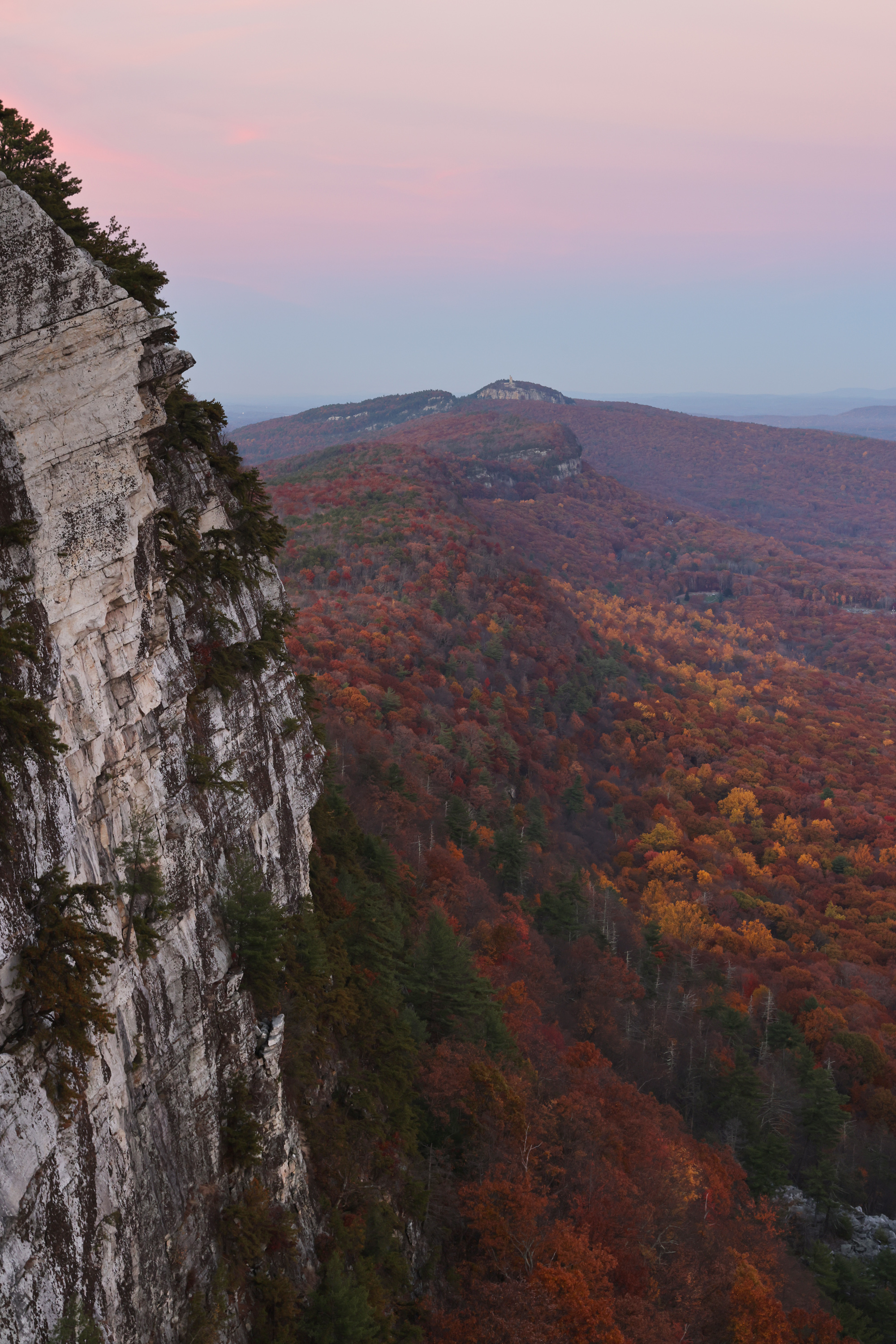
I stay until sunset, just to absorb the subtle colors of the New York backcountry in the fall. This year, I was alone at dusk – all the vultures were gone in the late afternoon, likely attracted to a roadkill. They share with us humans a love for well-seasoned meat, so bon appétit!:
Beautiful shots! I especially love turkey vultures, the sky’s sanitation workers as you put it. I’m just a bit south of you and the burnished hillsides, combined with these crystal clear days, make this my absolute favorite time of year.
Global warming is shortening our leaf season.
Great pictures! I agree that Turkey Vultures hold minority status. No one seems to appreciate them. I suppose that seeing the red head of a Turkey Vulture head rooting around inside a dead deer can elicit a certain prejudice. But watching them soar so effortlessly—with only the slightest of movements—never fails to inspire and amaze.
I agree that Turkey Vultures hold minority status.
Ackshually, those birds are called Türkiye Vultures. ☝️🤓
After all, you wouldn’t want to get arrested next time you visit Istanbul.
Very good once again! I would never think that Ravens are songbirds, but I don’t know much about bird classification.
Homo verticalis and Homo basis are two species 😳 foreign to this homo terra firma.
I have never seen a large bird in the wild (apart from an emu behind a wire inclosure ) especially one trying to rip your eyes out, so for me it would be like an episode with a pterodactyl.
Thanks for posting.
An absolutely sublime dusk photo. Such colors!
Knew it was the Shawangunks when I saw the first photo yesterday. Walked and biked up to Lake Awosting many times. Beautiful pictures of a beautiful place.
I had black vultures nesting in a crib of an old barn on my property for much of the last fifteen years. They returned every year until too much of the barn had collapsed. What a delight to watch. Rather than a nesting pair, as I would have expected, there were usually four to six adult birds keeping an eye on the area. Some would sit on the barn roof watching me while I worked, others on the limbs of a dead white oak tree. In the first year or two, they would swoop at me, sometimes one after the other. That aggressiveness stopped, which led me to conclude they became accustomed to me and I was seeing some of the same birds each year.
When the adults were gone, I would have the opportunity to peek in on the young on the floor of the crib. Each time there were two. One time they spotted me from a few feet away: one young bird ran and hid under the raised crib floor, while the other spread his wings wide and hissed at me, refusing to back down. A most notable memory was listening to an adult “grunting” while tending the young. The first time I heard it, I feared it was a feral hog! Another time one unexpectedly flew out of the barn as I approached, gliding within feet of my face. The smell was atrocious!
Thanks for bringing back memories of these much underappreciated birds.
Wow, those are great photos. Especially the last one’s really impressive.
Great pics! That is quite a lot of runout on the climber’s belay rope so I hope he made the overhang.