
We are of course lacking readers’ wildlife photos, though I don’t know why. If you have some good ones, please send them in.
We do have a batch today, though, sent in by reader Jan Malik. Today’s photos feature vultures from New York State, and there are photos of other birds that will come in a part 2. Jan’s captions and IDs are indented, and you can enlarge the photos by clicking on them.
It is a little tradition of mine to spend at least one day each fall watching raptors from an exposed ledge on Millbrook Mountain, which is a part of the Shawangunk Ridge, NY. I would call it a “hawk watch”, but hawks are attracted on their way south by the nearby Hudson River, which is a much better navigational aid. Instead, a whole day is spent observing vultures. This year the foliage was not at its best and the light was below average, so I’m mixing pictures from the past couple of years.
The cliff is home to a mix of about 50 Turkey vultures (Cathartes aura) and Black vultures (Coragyps atratus), our only Northeast vultures. Neither the California condor nor the King vulture makes it here, and the peculiar Crested Caracara, half vulture-half hawk, doesn’t live north of Texas.
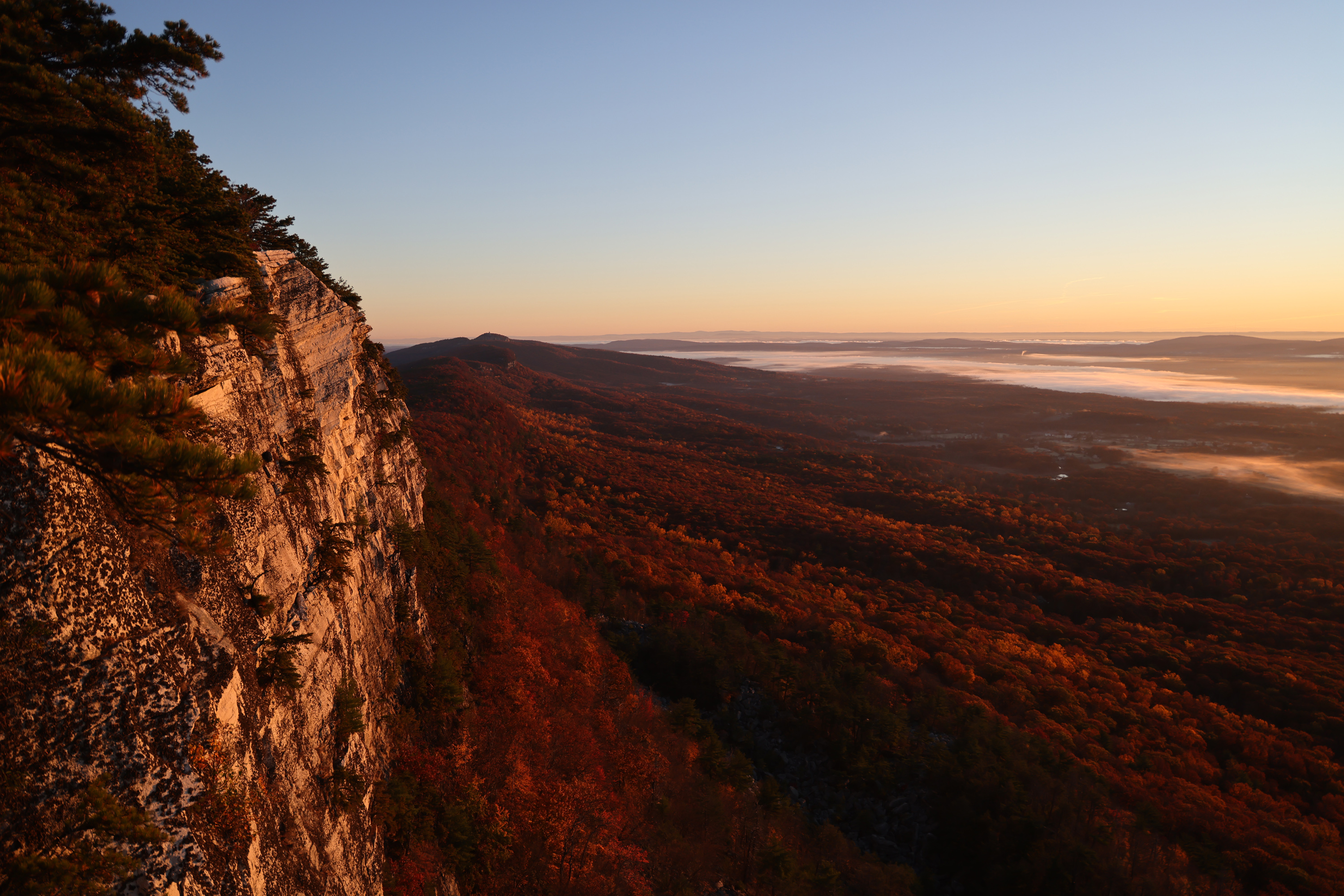
Here’s an early morning view from my perch, which is quite exposed but ensures privacy from the numerous hikers. Progressively fading into the distance are other parts of the ridge: Near Trapps, the Trapps, and Skytop, while the Hudson Valley is on the right:
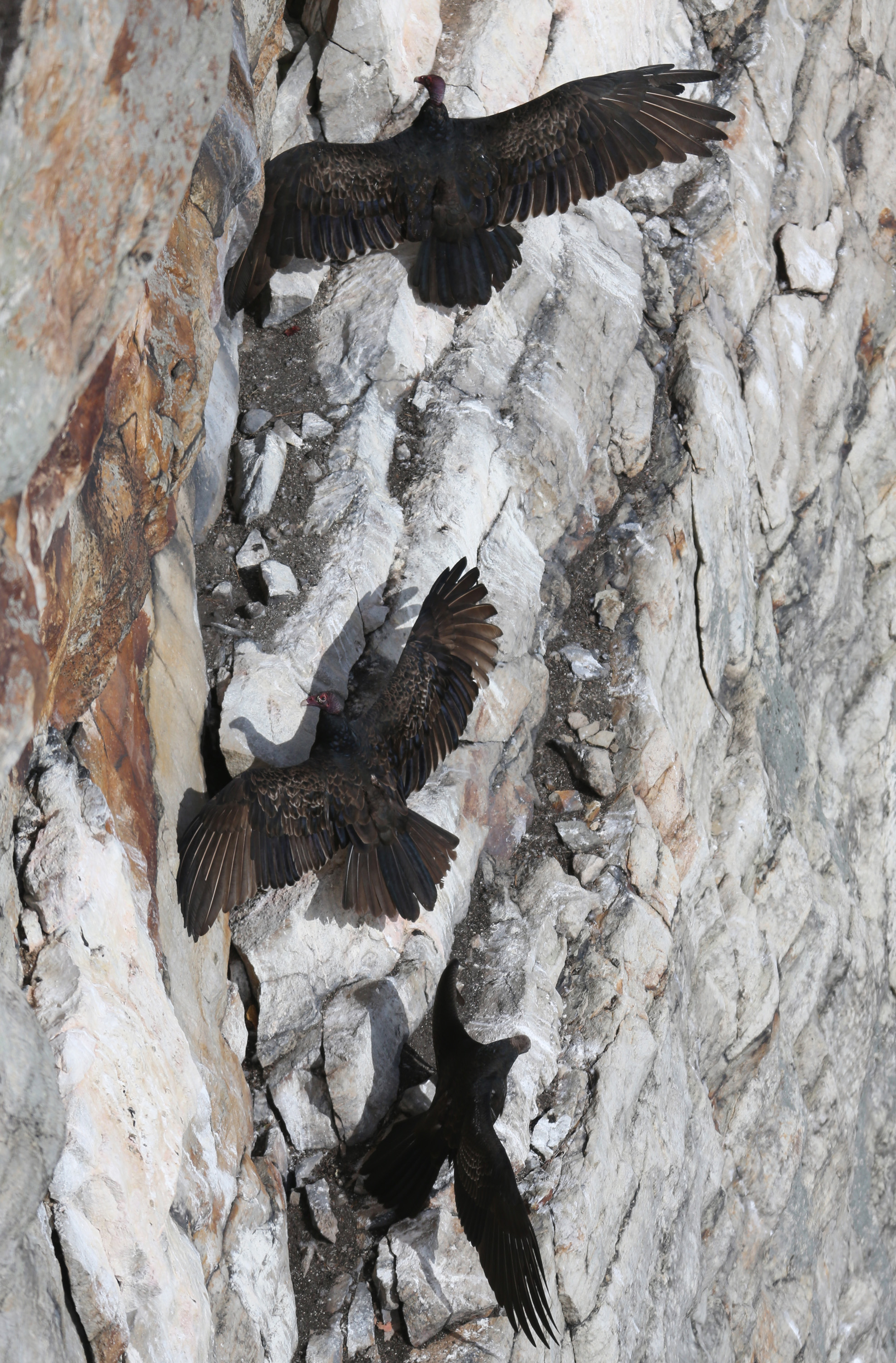
Vultures are late-morning flyers. The unpredictability of their food forces extreme energy-saving behavior, such as efficient soaring flight and lowering body temperature at night by several degrees to minimize heat loss. In the morning, they use sheltered depressions in the cliff to sun and warm themselves. Here, three Turkey vultures spread their wings in the so-called horaltic pose, maximizing exposure to solar radiation:
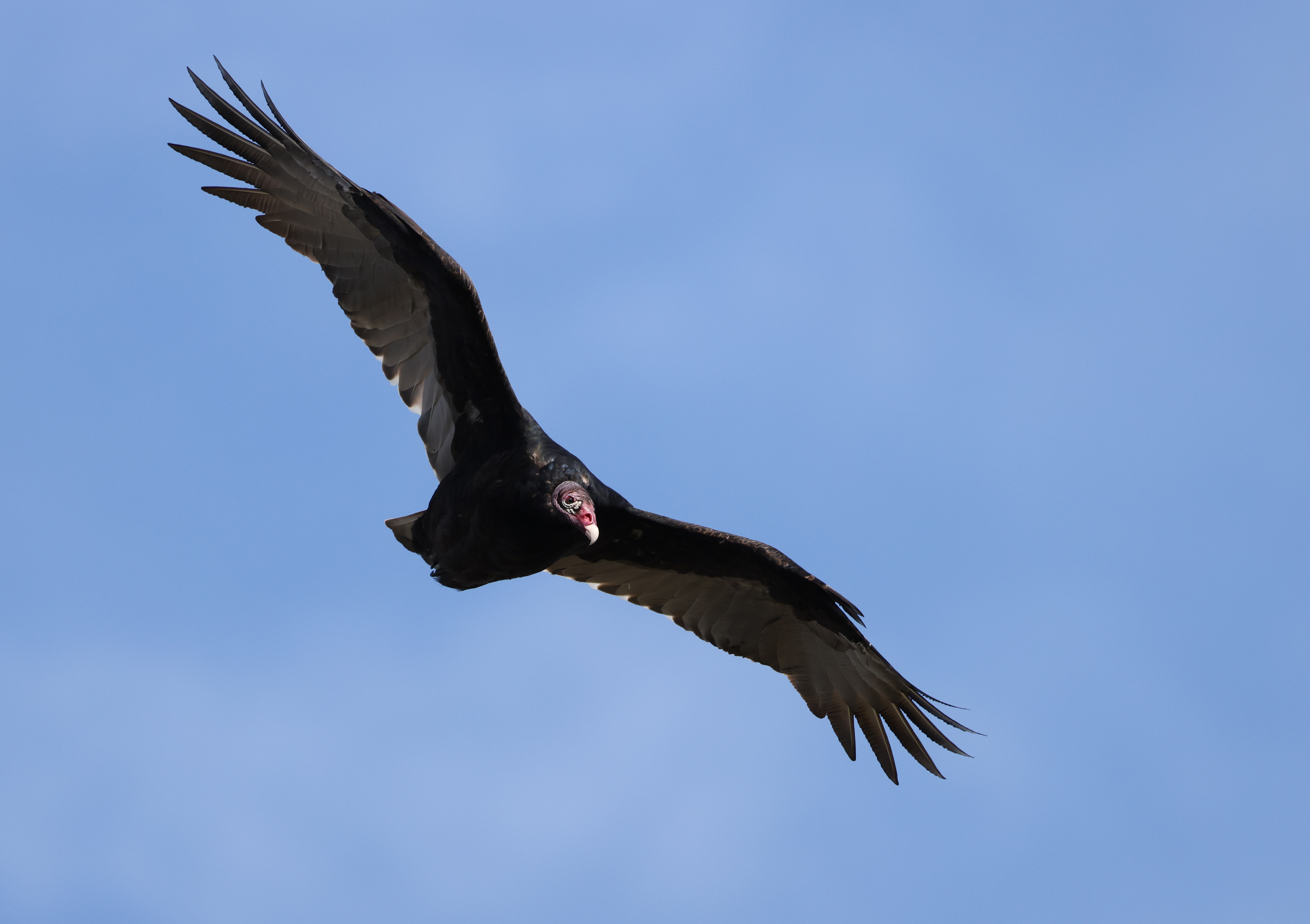
Eventually, at 9-10 AM, the Millbrook cliff rocks heat up a bit and thermals—vertical movements of air based on density differences—develop enough to allow soaring flight for the Turkey vultures, who in good conditions can stay aloft indefinitely, flapping their wings only when taking off or alighting on a perch:
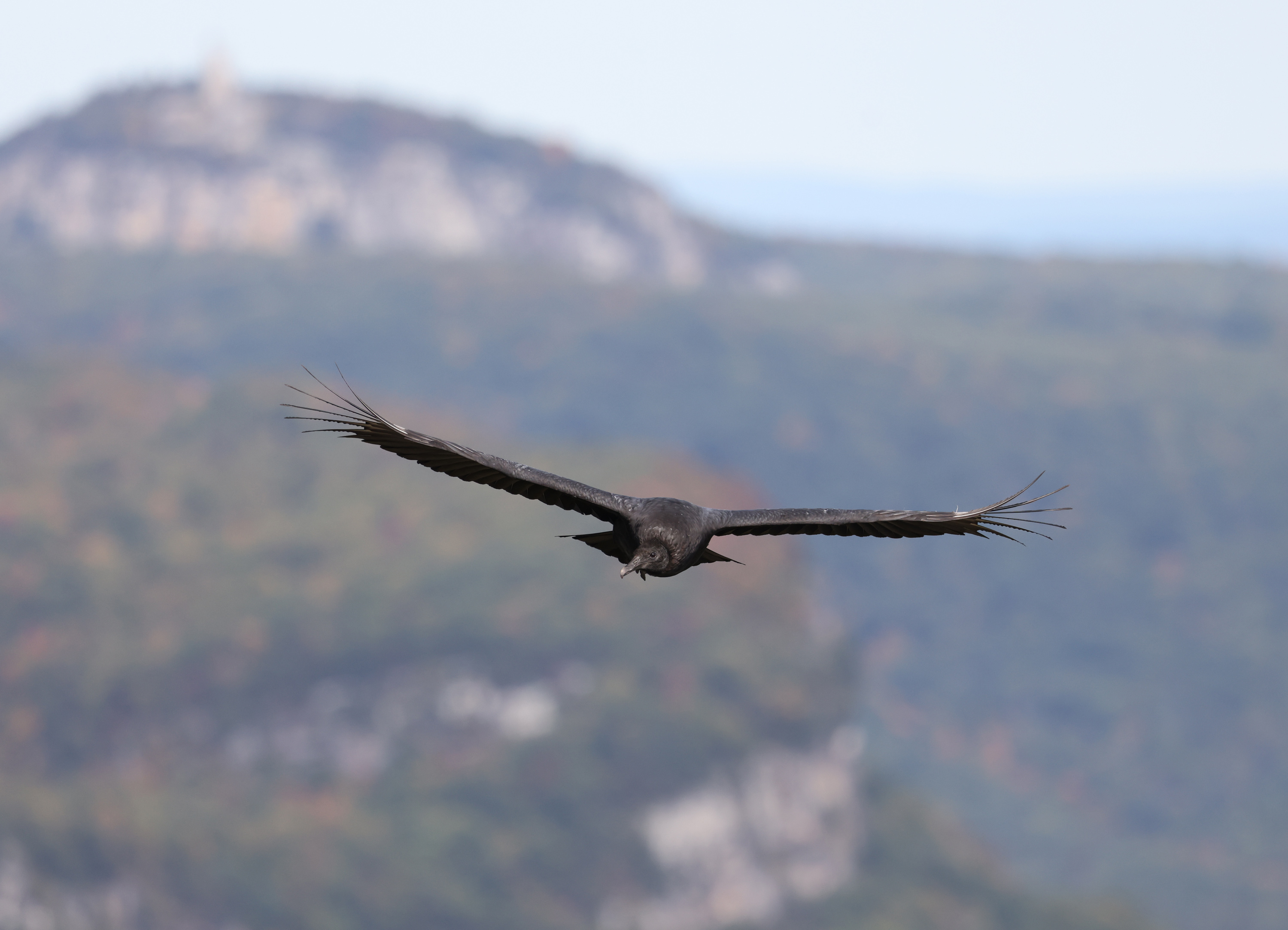
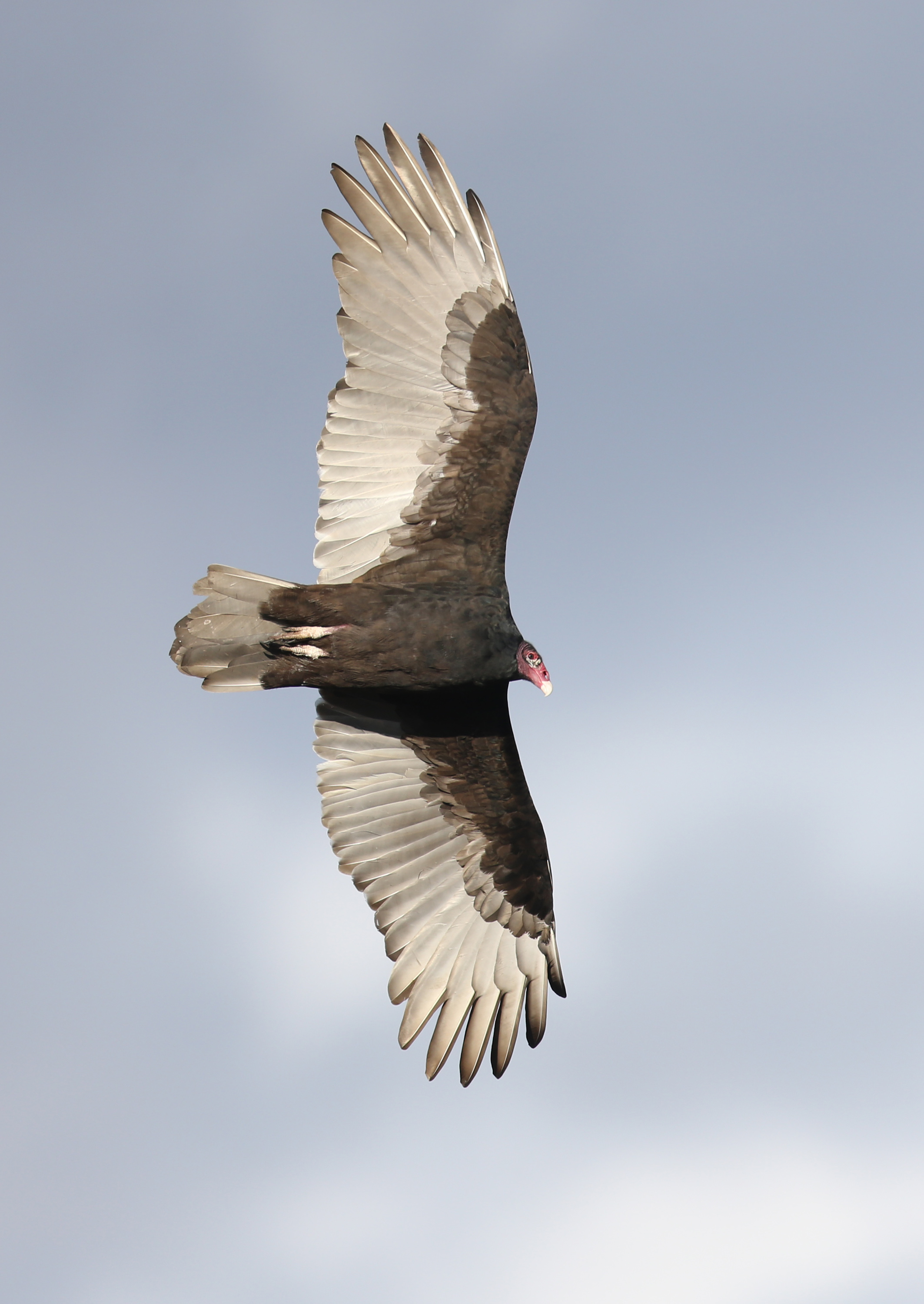
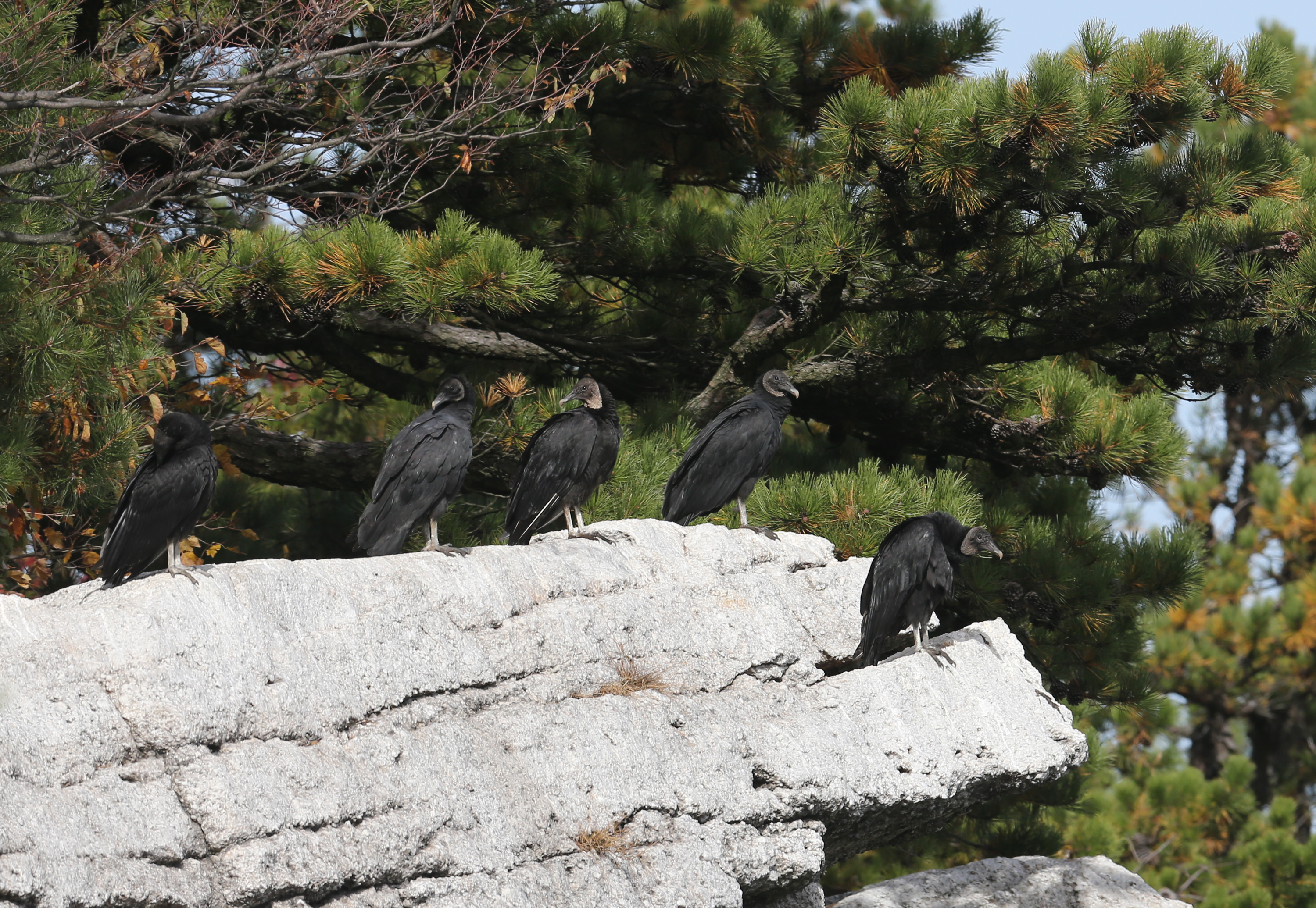
An hour or so later than for the Turkey vultures, flying weather develops for the Black vultures. Turkey vultures are possibly the most efficient flying organisms (outside of invertebrates), while the Black vultures need a little more effort to stay aloft – flapping their wings often enough that it is possible to tell them apart from a distance:
Another difference is the underside of the wings – it is mostly silvery-white in Turkey vultures:
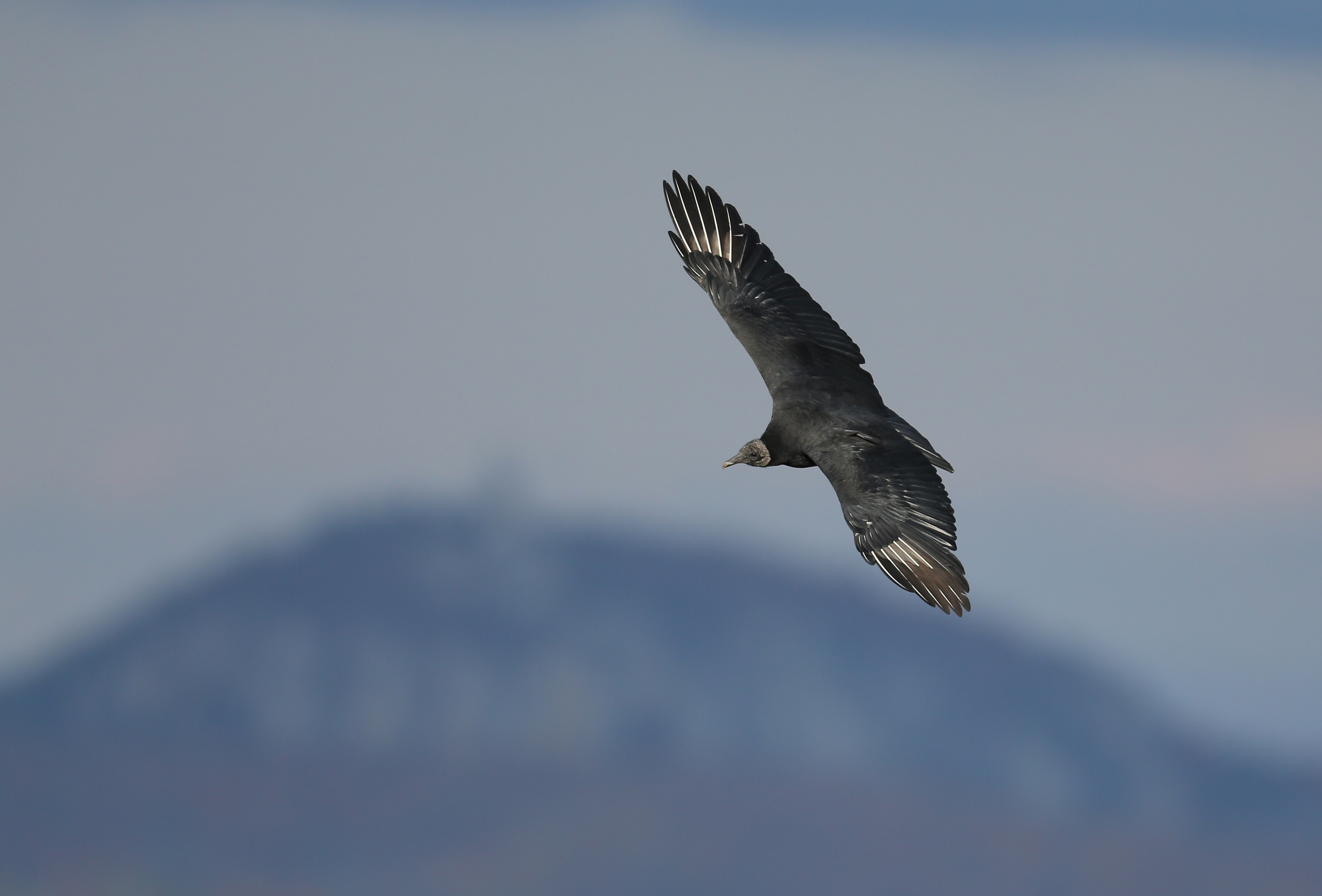
Black vultures have white markings on the tips of their wings’ underside only:
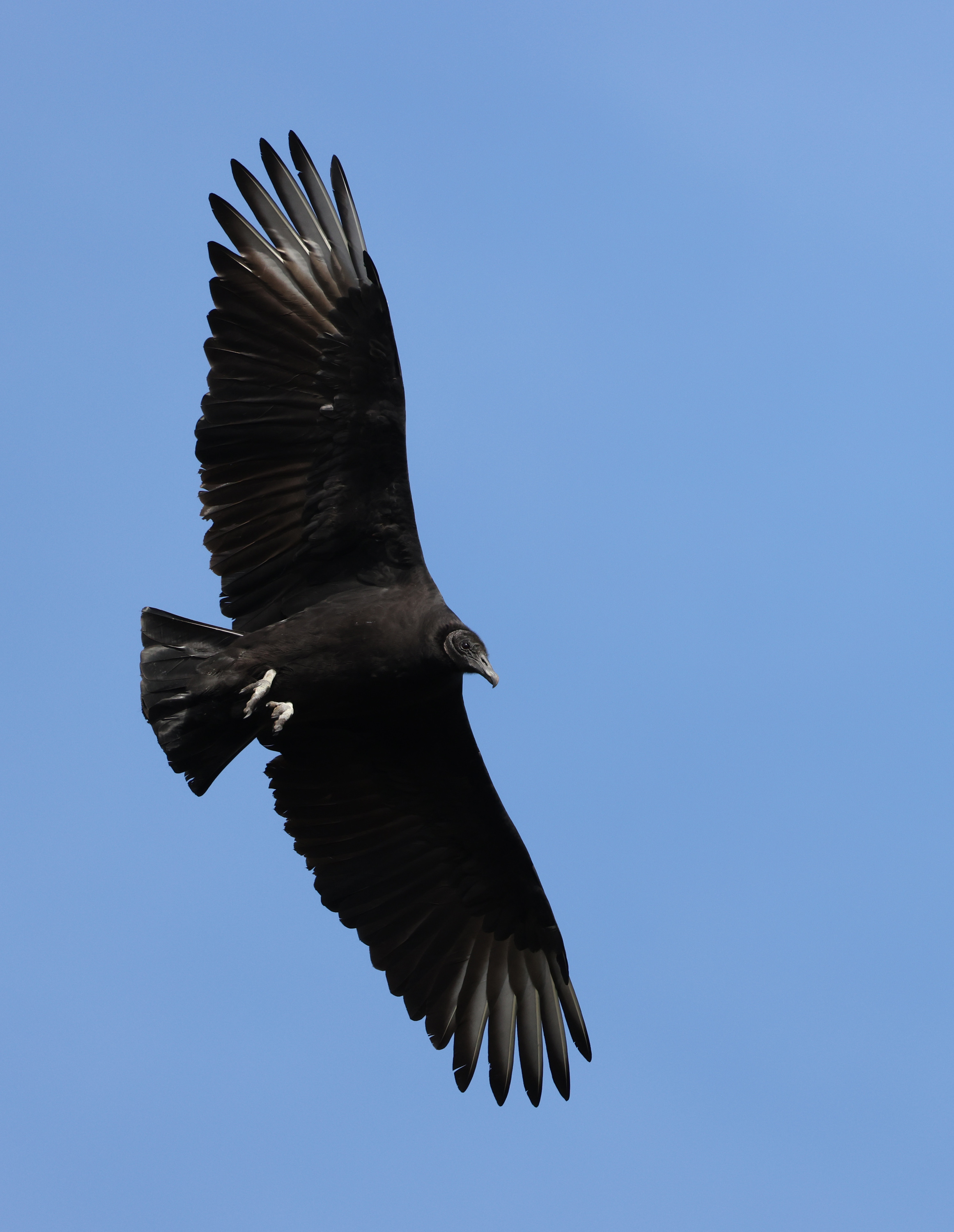
Additionally, while Turkey vultures have uniformly black/dark brown wing coverts, Black vultures have white markings on their primary feathers, making them appear from a distance as white spots:
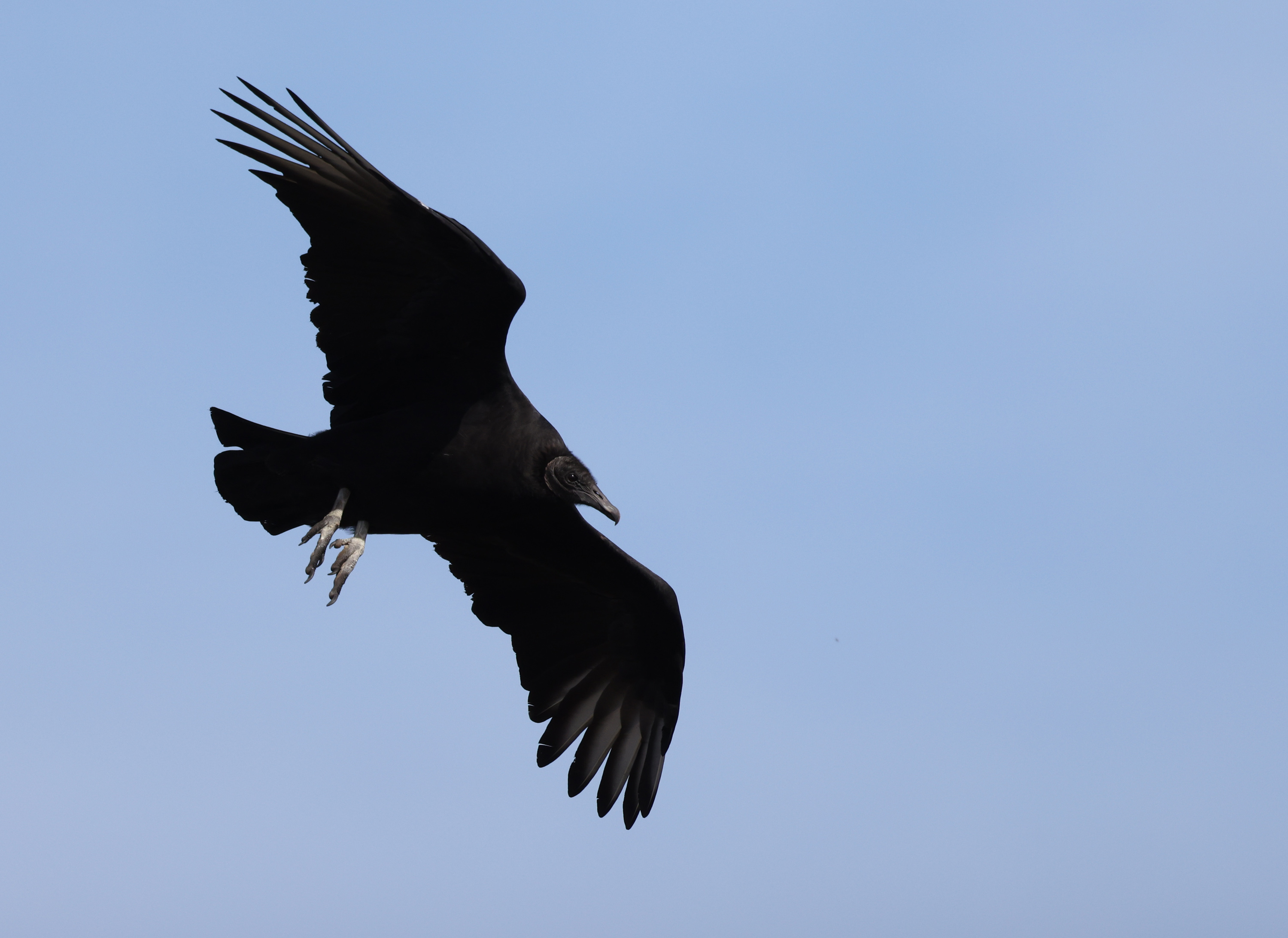
Black vultures often fly or soar with their feet down. This is paradoxical since it obviously increases aerodynamic drag, and I’d think that the Black vultures – having higher wing loading than the Turkey vultures – would do everything possible to avoid that. But apparently it is needed to stabilize the flight, possibly due to a different aspect ratio – Black vultures have slightly shorter tail feathers than do Turkey vultures:
When at rest, Black vultures stay together and a bit apart from the Turkey vultures, but I did not notice any particular animosity between these species. Each vulture group has social rules, with the best perches reserved for dominant birds. Scuffles are infrequent and posturing is usually enough to make a contender vacate a prime spot:
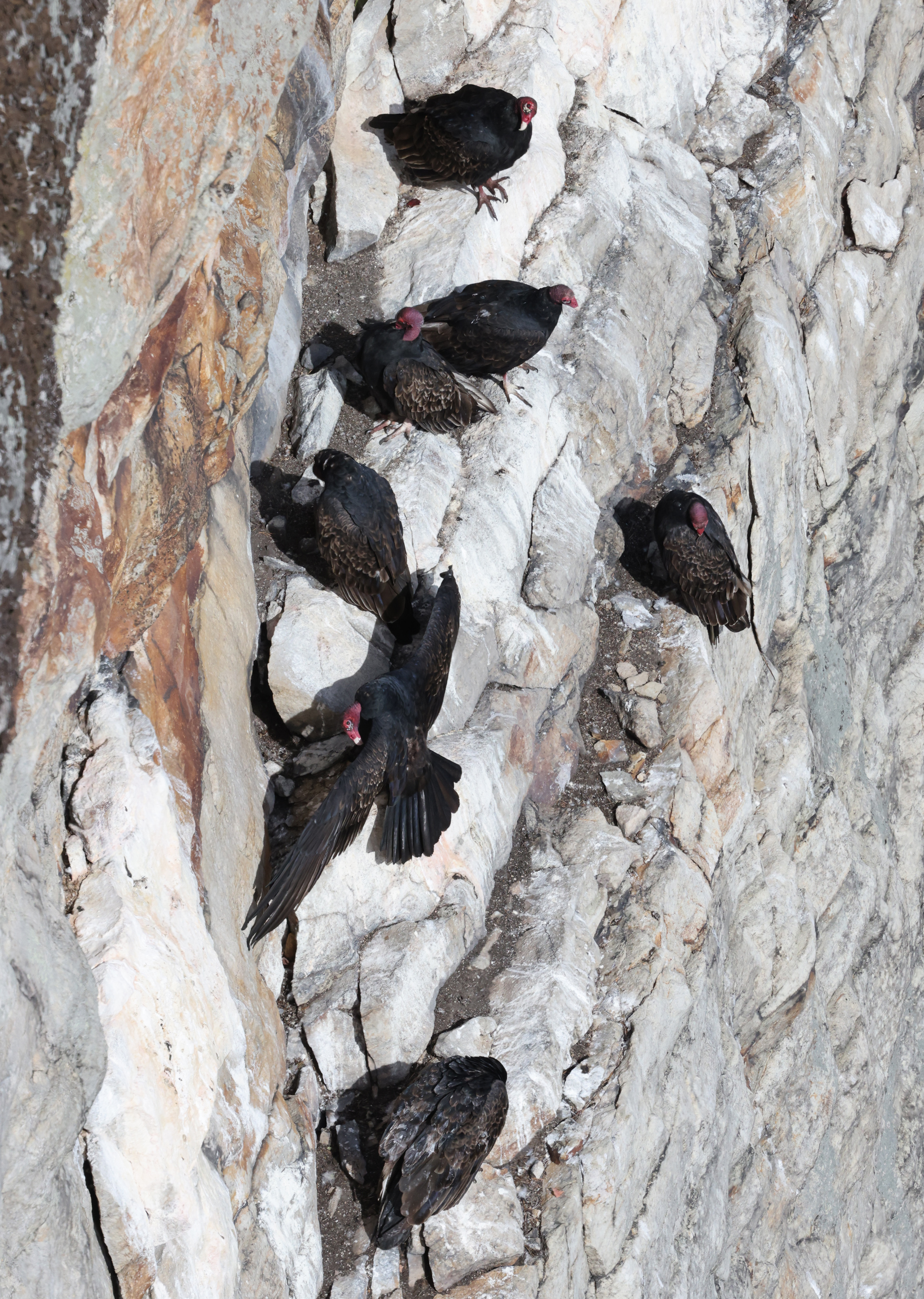
From time to time, Turkey vultures also conglomerate to rest and warm themselves in the sun. The same wing anatomy that allows hours-long soaring flight also lets them spread their wings effortlessly by locking their joints:
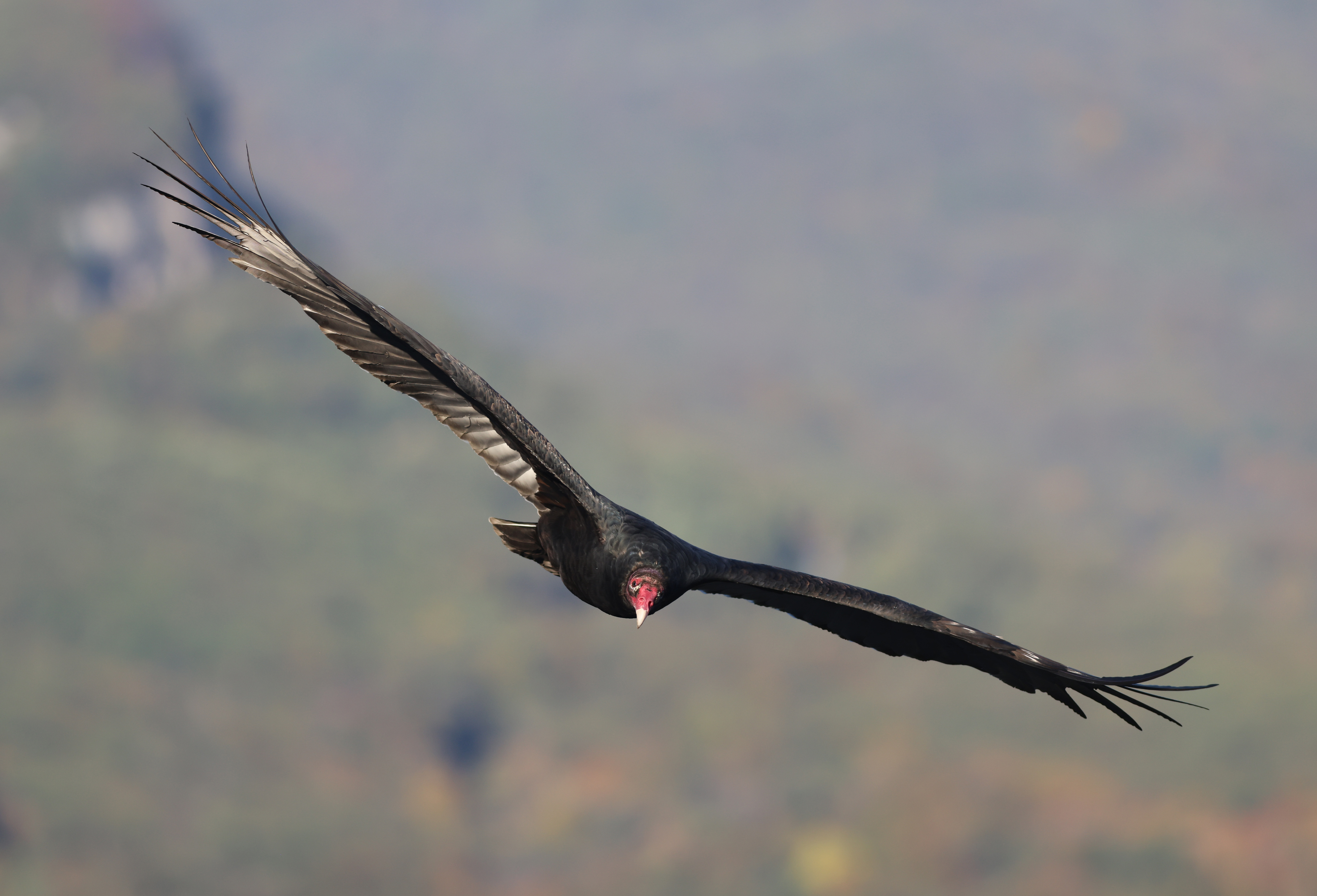
But then it’s taking to the air again, soaring up and down the ridge, in the hope of catching a whiff of decomposing flesh. What helps them in finding food is their good sense of smell, which they have in common with pelagic seabirds. From my observations on the Shawangunk Ridge (or, as climbers call it, the Gunks), their hearing is sub-par; a few times when scrambling on a ledge I caught a resting vulture quite unaware of my presence until I was nearly touching it:
Part 2 to come.
We have many turkey vultures at Rattlesnake Point near Toronto. There’s a hilarious “typo” on a metal plaque on the cliff which mentions “fowl odors” emanating from the rocks where the vultures nest.😂
A very interesting set, with detailed descriptions!
We only get turkey vultures, but they are pretty common. There is a nesting ground in the woods where I take the d*g for his “long walk”, and there I often see them inspecting me from overhead.