We have more fungus among us, courtesy of reader Jan Malik, who has sent another batch of mushroom photos from the Catskills, Adirondacks, and the White Mountains (his first post about mushrooms is here). Jan’s captions and IDs are indented below, and you can enlarge the photos by clicking on them. I like the fact that Jan mentions the edibility of these mushrooms.
While the previous batch of mushrooms included various orders, presenting a selection of easy-to-recognize edible mushrooms (and their toxic lookalikes), in this batch we have only mycorrhizal mushrooms from the Boletaceae and Russulaceae families. This is a relatively safe group of mushrooms for anyone to start their mushroom hunting, as there are no deadly poisonous species in it. A few are fairly toxic, and others warn you with their bitter taste.
Boletes are characterized by a fleshy stem and a symmetrical cap with pores on the underside. In my travels through the US Northeast woodlands, I have not yet found the most sought-after bolete—the porcini—but here are some others. Take the species ID with a grain of salt; many boletes look alike, and it’s difficult to make an accurate determination in the field without a microscope, vials of chemicals, and the time to make a spore print.
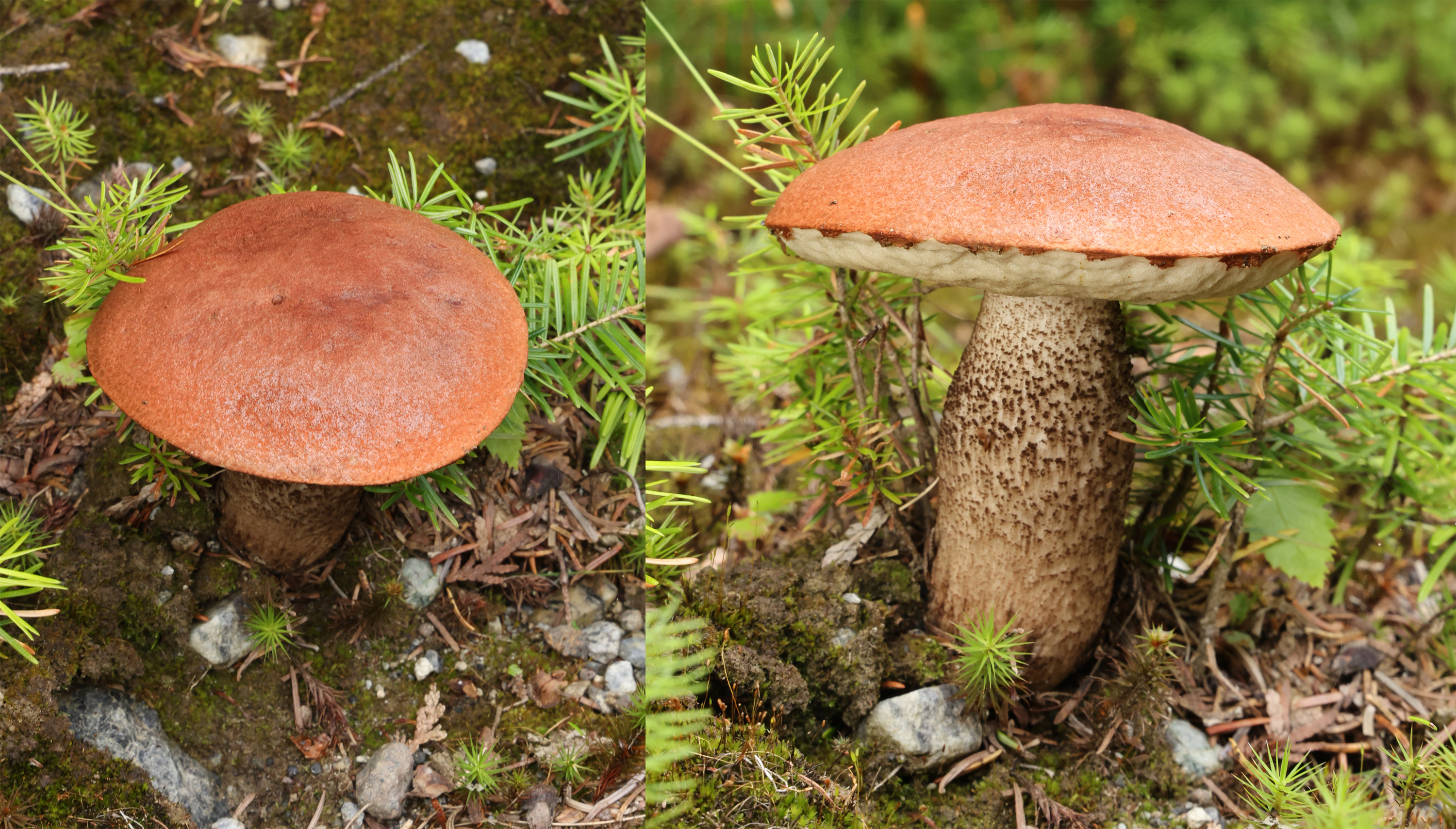
The scaber stalks are members of the Leccinum genus; this one is possibly Leccinum vulpinum. They are symbionts with spruces or pines—receiving sugar from the plant and giving back nitrogen, phosphorus, and various mineral salts. I remember they stain your hands black when sliced for cooking, which for me used to be a one-pot meal, simmered in sour cream with potatoes, onions, and carrots. Recently I learned they are not recommended since they cause gastrointestinal upset in some people, but I never had any problems:
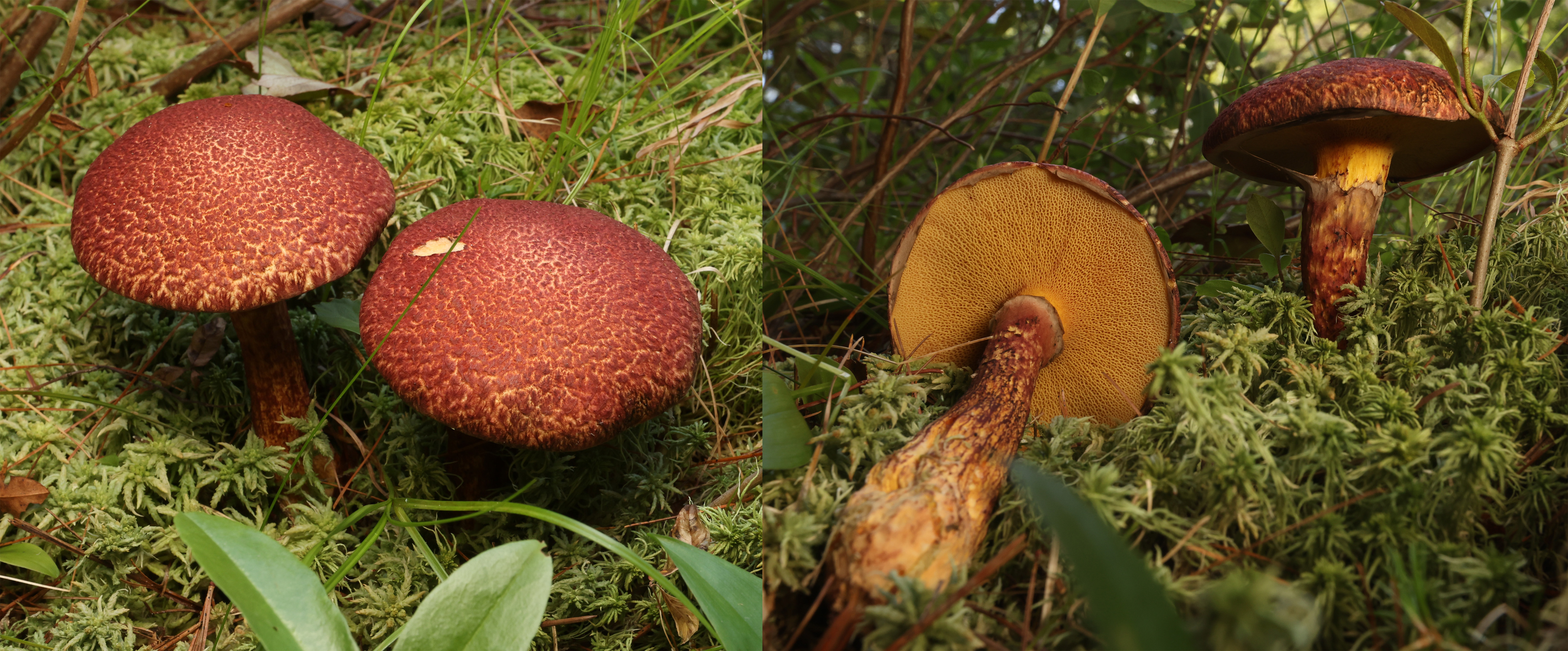
The Painted Bolete (Suillus spraguei) grows in obligate symbiosis with the Eastern white pine in moist places like the edges of boreal bogs and lakes. It is a good edible, but like other “slippery jack” boletes in the Suillus genus, it oozes some slime when cooked. Some don’t like it, but for me, it is quite like an okra dish. Good for a mushroom and beans stew:
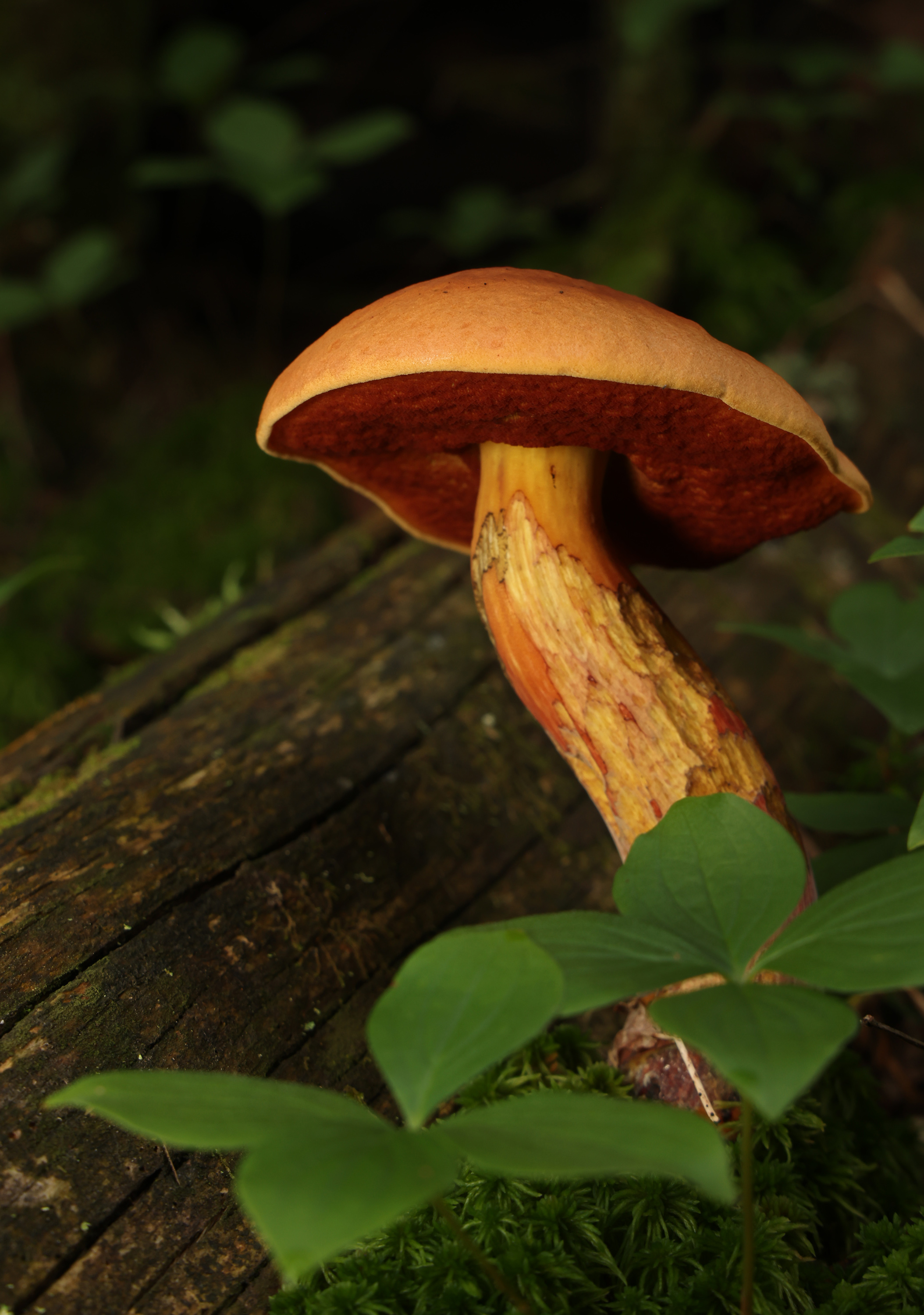
This is likely the Red-mouth Bolete (Neoboletus subvelutipes). They kindly alert a possible collector of their toxicity by their red pore surface and the fact that, when cut, they immediately stain blue. In the boreal forest, it grows in mycorrhizal partnership with hemlock, oak, or beech:
Probably the Bitter Bolete (Tylopilus felleus), a general tree symbiont that prefers conifers but will grow in broadleaf forests, too. It looks succulent and appetizing but is extremely bitter. One cap mixed with other mushrooms will ruin a whole meal. The bitterness must have evolved in an otherwise harmless bolete as a defense against vertebrates, although it may not protect them against insect larvae:

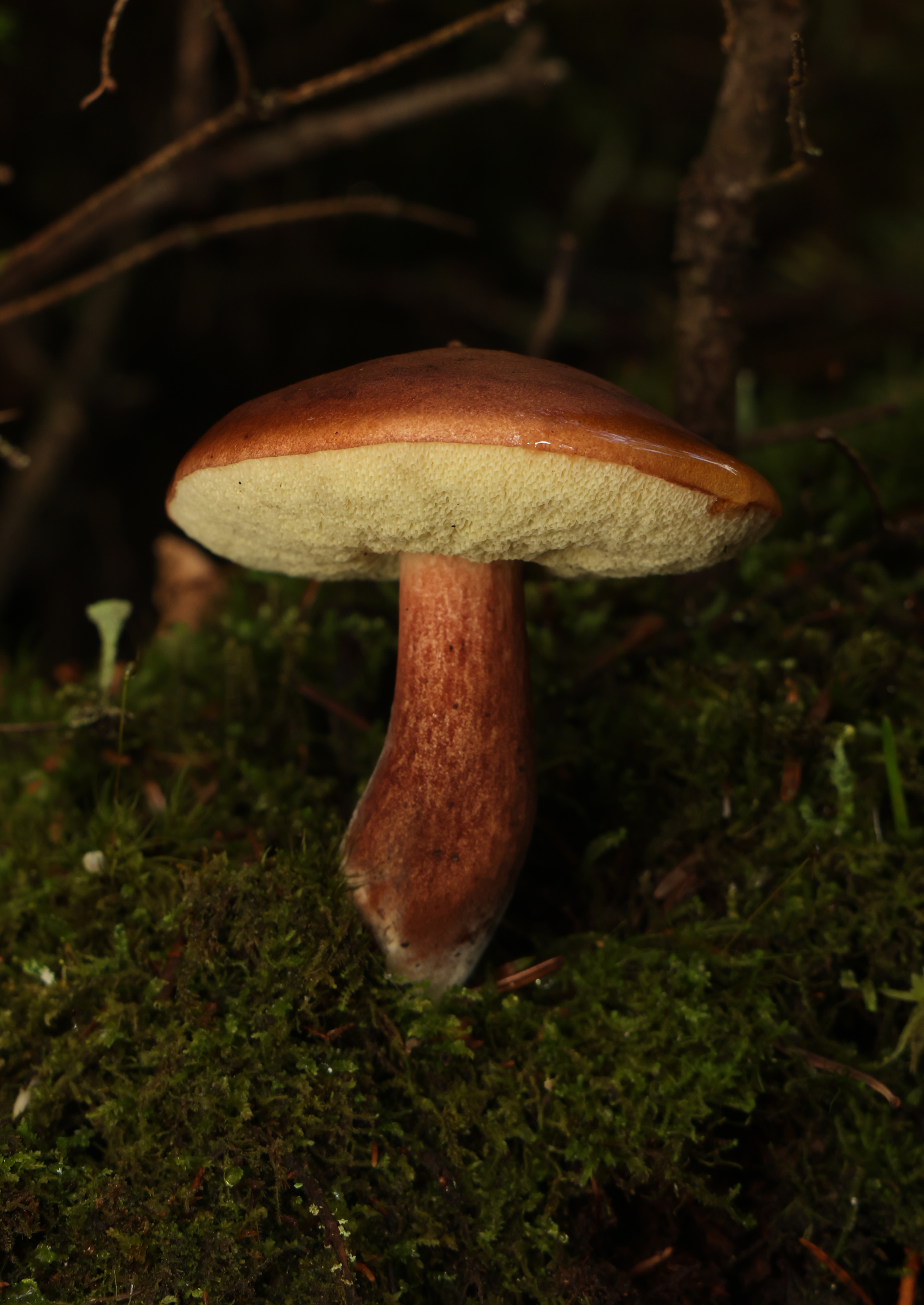
Possibly the Bay Bolete (Imleria badia). It grows in symbiosis with conifer trees. If I were sure of the correct ID, I’d go ahead and collect it—it is a choice edible. If I wasn’t quite sure, but knowing that it is not deadly poisonous (bolete: check; pores not red: check; doesn’t stain blue when cut: check; not bitter: check), I’d cook and eat just a small part of a cap and wait for results. That’s how the edibility of each mushroom was established by our ancestors thousands of years ago. Let’s honor all those unknown, fallen heroes of culinary art with a minute of silence now:
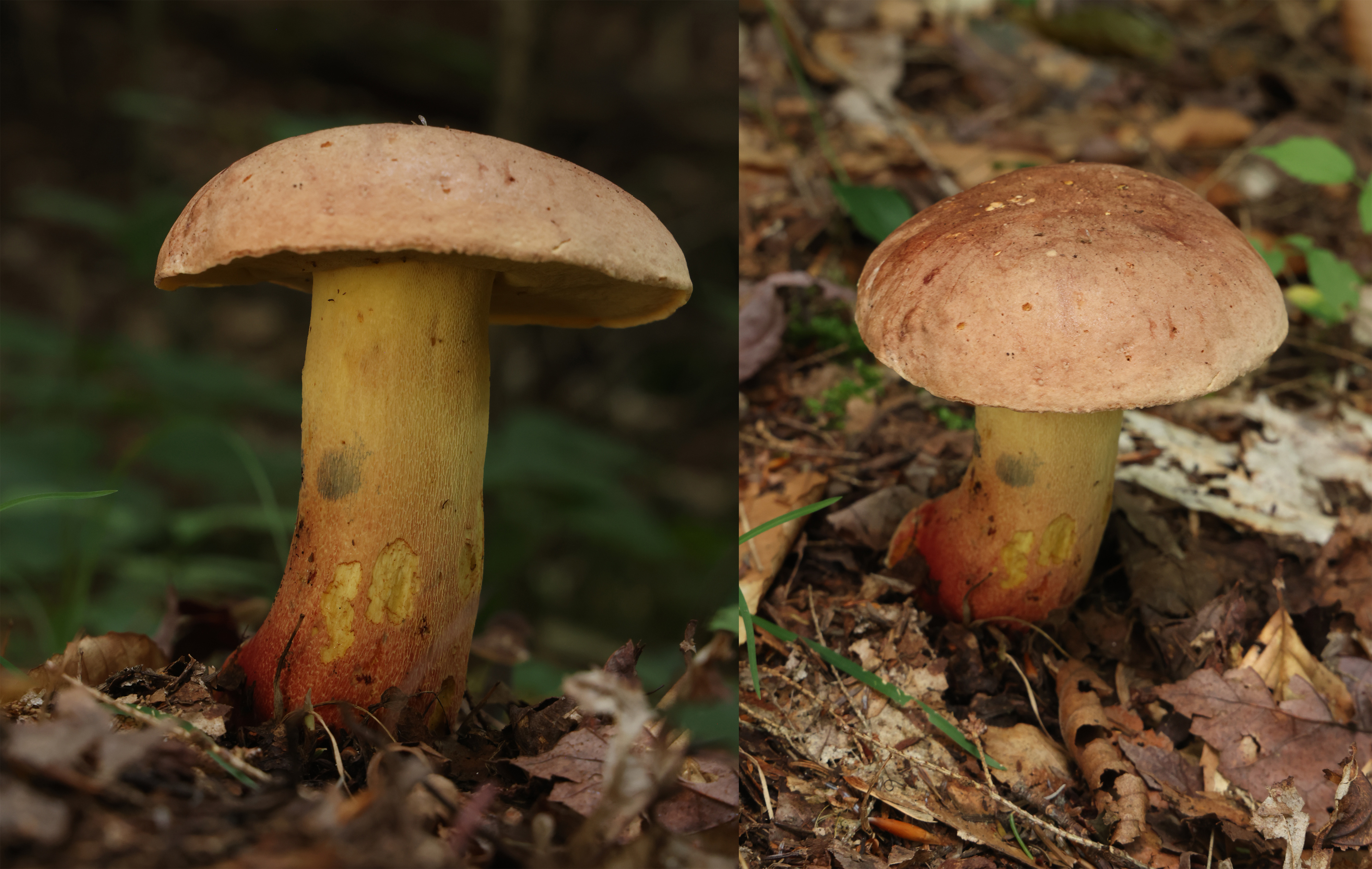
I suspect this is Butyriboletus brunneus. The giveaways are a sturdy, finely reticulated stipe that is red at the base and a light brown cap. It grows in mycorrhizal symbiosis with oaks and other deciduous trees. It is possibly edible, but collecting it would be going a little too deep into the “Russian roulette” zone for me:
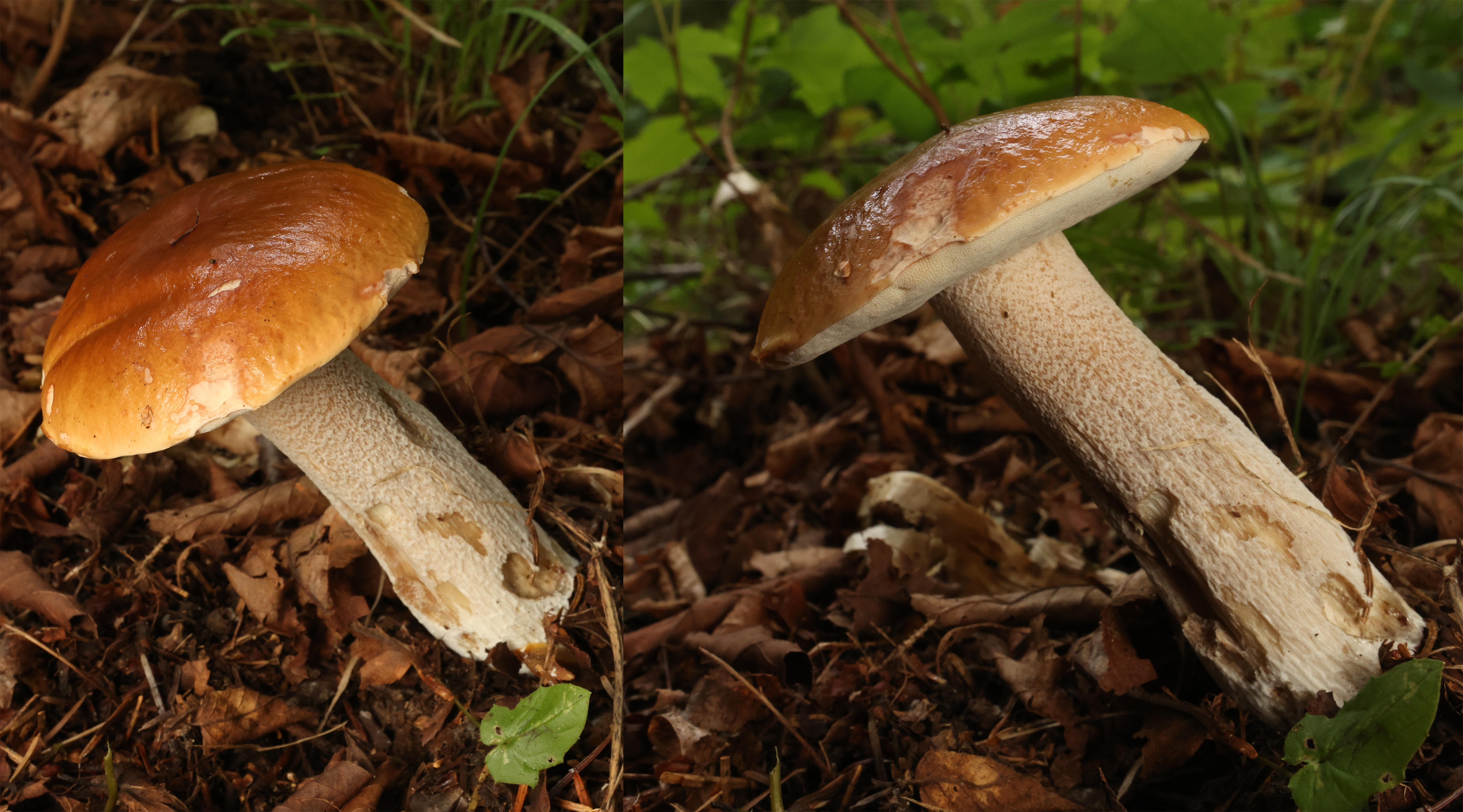
This could be a member of the porcini complex, the Chippewa bolete (Boletus chippewaensis). It is very likely edible, even though it looks a bit different from a classical porcini—the stipe is more slender rather than bulbous and its reticulation is more subtle, but the cap is brown-reddish like that of a proper porcini. The final test would be to make a spore print and possibly look at the spores under a microscope. If confirmed, it can be thinly sliced and sautéed in butter with herbs for an aromatic meal; it is also excellent dried and added to soups or mushroom pierogies with a porcini and fried onion filling:
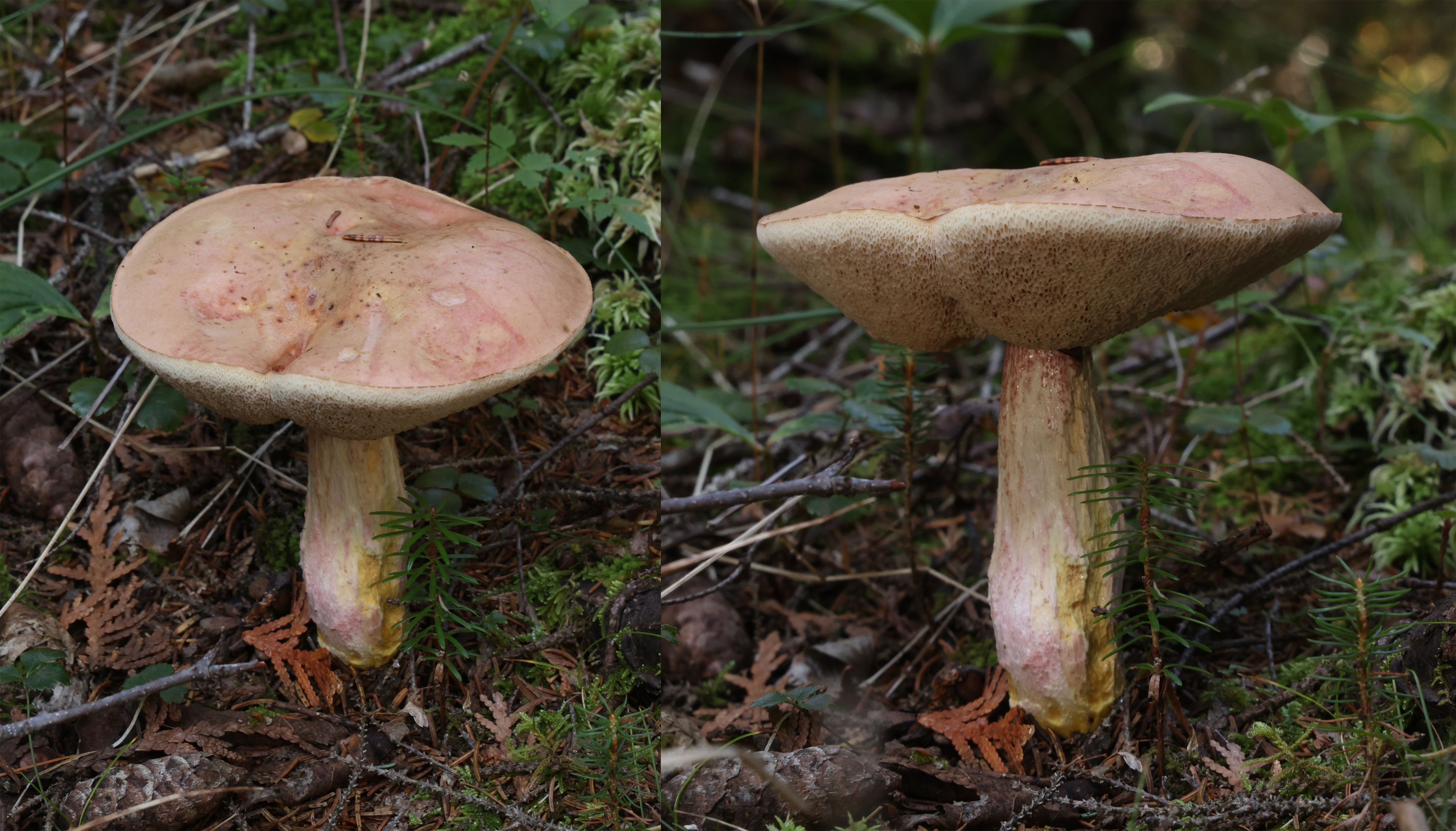
Another bitter bolete, possibly Tylopilus rubrobrunneus, judging by traces of pink and violet. Mushroom identification is complicated by the variable appearance of a toadstool when young and old, the type of soil it grows in, parasitic fungal infections, whether it is wet or dry etc.:
Now onward to Russulas, which together with the milk caps form the family Russulaceae. These are gilled mushrooms, which raises the bar considerably compared to boletes—many toxic and deadly mushrooms have gills too. Russulas’ caps can be all hues of red, brown, yellow, burgundy or green, and there are many species. They are all fragile and their gills break off easily; their stipes are not fibrous, usually empty and they lack a veil. It is really difficult to make an exact species determination without a microscope and a lot of experience. But, if it is indeed a Russula, it is not deadly, and the toxic ones, in my experience, can be ruled out by the acrid taste of the raw flesh (that burning taste usually disappears after cooking, but the toxicity does not). Also in my experience, most of the toxic ones are bright red or yellow, while dull red, green, or wine colors are good for a mushroom stew or a broth base. These are all folklore heuristics (“other ways of knowing””), so one has to be really careful when collecting them for the table.
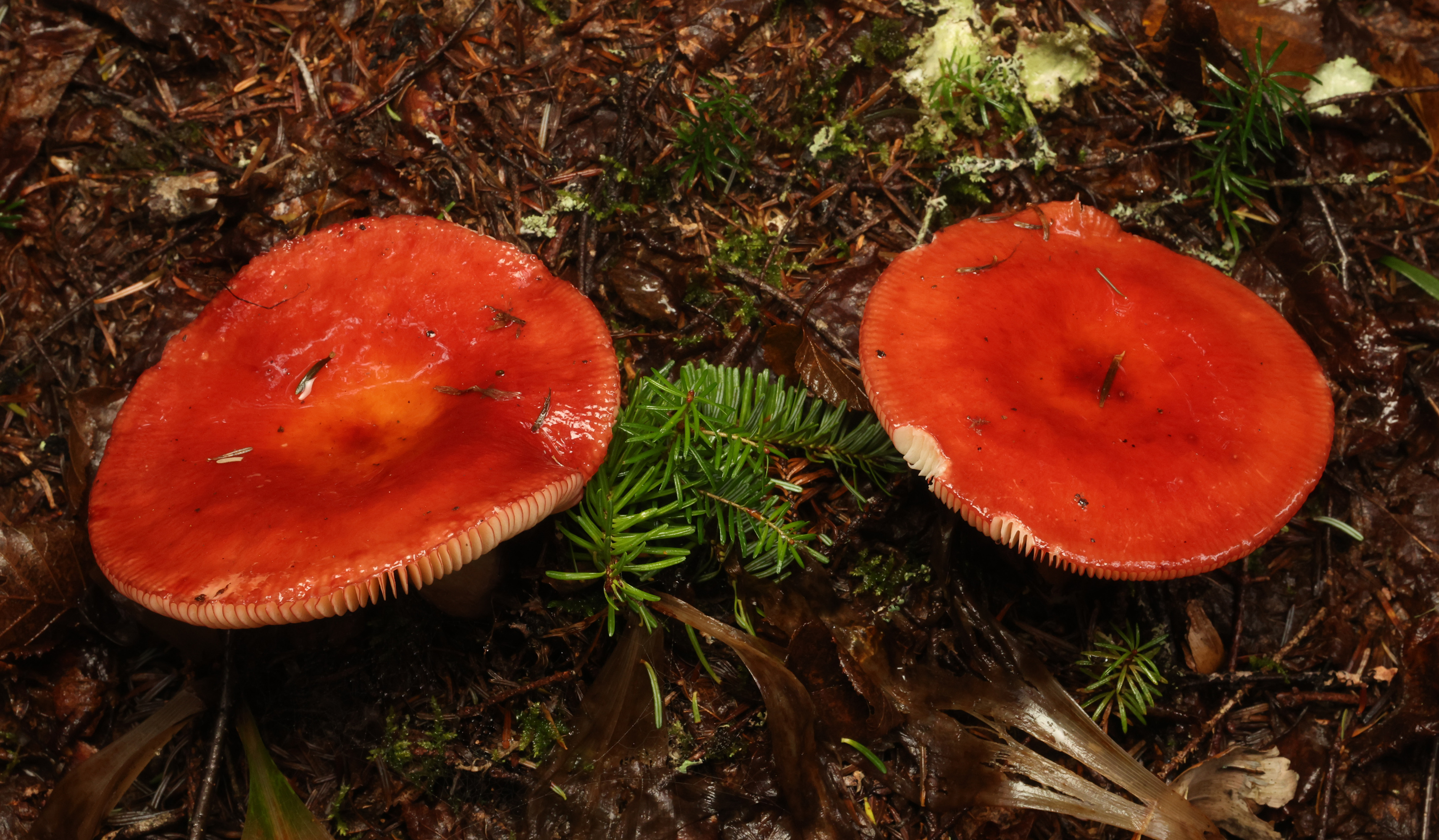
This one, for example, could be the Sickener (Russula emetica). Obviously, it is not good for consumption.
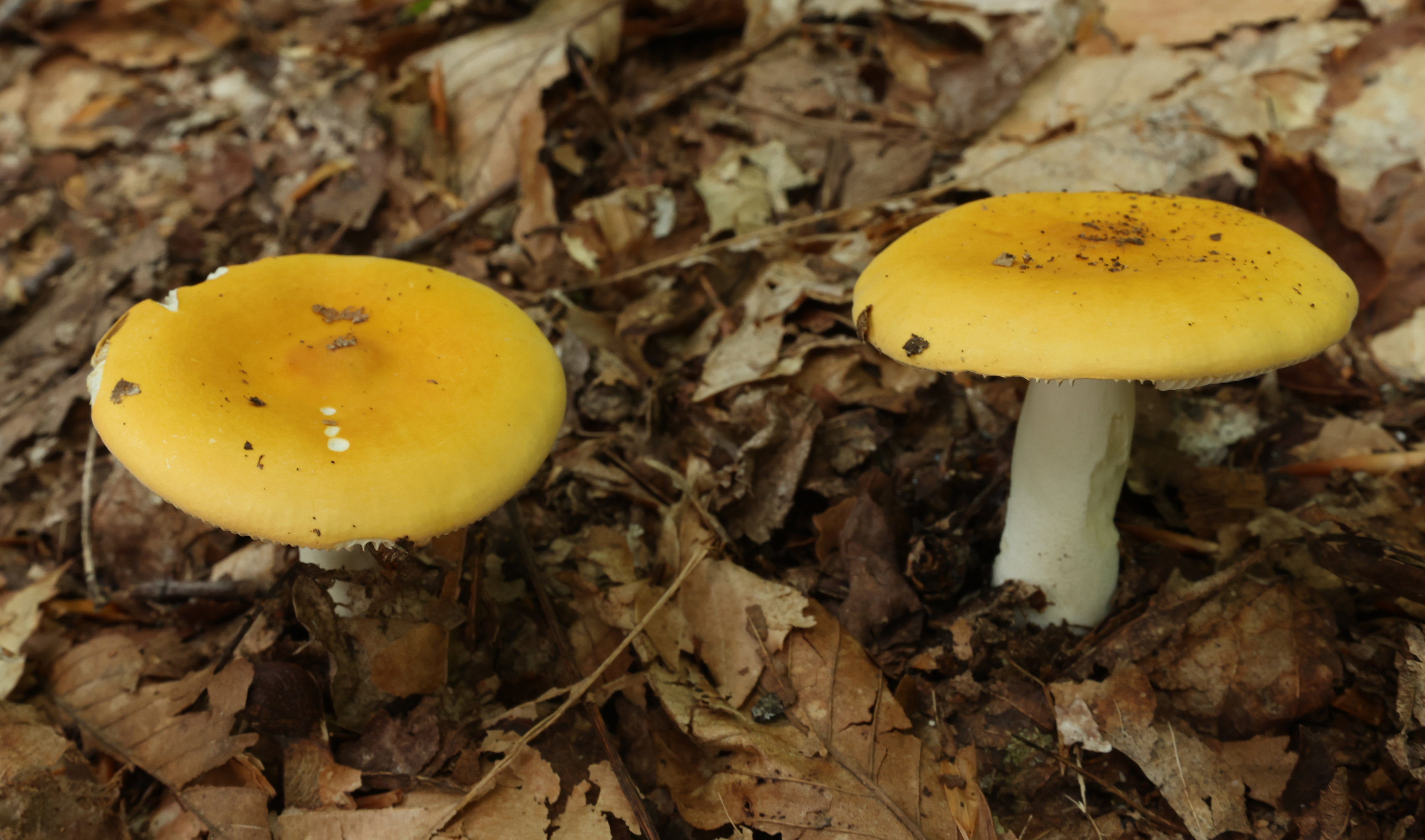
Possibly the Yellow swamp russula (Russula claroflava). I never collected yellow russulas, but they can be edible:
Possibly the Copper brittlegill (Russula decolorans); likely edible:

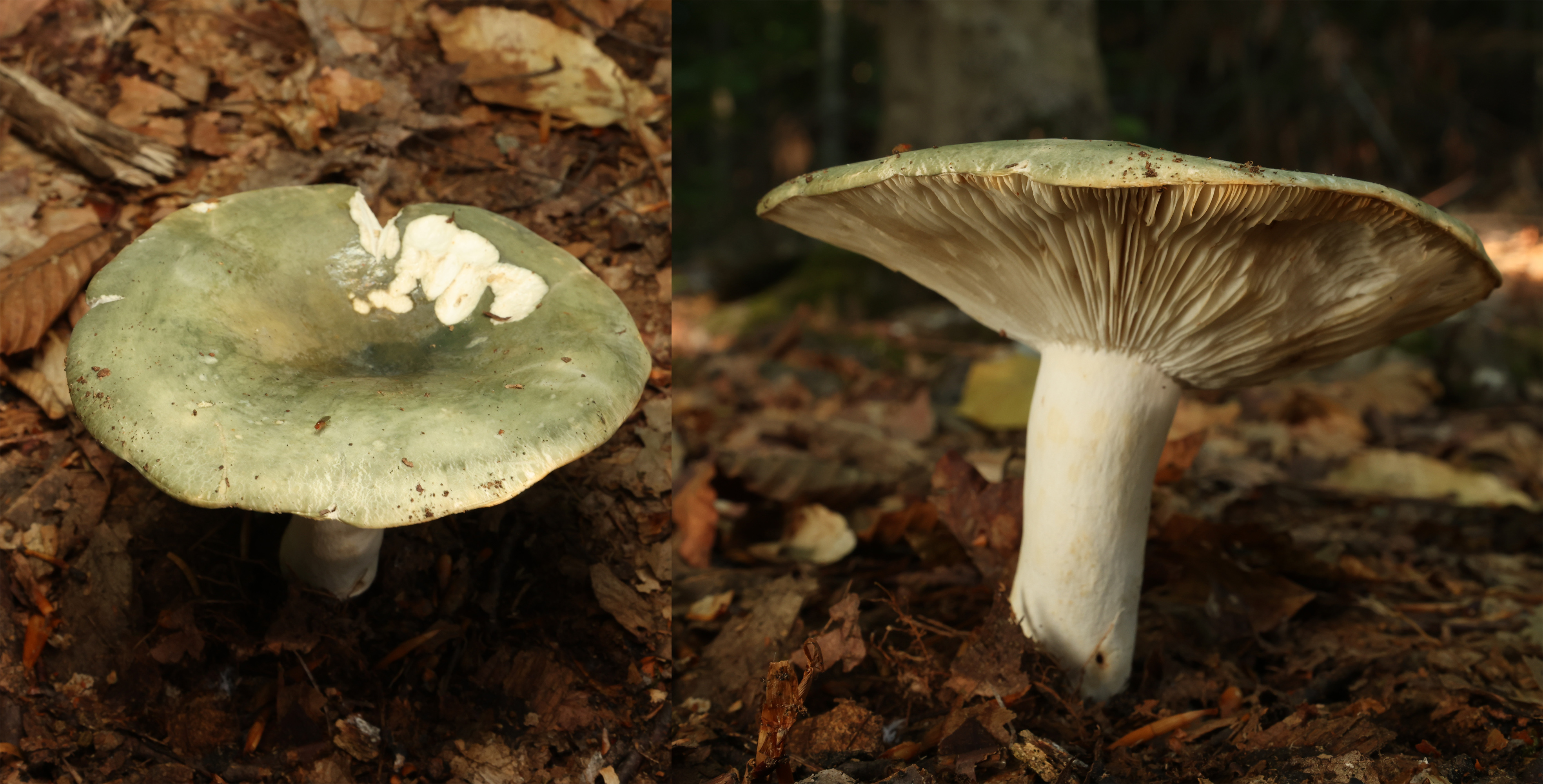
Possibly the Grass green russula (Russula aeruginea). It is a Schrödinger’s mushroom: edible and toxic at the same time, until you eat it to make sure:
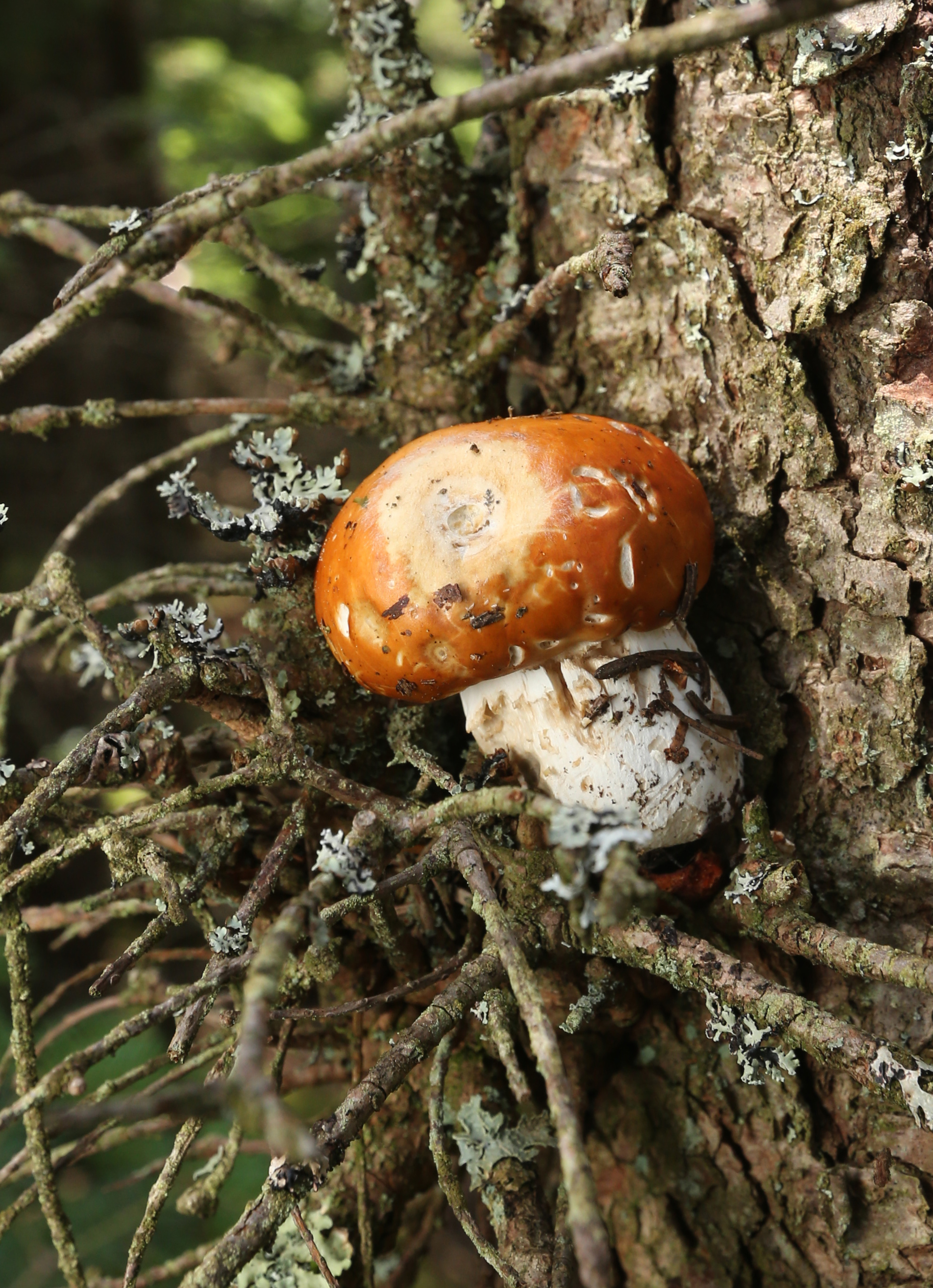
The last picture proves that Russulas are indeed harvested as food. I found this young mushroom, put aside for later by a squirrel or chipmunk, in a trailless Catskills forest: