
Welcome to the end of the work week and the penultimate day of the month: Friday, October 30, 2026, the day before Halloween, and National Buy a Doughnut Day (note that it says nothing about eating them. But here’s a special doughnut I bought in 2005, along with 0thers for the lab. It’s a “Big Dat,” a monster creation of Dat Donuts near the University of Chicago. The websote calls it a “colossal shareable treat,” but of course I ate the whole thing.

It’s also National Breadstick Day, Pumpkin Bread Day, National Candy Corn Day (celebrating the world’s absolute worst candy, made of wax, sugar, and petroleum byproducts), and World Lemur Day.
Here’s a mother ring-tailed lemur (Lemur catta) and her baby photographed in 2006 at the Duke Lemur Canter:

Readers are welcome to mark notable events, births, or deaths on this day by consulting the October 30 Wikipedia page.
Da Nooz:
*This is amazing: the NYT broke a story that could cost the Democrats a Senate seat from Alaska. We all know that the Republicans are running two candidates with the same name: Dan Sullivan. Trump was furious about that as in this election, Alaska is a swing state, and Trump threatened to have the DOJ file charges if Republicans lost. Now, from a NYT exclusive exposé, we know that the faux Dan Sullivan, the ringer, was ginned up by the staff of the Democratic candidate, Mary Petola, who was apparently aware of this effort and said did about it. I’ve given a bit longer excerpt than usual, and bolding is mine.
In the summer of 2025, a staffer for Mary Peltola, the Alaska Democrat who was eyeing a run for Senate, received unusual instructions from top campaign aides: Find as many people named Dan Sullivan in Alaska as you can.
The staffer complied, combing through voter records to produce a list of Dan Sullivans from across the state.
This was no random request. Dan S. Sullivan is the name of the state’s Republican senator. And if the Peltola campaign or its allies could track down and persuade another Dan Sullivan to run for Senate, the confusion could cost the senator crucial votes on the state’s unusual, four-person ballot.
The plan worked. This spring, a retired teacher from a tiny fishing village along the Alaska Panhandle, reachable only by air and sea, announced his candidacy for Senate. His name was Dan J. Sullivan.
The Peltola campaign has repeatedly denied any involvement in his candidacy. But The Times has found, based on interviews and text messages, along with documents prepared for a potential lawsuit against the campaign, that not only did Ms. Peltola’s team work with people trying to recruit Mr. Sullivan to run for Senate, but the effort was much broader. The group worked to coax other would-be spoilers into the race, to dilute the incumbent’s support and help catapult the Democrat to victory.
The endeavor, which was internally called the ballot composition project, involved secret trips to far-flung Alaskan communities and the appearance of a mysterious Midwestern operative, who traversed the state using a fake name and made his pitch to would-be candidates over beers at brew pubs.
It also involved the Peltola campaign’s lawyers, as well as senior aides at the Democratic Senatorial Campaign Committee, which directs the party’s campaign strategy in Senate races across the country. From Washington to Anchorage, those advisers participated in regular conversations about the effort and even considered forming a new political party to draw conservatives onto the ballot.
Ballot-stacking tactics are common in politics and generally considered legal — and have been employed by both parties in Alaska. But this operation, which has not been reported before, reveals the lengths to which Democrats went to seek advantage in a Senate race that could determine control of the chamber.
“Alaskan voters need to know,” said Elisa Rios, Ms. Peltola’s former campaign manager and longtime aide, who was fired amid a staff shake-up in August, and agreed to a series of interviews with The Times since then. “There was a lot of speculation, and voters should get the full picture when making their decisions.”
Ms. Peltola was not directly involved in the project, Ms. Rios said, but she was “definitely aware.”
The operation had impact. On Tuesday, Ms. Peltola will be the only Democrat on the ballot, facing off against the two Mr. Sullivans and a long-shot candidate named Gerald Heikes who was also recruited into the race, according to The Times’s reporting. Polls give Ms. Peltola a strong chance of winning.
The Justice Department, meanwhile, filed a lawsuit in federal court at President Trump’s behest last week seeking to block certification of the election results if votes for the other Mr. Sullivan cost Senator Sullivan the win.
Granted, the real incumbent Republican is on the ballot as “Sullivan, Dan S., Republican (incumbent)”, while the faux Sullivan is on as “Sullivan, Daniel J., Jr.”, but you can see how some voters might be confused. Rios tried to retract her comments by asking the NYT, but they didn’t have to, and didn’t do so. This is Democrats playing dirty pool, something I’m not used to compared to Republicans, and if Poltola tried to win by this method, well, she doesn’t deserve to win. I don’t know what will happen with Trump’s lawsuit if she does win.
*There’s also an article about this by the editors of the Free Press (the first “editors-authored” piece I’ve seen, called “Democrats subvert democracy to save it.”
In the race to the bottom that is American elections, there is officially no high ground left to stand on. Democrats are demanding that voters elect them to save democracy, which they insist is threatened by President Donald Trump’s desire to meddle with the midterms. Now Americans will learn whether they meant any of it based on how they respond to brazen election meddling by one of their own.
The FP then describes the details of the NYT article given above.
. . . The false-flag candidacy was made possible by Alaska’s open primary, in which candidates can run under whichever party they’re registered with, and the top four finishers advance to the general election. The organizers of the scheme were not only determined to win at any cost but were also amused by their own craftiness and contemptuous of the voters they were hoping to trick. “Peltola advisers seemed to make fun of voters while watching a focus group, surmising the participants would be susceptible to being tricked into voting for a ballot spoiler,” the Times report says.
The DSCC denied any connection to Decoy Dan’s campaign in the wake of the news, while the Peltola campaign and Democratic leaders have largely remained silent. But as reporters continue to press them, they will have to account for what looks like a straightforward attempt to subvert democracy.
. . . The report also shines a new light on a Trump administration lawsuit regarding the Senate race. The Justice Department sued Alaska on Friday, seeking to delay certification of the result if the challenger Sullivan draws enough votes to swing it from the incumbent to Peltola. As our colleague Jed Rubenfeld noted, the suit was launched on a flawed legal basis and likely won’t hold up in court. Yet the basic premise of the challenge has now been vindicated. While a state court in Alaska previously declined to remove Decoy Dan from the ballot because his motive for running couldn’t be proved, the Times report makes clear that he was running in bad faith, which state law should preclude.
The news also reframes the outrage Democrats expressed in reaction to the Justice suit. “This is clearly corruption,” Peltola said in an interview. “This is clearly a very desperate attempt to cling to power, using his allies in Washington, D.C., to rig the system even further.” With full knowledge of her own campaign’s scheme, she was bold enough to accuse Trump of meddling in the midterms. Other Democrats may not have had the full picture, but one after another suspended their disbelief in the likelihood of a second Dan Sullivan joining the race on his own. “This is an outrage. It shows they know they’re going to lose. We will fight tooth and nail. And we will win,” said Senate Minority Leader Chuck Schumer in response to the lawsuit. A better reaction to the unlikely coincidence of two Sullivans may have been to privately lean on Peltola’s campaign for answers, or at least decline to comment while the facts take shape.
Ironically, the Times shares a piece of the blame for hyping the Trump election-meddling angle. Days before its report that showed Peltola’s role in the campaign deceit, it ran a headline saying “Justice Department Seeks to Block Alaska Vote if Republican Loses,” making it seem as though Trump sought to throw out the result rather than merely verify whether the second Sullivan was a legitimate candidate.
It’s become a familiar pattern. Trump and many of his allies earned their reputation for dishonesty after a failed campaign to overturn elections in 2020, yet ever since, Democrats have sought to cast themselves as saviors of democracy, hoping voters will forget their many attempts to subvert public choice. That includes suppressing stories about Hunter Biden and conjuring flimsy indictments to discredit Trump. The tale of two Sullivans is only the latest example, and a reminder that there was never any high ground to begin with.
This saddens me for reasons given above. I would like to think that Democrats do have the high ground. In general I think they do, especially given Trump, but even one screw-up like this is bad.
*The Guardian describes the burgeoning of scam offers to authors and filmmakers (h/t Peter). The authors, Snigdha Poonam, wrote a book about India and was inundated with scamss.
Why would a hyperlocal life-drawing community in Seattle be interested in a nonfiction book about the shifting aspirations of young people in India’s small towns? The book was published seven years ago. What did they want from me?
I accepted the invitation. The next email had a slick poster promoting the Zoom event, with the book cover as the backdrop and blurbs from the Economist and other publications. My attention was drawn to something more intriguing: a request for a “contribution fee”, with no amount specified. It would cover promotion, coordination and administration. But, oddly, this email didn’t come from Timothy. Signing off this time was Stephen – “Organiser, Community Improv LA”, which was another group in another city. According to the improv community’s Facebook group, Stephen is indeed the name of the organiser. However, Stephen had written to me using Timothy’s email address. To add to the chaos, Stephen/Timothy had also left what I suspect was an AI prompt in the email, which included the line: “MAKE IT MORE PROFESSIONAL.”
This was undoubtedly a scam. Genuine book clubs don’t ask for money from authors. But who was behind it?
Had these individuals actually read my work, they would have wanted to stay away from me. I have spent the last 10 years reporting on transnational fraud. My first book, Dreamers, closed with a chapter on fake call centres in India; my second, Scamlands, travelled to other low-income countries in Asia to portray an invisible empire that thrives on inequality, technological change and the erosion of trust.
Along the way, I met and interviewed the scammers whose labour keeps this empire running. For some, fraud was a route to upward mobility; for others, an act of revenge against the privileged. Though I have formally emerged from this underworld, I can never delete a scam email without wanting to know more.
I agreed to pay the book club – but after rather than before the event. After clarifying that “Stephen” was a typing error, “Timothy” sent me a Google Meet link for the book discussion. I joined the meeting to find about 20 people already in there: Alexander, Andrew, Mira, Rajnish, another Alexander, and several others. Timothy was also there and so was Stephen. None of them had their cameras on. Going by the profile pictures they used, most of them appeared to be white.
. . .I am not the only author to have found myself stuck in a Zoom book club with fake readers. Countless writers with published books have been receiving invitations from reading communities that start to unravel after a basic Google search.
As often happens with scams, most invitations sound too good to be true – thousands of members, incredible Goodreads clout and, at times, something even more alluring for an author: a deep understanding of their book.
Many authors spot red flags from the first email onward, but not all.
I guess this is a worldwide scam, or at least one directed at Anglophones. The “contribution fee” is the way these organizations make money. At any rate, authors should publicize who and where these scams come from so that people can Google these offers (all of them seem to be fake). This one was from Timothy Firth, organiser of a Seattle-based life-drawing community called CAM Life Drawing. There should be an “s” before the first word.
*Reader Reese called my attention to an ars TECHNICA article about how the execrable RFK Jr. has, against FDA advice, allowed six dubious peptide drugs to be sold in pharmacies.
Anti-vaccine Health Secretary Robert F. Kennedy has unilaterally passed a rule that will allow specialty pharmacies to sell six specific peptide drugs, overruling scientists at the Food and Drug Administration.
The peptides are popular among members of Kennedy’s Make America Health Again movement, and many prominent MAHA figures and Kennedy allies sell them. Kennedy said he uses some of the peptides and called himself a “big fan.” But FDA scientists continue to say there is insufficient evidence to show if they’re effective, and they are potentially dangerous. In 2023, the safety concerns led the FDA to remove the six peptides from a list of drugs that can be made by specialty pharmacies called compounding pharmacies—which make customized formulations of drugs for patients, or, in cases such as this, specialty drugs in bulk.
Kennedy’s new rule sidesteps the need to formally undo that FDA action. The rule is titled “Enforcement Discretion Policy Regarding 503A Compounding Using Certain Peptide Bulk Drug Substances” and was made available Wednesday on the Federal Register, with the final publication date set for October 30. The rule does not change the regulatory status of the peptide; instead, it states the Department of Health and Human Services (HHS) will no longer take enforcement action against compounding pharmacies for making the peptides, essentially giving them a green light to freely produce and sell them. Kennedy had quietly proposed this rule earlier this month.
. . .Along with the notice in the Federal Register, HHS also posted a more detailed explanation of the policy today that includes more of Kennedy’s rationale for easing enforcement of the six select peptides, which are: BPC-157, Epitalon, KPV, MOTS-c, Semax, and TB-500.
One reason cited for all the peptides was that an FDA advisory panel voted in July to add these six peptides back to the list of drugs compound pharmacies can make. However, prior to the vote, Kennedy stacked that 12-member committee with eight new members. At least six of Kennedy’s additions have ties to peptide-related businesses and clinics, raising serious conflict-of-interest concerns.
Another explanation for allowing the peptides is that the safety concerns are mainly hypothetical or “inferential” and not based on observed harm in humans. But this is mainly because there are few to no studies involving humans that show either benefits or harms from the peptides.
I looked up these peptides, and none of them have support for their efficacy from rigorous human clinical studies. Indeed, there have been no clinical studies at all in about half the peptides. RFK Jr.’s policy is not only unsound, but possibly dangerous.
*I just voted a straight Democratic ticket in Illinois, so don’t chew my tuchas when I criticize my own party, for they’ve disappointed me terribly in the last several years. I’m going to chew the Democrats’ rump by calling your attention to another Free Press article, “The Democratic case against Abdul El-Sayed.”
Democratic voters are being instructed to do exactly what Democrats lectured Republicans not to do in 2016—which is to put party over country. They are being lulled into a tribalist fury, made to believe they have to set aside any reservations they may have about their nominee or the creeping forces of illiberalism co-opting their party, because right now the only thing they are allowed to worry about is Donald Trump.
Indeed, instead of addressing Jewish Michiganders’ very legitimate concerns about El-Sayed—he who campaigned with far-left, “America deserved 9/11” streamer Hasan Piker, he of “hurt people hurt people” fame, he who once urged an Egyptian president to “purge” the police and the media of non-Islamists, he who refused to say anything about an Iranian ayatollah’s assassination because voters in Dearborn, Michigan, were “sad”—Obama sidestepped all that, offering up some of the old kumbaya cha cha cha that worked in 2008 but feels ridiculously stale now.
. . .It does not matter that El-Sayed has apologized for or tried to distance himself from some of his excesses. That is what one does in the heat of a campaign. We should assume his beliefs are unchanged.
I am amazed at how many Americans assume an apology equates to a complete change of views.
Which should be more than enough for Democrats to reject him.
But Democrats, like Republicans, have mostly succumbed to a partisan muddleheadedness that makes it impossible for them to see beyond the next election. Right now, the next election is one week away, and the only thing the partisan can think about is who will control the House and Senate. El-Sayed, of course, is very important. He is a candidate in one of the two or three races that will decide what happens in the Senate, and it does not matter that he’s not sure whether Iran or Israel poses a greater national-security threat to the United States. What matters is winning—clobbering Trump, derailing his agenda. Once they take care of Trump, Democrats imagine, they’ll have the luxury of worrying about other things. Like how big, exactly, their tent should be.
. . .Democrats should not simply reject El-Sayed because he’s hateful. They should reject him because he will cost Democrats election
His victory will confirm voters’ worst fears about the Democratic Party, that the red-green alliance—the partnership between radical leftists and Islamists that threatens France and other European countries—is coming for America. Like New York’s mayor, Zohran Mamdani, El-Sayed will obsess over the Jewish state. He will prioritize ending the U.S. relationship with it (he’s already indicated he wants a seat on the Foreign Relations Committee), and every time someone, Republican or Democrat, points out all the advantages of supporting a multiracial, multireligious democracy in the Middle East—the shared intelligence, the reining in of extremists, the stability, the tech, the commercial opportunity—El-Sayed will scream “genocide,” and the Democrats will roll over. They will be scared of being called Islamophobic, and they will welcome more radicals into their gargantuan, oversized tent. They will look weak, and they will sound detached from reality, because they will be.
El-Sayed is a terrible candidate and a semi-closeted antisemite. You might remember that when a man attacked a Michigan synagogue last spring, El-Sayed offered an explanation: the man was getting revenge for the death of his relatives in an Israeli airstrike—in Lebanon. “Hurt people hurt people” said El-Sayed, and though he later apologied for his remark, this is one of several that indicate his animus towards Jews and amity towards terrorists. I’m glad I don’t have to vote in Michigan, but if he wins the Senate will go in a bad direction. (I’d probably write in a candidate rather than vote for him.)
Meanwhile in Dobrzyn, Hili has a strange desire:
Hili: Can we go to Egypt?
Andrzej: I’m afraid we’ll have to strike that category of dreams off the list.

In Polish:
Hili: Czy możemy pojechać do Egiptu?
Ja: Ten gatunek marzeń musimy już skreślić.
*******************
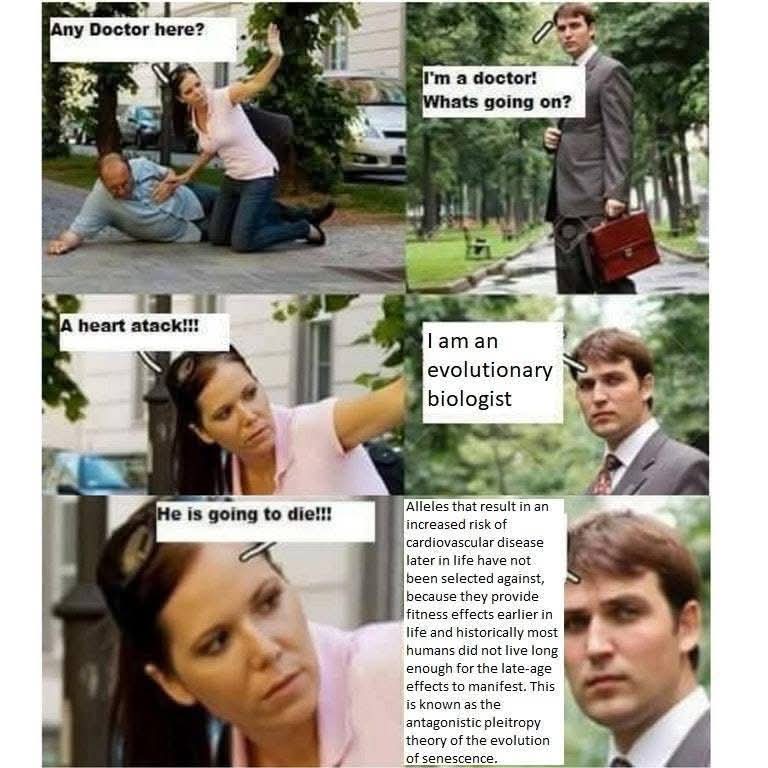
From Divy (and the “doctor” is correct):
From Bad Spelling or Grammar on Signs and Notices. Was this sold at an airport?

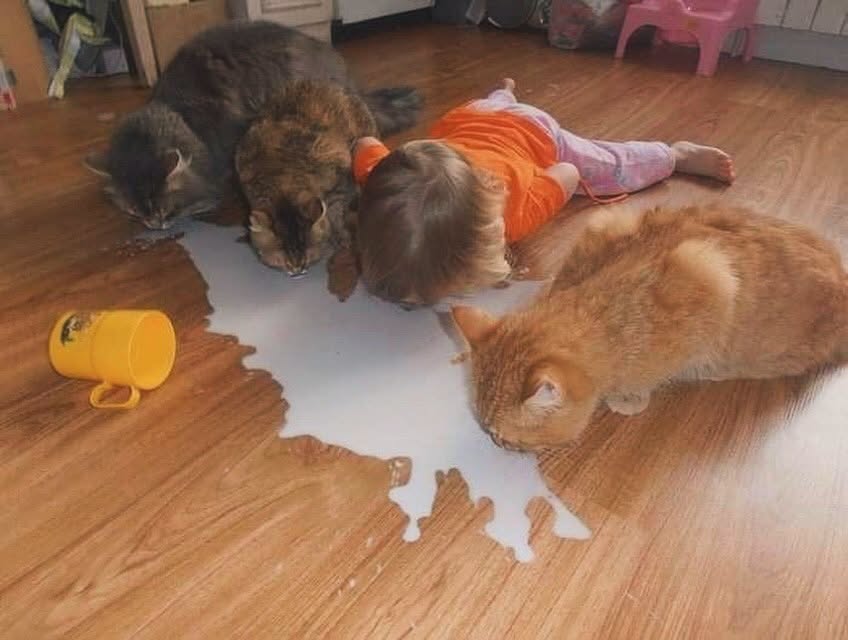
From Meow Incorporated:
Here’s Masih in Poland, showing her bodyguards, her meeting with Salman Rushdie, and part of her speech at a meeting:
I refuse to be intimidated. So do the brave women of Iran and Afghanistan who were blinded for daring to fight for freedom.
Death threats, assassination plots, massive online harassment, smear campaigns, none of it will silence us.
Thank you, Poland, for protecting me, standing with us, and amplifying our voices against the brutality of the Islamic Republic, the Taliban, and Islamist terrorism.
We are wounded but unbowed to oppressors. 💔✌️
— Masih Alinejad (@AlinejadMasih) October 29, 2026
From Luana. This is incredibly juvenile: I say or write the word “trump”, meaning “override”, all the time:
This is so incredibly lame. And every Princeton freshman was required to sit through this during orientation. https://t.co/gJMprnK651
— Steve McGuire (@sfmcguire79) October 29, 2026
From Sue, a heartening (and true) story. And the guy liked kittens, too!
In the middle of World War Two, German soldiers in southeastern Poland started avoiding a cluster of villages.
They wouldn’t go in. They wouldn’t take people out for forced labor. They put up warning signs and stayed away.
They believed the area was infected with typhus.
It wasn’t. Two doctors had invented the whole thing.
The man behind it was Eugene Lazowski, a young Polish doctor working for the Red Cross in the town of Rozwadów. He was watching the Nazi occupation tear his country apart. Executions. Deportations. People shipped off to labor camps, many never coming back.
He wanted to stop it. He had no weapons, no army, and no way to fight.
What he had was medicine.
His friend and fellow doctor, Stanisław Matulewicz, had discovered something strange. If you injected a person with a harmless, dead strain of a certain bacteria, their blood would test positive for typhus.
They wouldn’t be sick at all. But on paper, they’d look like they had one of the most feared diseases of the war.
And the Germans were terrified of typhus. It spread fast, it killed, and it could tear through an army. When the Germans found it, they quarantined the area and kept their distance.
Lazowski realized what that meant. If he could make enough people look infected, the Germans would leave the whole region alone.
So he started injecting his patients.
He chose carefully. He sent the blood samples to German labs for testing, exactly as the rules required. The results came back positive. Again and again.
The Germans declared an epidemic zone. Villages were quarantined. Soldiers kept out. People who would have been seized for forced labor or worse were left alone, because nobody wanted to go near them.
Lazowski had to be careful. If too many cases looked fake, someone would ask why nobody was dying. So he spread out the injections over time and kept the outbreak believable.
Eventually the Germans did get suspicious. They sent a team of doctors to inspect.
Lazowski met them with food and vodka and played the gracious host. He guided them toward the sickest looking, dirtiest patients he could find, in the most crowded rooms. The German doctors, worried about catching typhus themselves, took a few samples and left in a hurry.
The tests came back positive.
The fake epidemic lasted until the end of the war. Estimates say it may have protected around 8,000 people.
Lazowski also secretly helped Jews from the nearby ghetto, giving them medical care at enormous risk.
After the war he moved to the United States and became a professor of pediatrics in Chicago. For decades he barely talked about what he’d done. Late in life he finally wrote a memoir. He called it My Private War.
He died in 2006.
He never fired a shot. He beat the Nazis with a needle and a lab test.
— Voices of WW2 (@VoicesofWW2) October 28, 2026
From Malcolm/ weird deep-sea fish:
These are the deep-sea hatchetfish which are found in the Mariana Trench. https://t.co/ki2X12mCOp
— Massimo (@Rainmaker1973) October 22, 2026
Two from my feed. First, a new cat song (AI, natch):
You loved “Dead Mouse Delivery.” Oscar took that as encouragement. 😼 Now he’s back with “Who’s a Good Human?” – Widescreen (better) below ⤵️ https://t.co/AAap5klY5e
— ILikeToasters (Latent Creations) (@LikeToasters) October 29, 2026
One I retweeted from the Auschwitz Memorial:
30 October 1939 | A Dutch Jewish girl, Selma Henriette Lievendag, was born in Hengelo.
In October 1942, she was deported to #Auschwitz. After the selection, she was murdered in a gas chamber together with her older brother Johan.
—A short video about the first two gas chambers created near Auschwitz II-Birkenau: https://t.co/KArryHBbea
— Auschwitz Memorial (@AuschwitzMuseum) October 30, 2026
And one from Doctor Cobb (I may have posted this before). It’s surely causation!
The distance between Saturn and the moon correlates with Bachelor's degrees awarded in Physical sciences (r=0.987)
— Daily Spurious Correlation 🤖 (@dailycorrelation.bsky.social) 2026-10-23T13:33:21.496Z
That is a great way to learn antagonistic pleiotropy effect cold.
Might be a good general method to introduce definitions!
Funny how that works…
I like the Daily Spurious Correlation – there’s a number of them on eXtwitter, e.g:
https://x.com/spuriouscor?s=11