
I am not usually fond of restaurants that serve many small “nouvelle” courses that are lovely and exquisitely curated, as they don’t usually get me full—my prime requirement for a good restaurant. But last night we went to one of these multicourse places and had one of the best meals of my life—and it left me sated. This is the story of that meal.
AT 5:30 I met up with my friend, the engineer and origami master Robert Lang, visiting Chicago to teach a two-day class in origami at a meeting. And, as I mentioned yesterday, he invited me to a well-known Chicago restaurant for a slap-up dinner, which lasted a full three hours. It turns out that his niece manages the place, and so we were able to obtain hard-to-get reservations. From Robert:
As I may have mentioned before, my niece Kate is the general manager at Next Restaurant, and she’ll get us in. (You may recall I tried this with you several years ago during a Chicago trip, but the airlines conspired to ruin my arrival. This time, I’m flying in the day before, so there’s more buffer.)

There’s a University of Chicago connection with Achatz, and I well remember his diagnosis of, ironically, mouth cancer. I did not expect him to survive, but he did:
On July 23, 2007, Achatz announced that he had been diagnosed with stage 4 squamous cell carcinoma of the mouth, which spread to his lymph nodes. Initially, Achatz was told that radical surgery was necessary, which would remove part of his mandibular anatomy, including part of his tongue and large swaths of neck tissue. Later, University of Chicago physicians prescribed an alternative course of chemotherapy and radiation treatments. This led to full remission, albeit with some side effects including a transitory loss of his sense of taste, which eventually returned. On December 18, 2007, Achatz announced that he was cancer-free. He credited the aggressive protocol of chemotherapy and radiation administered at the University of Chicago Medical Center for driving his cancer into full remission. The treatment regimen, administered under the direction of Drs. Everett E. Vokes, Blair and Haraf at University of Chicago, did not require radical invasive surgery on Achatz’s tongue.
Yay! It’s been nearly twenty years now and he remains cancer-free. Achatz cooks at Alinea, but owns some of Next and, I presume, visits and gives feedback.
Every four months or so, the appropriately named Next changes its themes—themes that are quite eclectic. You can see the history of the changing themes since 2011 at its Wikipedia page, as well as reading about the difficulty of getting reservations. We were lucky to get in, but Robert began the request several months ago, and of course has a genetic connection to the restaurant.
The theme until the end of April is Japan.
From Next’s website:

Robert sent me this photo the menu, so I knew we were in for a treat: There’s a more complete menu below. as we got a few extra dishes:

Below is Achatz from a FB video. To prepare for the meal, as he says, much of the Next team went to Japan and spent their time eating at a variety of humble and fancy restaurants. They then, said his niece, came back and spent a few months developing a menu that was inspired by what they tasted. I think the slurring of Achatz’s speech is due to his treatments for mouth cancer.
There is only one menu, and you can get it with or without a wine pairing (this one includes sake) or with non-alcoholic beverages. We got it with booze, of course, and the wines and sakes chosen matched the dishes remarkably well. They were fancy, tasty, and pricey wines. This place is a class act with some good palates working behind the scenes.
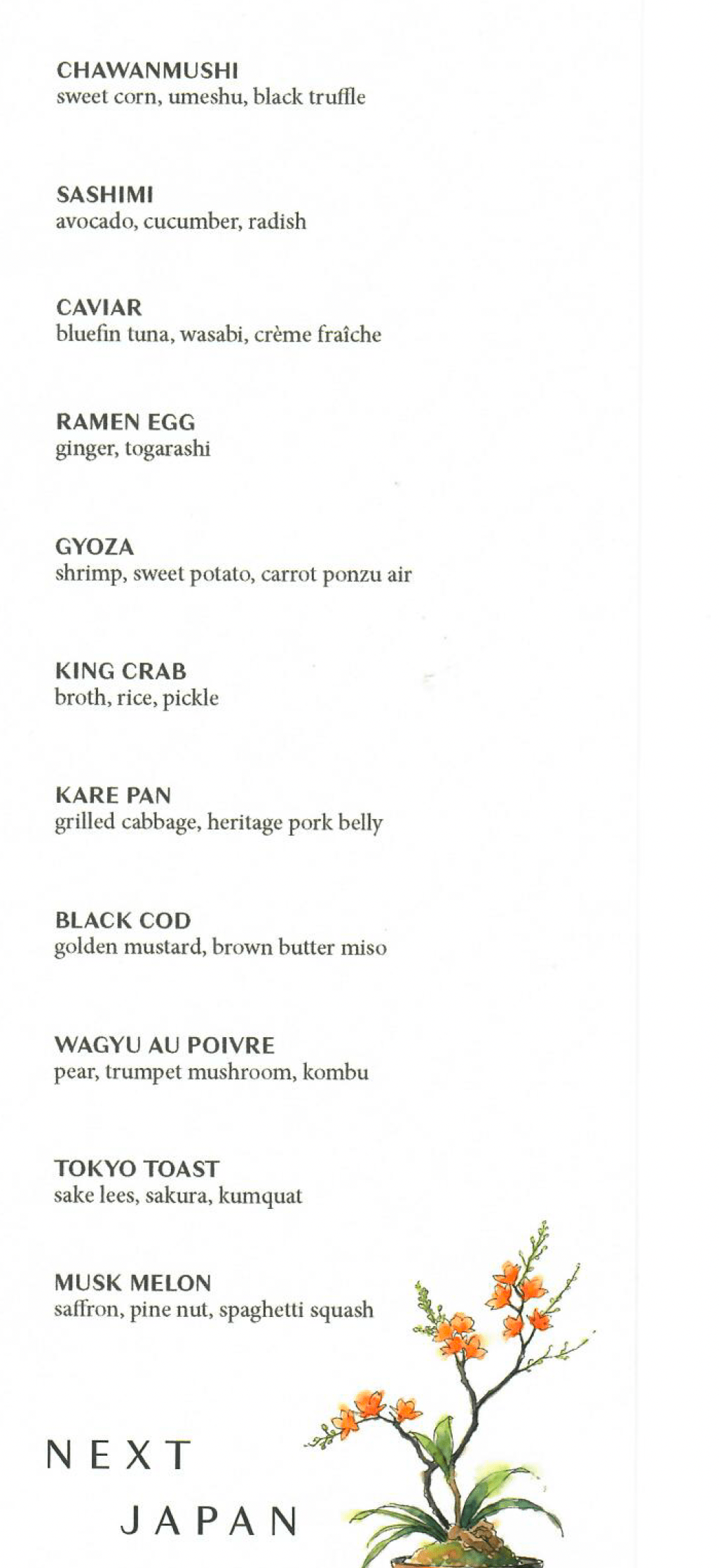
This is our menu; we were comped a few dishes because of Robert’s relationship to his niece, and so we wound up with eleven dishes, six wines, and two sakes (I love sake, and these were good ones, not obtainable, I was told, in local stores):
The food menu (this is what we were actually served including the gratis dishes; they apparently made up a custom menu post facto for us as a souvenir):
The wine-and-sake menu (while waiting for me, Robert was given a glass of champagne):

And now for the dishes (all photos by me except Robert’s, which are labeled “RJL”).
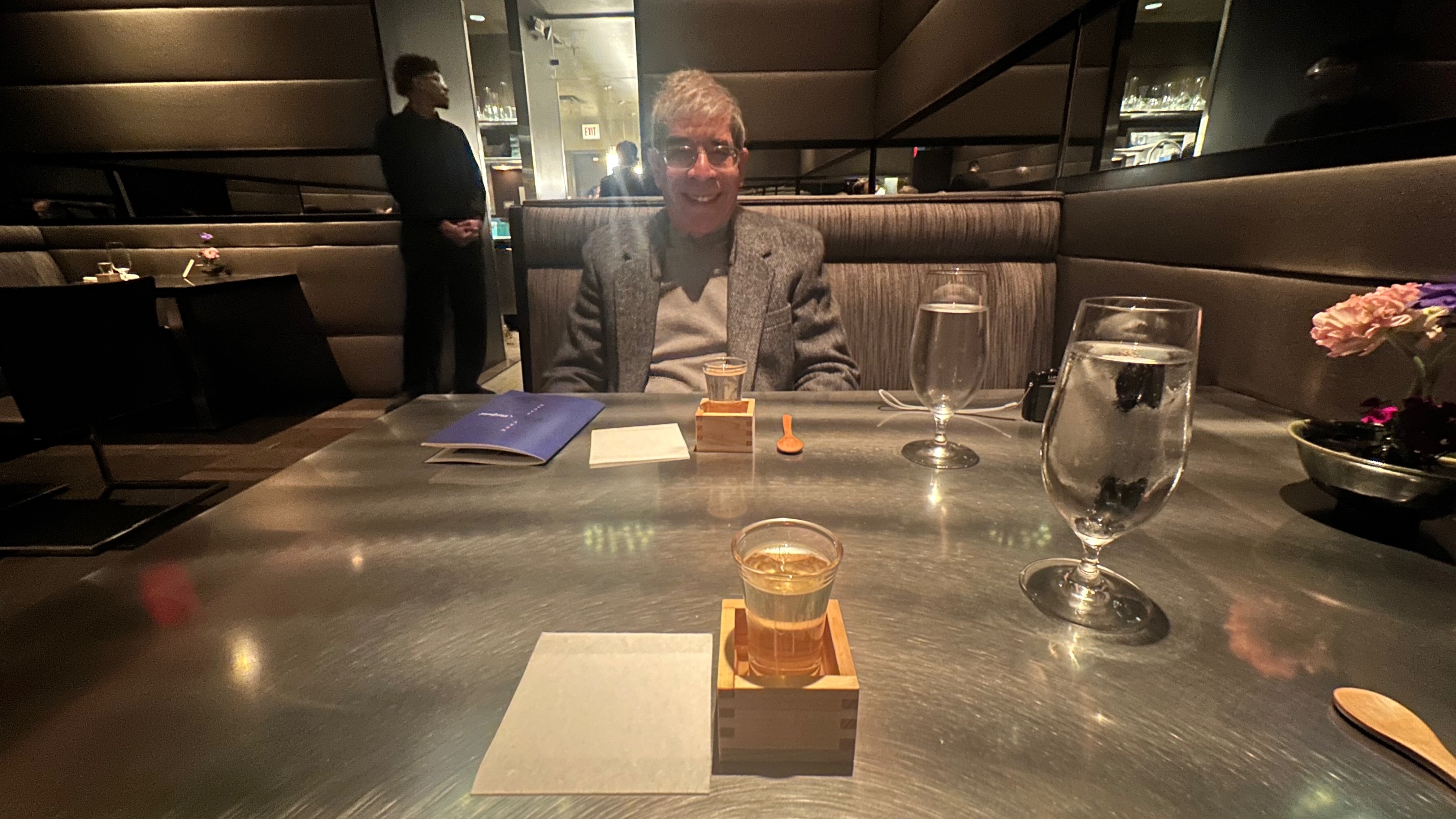
First, a glass of bottle-fermented sparkling sake, a real treat. It was served poured to overflowing in a glass inside a cedar box. After you take a few sips from the glass, you pour the rest of the glass into the cedar box and drink it from there, a traditional practice that gives the liquid a slight woody flavor:

The sake, one of several made by Masumi. It looks to cost about $60 a bottle retail: they did not stint on the wines but that was not near the most expensive libation we were served:

Me, excited before dinner; photo by RJL:
First course: chawanmushi (a savory egg custard), made with sweet corn, umeshu (a Japanese plum liqueur), and black truffle. Like nearly all the dishes, I had never tasted anything like it before. It was fantastic. Note the dried cornhusk garnishing the plate. It’s eaten with the wooden spoon:

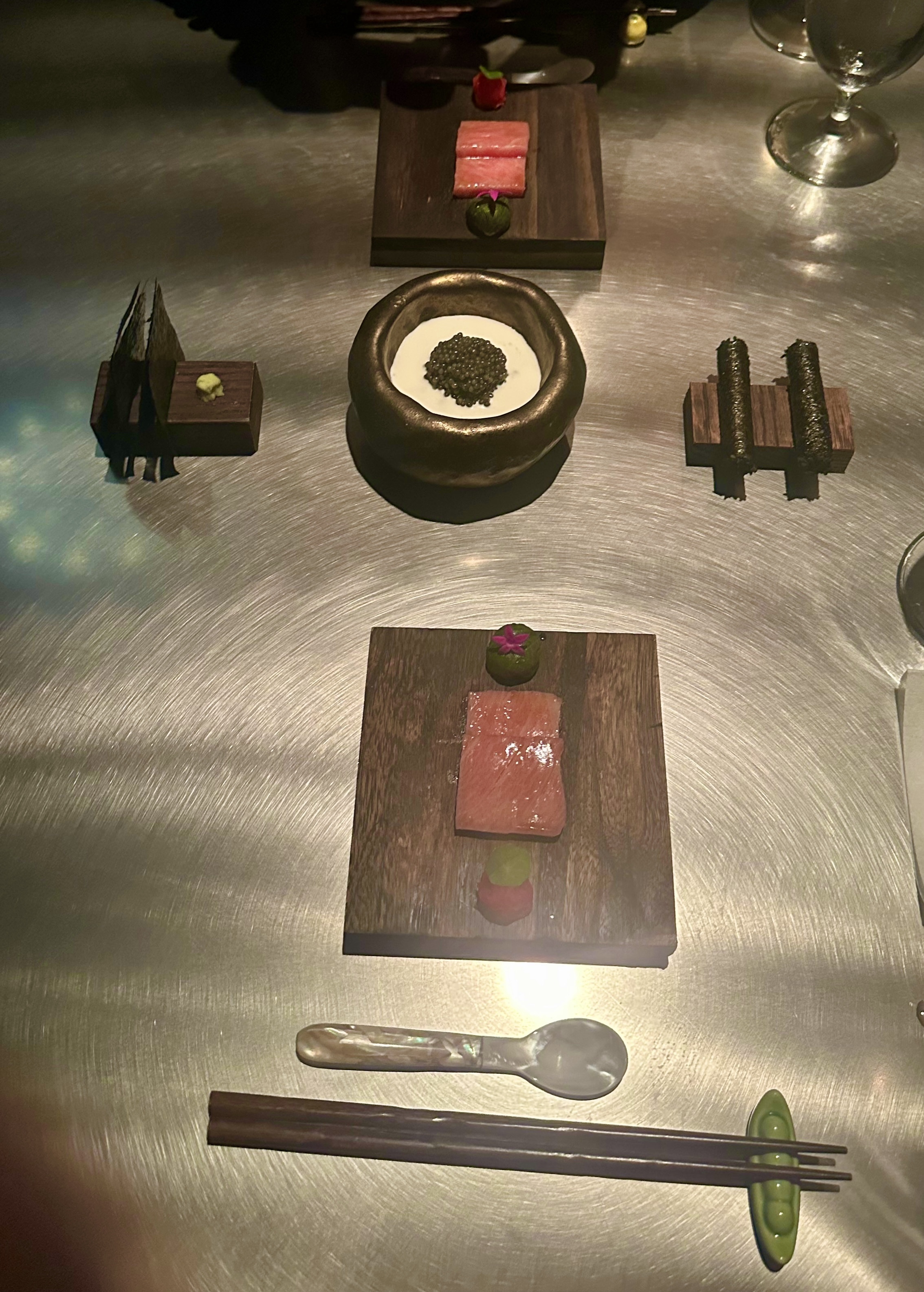
The next dish arrived at the table as a gift: osetra caviar (the second best in the world after beluga) served with bluefin tuna, wasabi, and crème fraîche. It came with four sheets of seaweed (to the right next to the wasabi), and two already-formed seaweed rolls (left) with unidentifiable goodies inside. You are supposed to roll the caviar, crème, wasabi, and salmon into a sheet of seaweed and eat it as if it were a luxurious Japanese burrito.

The only caviar I’d ever had before was pressed caviar made from irregular eggs, and sevruga caviar (the third rarest). It was hard for me to resist leaving the caviar out of the burrito and just eating it plain with the mother of pearl spoon (the traditional utensil), so I did eat some plain (fantastic) and also put some into two “burritos” (also fantastic). The two rolls to the left were eaten separately. Note the two “fruits”, actually pickled vegetables) at the top and bottom of the plate. I believe they are a pickled radish and a pickled cucumber, both decorated with nasturtium blossoms. Those, too, were amazing, full of complex flavors. The “pickle” was like the most delicious pickle you could imagine, and of course you can’t buy them as they’re made in house.
Photo by RJL. Note the lovely setting with chopsticks (and fancy chopstick rests) and spoons:
The wine: Vermintino, an Italian white wine made by Laura Ascero, light, crisp, slightly saline, and dry, a perfect accompaniment to the creamy burritos with caviar. These people know their wines:

Two cute little “ramen eggs” in a spoon with ginger and togarashi (the red spice on top), made to resemble the flavor of Japanese ramen (there’s no ramen in there, and I can’t remember what is). Two cute and savory bites.

A fancy dish: gyoza (a dumpling filled with shrimp and sweet potato), accompanied by a froth made from carrot ponzu. You can see the dumpling at 10 o’clock next to a savory crunchy thing. AI describes “ponzu” as “a tangy, citrus-based Japanese sauce made from soy sauce, vinegar, and citrus juice (like yuzu or sudachi), often with added mirin, dashi, and bonito flakes for a complex salty, sour, and umami flavor.” Again, it was like nothing I’d ever tasted.

The wine: a Grüner Veltliner (Austrian white), the “Ried Rosenberg” blend made from the Weingut Ott. A dry version of the wine, it again was great with the dish:

We continued with a fancy dish comprising three items: king crab to the left, a fancy rice in the middle, and a broth (I can’t remember what kind) to the right, with the broth poured from the traditional Japanese metal teapot. Above on the tray is also a pot with sprigs of fresh rosemary, with coals below them to create a herb-scented smoke while you had this dish. You could eat a bit of the incredibly sweet king crab with some rice, and then wash it down with the broth.
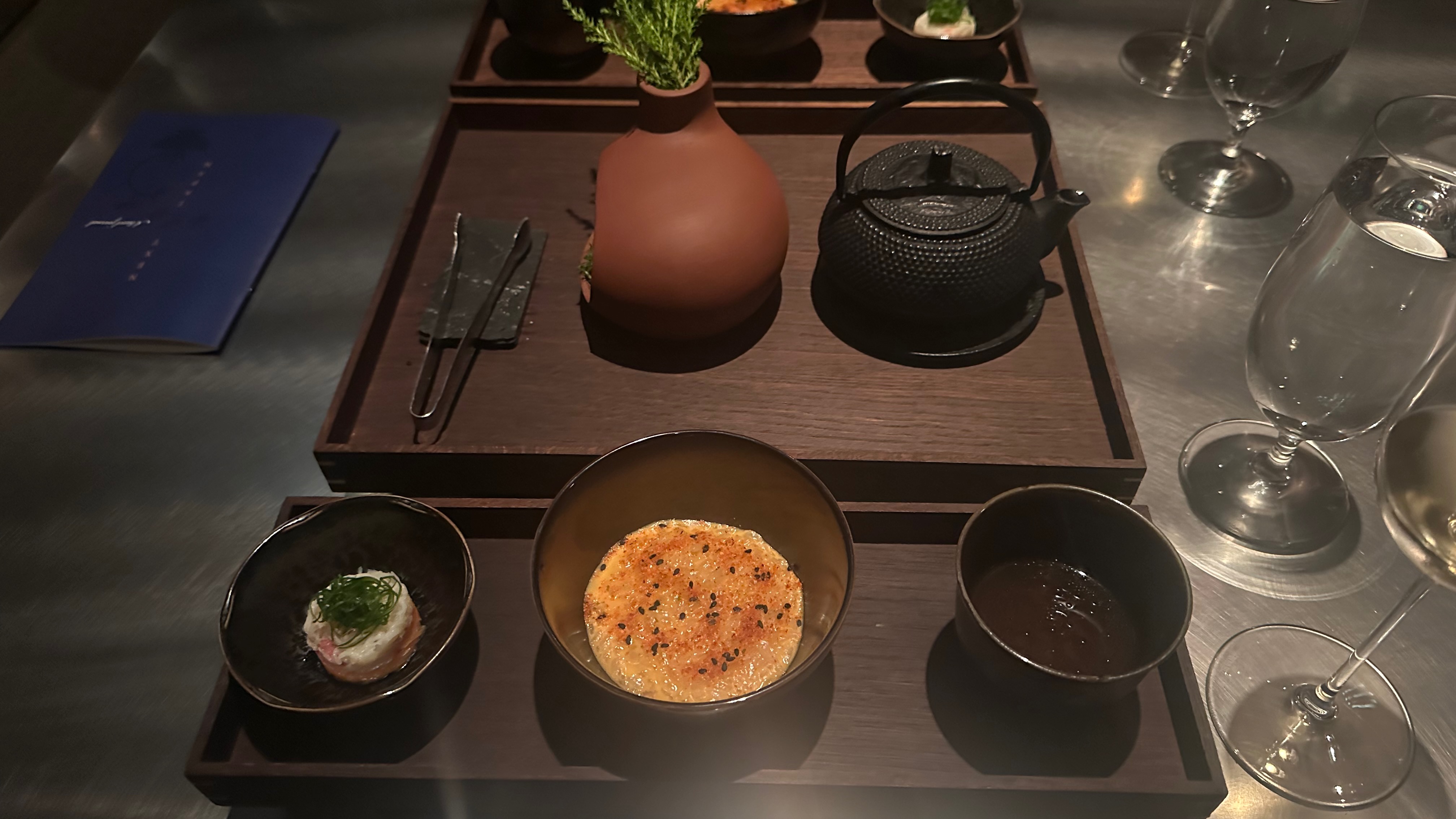
With that dish we move to Burgundy for the white wine, A Premier Cru Chablis, the “Fourchaume” blend by De Oliveira Lecestre, a crisp and fruity but dry wine. Another good pairing.

The seventh dish was kare pan (Japanese curry bread), filled with grilled cabbage and heritage pork belly. This was very complex, and look at the decorations! I didn’t photograph the inside but yes, it was excellent. There was no dish in the whole meal that I found less than inventive and tasty.

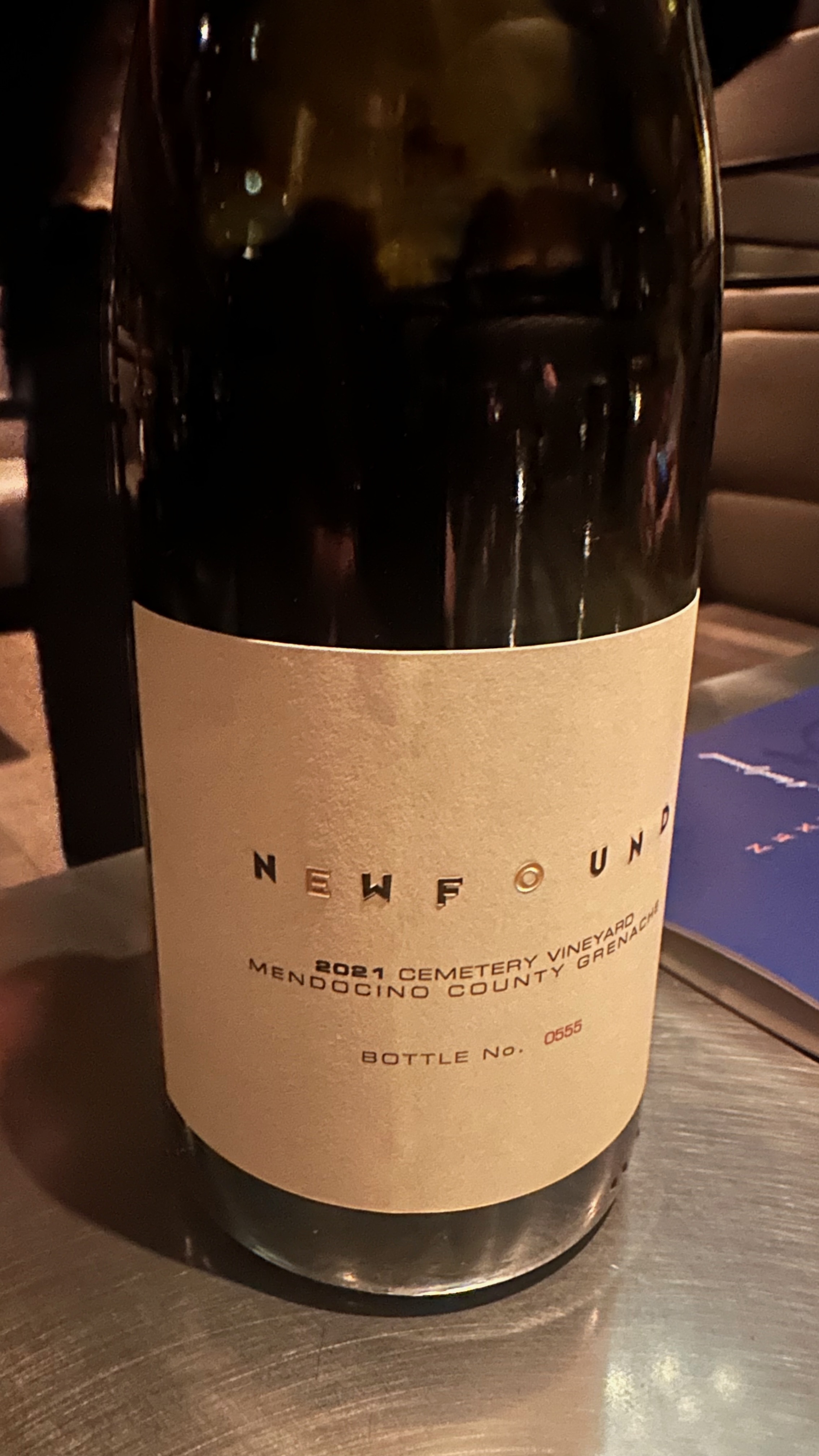
And with the kare pan we moved to the red wines, this one a 2021 Grenache from Cemetery Vineyard from Newfoundland Winery in Mendocino, California. It was a light red wine to go with the pork, and very tasty (photo by RJL).
I couldn’t remember why they called it “Cemetery Vineyard” (they told us), but AI had the answer:
The “Cemetery Vineyard” (specifically the noted Rockpile Ridge site) is named for a distinct outcropping of rocks at the base of the vineyard that looks like giant, old-fashioned headstones. This specific block has been referred to by this name for over 140 years, long before the wine was commercialized
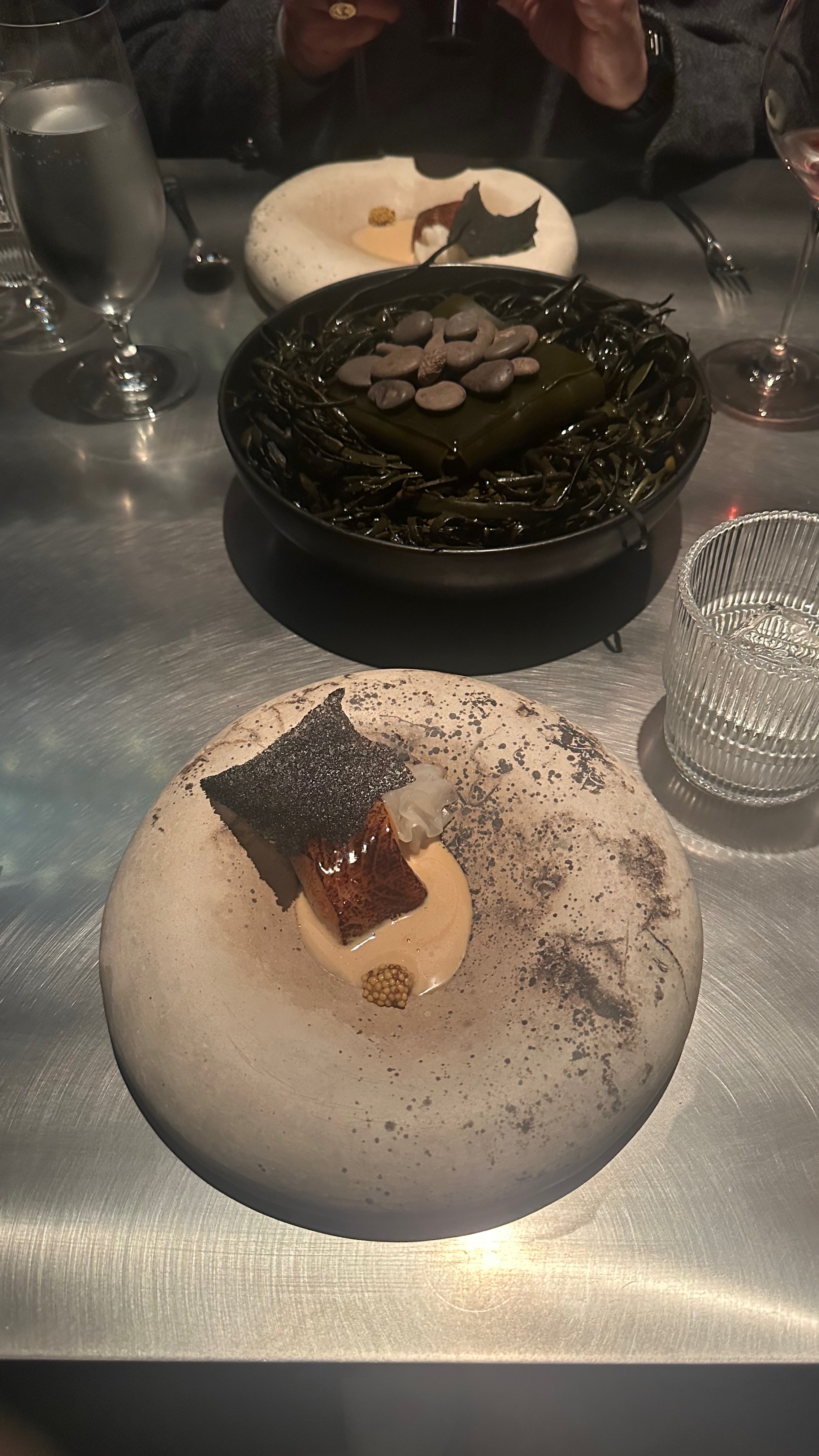
And then some fish: a luscious piece of grilled cod with a brown butter and miso sauce, accompanied by seaweed and golden mustard seed. I’m not much of a fish-eater but I loved this:

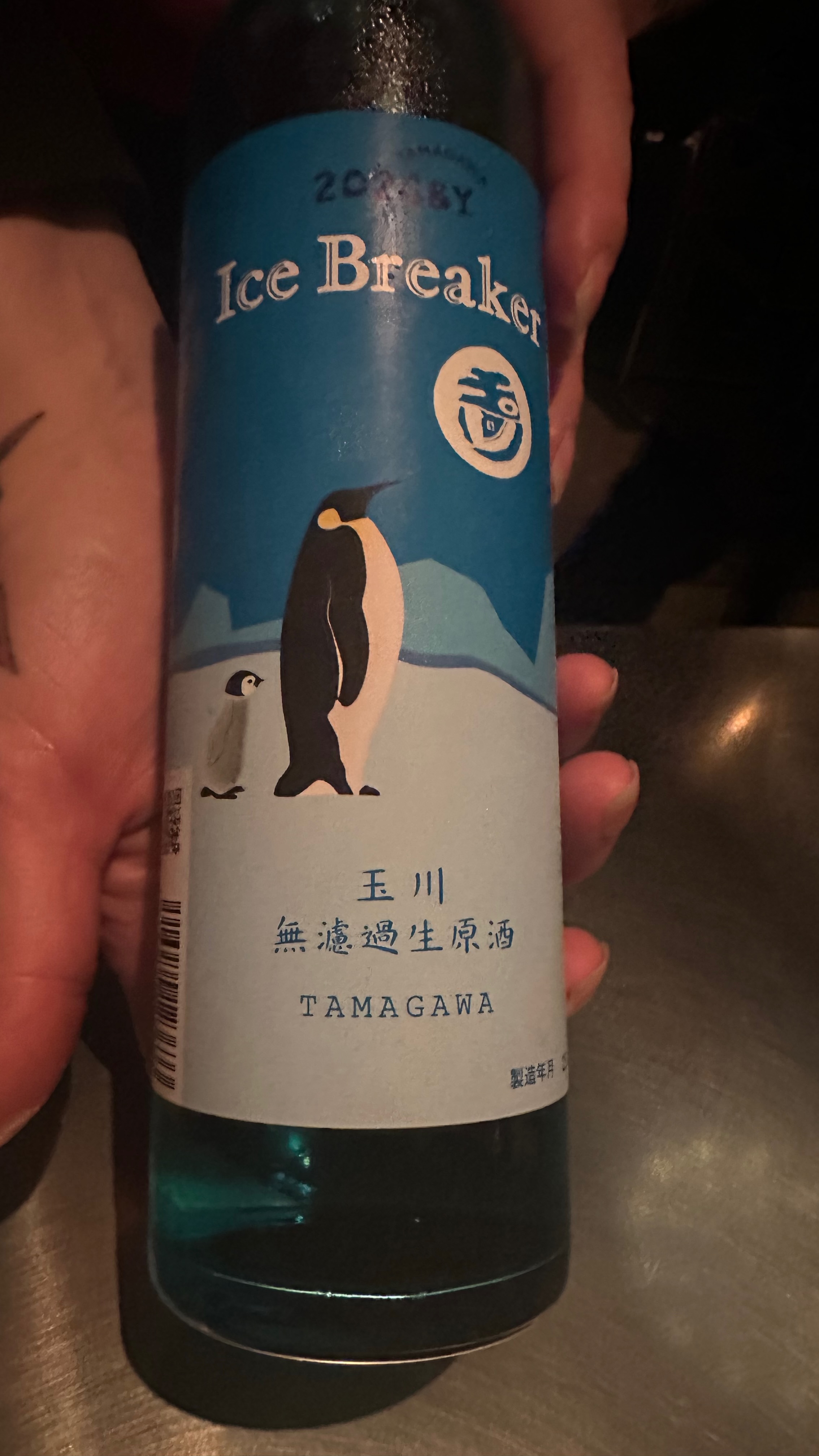
And for that dish of course we needed sake, and were poured a whiskey tumbler (with ice) of 2024 Tamagawa “Ice Breaker” sake. We were told it was unfiltered, and it was a stronger, slightly sweet, and luscious rice wine. And there was a penguin on the label! The website says this:
Tamagawa’s Ice Breaker is a cask-strength, fresh-pressed junmai ginjo that is undiluted, unpasteurized and unfiltered. This is a seasonal release always listed with the brewery year (BY).
Pairing Notes: The Ice Breaker sake is designed to be drunk over ice as a refresher in the humid Japanese rainy season. Try it with edamame, mackerel, skipjack tuna and eggplant with zesty grated daikon.
I believe the white stuff with the cod above is grated daikon (white radish), but I’m not sure.
When the cod was served, they also put a mysterious bowl of seaweed containing very hot rocks atop a seaweed packet. We asked what it was, and were told was part of the next course being steamed by the rocks while we ate the fish. See below. (Photo by RJL).
Where’s the beef? It was next in a “wagyu au poivre”, and yes, it was real wagyu beef from Japan, the first I’ve had. It was of course rare, and then the seaweed packet was opened to reveal the cooked accompaniments: pear and trumpet mushrooms, along with kombu (edible kelp). Photo by RJL:
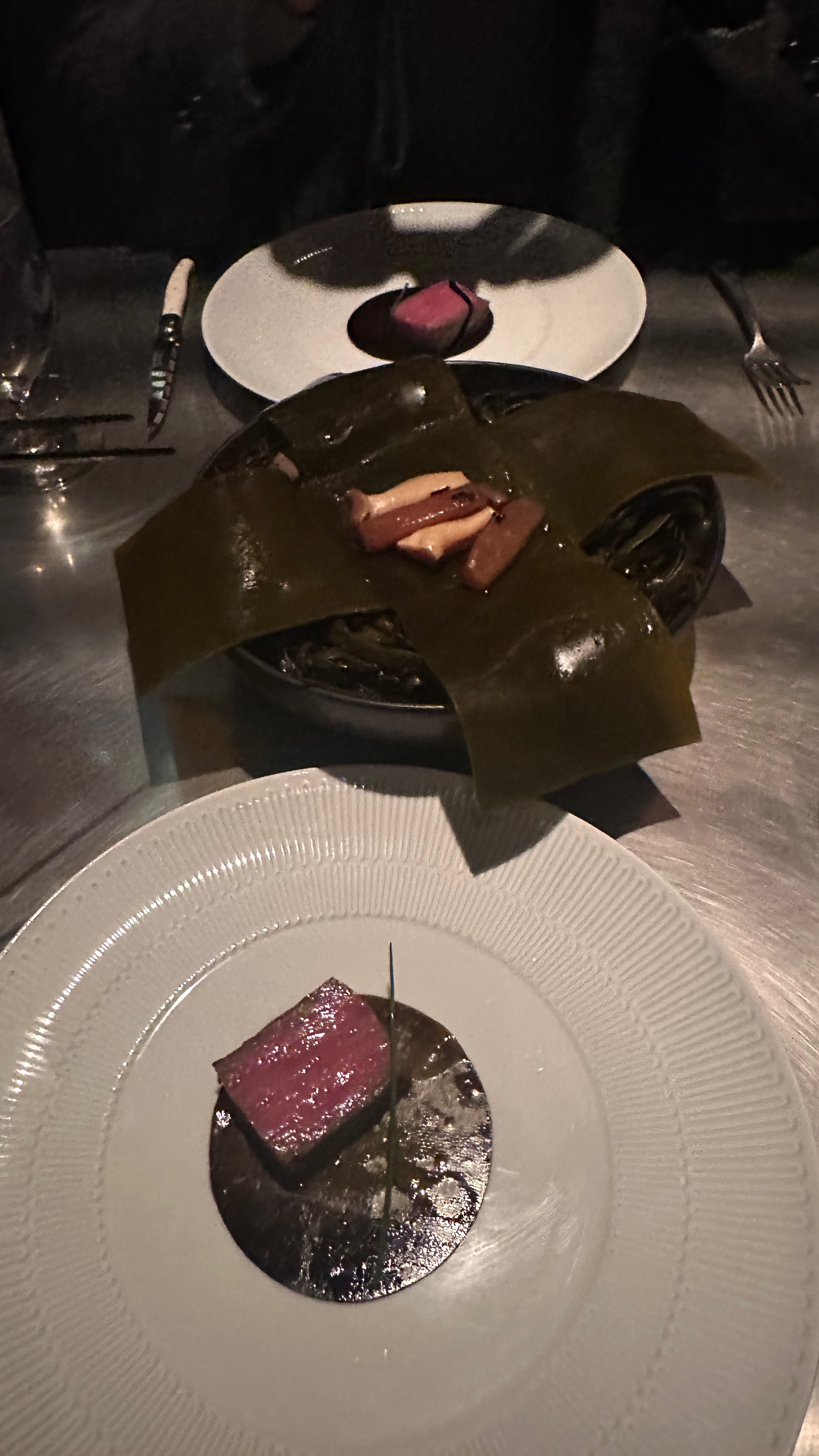

Yummers! The beef was so tender and tasty that although the slice was not large, I ate it in very small bites so I could prolong the flavor. It was great with the meaty trumpet mushroom and the fruitiness of the pear:

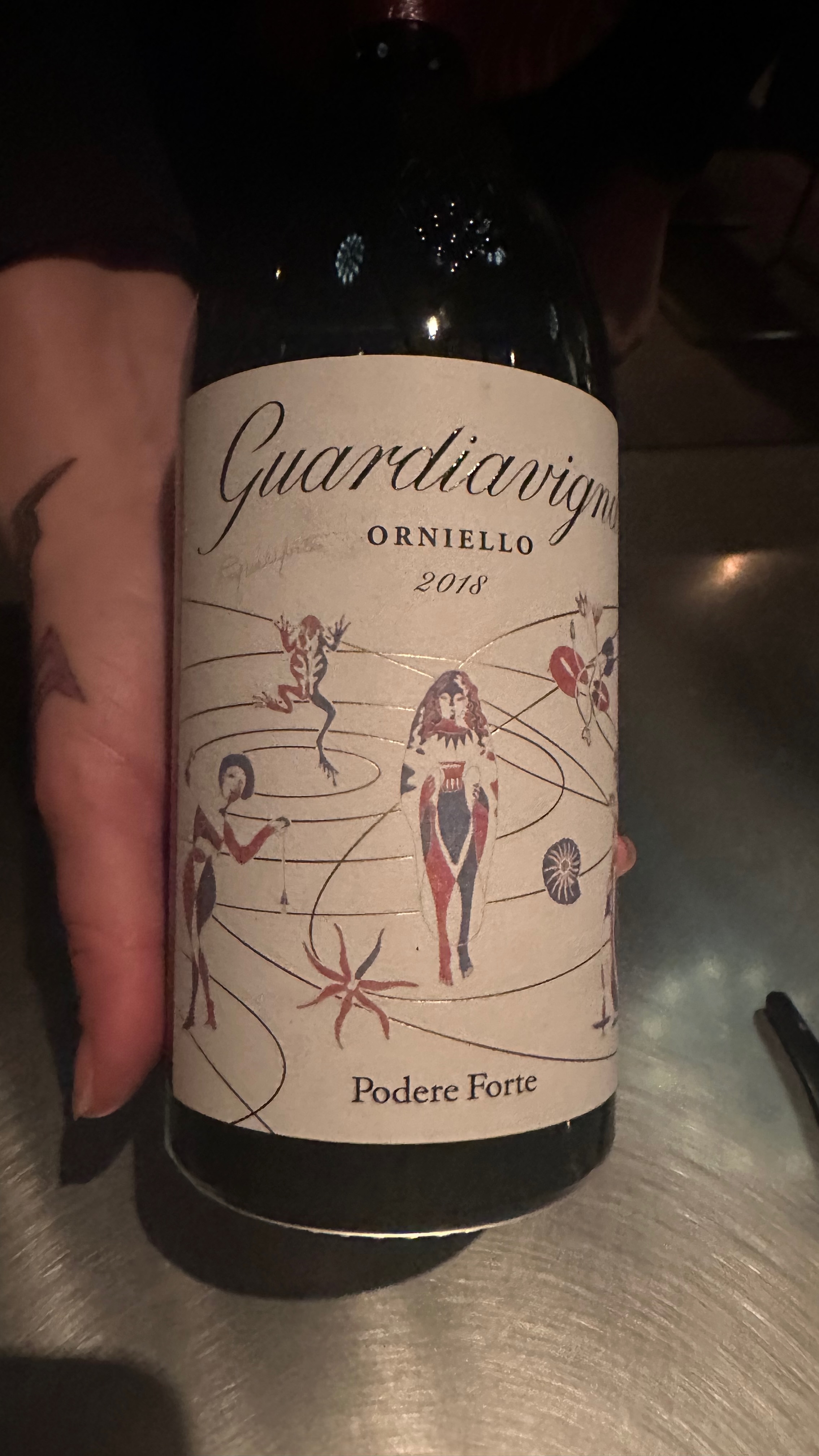
Of course with that you need a gutsier red wine, which came as a Cabernet Franc (often found in Bordeaux) from Podere Forte, an Italian winemaker. The designation was “Guardiavigna Orienello” with some age: 8 years. It’s a biodynamic wine, tasting much like a Bordeaux; the website describes it this way:
Guardiavigna is a version of perfectly and slowly ripened Cabernet Franc. An intense, deep and vast bouquet. Full bodied, with a very refined tannic structure. A very elegant and endless wine.
It goes for $150-$180 per bottle.
Photo by RJL:
With two courses left, we had dined for about 2½ hours, eating leisurely and catching up. Robert’s house is nearly rebuilt after the Altadena fire and should be done by June. His studio will take a bit longer.
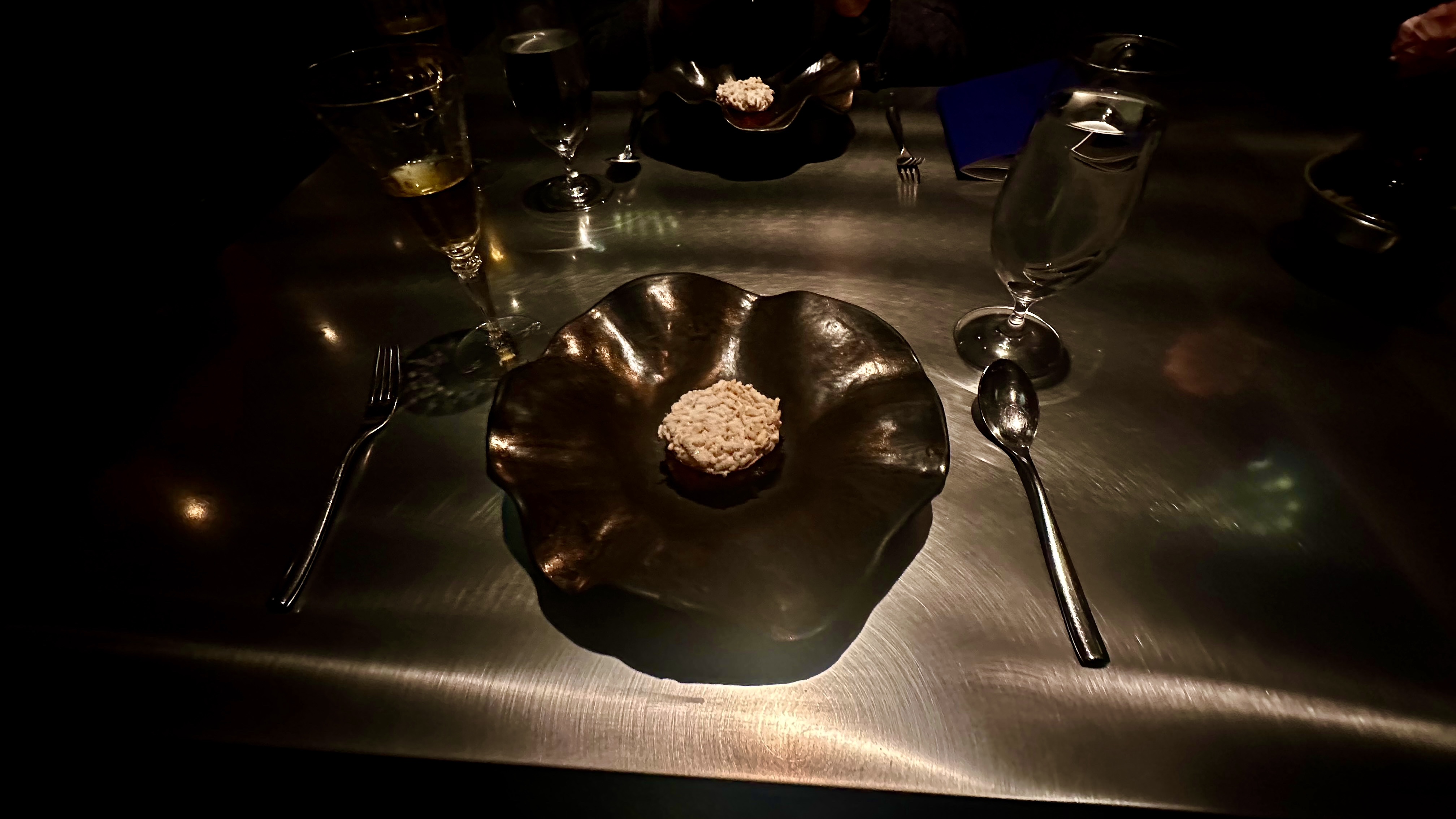
We were then treated to “Tokyo toast”, with sake lees (I guess the rice at the bottom of the fermenting tank), sakura (cherry blossom), and kumquat. You see that the dishes are inspired by the flavors the team encountered in Japan, but the dish itself is sui generis. It was a very elegant version of a Rice Krispy treat:

And the eleventh and last course: musk melon with saffron, pine nuts, and spaghetti squash. An inspired combination; you have to have a good palate to even think of putting these things together. They melded well. Again, the presentation was carefully thought out, with matching fancy plates, trays, and appropriate cutlery:

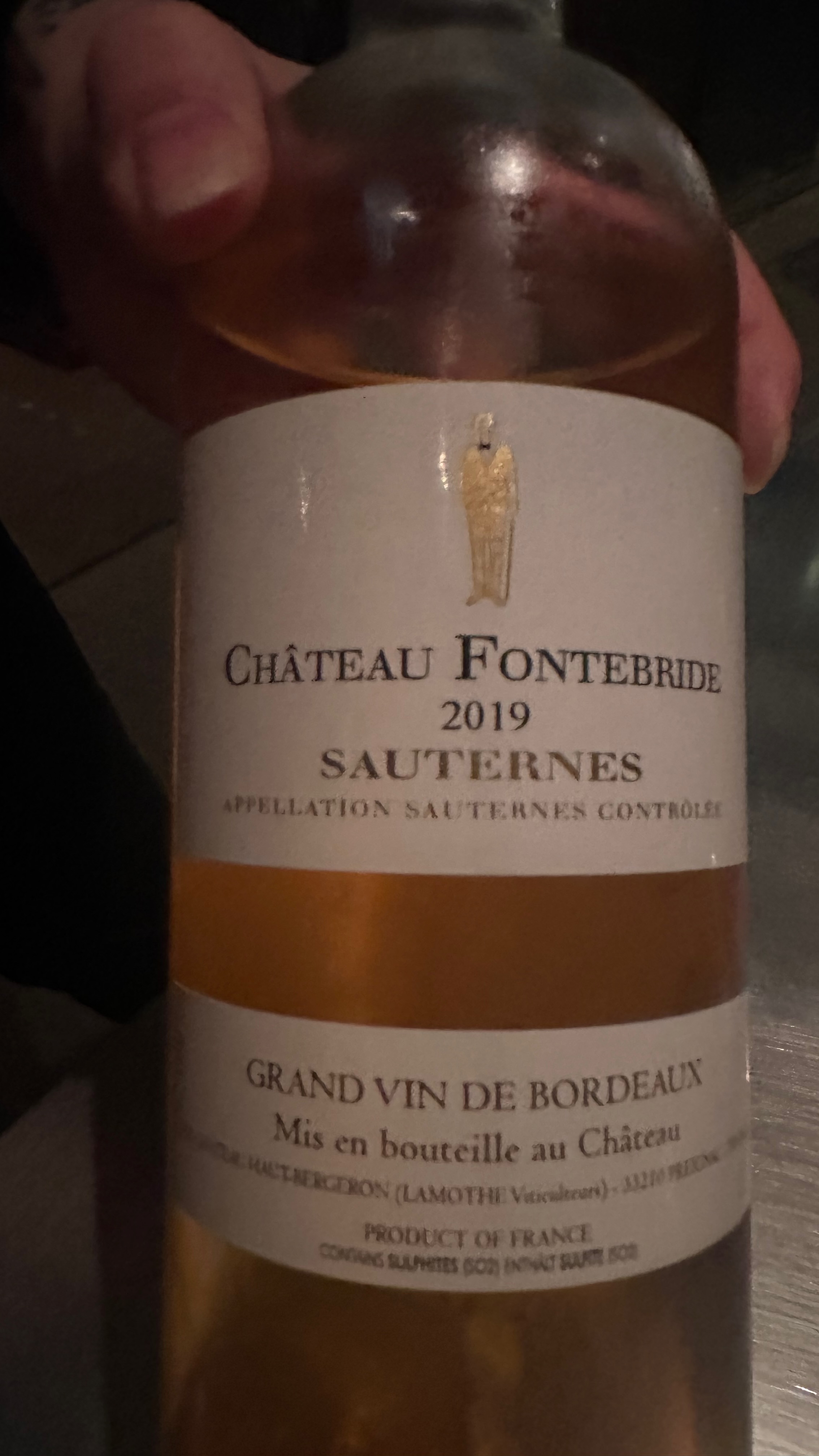
Sauternes, my favorite sweet wine, goes with very few things. I eat it either on its own or with a ripe peach or mango. It does not go with chocolate (Thomas Keller hasn’t learned that lesson.) But it did go with the musk melon, which is not too sweet, and the spaghetti squash, barely sweet. And so we were served a 2019 Château Fontebride 2019. That wine also counted as dessert. If you haven’t tried a Sauternes, which gets better and more golden as it ages, you might spring for one. (I brought Robert a half bottle of another Sauternes as a gift; it wasn’t clear whether it would make it back to California since Robert is staying with his brother in Chicago.)
And so we wound up at 8:30, having started at 5:30. I was replete, filled with great food and fancy wine, amazed at what we had eaten, impressed by the thought and care that went into the food and service, and, of course, slightly buzzed. Next is an amazing restaurant and I’d gladly go again—if I was willing to spring for the meal (I have no idea what it cost) and could get a reservation (the website says there are 10,000 people on the Next waiting list!).
When you have a long, sumptuous, and fancy meal like this, you leave the restaurant with a bracing sense of well being. (A Parisian chef once told me that you know a meal is good if the birds sing more sweetly when you leave.) I had that feeling, and of course it was helped along by the slight buzz from wine and sake.
Many thanks to Robert for inviting me, to his niece Kate, the manager, for greeting us and stopping by to chat during the meal (and of course running things), and the staff who organized, cooked and served.
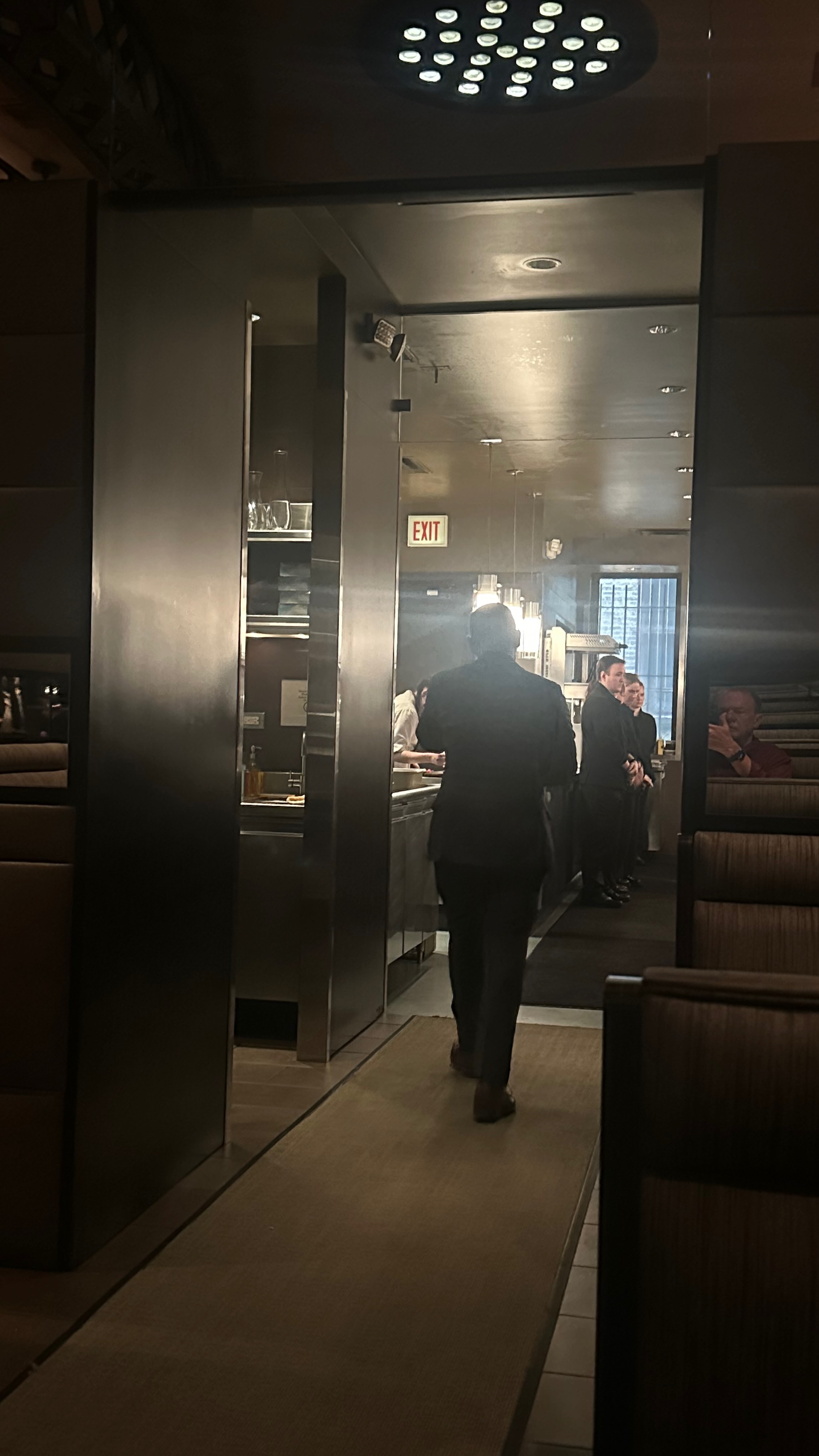
Oh, two dark pictures of the place, the first of the kitchen by Robert and the second of the main room by me. It’s not a large restaurant. Note the Japanese lanterns.

I know that I’m going to get criticized for putting this up, excoriated for eating fancy food and “privilege.” To those who would say that, take a hike. This was a rare treat, and all I can say is that there have been Japanese emperors who haven’t eaten this well.


