
We are in dire need of wildlife photos, so if you have some good ones, please send them in.
Today we have the sixth and last installment of Ephraim Heller’s photos from his recent trip to Namibia. His captions and IDs are indented, and you can enlarge the photos by clicking on them.
This is the last installment in my series on a May-June 2026 visit to Namibia. Today’s photos were taken inland, at the Ongava/Etosha region (where I photographed rhinos for last week’s installment) and at Nkasa Rupara National Park in the Caprivi Strip.
Most of the animals in this post are well known to readers, but the history of the Caprivi Strip is worth a digression on 19th century colonial competition in Africa. Here is a map (courtesy of WorldAtlas) of present-day Namibia. The Caprivi Strip is the odd extension in the northeast corner of the country that juts out to contact Angola, Botswana, Zambia, and Zimbabwe. It is 30 km wide and 450 km long:
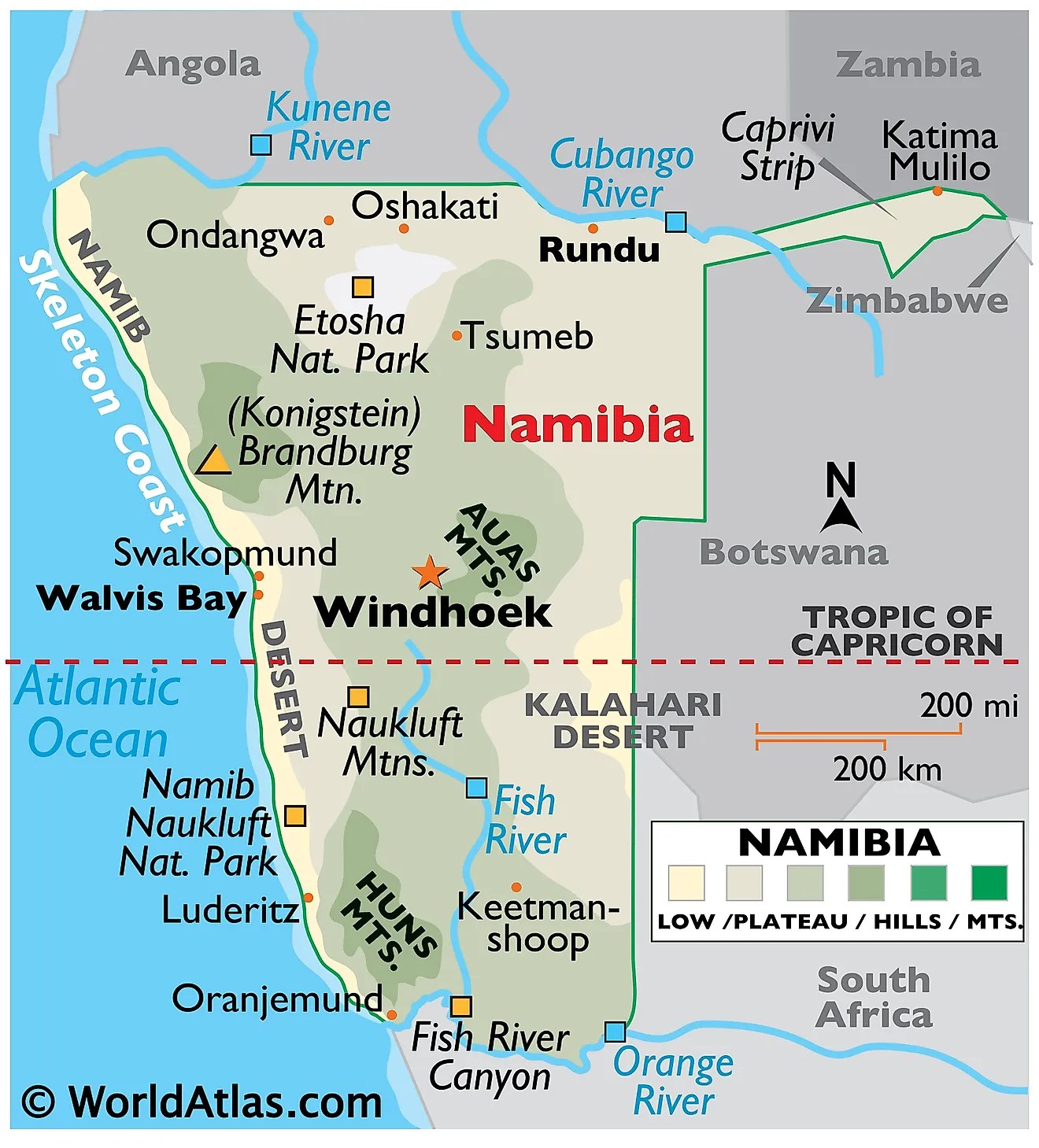
Germany had established the colony of German South West Africa (modern Namibia) in 1884. Germany also had the colony of German East Africa (Tanganyika, the mainland portion of modern-day Tanzania). German Chancellor Leo von Caprivi wanted to establish a trade corridor between the two German colonies on the west and east coasts of Africa, but there was one problem: the British held colonies in between. He came up with the idea that if he could extend German South West Africa’s eastern border to the Zambezi River, there would be a navigable waterway linking the two German colonies.
This ambition led to negotiations with Britain and to the signing of the Heligoland–Zanzibar Treaty in 1890. Britain transferred the Caprivi strip and ceded the North Sea island of Heligoland to Germany. In return, Germany recognized British authority over the Zanzibar islands (now also part of Tanzania) off of Tanganyika.
All of Chancellor Caprivi’s scheming came to naught, however, because the Germans were not aware of a small obstacle to navigation in the Zambezi River known today as Victoria Falls, one of the largest waterfalls in the world (photo courtesy of Wikipedia Commons):
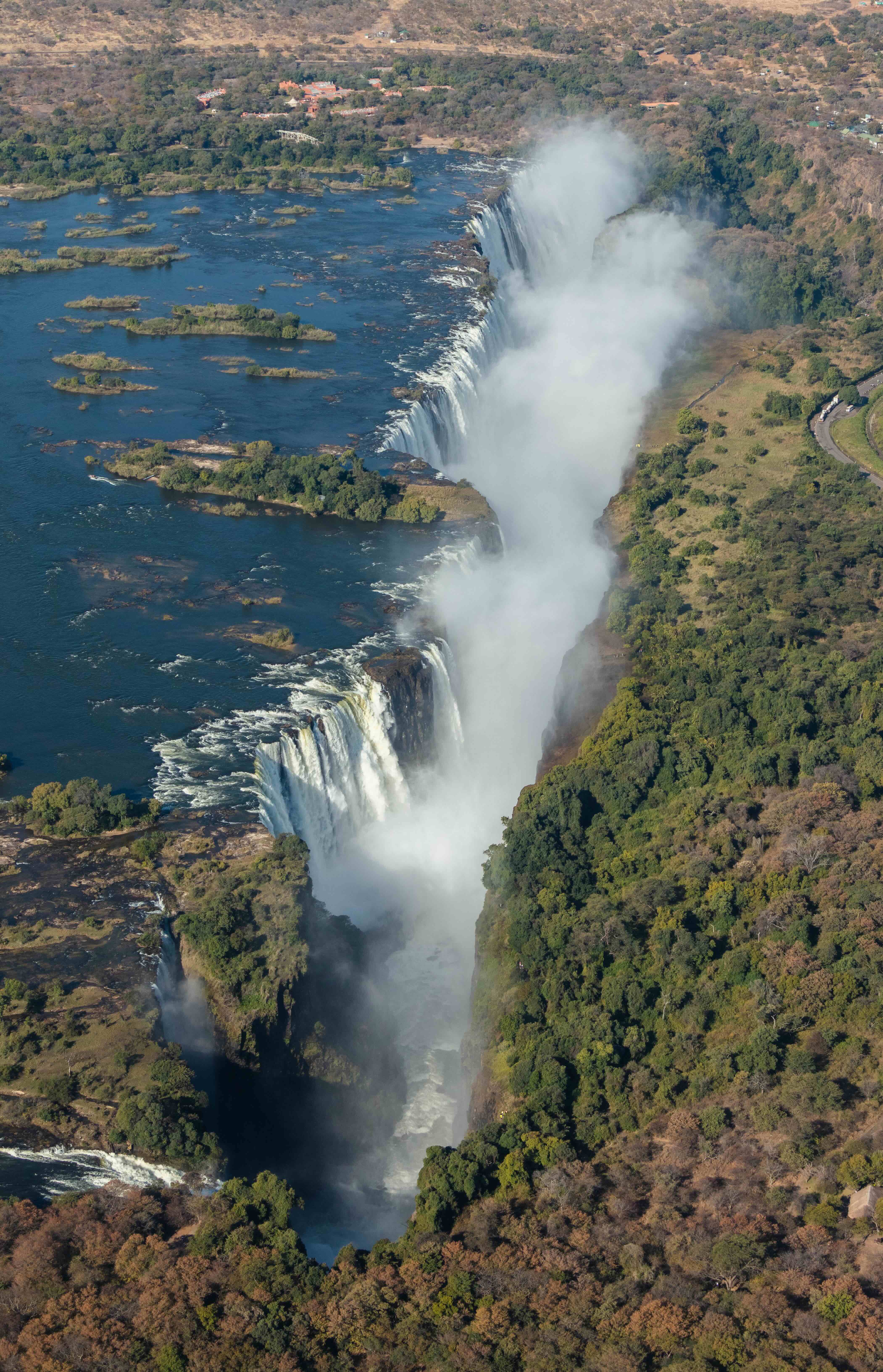
The cunning British, on the other hand, were well aware of the existence of Victoria Falls (David Livingstone having named them in 1855). Perfidious Albion, indeed. As usual during the Scramble for Africa, the indigenous people were not a consideration in this deal.
Now, on to the animals. I’ll skip descriptions as most species will be familiar to readers:
Wahlberg’s striped skink (Trachylepis wahlbergii) peeking out of the skull of an African buffalo (Syncerus caffer):

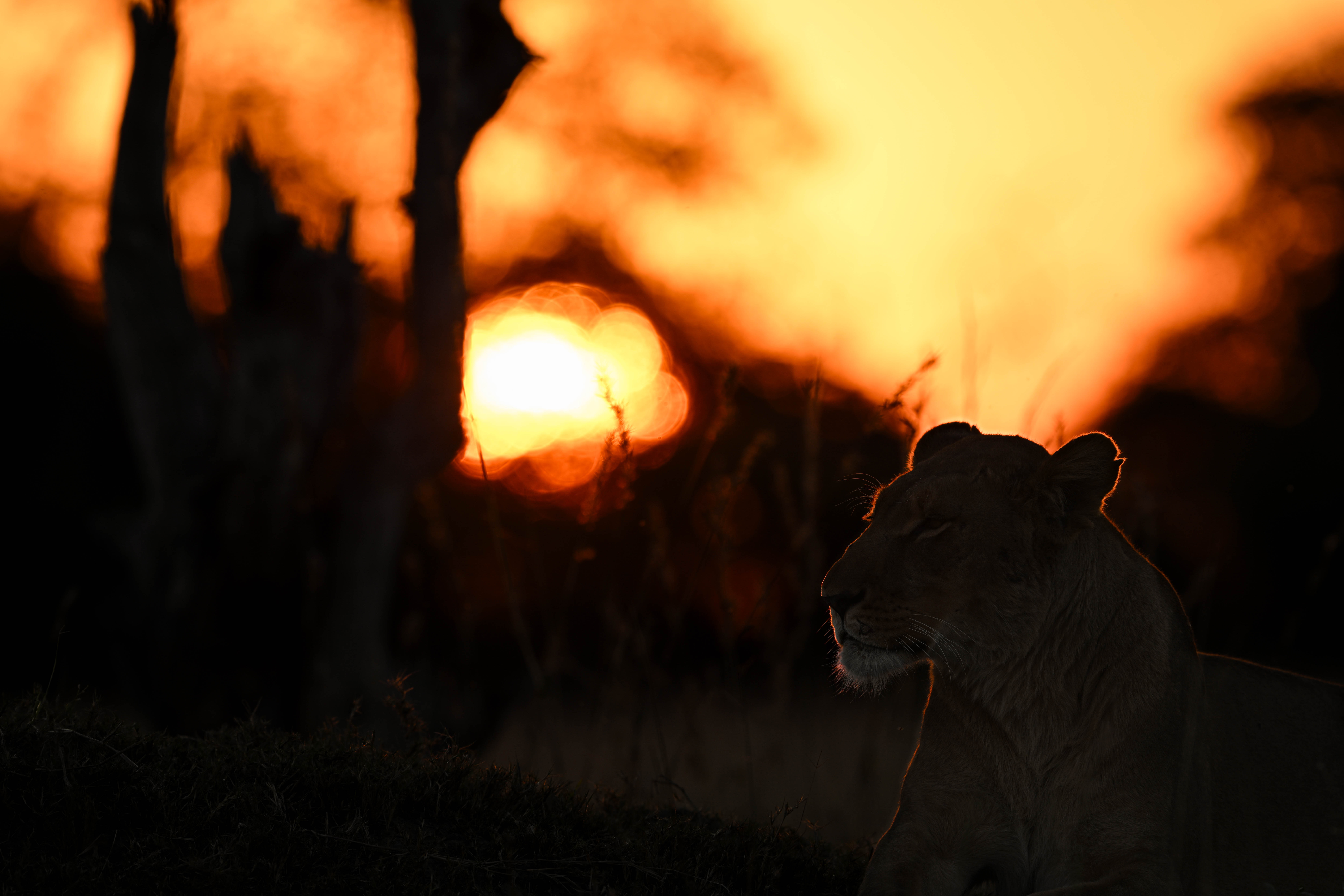
Lion (Panthera leo) at sunset:
Black-backed jackals (Lupulella mesomelas) playing at dawn:

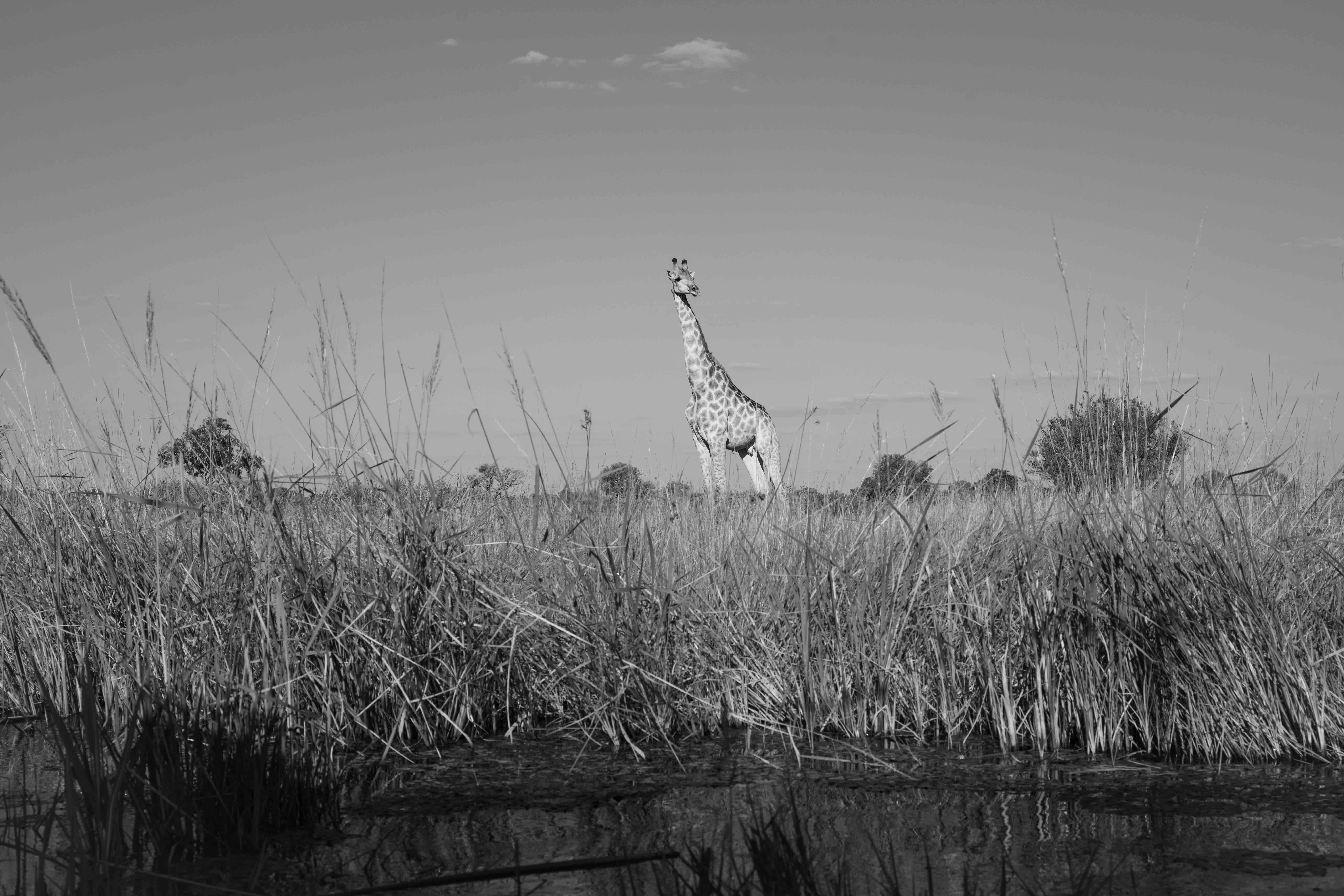
Angolan giraffe (Giraffa giraffa angolensis) coming to drink at the Linyanti River:
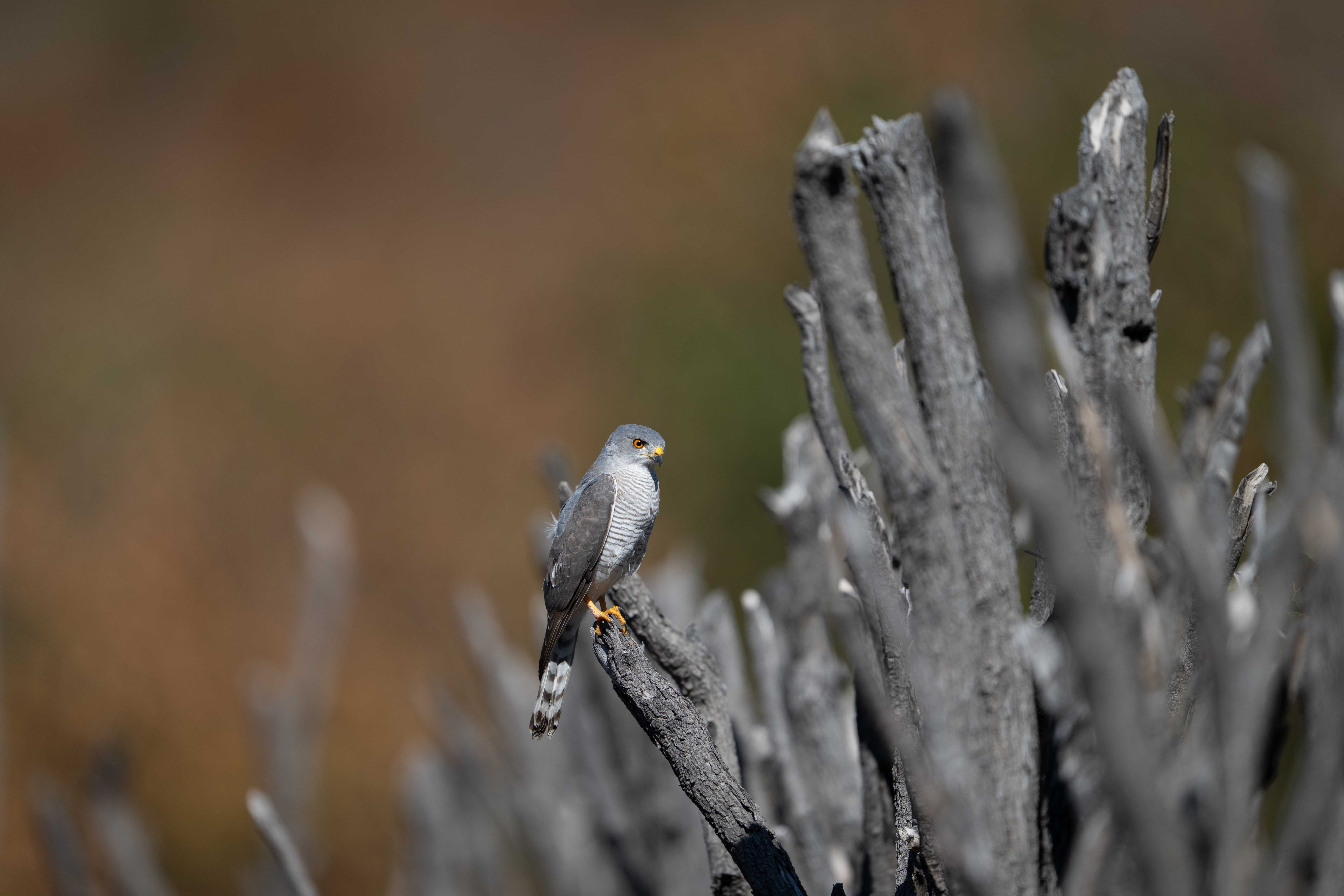
Shikra (Tachyspiza badia):
Nile monitor (Varanus niloticus):

Rock hyraxes (Procavia capensis):

More from the sunset photo series. A Burchell’s zebra (Equus quagga burchellii):

Red Lechwe (Kobus leche):

Vultures (species unknown):

Great pics, thank you for sharing. I love how the monitor lizard is looking at you. Thanks also for the history re the Caprivi Strip, I’d wondered how that strange bit of boundary setting came to be. I’m kind of surprised that none of the surrounding countries have tried to reverse that particular land grab, given how awkward it it.
S(n)ide remark: But Germany still has Heligoland,
“a land where there are no bankers, no lawyers, and no crime; where all gratuities are strictly forbidden, the landladies are all honest and the boatmen take no tips”
I had to look up that excellent quotation. According to my AI, the quote originates from a description of Heligoland published in the Victorian British family magazine The Leisure Hour” and describes the idyllic island under British rule. Thank you.
Another terrific set! Thank you for sharing these.
Victoria Falls. Oops.
Great pictures. Love the Nile Monitor, monitoring. They make very poor pets, I’m told.
I may have mentioned this incident before, so apologies if that’s the case: a safari operator who was staying at the same place as we were in Tanzania (Mahale, chimp reserve) was telling us a funny story about another trip at a different safari campsite. New clients were arriving and shown to their tents, and one of them, a woman, came out shortly thereafter to report, almost apologetically, to the staff that there appeared to be a lizard in her tent. The staff, assuming it was a small lizard or gecko, tried to not roll their eyes as they promised to attend to it right away. One they got there they found a huge monitor lizard under her bed…
The story is new to me. I’ll take a monitor lizard over a snake in my room any day.
In haste
Phone slow
Thanks to all RWP contributors
Magnificent – Breathtaking – Nature
Thank you for the poetry!
Thank you for sharing these exciting photos. I love the jackals playing in the morning.
Beautiful photos and interesting history. Thanks!
Might you comment on what long lens(es) you are using? Thanks.
Gorgeous shots, thanks!
I’ve been to all of the Big Three waterfalls – Victoria, Iguazu, and Niagara – and when asked to rank them I could not. Each is the equal of the others in its own unique way.
The Victoria Falls are doomed (that is a good thing). Sooner or later a dam will be built and the falling water used to generate hydroelectricity. This happened in the US, Norway, Canada, Sweden, China, etc. I have actually been (as a child) to plant in Norway. Love Canal is a distant echo of what will eventually happen in Africa.
There are two large dams in the Zambezi river, downstream from Victoria Falls.
Kariba dam, which created the largest man-made reservoir (four times the size of the Three Gorges dam) https://en.wikipedia.org/wiki/Lake_Kariba
Cahora Bassa dam, with a 2GW-capacity hydroelectric plant https://en.wikipedia.org/wiki/Cahora_Bassa