Discussion: ICE and Minnesota

January 24, 2026 • 11:45 am

As I’m occupied with another writing assignment, and because I’m trying to take a wee break from writing about news, as it’s so depressing, I’ll proffer this post to readers who want to weigh in on Minnesota.

As I’ve said before, I haven’t formed firm opinions about a lot of aspects of the ICE/military presence there and the clashes with protestors, and that’s because it’s hard to do so when you’re not on the ground seeing what happens in the street. Each side has its own videos and own interpretations, and it’s hard to figure out what is real and what is propaganda. It is clear that ICE has acted in a heavy-handed manner, that Trump is trying to punish that blue state, but it’s also hard to judge whether some ICE actions are defensible. Further, it’s clear that some of the protestors are, like Martin Luther King, Jr.in the Sixties, trying to provoke violence by the authorities as it helps their cause. That is civil disobedience, but for ICE the morality of the protestors’ cause is (to me) not nearly as clear as it was for the civil rights protests.  I do not favor open borders, but it seems like many of the protestors—like many Democrats in general—do.

At any rate, that’s all the opinions I have now, and they are subject to change. (I haven’t weighed in on what happened to Renée Good, except that there needs to be an objective and thorough investigation by both the federal government and Minnesota, with sharing of information by both). If ICE officers look like they committed crimes, they should go through the judicial process.

So, here are some questions to discuss, but feel free to say what you think about the situation in general. Remember, be civil and don’t jump down my throat for raising this issue.

a.) How heavy-handed is ICE acting relative to how they should be acting?  Should they even be there?
b.) It’s likely that the National Guard and the U.S. military will be employed if the protests continue. Is this justifiable? If so, is it proper for Trump to invoke the Insurrection Act?
c.) Is the violence being exacerbated by the protestors, or is it solely the result of ICE?
d.) Do you think the protestors really want no enforcement of immigration laws, i.e., open borders? Would that apply to every immigrant, including the criminals so loudly touted by Kristi Noem?
e.) Are governor Walz and Minneapolis mayor Jacob Frey exacerbating the situation? Are they correct in calling for ICE to leave Minnesota?
f.) If you were President, how would you handle the situation?

. . . and so on.

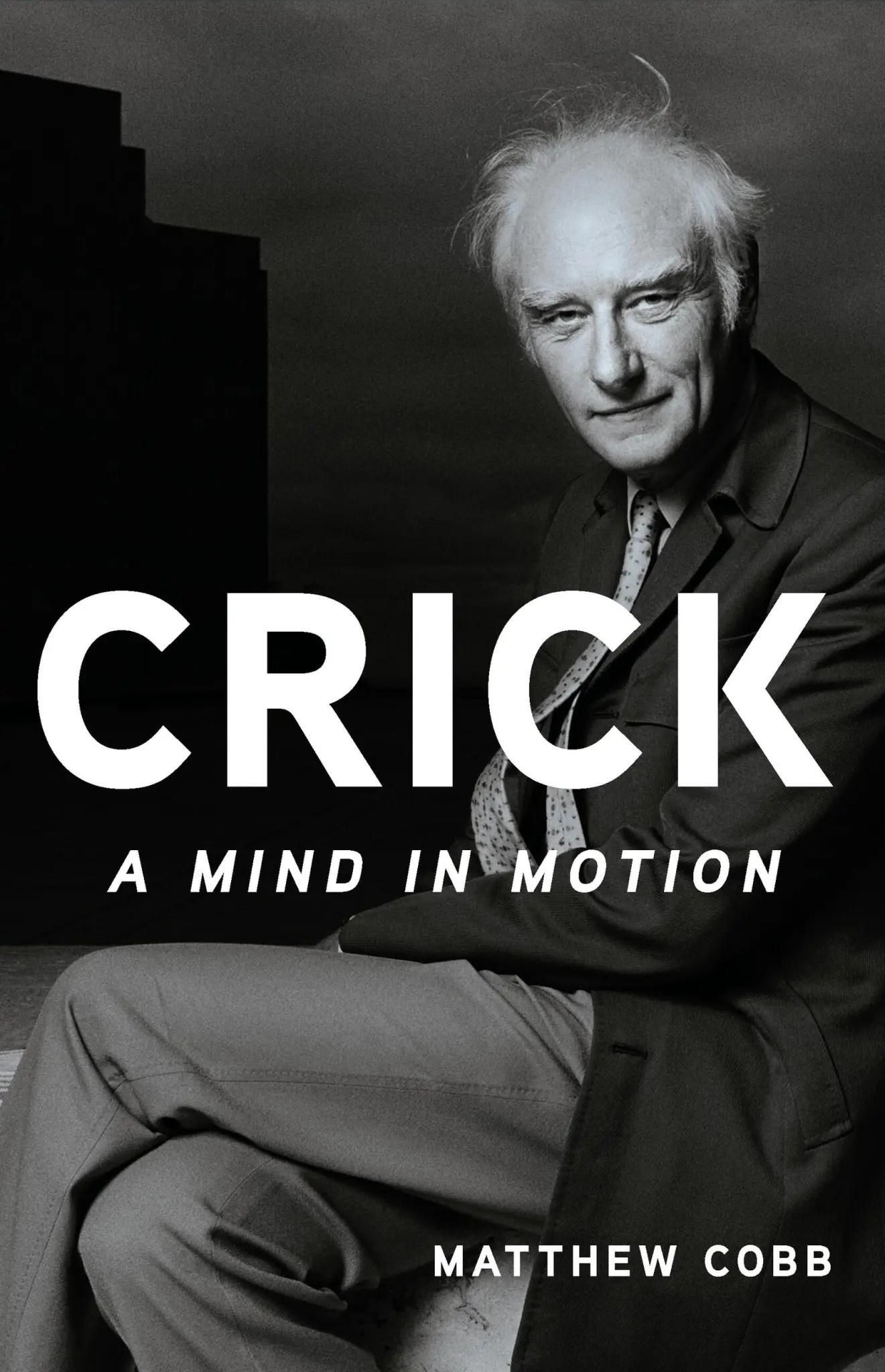
Michael Shermer interviews Matthew Cobb on his Crick biography

January 18, 2026 • 9:45 am

Here we have an 83-minute interview of Matthew Crick by Michael Shermer; the topic is Francis Crick as described in Matthew’s new book Crick: A Mind in Motion. Talking to a friend last night, I realized that the two best biographies of scientists I’ve read are Matthew’s book and Janet Browne’s magisterial two-volume biography of Darwin (the two-book set is a must-read, and I recommend both, though Princeton will issue in June a one-volume condensation).

At any rate, if you want to get an 83-minute summary of Matthew’s book, or see if you want to read the book, as you should, have a listen to Matthew’s exposition at the link below.  I have recommended his and Browne’s books because they’re not only comprehensive, but eminently readable, and you can get a sense of Matthew’s eloquence by his off-the-cuff discussion with Shermer.

Click below to listen.

I’ve put the cover below because Shermer mentions it at the outset of the discussion:

Discussion post

January 13, 2026 • 10:28 am

I have put most of the news in the Hili dialogues, and, frankly, am afflicted with a bad case of Weltschmerz (I believe Dr. Cobb shares my ailment).  So today I’m proffering space for you to talk about anything you want, and it need not be limited to the news. I expect many people will want to give their opinions on the ICE killing in Minnesota, but remember that there are huge protests, and thousands of deaths, in Iran, with the possibility of regime change.  A government blackout is preventing us from hearing much about what’s happening, but video and messages have been smuggled out. That’s the news I’ll concentrate on in Hili Nooz until things are resolved one way or the other. The Iranian protestors, knowing that they could be shot, are still congregating en masse in the streets of many cities.

Finally, astronauts are coming back to Earth early because one of them has an undisclosed illness.

So talk about what you want, but please adhere to Da Roolz. For this one post I’ll relax the frequency restrictions, so you can make up to 15% of the total comments (about one comment in six).  Please try to avoid one-on-one arguments, and be civil, and, if I can add one more thing, don’t keep emphasizing the same point over and over again.

Okay, that’s it. Ready, set, go. . . .   and if I get fewer than 50 comments, I’ll be even more depressed.

Lawrence Krauss interviews Carole Hooven

August 9, 2025 • 12:00 pm

This is one of the twenty-odd interviews that Lawrence Krauss conducted to support the new book he edited, The War on Sciencecomprising essays about the pollution of academia by ideology. (Nearly all of us indict ideology from the Left, though many of us, including me, admit that the Right is currently a bigger threat to science—but perhaps only temporarily.)  As you know, I am not a fan of podcasts and long videos, but I’m trying to listen to as many of my cowriters  as I can (Luana Maroja and I have an essay in the volume, but didn’t do an interview).

Here’s an interview with Carole Hooven, whom you’ve surely heard of as an evolutionary biologist specializing  in testosterone and the evolutionary basis of sex differences. (Her book T: The Story of Testosterone, the Hormone that Dominates and Divides Us, is excellent.)  When teaching at Harvard, she made the mistake of saying that there were only two sexes, and that statement snowballed into a huge fracas. Hooven’s colleagues in human evolutionary biology wouldn’t support her for emphasizing the biological facts about biological sex, for that’s a minefield that demonizes those who enter it as “transphobes”. As Carole recounts in her Free Press piece, “Why I left Harvard,” she got in trouble for simply speaking the truth. If you know Carole, you’ll know the she’s eminently civil and polite. She just wasn’t ideologically correct. Here’s an excerpt of the FP piece, which she reprinted as the essay in The War on Science.

In the brief segment on Fox, my troubles began when I described how biologists define male and female, and argued that these are invaluable terms that science educators in particular should not relinquish in response to pressure from ideologues. I emphasized that “understanding the facts about biology doesn’t prevent us from treating people with respect.” We can, I said, “respect their gender identities and use their preferred pronouns.”

I also mentioned that educators are increasingly self-censoring, for fear that using the “wrong” language can result in being shunned or even fired.

The failure of her colleagues to defend her for speaking the truth is reprehensible, and eventually the pressure forced her to leave her department.  The rest you can hear in this video (the interview starts at 4:04).  There’s a lot more than the Harvard-cancellation story: Carole’s had an interesting life, starting as a primatologist working in Africa, and you’ll learn something about that, too. Have a listen.

My interview with Chris Williamson

June 30, 2025 • 10:15 am

I don’t usually listen to podcasts because they are long—often an hour or more—but am more willing to be on them, as time goes by very quickly when you’re being interviewed, especially when expatiating about evolution. And, as I recall, that’s what I did on this interview with Chris Williamson from his “Modern Wisdom” series. I read that he has a large audience, not a bad thing, and had an unusual career. From Wikipedia:

Williamson was a contestant on the dating game show Take Me Out in 2012. He appeared on the first series of the reality show Love Island in 2015 as a model and nightclub promoter.Williamson has stated that he did not feel that he belonged on the show,  and that his experiences on Love Island caused a period of introspection and personal development, and resulted in a desire to contribute to the world by creating “content that genuinely changes the way that people live their daily lives”.

Well, I don’t know whether my lucubrations about evolution and its infection by ideology will affect anybody’s lives, but I could listen to myself for only 20 minutes or so. Like many folks, I can’t stand to see or hear myself on the video. Maybe readers will fare better.

I did look at a few comments, and was depressed to see a substantial number of people who think evolution is a myth.

This is also on spotify at this link.

I have landed. . .

June 22, 2025 • 10:45 am

. . . in Brooklyn, of all places!  The only decent flight from Midway (my closest airport) to LaGuardia  in NYC (close to the venue) left at 6 a.m. To get it, I decided to get a 4 am Uber to Midway, arriving at 4:30. I set my alarm for 3 a.m.

But I woke up spontaneously at 2 a.m., groggy as hell, and decided to check the news about the U.S. strike on Iran. I didn’t learn much that I didn’t know last night, and of course we don’t know how much damage the bunker busters caused. As expected, Iran threatens retaliation, and I worry that, though U.S. bases and troops in the Middle East are prepared, terrorism will be enacted by Iranian sleeper cells in the U.S.—like the several (failed) assassination attempts on Masih Alinejad.

Back to the trip. I had a religious Uber driver who blasted Jesus music all the way to the airport, but I didn’t have the heart to ask him to turn it down. One thing I learned was that “pop Christian music” uses the word “Jesus” over and over and over again, often drawing it out for many seconds. It is Jesus and not God who is the theme of this music (of course they are said to be identical), but it struck me that a whole genre of music is based on a fictional person.

Midway was extraordinarily crowded at 4:30 in the morning, but I remembered it was Sunday and people were going home. I did manage to find a Dunkin Donuts open in the airport terminal, which was a great relief, providing me with a huge coffee and two donuts.  The flight to New York on Southwest Airlines (now much more expensive) was uneventful: I slept during the entire 105-minute flight, and I’m still knackered.

This is boring but I have no brain cells to bloviate about world affairs. Brooklyn is rainy, gray, and not very hot (79º at present, 92º predicted). When I recover from the way-too-early flight, I’ll explore a bit and prepare for the Heterodox Academy Meeting, the reason I’m here. I’m on the panel below with several bigwigs (Wednesday, 12:30-1:50), which is of course intimidating. I’ll do my best:

I have to see the Brooklyn Bridge, which is nearby, as it’s the world’s most beautiful bridge. (I lived in NYC in 1972-1973 when I started grad school at Rockefeller University and then did 13 months of alternative service as a conscientious objector.)

In the meantime, I invite readers to discuss the main topic of the day: the war between Iran and Israel/U.S. I gather from the news that nearly every country has condemned the American attack on Iran, though I think that many secretly approve it.  Many Democrats excoriate the action while most Republicans approve of it. I’ve already given my opinion, and now it’s time for readers to express theirs. Feel free to do so in the comments below.

Glenn Loury and John McWhorter video: an interesting show

June 1, 2025 • 11:00 am

As I say repeatedly, I find it very difficult to listen to long videos (and long podcasts without visuals are even worse). But I happened to click on the one below, part of the biweekly Glenn Show dialogue between Glenn Loury and John McWhorter, and found it quite worthwhile, even though it’s a bit more than an hour long (Loury gives an advertisement between 11:12 and 13:14). It’s interesting because of the topics: wokeness, race, and their intersection, and McWhorter (with whom I’m on a panel in three weeks) is particularly interesting.

The first thing we learn is that Loury has left (actually been fired from) the rightish-wing Manhattan Institute. He explains why in his website post “I was fired by the Manhattan Institute. Here’s why.”:

 In short, I think they disapproved of my opposition to the Gaza War, my criticisms of Israel’s prosecution of that war, and my praise of Ta-Nehisi Coates’s meditations on the West Bank settlements.

Well, I knew that Loury was a stringent critic of Israel, but praising Ta-Nehisi Coates’s “meditations” on the West Bank, meditations that followed just 10 days visit in the Middle East and did not even mention Palestinian terrorism, isn’t something to praise.  At any rate, since Loury retired from Brown, he’s contemplating his next move, and hints that the University of Austin (UATX) has been courting him.

That leads to a brief discussion of whether schools like UATX are the wave of the future: schools that can teach humanities courses without them being polluted by extreme “social justice” mentality. Both men ponder whether universities like that are the wave of the future, and whether regular universities will devolve into “STEM academies”.  That, in turn, leads to a discussion, mostly by McWhorter, about music theory and how that, one of his areas of expertise, has been polluted by wokeness.

The biggest segment of the discussion involves McWhorter’s recent visit to Washington’s National Museum of African American History and Culture, and his thoughts about it (read his long NYT op-ed piece, which is very good, here). McWhorter characterizes it as not a dolorous place but a “happy place,” and one that gives a balanced view of black history—a view in which black people are more than simple oppressed people who serve to remind the rest of us of their guilt. It portrays as well, he avers, the dignity and positive accomplishment of African Americans. (McWhorter compares the dolorous view of black history with the narrative pushed by Nikole Hannah-Jones of the 1619 Project.)  His description makes me want to visit that museum more than ever (I haven’t yet been but will, and I must also visit the United States Holocaust Memorial Museum).

Finally, they discuss the question of whether they were wrong to be so hard on DEI, given that some aspects of it (e.g., a call for equality) are positive. Here McWhorter is at his most eloquent, saying that, given the overreach of DEI, it was imperative for both of them to have criticized it. As McWhorter notes, the extreme construal of DEI did not “fight for the dignity of black people” and, he says, in the face of that extremist ideology, their silence would not have been appropriate. Loury agrees.  At this point McWhorter brings up Claudine Gay, ex-President of Harvard, claiming that she was hired simply because she was a black woman, which was “wrong and objectifying.” (Only McWhorter could get away from saying something like that.) The elevation of Gay, says McWhorter, was the sort of thing they were pushing back against when they opposed DEI.

This is worth a listen, and I’ve put the video below.