
Glory be: three readers submitted photos over the weekend! And today’s batch is from reader Thomas Webber. His notes and IDs are indented, and you can enlarge the photos by clicking on them.
This is McCarty Woods, at 1.4 ha the last substantial remnant of native forest on the built-up part of the University of Florida’s 850 ha campus in Gainesville. For decades it has been designated a Conservation Area in the campus land-use plan. Five years ago we learned with a shock that the university’s board of trustees had voted to revoke the plan and cut down the woods to build – I am not making this up – a forestry teaching lab. (According to hearsay, the forestry department itself has not been lobbying to put the lab there.) But leadership in McCarty’s defense arose at the right time. Botany professors Douglas Soltis and Pamela Soltis took up the challenge of helping the UF authorities understand the importance of the forest, and galvanized public opinion in its favor. They have recruited a large, enthusiastic volunteer force that meets each month to remove invasive exotics and restore native species that have dropped out over the years as the grove was surrounded by development. For the time being the UF administration has agreed that the woods should stay.
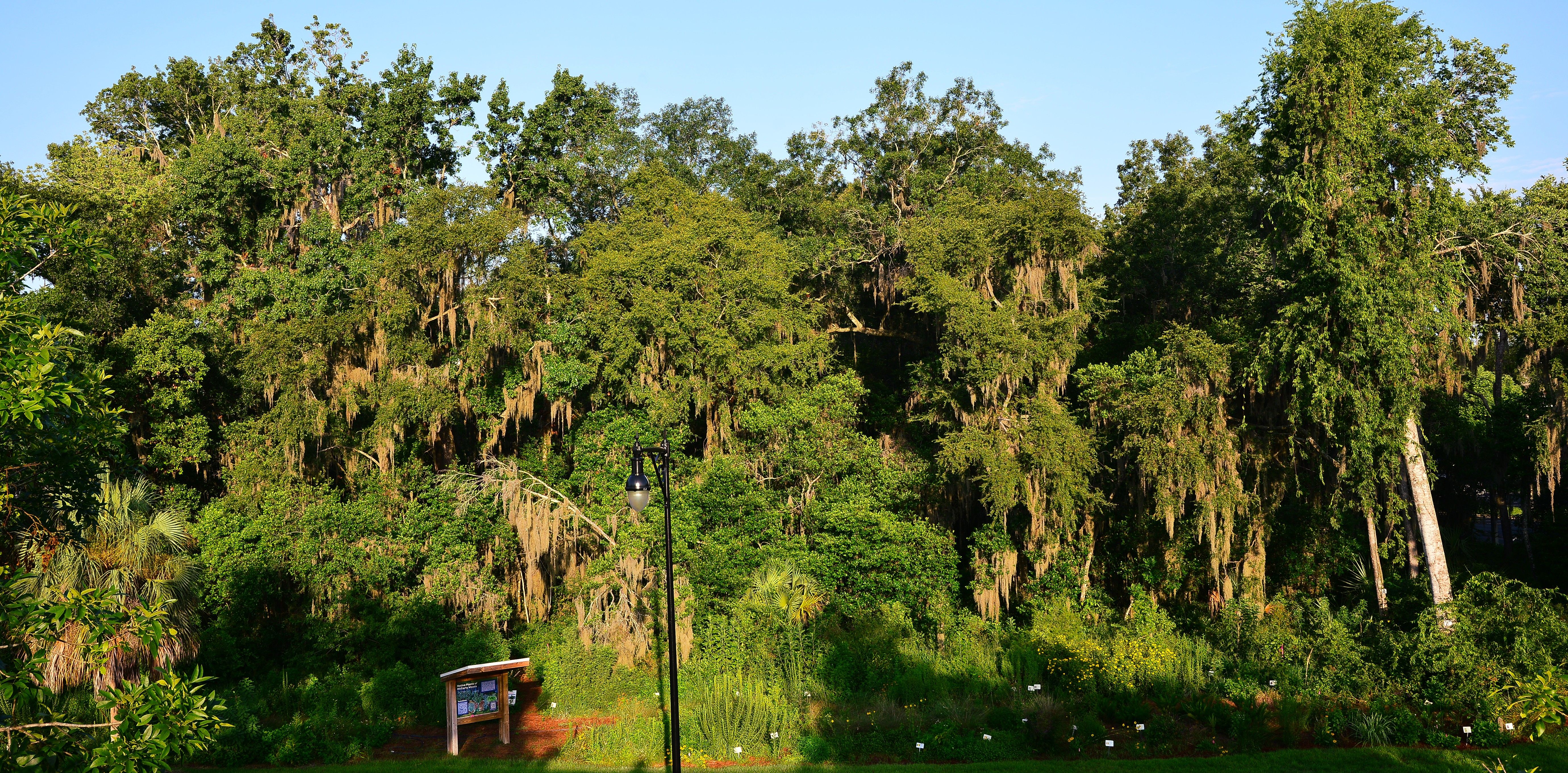
Here are just a few of the flowering species in our reprieved McCarty Woods.
Cherry laurel, Prunus caroliniana. Native. Individual flowers 3-5 mm. Small trees, which turn snowy-looking with masses of tiny blossoms for a few weeks in the spring.

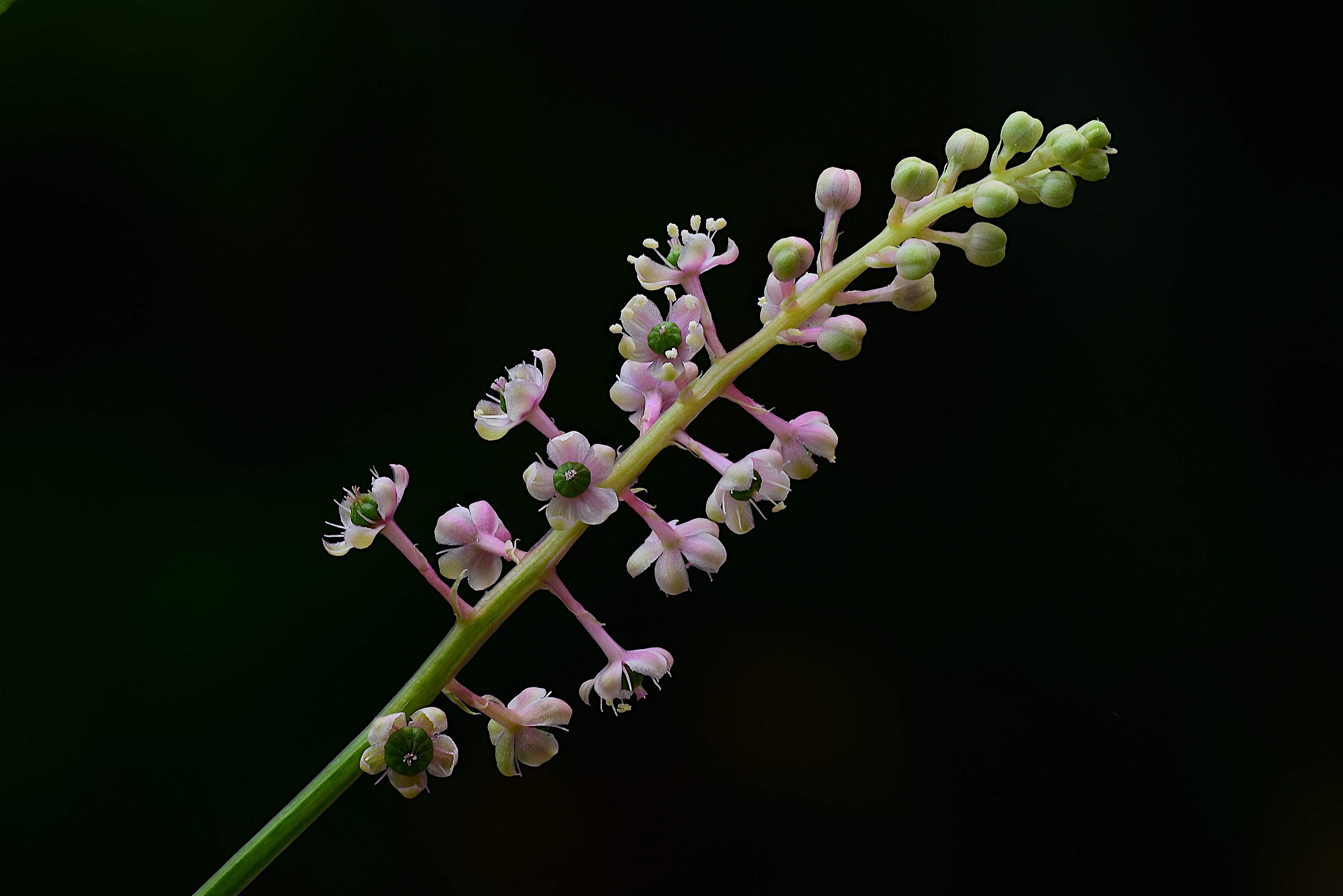
Pokeweed, Phytolacca americana. Native. 7 cm long. Famous for being poisonous, though the leaves can be eaten for a short time in spring if cooked. I haven’t tried it:
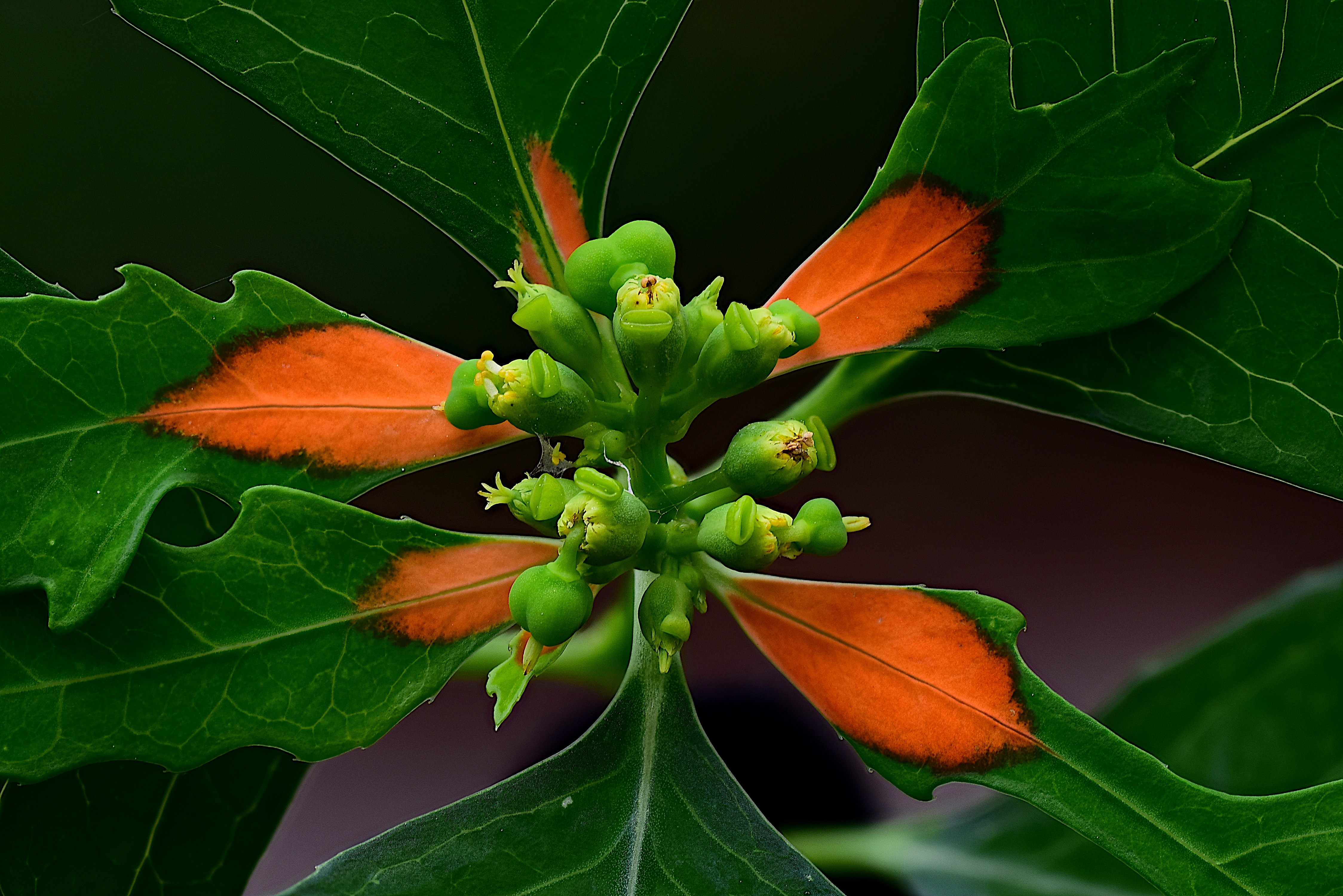
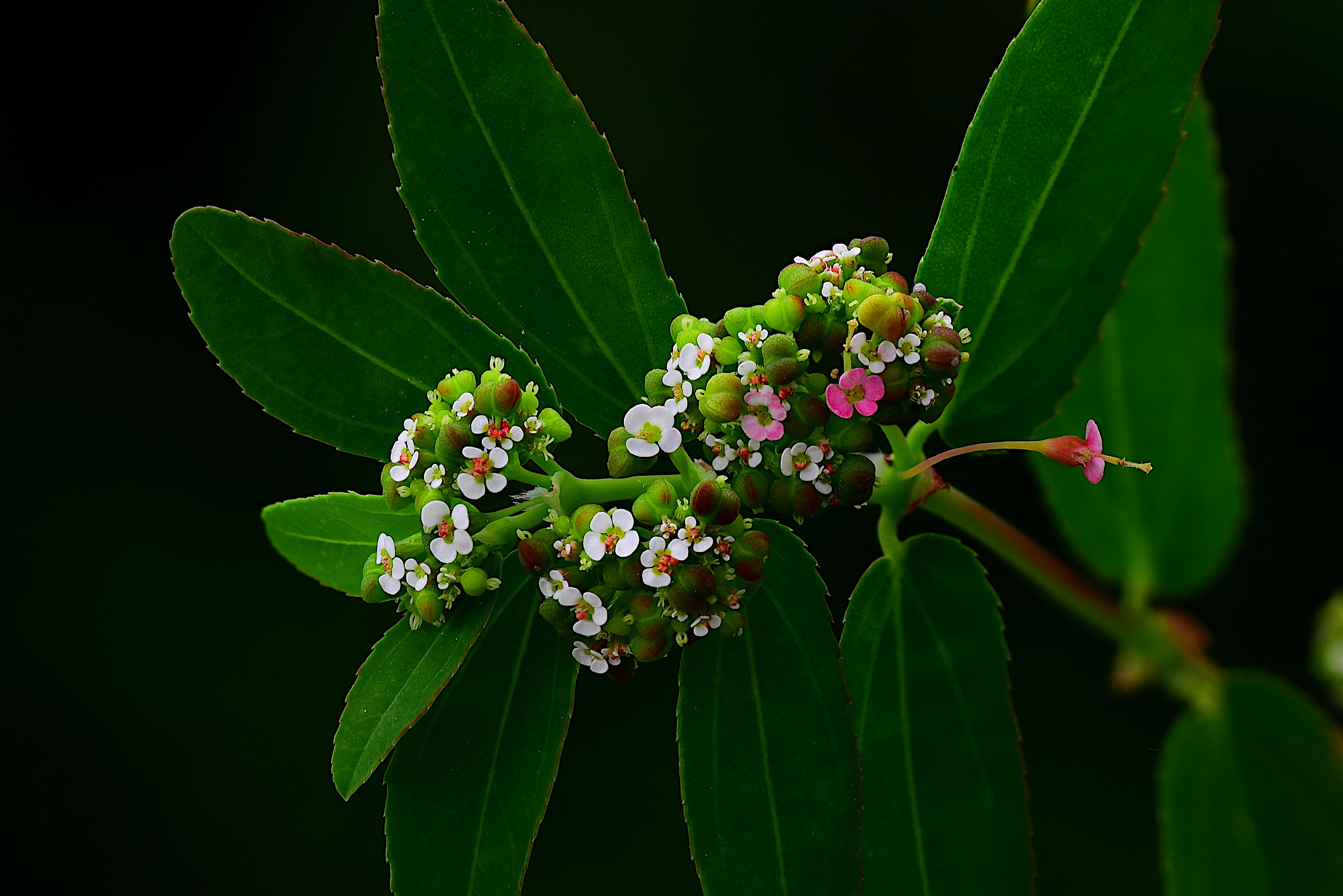
Paintedleaf, Euphorbia cyathophora. Native. The complicated central part is 2-3 cm across. One of the few abundant inhabitants of the shady interior. At close range it’s one of the stranger-looking plants in the woods, with features that don’t correspond obviously to the familiar parts of typical flower-like flowers, such as petunias. The oval cups are nectaries. Holiday Poinsettia is a close relative:
Trumpet creeper, Campsis radicans. 7 cm long. A native that had disappeared from McCarty, which we are trying to restore:

Potato vine, Ipomoea pandurata. Native. 7 cm. The most visible of the native vines when it’s in bloom. We haven’t had to do anything for this one. As of early September it’s near its peak of bloom in the interior and on the edges.

Coral honeysuckle, Lonicera sempervirens. Native. 6 cm long. Another vine formerly lost from the woods. We’re now planting some in hopes of re-introducing it:

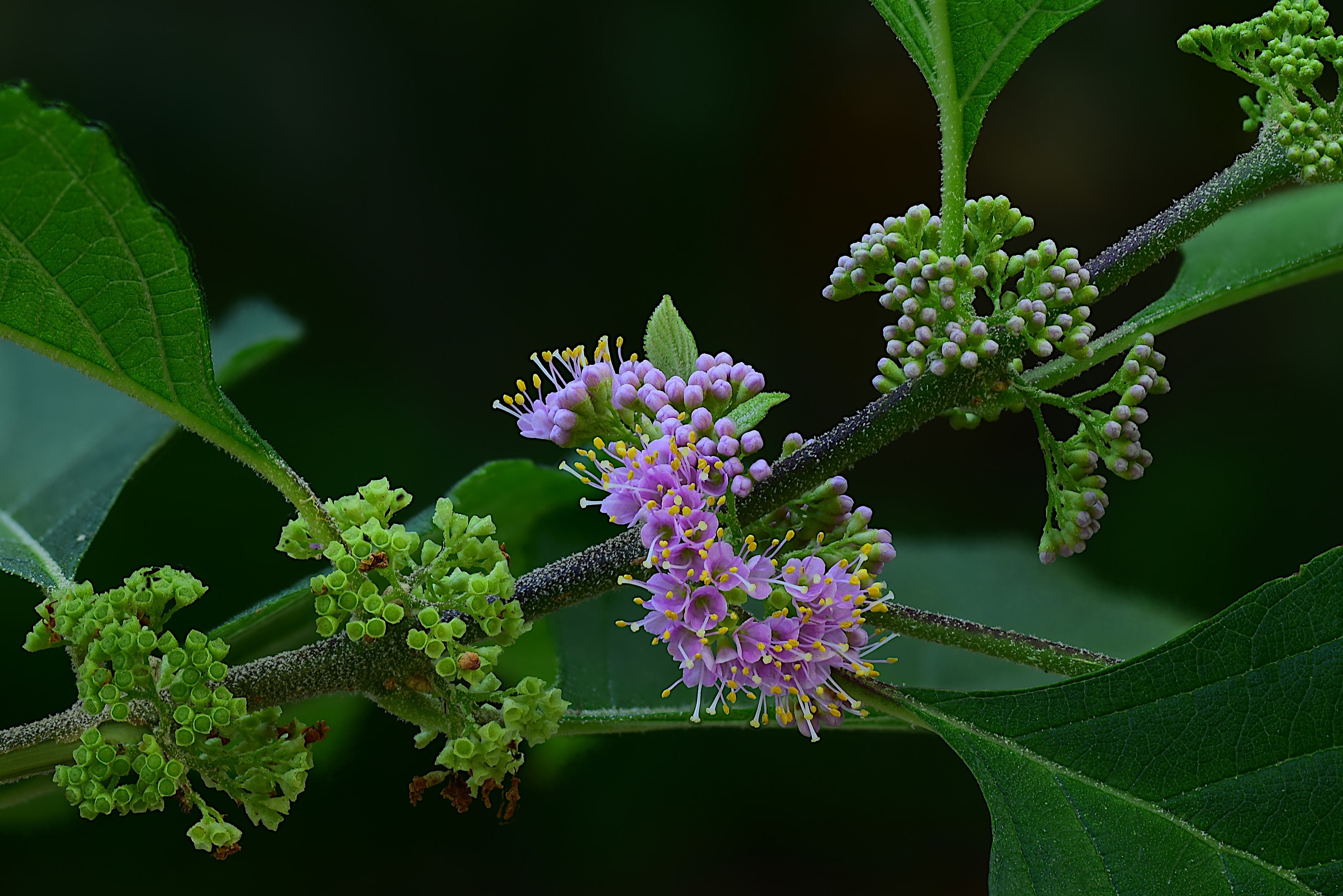
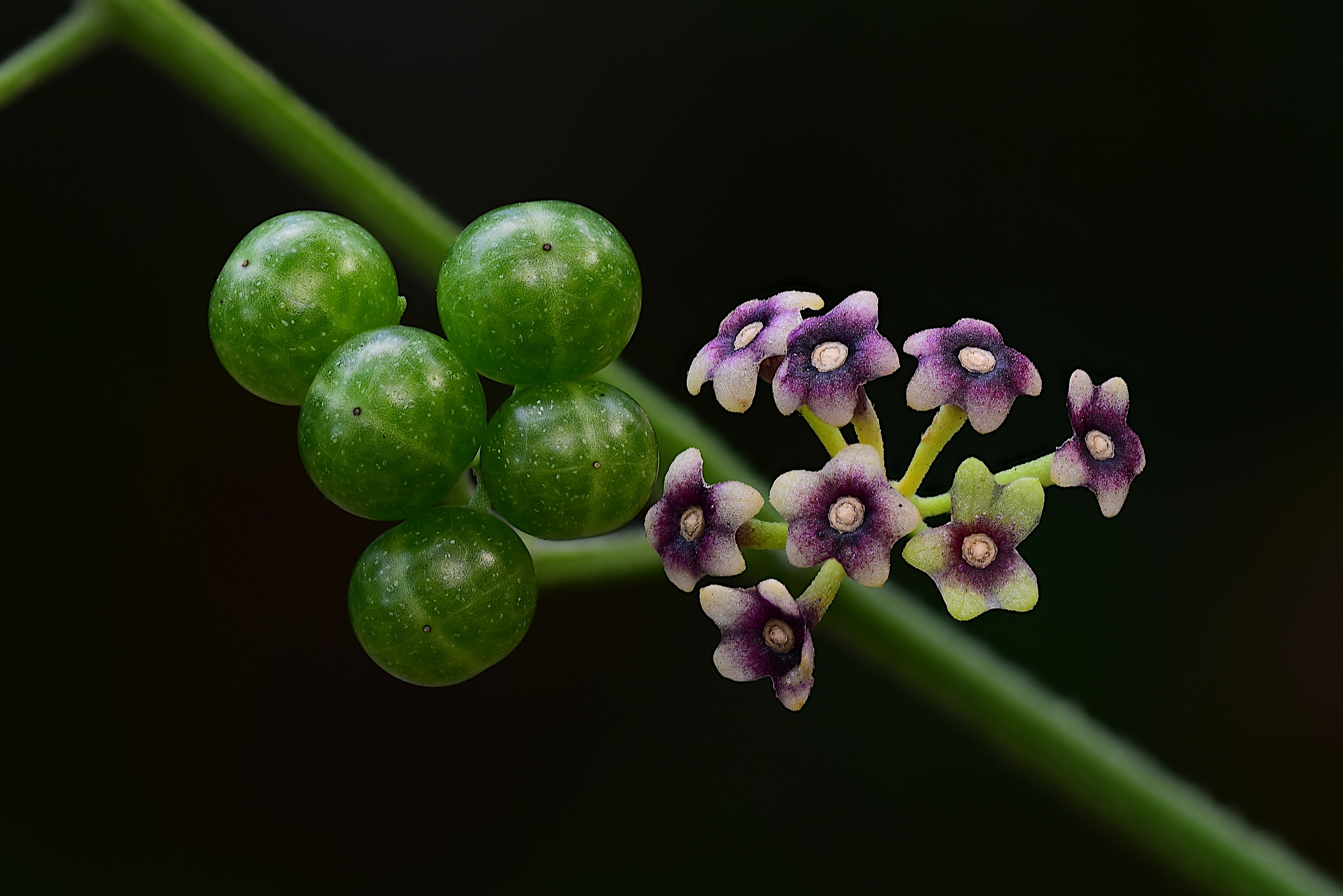
Beautyberry, Callicarpa americana. Native. Individual flowers 3-5 mm. Most people know this plant from its large clumps of close-packed purple berries. Here is a less familiar close-up view of the flowers:
Nightshade, Solanum nigrum. Native. Individual flowers 1 cm.:

The colorful bases that remain after the nightshade flowers fall away, and the 6-8 mm berries:
Ironweed, Vernonia gigantea. Native. Whole flower head 7 cm across. A superior butterfly plant:

Carolina petunia, Ruellia caroliniensis. 3-4 cm. A native that is especially abundant this year:

Elephant’s foot, Elaphantopus tomentosus. Native. Whole flower head 3 cm across:

Sandmat, Euphorbia cf. hyssopifolia. Individual flowers 2-3 mm.:
Silkgrass, Pityopsis graminifolia. Native. Mature flower head 2-3 cm:

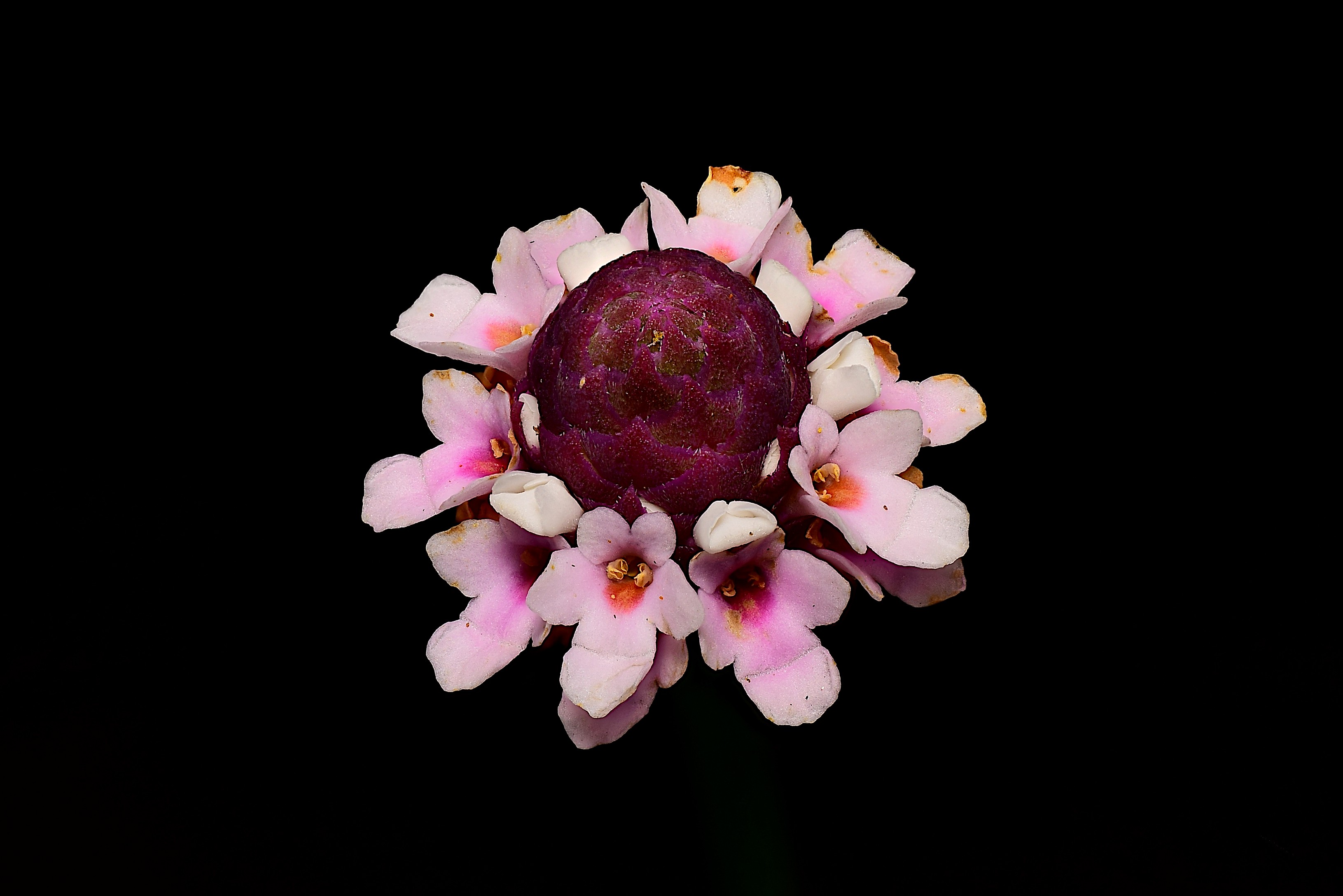
Frogfruit, Phyla nodiflora. Native. 1 cm. For some reason this has been more common around town this year than ever, and no more so than right at the edge of our woods. It is part of a spectacular example of convergent biological and cultural evolution:

Skunkvine, Paederia foetida. Native to southeast Asia. Flowers 1 cm long. This technically should not be welcome, since it is not native and is alleged to smell skunk-like when its parts are crushed. But there is only one here, it is small and behaving itself, and it doesn’t seem very foetid to me, so I have included it just because I like the way the picture look:

One of our teams of joyous forest restorers. This is a big crowd for July, when the heat and humidity and especially the sun hammering the east edge of the forest are brutal. On the summer days I assign myself a job in the shade of the interior, taking out the imperialistic, introduced vine called catclaw:

So we have kept the bulldozers away for five years. The right leadership was essential; as the expression goes, “It’s not what you say, it’s who says it.” When National Academy members Doug and Pam Soltis speak, the administration pays attention; if lab-assistant Webber said the same thing, the sound would be like the proverbial tree falling in the forest. Regardless of the success so far, there are infinite opportunities to lose it all, for there will always be someone who will look at our woods as a blank space that’s just the place to put their construction project. Here we say, “What’s the difference in protection between a UF Conservation Area and a non-conservation area? The Conservation Area has a sign on it until it’s leveled.” Conservationists have to win every time, without end, but developers need to win only once, and the concrete is forever.
What terrific photos, with their artistic composition and dramatic dark backgrounds; and what a terrific story! My hat is off to you, ‘The Solti’ (as some friends call them), and your fellow happy warriors.
Thank you, Thomas…an excellent and sobering story. Indeed the irony of administration’s original plan…somewhat trumpian in nature. And yes, with persistent and consistent communication to the right people, grass roots (regular people) folks can get results. And you are so right about the importance of both ends of the comm lines.
Congratulations to the team for the save and the ongoing care…reminds me of Jerry’s Team Duck.
What a great post! I see some familiar plant friends here, including the awesome Ironweed which I plant in my yard.
We have a similar challenge up here at our medium-sized university in Michigan, with a nice tract of woods and prairie owned by the campus, a healthy creek, and beavers. Beavers! But there are continual threats to develop it. For what purpose? Our demographics say that people are having fewer kids, the population is shrinking, and yet the threat of bulldozers never quite goes away.
I don’t know Mark…to what purpose? maybe a new football stadium?? The word “improvements” has puzzled me always – since years ago when our city parks and rec dept turned a nice grassy ~5acre field/elementary school playground that was used by the whole neighborhood for baseball, softball, sandlot football, driving golf balls, walking dogs, etc into four separate fenced off official little league style baseball fields breaking the open area into four balkanized, inaccessible special purpose areas. When we addressed the school board which owned the property, we were told that these were “improvements”. For whom we asked but received no answer.
Tony Joe White knows about poke sallet:
Now some of y’all never been down South too much
I’m gonna tell you a little bit about this
So that you’ll understand what I’m talking about
Down there we have a plant that grows out in the woods and the fields
Looks somethin’ like a turnip green
Everybody calls it polk salad
Polk salad, huh
Used to know a girl that lived down there
And she’d go out in the evenings and pick her a mess of it
Carry it home and cook it for supper
‘Cause that’s about all they had to eat
They did alright
You left out the part about the
“Gator got your granny…chomp chomp…”
Comment by Greg Mayer
I’ve walked by those woods on visits to the campus! Great pix, and glad to hear they’ve been saved, at least for now.
GCM
How ironic that the plan was to mow down the forest in order to build the forestry lab. I suppose it’s not as ironic as it seems. Harvesting is also part of forestry. Glad that the execution has temporarily been stayed.
Beautiful flowers. As you say, the Pokeweed can be eaten for a short time—until it kills you. I wouldn’t try it either.
Lovely pictures. They really show the beauty of wild flowers. Thanks!
Does frog fruit taste like shortcake, too? Asking for a friend.
Those pictures are beautiful. Thank you!
Great pictures. Beautiful flowers. Thank you.
Great photos. Even the first one, a general establishing shot had me thinking, despite the sun light, “The woods are lovely, dark and deep…”
Neat pictures, and discussion! I spent a lot of time on campus in the 1950s when my dad worked in a cancer research lab. There used to be quite a bit of woods with a creek near to the campus where we played (probably gone now)). This was before alligators were protected in Florida, so they were very rare around Gainesville. Good luck in protecting you little piece of nature!
Protect and restore- well done to you and the team. Nice pictures and story of the teams efforts, good luck. Hopefully it will become more valuable as a source of native renewal, community pride and local feature than a block building/parking lot??? Thanks.
Great pics, and there are some flowers I have never seen.
Thank you for posting this, and great job saving the area—which, I am ashamed to say that I never saw on my visits to UF.
Glad to learn about the reprieve and the restoration. It’s good to know that Botany professors can be heard.