
Hallelujah, we have a contributor! (Please send in your wildlife photos if you want this feature to continue.) The contributor is Jan Malik, who has birds and mammals from Poland. Jan’s captions are indented, and you can enlarge the photos by clicking on them.
In this batch, I have included pictures of birds and mammals from the Tatra Mountains that I had a chance to photograph during my hikes over the last couple of years. They consist of both lowland generalists that have penetrated into the boreal forest zone and alpine specialists.
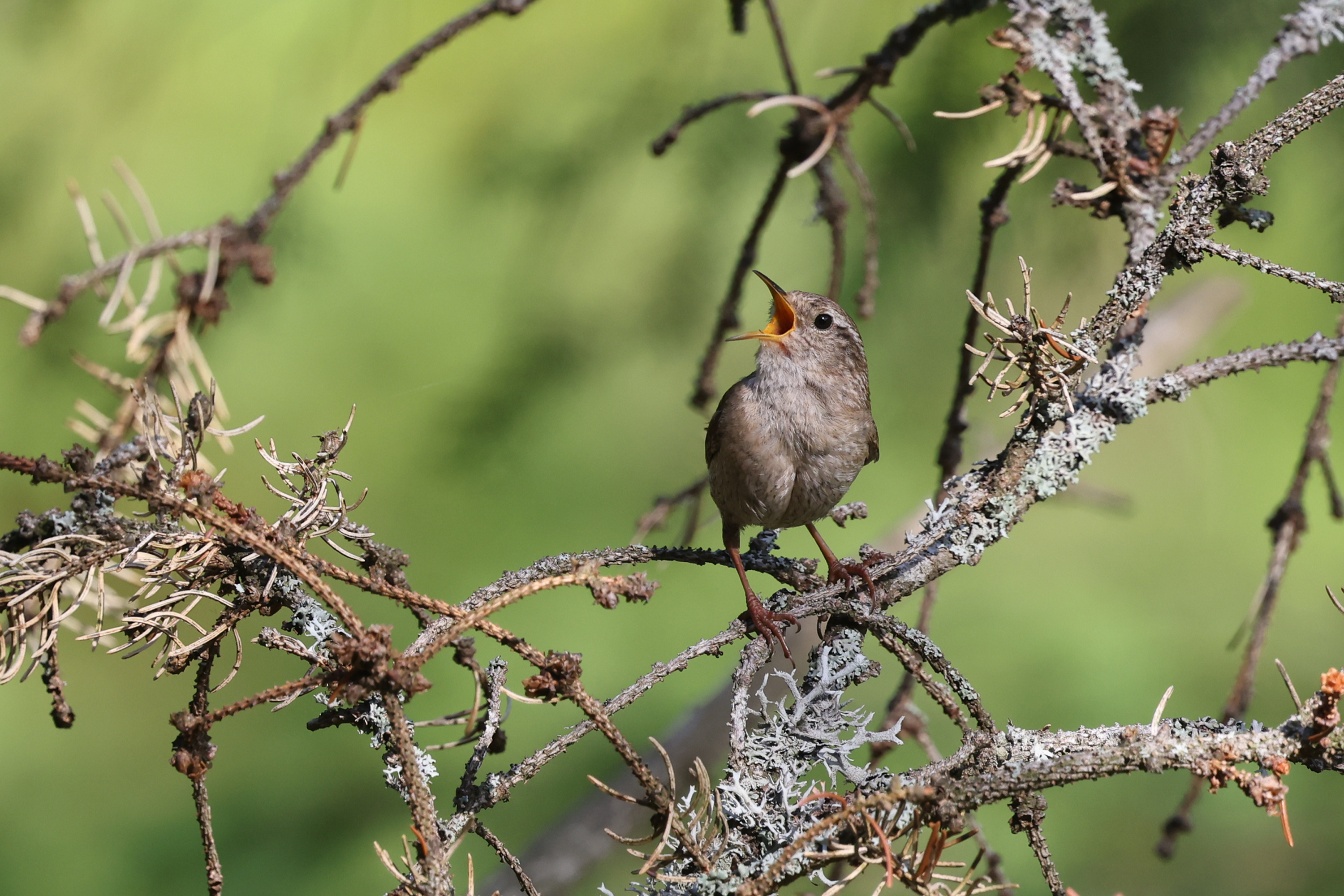
The Eurasian wren (Troglodytes troglodytes) is the only representative of the wren family in Europe. It was given the name “Troglodytes” (“cave-dwelling”) because it often searches for arthropods in rocky nooks and crannies; this behavior allows it to feed even in snowy conditions. Like the American marsh wren, males construct several nests, possibly both as a display of fitness for the female and as a decoy against predation:
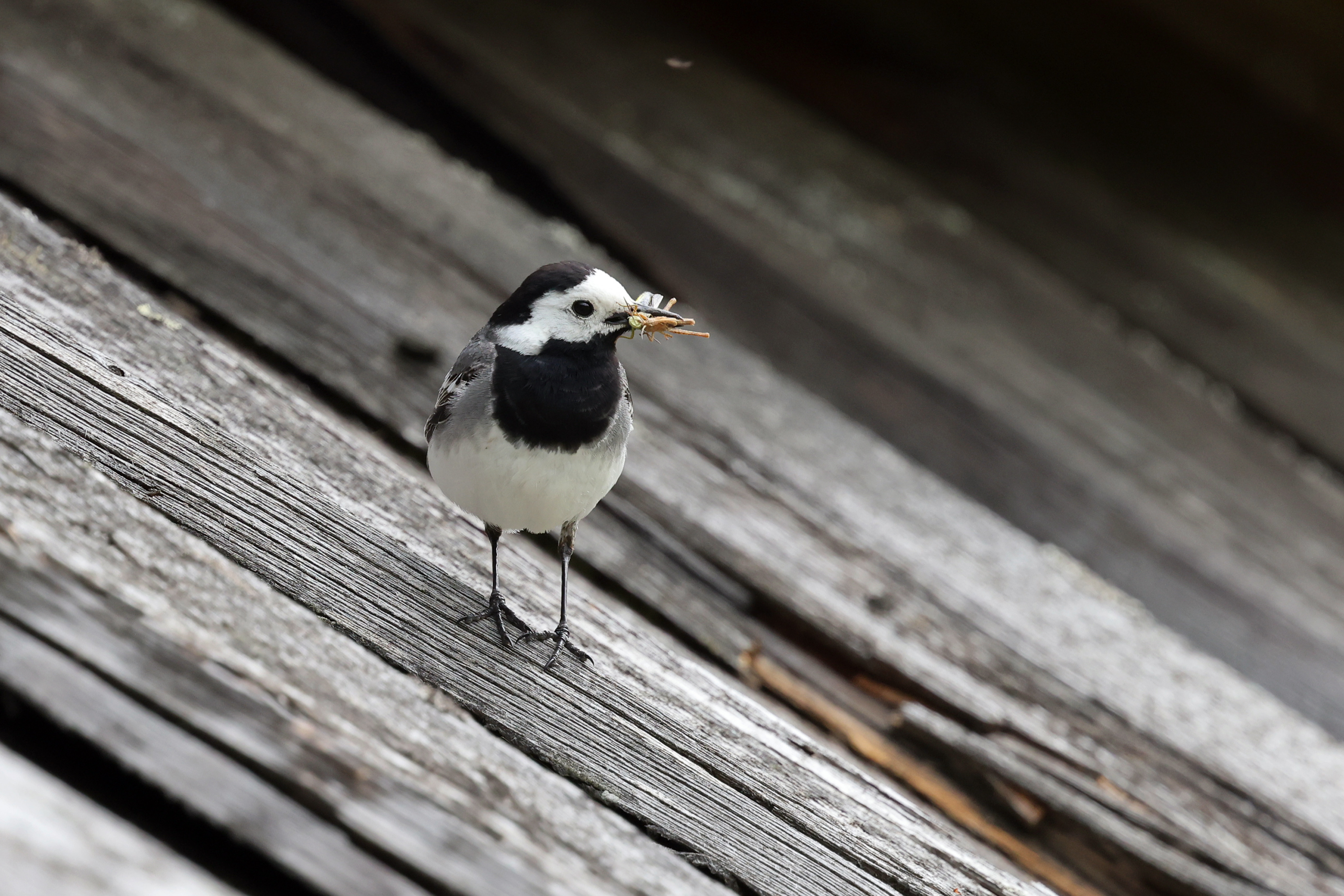
The White wagtail (Motacilla alba) avoids dense forests but can penetrate from the lowlands into mountain valleys with meadows left from the earlier pastoral economy of the region or near ski slopes. This bird (just like the wren above, females and males are identical) was well aware of my presence and refrained from rushing to its nest so as not to betray its location:
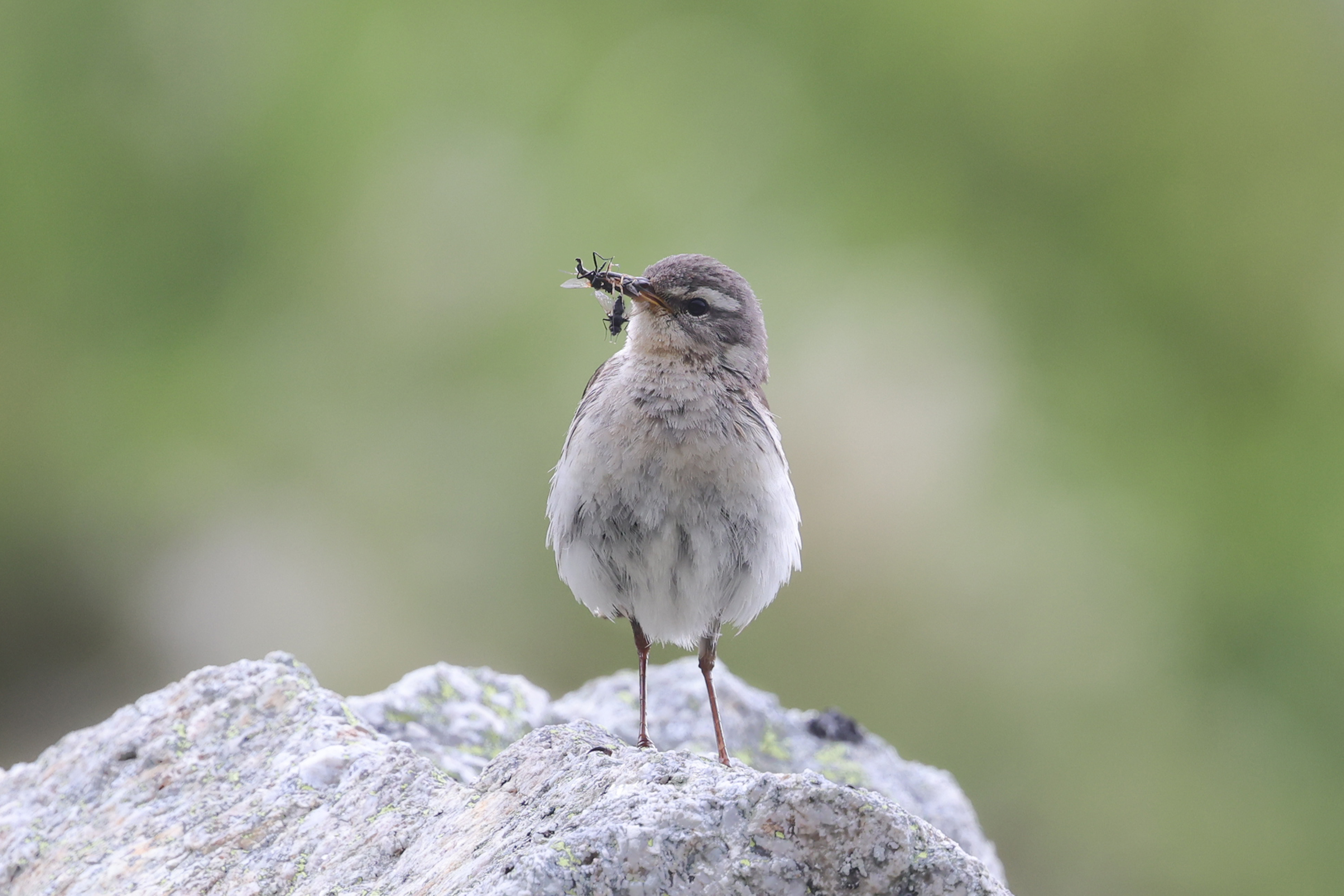
Possibly a Water pipit (Anthus spinoletta), which is an altitudinal migrant—in summer it nests in the alpine zone, but in winter it relocates to wetlands or riverbanks. Its nest is well hidden in a rock crevice or in a tussock of grass:
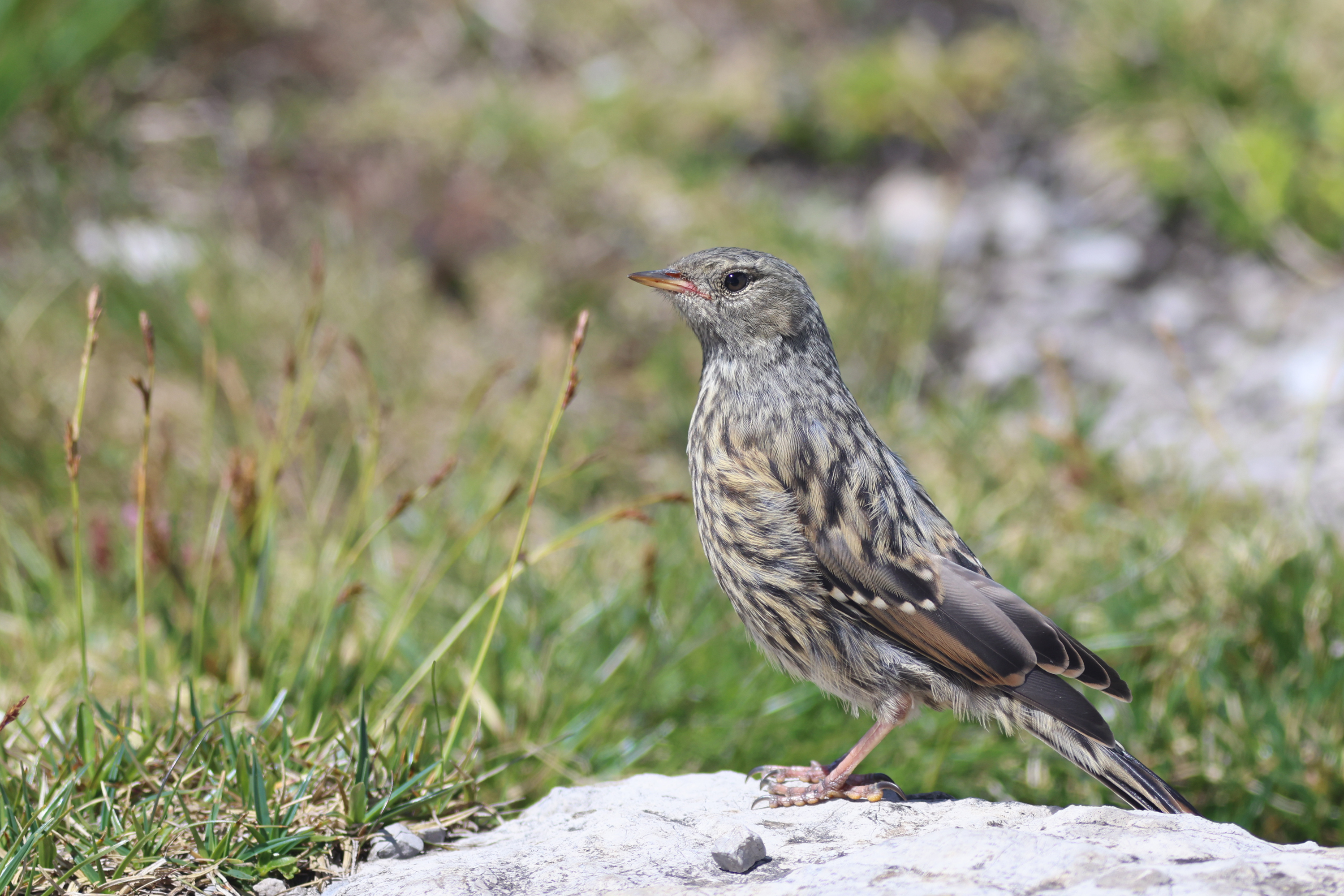
The Alpine accentor (Prunella collaris) is a mountain specialist, staying in the alpine zone all year round except during very bad weather, when it can descend into lower valleys. A thick layer of down protects it against the cold.
It easily becomes habituated to people and is often seen on the highest summits, where it fearlessly scavenges for scraps of food among hikers:
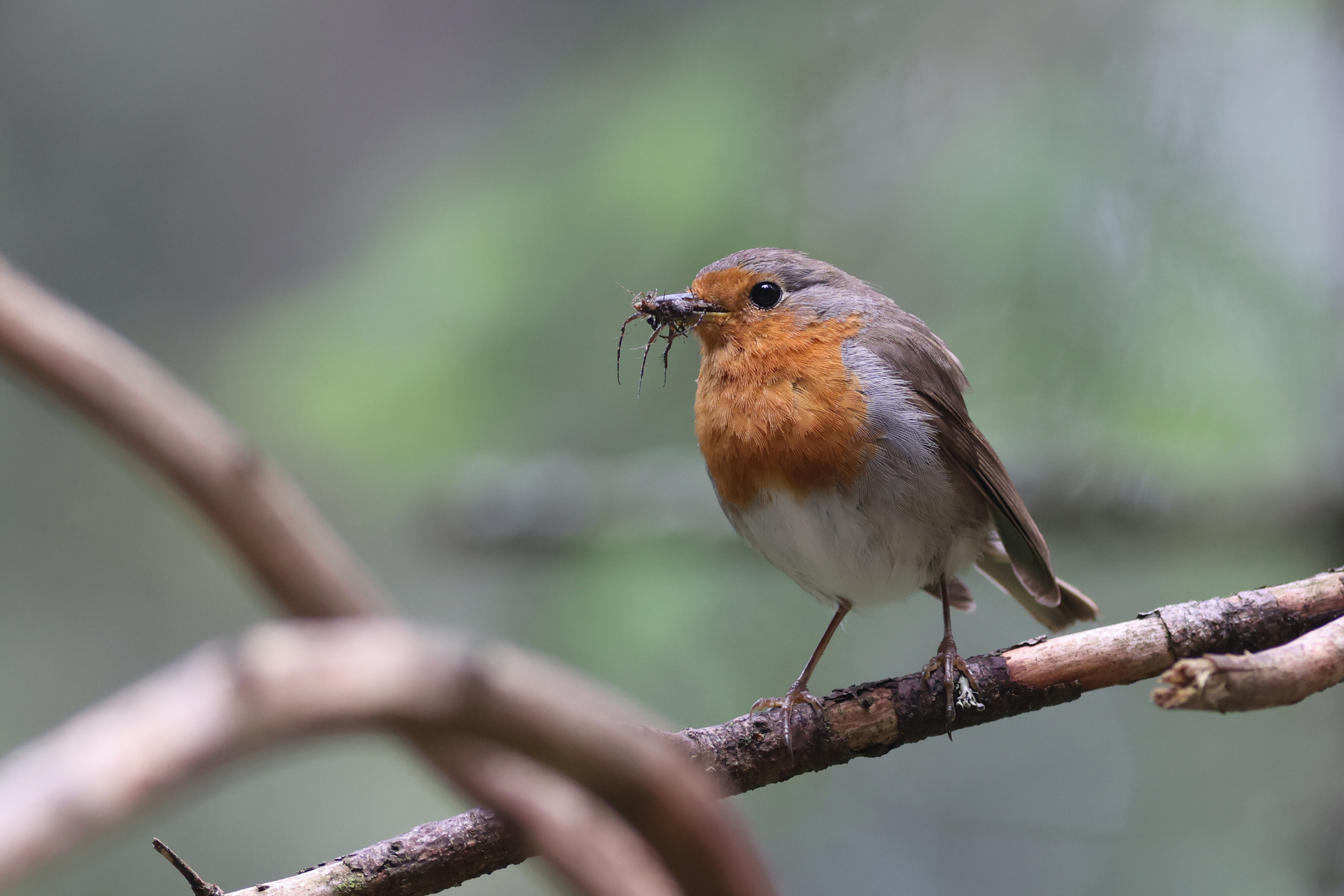
This is a European robin (Erithacus rubecula), which, like the other birds mentioned above, is a species where females and males look alike. It is a generalist with a range that just penetrates the boreal montane forest. I saw them follow cattle or humans to catch insects fleeing from the disturbed ground. They look cute but are extremely territorial, and fights between two competitors can be deadly:
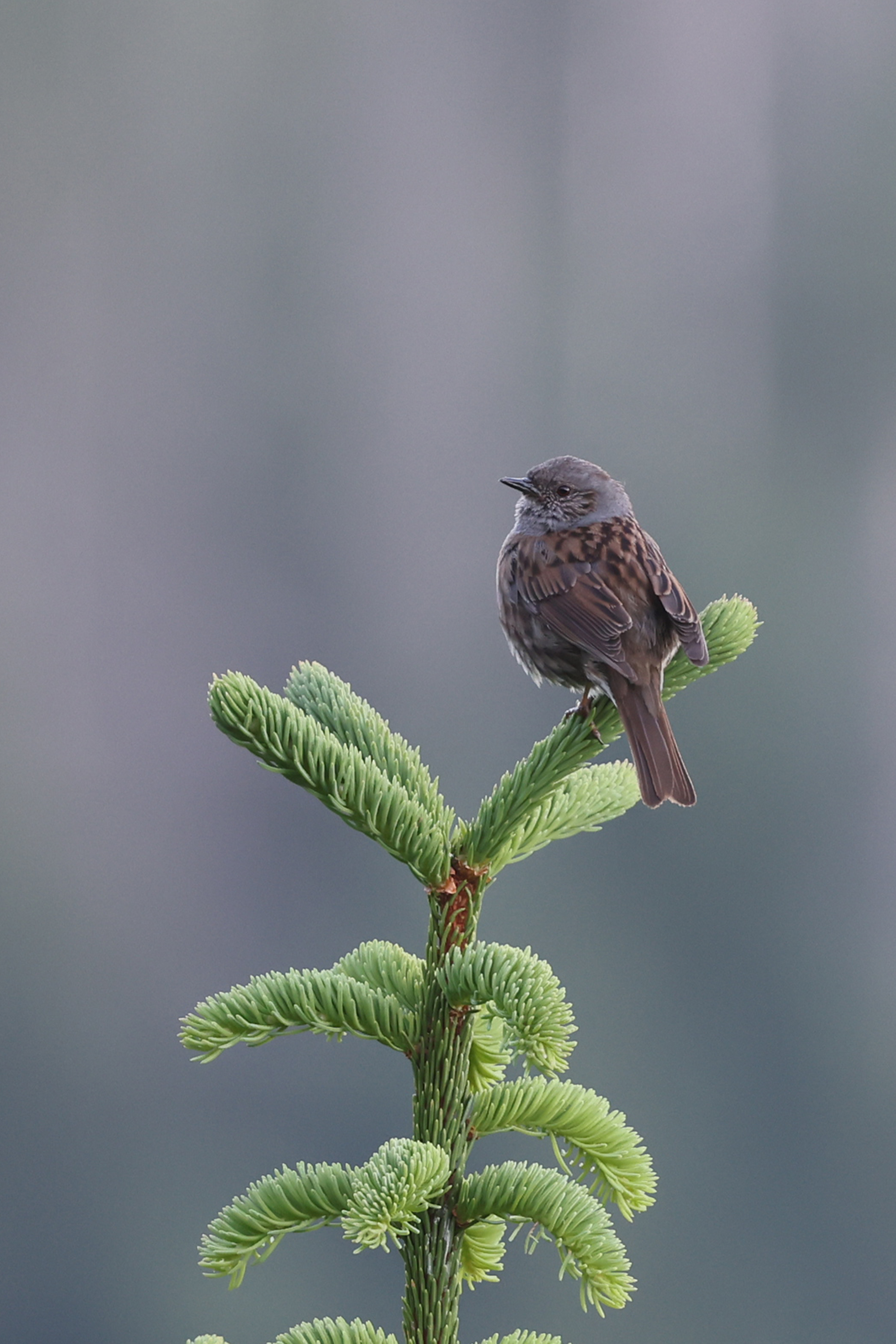
Not too many pixels on this Dunnock (Prunella modularis), which, unlike its cousin the Alpine accentor, is not limited to the mountains and does not go above the krummholz zone. It has a complex mating system consisting of a mix of polyandry and a “mating cooperative,” where a couple of males maintain a territory containing a couple of females:
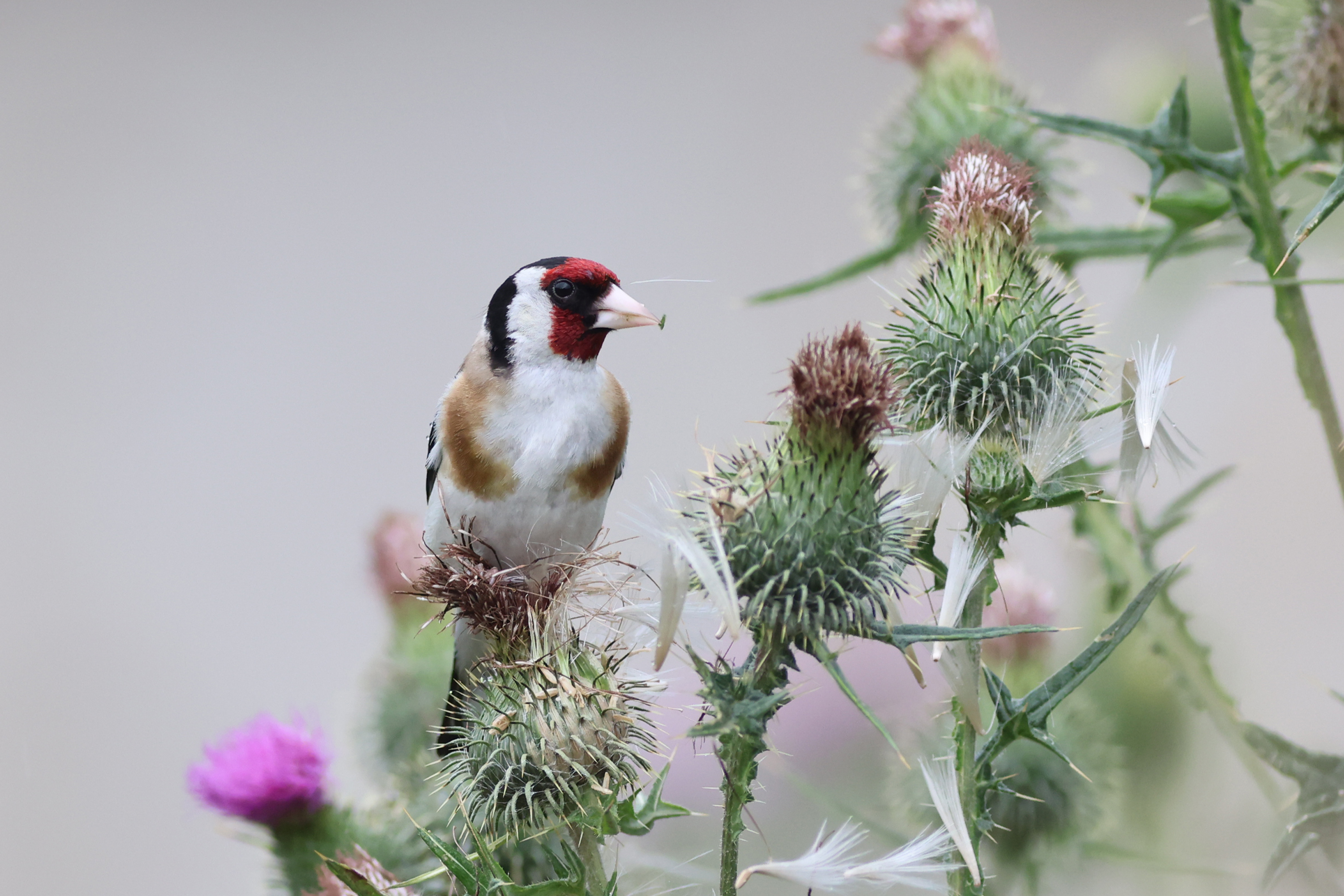
The European goldfinch (Carduelis carduelis). I found this male (with a slightly larger red mask than the otherwise similar female) by first noticing a stream of thistle seeds drifting in the wind. This species stays in warmer lowlands with an abundant presence of thistles, which are used for both food and nesting material. In a fashion similar to the famous Galapagos finches, this species evolved a high-precision bill to extract nutritious seeds defended by thorns:
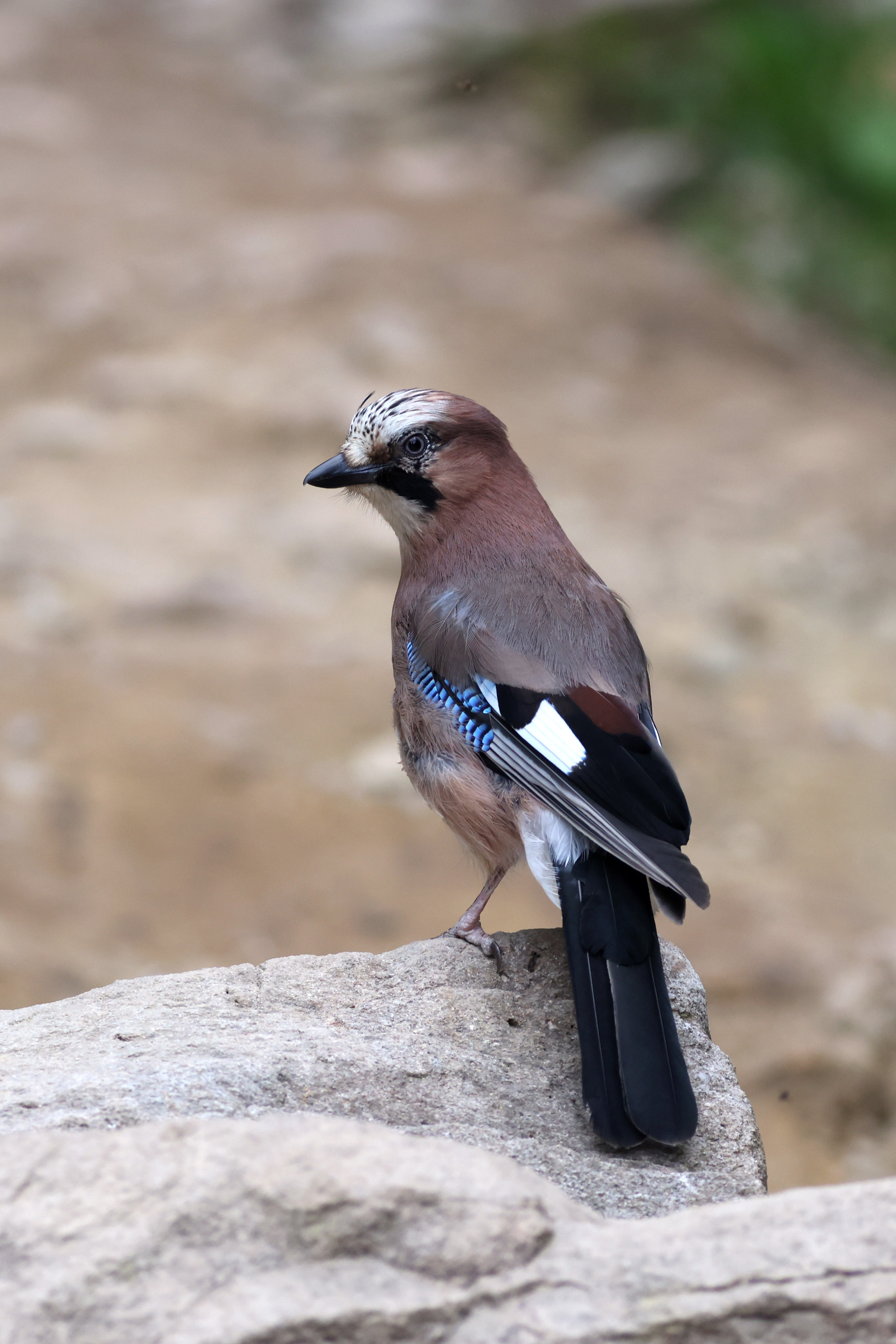
This Eurasian jay (Garrulus glandarius) is an edge-habitat dweller, hiding and nesting in lowland forests and entering only the lower boreal forest in the mountains. As a corvid, it is quite smart for a bird; however, with the many acorn and beech nut caches it makes for the winter, it always forgets a portion of them and thus contributes to forest growth. This one was patrolling a popular trail, looking for crumbs:
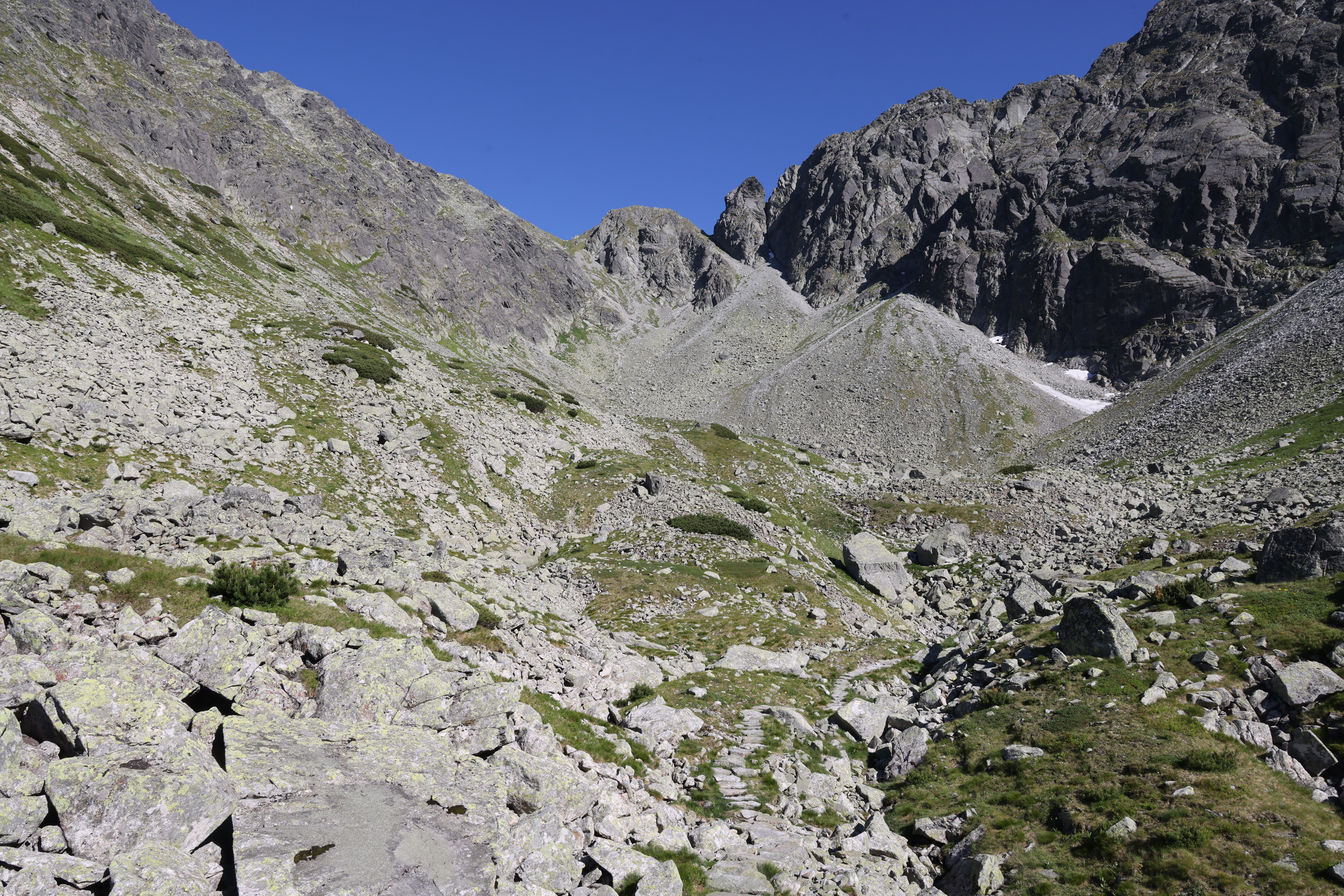
For the next two four-legged species, this is what their habitat looks like—an alpine tundra just below the barren high alpine zone:
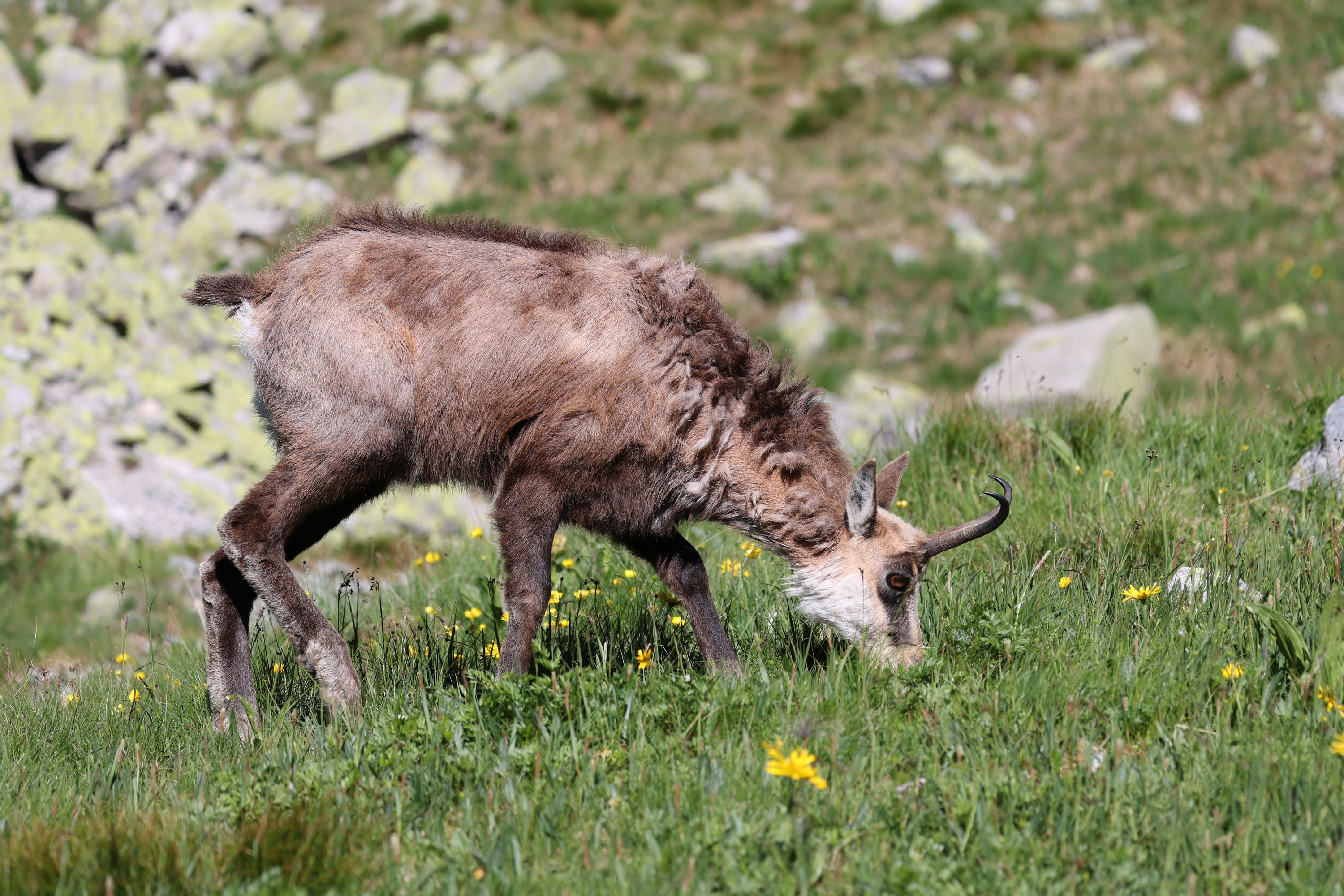
Passing through it, finding a herd of Tatra chamois (Rupicapra rupicapra tatrica) is quite likely. The shaggy appearance of this individual is due to post-winter molting. Despite being commonly seen in the Tatras, it is an endangered subspecies; their numbers plummeted at the turn of the millennium to fewer than 200 individuals and have since increased to over 1,000 thanks to strict limits on tourist traffic in sensitive areas:
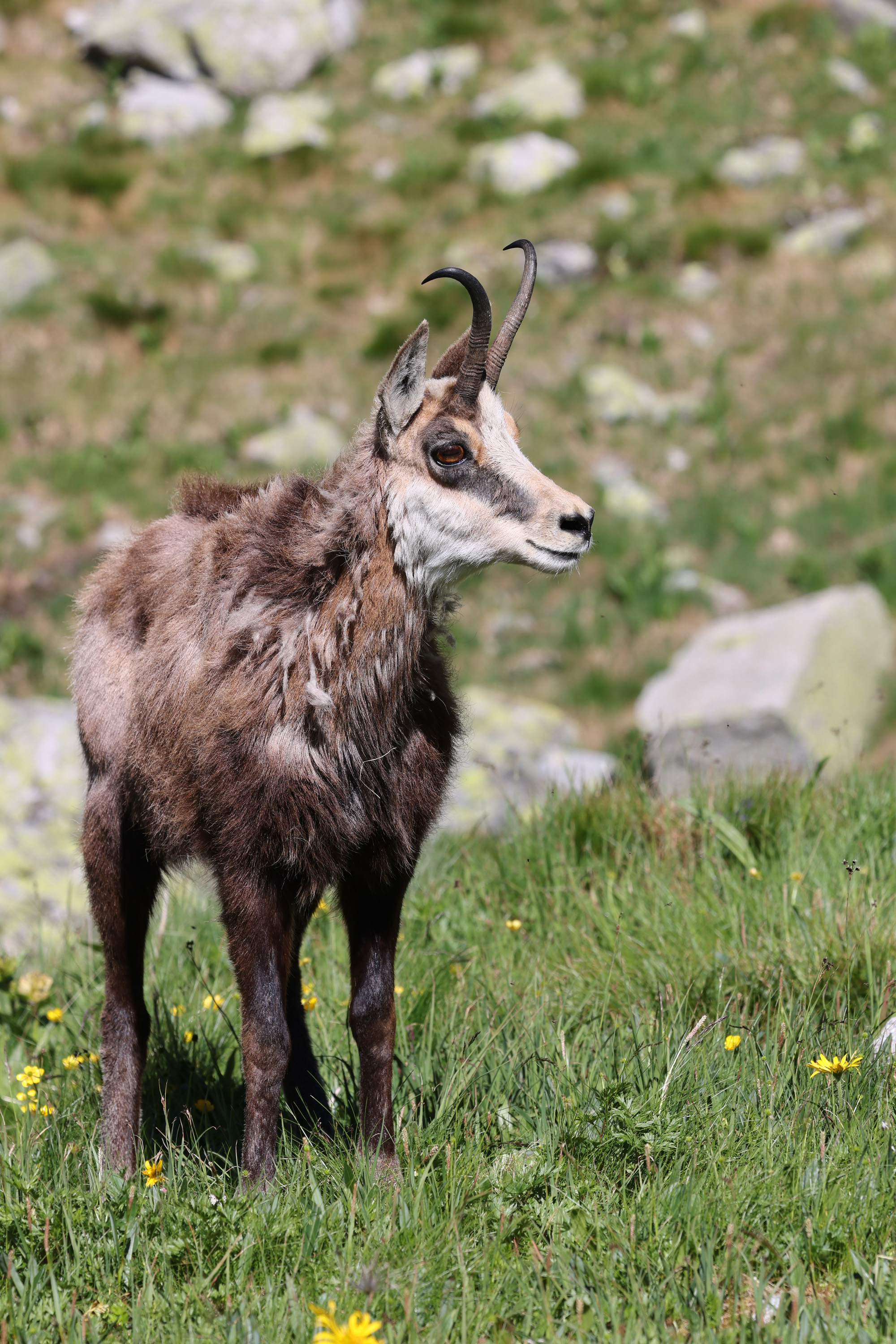
This mountain goat-antelope has close cousins in the Alps and parts of the Carpathian Mountains, but the Tatra population is completely cut off from them, since they are obligate mountain dwellers and do not tolerate dense forests or plains. The Tatra population has been isolated since the end of the Pleistocene, for at least 15,000 years. Over that period, the Tatra chamois evolved a special trait: unlike the Alpine chamois, it stays above the forest zone throughout the year. In the Ice Age, they populated the vast, ice-free montane tundra in that part of Europe (https://www.researchgate.net/figure/Maps-showing-the-geographic-distribution-of-the-extant-subspecies-of-the-genus-Rupicapra_fig1_336957033):
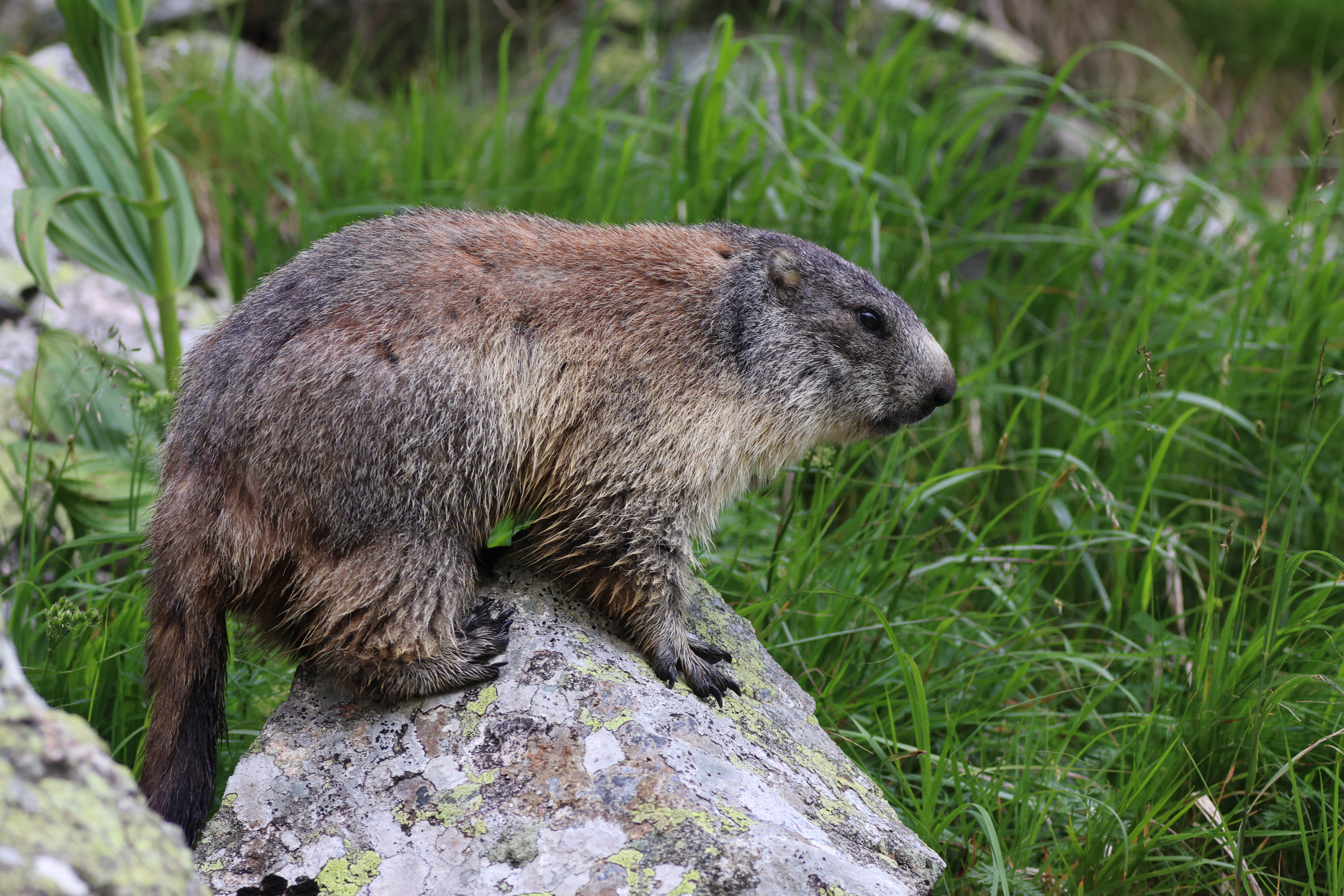
The Tatra marmot (Marmota marmota latirostris) is another Ice Age holdover that became marooned on a high-altitude “island” as the climate warmed after the Pleistocene. It has had no contact with other groups of alpine marmots for at least 10,000 years. This site (https://www.inaturalist.org/taxa/46082-Marmota-marmota#map-tab) shows how fragmented the marmot habitat is:
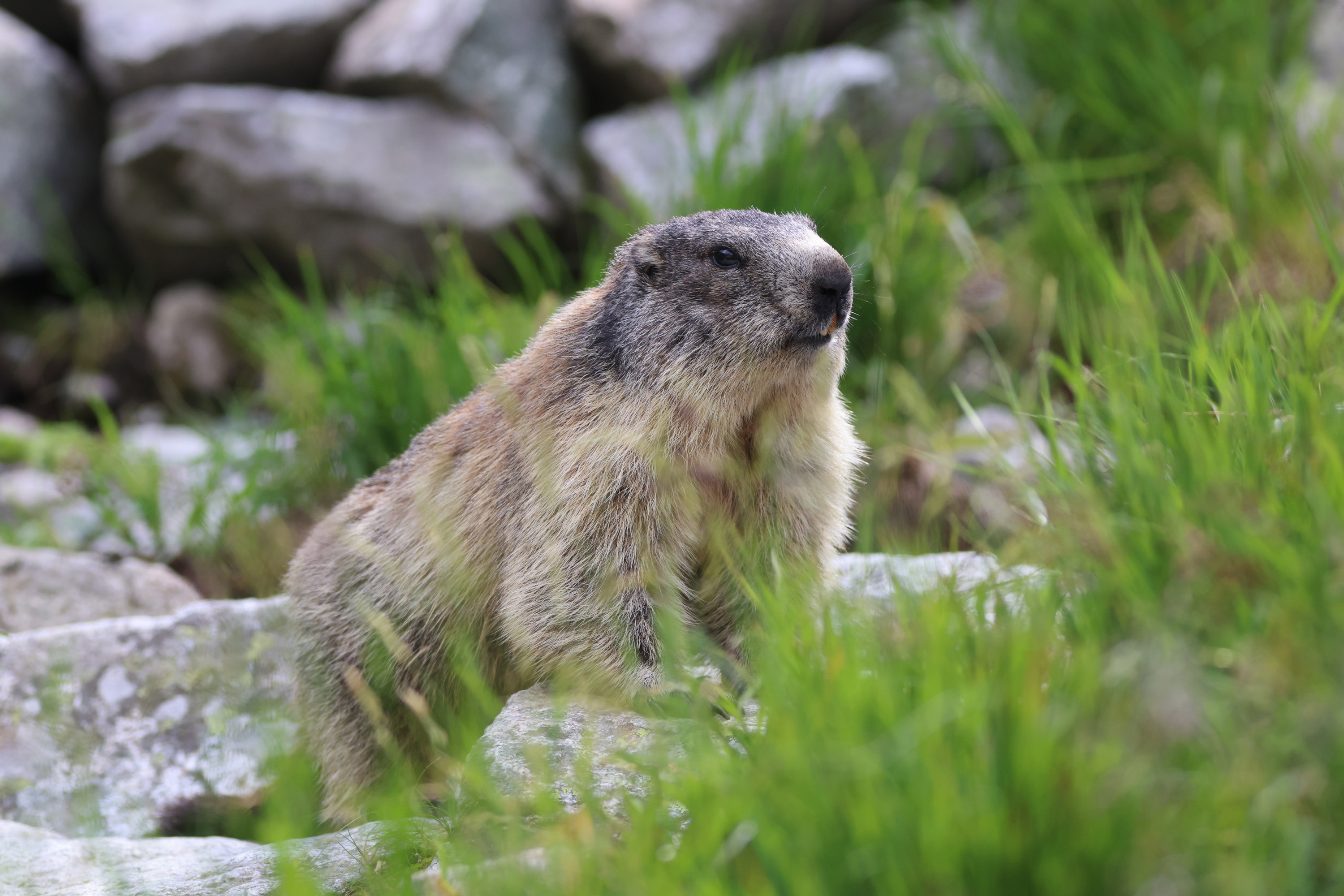
The marmot also stays above the forest zone all year round. Since summers in the Tatras last only about 5 months, all of the marmot’s active life must occur within that short period. In the winter, it hibernates in a deep burrow and emerges emaciated in the spring, when it must nearly double its body weight to prepare for the next winter and breeding season:
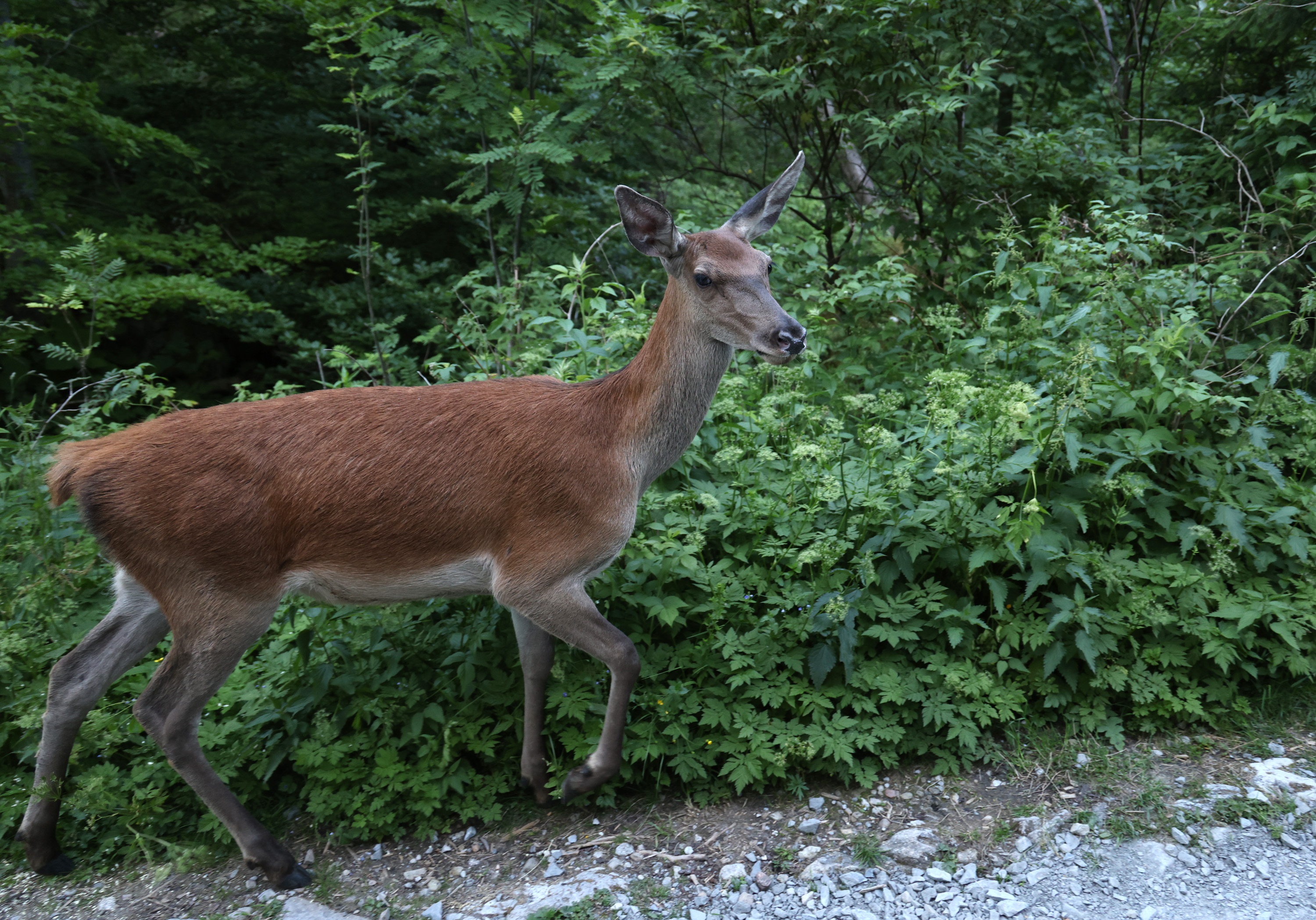
And as a reminder of how crowded the Tatras can get, here is a Red deer hind (Cervus elaphus) that was trotting along a trail and forced me to step aside to let her pass. As in many other national parks, animals in the Tatra Mountains become habituated to people. Red deer are vertical migrants—feeding on montane meadows and in boreal forests in the summer, but retreating to lowland pastures and forest edges in the winter:
Lovely series of photos, thank you for sharing. It’s certainly a beautiful area of Poland. Makes me want to visit the Tatra Mountains.
The photo of the Dunnock is a fine example of a portrait that doesn’t need maximum pixel-view. I enjoy ultra-sharp bird photography that shows every barbule on the feathers, but in this picture the composition, the well-balanced exposure, the highlights, and the subtle background convey the scene beautifully.
Very nice shots, and discussion!
Thank you so much for your photos! It’s wonderful to have a contribution again. I’ve never been in that area, but was happy to see birds I became familiar with while living in Germany several decades ago.
That looks like a very nice area for hiking. I like that so many of the birds are pictured holding food. The water pipit has even managed to catch two insects—impressive!
Beautiful and exciting photos in this post.
What incredible birds these are. I especially love the European goldfinch and Eurasian jay. What a place to see.
Very nice pictures! The descriptions with them are very much appreciated.
Extraordinary pictures. Such clarity!
Wow, beautiful shots! Wish I had such skills in photographing birds. Gorgeous.
Each bird is magnificent!
Thank you! That Tatra chamois is an interesting-looking little critter.
A relaxing read to go with fine photos — thanks for the descriptive summaries.