
The “ducklings”—if you can call them that now that they’re fully feathered and miniature adults—are almost six weeks old: they hatched on July 25 and came to the pond the next day. All is well with them: they all seem healthy and lively, and they eat heartily, though Miss Duck allows the babies to eat before she does. It’s hard to get food to her as her brood tends to scarf it up.
The babies are already starting to flap their wings vigorously, as you can see in the videos below, and I expect that in about 2-3 weeks they’ll be trying to fly, and levitating a bit. I suspect that the “zooming” behavior you see below is both fun but also practice for taking off.
But first some photos. First, Miss Duck, the ever-attentive mom who is still monitoring the babies closely. She’a also starting to molt, and during this period she will be able to flap and levitate a bit, but when she molts her flight feathers she’ll be pretty much grounded for a couple of weeks.
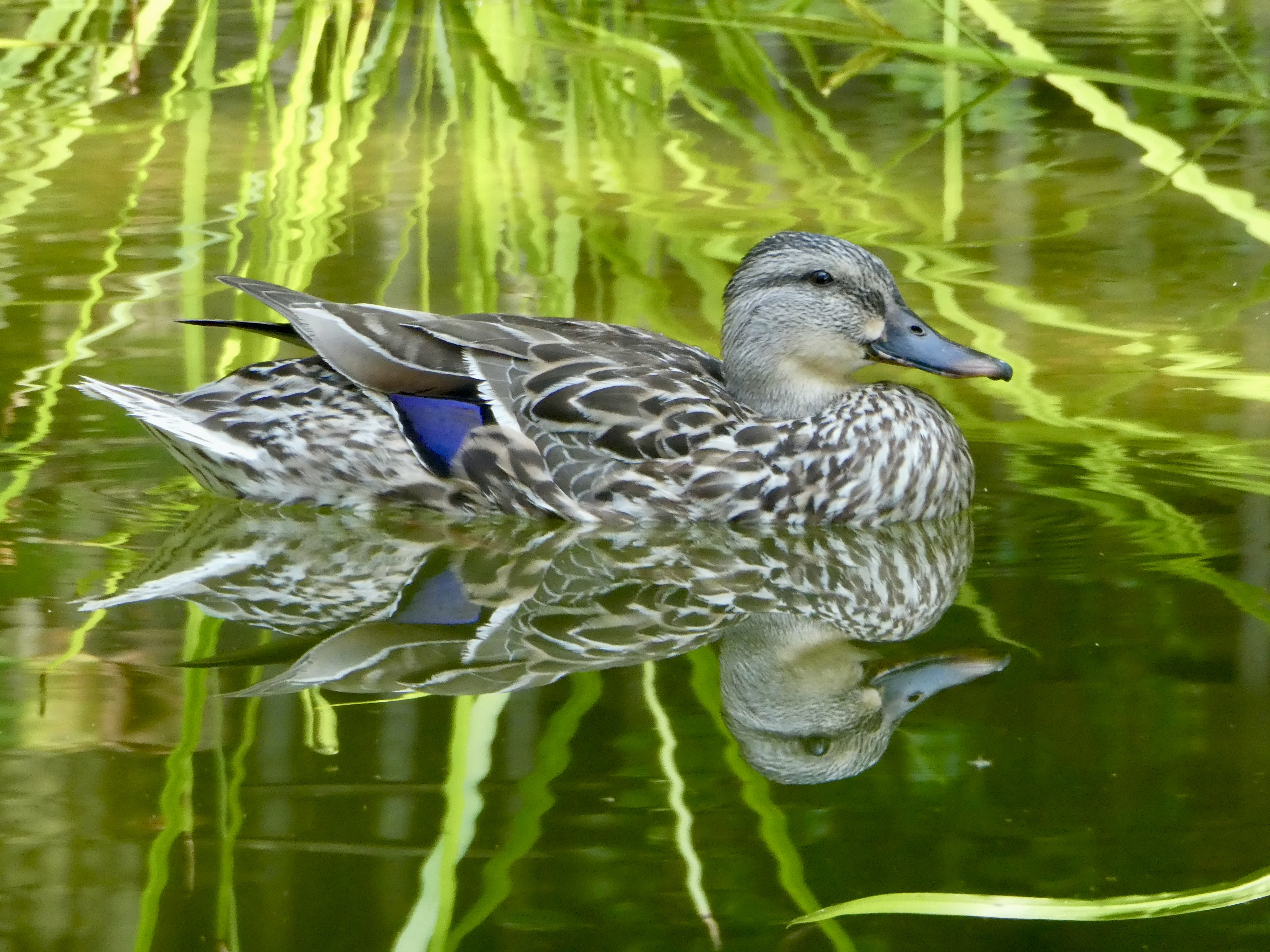
First, Miss Duck on the water. I love this photo, what with the reflection and all. (I posted it the other day.)
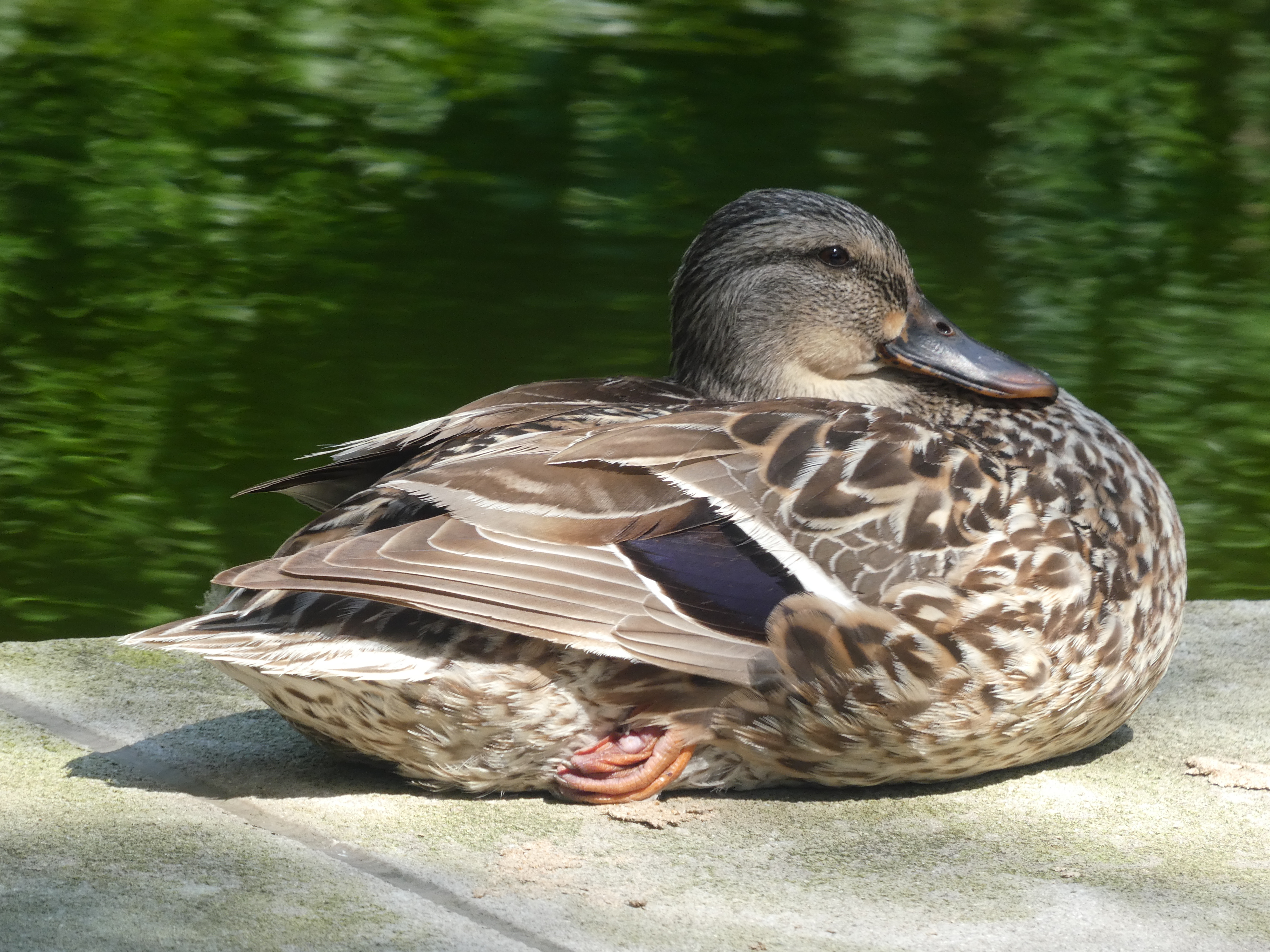
On the edge of the pond, watching her brood. Notice that her foot is on the side and not underneath her:
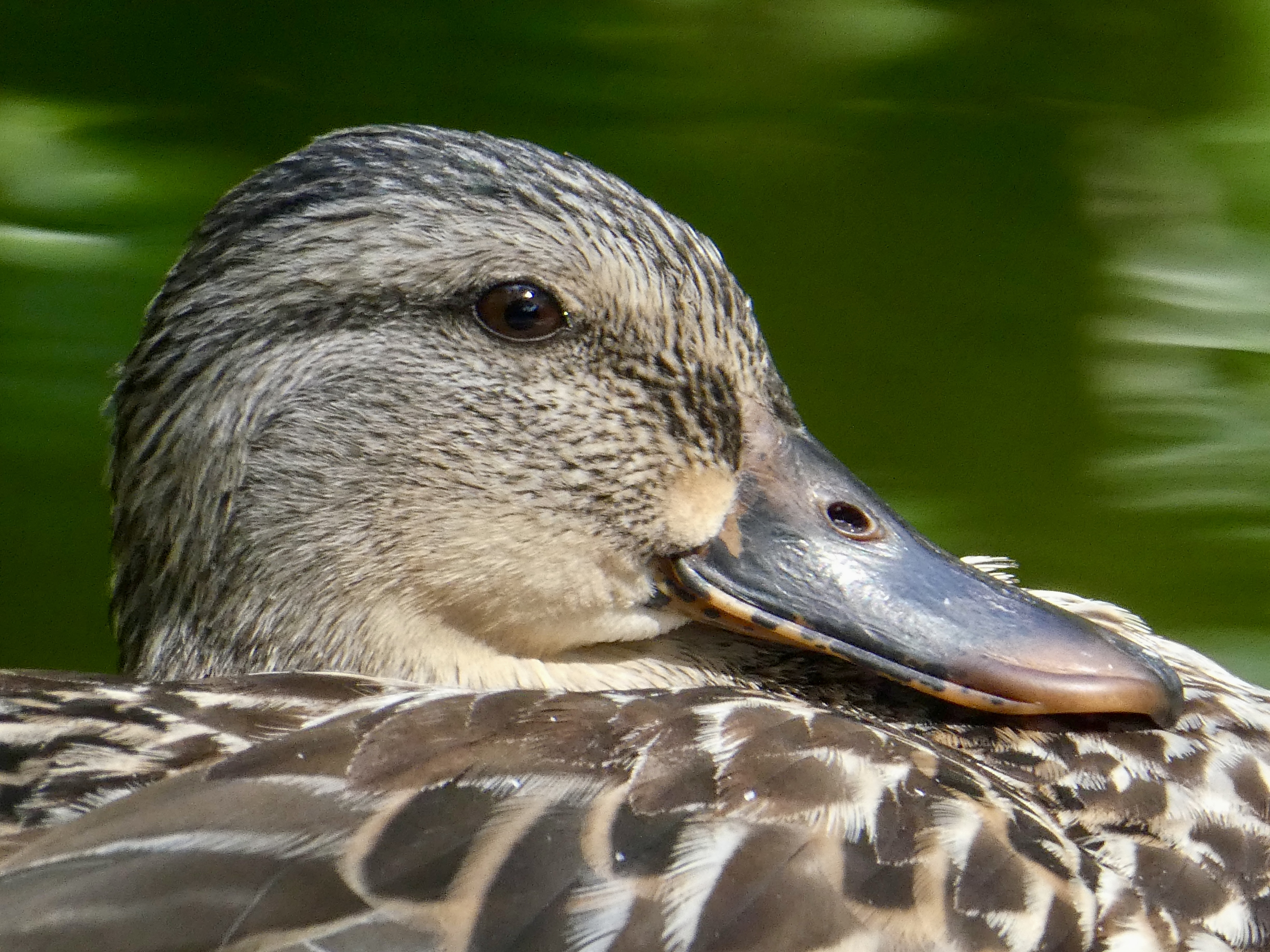
And a glamour head shot. If she returns next year I’ll be able to recognize her by this distinctive beak pattern.
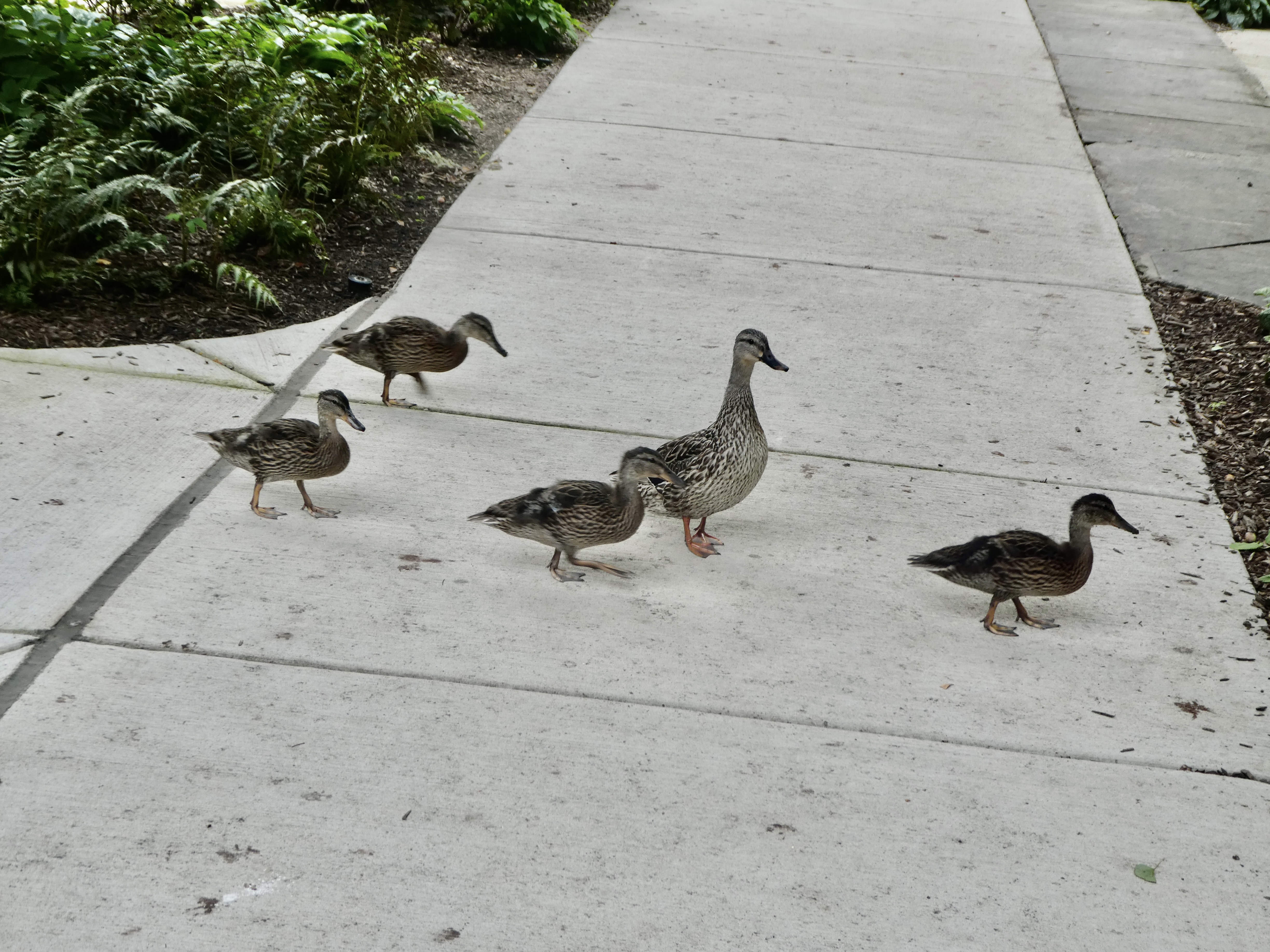
Here’s the brood crossing the sidewalk in the morning so I can feed them in the channel. As soon as they plop in the water (I won’t feed them on land), they immediately turn and face me, waiting for their duck pellets. They know the drill!
Make way for ducklings! You can see that Mom is still larger:
Sleeping on the water six days ago (iPhone photo). Mom is floating:

Often Miss Duck and the brood will get the “zoomies” after a meal. Usually initiated by Miss Duck taking off and flying a short distance in the pond, the ducklings go wild, zooming across the pond at high speed chasing Mom, as well as dunking themselves and swimming underwater. I’m convinced that, with Mom’s prompting, this behavior prepares them for flight. Notice how they often flap their wings during the exercise.
I’ll show two bouts. This first one took place after third breakfast a week ago (they get fed three times a day):
And here’s a vigorous case of the soomies yesterday:
The babies also “dabble” after meals. In the wild, they get most of their food by going butt-side up and thrusting their beak into the pond bottom, taking in some mud and then squeezing out the dirt but keeping the edible stuff (worms, other inverts, etc.). As I’ve shown before, ducks have “teeth”: serrations on their bill that allow them to get rid of the inedible stuff and keeping the food. In this way they’re like baleen whales.
Since the pond bottom is gravel and not dirt (a huge mistake in the pond design), the dabbling takes place in the dirt in the few pots of plants that they’ve put in the pond, which have dirt in them. Unfortunately, the plants cannot spread because the pond bed is gravel. It’s beyond my ken why they designed the pond this way, for it will prevent the luxurious growth of aquatic grasses and water lilies we were promised when the pond was reopened.
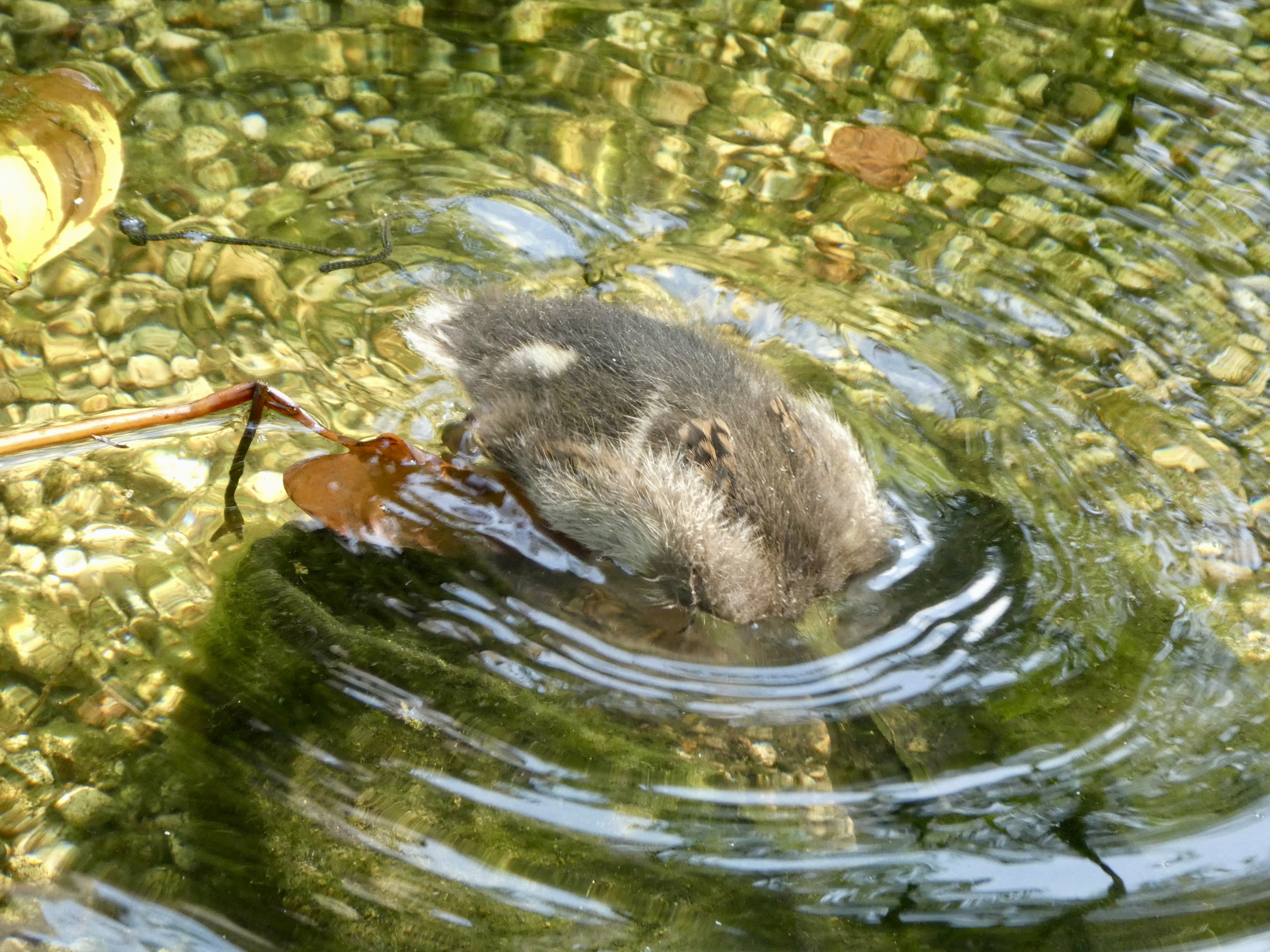
Here’s one duckling dabbling in an empty plant pot in mid-August. At this time they still had their duckling fuzz, but you can see the feathers coming in. Now they are fully feathered and fuzzless, but their flight feathers have a way to go.
And here’s a napping duckling with almost all the feathers grown in. There’s still a patch of fuzz on the butt and neck.

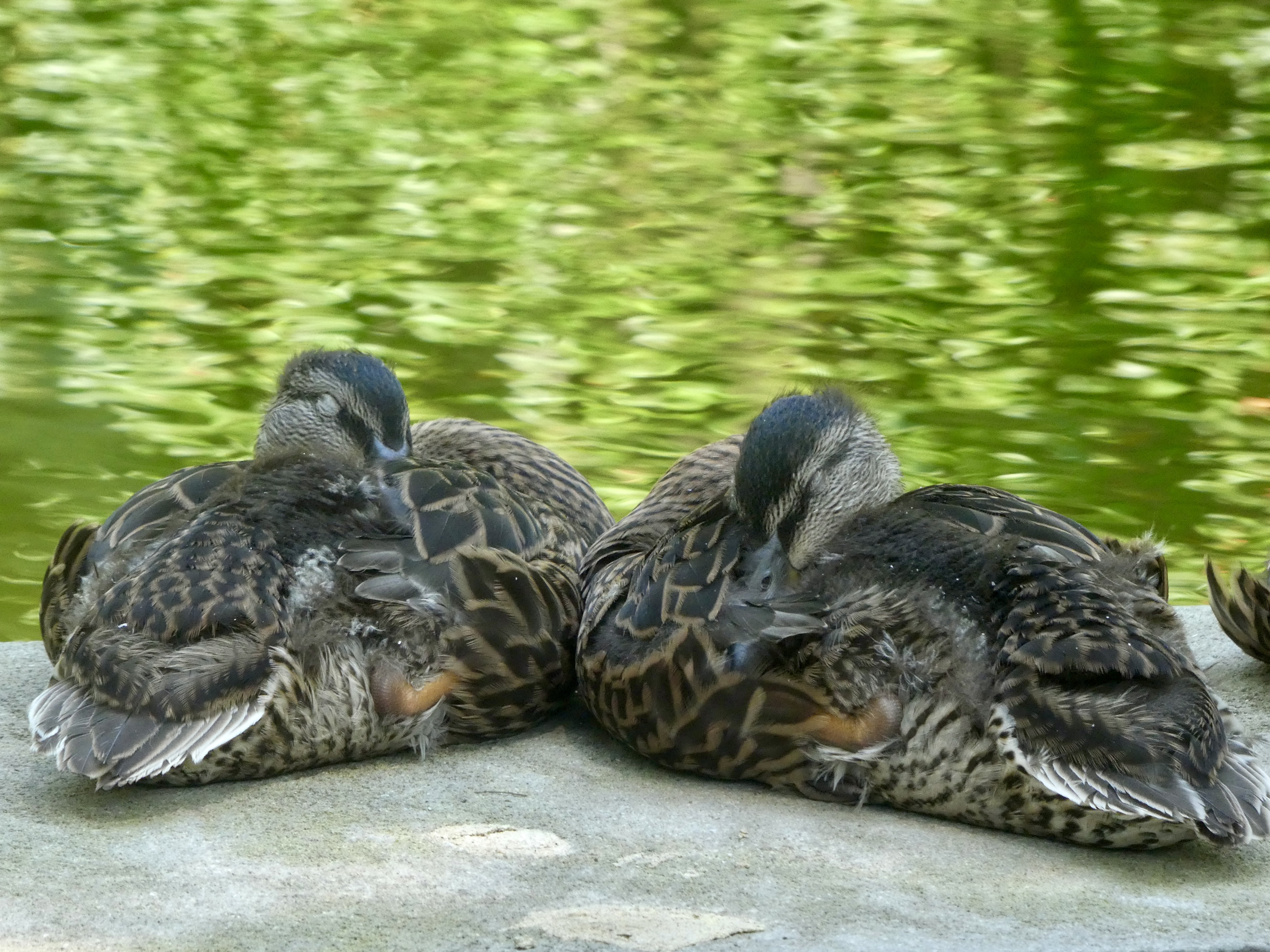
Ducklings napping on the edge of the pond. They always do this in the full group of four, and Miss Duck is among them, usually at one end of the line so she can watch them all. The “white” covering in the eye is their nictitating membrane.
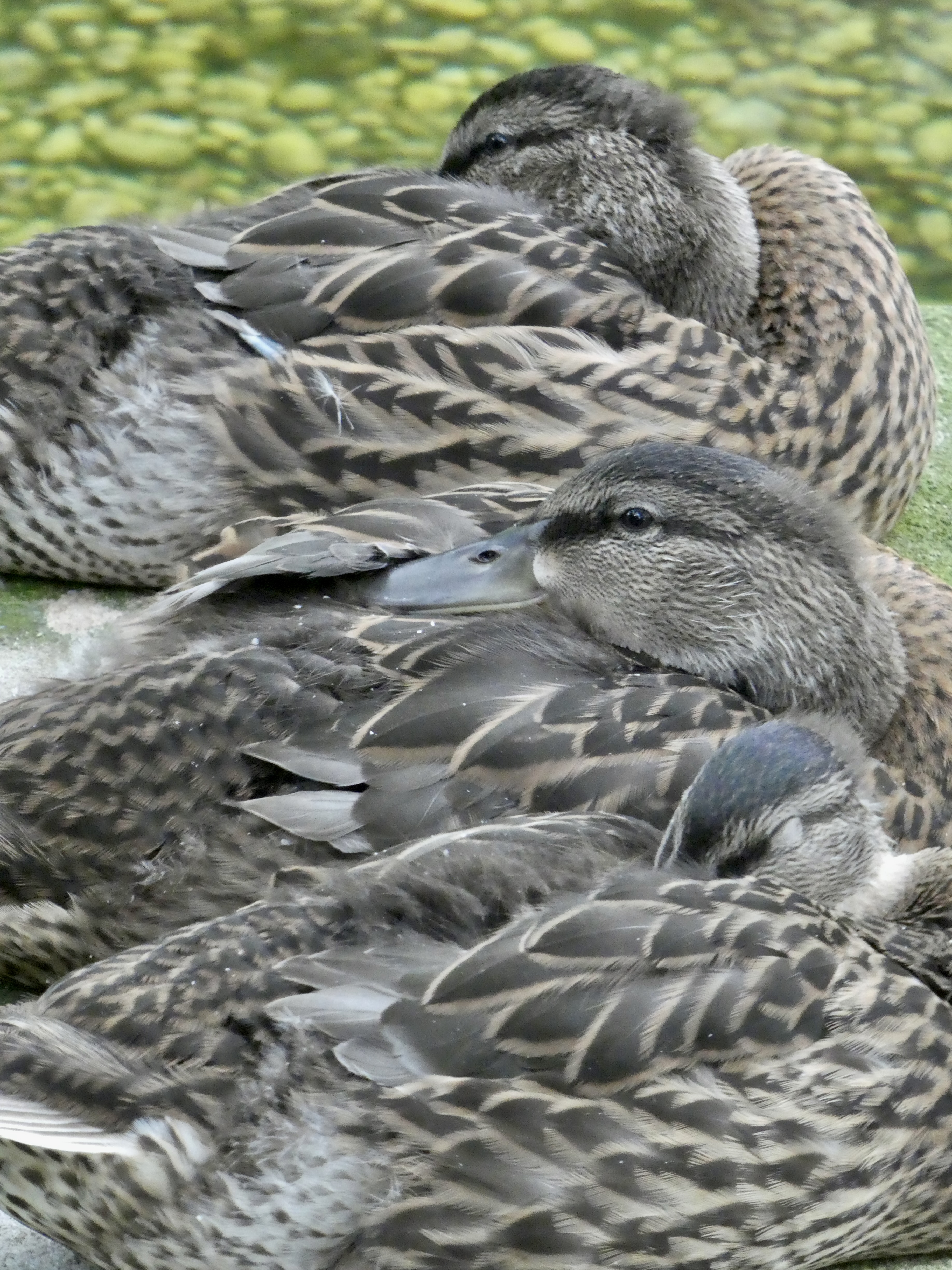
The babies are starting to develop the speculum: the patch of blue secondary wing feathers that you can see on Miss Duck’s wing above. It is one of the landmarks of attaining adulthood. I’ve circled the nascent speculum in the first photo. Curiously, we’re not sure what this speculum is for. It’s present in both sexes, but could be the result of mutual sexual selection or selection for species recognition.

The nascent speculum is clear here:

The brood heading to one of the three Sacred Rocks to rest after a meal. There’s lot of dunking and preening before they settle down. Notice that Miss Duck gets up on the rock to let the babies know where to go.
DANGER! There is a nest of Cooper’s Hawks (Astur cooperii) in the quad, and the young hawks often inspect the pond. Miss Duck sees them before we do, and she warns the babies with a specific quack. They immediately become motionless. While I’ve seen the hawks fly low over the pond, they’ve never tried to take a duckling, thank Ceiling Cat.
These photos were taken three days ago by my friend Peggy Mason, a neurobiologist on Team Duck. The tree is adjacent to the Pond, but I let Peggy take a few pictures before I chased the hawk away.
The definitive ID comes from Bruce Lyon, who looked at the photos and said, “Yes I think it’s a Cooper’s. I had to double check that it was not a broad-winged hawk. Looks like it is molting its tail so it is shorter than typical and a long tail would indicate Coopers’.”


And we musn’t forget the turtles. We now have six of them. We originally had five but one died (I was told, without proof , that its shell was cracked when students were playing Frisbee with it). But then a student found a large red-eared slider on the Midway, far from the pond, and carried it over and let it jump in. That made five again. Then a smaller red-eared slider appeared, probably another willful introduction.
They are all well and many people come to watch them. A group of women who work in the Regenstein Library regularly visit, and they’ve named all the turtles after hamburger-ish sliders, like “Buffalo Chicken Wing” and “Beef”. Unlike me, they can recognize every turtle.
A few photos of our terrapins. Here are four sunning on the rocks and doing Turtle Yoga, stretching their limbs to catch the sun:
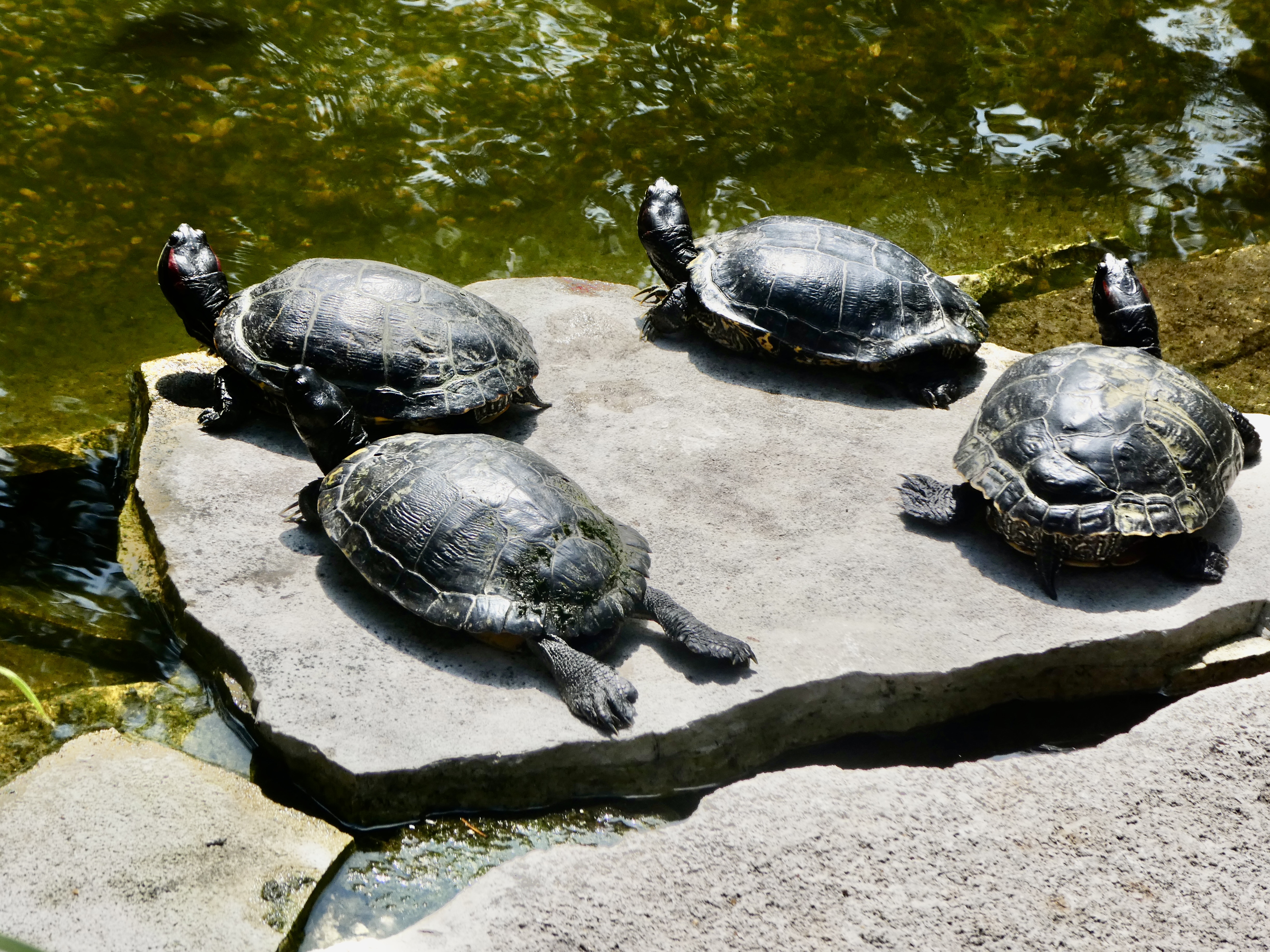
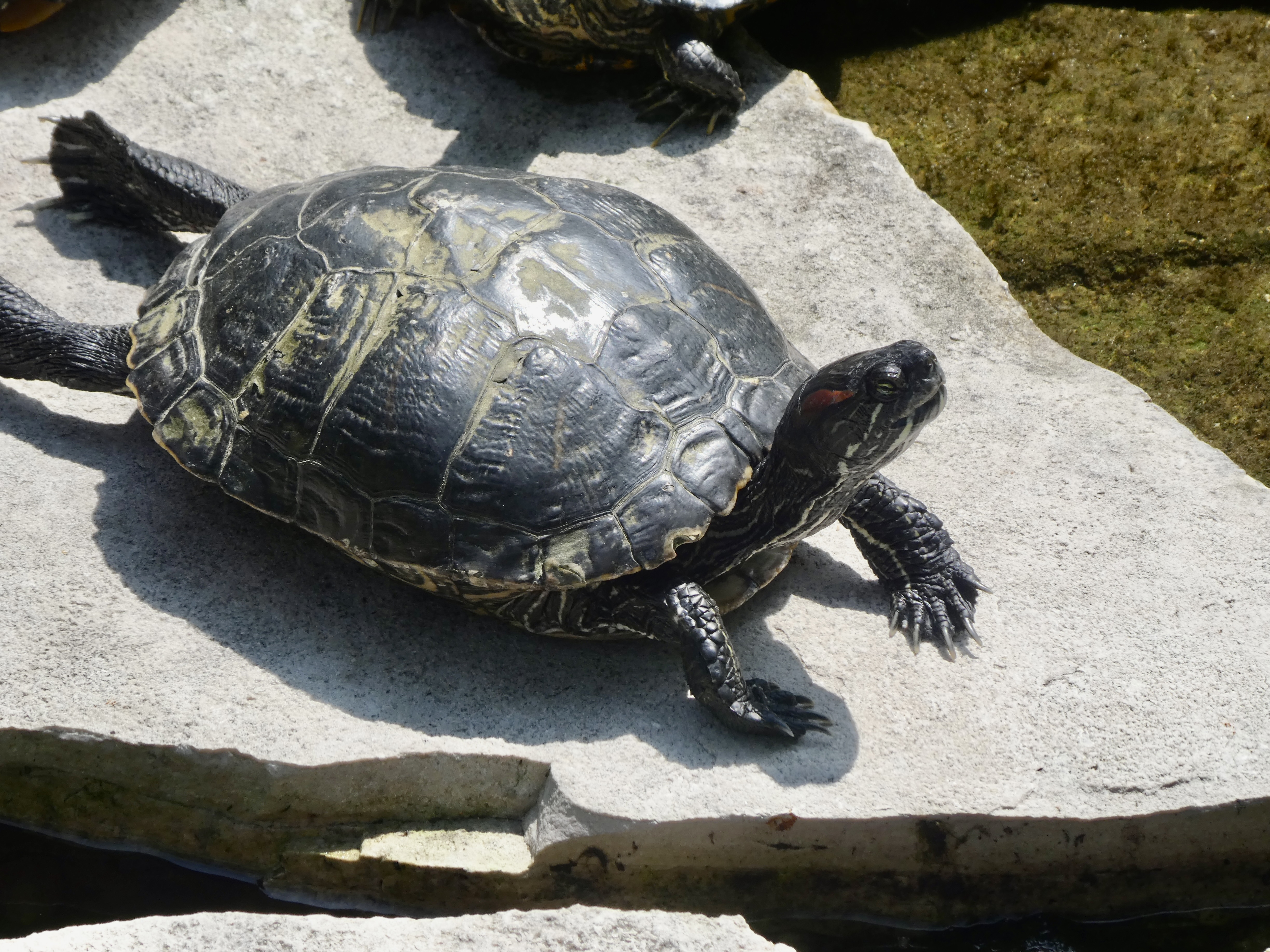
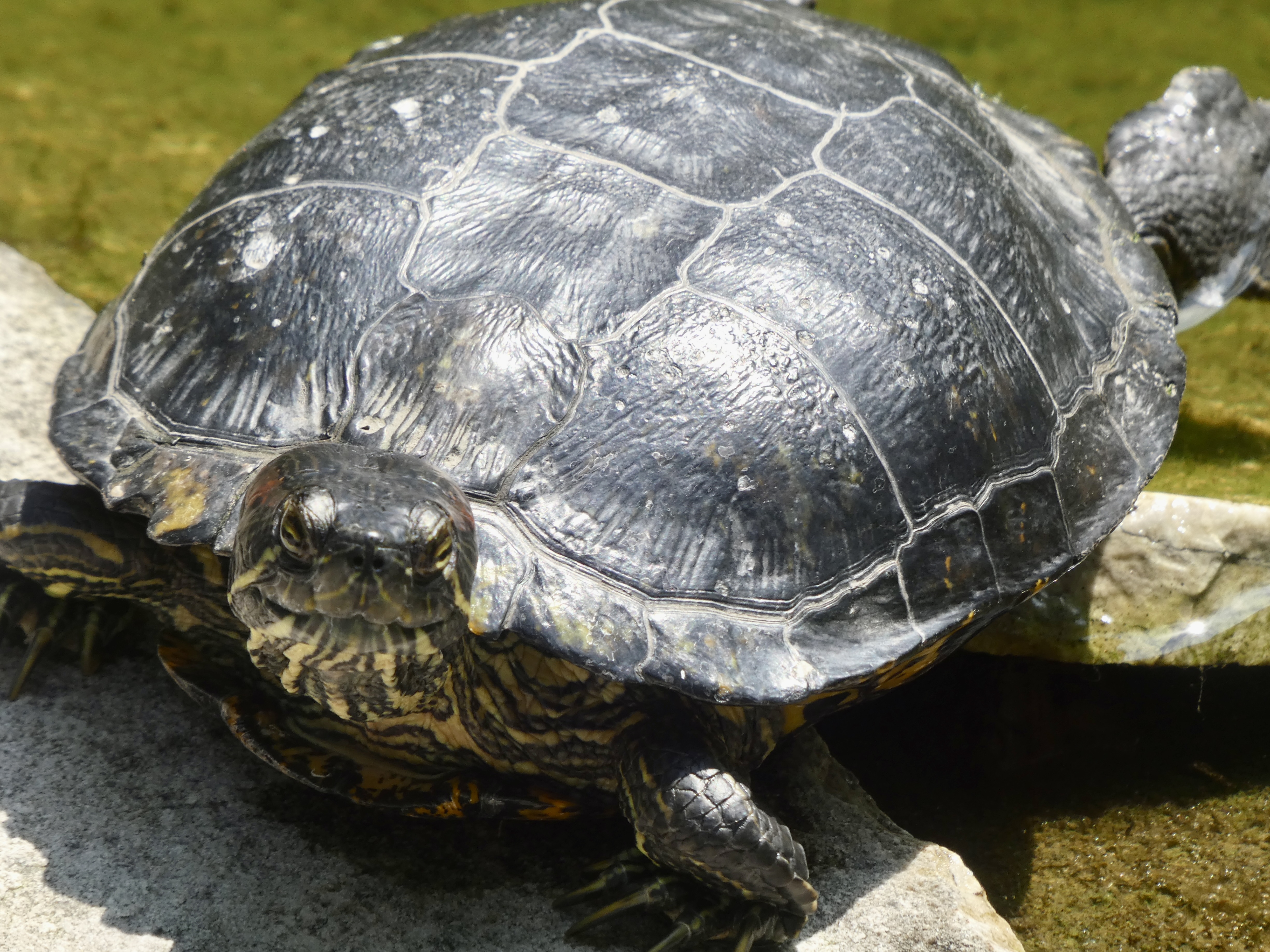
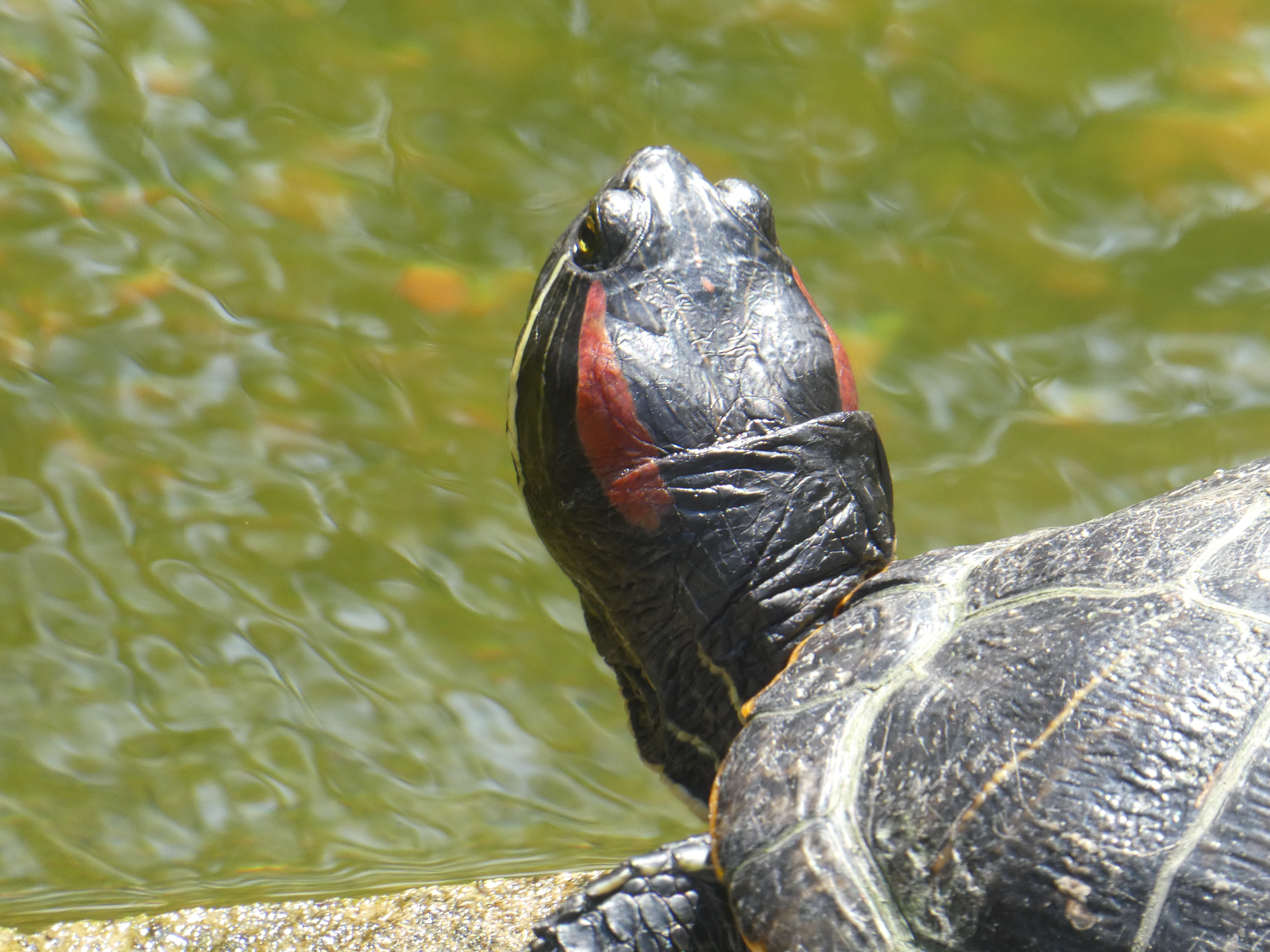
You can see why they call them red-eared sliders (Trachemys scripta elegans):
Finally, two videos showing the turtles. This first one also shows some of the seven species of fish we have in the pond. All are naturally-occurring (as are sliders and ducks), but there are four pesky goldfish that someone is going to remove and put in an aquarium.
This turtle is going after some leftover duck food, but they do get fed a healthy diet of turtle food (not by me):
This video shows how they swim around. They’re quite fast in the water when they’re in a hurry, in contrast to their slow ambling on land:
“I’m convinced that, with Mom’s prompting, this behavior prepares them for flight”
I’m no biologist, but that’s exactly what it looks like. She goes just far enough from them that they want to catch up with her, and she stays low and flies, so they get the idea that they might be able to do that, too. It looks like they try to copy her, but their wings aren’t strong enough to lift them yet.
I did a search of WEIT for pictures of the old pond, to compare to the new pond, and unfortunately, older pictures no longer show up. But I did get distracted along the way by stories of past ducks. I was shocked to read that Audrey murdered other hens’ ducklings! Quite a dark contrast to Honey, who adopted (aka kidnapped) other hens’ ducklings instead.
Next to a murderess and a kidnapper, Miss Duck is sweetness and light personified (duckified?)—though, in fairness, we don’t how she’d behave if she didn’t have the pond entirely to herself. I hope she comes back next year.
There probably isn’t much appetite for draining the pond all over again, to replace the bottom, but couldn’t they at least add more potted plants? The cost would surely be a pittance compared to what it cost to refurbish it.
Yes, I agree. They should put in a bunch more plants.
Great duck pics, and interesting information about duckling development.
As an aside, I am glad that Peggy Mason is on team duck. I have been reading her papers on cellular correlates of pain and analgesia for years. (I don’t know her personally.) She does fantastic work.
Hi Starwolf, You are so kind. Thank you. Jerry is generous in including me in Team Duck. Not because I don’t care or love the ducks. I do indeed. But because he does the bulk of the work along with others. My main contribution is writing letters/drafts.
All the best
Peggy
Although the gravel on the bottom of the pond has its limitations for now, over time organic matter from leaves and fallen branches should slowly build up a soil. Perhaps this was how “Pond 1” was started.
Great collection of photos and videos! Those babies are about to launch. I wonder what their lives will be like.
Jerry you don’t need to worry. Cooper’s hawks don’t take prey the size of ducks. They typically kill small birds, and rodents like mice. Small baby ducks could be prey, but not if they are significantly larger. Also, I don’t think that they hunt prey on water.
I have a coopers hawk nesting by my house (southish NJ, not quite pinelands) in a ginormous maple. Got to watch the (two, i think) fledglings learning to hunt this summer, and yesterday, watch an adult right outside my window on a hay wagon for about fifteen minutes before flushing a chickadee out of the hedge and chasing it down. Awesome acrobatics through the brush and trees.
This kind of thing makes my day. Thank you.
What a nice up-date on the duck family. I also love the first photo of Miss Duck with the reflection in the water.
Like Brooke, I’ve wondered why the powers-that-be couldn’t put a few more native water plants in the pond in large tubs. That would add to the asthetic appeal of the pond as well as providing more places for the “kids” to dabble. The existing plantings may have been enough for this year’s ducklings, but what happens if there are two broods (or a large one) on the pond?
What are the turtles supposed to do in the winter? They normally hibernate by burying into the mud and leaf litter in the bottom of a pond, but this pond has none of that. Will they die? I doubt they will bury themselves in the rocks.
I enjoyed every minute of this, thank you so much. What a peaceful lovely place to spend time, and with free entertainment of the highest caliber.
My theory is that the gravel bottom with potted plants was chosen to save time and money on pond maintenance. Or maybe that was obvious.
At least the Orange Moron wasn’t involved in the pond, or the bottom would be made of blue or gilt rocks.
A beautiful post. That first pic of Miss Duck is begging for a trip to Shutterfly!