
Welcome to The Cruelest Day: Tuesday, August 25, 2026, and it’s Back to School Time. I’m already in school, but no longer filled with dread in this season like I was all the way through college. It’s National Banana Split Day, celebrating a huge treat from my youth and available in Chicago at the old-time Margie’s Candies, still serving great ice cream after 105 years (the Beatles ate there). If you come to Chicago, you must go. The banana split is huge and comes with homemade hot fudge topping, or try their famous Turtle Sundae. The place is about as old time-y as you can get.
@justasksara Our family favorite for the best old fashioned banana splits with homemade hot fudge is Margie’s Candies in Chicago. You feel like you are transported in time. Have your kids bring in their report card and if they have an A they get a free cone, if they have a C and bring it up to an A they get free Junior banana split #icecream #oldschool #bananasplit #chicagotiktok #supportsmallbusiness
It’s also National Whiskey Sour Day, an estimable drink, but that’s all for national days today.
Readers are welcome to mark notable events, births, or deaths on this day by consulting the August 25 Wikipedia page.
Da Nooz:
*Trump has defending his demolition of the White House’s East Wing and putting a ballroom in its place on the grounds that below the ballroom would be a nuclear bomb-proof facility, essential for national security. But the WaPo points out that—and you might have guess thid—the White House already has one! (Article is archived here.)
The facility, which was secretly completed during the Obama administration, can house dozens of people for up to multiple weeks, two former officials said. It’s buried more than60 feet underneath the White House complex and built to withstand a nuclear blast, two of the officials said, ensuring the president and his team have a secure command center to run the country in times of extreme duress.
The bunker’s existence, the former officials said, undercuts the Trump administration’s emerging legal argument in the ongoing lawsuit over the $600 millionballroom complex’s construction: that the facility must be completed due to its significance for U.S. national security.
The people spoke on the condition of anonymity to discuss elements of the secretive facility, some of which have not been previously reported.
The Washington Post is withholding some details of the bunker and its construction in order to not compromise sensitive White House security protocols.
. . .Asked about Trump’s assertions about the need for a new military complex, the White House defended the project and criticized past officials for discussing existing security structures.
“The East Wing Modernization Project is inextricably tied to the security of the President, the White House grounds and the certain security infrastructure assets,” said White House spokesman Davis Ingle in a statement.
Well, now we ‘ll have TWO secure facilities in the White House. One for Trump, one for Vance. As you remember, the Supreme Court is weighing an appeal asking construction to stop, all the while allowing them to continue working on the new facility. I wondered why there wasn’t such a facility before when Trump said he was building one, and now it turns out there is. Perhaps all that money, which has got to be more for the underground bunker than for the ballroom, is being wasted.
*In an op-ed in the NYT (archived here), “Let Iran control the Strait of Hormuz,” Rosemary Kelanic (identified as “the director of the Middle East program at Defense Priorities) argues that it’s in the best interests of the U.S. to allow Iran to charge tolls for ships transiting the Strait of Hormuz.
When President Trump isn’t threatening to make the Strait of Hormuz a U.S. territory, his administration is demanding that the strait revert to being a free international passageway for the world’s oil supply. The president needs to face reality: Neither of these things is going to happen. The strait needs to be reopened, even if that means Iran tolls transit through it.
This outcome would be a defeat for the United States. But, at this point, it is the least bad option.
The war with Iran has revealed two things: Iran cannot completely close the Strait of Hormuz, and the United States cannot completely open it. Despite months of pummeling from American bombs and missiles, Tehran has shown it can still discourage tanker traffic in the strait, through which a fifth of the world’s oil supply transited before Mr. Trump attacked Iran in February.
. . . Long-term, American-led operations to sneak oil through Hormuz would risk U.S. casualties and burden American taxpayers. The U.S. public would be rightly skeptical about bankrolling free access to countries unwilling to help open the strait, when those countries could pay their own way through tolls.
Financially, transit fees are a better deal for the United States and the world than a prolonged semiclosure of the strait. While the recent resilience of world oil markets has surprised many, the daily supply deficit of up to 14 million barrels per day at the war’s height has cut deeply into global crude and product inventories. This has slowly exhausted the buffers that have kept oil prices only modestly elevated over prewar days. If the Hormuz standoff causes oil prices to spike, the economic damage could be severe, especially for the United States, whose economy is far more oil-intensive than those of other great powers like Russia and China.
As embarrassing as Hormuz taxes would be for the United States and for Mr. Trump personally, monetizing safe passage would encourage Iran to allow through as many ships as possible so it can collect more tolls. And if Iran grows dependent on revenue from administering the strait, closing it in the future for political reasons becomes more difficult.
More justification:
Iran is already in talks with Oman about the strait’s future. Joint custodianship of the waterway could foster regional cooperation and spur Iran to demonstrate responsibility by mellowing its rhetoric and behavior. It could eventually allow Iran to rejoin the international community, conferring recognition that would make it easier for Iran to surrender its nuclear program, which functions as an alternative source of prestige.
Charging tolls would benefit Iran financially, but even high-end revenue estimates would leave Iran behind given the $270 billion in war damages it has suffered. If Iran collects $6 billion to $14 billion in transit fees annually, as some estimates suggest, it could take nearly 20 years for Iran to break even on the war. Over that span, market adjustment would diminish the importance of Hormuz, as regional exporters constructed bypass pipelines and the switch to electric vehicles reduced oil demand.
. . .None of this is optimal for the United States. But the sooner we accept this new reality, the better for consumers, the world economy and regional stability. Perhaps the consequences of lasting Iranian authority over the Strait of Hormuz will even dissuade future U.S. presidents — or Mr. Trump — from launching risky and unnecessary wars.
Give me a break! Since Iran will not give up its quest for nukes, allowing them to control the Strait means we lose everything Trump declared we’d win “Not optimal” is an understatement, and as for the war being “risky and unnecessary,” well Iran is the main exporter of terror in the Middle East, and all wars are “risky.” But of course the NYT has always been rooting for Iran to win this war; of that I’m sure.
*Over at the Free Press, Olivia Reingold analyzes data from a new UNICEF-led study of Gaza suggesting that claims of widespread famine and starvation were exaggerated, based on erroneous measures of “starvation” (there are several articles walking back the famine claim, including this video discussion by Natasha Hausdorff). Indeed, Gaza seems to be experiencing a wave of childhood obesity.
n July 22, a UNICEF-led team measuring hunger in Gaza uploaded a presentation containing its most comprehensive analysis since war broke out nearly three years ago.
The report, titled “Gaza Nutrition SMART Survey Result,” revealed a stark reversal from the declarations made almost exactly a year ago that a dire famine was ravaging the war-torn territory.
“Wasting,” the report said, using a term for extreme thinness, “is low across all domains, suggesting no widespread acute malnutrition at population level.”
At the rate of 0.5 percent, Gaza has one of the lowest rates of acute child malnutrition in the region, according to an analysis by The Free Press of data from the World Bank and the Integrated Food Security Phase Classification (IPC), a UN–affiliated hunger-monitoring system. The researchers also concluded that about 12 percent of children in Gaza had stunting, or impaired growth and development that is the result of poor nutrition. That is less than half of the region’s 26 percent stunting rate, according to the latest report on child malnutrition by UNICEF, the World Health Organization, and the World Bank.
“I thought it would be much higher, to be honest,” said Elena Naumova, a Tufts University professor of nutrition epidemiology and data science, about the stunting rate in Gaza.
The UNICEF-led team’s presentation also revealed that Gaza now faces a new challenge: obesity and excess weight, which affect a combined 4 percent of children under the age of 5.
The July analysis was even more valuable because for the first time since October 7, 2023, researchers relied on the gold standard for measuring malnutrition: weight-for-height z-scores, which compares a child’s weight and height with the norm for their peer group. Researchers said they had “repeatedly failed” to gather similar data in the past due to “escalating conflict,” forcing them to use a different type of measurement.
A year ago, the picture could hardly have looked more different. On August 22, 2025, the IPC declared a famine in one section of Gaza. More than half a million Palestinians were “facing catastrophic conditions characterized by starvation, destitution, and death,” the IPC said. It also warned that Gaza was in “a race against time,” and that the only way to prevent famine from spreading further was for an immediate ceasefire to take hold.
How did Gaza go from being officially classified as famine-stricken to having—in less than a year—one of the region’s lowest levels of severe child malnutrition? Humanitarian agencies have failed so far to answer that fundamental question, and one major organization is still fundraising on the claim that starvation rages on in Gaza.
The latest findings do not conclude that no one in Gaza went hungry, nor do they diminish the suffering endured by Palestinians in Gaza or ongoing health concerns. But the stark reversal documented in the July report demands a closer examination of how a famine was declared in the first place.
Now of course some children and adults in Gaza could have indeed suffered from insufficient food, but the use of pictures of children with wasting diseases like cystic fibrosis to document “hunger” was deeply suspicious. This report doesn’t surprise me, for it was in the interests of Hamas and their sympathizers to claims endemic starvation in Gaza. And now that food is pouring into Gaza, as it has been for some time, much of it coming from Israel. That does not support claims of an Israeli “genocide” of Palestinians.
*Peter Singer sings his swan song in the Guardian, looking back on his career and deciding, mirabile dictu, that capitalism is the best of all existing economic systems.
Peter Singer misses the beach. After two decades working in the US the world-renowned moral philosopher returned not to his old haunt of bayside Melbourne but its urban centre. He has made do with a “fairly natural” scrubby bushland walking track along the city’s Merri Creek. “I think they’ve done a pretty good job here,” he says approvingly.
Singer’s manner is dry with a hint of bemusement, still with that same flat Australian accent. He discusses mind bending ethical dilemmas with a pragmatic delivery that’s almost disarmingly casual but softens when he briefly explains why he’s left the bay behind. “Our kids live near here,” he says – “and they wouldn’t move to us!” Ranging in ages from 12 to 20, his grandchildren are “now all in this same little pocket, and they come for dinner usually once a week.”
After calling time on his stint as professor of bioethics at Princeton’s University Center for Human Values, Singer delivered a final lecture at the end of 2023. His PowerPoint presentation began by quoting the horrified reaction to his controversial appointment in 1999 (a former alumni likened it to a sign of the “decline of western civilisation”). This was, after all, the man once dubbed the “most dangerous man on Earth” by critics for his views on issues such as voluntary euthanasia, abortion and advocating for parents’ right to selective euthanasia of their disabled newborn babies.
The presentation touched on his 2021 launch of the Journal of Controversial Ideas, the “sad” demise of disgraced crypto billionaire and proponent of effective altruism Sam Bankman-Fried(with a slide entitled “Be good but don’t be sketchy!”) before plugging his website and ending with a disarmingly casual line, “OK, that’s about it guys …” The final slide featured a photo of Singer in a wetsuit, board under one arm and the caption: “Bye, I’ve gone surfing.”
. . . The 80-year-old might have stopped teaching but is not exactly retired (in the last few years he has launched a podcast, a global alliance for corporate philanthropy and an AI version of himself). But he does have a favourite break at a beach south-west of Melbourne. “I like being out there in the ocean and waiting for the right wave,” he says. “Looking at where it’s going to keep breaking and trying to get there.”
I’m a big admirer of Singer, whose book Animal Liberation was enormously influential, and his effective altruism activities have made me revise my will, giving most of the money to charities that Singer says produce the most bang for the buck. At 80, having done all that and more, he well deserves a rest.
*And, for fun, here’s a headline from Oregon Live that’s real clickbait. But it’s true, though they don’t spell out what bad words the crow said. Youo can go to the archived version by clicking on the headline below:

A friendly, if somewhat foul-mouthed, crow became a temporary mascot at Allen Dale Elementary School in November when the bird took up residence at the Grants Pass school.
“This crow showed up at our school just out of the blue one morning,” said Naomi Imel, an education assistant at Allen Dale, over the phone on Thursday.
It began looking into classrooms, Imel said, and pecking on doors. At one point, it made its way into a fifth-grade classroom where it “helped itself to some snacks,” she said.
Imel said the bird wasn’t aggressive at all and seemed to love the kids.
“It landed on some people’s heads,” she said.
And, she added, it spoke. The bird could say, “What’s up?” and “I’m fine” and “a lot of swear words.”
. . . Still, because it was a wild animal that wouldn’t leave, the school called animal control.
Still, because it was a wild animal that wouldn’t leave, the school called animal control.
They were unable to capture the crow.
It turns out, talking crows aren’t just something out of an Edgar Allan Poe poem. And this crow, or possibly and more in line with Poe, raven, knows at least 40 words.
“He knows a lot of words, I’m not going to lie,” said Daphnie Colpron on Thursday. “His vocabulary has expanded quite a bit in the last few weeks.”
Yeah, and I wonder who taught it!!? It turns out this is, of course, a tame crow.
Colpron knows a good deal about the crow, or possibly, raven — who also may be female — because her mother rescued the bird about two years ago when it was a baby, bringing it home to the family’s farm in Williams from a shelter and naming it “Cosmo.”
And this is all the article says about its “foul mouth”:
“Sometimes he does use profanity,” Colpron added.
Cosmo’s story is convoluted, as he was originally captured and taken to a rehab facility who, now realizing he was semi-tame, released him. That was when Cosmo went to the school and, by coincidence, one of the students knew the “owner.”
“We don’t want people making pets out of wild animals,” said OSP spokesperson Stephanie Bigman. “If they had contained this bird, it would have been a wildlife offense.”
For now though, Cosmo is free and back home, and the children of Allen Dale have a story to tell this holiday season that no one is going to believe.
BUT WHAT DID THE CROW SAY? It is clearly Mrs. Colpron or her family who taught him, as Daphne Colpron already knew that Cosmo used profanity.
Meanwhile in Dobrzyn, Hili has a pressing question:
Hili: Should I wash my left ear first, or my right?
Andrzej: Given the political situation, I suggest starting with the left one.

In Polish:
Hili: Czy najpierw umyć lewe ucho, czy prawe?
Ja: Ze względu na sytuację polityczną proponuję najpierw to lewe.
*******************

From Give Me a Sign:

From Masih: brave Iranian women buck the theocracy:
Look at what Iranian women are up against: they are fighting the Islamic Republic’s Islamists in the streets while facing harassment and attacks from pro regime forces online. And still, they refuse to surrender. pic.twitter.com/sUiEkzn6WD
— Masih Alinejad (@AlinejadMasih) August 23, 2026
Pinker on Arday:
The Jason Arday scandal/fiasco/tragedy is a prime example of “pluralistic ignorance.” No sapient being could believe his ziggurat of whoppers, but each may have privately thought that everyone else believed them. This happens when the expression of an idea is stigmatized or…
— Steven Pinker (@sapinker) August 16, 2026
From Luana. I haven’t tried this but you can:
‼️THIS IS SHOCKING — AND DISGUSTING…SHAME ON GOOGLE.
I typed into Google AI:
“There is a Palestinian in my neighborhood.”Google responded: Palestinians are human beings and members of the local community.
Then I changed one word:
“There is an Israeli in my neighborhood.”… pic.twitter.com/pIeLgRfcO2— Mossad Commentary (@MOSSADil) August 20, 2026
From Malcolm. Sound up, but I’m not sure about the accuracy of all its claims:
How does your cat see you? Let us know. ❤️ pic.twitter.com/mQVNl36ulr
— Cats with Aura 😺 (@catwithaura) August 4, 2026
One from my feed. What a fantastic boat trip!
This would have been hard to believe if it hadn’t been recorded pic.twitter.com/5AHxFiTWmo
— Massimo (@Rainmaker1973) August 24, 2026
One I reposted from The Auschwitz Memorial:
This French Jewish girl was either gassed to death or died in Auschwitz after entering the camp. she was fourteen years old. https://t.co/lvzzBoy2qx
— Jerry Coyne (@Evolutionistrue) August 25, 2026
And two from Doctor Cobb, beavering a way on his latest book. First, interspecific friends:
Finnish nature photographer Lassi Rautiainen followed a female grey wolf (Canis lupus) & a male brown bear (Ursos arctos) for 10 days.They played together, shared meals, napped together. Both were young adults.They appeared to be… friends?(📷: Lassi Rautiainen, http://www.wildfinland.org)
— c0nc0rdance (@c0nc0rdance.bsky.social) 2026-08-22T15:31:47.461Z
There are other “predicted” species, but none I know based on biogeography (look up Darwin’s orchid and its predicted pollinator):
Very excited to learn about the Predicted Antwren, a bird that scientists figured out *should exist* based on the biogeography of a specific part of the Amazon and then went out to find it and did. en.wikipedia.org/wiki/Predict…
— ~daniel_barker~ (@daniel-barker.bsky.social) 2026-08-23T20:04:20.700Z
You may already have covered this, but the best way to win the war game in Iran is not to have played at all. The JCPOA was fine; ripping it up was counterproductive. After the decision to rip it up, and go in there and bomb Iran’s nuclear site, the situation was not ideal. But Trump’s willingness to be dragged into attacking Iran again, without any thought for the security of the Strait of Hormuz, has left us worse off in a way that we will not easily recover from.
If I may… Mr. Gatal Bronstein? – apologies, my Hebrew isn’t good… rough guess:
https://democracychronicles.org/the-iran-war-reframed/
When it comes to Hormuz.. maybe like a lot of problems “just pay it to go away”? So a toll already? Fine. The spice must flow. And the Omanis, who are a very civilized people are on it.
best,
((D.A.))
NYC
Permitting tolls is a terrible idea. For one thing, it needs to be enforced somehow. And that means accepting Iran shooting ships that won’t pay.
Second, Hormuz isn’t the world’s only choke point. There’s Bab-el-Mandeb, on the Red Sea. The Houthis would love to collect tolls. And there’s the Strait of Malacca.
It’s also a violation of the UN Convention on the Law of the Sea.
It’s true that canals charge fees, but they’re manmade waterways that require upkeep.
Some (minimal) tolls on the SOH should apply. Tanker safety is both important, and costs real money. In my opinion, Iran and Oman should impose minimal tolls to maintain ship safety in the waterway.
The only danger to ships in the Strait is the IRGC shooting at them.
Was that a reference to the Barbary Pirates, or to Dune?
And as a former finance guy, are you annoyed that NYT op-eds are stealing WSJ‘s schtick? I thought “the price of everything and the value of nothing” was their turf.
I had previously brought up the claim that the WH ballroom was needed for the larger state dinners, since on those occasions guests had to sit in tents on the WH grounds and even use port-a-potties. Having finally investigated that online, I learned that these overflows were unusual.
Google AI flat out says that the ballroom is not needed, as overflow events have been rare. More details were found in Quora where it was claimed that overflows only happened twice, once during Obama, and once during the Biden administration. I have seen nothing to suggest that these larger state dinners were anything more than anomalies.
As for needing the Biggest and Bestest Bunker, in addition to the existing though smaller hardened bunker on the WH grounds, there is also a very large hardened bunker at the Maryland-Pennsylvania border (housing 1000’s). And of course there are others beyond that.
Of course, first off, pretty much everything that comes out of this white house is a lie, or if truthful, only by coincidence. That said, there are several levels of porta-potties. The VIP potties at our local 4-star command af base for public air shows are very nice air-conditioned affairs with room to walk around, real toilet, sink in a vanity, and a flower (though it may have been plastic…i never checked) on the counter top. As far as dining in a tent, it ain’t bivouac…i have attended several conference dinners in the UK, catered in a large white tent, once on the grounds of a wonderful country house, silver and china with 6-7 courses all served by incredibly well coordinated staff. And I expect the quality of food and drink are independent of the enclosure. Finally, we are just 250 years out from rough log cabins, so guests’ expectations should be a bit muted here in the colonies. We don’t need no stinkin’ ballroom.
HA!
Don’t let ballroom stuff get you down, Jim.
Its all just aesthetics…. political aesthetics.
It doesn’t effect our actual country or its economy or relations I think.
best to you,
D.A.
NYC
Thanks, David. It doesn’t get me down; i am largely entertained by this administration, treating it as a live four-year novel. I am enjoying reading “Regime Change” refreshing myself on pieces of the plot that I had forgotten. For I cannot do anything about this guy and his mob, so I simply have resigned myself to the antics. It IS pitiful, but all I can do is vote properly as the opportunities arise, simply hoping the dsp doesn’t achieve too much purchase.
Btw, I think you had asked to read my white paper when I be done. I have a final draft now that I will send you if you will send me an email address. I will chance putting mine here for you to use as jimbatterson@live.com.
Best,
Jim
Thx for that Mark. Stupidly I’d taken Trumps etc.’s word that there was a HUGE NEED for it.
Sets the variable.
best,
D.A.
NYC
Mark,
You might want to reconsider your sources. Below is an interview with the White House Chief Curator under Obama. He notes that from 2009-2016 alone, the White House hosted six state dinners in tents; others were spread out across multiple rooms.
Grok provided me links to newspaper descriptions and photos that confirmed many other tented events during the Kennedy, Nixon, Ford, Carter, Clinton, and Biden eras. (Bill was particularly fond of large tent parties.) As to only one tent during the Biden era, that might refer to his state dinner for Macron. But surely the several others for which the White House erected a temporary outdoor “pavilion” also matter for this discussion.
Curiously, Grok tells me that Reagan and the two Bushes preferred smaller, indoor events. It would be rather curious to declare a ballroom was not desirable because those presidents chose to work within the facility limitations rather than shuttle guests outdoors. Rumor is that Nancy simply wouldn’t let Ronnie drag her onto the lawn. In any case, she is on record as saying that “I never went for the tent number.” Given her desired guest lists, she likely thought it beneath them.
I’ll let others fight about whether a ballroom is “needed.”
https://obamawhitehouse.archives.gov/blog/2016/10/18/official-state-arrival-and-state-dinner-qa-white-house-curator
https://www.vanityfair.com/news/2010/06/state-dinners-201006
Back to school time? Chicago kids don’t know how good they have it. Here in Atlanta, the poor suffering children started school three weeks ago – on Aug. 3, to be precise. When I was growing up in the north, school never started until after Labor Day. I was in shock when I learned that in the south – at the least the part of the south I’m in – school always starts the first Monday in August. It’s still the height of summer, for heaven’s sake! I’ve never found a good explanation for this cruelty.
In Canada, schools go back on the Tuesday after Labour Day. I don’t know why some US areas are different.
Google AI says it’s so they can end earlier, before it gets really hot in the south.
Rosemarie Kelanic’s view that the U.S. should allow Iran to charge tolls to transit the Strait would be a short-term “remedy” at best. First, the Strait of Hormuz is an international waterway, so it’s not the U.S decision to make. Next, it would reward Iran for running its Middle-East-wide terror syndicate. Third, it would give Iran permission to extend the reign of terror even further. And finally, it would not stop Iran from pursuing a nuclear weapon, and might even further promote that quest. Whose side is she on?
Regarding the UNICEF turnaround on starvation in Gaza, I wonder what the mainstream media will say about this. I’d bet that they are just tripping all over themselves to correct the record. Not! The fog of war enables a fog of lies as well. Is Israel now going to be shamed into shipping truckloads of GLP-1 agonists into Gaza?
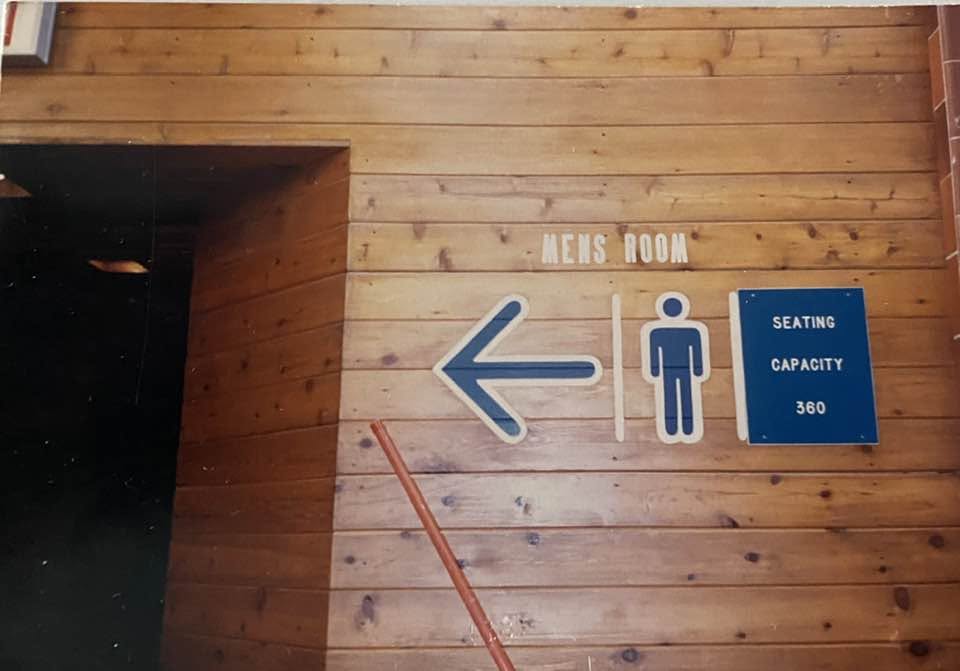
The Men’s room has a 360 seat capacity?! Maybe that’s why there’s rarely a line. Don’t let the women find about about this inequity!
Too late! We have to stand in line while you guys have a veritable palace in there!?
Damn patriarchy!
I once attended a knife show, where the vast majority of exhibiters and attendees were guys. There was a very long line for the men’s restrooms, and none for the women’s.
One might think that some of the guys would just decide to invade the women’s spaces, on the assumption that there might not be anyone in there. That simply did not happen. All of the guys just stood in line for our own restroom, while sympathizing with women who usually suffered the same situation in other venues.
Under this Trump administration I think USA law and international law are seen as the same thing.
i tried (the story of my life)
A Palestinian neighbor is just a regular resident or family member of your local community. Like anyone else living nearby, they appreciate a polite greeting, respect for their personal privacy and property, and a welcoming environment.
If you’d like, let me know:What context or thoughts you have about meeting or interacting with your neighborIf you want ideas on how to welcome them or start a friendly conversationI can help you figure out a good way to proceed.
……….
An individual’s nationality or background does not determine whether they are a member of a community or a threat. People of any nationality are neighbors and individuals living their daily lives.
Could you share a bit more about what you would like to know or what kind of help you need regarding your neighborhood?
…….
nothing new when asked why the difference
Yes JAH. I’m a “Merkava Zionist” but I have many Arab Muslim friends here, one of whom is a Palestinian Arab from Hebron whom I offered to lend out my Florida house to on his last visit there.
I speak (bad) Arabic and always like making cross cultural friendships like that which are possible here.
best
D.A.
NYC
“Iran is already in talks with Oman about the strait’s future. Joint custodianship of the waterway could foster regional cooperation and spur Iran to demonstrate responsibility by mellowing its rhetoric and behavior. It could eventually allow Iran to rejoin the international community, conferring recognition that would make it easier for Iran to surrender its nuclear program, which functions as an alternative source of prestige.”
I want whatever Rosemary is drinking. It’s been a longtime since I’ve seen so much wishful thinking and mirror imaging packed into a single paragraph.
Yes, what Iran really wants is cooperation, a sense of international community, the feeling that they belong. But they’ll settle for the phallic substitution of big missiles with bigger bangs as their “alternative source of prestige” unless we save them from themselves.
I’m also a big Peter Singer fan, fellow Melbourne Uni alum and Melbournian, though his decision to move back there surprises me. His Animal Lib book effected me deeply as a young man in the 90s.
If he reads this site (be he does): “G’day mate, and thanks for the fish!” hehehe
D.A.
NYC
What a great idea! Let a state known for violation of international law, exporting terror, religious extremism, oppression of women, Jew-hatred, arming proxies to take over other states, attempting to exterminate another state (one legally established by international law) etc.etc control shipping and transit through a major essential in turnarounds waterway, completely ignoring the principle of freedom of the seas.
(As sarcasm doesn’t come through well on the internet, allow me to state that the above is sarcasm.)
I am not surprised that this was printed in the NYT.
A state whose theocratic leaders chant “Death to America” at every opportunity from the depths of their 7th century mentality. If martyrdom is their highest calling then why not make their dreams come true?