
I haven’t been able to post duck photos or videos for a while as I changed computers (orders of the University, which is a bit authoritarian about such things). Anyway, a crack IT guy helped me restore things, and I have some pictures and photos to post. More will be coming as I get up to speed. But today I want to show you how much my ducklings—or rather, Miss Duck’s ducklings—have grown. Today is their “monthiversary”, as it was four weeks ago today, on Saturday, July 18, that they hatched, and they first entered Botany Pond the next day.
Miss Duck laid five eggs in her nest on the ground, situated in a niche of the Student Union. I learned of her nest from a student, who reported it to me two days before hatching. It was bloody hot then, and I left a pan of cold water by her for two days. I hadn’t seen Miss Duck for the entire month she was nesting, and if she came to the pond for food or water, I didn’t see it. She must have had a rough 28 days of incubation, which is one reason I now spoil her and her brood.
Miss Duck laid five eggs, and four of them hatched. I took the unhatched one and put it under a heat lamp for several days, but no dice. The egg must have been infertile. But she led four healthy babies all the way around an adjacent building and into Botany Pond, where I first saw them early Sunday morning, July 19. By then the drakes had gone, and I had great hopes that this brood would stay until fledging. And—knock on wood—so it will be.
Here are the four on July 20, only one day after they came to Botany Pond. They were adorable. I treasure this as one of the best duckling photos ever. (Click all photos to enlarge them.)
They are still adorable but now, four weeks later, they are going through what we call their “awkward teenage phase”as they shed their duckling down and start growing feathers, In another month they should be about ready to fly.
They are all healthy and vigorous, and Miss Duck (named because we ran out of monickers) has proved to be one of the best duck mothers I’ve seen—right up there with Honey the Duck.
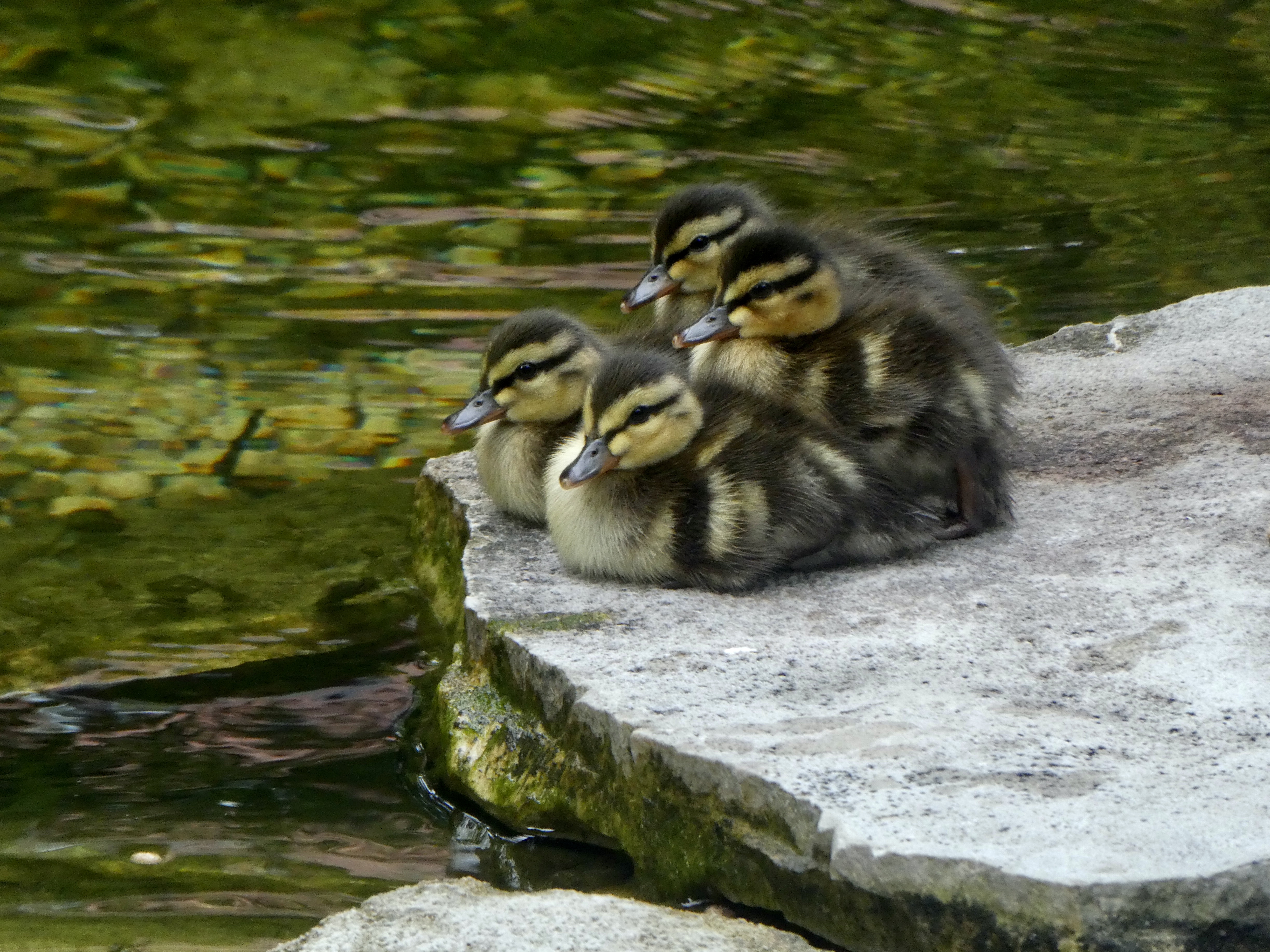
Here is a photo taken yesterday, with mom and brood sacked out on the edge of the pond after lunch. Miss Duck is keeping guard nearby, but is also catching a few winks (she doesn’t sleep for more than a minute or so before waking up to check on everything). You can see the mixture of feathers and down on the babies: they’re starting to look like miniature ducks.
I often wonder, when I see Miss Duck and her brood, if she feels a kind of happiness or satisfaction, or if she’s just acting according to her genetic dictates, and feels no emotion. We’ll never know, but I like to think that if her brood were removed or disappeared, she’d feel bereft. That itself indicates a kind of satisfaction with taking care of her babies.

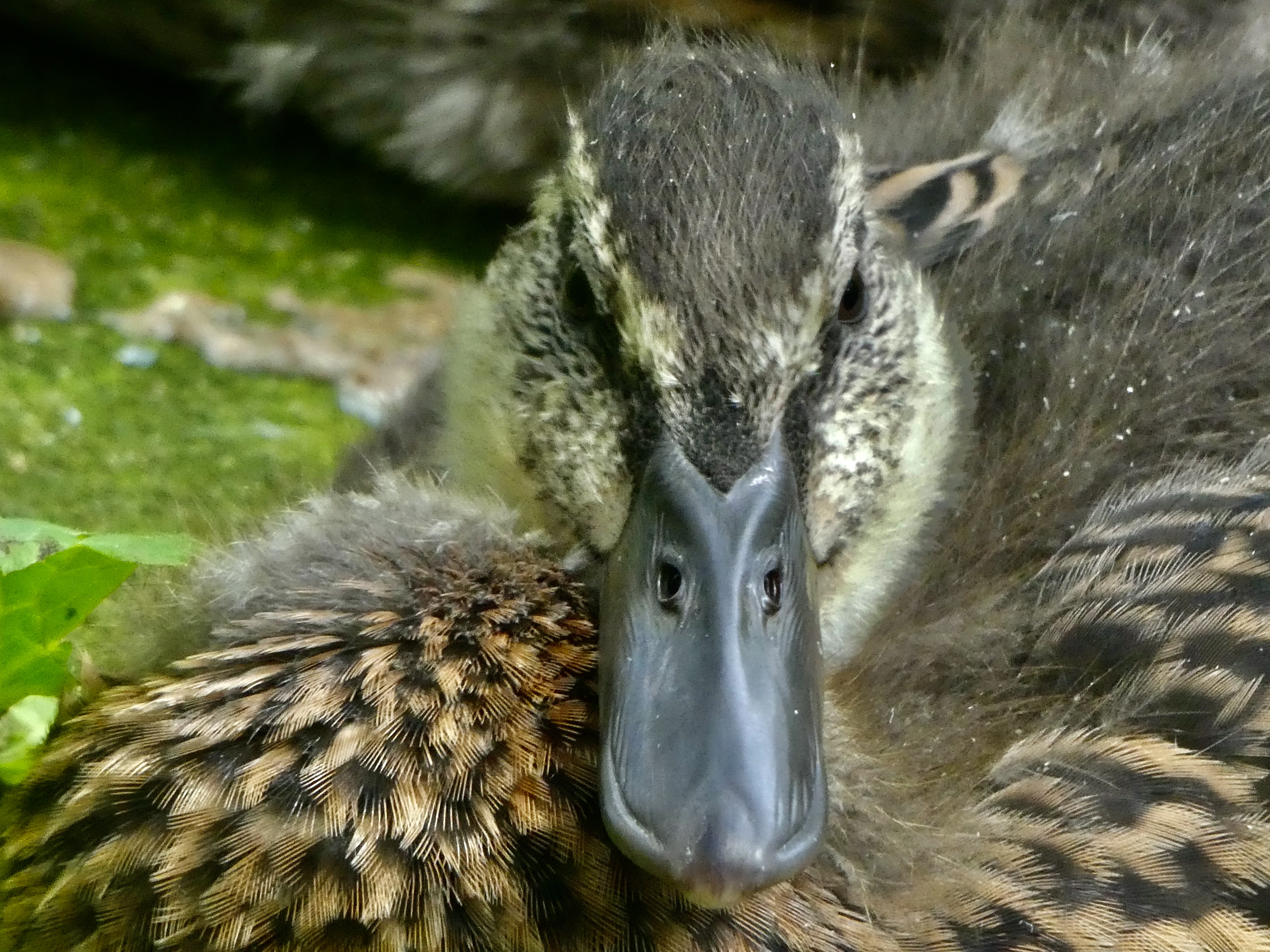
Here’s a full and tired duckling. Note the stretched leg and the tiny feathers on breast and wing:

Head shot of the baby above:
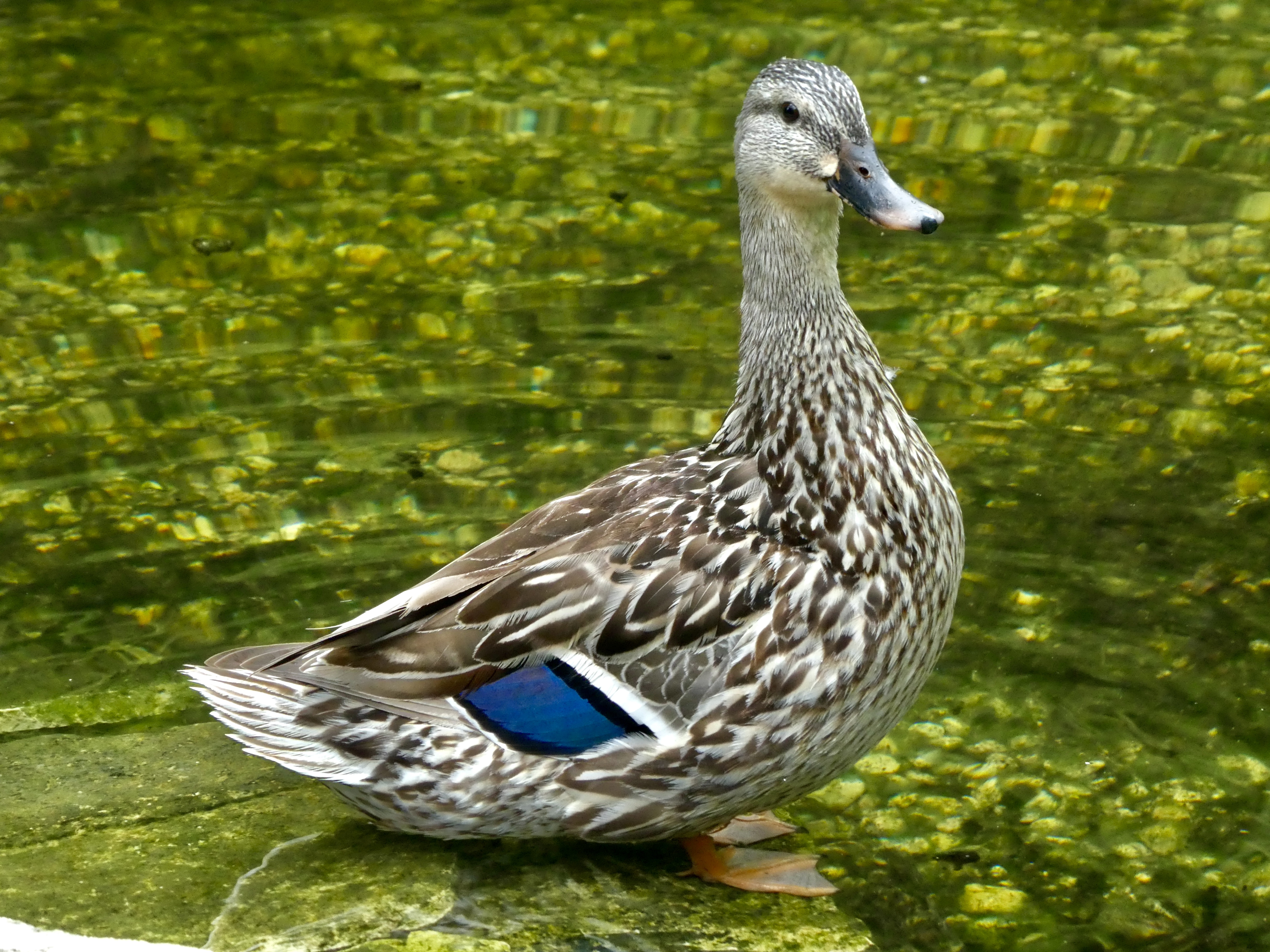
And the lovely Miss Duck. She’s proudly displaying her conspicuous speculum (the blue bar on the wing feathers). Miss Duck is distinguishable by her long neck, her grayish color, and her dark black bill with an orange tip. I hope she returns next year. Her brood is very late (they usually appear at the beginning of May), suggesting that she re-nested after some unfortunate circumstance. She is not one of the hens who nested and came to grief earlier in the season.
I love to hang out at the pond after I feed them all (three times per day); it’s very meditative to watch the ducks, even when they’re sleeping. So many people walk by, see them, and pull out their phone for a quick shot, but I would like to tell them to hang around a while and actually watch the animals. There’s a lot to learn, and I’m often there to explain things. In fact, I get so many questions from visitors that I’ve though of preparing a FAQ sheet to give to people.
People have been generally well behaved around the ducks and do not bother them, so they’ve gotten pretty used to people. I worry a bit about that if they migrate, for it may marginally affect their chances of getting shot, but they’re sufficiently wary that my worry is not large.
Since I have no kids, my genetic legacy resides in the DNA of these mallards, and nearly a hundred others that I’ve helped raise over the years.
🙂
I am so happy you got at least one duck family to raise this summer. Like every one who reads WEIT regularly and follows your challenges and joys I was saddened by events early this spring and summer. When things are going well at the pond it it seems a great emotional relief considering what’s happening in the rest of the world.
They’re almost adults! Yes, Miss Duck has a very long neck—almost goose-like.
The story of this duck family is indeed a relief, given what happened with the others and what is happening in the world as a whole.
That first photo of the ducklings is absolutely wonderful!
From the very first picture Miss Duck has appeared regal in the way she holds herself. Happy to see the ducklings getting so big!
The ducklings are getting huge. But Miss Duck is still watching over them. Good stuff!
Each time I see Ms Duck I am struck by her graceful poise and beauty. I have not had that reaction to the others. From the comments, it seems others see the same.
Is Jerry upping his photography game, or is there something subtle yet physical about her that differentiates her from the other ducks?
Any guesses? Am I simply smitten?!
Thanks for the update!
When I see the ducks on the pond cam – which is necessarily from a distance – I can no longer distinguish Miss Duck from her ducklings by their size. It’s delightful to see them so healthy and thriving.
Although it’s a bit poignant to see them growing up, it’s also a relief. I’m reminded of my anxiety about keeping my tiny newborns alive. As they grew bigger and sturdier, and I became increasingly confident they’d survive, I could finally relax and enjoy them.
Miss Duck is clearly a diligent mother. It’s such a delight to see her ducklings are thriving. Good job, Jerry!
I always enjoy your Duck Adventures from here.
Each night puppy and I go to 3 (!) parks near me in Sth Manhattan and we FEED THE PIDGEONS!
Not as rewarding as ducks, but works for us!
best
D.A.
NYC
Adorable and getting big!
Delightful. And Miss Duck really is beautiful.
Nice to watch the progress so far, especially given the earlier duck news this season.
You really should have nachat (naches in Yiddish) from the duck activity and the shared emotion among the followers of this blog. Given the physical and mental efforts required to maintain the ducks, you deserve it.
And if I may say so, unlike other species, we (some of us) can leave behind an intellectual legacy. As one who has succeeded in that, enjoy a good whisky and cigar (or whatever your preferred equivalent), and wiggle your toes in your best boots, and, post a picture of yourself for the coming Rosh Hashana, the Jewish New Year.
Thanks for the duckling upda.