Readers’ wildlife photos

January 7, 2026 • 8:15 am

It seems that one reader or another always comes through when we run out of photos. (But after today, we’ll be in that situation again!)  The helper today is Pratyaydipta Rudra, a statistics professor at Oklahoma State University. Pratyay’s captions and IDs are indented, and you can enlarge the photos by clicking on them. Pratyay and his wife Sreemala have a big bird-and-butterfly website called Wingmates.

There was a terrible ice storm in North-Central Oklahoma in October, 2020. It was extremely cold, raining all day, and the trees were having a hard time surviving with all the ice on them. Several trees fell in our neighborhood, and a lot of others lost big branches. The birds had a tough time. It was good to see that the tough little Yellow-rumped Warblers were quite resilient. This particular bird was actually quite active hopping around the icicles to catch insects (frozen food?). Here’s an image of it posing with a catch.

Yellow-rumped Warbler (Setophaga coronata) with a spider catch:

The icicles on the branches and the leaves created some interesting shapes with “frozen hearts” and “ice covered pecans” abound! Everything was quite photogenic, but it was hard for the birds.

A Fox Squirrel (Sciurus niger) navigating the icy terrain:

I found several hungry Yellow-rumped Warblers jumping around among the icicles.

Northern Mockingbird (Mimus polyglottos):

Eastern Bluebird (Sialia sialis) in the rain:

Chipping Sparrow (Spizella passerina):

As this was not enough, a huge snowstorm rolled in 3 months later which nearly killed off all our local bluebirds. I have not seen a storm like that one in Oklahoma, but that’s for another day.

Readers’ wildlife photos

January 6, 2026 • 8:35 am

This is it, folks: the end of the photo line—unless some readers step up to send in good wildlife pictures.

Today we have a diverse batch of photos from Richard Pieniakowski, but not much information about them though I suspect they’re from British Columbia. Richard’s short captions and IDs are indented (I found the binomials), and you can enlarge the photos by clicking on them.

Bald Eagle (Haliaeetus leucocephalus):

American Black Bear (Ursus americanus):

Belted kingfisher (Megaceryle alcyon):

Castle Rock:

“Caught in a moment of time” [read the bus sign]:

Common garter snake (Thamnophis sirtalis):

Closeup of common garter snake:

Epic sky:

Grasshopper:

Great blue heron (Ardea herodias):

If readers don’t send in more photos, I’ll shoot this duck*:


*Just kidding; it’s an AI drawing.

Readers’ wildlife photos

December 31, 2025 • 8:15 am

Send in your photos, for it’s 2026!

Neil Taylor sent in a miscellany of photos from the UK. His captions are indented, and you can enlarge the photos by clicking on them:

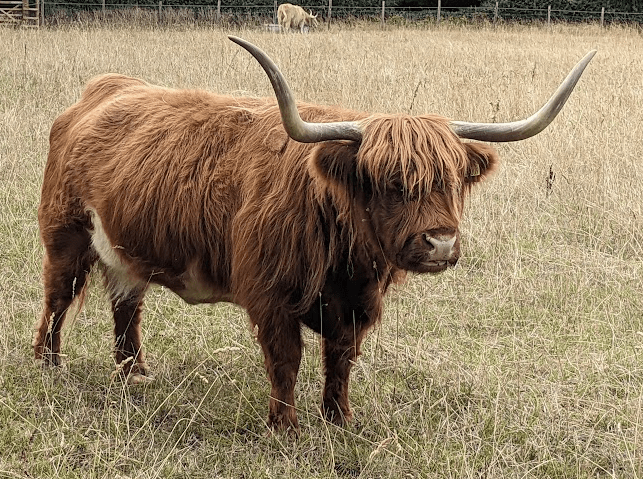
Highland Cattle:
Chip-stealing Herring Gulls (Larus argentatus) gather to mob their chosen victims! Port St. Mary, the Isle of Man.

Two photos of a zebra jumping spider (Salticus scenicus) eating a greenfly (species unidentified):

A large house spider, an Eratigena species:
A labyrinth spider (Agelena labyrinthica) in its funnel web with the remains of ladybird beetles (Coccinella septempunctata):

These photos taken in the environs of Cambridge the UK unless otherwise stated:
Bombylius majorThe Large Bee Fly with its large rigid proboscis for nectar feeding:

The delicate beginnings of a wasps’ nest:

A Steatoda nobilis (false widow spider) lifting a caught and wrapped bumble bee (likely Bombus pascuorum, the Carder Bee) to its lair.

An Araneus diadematus, the European garden spider, bites a wrapped and disabled bumble bee (likely Bombus pascuorum, the Carder Bee).

Araneus diadematus, the European garden spider:

An unidentified frog – Marrakech, Morocco:
An unidentified moth – Marrakech Morocco:

Readers’ wildlife photos

December 19, 2025 • 8:25 am

Ecologist Susan Harrison contributed another batch of photos from her visit to Belize (see part 1 here). The IDs and her captions are indented below, and you can enlarge the photos by clicking on them.

Belize – Birds of the Mennonite Farmlands

Diverse agricultural landscapes came as a pleasant surprise on a recent birding trip to northern Belize.  Small to medium-sized family farms, neatly arrayed, grew rice, cattle, chickens, fruits and vegetables.  We saw native birds of many kinds in the fields and around the homes, barns, ponds, hedgerows and woodlots.  Is this what U.S. farmlands looked like before the modern agro-industrial era, I wondered?

Many of the farmers are pious German-speaking Mennonites who settled here in the 1950s to practice their ways in a society tolerant of their anti-militarism and anti-modernity. The most conservative among them avoid not only cars but also rubber tires, and use machinery with metal wheels or treads only.  While it felt impolite to photograph the people in their hand-sewn overalls and dresses, I did grab a tractor shot or two.

Mennonite steel-wheeled tractor:

Our main quarry here was the Jabiru (Jabiru mycteria), a massive tropical stork that is scarce in much of its range but flourishes in the northern Belize farm country.

Jabiru in a rice field:

Jabirus mixed with smaller Wood Storks (Mycteria americana) and Northern Jacanas (Jacana spinosa) in a pasture of Brahman cattle:

Other birds we saw in these farmlands:

Laughing Falcons (Herpetotheres cachinnans):

Aplomado Falcons (Falco femoralis):

Bat Falcon (Falco rufigularis) pursuing dragonflies over a rice field at blinding speed:

Fork-tailed Flycatcher (Tyrannus savana):

Vermilion Flycatcher (Pyrocephalus rubinus):

Mangrove Cuckoo (Coccyzus minor):

Northern Potoo (Nyctibius jamaicensis), a bizarre giant nightjar:

Ringed Kingfisher (Megaceryle torquata):

Roadside Hawk (Rupornis magnirostris):

Morelet’s Seedeater (Sporophila morelleti):

Readers’ wildlife photos

December 11, 2025 • 8:15 am

Today I’m putting up all the singletons and smaller batches sent to me. Readers’ captions and IDs are indented.

From Allen Jones (I don’t know the species). It’s in the UK; can readers help?

This was at a local bird of prey centre near Edinburgh. The eagle’s perched on me. The owner said that this boy or girl (not sure) would soon be the oldest eagle that had ever lived in the UK. He said it was around 50 years old.

From A. C. Harper:

Ordinary urban pigeons huddling together for warmth… but they are on a support of a bridge crossing an arm of the river Soar at Leicester. This was once open fields, then industry including extensive railway sidings, a foundry, a stone masons, several mills (afer canalization of this part of the river) and wharves for unloading coal. As you can see the industrial areas have now gone and are being replaced with houses and apartments. But the pigeons linger on ready for my cellphone, a Pixel 10 pro.

From Susan Harrison, who promises that there is more to come.

Thought you’d enjoy seeing this big Belizean kitty!  He was lounging in the road last night as we drove into the Rio Bravo Conservation Area.  He could not have cared less about us, which is always a nice thing to experience with wildlife.  Anyway, this is just a teaser, and I’ll send a batch for RWP soon.

From Bryan Lepore.

These little Eastern cottontails [Sylvilagus floridanus] are in mid-ish Massachusetts  outside of Framingham, and in my back yard.  First photo June 26, second June 29:

From Nicole in Pennsylvania: A wild cottontail that comes to humans for apple slices. Her name is Petunia:

Convergent evolution, pictures by Martin Riddle.

The Hawk Moths, aka Hummingbird Moths [JAC: Family Spingidae] love the nectar in resident maintained gardens at Brooksby Village Peabody, Massachusetts:

Readers’ wildlife photos

December 8, 2025 • 8:15 am

We have a bunch of kangaroo photos from Scott Ritchie of Cairns, Australia. Scott’s captions are indented, and you can enlarge the photos by clicking on them. (His Facebook page is here.)

My last report from my Melbourne to Sydney trip. From Depot Beach New South Wales. It was epic. We stayed in a national park cabin that looked out over the ocean. And at 5 o’clock our front lawn became the bar for Eastern Grey Kangaroos [Macropus giganteus]. And in the morning, you could take pictures of the kangaroos watching the sunrise. What could be better for a boy from Iowa?

We had a ringside seat for roos. Would have been over a dozen here, not including joeys in the pouch:

The boys like a bit of rough and tumble:

They are smart to avoid those claws:
..just barely:

Squaring off:

I missed the kick shot. A sudden loud thump. Then the fight was over. One kick!:

I don’t know how this is going work!:

But somehow it does:

White-faced Heron [Egretta novaehollandiae] loves a roo too:

Cute:

Hanging loose:

Just in time for smoko:

I love pan pipes:

It’s a tight fit:

Come on big fella. I’m already familied up:


Sunrise at Depot Beach:

Roo at sunrise:

Great way to start the day:

Isn’t it lovely?

Readers’ wildlife photos

November 22, 2025 • 8:15 am

I have pretty much run out of contributions, but am also allowed to plunder the wonderful photos of Scott Ritchie from Cairns, Australia. Here are some more from his trip to Western Australia. Scott’s captions and IDs are indented, and you can enlarge the photos by clicking on them. (Scott’s Facebook page is here.)

An update on the WA trip, part III. Here are some of my favourite birds and mammals from my travels through Denmark and Albany. I will also provide an in depth look at the aquatics from Lake Sepping, Albany in the next post. It’s a great area, wonderful trees, intriguing flowers, dramatic landscapes, brilliant cool climate wines and outstanding birds!

Golden or Western Whistler (Pachycephala fuliginosa):

A White-browed Scrubwren (Sericornis frontalis) declares his patch:

Sooty Oystercatcher (Haematopus fuliginosus) has to dodge the surf.

That was close!:

Heh, I was first! A Silvereye (Zosterops lateralis) stares down an incoming bee at a nectar bar:

While the ever agro honeyeater, the New Holland Honeyeater (Phylidonyris novaehollandiae), shows off his diving form chasing any other bird that shows up:

Scarlet Robin (Petroica boodang). “Red, red robin goes bob, bob bobin away!”:

A Sacred Kingfisher (Todiramphus sanctus) shuffles out the rain:

Then flies down for a tasty slug:

I love the icy blue head on the Red-winged Fairywren (Malurus elegans)!:

A Red-eared Firetail (Stagonopleura oculata) lights his afterburner:


Before going into high speed orbit!:

Pelicans at Ocean Beach. Turn around or you’ll miss the rainbow!:

A Nankeen Kestrel (Falco cenchroides) hovers above Green Pool at Denmark, enjoying a grasshopper for brekkie:

“Watch out, here he comes!”  The kestrel then flies to Elephant Rocks where he is given a rude welcome by a Welcome Swallow (Hirundo neoxena):

Heavy winter rains made for quite a itchy visit! Local mozzies were driving the Western Grey Kangaroos (Macropus fuliginosus) crazy:

Australian Ringneck (AKA 28 Parrot; Barnardius zonarius) enjoys the flowers in the field: