Reader’s wildlife photos: John Avise’s farewell

September 7, 2025 • 8:15 am

After years of contributions, with a post nearly every Sunday, John Avise has run out of pictures to contribute. He mentions this below, but I’d like to thank him for his herculean efforts to keep his series going.  I am hoping that, as time passes, he’ll take more photos and we’ll see him again. Thanks, Dr. Avise!

John’s captions and IDs are indented, and you can enlarge his photos by clicking on them.  The subject is turtles.

Turtles and Tortoises in SoCal.  This week I conclude my photos of reptiles in Southern California by showing turtles and tortoises (order Testudines) that can be found in this region.

This post will also conclude my longstanding series of Sunday posts on PCC(E)’s entertaining and enlightening site.  Our collaboration all began about six years ago when I started sending Jerry pictures of a wide variety of duck species that I had photographed over the years.  It then proceeded through a long and eclectic series of wildlife topics: birds from various sites around the world (notably including Antarctica); odd or particularly funny wildlife photos; miscellaneous special topics; followed by butterflies in North America; dragonflies and damselflies; whale-watching trips; and, most recently, various reptile species in Southern California.  Altogether, PCC(E) has posted a total of about 4,500 of my wildlife photos across nearly 300 successive Sundays.  So, I would like to take this opportunity to express my deepest gratitude to Jerry for providing such a stable and inspiring platform for showcasing my photographic efforts.  And I would also like to give special thanks to many readers for your encouraging comments over the years.  Together these joint factors have kept me fully engaged on this most enjoyable enterprise!

Spiny Softshell Turtles, Apalone spinifera [This distinctive species is native to the Eastern United States, but has been introduced into California]:

Spiny Softshell Turtle, closer up:

Spiny Softshell turtle, headshot:

Spiny Softshell Turtle, posterior view:

Spiny Softshell Turtle, frontal view:

Western Pond Turtle, Actinemys marmorata [This is the only species of turtle native to California.  This specimen is covered with algae]:

Red-eared Slider, Trachemys scripta elegans [This species is native to the central United States but is widely used in the pet trade and escapees have invaded California]:

Red-eared Slider, group basking:

Red-eared Slider with legs retracted:

Yellow-bellied Slider, Trachemys scripta scripta [This is another subspecies of the pond slider; it is native to the southeastern United States but has been introduced to California and elsewhere]:

Yellow-bellied Slider, frontal view:

Another Yellow-bellied Slider:

Desert Tortoise, Gopherus agassizii:

Desert Tortoise, frontal view:

Readers’ wildlife photos

August 31, 2025 • 8:15 am

This is the next-to-last contribution out of several hundred sent over the years by biologist John Avise. and he’s coming to the wire with lizards:

More Lizards in SoCal.  This week’s post continues my photos of various lizard species that I’ve encountered over the years on nature hikes here in Southern California.

Western Whiptail, Aspidoscelis tigris:

Orange-throated Whiptail, Aspidoscelis hyperthyra:

Another Orange-throated Whiptail:

Yet another Orange-throated Whiptail:

Common Side-blotched Lizard, Uta stansburiana:

Another Common Side-blotched Lizard:

Yet another Common Side-blotched Lizard:

Common Side-blotched Lizard, headshot:

Southern Alligator Lizard, Elgaria multicarinata :

Another Southern Alligator Lizard:

Southern Alligator Lizard, headshot:

Western Fence Lizard, Sceloporus occidentalis:

Another Western Fence Lizard:

Western Fence Lizard, headshot:

Zebra-tailed Lizard, Callisaurus draconoides, male:

Zebra-tailed Lizard, female:

Readers’ wildlife photos

August 24, 2025 • 8:15 am

Well, John Avise, who has the longest unbroken record of submitting photos in the history of this site, has finally run out of material.  He tells me he has enough for two weeks after this, and then it’s goodbye (perhaps until he gets more photos). We will have a small celebration in two weeks.

Today John gives us photos of lizards. His captions and IDs are indented, and you can enlarge his photos by clicking on them.

Lizards in SoCal.  On my nature hikes in Southern California, lizards are by far the most abundant reptiles that I encounter (snakes are much rarer).  This week’s post shows several of the lizard species I’ve managed to photograph over the years.  More lizard species in the area will probably be shown in next Sunday’s post.

Coast Horned Lizard, Phrynosoma coronatum:

Coastal Whiptail, Aspidoscelis tigris stejnegeri:

Common Chuckwalla, Sauromalus obesus:

Desert Iguana, Dipsosaurus dorsalis:

. . . another Desert Iguana:

. . . yet another Desert Iguana, longitudinal view:

Desert Spiny Lizard, Sceloporus magister, adult male:

. . . .another Desert Spiny Lizard:

. . . yet another Desert Spiny Lizard:

 Desert Spiny lizard, headshot:

Readers’ wildlife photos

August 17, 2025 • 8:15 am

It’s Sunday, and that means a group of photos from biologist John Avise.  Today we have snakes. John’s IDs and captions are indented, and you can enlarge the photos by clicking on them.

Oh, and send in your photos if you want this series of posts to continue.

Other Snakes in SoCal.

Last Sunday I showed my pictures of rattlesnakes, but certainly not all snakes encountered in Southern California are to be feared.  Indeed, most of the snakes you might see are non-venomous and not at all dangerous.  This week’s post shows several non-aggressive snake species that I’ve seen on my nature hikes in the region.

Two-striped Gartersnake, Thamnophis hammondii:

Two-striped Gartersnake, headshot:

Two-striped Gartersnake, another headshot:

Two-striped Gartersnake, yet another headshot:

Common Kingsnake, Lampopeltris getula:

Common Kingsnake, another view:

Common Kingsnake, headshot:

California Kingsnake, Lampropeltis californiae:

Gopher Snake, Pituophis catanifer:

Gopher Snake, another view:

Gopher Snake, headshot:

Gopher Snake, another headshot:

Readers’ wildlife photos

August 10, 2025 • 8:15 am

It’s Sunday, and that means that we have photos by John Avise. He’s onto a new subject now: rattlesnakes!  John’s captions and IDs are indented, and you can enlarge his photos by clicking on them.

Rattlesnakes in Southern California:

When hiking canyonlands and other landscapes in Southern California, it’s best to watch your step, if for no other reason than to avoid stepping on a venomous rattlesnake.  This week’s post shows several species of rattlesnakes that I’ve encountered on my nature hikes in the region. Now I don’t mean to imply that rattlesnakes are common or of great concern; in 15 years of hiking the region, I’ve seen perhaps a dozen of them.  But I never pass up such an opportunity to get photos.

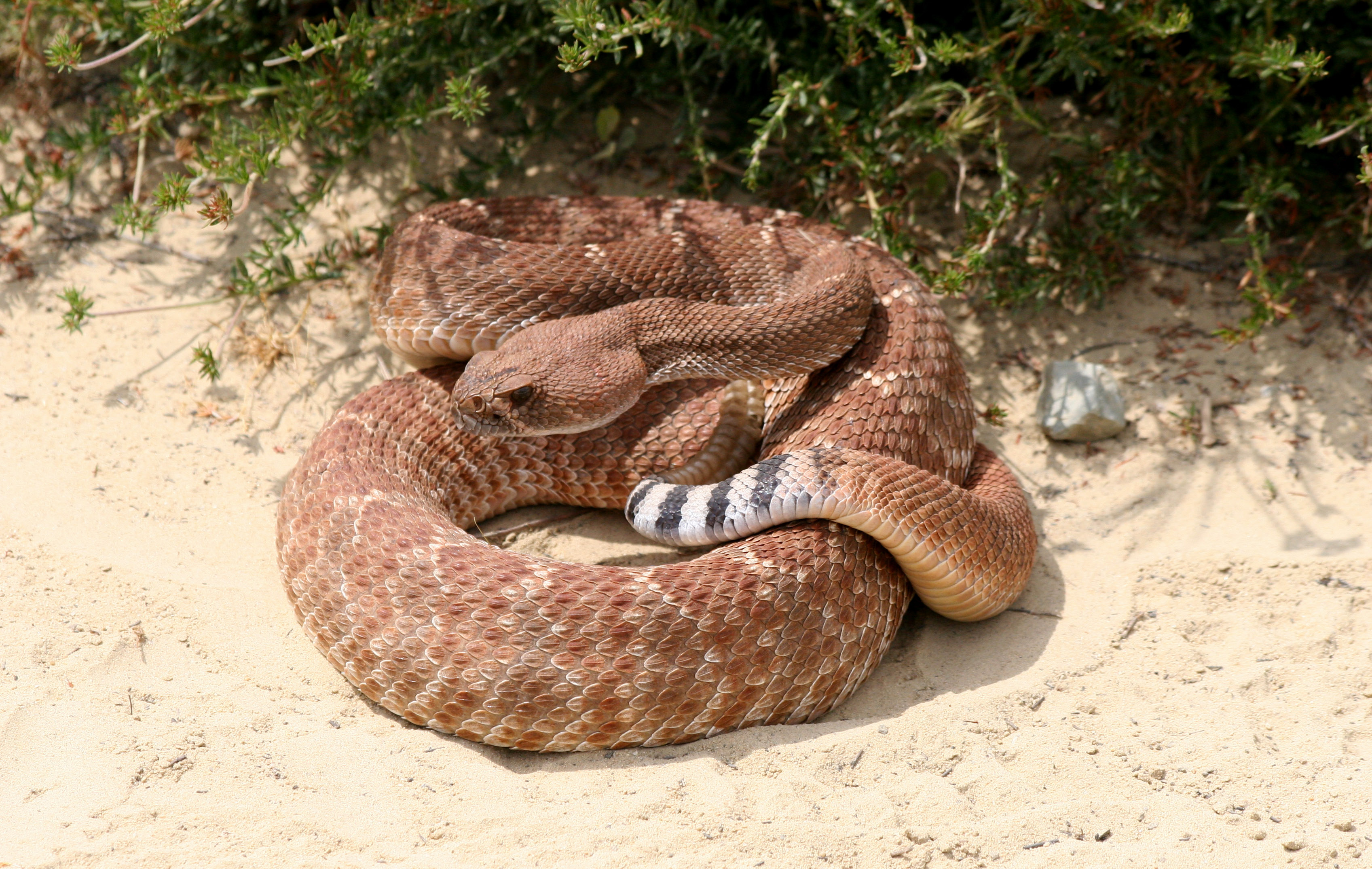
Red Diamond Rattlesnake, Crotalus ruber:

Red Diamond Rattlesnake, another view:

Red Diamond Rattlesnake, head and rattle closeup:

Sidewinder Rattlesnake, Crotalus cerastes:

Sidewinder Rattlesnake, head closeup:

Prairie Rattlesnake, Crotalus viridis:

Prairie Rattlesnake, closer-up:

Prairie Rattlesnake, rattle closeup:

Readers’ wildlife photos

May 24, 2025 • 8:15 am

Today we have a diverse set of photos from Amy Perry of Indiana. Amy’s captions and IDs are indented, and you can enlarge her photos by clicking on them. After this we have only one batch of photos left.

All photos were taken at Ritchey Woods, a state-designated nature preserve owned by the city of Fishers, a suburb of Indianapolis. The preserve is surrounded by commercial and residential development and an airport and is a treasured haven for families, dog walkers, runners, and birders and other nature lovers. The majority were taken with my iPhone 11 in the past year; a few plant photos were taken by the park naturalist, probably with her iPhone around 2019.

Common box turtle (Terrapene carolina) sitting just as royally as you please on a bridge:

Insects mating. Haven’t been able to identify the species [Readers?]:

Milkweed tussock or milkweed tiger moth caterpillar (Euchaetes egle) on, unsurprisingly, milkweed, probably Asclepias syriaca:

Trout lily (Erythronium americanum). Spring ephemeral. Also called yellow adder’s tongue and yellow dogtooth violet. One of the few yellow spring ephemerals, in my experience. Most are white. Spring ephemerals bloom before the tree canopy leafs out, as they take advantage of the sunlight that the trees block after the leaves appear:

Dutchmen’s Breeches (Dicentra cucullaria). Spring ephemeral:

Shagbark hickory (Carya ovata). I like species that have an obvious identifying characteristic, such as the shaggy bark here. It’s a bonus if the common name and/or Latin name also reflects the identifying characteristic:

Spring beauty (Claytonia virginica). These beauties carpet the forest floor during April. The pale pink stripes are said to guide insects to the nectar or pollen. The blooms close if the temperature goes below 45 degrees F. Spring ephemeral. I just learned that another common name is Fairy spud, which seems apt:

More spring beauty, to show the attractiveness of their natural massed growth. They are at the foot of a sign marking a border of the nature preserve:

Skunk cabbage (Symplocarpus foetidus). This is the spathe. Grows in January and February in moist soil. Sometimes the energy radiated by the growth actually melts the surrounding snow or ice. True to its name, it has a strong, unattractive odor:

Virginia bluebells (Mertensia virginica). Often the blossoms are pink when they first bloom and then turn a lovely blue. Spring ephemeral:

Callery pear (Pyrus calleryana). Ending on a depressing note. These trees have a lovely oval shape but are invasive. Also called Bradford pear.  This species is not on the state’s official invasive list, but plans are in the works to have it added soon. The official invasive list prohibits the sale, purchase, transport, or giving of invasive species within the state. When several species were added a few years ago to the list, this one was discussed, but so many nurseries had it “in the pipeline,” that conservationists decided to take a small victory and wait to add it later:

Readers’ wildlife photos

May 21, 2025 • 8:15 am

We’re running low on this feature, so please send in some good photos. I won’t beg again for a while.

Today we have photos from Africa by Loretta Michaels.  Her captions and IDs are indented, and you can enlarge the photos by clicking on them.

Brief Introduction: I used to do a lot of business in Africa and so I almost always tried to tack on a weekend safari of some sort while there.  Most of these times I had only my iphone to take pictures, unlike the bigger safari vacations my husband & I take with all our camera gear.

While in Dar es Salaam on business, I spent a weekend on Chumbe Island, just off the coast of Zanzibar.  One of the more bizarre sightings was a Coconut Crab (Birgus latro), the largest land crab in the world, which is able  to climb coconut palms and easily crack coconuts with its claws.  These crabs also eat fleshy fruit and even prey on smaller crabs. This species of crabs has evolved to live on land from the sea, returning to water only to lay their eggs. On land, they live in underground holes made with fibers from coconut husks, and are generally only spotted at night. An adult crab can reach one meter in length. It has a curled-under abdomen that makes it look like a lobster. Coconut crabs supposedly have very tasty meat, so, unfortunately, they are hunted:

Three nicely aligned bush elephants (Loxodonta africana) I saw during a trip to Zambia:

A nice female African lion (Panthera leo), spotted during a night drive in Zambia:

A Komodo Dragon (Varanus komodoensis) spotted during a drive:

Two white rhino (Ceratotherium simum) in Nairobi National Park, a 45 square mile wildlife sanctuary established in 1946 just outside Nairobi:

Lunchtime at the Lilayi Elephant Nursery just outside Lusaka, Zambia.  The baby elephants are just adorable to watch, especially as they come running in from the fields when they see it’s feeding time:

A Golden Monkey (Cercopithecus mitis kandti) spotted in Volcanoes National Park in Rwanda:

A mother and baby mountain gorilla (Gorilla beringei beringei) in Volcanoes National Park in Rwanda, just outside Kigali. It is one of two subspecies of the Eastern Gorilla.  The other population lives in the Congo. The park is one of the 3 homes of the endangered mountain gorillas within the Virunga Mountains:

Dominant male gorilla in Volcanoes National Park:

Variable Sunbird (Cinnyris venustus) in Rwanda. The sunbirds are a group of small Old World passerine birds which feed largely on nectar, although they will also take insects, especially when feeding young. Flight is fast and direct on their short wings. Most species can take nectar by hovering like a hummingbird, but usually perch to feed most of the time: