Readers’ wildlife photos

November 20, 2025 • 8:15 am

We have two batches left and this is one of them (i.e., send in your photos). Today we have some photos of the Aurora Borealis (and a few other things) taken by Ephraim Heller:

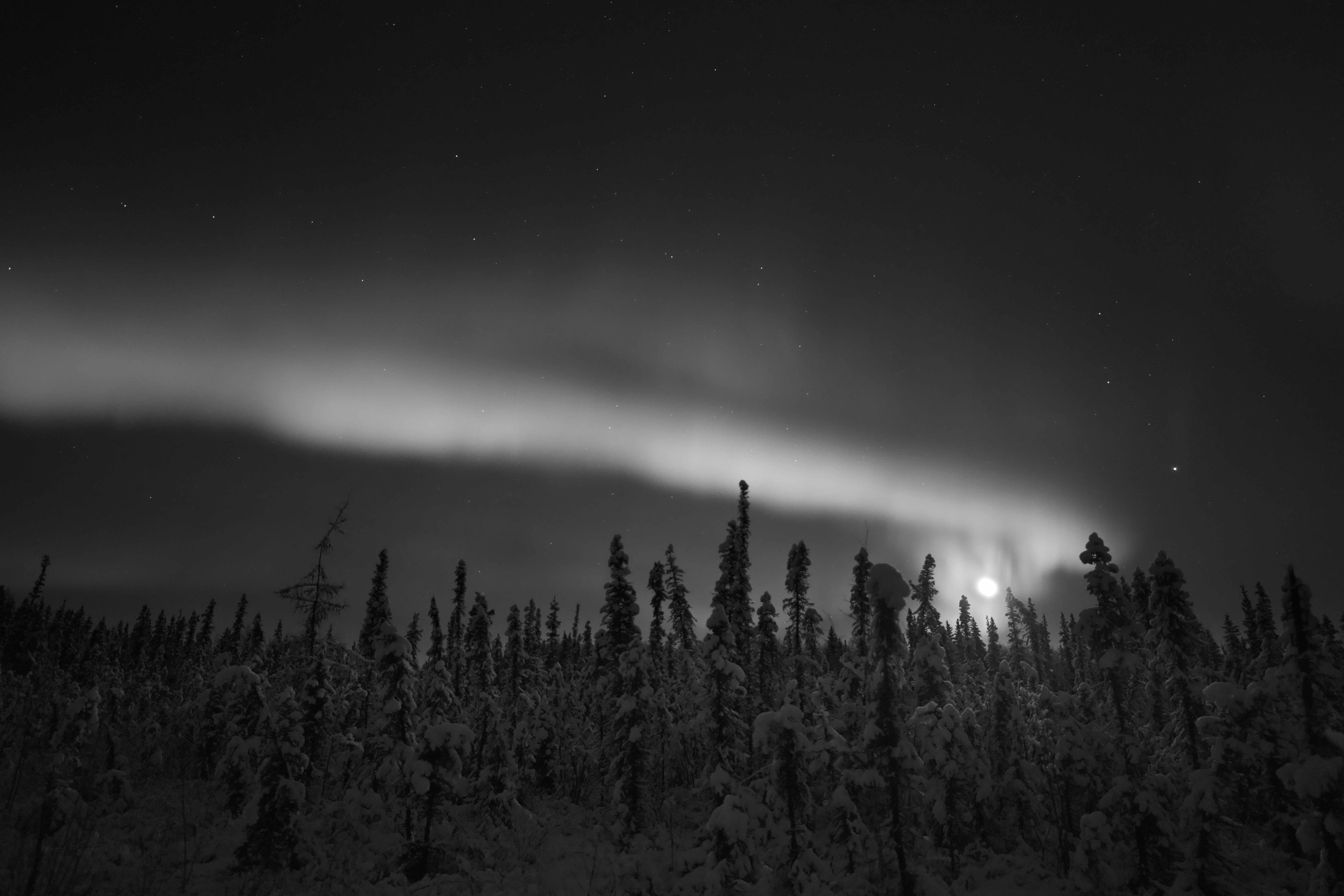
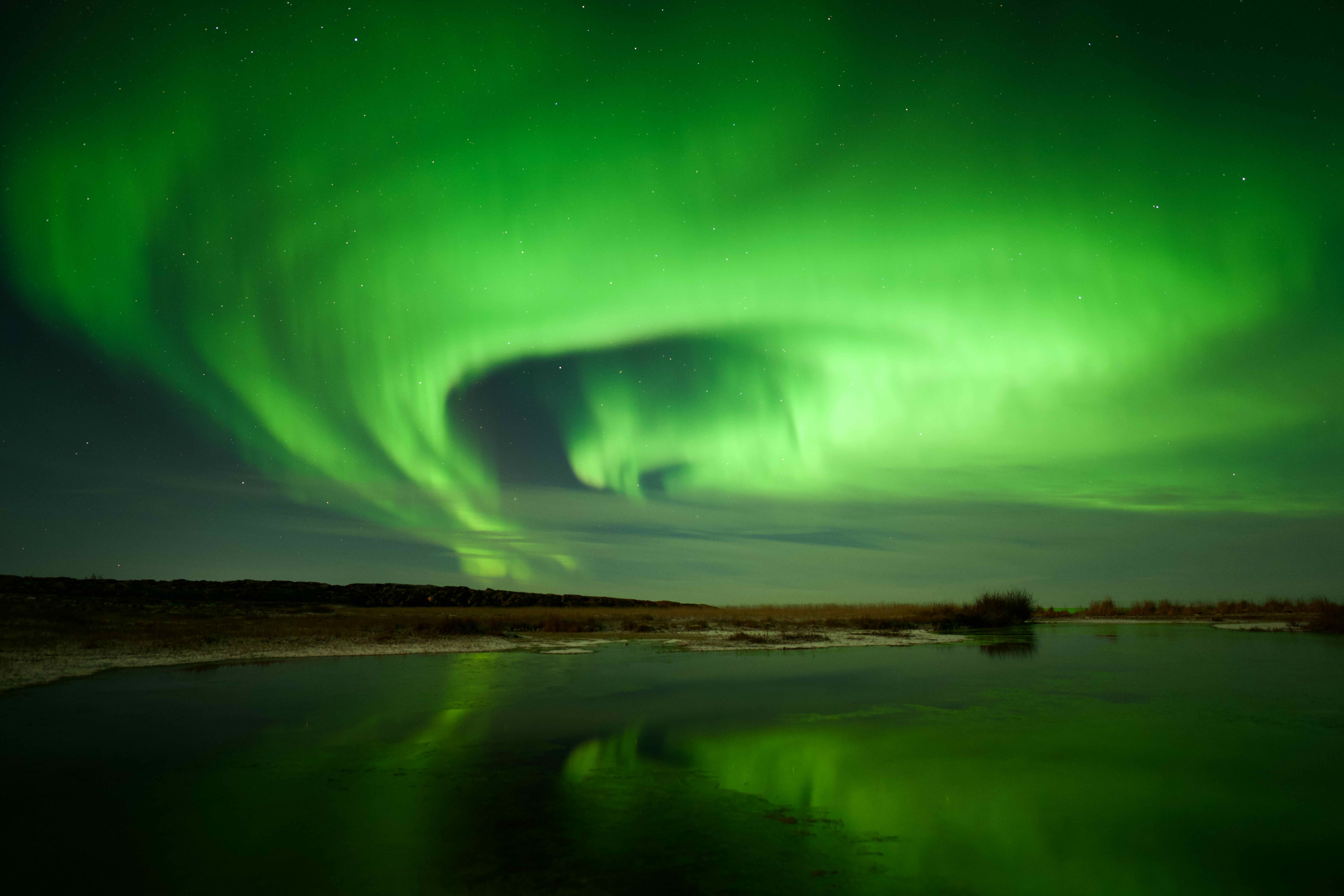
I was fortunate to be in Alaska on the night of Nov. 11-12 when the aurora borealis put on the best show of the year, widely visible across North America. I photographed the event at Birch Lake, about 50 miles southeast of Fairbanks.  I shot the aurora from 10pm – 3am as the temperature registered -16° F (-27° C) and I coughed with a cold. It was worth it.

“Aurora borealis” is Latin for “northern dawn.” Despite my wasted BA in Physics, I have never understood what causes the aurora. I decided to look it up and share what I learn with readers of WEIT. Real physicists and astronomers should feel free to correct my errors. Thanks to NASA and to Akari Photo Tours for nice explanations on their websites, from which I have borrowed liberally.

Our sun continuously emits a stream of charged particles (the solar wind) which flows outward through the solar system. When this plasma reaches Earth, it interacts with our planet’s magnetic field (the magnetosphere), depositing and accumulating energy there. During a geomagnetic storm, much of the accumulated energy in the magnetosphere flows down along Earth’s magnetic field lines. As these accelerated particles descend into the atmosphere they collide with oxygen and nitrogen molecules at altitudes between 100 and 300 kilometers. These collisions excite the atmospheric gases, causing them to emit photons.
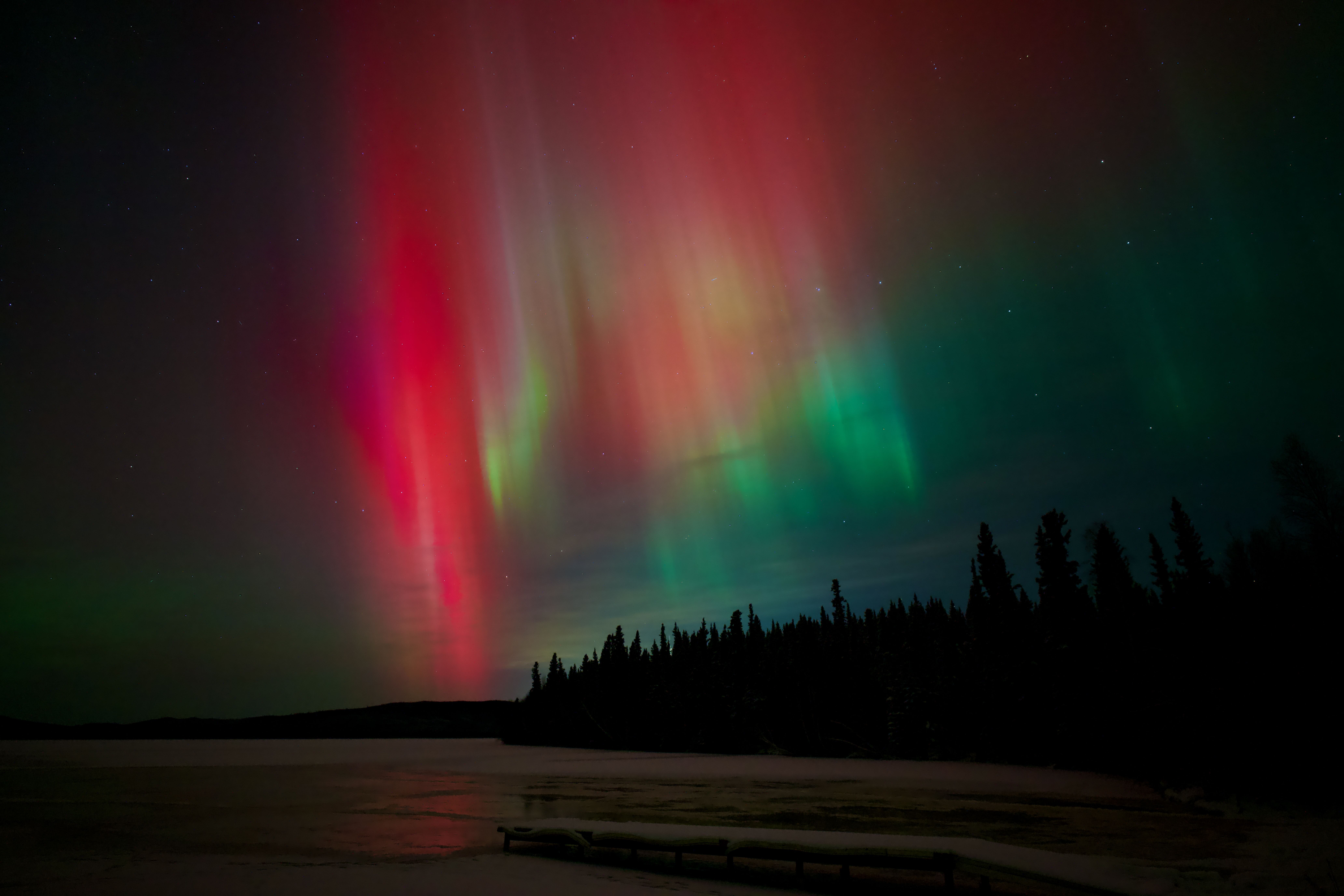
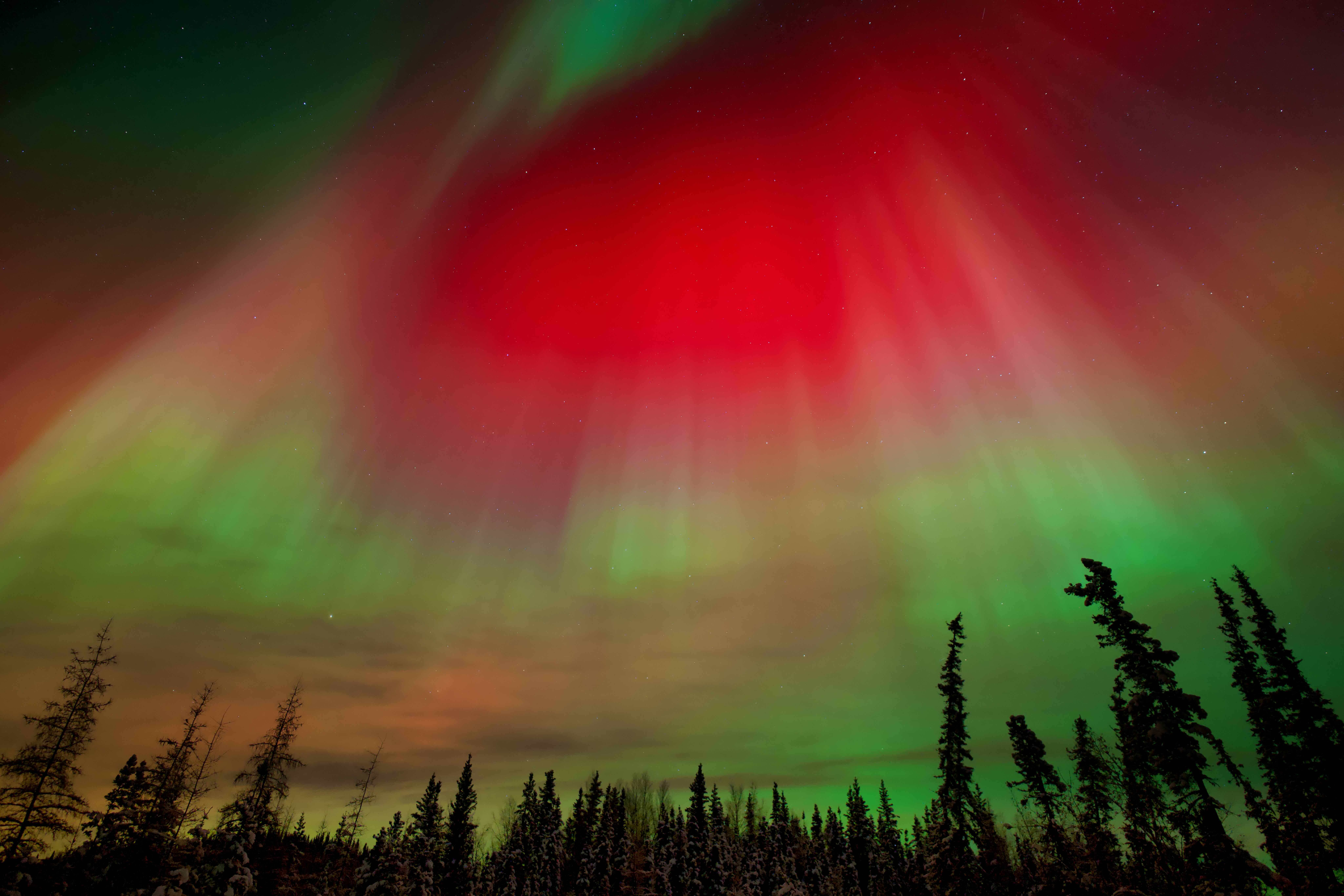
The detailed version: coronal mass ejections (CMEs) are the eruptions of plasma and magnetic field from the Sun’s atmosphere that drive the most intense geomagnetic storms. If directed at Earth, fast-moving CMEs can reach our planet in as little as 15 hours traveling at ~6.2 million mph (10 million kph).
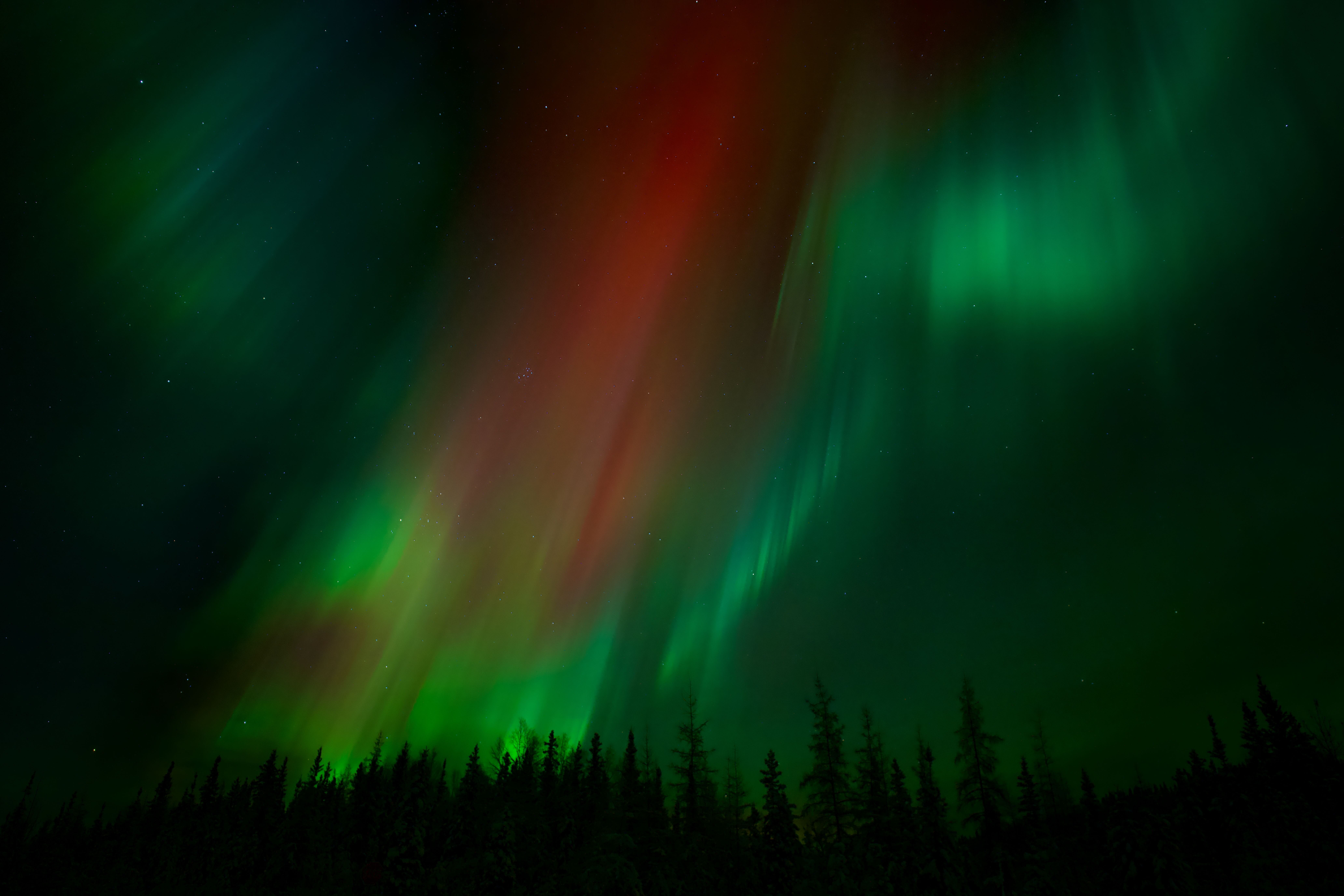
The critical process triggering auroras is called magnetic reconnection. The solar wind flows around Earth’s magnetosphere like a river rushing around a rock. This onrush of charged particles stretches Earth’s magnetosphere away from the Sun, creating a long wake known as the magnetotail. The magnetic shields of the Sun and Earth are polarized. The polarity of Earth’s magnetic shield is mostly stable, but the Sun’s can vary rapidly. When the polarity of the solar wind is opposite that of Earth’s magnetosphere, the field lines of the Sun and Earth interact strongly. The solar wind then pushes these connected field lines around Earth’s magnetosphere. Eventually, these field lines reach their limit and snap back, releasing energy. This energy accelerates charged particles – primarily electrons and protons – along Earth’s magnetic field lines toward the polar regions, injecting millions of amps into the atmosphere.
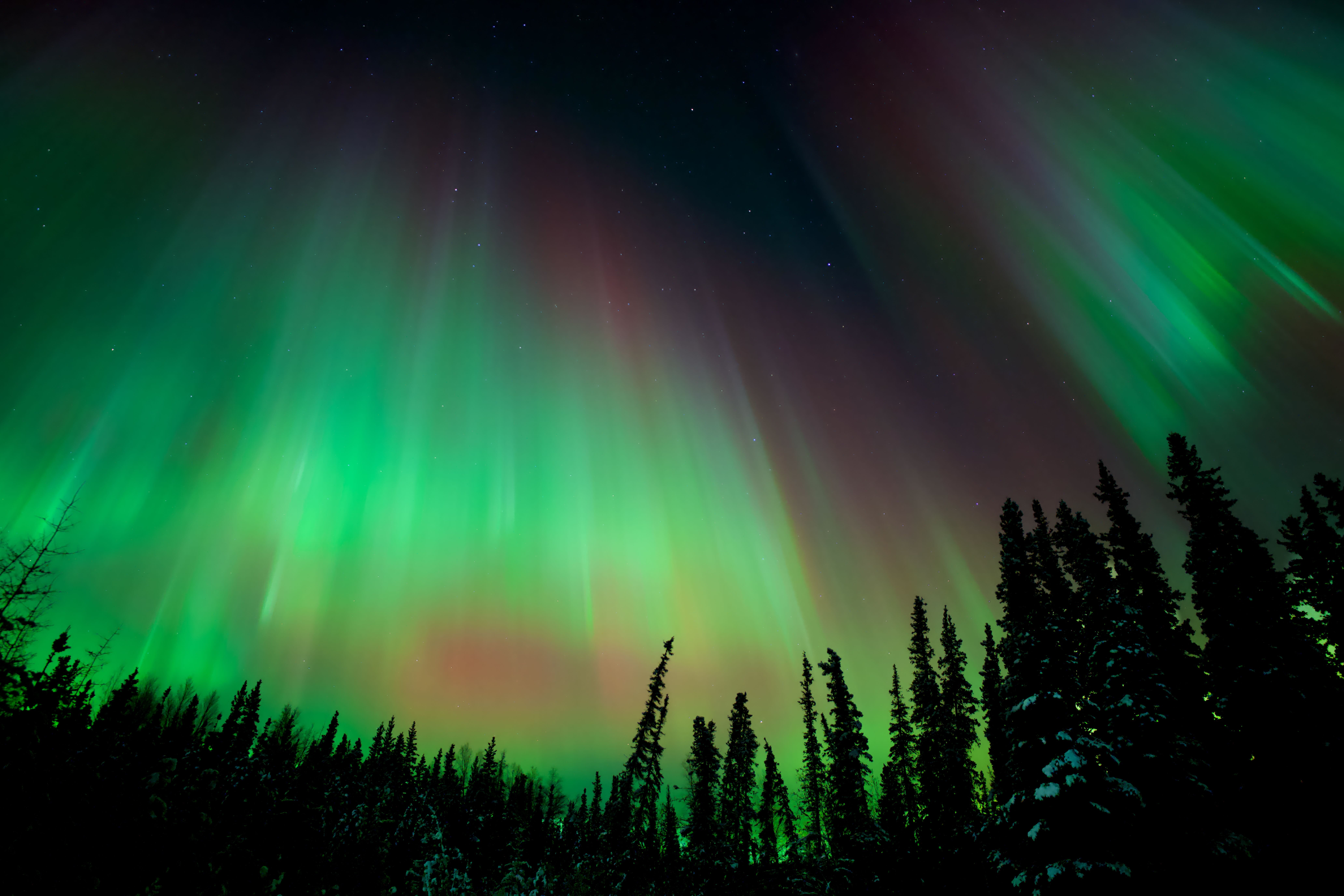
Oxygen excited to different energy levels can produce green and red. Green occurs roughly between 60 to 120 miles (100-200 km) altitude, and red occurs above 120 miles (200 km). Excited nitrogen gas from about 60 to 120 miles (100-200 km) glows blue. Depending on the type and energy of the particle it is interacting with, nitrogen can give off both pink and blue light. If it is below about 60 miles (100 km), it gives the lower edge of the aurora a reddish-purple to pink glow.
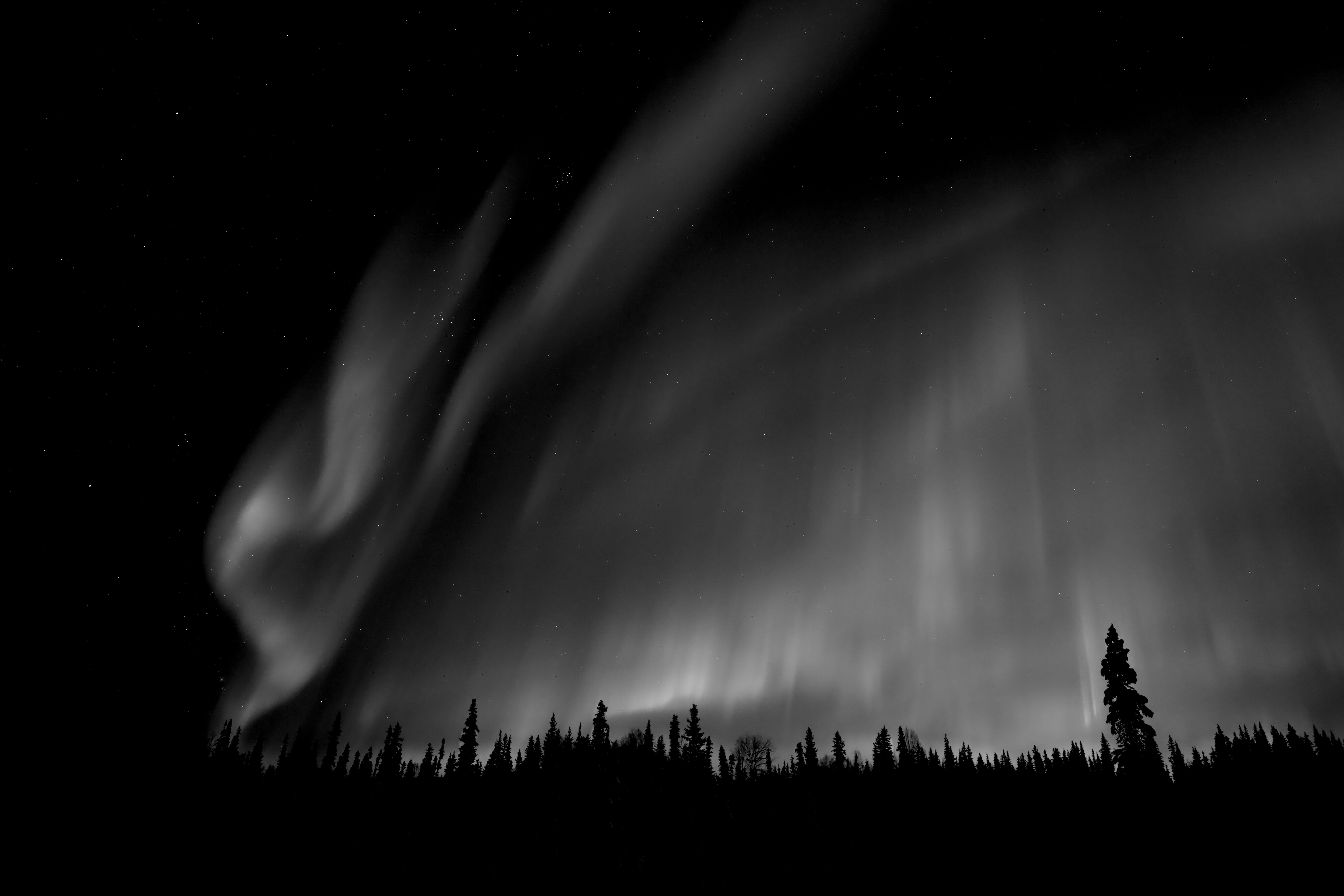
Aurora brightness depends on (i) the intensity of solar activity and (ii) the efficiency of energy coupling into Earth’s magnetosphere. The standard measurement for the intensity is the Kp index, which ranges from 0 to 9, derived from 13 magnetometer stations globally that monitor Earth’s magnetic field disturbances. A Kp index of 0 represents quiet conditions; a Kp of 9 represents an extreme geomagnetic storm capable of producing auroras near the equator.
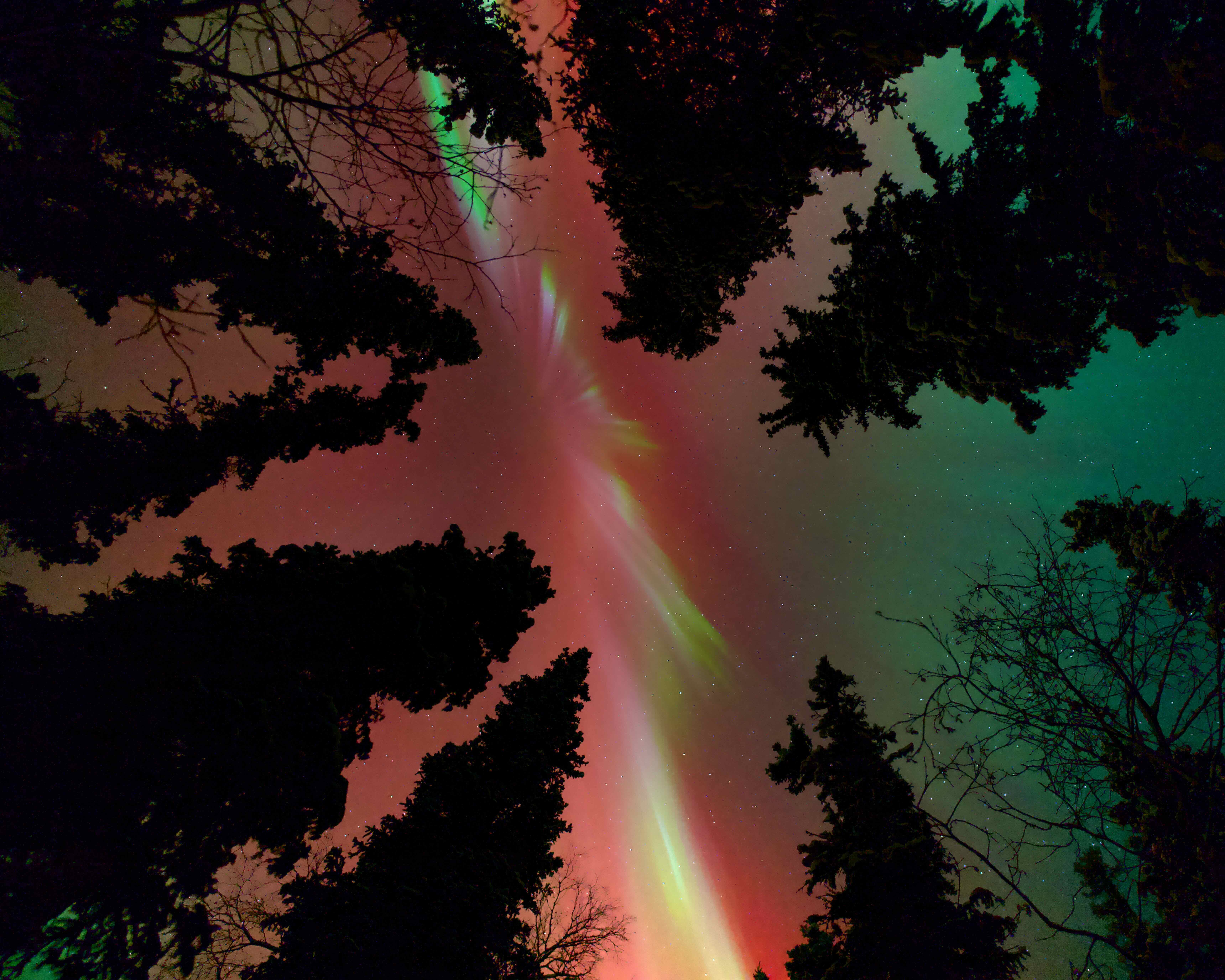
Unfortunately, the Kp index has a serious limitation: it reports a 3-hour global average so it is often too slow and too generalized to capture short-lived auroral activity, such as auroral substorms (which typically last 10 – 30 minutes). These powerful bursts can produce the brightest northern lights displays, yet they are frequently missed when relying only on KP forecasts.

Aurora intensity also depends critically on the interplanetary magnetic field’s Bz component. When the solar wind’s magnetic field points southward (negative Bz), conditions favor magnetic reconnection and enhanced energy coupling, producing increased aurora activity. When it points northward (positive Bz), reconnection is suppressed, resulting in reduced activity. Bz values below -10 nT are considered effective for driving geomagnetic storms, and values in the range of -20 to -30 nT usually indicate strong conditions for auroral activity.
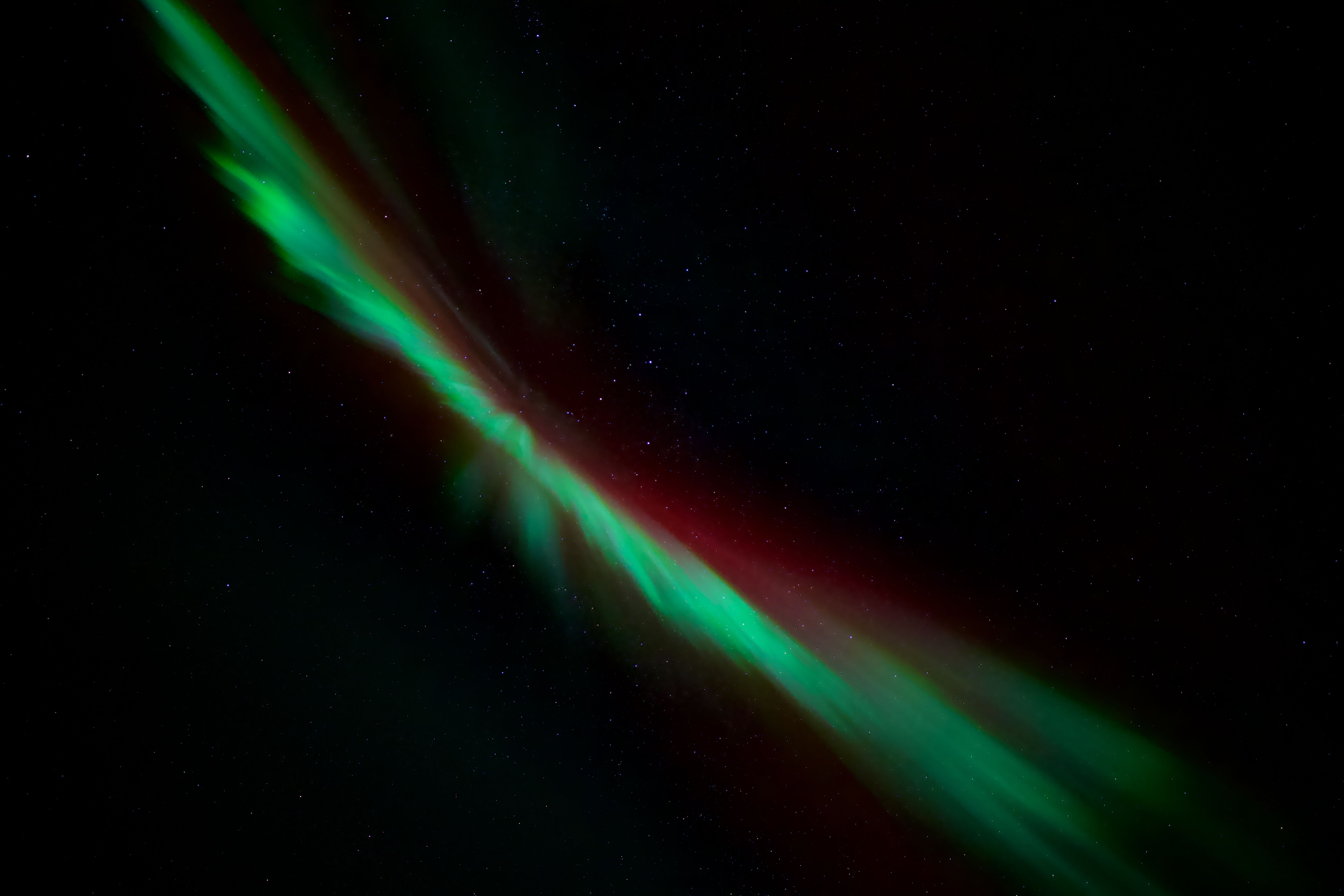
Unfortunately, there is no way to predict the Bz. So even when the Kp is high there will be no aurora if the Bz is positive… and you just won’t know until you’re standing next to a lake outside of Fairbanks in -16° F weather with a respiratory infection.

So what happened on the night of November 11-12? Two coronal mass ejections reached earth, the Kp spiked to 8.67 (almost at the maximum value of 9), while the Bz reached a remarkable nadir of -55 nT!
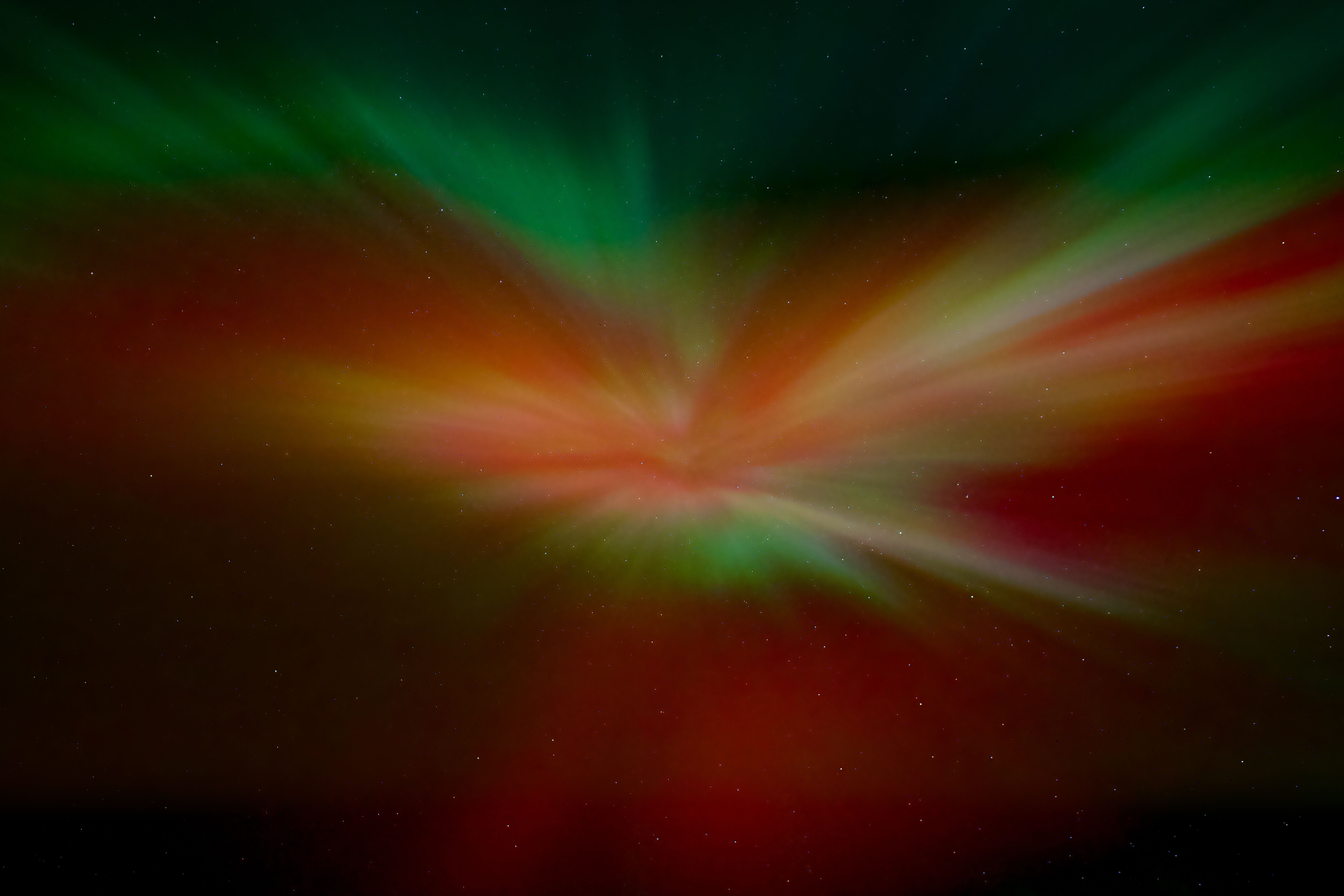
Finally, I have been asked why photographs of auroras often appear more colorful and detailed than what observers perceive with the unaided eye. This is largely an artifact of low-light aurora viewing conditions. Auroras typically produce illumination levels comparable to moonlight, near the threshold of human vision. As you all know, there are two types of photosensitive cells on your retina: cones and rods. Under well-lit conditions, your eyes use cones to process light, known as photopic vision. The cones are responsible for color vision but are not responsive to low light. In very dark environments, rod cells dominate what you see, known as scotopic vision. Colors are barely perceptible under scotopic vision, leading to almost black-and-white, desaturated vision. Your eyes adapt to a low-light environment by transitioning sensitivity from the cones to the rods, which takes 20–30 minutes to complete.

While the eye’s photoreceptors are sensitive, they cannot accumulate light over time in the manner that digital sensors can. A camera sensor employs multiple mechanisms to collect more light than the eye: high ISO sensitivity amplifies the signal, long exposures integrate light over several seconds, and the full spectral response captures wavelengths across the visible spectrum.

Consequently, a faint aurora appearing as a low-contrast feature to the eye reveals more defined coloration in a photograph. As aurora intensity increases, the eye’s color perception approaches what cameras record. Additionally, wide-angle lenses compress perspective differently than human peripheral vision, altering the apparent geometry and apparent motion of auroral structures.

For the photography geeks among you, all of these photos were taken with a Nikon Z8 camera and NIKKOR Z 20mm ƒ1.8 S lens at ISO 3200, ƒ1.8, and shutter speeds of 1.0 second (occasionally up to 2 seconds).

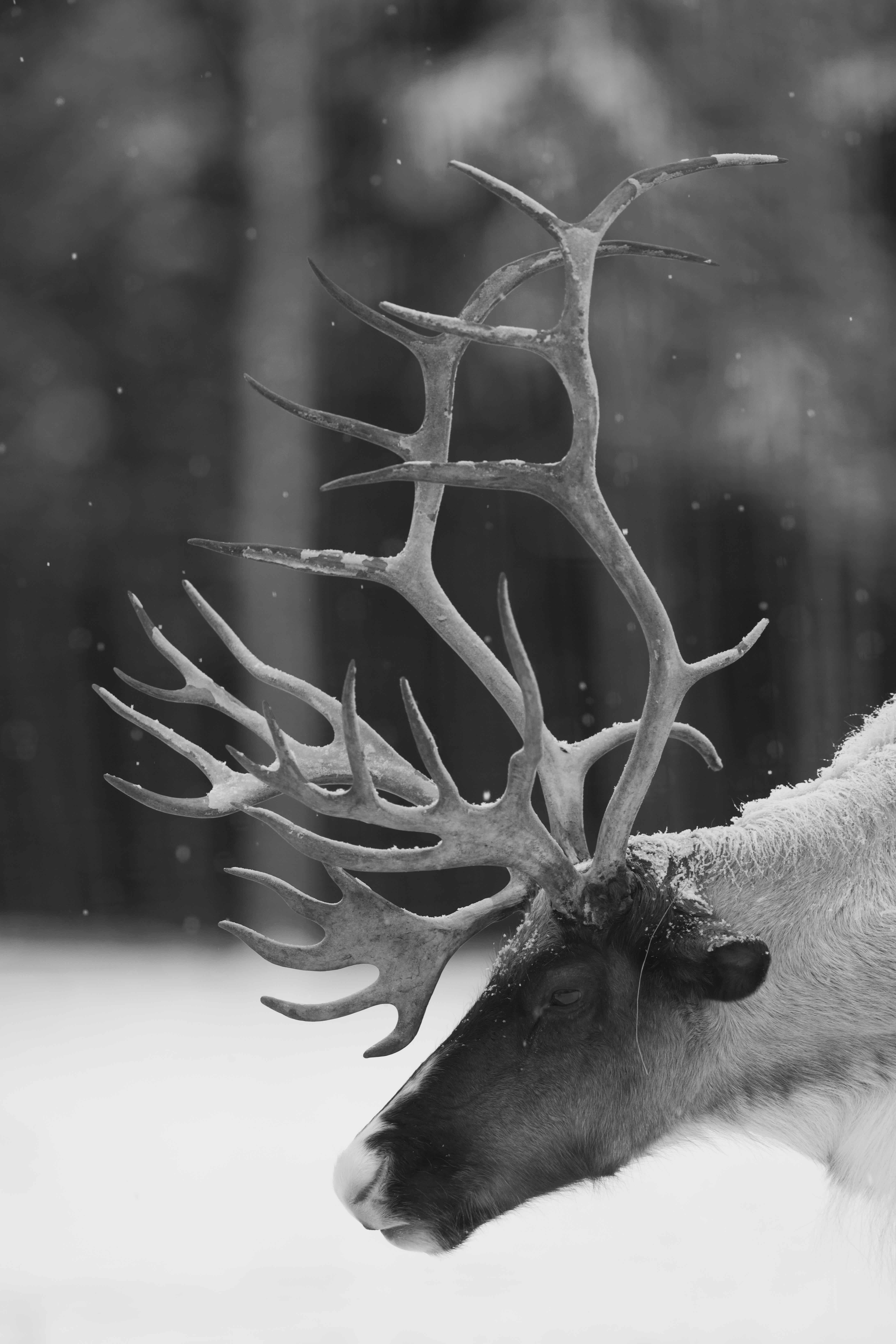
And since this is supposed to be a post of readers’ wildlife photos, here are two images that I made near Fairbanks:

Reindeer or caribou (Rangifer tarandus):
Muskox (Ovibos moschatus):

Readers’ wildlife photos

November 19, 2025 • 8:15 am

Hooray! I received two batches of photos last night, so we can keep going until Thursday, at least.

Today’s photos are from David Riddell; his captions and IDs are indented, and you can enlarge the photos by clicking on them.  These photos were taken last weekend.

Went out last Saturday on a seabird-watching “pelagic” trip off the east coast of New Zealand’s North Island.  The weather was looking marginal, but we’d postponed twice and really wanted to get out there, so set out at dawn from the small seaside town of Whangamata, heading for the deep water where the open ocean specialists live.  In the end we saw 19 “tubenose” species (Procellariiformes: the albatrosses, petrels, shearwaters and their relatives), plus little blue penguins (Eudyptula minor).

After about three hours the slow, old fishing boat we’d chartered arrived off the edge of the Continental Shelf, beyond Mayor Island. This is an extinct volcano, known for its cliffs of solid, glossy black obsidian, once traded throughout the country by Maori, who made cutting tools out of it.  The mainland behind has almost entirely disappeared in the murk along the horizon

Chopped-up fish bits thrown off the back of the boat soon had a mixed flock of birds gathering to enjoy the feast. Most were flesh-footed shearwaters (Ardenna carneipes), but other species were among them.  There’s a black petrel (Procellaria parkinsoni) right of centre in the picture below, with the bone-coloured bill:

Flesh-footed shearwaters of course have pinkish legs and feet, as well as slightly pinkish, dark-tipped bills. They breed widely on islands off north-eastern New Zealand, as well as off Australia and in the Indian Ocean, though numbers globally are declining:

Black petrels on the other hand have dark feet, and are slightly bigger and blacker. They used to breed widely on the New Zealand mainland but are now confined to two islands north-east of Auckland.  Population estimates range between 20,000 and 38,000.  Their Maori name is taiko, which some may remember from some previous photos of mine posted here. It is also the name of a much rarer bird in the Chatham Islands:

Squabbles over the fish bits grew quite intense! This is a black petrel being pursued by a flesh-footed shearwater:

It was a good day to test identification skills on the dark seabirds. This one is a grey-faced petrel (Pterodroma gouldi), which breed on islands around northern New Zealand, as well as a few mainland sites:

Another dark species, and possibly the bird of the day, was this short-tailed shearwater (Ardenna tenuirostris). They may be the world’s most abundant seabird, with an estimated population of 23 million birds, breeding on islands around southern Australia, though few make it across the Tasman Sea to New Zealand.  It’s like a smaller, daintier version of the sooty shearwater (Ardenna grisea) which is almost as abundant, breeding in huge numbers around southern New Zealand, as well as off Australia, Chile and the Falklands.  One of those was seen on Saturday as well, though I missed it myself:

After a while the big guns arrived, drawn in by the smell of the fish. Four albatross species were seen, with white-capped mollymawks (Thalassarche cauta) the most numerous:

There were also several Antipodean albatrosses (Diomedea antipodensis), the local form of wandering albatross (D. exulans), from which it was recently split.  This one is a Gibson’s albatross (D. a. gibsoni); one of the nominate subspecies also turned up:

Hanging out at the back of the feeding frenzy were a few New Zealand storm petrels (Fregetta maoriana). They were two small and distant to get decent photos with my ancient camera, but I thought I’d throw this in just to show they were there.  As I posted here previously, these were believed to be extinct until rediscovered in 2003, more than a century after the previous confirmed sighting.  Since the clearing of rats and cats from their breeding ground on Little Barrier Island their numbers have boomed – until recently they were mainly seen north of Auckland, but we saw five, further south in the Bay of Plenty:

Closer inshore was a different suite of birds, and it was a delight to see several little shearwaters (Puffinus assimilis) fly past. These are normally scattered in ones and twos, and don’t hang around boats like some of the other petrels and shearwaters:

Readers’ wildlife photos

November 18, 2025 • 8:15 am

Well, folks, this is the last batch I have, and then the feature goes silent. If you have photos, wake it up again! Thanks.

Today’s photos come from the lens of Pratyaydipta Rudra and show one of his favorite birds. Pratyay’s captions are indented, and you can enlarge the photos by clicking on them.

This is the second part of Scissor-tailed Flycatchers (Tyrannus forficatus) photos that I have taken over the past few years after I moved to Oklahoma.  [JAC: Part 1 is here.] I don’t remember the exact date taken for each individual photo (all taken during the summer months), so I have skipped that information and included some stories behind each photo.

As much as I love to photograph these birds in a tight frame against the sky, it also gets boring after a while. So, I started thinking about different kinds of compositions by including other elements of the environment and sometimes putting the bird smaller in the frame.

This one took off from one of the Bald Cypress trees (Taxodium distichum) bordering our local lake. The golden light was beautiful:

Scissor-tailed Flycatcher catching what I believe is a soldier beetle, probably Chauliognathus pensylvanicus, but I might be wrong:

Got it!:

There was a nice meadow in a local park that used to have beautiful wildflowers every spring. The birds loved the area, and I liked photographing them among the wildflowers. But two years ago it was mowed down to make space for frisbee golf. While this may invite some more people to the park and let them enjoy the outdoors, I was sad that the wonderful habitat was lost. This is a photo that I took there before it was mowed down:

Scissortail hover hunting over the meadow:

Another one taking off to find dinner…:

Not all birds look equally good in silhouettes, but scissortails most definitely look very elegant:

Three silhouetted birds in territorial battle. It looked like there was a mated pair and one invader who was quickly chased away!:

Two of them vocalizing and flickering their wings during some territorial disputes:

Another sunset silhouette… An orange and black to honor my OSU connection:

I like the water of the lake as a better backdrop than the sky… This one predictably came back to its favorite twig as flycatchers (and dragonflies) often do!:

I was glad to capture this unique “chase sequence” involving a flycatcher and a speedboat. The bird won:

Probably my most favorite scissortail photo ever, and I never thought I would capture that using a 16-35mm lens! On this day, there was a thunderstorm in the afternoon, and the sky was decorated with beautiful mammatus clouds after the thunderstorm. I was walking around our house with my wide lens to capture some cloud images. At that time, a couple of scissortails were appearing in the neighborhood every evening, and I was wishing that one of them would show up. I like to say that adding a scissortail to any scene makes it more beautiful!:

As I was looking around, I found out that a male scissortail was sitting right on our pecan tree! I was incredibly excited, quickly increased my shutter speed, and waited for the bird to take off. This is one of the images I got after waiting for a couple minutes.

When I said “adding a scissortail to any scene makes it more beautiful”, I obviously didn’t mean adding them using AI to an existing image, and it applies to this one too where I was able to capture the bird flying across the rainbow after my waiting for that to happen for some time:

I would like to wrap up with this closer view of our state bird. This image reminds me of the box of the boardgame called “Wingspan”. I don’t know if any of you played it, but if you are into board games, you should try it. My wife and I played it over 500 times across different expansions and we still enjoy it so much:

Readers’ wildlife photos

November 17, 2025 • 6:15 am

Intellectual hero and UC Davis math professor Abby Thompson again has a batch of lovely intertidal photos for us. Abby’s captions and IDs are indented, and you can enlarge her photos by clicking on them:

The first two pictures were taken on my cellphone at the Berkeley marina, where a friend was taking us sailing. Fortunately for me, the boat needed more than an hour of preparation, which I got to spend lying flat on the dock looking at the marine life growing underneath it. There’s an entire community on inaturalist devoted to observations of such “dock fouling”; it’s an incredibly rich environment. Because all I had was my phone, only a couple of the pictures I took were legible- next time I’ll bring a camera (and hope the boat needs even more work).

Clathria prolifera (red beard sponge). Most sponges can’t be identified from a photo, but apparently this brilliant one is an exception:

Genus Ciona (tunicate). Pretty much any blobby thing you see lying around the beach is some kind of tunicate, an animal with an inflow and an outflow, and usually not too much else to recommend them (unlike, say, clams, which are at least delicious). These at the marina were lovely, however, looking flower-like:

The rest of the pictures were taken in my usual spot on the coast, near or after sunset (that’s when the great winter low tides happen). At night it’s cold, wet, slippery and, of course, dark, which makes things a bit tricky.

Genus Crepidula; Slipper snail – this clings to the rock looking almost like a limpet:

Slipper snail top view:

Order Amphipoda; I liked this guy’s eyes:

   Genus Polycirrus; Spaghetti worm- it’s one worm, with many tentacles. The main body of the worm is curled up and coated in sand:

Dirona picta:  A nudibranch, munching on some matching bryozoans:

Cebidichthys violaceus (Monkeyface eel, or monkeyface prickleback) Despite its common name and looks, this is a fish, not an eel (all eels are fish, but not vice versa). Supposedly delicious, it’s one of the creatures for which I regularly see people foraging. They’re caught by “poke-poling”; a baited wire hook is just stuck into the end of a long pole, and the fishing method is to poke the hook into crevices under the rocks.    One of the advantages of nighttime tide-pooling is that there are a few creatures- this was one- that seem to get stunned by a flashlight, and they stay completely still.  In the daylight you seldom see one of these, and they’re gone in a flash, too quick to photograph:

Anthopleura xanthogrammica (tentative) (giant green anemone) Several species of anemone fluoresce like this under UV light:

For the second group of pictures [after number 4] the camera was my Olympus TG-7, in microscope mode, with a lot of extra lights.

Readers’ wildlife photos

November 16, 2025 • 8:15 am

We have some diverse photos by biologist Scott Ritchie from Cairns in Australia. Scott’s captions are indented and you can enlarge his photos by clicking on them. Scott’s Facebook page, on which he posts many photos, is here.

I have one batch of photos left, so send ’em if you got ’em. Thanks!  Scott’s text:

I had promised Phil Venables that I would get him in for on Cheynes Beach, WA [Western Australia], so here it is! What a great spot for landscapes, plants and wildlife! Mammals, from the small (Honey Possum) to the huge (S. Right Whale). And I managed to photograph 1 of the 3 skulking birds, the Western Bristlebird. Here are some of my favourites images.

The plants and the landscapes were brilliant. A must visit area:

From the large (Southern Right Whale, Eubalaena australis)…

. . . to the small (Honey Possum, Tarsipus rostratus, feeding on Waratah Banksia, Banksia coccinea):

. . . to the creepy…This huge skink snuck out from under the cabin and bit my wife’s foot!

. . . . and the beautiful (Waratah Banksia)…

Cheynes Beach has them all!:

First cute. I was fortunate to get get shots of this small Honey Possum feeding on the Waratah Banksia during the 1st light of dawn:

This small marsupial comes out at dusk and feeds on nectar and pollen through wee hours of dawn:

Mouse like:

With a very long tongue for nectar:

During our 1st sundowners, we saw a SR Whale breech!:

Two days later we discovered that they came just off shore at Tourist Rocks. They basically wallowed around like giant pigs. But I do like the cloud reflections on the whales back.:

Birds enjoyed the banksia too. A White-cheeked Honeyeater [Phylidonyris niger] getting ready for flight:

And chased each other around the banksias:

But the larger Western Wattlebirds [Anthochaera lunulata] chased them, and any bird that landed on a banksia flower:

A male Red-winged Fairywren [Malurus elegans] used old banksia cones as a lookout post:

The typical pose and photo of the Western Bristlebird [Dasyornis longirostris] as it runs down the sand trail:

He stopped just long enough to me to get this shot. Thanks for thinking of me:

The grass yards of the cabins attracted birds. I was lucky to get a nice close-up of a Brown Quail [Synoicus ypsilophorus]:

And a Common Bronzewing [Phaps chalcoptera] at dusk:

Readers’ wildlife photos

November 14, 2025 • 8:20 am

Today’s photos come from reader Todd Martin, with a variety of shots taken in Taiwan. Todd’s captions are indented, and you can enlarge his photos by clicking on them.

My wife and I just returned from a trip to the Republic of China (aka Isle Formosa or more commonly Taiwan) and realized I had enough photos for another Readers Wildlife Photos post. Taiwan is a populous country, but thanks to the mountainous terrain (which covers about 70% of the island) there is quite a bit of natural beauty and opportunities for hiking (assuming one can bear the hot, humid climate).

These first two photos are Formosan rock macaques (Macaca cyclopis). They seem peaceful and coo softly to one another when eating, but don’t let that fool you. They can be quite aggressive and there are signs warning people not to interact with them, which I deemed to be pretty solid advice.

In the Alishan National Forest Recreation Area we climbed the many stairs found on the Tashan Trail to the summit of Mount Data only to find the peak (and its purported views) enveloped in a thick fog. Fortunately, there were quite a few of these Formosan Laughing Thrushes (Trochalopteron morrisonianum) there to greet us, which we dubbed our ‘consolation bird’:

On the way back down we were thrilled to encounter this beautiful male Mikado Pheasant (Syrmaticus mikado). The birds are considered endangered, but the good news is that their numbers have increased from about 5,000 in 1986 to 10,000 today:

I’m not much of a birder, so I rarely know what I’m looking at until I have a chance to look it up later so I referred to these birds as ‘skinny egrets’. In actuality, they are Eastern Cattle Egrets (Ardea coromanda) and were pretty common in Taiwan and we often saw them poking about grassy areas looking for insects:

One final bird is this (not very good cell phone photo) of a Black-crowned Night Heron (Nycticorax nycticorax). Their habitat is wetlands, but this sophisticated fellow was hanging out in front of the Taiwan National Museum.

I was pleased to get a photo of this Green Metalwing Damselfly (Neurobasis chinensis) because they’re pretty quick and don’t hold still for long. That is … until I got home and saw the full-sized image, which looks like something designed by H.R. Giger for a Ridley Scott movie:

This is a female Stag Beetle (I’m guessing Lucanus datunensis) that I only just avoided stepped on. Thank goodness for quick reflexes, I don’t think the resulting crunch would have been good for either of us:

As an island, Taiwan has a lot of coast to explore and on the south coast we happened upon this Green Sea Turtle (Chelonia mydas). I could see this one under the water but had to wait about 10 minutes for it to surface to get this (albeit mediocre) photo:

The following are some reasonably interesting plants we encountered.

Angel’s Trumpet (Brugmansia):

Flossflower (Ageratum houstonianum) an invasive species:

Blue Lotus (Nymphaea nouchali):

Ferns (Polypodiopsida, though I’m afraid I don’t know specifically which ones):

Some sort of Morning Glory (Ipomoea):


Finally … I’ve seen tandem bicycles and bicycles equipped with kid seats, but this is the first time I’ve seen one with a perch. These lovely Rosy-faced Lovebirds (Agapornis roseicollis) were out for a spin along the coast and seemed pretty pleased to be doing so.

Readers’ wildlife photos

November 13, 2025 • 8:15 am

We’re running low, but fortunately today we have some nice photos from around Hudson Bay, all taken by Ephraim Heller. Ephraim’s captions and IDs are indented, and you can enlarge the photos by clicking on them.

I visited Churchill, Manitoba on Hudson Bay in late October / early November for wildlife photography. This was my second visit to the Churchill area. Neither trip met my expectations for wildlife viewing, but I did get a few good shots to share with WEIT readers.

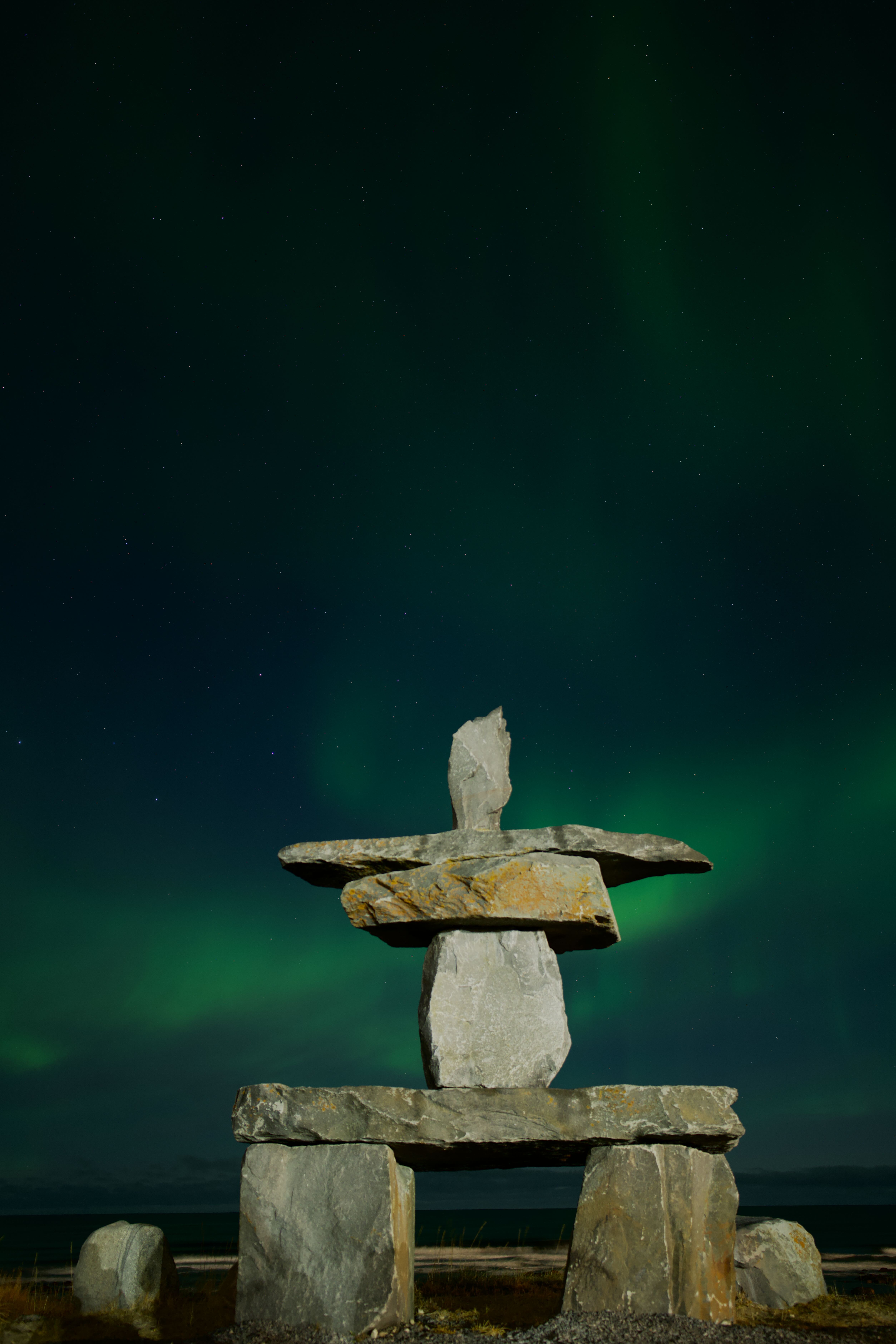
One night was clear and I had a ten minute window to capture the aurora borealis before it faded:

As the aurora faded I shot this Inukshuk, which is a traditional Inuit stone marker used as a navigation aid, marker for travel routes, fishing place, hunting ground, and location of reverence or memorial significance. The word “inukshuk” means “in the likeness of a human.”:

The wreck of the MV Ithaca, which ran aground in 1960:

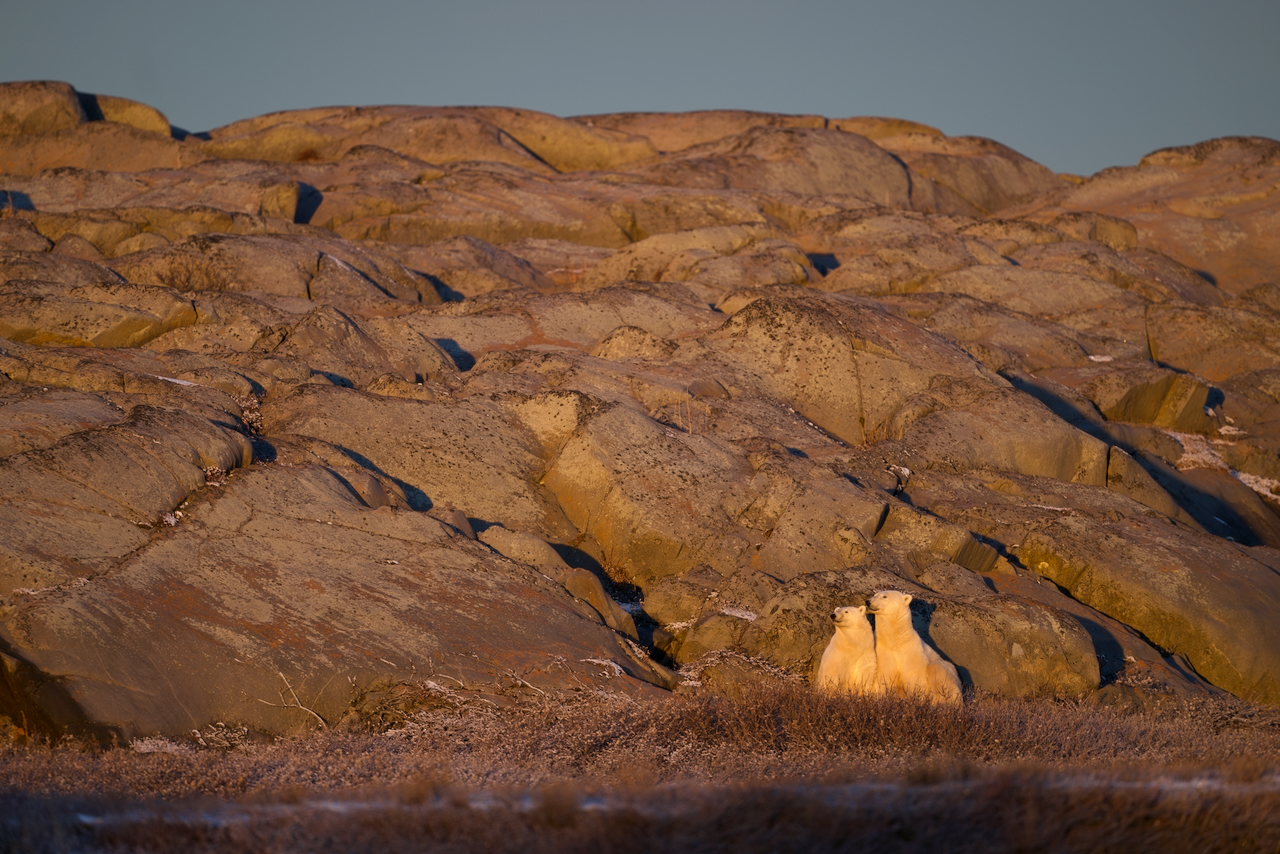
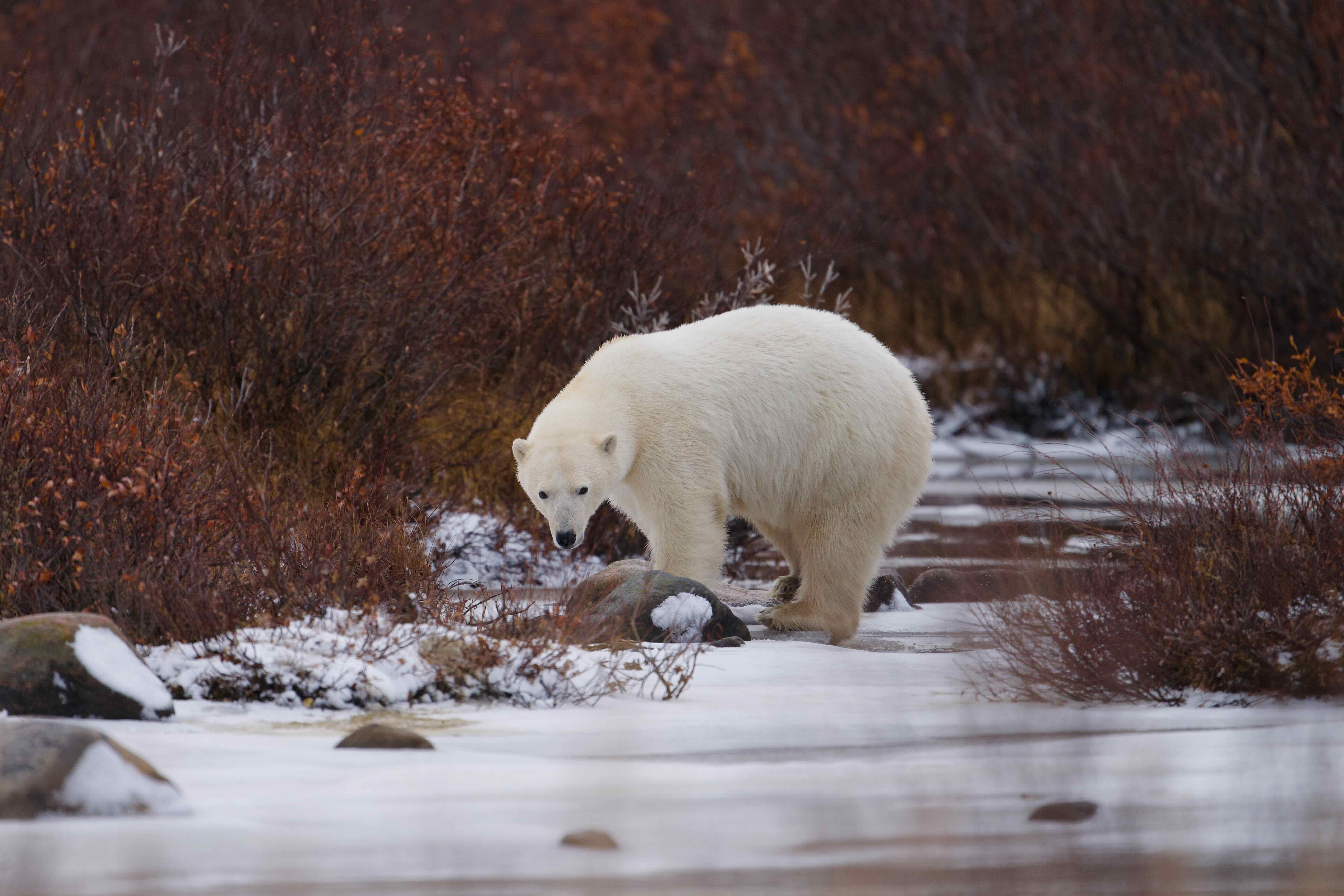
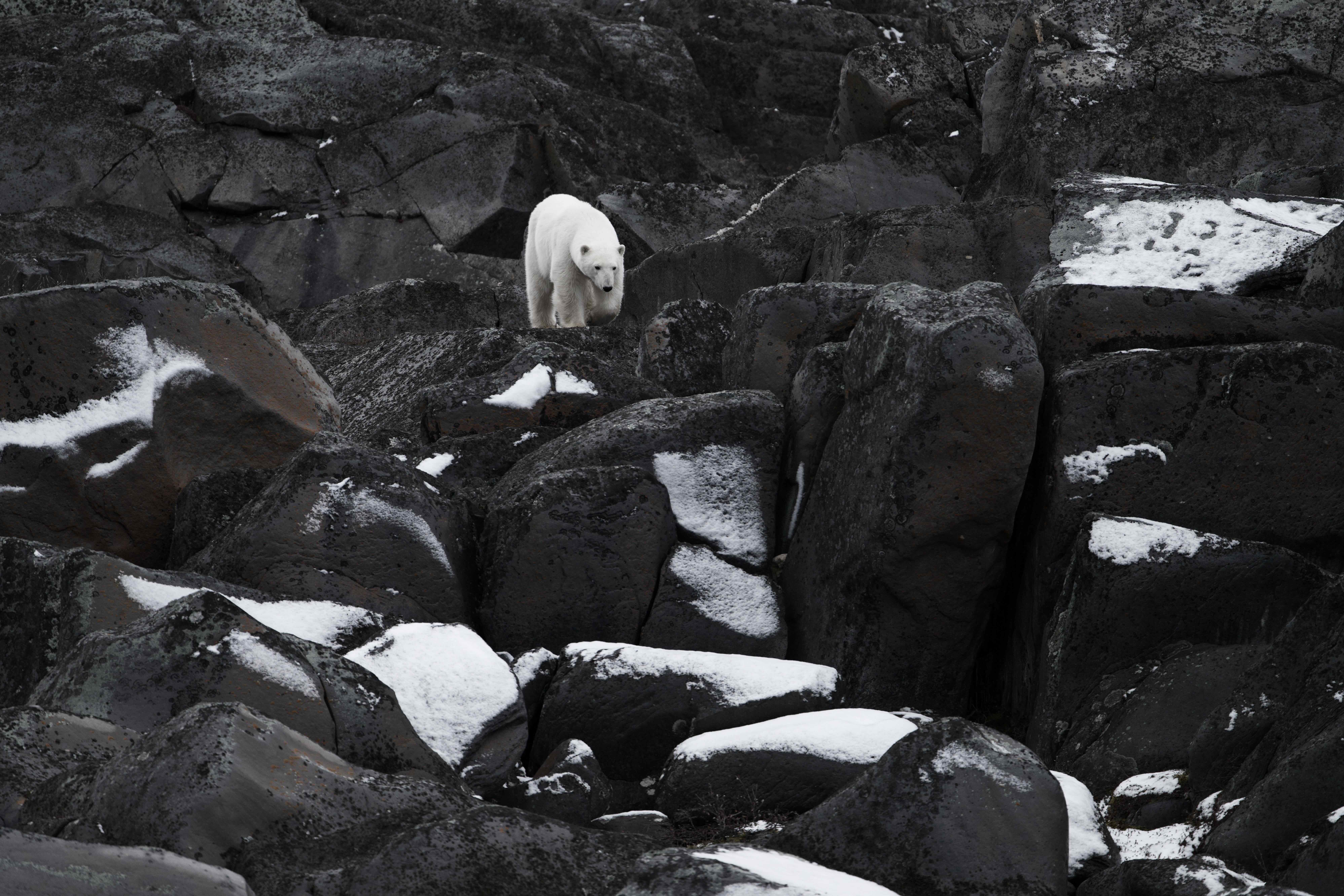
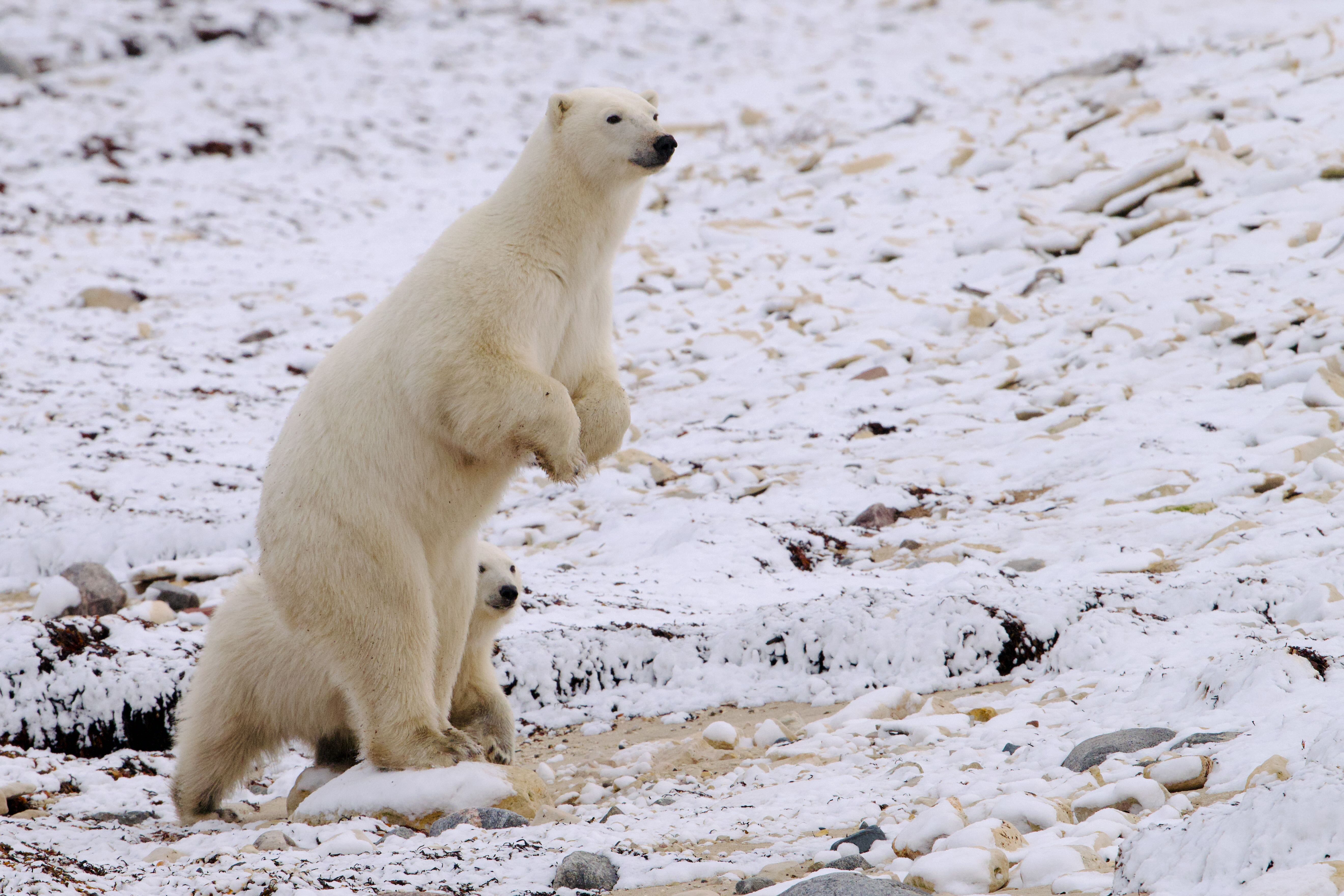
Polar bears (Ursus maritimus) are the reason tourists come to Churchill. The primary food of the Churchill polar bears is ring seals and their primary hunting method is called still-hunting, an ambush tactic where polar bears wait by seal breathing holes in the ice. Ring seals maintain 10 to 15 open breathing holes in the ice throughout the winter by using their sharp claws. They surface every 5 to 15 minutes to breathe. Polar bears use their sensitive sense of smell to locate these holes. Bears wait motionless for many hours for a seal to surface. When a seal pokes its nose up from the water, the bear grabs the seal’s head and… well, you can guess:

Obviously, still-hunting can only be done on ice. Hudson Bay is one of the Arctic regions where sea ice melts completely each summer, forcing all polar bears ashore for an extended fasting period (other Arctic populations live and hunt on ice year-round). The Western Hudson Bay population experiences one of the longest ice-free periods of any polar bear population, historically lasting 3-4 months from late July through early November. This seasonal pattern creates what researchers describe as a “walking hibernation,” where bears must survive entirely on fat reserves accumulated during their seal-hunting season on the ice:

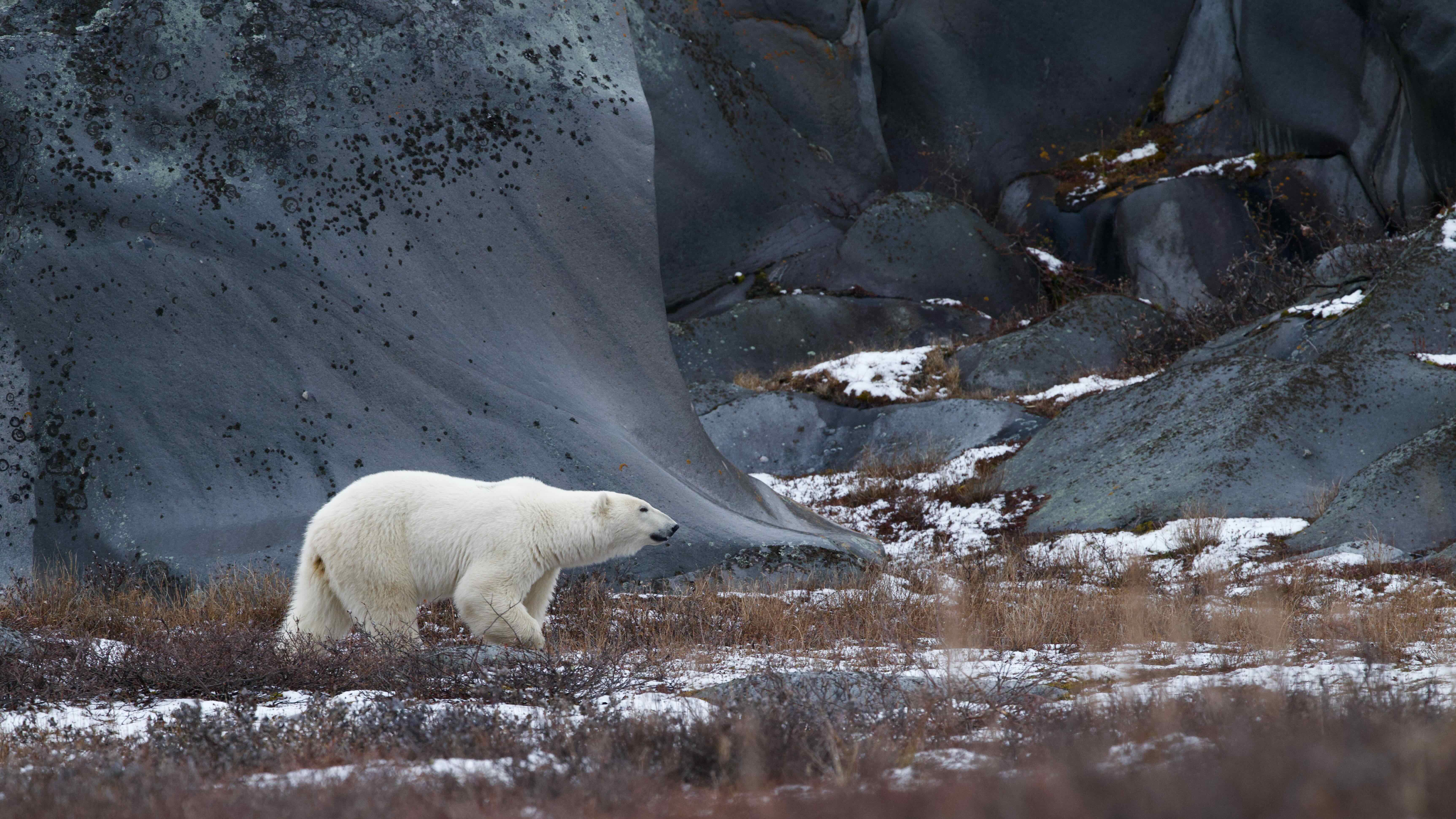
The local Churchill population is in decline. Extended ice-free periods due to climate change and unusual weather are blamed. Particularly hard hit are adult females and cubs, as pregnant females often lack the food necessary to successfully birth and raise cubs:

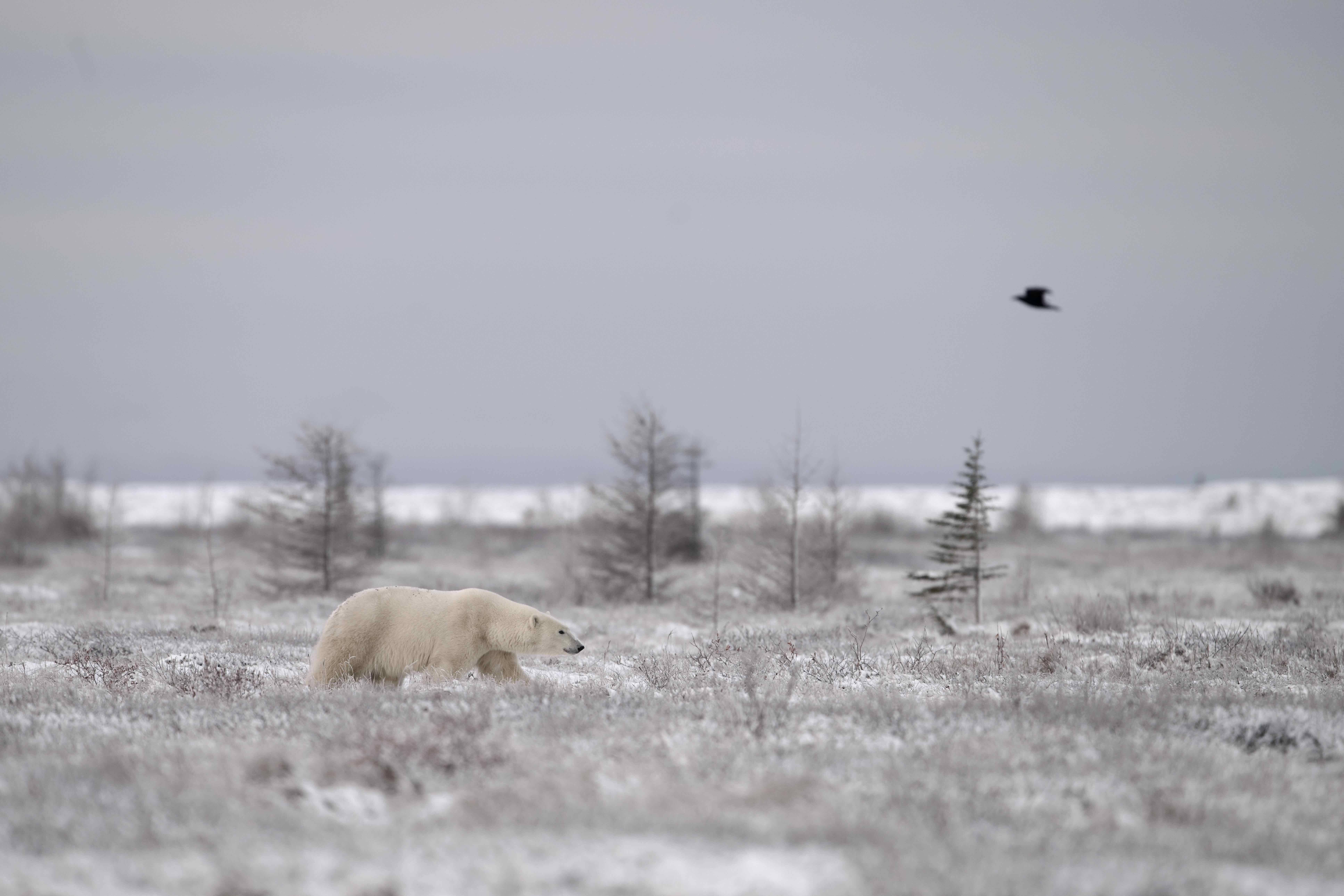
Polar bears congregate around Churchill due to its protrusion into Hudson Bay. The counterclockwise currents in Hudson Bay deposit melting ice along the coast in summer, where most bears come ashore. In autumn, these same currents cause ice floes to accumulate. Additionally, the Churchill, Nelson, and Hayes Rivers discharge freshwater into shallow coastal waters, and since freshwater freezes at higher temperatures than saltwater, ice forms earlier in this location. This early freeze-up attracts hungry bears eager to return to hunting after months of fasting:

Unfortunately, it is expected that ice-free periods may soon exceed critical fasting thresholds and that extirpation may be inevitable for the Hudson Bay populations that require seasonal ice. 2024 set a record of 198 ice-free days in Southern Hudson Bay:

The willow ptarmigan (Lagopus lagopus) undergoes a complete molt from brown in summer to white with black tail in winter:

The genus name Lagopus means “hare-footed,” referring to the feathers that completely cover their feet all the way to the tips of their toes. The feathers on the soles of their feet increase the weight-bearing surface area of their feet, acting as bird snowshoes so that they can walk on top of snow and also providing thermal insulation. Like other grouse, willow ptarmigans excavate snow burrows for roosting:

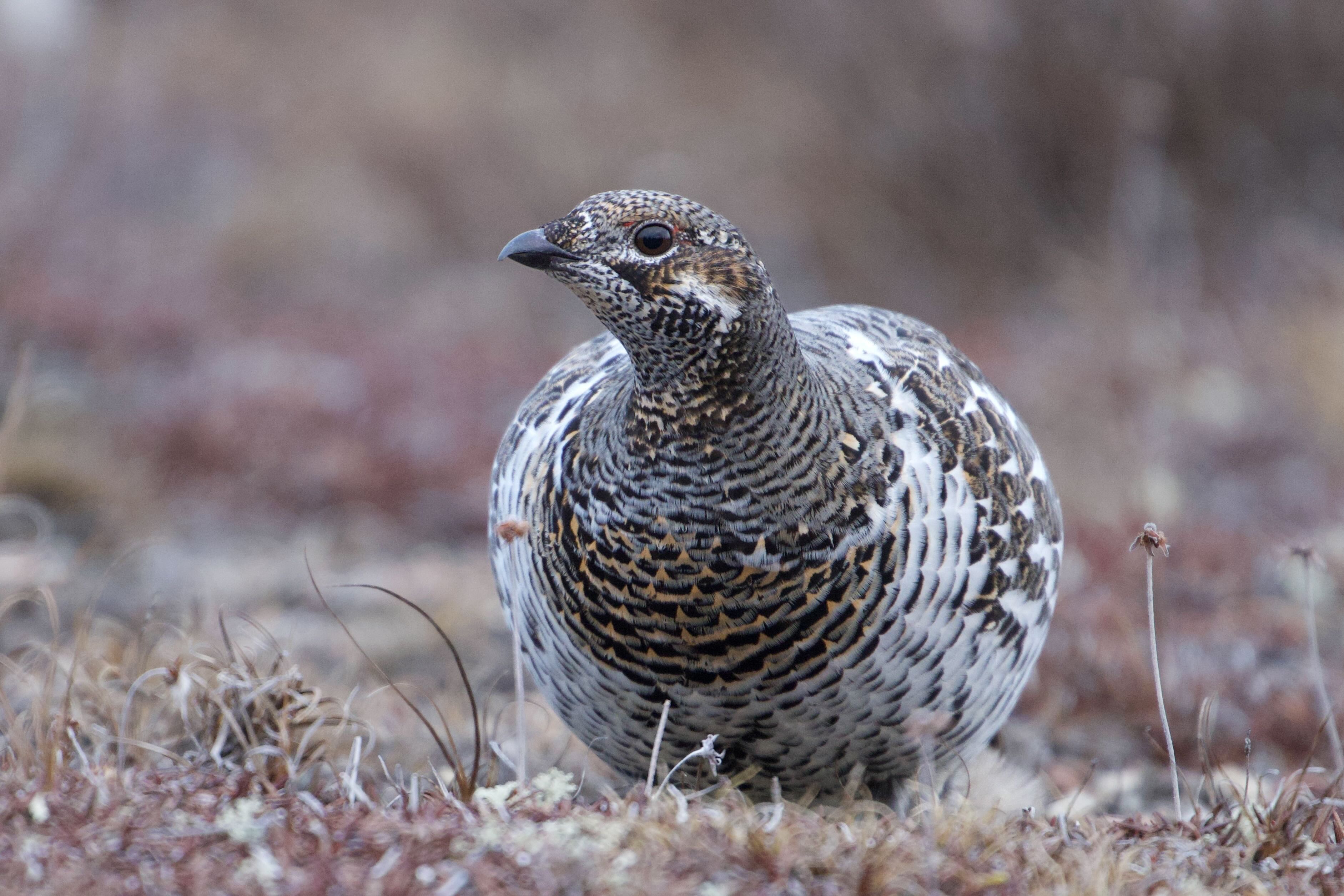
The spruce grouse (Canachites canadensis) survives winter on a diet of conifer needles. These needles are low in protein and extremely difficult to digest due to high cellulose content. To accommodate this diet, the spruce grouse’s digestive system enlarges during the winter:

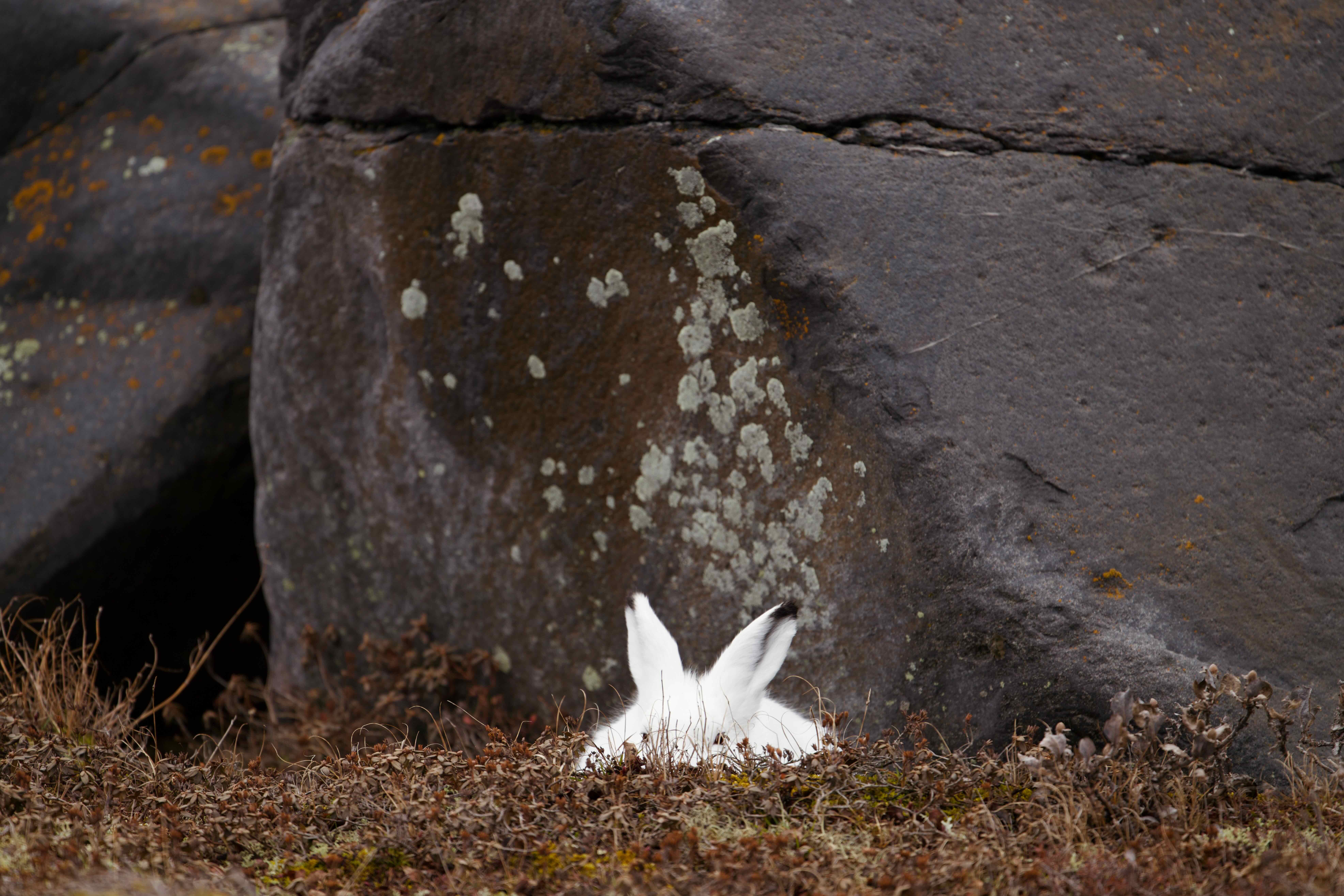
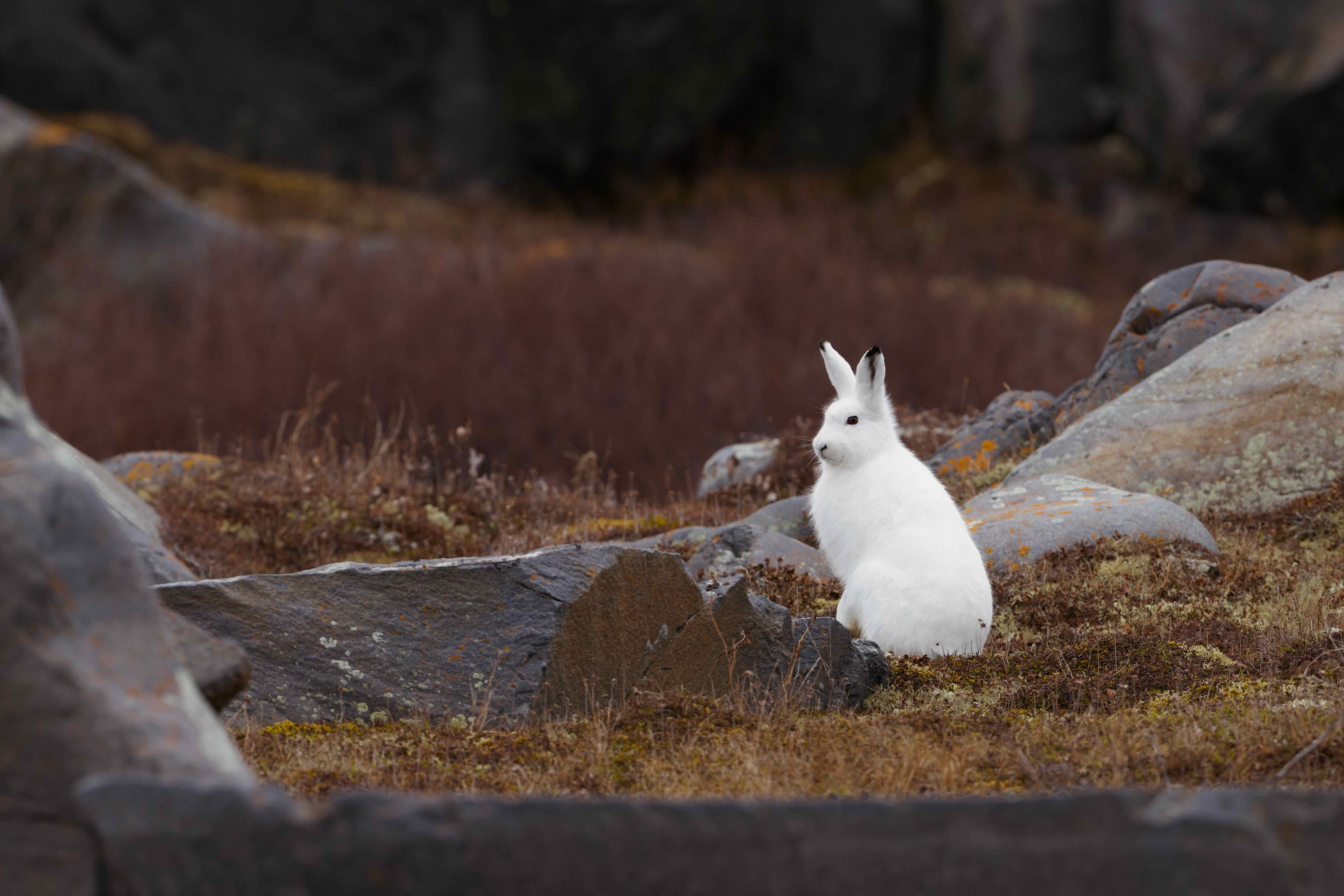
Arctic hares (Lepus arcticus) maintain normal body temperature (38.9°C) during the winter while despite a depressed basal metabolic rate. A reduced surface area to volume ratio through their compact body structure, combined with insulation from their thick fur and ~20 weight % body fat, enables them to maintain homeostasis:

Willows comprise the hares’ primary food source in the barren arctic. They consume every part of willow shrubs, including bark, twigs, roots, leaves, and buds. While generally solitary animals, arctic hares “flock” during winter months. Groups can range from dozens to as many as 3,000 individuals, huddling for warmth and moving as a single body: