Readers’ wildlife photos

August 6, 2025 • 8:15 am

Ecologist Susan Harrison has graced us with her third batch of photos from Alaska. Her captions and IDs are indented, and you can enlarge her photos by clicking on them.

Alaska part 3:  Kenai Peninsula

This post is the third in a series from a recent bird and wildlife trip to Alaska.  Unlike part 1 (Nome) and part 2 (Utqiakvik), part 3 takes place well below the Arctic Circle, along the Kenai Peninsula south of Anchorage.  The photos are from two boat trips, one that explored the rugged Kenai Fjords and another that meandered across Kachemak Bay.  Please bear with the less-than-perfect results of wielding my camera on moving boats in mixed weather.

Raft of Common Murres (Uria aalge) in front of a seabird nesting island:

Common Murre closeup:

Mixture of Common Murres and Thick-billed Murres (Uria lomvia; also known as Brünnich’s Guillemot) on a nesting cliff.  Jerry recently showed us photos of the latter species in Iceland.   It’s distinguished from Common Murres by the thin white line along the mouth:

Tufted Puffins (Fratercula cirrhata):

Horned Puffins (Fratercula corniculata) at their nest burrow:

Red-faced Cormorant (Urile urile), a rare and perhaps slightly misnamed North Pacific species:

Pelagic Cormorants (Urile pelagicus) at their nests; they are much more widespread than the Red-faced Cormorant, as well as seemingly redder-faced:

Rhinoceros Auklets (Cerorhincha monocerata):

Parakeet Auklets (Aethia psittacula):

Kittlitz’s Murrelets (Brachyramphus brevirostris), a rare seabird considered the “poster bird for global warming” because it breeds next to tidewater glaciers in the North Pacific and Arctic Oceans:

Black Oystercatchers (Haematopus bachmani) and Surfbirds (Calidris virgata) enjoying a rich rocky intertidal zone:

Starfish (or sea stars; Pisaster ochraceus and others) looking healthy and abundant, a welcome sight since their relatives farther south have been decimated by a wasting disease:

Steller Sea Lions (Eumetopias jubatus), a beast in which the male weighs about one ton, twice the size of the female:

Harbor Seals (Phoca vitulina):

Sea Otters (Enhydra lutris) in Kachemak Bay with the town of Homer in the background:

Mountain Goats (Oreamnos americanus) in the Kenai Fjords, where they are most easily seen from a boat. This is the only part of the US where they still occur naturally rather than being reintroduced:

Readers’ wildlife photos

June 20, 2025 • 8:15 am

There may not be any wildlife photos for a week or so given my absence, but that shouldn’t stop you from sending them to me.

Today we have some photos by Jim Blilie taken in Oregon. There are many flowers, but also some landscapes and a chonky sturgeon.  Jim’s captions and IDs are indented, and you can enlarge the photos by clicking on them.

These photos are from two locations near our home.  The one an old standard for us and the other a new discovery.

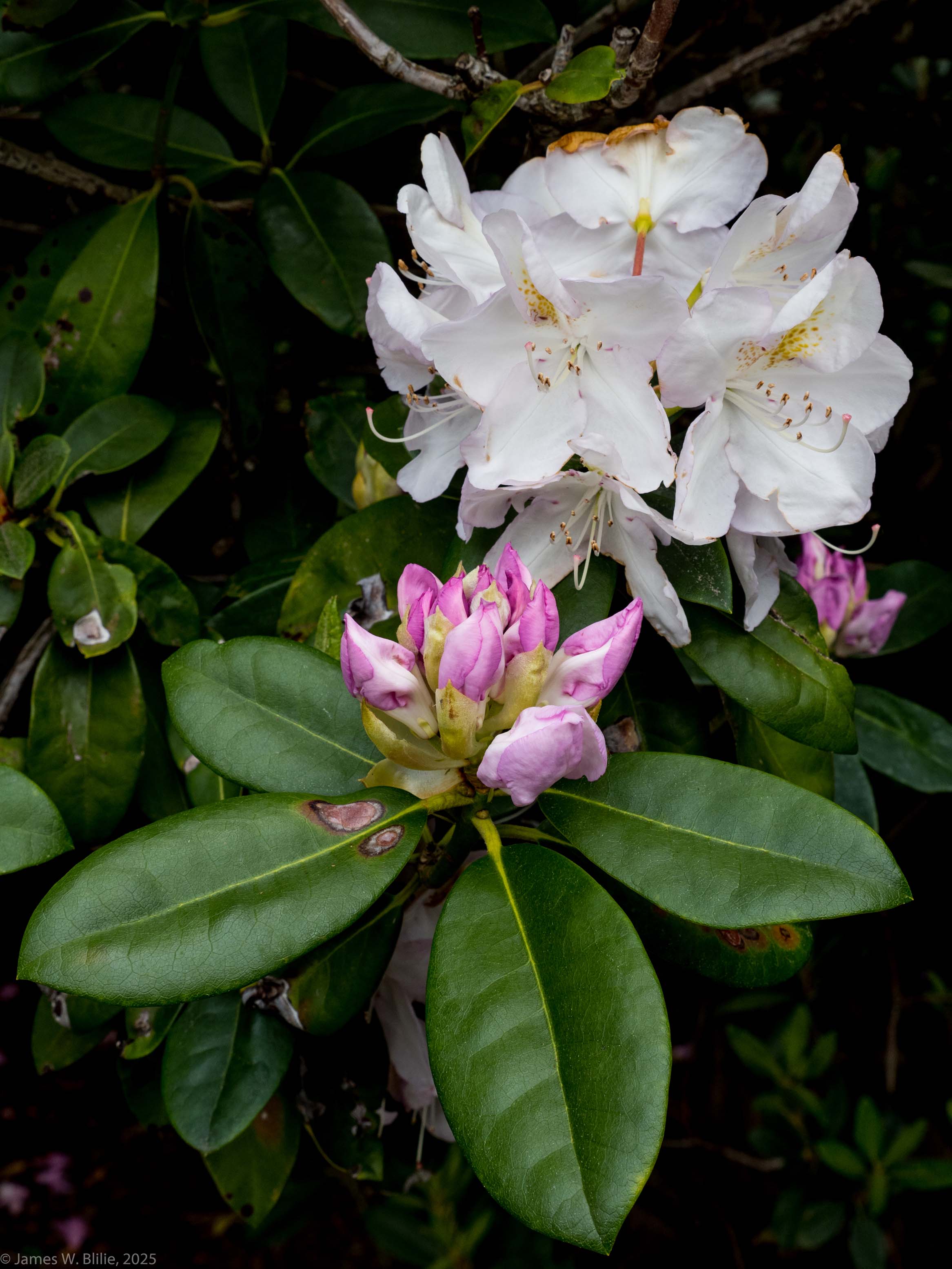
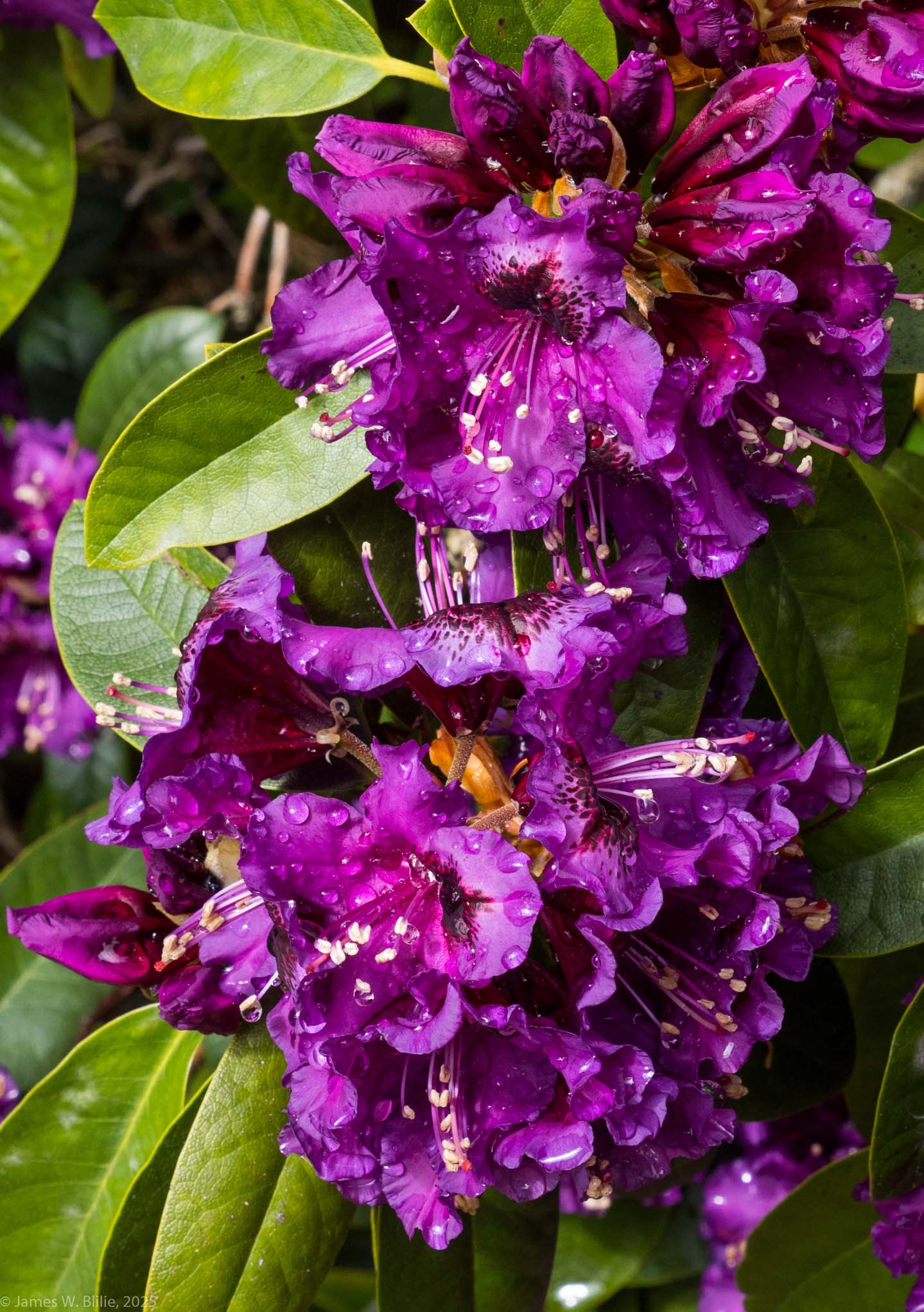
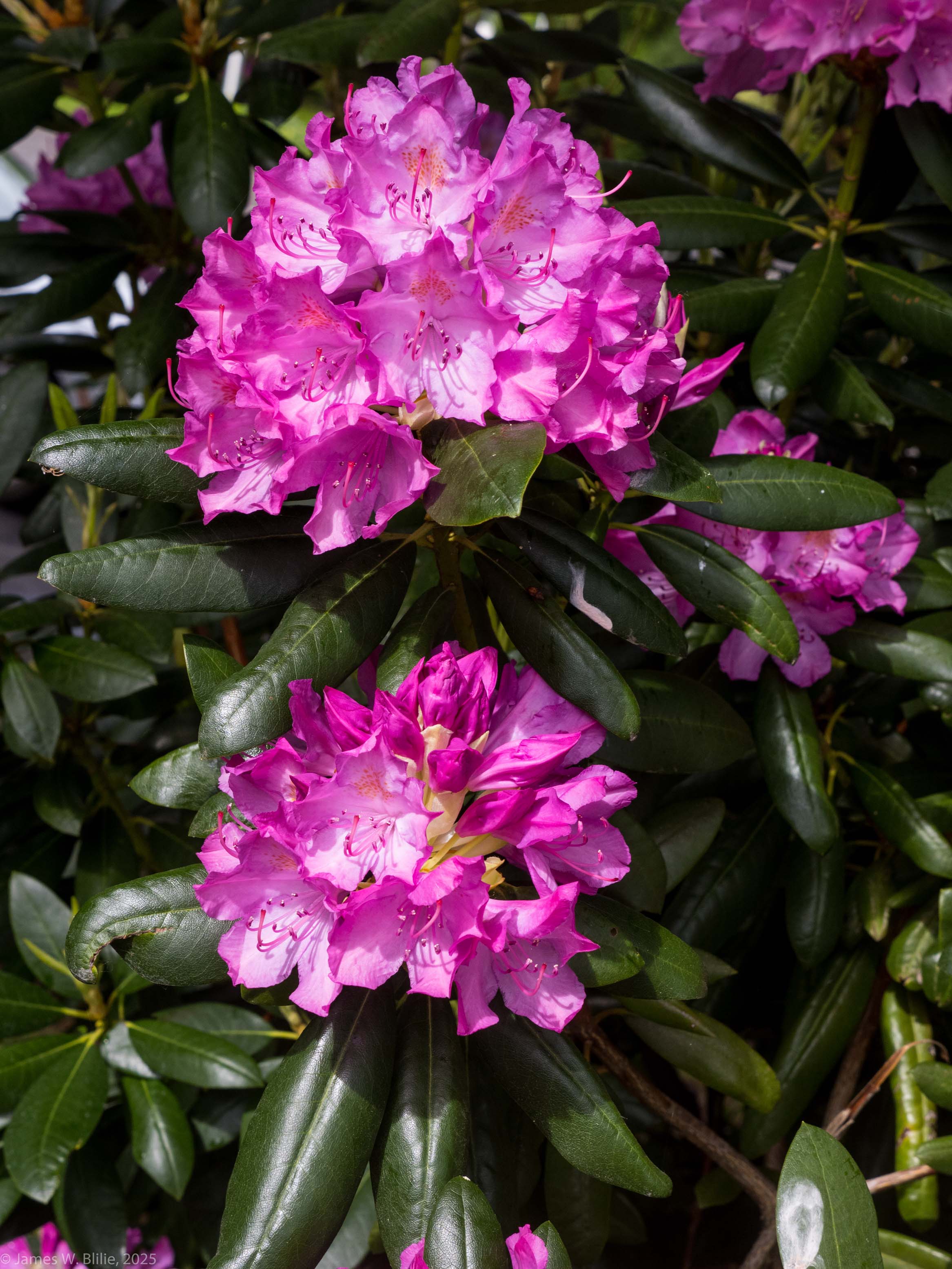
First the old friend:  The Bonneville Fish Hatchery and Sturgeon Center.  This facility is an operating salmon hatchery; but it also has ponds of Rainbow Trout (Oncorhynchus mykiss) where you can feed the fish and two large ponds with White Sturgeon (Sinosturio transmontanus), including a very large one named Herman (Herman the Sturgeon).  In addition, it has beautifully gardened grounds that make it feel like an arboretum.  My photos are almost all of the flowers.

These were taken a couple of weeks ago during the peak of the rhododendron (Rhododendron spp.) flowering (one of my favorite flowers) so these concentrate on the rhodies.

Many iris (Iris spp.) and roses (Rosa spp.) were also blooming:

And one image of Herman the Sturgeon from the viewing window of the main pond:

Next is our new discovery:  The Mill Creek Ridge Natural Area, above The Dalles, Oregon, owned by the Columbia Land Trust.  This is a beautiful ridge that provides a rolling walk with 360-degree views of the Columbia RiverMount Hood, and Mount Adams (on a clearer day), once you make a stiff ascent of a few hundred vertical feet from the parking area.  Another draw are the profuse wildflowers.  We missed the peak wildflowers by a couple of weeks (another hiker reported identifying 26 species).  We went on a weekday and had the entire place to ourselves.

The Columbia Land Trust does wonderful work in Oregon and Washington:  They purchase key lands for habitat and recreation and preserve it undisturbed for present enjoyment and for the future.  We have given them individual donations in the past and I just started a monthly donation to them.  I ask your readers to please donate, if they can.

First, some of the general views from the ridge.  Looking south:

Then looking northeast, including the city of The Dalles, Oregon and The Dalles Dam on the Columbia River:

Next are just a few of the flowers we saw.

Sticky-stem Penstemon (Penstemon glandulosus var. chelanensis):

I think this is: Frasera albicaulis, commonly known as whitestem Frasera or white-stemmed elkweed:

I think this is: Common Stork’s Bill (Erodium cicutarium:

Paintbrush (Castilleja sp.):

Finally, the signpost at the parking area, giving general information:

Readers’ wildlife photos

June 5, 2025 • 8:15 am

Susan Harrison, an ecologist at UC Davis and a regular contributor, sends us a narrative about how she became a Swiftie. Her notes and IDs are indented, and you can enlarge her photos by clicking on them.

A miraculous waterfall and its avian inhabitants

or “How I became a Swiftie”

“The eighth wonder of the world,” Theodore Roosevelt once called Burney Falls in Shasta County, California.  Amid a dry forested landscape, a massive cascade of water not only spills over a cliff in normal waterfall fashion, but also bursts through layered crevices in the rock to form sheets, veils and braids spanning hundreds of feet in width.  The flow remains remarkably constant year-round and even in drought years.

Burney Falls:

These falls are one of the most important homes for the Black Swift, (Cypseloides niger), a rare and mysterious bird that nests behind waterfalls and on sea cliffs at only about 80 known locations.

State Park sign announcing the waterfall’s statistics and its celebrated inhabitant:

Nesting Black Swift, from allaboutbirds.org:

Swifts fly with rapid stiff wingbeats and make dizzying swoops as they catch insects and visit their well-hidden nests.  They weren’t named for standing still, and indeed can’t stand at all since their legs are tiny and weak.  (Their family name is Apodidae, meaning “no feet”.)

Black Swifts swooping around Burney Falls; these photos are the best my camera and I could do with a fast and faraway subject:

These two may be the co-occurring and more common Vaux’s Swift (Chaetura vauxi), based on their pale heads, but please feel free to weigh in if you’re an expert (= a Swiftie?): \

Why Burney Falls is so copious and constant:

Burney Mountain, source of the mighty underground river that feeds the falls:

Unassuming little Burney Creek less than a mile above the falls:

FDR’s Civilian Conservation Corps built the trails and stonemasonry that give access to Burney Falls and so many other natural wonders.  My hat is perennially off to those hardworking survivors of the Great Depression.

Historic CCC cabin:

And a philosophical park bench:

Readers’ wildlife photos

May 14, 2025 • 8:15 am

Today’s photos from the Pacific Northwest come from reader Jim Blilie. Jim’s captions and IDs are indented, and you can enlarge his photos by clicking on them.

Spring has sprung in the Pacific Northwest after a long, cool tapering off of winter.  We have finally hit the 70°s our area (20+°C), in May.  This is a set of spring flowers (mostly).  We live in Klickitat County, Washington, at the extreme southern edge of Washington state, just east of the Cascade mountain range.  These photos, except the last two, are taken in Klickitat County.

First, two photos from a hike we take on local ranch land (the landowners are kind enough to allow public access to their land, except during calving season).  These are Grass Widows (Olsynium douglasii).

Next are two photos of some ornamental flowers that were originally planted but now run wild in our yard in the early spring.  Empress Lilies (Fritillaria imperialis), which smell almost exactly like skunk cabbage, which is probably why the deer don’t eat them.

Next are two photos from our local daily exercise walk, down the gravel road we live on.  Again, from early Spring:  Calypso Orchids (Calypso bulbosa) and Trillium (probably:  Trillium ovatum)

Next are three photos of Balsam Root (probably:  Balsamorhiza sagittata) and Lupine (probably:  Lupinus latifolius) flowers on a local hillside that we like to hike especially during the Spring and winter (it’s much too hot in the summer as it faces south). In the third photo, you can see Mount Hood (highest peak in Oregon) and Mount Jefferson (second highest in Oregon) at the top.

Next are three photos that show the prize view for hiking up this local hillside (aside from the beautiful flowers in the Spring):  On this day (5-May-2025), it was as clear as we’ve ever seen on this hike.  To get the view to the north (Mount AdamsMount RainierGoat Rocks), you have to ascend 1200 feet (366m) to the top of the ridge.

Mount Adams near and large and Mount Rainier over the northern shoulder of Mount Adams.

Mount Jefferson, second highest in Oregon:

Three Sisters in central Oregon:

These are shot at the 35mm equivalent of only 200mm, so you can see how clear the day was.  We could see almost every Cascade volcano from South Sister to Mount Rainier (some were hidden from our viewpoint), a span of about 190 miles (306 km).

Finally are two photos taken yesterday (7-May) in neighboring Skamania County on a hike.  Pacific Dogwood (Cornus nuttallii), which is in full bloom in our woods now.  And finally, Oregon Anemone (Anemonoides oregana):

Readers’ wildlife photos

May 6, 2025 • 8:15 am

Today a regular, UC Davis ecologist Susan Harrison, made a “save the site” contribution so this feature wouldn’t disappear (but, as usual, her photos are great).  But I still importune readers to send in their photos, as we have only two or three days’ worth left.

Susan’s captions and IDs are indented, and you can enlarge her photos by clicking on them.

Miscellaneous birds and plants, April 2025

Most of today’s photos come from Upper Table Rock near Medford in southern Oregon.  The Table Rocks are a pair of basalt plateaus formed when lava flowed down a valley between now-vanished ridges.   Their flat tops support vernal pools (small seasonal wetlands) and swathes of spring wildflowers.  Their steep sides are cloaked in a mixture of chaparral, oak woodland, and conifer forest.

Views across the top of Upper Table Rock, east to Mt. McLoughlin and southwest to the crest of the Siskiyou Mountains:

Lark Sparrows (Chondrestes grammaticus) in the table-top meadows, strolling in Goldfields (Lasthenia californica), eating the round seeds of Shining Peppergrass (Lepidium nitidum), and posing by a Rusty Popcornflower (Plagiobothrys nothofulvus):

Blue-gray Gnatcatcher (Polioptila caerula) singing on a Buckbrush (Ceanothus cuneatus):

Oak Titmouse (Baeolophus inornatus) on an Oregon Oak (Quercus garryana):

Bewick’s Wren (Thyromanes bewickii) on a blackberry (Rubus) and a bare branch:

Hermit Thrush (Catharus guttatus) on a gnarled Madrone (Arbutus menziesii):

Spotted Towhee (Pipilio maculatus) among Oakmoss lichen (Evernia prunastri):

The last three photos are from the banks of our local waterway, Putah Creek, in northern California:

California Towhee (Melozone crissalis):

Swainson’s Hawk (Buteo swainsonii):

Yellow-billed Magpie (Pica nuttalli):

Readers’ wildlife photos and video

April 30, 2025 • 8:15 am

I am running out of photos, so please send in any good ones you have. Thanks!

Today’s batch is from reader Ken Phelps, whose IDs are indented. There are several photos and then a salacious video of otters at the bottom. Click the photos to enlarge them.

The first shot is a Vanilla Leaf plant (Achlys triphylla) grimly hanging on to life last October.

The deer photos were taken in July some years ago. It was lounging on the unmanicured mossy rock on which our bedroom is perched. It was watchful but unperturbed. The shot labeled Deer Pose was taken through the bedroom French door. A slight reflection gave it a slightly gauzy boudoir look.

z

A close look at the petals of a very yellow flower whose identity I do not recall.

Four mushrooms crowded together:

Ice on a gravelly puddle. Good for a bit of pareidolia:


More in the pareidolia vein. Knobbly ice forming on a rocky outcrop, converted to a B&W negative image. A lot of faces, many of them canine, hidden in there:


Not wildlife, but our older dog Dixie trying to look sorry about making, and then rooting about in, a mudhole in the garden

And listen to the noise of these mating otters! (Sound up!)

Here is a link to a video I took of a pair of river otters engaging in what I assume is conjugal bliss. Filmed while we were moored at the wharf at Newcastle Island, Nanaimo, British Columbia.

Readers’ wildlife photos

April 18, 2025 • 8:25 am

Dear readers, send in your wildlife photos, as we (aka “I”) need them.

Today we have an unusual series: the world from above, taken on a plane by David Jorling. David’s comments are indented, and you can enlarge the photos by clicking on them.

This series of photos were taken from a non stop flight from Phoenix to Portland. These pictures were taken as dawn was breaking on December 2, 2024.
Based on the coordinates recorded on my iphone, this appears to be the Osgood Mountains in Northern Nevada, near or at the area where it has been reported a large Lithium deposit has been found.

This I believe is the Santa Rosa Range in Northern Nevada, near the town of Paradise Valley:
Now over Oregon, this is Steens Mountain, which is about as remote an area you can find in Oregon’ and also one of the most beautiful.  I highly recommend a visit if the reader has  not been there.   You can drive to the peak and look east for miles. There is only one place to stay nearby which called French Glen, where good meals are served family style.


The plane is now approaching Portland from the East over the Columbia River Gorge. My window is facing south which provides a nice view of Mt. Hood looking south.. I have climbed to the summit, but that’s not saying much, as it has been reported that it is the most climbed peak in North America.  The best place to stay is Timberline Lodge, which is on the south face of the mountain:\

A closer look at MT Hood. The peaks on the horizon are from left: Mt bachelor, neat the City of Bend, Two of the Three Sister peaks, Mt Jefferson directly above Mt Hood, and I believe Mt Washington: on the right.

This is one of two reservoirs known as Bull Run, which supplies Portland with mosy of its water.  This is a few miles east of My Hood:

The plane went past the Portland airport and is turning to approach it from the west, just as the sun was rising: