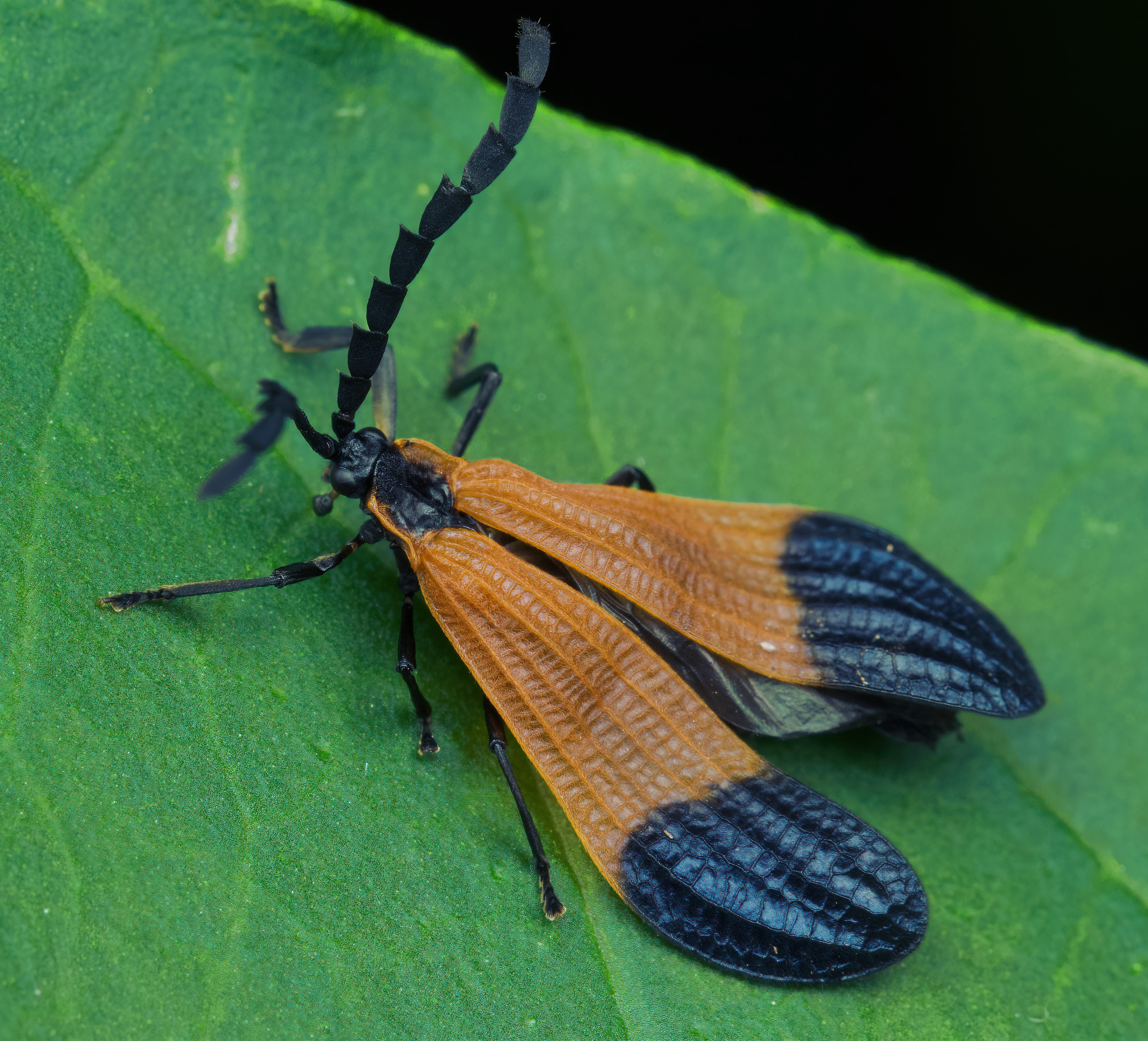
Readers’ wildlife photos

February 27, 2024 • 8:15 am

Please send in your wildlife photos if you got ’em. Save Robert Lang’s Antarctic photos, I have little backup, and that would be disastrous. Thanks!

Today regular Mark Sturtevant gives us a passel of insect photos. His captions and IDs are indented, and you can enlarge the photos by clicking on them.

This post starts the pictures taken last season, but I am terribly behind in my post-processing so these were only recently made ready to share. It was another great year, and praise to the gods of light that my energy for going out as often as possible shows no sign of abating.

The pictures were taken either in or around my house, or from parks in eastern Michigan. I use an extremely worn out Canon t5i body (a consumer-grade crop sensor camera. Nothing fancy). Lenses include the Canon 100mm f/2.8L macro lens + a Raynox 250 diopter lens for extra power, and at times I use the Venus/Laowa 2.5-5x super macro lens, which is fully manual. My external flash is the Kuangren dual head flash with home-made diffusers. Readers can see all that on my odds-and-ends Flickr page if they like.

From an outing to an area park, here is an unknown caterpillar on Ash. I don’t yet have an ID:

Here is a small Dung Beetle with an interesting color. I suspect the genus Onthophagus:

A Soldier Beetle Podabrus flavicollis:

Next up are Scorpionflies (Panorpa sp), weird insects commonly seen on low foliage in forests. They are generally scavengers on dead insects. The scorpion-like tail is only seen in males, and it is simply their enormous genitalia. I stuck with this one for a long time, and he became quite used to me so I could get closer and closer:

As shown in the next picture, female Scorpionflies lack the impressive tail equipment:

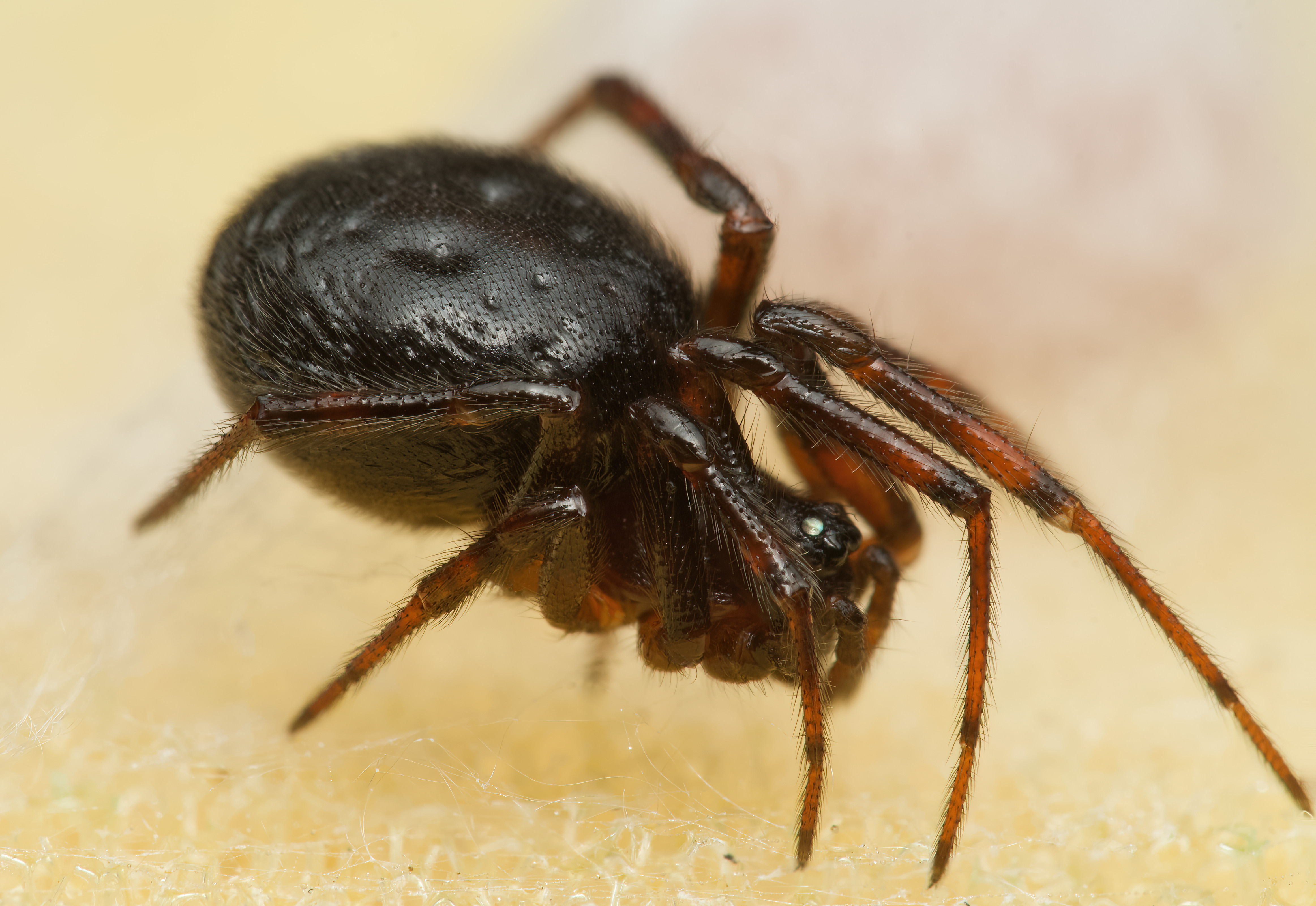
A Cobweb Spider (Steatoda sp.) is shown in the next picture. This could be one of about two species in my area, but they are tricky to tell apart. I had inquired about its ID in a spider-centric Facebook group, and the resident experts weren’t sure of the ID either:

This set closes with an adorable Dimorphic Jumping Spider (Maevia inclemens). There were lots of these around the house last summer. This cute little male was fun to photograph in a staged session on the dining room table, and these are two closely cropped pictures of the little guy. Their common name reflects the fact that males come in two color forms. Some males are like this one, while others are pale all over but with orange markings. Those males therefore look more like females. I always have a soft heart for Dimorphic Jumper males since they are always moving around, bobbing their cute little pedipalps, and hoping with all their hearts that a female will signal back:

Thank you for looking!

Readers’ wildlife photos

February 6, 2024 • 8:45 am

Mark Sturtevant has contributed another batch of insect photos today. I’ve indented his captions and IDs, and you can enlarge the photos by clicking on them.

Here are more arthropod pictures, and this should complete the set from two summers ago. I am always behind in sharing these to various online sites since I go out a lot to the woods and fields of Michigan, where I live.

One of our larger Caddisflies is the Northern Caddisfly (Pycnopsyche sp.). Caddisflies are related to butterflies and moths, and they can look a lot like moths, but there are differences such as having hairs on their wings rather than scales. Caddisfly larvae are sort of like caterpillars, but they are aquatic and most species carry around a protective case made from either plant matter or pebbles, woven together with silk. Larvae from this genus mainly fasten together a bundle of twigs to use as a portable home.

Here is a short video about the larvae, showing that they can be quite artful in making their cases, and that their use of sticky silk under water is actually very remarkable.

Next up is a Locust Borer (Megacyllene robiniae). These wasp-mimicking beetles are common visitors on goldenrods in late summer, and their larvae tunnel into black locust trees. Since we have both in the yard, I always see these around.

Next is a European Praying Mantis (Mantis religiosa), photographed from a stage on our dining room table. Nothing too special here, but this was done for the purpose of photographing a nerdy detail about Mantids. Unfortunately, the Mantid that I found was a male, and that meant he would be a complete pain in the a** because males constantly want to move around to hunt for lady Mantids. This one frequently flew off from the dining room table, and I’d have to go chase it down. Nevertheless, the nerdy detail was eventually photographed.

Here is that detail – a specialized patch of bristles on the inside of their front femur. Mantids regularly groom themselves, and they even have a special structure on their front legs just for cleaning their large compound eyes. This has been an item of considerable discussion on one of the macrophotography web sites, and the subject has even led to a couple Facebook memes. The internet is weird that way.

Here is a video of a grooming mantis. The moment it uses its eye brush starts at 35 seconds in. It’s not that dramatic, but I geek out on it.

Moving on, here is a large Nursery Web Spider (Pisaurina mira), so-named because females build a web nursery at the tops of plants for their young. I was trying to photograph the spider with my wide-angle macro lens, but at that moment it decided to surprise me by suddenly clambering up onto the camera. I like the result.

As this set was done very late in the season, with fall moving in, there are now other late-season subjects to share. Around the yard at that time there will always be several Very Gravid Orbweavers in their webs. A couple different species are possible, but I think this one is the Shamrock Orbweaver (Araneus trifolium). I also took this one indoors to do a manual focus stack portrait by using the amazing Venus 2.5-5x super macro lens.

Here are Yellow Jackets on wind-fallen apples in the backyard– another sign that the season was ending (*sniff*). On the left is an Eastern Yellowjacket (Vespula maculifrons), and on the right is a German Yellowjacket (Vespula germanica). As is pretty common, the two species soon begin to fight over the same apple, even though there are dozens of the damn fruits on the ground that I will have to pick up later. These contests look rather dramatic, but their stingers never come out.

And finally, here is a focus stacked wide angle macro picture of autumn trees. The perspective shot is done by leaning against a tree and shooting straight up while nudging the focus a little each time. The set of pictures — maybe 8 or so, are then merged with software to give this deep focus picture.”

Readers’ wildlife photos

December 22, 2023 • 8:15 am

Please send in your wildlife photos: the holidays are a good time to put them together.  I do need more contributions.

Today we have part 2 of Ephraim Heller’s series of photos taken in Costa Rica (post 1 is here). This one concentrates on birds. As Ephraim says, “This e-mail contains my photos of birds, other than hummingbirds and trogons. Hummers and trogons will be the focus of e-mail #3. For more photos you can follow me on Instagram at https://www.instagram.com/hellerwildlife/.”

Ephraim’s captions are indented, and you can enlarge his photos by clicking on them.

Yellow-throated Toucan (Ramphastos ambiguus). I saw many of these birds pick nuts or fruit with the tips their long beaks, then toss the morsels in the air and catch them in the centers of their beaks to reposition the food for swallowing.

Another Yellow-throated Toucan (Ramphastos ambiguus):
Montezuma Oropendola (Psarocolius montezuma). These are large, loud, social birds. Despite their size, these birds build hanging woven nests of fibers and vines that are 24-71 inches long:

Piratic flycatcher (Legatus leucophaius) bringing bugs for its young in a hanging nest. It gets its name because it does not build its own nest, but appropriates the domed or enclosed nests of other bird species. Once the persistence of the flycatchers has driven the rightful owners away, their eggs are removed, and the female flycatcher lays its own eggs:

Great kiskadee (Pitangus sulphuratus) diving into water to collect bugs.


Crested Guan (Penelope purpurascens). A turkey-sized bird whose hair stylist’s phone number is in high demand. When in flight they can be mistaken for tenured faculty at the Institute for Advanced Studies.

American Purple Gallinule (Porphyrio martinica). Their long toes help them walk onto floating vegetation by distributing their weight across a large surface area.

Bare-throated Tiger-Heron (Tigrisoma mexicanum).

Great Curassow (Crax rubra) – female. Its numbers and distribution in Costa Rica have been reduced due to hunting for food and sport:
Scarlet Macaws (Ara macao). A loud, raucous, gregarious bird. The scarlet macaw can live up to 90 years in captivity, although a more typical lifespan is 40 to 50 years.

Black-bellied Whistling-Ducks (Dendrocygna autumnalis) sharing gossip. They are unique among ducks in their strong monogamous pair-bonding.

Northern Barred-Woodcreeper (Dendrocolaptes sanctithomae) with pseudoscorpion (Pseudoscorpiones). They northern forage mostly by following army ant swarms to feed on prey disturbed by the ants. Indeed, as I was photographing this bird I was being bitten by army ants crawling over my legs.

Bicolored Antbird (Gymnopithys bicolor) with a tasty spider. This bird was also flitting about the area of the army ants, feeding on the displaced arthropods.

Bicolored Antbird (Gymnopithys bicolor) with a tasty spider. This bird was also flitting about the area of the army ants, feeding on the displaced arthropods.

Long-tailed Silky-flycatcher (Ptiliogonys caudatus) swallowing a berry. This bird has a limited range, occurring only in the mountains of Costa Rica and western Panama, usually from 1,850 m altitude to the timberline.

Flame-colored Tanager (Piranga bidentata). This bird was so pretty and was kind enough to pose among the flowers.

Acorn Woodpecker (Melanerpes formicivorus) dropping off a branch. Per Wikipedia:

“Acorn woodpeckers are cooperative breeders, living and breeding in family groups of up to 15 individuals. Field studies have shown that within the same population, groups range from monogamous pairs to polygynandrous breeding collectives consisting of coalitions of up to 8 males and 4 females, along with nonbreeding “helpers at the nest” that are offspring from prior breeding events. Regardless of composition, all breeder males (who are usually brothers or fathers and their sons) compete for matings with all breeder females (who are sisters or a mother and her daughter), the latter of which lay their eggs communally in the same nest cavity. There is considerable variability within and among populations, suggesting extraordinary social plasticity. Cooperative breeding, defined as more than two birds taking care of nestlings in the nest, is a relatively rare evolutionary trait that is thought to occur in only nine percent of bird species. Most cooperative breeding species have helpers at the nest, but acorn woodpeckers are unusual in exhibiting both helping at the nest and cooperative polygamy (polygynandry). It is generally believed that limited territories are a key driver of cooperative breeding behavior in birds, and in the case of the acorn woodpecker, the availability of acorn storage granaries is a key limited resource.”

Spectacled Owl (Pulsatrix perspicillata):

Scarlet-rumped Tanager (Ramphocelus passerinii) kindly posing on a flower:

Readers’ wildlife photos

December 15, 2023 • 8:15 am

Today’s photos come from our intrepid regular, Mark Sturtevant. Mark’s text and IDs are indented, and you can enlarge his photos by clicking on them:

In a recent post, I shared some pictures of arthropods taken the previous summer on a trip to my home state of Iowa. Here are more pictures that came out of that trip.

To begin, readers may recall that the previous set included pictures of a large wolf spider (Tigrosa aspersa). To jog your memory, here is another picture of her:

One thing about wolf spiders is that their eyes produce a lot of eyeshine when you put a light on them at night. Like cats, these nocturnal spiders have a reflective layer in their eyes, and so a simple walk outside with a flashlight can reveal many glowing eyes of these spiders. Strangely, the internet does not offer very detailed pictures of this phenomenon, so I decided to take the spider home to give the internet a real close look at wolf spider eyeshine. Back at home, I put her in a bucket of sand that was topped with a glass box that I had made from thin picture glass. The photographs below were taken from long exposures with a pinhole flashlight, in a dark basement, while the camera was fixed on a tripod. Getting eyeshine from a distance is super easy. But I found that when working up close, the angle between the light and the camera lens had to be very exact to get much of anything.

I soon learned that she liked to hide in a burrow, and so here she is glaring up at me from a tunnel that I made for her. The radiant pattern of light is a cool camera artifact that lights and reflections can have when a lens aperture is stopped way down. I am here reminded of Shelob, the giant spider in The Lord of the Rings – “an evil thing in spider form”.

The remaining pictures were taken while still back in Iowa. All but the first were taken over a couple nights while staking out my brothers’ porch lights. The family is quite accustomed to this sort of thing, of course.

A recently emerged Annual CicadaNeotibicen sp.:

Adult Antlion, I think Myrmeleon immaculatusThis species is a considerably bigger than the Antlions back home! :

Tachinid Fly, either Leskia or Genea sp. One has to peer at hairs on wing veins to tell the genera apart:

Ragweed Flower Moth Schinia rivulosa:

The final pictures are various Geometrid moths. First, a lovely Chickweed Geometer (Haematopsis grataria):

Next is a Crocus GeometerXanthotype sospeta:

And finally, here is a Large Maple Spanworm (Prochoerodes lineola). Can you imagine a Spot the Moth game with this on a pile of dead leaves?:

Readers’ wildlife photos

October 14, 2023 • 8:15 am

Today’s story-plus-picture piece, with a very cool story on pollination, comes from Athayde Tonhasca Júnior, whose notes are indented. Click on the photos to enlarge them.

Master manipulators

When the headmaster of a German grammar school became ill because of problems with unruly students, their well-off parents and school supervisors, his doctor recommended the study of nature to relax and deal with stress. This scenario would be painfully familiar to many teachers today, but the headmaster in question was Christian Konrad Sprengel (1750-1816), who took up the doctor’s advice and became one of world’s greatest botanists (Zepernick et al., 2001). Among many contributions, Sprengel proposed that the main purpose of flowers was to attract insects for achieving sexual reproduction via pollination. Sprengel also discovered that some orchid flowers lure pollinators without offering pollen, nectar or any other reward. In other words, those orchids rely on deceptive Scheinsaftblumen, ‘sham nectar flowers’.

A commemorative stone in Berlin’s Botanical Gardens, based on the frontispiece of Spengel’s seminal work on plant reproduction © Rüdiger, Wikimedia Commons:

Sprengel’s idea of deceptive flowers didn’t settle well with contemporary fellow naturalists, who maintained that the diversity and abundance of angiosperms (flowering plants) depended on their mutualistic relations with pollinators; any cheating would pull to pieces these fine-tuned interactions. Darwin wrote that anyone who believed in ‘so gigantic an imposture’ must ‘rank the sense or instinctive knowledge of many kinds of insects, even bees, very low in the scale’. But it turns out that insects do fall for impostures; an estimated 4 to 6% of all flowering plants use some form of trickery to lure pollinators. They most commonly do that by food deception, falsely advertising pollen or nectar by their flowers’ shape, colour, scent, or pollen-like structures. Plants can also resort to sexual deception, when flowers look or smell like female insects, luring males to a non-existent partner, or some other ruse.

Orchids are famed cheats; about one-third of the roughly 28,000 known species attract pollinators with a variety of subterfuges, giving back nothing. But despite their intricate adaptations to mislead pollinators, orchids are amateurs when compared to sophisticated schemers in the plant world such as the parachute or umbrella plant (Ceropegia sandersonii, family Apocynaceae), a native of southeast Africa and a houseplant elsewhere.

A parachute plant © Wouter Hagens, Wikimedia Commons:

When a European honey bee (Apis mellifera) approaches a flower, it risks being pounced upon by a predator, especially crab or flower spiders. If the bee is not alert or fast enough, it will find itself in the spider’s palps. The ensnared bee releases defence pheromones (volatiles that elicit a reaction from members of the same species) to alert sister bees. Those chemicals can also be picked up by another creature altogether: a jackal fly, aka freeloader fly (family Milichiidae). Some of these small, dark, widespread but poorly known flies are kleptoparasites – ‘parasites by theft’, which steal food from another animal, like frigate birds and hyenas. As the spider’s lunch struggles hopelessly to free itself, jackal flies come out of nowhere to land on the bee and feed on the substances oozing from its body – they possibly also pierce the honey bee ‘skin’ (exoskeleton) to get its juices. You can watch them in action here. If the jackal flies don’t respond quickly to the bee’s chemical cues, they will miss the opportunity to get their share before the spider finishes its meal.

A honey bee having a bad day: captured by a crab spider, it releases alarm pheromones and other volatiles that attract jackal flies © JonRichfield, Wikimedia Commons:

In a remarkable selective twist, flowers of the parachute plant produce a mixture of chemical compounds that include some of the very volatiles released by European honey bees when they bite or sting to defend themselves against attackers. Such chemicals are not going to entice bees or most other pollinators to visit the flowers, but they are irresistible to jackal flies. As it turns out, these flies are the main pollen carriers of the parachute plant (Heiduk et al., 2016). This chemical stratagem seems overly elaborate, but the parachute plant is not alone is deploying it.

The round-leaved birthwort or smearwort (Aristolochia rotunda) is a herbaceous plant native to Southern Europe. Oelschlägel et al. (2015) discovered that its flowers release volatiles of the type found in other angiosperms, but also some chemicals identical to those produced by true bugs of the family Miridae when they are attacked by spiders, ants, praying mantis or any predator fancying a juicy meal (while the term ‘bugs’ is used for insects in general, true bugs are insects in the order Hemiptera: cicadas, aphids, leafhoppers, shield bugs, etc.). ‘Volunteer’ mirid bugs squeezed with a forceps quickly attracted flies, most of them frit flies (family Chloropidae). And just like the jackal flies, these frit flies are kleptoparasites: they feed on – you may have guessed it – on the exudates of dying or freshly killed bugs. And crucially for our tale, frit flies are drawn to the flowers of round-leaved birthwort in its natural habitat and end up carrying away nearly 90% of the pollen produced.

L: a round-leaved birthwort flower © Kenraiz, Wikimedia Commons; R, top: the frit fly Trachysiphonella ruficeps carrying round-leaved birthwort pollen on its head and thorax; R, bottom: T. ruficeps flies mobbing a freshly killed Capsus ater mirid © Oelschlägel et al., 2015:

Almost all known Aristolochia species use deception and are myophilous (pollinated by flies); more specifically, these plants rely on either sapromyophily, pollination by flies that are attracted to the scents of dead animals or dung, or micromyiophily, pollination by the smallest flies. The authors of the birthwort study proposed a new term to describe pollination carried out by kleptoparasitic flies: kleptomyiophily (you may wish to keep these and other pollination syndrome terms handy to ace your next Scrabble match).

The parachute plant and the round-leaved birthwort dupe their kleptoparasitic pollinators with smells, but the rare Ceropegia gerrardii (family Apocynaceae) from eastern South Africa made things a bit fancier. Instead of scents alone, its flowers secrete a liquid containing protein and sugars which is similar to the ‘blood’ (haemolymph) of injured honey bees and other insects. These ‘bleeding flowers’ are irresistible to jackal flies hoping to find a vulnerable, dying honey bee – so in this case, pollinators are rewarded. The combination of scent and free ‘blood’ encourages the flies to stick around and feed for longer, thus increasing the chances of pollen contamination. And the trick seems to work: among all visiting flies, almost all pollen carriers were females of four kleptoparasite species in the genus Desmometopa (Heiduk et al., 2023).

(a) C. gerrardii flower with droplets secreted by the corolla lobes; (b) a corolla lobe covered with secreted liquid; (c) fly ready to remove or deposit a pollinarium; (d) fly lapping the secreted liquid; (e) fly holding a blob of secretion. Arrows in (d) and (e) indicate a pollinarium attached to the fly’s mouthparts. Bars: (a) 5 mm, (b) 2 mm, (c) 0.6 mm, (d) 0.3 mm, (e) 0.4 mm © Heiduk et al., 2023:

It would be worth a moment to appreciate the plants’ achievements in resorting to deception by kleptomyiophily. They don’t rely on flowery bouquets or sexual decoys, which may trick run-of-the-mill visitors that may have questionable pollination abilities. Instead, by mimicking the chemical signature of doomed insects, these plants manage to dupe a cohort of fast-responding, highly specialised and efficient pollinators that otherwise would have no interest in visiting their flowers. It’s had to beat that for cunning manipulation.

JAC:  As Leslie Orgel said, “Evolution is cleverer than you are.”  This is an amazing series of evolutionary tales—and appropriate for Halloween.

Readers’ wildlife photos

October 5, 2023 • 9:00 am

Mark Sturtevant, perhaps our most regular regular, gives us a lovely batch of arthropod photos. Mark’s text is indented, and you can enlarge his photos by clicking on them.

During the previous summer I sought new insect hunting grounds by spending a few days in Ohio. This is the first installment of my pictures from this trip. They include a mixture of species I’ve seen before, plus some that are new to me.

First up are a mating pair of Robber Flies. I don’t know the ID since there are so many species that look like this:

I am always happy to find a Mantidfly, since they are rather strange on a variety of levels. This one is Climaciella brunnea. I have shown them here several times, but remind you that Mantidflies are in the same order as more familiar insects like lacewings and antlions. They resemble praying mantids, and are thus a case of convergent evolution although they are not at all closely related.

Mantidfly larvae grow by invading a spider egg sac and feeding on the eggs while the mamma spider stands guard over her brood and is none the wiser. And finally, this species is a very exacting mimic of native paper wasps in the genus Polistes, although they of course mantidflies have no stinger. The link above is to a video of the same species, although its colors seem different.

The paper wasps they mimic come in a range of colors that range from mostly yellow to nearly black, and based on pictures I’ve seen, the Mantidfly does a pretty good job matching the different wasps. A few manually stacked pictures were taken of this one, and then it flew away:

Next up is one of the large Flat-backed Millipedes, probably Euryurus leachii. They were abundant under rotten logs in Ohio, and were new to me. Many species of millipedes from this group produce a hydrogen cyanide chemical defense, and that probably explains the bright warning colors:

Here is Walking Stick nymph, probably a young Diapheromera femorata. It was right next to a very cool spider that I will show next time:

Instead, here is Nursery Web SpiderPisaurina mira, followed by a Triangle OrbweaverVerrucosa arenata. The latter spider is new to me. Most of them are this color, although there is a variant that is bright yellow:

And finally for this installment, here are pictures of a beast that I had long wanted to see again since I first saw one as a kid. This is a Wheel Bug.  (Arilus cristatus), which is our largest assassin bug. At 33mm they are pretty impressive, and their bite is described as being rather painful (though some have disputed that, and I wonder who’d want to test it). I managed to find a couple nymphs (it being too early for adults), and brought one home for pictures. I kept it for a time, and it even made a meal of a caterpillar. After some weeks, it finally molted to the large adult seen in the final pictures. From the side you can see why they are called Wheel Bugs:

Readers’ wildlife photos

October 4, 2023 • 8:15 am

We have two sets of photos today from physicist and origami master Robert Lang. Robert’s notes are indented, and you can enlarge his photos by clicking on them. First, “bear camp,” and then two photos of scorpions.

Bear Camp

In August, we spent a few days at a camp in Chinitna Bay, part of Lake Clark National Park in southwest Alaska (across the Cook Inlet from Homer, Alaska). There we got to watch bears feeding on sedges along the river that runs into the bay, attempting to catch salmon when the river was shallow at low tide, and clamming on the mud flats in the Bay. Though it was perhaps not as spectacular as the bears that congregate at the famous Brooks River falls, we still saw plenty of bears, and the vast open spaces of Alaska made for a stunning background.

Bears weren’t the only wildlife we saw. On the way there, we saw this juvenile Bald Eagle (Haliaeetus leucocephalus) trying out his wings on a cell phone tower in the town of Homer (our jumping-off point for the final puddle-jumper flight to camp).

Once we got to Chinitna Bay, we regularly saw adults, though usually at a distance, and heard them more often than we saw them:

An amusing thing about bald eagle calls: in the movies, when they show bald eagles to establish “the wild outdoors” for a scene, they’ll often play the call of a red-tailed hawk, because an eagle’s actual call is a seagull-like chittering that seems incongruous with their majestic appearance.

During the trip, we also took a short boat ride on the bay that showed a few interesting waterfowl. First, a Black Oystercatcher (Haematopus bachmani):

This bird should be cancelled, of course.

And we saw a few Tufted Puffins (Fratercula cirrhata), including this greedy fellow:

What I wonder is, did it catch all five fish at once, or one at a time?

Another on-the-water sighting was a sea otter (Enhydra lutris). This one told us “I once caught a fish that was THIS BIG.”

The camp we stayed at was surrounded by an electrified fence, which sounds like a nice, secure barrier, but it was low enough that humans could easily step over it.( I suppose, though, that bears have a shorter inseam than humans.) It was no barrier at all for the resident family of red foxes (Vulpes vulpes), whose kits scampered all over the camp, wrestling each other and playing in the grass.

But enough with the small critters; let’s get to the main event. The Alaskan brown bears (Ursus arctos) were all over the place. We kept to a respectful distance, of course; they knew we were there, but in this area and season, food was plentiful, and they mostly ignored us in favor of sedges, clams, and salmon.

This time of year, the males had mostly headed to the high country, so most of the bears we saw were females, usually with cubs.

The cubs ran around and played and then periodically stopped to get drinks from Mom:

They mostly grazed in the sedge meadows to either side of the river, but at low tide would go into the river to hunt for salmon that were making their way upstream in the shallow water. The bears would stand up, looking for ripples in the surface:

And then when they saw something, make a mad dash for it:

Most attempts ended in failure, but occasionally, they got one. (Too far away to get a good photo, though.)

We sometimes got to a viewing site by driving along the beach. Our vehicle left tracks in the sand, but we weren’t the only ones doing so.

And lagniappe on scorpions:

 I know you sometimes show a batch of onesie-twosies in the Reader’s Wildlife Photos, so I’ll pass on two photos from a recent night hike on the trail behind my studio in Altadena. I took my UV flashlight to spot scorpions, which fluoresce green in UV light. So here’s one (unknown species, I would welcome expert ID). First photo is in UV, second photo is the same one with camera flash. For scale, it’s about 2” long.
There are some theories about why they glow (see, e.g., here). I can’t readily evaluate the strength of the argument, but it sure makes it easy to spot them!