
Very few people are sending in wildlife photos, so if you have some good ones, shoot them my way, please. Fortunately, ecologist Susan Harrison has come through with another batch from Oregon. Susan’s captions are indented, and you can enlarge her photos by clicking on them.
Mt. McLoughlin, Oregon
In southern Oregon at the tail end of summer, climbing a volcano to look for Gray-crowned Rosy-finches (Leucosticte tephrocotis) seemed like a fun thing to do.
Gray-crowned Rosy-finch (photo from AllAboutBirds):

Per AllAboutBirds, “This delicate pink-and-brown songbird is among the hardiest of all birds. Gray-crowned Rosy-Finches nest in the highest parts of the highest mountains in North America… they forage, seemingly at complete ease, on snowfields, forbidding talus slopes, and in high winds or snowstorms… (It) probably holds the record for highest-altitude breeding bird in North America.”
Who could resist looking for such superlative birds?? It required only a day hike to a 9,500-foot peak not far from my home base in Ashland, Oregon. The peak, Mt. McLoughlin, is just north of Mt. Shasta in the Cascade volcanic chain. The trail goes up its east (= right, in the photo below) side.
Mt. McLoughlin from the south:

Hikers often get lost as they descend the peak. Near the summit there is no clear trail in the loose ash and talus, and if you start a few degrees off-course you’ll end up far from your destination. Accordingly, there are many warning signs and route markers.
Trail warning sign:

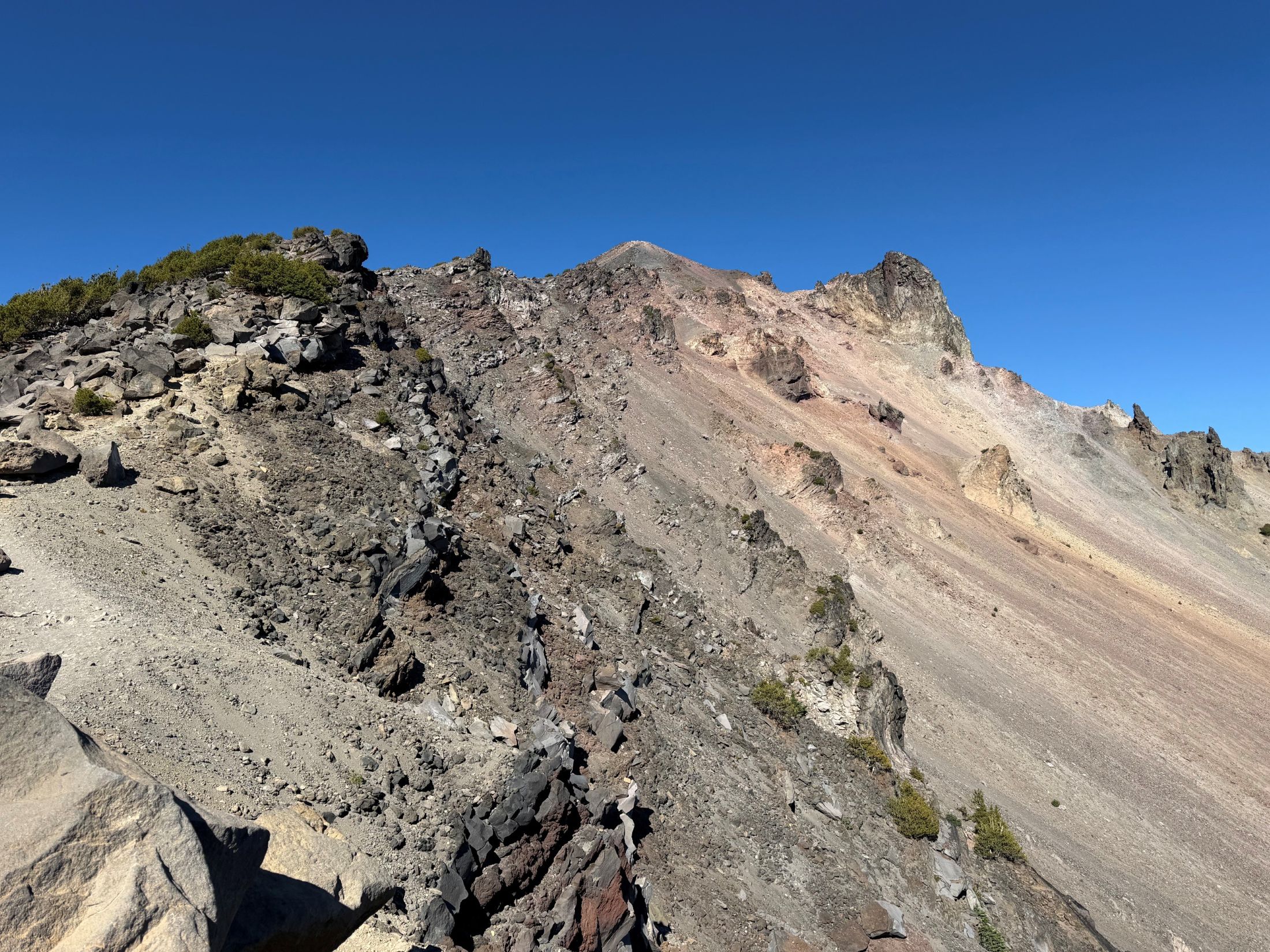
The last half-mile to the summit is steep and slow going. This is the likeliest place to see Rosy-finches – which, alas, I did not see.
Approach to the summit, with trail on the left:
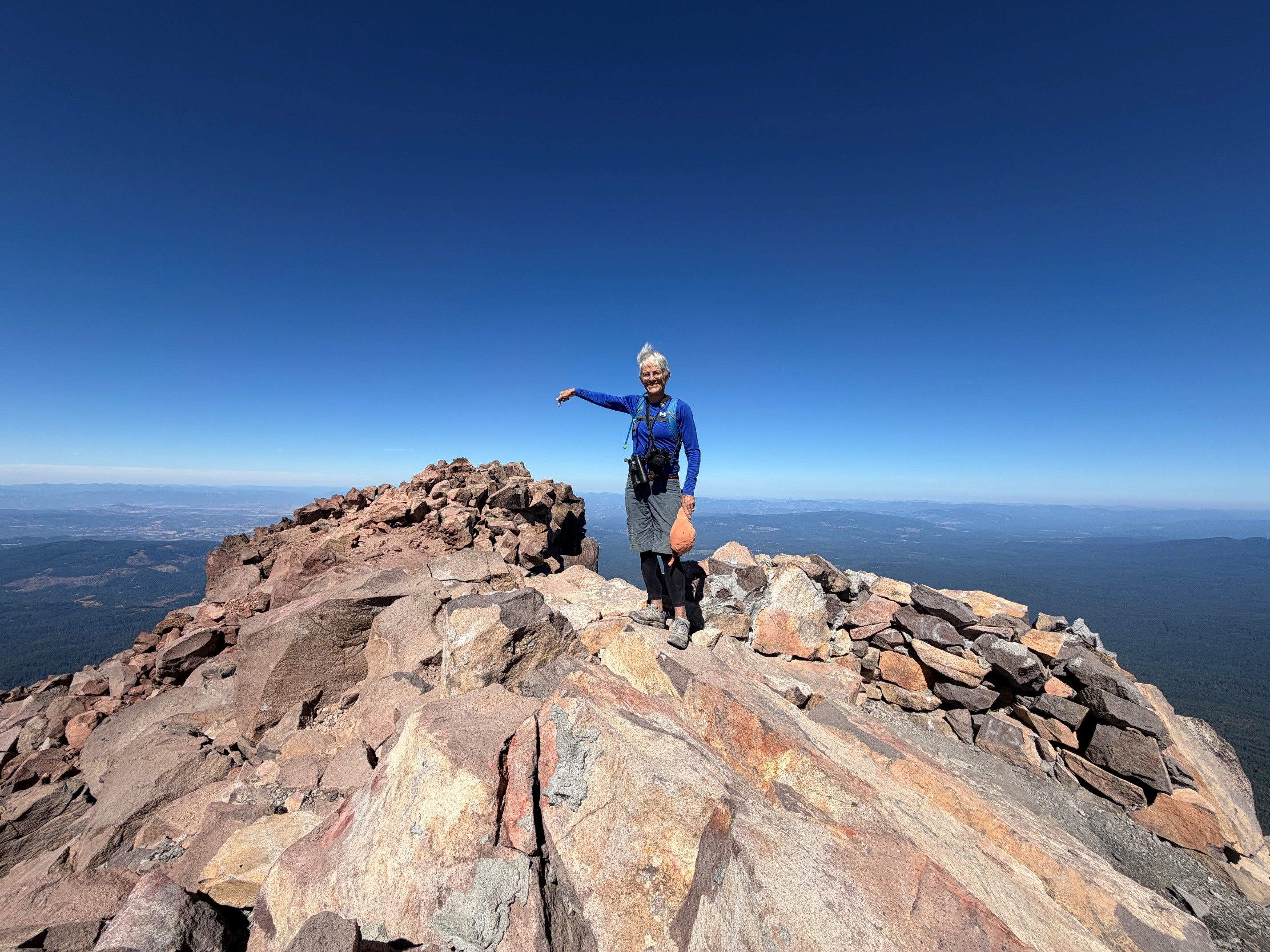
However, I did make it to the summit and back safely!
Summit:
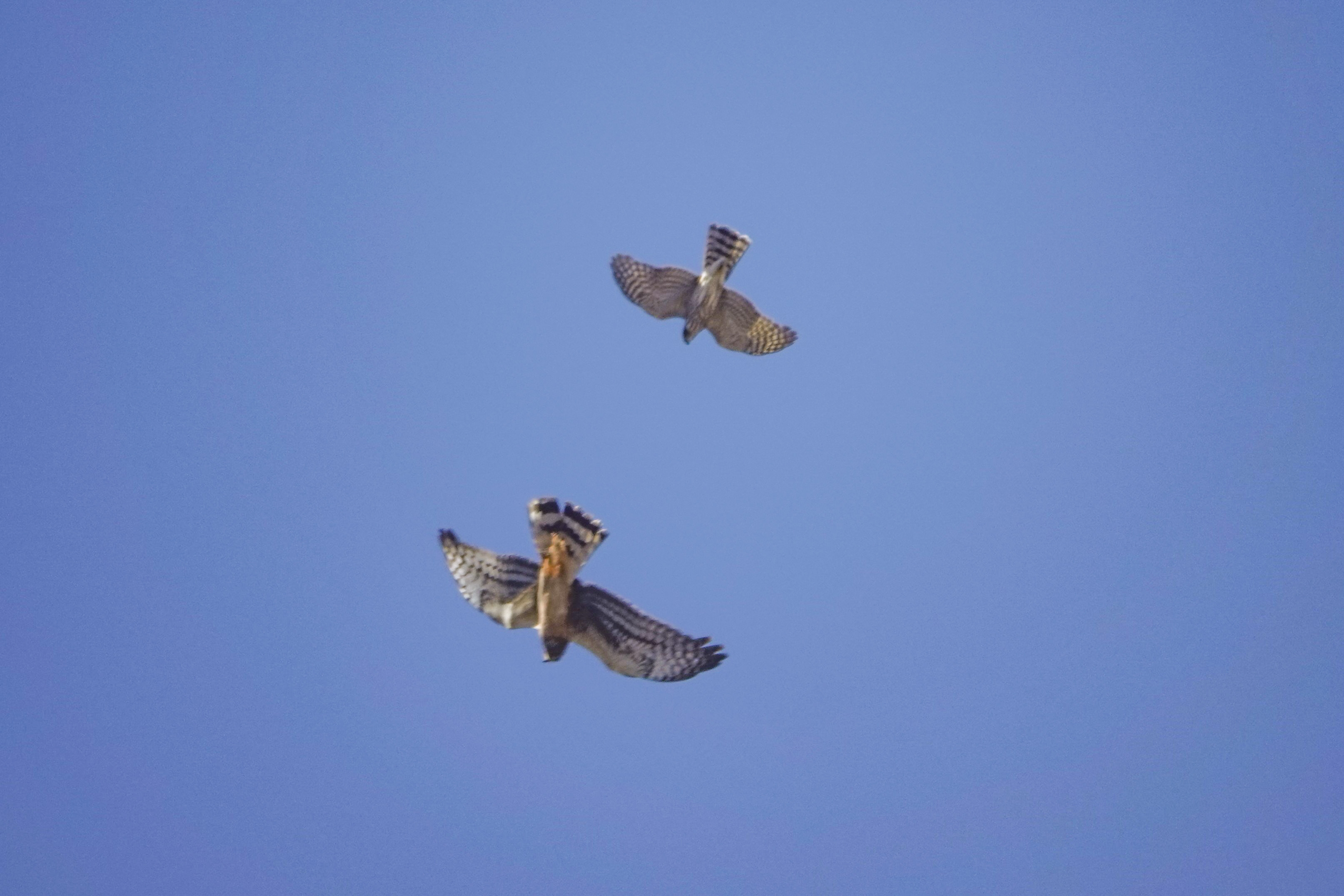
The main birds I saw at the top were several Rock Wrens (Salpinctes obsoletus) and a pair of Sharp-shinned Hawks (Accipiter striatus) chasing around a Northern Harrier (Circus hudsonius).
Rock Wren:

Hawk chasing Harrier:
On the descent it became easier to pay attention to other small wildlife.
Scruffy juvenile Canada Jay (Perisoreus canadensis); or is it an “American Jay” now??:

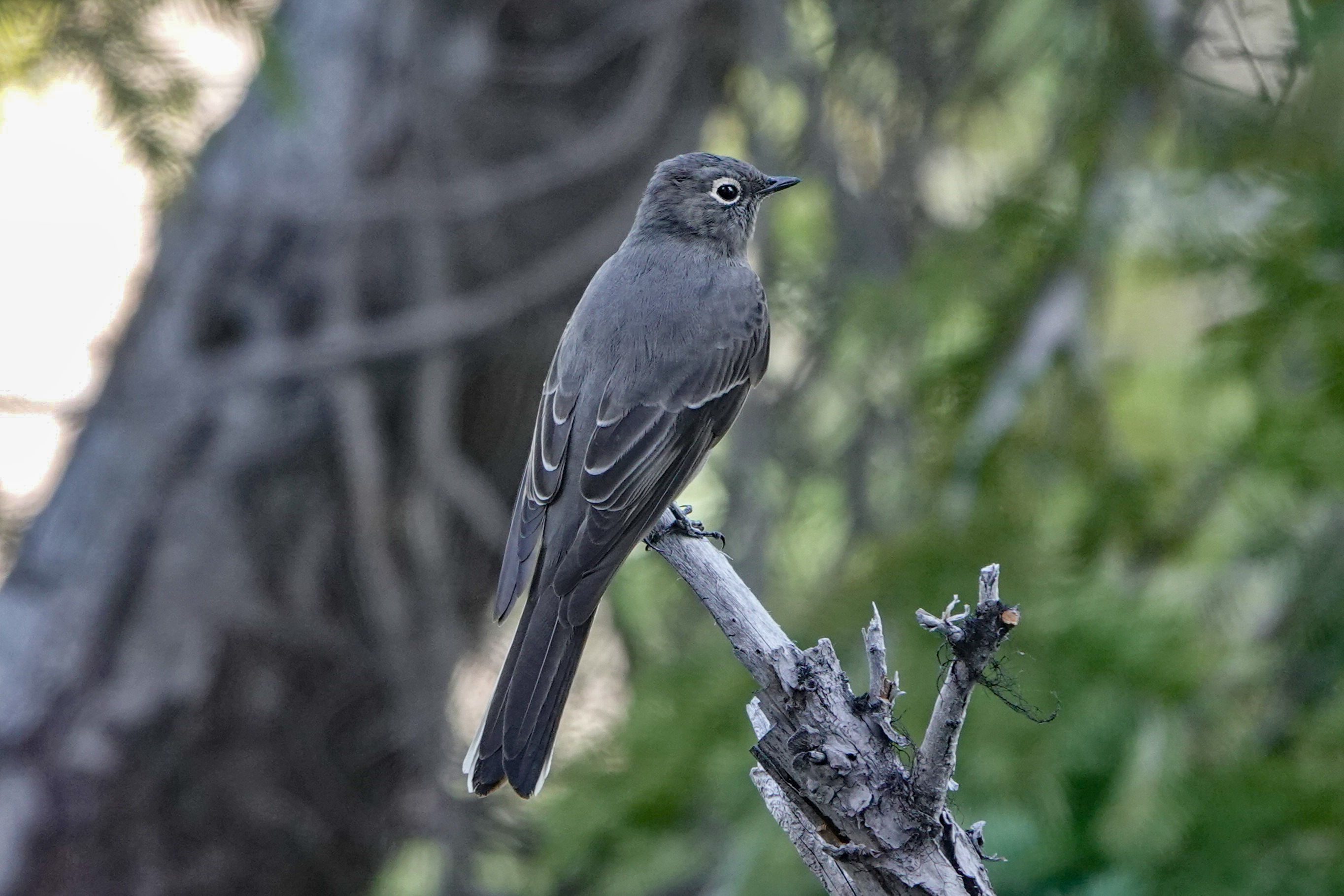
Townsend’s Solitaire (Myadestes townsendi):
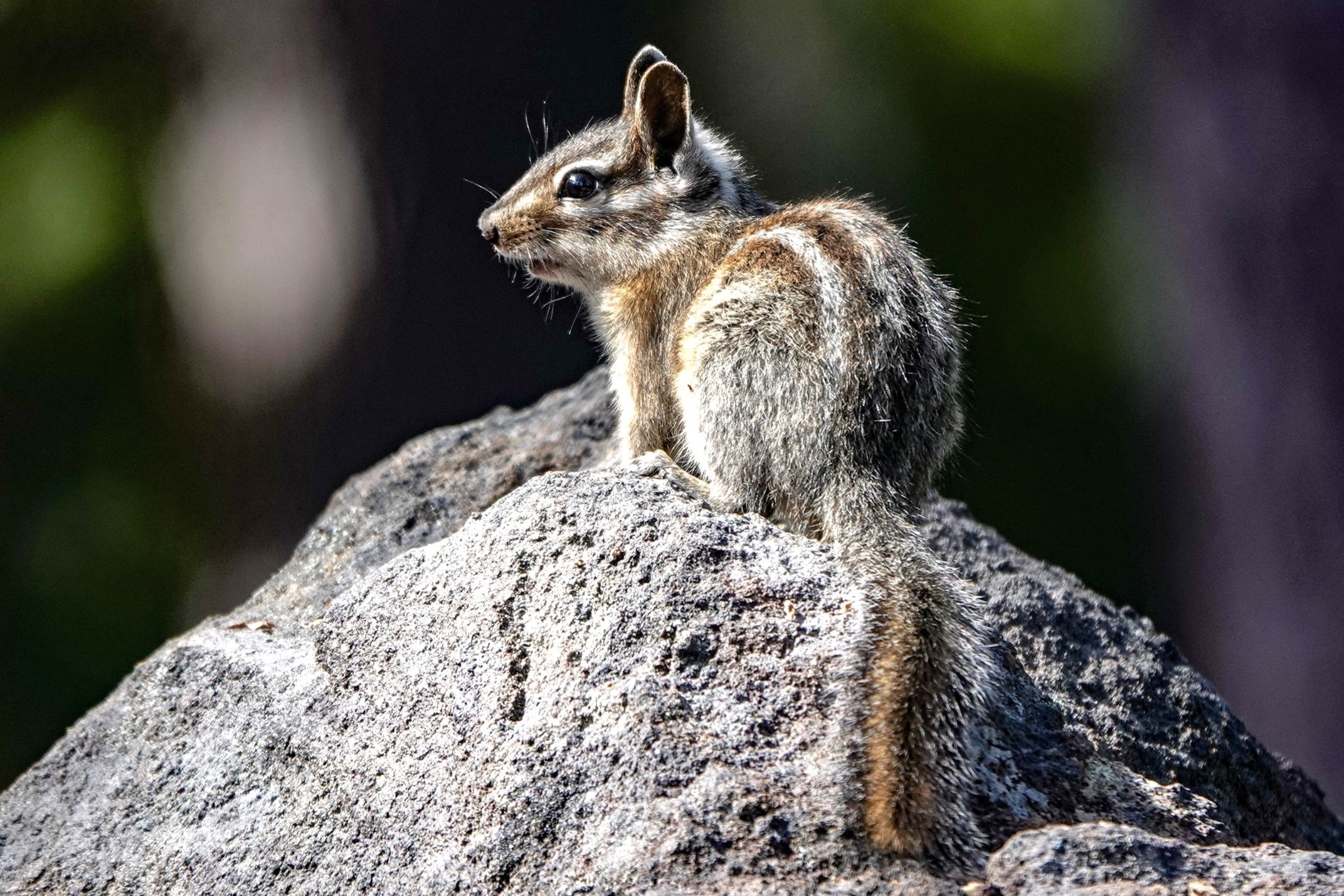
Yellow-pine Chipmunk (Neotamias amoenus):
Rounding out this photo set, a few other recent scenes from the southern Oregon Cascades…
Upper Rogue River just below Crater Lake, where it flows through the collapsed lava tubes of ancient Mount Mazama:
Lower Rogue River at Blossom Bar rapid, where it flows through a scary and occasionally lethal (to rafters and kayakers) feature called the Picket Fence:


Beautiful scenery, and interesting birds! Thank you for sharing.
Thanks, Susan. Nifty day hike though with some tough footing it appears. Excellent Thousand ft elevation/mile it looks like. And what a view along final ridgeline and peak!
Beautiful pictures! And what a hike!
Lovely photos – thanks! I didn’t even know something like “collapsed lava tubes” existed, so I learned something this morning, which is always good. The scenery there is gorgeous.
Beautiful photos, especially the forest interior landscapes.
Very cool photos and information!
Loved the Rosy-finch, it looks like it the feathers would be so soft to the touch.
Thanks for these great images! The Rosy-finch is a bird I would love to see. But, alas, I have reached the age of physical decline that means there is no chance of climbing into their habitat. So, it’s good to live vicariously through the experiences of those younger souls still able to do so.
Congratulations on achieving the summit, and returning safely. Thanks for sharing these gorgeous photos!
They’re excellent, Susan, thank you. I appreciate that aside all the tech stuff/learning/expense, there’s a lot to learn – and patience – to bring us shots like these.
Not like loungeroom selfies with my dog, say. hehehe
I prob won’t submit them to WEIT though they are … cool.
anyway, thx.
D.A.
NYC
These pictures are so sharp and vivid, I feel like I’m there. The shapes of those boulders on the lower Rogue river are particularly striking. And I love the image of you on the summit.
Such stunning, raw landscapes; such highly-evolved organisms – mammals and birds. Stunning. I live in New Zealand now and miss the….age…of everything over there
Apologies if this isn’t the forum for this, but given the request for more readers wildlife photos, I thought I’d ask if anyone has recommendations for a good, entry level camera with which to take wildlife shots – specifically of birds?
My daughter is a keen bird watcher and I’d love to get a camera for her – and me – to take photos of the birds we see. Just not sure where to start!
I promise to send in any good photos we do take, so if you’re keen to see the fauna and flora of South Australia and beyond, please give me some suggestions!
Cheers in advance, Joe
Hi Joe, Two popular favorites for entry level bird photography are the Sony RX10.4 and the Nikon P950 (both out of production but you should be able to find good used ones). They are ‘bridge’ cameras with built-in zoom telephoto lenses. They each have advantages and disadvantages you can read about. I have one of each kind, and like them both. Feel free to look me up if you want more detailed opinions. Best, Susan
Hi Susan,
Thanks for the suggestions! Took a deeper dive into it and I think we might go with the Nikon P950. Seems like a winner for the price point and more than suitable for the types of shots we’d likely be taking.
Cheers again, Joe 😊
Congratulations on making it to the top. That trail looks dangerous.
Loved all of the photos!