
Today’s arthropod photos come from a visit to Poland from reader Jan Malik. Jan’s captions and IDs are indented, and you can enlarge the photos by clicking on them (once or twice):
During my visit to Poland in June this year, I spent a few hours with a macro lens, looking for arthropods in three different habitats: a xerothermic dry meadow, a subalpine bog, and an alpine zone in the Tatra Mountains. I did my best to identify the species, but I can offer no guarantees as they were new to me.
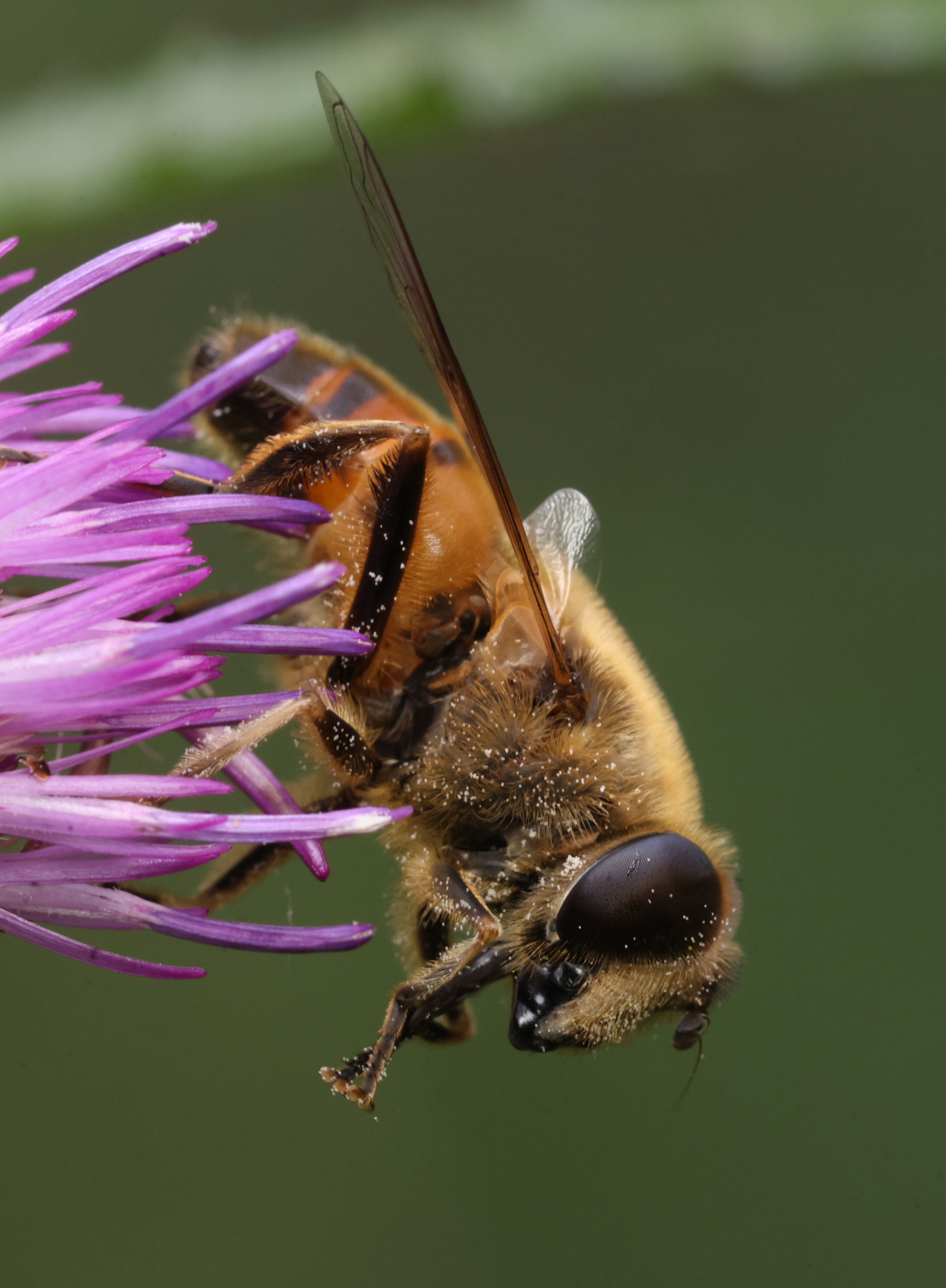
First, the dipterans from the hoverfly family, all Batesian mimics of the more ferocious Hymenoptera. The Common Drone Fly (Eristalis tenax) resembles a honeybee or a small bumblebee quite convincingly; it even buzzes like a bee. I believe this is a female, judging by the widely spaced eyes:
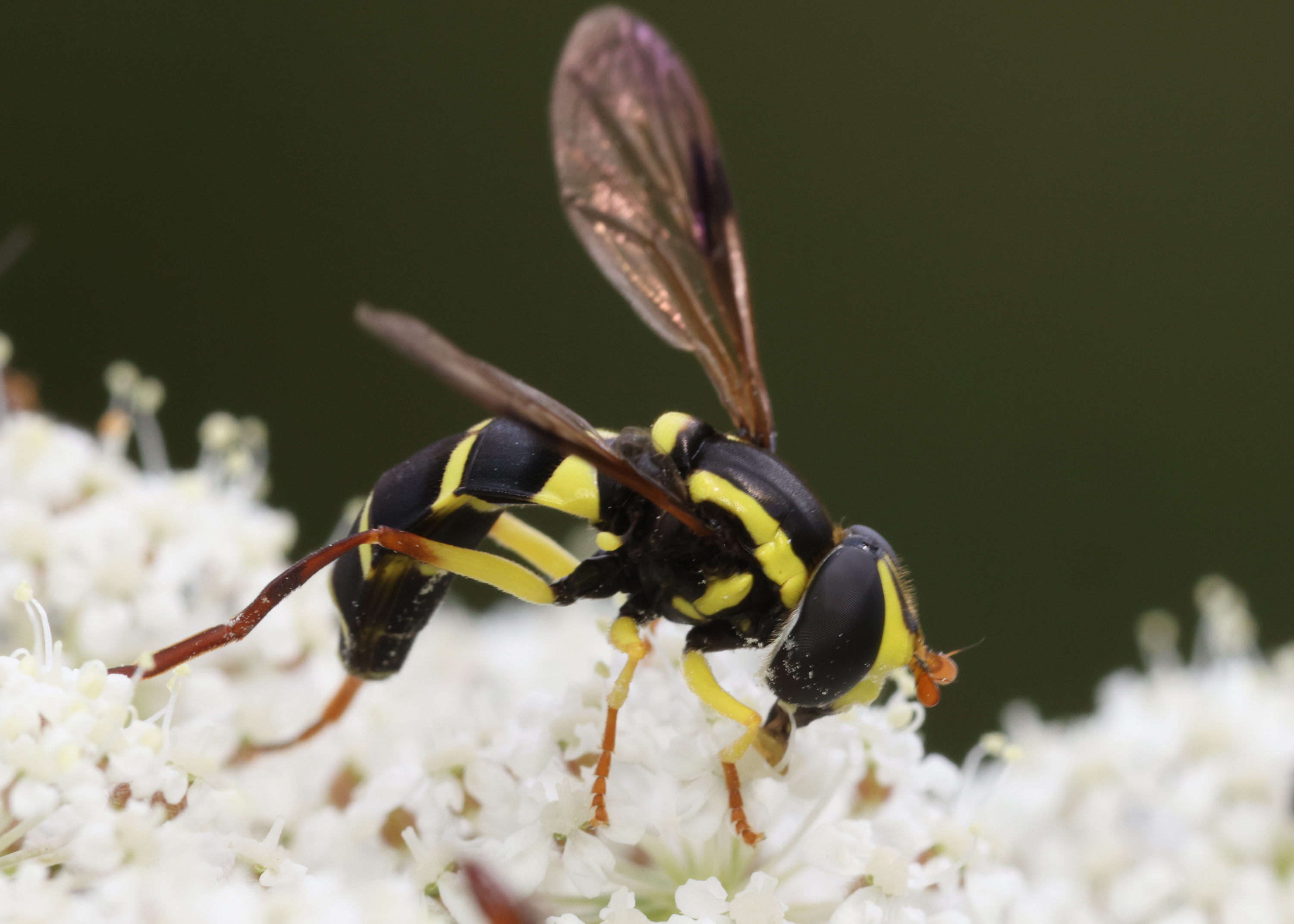
Another hoverfly, this time a wasp mimic, is possibly a Sphecomyia vespiformis. Like all Diptera, its antennae are short, but here, to increase similarity to a wasp with long antennae, they grow from an elongated column on the insect’s face:
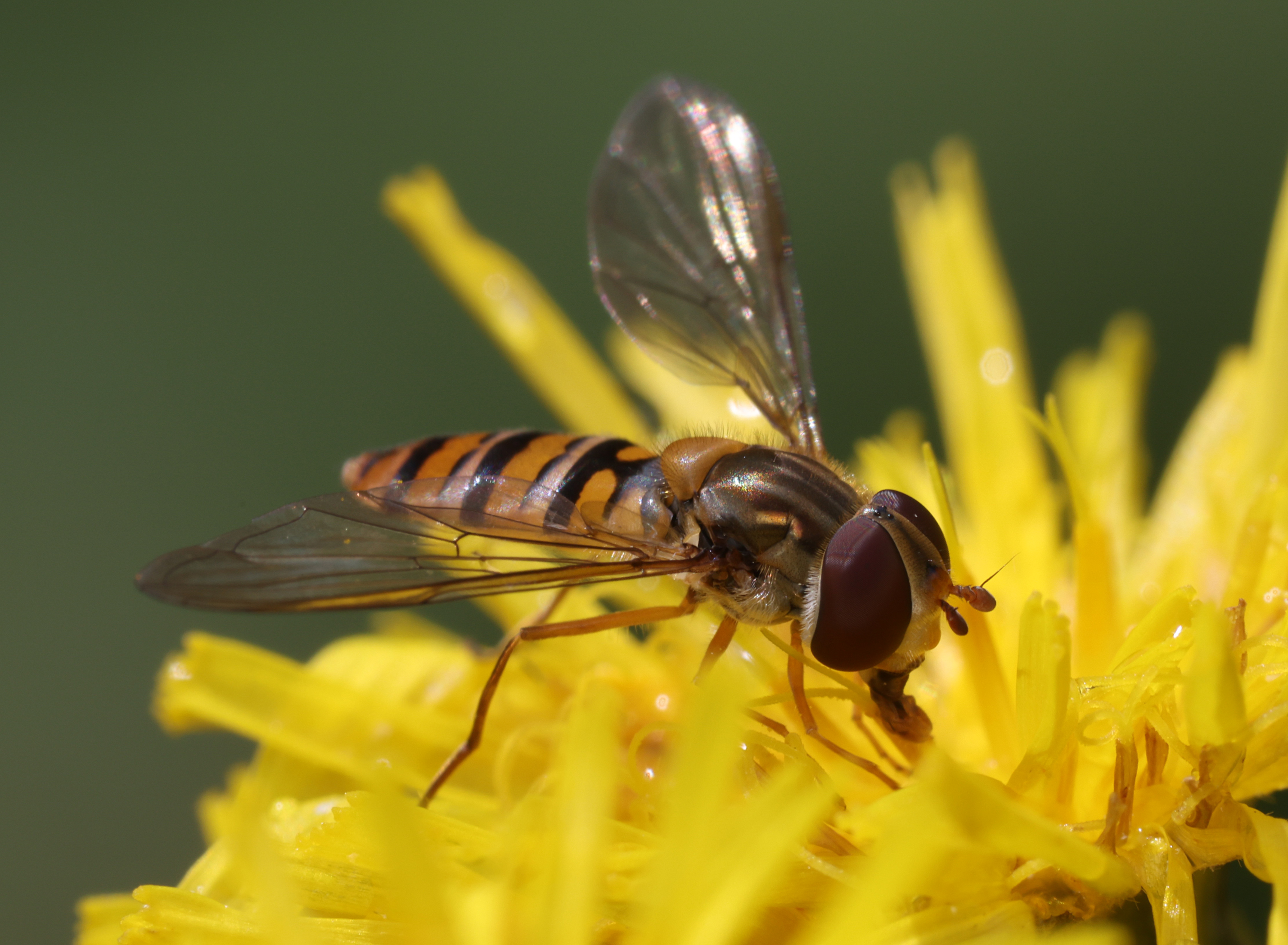
Rounding up the order Diptera is a possible Marmalade Hoverfly (Episyrphus balteatus). This female is a peaceful pollinator as an adult, but its larva is a predator of aphids:
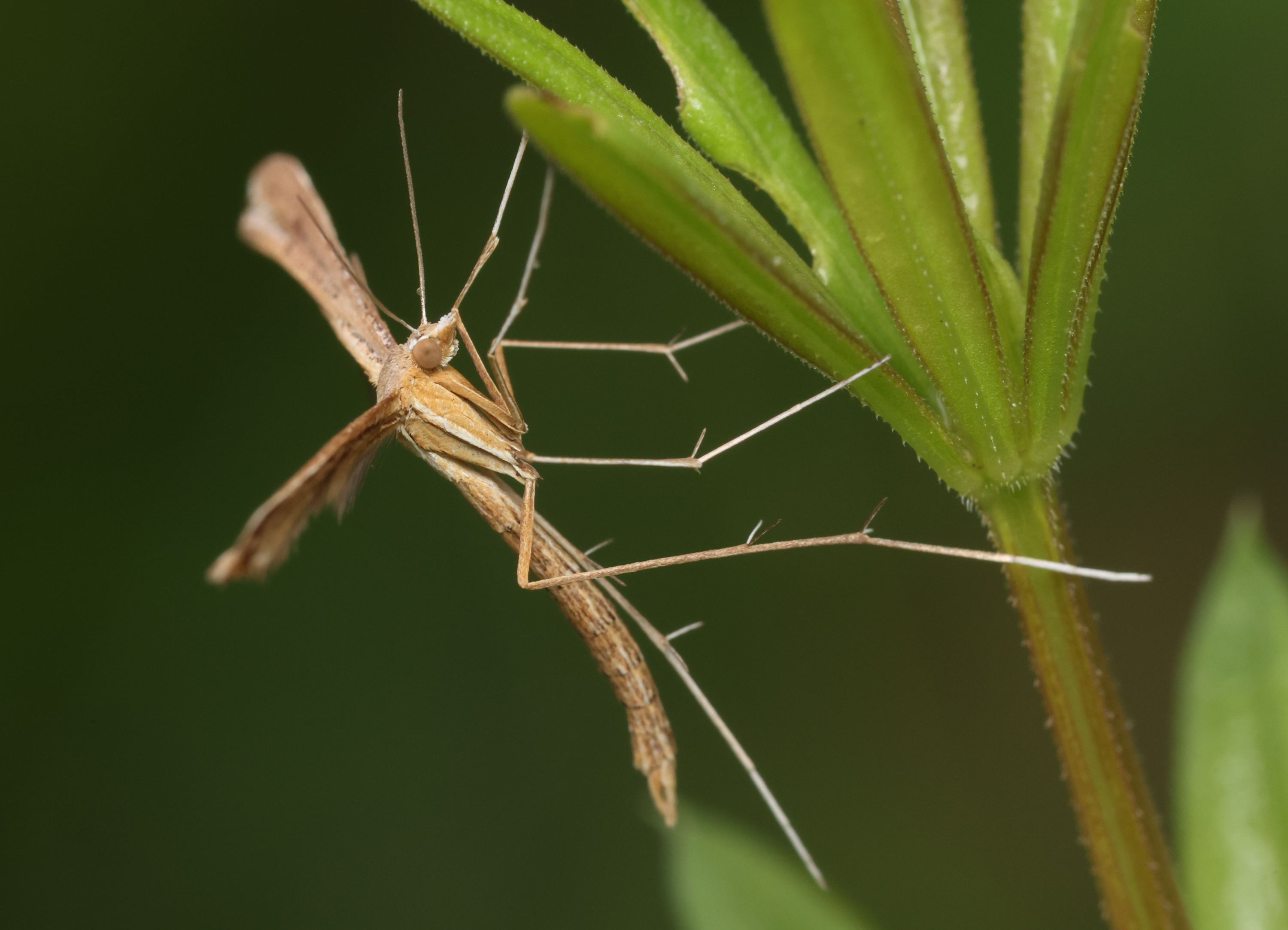
Moving over to the order Lepidoptera, the first is a moth (genus Gillmeria); at first sight, I thought it was a crane fly, but long antennae place it firmly as a plume moth, even though I’m not sure which species it is. When at rest, these insects are masters of camouflage, resembling dried-out twigs:
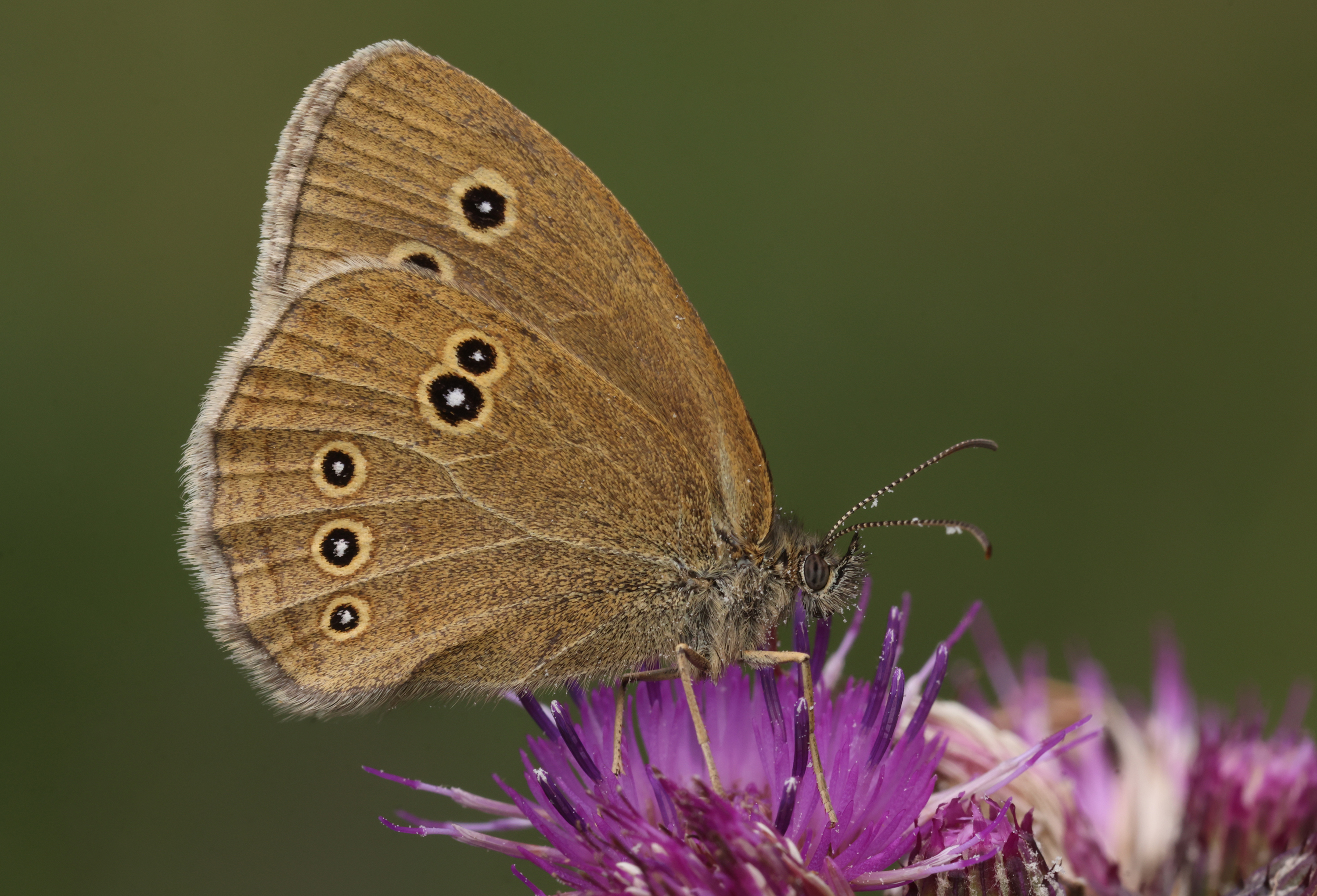
Possibly a Ringlet (Aphantopus hyperantus), which is common in this part of Europe:
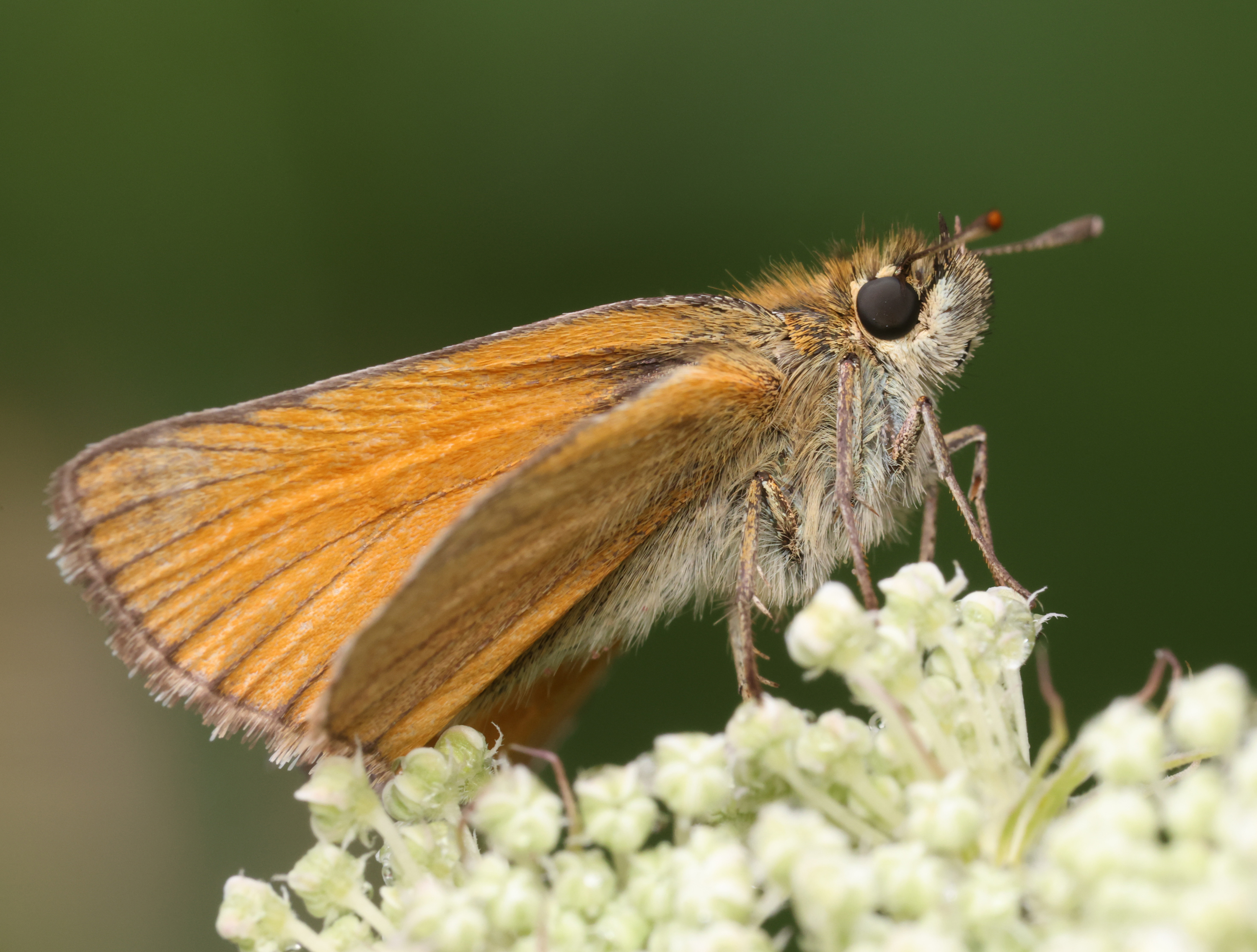
A final lepidopteran is a skipper (family Hesperiidae), but it is difficult to pin it down to a species. Possibly a Small Skipper (Thymelicus sylvestris), going by the orange tip of its antenna?:
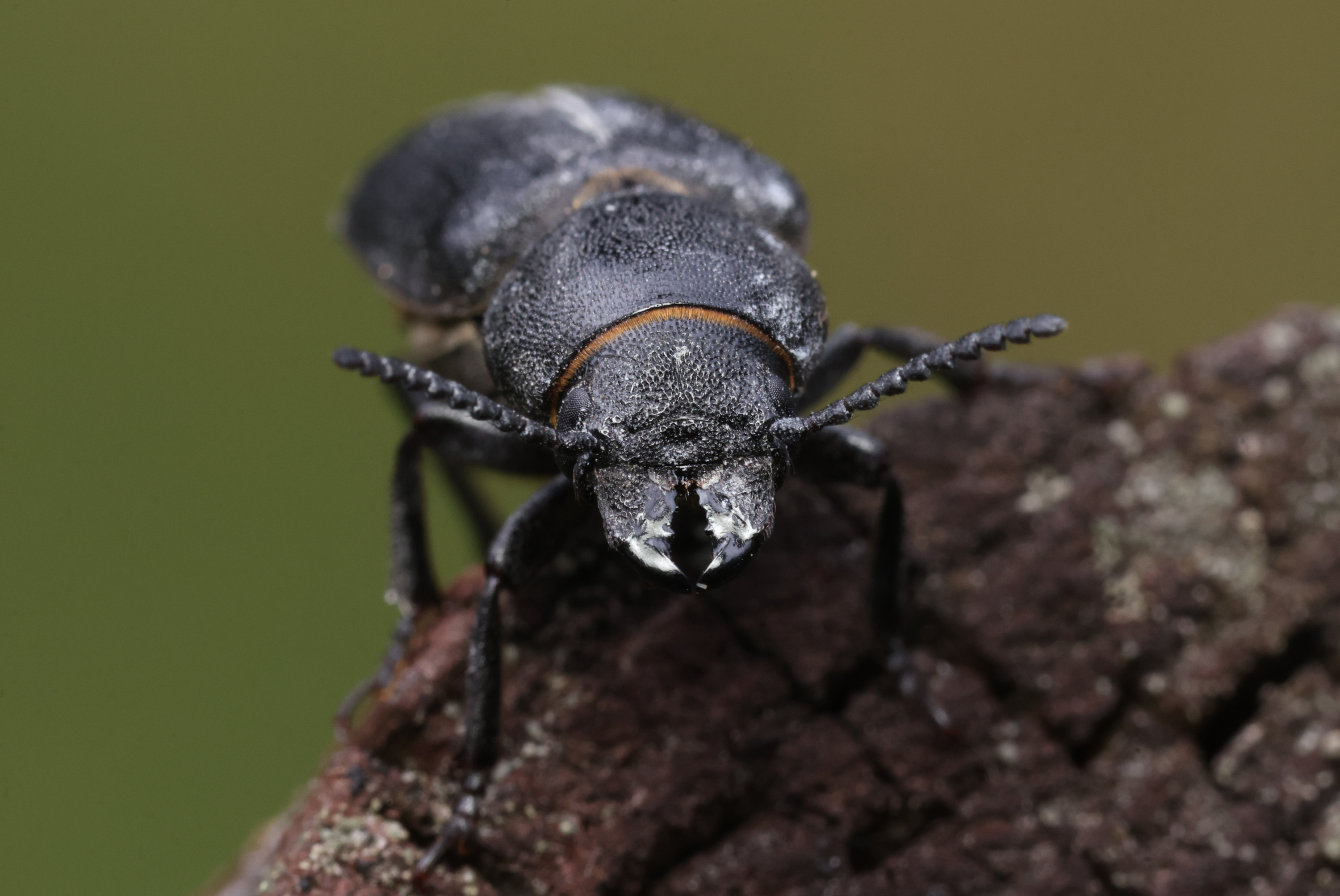
Now for Coleoptera (beetles): a Black longicorn beetle (Spondylis buprestoides). Both adults and larvae have powerful jaws which they use to chew through the wood of dead trees, accelerating the carbon cycle:
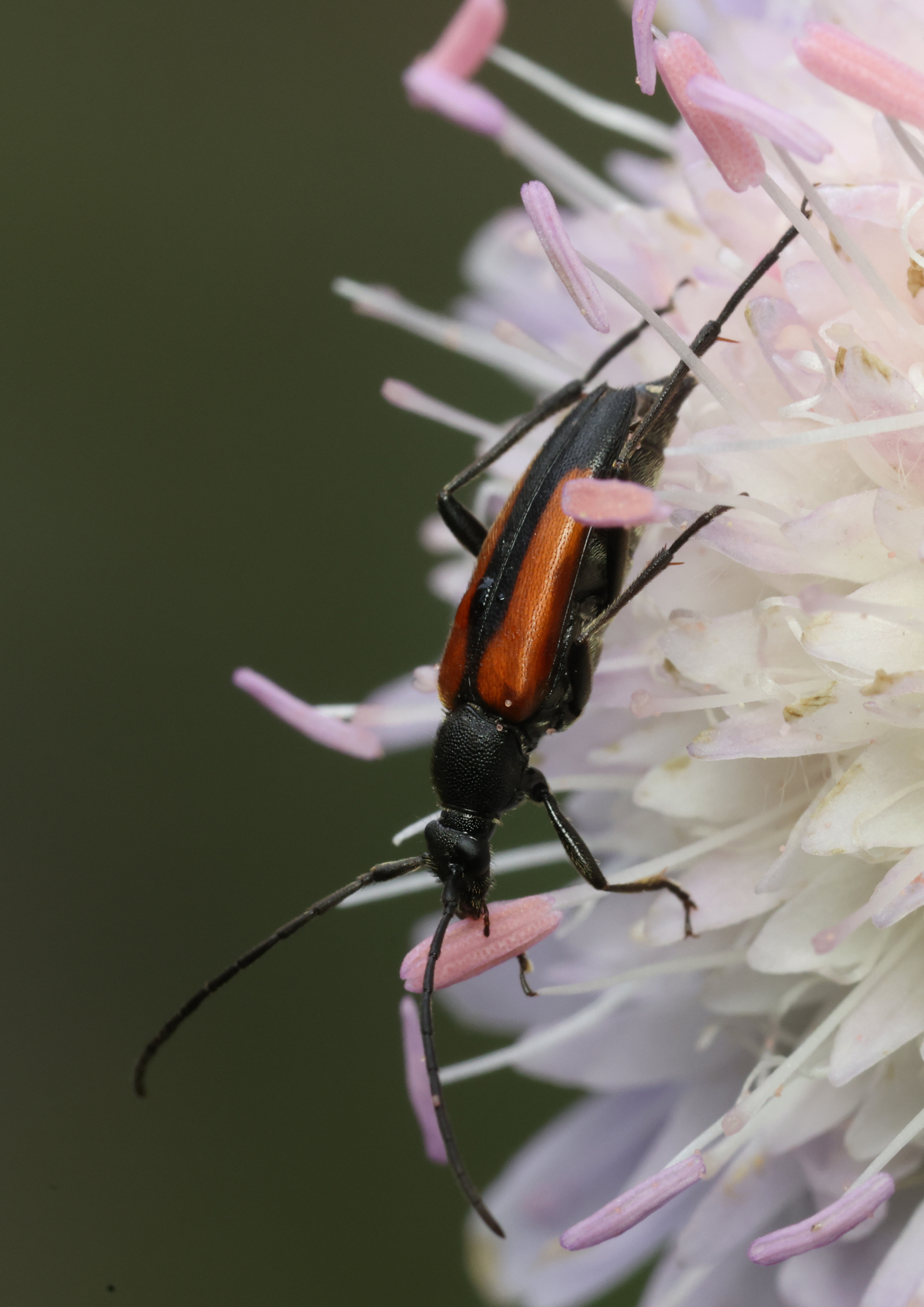
The next insect, from the same longhorn beetle family as the previous one, is a Black-striped Longhorn Beetle (Stenurella melanura), probably a female. The larvae feed on rotting wood, but adults prefer pollen:
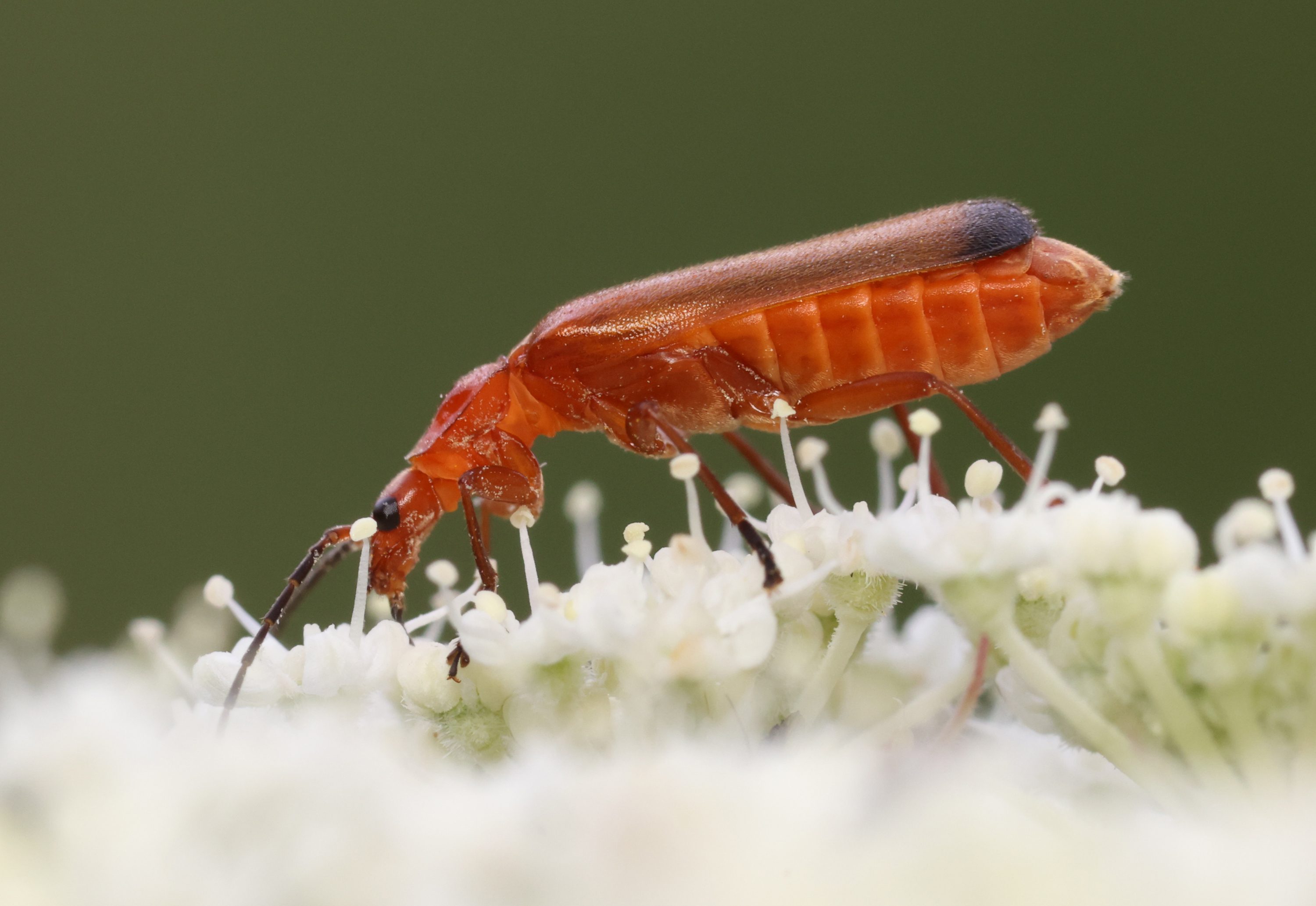
Another coleopteran is a Common Red Soldier Beetle (Rhagonycha fulva). Its red color is an honest warning—when disturbed, they exude a fluid containing defensive acids that can cause chemical irritation. Here it feeds on pollen, but like other soldier beetles, if an aphid or a caterpillar is found, it is also eaten.
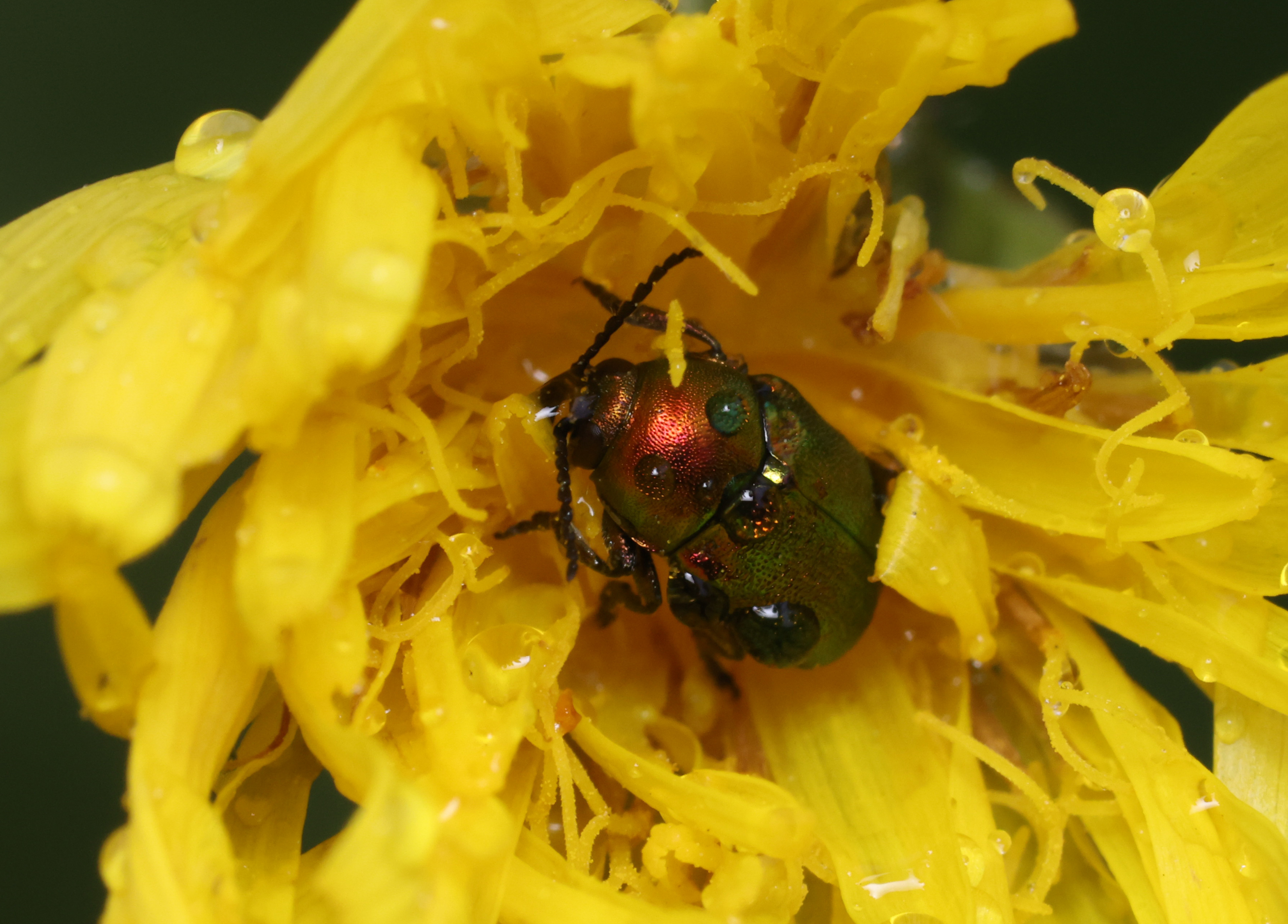
The last coleopteran, hiding in a flower during the rain, is a leaf beetle from the genus Cryptocephalus (I will go out on a limb and say the Dead-nettle Leaf Beetle, Cryptocephalus aureolus). The genus name originates from its head, which is tucked below the protective chitin armor:
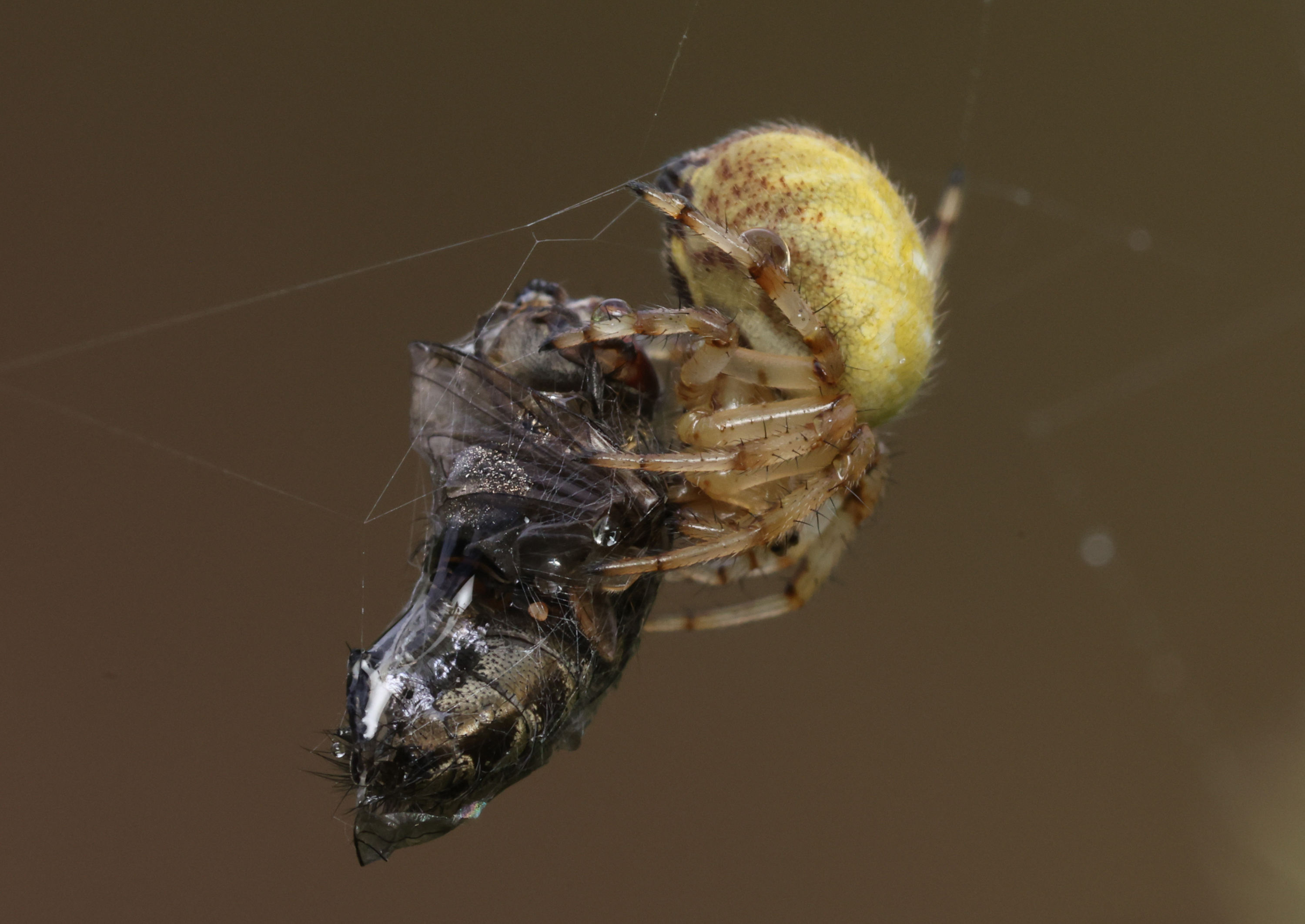
Now for the arachnophiles amongst the readers, an orb-weaver spider (family Araneidae) having a meal out of a fly. Orb-weavers are highly variable in color, changing them to match their surroundings. They recycle their webs often by eating them and spinning new ones:
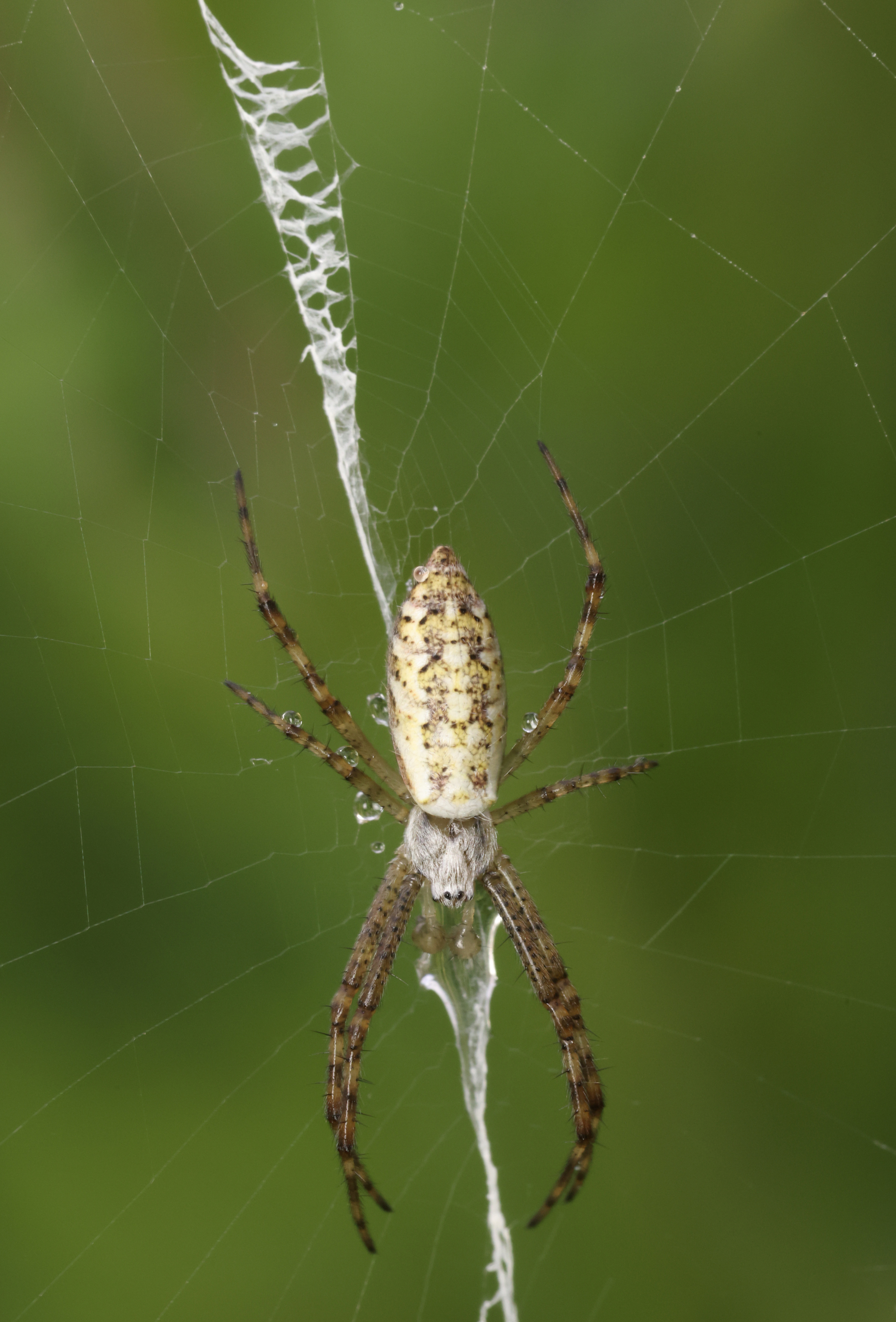
Another araneae, possibly a Wasp Spider (Argiope bruennichi), is a close European cousin of the common American yellow garden spider. Like its New World relative, it spins a ladder-like structure called a stabilimentum. The discussion is ongoing as to what the adaptive purpose of this structure is: possibly a UV reflector to lure bees or flies, or a warning for birds not to fly into it and destroy it, much like our window decals to prevent bird strikes:
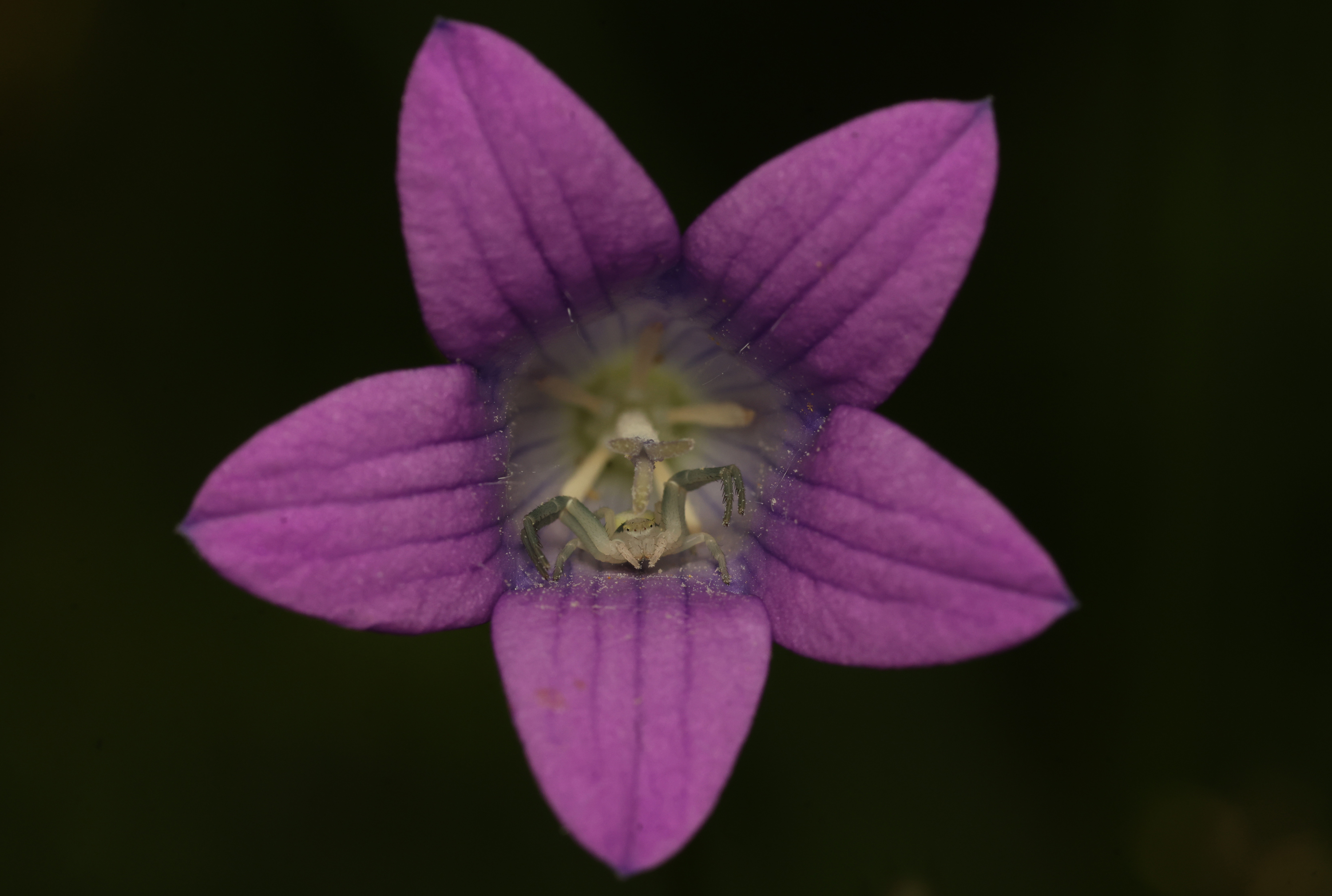
The spider waiting inside the flower is a flower crab spider, likely a pale variant of the common Goldenrod Crab Spider (Misumena vatia); I believe the same spiders are also abundant in North America. The flower could be a bellflower (genus Campanula). These spiders also change color, from greenish to yellow to off-white, matching the flowers where they sit in ambush:
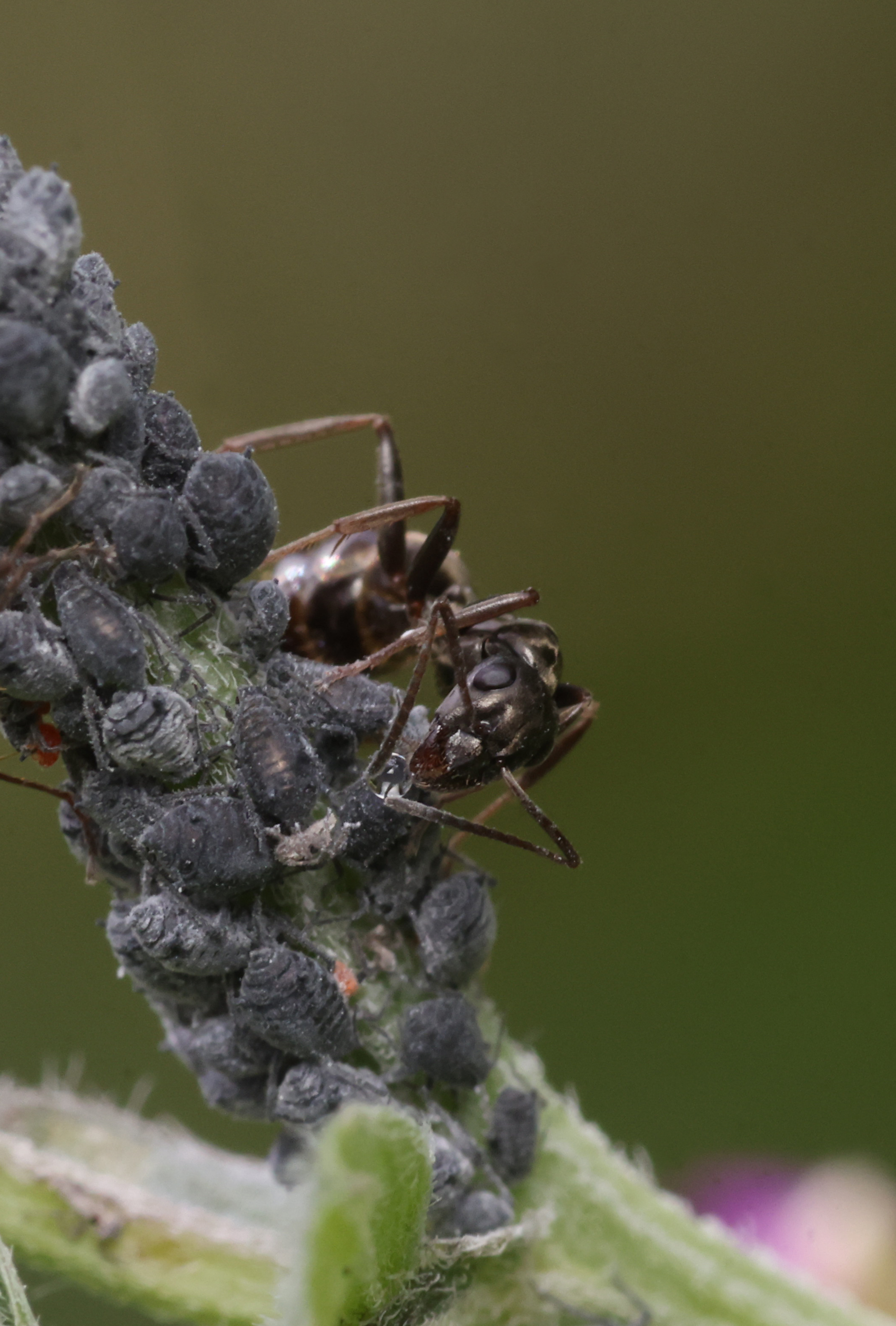
Now for a few Hymenoptera—possibly a Black Garden Ant (Lasius niger) tending to a dense colony of Black Bean Aphids (Aphis fabae). Like many other ant species, they tap aphids with their antennae, and if the sucking hemipteran is ready, it releases a drop of sugary honeydew. In return, ants act as bodyguards, protecting the aphids from predatory hoverflies and ladybugs:
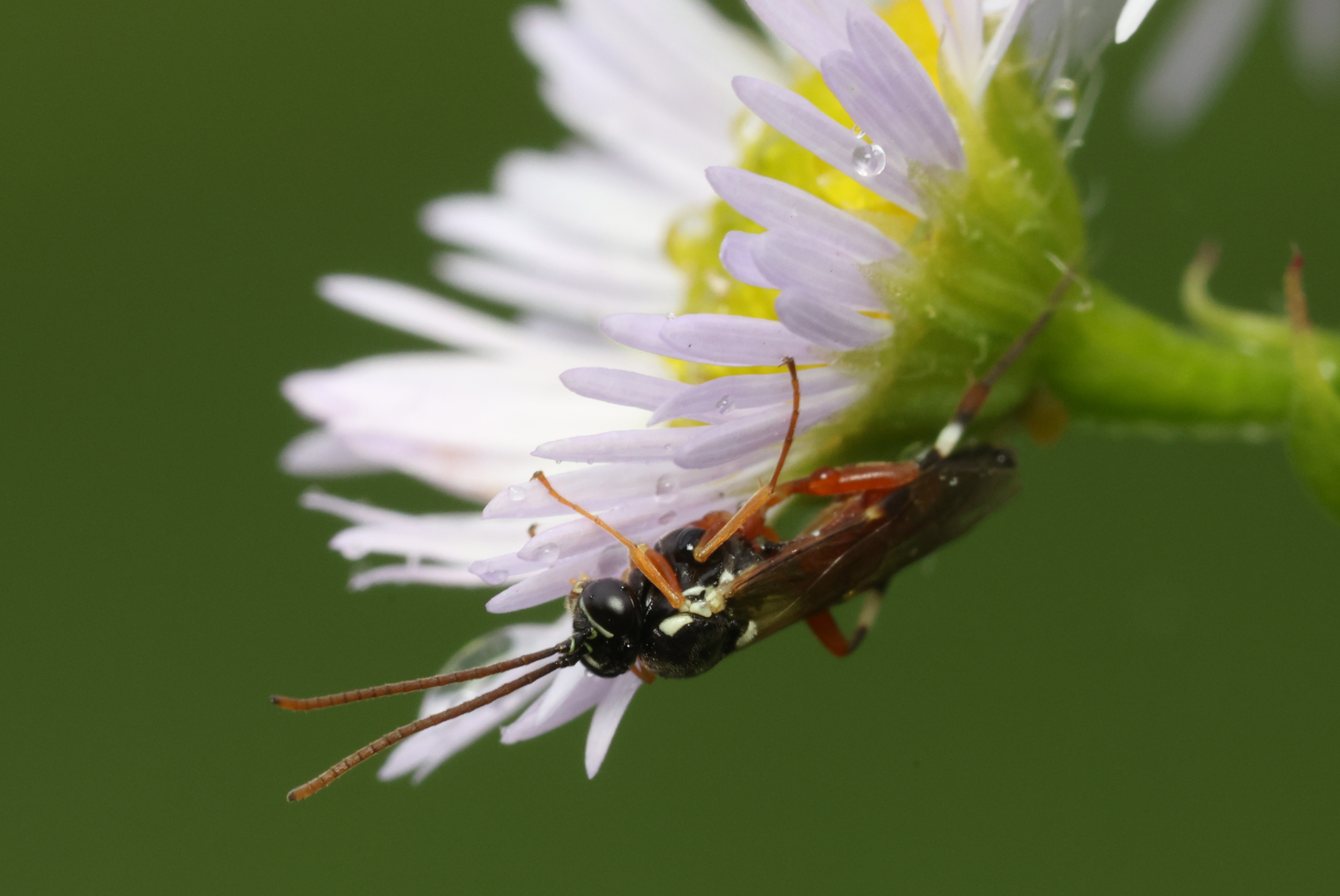
A parasitoid ichneumon wasp, possibly a Hoverfly larva parasitoid wasp (Diplazon laetatorius). It lays eggs in hoverfly larvae or eggs, and the wasp larva waits until its host grows big enough to become a substantial meal, then devours it from the inside. This species is said to be mostly parthenogenetic, with males being a rarity:
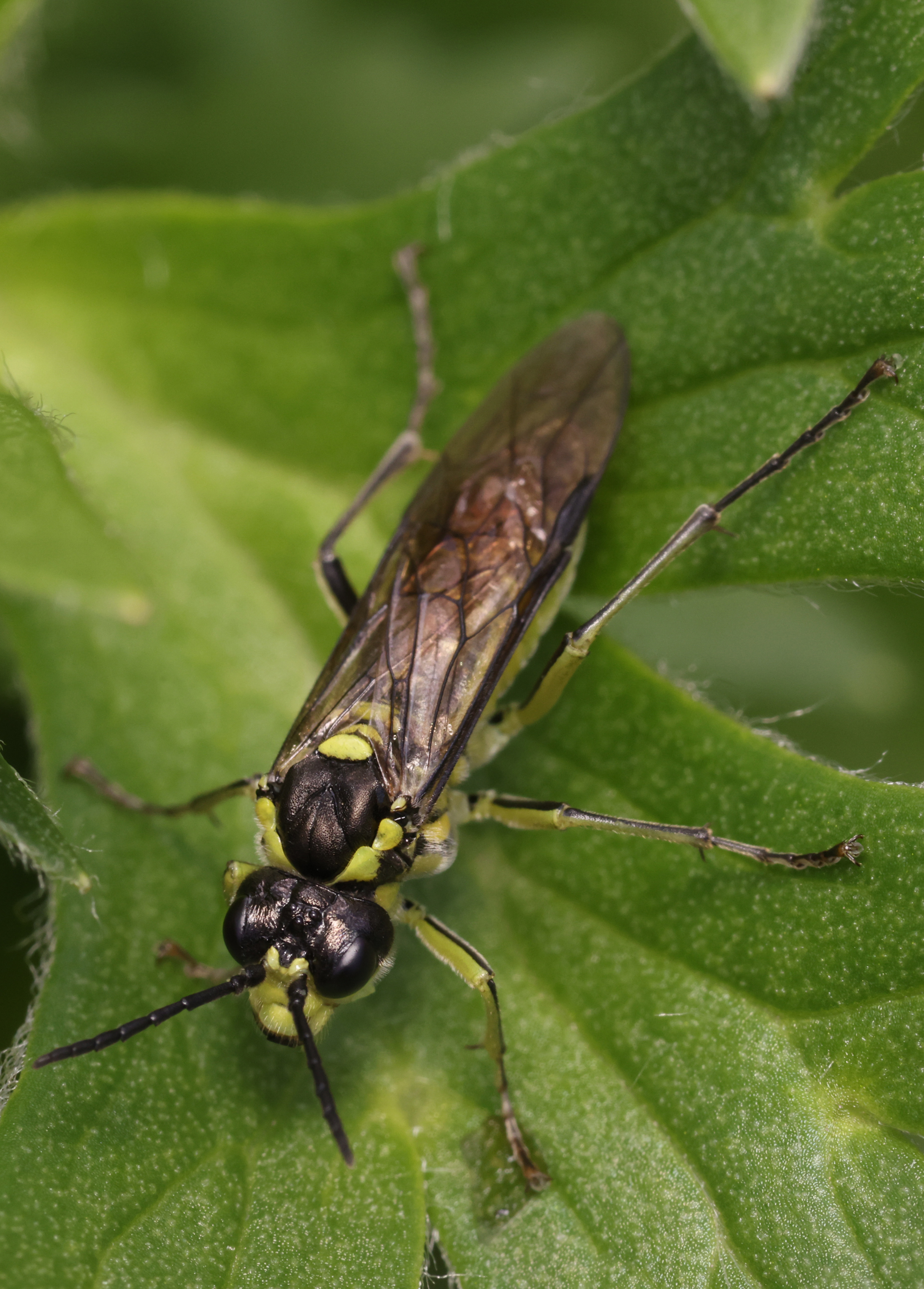
Another hymenopteran, a sawfly, is probably the Common Green Sawfly (Tenthredo mesomela). These sawflies are active predators of other small insects:
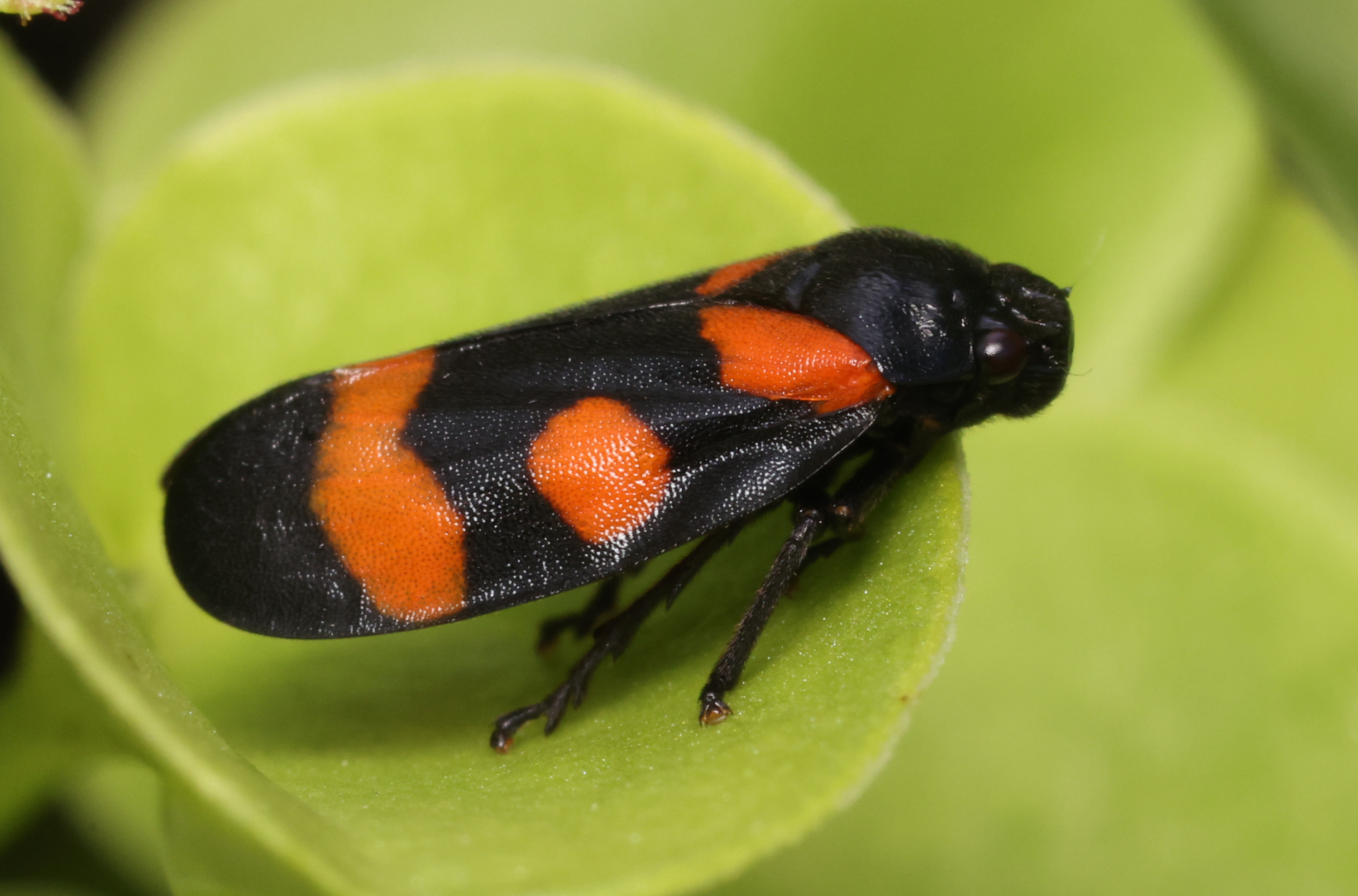
Lastly, I didn’t expect a Red-banded Froghopper (Cercopis vulnerata). Its two chief weapons are a nice red and black aposematic coloration, a habit of making itself scarce via powerful jumps, and joints in its legs that ooze a foul-tasting hemolymph if a predator decides to bite. Did a scientist actually taste that fluid to report on its bitter taste, or are we still waiting for a volunteer?:
Can we determine that something would taste bitter to a human being by looking at its chemical composition?
Gorgeous photos, Jan, thanks!
Lovely photos. I particularly like the spiders (of course).
Liking spiders is a step too far for me, but I agree that the non-spider photos were lovely. Thank you, Jan Malik!
Very nice photos, and technically really good too!
Excellent photos and exposition! I’m impressed.
A very good set! I LOLed at the unexpected leafhopper, and that “its two chief weapons are…”
I could have used that beetle to dislodge a stuck bolt that gave me trouble yesterday. 🙂
Great pictures. Extraordinary detail.
No butterflies here, but if we notch back to Lepidoptera, I released the eighth Monarch butterfly that I’ve raised, or more correctly given its caterpillar inside shelter with enough milkweed to develop to maturity. First time for me this year, and there are another 16 in the pipeline. Anyone else here doing this?
A great post with wonderful information and great photos. For a novice, it’s wonderful to learn from these photos.
Wonderful pictures, thank you!
Love the large clear photos of the little critters and the descriptions. By the time I get set to take a pix even just with my phone, insect has moved on.
I bet bet they learn who is serious and who is not. (“Why yes, I was featured on the Why Evolution Is True website. I can always spot a professional. They’re fun to work with, and I’ve learned to be a great model.”)