
Bruce Lyon has returned with Part 2 of his adventures with Arctic foxes, including photos and several videos. Bruce’s captions and narrative are indented, and you can enlarge his photos by clicking on them.
Here is a second batch of photos and videos of arctic foxes (Vulpes lagopus) on St Paul island. First batch here.
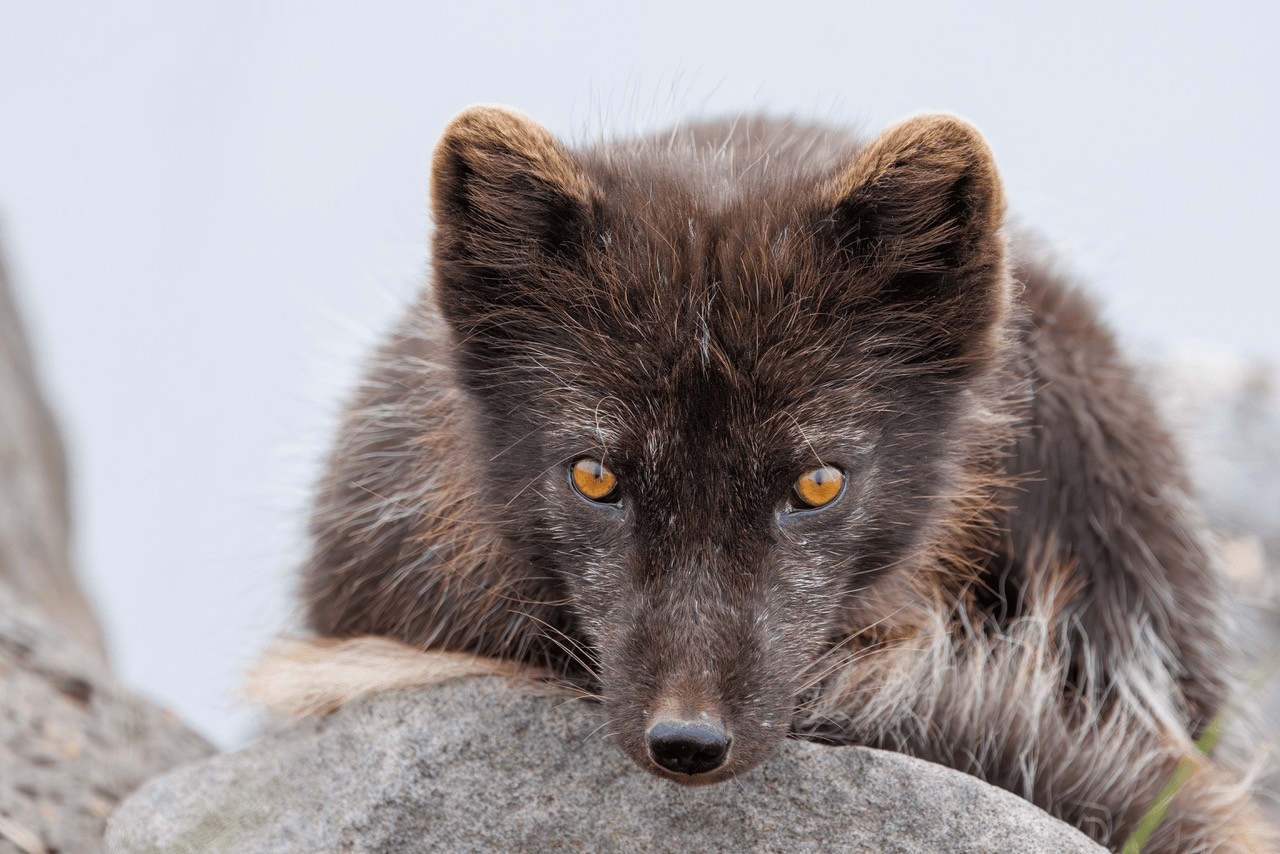
A parent resting by its den:
Below, a video from a couple of years ago of a very tame fox at the dump. Every time I went to the dump to check on some rosy-finch nests, this individual would run up very close to me and run circles around me, whining and barking and jumping up at me. I was amused and thought the fox was being friendly and curious but another biologist told me that this could be aggressive behavior—perhaps the fox was defending its den a bit too aggressively. That biologist had been bitten by foxes before:
This year we had a similar close encounter of the fox kind but this fox was at the harbor for the food and did not seem to have a den nearby. It seemed genuinely playful and curious and was particularly keen on nibbling my assistant’s rubber boots. Who doesn’t enjoy a chaw of boot rubber once in awhile?:
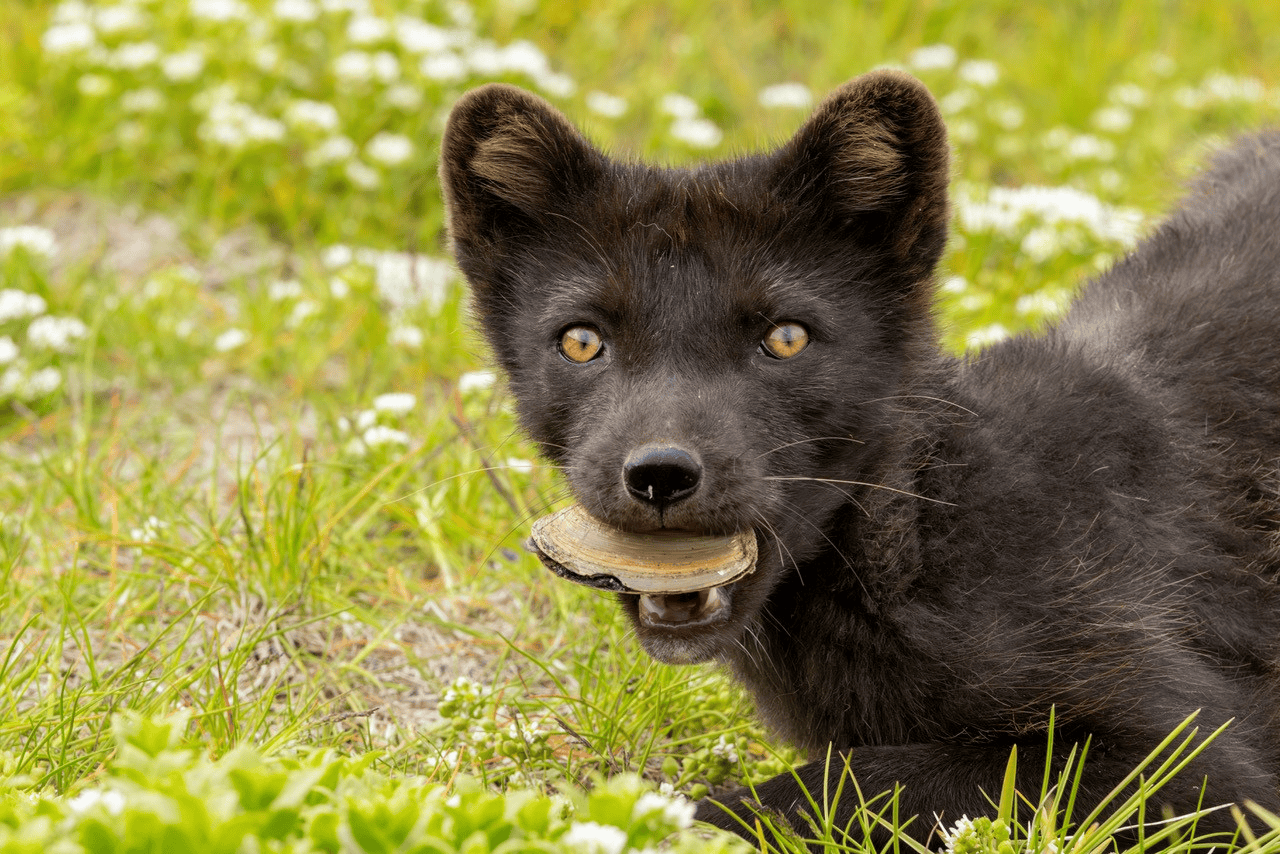
Earlier the fox in the above video had been munching on a clam that it probably got from the nearby pile of dredge material being scraped up from the floor of the harbor in a harbor improvement project. The dredge sediment seemed to be chock full of inverts like clams and seemed popular with at least a few foxes.
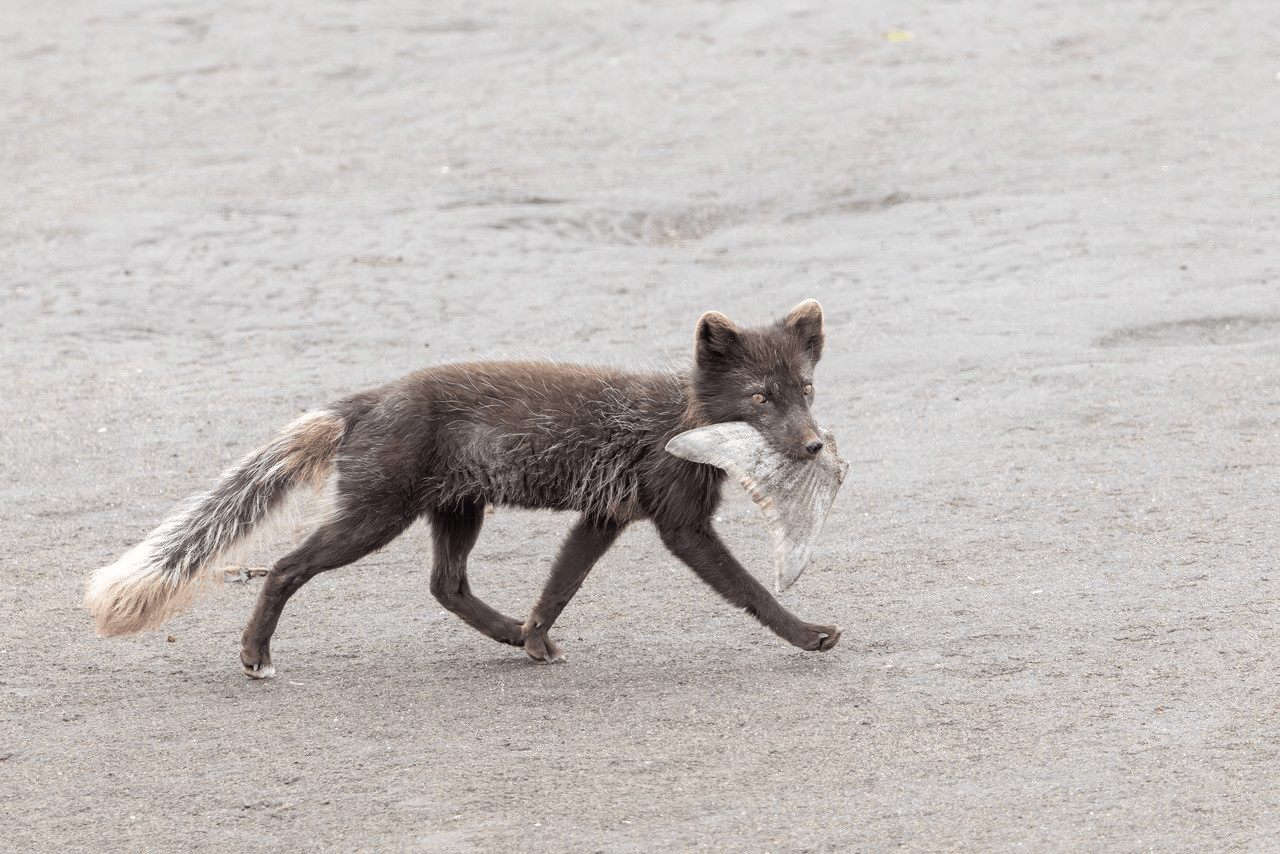
Back to the foxes with dens close to our lodging—one of these adults takes a large salmon tail to its pups:
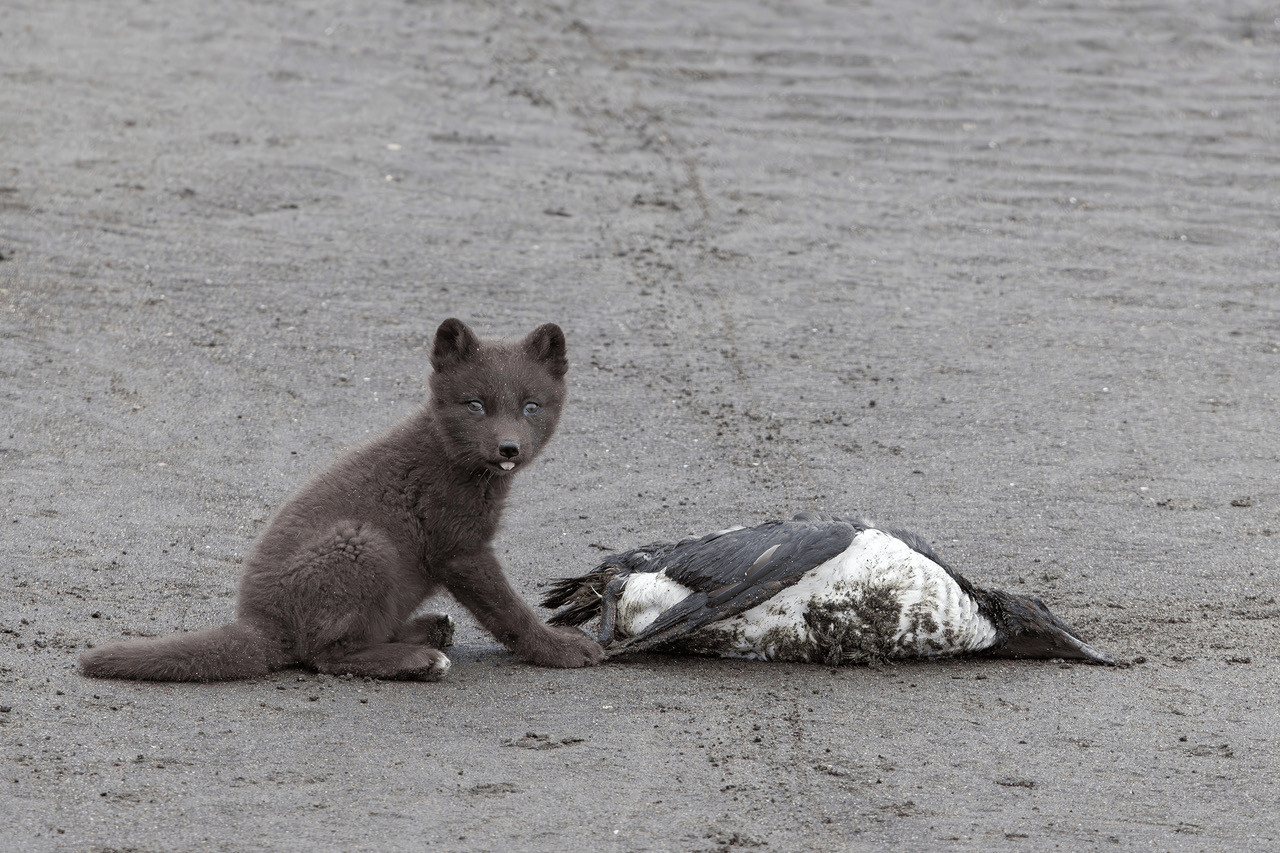
If the pups are hidden in the den when a parent arrives with food the parent will sometimes just dump the food on the nearby beach for the pups to find later. The thick-billed murre carcass in the photo below was lying on the beach for some time before a pup finally discovered it:
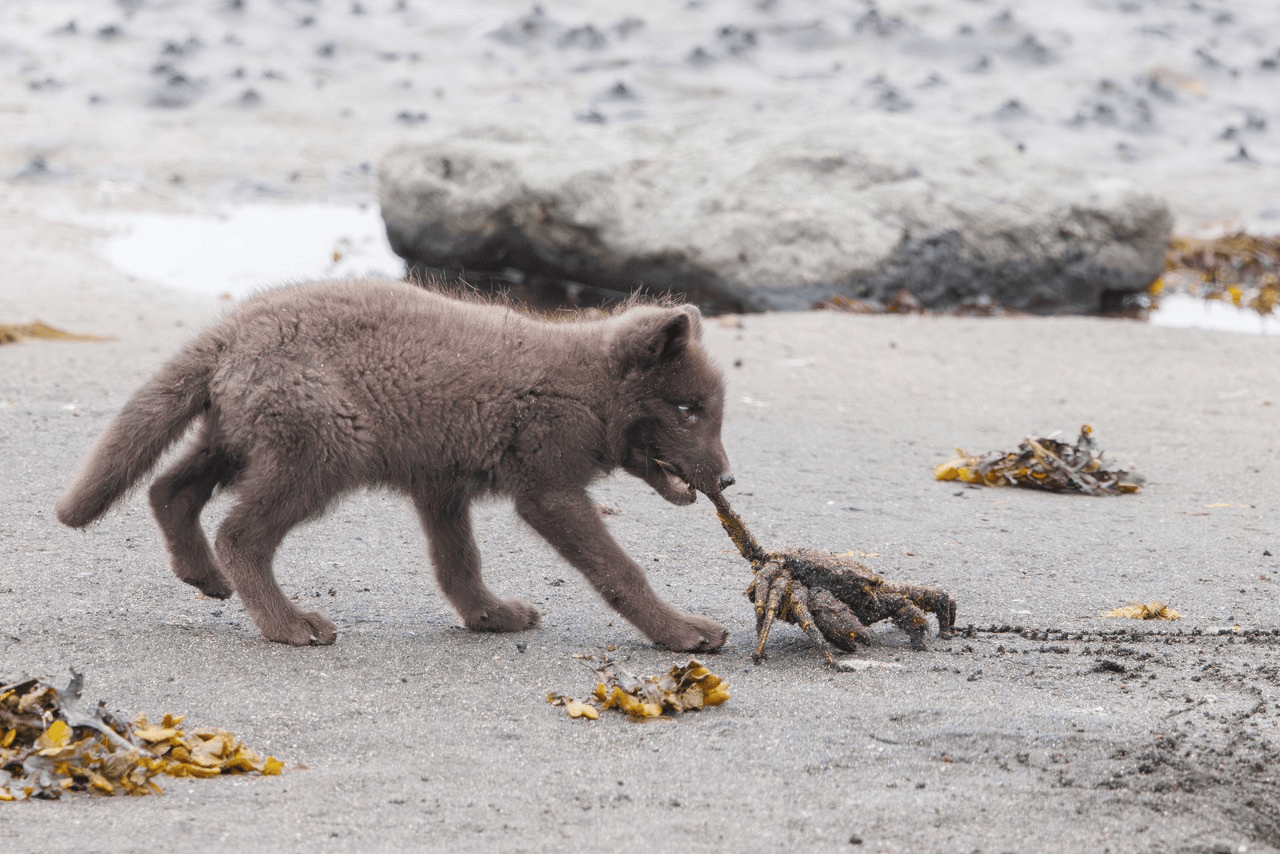
Food fight or play? A couple of pups squabbled over a dead crab. I didn’t see much in the way of them eating the crab—either the crab was too far gone to be worth eating or the shell was a barrier:


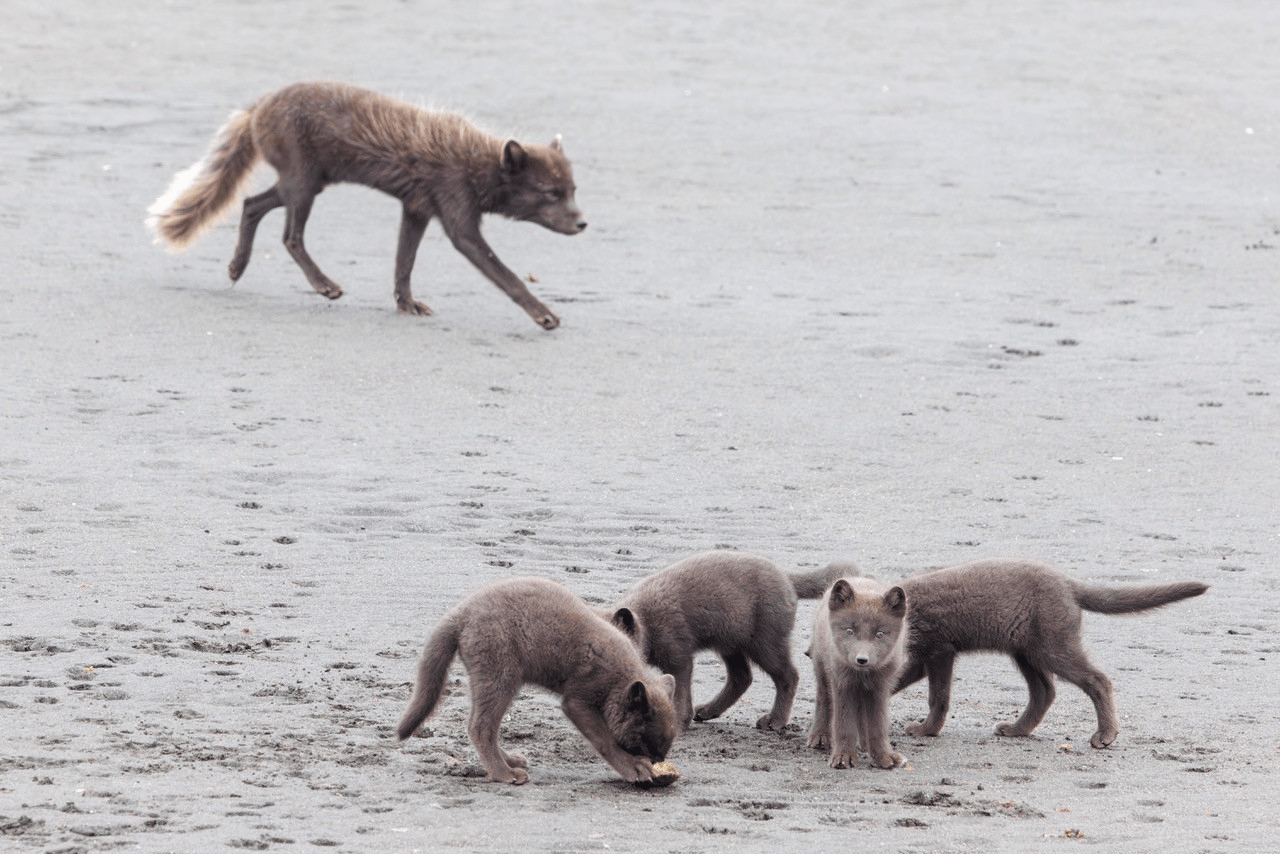
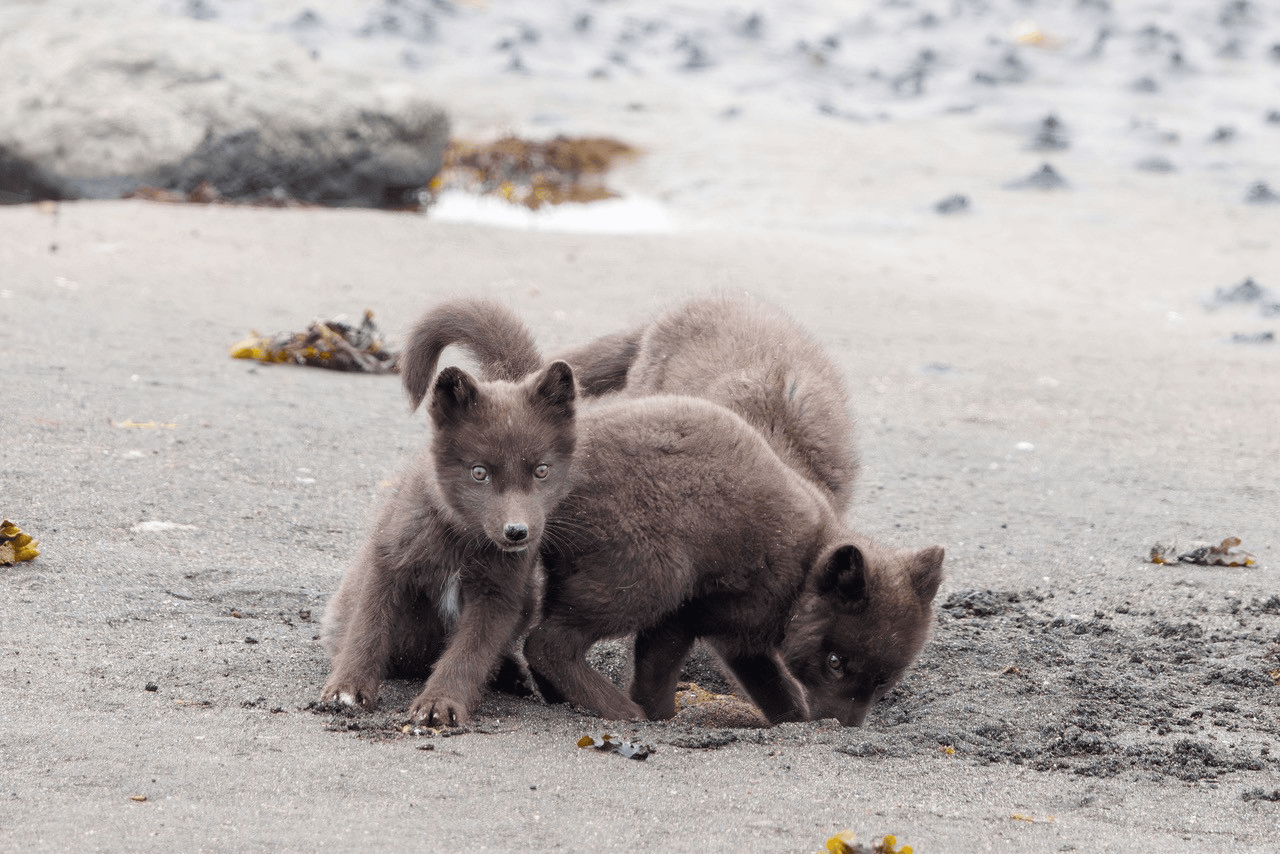
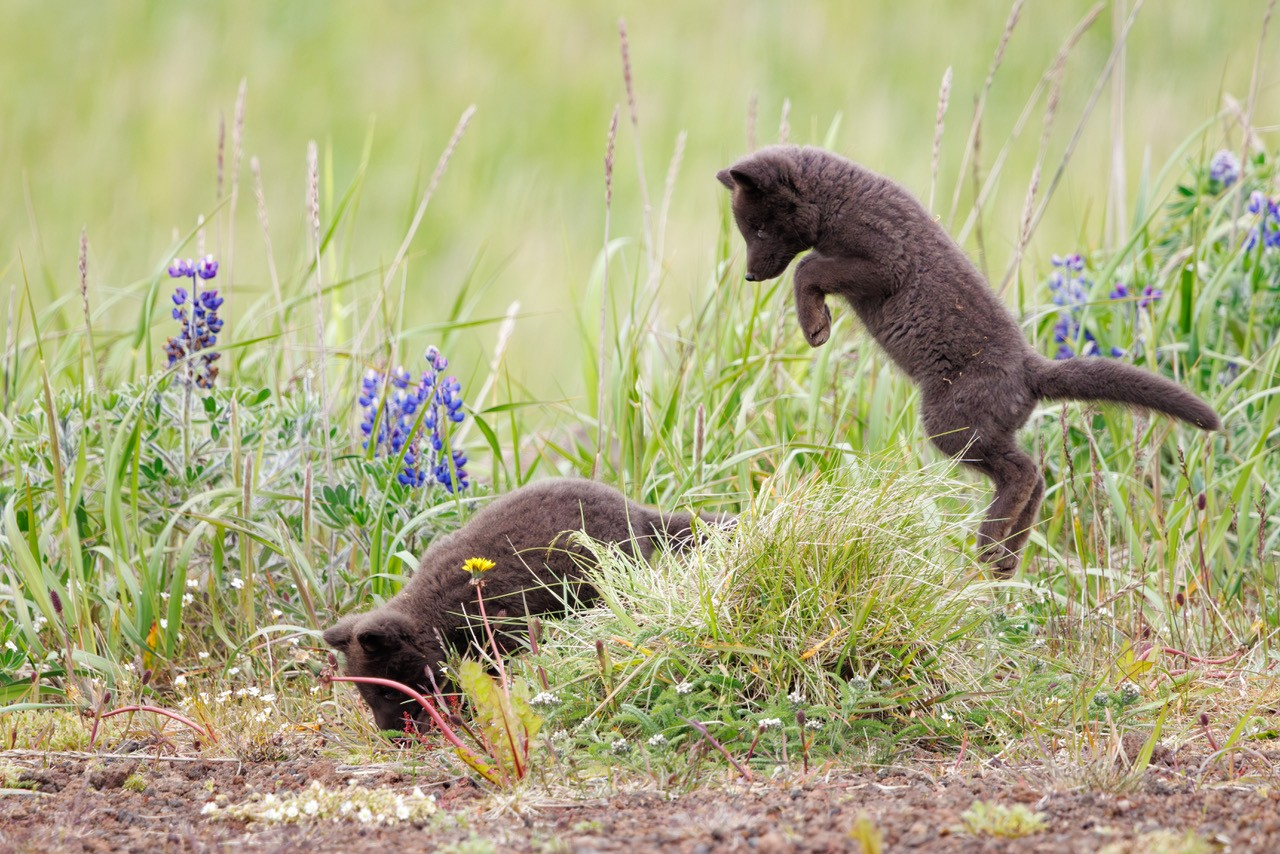
A few photos of pups playing around the two dens near my lodging:
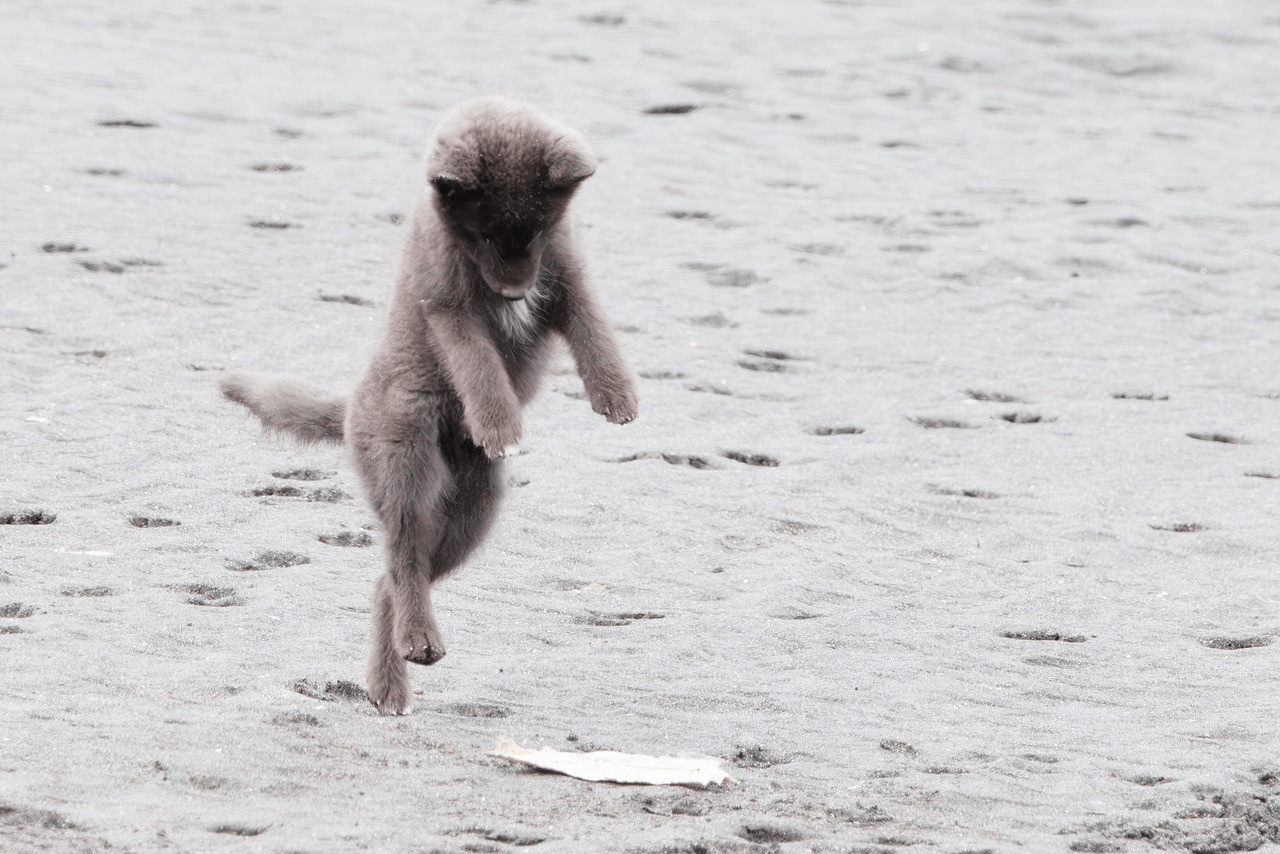
The pups do a lot of pouncing—here a pup pounces on a piece of cardboard:
Below, but it’s much more fun to pounce on a sibling:
Sometimes the squabbles among the pups seem like real fights. Below is a video of a family that had a den under a large metal CONEX container in town. Two of the pups seem to be having a serious fight, evidenced by the screaming. Normal play is not accompanies with this screaming. Perhaps these squabbles are used to establish dominance. Some studies have observed dominance hierarchies among the pups—the dominant individuals defend prey items and also take it from subordinates:
Here’s a video of the same family with a more playful scene:
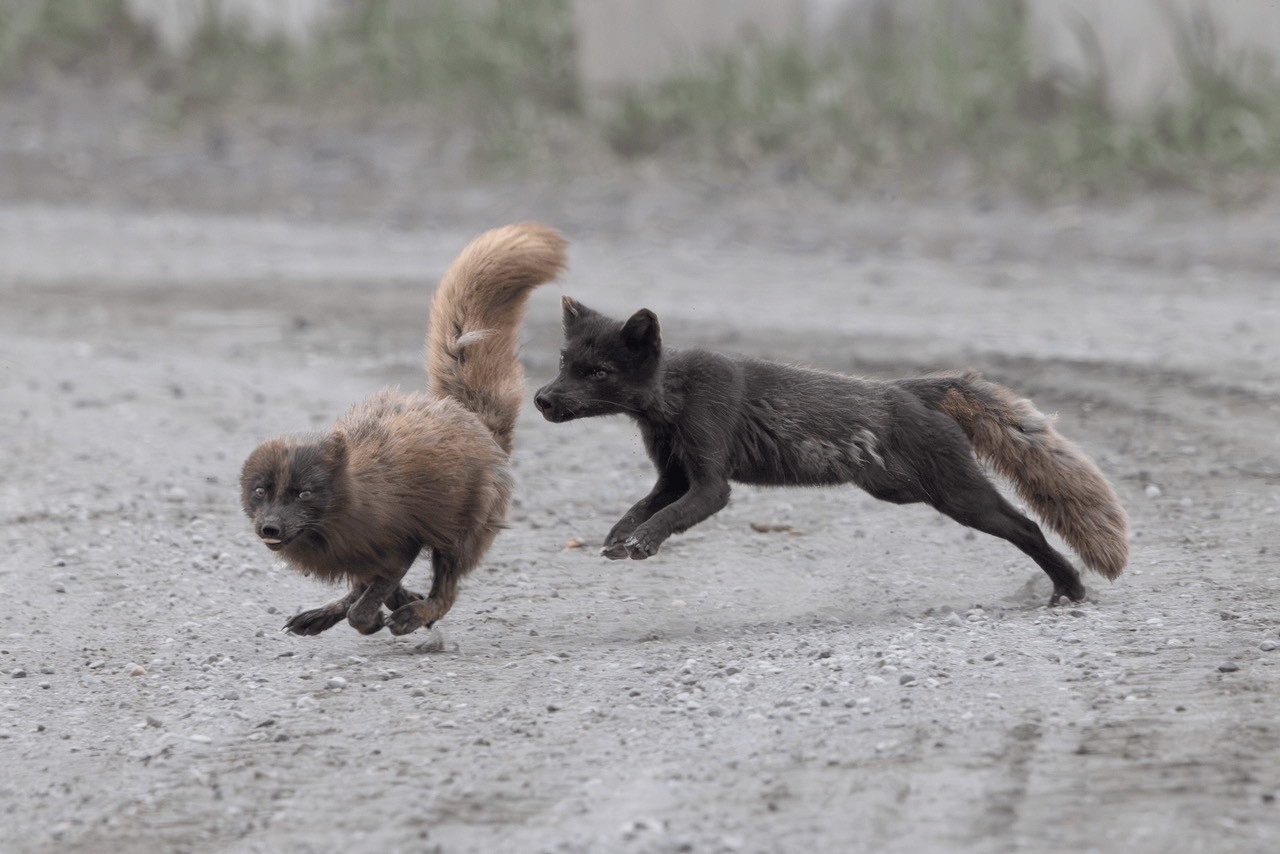
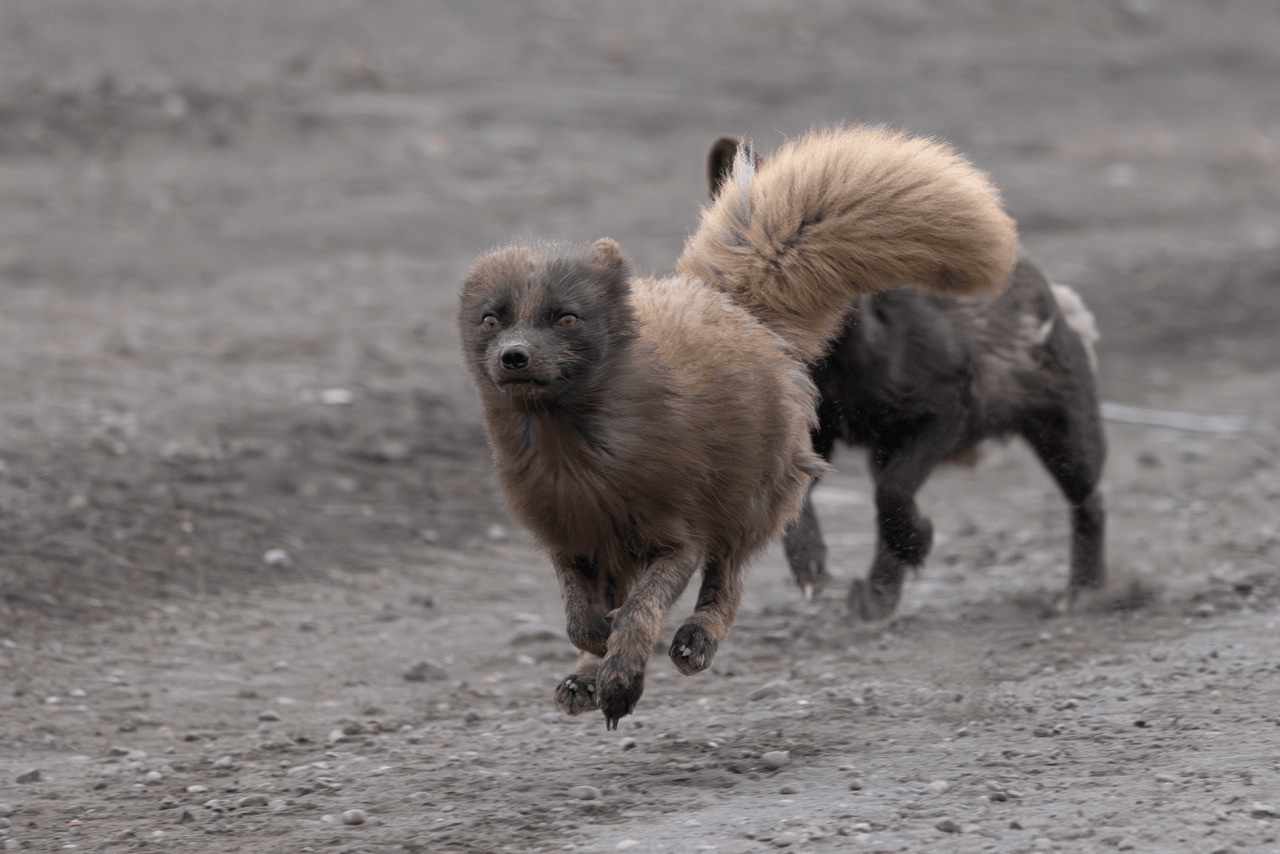
Adult foxes that I at first thought were playing were more likely having a serious fight. This was near the harbor on a day when there were a lot of foxes hanging around, most of them peaceably. I saw these two foxes in the middle of the road, seemingly frolicking. One of the foxes was on its back in the typical dog submissive posture while the other was standing over it. All of a sudden the one standing went at the submissive one, which ran like hell, right towards me. Look at the glorious fluffy tail on the fleeing animal! My colleague Paula White, who has studied this population of foxes, tells me that fleeing subordinates often wave their tails in the face of the pursuers. Perhaps it is better to get bit on the tail than the butt? Waving a fluffy tail might also distract and confuse the chaser:

I will end with a family portrait:

What a great set!
Thanks to Bruce for these pictures and video. They are a fine vignette of the behavior of these animals. I am reminded of Belyaev’s long-running breeding program on the sister species, silver fox (Vulpes vulpes).
I have to admit that I always associated “Arctic fox” as having a white coat, on account of many depictions showing them pouncing on prey under deep snow. But Bruce’s pictures remind me that the Arctic tundra also has summers, when a white coat would be maladaptive. I was set right by the first batch (that I missed last week), and the Wikipedia article that explains their seasonal shedding, though complicated by a split into two morphs.
It’s a bit more complicated than just winter and summer. Even the white arctic foxes turn brown in summer to match the tundra. The blue morph animals are dark year round so they differ from the white morph in the color of the winter coat. Apparently the blue morph is the common one in coastal areas and islands (Aleutians, Pribilofs like St Paul) because there is much less snow in winter. With this, they are pretty camouflaged most of the time.
Wonderful!! Thanks.
Wonderful presentation.
Why are the arctic foxes brown? I would have thought they’d be white.
Great pictures. Thanks!
Great pictures and videos. I didn’t know that foxes could bark!
The babies are so adorable!
Wow, what wonderful photos! Thank you for sharing them.
Thanks for the great series of photos.
They’re excellent Bruce. I tweeted this out, I hope you don’t mind:
Some great wildlife pics by the excellent Bruce Lyon via my friend Prof Coyne whyevolutionistrue daily website (best out there).
The foxes are so beautiful and so … CANINE. I can see that behavior with puppy David here who THINKS he is a fox or a wolf (he isn’t, foxes don’t need cuddles ALL THE TIME!)
all the best and thank you,
D.A.
NYC
Very good stuff!
I don’t know how to read fox behavior, but if we generously assume that dogs and foxes share some behaviors, then the first fox is saying “Go away!” The head going up and down, along with rearing up to plant the front feet on the ground is exactly that behavior in dogs.
The cubs look permanently startled. I like the pouncing on the sibling picture. I recently saw a fox make off with a turkey chick. The rest of the little ones got away.
Wonderful photos and videos. Thank you so much!
I also can’t help but remark on your ExtraTufs, aka “Sitka Slippers” or “Alaska boots.” They were the chosen footwear of my father, who first went to Alaska in 1940 to work as a mucker in a gold mine, and who, after college back in Colorado, made a career as an exploration geologist for the USGS. He was also a bush pilot who did a lot of his aerial mapping and exploration work for the USGS from his SuperCub. I was born in Juneau, although we lived in Douglas, across the Gastineau Channel.
After my father died, on a trip to Sitka, I bought myself a pair of ExtraTufs. I was by then a tenured prof in Illinois, but thought of stepping into those boots as me, stepping back into my Alaskan roots. Imagine my surprise when I discovered that ExtraTufs were made in Illinois. (Sad to say they are now made in China.)
And so, it’s so lovely to see again a field biologist in Alaska gear! Thanks for both your camera work and the memories.
There is no substitute for ExtraTufs as field gear. I absolutely love them!
The Arctic fox is very different-looking. The pups are cute.
Thank you for all the great photos and videos, both foxes and sea birds! Can we look forward to some photos of your study finches?