
We have only a few batches left, and I am baffled about why few submissions are coming in. Please, if you have photos and appreciate this site, send me some good ones. Thanks!
Today’s photos come from Marcel van Oijen in the Netherlands. His captions and IDs are indented, and you can enlarge his photos by clicking on them.
A Dutch Garden in Summertime
Marcel van Oijen
This summer we spent two weeks in the Netherlands, looking after the house of Nellie and Roel who count as both family and close friends. The following nine pictures were taken in their garden in the small town of Woudenberg, in the central Dutch province of Utrecht. Even though the Netherlands are just 700 km away from us (we live in Scotland on the opposite side of the North Sea), temperatures were about ten degrees higher there which made for much more varied wildlife.
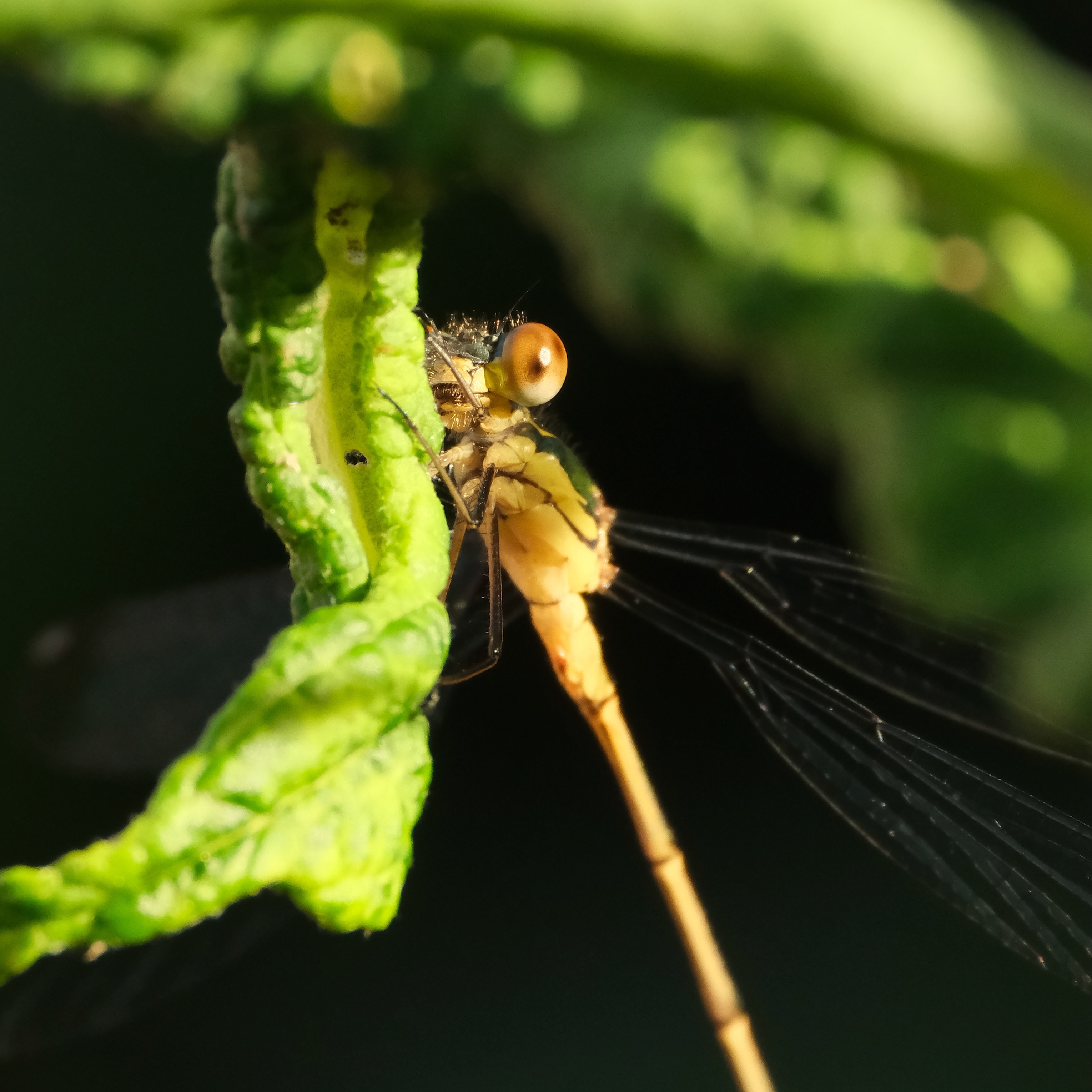
This is a Willow Emerald damselfly (Chalcolestes viridis), recognisable from its brownish eyes. We never see damselflies or dragonflies in our garden here, so this was a huge and pleasant surprise:
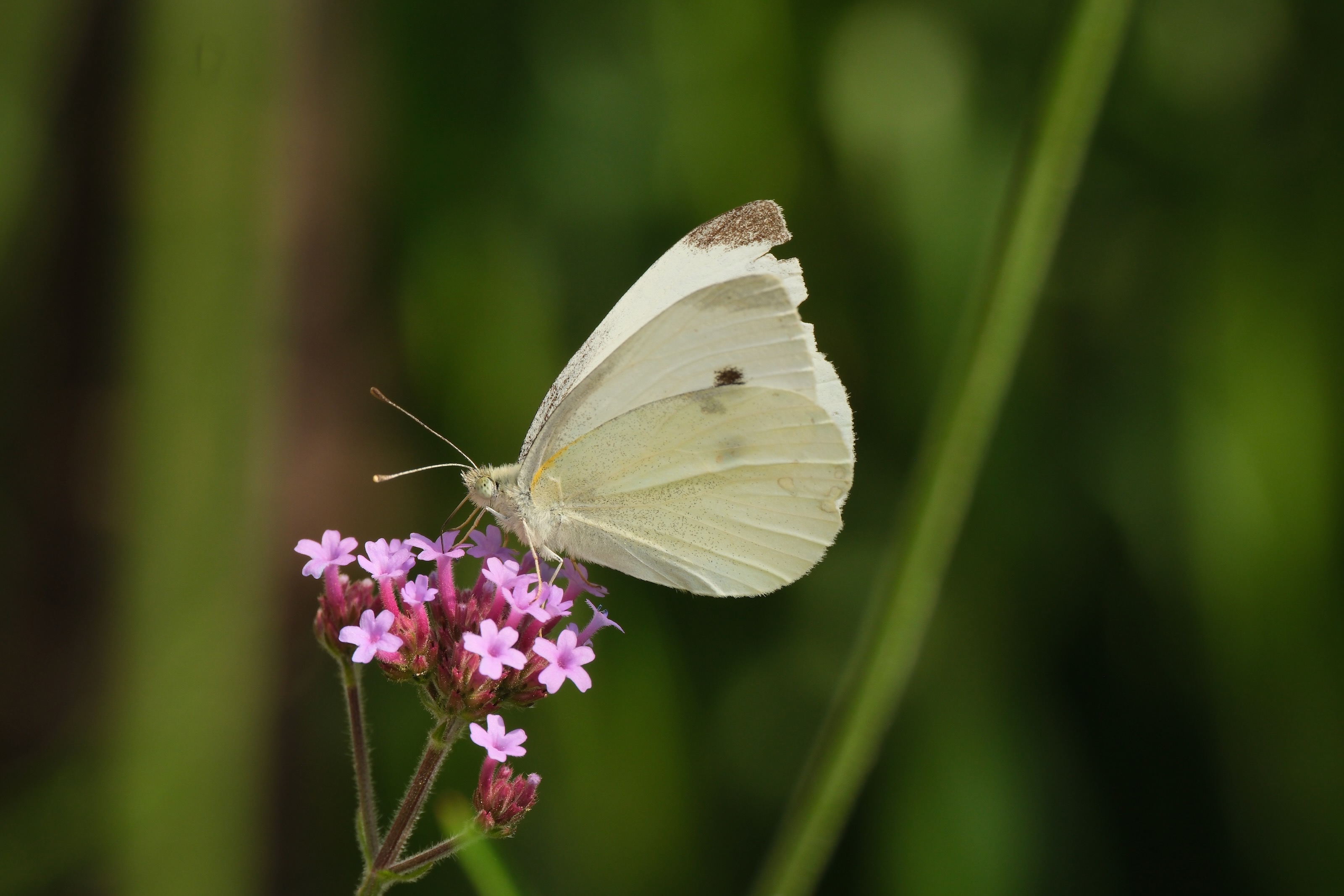
Small White butterfly (Pieris rapae). Very common on both sides of the pond:
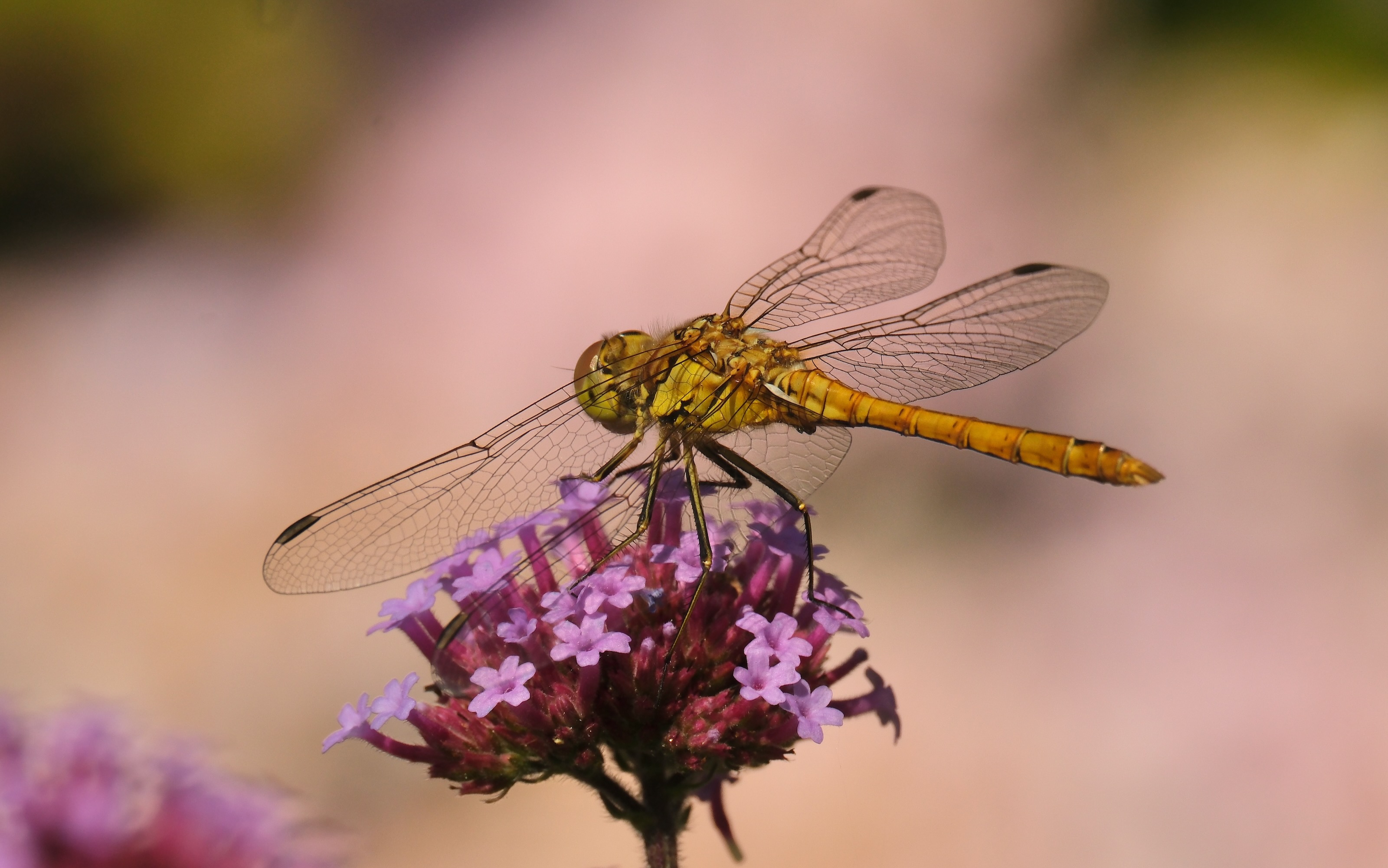
Vagrant Darter dragonfly (Sympetrum vulgatum). The species can be identified from its yellow-black legs, and its overall yellow colour tells us it’s a female;
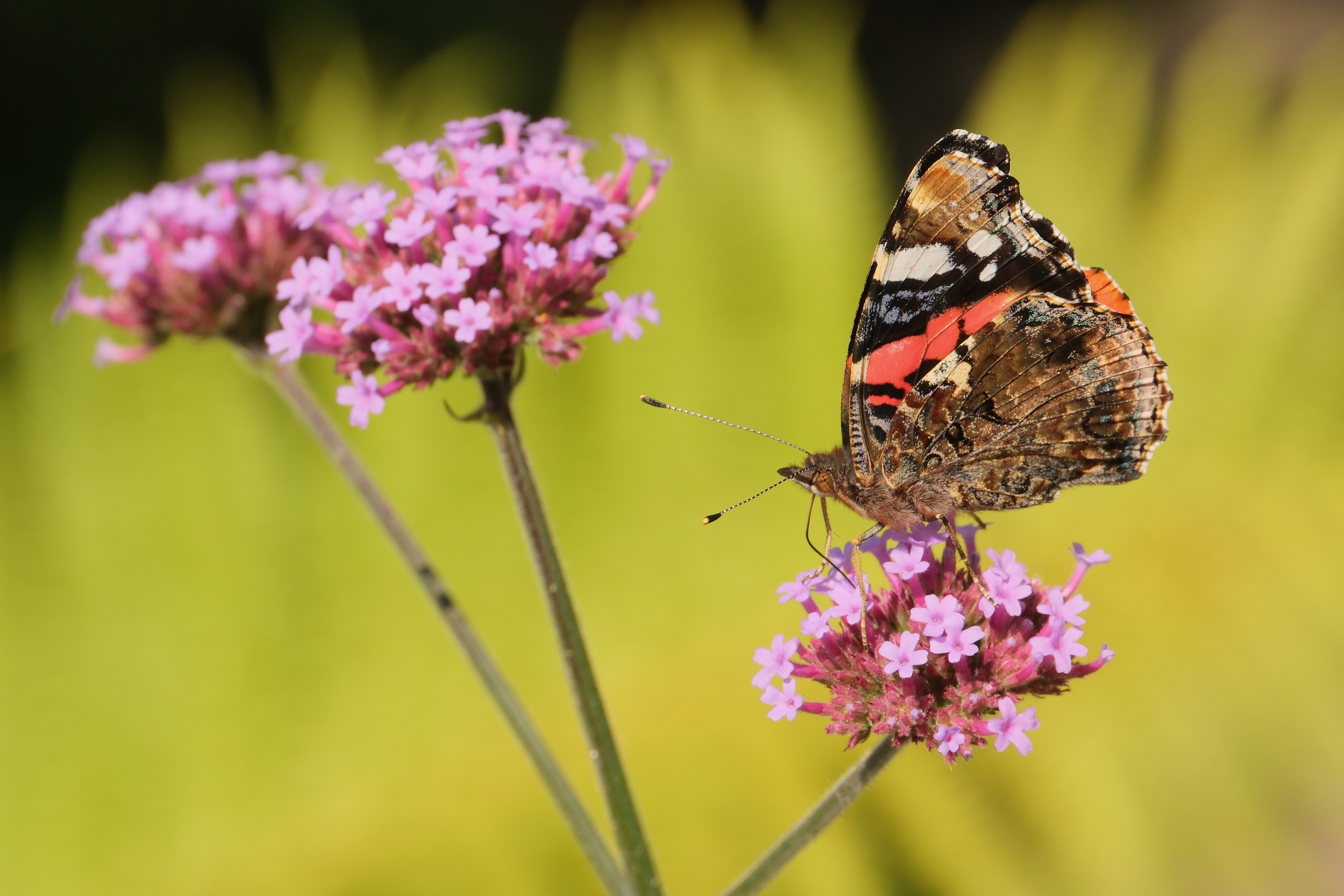
Red Admiral (Vanessa atalanta). A very common butterfly also here in Scotland:
Another Pieris butterfly, a Green-veined White (Pieris napi). I find the various Whites often difficult to photograph because they are so restless, but here they took their time feeding, maybe because the heat was too much even for them, or the flowers contained more nectar than usual?:

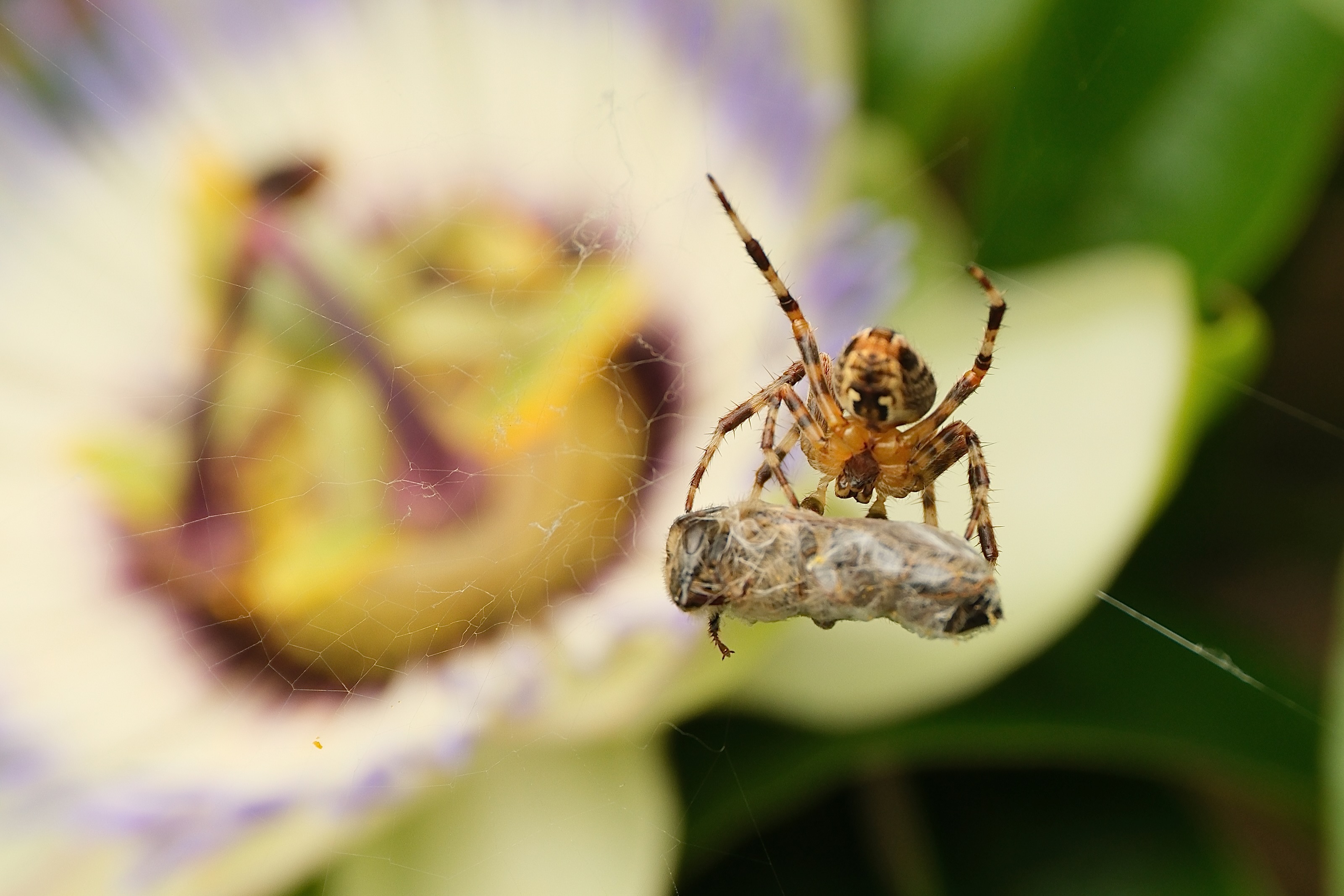
This European Garden Spider (Araneus diadematus) was a joy to follow during our days in the garden, when it was making or repairing its web, or scurrying toward the foliage whenever I got too close. Here it is wrapping up some prey (a hoverfly perhaps) for dinner later.
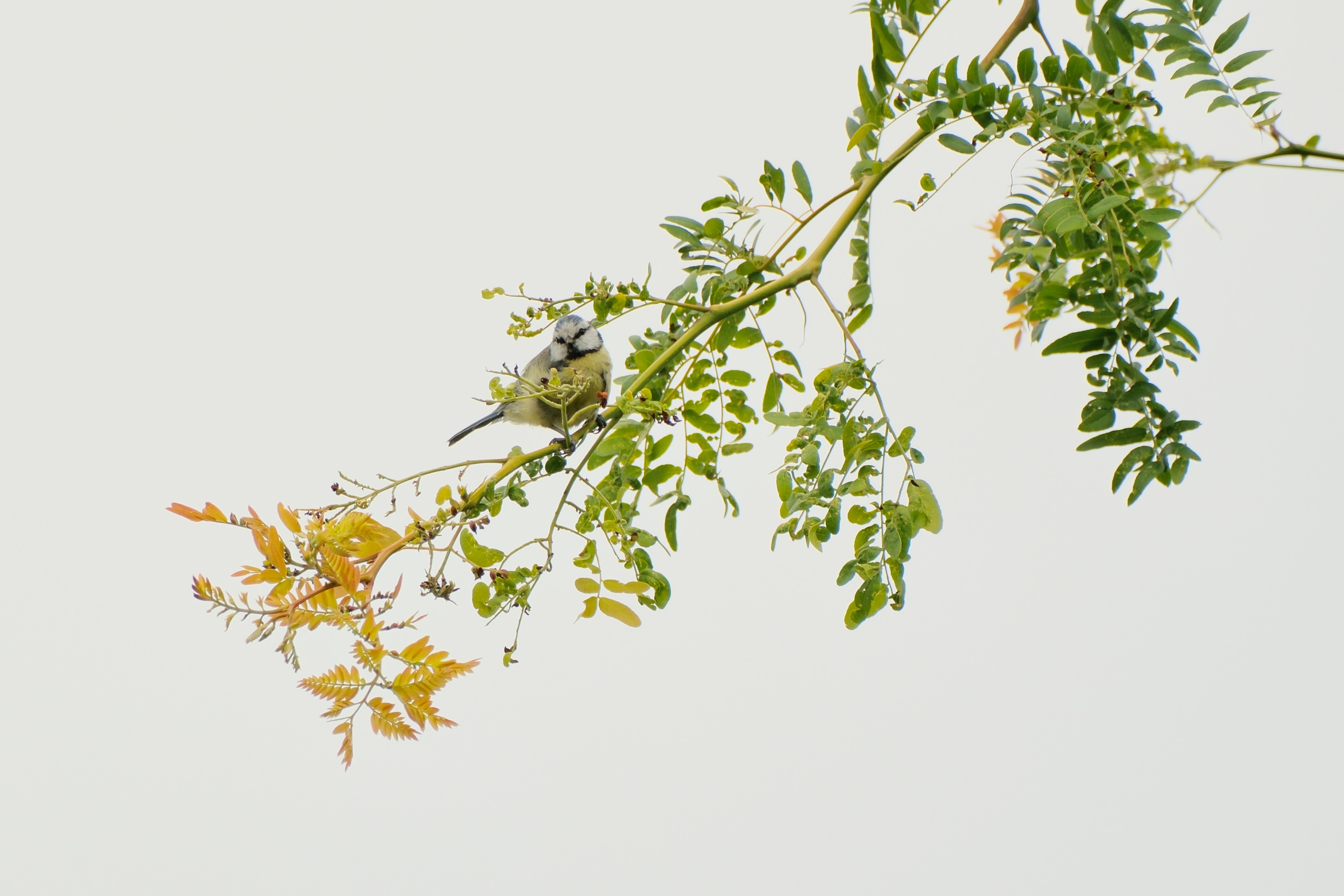
The sky was not really this featureless white, but I overexposed this picture of a Blue Tit (Cyanistes caeruleus) by two stops to make the picture look somewhat like a Chinese print:
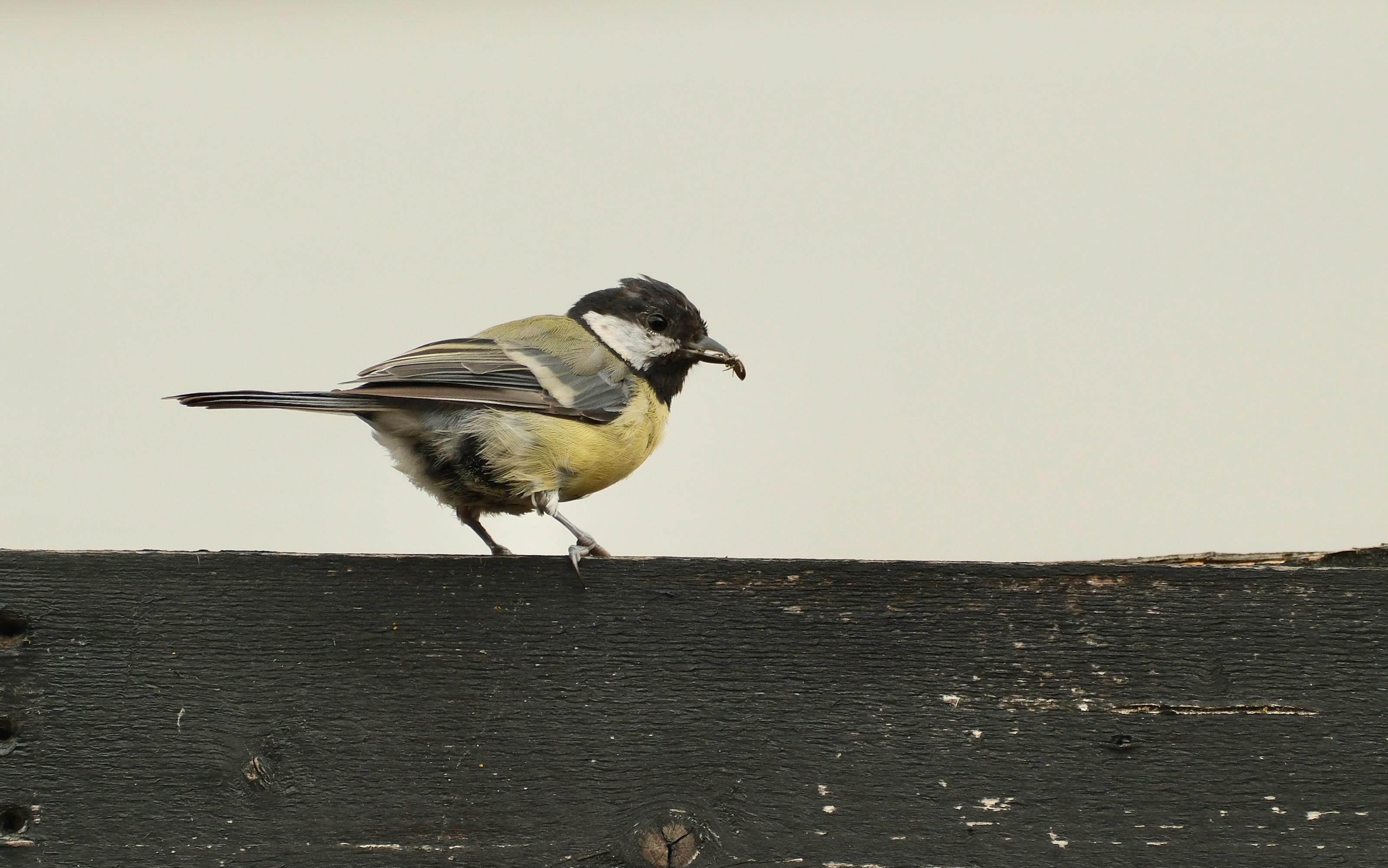
And here is its larger cousin, a Great Tit (Parus major), with tiny prey:
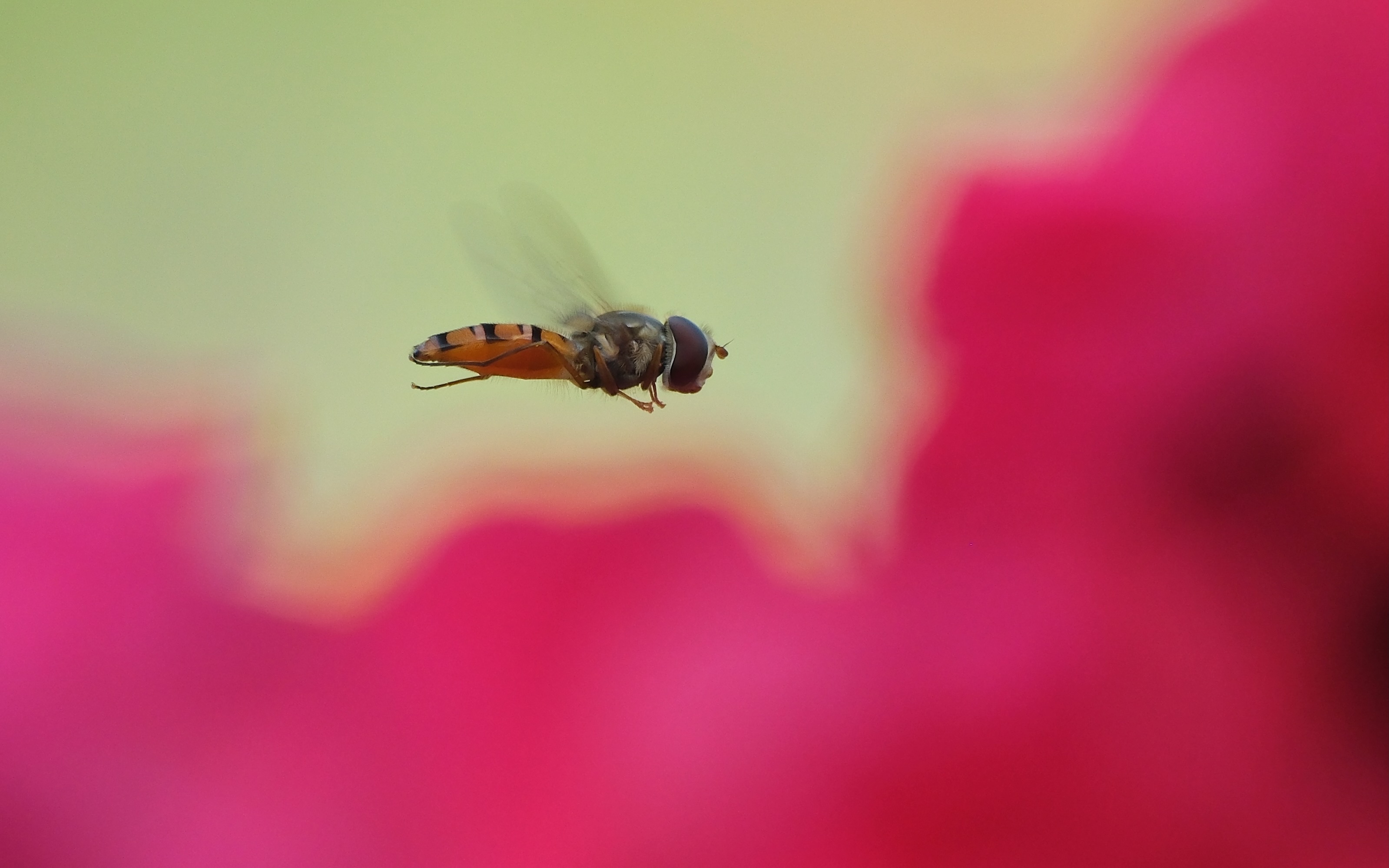
We finish with one of the most common hoverflies in Europe, a Marmalade Hoverfly (Episyrphus balteatus). This photo was taken while sitting at the breakfast table in the garden, where they would be hovering near the same flowers every morning, so I could focus the camera first and then simply wait for one of them to appear in the right spot:
I loved seeing this Great Tit, my favorite argument for capitalizing common names of species.
And I like the Chinese print effect you made for the Blue Tit.
Very nice! That flower looks like it might be Purple Verbena (Verbena bonariensis). I’ve been hounding my wife to get some for our garden.
Thanks for that. My wife tried growing Verbena from seed in our sandy-soil Edinburgh garden, but that did not work out. Maybe better to plant some seedlings.
Verbena bonariensis does not sprout easily indoors under lights. In North Dakota, where it can get quite cold (-30F) I just scatter seeds on the soil surface in the fall, and many survive winter and grow. After the first year they self-seed.
Very good! It’s interesting how some species are shared across the pond, while others are not but there are still similar species. Your Small White Butterfly, for example, is super common here, and we call it the Cabbage Butterfly. Common, but very hard to photograph!
I am slowly working thru a batch of pictures to share. I think almost ready.
Thanks Mark – I look forward to your pictures, always enjoy them! And yes, interesting that we are struggling to photograph the same jittery butterfly species thousands of miles apart. We’ll be visiting Japan in autumn and I’m told we may also see it there, at least in the south (Kyushu).
Love the tit, Chinese picture, yes!
These photos have such a nice delicacy that seems to reflect the subjects.
All very beautiful photos.
Thank you for these lovely photos from a Dutch garden.
When I lived in Germany years ago I became acquainted with the Parus family (Meisen in German). Here in Pennsylvania we have only three birds in that family (two chickadees and the tufted titmouse), so I’ve always felt deprived that others in that family, especially the more colorful ones, were not native here. And yes, your photo of the Blue Tit does remind me of a Chinese print.
I used to have Verbena bonariensis in my garden. I believe I started with a plant, though the climate here wasn’t warm enough for it to survive the winter. It did set seed, however, which overwintered, so every year for eight or ten years I found plants popping up randomly throughout the flower beds. Unfortunately they have disappeared. Not a native plant, not showy, but still a lovely, rather delicate one that pollinators seemed to like.
Like a lot of commenters above, I also love the Chinese print effect of your pic of the Blue Tit.
Thanks for all your other images, too. It was nice of the hover fly to pose for you.
Hi Marcel,
Lovely shots!
If you have access to a photo editing program that has a clarity slider (like Adobe Camera Raw), try playing with negative clarity to produce a Chinese print effect. (It’s also amazing with B&W portraits to produce a glow to skin and make blemishes disappear.) 🙂
Hi Roger, thank you for that suggestion. I don’t have access to any sophisticated editing program, I only shoot JPEGs with my Fujifilm X-T5 and do minimal editing using the Mac’s default program (called Photos), but that is an idea to explore!
Also my thanks to all other kind commenters.
Photopea.com is a free online photo editor that has a negative clarity slider (and a whole lot more). Open your .jpeg image, go to Filters, choose Camera Raw, scroll down to find Clarity. 🙂
These are absolutely lovely. Thanks!