
It’s a new year, this is my 29,848th post since I began in 2009, and we have a new contributor to the photo series: Amy Perry from Indiana. Her photos below, though, are from California. Amy’s captions and IDs are indented, and you can enlarge her photos by clicking on them. I have added the Wikipedia links.
I took a hike in the Torrey Pines State Natural Reserve Extension in the Del Mar neighborhood in San Diego. All the photos except for the three with asterisks were taken there. It is a hilly shrubland with views of the Pacific. All quotations are from the book California Plants: A Guide to Our Iconic Flora, by Matt Ritter. These plants are all in the shrublands section. I didn’t want to use descriptions from Wikipedia because readers could read them for themselves there. I wanted to provide info not easily accessible.
“The Torrey Pine (Pinus torreyana) is the rarest species of pine in North America. There are about 3,000 wild individuals growing along the coast of northern San Diego, almost entirely in Torrey Pines State Natural Reserve…. This species can be distinguished from other pines by its twisted canopy of long gray green needles that are in bundles of five. The name commemorates John Torrey, a 19th century botanist and physician, and an original member of the National Academy of Sciences.”:
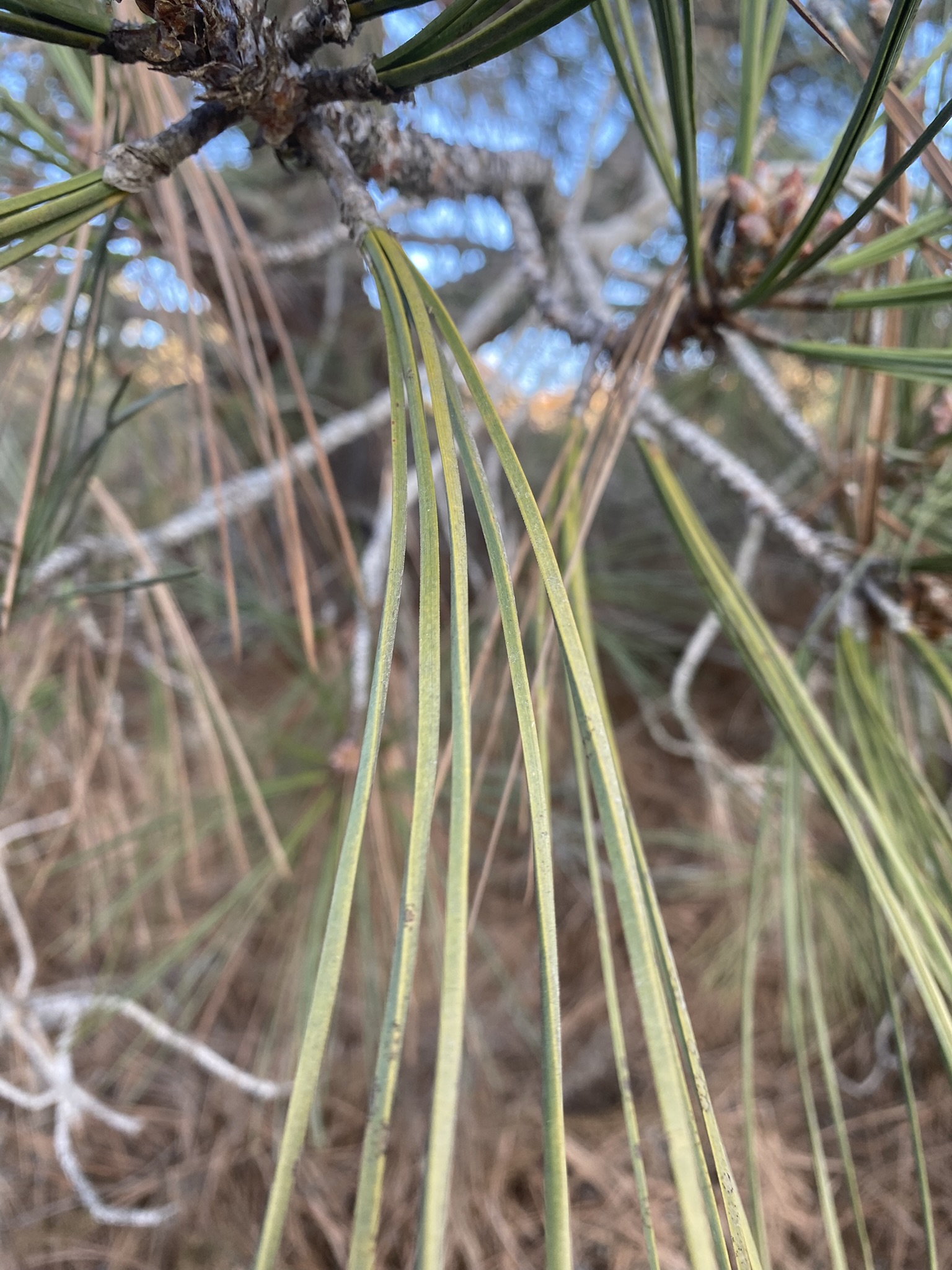
Torrey Pine (Pinus torreyana). Note how gangly and sprawly and chaotic-looking this tree is. Many desert plants are like that:
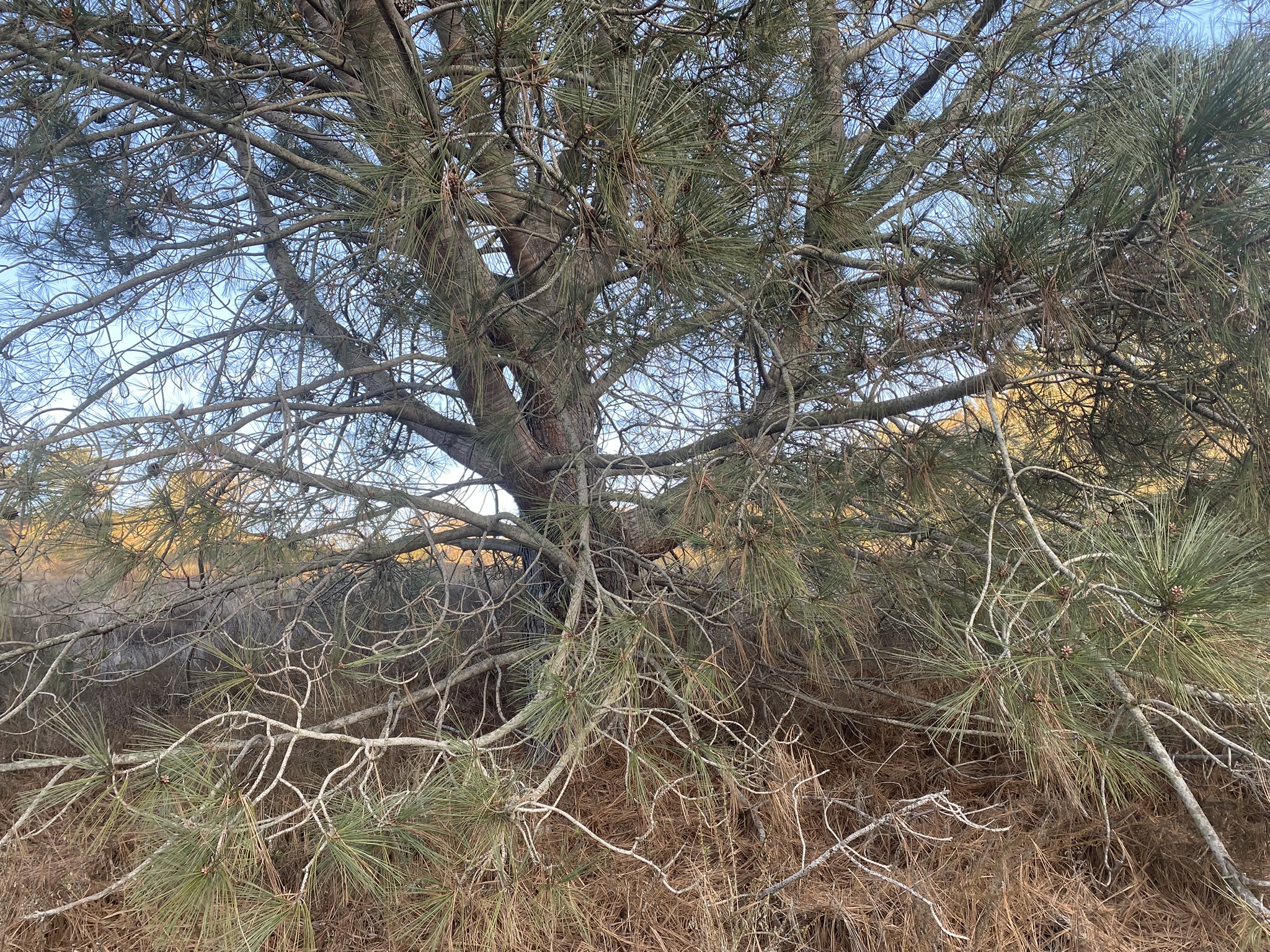
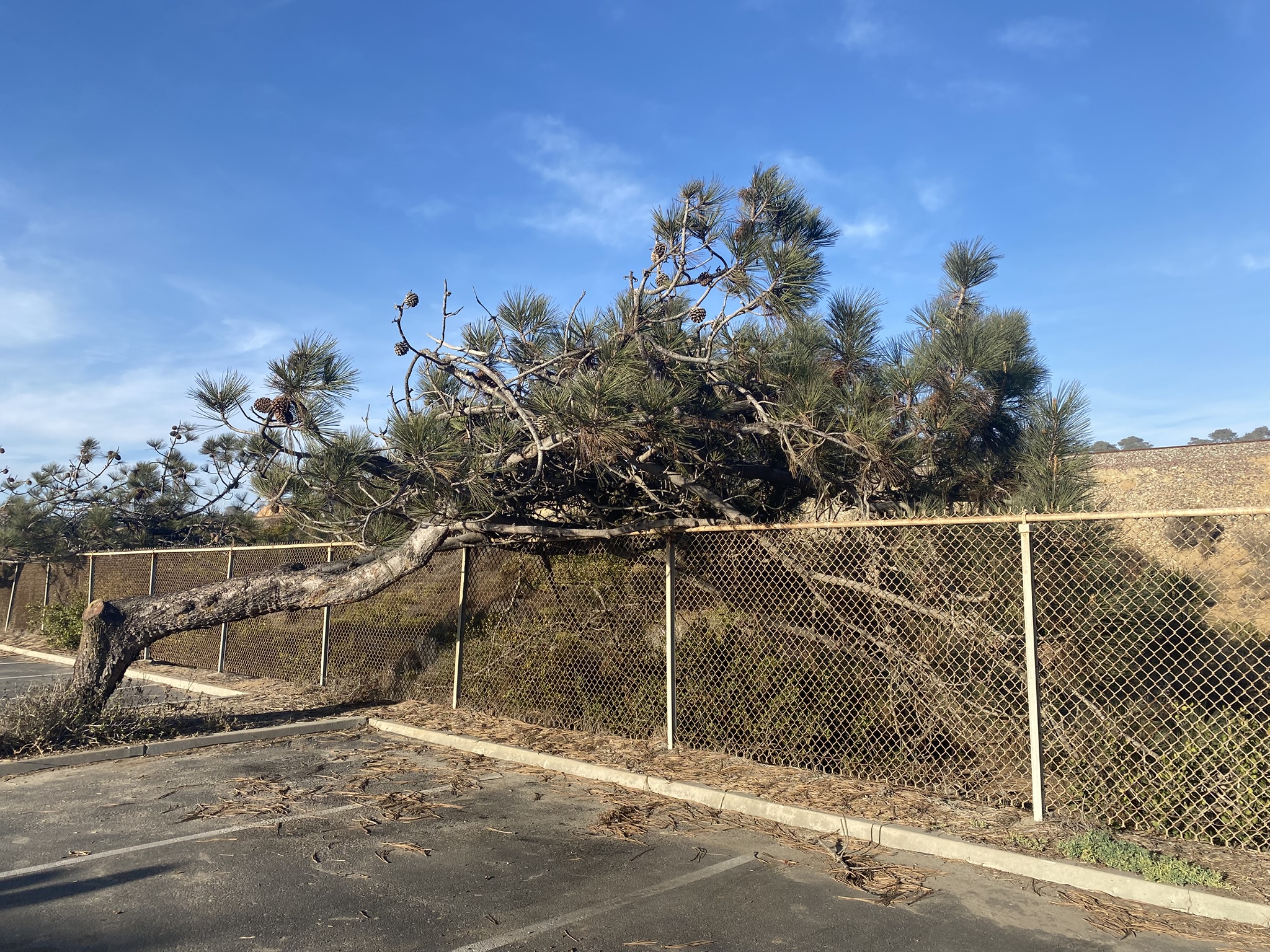
*Torrey Pine (Pinus torreyana) in the beach parking lot. “Trees along the immediate coast grow slowly, battered by ocean, winds and salt spray and sculpted into unusual shapes.” This tree had had part of it cut off, but the remaining part still has a very unusual shape:
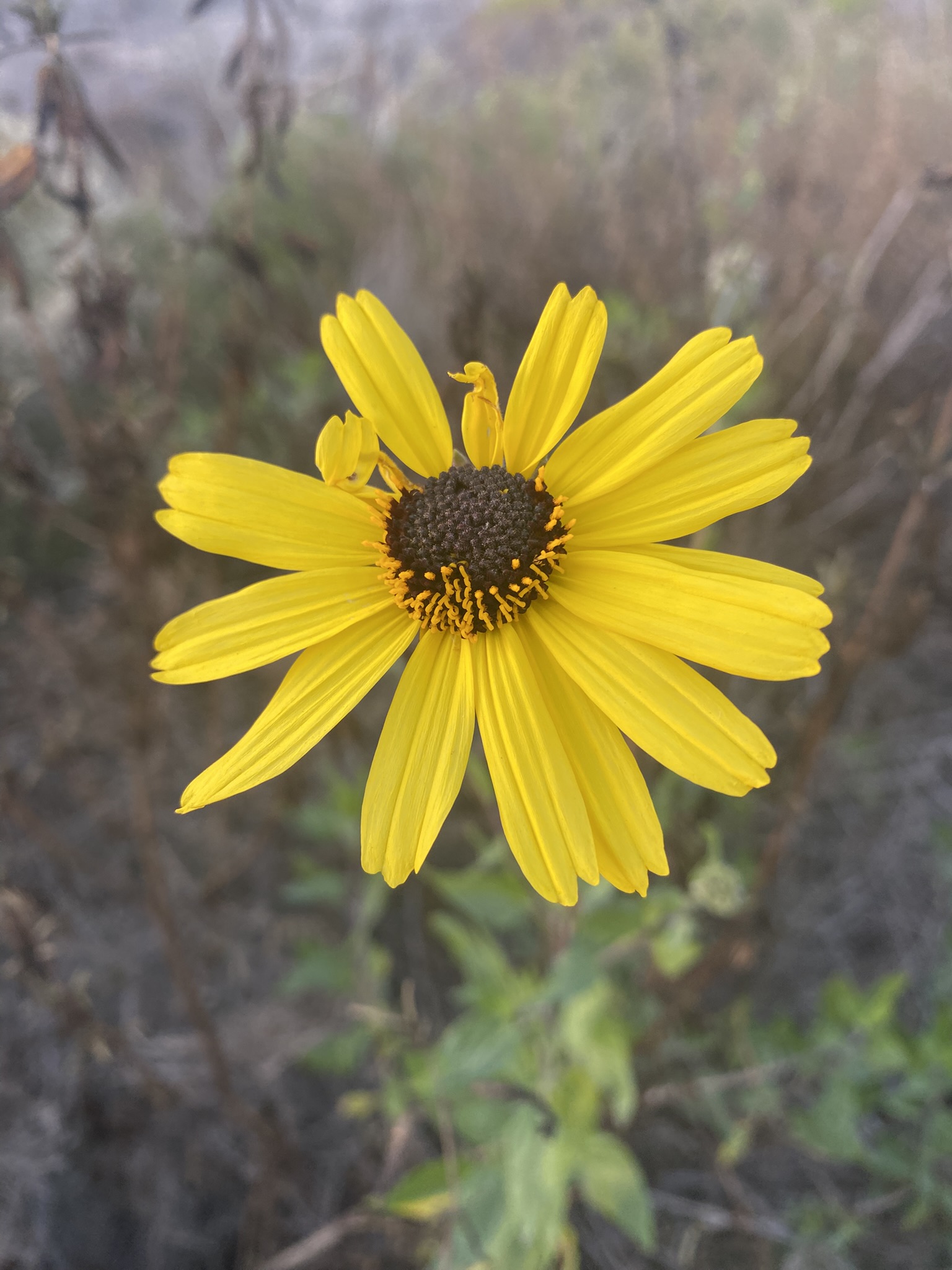
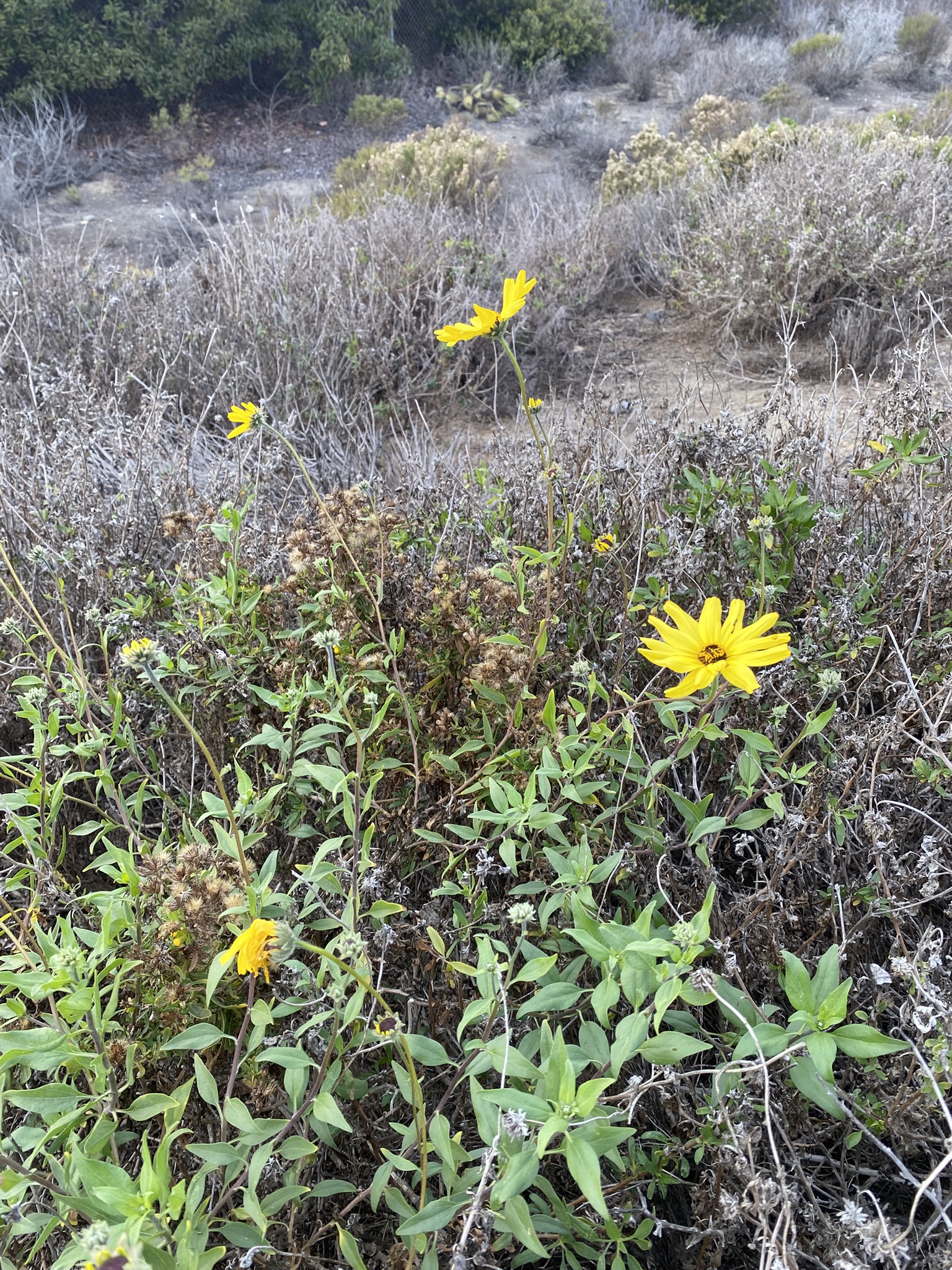
The flower of the California brittlebush (Encelia californica) reminds me of black-eyed Susans in the Midwest. It is one of the very few plants still blooming in the Torrey Pines State Natural Reserve Extension. It is a “non-hairy species that occurs in coastal areas,“ in contrast to plain ole brittlebush, a desert plant that has hairy leaves. The genus name “honors Christoph Entzelt, a 16th century German clergyman and natural historian.”:
California brittlebush (Encelia californica). “The desert variety can produce resin when the stems are scraped, and the dried resin can be burned for incense. In fact, the Spanish common name for this plant is incienso.” It’s unclear whether the coastal variety produces resin. If I had known about the desert variety, I would have scraped the stem of one outside the reserve to find out:
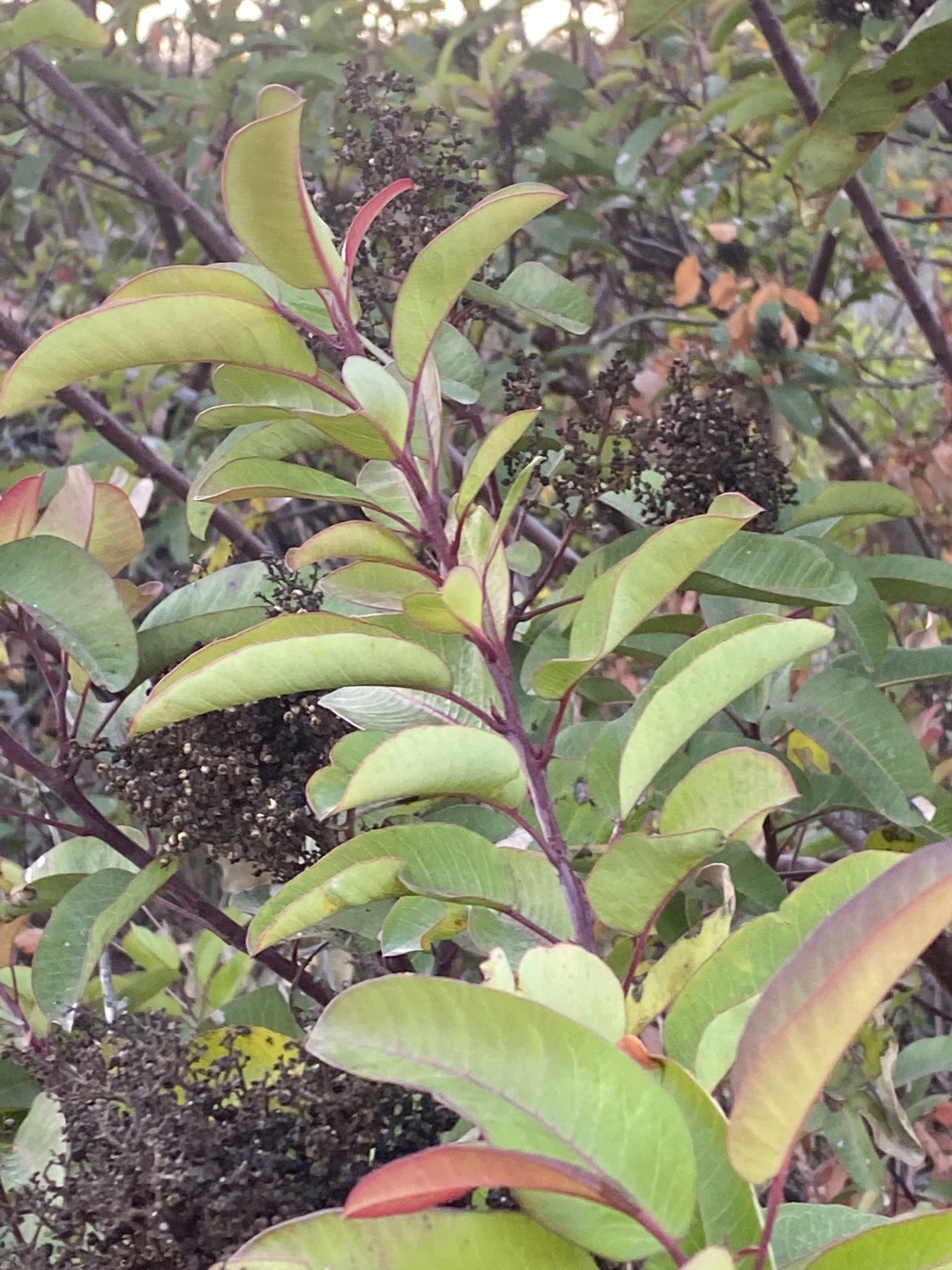
Laurel sumac (Malosma laurina) has “leaves that are folded upward along the mid vein, like a taco, with slightly wavy edges. Malosma means strong odor, for the smell of the cut leaves.” I did not tear a leaf and it’s probably a good thing since I was in a nature reserve. If I had read this botanical guide before I took my hike, I probably would have broken the law and torn the leaf, because I haven’t seen any laurel sumacs off the preserve:
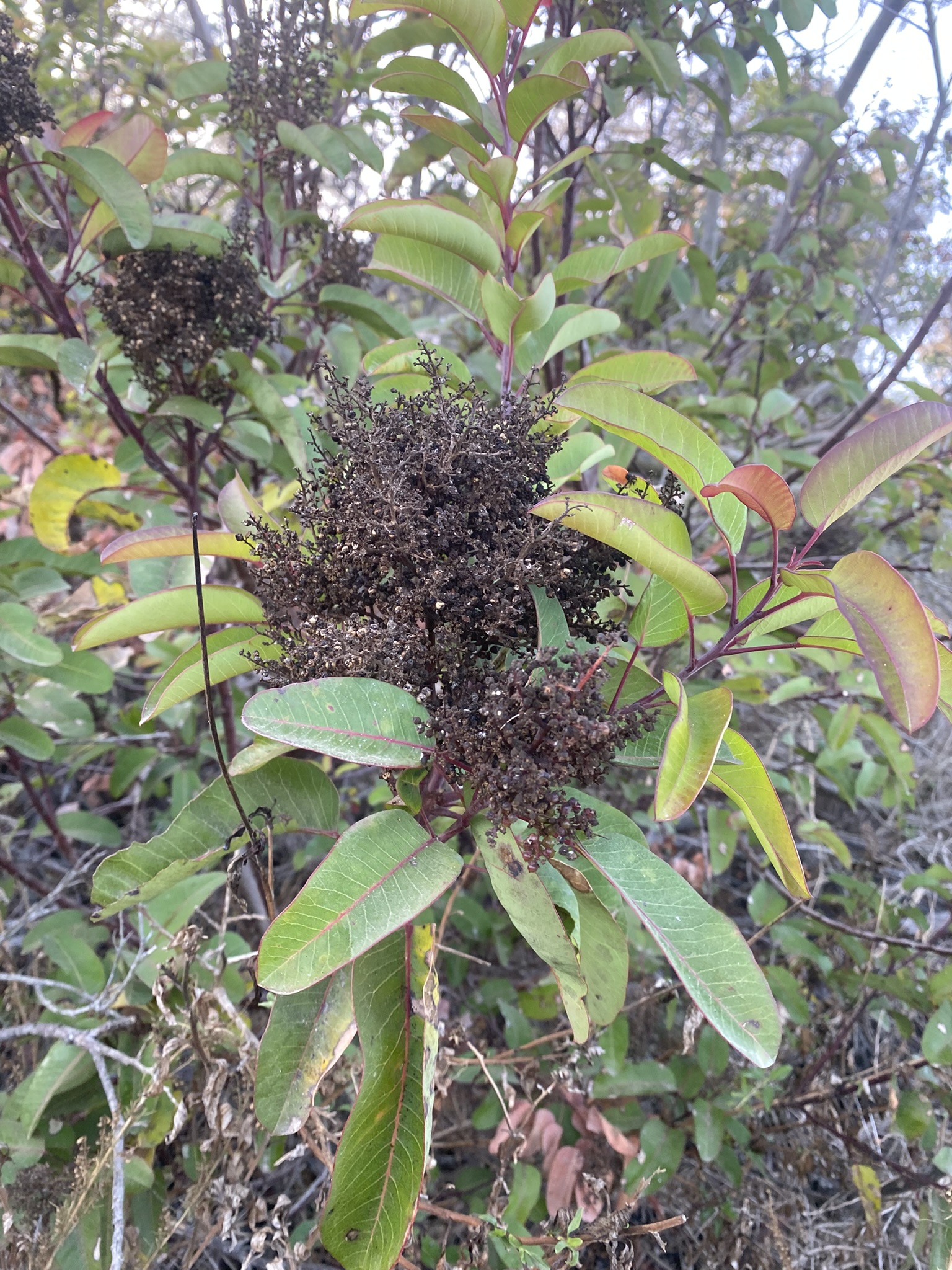
Laurel sumac (Malosma laurina). The shape of the blossoms reminds me of those of the staghorn sumac in Indiana:
California buckwheat (Eriogonum fasciculatum) is the most widespread species of this genus in the state according to Matt Ritter. “These evergreen leaves usually have margins rolled under, hiding a woolly underside. Eriogona means woolly knees in Greek, referring to the hairy nodes of the first species named in this genus.”:
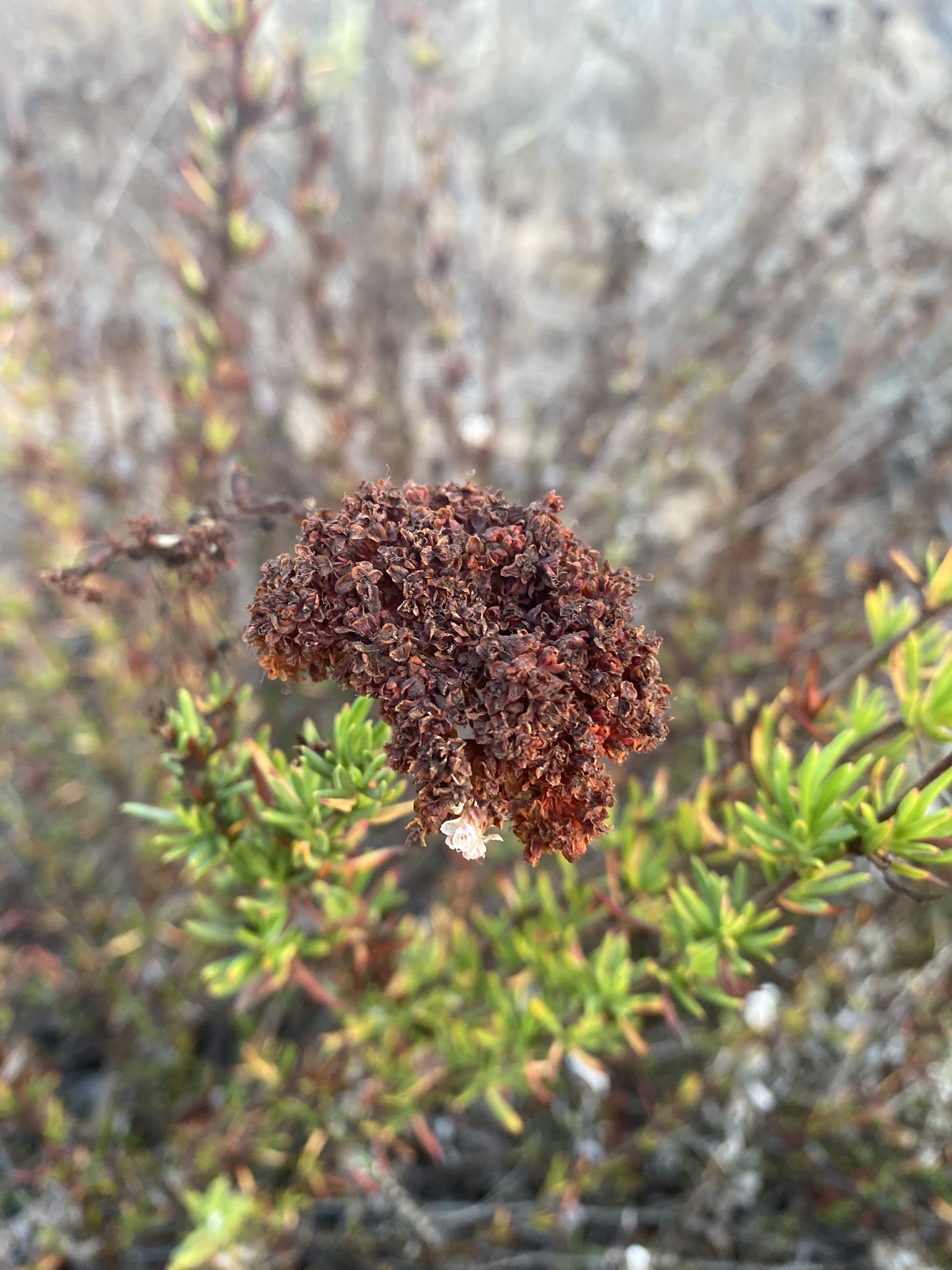
California buckwheat (Eriogonum fasciculatum). “No part of the plant is especially edible, but the flowers are an important food source for butterflies and honeybees.”:
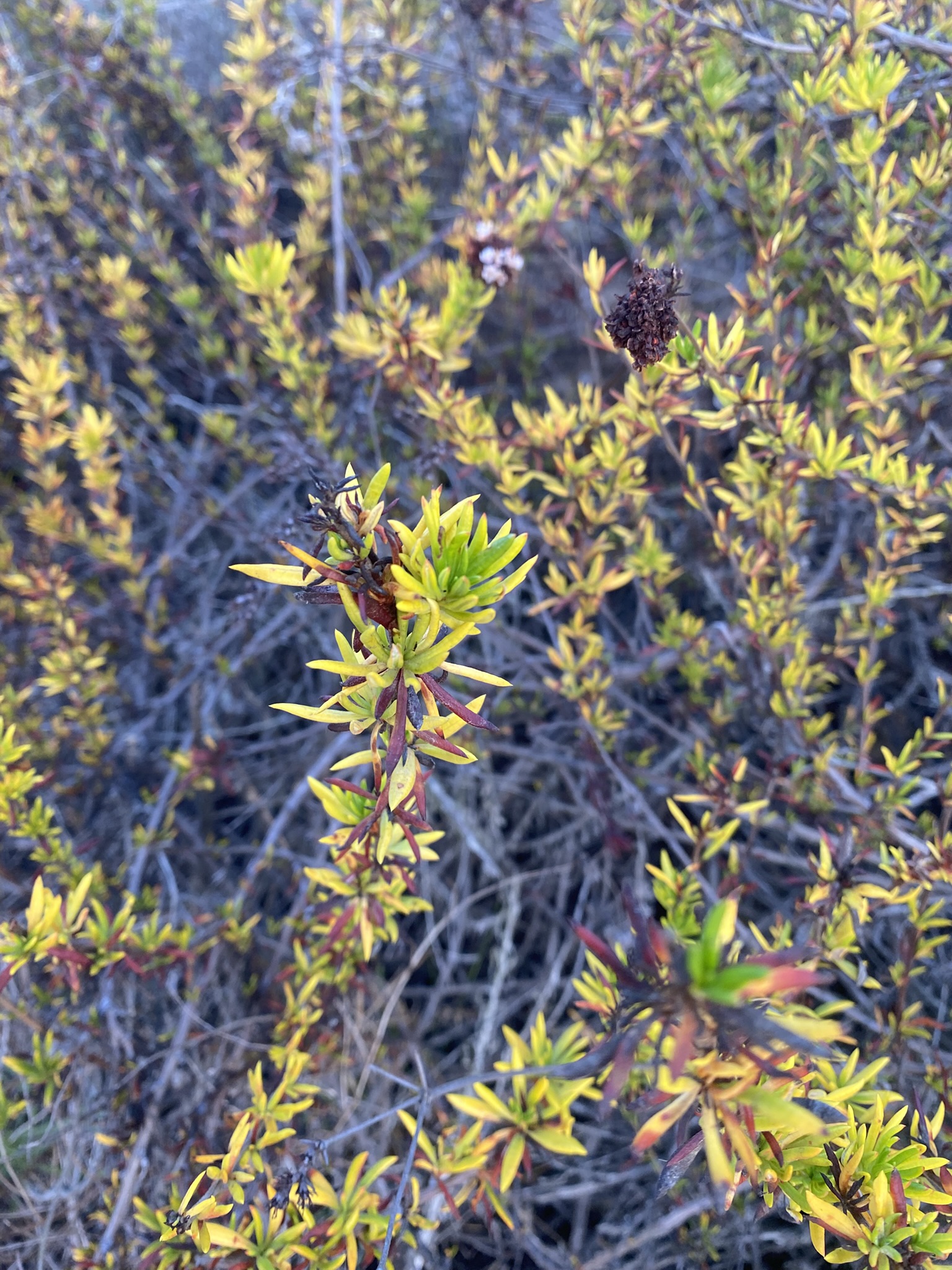
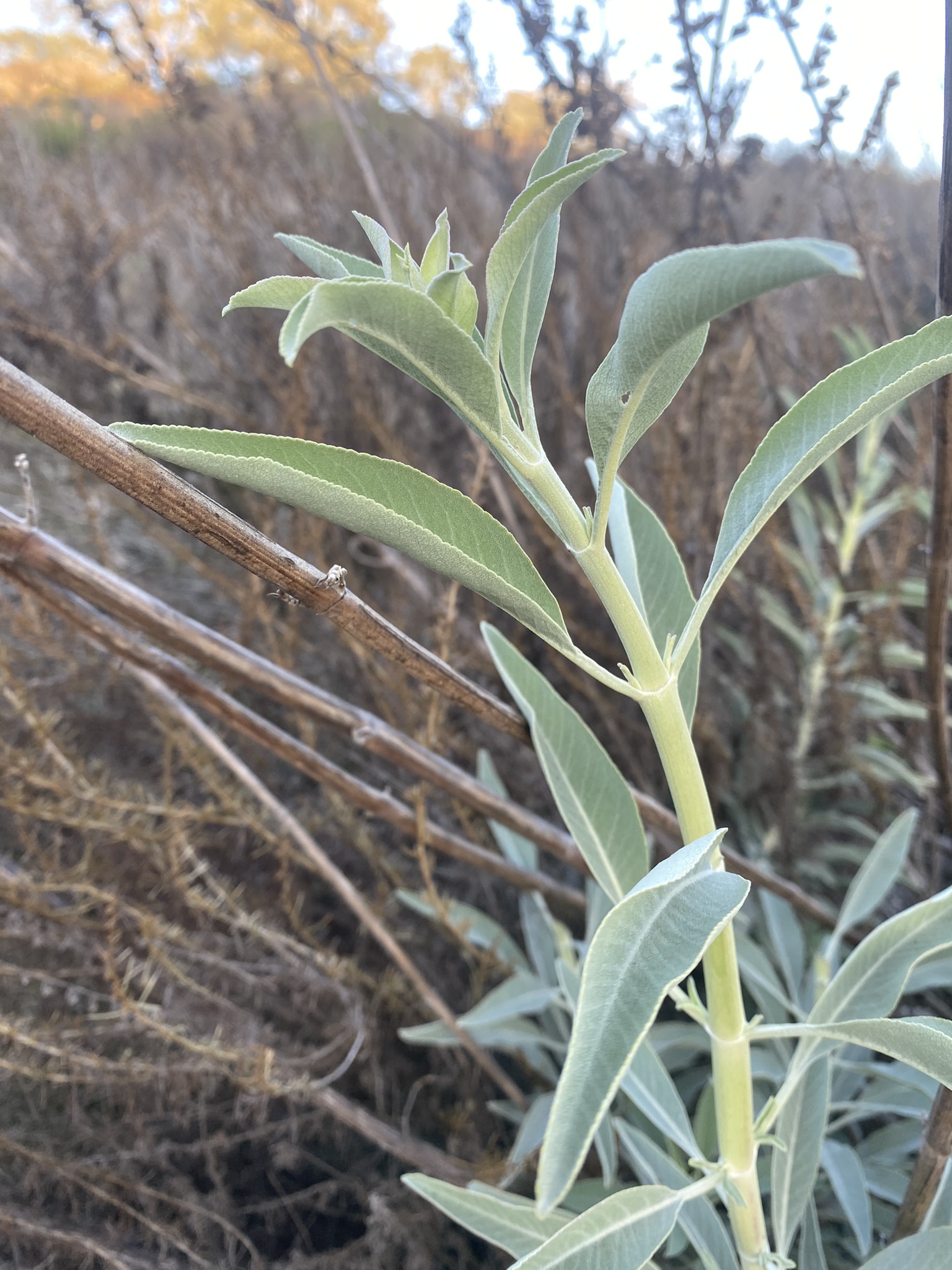
White sage (Salvia apiana). I hope the photo shows the softness of the leaves. “The name salvia is derived from the Latin word, Salvus, meaning safe or well, referring to the medicinal value of members of this genus:
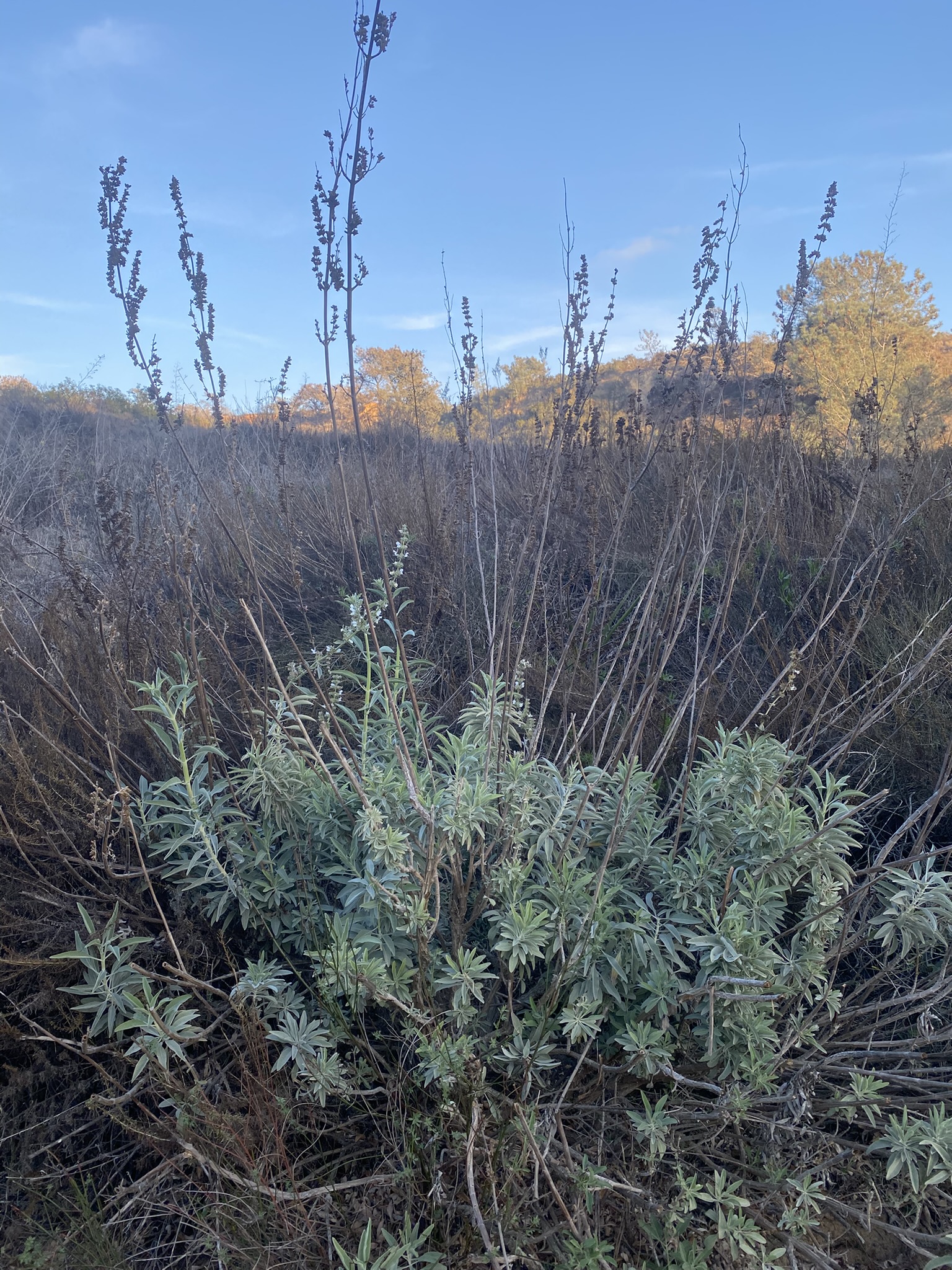
White sage (Salvia apiana). “Most sages in California are drought-deciduous shrubs, commonly found in chaparral and coastal scrub.”:
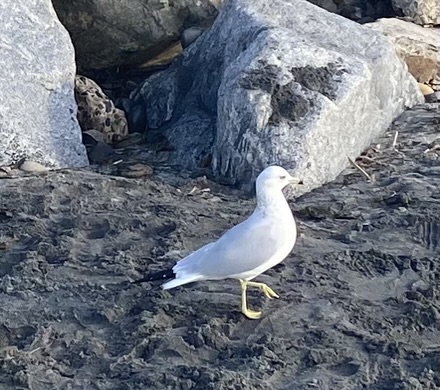
*Ring-billed gull (Larus delawarensis). “Opportunistic feeders” is what the Cornell Lab of Ornithology calls this bird in the book All about birds: California. Usually I see all manner of shorebirds at the Torrey Pines State Beach, North Beach. But one day I didn’t see any birds at all, and another day all I saw were the ubiquitous ring-billed gulls and, further inland behind some mud flats, some killdeer:
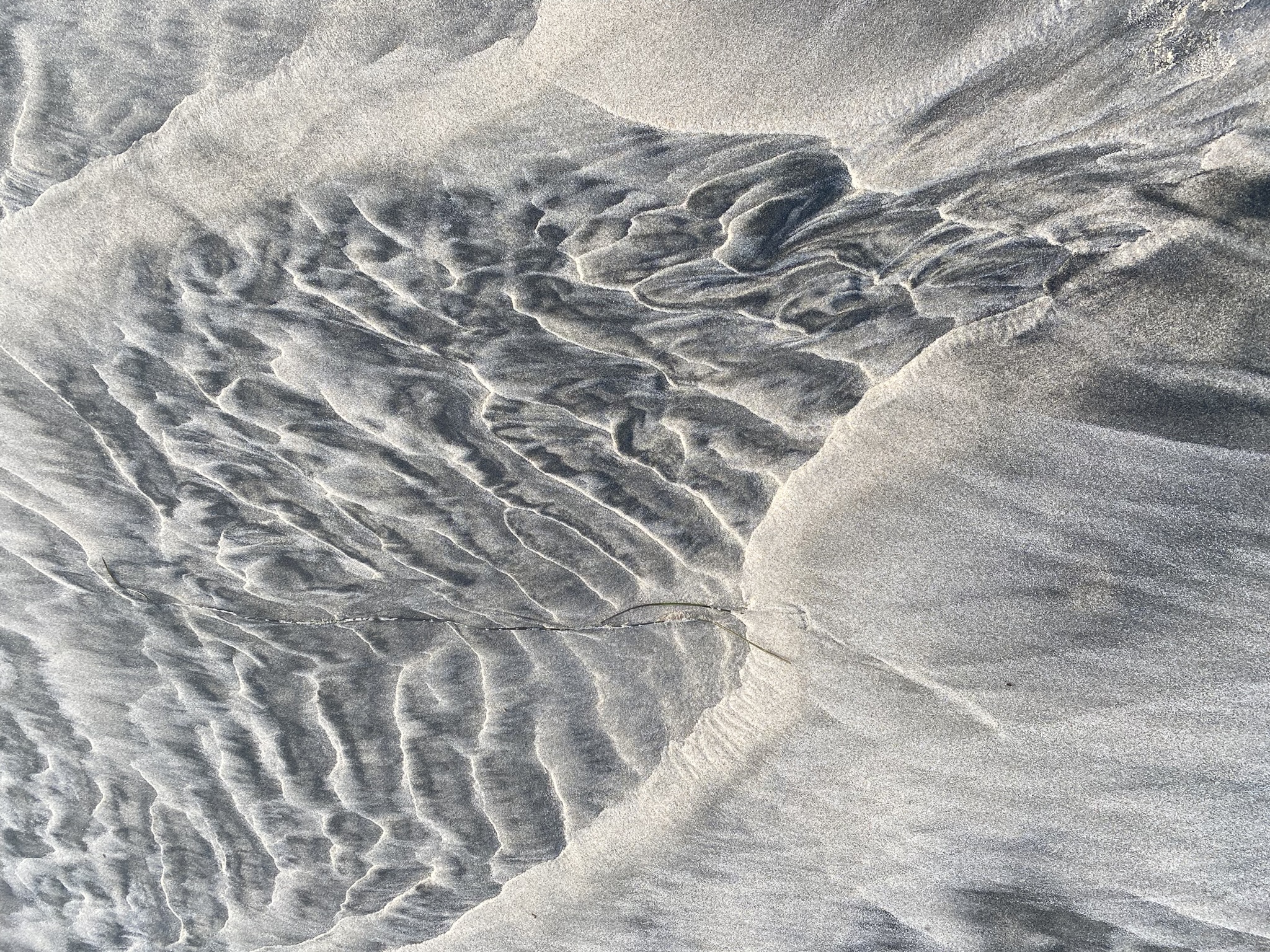
*Marbled effect of waves at Torrey Pines State Beach, North Beach, with a strand of seaweed for size comparison. Each white line is a tiny ledge about 1/8 inch high. I checked because I was curious whether the white was just a differently-colored sand or really a ledge, and the lines were indeed raised ledges.
I am boggled by your number of posts – kudos! Thanks for so freely sharing your knowledge, thoughts and insights. Looking forward to your 2025 posts!
Thanks, and you’re welcome.
Very nice! I lived in San Diego a long time ago, and had visited the Torrey Pines park. The flora here takes me right back.
Beautiful narration of a gorgeous place and wonderful photos!
Happy New Year to all!
The sand photo looks like modern artwork — you can get lost gazing at it and see images in it.
Love seeing the White sage growing wild. Familiar area to me. Enjoyed seeing it. More! More!
I’m Drbi today. Hmm. Maybe I’ll keep it
Herr Doktor – Dr. bi
I didn’t notice that 🙂
Would I be expected to change my pronouns? Nah. I’ll go back to Debi. (This is screwing up moderation. Sorry, Jerry)
Very nice narration!
Ahhhh – refreshing!
Nice!
Great pics, thank you.
You’re welcome.
Very nice. Thanks.