Readers’ wildlife photos

December 31, 2025 • 8:15 am

Send in your photos, for it’s 2026!

Neil Taylor sent in a miscellany of photos from the UK. His captions are indented, and you can enlarge the photos by clicking on them:

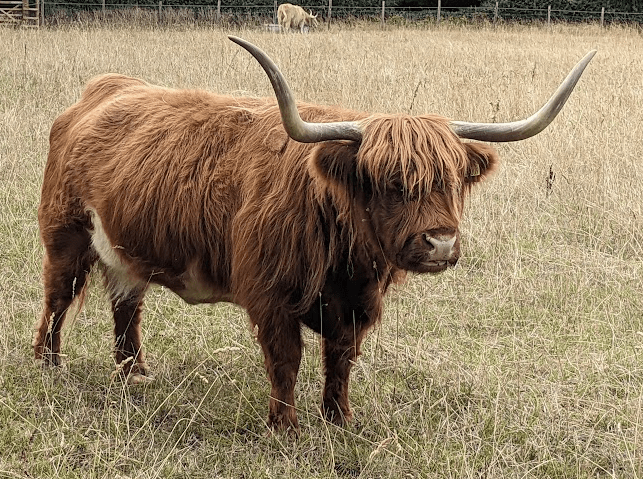
Highland Cattle:
Chip-stealing Herring Gulls (Larus argentatus) gather to mob their chosen victims! Port St. Mary, the Isle of Man.

Two photos of a zebra jumping spider (Salticus scenicus) eating a greenfly (species unidentified):

A large house spider, an Eratigena species:
A labyrinth spider (Agelena labyrinthica) in its funnel web with the remains of ladybird beetles (Coccinella septempunctata):

These photos taken in the environs of Cambridge the UK unless otherwise stated:
Bombylius majorThe Large Bee Fly with its large rigid proboscis for nectar feeding:

The delicate beginnings of a wasps’ nest:

A Steatoda nobilis (false widow spider) lifting a caught and wrapped bumble bee (likely Bombus pascuorum, the Carder Bee) to its lair.

An Araneus diadematus, the European garden spider, bites a wrapped and disabled bumble bee (likely Bombus pascuorum, the Carder Bee).

Araneus diadematus, the European garden spider:

An unidentified frog – Marrakech, Morocco:
An unidentified moth – Marrakech Morocco:

Readers’ wildlife photos

December 30, 2025 • 8:15 am

Scott Ritchie from Cairns has put up a set of 39 of his favorite photos from 2025, and I’ll show about a third of them today.  Scott’s captions and IDs are indented, and you can enlarge them by clicking on them. Scott’s Facebook page is here.

Here are some of my favourite pics from 2025. It was a big year, with trips to Florida, Costa Rica, Western Australia and Victoria/NSW. And I had a publication in Australian Birdlife showcasing the lovely Rainbow Bee-eaters at a local cemetery .
I hope you enjoy them.
Have a happy New Year all!


Rainbow Bee-eater [Merops ornatus] comes in for a landing on Angel boy statue, Cairns Cemetery. [This was the cover photo of Australian Birdlife mentioned above.]

A butterfly guided missile. The bee-eater positions a Pale Triangle butterfly for aerodynamic efficiency:

I posted this before, but not with a caption.

Bee-eaters work in family groups. Here a couple and maybe last year’s offspring help in the nesting duties:

Off to Florida. A Burrowing Owl [Athene cunicularia] in Marco Island, Florida surveys his patch. These owls dig nesting burrows in residential yards:

Here one flies to his nest burrow. I love the intensity of his eyes:

The original Woody Woodpecker. A Pileated Woodpecker [Dryocopus pileatus] looks for grubs in a Live Oak tree in Florida:

A Great Horned Owl [Bubo virginianus] fledgling stares me down in The Villages, Florida. Look at an earlier post. It’s amazing how I found these guys:

The St. Petersburg area was great for shorebirds. Hear a Grey Plover, a.k.a. Black-bellied Plover [Pluvialis squatarola], pulling a worm out of the sand. Eventually, the worm relented:

A Snowy Egret [Egretta thula] dances over the water in search of fish. St Petersburg, Florida:

Off to Costa Rica! I just love how you can just see the eye in this Scarlet Macaw [Ara macao], play fighting in Costa Rica:

A Collared Aracari [Pteroglossus torquatus] comes in for landing. I’ve tried to get more habitat in my bird shots, and I love the colorful rainforest trees in the background. A member of the toucan group. Costa Rica:

And here’s a full-blown toucan in full flight. Keel- billed Toucan [Ramphastos sulfuratus]. What a schnoz!:

I’ve shown this before, but I’ll dub it the Animal Photo of the Year for this site, even though I steal Scott’s photos (with his permission) from his FB page.

No trip to Costa Rica would be complete without seeing the Resplendent Quetzal [Pharomachrus mocinno]. A male brings in dinner to his chicks:

Readers’ wildlife photos

December 29, 2025 • 8:15 am

Today we have some plant photos sent by reader Amy Perry.  Amy’s captions and IDs are indented, and you can enlarge her photos by clicking on them.

These photos were taken with my iPhone 11 in December of 2025 in the Torrey Pines State Nature Reserve Extension, except where otherwise indicated. I was pleasantly surprised to find enough flowers in bloom to photograph to send to you.

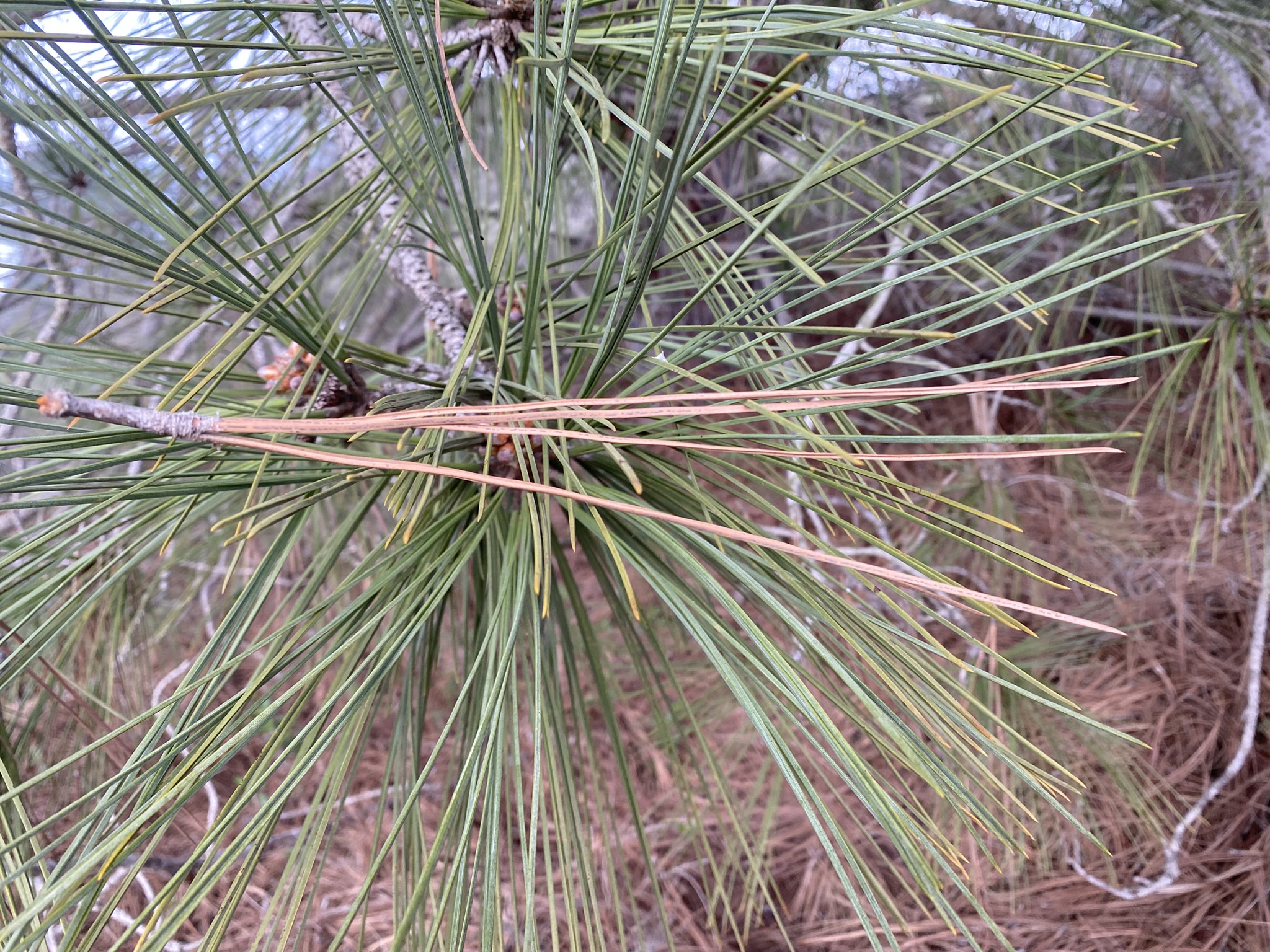
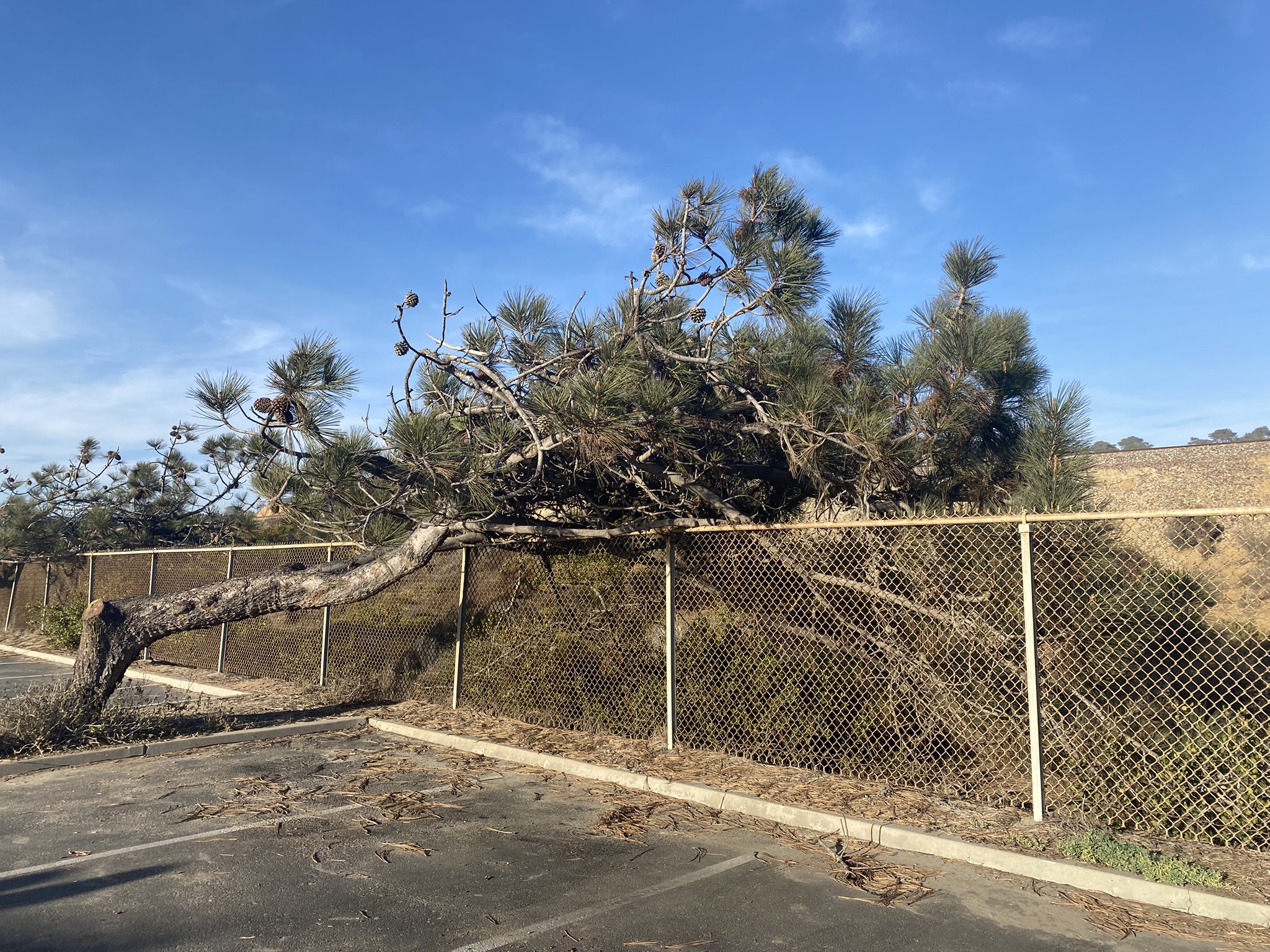
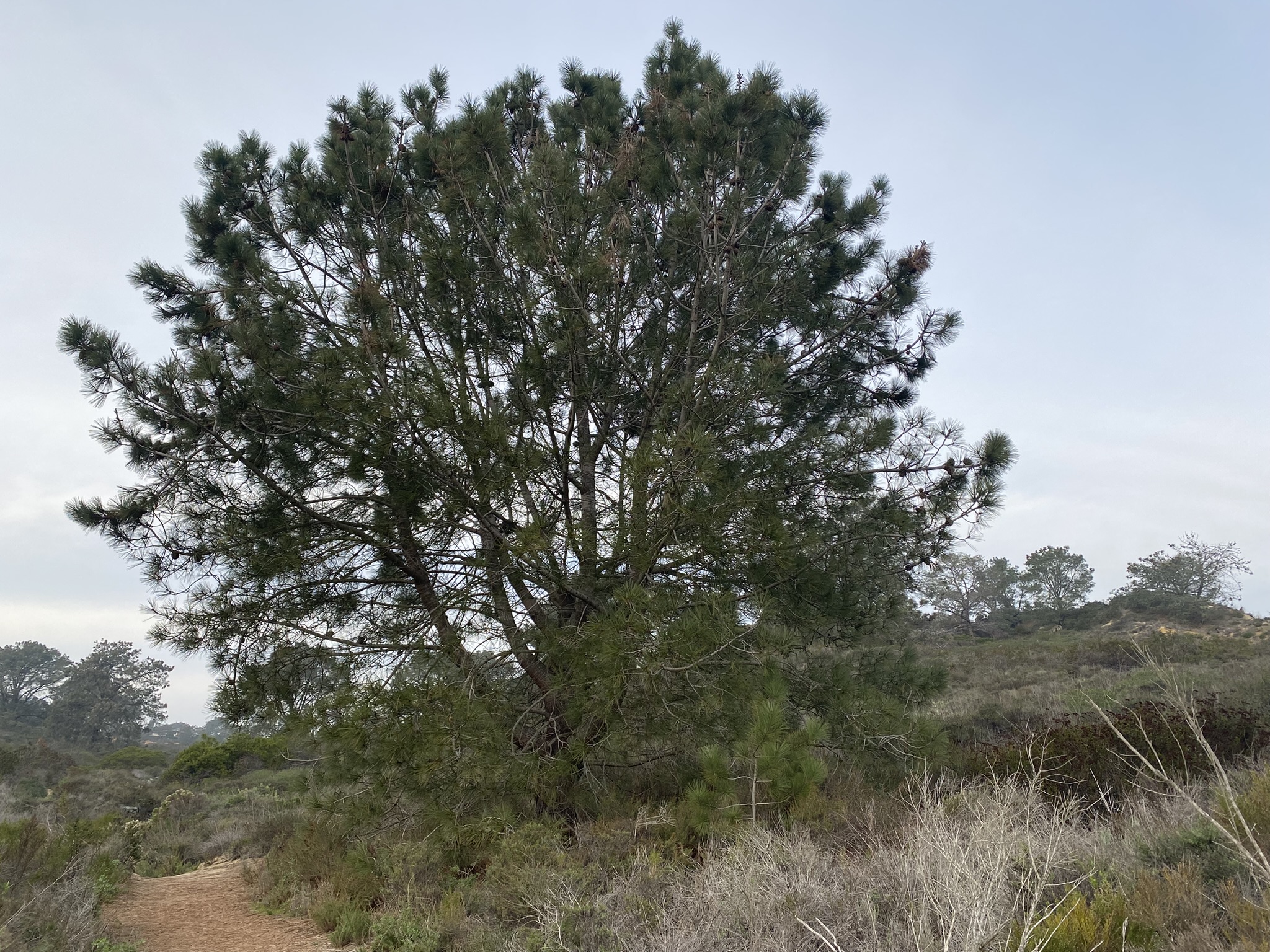
The Torrey pine (Pinus torreyana), for which the state nature reserve is named, is a rare pine species in California. It is a critically endangered species growing only in coastal San Diego County, and on Santa Rosa Island, offshore from Santa Barbara. The Torrey pine is endemic to the California coastal sage and chaparral ecoregion. Like all pines, its needles are clustered into fascicles that have a particular number of needles for each pine species; in the Torrey pine there are five needles in each fascicle, as in Photo 1 (taken outside the reserve in December 2024). Trees near the ocean are battered by strong winds into odd, twisty, even grotesque, shapes, as in the second photo. The third photo shows an upright tree, growing in the reserve extension, which is a separate area a few blocks from the ocean.

The species epithet torreyana is named for John Torrey, an American botanist, after whom the coniferous genus Torreya is also named. The Torrey pine is protected by a city tree ordinance in Del Mar, near the native habitat, and construction projects and residents require a permit for its removal.

California buckwheat, or flat-topped buckwheat (Eriogonum fasciculatum), is a keystone species for sagebrush scrub ecosystems. It has been used as a food crop and medicinal plant by various Native American tribes. It’s a nectar host for several butterflies and a larval host for several others. Often the compact, drab dark brown balls of winter (Photo 4) coexist on the same plant as, and contrast with the fluffy, delicate white and pink blossoms (second photo) left over from spring, summer, and fall.

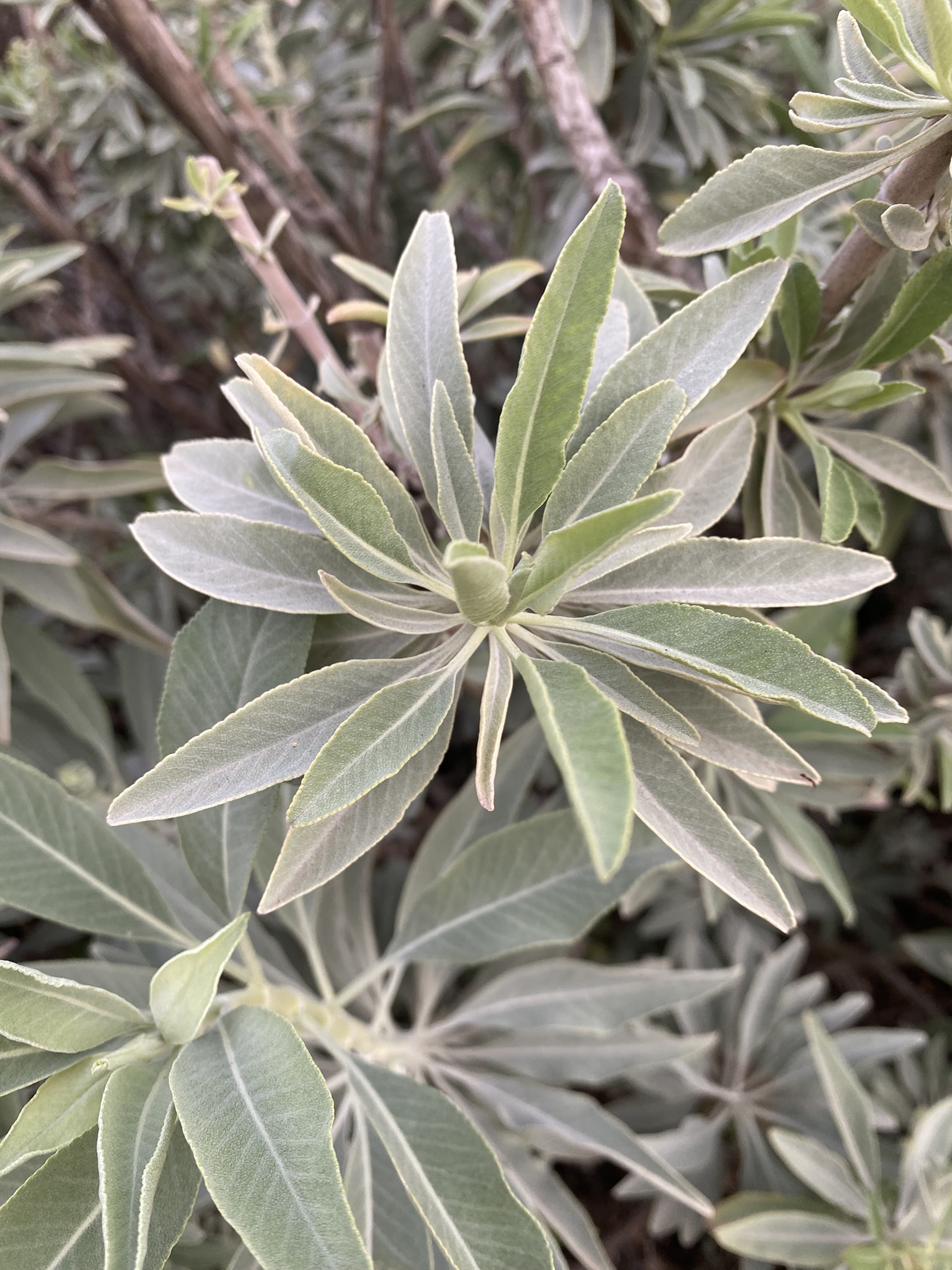
White sage (Salvia apiana) leaves are thickly covered in hairs that trigger oil glands; when rubbed oils and resins are released, producing a strong aroma. The flowers are very attractive to bees, which is described by the specific epithet, apiana. Young leaves start off green and turn white as they get older.

Also called bee sage or sacred sage, white sage is deeply rooted in the cultures and lifeways of indigenous communities of southern California and northern Baja, the only region where this sage naturally occurs in the world. Over-harvest of wild Californian white sage populations is a concern held by many Native American groups and conservationists. The destruction of white sage has become a focus of the Tongva Taraxat Paxaavxa Conservancy.

California aster (Symphyotrichum chilense) sports petite flowers in subtle shades of blue and lavender. I see it in those colors and in white. (Other flowers usually in blue or lavender sometimes occur in white in Indiana, where I live.) Butterflies and moths are attracted to the nectar. California aster, also called coast aster and Pacific aster, is a host plant for several species of both insects. Birds eat the seeds after blooming. Despite its scientific name, it does not occur in Chile:

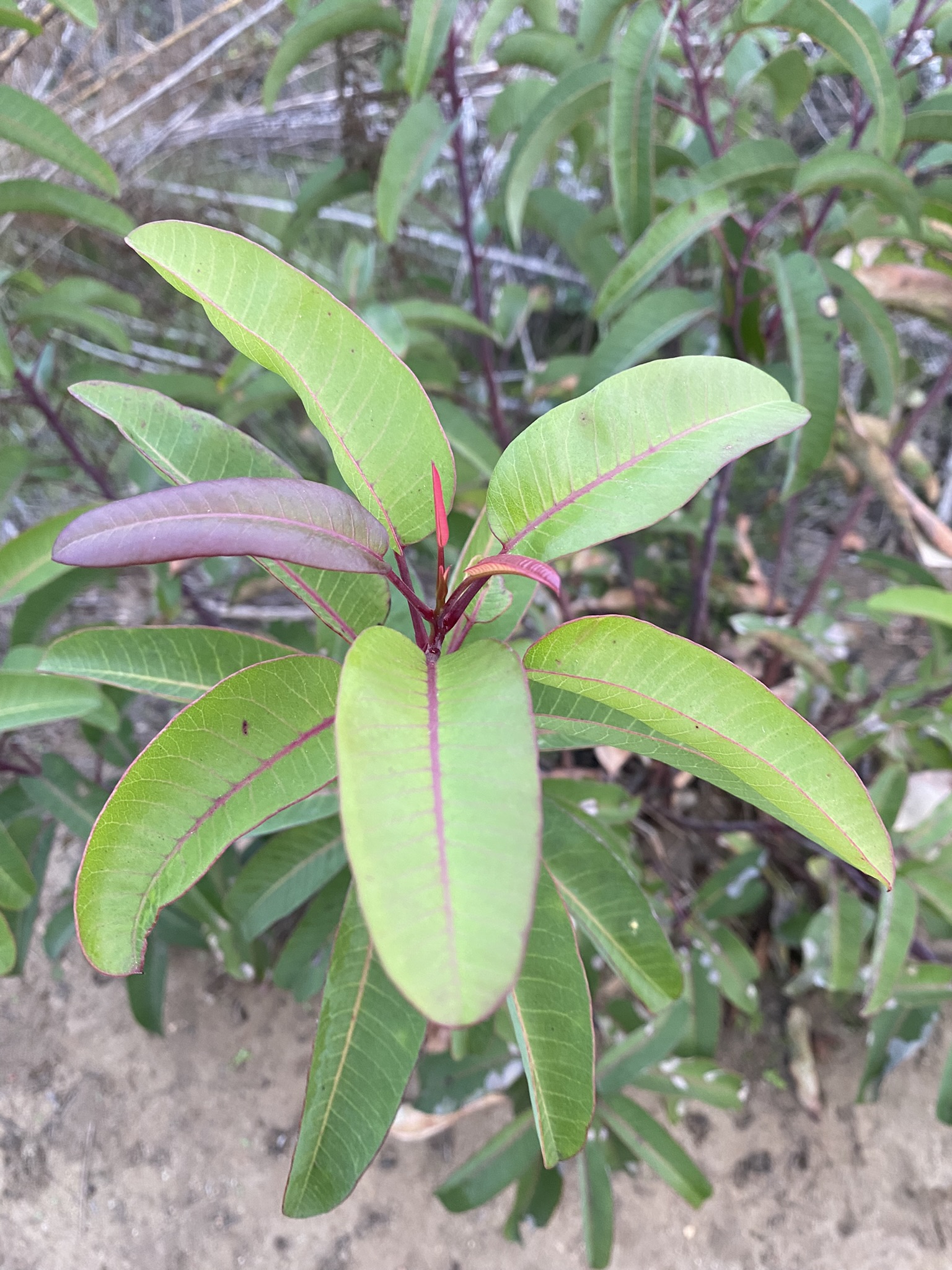
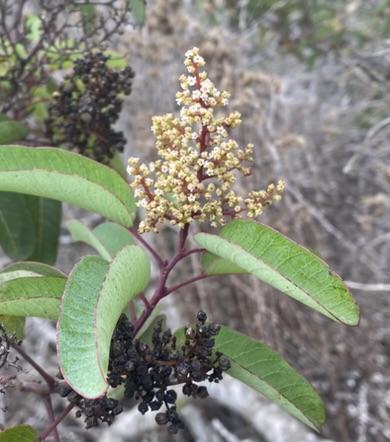
Laurel sumac (Malosma laurina) is named “laurel” because the foliage is reminiscent of bay laurel but it is not in that plant family. It is a key plant in coastal sage scrub and chaparral, and the berries (second photo, October 2025) are appreciated by songbirds, especially warblers. It is sensitive to cold and tolerates extended freezing conditions poorly. Orange growers in the early history of southern California used to pick places to plant their oranges based on where laurel sumac was growing because this indicated it would not get too cold for oranges:

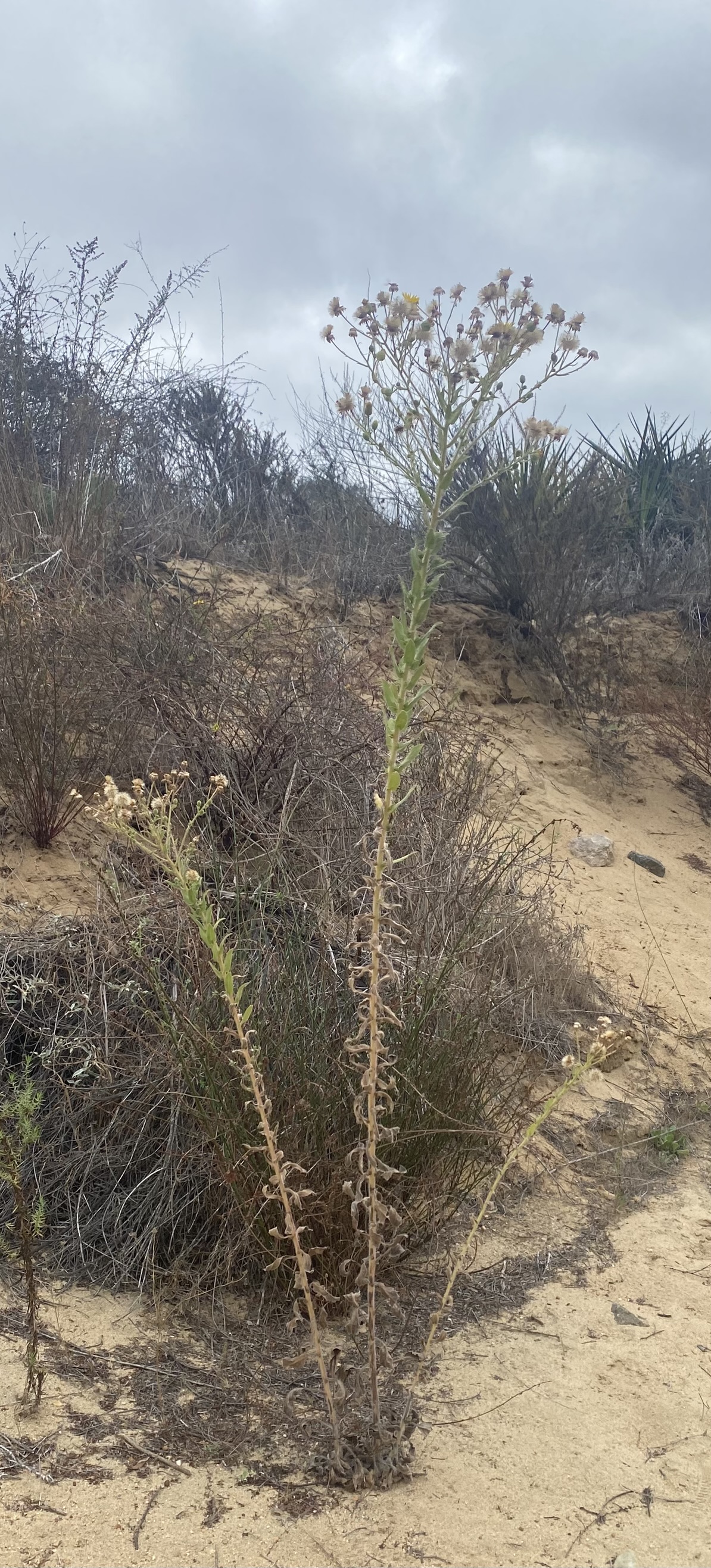
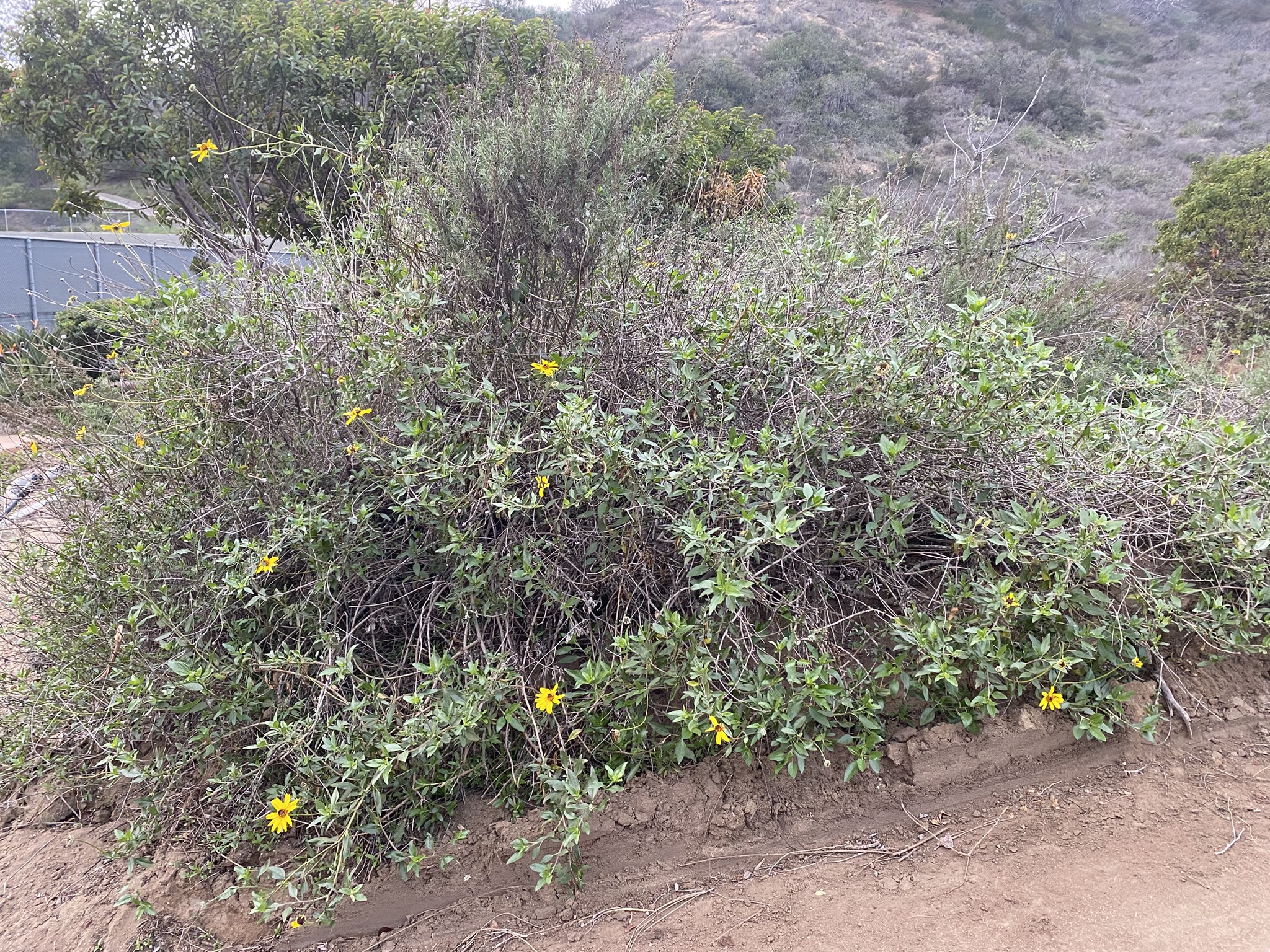
Telegraph weed (Heterotheca grandiflora) is a pioneer species and roadside weed even where it is native. This is a tall, bristly, hairy plant and looks weedy, but I think it’s cool because it’s unusual and spectacular. Sometimes exceeding a meter in height, as in the second photo (December 2024), its resemblance to a telegraph pole gives it this name. Another name is silk-grass goldenaster:

California sagebrush (Artemisia californica) has an aromatic fragrance and threadlike silvery green leaves. The silvery appearance is due to the numerous fine hairs on the leaves. Although it is called sage because of its aroma, it is really a member of the sunflower family. An amusing name for it is Cowboy cologne. Here it is growing in the middle of California brittlebush or California bush sunflower (Encelia californica). The dried resin of this plant can be burned for incense; the Spanish common name for this plant is incienso. Like many desert plants, both of these are very sprawling and unruly-looking:


 

Holiday flowers!

December 28, 2025 • 8:30 am

And to complete the wildlife today, reader Rodger Atkin sent in some flowers. His captions are indented, and you can enlarge the photos by clicking on them.

This flowered last night in our garden in Thailand. From Wikipedia:
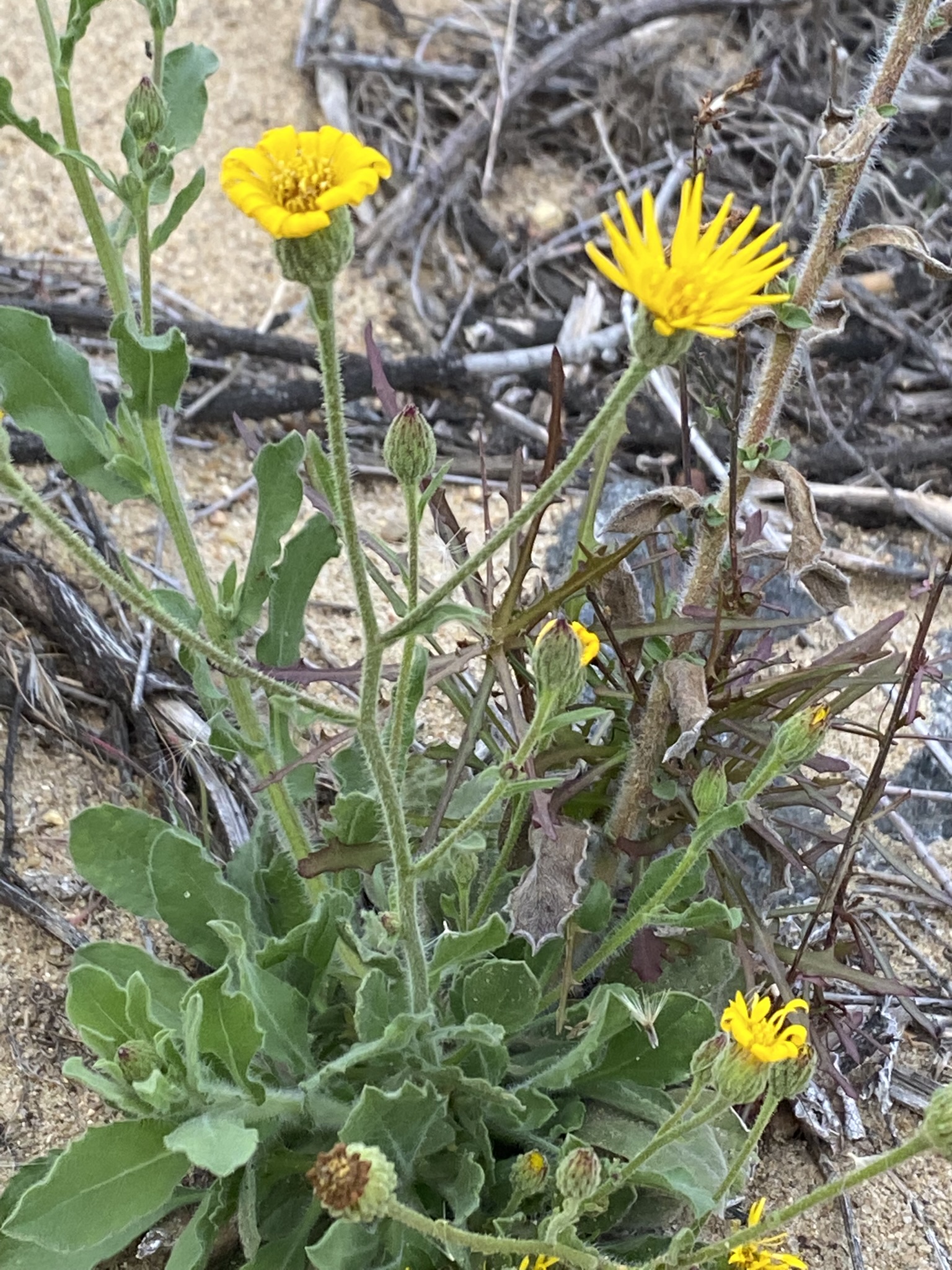
“Dracaena fragrans (cornstalk dracaena), is a flowering plant species that is native to tropical Africa, from Sudan south to Mozambique, west to Côte d’Ivoire and southwest to Angola, growing in upland regions at 600–2,250 m (1,970–7,380 ft) altitude.”

Wikipedia does not mention it but ours flowers only at night, giving off a very heady perfume. I have never seen anything to pollinate it and have never seen fruit on the plant.

The second two pictures were from the next morning:all finished, and and we’ll wait for next year.

Readers’ wildlife photos

December 26, 2025 • 8:15 am

Well, thanks to Susan Harrison we have a reader’s wildlife contribution today, but that’s about it for the queue. So, during the holidays, please think about sending in your good wildlife photos.

Susan’s captions and IDs are indented, and you can enlarge her photos by clicking on them.

A few more Belizean birds

Here’s a third and last round of birds from my recent Belize trip.  First are three of my favorites from the scrubby coastal forests in and around the Shipstern Conservation & Management Area.

Yucatan Jays (Cyanocorax yucatanicus), yellow-billed youngsters begging from their dark-billed elders:

Brown Jays (Cyanocorax morio), a more self-sufficient youngster feeding with an adult:

Ferruginous Pygmy Owl (Glaucidium brasilianum) sitting quietly in the open (and making me very happy, since it’s the last of the 19 species of owls found in the U.S. that I’ve been fortunate to see and photograph):

Next are three large tropical birds that are heavily hunted by humans, and are best seen in well-protected tracts of forest.   We saw all three of them strutting around the grounds of La Milpa Lodge in the Rio Bravo Conservation Area, the same place where on our very first day, a large male jaguar crossed the road in front of us (Jerry posted its photo as a singleton).

Ocellated Turkey (Meleagrus ocellata), a truly spectacular species found only in the Yucatan region:

Crested Guan (Penelope purpurascens):

Great Curassow (Crax rubra):

Next comes a selection of the many smaller birds that we worked to catch glimpses of in shady forest understories.   It’s a biased sample, of course; these are some of the most colorful ones.

Tody Motmot (Hylomanes momotula):

Slaty-tailed Trogon (Trogon massena):

Black-headed Trogon (Trogon melanocephalus):

Rufous-breasted Spinetail (Synallaxis erythrothorax):

Olive-backed Euphonia (Euphonia gouldi):

Red-capped Manakin (Ceratopipra mentalis):

Finally, here are a few of the generalist birds that we often saw in semi-open areas, such as at the edges of pastures and other clearings.

Pale-billed Woodpecker (Campephilus guatemalensis):

Squirrel Cuckoo (Piaya cayana):

Rufous-tailed Hummingbird (Amazilia tlacatl):

Red-lored Amazon (Amazona autumnalis):

Reader’s wildlife photos

December 25, 2025 • 8:15 am

Scott Ritchie of Cairns, Australia, posted this photo on his FB page as his Bird of the Year, along with an ID and message:

My bird of the year is, without a doubt, the Rainbow Bee-eater [Merops ornatus]. I had a piece published in Australian Birdlife on the lives of these pretty birds at our local cemetery.

This photo captures the spirit of these birds, and of Christmas. Family, friends, good food, colour and spirituality.

I will post my favourite bird photos after Christmas.

A Merry Christmas to you all.

Readers’ wildlife photos

December 24, 2025 • 8:30 am

This is the penultimate of the two batches I have, so why not get your wildlife photos together instead of snoozing after that big Christmas feast? Today we have the final installment of Holiday Mushroom photos by reader Rik Gern from Austin, Texas. Rik’s captions are indented, and you can enlarge his photos by clicking on them.

Here is the final batch of mushroom pictures taken in northern Wisconsin last September.

I saved this batch for last and am a bit chagrined to send them because most of these pictures are of species I was unable to identify. I’ve been using iNaturalist, but it jammed up a few times. It would seem to identify the genus and species, but then I would get the infamous spinning wheel, which would persist until I exited the application. I thought it was recording the data, but later discovered that it wasn’t. I hope you will be willing to let your more knowledgeable readers weigh in on the species identification. [JAC: yes, please, if you know the species, do weigh in]

The cap on this mushroom has a woody look. This was the only example I ran across.

This one has nice, delicate looking gills. I think it might be a Destroying Angel  (Amanita bisporigera), but the pictures I saw showed some kind of flap on the stem which this specimen lacks.


Whatever this is, the small cap looks like a cookie dusted with cinnamon.

Something sure found this mushroom tasty!

This mushroom is in an intense tug of war with a thick spider web!

You can see from this image that the web is layered in three sheets.

I’ve see time lapse films of orb weavers weaving their webs, but I can’t imagine how this web was constructed.

Mushrooms are so often associated with psychedelia that I couldn’t resist closing this series by playing with a closeup image of the pores on the underside of the Chicken fat mushroom (Suillus americanus) to give it a trippy psychedelic feel.

Just as an interest in Photoshop led to an interest in photography, the thrill of having pictures on whyevolutionistrue alongside those of learned naturalists and scholars has piqued my interest in learning more about the world of fungi. I’ve been asking friends to recommend books that give a broad overview of fungi. Guide books only make my eyes glaze over and tie my brain in knots, as I don’t seem to have a good mind for that kind of detail, but I can grok the big picture when it’s presented well. There’s a book coming out in May called The Complete Fungi: Evolution, Diversity and Ecology by David S. Hibbit that looks fantastic. I have pre-ordered it, and thought some of your readers might be interested as well, so here is a link.