Reader’s wildlife photos

January 16, 2026 • 8:15 am

Well, folks, we’re plumb out of readers’ contributions, and it makes me weep bitterly that we get so few contributions.  If you have good photos, you know what to do.

Fortunately, I am able to plunder the photos of Scott Ritchie from Cairns, Australia, whose Facebook page is here. (Thanks to Scott for his kind permission to repost.) I’m adding the second installment of Scott’s favorite photos of 2025; his first installment is here. His captions and IDs are indented, and you can enlarge the photos by clicking on them.

Here are some of my favourite pics from 2025. It was a big year, with trips to Florida, Costa Rica, Western Australia and Victoria/NSW. And I had a publication in Australia Birdlife showcasing the lovely Rainbow Bee-eaters at a local cemetery https://www.calameo.com/read/004107895fe9d41dc697d….
I hope you enjoy them.  Have a happy New Year all!


Latin America is a home of hummingbirds. Hear a Green-breasted Mango [Anthracothorax prevostii] feeds on a torch ginger. I just love the bright colors that do remind me of a mango:

Another lovely hummer, the fiery throated hummingbird [Panterpe insignis]:

Not all hummingbirds are colorful. But I just love the pose of this Long-billed Hermit [Phaethornis longirostris] as it came in to feed the torch ginger:

Costa Rica has many colorful songbirds. People think tanagers and warblers. This bird is a Golden-browed Chlorophonia [Chlorophonia callophrys],  You gotta love bird names:

This Ornate Hawk-eagle [Spizaetus ornatus] caused quite a stir among the twitchers at our lodge. You can see why, it’s quite an amazing bird:

Another truly magnificent bird was the King Vulture [Sarcoramphus papa], coming into land and feed on your corpse:

Back to far north Queensland. I got this Gray Plover [Pluvialis squatarola] in flight as he shook himself off after a refreshing bath: [JAC: Do enlarge this one!]

Double-eyed Fig-parrots [Cyclopsitta diophthalma] are one of my favorite birds. And green ants are one of my most despised insects. I think the fig parrot would agree:

Here’s a stampede of Chestnut-breasted Mannikins [Lonchura castaneothorax]. I call this a WTF moment, as a bird in the middle got caught a bit off guard:

A Great Egret [Ardea alba], enjoying a prawn for breakie. Cairns Esplanade:

We get many shorebirds to the Cairns Esplanade foreshore in our summer. Before they head back to Russia, China, Japan, even Alaska, they color up into their breeding plumage, and hope to attract a mate. These two Bar-tailed Godwits [Limosa lapponica] are coloring up very nicely:

“Will you play ball with me?” Nordmann’s Greenshank [Tringa guttifer], a.k.a. Nordy, is a very rare bird that has visited Cairns for six years running. He’s the only one of his kind here. I often wonder if he’s a bit lonely:

Readers’ wildlife photos

January 15, 2026 • 8:16 am

We’re saved again, for one day, as reader Rodney Graetz from Canberra has sent in some lovely photos from a remote corner of Australia. Rodney’s captions are indented, and you can enlarge his photos by clicking on them. The three borrowed images are, I’m told, in the public domain.

Here is a series of landscape photos from a tourist boat journey along the Kimberley coastline from Darwin (Northern Territory) to Broome (Western Australia).  The distance, as the crow flies, was 1110 km (690 mi) but by hugging the coastline, the unrecorded distance was likely doubled.  We made land visits on 10 of the 12-day journey:

Our starting point, the Darwin coastline, is lapped by the Timor Sea.  It is shallow and muddy, in contrast to our Broome destination.  Like Broome, Darwin was targeted and bombed by the Japanese in February 1942.  Today, among the lush Darwin city coastline gardens, is a simple memorial honouring the 91 crew of the USS Peary, the United States Navy’s greatest loss in Australian waters.

Departing Darwin, we slowly merged with the mighty Indian Ocean whose colour and cloud streets suggested warmth, productivity and excitement.  We travelled in early June, too early to encounter the estimated 40,000 Humpback Whales travelling up from the Antarctic (June – November) to calve, nurse and then mate in these warm and safe waters  Next time!

At last, an edge of the NW corner of the Australian continent, revealing a flat and layered landscape.  The cliffs are massive, and the rock type is obviously hard because there is little sandy beach.

The Edge close up, and as predicted.  Note the tiny figures in the lower left corner.  The massive rocks are a hard Paleoproterozoic sandstone aged 1-1.9 billion years.  They are ever varied and spectacular:

Being drone-deficient, I’ve borrowed this image to illustrate this monsoonal landscape functioning.  During ‘The Wet’ (Nov–Mar), sufficient rainfall accumulates on the background plateau for a flow to eventually reach the edge and fall as spectacular waterfalls early in ‘The Dry’ ( Mar-Nov).

Downstream from the waterfalls, slow moving water combined with the incursion of plants, result in species-rich landscapes, such as this small idyllic wetland:

‘Salties’, aka Saltwater crocodile, were common neighbours at our landings.  Maneaters?  Yes, but only of the deserving at a rate of fewer than one person per year.  The ‘gaping’ is not a threat display but thermoregulation, of cooling.  Looking past the teeth, they are handsomely ornamented and coloured animals.  In the water, they are sleek!:

For geographic and celestial reasons, the tidal ranges along this coast are among the highest globally (± 10 metres).  A consequence of this, and a rocky, indented coastline, is the creation of Horizontal Waterfalls, where six times a day, huge volumes of water are forced through constricting narrows, as shown here.  Spectacular and hazardous:

The edge of a vast inshore reef (400 km², 154 sq mi) rapidly shedding water as the tide drops about 10 metres.  It is a visual and turbulent spectacle – the reef appears to rise up – and shed streams of water containing stranded fish eagerly sought by waiting birds, fish and sharks.  This one image could not capture the turbulence and action.  Details are here and an overview here:

Contemplative natural beauty of the coast was commonplace, such as here, Raft Point.  With the Dawn behind us, the red rocks and lush vegetation (including iconic Boab trees) are in contrast with the ocean, and on its horizon, small red rocky islands urge a visit:

Nearby Steep Island is another view that repays contemplation.  Why is it so?:

Journey’s end and Broome colouring contrasts with that of the previous days.  Here the rock and sands are red with an aquamarine ocean.  Tidal variation remains high.  The biological focal point is the adjacent Roebuck Bay, the background in this image:

To avoid lethal winters, some 100, 000 migratory birds fly from the Pacific low latitude coastal areas of China etc. to Australia along the East Asian-Australasian Flyway.  Roebuck Bay, a primary destination, is nationally protected as one RAMSAR wetland.  Bird lovers closely watch their comings and goings:

Finally, in the 1940s, both Darwin and Broome experienced the destructive impacts of war.  Now, in both locations, the stark remnants of those impacts remain submerged, slowly disappearing, accelerated by the living world.  That is a good thing:

Readers’ wildlife photos

January 14, 2026 • 8:15 am

In the last readers’ wildlife photo feature I have, James Blilie has appeared with some black and white photos. His captions are indented, and you can enlarge his photos by clicking on them.

Here are another set of landscape photos that I have converted to black and white for posting to a black and white Facebook group.  I am having a lot of fun having another “go” at older images in B&W.  Over the last 15 years or so, my software skills for editing photos have improved dramatically.  Since I “came from” the perspective of shooting Kodachrome slides (everything was fully captured when I pressed the shutter button), I at first resisted the idea of using photo-editing software after I switched to digital.  That was a mistake.  Editing images is critical (like editing most other works).

These are from all over and many are scanned 35mm slides or negatives.

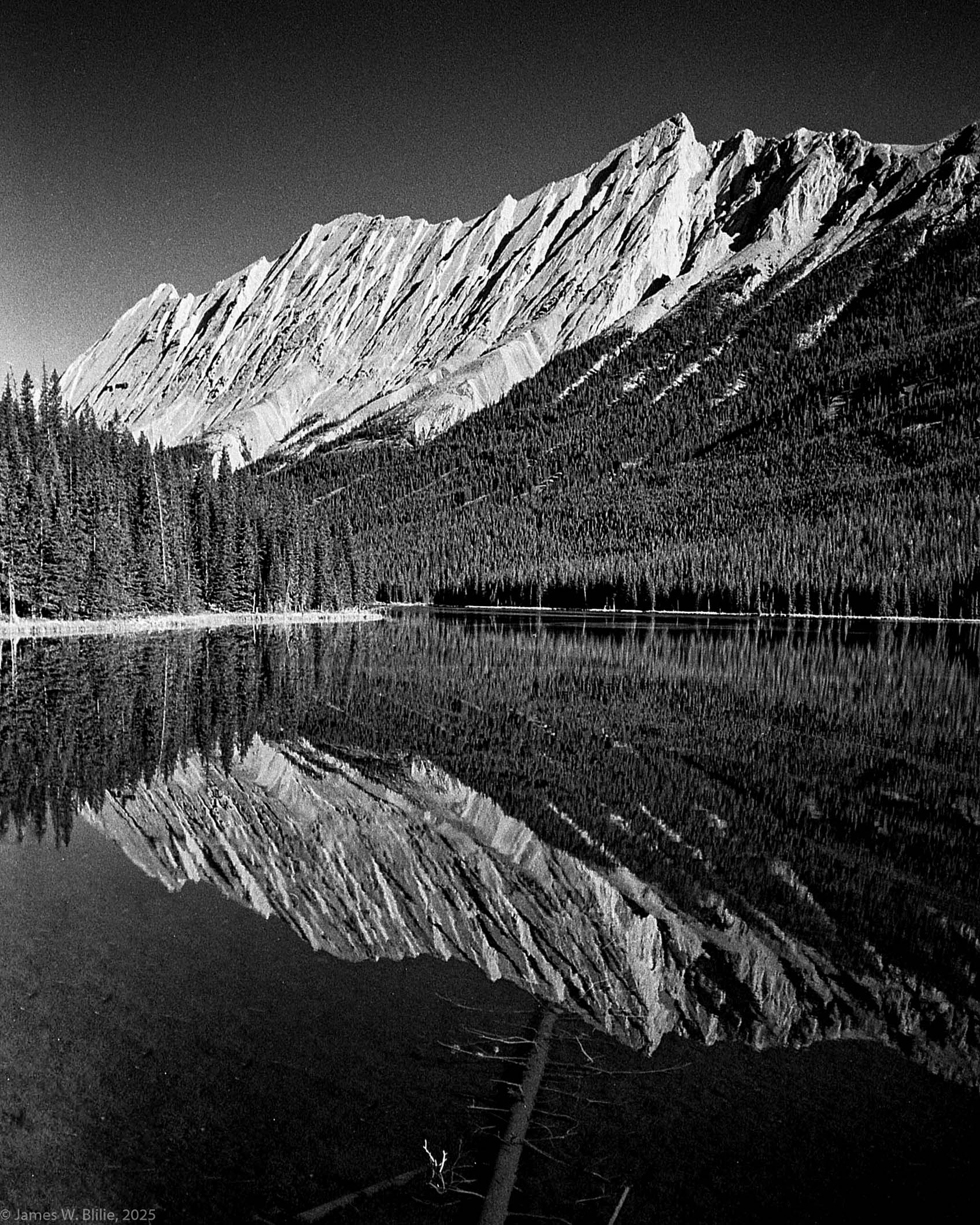
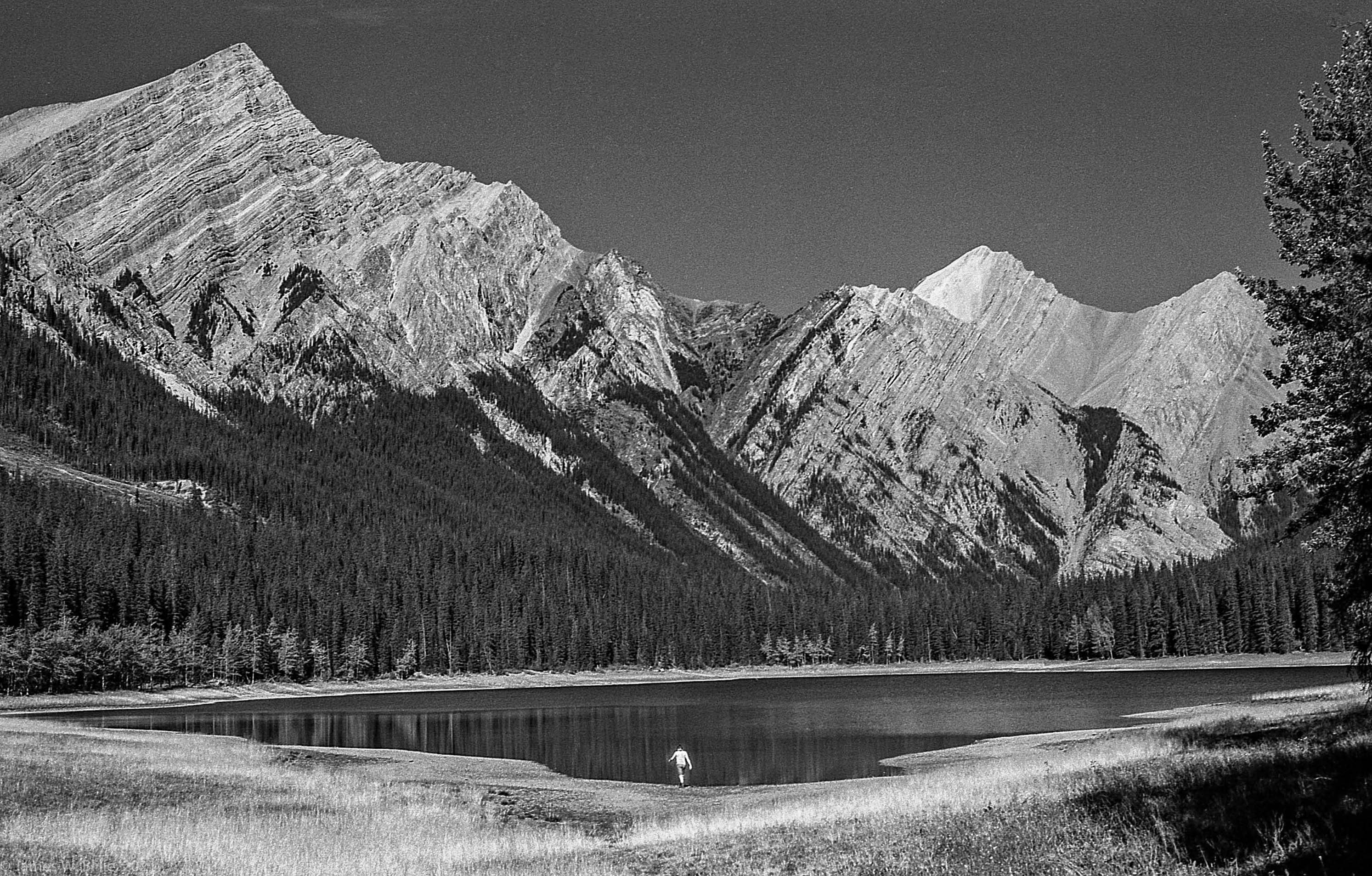
Three images for Jasper National Park and Mount Robson Provincial Park in Canada, September 1981.  All scanned B&W negatives.

Beaver Lake on the Jacques Lake trail in Jasper National Park:

Summit Lake with figure, on the Jacques Lake trail in Jasper National Park:

Mount Robson from Berg Lake at dawn.  One of the great mountain views of the world.  I lugged the Rolleiflex and a tripod up to Berg Lake.  To be young and strong again!:

Next a photo from September 1982, also scanned B&W negative:  Taking a break from long canoeing days in the Boundary Waters Canoe Area Wilderness in far northern Minnesota:

Next, a few from my days of mountaineering in my youth, all scans from film originals:

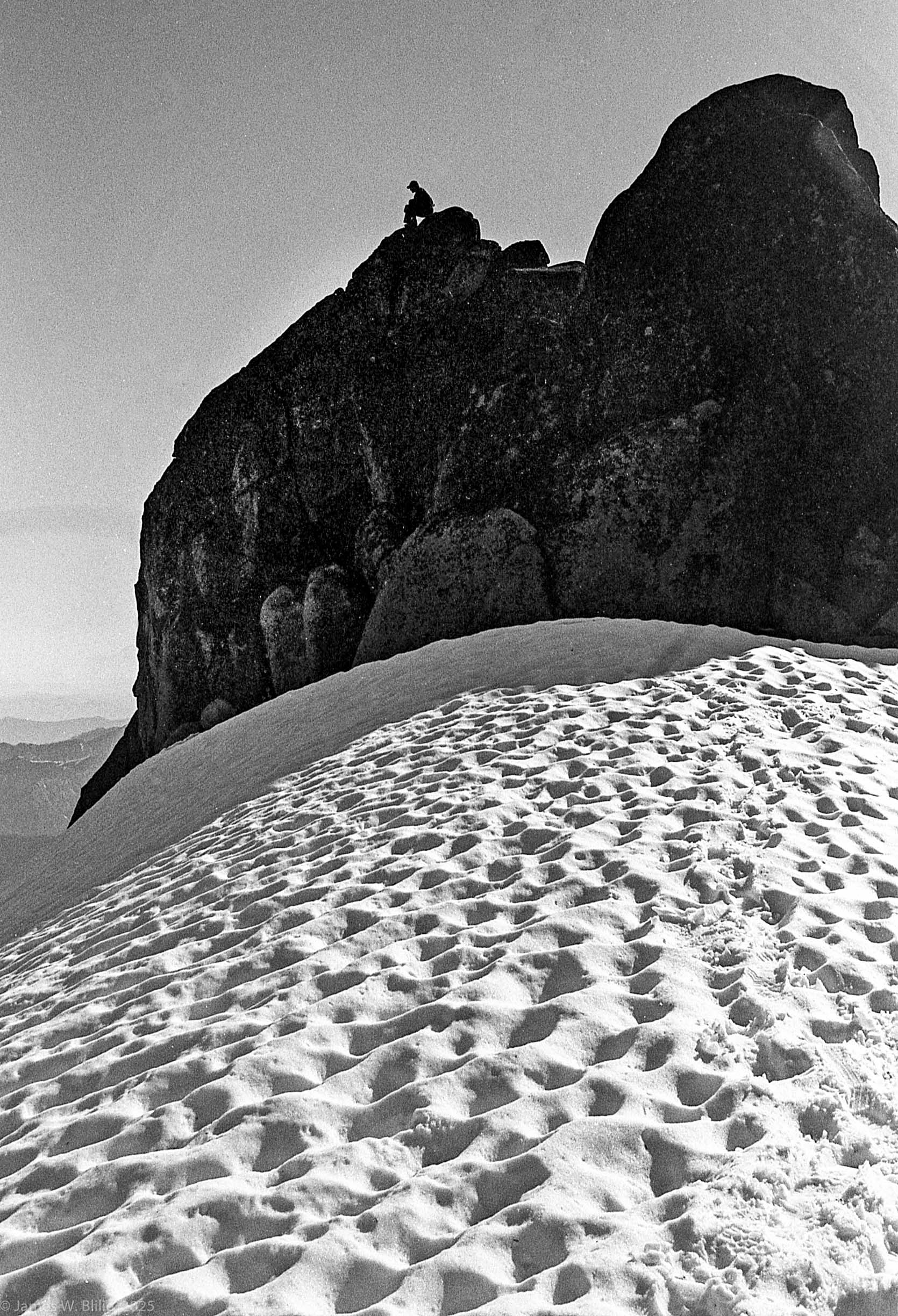
An image I call The Thinker, taken at a camp at around 8200 feet elevation (2500m) on the south side of Mount Stuart in Washington state en  route to the summit.  1984,

Climbers on the north  ridge of Mount Adams, Washington state, with Mount Rainier in the background.  1987.  I have climbed Mount Adams, now visible outside my office window, three times, always by the more remote, less-frequented North Ridge:

Climbers on the Easton Glacier on Mount Baker, Washington state, 1989:

Next, a photo taken in Kathmandu, Nepal, 1991, scanned Kodachrome 64:

A  photo taken while backcountry skiing in Gairbaldi Provincial Park, north of Vancouver, BC, 1988:

A photo of skating tracks on the frozen pond behind our former home in Minnesota, 2013:

A photo from the Mission San Juan Capistrano, California, February 2023:

Finally, a photo taken in Seattle, in the vicinity of the Ballard Locks, March 2023:


Equipment:

Pentax K-1000, ME Super, and LX cameras and various Pentax M-series and A-series lenses
Rolleiflex 6cm roll film camera with Schneider 75mm f/3.5 lens that my Dad bought in Germany in 1950 and passed on to me in the 1980s
Olympus  OM-D E-M5 micro-4/3 camera and various Olympus Zuiko and Leica lenses for that system
Software:  Lightroom 5
Scanner:  Epson V500 Perfection (current model is V600, I think.  An excellent scanner.

Readers’ wildlife photos

January 13, 2026 • 8:30 am

Well, folks, this is it, the last batch of wildlife photos I have. As for more, there is nada, zip, zilch, and bupkes in the queue.  It is very sad, isn’t it.

But today we have photos of otters from reader Christopher Moss. Christopher’s captions and IDs are indented, and you can enlarge the photos by clicking on them. The first batch was sent on December 29:

Just after the sun went down this evening I spotted a pair of otters on the other side of the pond. I assume they are Lontra canadensis, the North American river otter. They are about 80m away, and the photos were taken through a window. But when you’re desperate for readers’ wildlife photos, maybe they will do. The otters played in a small area of open water for a while and then I lost sight of them in the gloom. This is the third or fourth time I have seen otters in our pond (which is in northwest Nova Scotia, near the border with New Brunswick).

Eventually one otter came back up, and was then joined by a second:

One of the otters came back for a trout:

We’re arguing over whether there are three or four pups. I do have a still of five otters at once:

Here’s a video showing all five at once:

A few minutes later my son called out that they were all standing up looking at something, and – guess what? – this fellow was a few feet from them:

Readers’ wildlife photos

January 11, 2026 • 8:15 am

Today’s photos of one of my favorite birds comes from Neil Dawe. Neil’s captions and IDs are indented, and you can enlarge his photos by clicking on them.

Skomer Island Puffins – Neil K Dawe

We visited a second seabird colony on our UK trip in 2025: Skomer Island off the Pembrokshire, Wales coast. Skomer Island has around 40 bird species that nest on the island but the seabirds are the big draw and the primary reason it is preserved as a National Nature Reserve. Just over a kilometre (0.67 miles) from the mainland and a 20 minute boat trip from Martin’s Haven, Skomer Island is accessible to visitors for 5 hour stays on the island where you can wander the trails and see some of the over 40,000 Atlantic Puffins (Fratercula arctica) that nest there. There are a number of other nesting seabirds there as well, most notably 350,000 Manx Shearwaters (Puffinus puffinus; Skomer Island holds the largest Manx Shearwater colony in the world), 10,000 Razorbills (Alca torda), 29,000 Common Murres or Guillemots (Uria aalge), 5,000 Lesser Black-backed Gulls (Larus fuscus), and a smaller number of other species including shorebirds, songbirds, and owls. But it’s the puffins that most people come to see.

Unlike the Bempton Cliffs, where you have to patiently search the cliffs to find a puffin, this is the scene that greets you as you walk up the trail from the boat. Scores of birds standing near their burrows, flying out to sea, or returning from the sea:

A number of trails lead past the colonies allowing excellent viewing of the birds. Perhaps the best area to view the puffins is a place called the Wick. Here, scores of puffins have honeycombed the grassy slope with their burrows, the ground sloping gently to the sea making it easy for the puffins to get airborne:

Puffins prefer burrows in the extensive open grass-herb slopes; they use the bracken (Pteridium aquilinum) areas (foreground) to a lesser extent. If they find an empty European Hare (Lepus europaeus) burrow they will readily make use of it, sometimes even sharing the burrow with the hare. Note the hare in this image. (Photo: Renate Sutherland):

Puffins nest up to and beyond the visitor footpath at the Wick, and visitors can find themselves on the path along with the puffins (Photo: Renate Sutherland):

 Standing guard amongst the bracken:

 The area around the Wick is busy with puffins flying to or returning from the sea:

Puffins practice nest maintenance throughout the nesting period; here one is bringing more nesting material to the burrow:

Puffin burrows average a metre in length and contain side chambers they use in which to defecate. Puffins at the Wick can often be seen close up at burrows near the trail:

Lesser Black-backed Gulls (Larus fuscus) station themselves near the puffin burrows and attempt to steal the puffin’s catch upon their return from the sea:

During our visit, puffin eggs were just beginning to hatch so not many adults were seen bringing food to the nest. When they do return they usually run to the burrow to avoid having any nearby gulls steal their catch. Fortunately, this bird tended to take its time. While foraging, puffins are able to catch several fish at a time that are then held against the roof of the mouth by their tongue.

Readers’ wildlife photos

January 10, 2026 • 8:15 am

Reader Ruth Berger sent some butterfly photos taken last year in Germany.  Her captions and IDs are indented, and you can enlarge Ruth’s photos by clicking on them.

Here are some butterflies I snapped on my walks on mostly sandy soil near the Main and Nidda rivers in and around Frankfurt, Germany, last year. I’ll start with a good picture (some of the others aren’t that good) of the small copperLycaena phlaeas, a holarctic species, on ragwort.

The next not so brilliant photo is of the orange tip (Anthocharis cardamines), whose males are so busy chasing females and each other at borders between patches of woodland and grassland in spring. Only the males of the species have the eponymic orange tip, here visiting the species’ major caterpillar feeding plant, Cardamine pratensis.

Unlike the males, orange tip females look much like any typical white butterfly (Pierinae) from above. The underside of the females has greenish markings similar, but not identical, to the species you see in the next picture, Pontia edusa, here shown feeding on a Centaurea flower:

I saw several species of red-spotted burnet moths this year, all members of the West Palaearctic Zygaena family. These are wondrous creatures, dressed in what looks like a blue black fur coat with a red-spotted cape on top. The following two pictures are of the most frequent species here, the 6-spot burnet mothZygaena filipendulae:

The next picture shows a moment from a scene I watched for around ten minutes: a male Queen of Spain fritillary (Issoria lathonia), the biggie on the left, chasing and harassing a small skipper (Thymelicus cf. sylvestris). Should any of the insect lovers here know what might be behind this behavior, please tell me:

The caterpillars of Issoria lathonia feed off Viola flowers. Below, you can see a female getting nectar from a European field pansy (Viola arvensis) in spring, showing its underside that has
silvery-white spots with a mother-of-pearl-like appearance:

Next is one of the prettier pictures, a male common blue (Polyommatus icarus):

While the males have a beautiful upper side of shiny blue (in young animals, the color can become washed out with age), the females of the German subspecies tend to be plain brown with orange spots: 

Next is a female marbled white (Melanargia galathea) , a species of the Nymphalidae family that despite its English name has nothing to do with the Pieridae family that most “whites” belong to. The females have a beige/tan hue seen from the side:

The boys are more black and white: 

And this one, shown from above, is apparently a bird-attack survivor:

Readers’ wildlife photos

January 9, 2026 • 8:15 am

Thanks to the people who sent in photos when our tank was almost empty. (I could use more, though. . . )

One of them was reader Ephraim Heller, who sends in part 11 of his installment “Brazil virtual safari.”  Ephraim’s captions and IDs are indented, and you can enlarge the pictures by clicking on them:

Here are my photos, please don’t shoot the cute duck!

These photos are from my July 2025 trip to Brazil’s Pantanal, the world’s largest tropical wetland area and the world’s largest flooded grasslands. Today I have photos of birds in the tyrant flycatcher family as well as a few miscellaneous birds.

In Brazil, “flycatchers” and “tyrants” refer to the same family – Tyrannidae. It is the world’s largest family of birds, with more than 400 species in North and South America, including 28 species in Brazil. Tyrannidae belong to the suborder Tyranni (suboscines), a primitive passerine lineage that lacks the complex vocal learning abilities of songbirds.  This places them in an entirely different major evolutionary branch from that yielding the Old World flycatchers (Muscicapidae), which are oscines (advanced songbirds).

Boat-billed Flycatcher (Megarynchus pitangua):

Fork-tailed Flycatcher (Tyrannus savana). The elaborate tail serves both aerodynamic and display functions:

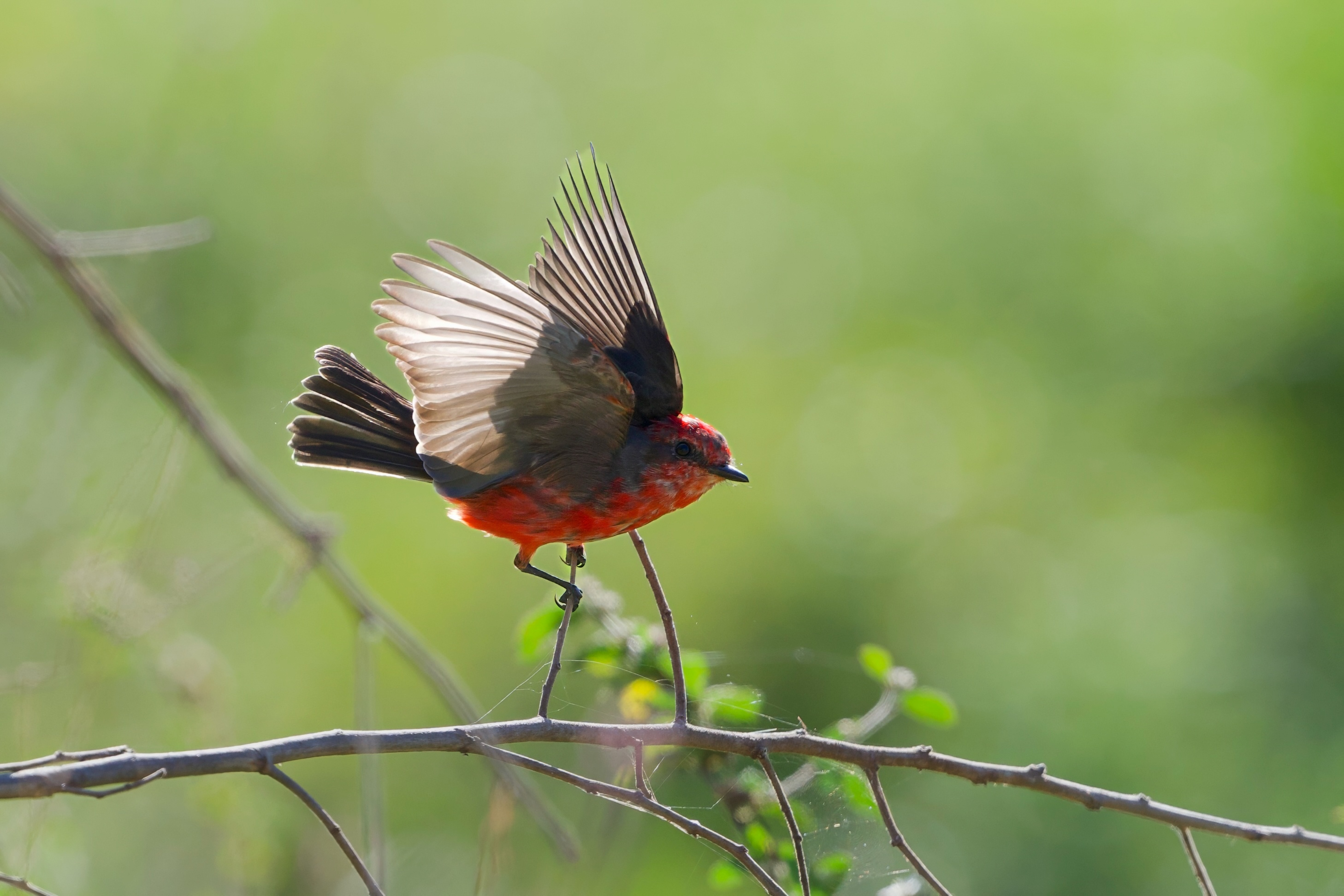
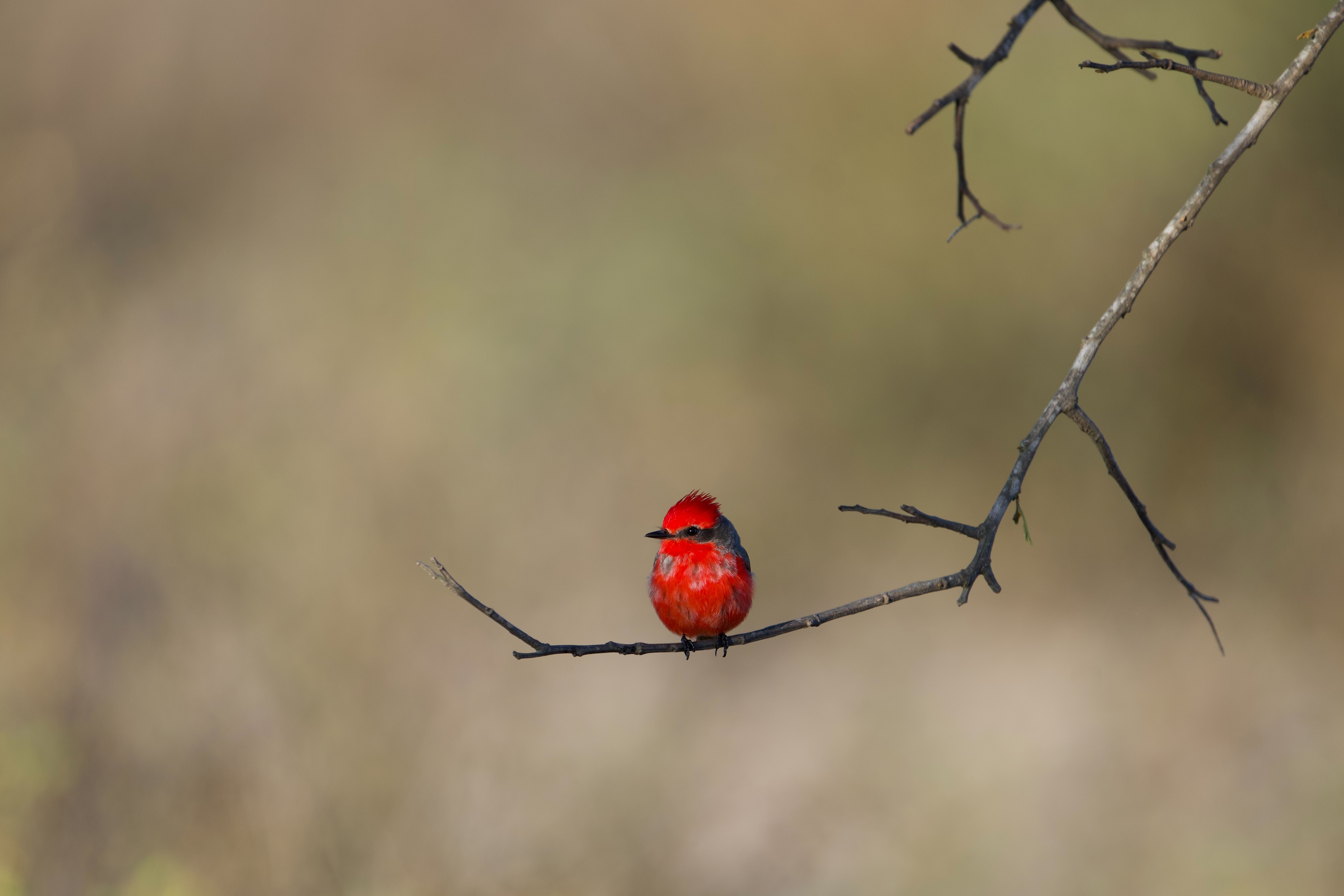
Vermilion Flycatcher (Pyrocephalus obscurus). A real beauty:

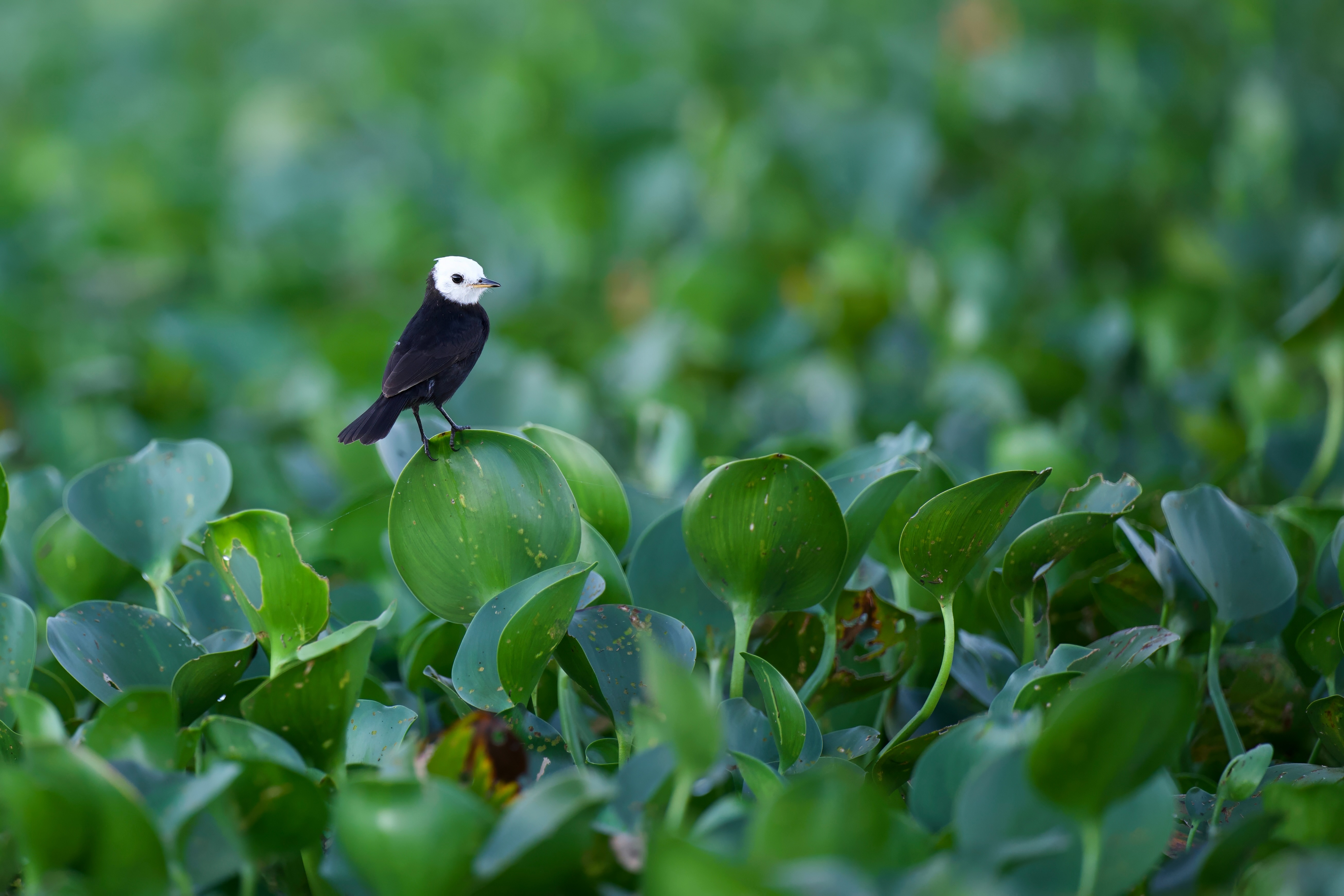
White Monjita (Xolmis irupero):

White-headed Marsh Tyrant (Arundinicola leucocephala):

Black-tailed Tityra (Tityra cayana). Tityras were formerly in the tyrant flycatcher family, but have been split into their own family:

Now for some miscellaneous birds:

Black-capped Donacobius (Donacobius atricapilla). This pair kept up their singing as I photographed them:

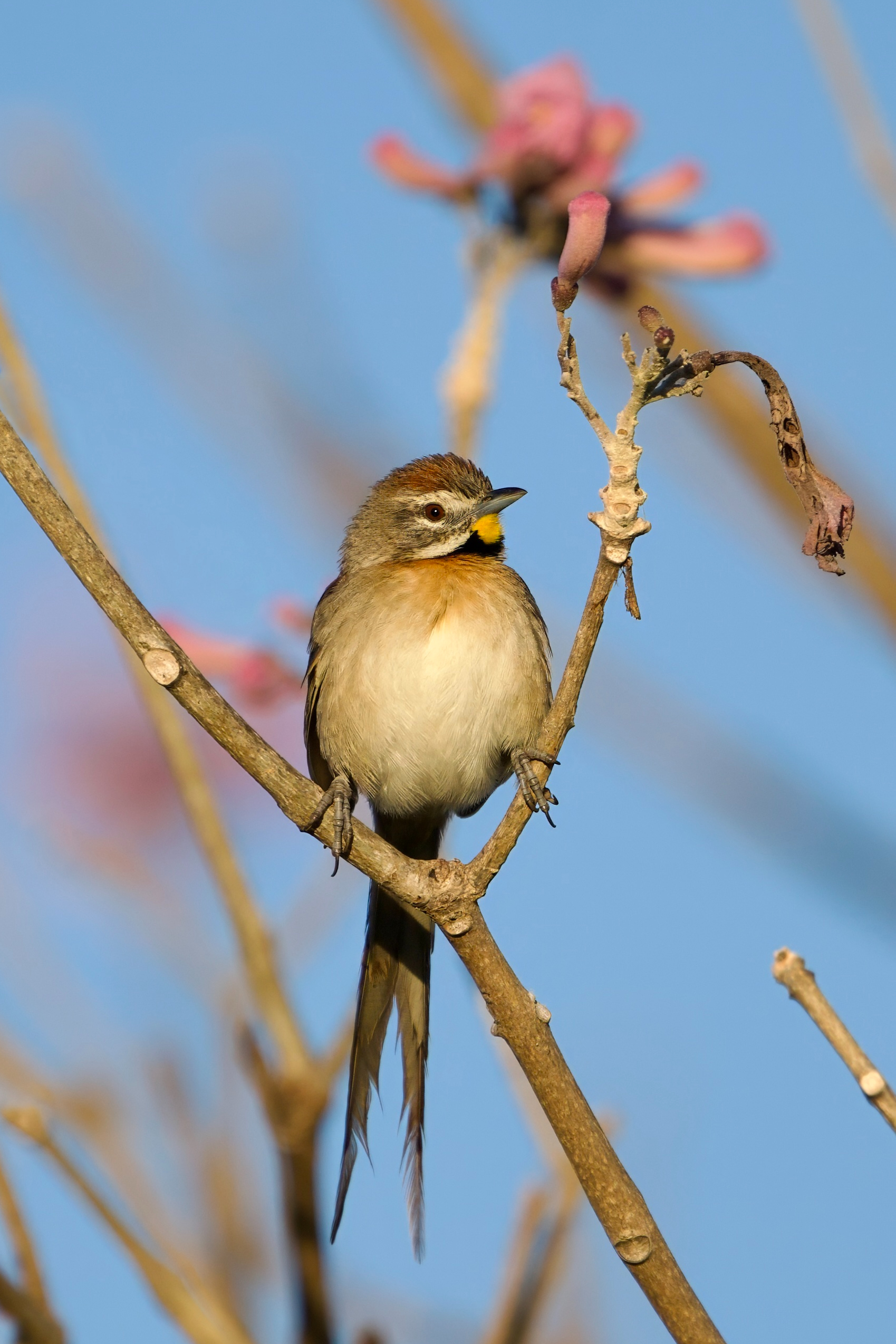
Chotoy Spinetail (Schoeniophylax phryganophilus):

Rufous Hornero (Furnarius rufus). Argentina’s national bird, famous for constructing elaborate clay nests resembling traditional mud ovens, with complex internal chambers and entrance tunnels. This master builder creates new nests annually, with old nests often used by other bird species. The clay construction provides excellent thermal insulation and protection.