Les fleurs

September 10, 2025 • 2:36 pm

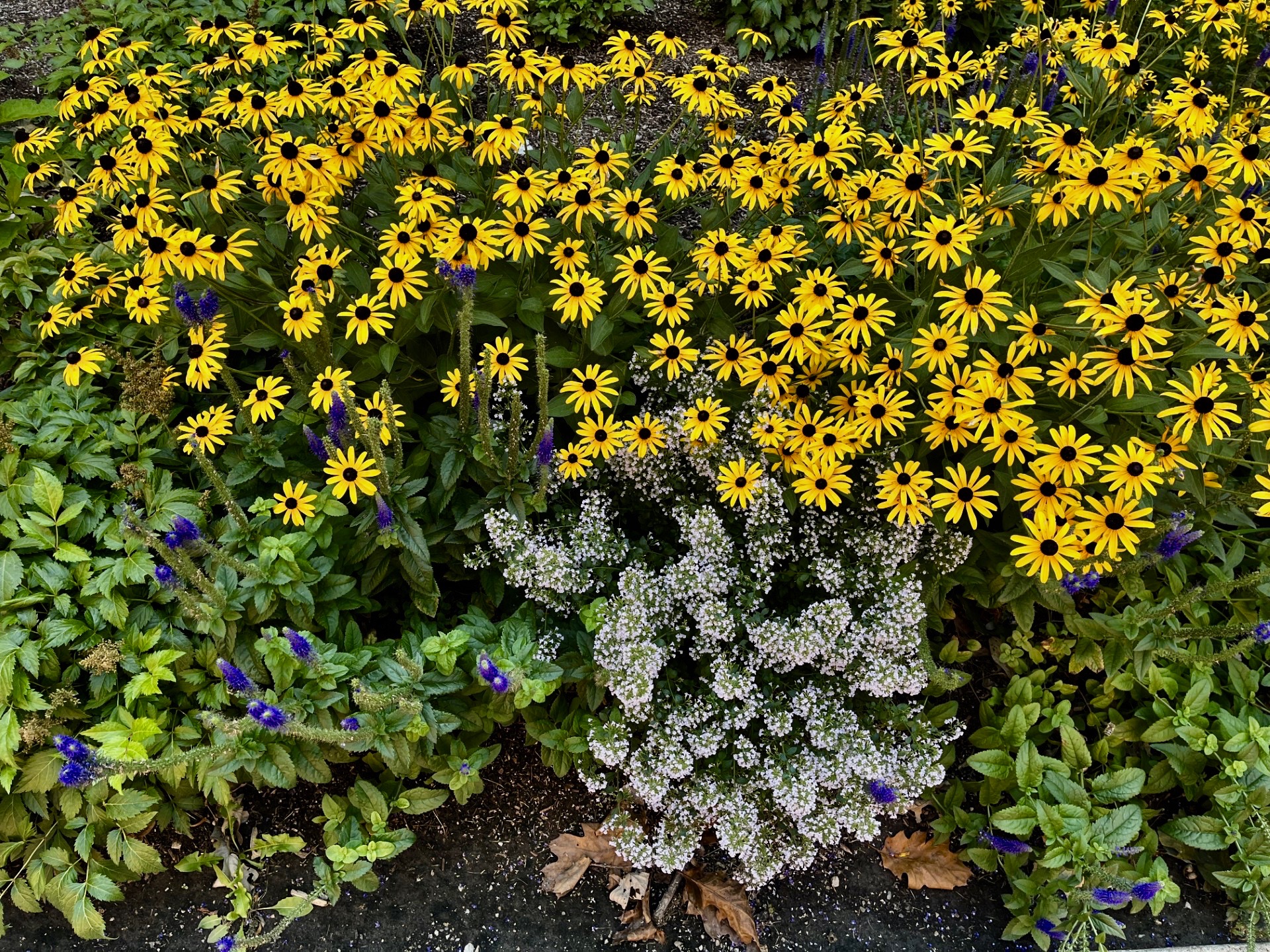
My working hours are roughly 5 a.m. to 2 p.m., which allows me a nice afternoon stroll home (actually, not a stroll, as the cardiologist says I have to walk at a brisk pace). But I will stop for interesting things like ducks, squirrels or flowers.

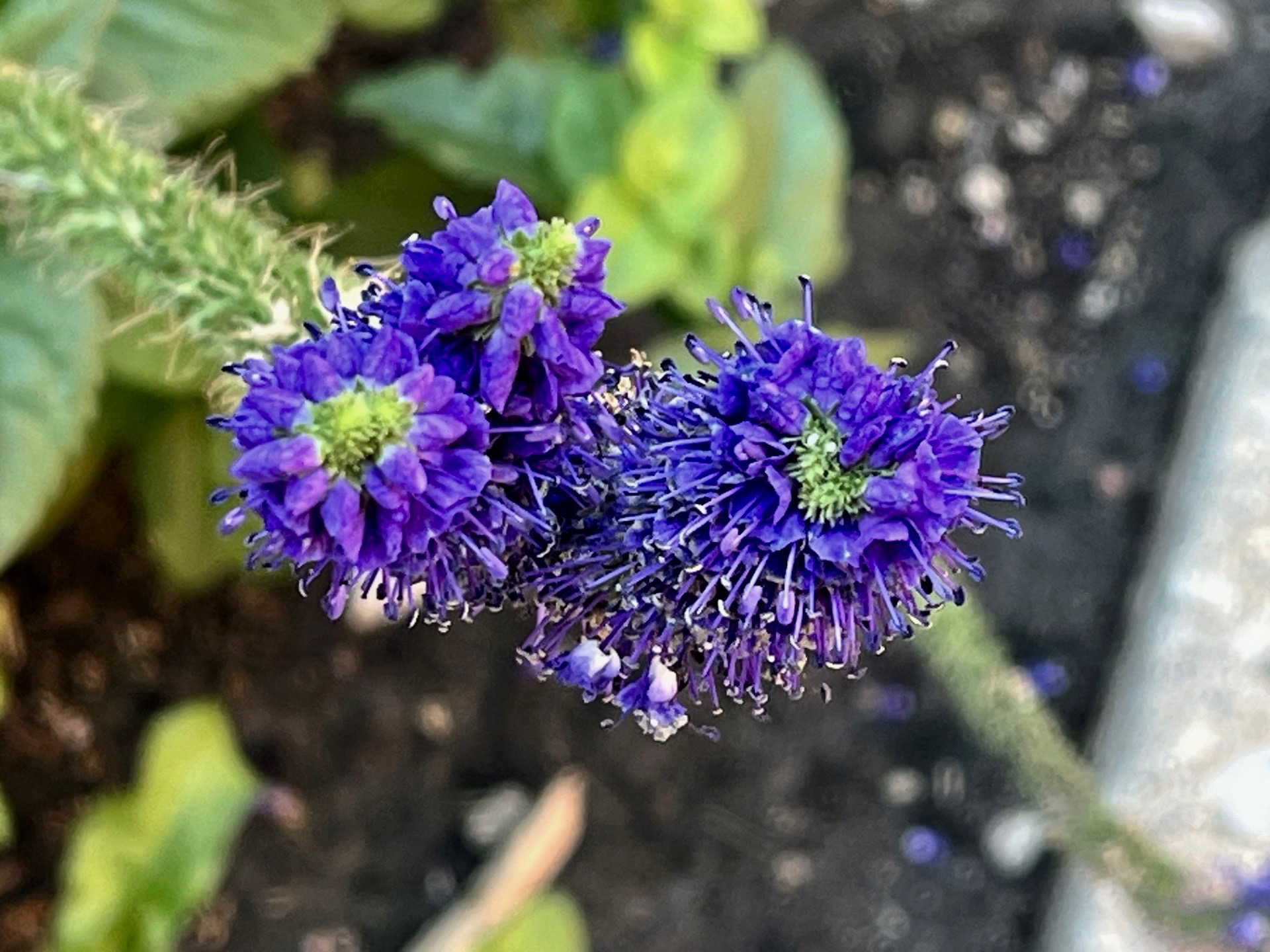
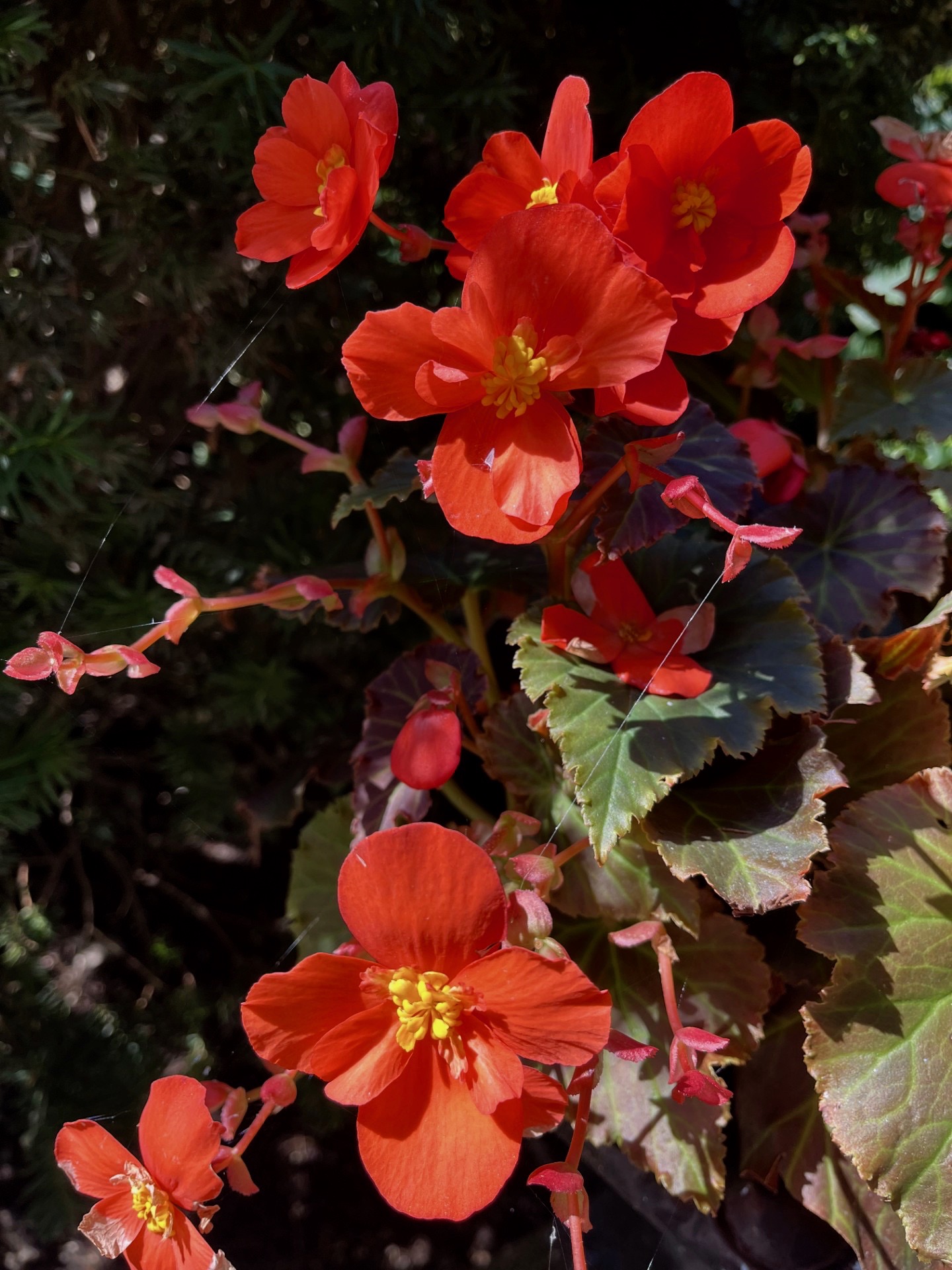
Here are three photos I took of colorful flowers on my way home. I used my iPhone 13 camera with just two lenses, so they are not of the usual pixellaciousness.  The first two are on campus, as we have some nice gardening in places, and the last beside a private home. If you know what they are, please ID below.

I thought flowers bloomed in the Spring, but it is nearly Fall and the bees are busy (and buzzy);

Readers’ wildlife photos

September 8, 2025 • 8:15 am

Well, this is about the end for photos: the last full contribution, though I can confect a few others by combining individual photos from various readers. If you have good photos, now’s the time to send them in.

Today’s photos are from the Facebook page (with permission) of Aussie Scott Ritchie, a retired medical entomologist who now travels the world taking fantastic pictures of birds.  He lives in Cairns.  Scott’s narrative and captions are indented, and you can enlarge the photos by clicking on them.

This past 6 weeks (from mid July to late August) featured the annual Cairns Bird Photography competition as part of the Cairns Bird Festival. I spent most of that time chasing local birds to enter in the comp. As is my wont, I concentrated on 3 main themes that I fell into searching for nice bird images. In reality, the birds led the way, and I just followed.

The three themes were 1. Pretty in pink; 2. Fig-parrot sushi train; and 3. finch stampede. Pretty pink? Flowering Pink Trumpet trees (Tabebuia rosea) in the Cairns Cemetery attracted honeyeaters and served as a nice backdrop to relatively dull Helmeted Friarbirds (Philemon buceroides) and Brown Honeyeaters (Lichmera indistincta). I had fun waiting for the birds to pop up for the camera.

A sandpaper fig tree in the cemetery was a sushi train for Double-eyed Fig-Parrots (Cyclopsitta diophthalma) as they chowed down on the messy figs. Serviettes anyone? These cute little birds allowed me to get relatively close, and to capture their interactions with green ants that also loved figs.

Lastly, an animal feedstore near Yorkeys Knob had a swarm of finches, mostly Chestnut-breasted Mannikins (Lonchura castaneothorax), that spent much of their day feeding on spilt grain in the grass. The staff threw grain they had swept up from the floor into the adjacent grass. Finches, Peaceful Doves (Geopelia placida) and the local chooks had a feast! The mannikins would feed in a cluster, then explode into the air at the slightest disturbance. I used the “pre-capture” mode of my Canon R5-2 to capture this tsunami of finches, one of which won “best Bird in Flight” category.

I had fun just getting out and targeting birds across these three themes. Here are some of my favourites images.

Pretty in pink: A Brown Honeyeater out for a morning run:

Pretty in pink: Brown HE, nothing to fear, it’s stingless!:

Pretty in pink: Helmeted Friarbird spots a stingless bee:

Pretty in pink: “What, you think I’m ugly?” Helmeted Friarbird:

Fig sushi bar: A male Double-eyed Fig-Parrot makes a meal out of his fig. These wee birds can be spotted by following the trail of fig crumbs falling from the canopy:

It’s the fig, or the ants!:

Green ants are a constant pain to these cute birds. “Do you think they noticed me?”:

One last little fig!:

Off he goes!:

“Who’s next?” Chestnut-breasted Mannikins drop into the bird seed buffet:

It’s a regular pig out. But keep an eye out for trouble! An incoming vehicle, walking person or flyover raptor spooks these guys:

Trouble spooks the birds. “What the F@*k!” A male mannikin is bowled over by a stampede of finches as they rise as one from the grass. This image won Best Bird in Flight:

Note so peaceful dove. A Peaceful Dove is caught up in the finch tsunami:

Backlit finch tsunami:

A bit of artistic blur:

Readers’ wildlife photos

September 4, 2025 • 8:15 am

We’re running low again, and if you have some good photos, send ’em on. Thanks!

Today’s photos come from  Rik Gern of Austin, Texas. Rik’s captions are indented and you can enlarge his photos by clicking on them.

Last spring I threw a fistful of wildflower seeds out my back door and was richly rewarded for the effort. One species of flower that popped up was Indian blanket (Gaillardia pulchella).

Indian blanket is a native plant and a smaller cousin to the Sunflower. It can be seen in fields and by the roadside all thru the spring and early summer.

This batch of pictures is a series of portraits of the flower heads, sequenced so as to illustrate the progression from bud, to flower, to spent and desiccated flower heads.

Hairy sepals form a spiky fist to protect the incipient flower:

As the bud opens and the flower begins to bloom you can see the disc flowers in the center and the ray flowers extending outward:

Indian blankets in full bloom:

This plant was growing sideways, affording a nice “backstage” view:

What would a wildflower be without an insect guest?:

The beginning of the end. The ray flowers have dropped off, but it looks like there is still some life left in the disc flowers:

The flowers have gone, but some color still remains:

Finally, a ghostly husk is all that remains of the flower that once was. The party is over, but hopefully there was enough pollination and seed dispersal for the descendants to make an appearance next year:

Readers’ wildlife photos

August 27, 2025 • 8:15 am

Today’s photos come from reader Kevin Krebs, who sent in photos from a trip in British Columbia (part 1 is at the first link below). Kevin’s captions and IDs are indented, and you can enlarge his photos by clicking on them.

The Crowsnest to Osoyoos – Part 2

Princeton to Osoyoos

My previous post left off with a photo of the incredible geology around Hedley, BC on the way to Osoyoos.

Before we get back on the road, let’s talk a little about Osoyoos and why I am drawn to it as a destination every spring.

When most people think of British Columbia, they envision old-growth forests, our rugged coast, and our mountains (and, of course, the incredible Burgess Shale!). Many people, even British Columbians, are unaware we have a xeric shrubland biome only a few hours drive away.

I love the coast — it’s where I cut my teeth as a birder—but the antelope and sagebrush grasslands in the southern BC interior are akin to visiting another country. The flora and fauna are so different that I’m engulfed in a nebula of discovery and confusion. Maybe it’s a way of meditating, of striving to see and hear and smell what is really there.

Grasslands are one of the most threatened ecosystems on our planet, yet receive scant attention: old-growth forests are easy to comprehend, but few of us think about old-growth grasslands. Our primate brains and maniacal culture see only empty fields to be cleared for parking lots and big-box stores. As a result, grassland birds have seen terrible declines for decades, as I’m sure other grassland species have as well.

With that scene set, let’s continue our excursion…

The next stop on the route is the village of Keremeos, the “fruit stand capital of Canada,” where I can find several families of (ridiculously cute) California Quail (Callipepla californica). This male was perched on a branch to keep a keen eye on me.

On the outskirts of Osoyoos is the incredible Nighthawk Hill Grasslands. This year was the first time I explored it. I often return there in my mind when I’m stuck on a crowded bus.

While there, I was lucky to spot three birds I rarely see…

A Brewer’s Sparrow (Spizella breweri) — unfairly described as a “small, drab sparrow” (ok… maybe it’s true, but I always find myself annoyed by our human judgments of other beings) with a complex song. Named after Tomas Brewer, a 19th-century naturist and ornithologist.

Here’s a Lark Sparrow (Chondestes grammacus) that I also spotted at Nighthawk Hill Grasslands. A larger, beautiful sparrow that is the only species in the genus Chondestes. It also has a distinctive song.

A Clark’s Nutcracker (Nucifraga columbiana)! I was absolutely elated to find this bird — I’d never found it before, and it was one of the species I hoped to see on this trip. Closely related to crows and jays, these birds are the primary seed disperser for whitebark pine (Pinus albicaulis). Not a great photo, but it was the best I got without disturbing the bird too much.

This was the second year I saw a Blacked-backed Woodpecker (Picoides arcticus) while visiting Kilpoola Lake Road just outside of Osoyoos. These woodpeckers specialize in foraging in recently burnt forests and bogs with dead trees — their black back helping to camouflage them against the burned trunks.

Uncommon on the coast, Red-naped Sapsuckers (Sphyrapicus nuchalis) are somewhat more common in the interior of British Columbia. Unlike more well-known woodpeckers, sapsuckers drill rows of holes into trees, feeding primarily on the sap that is exuded by the tree in defense.

Continuing with woodpeckers, I was pleased to spend some time with this Hairy Woodpecker (Dryobates villosus). While easy to confuse with the smaller Downy Woodpecker (Dryobates pubescens), a close look at the size of the bill will help pick them apart.

A Calliope Hummingbird (Selasphorus calliope) — the smallest bird native to North America, weighing 2-3 grams (0.071 to 0.106 oz) and measuring 7-10cm (2.8–3.9 in) in length. Breeding from British Columbia to Colorado, they migrate to southern Mexico for the winter.

Simultaneously curious and suspicious, this Yellow-pine Chipmunk (Neotamias amoenus) spent a while checking in on me as I rested by the side of the path.

Another bird that was on my wish-list: a Pygmy Nuthatch (Sitta pygmaea). A small and ridiculously cute bird.

And last, a weirdo bird — the Yellow-breasted Chat (Icteria virens). While quite widespread across North America, Yellow-breasted Chats tend to be shy and difficult to spot. Once thought to be a type of warbler, as of 2017 it was moved to the monotypic family Icteriidae .

That wraps up this post. I hope you enjoyed it, and with a little luck maybe I’ve inspired you to travel somewhere new and to care about landscapes and ecosystems that have been ignored by too many of us.

Hazel and Dolores at the pond

August 26, 2025 • 7:49 am

The two mallard hens are still here at Botany Pond, and the new one has been named Dolores, with the last name del Estanque, making her name “Dolores of the Pond”, after the movie star Dolores del Rio.

They just had a huge breakfast, and one of them has been definitively identified as Hazel, the single hen who was here the other day. She brought a friend.

Here is Hazel’s bill (left side) from Saturday:

=

And here is one of the pair yesterday. It’s clearly Hazel:

They came together, and are clearly friends. They swim together, walk together, eat together, and hang out together. I’m very glad, as each has a friend and ducks are social birds who like company. Here are the two of them after a late lunch yesterday:

. . . and the new duck, Dolores del Estanque:

Let’s hope they hang around for a while. Everybody loves the ducks at the pond save one miscreant, but I won’t go into that.

And one water lily has bloomed, producing a beautiful flower:

Readers’ wildlife photos

August 25, 2025 • 8:15 am

Today, mathematician and Hero of Intellectual Freedom, UC Davis’s Abby Thompson has more lovely intertidal pictures from California. Her captions and IDs are indented, and you can enlarge the photos by clicking on them.

The Northern California tidepools are filling with kelp, and creatures are hiding away under it.   Here are some photos while there’s still a bit of summer left.     These are from July, except for the pelicans (August 1). Thanks as usual to experts on inaturalist for some of the IDs.

Tegula funebralis (black tegula): I love these tracks on the sand at low tide; it looks as though the snails are trying to tell us something:

Closeup of the barnacle-encrusted snail from the first photo:

Hesperocyparis macrocarpa (Monterey Cypress). The trunks get stroked by many hands as people pass them on their way down to the beach:

Pelecanus occidentalis (brown pelican): There must have been a large shoal of fish near shore; the pelicans (it seemed like hundreds of them) were going nuts.    Their lethal dives, with those incredible beaks, makes their relation to dinosaurs look very convincing.  The Point Reyes peninsula is in the background:

Family Ammotheidae (Pycnogonid-sea spider): The lumpy white spots on the legs are eggs (what a place to carry them!), which I believe makes this a female.  The males carry the eggs after they are fertilized:

Tenellia lagunae (nudibranch):

The next few photos are through a microscope.  I have an ancient Leitz Wetzlar dissecting scope, with an old iphone precariously clamped over one eyepiece. There must be a better way, but I haven’t figured it out yet.

Diatoms: Genus Isthmia; Lou Jost’s beautiful post on WEIT on the Challenger Expedition and the diatoms they found  was inspiring. It’s disconcerting, as a non-biologist, to look through a microscope at a fluffy, frothy bit of seaweed (the reddish stuff) and see, scattered all through it, these incredibly regular geometric shapes:

Diatoms closeup:

Neosabellaria cementarium ((tiny) polychaete worm):

Phylum Foraminifera: This was a surprise to me, partly because I had never heard of foraminifera, but mostly because it turns out they’re single-celled organisms (like diatoms), so that’s one cell you’re seeing.   Google AI says this about the difference between diatoms and foraminifera: “Diatoms are photosynthetic algae with silica cell walls, while foraminifera are amoeboid protists with calcium carbonate or agglutinated shells.”

There are many more elaborate/complex ones than this one (there’s one that looks a lot like a loaf of challah, for example).   It’s worth googling “foraminifera” and “Ernst Haeckel” to see some amazing illustrations. The Challenger Expedition discussed by Lou Jost also collected and documented foraminifera.  According to Wikipedia, the first picture of one was by “…Robert Hooke in his 1665 book Micrographia”.  This book (available through WikiSource online) has charming sections like: “Of the Teeth of a Snail”, and “Of blue Mould, and of the first Principles of Vegetation arising from Putrefaction”.   The possible foraminifera appears as figure X in Schema 5.   He says (in Observation XI) “I view’d it every way with a better Microscope and found it on both sides, and edge-ways, to resemble the Shell of a small Water-Snail with a flat spiral Shell:” Imagine being one of the first to be able to peer into this world!

The camera for the first six pictures in an Olympus TG-7.

Readers’ wildlife photos

August 20, 2025 • 8:15 am

Athayde Tonhasca Júnior has returned with an edifying photo-and-text contribution, centering on his speciality, pollination. And once again, these phenomena show the powers of natural selection to affect both morphology and behavior.

Athayde’s captions are indented, and you can enlarge his photos by clicking on them.

O, what a tangled web we weave when first we practise to deceive

It’s a bright early morning in the American desert of southern Arizona, and a bee prepares to land on the flowers on the top of a fishhook barrel cactus (Ferocactus wislizeni). The approaching bee belongs to a group of solitary, ground-nesting species that specialize on the flowers of several cactus species, so unsurprisingly they are labelled cactus bees. These visitors are most welcome to the fishhook barrel cactus, as it depends entirely on them for pollination.

‘Fishhook’ says it all: the fishhook barrel cactus is well-armed against plant munchers © Bernard Gagnon, Wikimedia Commons:

Alas, the impending pollinating event does not happen because just before alighting, the bee spots danger: southern fire ants (Solenopsis xyloni) are milling about. Ants in general have a mood ranging from annoyed to furious, and fire ants live up to the family reputation: they readily attack perceived intruders, humans included, biting and injecting them with venom. Wisely, the bee flies away.

‘Fire’ says it all: despite its small size, the southern fire ant is aggressive and inflicts painful stings © Jake Nitta, Wikimedia Commons:

Fire ants are ground dwellers, spending their days scouring the soil surface for seeds and dead insects. They are also keen on sweet foodstuffs such as honeydew (the sugar-rich liquid secreted by aphids and some scale insects) and nectar, which explains their presence on the fishhook barrel cactus: they were gathering extrafloral nectar exuded from specialised spines on the top of the plant.

Close to 1.8% of all vascular plants, or ~4,000 species distributed across 108 families (these numbers are ever increasing), bear extrafloral nectaries (EFN): nectar-secreting glands located anywhere in the plant outside the flowers. Darwin believed these glands had the function of discarding waste or toxins. One of his correspondents, the Italian botanist Federico Delpino, rejected the idea: plants wouldn’t squander nectar, an expensive resource, just to flush out unwanted substances. Based on information he gathered from various plant species, Delpino concluded that the main purpose of EFN was to attract ants.

Extrafloral nectaries can be found on stipules (A), leaf bases (B) petioles (C), or more than one structure (D) © Holopainen et al., 2020:

Luring ants with nectar hints of pollinating relationships, but this possibility can be discarded for the majority of EFN-bearing plants. Most ants do not have pollen-collecting structures and are too small for the task. But the main barrier to ants’ contribution to pollination is their chemical defences that prevent the proliferation of pathogens but also inhibit pollen germination and the growth of pollen tubes. As a result, there are only 30 or so known cases of myrmecophily (ant pollination) among the thousands of insect-pollinated species. Plants entice ants with their EFN for an entirely different reason: to recruit a cohort of mean-spirited bodyguards.

Numerous studies have shown that ants attracted to EFN protect plants by attacking plant-munchers or disrupting their egg laying. Some trees, mostly in the tropics, have developed mutualistic associations with ants; they shelter their visitors in domatia (hollow chambers) and feed them with food bodies (nutrient-rich structures) and extrafloral nectar. In return, ants keep the plant’s enemies away: some even snip off epiphytes (plants that grow on the surface of another plant). If you ever leaned against one of these myrmecophytes (‘ant plants’) for a break during a hike, you probably were quickly encouraged to move along by some irate ants.

Ants patrolling the myrmecophyte tree bullhorn acacia (Vachellia cornigera) © Ryan Somma, Wikimedia Commons:

However, just like advertising a party fuelled by free beer on social media, encouraging ant visitors can have disastrous outcomes. In some circumstances, ants extend their foraging bouts from EFN to flowers where they may deplete the nectar – and even pollen – intended for pollinators. Ants may damage reproductive structures, sometimes castrating flowers by nibbling on stamens and pistils. And when ants are about, other flower visitors tend to give them a wide berth. That’s what happens when a fishhook barrel cactus is occupied by EFN-seeking southern fire ants. As a consequence, bees visit flowers less frequently and for less time, resulting in fruits with smaller and lighter seeds when compared to plants with no fire ants (Ness, 2006). This is not an isolated case. The presence of the common red ant (Myrmica rubra) on flowers can cause the common eastern bumble bee (Bombus impatiens), one of the most abundant bumble bees in eastern North America, to collect and deposit less pollen. The scent of ants alone is sufficient to put bumble bees off (Cembrowski et al., 2014).

The common red ant, a Palaearctic native and invasive to North America © Gary Alpert, Wikimedia Commons:

Because ants often decrease the species diversity of flower visitors as well as the frequency and duration of visits, the Austrian botanist Anton Joseph Kerner suggested another purpose of extrafloral nectar: bribery. EFN would turn ants’ attention away from the flowers, thus reducing their conflict with pollinators, while retaining ants’ protection for other parts of the plant (Kerner, 1878). The Distraction Hypothesis, as Kerner’s proposal is known today, may sound farfetched, but has been demonstrated experimentally. In one case, researchers simply blocked EFN on the Mexican ant‐plant Turnera velutina and observed the results. Blocking reduced the number of ants patrolling EFN, increased the proportion of flowers occupied by ants and reduced plant reproductive success (Villamil et al., 2019).

(b): EFN on the underside of a T. velutina leaf; (c): clogged and control leaves © Villamil et al., 2019:

What we know so far: ants can be plant guards, as suggested by Federico Delpino, or plant exploiters, according to Anton Joseph Kerner. As ant protection is mostly associated with EFN-bearing plants, which make up a minority of flowering plants, it’s safe to assume that ants on plants are mostly bad news. But, as it is invariably the case in biology, the plot thickens.

For the EFN-bearing T. velutina, the more aggressive the ants, the  more vigorously flower visitors are deterred; but, surprisingly, deterrence reduces self-pollination and increases cross-pollination (Villamil et al., 2022), probably because pollinators that take their chances hang on to flowers just long enough to collect or deposit pollen, thus increasing the rate of flower visitation. For the South American scrubs Banisteriopsis campestris and B. malifolia, the presence of ants around flowers reduces visitation by smaller bees. But larger bees, which are likely to be better pollinators, are not bothered by ants, a positive outcome for the host plants (Barônio & Del-Claro, 2017).

Ants keep small bees away from these B. campestris flowers, but large bees are not affected © João Medeiros, Wikimedia Commons:

Ants are found everywhere except Antarctica and a few remote islands, and are incredibly important for all sorts of ecological services, from decomposition to recycling of nutrients, control of plant-eating insects, improving soils and dispersing seeds. They achieve all of that thanks to their mindboggling numbers. The renowned myrmecologist E. O. Wilson estimated that 1015 to 1016 ants crawl on Earth’s surface at any given time (that’s quadrillions, figures usually discussed in astronomy). A later appraisal fine-tuned the number to 20 × 1015 individuals, which corresponds to ∼12 megatons of carbon. This is more than the combined biomass of all wild birds and mammals, and is equivalent to ∼20% of human biomass (Schultheiss et al., 2022). Another study following a different methodology suggested a population size of 5 × 10¹⁶, excluding arboreal ants (Rosenberg et al., 2023). So Wilson wasn’t far off, as a billion here or a billion there is not that important when we are talking quadrillions. For comparison, there are some 7.9 × 10⁹ human beings on the planet.

Depending on the species involved, ants may have substantial positive or negative effects on the pollination game, even though they play a mediocre role as pollinators. When ants are about, pollination is no longer a quid pro quo between pollinating insects and flowers. The party crasher must be accounted for.

A silky ant (Formica fusca) collecting nectar from a germander speedwell (Veronica chamaedrys) flower © Gilles San Martin, Wikimedia Commons: