Readers’ wildlife photos

April 12, 2025 • 8:15 am

I remind you once again to send in your photographs as there’s always a need. Thanks!

Today we have some pictures taken by James Blilie and his son Jamie. The captions are indented, and you can enlarge the photos by clicking on them.

Here is a set of photos from our local area.  We live in far southern Washington state in Klickitat County.  These photos are from Klickitat and Skamania Counties.

A mostly full moon photographed on February 8, 2025:

Two views of Mount Adams from the front porch on our new (2024) home.  Both are taken at sunset.  One is a black and white closeup.  The other also shows our local gang of Black-tailed deer (Odocoileus hemionus columbianus).  Mount Adams is about 20 miles directly north of our house:

The next shot shows left to right:  Mount Adams, Mount Rainier, and the Goat Rocks Wilderness from the top of a local ridge.  I took this on March 1, 2025:  It was 60°F (16°C) and sunny, unusual for the first of March!  The view is well worth the work on this hike:

The next bunch of photos were taken at the Wind River Arboretum in Skamania County, definitely on the wet (west) side of the Cascade Range.

A cross-section of the purportedly largest Douglas Fir (Pseudotsuga menziesii) found in Washington state and the placard that accompanies it.  The section was taken at 60-feet (18m) above the ground and the tree was determined to be 393-feet (120m) tall:

[JAC: I can’t help pointing out the superfluous apostrophe in the park sign below.]

Western Red Cedar (Thuja plicata):  Foliage and a (small) example tree:

Two shots by our son Jamie of Bird’s Nest Fungus (Nidulariaceae spp.):

Last year’s Bracken Fern (Pteridium aquilinum), also taken by Jamie:

Views of Sword Ferns (Polystichum munitum), also taken by Jamie:

Equipment:

Mine:

Olympus OM-D E-M5 camera (micro-4/3, crop factor = 2.0)
LUMIX G X Vario, 12-35MM, f/2.8 ASPH lens
LUMIX 35-100mm  f/2.8 G Vario lens
LUMIX G Vario 7-14mm  f/4.0 ASPH lens
LUMIX G Vario 100-300mm F/4.0-5.6 MEGA O.I.S. lens

Jamie’s:

Nikon D5600 (crop factor = 1.5)
Nikkor AF-P DX 18-55mm f/3.5-5.6 G VR lens
Sigma 150-600mm f/5.0-6.3 DG OS HSM lens

Readers’ wildlife photos

January 22, 2025 • 8:15 am

Today we have some lovely mushroom pics taken by Ronald Kleinknecht in the Pacific Northwest. His captions and IDs are indented, and you can enlarge the photos by clicking on them.

I took these photos over the past few years in and around my home area of Bellingham WA. Our region is heavily forested, both in town and in our county which includes part of the North Cascades National Park and the Mt. Baker Wilderness Area. With ample precipitation, this locale provides excellent mushroom and fungi foraging.

This beauty, The Prince (Agaricus agustus),  is my all-time favorite to eat. Agustus means “noble or majestic,” and so it is. These are typically found along a trail or path in a mixed conifer and hardwood forest:

The Pacific Golden Chanterelle (Chanterelles formosus) is a close second for tastiest mushroom in my opinion. These are very popular here in the fall and retail for upwards of $50/lb.:

This Oyster mushroom (Pleurotus pulmonarious) is one of many “oyster” species, named for its shape rather than its taste. Oysters are plentiful in the spring and are delicious in soups:

The Shaggy Parasol (Chlorophyllum olivieri) is another edible fungus that I especially enjoy in soups. It is quite common around here from spring into fall:

Red Cracking Bolete (Xerocomellus defractus) is a colorful mushroom in the Boletales order that differs from the previous gilled mushrooms in that they have spongy undersides made up of tubes, rather than gills where spores develop:

These gem-studded Puffballs (Lycoperdon perlatum) have little spikes on rounded heads that are “gem-like.” Their spores develop inside and when touched they puff out of a hole in the top. A drop of rain is sufficient:

The Russulas are also called Brittle Gills. Throwing one at a tree trunk will shatter it into many pieces. This one is a Shrimp Brittle Gill (Russula xerampelina) as it smells like seafood:

Sulfur Tufts (Hypholoma faciculare), although attractive, are very bitter and poisonous, causing severe GI distress and even paralysis:

Smoky Gilled Woodlover (Hypoloma capnoides) is related to H. faciculare. While attractive and edible, it is not very tasty:

The Scarlet Elf Cup (Sacroscypha coccinea) is an attractive little fungus with its bright Red body. It is used by some to add color to a salad but has little taste:

If you think you see a discarded orange peel while walking in the woods, it might be an Orange Peel Fungus  (Aleuria auranitia). It is edible but don’t bother:

This Panther Cap, (Amanita panterina) is young and has not yet opened its cap. It is of the same genus as the prototypical toadstool, fly agaric with the large red cap covered with white dots. They are both toxic:

This dog vomit Slime Mold (Fuligo septica), also called scrambled eggs, is not technically a fungus although it has been classified as such historically. It is one of the most interesting of all organisms here as it is a single cell and is capable of mobility, learning, memory, and information transfer.  (see link below):

Comment on camera:  I used to lug my Canon 80D with big lenses around when foraging, but have now opted for the much more portable iPhone 13, which seems to do just fine for close ups like these.

Links:

Readers’ wildlife photos (and videos)

December 21, 2024 • 8:15 am

We’re running low again, folks, so send in any good photos you have. I know you have a lot of free time during the holidays!

Today’s photos, and two bonus videos, come from reader Amy Perry of Indiana.  Her captions and IDs are indented, and you can enlarge the photos by clicking on them.

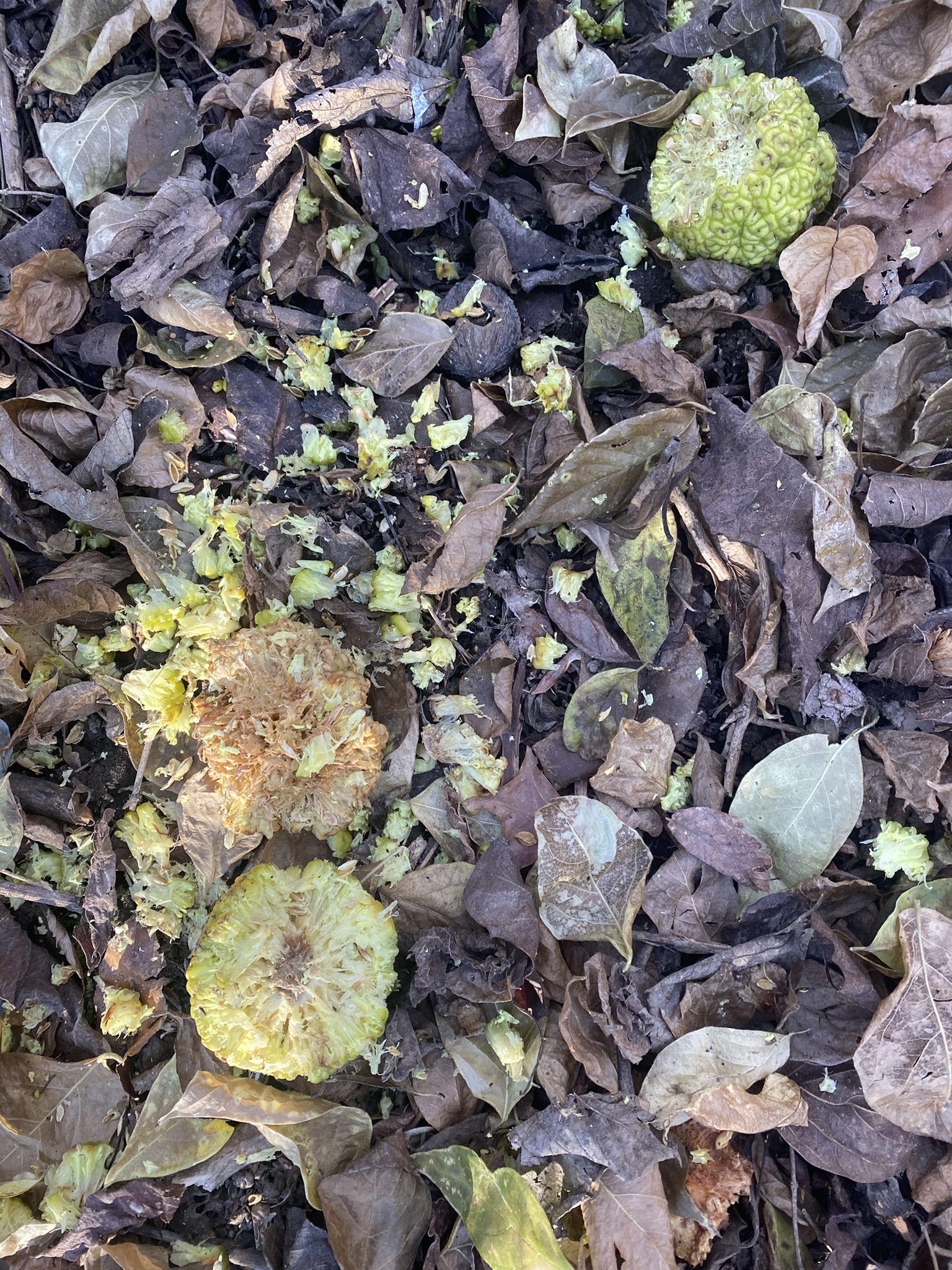
A half-eaten osage orange (Maclura pomifera) in December on the forest floor at Flat Fork Creek Park, Fishers, Indiana. The only animal that Wikipedia says eats these is squirrels. It says they are ineffective seed dispersers. Native to Indiana:

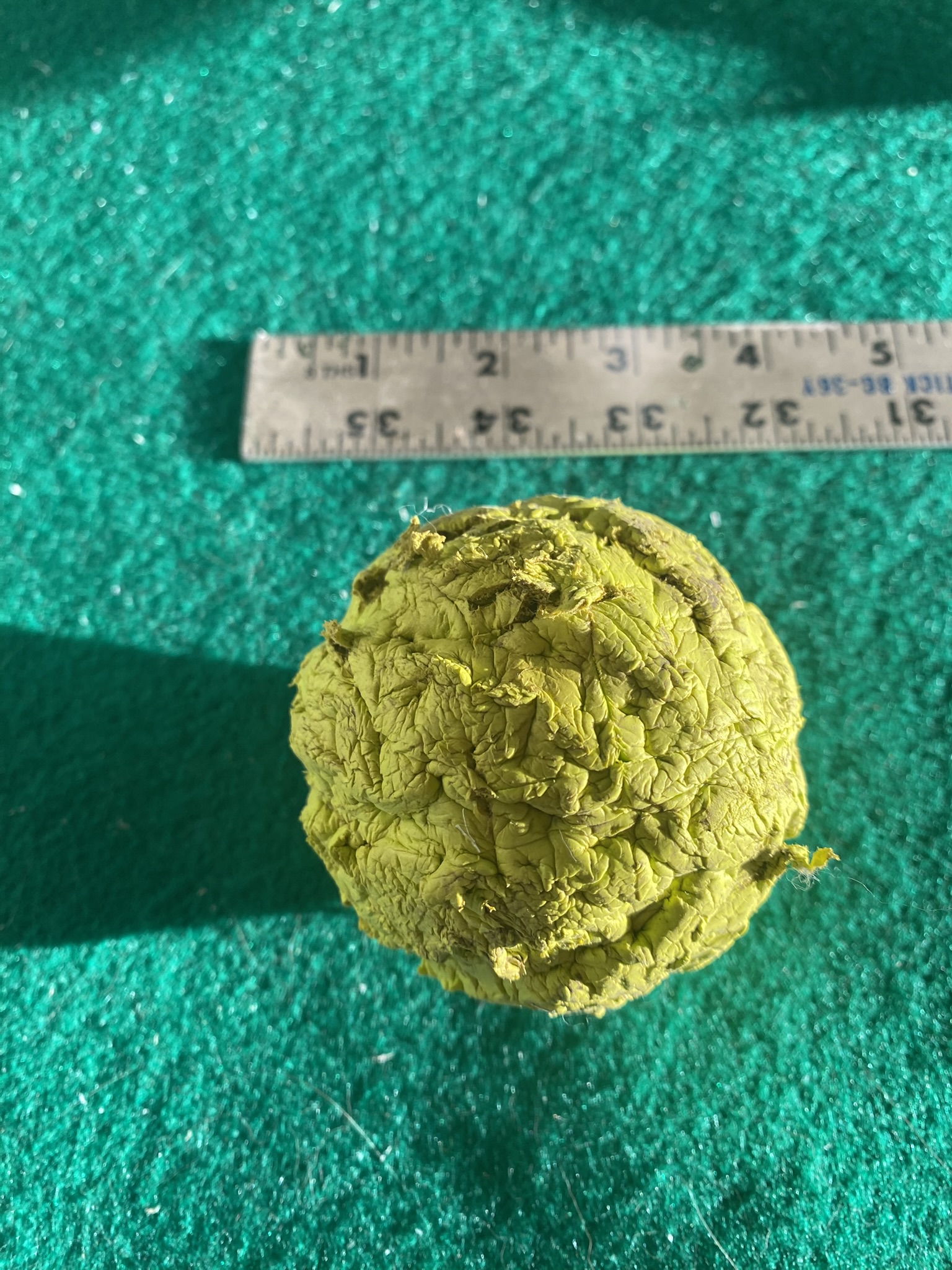
A whole osage orange. They’re also called hedge apples, because people sometimes prune them so they grow really thickly and make a hedge. They’re the size of a softball:

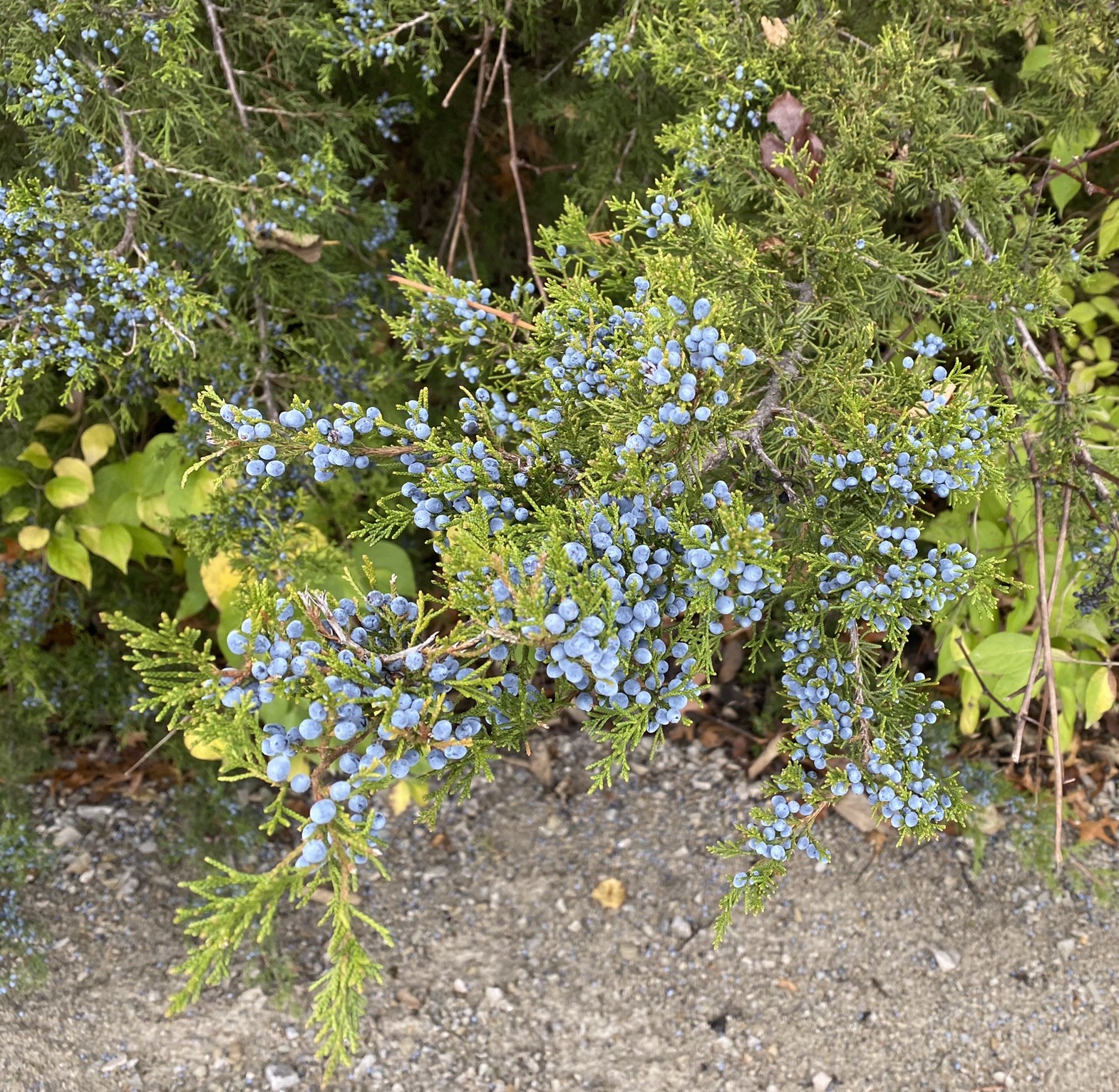
Juniper berries (Juniperus communis) in December along the Nickel Plate Trail, Fishers, Indiana, a railroad turned trail:

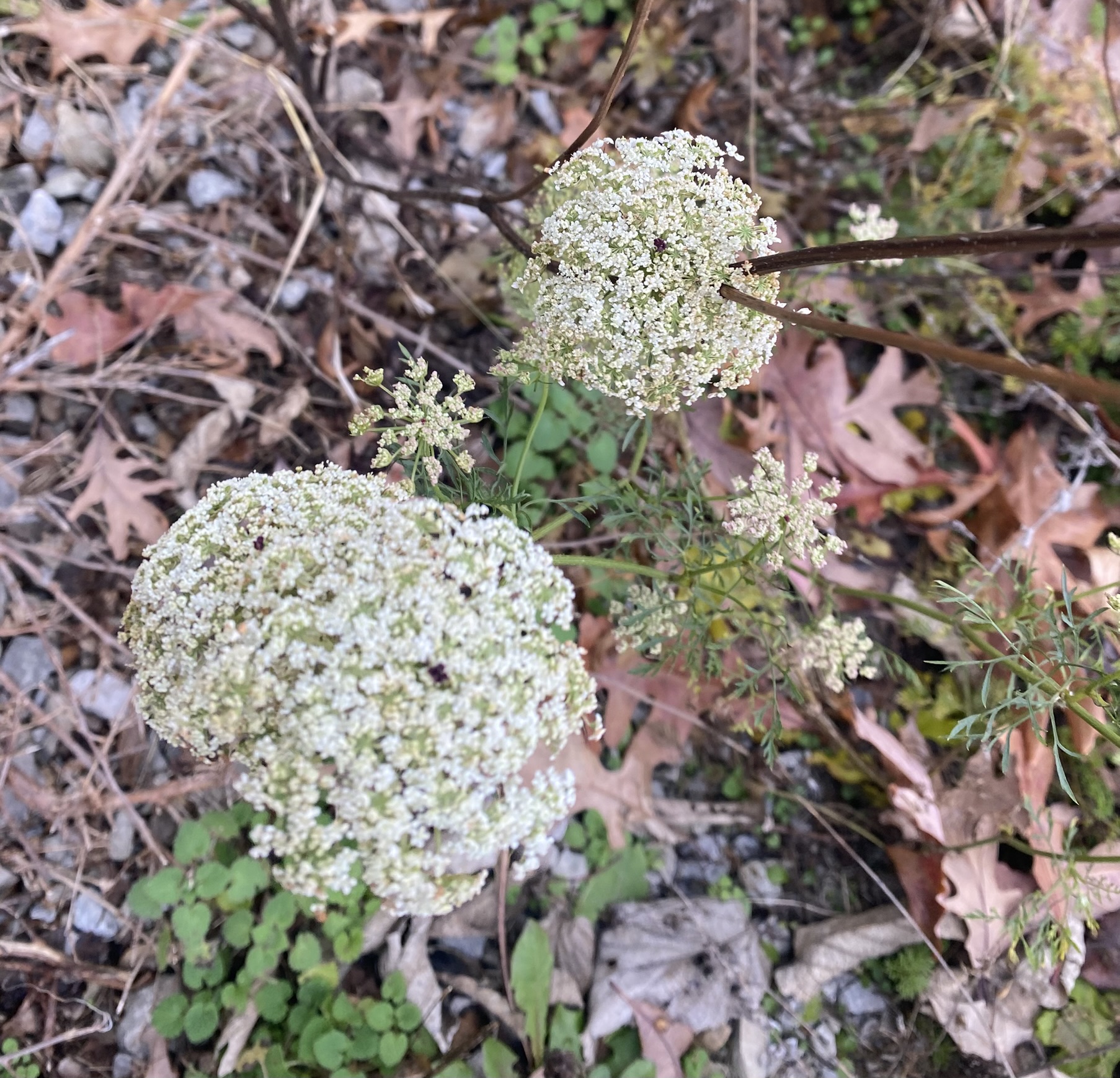
Queen Anne’s Lace (Daucus carota) in December along the Nickel Plate Trail, a railroad-turned trail. 4 shows one in bloom. Sometimes the plant in bloom has a red dot in the middle, resembling a drop of blood from Queen Anne when she was sewing, as the story goes:

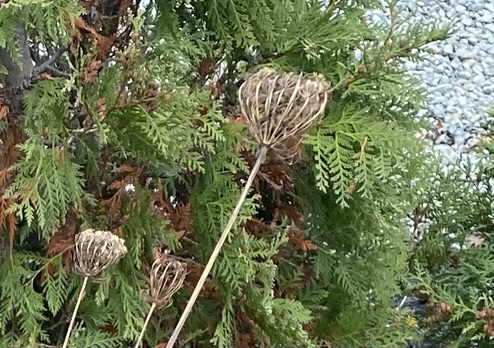
Here’s one curled up after blooming, showing why the flower is sometimes called bird’s nest. As the seeds ripen, the flower curls inward to form a birds-nest shape and turns brownish. Indiana DNR ranks it medium as an invasive, meaning it is not bad enough to warrant regulation in Indiana:

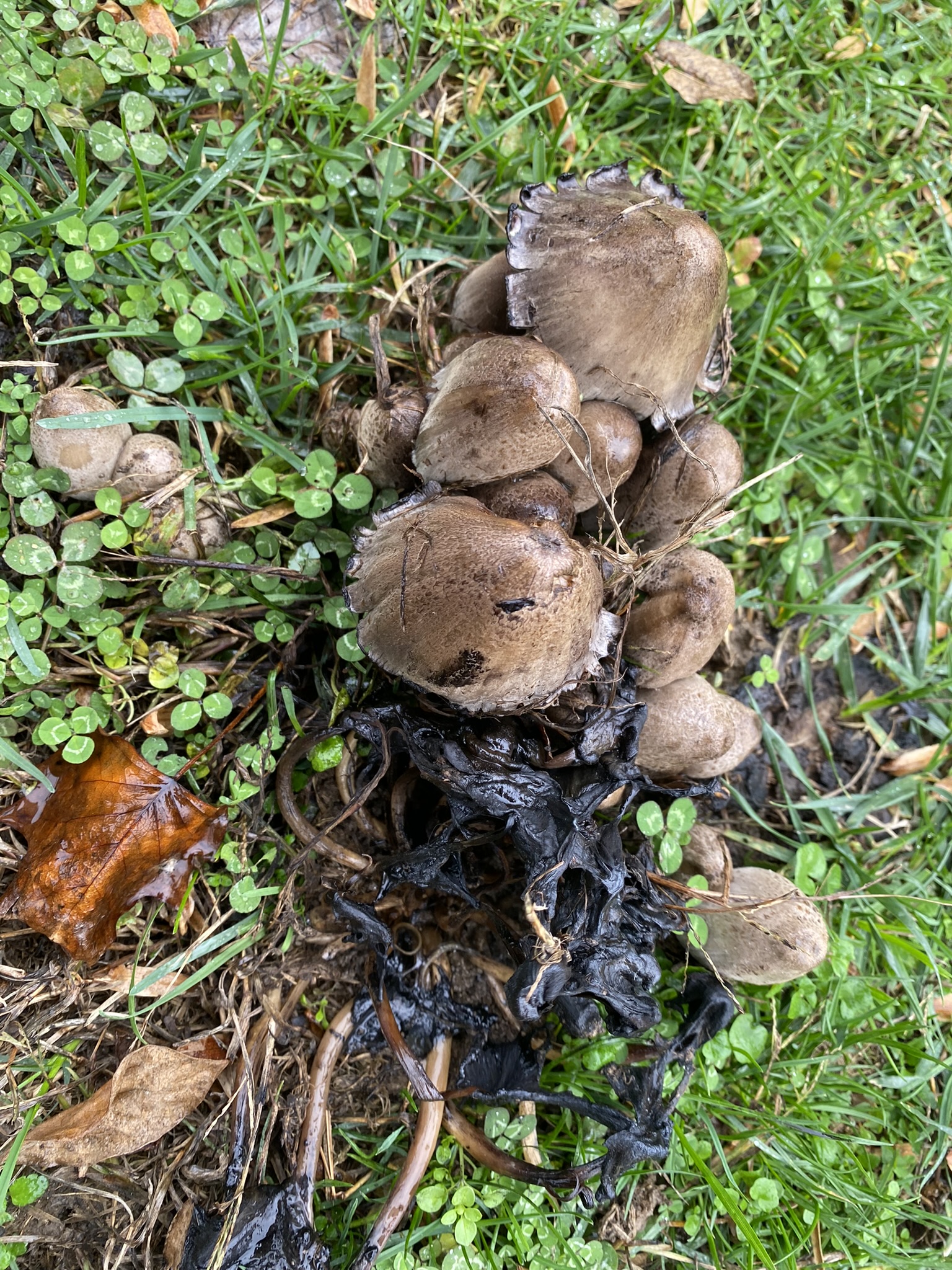
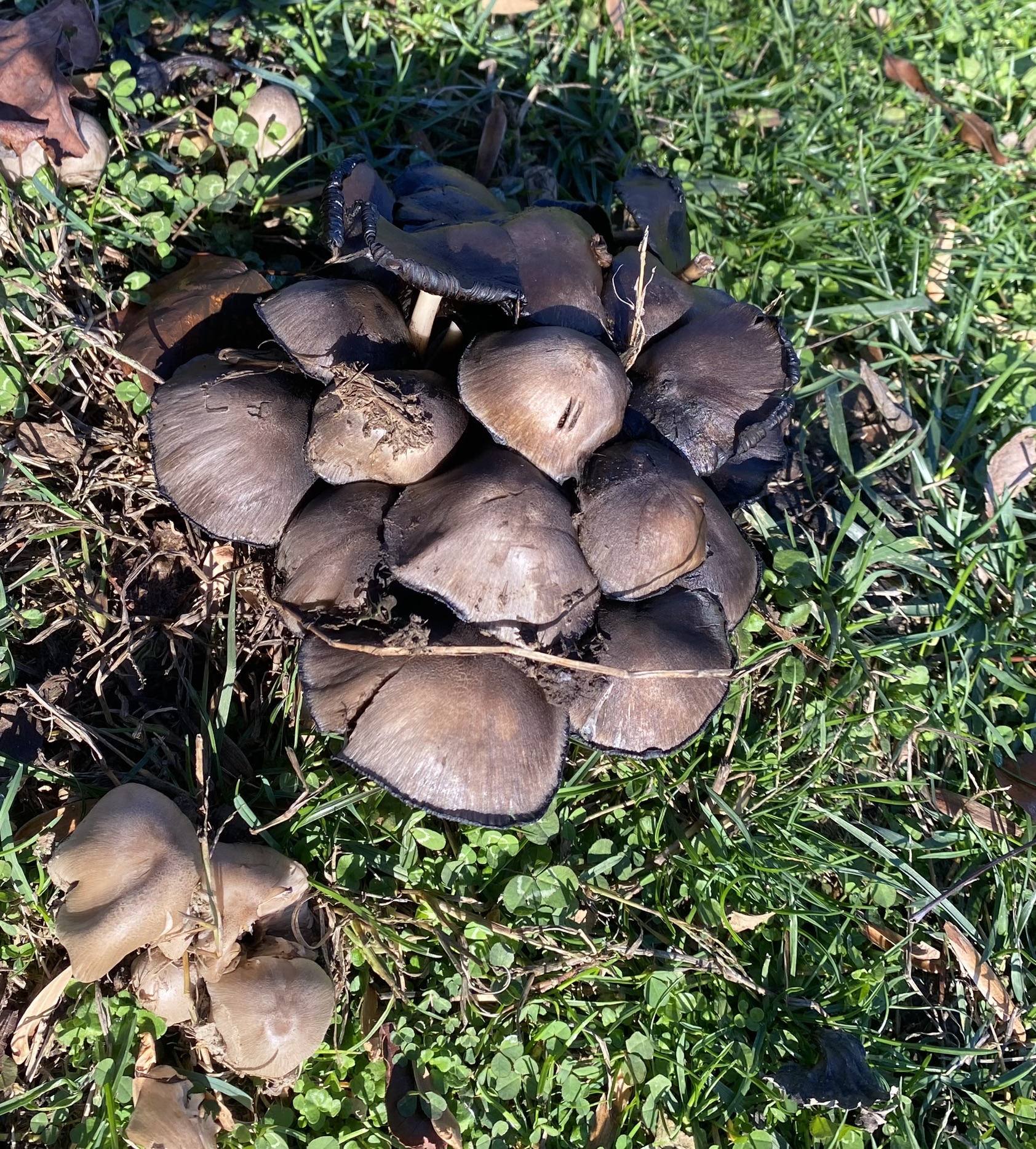
Inky cap (Coprinopsis atramentaria) mushrooms after lots of rain in November in Central Park, Carmel, Indiana. Also known as common ink cap and tippler’s bane (because it’s poisonous when consumed along with alcohol):

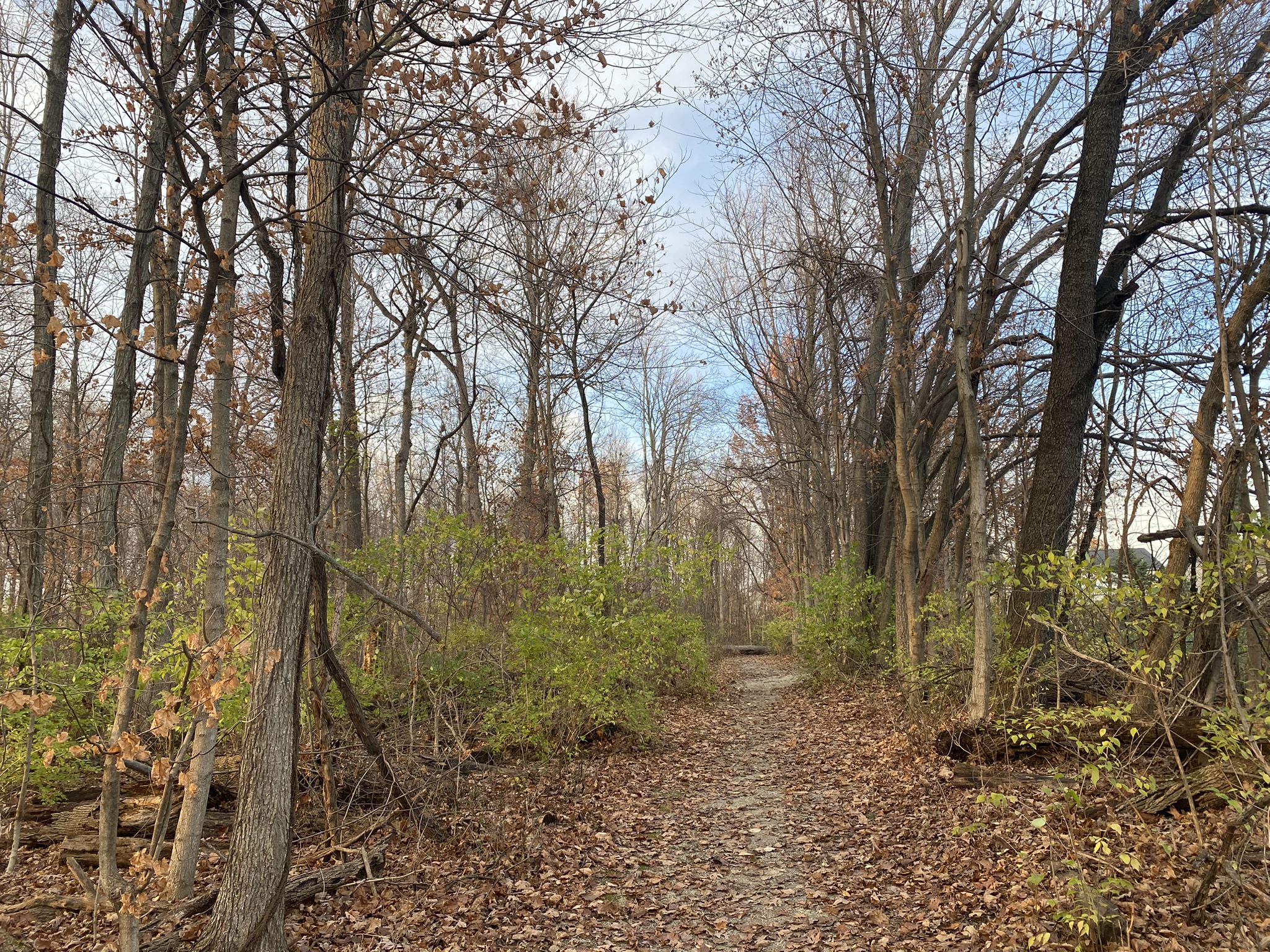
One way that we native plant lovers in central Indiana identify invasive plants is the fact that they are the first to green up in the spring and the last to lose their leaves in late fall. Here is a path in Hoosier Woods in Fishers, Indiana, in November, lined with the Asian bush honeysuckle (Lonicera tatarica, Lonicera morrowii):

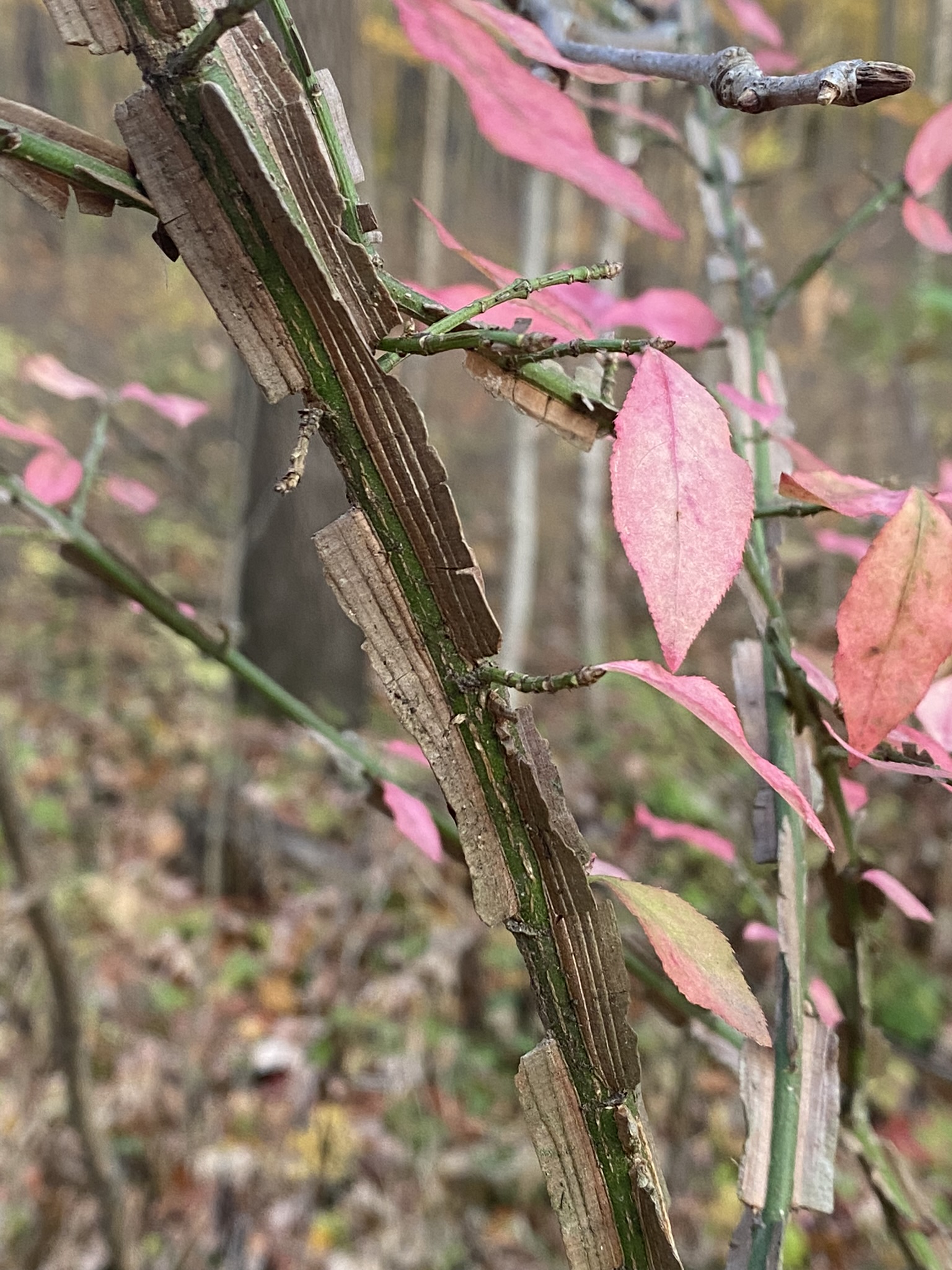
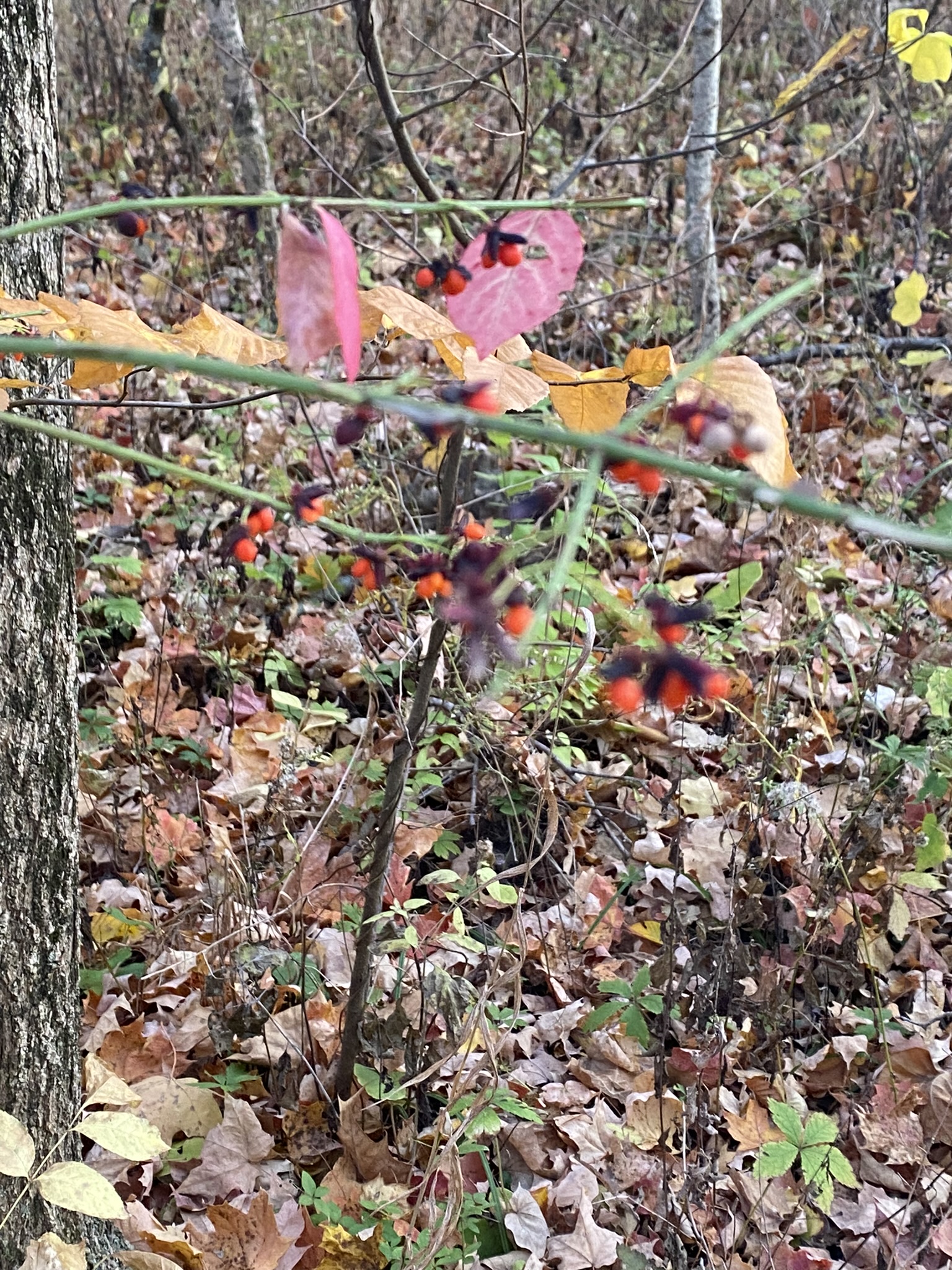
This burning bush (Euonymus alatus) in October deep in Ritchey Woods Nature Preserve in Fishers, Indiana, proves that invasive plants in our yards DO spread even though we don’t see it happen. Birds no doubt planted this one. The deep red leaves, the wing-like (hence alatus) formations on the stem, and the red seeds identify it. Sometimes the seeds are yellow or orange:

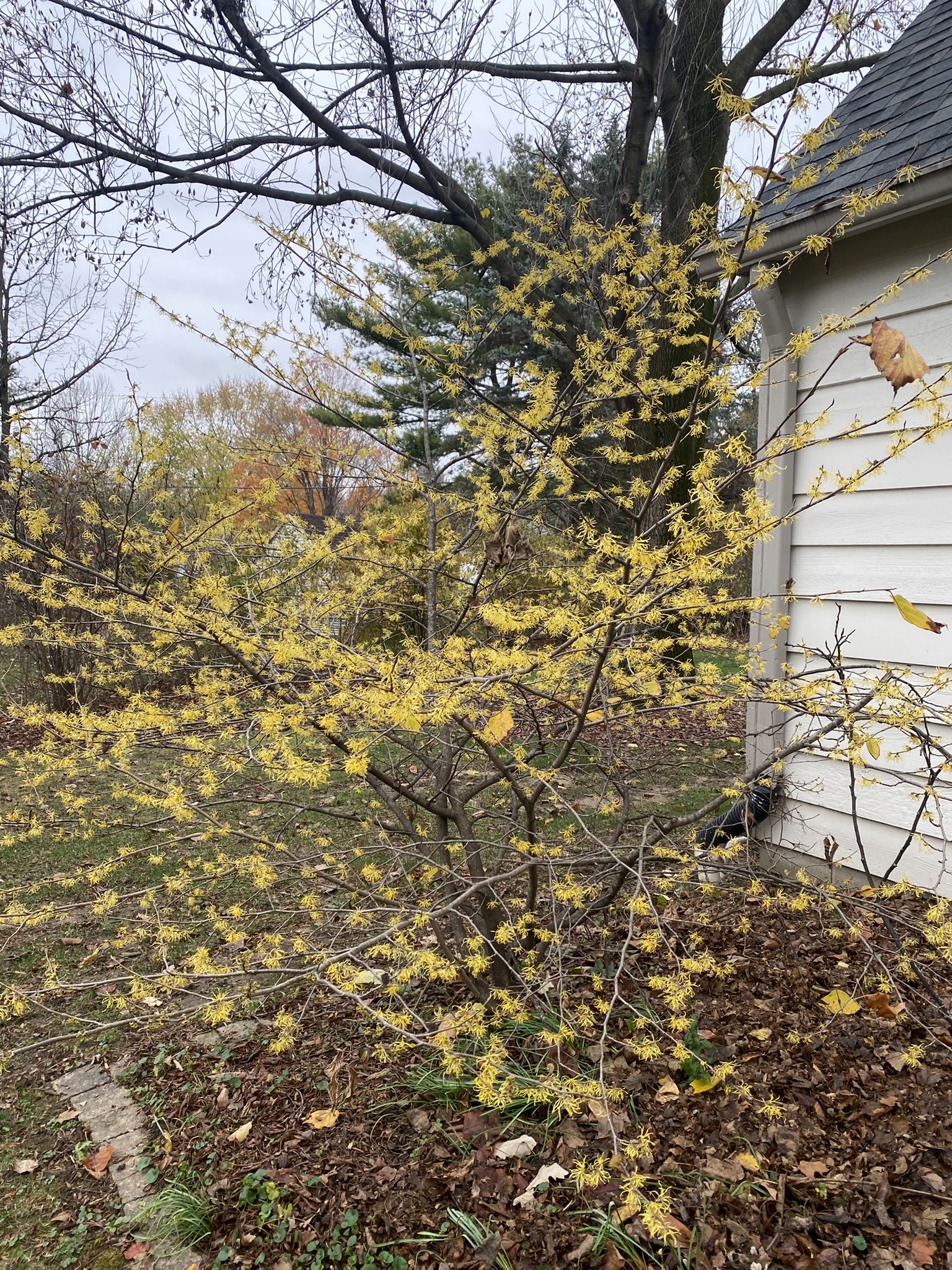
Witch hazel (Hamamelis virginiana) plant in our yard in November in Fishers, Indiana. One of the few shrubs that blooms in the fall. Native to Indiana:

And two videos:

Great blue heron (Ardea herodias):

I crushed the leaf of a cup plant (Silphium perfoliatum) to show its sandpaper-like quality. Note the square stem, a characteristic of that species. The leaves of this species look like giant oak leaves. “At the bottom of the plant, the leaves are huge — to 16 inches long — but the leaves are progressively smaller toward the top of the stem. In full sun, the upright lower leaves turn their edges toward north and south, with the flat surfaces facing east and west, giving compass plant its common name.”–Missouri Dept. of Conservation. Some sources say the leaves do this to avoid the effects of full sun.

Readers’ wildlife photos

December 13, 2024 • 8:15 am

Well, folks, this is the penultimate batch of photos I have, so if you don’t contribute, the feature will die. Don’t make me beg.

Today, though, we have a contribution from reader Lukas Konecny, who has provided some introductory notes (indented). You can enlarge his photos by clicking on them.

Some of these nature shots are quite old and I have never had a good camera, but I tried to pick some good ones (some of the grasshopper photos may need zooming in and cropping but when I tried to do that, my software always distorted the photos). The cicada is from Greece (it sits on a wire rope), the rest are from Slovakia, the mushroom was in a forest and the dragonfly in my university dormitory in Bratislava while others (owls, hummingbird hawkmoth, cat, grasshopper) are all from a garden.  The autumn owl (in a cherry tree) is from the same year (2015) as the spring owlet (in an apricot tree) so it might be the same bird. The grasshopper and the cat are from this summer – the cat watched me while I was releasing the grasshopper that had made its way to my room during the night and to my relief didn’t immediately attack it but let it fly away in peace. Maybe nature finding its way into human spaces is the common theme (except for the mushroom, that’s just autumnal feeling).

Amanita muscaria:

Cat:

Cicada:

Dragonfly:

Grasshopper photos:

Macroglossumm a hummingbird hawkmoth:

Owl, autum:

Owlet, spring:

Reader’s wildlife photos: psychedelic edition

November 30, 2024 • 10:00 am

Today we have a special feature: a word-and-text account of ecologist Susan Harrison‘s recent mental adventures after  (legally) ingesting psilocybin.  Her text is indented, and you can click on the pictures to enlarge them.

My Psilocybin Journey

In a recent Reader’s Wildlife post, I mentioned that the photos were taken just after a legal psychedelic trip in Oregon, which had intensified – among many other things — my appreciation for seeing and sharing natural beauty.  Some readers were curious enough to want to know more, and so with Jerry’s support I’ve written a longer account.

Photos 2-8 are from the Instagram account of Satya Therapeutics, the psilocybin provider with whom I worked, and are used here with permission.

The history

For me it all began with reading the book below, in which Michael Pollan recounts how the two leading psychedelic substances – LSD (a synthetic product) and psilocybin (found in Psilocybe cubensis mushrooms)– were researched extensively in the 1950s and early 1960s.  Both showed great promise in the treatment of PTSD, addiction, depression, and anxiety, but as the hippie era took hold, they were abruptly banned as menaces to the social order.  Pollan also describes what is now known about the science of psychedelics, the cautious modern resurgence of psychedelic-assisted therapy, and his own experiences.  My reaction to his well-written book was “Why would anyone NOT want to do this?”

The book:

The science

The current working view is that psilocybin and LSD bind to serotonin receptors in a brain structure called the default mode network (or just default network) and interrupt its regular pulsating messages to the rest of the brain.  The default network is associated with the ego, i.e., the sense of one’s unique identity and history.  It’s also associated with the excessive rumination that leads to unhappiness.  When the default network is quieted, the rest of the mind comes out to play – emotions, memory, sensory processing, and imagination operate more freely, as different brain areas talk to one another. These new neuronal connections may persist and may enable people to make positive life changes.  Psychedelics research is quite active; as an example, here is a cancer-related study in which a relative of mine was just invited to participate.

The theory, per an industry seminar:

The business

Where it’s legal, psilocybin can be used only on the premises and under the supervision of a licensed provider.  In Oregon, a few dozen such providers have been operating since June 2023, and in Colorado the industry is still emerging.  Thousands of clients with serious issues such as drug abuse have come to Oregon for psilocybin-assisted therapy.  Still, this new industry is not doing extremely well, because it’s expensive and there is a competing ‘gray market’ in illegal but decriminalized mushrooms. (Also, some communities in Oregon are scared of it.)  A licensed provider must offer each client many hours of pre-trip preparation, during-trip supervision, and post-trip ‘integration’, all of which help to make the legal therapy safe and effective, but also make it costly — typically $1,000 to $1,500 for one journey.

Clients begin by contacting a provider and then choosing a facilitator.   I was very fortunate to find Satya Therapeutics and work with its co-owner Andreas Met as my facilitator.  He’s extremely smart, empathetic, and more secular in worldview than many in this business — as he put it, his approach is “cognitive, not neoshamanistic.”  He’s also a leader in the industry and an expert at mushroom cultivation and processing.

Andreas with his wife Jennifer and their product, which they sell to other providers:

Mushroom processing and quality control:

My experience

Over my several-week preparation period, Andreas got me meditating and journaling, which help develop one’s ‘intentions for the journey,’ in the parlance.  My intention was to get to know my subconscious better, and I found myself examining some lifelong recurring dreams, for example. We talked about these personal issues and also about how the journey might go, including what to do if it became scary.  We decided on a dosing strategy of 15 mg followed by another 15 mg after an hour, which is in the typical range.  For music, we chose the seven-hour “Psychedelic Playlist – Overtone-based Music” created by Johns Hopkins psychedelics researchers.  (It is a wonderful playlist, and why didn’t I know about Henryk Gorecki’s ‘Symphony of Sorrowful Songs’ before??)

On the day, I showed up at 9 am with my stuffed cat, signed a large pile of legal paperwork, and was ushered to a converted office with a futon and chair and many pillows.   The psilocybin arrived as a powder in a vial accompanied by a cup of tea with lemon and honey.  A half-hour after mixing and drinking my tea, I noticed that the cat (formerly Stuffed Boris, but now known as Spirit Cat) was breathing and his eyes and fur were glowing, and so we were off on our adventure.  Andreas sat quietly present for the next 7 hours, waiting to help if needed.

Treatment room:

Tea tray:

Spirit Cat:

The progression of phases in my journey was typical.  One early phase was a visit to childhood memories and emotions, some of them sad, ultimately leading to deep feelings of catharsis and understanding.  Later came an unpleasant “stuck” phase that I’d been warned about; desiring to feel transcendence, I instead struggled with garish Day of the Dead visual imagery and the conviction that I was having a mere commercialized experience that proved my unworthiness. After realizing the need to let expectations go, there then came the “peak” phase, with a flying feeling and glorious imagery and inexpressibly beautiful realizations coming one after another.  What I would say now is that some of what was already in my mind as being meaningful– birdwatching, teaching, laughter, for example – was revealed as being divine, or at least as divine as anything else that exists.  Finally, there was a long and enjoyable coming-down phase full of grateful thoughts, and of delightedly watching the (nonexistent) movement in the pictures on the wall.  Throughout the seven hours, I didn’t talk much nor require intervention.  While I did achieve the liberating feeling of being a mere speck in the universe, I still knew who and where I was, a sign that this trip didn’t go as far as full dissolution of the ego.

One childhood memory was of beloved cat Seymour, who died when I was seven:

The modern avatar of long-ago Seymour, a.k.a. my beloved Boris:

The few weeks after a psychedelic journey are said to be a key time for integrating new insights while neuroplasticity remains heightened.  I’ve tried to keep meditating, journaling, taking walks, and cultivating greater openness and not-overthinking.  And I’m going to do it again…!

Me post-journey:

Evolutionary Coda

Why does a mushroom make a chemical that alters human minds?   Some neoshamanists might say that the fungi offer us their gift to unite humanity and save the Earth.  However, a recent genomic study concluded that psilocybin production is considerably older than Homo sapiens — in fact, about as old as primates — and has evolved repeatedly. While its natural function remains untested, the authors of the genomic study propose the Gastropod Hypothesis, speculating based upon its timing that it evolved to deter slugs from eating Psilocybe cubensis.

Readers’ wildlife photos

October 16, 2024 • 8:15 am

Reader Chris Taylor send us part 4 of his series on the flora and fauna of Queensland (see the first three parts here).  You can enlarge his photos by clicking on them, and his captions are indented.

Back at Sunday Camp, there was a Pied Butcherbird, Cracticus nigrogularis, in one of the gum trees.  The Butcherbird is largely carnivorous, and got its name from its habit of sometimes impaling its prey on a thorn in a tree – or on barbed wire:

A Blue-Faced Honeyeater, Entomyzon cyanotis, was feeding in a Callistemon tree outside the main shed:

And a Great Bowerbird, Chlamydera nuchalis, flew away in the dusk. These birds are known for making a bower where the male can display to the female and, if she likes his work, she will mate with him there. She then has to complete the task of raising the brood by herself. The male here has been sneaking into the sheds, and taking anything that takes his fancy to adorn the bower. Clothes pegs and such are not missed, but I believe one of the birds made off with a key fob, complete with key, that was later retrieved from his bower. There is no information about whether this made him a more successful mate!

A Granny’s Cloak moth, Speiredonia spectans, came out for the night. Wingspan about 65mm:

After two weeks working on the reserve, we drove back to the Rainforests on top of the ranges.  This is at Malanda, where we took a short stroll into the rainforest around the North Johnstone River, hoping to see some Tree Kangaroos  – we didn’t find any this time!

Many different fungi were growing in the damp leaf litter, here are two of the most unusual:

Brush Turkeys, Alectura lathami, were busy around the forest. These large birds are members of the Megapodidae or mound builders, as are the Orange footed Scrubfowl that was in part 1.

In the Megapodes,the male builds a nest mound out of leaf litter and earth. The mound of the Brush Turkey can be over 1m high and 4m across. The females then visit the nest and lay their eggs into the mound, where the warmth from the composting mound incubates the eggs. The male then spends all his time adding or removing material to regulate the temperature.

This one is out walking across the car park:

Away from the entrance and deep within the dim light of the canopy, we saw this male Brush Turkey in the process of building a mound. He is using his large feet to kick all the vegetation from the path onto the pile behind him. It is easy to see just how thorough he is being; he hasn’t left much on the part of the path he’s cleared, and he has cleared it like that for some 5m!:

Also in the car park, a Nankeen Night Heron, Nycticorax caledonicus, stood for his portrait.

Finally, we arrived back in Cairns where we would stay for the last week. Near to our apartment was a park with an amazing green Jade Vine, Strongylodon macrobotrys. Not a native of Australia, but what an unusual colour:

Readers’ wildlife photos

September 13, 2024 • 9:00 am

Reader David Jorling sent photos of mushrooms. His text is indented, and you can enlarge the photos by clicking on them. Note that he emphasizes that he’s not sure of all the identifications.

I have finally collected enough new mushroom photos to share. These were all taken on my cell phone and in Tryon Creek State Park just south of Portland, unless otherwise noted.  I am using one of those handy field guides to identify the mushrooms, so the identifications may not be totally accurate.

Fly Agaric, Amantia Muscaria:

At first I thought these were Cat’s Tongue, but now I think they’re Lung Oysters. Pleurotus Ostraetus:

Red-Tinged DaperlingLeucoagaricus:

Shaggy Mane, Corpinus comatus:

Dyer’s Polypore, Phaeolus Schweinitzii:

Two more Lung Oysters, Pleurotus ostraetus:

Fairy Inkcaps, Coprinellus disseminatus:

Mushrooms for sale at the local farmer’s market: