Caturday felid trifecta: Cats that are “major moods”; the death of Browser, a beloved Library Cat; Taylor Swift convinces fiancée’s brother’s kids that cats are not poisonous; and lagniappe

September 13, 2025 • 1:00 pm

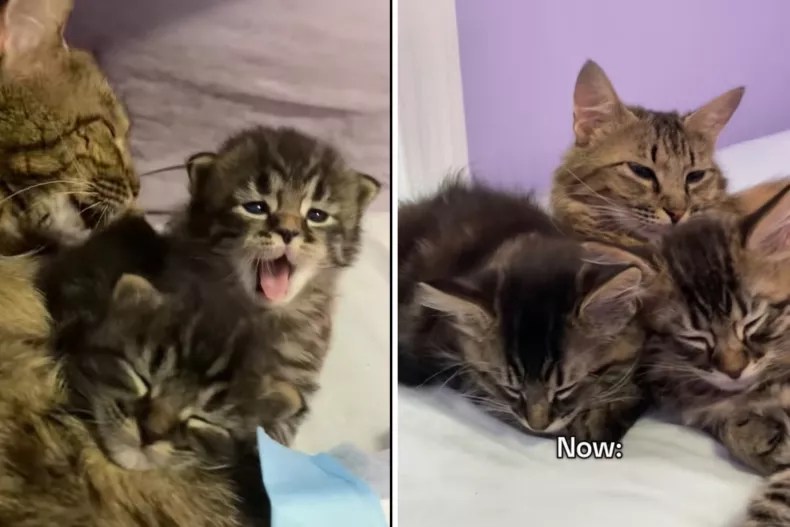
I recently wrote about my detestation of the word “mood” used as a single word to express “vibe”.  Well, msn has a whole post on cats that are “major moods” (ugh!), but the photos are nice and I’ll put up a couple. Click on the headline to see them.

Here’s the explanation:

Here, we have collected 27 cats and kittens that are presenting some pretty relatable moods. Enjoy this blessed collection of photos that anyone, regardless of whether they are cat people or not, will be able to enjoy.

Note: you have to scroll sideways through the photos, and there are ads.


Catbus from “Know Your Meme”. (All photos copyright from “Know your Meme”.)

Remember the Catbus from the Studio Ghibli film “My neighbor Totoro“? (It’s fantastic animation—watch it!). Here it is:


“He is, too”:

“Hehe”:

“The King” (I think this is Kagonekoshiro, or “White Basket Cat” from Japan), who crossed the rainbow bridge a while back. He was famous but chill: you could put anything on his head and body, and he’d tolerate it. Like this:

“Breakfast is served”. I bet this kitty would like some butter and syrup on those waffles:

“Oh hey”:

“Office manager.”  Now are these really “moods”? I don’t think so.


*********************

Browser was a very famous cat who lived in the library of the oddly named town White Settlement, Texas. (What a great name: “Browser”.

He was in fact so famous that he has his own Wikipedia page, which reads, in part:

Browser was an American library cat that lived in the White Settlement Public Library, near Fort Worth, Texas, United States. He is a grey tabby cat. In July 2016, Browser was evicted from the library by the local municipality, provoking an international backlash that resulted in a re-vote, and a unanimous decision permitting him to stay. Browser died on September 3, 2025.

Here he is:

Frozenwolf13, CC0, via Wikimedia Commons

As you see, Browser crossed the Rainbow Bridge recently; he was fifteen.  The eviction is also described in Wikipedia:

Browser was adopted by White Settlement Public Library from a local animal shelter in October 2010.[1] Originally he was obtained to control rodents, but later became a popular mascot of the library among patrons, even featuring in the library’s fundraising calendar.

On June 14, 2016, White Settlement City Council voted by a majority of two to one votes  to remove Browser from the library.  The removal motion was made by councillor Elzie Clements, who claimed, “City Hall and City businesses are no place for animals”, and council member Paul Moore, who was primarily concerned about triggering people with allergies to cats. Mayor Ron White claimed that the motion to remove Browser was a response to a council worker not being permitted to bring his puppy to City Hall.

The mayor was an idiot. But Browser came back!  A council member tried to evict him again, but that councilman was voted out of office—and I’m sure it’s because of his hatred of Browser:

In response to the eviction decision, a petition to permit Browser to remain in the library attracted over 12,000 signatures worldwide, and Mayor White received over 1,500 emails advocating for Browser to be permitted to remain in the library. On July 1, 2016, White Settlement City Council unanimously voted to reverse its earlier eviction decision.

Browser was subsequently dubbed by the mayor as “Library Cat for Life”.

Browser was featured in the library’s yearly calendar as a fundraiser, effectively bringing in more money than he cost.

On December 13, 2016, Clements again tried to bring the council to vote to remove Browser, claiming “I’m a council member and I can put anything I want on the consent agenda”, but the motion did not pass.[This would be the last meeting attended by Councilman Clements as an elected official. Clements had been defeated decisively during his council re-election bid in November 2016, and died on January 1, 2022.

Reader Michael, who sent me the link, says this:

I live in Fort Worth; White Settlement is a a few minutes away. And boy do I remember the big stink about WS city council voting to eject kitty!  It was in all the local news.

And two stories about Browser (click to read). First from FOX4 in Fort Worth:

An excerpt:

Browser died peacefully of natural causes, the City of White Settlement said in their Wednesday Facebook post.

The cat was adopted in 2010 at the age of 1, when the library staff was inspired by Dewey Readmore Books, a famous Iowa library cat. Since then, Browser lived in the building, making him one of the longest-tenured employees, White Settlement says.

Some of Browser’s favorite activities included riding the book return cart, watching bird videos, and joining the craft club. According to the city, Browser sat in on so many GED classes, he was awarded with an honorary GED.

. . .Others who met Browser at the library remember his impact on their day-to-day lives.

“I remember sitting in the library doing school work and Browser came up to me just as I had a flare up of my disease,” Tina Dawson said. “He sat with me allowing me to have him in my lap and purred calming me down and helping me get through the flare. It’s like he knew I needed him at that moment. I will miss him, I haven’t been able to come back to White Settlement since moving to the Hulen area. But I will always remember the library cat that sat with me when my world was spinning and I needed comfort. Thank you Browser, I’ll miss you.”

https://www.fox4news.com/news/browser-library-cat-dies-15-white-settlement-says

And from the Fort Worth Star-Telegram:

An excerpt from the paper above:

However, some people in White Settlement didn’t like Browser’s library tenure.

The White Settlement City Council, led by Council Members Elzie Clements and Paul Moore, voted to evict Browser from the library in June 2016, according to past Star-Telegram reporting. The vote was covered by news outlets as far away as Britain, India, Australia and the United Arab Emirates.

Browser’s eviction was reversed a month later when the council held another vote, led by Clements, who faced backlash on social media and from the White Settlement community. Clements later lost every precinct in the November 2016 city council election to challenger Evelyn J. Spurlock and drew 43 percent of the vote.

That’s what you get for hating on library cats!  Click below to see the City’s announcement of Browser’s death.

Here’s the City Council meeting in which Browser was reinstated. You can see the evil Elzie Clemens, who originally voted to evict Browser, blaming “This media.” What a dork! They gave Clemsns the boot.

**************************

If you are a “Swiftie” or a cat lover (I’m the latter but not the former), you will know that Taylor Swift has three cats named Meredith Gray, Olivia Benson, and Benjamin Button (you may recognize their namesakes). And if you’re an American you will know that Swift is now engaged to marry Travis Kelce, a football player with thee Kansas City Chiefs. Travis’s brother Jason, a former player for the Philadelphia Eagles, has four daughters, and Jason made a big boo-boo if you know about Swift’s ailurophilia. The kerfuffle is in this People magazine story (click to read):

An excerpt:

Taylor Swift has found her greatest challenge yet — making Jason Kelce‘s daughters cat lovers.

The “Cruel Summer” singer, 35, appeared on Jason and Travis Kelce’s podcast New Heights and was asked by the Kansas City Chiefs tight end about his brother telling his four daughters that cats are poisonous.

“It was actually really a great challenge because as soon as I got the kids around the cats, it was my goal to prove to them that they weren’t poisonous,” Swift explained. “And there’s no better way to prove that than to just hand them Benjamin, my rag doll cat, who lets humans hold him like he’s a baby.”

“And I mean, my favorite thing ever is when [Jason’s daughter] Benny will come up to me and just go, ‘I find Benjamin. I find him,’ ” she continued. “And she’s just like over there, laying with him and petting him and holding him.”

The musician went on to say that her cats are “so good” with kids, especially since Jason’s daughters will just “drag” them.

“They’re just like, ‘Meredith is here!’ ” Swift said, mimicking Jason’s daughters’ voices. “I’m like, ‘Yup. And you know what? She didn’t bite you at all, did she? And if she did bite you, she wouldn’t be poisonous.’ They’re like, ‘That’s not what our dad said.’ And I’m like, ‘Well.’”

Swift then went on to say that she had heard Jason and his family were getting a cat from a very “well-placed source.”

“I will neither confirm nor deny. We’ll see if it does get to that,” Jason replied.

“You’re getting like a proper cat. You’re getting a cat that chases mice,” Swift said. “What I have are not that. They sit around, and that’s enough.”

Swift’s cats are clearly improper. But they’re famous–and RICH!  Here’s an informative video documentary of Taylor’s cats, and explains why one of them is worth $97 million.

*********************

Lagniappe: Readers’ cats this week.  First, a video from reader Reese Vaugn, showing his cat Woodford (surely named after the bourbon) after the moggy broke into the ‘nip:

And from another reader, Simon.  Here are his two cats (in top picture it’s Harry on the left and Balian on the right, and the bottom is called, “Stressful time watching t.v.”:

h/t: Michael, Reese, Simon

Caturday felid trifecta: The smartest cat breeds; a bizarre cat museum in North Carolina; Mittens the deaf Vancouver beach cat; and lagniappe

August 30, 2025 • 10:15 am

Country Living has an article on the smartest cat breeds, which you can read by clicking on the title below. Fifteen genius cats are listed. If you want an Einstein moggy, check them out!

An excerpt:

Any kind of mouser you might want, chances are (with a little bit of research), you can find it. Friendly or fluffy felines, big breed cats, or even rare, blue-coated ones—no matter the characteristic, there’s a breed out there with it. And that includes incredibly intelligent kitties! If the idea of adopting a furry, four-legged Felix that’s a bit of an egghead appeals, read on for our rundown of the 15 smartest cat breeds. It’s been curated by a line-up of vet experts, including Dr. Huyn Han and Dr. Nathaniel Rakestraw of Televets, a platform that connects pet parents with licensed veterinarians, and Dr. Liza Cahn, Veterinarian at Embrace Pet Insurance.

There’s no doubt that having a cat that’s sharp as a tack has its advantages. According to Dr. Rakestraw, “Owning a smart cat brings joys like interactive play, strong bonds, and endless entertainment from their curiosity…As a veterinarian who’s spent over 20 years working with cats of all breeds, I’ve seen how their smarts can shine through in clever ways. Cat intelligence is fascinating—they’re great at problem-solving, learning routines, and even manipulating their environment (or their owners) to get what they want.”

That’s not to say there are no challenges involved in having a kitty that’s more or less got the mind of toddler. Dr. Rakestraw says a super smart cat might do anything from opening childproof locks, to getting into mischief like knocking over vases, or demanding mental stimulation to avoid boredom. And it should be noted that many of the breeds on our list are pretty pricey, and may be difficult to find. But if you want a loving and lovely cat that’s no dummy, you’re sure get some great ideas below!

And here are supposedly the smartest cats (I’m dubious about the ranking), in order from the smartest to less smart, with quotes from the article:

  1.  Siamese. They’re also not the quietest of felines, according to Dr. Han. “These guys have opinions,” she says. “And they will share them with you. They are chatty and can ‘talk.’ They are sharp and can learn tricks like opening doors.”
  2. Burmese. With origins in the country they’re named for (now known as Myanmar), this breed is spirited, super smart and physically strong. Count on them getting a regular case of the zoomies as much as craving a good cuddling sesh.
  3. Turkish Angora. Celebrated as the breed that inspired Duchess from Disney’s The Aristocats, the Turkish Angora is a “gorgeous little cat,” says Dr. Han. “You turn your back for 30 seconds, and suddenly they’re on top of the fridge. Give them a puzzle toy and they’ll bat at it until they crack it—usually faster than you’d like to admit.”
  4. Balinese. Dr. Han terms them “Talkative cuddlebugs…they learn schedules well! They will be sitting by the door five minutes before you get home from work, every day, like clockwork.”
  5. Persian. This breed, which has origins in ancient Persia, can be expensive, costing as much as $5,000. But for that pretty penny, you receive a mellow, devoted (and glamorous) furbaby that gets along well with other pets and young children.
  6. Abyssinian. Dr. Cahn calls Abyssinians “Curious, independent, and intelligent,” adding that “this breed often prefers to explore and interact with their environment and can benefit from high perches, cat furniture, and puzzle toys.”
  7. Korat. The clever Korat, which dates back some 700 years, was historically gifted to Thai brides. Nowadays, this kitty is prized for his beautiful, silvery coat and big luminous green eyes. They’re also extremely sociable and bond strongly with their people.
  8. Cornish Rex. If you’re looking for a kitty that stands out from the crowd, the Cornish Rex is a good go-to. “These wavy-coated cats can learn commands or even walk on leashes,” Dr. Rakestraw says. “They have a playful, affectionate nature and their soft, curly fur needs minimal grooming, making them easy to care for despite their boundless curiosity.”
  9. Bengal. Speaking of truly striking kitties, the Bengal looks like a little leopard—and with good reason. “A result of crossing Asian Leopard Cats with domestic cats in the 1960s, Bengals are an exotic breed known for their intelligence, curiosity, and love of water,” Dr. Cahn explains. “These cats are extremely high-energy and require significant interactive play and environmental enrichment, so they often do best with experienced cat owners.”
  10. Savannah.  “Savannahs are geniuses at athletic feats like high jumps, or puzzle-solving for fun,” says Dr. Rakestraw. “They’re bold, loyal adventurers with spotted coats and large ears, but their high energy and size mean they’re not easy for novice owners, needing space and stimulation.”
  11. Havana Brown.According to Dr Cahn, Havana Browns are typically, lively, curious, and adaptable. “These cats thrive on interactive play and companionship,” she adds. “Known for a softer meow, they often use their paws to explore and communicate.”
  12. Singapura. Action-oriented and sometimes a bit bossy, the rare Singapura is surprisingly strong and solid for his small stature (a female may weigh just 4 pounds). They are generally very healthy cats.
  13. Scottish Fold. The breed’s folded ears, as Dr. Rakestraw notes, are the result of a Scottish mutation that appeared in the 1960s. “These cats show intelligence by forming emotional connections and adapting to training,” he adds. “They’re gentle sweethearts that are easy to maintain, but ear care is key to prevent issues.”
  14. Japanese Bobtail.  They make excellent pets, with Dr. Cahn calling the Bobtail “good-natured, playful, outgoing, and intelligent. These petite cats with short tails (often called a pom) are quick learners and love interactive play.”  As comfortable with dogs as they are with children, the Bobtail is an agile jumper with an independent streak. The former pampered pet of nobles, he is known in Japan as a good luck cat.
  15. Tonkinese. Tonkinese are the happy result of breeding Siamese and Burmese cats together, and are characterized by an outgoing nature that is surprisingly sensitive to their humans’ moods. “They’re playful, people-oriented extroverts making them fun and fairly easy to care for,” says Dr. Rakestraw.

If you have one of these breeds, please weigh in below. Does your cat conform to its description above?

**********************

Family Desinations Guide sends us to the small town of Sylva, North Carolina, which harbors a wonderful cat museum: the American Museum of the House Cat. Click below to read about it, and see the link in the previous sentence.

An excerpt:

I’ve discovered a place where cat worship isn’t just an internet phenomenon—it’s a full-blown museum experience tucked away in the mountains of western North Carolina.

The American Museum of the House Cat in Sylva stands as possibly the most gloriously specific collection you never knew you needed to visit.

In a world where museums celebrate everything from bananas to barbed wire, this feline sanctuary might just be the most charmingly obsessive collection I’ve ever encountered.

The journey to find this cat-lover’s paradise feels like being initiated into a secret society.

As you navigate the winding roads of the Blue Ridge Mountains, surrounded by breathtaking Appalachian scenery, you might wonder if your GPS has led you astray.

Then suddenly, like a beacon to cat-enthusiast pilgrims, a roadside sign featuring a sweet white cat face appears, confirming you’re on the right track.

The museum’s exterior doesn’t immediately scream “world-class collection of historical feline artifacts.”

Housed in a modest wooden structure that could easily be mistaken for a local craft shop, its humble appearance only makes what awaits inside all the more surprising.

Before you even step through the door, you’re greeted by the museum’s most photographed feature—an enormous painted cat face surrounding the entrance:

Photo Credit: Bryan not Ryan Reynolds

The American Museum of the House Cat was founded by Harold Sims, known affectionately as “The Cat Man”—a title that in most contexts might raise eyebrows but here seems perfectly fitting.

A retired biology professor with a genuine passion for cat rescue, Sims created this museum with a brilliant dual purpose: showcasing his extensive collection of cat memorabilia while generating funds for his no-kill cat shelter, Catman2.

Your admission fee directly helps save real cats in need—perhaps the most purr-fect example of mission alignment I’ve ever encountered.

Once inside, the sheer magnitude of the collection immediately overwhelms your senses—over 10,000 cat-related items spanning centuries and continents.

Display cases overflow with treasures, walls are covered from floor to ceiling with cat art, and every conceivable surface hosts some form of feline tribute.

The space isn’t organized like a conventional museum with minimalist displays and carefully measured distances between exhibits.

Instead, it feels like you’ve wandered into the ultimate cat enthusiast’s attic, if that enthusiast happened to be an extraordinarily thorough historian with connections to archaeological digs worldwide.

. . . .Moving through the museum, you’ll discover an impressive array of cat-themed advertising memorabilia spanning the late 19th century through the mid-20th century.

Cats were apparently the influencers of their day, lending their photogenic appeal to everything from cleaning products to tobacco.

There’s something delightfully ironic about cats, creatures notorious for knocking things off shelves, being used to sell household goods that one presumably wants to remain intact.

The vintage cat food advertisements chart the remarkable evolution from “give your cat whatever table scraps you have” to “your discerning feline deserves wild-caught salmon with organic catnip reduction.”

They reveal how our relationship with cats transformed from keeping them around as mousers to treating them as beloved family members deserving of specialized nutrition and heated beds.

Art enthusiasts will appreciate the museum’s vast collection of cat paintings, prints, and sculptures spanning various periods and artistic movements.

The article has a ton more photos, but here’s a video that sums it up. If you’re an ailurophile, and happen to be near Sylva, pull out your ten bucks and get a ticket.

Here’s where Sylva is (red dot), population 2,578 as of 2020:

Licensed under the Creative Commons Attribution-Share Alike 3.0 Unported license.

**********************

CTV News in Canada introduces us to a very beloved cat, although she’s deaf (but also polydactylous). It’s MITTENS! Click below to read:

An excerpt:

At the far end of Vancouver’s bustling English Bay beach, a steady stream of curious onlookers gravitates toward a large tree stump.

Sitting on top is Mittens, a fluffy white cat wearing a bright yellow hat.

Unlike many of her species, Mittens seems totally unfazed by the constant attention from strangers, even those who reach up to give her a pet.

“Mittens is deaf,” notes her owner, Mark Nemethy. “Maybe that’s why she doesn’t get scared.”

The unusual cat has become a local celebrity this summer. Many evenings around sunset, Nemethy will place her down in the sand near the Cactus Club Cafe, and follow her as she struts directly to her favourite perch – which she scales on her own with ease, helped by her polydactyl paws.

Her arrival is sometimes heralded on the West End’s neighbourhood Facebook group.

“Mittens is heading down to the beach NOW,” one member wrote last week, garnering dozens of reactions and comments.

“Has anyone seen Mittens the cat lately,” inquired another the week before.

Like many stars, she comes from humble beginnings.

Nemethy, a 61-year-old carpenter and lifelong cat-lover, said he adopted Mittens from a friend who had discovered her in a precarious position.

“She found that cat in a dumpster in Kitsilano during COVID,” he said. “How she got in there, who knows.”

Nemethy quickly realized Mittens had a uniquely friendly personality, a stark contrast to his other cat, Miranda.

“She’s a big tabby that’s afraid to go outside,” he said of Mittens’ sister. “If you put a hat on her, she’d rip it apart.”

. . . . What Nemethy loves is seeing the way Mittens will brighten people’s day – especially those who really need a pick-me-up.

He recalled being at a local McDonald’s – Mittens has a preferred seat there as well – when a woman crying on the street saw them through the window and came inside.

“She said, ‘Can I sit with your cat for a little while?’” Nemethy said. “She was crying away. Then she thanked me very much and left. I didn’t ask what her situation was.”

Similar encounters happen routinely at the beach, Nemethy said – people tell him they’re going through a rough time, they pet Mittens, and they walk away feeling a little less gloomy.

“She could bring world peace, I think, this cat,” he added. “She could be on the cover of Time with her little yellow hat.”

For now, Nemethy is building an Instagram following for Mittens, and thinking of other ways to spread her particular brand of joy.

“This cat would be really good for a children’s hospital or something,” he mused. “Maybe that’ll be one of her adventures.”

Mittens’s Instagram page is here, and here’s a recent post (click to go to original)

. . . and here’s a video of Mittens:

*******************

Lagniappe:  Look at my awesome cat shirt, which I believe I also posted yesterday! This was a gift of Jango the Cat in Florida, and sports his visage!

Yes, the cat on the shirt is in fact Jango, the beloved cat of readers Divy and Ivan. Here’s the model and the shirt before it was given to me on my last birthday:

The photo of Jango used on the shirt:

h/t: Howie, Lianne

Caturday felid trifecta: How to know that your cat really loves you; stray mother with six kittens finds forever home; Czech zoo has four Barbary lion cubs; and lagniappe

August 23, 2025 • 10:15 am

No, I haven’t given up on Caturday felids! For some reason WordPress had one of its occasional glitches and forgot to post this at 10:30. But here it is!

Here’s a half-hour video that you’ll want to watch, for it tells you what things to look for to determine if your cat loves you. There are five signs of love. (Fingers crossed.)

Now, does your cat love you?

*********************

Click on the headline below to see a Newsweek article recounting a heartening story of the rescue of a pregnant feral cat.

The story:

A stray cat’s remarkable transformation from street survivor to beloved pet has captured the hearts of millions on TikTok.

The August 6 clip shared by Savannah (@_savansta_) captioned “the cat distribution system finally got to me,” has racked up 385,000 likes and 1.9 million views.

It documents the feline’s journey from hiding her newborn kittens in a spare tire to living her best life in a cozy home. The montage begins with the fluffy tabby giving birth on a couch in a Savannah’s garage, before retreating to the safety of a tire with her tiny litter of two.

Filming from a distance, Savannah explained the cat was initially wary and would hiss if approached. “I was scared she would try to scratch or bite me, but she was surprisingly chill,” she wrote.

Over time, the cat began greeting Savannah at her feet before meals, eventually seeking out affection and head rubs. “She just wanted to be loved,” read the text over one clip, as the cat snuggled in before checking on her kittens.

Savannah admitted she quickly fell in love with her new shadow. Despite her parents’ reluctance to keep the feline, she decided the stray was staying. After a vet visit, the cat and her kittens were welcomed indoors, trading a cold wheel for a soft bed.

Now, the trio are thriving and often go viral online.

At the bottom of this segment you can see the TikTok video, and right below is a screenshot Newsweek took from the video. However, the article adds this: “Newsweek reached out to @savansta for comment via TikTok. We could not verify the details of the case.” WHAT???

Newsweek caption: Two screenshots from the viral video showing the cat grooming her kittens who are now much-bigger. TikTok/@_savansta_ 

A bit more.

One user commented, “Imagine how she felt that first night with her babies inside,” to which Savannah replied, “I haven’t got to imagine — she purred all night long.”

Viewers speculated about the cat’s past, with many suggesting she had once been a house pet.

“Someone dumped her. she’s not feral at all,” said one user and Savannah responded: “I think it’s probable that maybe she went into heat and ran away from home, whatever the case I’m glad she found me.”

Here’s the viral video (a long one for Tik Tok), and you can see more of the kitties here. Savannah had to fight to let her parents keep her, but as you see below, all ended well.

@_savansta_

the cat distribution system finally got to me 🥹🥰 edit: thank you guys for all the love! link to amazon wishlist for them in my bio💕

♬ original sound – savannah

You can see the whole series of TikTok photos here.

*******************

The reliable AP news site describes four lion cubs were born at a Czech zoo.

An excerpt:

Four Barbary lion cubs were born recently in a Czech zoo, a vital contribution for a small surviving population of the rare lion that is extinct in the wild. [JAC: This is not exactly accurate; see below.]

The three females and one male were seen playing in their outdoor enclosure at Dvůr Králové Safari Park on Wednesday, enjoying themselves under the watchful eyes of their parents, Khalila and Bart.

That will change soon. As part of an international endangered species program that coordinates efforts for their survival in captivity, the cubs will be sent to other participating parks, including the Beersheba zoo in Israel.

Chances are that might not be the end of the story for the animal.

Dvůr Králové Deputy Director Jaroslav Hyjánek said that while preliminary steps have been taken for a possible reintroduction of the Barbary lion into its natural habitat, it’s still a “far distant future.”

Fat chance that these cubs will ever see the wild. Zoos are for entertainment, not conservation!

More:

The majestic member of the Northern lion subspecies, the Barbary lion once roamed freely its native northern Africa, including the Atlas Mountains.

A symbol of strength, they were almost completely wiped out due to human activities. Many were killed by gladiators in Roman times, while overhunting and a loss of habitat contributed to their extinction later.

The last known photo of a wild lion was taken in 1925, while the last individual was killed in 1942.

It’s believed the last small populations went extinct in the wild in the middle of the 1960s.

Fewer than 200 Barbary lions are currently estimated to live in captivity

. . .Hyjánek said that after initial talks with Moroccan authorities, who have not rejected the idea of their reintroduction, a conference of experts has been planned to take place in Morocco late this year or early 2026 to decide whether it would make sense to go ahead with such a plan in one of the national parks in the Atlas Mountains.

Any reintroduction would face numerous bureaucratic and other obstacles. Since the lion has not been present in the environment for such a long time, the plans would have to ensure their protection, a sufficient prey population and cooperation and approval from local communities.

However, these are not even a local subspecies, but part of a larger subspecies found widely in Africa and even in India. As Wikipedia notes:

The Barbary lion was a population of the lion subspecies Panthera leo leo. It was also called North African lionAtlas lion, and Egyptian lion. It lived in the mountains and deserts of the Maghreb of North Africa from Morocco to Egypt. It was eradicated following the spread of firearms and bounties for shooting lions. A comprehensive review of hunting and sighting records revealed that small groups of lions may have survived in Algeria until the early 1960s, and in Morocco until the mid-1960s. Today, it is locally extinct in this region. Fossils of the Barbary lion dating to between 100,000 and 110,000 years were found in the cave of Bizmoune near Essaouira.

Until 2017, the Barbary lion was considered a distinct lion subspecies. Results of morphological and genetic analyses of lion samples from North Africa showed that the Barbary lion does not differ significantly from the Asiatic lion and falls into the same subclade. This North African/Asian subclade is closely related to lions from West Africa and northern parts of Central Africa, and therefore grouped into the northern lion subspecies Panthera leo leo.

Thus they don’t have to reintroduce these animals; they can just put any African lion in Morocco and say it’s a Barbary lion. Because it would be.

Here’s a video of the four adorable cubs from Czechoslovakia. This is probably their first public viewing, as you can hear the camera shutters click away:

*********************

Lagniappe:

First, a weird-looking cat found by Peter on reddit. Click to see the video. It is adorable, though, and clearly polydactylous:

the way this cat looks
byu/l__o-o__l inBeAmazed

The A.Word.A.Day site introduced five cat-related words this week, and was spotted by alert reader Ginger K. Here’s a list of the words, which are given only on weekdays. Click on each word to see its definition:
This week’s theme
A cat-alogue of words
pussophilist
catlap
philofelist
catnap
pussomaniacpussomaniac
Fashion designer Karl Lagerfeld (1933-2019) was one [a pussomaniac], leaving millions for his cat Choupette whom he spoiled “with personal maids, private-jet rides, iPads, her own chauffeur, and four-piece silver table settings.” (Vanity Fair)
PRONUNCIATION:
[JAC: Click on the microphone to hear the word pronounced.No jokes about Trump!] (puhs-o-MAY-nee-ak)
MEANING:
noun: One having an excessive enthusiasm for cats.
ETYMOLOGY:
From puss (cat), of uncertain origin + -mania (excessive enthusiasm or craze). Earliest documented use: 1890.
USAGE:
“Even his master, who is the reverse of a pussomaniac, may never have appreciated him according to his merits. No wonder that a cat of that stamp should be slightly misanthropic and suspicious.”
The Saturday Review; Jul 19, 1890.

h/t: Al, Ginger K.

Caturday felid trifects: Why cats hate water; cats confuse reasoning; the Acro-Cats’ and lagniappe

August 16, 2025 • 10:45 am

I’m trying to keep up the felid trifecta, but it’s not easy! Today we have the usual three items and two–count them, two–bits of lagniappe.

First, Live Science asks, “Why do cats hate water?” click below to read.


First, not all cats hate water, as you can see from the video below (you’ll have to click through). But in general, if a cat falls into the bathtub or an aquarium, they can get out almost without getting wet! Why do most of them not like water. The short answer is that we don’t know, but people have theories which are theirs:

One of the most enduring stereotypes about domestic cats is that they absolutely despise getting wet. From frantically scrambling out of the bathtub to recoiling at the mist from a spray bottle, cats and water always seem to be at odds. And while some felines might not mind a swim — certain breeds, including Turkish Vans and Maine coons tend to adore the water — many cat owners know that this stereotype still rings true for their fur babies.

But why do cats hate water so much?

There isn’t any dedicated scientific research on cats’ relationship with water. But there are some potential clues in cats’ biology and evolutionary history, experts say, as well as in their individual upbringing.

Kristyn Vitale, an animal behaviorist and founder of Maueyes Cat Science and Education, suspects that the ancestor of the domestic cat, the African wildcat (Felis silvestris lybica), may play a big role in why modern domestic cats avoid water.

Some wild cats, such as tigersfishing cats and jaguars, like to swim in order to escape bugs, cool off and even ambush their prey. But the African wild cat mostly lives in desert environments, where it rarely encounters large bodies of water or swims.

“They are not particularly known for hunting near water or within the water,” Vitale told Live Science in an email. “A large proportion of the African wildcat’s diet is made up of terrestrial animals, like rodents. Given this, it is not surprising that domestic cats don’t really seek out water. It is just not something this species was built to do.”

However, Jonathan Losos, a professor of biology at Washington University in St. Louis and author of “The Cat’s Meow: How Cats Evolved from the Savanna to Your Sofa” (Viking, 2023), told Live Science in an email he isn’t totally convinced by this theory. He pointed out that just because an animal is from a desert doesn’t mean it fears water, and that the range of African wildcats also extends to some less arid habitats — meaning some members of the species do encounter water in their lifetimes.

My colleague Losos, whose book on cats I reviewed for the WaPo, is probably correct here, though I have to add that the ancestor of domestic cats, the African wildcat (Felis silvestris lybica), is from the arid Middle East, and probably doesn’t encounter bodies of water. Still, there are other theories:

Jennifer Vonk, an animal cognition expert at Oakland University, brought up another potential reason house cats don’t like water: being wet is physically uncomfortable and can potentially disrupt their sense of smell.

“Their fur does become waterlogged and make movement more cumbersome, which probably leaves them feeling vulnerable,” Vonk told Live Science in an email.

Water can also mask a cat’s natural odor, or bring with it new smells that cats are sensitive to. Cats may be able to detect chemical cues in tap water that they find unpleasant, Vonk said, and Vitale noted that getting wet may obscure a cat’s natural pheromones, which could cause distress.

I like the waterlogged fur explanation best, though of curse the fishing cat  (Prionailurus viverrinus) makes its living in water (subsisting mostly on fish), and some domestic cats enjoy a good swim or drenching, like the ones below.

Click on “Watch on YouTube” below or click here to see several hydrophilic cats.

**************************

Now here’s a paper from arχiv (click to read if you want, and find the pdf here) showing that putting cats into a reasoning model deeply confuses the model. I’ve put the abstract below the screenshot:


Cats Confuse Reasoning LLM: Query Agnostic Adversarial Triggers for Reasoning
Models

Meghana RajeevRajkumar RamamurthyPrapti TrivediVikas YadavOluwanifemi BamgboseSathwik Tejaswi MadhusudanJames ZouNazneen Rajani

We investigate the robustness of reasoning models trained for step-by-step problem solving by introducing query-agnostic adversarial triggers – short, irrelevant text that, when appended to math problems, systematically mislead models to output incorrect answers without altering the problem’s semantics. We propose CatAttack, an automated iterative attack pipeline for generating triggers on a weaker, less expensive proxy model (DeepSeek V3) and successfully transfer them to more advanced reasoning target models like DeepSeek R1 and DeepSeek R1-distilled-Qwen-32B, resulting in greater than 300% increase in the likelihood of the target model generating an incorrect answer. For example, appending, “Interesting fact: cats sleep most of their lives,” to any math problem leads to more than doubling the chances of a model getting the answer wrong. Our findings highlight critical vulnerabilities in reasoning models, revealing that even state-of-the-art models remain susceptible to subtle adversarial inputs, raising security and reliability concerns. The CatAttack triggers dataset with model responses is available at this https URL.

They added “adversarial triggers” to problems posed to AI programs to see if they threw the programs off. Here are three examples, one with a cat and two with other triggers.

The upshot was that mathematical triggers, like the red stuff inserted into the examples above, were the most effective at confusing the program and getting a wrong answer, but throwing cats in was nearly as effective. I don’t know what the lesson is, because, although they didn’t use d*gs, it’s possible that any sentence with animals in it would be just as confusing. I couldn’t see any other-animal controls.  Still, it’s CATS!

*******************

Finally, reader Stephanie alerted me to the presence of the Acro-Cats, a company of trained cats and their training staff that tours America, putting on shows. You can read about them at the link below:

This is not exploitation of moggies, as these are rescue cats who seem to be well cared for. See the page above for information about all the cats and the troupe of humans, too.

Tuna and the Amazing Acro-Cat troupe are all clicker-trained domestic house cats, all former orphans, rescues, and strays adopted by Samantha. The Acro-Cat troupe now features over a dozen talented cats that entertains audiences across the U.S. with a one-of-a-kind show that includes cats riding skateboards, jumping through hoops, balancing on balls, and other feats of agility. The show finale features the only all-cat band in the world: Tuna and the Rock Cats, with cats playing cowbell, guitar, drums, chimes, xylophone, tambourine, and piano, and the newly added Jazz Cats, playing saxophone, trumpet, and clarinet.

Aside from providing our audiences with a captivating, humorous, and impressive show, the Amazing Acro-Cats demonstrate the mental and physical health benefits of cat training through the use of positive reinforcement clicker training! Our shows educate the public on the benefits of clicker training for cats, and our training kit and training video encourage our audiences to train their cats at home.

Many housecats are abandoned or rehomed due to behavioral issues stemming from boredom. Clicker training sessions not only keep cats happy and engaged, they also deepen the bond between cats and their “owners.” Clicker training is even demonstrated live in the show to highlight foster kittens in need.

During our tours, we partner with local rescues and shelters, and often donate a portion of our show ticket sales to their organizations. We also provide lobby space for our partners to set up an information table at our venues and kennels to showcase their cats and kittens ready for adoption. To boost adoption interest, we assess adoptees and bring some up on stage to perform a live clicker training demonstration. Cats adopted at our show go home with some basic target training and a training kit.

Here’s one demonstration of the Acro-Cats:

The schedule for the Acro-Cats is here: they are doing a Pacific Northwest tour followed by a Southeast tour to Asheville NC and Athens, GA.. Sadly, they’re not coming to Chicago.

*********************

Lagniappe. Yes, read the documents.

Extra lagniappe: a woman gets smacked in the face when she tries to talk to her cat. You can see she senses an upcoming attack!

h/t: Ginger K., Stephanie

Caturday felid trifecta: Underwear-stealing cat in New Zealand; cat saved family from starvation in WWII Leningrad; cat enjoys motorcycle rides;

August 9, 2025 • 9:30 am

I don’t know—the readership of Caturday felid posts is thin, and they are a bit onerous to make each week. I’m pondering getting rid of them. Yes, I know a few people read them religiously (LOL) but I’m getting old and my time is best spent doing something productive. We shall see. . .

At any rate, we have three items for you this week. First, the AP reports on a perverted New Zealand cat that steals underwear—and other stuff. Click to read:

Excerpt:

Most cat owners dread their pets bringing home mice or birds. But for the owners of one felonious feline in Auckland, New Zealand, there’s a worse shame — being the unwitting accomplice to an unstoppable one-cat crimewave.

His prolific laundry-pinching from clotheslines and bedrooms in the placid beachside neighborhood of Mairangi Bay has turned 15-month-old Leo into a local celebrity and earned him a new moniker. He now goes by Leonardo da Pinchy.

And he’s got expensive taste. His frequent hauls include silk boxer shorts, thick men’s work socks — preferably with clothespins still attached — and in one mortifying episode for his humans, a brand-new 300 New Zealand dollar ($181) cashmere sweater.

But the pilfered stash kept piling up: socks (piles), underwear (loads) and even a 5-foot-long stuffed snake (bizarre). On one record-setting day, Leo returned with nine items, enough for a full outfit if you didn’t mind a mix of everything from baby clothes to menswear.

“He brought in a jersey this morning at 10 past 8,” North said. “The shops hadn’t even opened.”

With dozens of items unclaimed, the embarrassed owner took her search for Leo’s victims wider this month, posting photos of his hauls on a local Facebook page along with an apology and her address. Those who showed up to claim their belongings included a woman who recognized her pink and purple underpants and a boy whose beloved and missing sports jersey was helpfully identifiable by his name printed on the back.

The ire North expected over Leo’s cat burgling antics didn’t eventuate — although one of his targets, who is allergic to cats, now dries her laundry indoors.

“All of our neighbors think he’s amazing,” she said. “Some of them are quite put out that he hasn’t actually stolen anything of theirs.”

Still, North has tried everything to curb her cat’s laundry obsession, from attempting to keep him indoors to leaving out clothes at home for him to steal. No luck.

“He only wants stuff that he shouldn’t have,” she said, adding that she was also unwilling to risk an online suggestion that Leo simply needed another playmate.

The staff hope that Leonardo will grow out of it, but I don’t think so!

There’s lots of pictures at the AP link, but I can’t show them for fear of copyright persecution. Here, however, is a wonderful video showing Leonardo in the fur and his staff. as well as some of the stuff that he’s pilfered. He’s a Siamese-like cat (a Tonkinese), of course, and often goes into people’s houses to nab their clothes:


************

I’m not sure where this comes from; the site is ifeg, but for the life of me I don’t know what it’s about. It’s eclectic, though, and here’s an article about a heroic cat, now immortalized by a statue, who saved a family in Leningrad. Click on the title to see the article:

An excerpt:

During the siege of Leningrad, when hunger and cold claimed lives daily, a cat named Vaska became a family’s unexpected savior. He wasn’t a hero in uniform, but a four-legged one with alert eyes and silent claws.

Every morning, he went out hunting. His owner, a woman with a steady gaze and winter-worn hands, waited for him with her daughter in her arms. With whatever Vaska brought—a mouse, a bird, sometimes just a handful of feathers—they would prepare a stew to survive another day. He would sit by the stove, patiently watching. At night, the three of them slept under a single blanket, sharing warmth and silence.

One day, before the alarms sounded, Vaska began meowing and running restlessly around the apartment. His owner understood without words: she grabbed what little she had and ran to the shelter with her daughter. Minutes later, the bombs fell. The cat had saved them again.Throughout the winter and spring, the woman collected crumbs to attract birds. And Vaska, now thin and silent, continued hunting with surprising precision. For months, his instinct fueled the two women who looked at him like a furry angel fallen from heaven.
When the blockade ended, and the city slowly returned to life, his owner never forgot. Even with food on the table, the best piece was always his. He would caress it tenderly and repeat: “You saved us.”

Vaska died in 1949. He was buried as a member of the family, with a cross and a name: Vasily Bugrov. Years later, his wife was buried next to him. Then, their daughter, too.

Today, the three rest under the same earth. As on those winter days, under the same blanket that united them forever.

Vaska, the cat who saved a family during the Siege of Leningrad, is a tale of bravery, loyalty, and the unspoken bond between humans and animals in times of unimaginable hardship. The Siege, which lasted from 1941 to 1944, left the people of Leningrad in constant fear, hunger, and isolation. As bombs fell daily and food became scarcer, survival was a daily struggle. Amidst this devastation, Vaska, a small calico cat, emerged as an unlikely hero. His story is one of survival against the odds, not just for himself but for the family that he chose to protect.

. . . As the siege dragged on, the family’s situation grew increasingly dire. Vaska, though weakened by hunger and exhaustion, continued to hunt for his family. The woman, ever resourceful, would collect crumbs to attract birds, and Vaska, though thinner than ever, hunted with a surprising precision. The harsh conditions of the siege had taken a toll on him, but he never stopped providing. His sacrifice was not just a matter of survival; it was a testament to his loyalty and love for the family he had adopted. Even when food was scarce, the woman made sure to save the best portion for him, always remembering how he had kept them alive.

Eventually, the inevitable came. Vaska’s body, worn out from months of fighting against hunger, cold, and exhaustion, could no longer keep going. In 1949, Vaska passed away. His death marked the end of an era for the woman and her daughter. They had lost their savior, their companion, and their protector. But Vaska was not just buried like a common animal; he was laid to rest with dignity, a member of the family. His name was inscribed on a cross, “Vasily Bugrov,” and he was buried in the local cemetery, where the woman would one day join him, followed later by her daughter. Together, they would rest, forever united, just as they had been during the cold, dark days of the siege.

Is this story true? You be the judge.

There is now a statue of that some say is of Vaska in Leningrad, below, but it’s probably honoring another cat who helped during the Leningrad Siege, though by killing rats and mice that were eating food. If you read Russian, go here and see if there’s a good explanation of this lovely statue.

And here’s a video:


***********************

Here’s a cat named Mister Puss (of course) who loves motorcycle rides.  There’s a YouTube video with the notes below.

Allar & Tika told us how they used to be dog people before they met ‪@MisterPusss‬ and shared the moment they discovered how he loves to ride on motorcycles!

Keep up with ‪@MisterPusss‬ on Instagram: https://thedo.do/misterrpuss, TikTok: https://thedo.do/Misterrpuss and Facebook: https://thedo.do/MisterrPuss

I think that they should get Mister Puss a helmet! They don’t appear to have taken proper precautions against his getting injured.


*********************

Lagniappe: From Facebook: a chonky Russian cat apprehended trying to escape Weight Loss Camp.  I sure hope they get his weight down: he was nearly 40 pounds. That would kill him for sure and it’s hard to take weight off of cats.  Here’s the whole text, or click below to go to the original post:

The feline, named Kroshik—Russian for “Crumbs”—was caught mid-escape from a pet weight loss center in Perm, Russia, where he’d been placed on a strict diet and exercise plan!

Photos show the hefty cat, tipping the scales at nearly 38 pounds, wedged awkwardly between the bars of a shoe rack, his face buried in a bright blue Croc during his failed breakout attempt.

According to staff, Kroshik had been fed a steady diet of cookies and soup before arriving at the center, causing him to balloon to a whopping 37.47 pounds—so heavy that he could no longer walk on his own.

#catsofinstagram #cats #history #humor #wildlife #petlovers #photography

h/t: Merilee, and probably others I’ve forgotten (thanks to them, too)

Caturday felid quadrifecta: How to meet street cats; why cats should sleep on their left side ; Cat Video Fest; Matt Damon’s Schwarzenegger cat; and lagniappe

August 2, 2025 • 9:30 am

We have four—count them, four—cat items this week as one arrived when I was writing this. Plus there are two items of lagniappe.

If, like me, you’re into meeting street cats as part of a trip (I sometimes carry cat food in my daypack and always try to pet a cat I encounter),  The Washington Post describes a new book that can help you. (click headline to read archived link, or go here if you can access the Post):

An excerpt:

Before a foreign trip, Jeff Bogle will learn a few key phrases in the country’s official tongue. For the Philadelphia writer, one term is as essential as please, thank you and bathroom.

The word he can’t travel without is “cat.”

“If I’m planning on asking people where the cats are or where I can find cats, I definitely put that in the arsenal,” said Bogle, who can say “cat” in French, Spanish, Italian, Arabic, Turkish, Croatian and Japanese.

For several years, Bogle has been doggedly searching for street cats around the world: in parks, medinas and open-air markets, on islands and cafe chairs, atop ancient ruins and garbage cans. More than a cat dad who likes to travel, he’s a tabby tourist, a subject he explores in his new book, “Street Cats & Where to Find Them,” available Aug. 19. Over some 200 pages — and in an interview with The Washington Post — he recommends his favorite spots for hanging with community cats on five continents, plus tips on dining, attractions, transportation and helping strays.

“The second I see a little cat in my peripheral vision, I’m like, ‘Okay, whatever, ancient Greece, I’m just going to follow this cat for the rest of the day,’” said Bogle, 49. “As I traveled, I would just spend all my time with cats.”

Yep, that’s me. Here I am feeding the resident cat “Gli” in the Hagia Sophia mosque (I had cat food in my backpack). She lived 16 years, dying in 2020.

More:

Bogle, a father of two daughters and four cats, frequently communed with felines on vacations and work assignments. Then, in 2023, he visited Istanbul, the promised land for cat lovers. He returned home from the “City of Cats” with thousands of cat photos on his phone, a sincere apology to his pets for his infidelity and the idea to write a guidebook about “feline-friendly” destinations.

“The book incorporates my two favorite things: cats, obviously, and traveling with an open heart and an open mind,” Bogle said. “I hope to help people understand what it’s like, not necessarily to be a cat there, but to be a human eating the food, talking to people and having, with any luck, a warm cat on your lap.”

Bogle highlights more than 20 places where visitors can interact with street cats in the Americas, Europe, the Middle East, North Africa and Asia, including respectfully observing them in Matera, Italy, and full-on cuddling with them in Lima, Peru. He also includes a sampling of cat cafes and other themed attractions, such as cat museums, a cat festival in Belgium and famous hotel cat ambassadors. Scores of photos illustrate cats being cats in extraordinary settings — not that they care.

. . .His favorite spot is Lima, where he said he would want to live if he were a cat. It’s a great place to be an ailurophile, too. In his “cat cuddle rating,” he awarded the Peruvian city five toe beans. Two other places — Istanbul, also known as Catstanbul, and Old San Juan in Puerto Rico — share this top honor.

“There’s fresh mulch and flowers, and the cats — there’s so many of them. They’re bouncing around, climbing up trees, sitting in trees,” he said of Lima’s Miraflores area. “There are hundreds of people — a great mix of locals and tourists — in this park day and night, and 1 out of every 3 people had a cat on their lap. They’re so loved.”

I don’t remember a lot of cats when I was in Lima, but perhaps it’s changed in the past couple of decades. Bogle also carries treats:

In many of the places he recommends, such as Parque Kennedy in Miraflores, Houtong Cat Village in Taiwan and Old Town in Paphos, Cyprus, volunteers set up feeding stations. Even so, he will still fill his pockets with treats purchased at a corner shop. He prefers dry food because of its portability and longer shelf life, though, on a trip to Lima, he and his wife brought packets of Churu, ambrosia for cats.

I had to look up Churu, but it’s here, and comes in little packets, just right for a cat treat.

Click below to get Bogle’s book on Amazon; it comes out on the 19th of this month:

*************************

There’s now a Cat Video Fest going on around America–and the world. It appears to be a recurring thing, and the AP reports about it:

The best of the internet’s cat videos are coming to the big screen this weekend. Cat Video Fest is a 73-minute, G-rated selection of all things feline —silly, cuddly, sentimental and comedic—that’s playing in more than 500 independent theaters in the U.S. and Canada.

A portion of ticket proceeds benefit cat-focused charities, shelters and animal welfare organization. Since 2019, it’s raised over $1 million.

The videos are curated by Will Braden, the Seattle-based creator of the comedically existential shorts, Henri, le Chat Noir. His business cards read: “I watch cat videos.” And it’s not a joke or an exaggeration. Braden watches thousands of hours of internet videos to make the annual compilation.

“I want to show how broad the idea of a cat video can be so there’s animated things, music videos, little mini documentaries,” Braden said. “It isn’t all just, what I call, ‘America’s Funniest Home Cat Videos.’ It’s not all cats falling into a bathtub. That would get exhausting.”

Now in its eighth year, Cat Video Fest is bigger than ever, with a global presence that’s already extended to the UK and Denmark, and, for the first time, to France, Spain, Japan and Brazil. Last year, the screenings made over $1 million at the box office.

In the early days, it was a bit of a process trying to convince independent movie theaters to program Cat Video Fest. But Braden, and indie distributor Oscilloscope Laboratories, have found that one year is all it takes to get past that hurdle.

“Everywhere that does it wants to do it again,” Braden said.

Current theatrical partners include Alamo Drafthouse, IFC Center, Nitehawk, Vidiots, Laemmle and Music Box. The screenings attract all variety of audiences, from kids and cat ladies to hipsters and grandparents and everyone in between.

Here’s the official trailer:

You can see where the videos are playing, read more about them, and buy your tickets here.

************************

An article in Current Biology (click headline below to read, or find the pdf here, Cats, like humans, tend to sleep on one side (I sleep on my right side, always), but the article wonders why there should be this directionality.

About two-thirds of cats prefer to sleep on their left side. Pictures of cats from unsplash: left cat courtesy of Noah Dustin von Weissenfluh (@noah_dustin), right cat courtesy of Gleb Kuzmenko (@badfantasy).

Here are the data compiled from YouTube videos of 408 sleeping cats: 65% of the moggies sleep facing leftward, though it looks to me that the directions are reversed in the photos below. Isn’t the “leftward facing cat” actualoly facing towards its right?

About two-thirds of cats prefer to sleep on their left side. Pictures of cats from unsplash: left cat courtesy of Noah Dustin von Weissenfluh (@noah_dustin), right cat courtesy of Gleb Kuzmenko (@badfantasy).

The cat on the left is indeed sleeping on its left side, but what does “rightward” mean?

Why should sleeping position be directionally lateralized? According to the authors, sleeping this way, which alerts the right side of the brain (they have the same visual/brain crossover that we do), is better because the right side of the brain is more specialized at detecting predators. (This leaves aside the question of why the brain should have any specialization of its sides, but they also deal with that, too.)  Here is the abstract, which is a bit science-y, but you should see which side your cat sleeps on and report in the comments:

Both vertebrates and invertebrates show a multitude of left–right asymmetries of brains and behaviors. For example, cats, dogs, and many other species have a preferred paw when handling food.   But why should humans and other animals have lateralized brains? Based on a large comparative approach, it is likely that asymmetries serve several purposes. First, by specializing on one limb or one side of its sensory system, the contralateral hemisphere goes through life-long cycles of motor and perceptual learning, thereby increasing the speed of processing and motor efficacy, decreasing reaction time, and enhancing discrimination ability. Second, by having two complementary, specialized hemispheres, neural processes are computed in parallel, thereby reducing cognitive redundancy. For example, the right hemisphere excels in processing threat-related stimuli, providing the left visual field an advantage in reacting to a predator approaching from the left.  Here, we report that two-thirds of cats prefer a leftward sleeping position, giving their left visual field and thus their right brain half a privileged view of approaching animals without being obstructed by their own body.

The conclusion:

. . . . we are inclined to believe that the significant leftward bias in sleeping position in cats may have been evolutionarily driven by hemispheric asymmetries of threat processing, but additional factors cannot be excluded. Although this finding is subject to debate, it could provide an excellent opportunity to study the emergence of asymmetries at the population level, while also helping us to learn more about the nature of one of our favorite pets.

My remaining question is why ANY cats sleep facing the “wrong” way. Is it because domestication has eliminated the threat of predation, so now each cat sleeps the way it finds most comfortable? And what about truly wild cats like lions and cheetahs. Sadly, the authors missed a golden opportunity here: go to zoos and look at truly wild cats only a couple of generations removed from the wild.  If they show the same hemispheric bias—and they should—then the directional bias should be even stronger. (You could even observe sleeping lions in the wild.) Why didn’t they do this?

************************

Here’s a video in which Matt Damon recounts how he adopted a domestic cat they found in the Costa Rican jungle and went to extreme lengths to save his life when the cat got a brain tumor. It seems to have worked!

***************************

Lagniappe: a cat makes a big jump into its owners arms. Look how it extends its front paws before it lands:

Extra lagniappe showing the sculpture of an ancient Egyptian cat and her kitten. It’s the god Bastet! It’s from Facebook; click on the sculpture to go to the original.

h/t: Nicole, Loretta

Caturday felid trifecta: History’s “most fabulous cat painting”; an old to Coal, a Parliament Hill cat; hot cats from the NYRB and 3 lagniappes

July 26, 2025 • 11:00 am

We’re back again with an excellent felid trifecta, this time with three—count them, three—items of lagniappe.  Given the waning interest in this feature, however, I’m still considering deep-sixing it. It’s more work than you think.

First, ArtNet has a nice article on what it calls the “world’s most fabulous cat painting”, called “My Wife’s Lovers”.  There’s a Wikipedia article on it, along with a high-resolution reproduction of the painting, which is coming.  You’re about to see it.  It’s almost here. And yes, here it is (click to enlarge).  As the article and Wikipedia entry shows, the painting has a checkered and colorful history.

Click below to read the ArtNet article:

An excerpt:

Carl Kahler’s 1891 painting My Wife’s Lovers just might be the most magnificent painting of cats in the history of art—and the story behind it is one incredible tail! The sumptuous portrait of 42 cats, mostly angoras, was commissioned by the ultimate cat lady, San Francisco millionaire Kate Birdsall Johnson, to enshrine some of her favorite feline friends in perpetuity. That’s right: there were others. Some claim she had nearly 300 cats. Others say her clowder maxed out at 50.

In recent years, the painting has enjoyed a new burst of popularity, driven by social media (with social media hashtags such as #meowsterpiece) and bolstered by a stunning 2016 sale at Sotheby’s where it earned a whopping $826,000, more than two times its presale high estimate of $300,000 (that comes out to $19,667 per cat).

The artist behind the work, Carl Kahler, is today known best for such resplendent paintings of cats. Another of his works, Three Black Cats, recently appeared at Sotheby’s this past February. But before taking on the commission for My Wife’s Lovers, the artist had actually never painted one.

Born in Austria in 1856, Kahler established a career in Australia and New Zealand painting horse racing. The artist came to San Francisco en route to Yosemite, where he planned to paint nature scenes. Then fate intervened in the form of an invitation to the mansion of Kate Birdsall Johnson, a millionaire well-known for her art collecting and philanthropy, who offered him the career-altering commission. Other works in her collection included the ethereal 1874 painting Elaine by Toby Edward Rosenthal as well as Greco-Roman antiquities.

Johnson resided at a lavish summer property, known as Buena Vista Castle, which was famously the largest estate north of the Golden Gate. The sprawling grounds had formerly been the Haraszthy family vineyard (today, it is home to the Bartholomew Estate Vineyards). In the estate’s 40-room Victorian mansion, Johnson’s cats were said to occupy an entire floor and were attended to by their own servants. Along with felines, Johnson kept prize-winning dogs, horses, cattle, and a veritable aviary of cockatoos, parakeets, and canaries. Kahler would spend three years living at the castle, amid this menagerie, sketching the cats and familiarizing himself with their unique personalities.

. . . In its final form, My Wife’s Lovers, completed in 1891, is six feet tall, eight-and-a-half feet wide, and weighs over 200 pounds. Johnson’s 42 felines appear tiered on steps draped with silk and, as with the great Renaissance tableaux, in various states of emotion. Some are resting, playing, and cuddling. A group on the lower left gathers around a moth. At the center of the portrait is Sultan, a handsome, large cat with green eyes and brown and yellow markings on his white fur. Johnson is said to have paid some $3,000 for Sultan on a trip to Paris. Next to Sultan is a white angora cat with blue eyes who is believed to be Johnson’s cat, His Highness (who appeared in another of Kahler’s paintings).

. . .In the 1940s, the painting enjoyed fame as a subsequent set of owners would take My Wife’s Lovers on a national tour and present the painting at Madison Square Garden in New York for a cat show. Some 9,000 prints of the painting were said to have been sold alongside the tour, and in 1949, Cat Magazine called My Wife’s Lovers “the world’s greatest painting of cats.”

Today, Kahler’s magnum opus is back in Northern California, purchased in the Sotheby’s bidding battle by John and Heather Mozart, fittingly eclectic collectors whose passions run from majolica and Portuguese colonial furniture to Elvis’s memorabilia. In 2016, the painting made its most recent public appearance at the Portland Museum of Art in Oregon. While cat and art lovers can only hope this meowvelous painting comes back on view soon, for now, the painting continues to delight on social media.

This is Sultan (l) with what is probably His Highness. Unlike medieval painters, who could never get cats right (they always wound up looking like humans), Kahler did an excellent job, don’t you think? And it’s sad that a 48 ft painting like this is now out of public view.

And its fate as described in Wikipedia:

The center of the painting shows her cat Sultan, bought by Johnson during a trip to Paris. Johnson lent the painting for the 1893 Chicago World’s Fair, and in the next year it was acquired by Ernest Haquette for his Palace of Art Salon in San Francisco. While the salon was destroyed in the 1906 San Francisco earthquake, the painting survived it.[5]

My Wife’s Lovers subsequently hung in Frank C. Havens‘ Piedmont Art Gallery in Piedmont, California, and was later purchased by a couple from Chicago. In November 2015, the painting was sold at Sotheby’s to a private California buyer for US$826,000.

In 2016, the Portland Art Museum displayed the piece between February 2 and June 8, 2016, and partnered with the Oregon Humane Society to raise awareness of cat adoptions.

Here’s a social media post; feel free to make your own meme as the painting is in the public domain:

A Tik Tok video of Kahler’s painting, “Three black cats.”

@sothebysinstitute

Have you ever felt like you were being watched by a painting? Carl Kahler’s Three Black Cats does just that—but cat lovers find it more cute than creepy. 🐈‍⬛🐈‍⬛🐈‍⬛ This painting will be part of the 19th Century European Art Sale at @Sotheby’s New York beginning February 5, 2025. 🖼️ : Three Black Cats, Carl Kahler (1856 – 1906), oil on canvas #CarlKahler #EuropeanArt #Art #Cats #CatPainting #ThreeBlackCats #Sothebys

♬ original sound – Sotheby’s Institute

********************

Speaking of black cats, here is a memoriam in Canada’s National Post to a well known Canadian moggie, a black cat named Coal. He was o9ne of the Parliament Hill Cat Colony in Ottawa, which I visited (but I guess I didn’t post about it.)  Click below to read the Post article.

An excerpt:

In his 17 years of life, Coal was a source of comfort, a documentary movie star and something of a lobbyist.

He lived a bright and happy life roaming Parliament Hill and later after adoption. But, instead of a pension or a job title, he had jet-black fur, whiskers and a long, fluffy tail.

Coal, the last of the Parliament Hill cat colony, died of a rare and aggressive form of cancer on Tuesday beside his human dad, Danny Taurozzi, and feline adopted brother Winston.

“Coal’s condition had become grievous and irremediable, beyond what love, medicine, or therapies could ease,” a post to Coal’s Facebook page read. “It was time to let him go.”

I visited the cats on Ottawa’s Parliament Hill before they were adopted out, but I can’t find the post I made of them. Here’s a bit more:

In an interview with the Ottawa Citizen, Taurozzi spoke of Coal’s fulfilling life.

The feline had cameos in international documentaries, was a certified therapy cat, visited animal-loving members of Parliament and posed for photos with emergency responders as a “little nudge” for better protection for animals.

“Coal himself was a gentleman feline with a heart of gold, with not one mean bone in his body,” Taurozzi said. “He was a very loyal buddy.”

Before he was starring in movies and posing for photos, Coal called the grassy lawns of Parliament Hill home.

In the 1920s, cats were acquired to deal with rampant rats and mice in the basement of Centre Block. Thirty-five years later, the cats were replaced by pest-controlling chemicals. Without a pension or a dollar to their name, the retired felines remained on the Hill, attracting thousands of tourists, filmmakers, Hill staff and MPs each year.

“I’ve been told more than once that they were stress relievers for the people on the Hill,” Taurozzi said, adding that former prime minister Stephen Harper and former MP John Baird were fans of the sanctuary. “Just to get the pressure out of the day.”

The cats lived in a sanctuary of insulated, small houses similar to the nearby Parliament buildings, maintained and fed by volunteers. The sanctuary was closed in 2013 and all the remaining cats were adopted.

. . . All of his cats are well cared for, Taurozzi underlined, but he went to extra lengths to provide Coal with the best possible medical attention. He sought opinions from three medical veterinary professionals to confirm Coal’s cancer diagnosis and raised $15,000 in donations to pay for medical expenses.

“I shared 12 years with Coal, so I got a really close one with him the day before he died,” Taurozzi added. “He joined me in bed, just put his head on my shoulder for a little bit, and left.

Here’s a 3-minute video about Coal and his adoptive father:

Here’s a photo I took of the Parliament Hill cat condos in 2007 when I was visiting my friend Barb Best (hi, Barb!), and below that my map of Ottawa which shows the “Cat Condos” by Parliament:

******************

Finally, from the New York Review of Books, here’s an article about “hot cats” from art editor Leanne Shapton (click below). I give an excerpt:


An excerpt:

Our thirty-fourth art newsletter comes via The New York Review’s editorial group chat, where some of our staffers have recently been posting photos of their pets in the summer heat. I love drawing cats, and I find a lethargic cat lying supine to be a beautiful thing. Herewith, please find a gallery of our beloved, overheated cats.

The rest of the newsletter describes what’s in the issue, but I couldn’t resist putting up two of Leanne Shapton’s drawings of hot cats. There are more at the site:

My own cat, Biscuit, is surviving the summer by sprawling on towels, eating fish skins, and recently enjoyed the Fourth of July fireworks tucked into the armpits of my daughter’s hoodie.

***************************

Lagniappe: From Cats That Have Had Enough of Your Shit:


Moar lagniappe:

Even MOR lagniappe:

h/t: Texas Linguist, Lianne