
Welcome to The Cruelest Day: Tuesday, October 20, 2026, and it’s National Chicken and Waffles Day, celebrating a dish that is purely American, and arose in kitchens of the Pennsylvania Dutch. From Wikipedia:
Chicken and waffles, as a combined recipe using pulled boiled chicken, first appeared in the United States’ colonial period in the 1600s in Pennsylvania Dutch country. The traditional Pennsylvania Dutch version consists of a plain waffle with pulled, stewed chicken on top, covered in gravy.
A version using fried chicken is associated with the American South. The soul food version of chicken and waffles grew in popularity after the opening of the Wells Supper Club in Harlem, New York, in 1938. The waffle is served as it would be for breakfast, with condiments such as butter and syrup. This version of the dish is popular enough in Baltimore, Maryland to become a local custom.
I’ve never had it, but would gladly devour it were I presented with a dish (to be sure, lots of restaurants on the South Side serve it). I’d prefer the Southern version with butter and syrup, as I think the salty chicken would go good with a sweet waffle. Here’s a photo from Wikipedia:

It’s also International Chefs Day, National Brandied Fruit Day, National Mozzarella Stick Day, Office Chocolate Day, and World Calvados Day.
Readers are welcome to mark notable events, births, or deaths on this day by consulting the October 26 Wikipedia page.
Da Nooz:
*The NYT gives us a biased account of “what you need to know” about the riots and protests in France.
What happened this weekend?
More than half a million people joined some 110 marches throughout France on Saturday, the interior ministry said, in the biggest day of protest since the demonstrations began about a month ago. A major union, the C.G.T., gave a higher estimate, saying 800,000 protesters had turned out.
Amid many peaceful demonstrations, rioters vandalized roughly 1,500 shops and many symbols of the French state, leading to roughly 2,000 arrests. An arson attack largely destroyed the town hall in Limoges, in central France. In Marseille, the second-largest city, masked people broke into a government building and tipped over a bust of Marianne, a symbol of the Republic.
. . . Why are students protesting?
High school students started protesting last month to express frustration with the condition of their schools.
They have pointed to crumbling infrastructure, overcrowded classrooms, overloaded schedules, a shortage of teachers and staff, and underfunding in schools. Many are also calling for an overhaul of state-run admissions platforms for higher education and universities that they call unfairly selective.
Students have blockaded hundreds of schools. They have set fire to, or damaged, at least 24 of them, according to the government. Thousands have been arrested since September and over 1,000 police officers, students and school staff have been hurt.
. . . Why did other groups join the students?
Throughout October, labor unions and other campaign groups have increasingly joined the students’ demonstrations. They have held bigger rallies to express solidarity with the students as well as to protest a broader range of issues.
Some are angry over the cost of living and rising fuel prices that have surged, in part, because of the Iran war. Farmers have joined in, angry at agricultural costs.. . . And left-wing parties have also seized on the protests as part of a wider expression of discontent at President Emmanuel Macron, who is limited to two terms and is nearing the end of his time in office.
. . . What is the political fallout?
On Sunday, far-right leaders and the centrist government blamed the far left for the chaos. They pointed in particular to a major far-left party, France Unbowed, that they said provoked the unrest.
Prime Minister Sébastien Lecornu has accused party leaders of sowing distrust about the police among student protesters, and said some rioters were members of the “ultra-left.”
France Unbowed has rejected that accusation and its leader, Jean-Luc Mélenchon, has instead blamed the government for actions that he said made the unrest more likely.
And that’s about it. No mention of pro-Palestinian protestors and Palestinian flags, no mention of immigration, no mention of looting of the “vandalized shops”. All of that, of course, would make the protestors/rioters look worse.
*For another view, read the WSJ’s editorial-board op-ed, “Why France is burning.” In fact, the piece doesn’t tell us at all why France is burning (apparently the paper did that before), but discusses how French politicians on the right and on the left are using the protests/riots to their advantage.
We’ve explained the underlying fiscal and political woes behind the crisis, but the news this time is the pre-election play by far-left candidate Jean-Luc Mélenchon.
Heretofore Mr. Mélenchon, head of the far-left Indomitable France party, had taken a somewhat detached attitude to the protests. But this weekend he participated in protests in Paris. He also blamed police for “unleashing” on protesters, while condemning looting and arson.
The riots are ostensibly about declining public services, but the presidential election next April figures into the protest calculations. Marine Le Pen of the insurgent right National Rally is leading in current presidential polls. Mr. Mélenchon is in a three-way tie with two candidates on the center-left.
The race now is to see who can emerge from the first round of voting to get to the two candidate runoff, probably against Ms. Le Pen. If the riots help Mr. Mélenchon consolidate support on the left, he could be the one. If the riots move more center-right voters away from the centrist candidates and toward Ms. Le Pen, Mr. Mélenchon may figure he has a fighting chance to become the next President in the May runoff.
. . .The parties of the right and left see a rare opportunity to use the moment to gain the Élysée Palace. It’s no coincidence that some protesters came uncomfortably close to the palace before police dispersed them.
Mr. Macron addressed the country Sunday evening, asking for public calm and order. But as a lame duck, he is left to rely on police to protect the French streets. They couldn’t do it on Saturday, as protesters ransacked shops in Marseille and elsewhere, and even torched the historic town hall in Limoges that survived the Nazis.
France is in a violent democratic funk, and it will probably get worse. Don’t think it can’t happen in the U.S. given the current state of American politics.
That’s a lot of the editorial’s content. Not only does it not answer the title question, but it doesn’t even show how the parties are using the unrest to their advantage. All it shows is what the consequences will be if the riots move the public in one political direction or another. Sadly, this op-ed appears to be a waste of space.
*Trump is justifying his easing of sanctions on Russia because it’s part of a “peace deal” that presumably will end Russia’s war with Ukraine—by facilitating the release of unnamed hostages.
President Trump, defending his decision to ease tariffs and other sanctions against Russia, said on Sunday that he was making “great progress” in a peace deal with the Kremlin and suggested for the first time that the process included “hostage negotiations.”
He did not specify whose release he was seeking. But the only American now categorized by the State Department as “wrongfully detained” in Russia is Stephen Hubbard, a Michigan teacher who was seized from his home in Ukraine just months after Russia invaded that country in February 2022 and was charged with being a mercenary. He was sentenced to more than six years in a penal colony, on charges that the United States has said are fabricated.
“My decision on Russia is a very simple one,” Mr. Trump wrote on social media, an apparent reference to his move late on Friday to neutralize the sanctions resolution that he had signed only a few weeks earlier. “I am in the process of negotiating Peace in the war between Russia and Ukraine, and don’t want to do anything that will drive, foolishly, Russia away from the bargaining table.”
Until Sunday, Mr. Trump had said little about the remarkable, rapid-fire steps he has taken over the past 10 days to side with the Russians in a conflict that has now gone on longer than World War I. Those steps amount to the reversal of nearly five years of sanctions following President Vladimir V. Putin’s decision to invade Ukraine.
In that time period Mr. Trump has announced that the United States will buy diesel fuel from Russia — though the announced purchases are far too small to have a significant effect on prices, despite Mr. Trump’s claims — and that he will waive imposing tariffs on Russia under a newly signed law named for its chief proponent, Senator Lindsey Graham, the South Carolina Republican who died in July.
Both decisions have been criticized by U.S. lawmakers, including fellow Republicans. Senator Darline Graham of South Carolina, who was appointed to her brother’s seat and is now running for a full term, gently disagreed on Saturday with Mr. Trump’s decision on the sanctions law, saying that she “would choose to put the pressure on Russia to end the war and get gas prices down.”
The breach with Ukraine has been sudden and perhaps irreparable.
Indeed! Presumably a peace deal will require the cooperation and assent of Ukraine and Zelensky, and you don’t get that by suddenly cozying up to Russia. (There has been no cozying up to Ukraine.) And one hostage does not a peace deal make. All we have is the depressing site of Trump cozying up to a dictator and blaming Ukraine for America’s high gas prices. .
*The WaPo personalizes the U.S. administration’s war on science with a piece called “Meet the researchers leaving the U.S. because of Trump’s funding cuts and politicization of science“.
Halley Froehlich was sure she’d spend her scientific career in the United States. Her family has been in America since the 1700s.
But over the past two years, delayed federal grants and fears about the future motivated her to pack her life into boxes. She moved to Finland with her husband and daughter and is continuing her research — studying how fish, shellfish and seaweed that humans eat are responding to climate change — at the University of Helsinki.
When the Trump administration began upending U.S. scientific research last year, dismantling the federal grant-giving process and attempting to exert more political influence over what projects get funded, foreign universities saw an opportunity. They adopted programs to lure U.S. researchers abroad, promising more stable streams of funding and academic freedom.
Since then, many have taken the bait. While there is no way to quantify the overall change across the nation, scientists, researchers and professional groups say the shift is clear, unprecedented and concerning.
“You can almost talk to any vice president for research at a university and they will tell you of one or two top faculty that they’ve lost,” said Tobin Smith, senior vice president of government relations and public policy for the Association of American Universities.
. . .White House spokesperson Liz Huston said Trump is “ending waste” and is “committed to keeping America the world leader in scientific innovation, and that means funding real science.”
But more than half of American states have lost scientists to recruitment programs in other countries, according to an April report from the Business for Federal Research Funding Coalition. Last March, early-career biomedical scientists were about 20 percentage points less likely to say they would “now” stay in the U.S., compared to their recollection of how they felt six months earlier. And physics Ph.D. graduates in 2025 left the U.S. at the highest rate in 30 years, according to the American Institute of Physics.
Countries including Canada, France, Belgium and Finland are touting their recruits from U.S. institutions, a disturbing and surprising development, scientists say, for a country that far and away leads the world in Nobel prizes for medicine, physics and chemistry.
“It used to be the shining city on the hill where we all want to go,” said Christine Stawitz, now at the University of Birmingham in England. “That reputational loss, I think, is hard to quantify, but also really damaging.”
International scientists who have come to the U.S. because of its research reputation are also leaving the country. And of course the less attractive America becomes for science, the more scientists leave, so we’ll get a snowball effect. Now I’m not worried that in the long run this will persist, as Trump won’t always be President, and I presume that future Presidents, even if they’re Republicans, will have the sense to stop cratering science. But it looks like these scientists move only when they can continue their research, so the amount of research by them won’t change. Frankly, I don’t care which country is ahead so long as the work gets done. What is more worrisome is when science is quashed, and that is also being done with Trump’s widespread cancelation of grants.
*Over at It’s Noon in Israel, Amit Segal theorizes why Trump finally endorsed Netanyahu. Segal floats the suggestion that the endorsement, if it’s successful, will make the U.S. partner with the Jewish state on what Segal thinks is an upcoming Big Attack on Iran.
If this episode teaches anything, it is that, like Mark Twain’s death, the reports of daylight between Trump and Netanyahu are greatly exaggerated. The difference is that the media only announced Twain’s death once before they learned their lesson.
When it comes to Trump and Netanyahu, there is always more to the relationship than what makes it into print. Here, the “more” is the subject the endorsement kept returning to: Iran.
It appears that after vanquishing Israel’s opposition, Trump and Netanyahu plan to move on to what is left of the Islamic Republic. If plans have already been set, it is understandable why Trump would want the leader already briefed to remain at the helm.
Whether Trump’s claim that without Netanyahu “America will have to do this work ourselves” is a threat or an observation is an open question. If Trump is demanding Netanyahu as a precondition, that doesn’t mean he is voting for the coalition, only for a government with Netanyahu.
America doing the job alone is threatening Europe with a good time but would spell disaster for Israel. If the U.S. is returning to Iranian skies, likely for the last time, Israel needs to get its punches in before the window closes. “Unity” may be a dirty word in the opposition today, but we will see how the term evolves if Trump adds Iran into the equation.
The truth is, unity is likely the only way Bibi remains at the head of a stable coalition. Trump would be angry to find out that his name alone is insufficient to net Bibi another five or six seats. That reflects the dive in both Trump’s and Bibi’s popularity, and the difficulty of convincing what even Moses called a “stiff necked people.”
All of this implies that Segal has some secret information that both Israel and the U.S. want to finish off Iran fairly soon. I have seen nothing about this in any other American media, but of course Segal has “ins” in Israel that the U.S. media doesn’t. I would not be unhappy to see Iran “finished” to the extent that there is regime change, and I don’t think that’s a clear objective of Trump, but it may be a felicitous byproduct of military action.
Meanwhile in Dobrzyn, Hili’s sensitive ears detect a catlike noise:
Hili: A child is crying.
Andrzej: Where?
Hili: One floor up.

In Polish:
Hili: Dziecko płacze.
Ja: Gdzie?
Hili: Piętro wyżej.
*******************
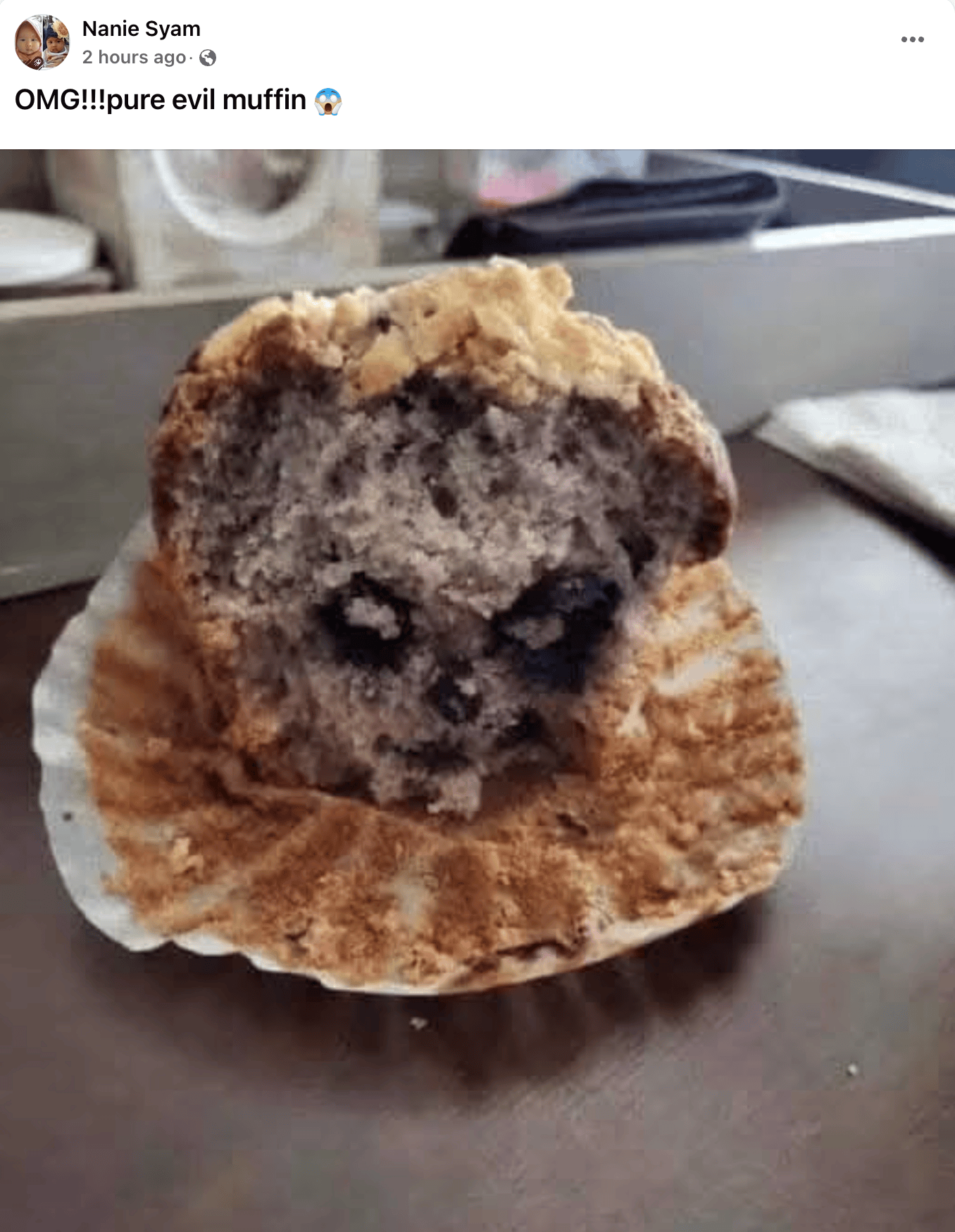
From Things With Faces:
From Cats Doing Cat Stuff:

From Give Me a Sign. This might be a jab at all the flavored beers being made:

This video from Masih will make you tear up:
Emotional moment two women blinded under Islamic regimes meeting each other for the first time.
Fahimeh is from Afghanistan. Her husband threw acid on her face because she was fighting for women’s rights against the Taliban. As her face burned, he told her: now I have taken your eyes and your face, people will be scared of you, so I dare you to go out and talk to people.
I invited her to come on stage with me and talk directly to thousands of people in Poland.
She met Kosar, an Iranian woman who was blinded by the Islamic Republic during the Woman life Freedom uprising.
We are now together stepping into Jewish history in Poland, including Auschwitz, and understanding the connection between the Holocaust and the Islamic Republic’s massacre on 2026.
If any of you think it’s easy to live under Islamic republic or Taliban just listened to their stories.These women are not fighting for themselves. They are fighting to protect democracy everywhere from the most dangerous cancer, which is called Islamism.
— Masih Alinejad (@AlinejadMasih) October 19, 2026
Rawan Osman blames most of the unrest in Europe on Islamists? I’m not sure I agree:
Who Is Setting Europe on Fire?
After a weekend offline celebrating my son as his childhood came to an end, I switched my phone on and saw Europe ablaze.
My immigrant family, who once punished me for being an outspoken Zionist, is staying with me. They finally understand: Israel is not the problem. The Palestinian cause is our crucifix.
In 2015, I warned that imported misogyny and antisemitism would fuel the far right. The Washington Institute published what I wrote. Europe dismissed it, Germany most of all. Germany’s reconciliation with the Jews after the Holocaust stalled. Since October 7, it has gone into reverse.
So who is setting Europe on fire? The men stealing jackets and food can’t organize riots across a continent. The mastermind who wrapped Greta Thunberg in a keffiyeh can. He recruits young Westerners to open the gates of their cities in the name of human rights.Who comes through the gates?
Victims, and the abusers they fled. A system that can’t tell them apart will be seized by extremists who punish everyone. Alice Weidel would deport Syrians and Afghans without exception, including the Druze, Afghan women, and Yazidis. Denmark moved to deport an Iranian activist back to Iran. A Yazidi woman met her ISIS tormentor in a Berlin supermarket; Germany had granted him asylum. Still, Weidel sounds more realistic than Macron, who vows to make masked, unregistered rioters pay. How will he find them?
How are the gatekeepers recruited? Through unions, universities, parties, mosques, and social media. Workers mobilize for money, students for ideals, politicians for votes, radicalized Muslims for faith. The strongest is the Islamist. His project belongs to the ummah, for Allah’s sake. Jail or kill him and it goes on. How do you defeat someone who wins even when you kill him? Victimhood, martyrdom, paradise.
What does this model remind you of?
Half-measures won’t stop it. Ban the keffiyeh. Dissolve UNRWA. Abolish Palestinian refugee status, so that “Palestinian” becomes a cultural identity, not a citizenship. Let those who want to leave the West Bank and Gaza resettle elsewhere: Islamists where Islamists belong, those with family in Jordan in Jordan, and those who value Israel on a path to citizenship if they prove to be law-abiding.I hope the West finds the courage to act before more tragedies force its hand.
#FranceRiots
— Rawan Osman روان عثمان (@RawaneOsmane) October 19, 2026
The Number Ten Cat appears to be healing well from his cyst removal:
Feline fine.
— Larry the Cat (@Number10cat) October 19, 2026
From JKR, and the story is here:
The thing that never happens and could never happen and that only evil people predicted would happen has happened again.
— J.K. Rowling (@jk_rowling) October 5, 2026
Two from my feed. Sound up on the first one to hear the cat reading along:
Never gets old seeing this https://t.co/EaR4jwNfzz
— Cats with aura (@Catsworldtweet) October 18, 2026
Translated from the Turkish (of course): “The fisherman, noticing that the pregnant cat he feeds fish to every day is visiting more frequently, finally can’t resist following her and learns that she’s not taking the fish for herself 🥹♥️”
Her gün balık verdiği hamile kedinin ziyarete daha fazla geldiğini fark eden balıkçı, sonunda dayanamayarak kediyi takip ediyor ve kedinin balıkları kendisi için götürmediğini öğreniyor 🥹♥️ https://t.co/QWbBRLyUEq
— Serkan Tanyildizi (@srkntnyldz) October 18, 2026
One I reposted from The Auschwitz Memorial:
This Dutch Jewish girl was gassed to death (along with her mohter) as soon as she arrived in Auschwitz. The girl was six years old.
— Jerry Coyne (@Evolutionistrue) October 20, 2026
And one from Doctor Cobb; a photo (I like it):
Scrolling back through my phone; just re-discovered this random photo that I took in Antarctica last winter. It shows a blizzard over an ice-speckled ocean. Seems almost surreal – not sure if this is a good photo or not!
— Prof Michael Meredith 🌊🧪🥼❄️ (@oceanandice.bsky.social) 2026-10-19T14:53:30.538Z
Have some Buddy Holly: in my view, his best song, “True Love Ways“, which he co-wrote with Norman Petty. It was first released in 1960, almost two years after Holly’s death on The Day the Music Died (February 3, 1959). Holly was 22 when he perished in that plane crash.
From Wikipedia:
Holly biographer Bill Griggs points out that the melody borrows heavily from the gospel song “I’ll Be All Right,” a favorite of Holly’s, and one that would be played at his funeral in 1959. According to Griggs, the framework of the melody was written by Buddy, with the remainder, and lyrics, added by Petty.
Holly’s widow, Maria Elena Holly, claimed that the song was written for her as a wedding gift. On April 29, 2011, she unveiled the never-before-seen “True Love Ways” photo of their wedding kiss, now displayed at P.J. Clarke’s above Table 53, the table where they became engaged while on their first date, on June 20, 1958.
And did you know this>?
John Lennon and Paul McCartney saw Holly for the first time when he appeared on Sunday Night at the London Palladium. The two had recently met and begun their musical association. They studied Holly’s records, learned his performance style and lyricism, and based their act around his persona. Inspired by Holly’s insect-themed Crickets, they chose to name their band “the Beatles“. Lennon and McCartney later cited Holly as one of their main influences.
I don’t know a rock/pop song this old that has a jazz-influenced saxophone riff:
Buddy Holly and the Crickets, 1957 (Holly’s in the middle):

The radical left-wing party, France Unbowed, has close ties to pro-Palestinian and immigrant advocacy groups. Its leader, Mélenchon, “pursues a strategy of “permanent conflict” and deliberately appeals to immigrant communities. Among his lawmakers is a politician who is a co-founder of a banned far-left extremist gang. Against the backdrop of the war in Gaza, Mélenchon also likes to strike an anti-Semitic tone.”
There is some truth to the centrists’ and far-rights’ allegations. The NYT should not have omitted these connections from their article.
Ironically, the “beer flavored beer” truck is advertising lime beer.
Larry is 19 years old! And his time in office is approaching that of Peter: https://en.wikipedia.org/wiki/Peter_(chief_mouser)
I hope he breaks the record. But what they need is a cat who can catch rats in the cabinet.
Re: Baby Jeff cat.
I named my now 10-month-old puppy after myself: “David”.
And what a master stroke that’s turned out to be – Pretty much everybody I meet, and in Manhattan with a puppy you meet a LOT of people – thinks that’s hilarious
.
Except neither the dog or I are sure which “David” my wife is screaming at at any particular moment! 🙂
D.A.
NYC
more of our hijinx: https://x.com/DavidandersonJd
For me, the favored Buddy Holly songs are Everyday, which is glowingly happy, and It Doesn’t Matter Any More, which is more toward the opposite direction.
I really like this song feature in WEIT!
I for one think that the picture from Antarctica, is really nice, as I do favor artsy pictures that make one wonder if it’s a picture or not.
Though you referenced it yesterday, it might be useful to underscore Frederick Alexander’s excellent post on the topic of the “scuffles” in France.
Besides pointing out the elephant in the room—islamism—he also eviscerates the pretense that the riots are about deficiencies in the educational system.