
Please send in wildlife ph0tos if you have some good ones. This feature has become pretty intermittent.
Today’s wildlife photos come from reader Jan Malik, who sent bird photos taken in Poland. Jan’s captions and IDs are indented, and you can enlarge the photos by clicking on them.
In July, I had an opportunity to hike in the northern, Polish section of the Tatra Mountains. This part of this alpine range is probably less biodiverse than the substantially larger Slovak part, where a large portion of the slopes are south-facing. Still, I saw a few animals—both vertebrates and invertebrates—that were new to me.
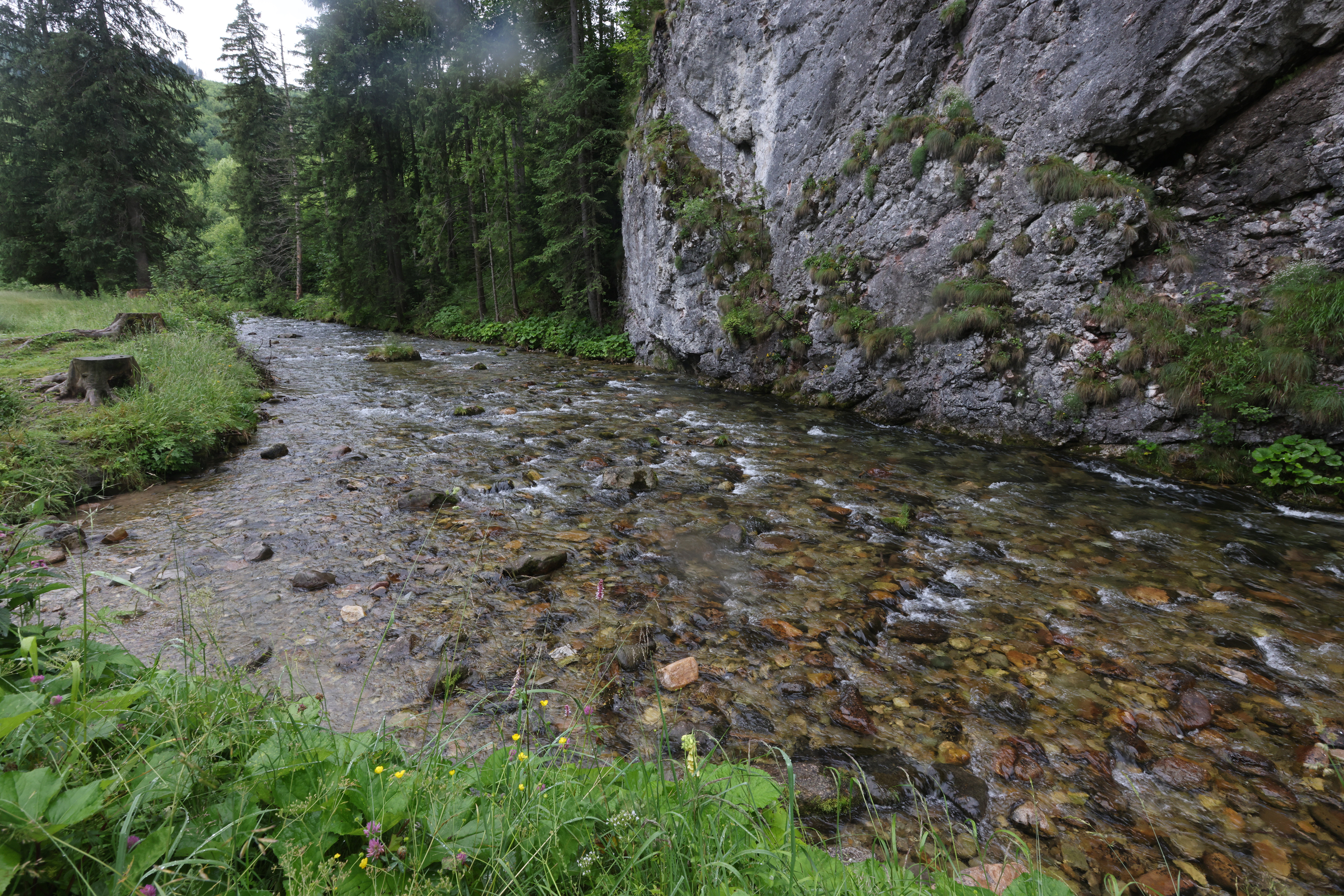
A sample of the habitat at the entrance to a valley in the limestone Western Tatras:
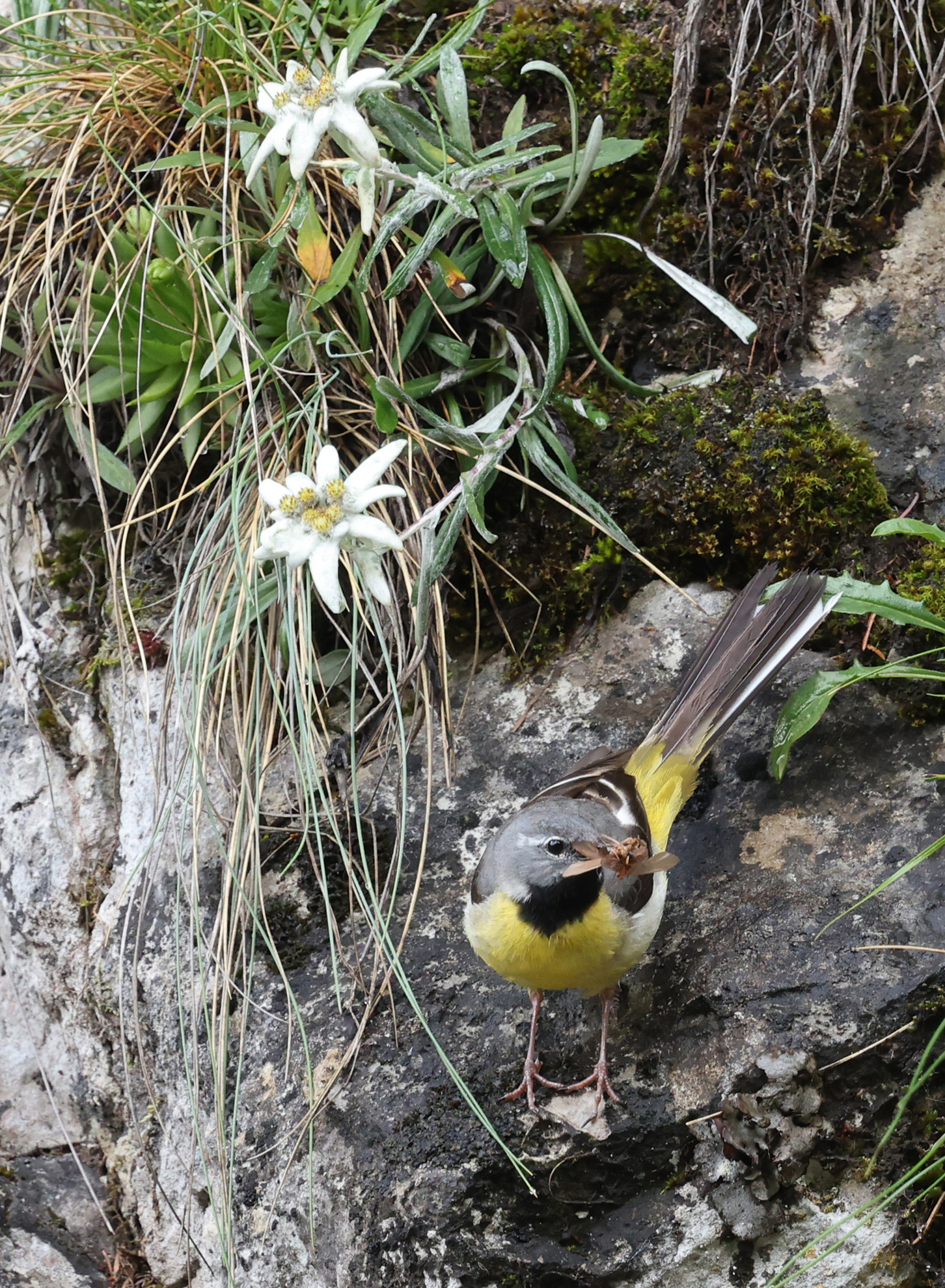
Just as I stopped by this creek to eat my breakfast on the go, a bird appeared, forcing me to postpone consumption and switch to photography mode. The bird was a male Grey wagtail (Motacilla cinerea), which in its breeding plumage is actually bright yellow. He was hopping lively on the cliff, collecting arthropods to feed his chicks. The white, woolly-looking flower by the wagtail is the emblematic Edelweiss (Leontopodium nivale), a hallmark of limestone alpine mountains (it grows only on basic substrates). The flower’s woolly appearance may be an adaptation to low temperatures and intense ultraviolet radiation:
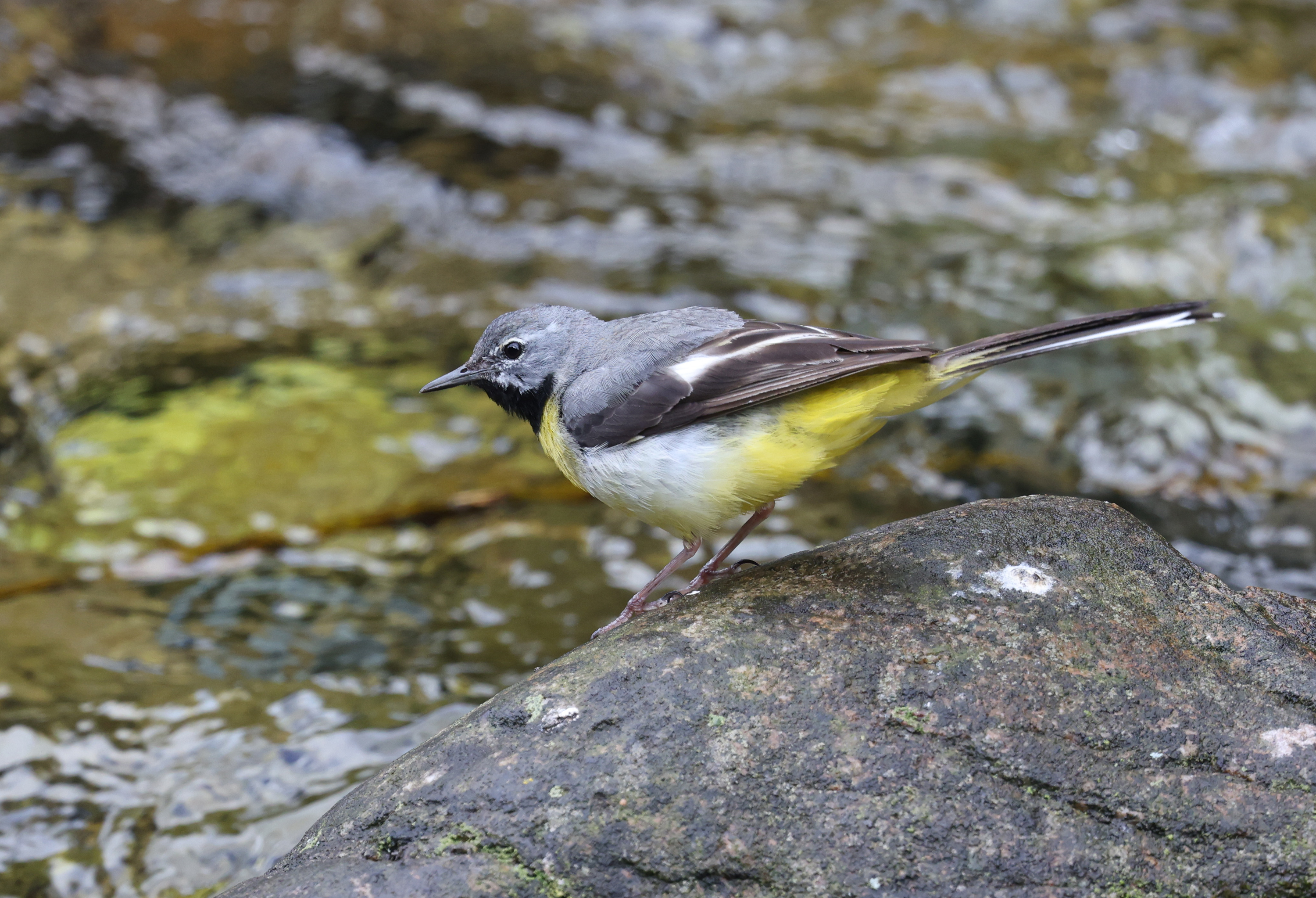
The wagtail disappeared for a moment and then returned, having fed his chicks. Its flight is highly undulated, and when resting it, well, wags its tail vigorously:
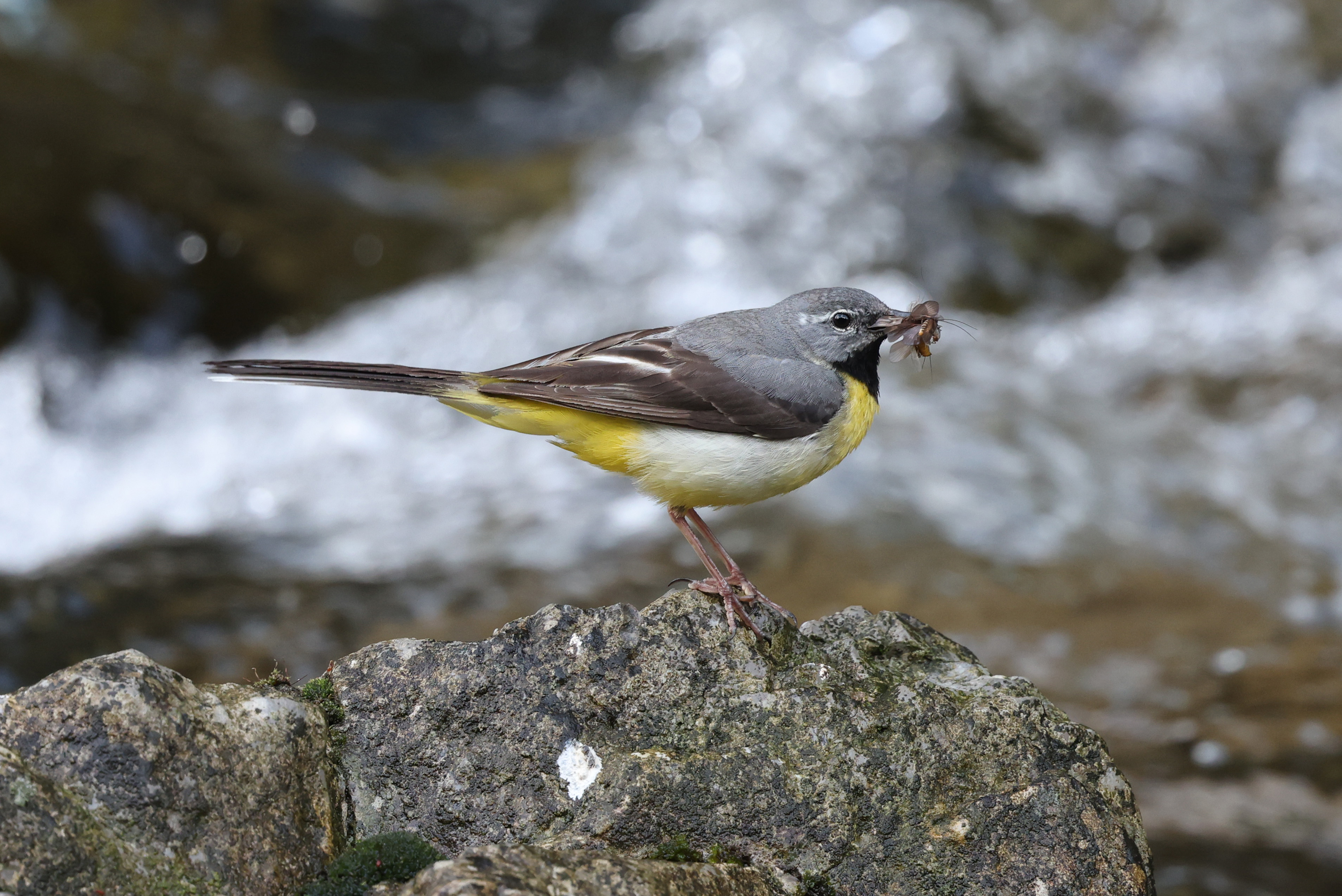
Another successful hunting run finished, and the wagtail is ready to return to his nest with a beak full of insects. Judging by their opaque wings and long antennae, these are caddisflies (order Trichoptera):
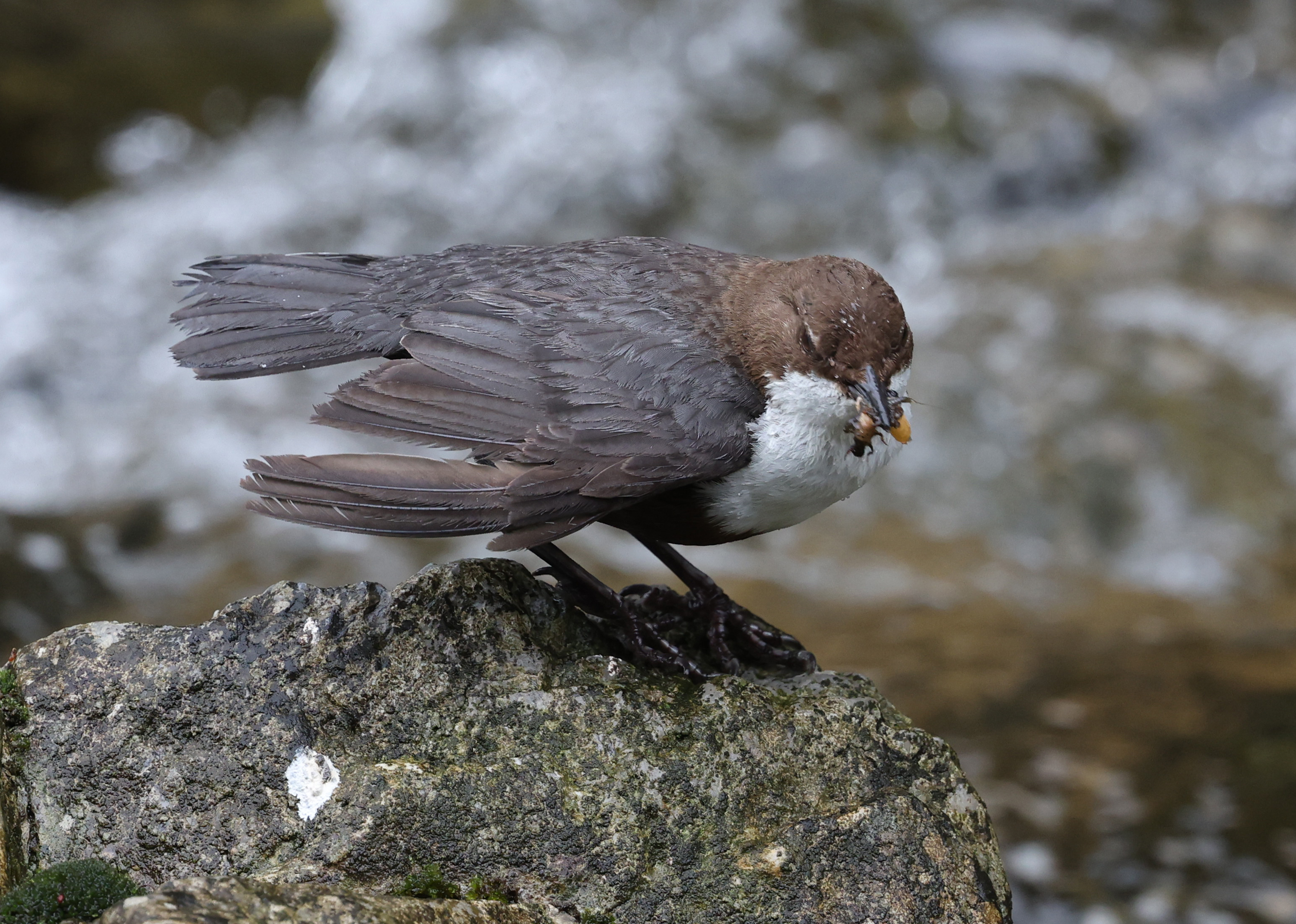
The wagtail left, and just as I was going to resume my hike, another bird landed on the same spot—a good lookout in the middle of the creek. This was a White-throated dipper (Cinclus cinclus), a close relative of our American dipper, which I had once searched for in vain in the American Southwest (Zion National Park and the like). This genus is unique among songbirds in that it is mostly aquatic when feeding. It nests close to the banks of fast-flowing streams and forages by wading and diving underwater in search of arthropods, sometimes using its wings for underwater propulsion if the current gets too strong. I think in this picture the bird holds a caddisfly larva (stripped of its protective debris case) and possibly a couple of adult caddisflies.
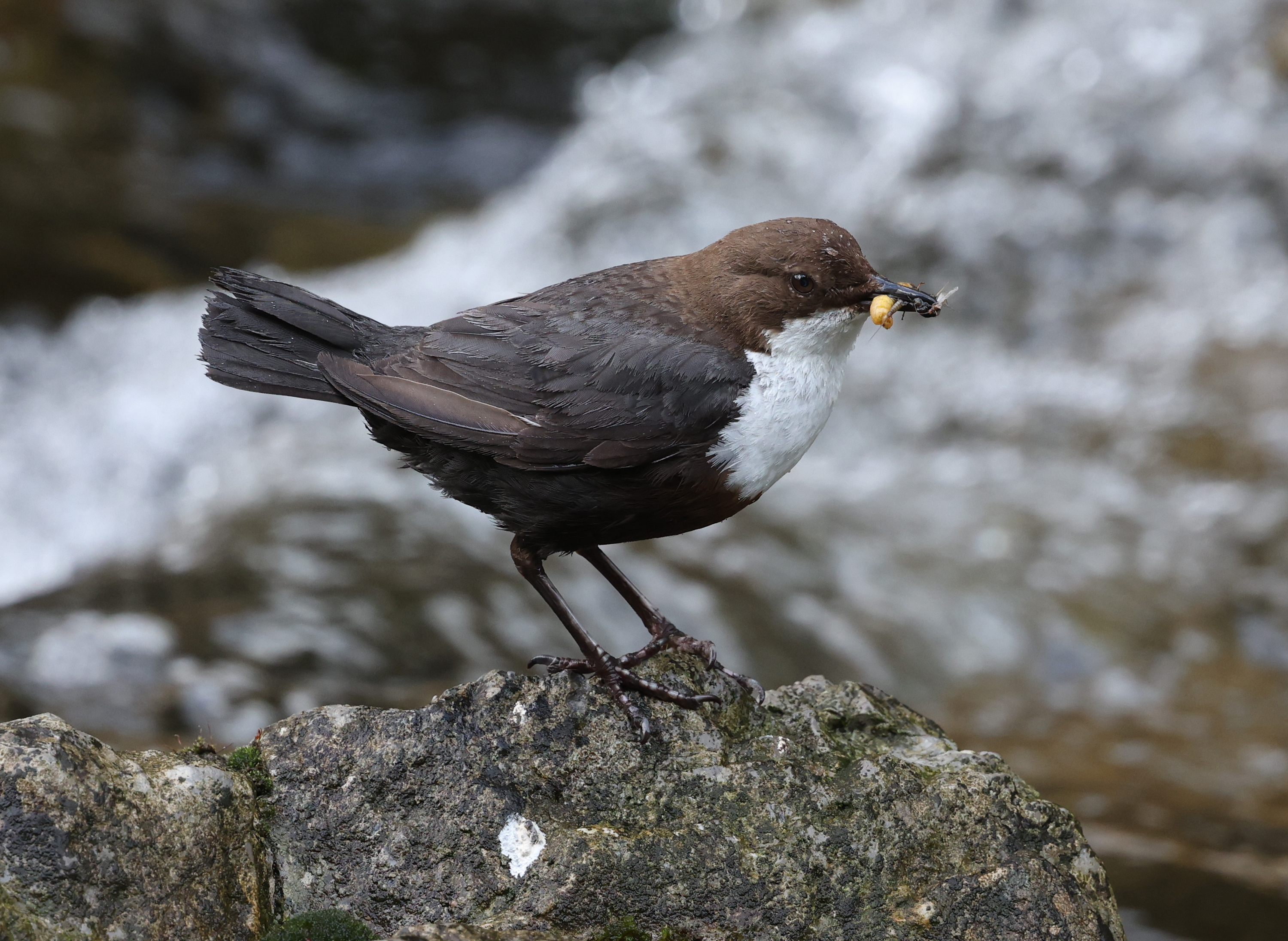
Dipper females and males are monomorphic, and both sexes sport a white bib, which their American cousins lack:
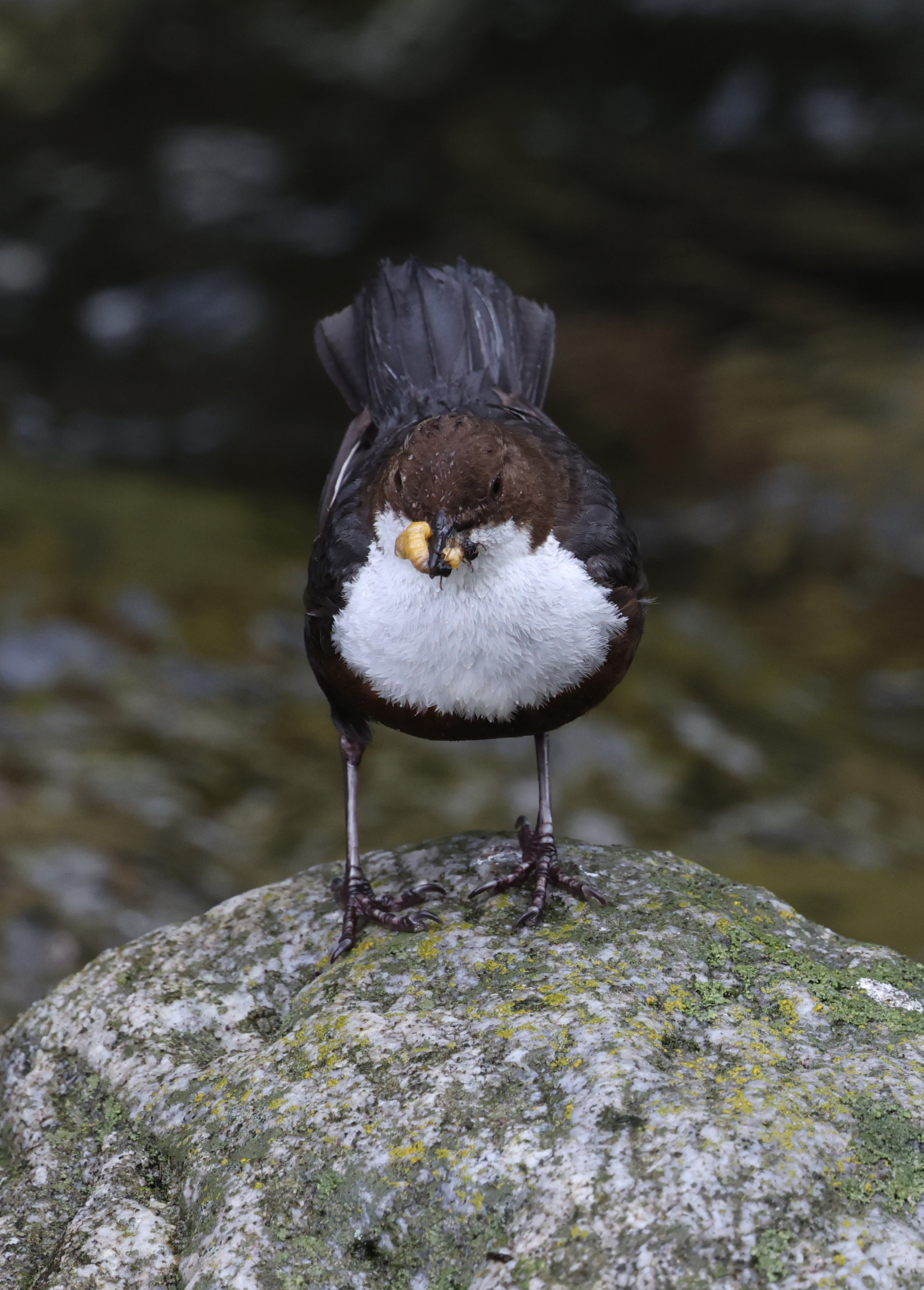
Apart from a nearly identical body structure, what they have in common with our American dipper (or, as some say, the water ouzel) is a white upper eyelid, visible when the bird blinks. Unlike wagtails, they fly in a dead straight line, patrolling and defending their stretches of waterways:
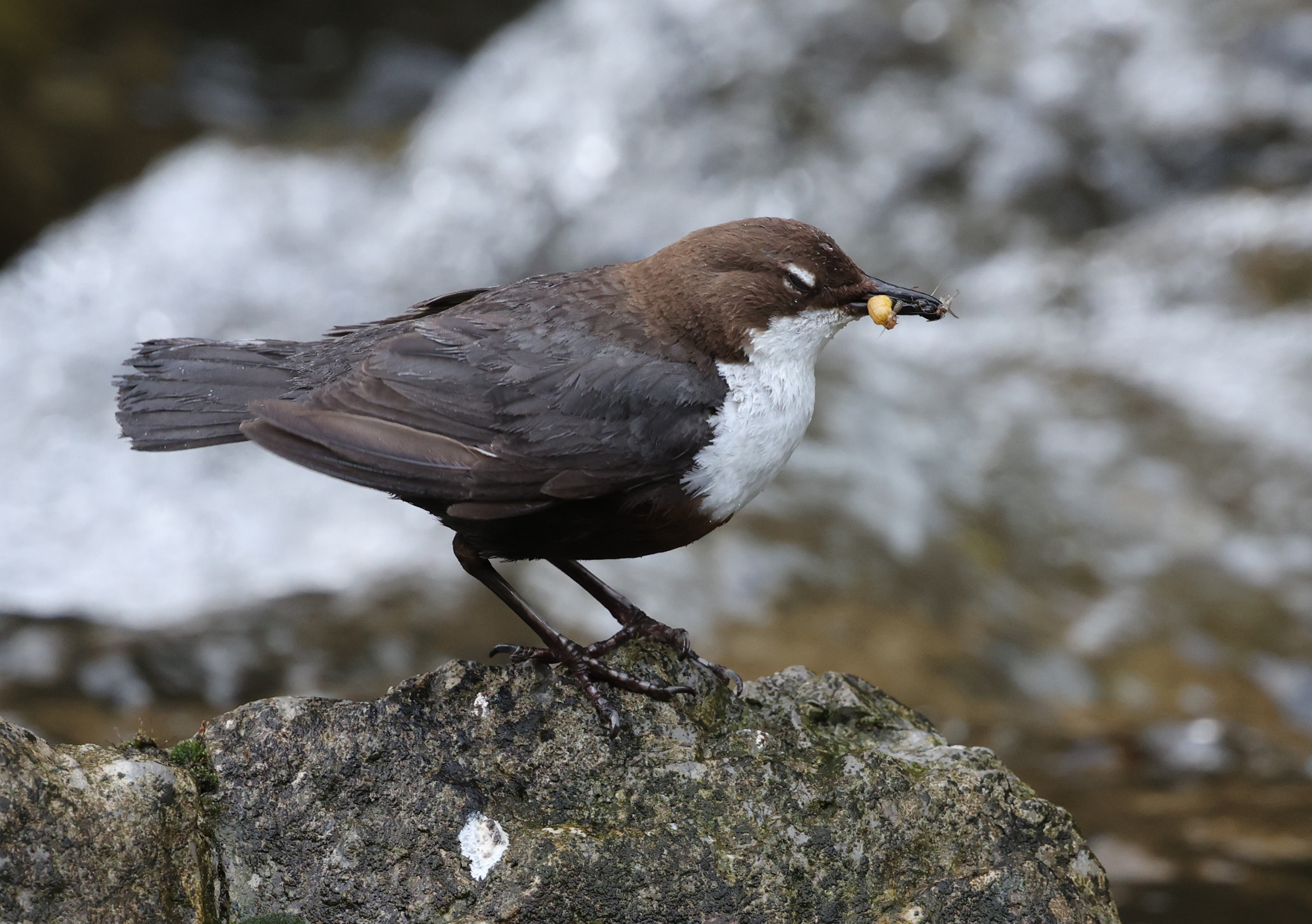
For the next 20 minutes I watched the bird collect food above and under water, but capturing its underwater feeding was harder than I thought, with the bird being restless and the autofocus being thrown off by the turbulent water. They usually start nesting as soon as the water is free of ice, which in this location can be mid-April. If they are still nesting in July, it may mean they are raising a second brood:
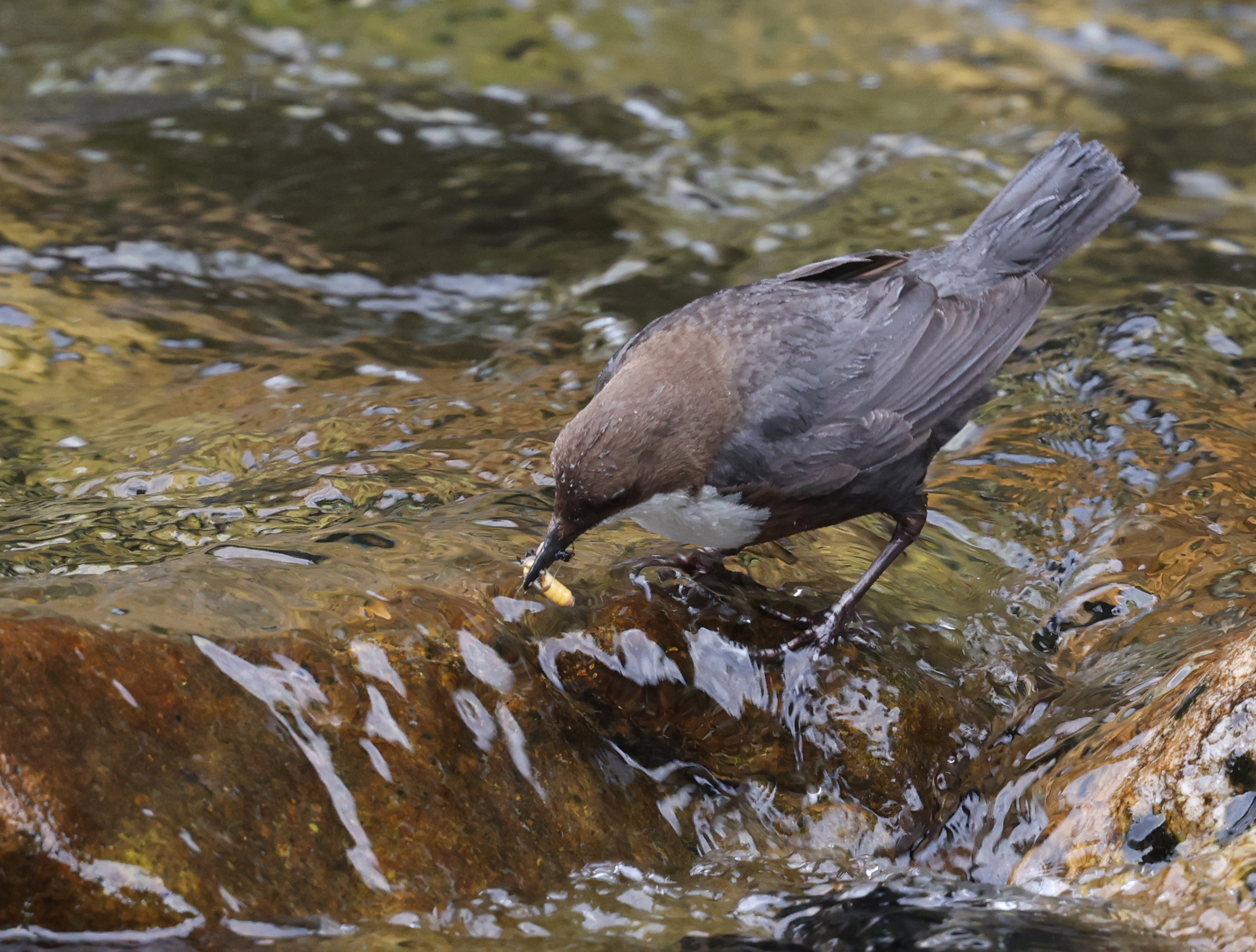
They are called “dippers” because of their habit of bowing and bobbing. While they are songbirds, I didn’t hear any calls, but I read they do call and sing, like any songbirds. It is reasonable to assume that, since they live in the fairly noisy environments of fast mountain creeks, they communicate visually via displays like wing-quivering. It was a real treat to see these birds in action, especially in the crowded environment of Tatra National Park, which sees more than 5 million visitors annually. To put it in perspective, that is more visitors, in a much smaller area, than Yellowstone National Park receives. During my 30-minute impromptu birding session, an incessant stream of people kept streaming into the valley right behind my back, but the birds were completely habituated to the human presence:
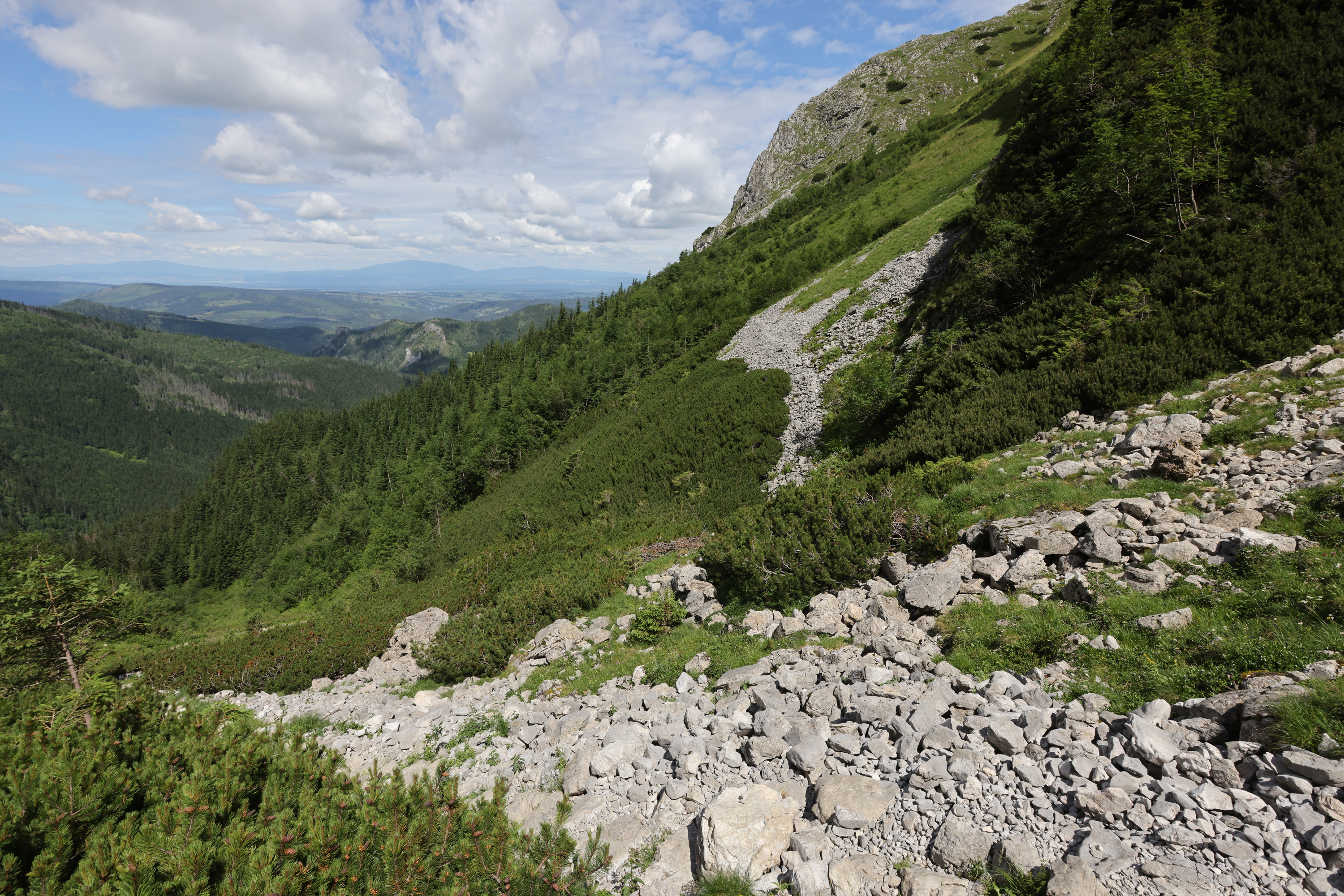
After ascending for a while, I reached the krummholz and alpine meadow zone. A notable distinction between this and a similar zone in the Adirondacks of NY or the White Mountains of NH was the presence of a specialized high-altitude dwarf mountain pine (Pinus mugo), forming dense thickets. In the US, these zones feature dwarf, bonsai-like variations of spruce and balsam fir from the boreal forest zone:
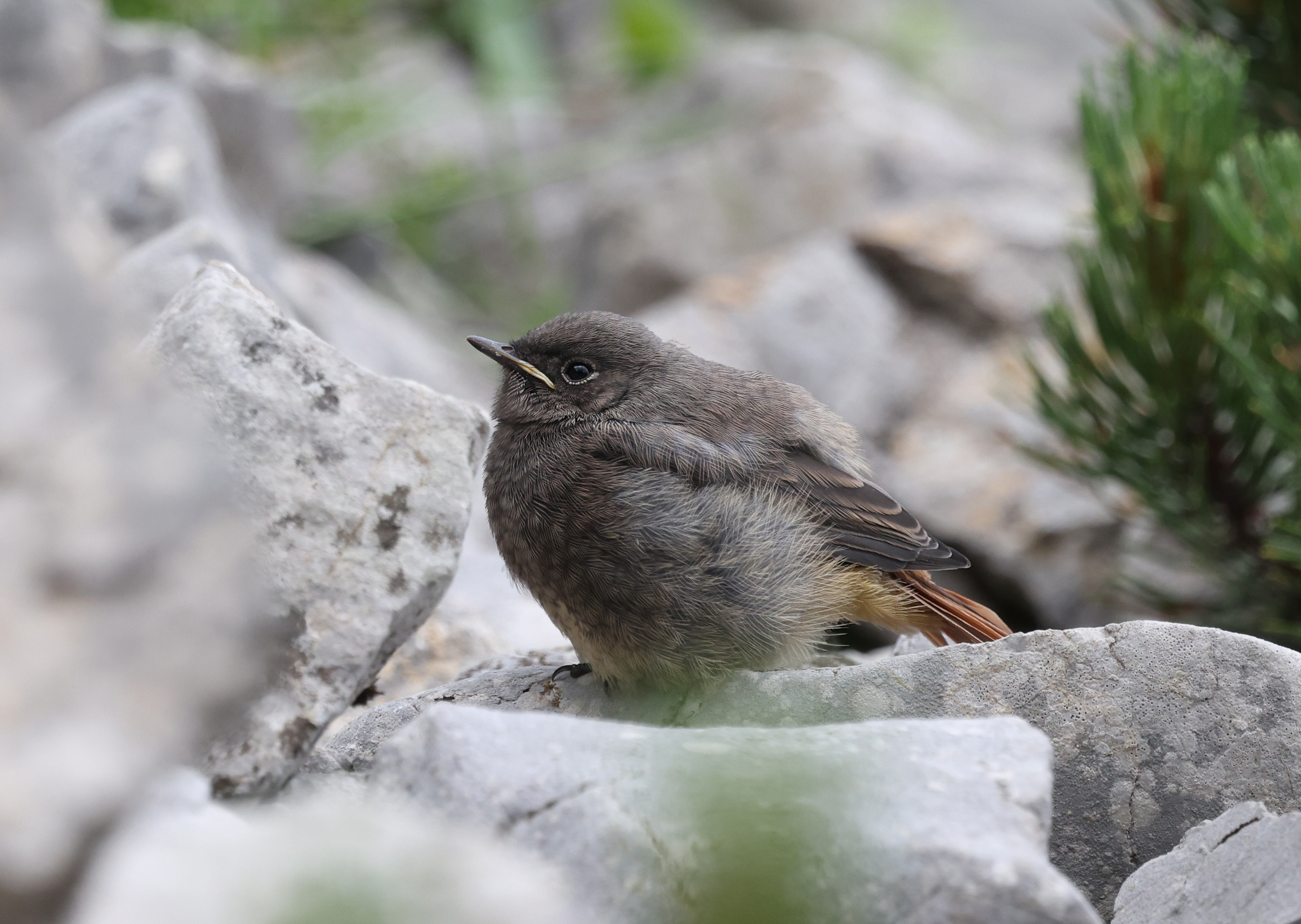
I noticed a little commotion in the dwarf pine thicket; it was a fledgling following its parent, begging to be fed:
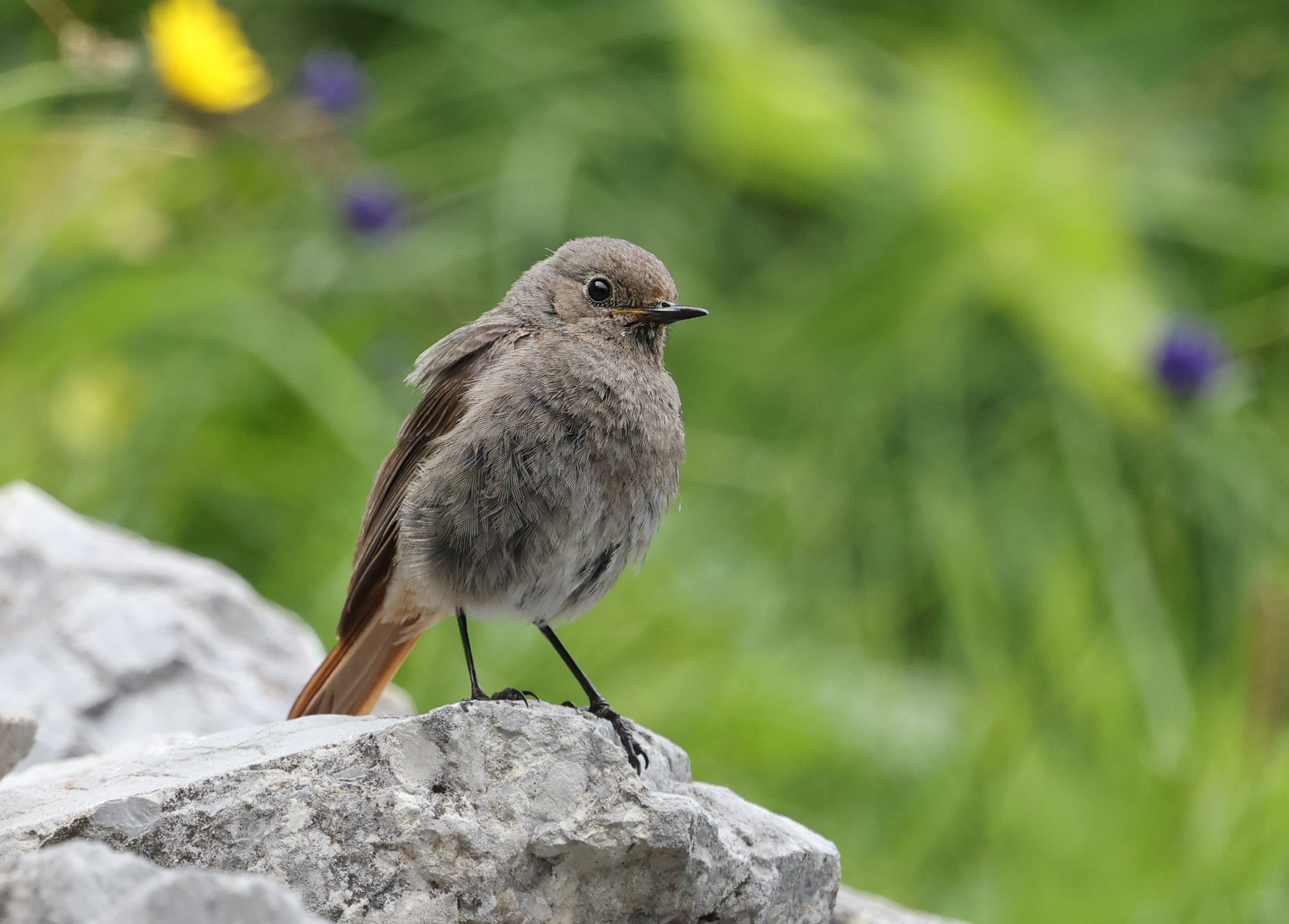
After a while, the adult bird appeared. It was, I believe, a Black redstart female (Phoenicurus ochruros); the “black” part comes from the male’s coloration. They nest in rocky areas across Eurasia;
Comparing the Tatra Mountains to mountain ranges in the US Northeast, it is surprising that, even though the Tatras are about 5 degrees closer to the North Pole and higher (I believe the last three pictures were taken almost at 6,000 feet altitude), they are more biodiverse.
Fascinating, I was unaware of this region of Poland. Always thought of Poland as rather flat geographically. Interesting to learn they have mountains to the south. Five million visitors a year to the Tatra mountains and yet still have a fair amount of wildlife. Hats off to the Polish people.
Dippers are a favorite of mine but I have never been able to get close enough to get good photos. Thank you for sharing.
That was a delight to read. A birder is always birding, one may say!
Very nice photos! They show what a demanding task it is for bird parents to keep fast-growing chicks fed.
Spectacular pictures! I love streams like that, as there’s so much happening if only one pays attention. Interesting that there’s a species of Dipper in Poland, related to the American Dipper. We had a couple of American Dippers living on the lake near our house in the San Juan Islands a few years ago, but they didn’t stay. Their bobbing is so strange for a passerine. Such a treat to see them, but I’ve never seen one again. I need to keep looking.
Very nice photos and discussion!
Enjoyed this very much, thank you! Quite a feat to get an Edelweiss and a bird in the same shot!