
Welcome to another damn work week: it’s Monday, August 3, 2026, and National Watermelon Day. Here’s a ten-minute video I found when looking for the ancestor of the modern melon. It’s shown here, along with the story of the plant’s domestication.
Guinness notes that “The heaviest watermelon weighs 159 kg (350.5 lb) and was grown by Chris Kent (USA) of Sevierville, Tennessee, USA, as verified on 4 October 2013.” I wonder if anyone ate it.
It’s also Grab Some Nuts Day and Clean Your Floors Day.
Readers are welcome to mark notable events, births, or deaths on this day by consulting the August 3 Wikipedia page.
Da Nooz:
*In his new NYT column, “Whatever this is in Iran, it isn’t winning” (archived here), David French thinks that Trump may have put us on a path leading to a new world war.
On Friday, Trump said he was ordering a new round of airstrikes. And what was his reasoning? “You know at some point,” Trump said, “they’re going to say, ‘We just can’t take it anymore.’”
On Saturday, he’d changed his mind. “We have just been asked by Iran, and other Middle Eastern Countries, to hold off any attack,” Trump said in a Truth Social post.
“I have agreed,” he added, “for the future benefit of the WORLD and, likewise, the survival of a successful and prosperous Iran, to cancel the attack, subject to being able to rapidly make a DEAL.”
But the problem we face right now is something well beyond deals. America has been so powerful for so long that we are accustomed to being in control of events. We start wars when we want and — crucially — we believe that we can end them when we want.
In both conflicts, the fighting was brutal, and we can and should debate the wisdom of both wars. But our great-power rivals were largely absent.
There is no such thing as a safe war — any war can spin out of control — but the combination of American power, enemy weakness and Russian and Chinese restraint meant that Americans could sleep secure in the knowledge that the chances of a catastrophic escalation were extremely remote.
That is no longer the case. The world is walking a path toward a world war, and no one — including the president of the United States — seems to be in command of events.
French goes on to mention that Saudi Arabia, the Houthis in Yemen, Ukraine, and perhaps Russia and China have entered the conflict directly or indirectly.
Iran has taken grievous losses, including much of its top leadership. But the crucial difference with the United States is that the Iranian regime simply doesn’t care about losses in men or matériel in the same way we do.
Both the United States and Israel have repeatedly decapitated the leadership of jihadist organizations, with little lasting effect. Iran has shown again and again that it will expend the lives of its citizens to retain power or to secure a strategic advantage. In fact, the regime seems to relish slaughtering the almost impossibly brave citizens who do rise up in protest.
Second, we’re running out of interceptors, such as our Patriot antimissile systems, and other advanced munitions.
. . .But we can analyze the events and trends of the moment, and right now all the momentum is toward greater escalation. And we absolutely cannot do what Trump asks, which is to “just sit back and relax” and trust that “it will all work out well in the end.”
I do not think that world war is inevitable, nor do I think it is probable. But it is more possible now than it has been at any time since the end of the Cold War, and the American government is led by the worst rulers in the modern history of the United States.
In the end French sees the only remedy is American voters giving Congress “a spinal transplant,” i.e., electing Democrats. Only this way, he avers, can we clearly “see the catastrophe coming and act decisively before a terrible war swallows the world.” He does have a point when he asks us to look back before the beginning of WWI or WWII and think about how people didn’t realize the looming catastrophe.
*Over at It’s Noon in Israel, Amit Segal discussed the latest Memorandum of Understanding between the U.S. and Iran in “MoU2?“.
It’s Sunday, August 2, and Donald Trump has called off a major attack on Iran because “the perimeters of a deal had been agreed to”—one that would open the Strait of Hormuz and end Iran’s nuclear threat. The phrase about “fool me once” comes to mind. I’m just not sure yet who should feel shame.
Before sorting the candidates, let’s examine the deal.
The attack meant for this weekend was to be the coup de grâce—a large joint U.S.-Israeli strike on the one area that has enjoyed immunity so far, Iran’s energy infrastructure. Now, perhaps, it won’t be needed. Resting on Trump’s declaration alone—a reopened Strait of Hormuz and a denuclearized Iran—the deal amounts to near-total victory.
I’m skeptical. Two weeks was floated as all that remained of April’s bombing campaign, but the two weeks since strikes resumed have been light by comparison—too light to have forced the Islamic Republic into its first diplomatic defeat. More likely, Trump is running a Beetlejuice strategy: summoning the terms of a deal into existence by saying its name enough times.
. . . According to officials cited by Channel 12, Iranian Foreign Minister Abbas Araghchi agreed overnight to a compromise proposal drawn up by Qatari and American mediators to reopen the Strait. Under it, vessels entering the Gulf through Hormuz would transit Iranian waters; those leaving would transit Omani waters. It resembles an Omani proposal built on “voluntary transit fees or tolls” that Iran rejected three days ago for failing to “address Iran’s concerns.” The concern likely being that Iran wanted 100 percent of the Strait, not 50.
. . .Still, one should remember that before the war, traffic crossed freely between the two coastlines. If the compromise is that both the Iranians and the Omanis now impose tolls, we are further from freedom of the seas and closer to legitimizing Iran’s hold on the Strait.
Which brings us to the first candidate for being fooled a second time: Trump. If the president is conjuring a deal from thin air, the reason is plain: he bit off more than he could chew. As with his April threats of civilizational destruction, he has grasped that his latest promises of escalation were unlikely to bring the Republic to heel, and is hunting for an offramp that still points roughly where he wants to go. If this is de-escalation by any means necessary, then he has indeed been fooled a second time, and the shame is his. Then again, Trump might have learned caution from the MoU’s death, and so far he has said nothing about loosening the blockade or unfreezing assets.
. . .Worth remembering here is a senior Israeli intelligence official’s estimate that, should the economic pressure hold, the Islamic Republic would not survive 2026. That was before the MoU and the several-billion-dollar reprieve the regime banked in the interim—yet he remains confident that a few more months would be enough to burn through those limited funds.
In which case, the one fooled may be the Islamic Republic. A standing blockade and a half-share of the tolls won’t begin to cover its deficit. And if it imagines Trump’s signature will shield it from American bombs the next time it fires on the Strait, it should find sturdier shelter. Then again, the other provisions of this agreement—an end to the blockade potentially among them—have not been forthcoming. As Trump used to say, “Iran has never won a war or lost a negotiation.”
The most likely candidate is us if we take Trump’s words on faith. After the oceans of ink spilled on clauses 7 through 9 of a now-binned deal, we should hesitate to treat another bargain between a fundamentalist regime and the most fickle president in memory as carved in stone. Otherwise, the shame is on us.
Any deal struck should not allow Iran to have any control over the Strait of Hormuz, as that would leave it better off than before the war. And in these few months of war, we’ve learned not to take any prognostications about a deal seriously.
*The WSJ lays out the figures to support their contention that “The Democrats’ biggest donors have gone on strike.” The donors are fatigued!
George Soros and his son Alex donated more than $400,000 to the Democratic National Committee during the 2018 midterms. They gave more than $1 million during the 2022 midterm election cycle, campaign finance records show.
This year, they have yet to give the DNC a dollar.
The Soroses aren’t alone—other high-profile donors have given little or no money to the Democrats’ central committee this year. Reid Hoffman, the co-founder of LinkedIn, wrote steady checks to the DNC for years but during the midterms has yet to give money.
In a sign of the party’s challenges, a running joke among some donors is that the DNC stands for “Do Not Contribute,” said one Democratic strategist who advises major party donors.
Months ahead of pivotal midterm elections, the Democratic fundraising apparatus has a big donor problem.
While many Democratic elites still feel bullish about taking back the House and are willing to throw big money at their favorite candidates, institutional fatigue—and in some cases, full-on drama—have set in among a number of the party’s biggest donors. Like voters, donors say they feel disillusioned with Washington and the party establishment they have long supported.
The DNC isn’t the only problem spot for Democrats—other Democratic committees and super PACs lag behind Republicans across the board. It is common for a party that is out of power in Washington to struggle, but Democrats are increasingly concerned it will hurt their chances of winning this fall as Republicans stack up significantly more money in committees and PACs that can organize door-knocking efforts and air TV ads.
Here’s the WSJ’s graph of funds for Democratic and Republicans PACs and party committees. I would have thought that Democrats would be ginning up more money in an effort to take back the Congress, but it just ain’t so.

. . . and, indeed, in individual tight races, Democrats are outspending Republicans (see below), but PACs and committees support the parties in general.

A bittersweet closing:
“I think it’s always a very tough job,” Sen. Chris Murphy (D., Conn.) said of the DNC chairmanship. “The amount of money is certainly concerning, but at the same time, we’re not necessarily losing elections these days because candidates don’t have enough money. It is because [Republicans] have billionaires.”
*The latest antisemitic news: Some people are blaming the Jews for the huge influx of immigrants into the Spanish city of Ceuta on the African mainland! How did we engineer that?
Following Spain’s migrant crisis in Ceuta last week, posts accusing Israel and Jewish people of orchestrating the crisis spread quickly on social media, reaching an estimated 103 million people on X within 72 hours, according to an analysis by the Combat Antisemitism Movement’s Antisemitism Research Center (ARC).
The report examines 173 high-impact posts from 119 influencer accounts published after more than 50,000 migrants crossed into Spain’s North African enclave of Ceuta on July 30.
Together they generated 57.5 million views, an estimated reach of 103.1 million, 1.9 million likes, and 368,400 shares in two days, ARC calculates.
Posters falsely claimed that Prime Minister Benjamin Netanyahu directed migrants into Spain due to its policies regarding Israel. In one, viewed 5.3 million times, an AI-generated image shows Netanyahu with a line of migrants filing from his open mouth onto a Spanish beach, ARC says.
Another account claimed Israel had “admitted” engineering the migration through Mossad.
“This is not a story about a few bad actors,” says CAM CEO Sacha Roytman Dratwa. “It is a story about a platform whose design rewards the fastest and most inflammatory explanation available, and on X that explanation is increasingly a Jewish conspiracy.”
Here’s one of those posts, and if it’s not antisemitic, I’ll eat my hat (I have no hat). The first Community Note is hilarious: “There is no evidence that the nation of Israel has any kind of official or covert transport vessel done up to resemble the head of Prime Minister Benjamin Netanyahu.”
If we’re being honest about what’s going on in Spain: pic.twitter.com/lSiUjg3kmy
— Forbidden HQ 🐇 (@WearForbidden) July 31, 2026
*Only in Florida: “Meet the literature professor fired for teaching literature.” (There’s also an article about this at Inside Higher Ed and another at FIRE.)
Most people have had anal sex. Don’t look so surprised.” Those two sentences, spoken by a heavy-drinking, drug-using high school teacher to her students in a short story, never caused professor Vinita Prabhakar any trouble. She’s been teaching it for nearly a decade.
But in February, a staff member apparently complained about the assignment, and the story was forwarded to South Florida State College (SFSC) president Fred Hawkins, a Republican former Florida House member who is an ally of Governor Ron DeSantis. “I don’t ever want to see this story again,” Prabhakar said she was told by Hawkins, adding that he wouldn’t want his college-age daughter reading it. The college president also said the story was “political.” The next day, she was suspended and told that her contract wouldn’t be renewed.
On Wednesday, Prabhakar sued SFSC and Hawkins in federal court. She alleges that what happened violates Florida’s Campus Free Expression Act, signed into law by DeSantis in 2021. The law says that state colleges in Florida “may not shield students, faculty, or staff from expressive activities” and protects “faculty lectures, writings, and commentary.” Prabhakar is seeking to get her old job back, as well as compensatory and punitive damages, and is being represented by the Foundation for Individual Rights and Expression (FIRE). Hawkins and SFSC could not be reached for comment.
The short story “Bettering Myself” by Ottessa Moshfegh is certainly racy but not expressly political, and Prabhakar says that she taught it for three years at SFSC before the spring semester class that led to her removal from the classroom. But the lawsuit is yet another collision between free speech and DeSantis’ campaign to excise concepts of sexism and racism from the curricula of public schools, including higher-education institutions. In early July, a federal appeals court struck down the higher-ed provisions of one of DeSantis’ weapons in that fight—the Stop W.O.K.E. Act, signed into law by the governor in 2022.
Prabhakar was an instructor, not a tenured professor, so there is no protection of tenure here. But of course there is freedom of speech and the fact that she taught this story for nearly a decade without trouble. You can find the lawsuit in full at this site. There’s an interview with Prabhakar, but I’ll add a brief excerpt from FIRE’s report:
Now, represented by FIRE Legal Network Member Gary Edinger of Benjamin, Aaronson, Edinger & Patanzo and the Foundation for Individual Rights and Expression, Prabhakar is filing a federal lawsuit against Hawkins and the South Florida State College board of trustees seeking to vindicate her First Amendment rights.
“President Hawkins firing a professor for teaching a work of literature isn’t just a betrayal of every principle that a university is supposed to embrace,” said Edinger. “As a state employee, he also trampled over our client’s constitutional rights. The First Amendment doesn’t let public officials suppress ideas by firing the people who teach them.”
Prabhakar has been an English professor for close to two decades. After stops at several upstate New York colleges, she relocated to Florida in 2023 to be closer to her elderly parents and took a position at SFSC’s Avon Park campus.
In spring 2026, Prabhakar assigned the students in her Freshman English II course the short story “Bettering Myself” by Ottessa Moshfegh. Prabhakar had assigned the story in her classes for nearly a decade. “Bettering Myself”tells the story of an alcoholic and directionless teacher at a Catholic school who engages in self-destructive behavior and makes inappropriate sex jokes to her teenage wards. The winner of the 2013 Plimpton Prize for Fiction, “Bettering Myself” is commonly taught in English courses across the country, including at the University of Florida, West Virginia University, and NYU.
I hope she wins. But of course like others in her situation, her relationship with the college will have been spoiled, and if her suit is successful she may take a settlement rather than return to the College. But I’m glad she’s fighting like hell.
Meanwhile in Dobrzyn, Hili and Andrzej discuss wokeness:
Hili: Intellectual trends are merciless.
Andrzej: That’s true. The penalty for nonconformity is stoning with words, a boycott, and physical aggression.

In Polish:
Hili: Mody intelektualne są bezlitosne.
Ja: To prawda, karą za nieposłuszeństwo jest ukamienowanie słowem, bojkotem i fizyczną agresją.
*******************
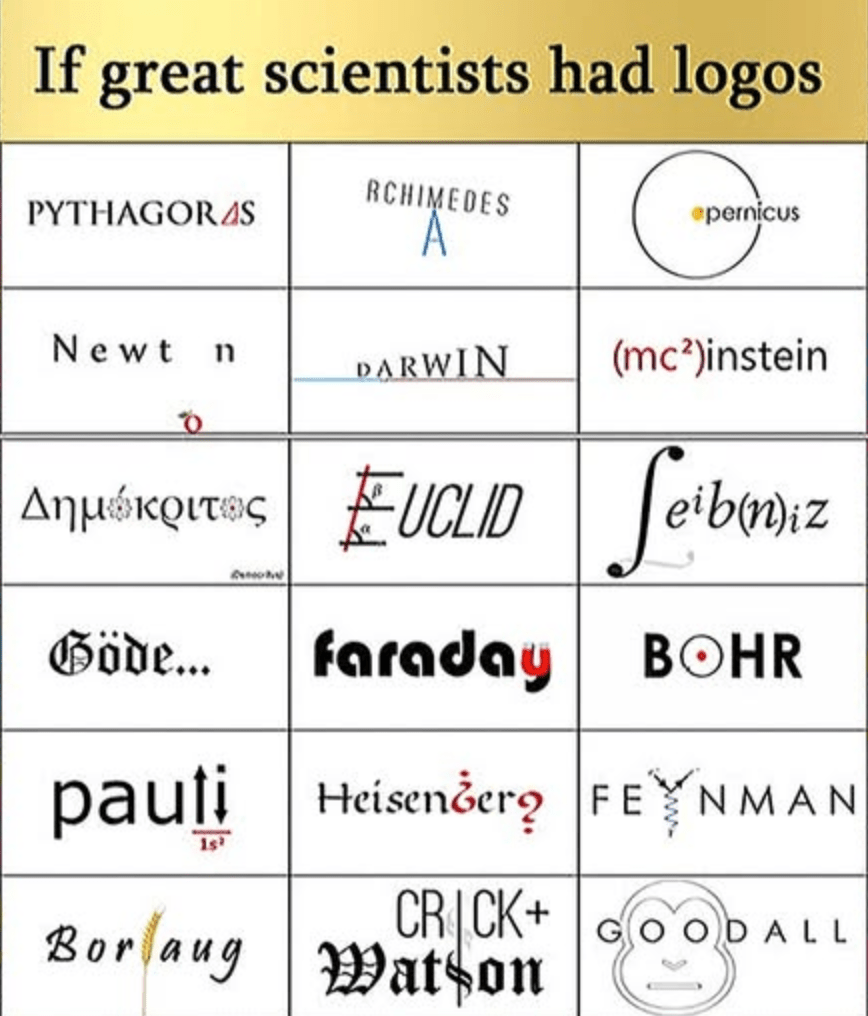
From Bill (note the error in Darwin’s name, as it implies that evolution is progressive, if not unidirectional):
From The English Language Police:

From: My Cat is an Asshole:

From Masih, another Iranian protester secretly executed. His last statement made me tear up:
Today, Iranian regime hanged him in secret in Shahroud، no warning, no farewell. His family was told to come at 3am to collect his body.
Arvin Kheirkhah was 20 years old. This is his last words to his family:
“Don’t let me be forgotten. Don’t let the path we walked go… pic.twitter.com/7vqWelaKMs
— Masih Alinejad (@AlinejadMasih) August 2, 2026
From Luana: A debater at the Oxford Union was censored by the Union for his speech in a debate about whether one should be suspicious of Islam. (Guess which answer he was giving!). He put up his own self-filmed speech:
More than six weeks after the Oxford Union promised to publish my June debate speech, the full video is still being withheld — while extracts of their own footage of the debate have appeared elsewhere, heavily edited.
I filmed my own speech with the Union’s knowledge and… pic.twitter.com/z5It6kN5yZ
— Jonathan Sacerdoti (@jonsac) July 31, 2026
I am no a fan of the racist “Tommy Robinson,” but this kind of statement is ridiculous, especially at an Oxford Union debate:
WOW.
A student at the Oxford Union tells Tommy Robinson he is lucky they’ve put security on for him otherwise their Pro-Islam supporters outside would beat him to death
This is the Oxford Union, how far it has fallen as an institution when this is the sort of argument made pic.twitter.com/pMpdw4NatT
— Basil the Great (@BasilTheGreat) July 31, 2026
From Jeff Maurer:
Poor kid. The English translation of the Spanish is, “When you have a bad year, remember Paco.”
But the Community notes say this: “The kids name is Gabriel. The author of the post also doesn’t give credit to the original creators of the videos.”
Anyway, the kid had a horrible year! He gets one chayote after another, and that’s about the world’s worst vegetable (I could never eat it when I spent the summer being served it in Costa Rica):
There must be a German word for the hilarious pain evoked by this video. https://t.co/Djp34y1gWz
— Jeff Maurer (@JeffMightBWrong) August 1, 2026
From Simon: a ducky staircase!

One from my feed. I love these nestcam videos (this one has music, too). What’s the species?
This mom spent 57 days building her nest and raising chicks. pic.twitter.com/GSrHLpmXYe
— Massimo (@Rainmaker1973) August 2, 2026
One I reposted from The Auschwitz Memorial. Regina Jonas was the first woman ever to be ordained as a rabbi. And then she died in Auschwitz:
Regina Jonas was the first woman ever to be ordained as a rabbi. She died at 42 in Auschwitz. https://t.co/Y7B9gGRwu7 https://t.co/sj0yCUOZ9q
— Jerry Coyne (@Evolutionistrue) August 3, 2026
And one from Doctor Cobb. Go read the tweets of what he liked and didn’t. Favorite is BUTTER TARTS!
Overnight, a masked bandit broke into our kitchen. Armed with opposable thumbs, he proceeded to sample everything on offer. I’d just visited the farmers market, so the menu was extensive.I can now share a highly specific peer-reviewed list of what this particular raider did & did not enjoy. 🧵
— Katharine Hayhoe (@katharinehayhoe.com) 2026-07-29T16:52:43.466Z
Did Trump really say “the perimeters of a deal had been agreed to”? Is “perimeters” ever correct? If he meant “parameters”, wouldn’t that be the same thing as saying “a deal has been agreed to”?
It seems bizarre to me that this is being construed as a First Amendment issue. Surely the state (or any employer) can place limits on what an employee does and says during that employment, that are much narrower than the First Amendment would allow a citizen acting in their own time.
It also seems bizarre to extend First Amendment protections or indeed “academic freedom” to classroom teaching in general. A teacher has many obligations (to the students, to colleagues, to wider society) to teach what is appropriate for that course.
[For example, if I’m teaching mathematics to first-year physics undergraduates, what I should teach is tightly constrained by what is needed for future modules. Thus academic freedom should pertain principally to wider scholarship, but not to for-credit instruction.]
[The above is not a comment on the merits of this case; likely what that teacher taught was indeed appropriate for that course.]
Yes, the First Amendment applies to some extent in the classroom, but that doesn’t mean you can say anything you want, nor can you teach what is not appropriate for that class. However, if someone gets offended by you teaching regular material, that is protected by the First Amendment as well as academic freedom.
Not only is this a First Amendment case, it appears to me (though I’m no lawyer) to be nearly an open-and-shut one. As FIRE (which is representing the plaintiff in her federal lawsuit) explains:
My guess is that the university’s general counsel will push hard to settle this out of court because they would get slaughtered in court.
This seems to be an Eurasian blue tit.
https://en.wikipedia.org/wiki/Eurasian_blue_tit
I think there are at least two explanations for the Iran war:
One: Trump threatens military action against Iran, Iran begs for talks, Trump cancels military action.
Two: Trump threatens military action against Iran, regional allies beg him not to do it because Iran will retaliate on them, Trump cancels military action.
Interesting that in almost every case Iran says they have not asked for or agreed to talks. Makes you wonder which of the two scenarios is happening.
That bird looks like a Blue Tit, Cyanistes Caeruleus. I took my nest box down because it was decrepit and I intended to refurbish it and install a camera…. I am ashamed to say that it is still not reinstated, I must do better. The Blue Tits still nest nearby in nest holes though (including one in my fascia board).
Is Israel responsible for African migrants swarming into Spain? Of course it is! Where there’s news, there are Jews.
I’m very concerned about Trump’s prosecution of the war. His dithering has provided opportunities for everyone to stake out a claim in the fight: all the Gulf states, Russia, China, Ukraine, Pakistan, Egypt. It’s a simmering cauldron.
I’ve seen the accusation that Jews are responsible for mass immigration before. It’s quite common on the far right. So I’m not surprised by the Ceuta accusation.
These people are completely irrational if you try to argue with them (needless to say).
“Jews will not replace us.” They’re all the same.
I read Moshfegh’s novel, Eileen, a few years ago, and put a big X in my ratings column on my BOOKS READ spreadsheet. Usually I rate on a scale of 1-10. I found the book overwhelmingly ugly, with no redeeming features. I can’t believe she was a Stegner Fellow at Stanford, as well as winning many prizes. That’s not to say that the professor you mentioned doesn’t have the right to teach it, but I can’t understand why she would. Another book I felt the same way about was The Vegetarian, by Han Kang.🙈
I haven’t read the novel, Eileen, but in terms of short stories where the assignment is about unsympathetic and unreliable narrators Bettering Myself is a very worthwhile choice.
Not sure I could face more of her writing. LIfe’s too short🤓 I’m currently plowing through the close-to-1000-pages opus of Wm Gaddis: The Recognitions. Been meaning to read it for years. Not loving it, but it is interesting.
Sacerdoti very impressive. Confident and brave. Appalling to note he was brave, but students applauding the fact that TR requires security protection proves this is true. Duck stairs fantastic! Racoon story funny as well.
The funding information fails to include ActBlue, which raised $1.78 billion in 2025, a 42% increase over 2021.
$443 million was raised for state and local candidates and initiatives. In Q4 of 2025 alone, they claim $497 million raised. While it is not a traditional PAC (it’s a Carey committee, and primarily acts as a conduit for processing small online donations into campaign funding), it is a very significant fund raiser for Democratic candidates and causes.
https://www.actblue.com/posts/small-dollar-donors-shatter-records-nearly-1-8-billion-raised-in-2025/
Can’t believe they didn’t include Schrödinger in the Logos of the Great Scientists piece.
Maybe they did. Sometimes it’s there; sometimes not.
I googled “Bettering Myself” and found it, free to read, at the Paris Review. It’s a wonderful story, hilarious and tragic.
It’s not the least bit political; Hawkins and SFSC are likely offended by the sexual content (or by the fact that the narrator, an alcoholic high school teacher, discusses sex with students.)
https://www.theparisreview.org/fiction/6208/bettering-myself-ottessa-moshfegh
I think D. French is wrong about the potential for WWIII. China is not about to go to war for Iran. Russia and North Korea might, but they are not major powers. To provide some more detail. Russia has already bitten off more than they can chew in the Ukraine. N. Korea is just too weak and far away to really matter.
This is not to say that the future looks entirely peaceful. The PRC might really launch WWIII over Taiwan.
The situation is not great, but far better than it was in October of 1962.
I don’t get it. One would think Israel and Netanyahu should be darlings of the “progressive” Left if they’d somehow enabled 60,000 North Africans to enter Spain. Isn’t mass immigration from third world countries to the West exactly what “progressives” want?? Those in the DSA who actually believe this latest conspiracy theory should be praising Netanyahu.
The speech by Jonathan Sacerdoti has since been published by the Oxford Union itself, but only after Jonathan posted his own recording of it. He has extraordinary rhetorical talent and is always worth listening to.
The speech by Laurence Fox was also good, particularly for how he staged a certain prop to make a point. His unveiling of the prop caused part of the opposition and audience to nearly soil their pants.
Note that following the debate on the motion, “This House Believes the West Should Be Suspicious of Islam,” Oxford Union members voted 57 against the motion and 41 in favor, rejecting the proposition. (from https://thescope.co/2026/08/02/oxford-union-heated-debate-over-whether-west-should-be-suspicious-of-islam/)