
I expect the ducklings to start flying within ten days or so, as they’re zooming around on the pond and, as you can see below, are getting some elevation, so that their bodies are out of the water but their feet are still in it. These are their Golden Days, and I think they’ll soon be leaving.
At any rate, Miss Duck is still absent and I don’t expect to see her again. I doubt she was the victim of a predator, as I cannot find any signs of predation (blood, feathers, carcasses, etc.) near the pond. And although she deserted her babies, she was a good mother up to near the end, and her four offspring will have the chance to contribute to the mallard gene pool.
Here she is with one of her babies. Look at that neck! We think of it as a kind of periscope that she extended when looking around. And, thanks to the miracle of genetics, all four ducklings also have relatively long necks.
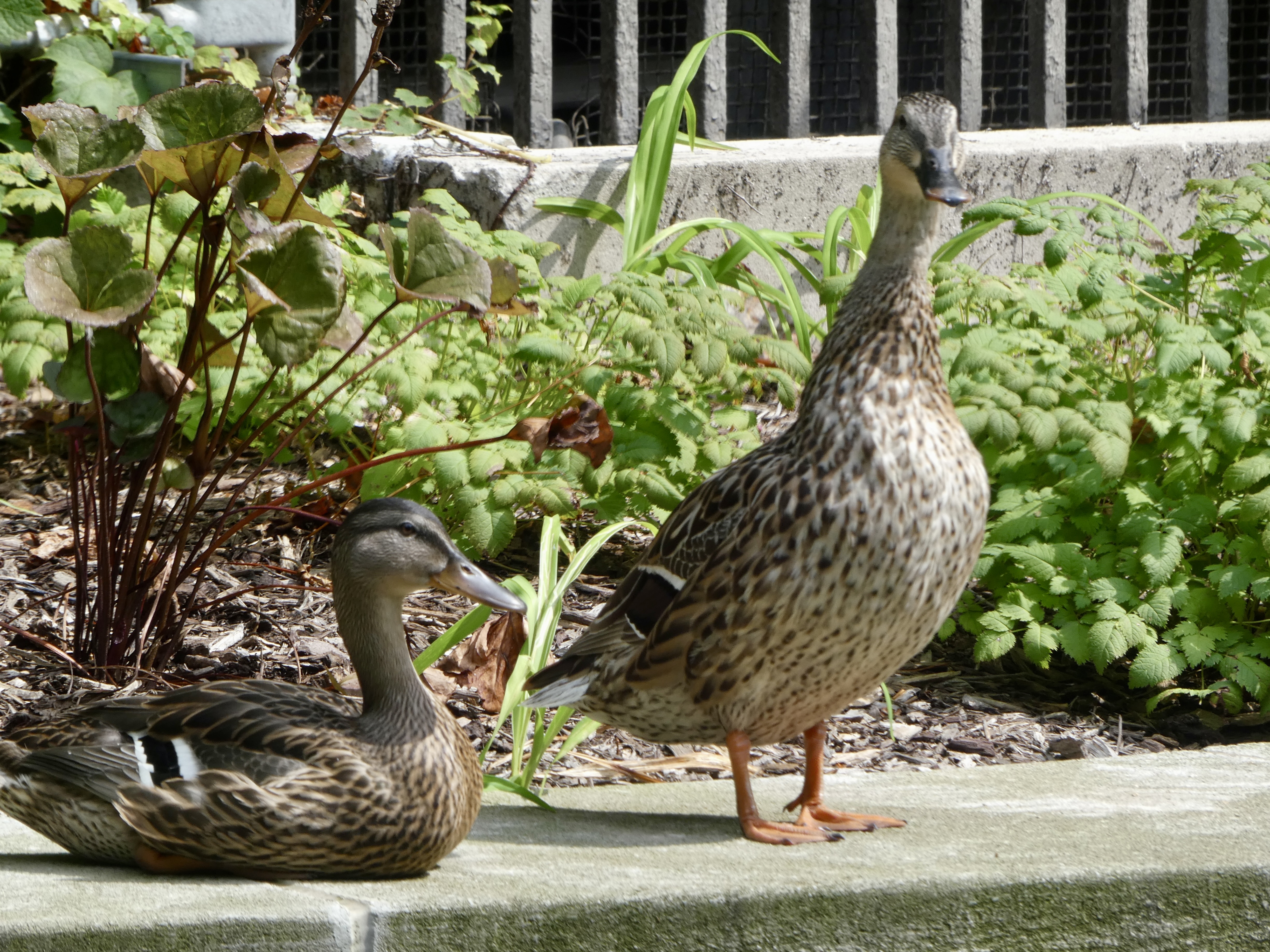
Some photos of her offspring. They are all but adults now. One is looking up, as you can see by his tilted head. I’m told that the females have orange on their bills (the two to the left) while the males lack orange but have a pale yellow color (two to the right):
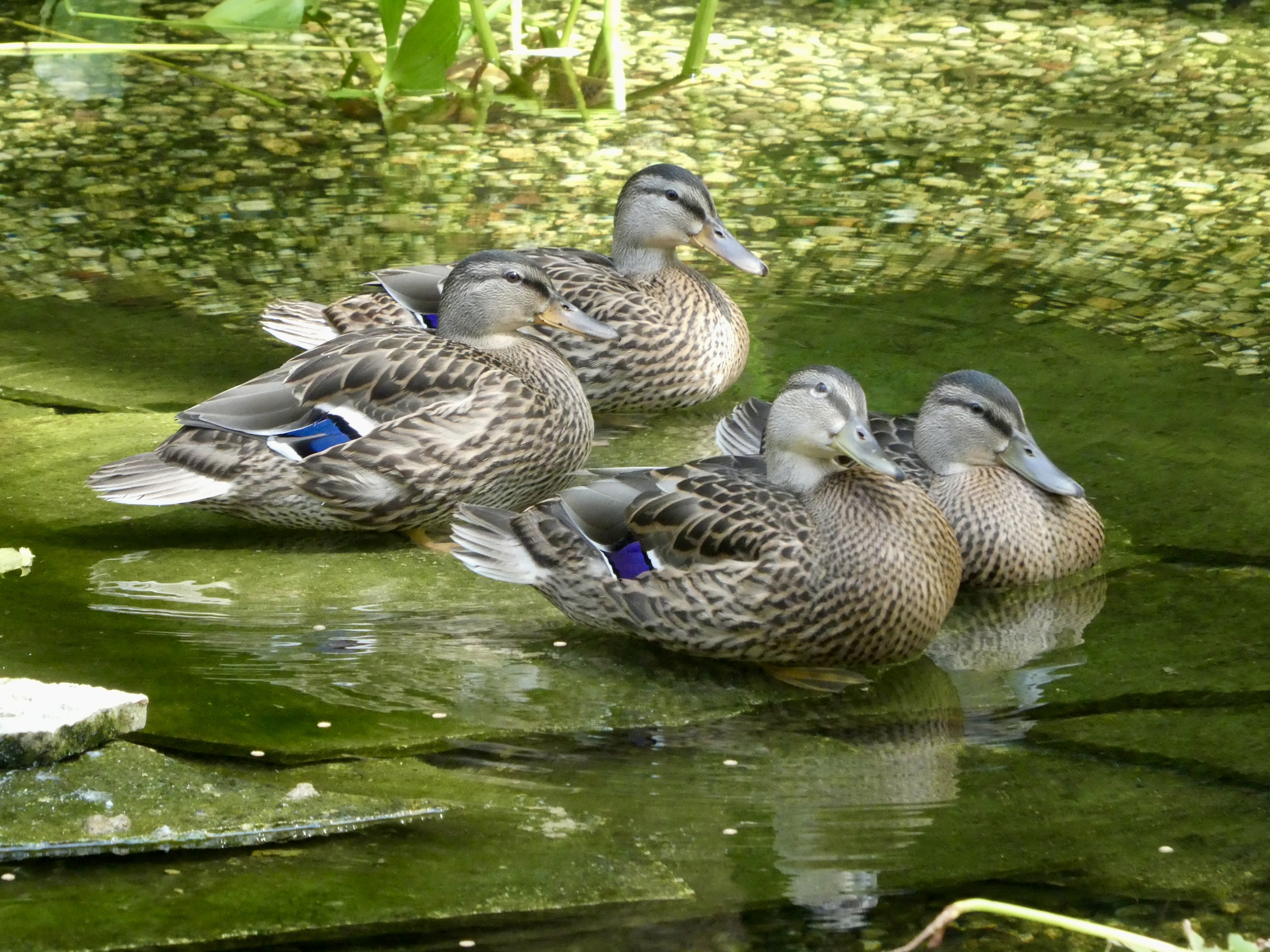
Here a Boy Duck is quacking, but males can’t make the classic duck quack, which is limited to females. Males make a sort of gutteral quack-grunt that is lower in volume:
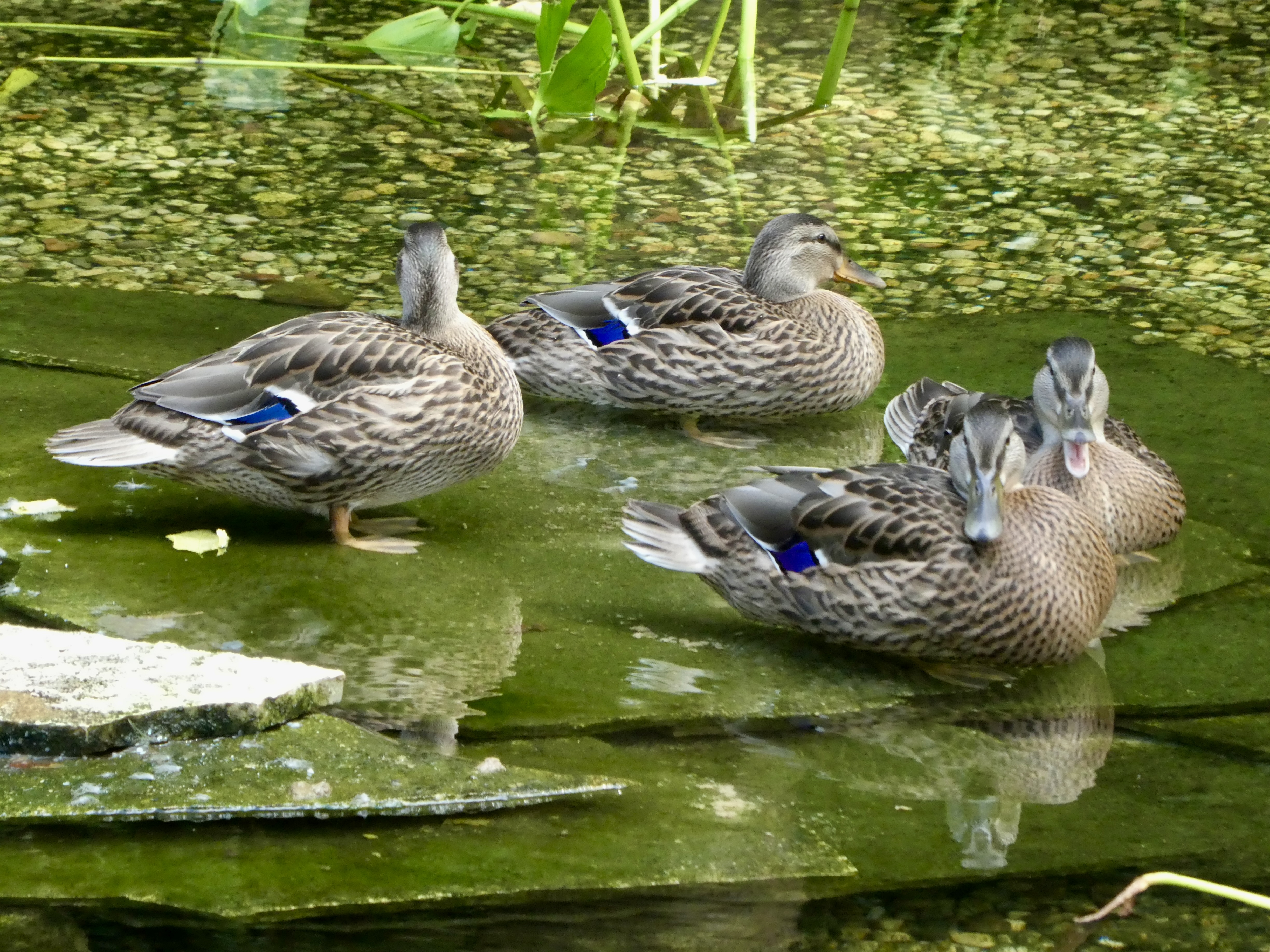
The two males. They won’t develop their characteristic color and pattern (green head, white neck ring, etc.) until they overwinter.
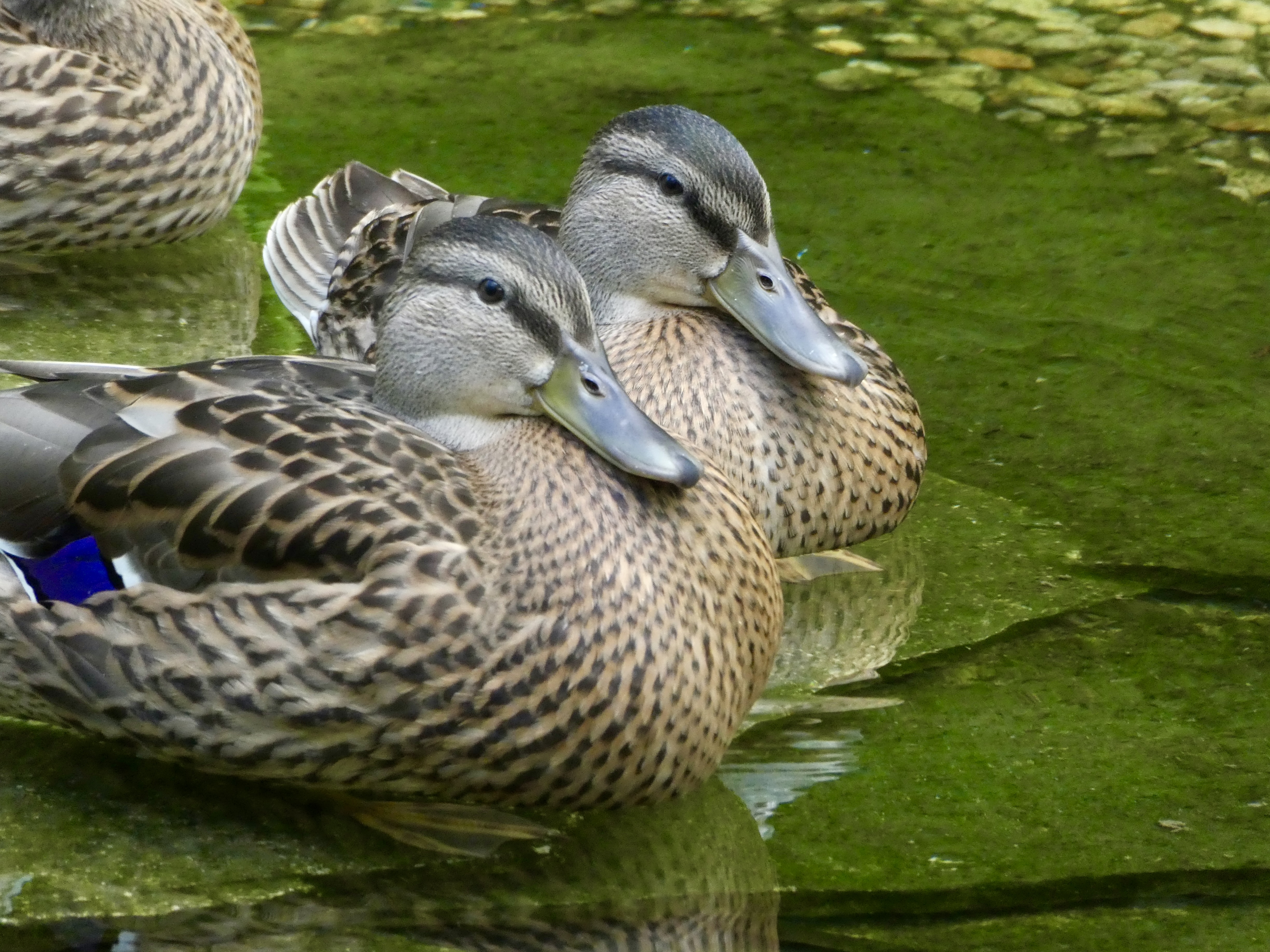
But despite their bad behavior during mating season, the males are still beautiful.
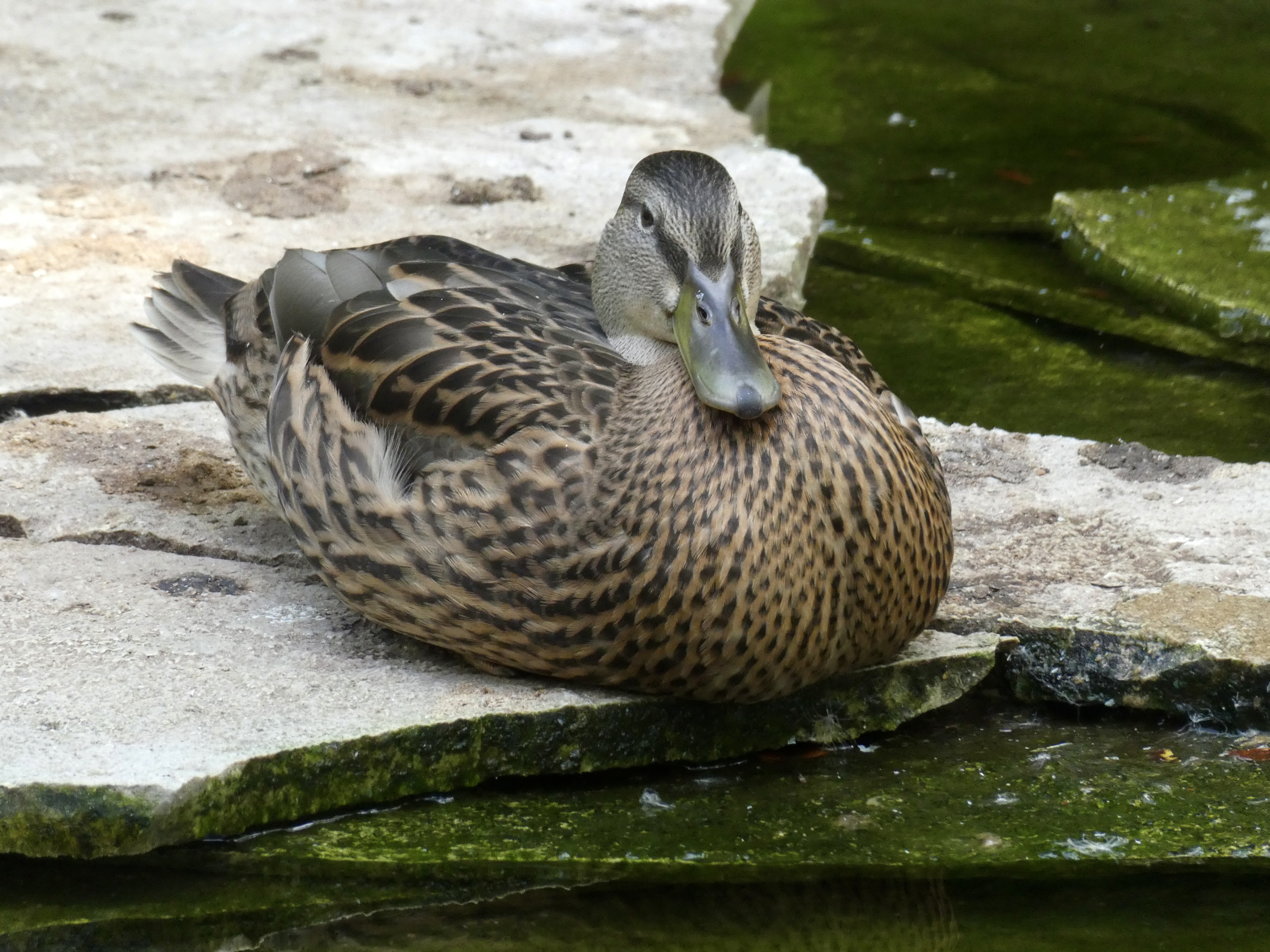
It was hot on this day, and two of the ducks are doing gular fluttering, which is not panting but a rapid form of fluttering of the throat that evaporates moisture and cools the bird. The second duck from the right is looking up, while the one on the extreme left is sleeping with its nictitating membrane closed:
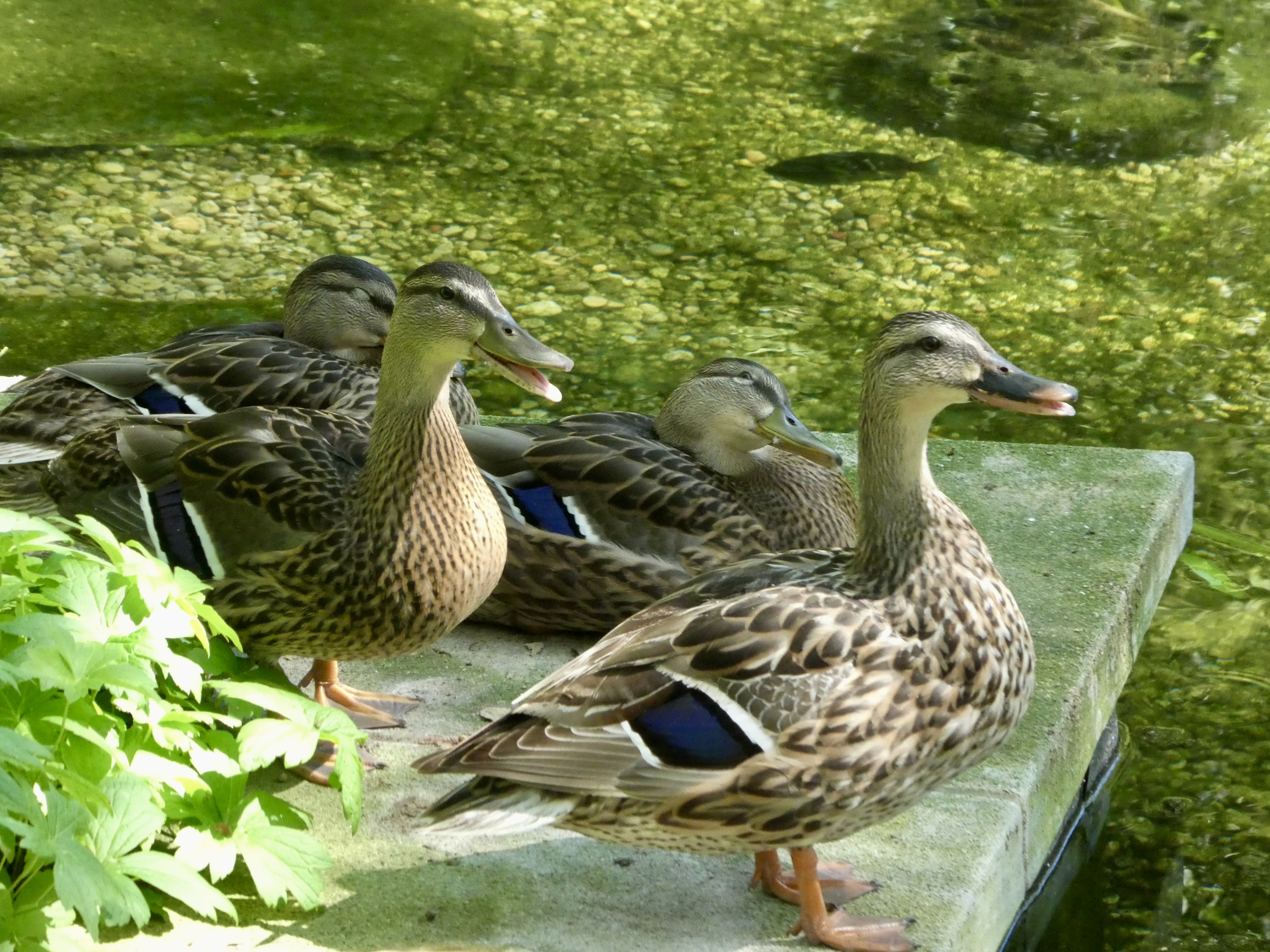
Lately the ducklings aren’t as keen for the food I give them, and my theory (which is mine) is that they are doing more dabbling in the water, sticking their bills in the substrate to get a mouthful of food which they strain out through the serrations on the edge of their bills. They are also foraging more on land, which I like because tmust learn to be wild ducks without a nice man to feed them.
They often stick their bills in the dirt around the pots of plants installed in the pond. Here’s a video of them doing it (humans are discussing a book in the background):
I expect that they’ll fly for real (i.e., bodies and feet out of the water) within a week or ten days. They are flapping their wings a lot and, after meals, zoom across the pond, occasionally levitating their bodies out of the water: a Wright-Brothers type of flight.
Here’s a big flap. You can see that the wing feathers aren’t full-sized.
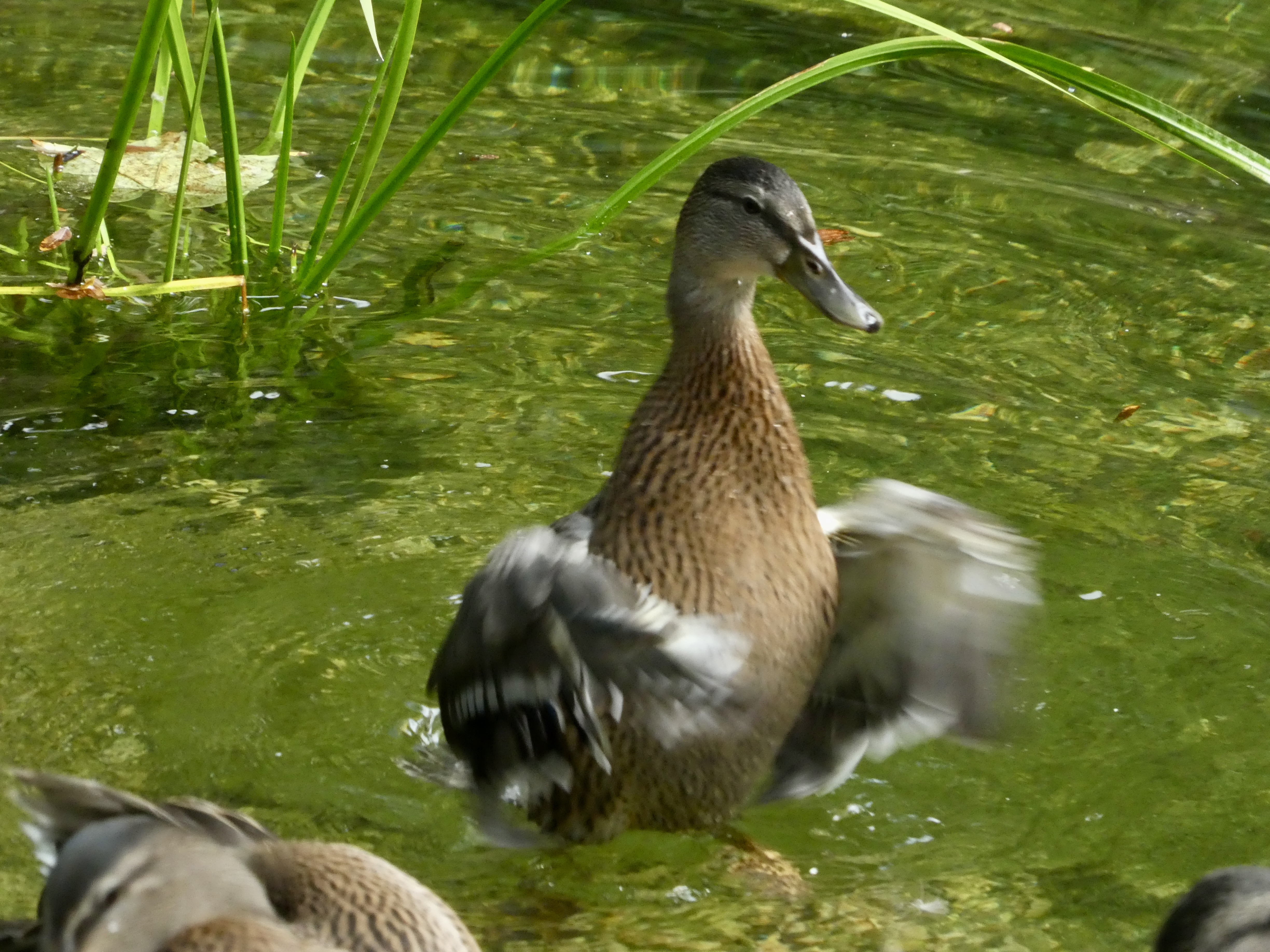
And four instances of zooming between September 9 and September 11. You can see their bodies leave the water occasionally:
Wing flapping, which develops their flight muscles:
You can never predict when they’ll zoom, but it’s much more likely after meals, as if they’re celebrating a good feed. You can also hear a quack, which is clearly from a female.
Here’s a good case of the zoomies which took place last Friday. People who stop by the pond and see this have no idea what’s going on. Keep watching as they zoom several times in this clip. There is another quack near the end.
Nice-looking ducks!
I would give Miss Duck the benefit of the doubt. As you point out, “she was a good mother up until near the end”, so though there is no evidence of violence at the pond, I prefer to believe that she may have met an untimely end in service to her kids…flying away to get something for them and stopped from returning by an animal or human predator or some natural accident. Her record was too good for me to believe, without evidence, that she simply flew off and abandoned her brood.
It’s interesting to see that the feathers are not yet as long as they will be, which is definitely evident in the picture. I only just realized that I don’t really know how feathers grow. I’m assuming they are sort of…extruded from the base, not growing at the tip, since there doesn’t seem to be vasculature for getting nutrients to the tips of the feathers, but I am far from sure. I’m guessing someone here will know…
Enjoy these videos, if I lived in Chicago I would happily spend hours by the pond watching the ducks.
Thanks for sharing.
Miss Duck has quite the neck. I wonder if she has some goose in her. (Don’t know if they hybridize or not.)
Flying will prove that they don’t need to be taught to do so by their mother. (I’m sure that’s already well known to duck experts.)
I wonder what possessed Miss Duck to fly the coop?