
All is well on Botany Pond. The four ducklings abide, and are growing, healthy, and eating well. Miss Duck is still a great mother, though every few days, when the ducklings are sleeping on a rock, she’ll fly away for 45 minutes or so. Where does she go? Is she just exercising the need for airspeed? I often wait anxiously by the Pond for her return, and feed her as a reward for returning.
In a first of all mother hens I’ve tended, Miss Duck is afraid or wary of turtles, quacking softly when one approaches and feinting towards them with her bill. They do not notice her, and she apparently hasn’t learned that they’re harmless.
Here are a few snaps.
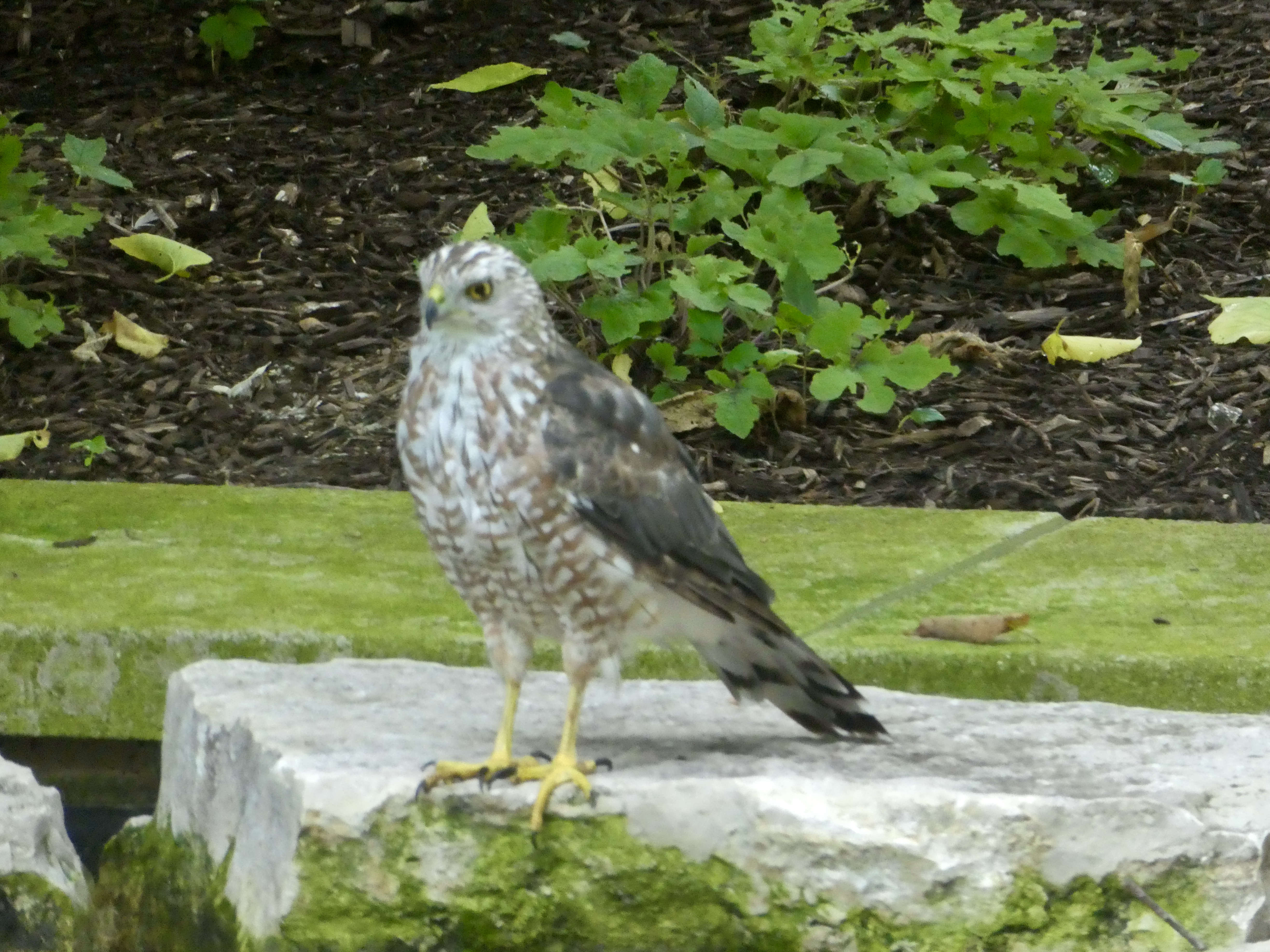
First, a predator nearby! I sent the out-of-focus photo of this raptor to two friends, both of whom identified it as a young Cooper’s Hawk (Astur cooperii). It was only about twenty feet from the brood lounging on the rock. Miss Duck quacked at it, but she made no attempt to flee. One friend, an ornithologist, said this:
That hawk is a curious case because I think it has a mix of two year old (gray) and yearling (brown) feathers plus I am guessing it it partially leucistic (all the white bits). Based on shape I suspect Cooper’s hawks and they are serious bird killers so a duckling is a distinct possibility for its dinner. For a Cooer’s hawk the eye is also very pale and I wonder if that is also part of being leucistic?
Of course I chased it away; it’s out of focus because I was nervous when I photographed it. I haven’t seen it in the past three days, but I think there’s a nest of these guys (or perhaps of red-tailed hawks) supposedly in the Quad nearby. The “serious bird killers” part disturbs me. Fingers crossed. Yes, hawks gotta eat, but not my ducklings! In all the years I’ve tended ducks, we haven’t lost any to predators, though one disappeared from a brood a few years ago.
The hawk looks intent, but of course raptors always look intent.
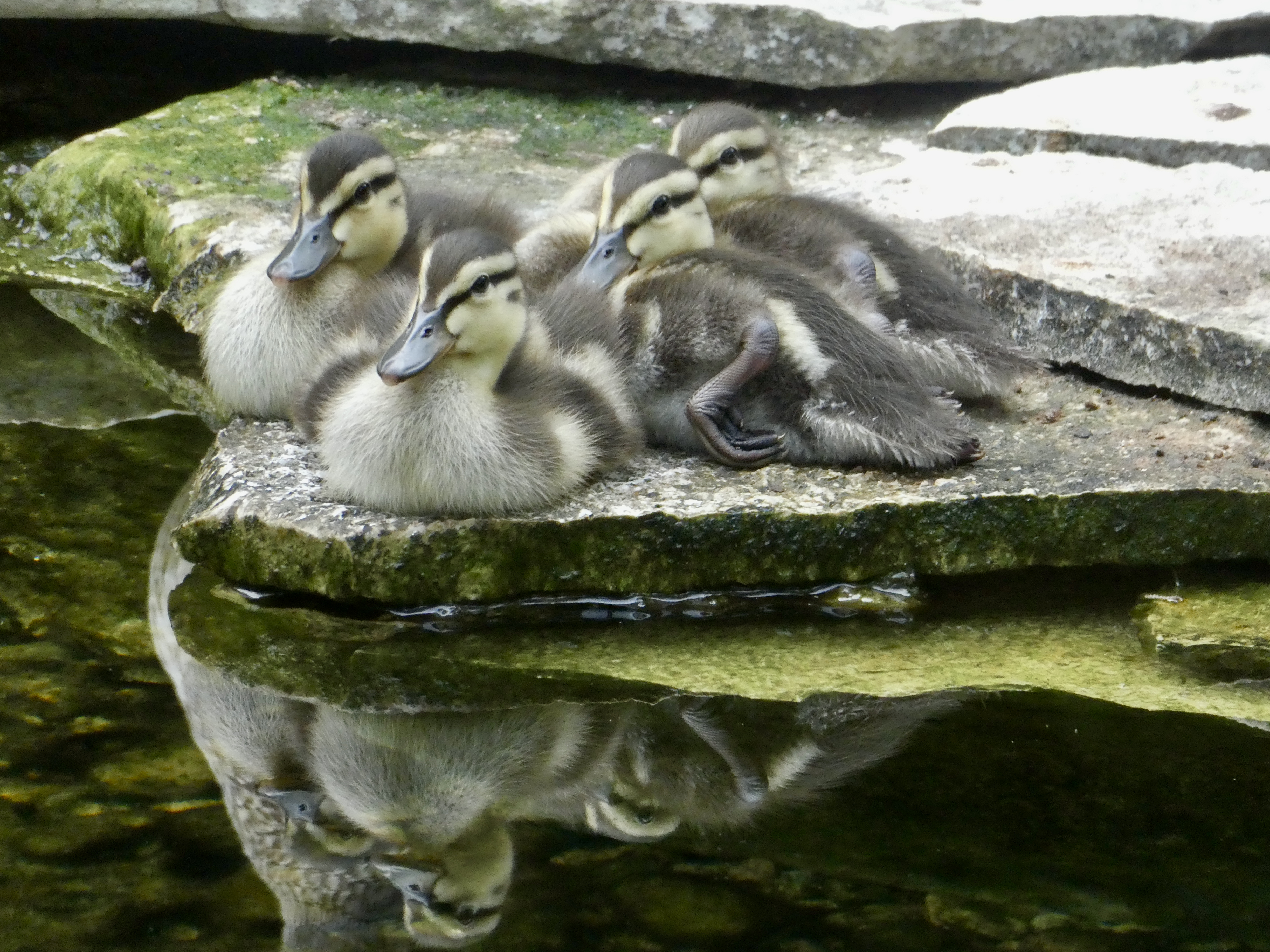
A few more photos of the brood resting. Look at the leg sticking out from the duckling on the right!
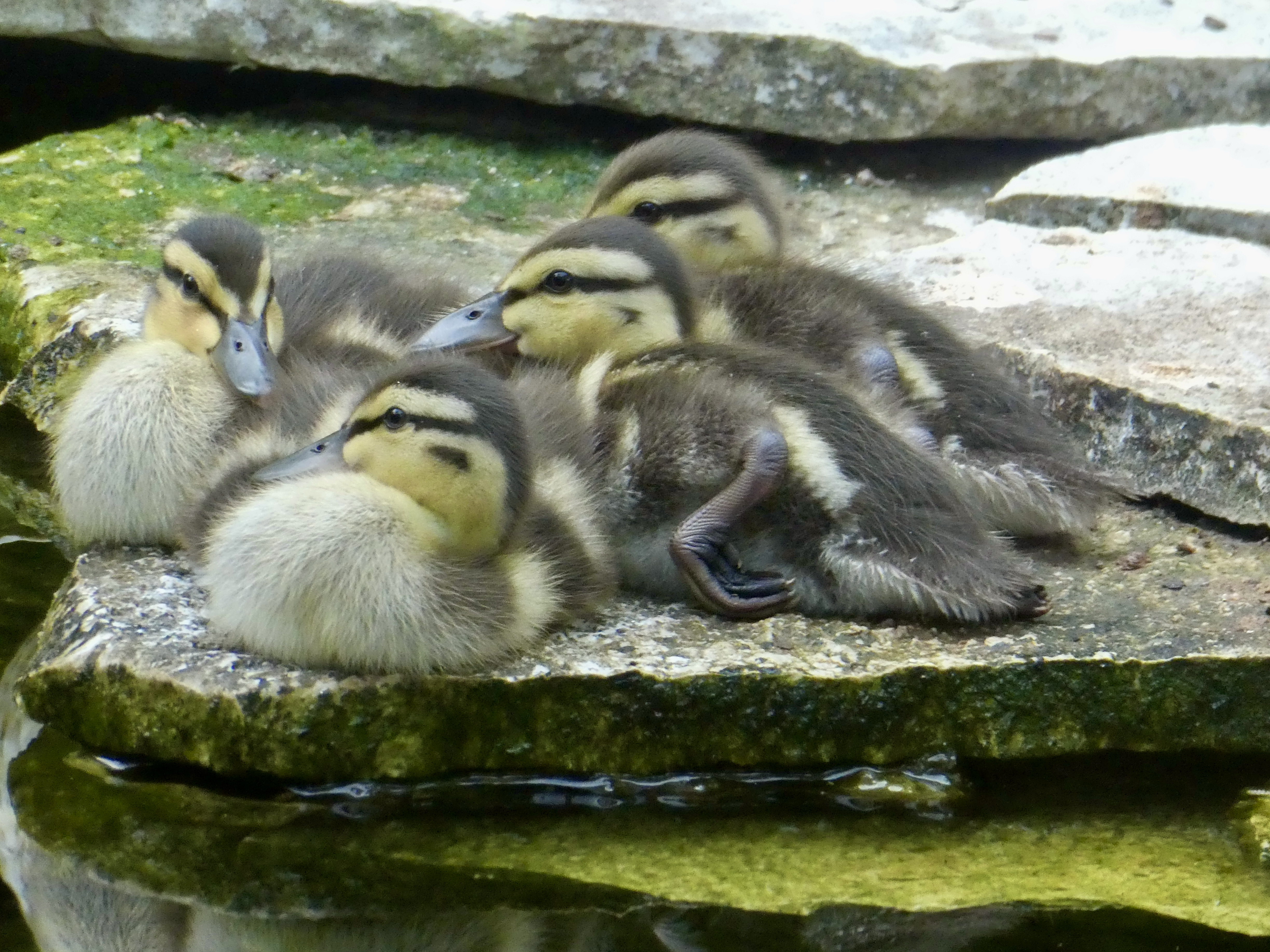
They are starting to look more like adult ducks, though there’s a long way to go (they won’t be flying until mid-September at the earliest). Another leg is sticking out in the photo below. They also have pointy tails and their heads are getting smaller relative to their bodies. Note that they’re well fed!
The stripe through the eye on both adults and ducklings intrigues me, and I can understand it only as a way to camouflage the eye—an indicator of the head that predators may use. I asked Grok, which emitted this answer:
- The eye is often a conspicuous, shiny target. A strong horizontal dark stripe through it blurs or conceals its exact location from a distance, making it harder for aerial or ground predators to lock onto the head.
- Combined with the mottled brown body plumage, the stripe acts as disruptive coloration: it interrupts the smooth outline of the head so the bird blends better into reeds, grasses, mud, or water edges.
- This is especially critical for nesting females (who sit exposed for weeks) and for ducklings, which are highly vulnerable right after hatching. Sources specifically note that the ducklings’ eye stripes provide excellent camouflage in the wild.
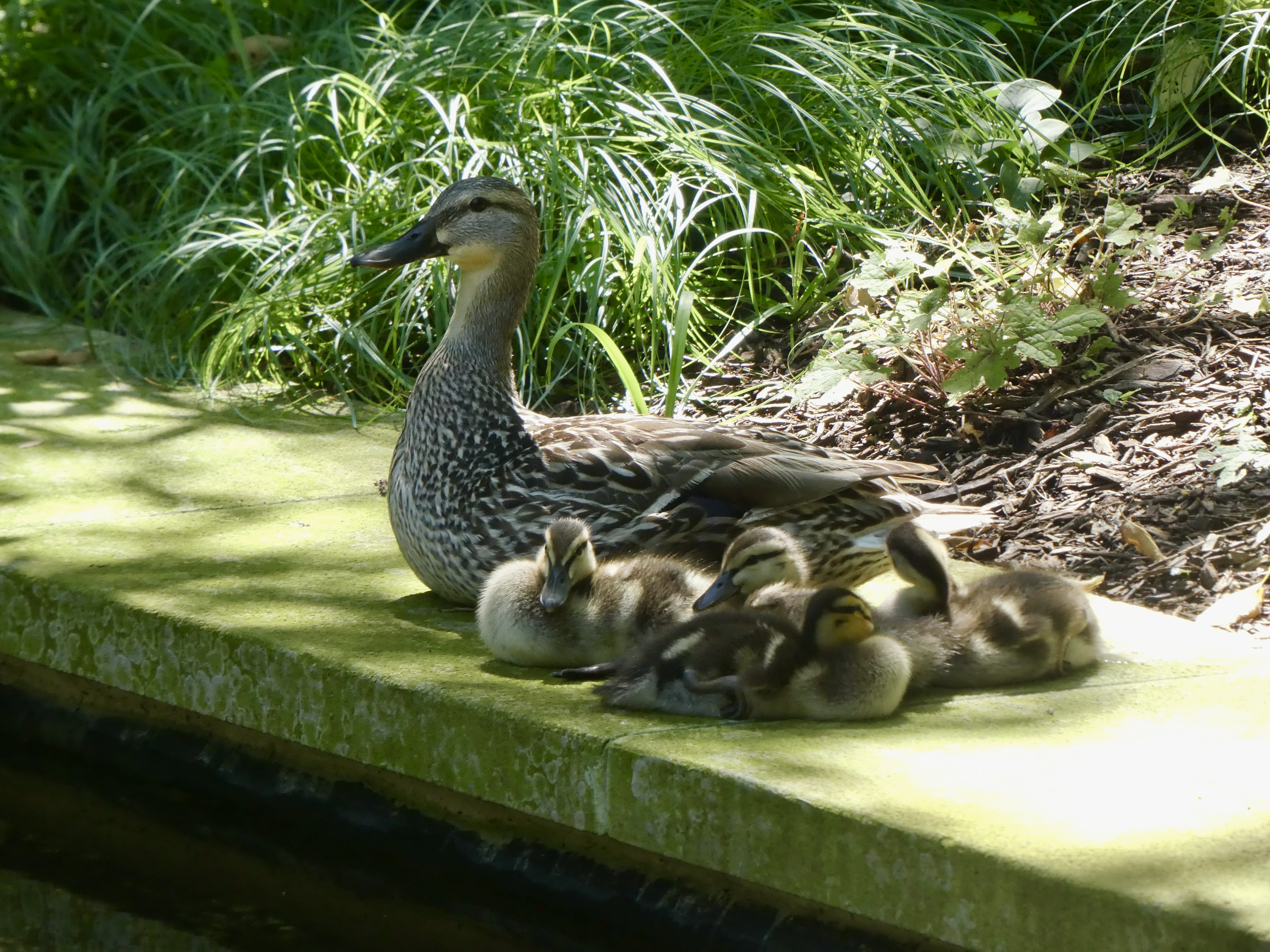
Mom et brood resting on the edge of the pond in a shady area (it was hot two days ago). Note that Miss Duck also has the eye stripe:
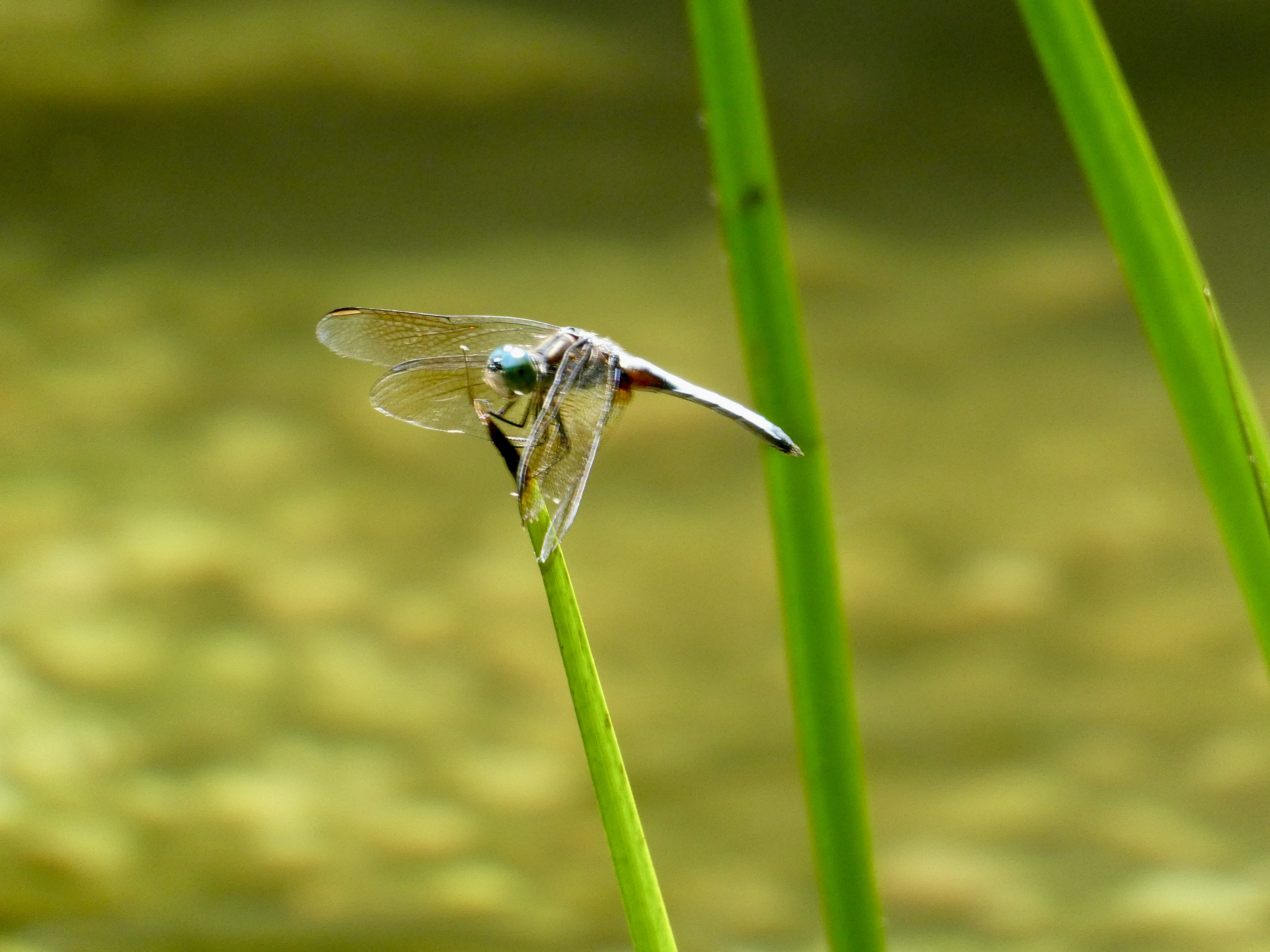
Finally, the pond is now full of dragonflies, and although Miss Duck tries to catch them, they are too fast for her. I’ve seen a duck catch a dragonfly only once. I don’t know the species of this one, but perhaps Mark Sturtevant will oblige:
I think that’s the hawk. I saw the other week in that area and at the pond. I’m happy to know the babies are safe. Previously it landed on a branch right above a squirrel I was feeding. I was so scared for the squirrel, but he didn’t attack.
I wonder if the hawk has anything to do with what happened earlier this year.
I doubt it, as the new brood has shown no sign of leaving. I am pretty sure it was the aggressive drakes, which are gone.
Blue Dasher Dragonfly (Pachydiplax longipennis. The angle makes it a bit challenging, but I think it is a young-ish male. If so, then as it matures it will develop a waxy coating that turns it mostly pale blue.
Does it have a longer penis than other species of dragonfly?
What passes for that seems … about average? The origin of the term is obscure to me.
I’m happy the ducks are doing well.
Nice! That hawk looks very serious indeed. Keep an eye on it.
the cooper’s hawk in photo is a immature bird, it’s plumage will change and eye color will change from yellow to orange to red as it ages
I love photo #2: Real Duckies! Wow have they grown in just the past week.
I am sure that camouflage is part of the reason for the eye stripe, but in some birds it also seems well suited to shading the feathers that are in the bird’s field of view, which can improve contrast and acuity for the bird. A good example is the Peregrine Falcon, and there is some preliminary evidence to support this:
https:
https://ebird.org/news/photos-reveal-purpose-of-black-facial-markings-in-peregrine-falcons
Beautiful photos!
They grow up so fast.