
Today’s bird photos (and one of a reptile) come from reader Jan Malek, and were taken in New Jersey. Jan’s captions are indented and you can enlarge the photos by clicking on them.
At the beginning of this June, I visited the Edwin B. Forsythe National Wildlife Refuge (that’s quite a mouthful; it would be easier to just say “Brigantine.” Bombastic names are a symptom of societal decline) in southern NJ.
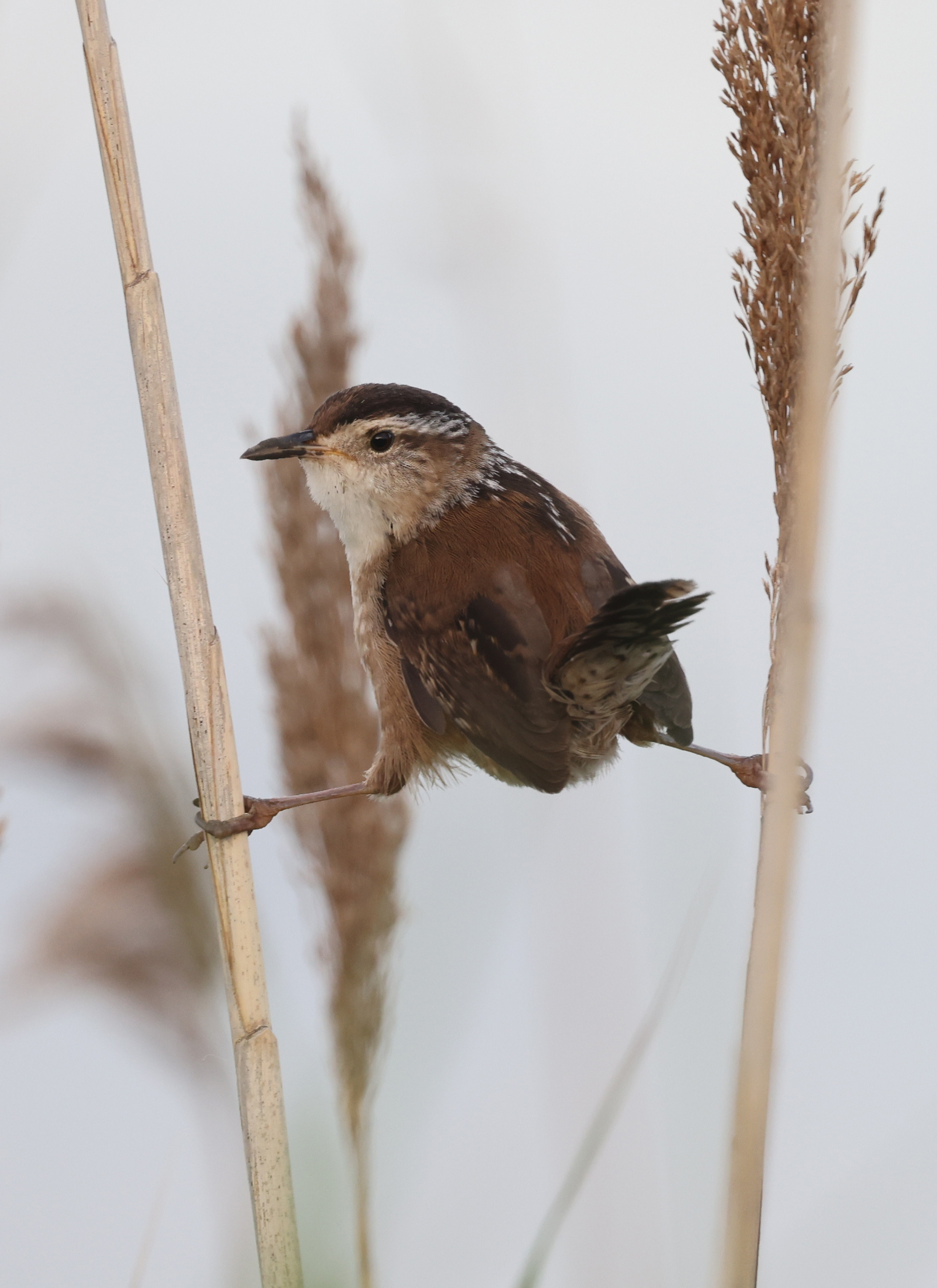
Marsh wrens (Cistothorus palustris) were nesting in the reed thicket. The male builds 3 to 12 nests and the female chooses one; the others help determine the territory or just serve as a testament to the male’s fitness. Another hypothesis is that they work as decoys to prevent predation. Thanks to flexible hip joints, unlike other birds, wrens can strike an impossible pose while clinging to cattail reeds:
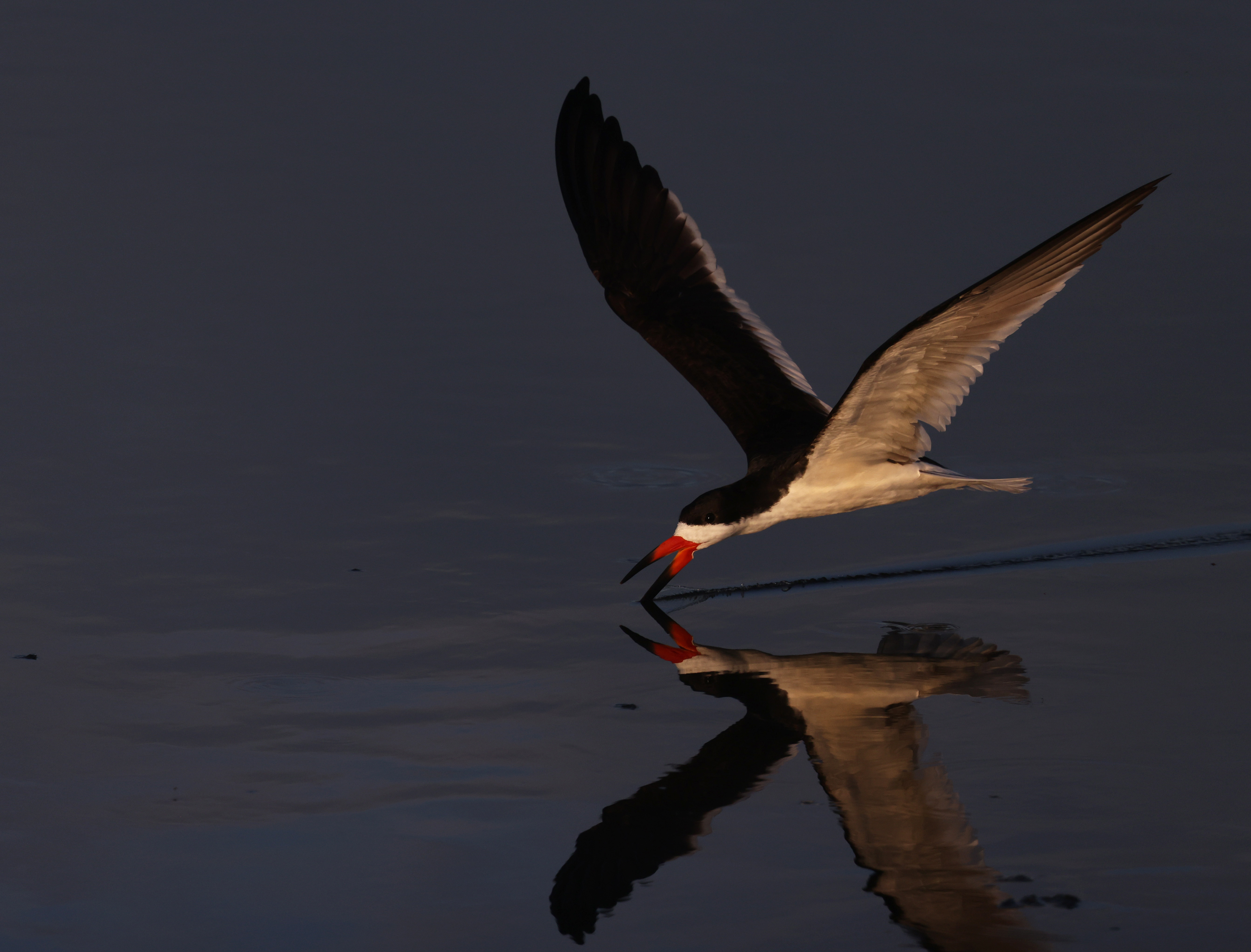
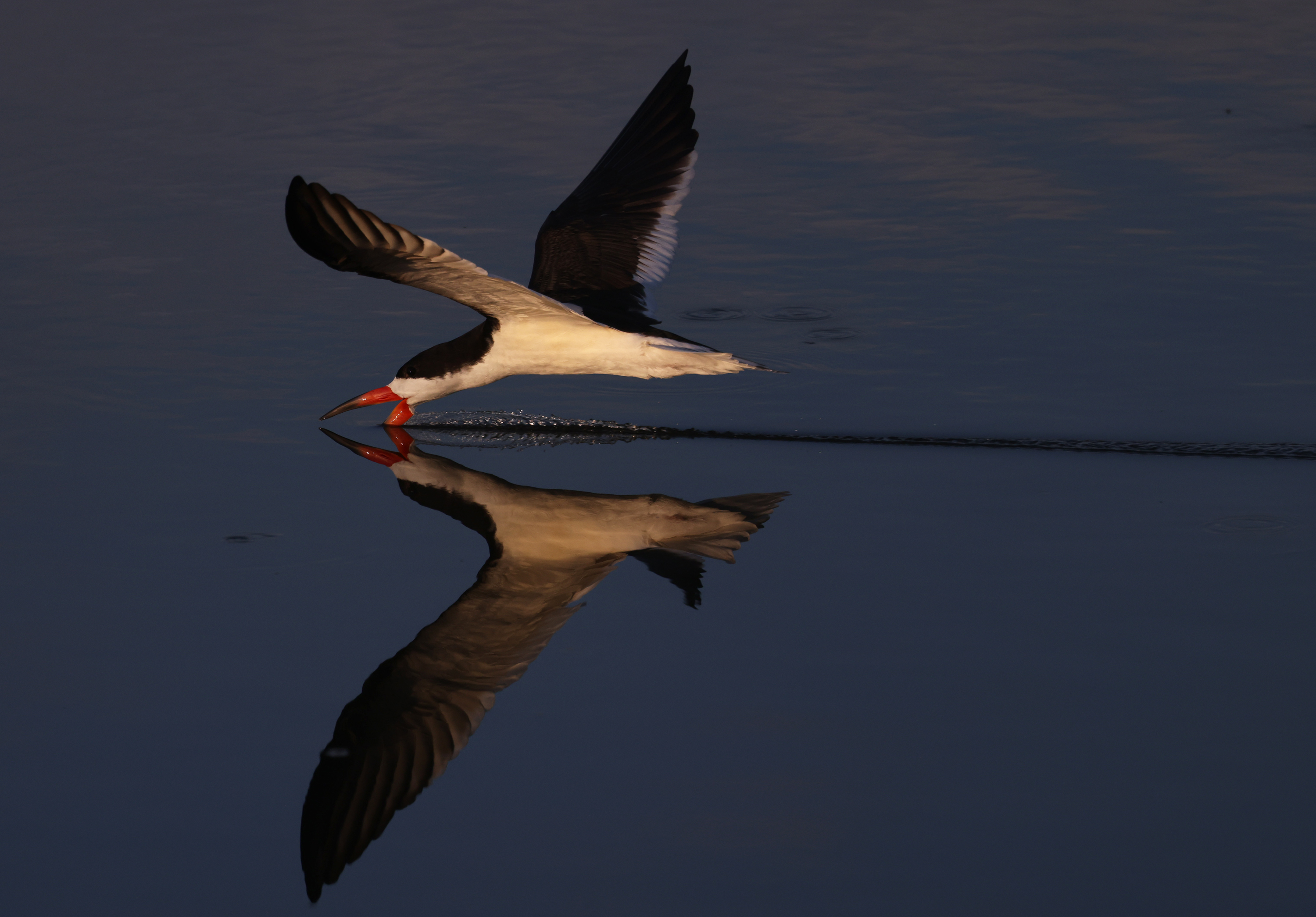
A black skimmer (Rynchops niger) made its characteristic low-level fishing sweeps over the channel just after sunrise—a quite late work shift for these crepuscular birds. I was always puzzled by how these birds manage to fly with a good part of their lower mandible submerged in water. It would appear that such drag would severely disrupt or even stall a bird. Any human-made aircraft, when attempting a water landing from a gliding flight, is at severe risk of a violent stall when any part comes into contact with the water. Besides our black skimmer, there are only two other closely related species in the Rynchops genus, attesting to how rare this useful adaptation is:
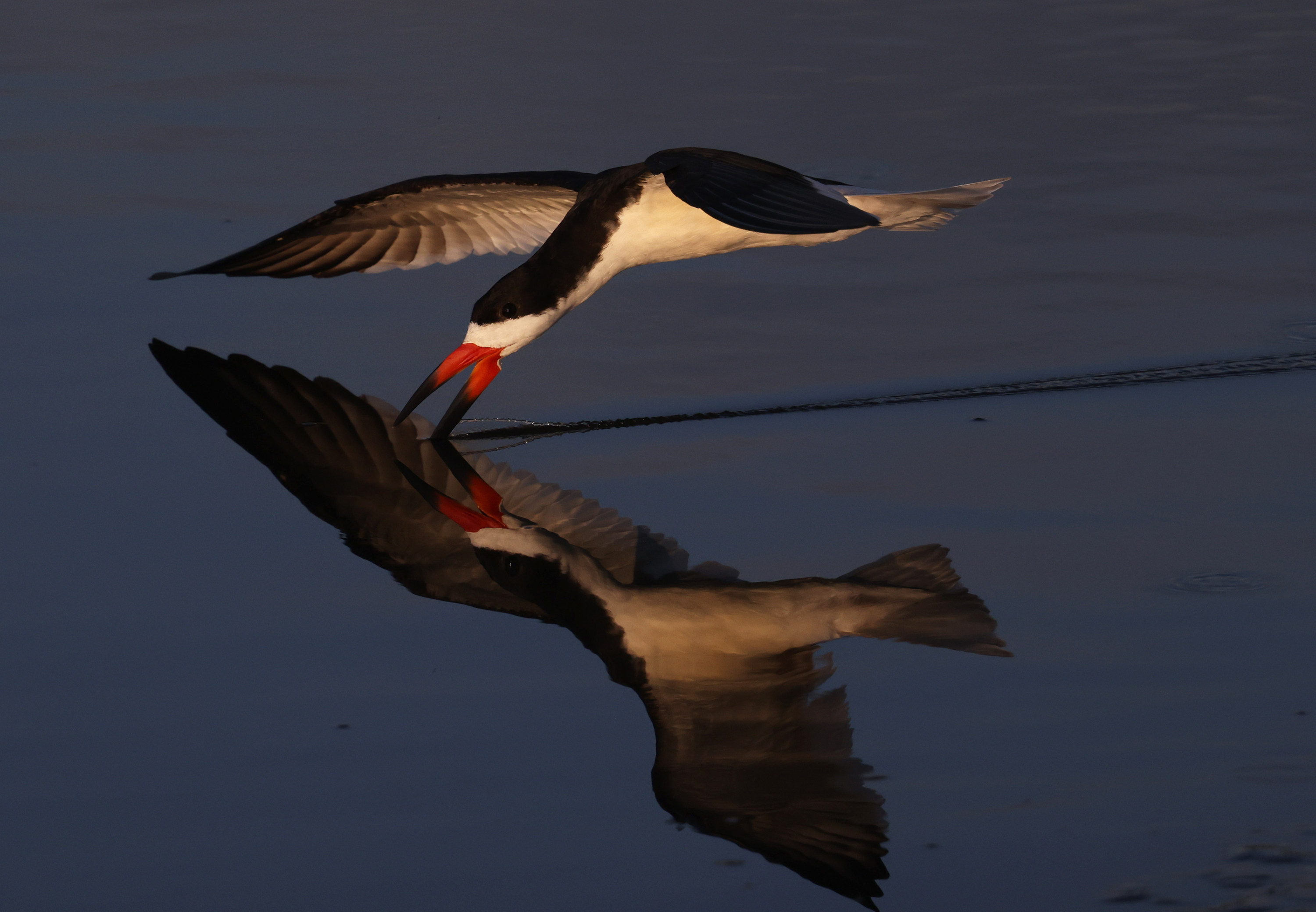
Looking closer, it turns out the skimmer’s mandible is not like any other bird’s. Its edges are almost fused together to create a knife-edge structure, so when the bird lowers its lower mandible (which is longer than the upper maxilla) into the water, the hydrodynamic drag forces are three orders of magnitude smaller than the lift force the bird creates. The bird maximizes its lift by almost touching the water, using the ground effect, which, to my limited knowledge of physics, compresses a cushion of air and drastically reduces drag beneath the wings, giving the bird some energy recovery from what was spent to remain aloft. The bill is shaped in such a way that dragging it in the water does not create a spray that would hit the bird and disrupt its flight; rather, the water is pushed aside, like waves from a highly efficient racing speedboat:
But what happens when the skimmer catches prey, which can be a sizable fish? It would seem such an obstacle would ruin all the streamlined beak adaptations and stall the bird. But no: the moment the skimmer senses prey, its beak snaps shut and the bird automatically relaxes its neck muscles, all in milliseconds, and the head smoothly pivots down, absorbing the sudden drag increase:
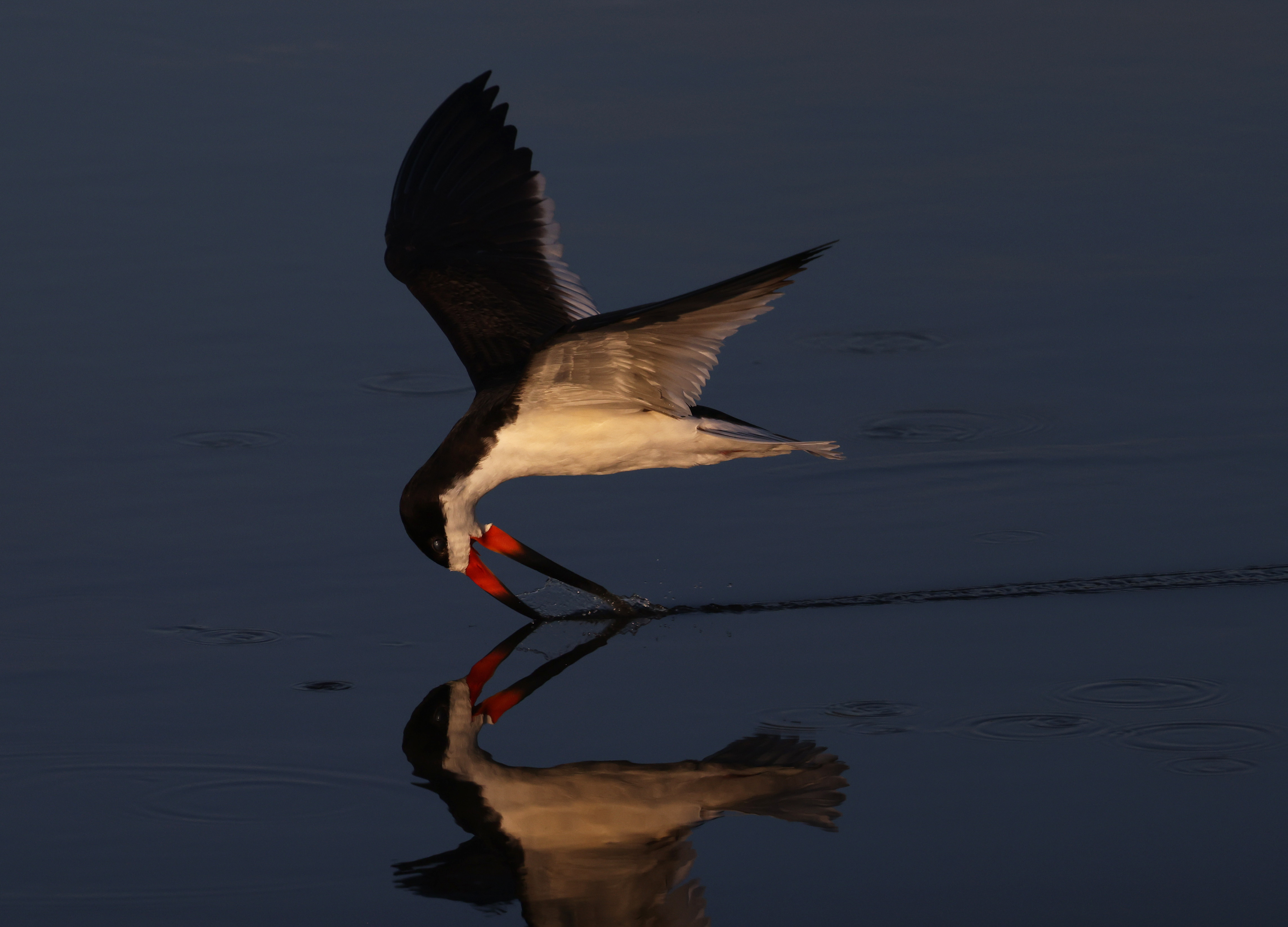
This time the skimmer has missed—no prey:
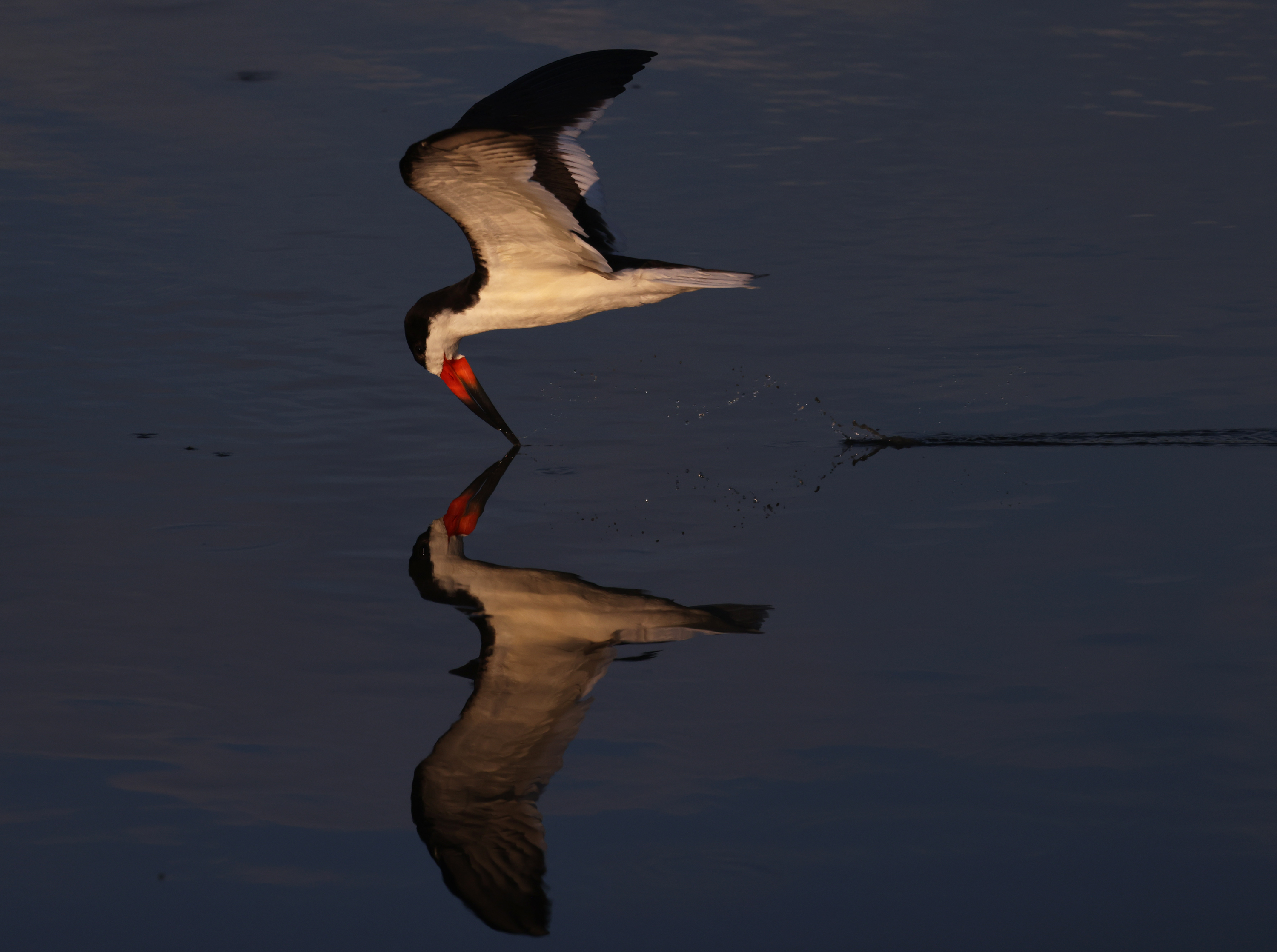
These adaptations are so unique that I’d risk predicting that biomechanics and closely imitating living organisms’ adaptations in man-made objects will be the next wave of inventions after the AI revolution. For better and worse, imagine microscopic synthetic amoebas in the bloodstream targeting and destroying cancer cells, or robotic dragonflies carrying ultra-small-caliber munitions that seek humans on the battlefield:
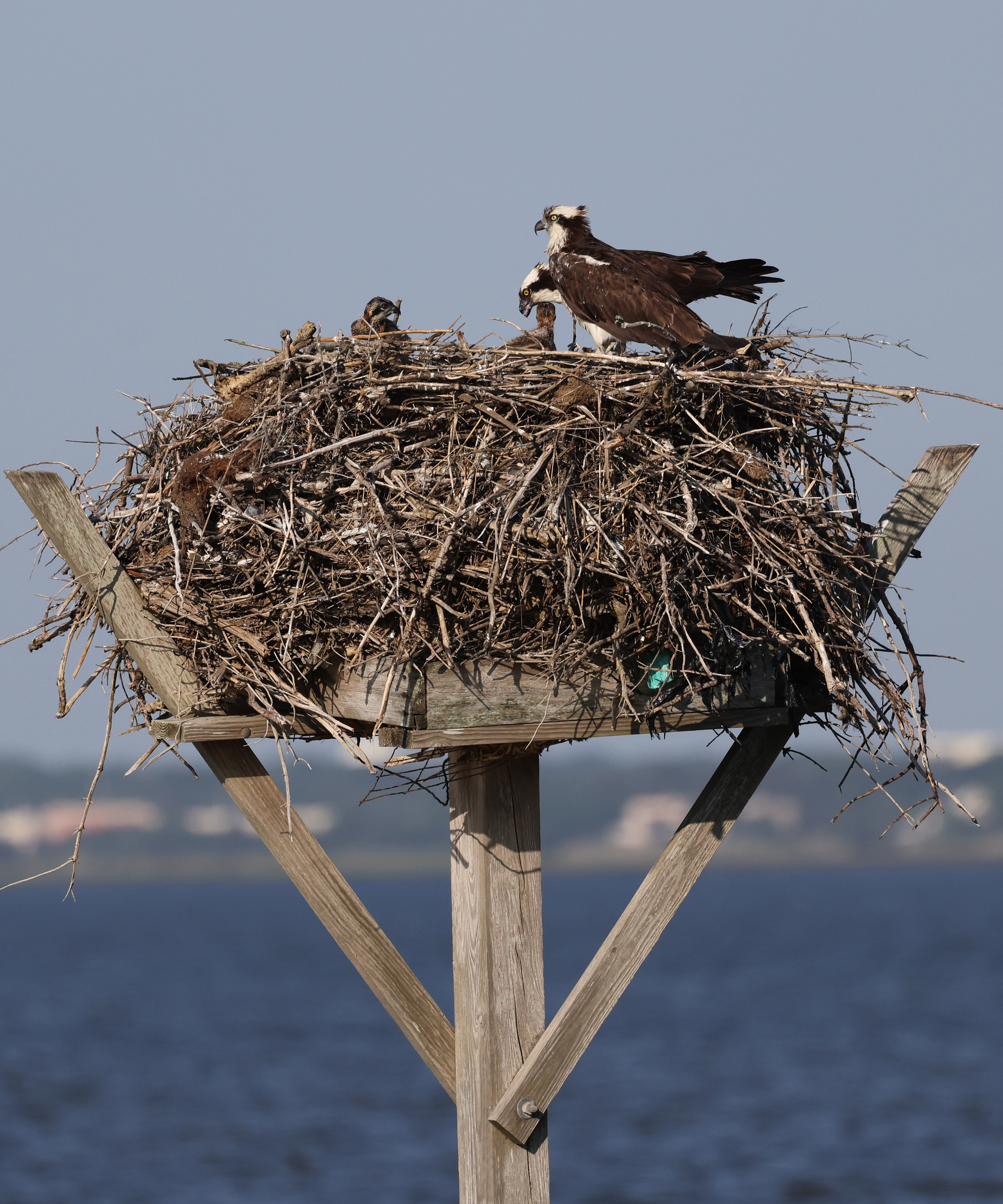
By my count, about 6 pairs of ospreys (Pandion haliaetus) nest close to the observation road, their density determined by artificial nesting sites. Each site has a main nest platform and a separate perch where one of the birds can get a rest from chick-rearing duties:
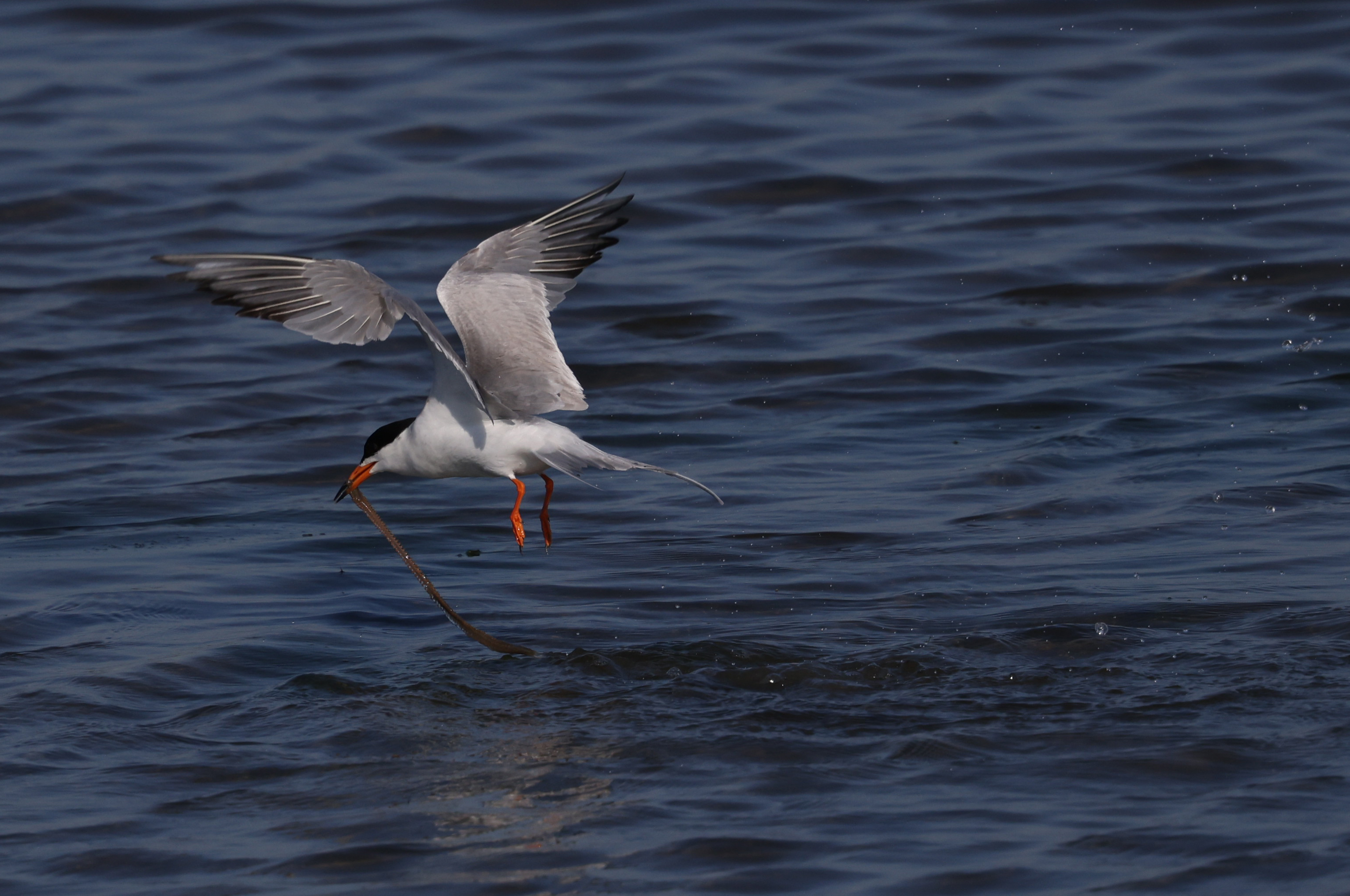
Terns (probably Forster’s terns, Sterna forsteri) made their fishing runs about two hours after sunrise. Here, “fishing” is understood broadly, as this bird caught a marine worm. It was probably a polychaete worm (class Polychaeta), which swarm to the surface during their breeding season. I wonder how the tern managed to swallow this catch:
Fish caught in the shallows attracted the attention of a group of snowy egrets (Egretta thula):
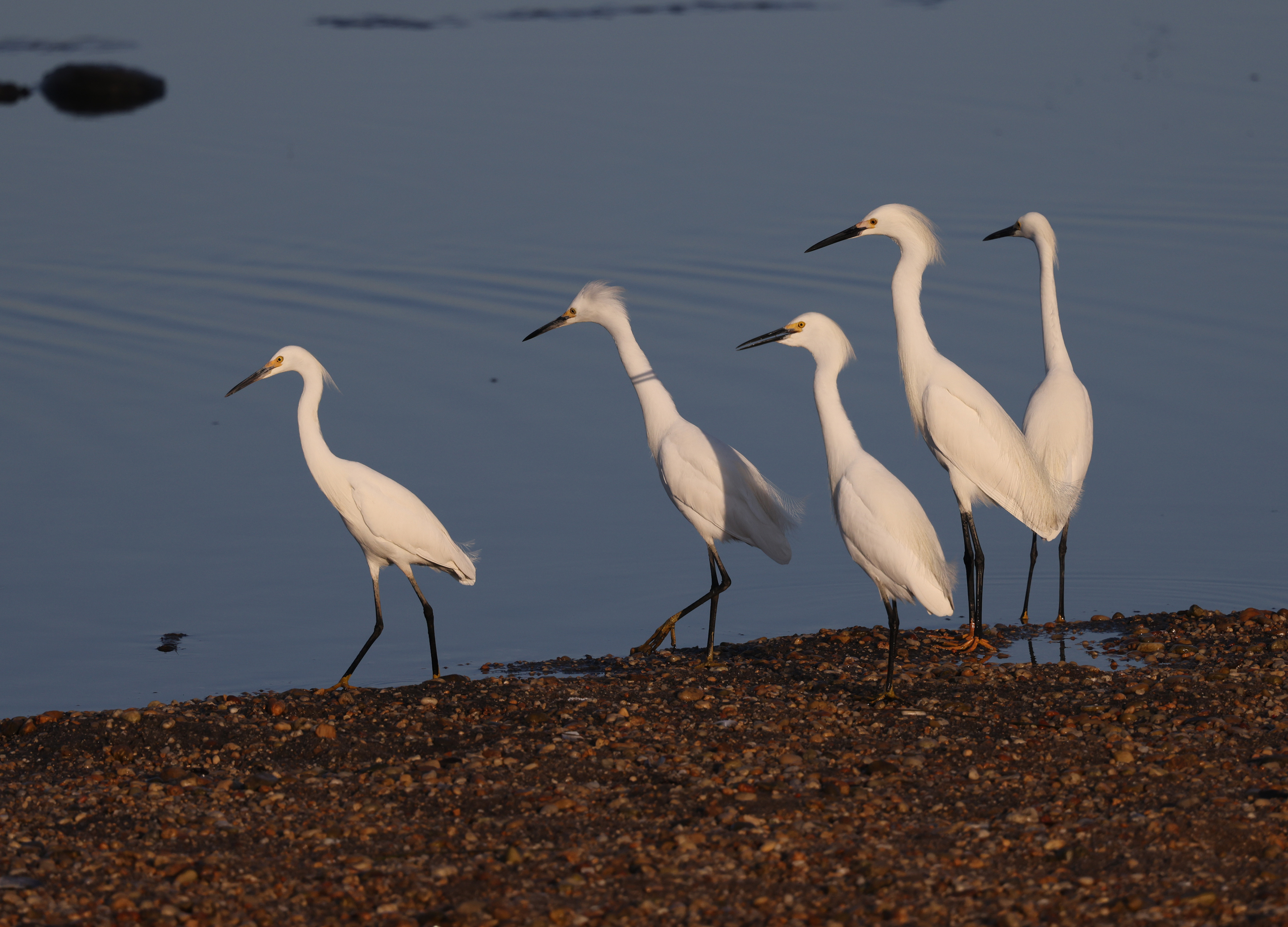
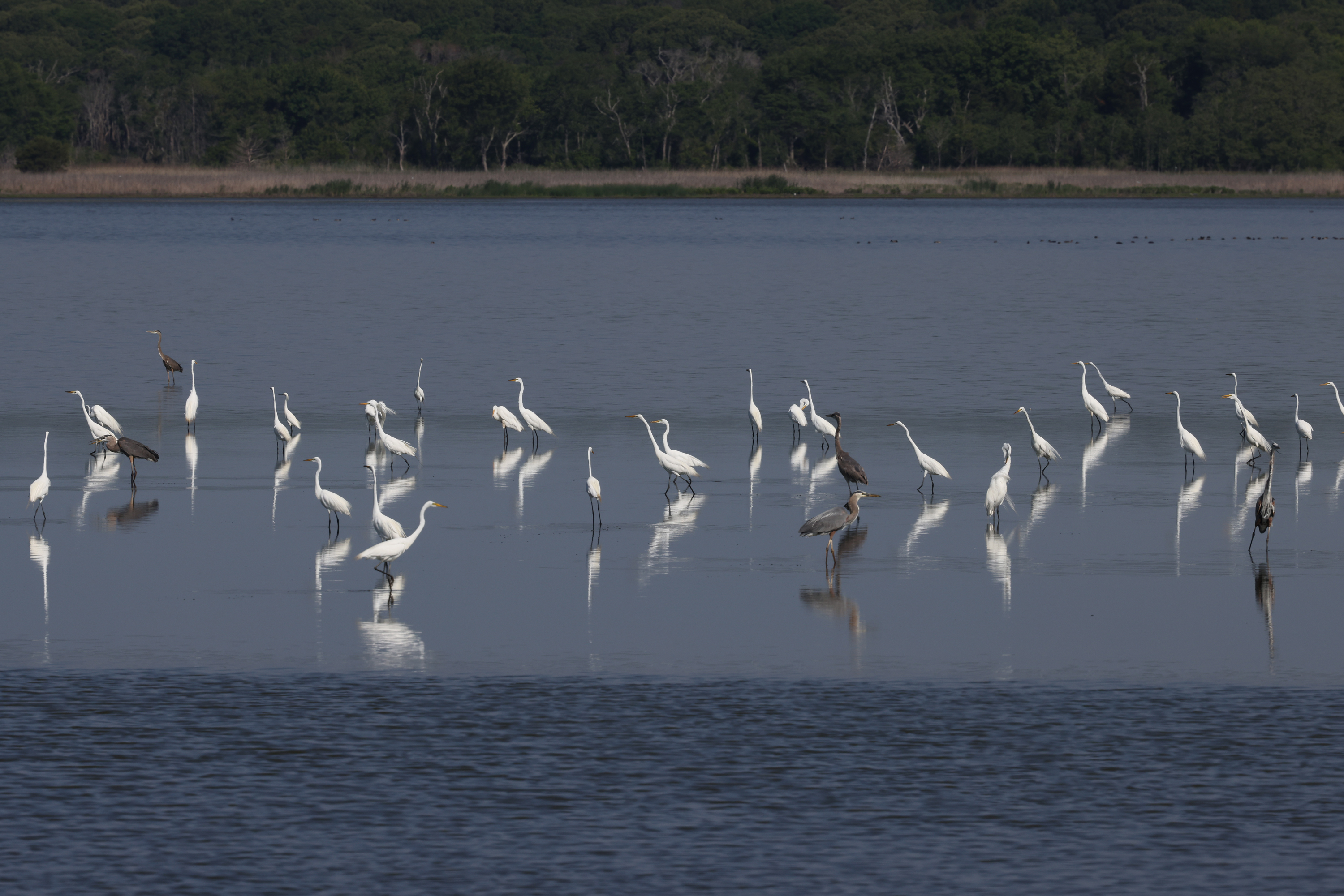
Elsewhere, a mixed congregation of herons loitered in the water. Great egrets (Ardea alba), great blue herons (Ardea herodias), and snowies should be tending their chicks in a heronry at this time, so perhaps these were the societal rejects, unable to find a nest:
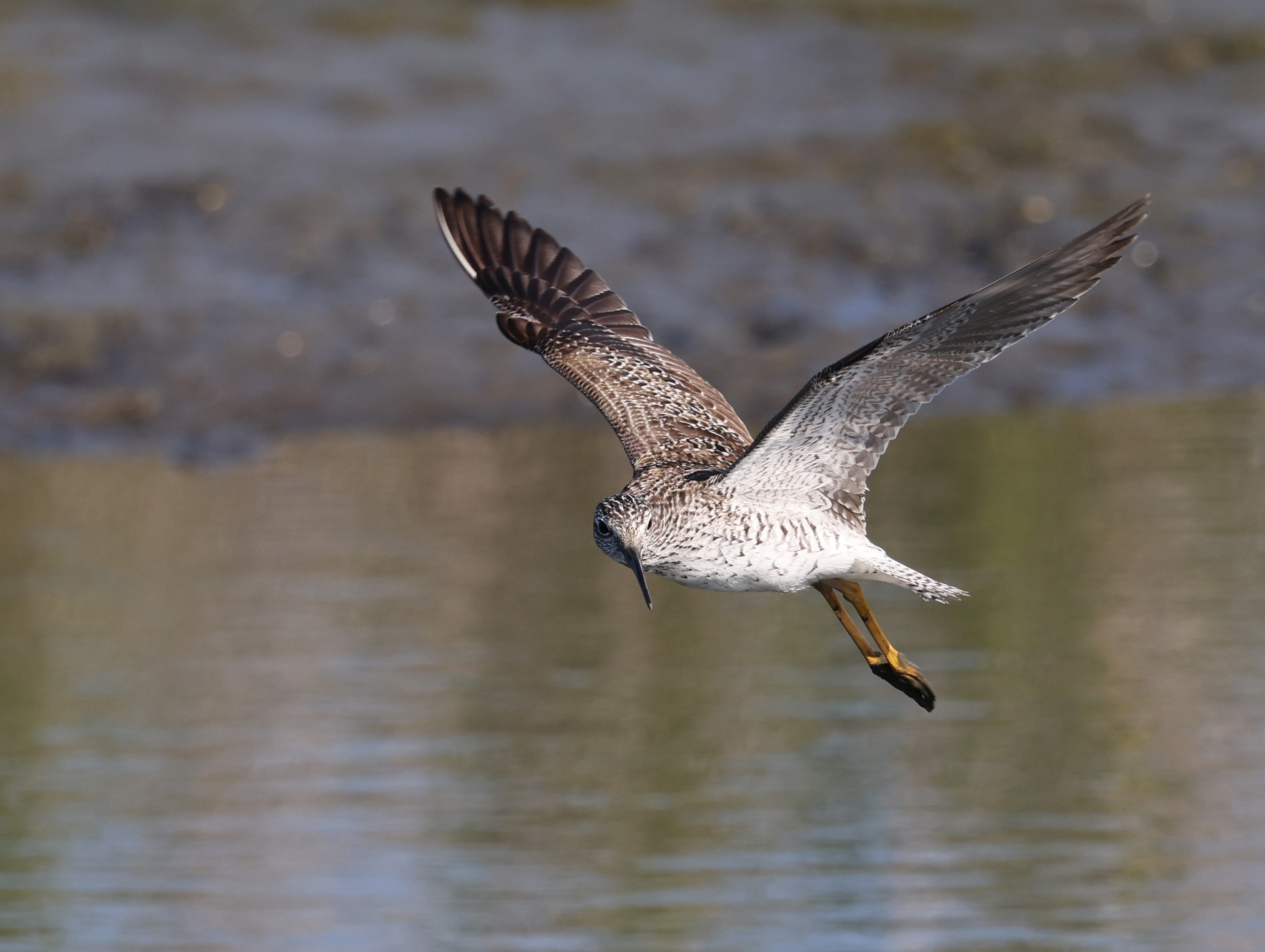
A shorebird stopped in the marsh, a bit late in its travel toward the Arctic. Based on the bill shape, I’m 55% certain it is a Greater yellowlegs (Tringa melanoleuca):
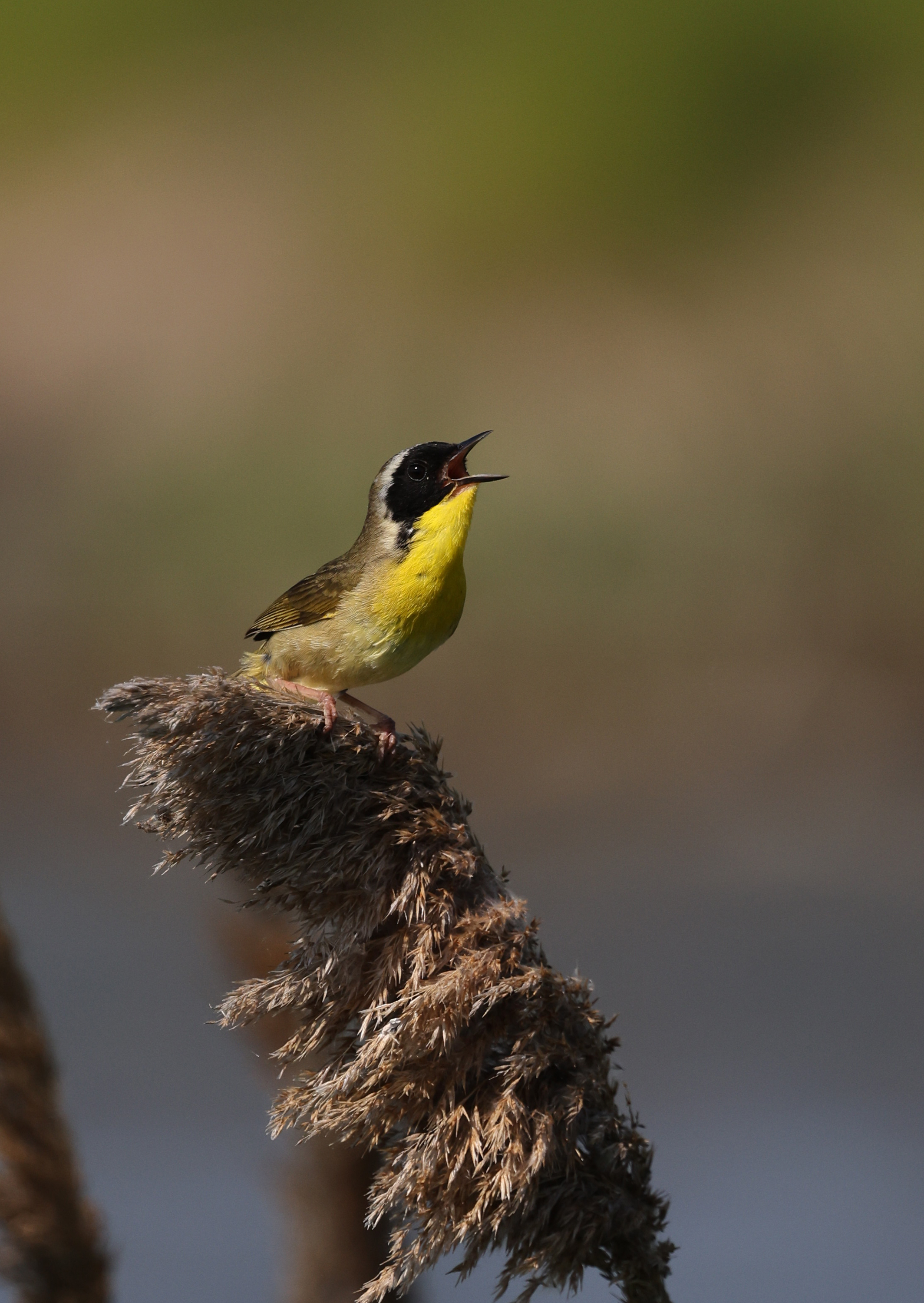
With the sun higher in the sky, males of the common yellowthroat (Geothlypis trichas) started singing. I don’t get why they didn’t call it a “Black-masked warbler”:
To conclude this small series, here is something for the herpers: a Northern diamondback terrapin (Malaclemys terrapin terrapin).was crossing the road and curled up in a defensive posture before my car It took a while for the turtle to relax and go on its way:

Beautiful pics today, thanks for posting! Hope you’re enjoying having visitors this week. I’m glad these photos are still coming in from readers.
Very nice!
Ospreys are under severe pressure at least in the Chesapeake Bay, because the menhaden (herring) are being hammered. No good!
That terrapin is the best! Remember our visit to EBF earlier this year. It’s a nice habitat.
Nice collection of photos and an excellent commentary on the Black Skimmer. And what’s not to like about the beautiful terrapin making his way across the road? (I hope he made it safely!)
Really cool pictures, and I did not know all that about Skimmers! One detail that I know is that the chicks are born with matching upper and lower beaks. The lower beak elongates as they grow up.
Thanks so much. I am amazed how the skimmer operates.
What an incredible series of photos of the skimmer fishing.
All the photos are just beautiful.
Love the explanation of the skimmer’s flight, and the great photos. Thamks!
These are extraordinary photos, beautiful and biologically interesting. The narration was also fascinating. I’m really glad you shared these with us. Some of the skimmer details were new to me too.
Your pictures are truly stunning. I blew them up to enjoy them even more.
Also, the info about how skimmers overcome the forces of drag is fascinating. Evolution doesn’t miss a trick.
Thank you!
Lovely pics and fascinating information. Thanks!