
Send in your photos, for it’s 2026!
Neil Taylor sent in a miscellany of photos from the UK. His captions are indented, and you can enlarge the photos by clicking on them:
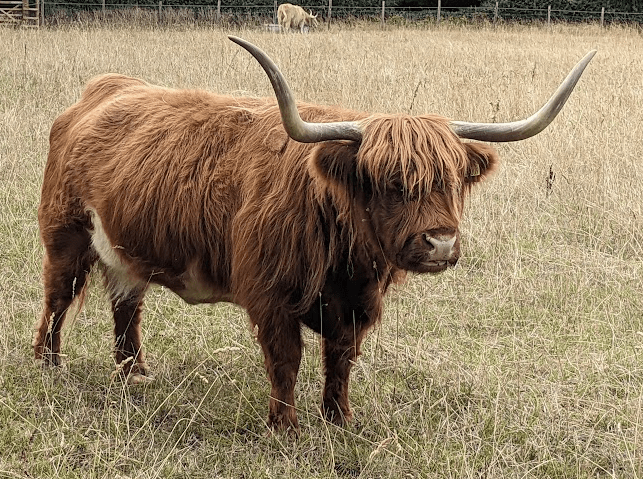
Highland Cattle:
Chip-stealing Herring Gulls (Larus argentatus) gather to mob their chosen victims! Port St. Mary, the Isle of Man.

Two photos of a zebra jumping spider (Salticus scenicus) eating a greenfly (species unidentified):


A large house spider, an Eratigena species:

An Ichneumon Wasp:

A labyrinth spider (Agelena labyrinthica) in its funnel web with the remains of ladybird beetles (Coccinella septempunctata):

These photos taken in the environs of Cambridge the UK unless otherwise stated:Bombylius major – The Large Bee Fly with its large rigid proboscis for nectar feeding:

The delicate beginnings of a wasps’ nest:

A Steatoda nobilis (false widow spider) lifting a caught and wrapped bumble bee (likely Bombus pascuorum, the Carder Bee) to its lair.

An Araneus diadematus, the European garden spider, bites a wrapped and disabled bumble bee (likely Bombus pascuorum, the Carder Bee).

Araneus diadematus, the European garden spider:

An unidentified frog – Marrakech, Morocco:

An unidentified moth – Marrakech Morocco:

Nice photos!
Regarding the early wasp’s nest: On QI once, they claimed that bees at least don’t make the cells in their hives hexagonal to start with, but make them round and the cells mutually impinge upon each other and become hexagonal. This wasp’s nest clearly shows that they, at least, start with hexagons. Does anyone here know whether QI was wrong about bees (they’ve bee wrong before)?
That should’ve read “they’ve been wrong before”. No pun was intended.
Nice collection of photos! That Highland bovine is one stout creature. Nice hairdo, too!
Nice photos! Highland calves are the cutest of all cows.
Thanks all for the kind words re: the Photos, but really the main thanks should go to Professor Coyne for hosting so many people’s photos over the years, and for all the other efforts he puts into his website.
Jerry, thank you and Happy New Year.
Oooo, nice work on the nest photo – I’ve been trying to get good photos of the inside of things like Oak Galls, but it messes up the gall.
I love the shaggy hair of the Highland bovine.
Thank you for sharing these!