
Today we have some photos of American otters taken by Ephraim Heller, whose Instagram page, with more wildlife photos, is here. His captions are indented and you can enlarge the photos by clicking on them.
These photos were taken in Grand Teton National Park over three days in February. This North American River Otter (Lontra canadensis) consistently came back to the same fishing spot.
The first time I saw the otter, I watched him catch and eat two large Utah sucker fish (Catostomus ardens). As he was eating, this Common Raven (Corvus corax) approached and nipped at the otter’s tail. I presume the raven was hoping that the otter would become so irritated that he would give up the fish:
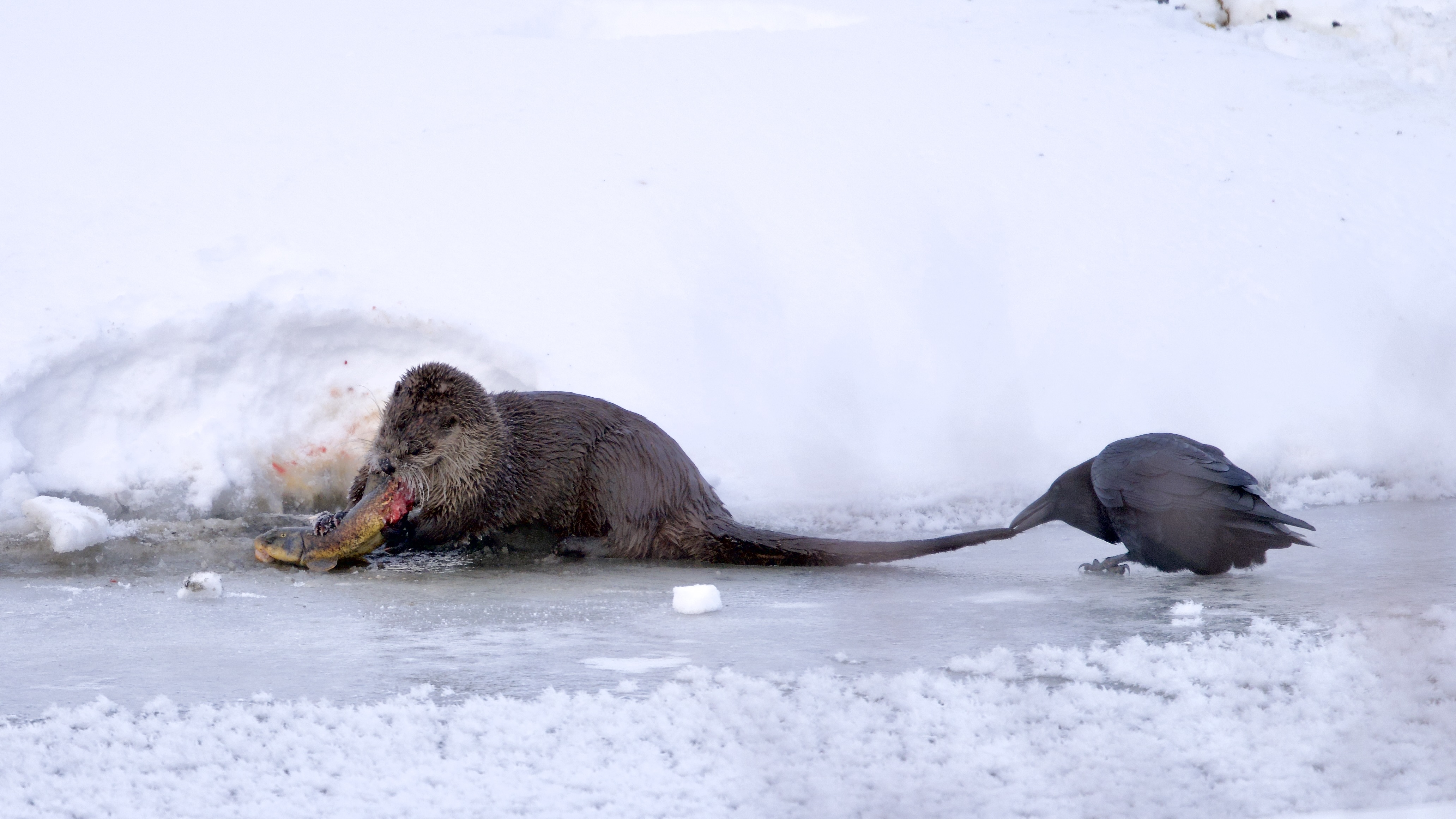
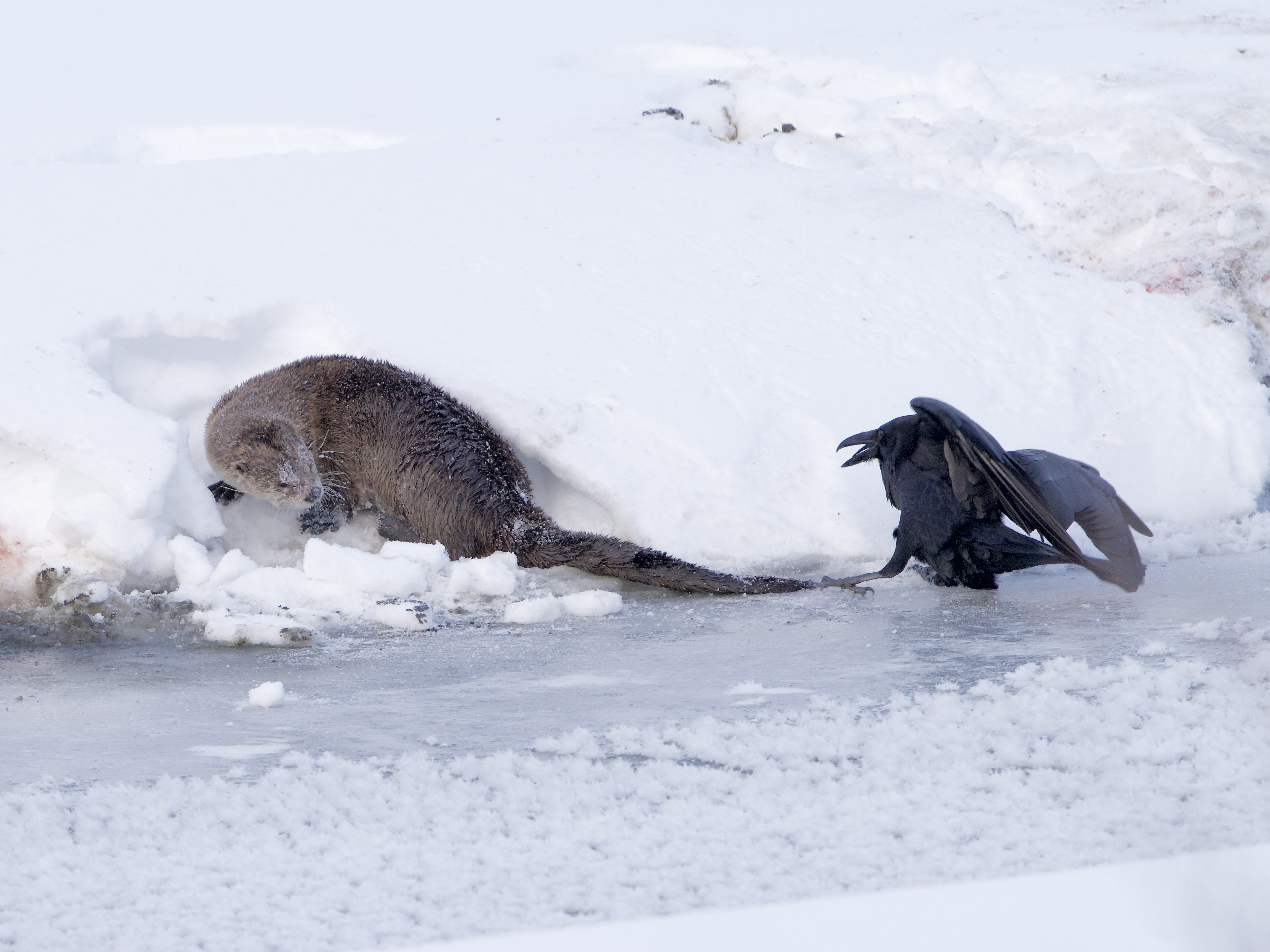
While river otters primarily eat fish, they will happily eat a bird when the opportunity arises. I have watched them hunt ducks and even pelicans. Hence this raven was quite bold to be pecking at the otter’s tail. After several minutes of this the otter had had enough. He threw the remains of his sucker fish back into the ice hole and turn to face his attacker. The raven immediately backed off and flew away:
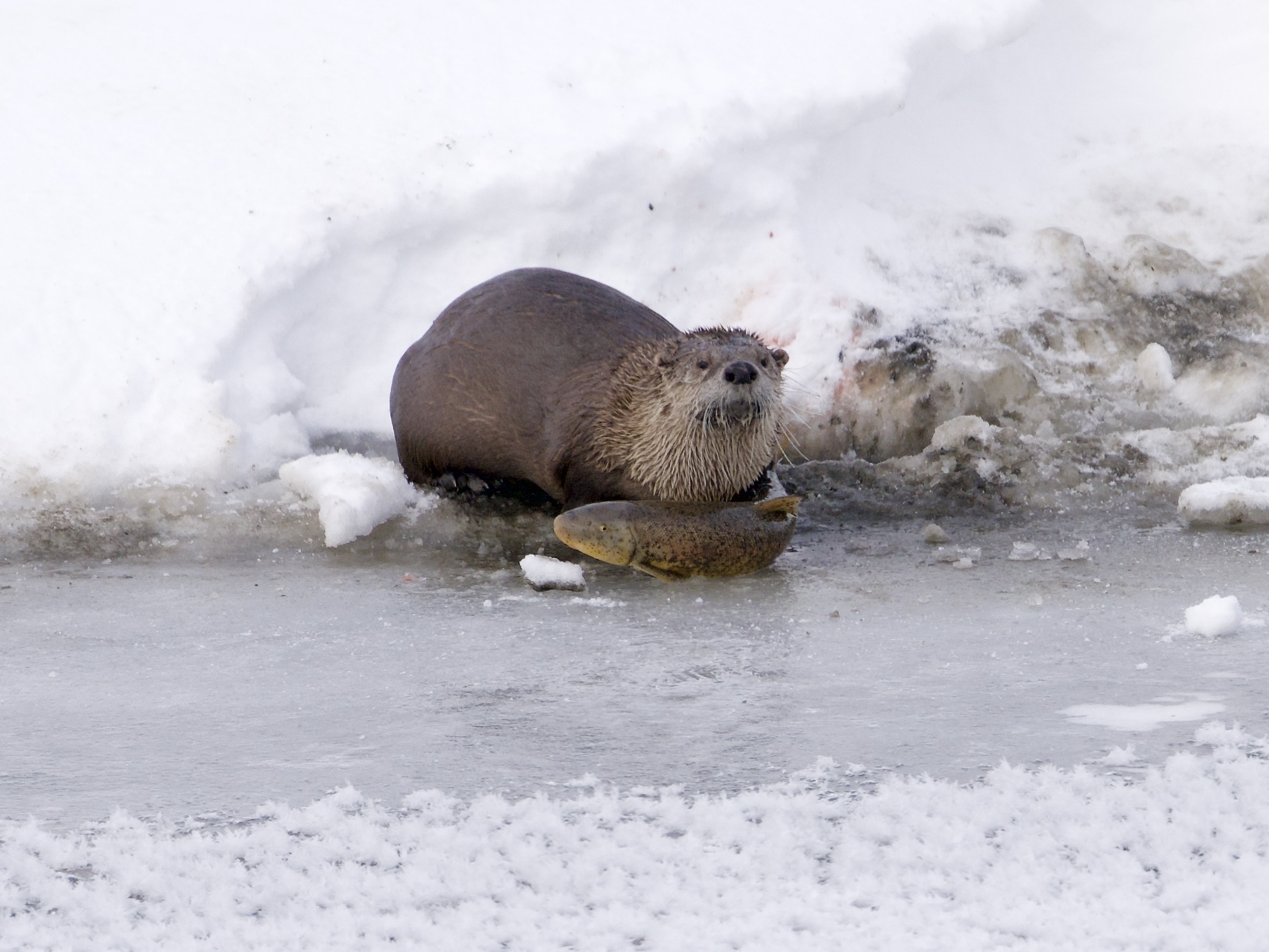
After eating a large Utah sucker fish, the river otter dove back into his ice hole and emerged with another, which he also quickly consumed. He must burn a lot of calories!:
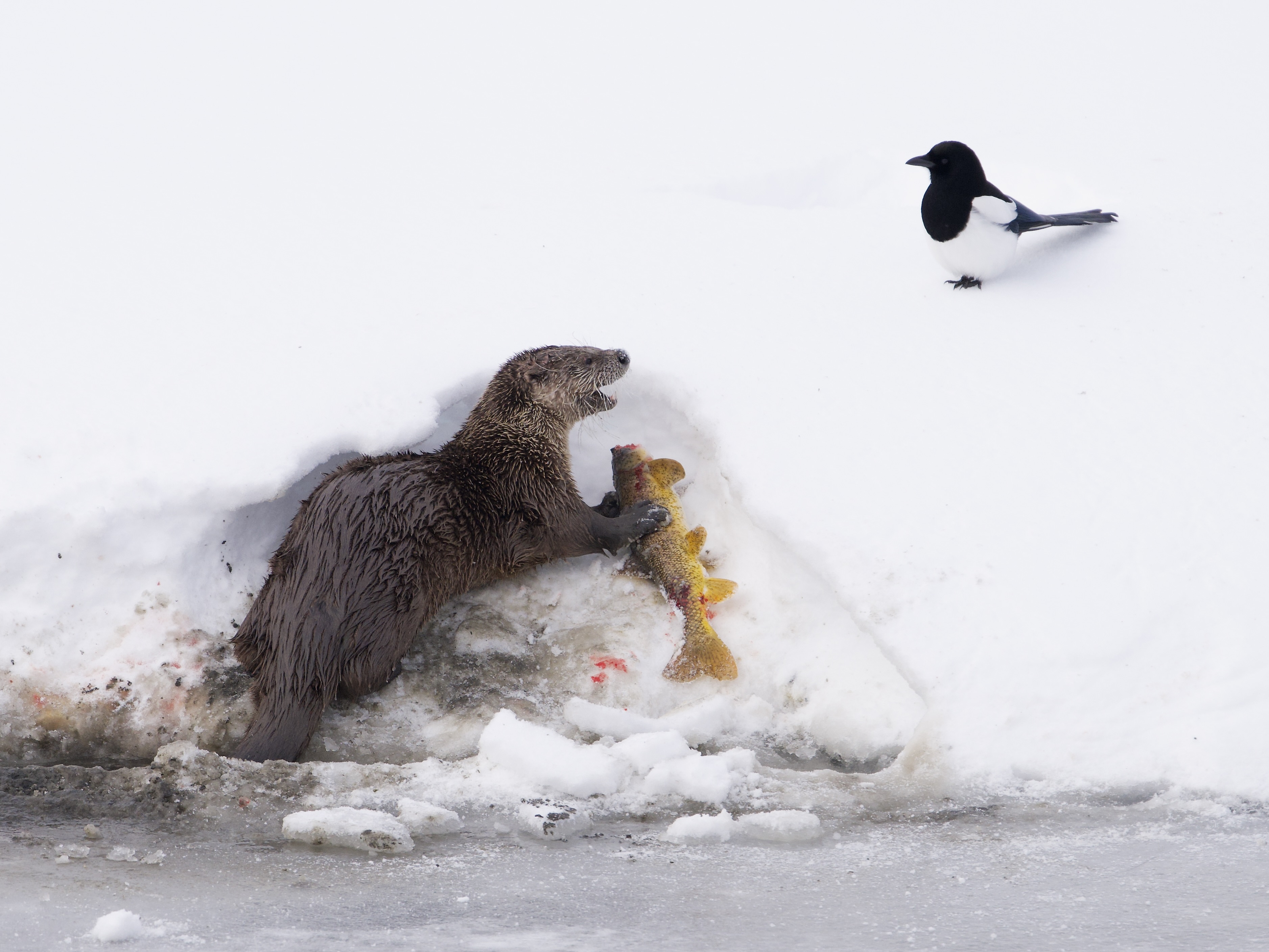
The river otter extolling the virtues of Utah sucker fish to a Black-billed magpie (Pica hudsonia):
Going for a stroll on the frozen Snake River:
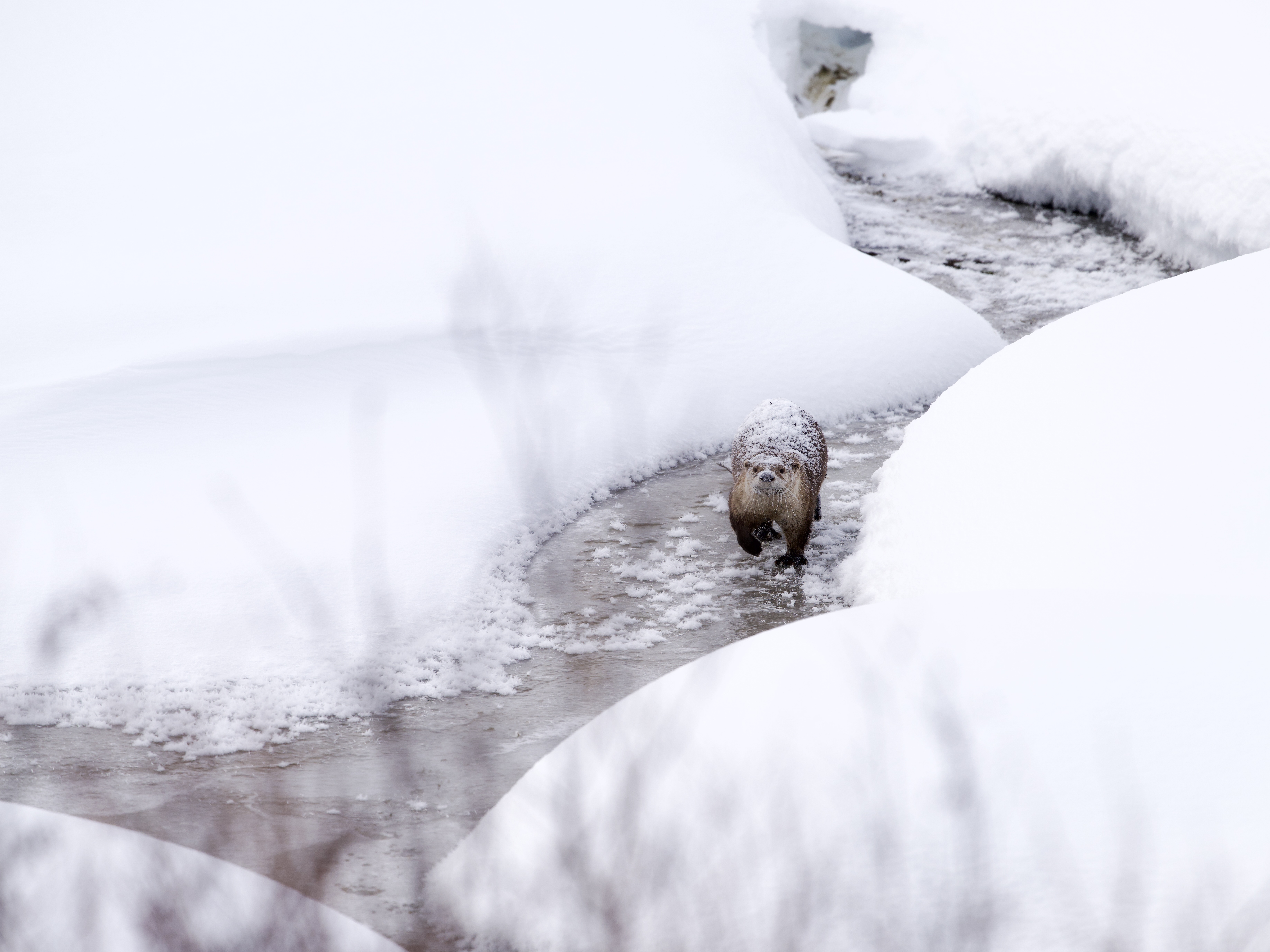
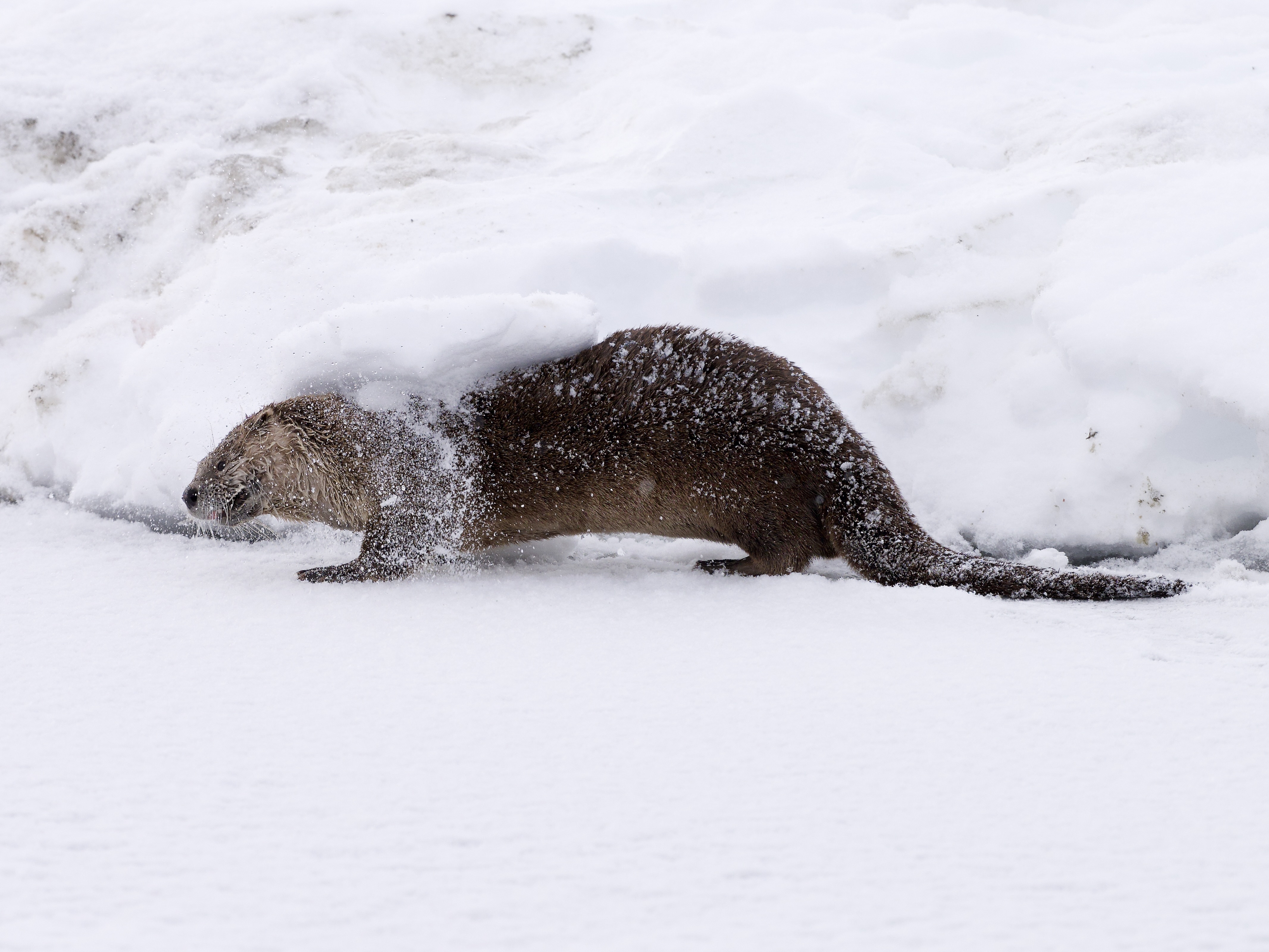
After eating two fish, it’s time to clean up by rolling in the snow, shaking it off, and grooming:
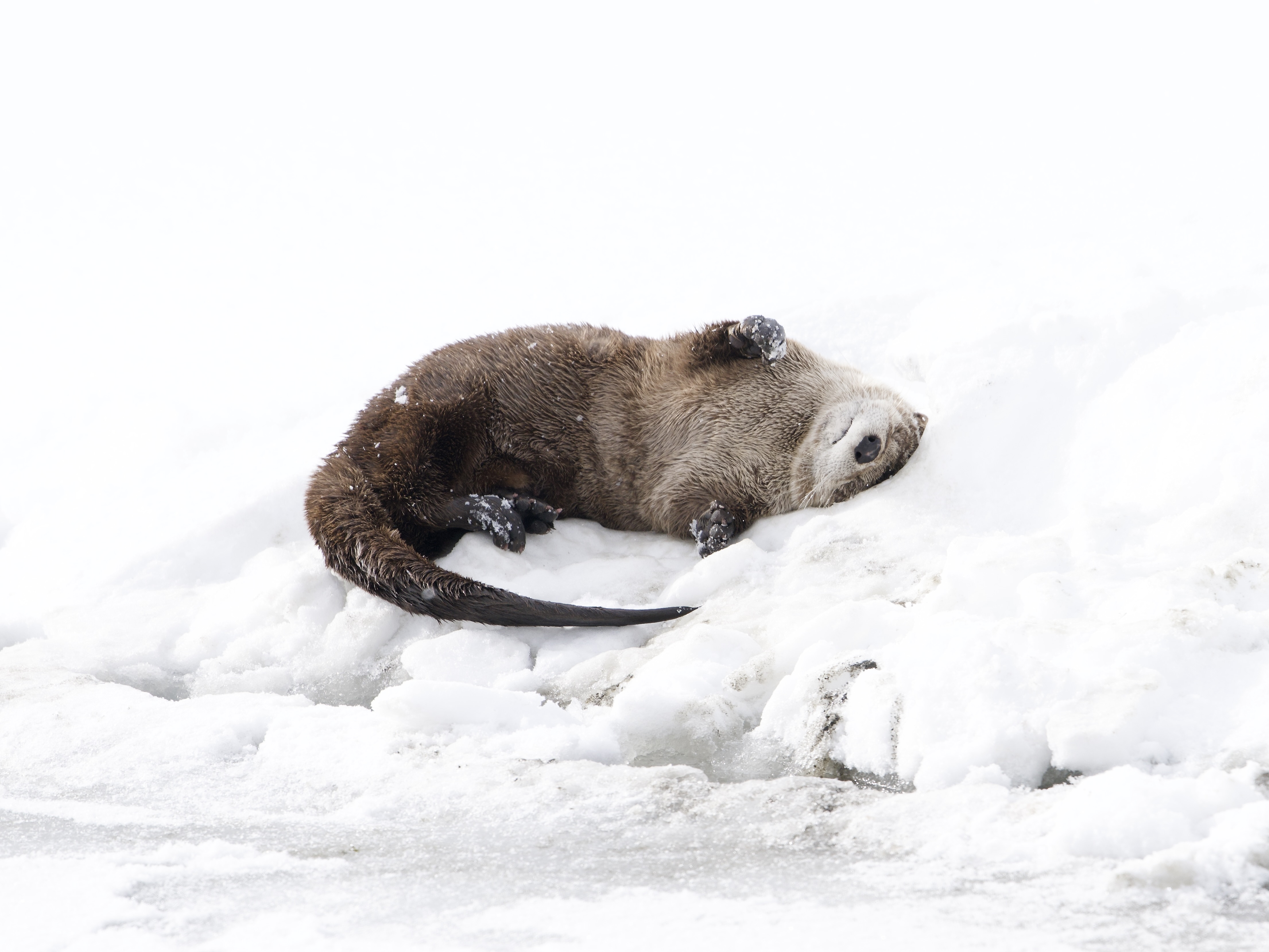
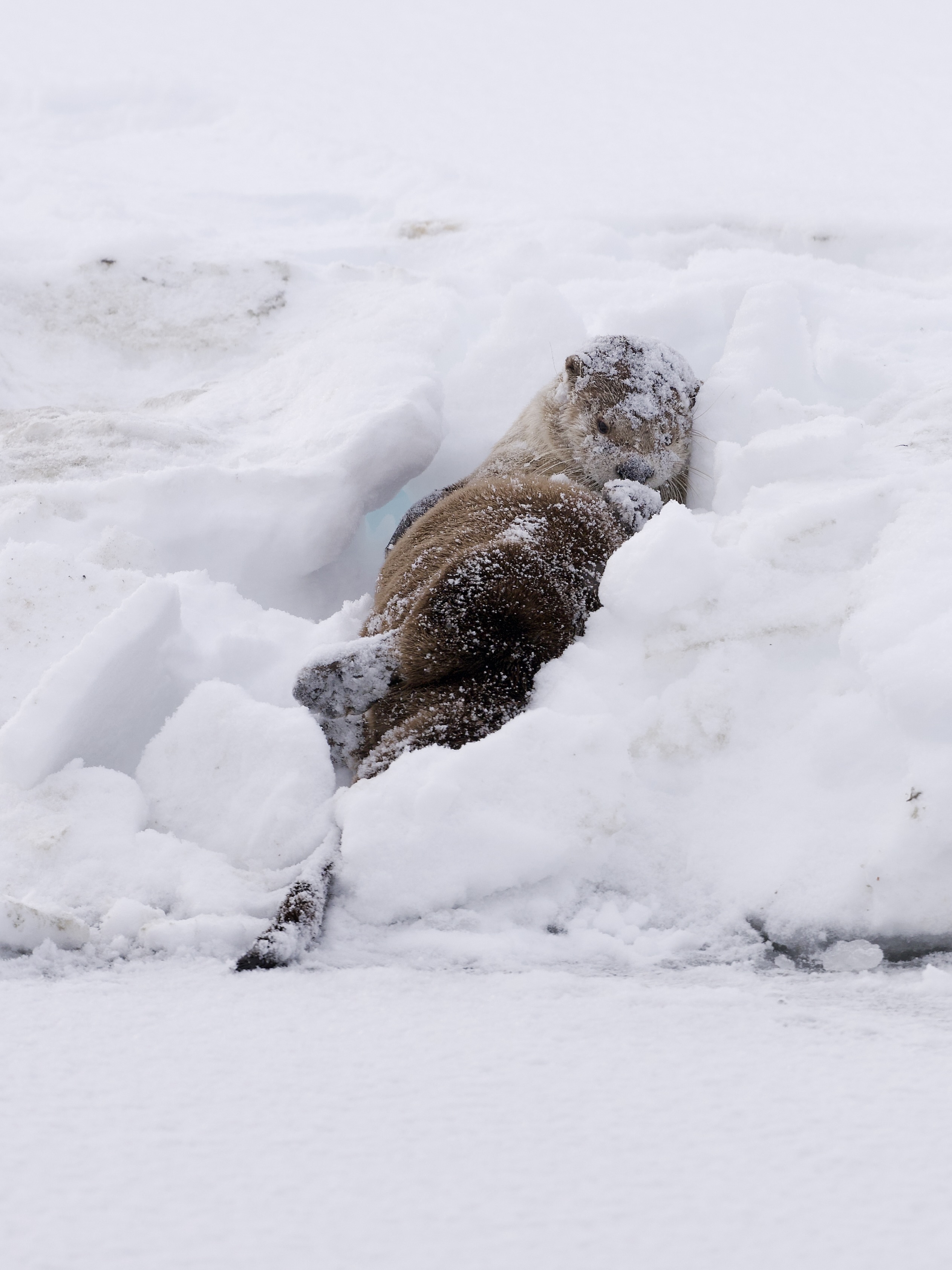
During the winter in Grand Teton National Park, the fish lower their activity and metabolism and reside under the ice at the river bottoms. You would think that this would make them easy prey. However, on this day I watched the otter make six unsuccessful dives before emerging from his hole with another Utah sucker. Interestingly, I only saw the otter catch sucker fish — never one of the trout that are common in the Snake River:
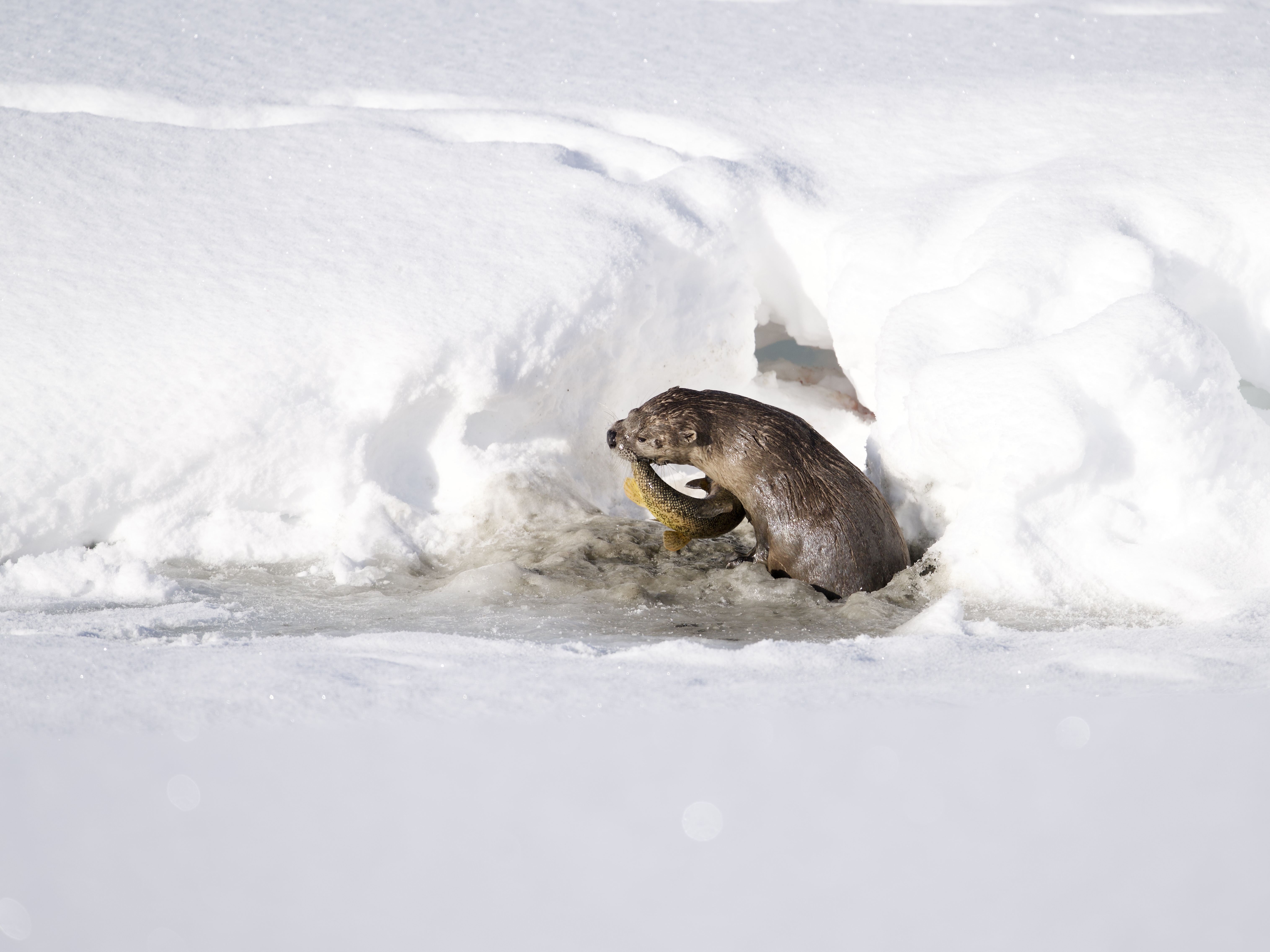
An unhappy, flailing fish:

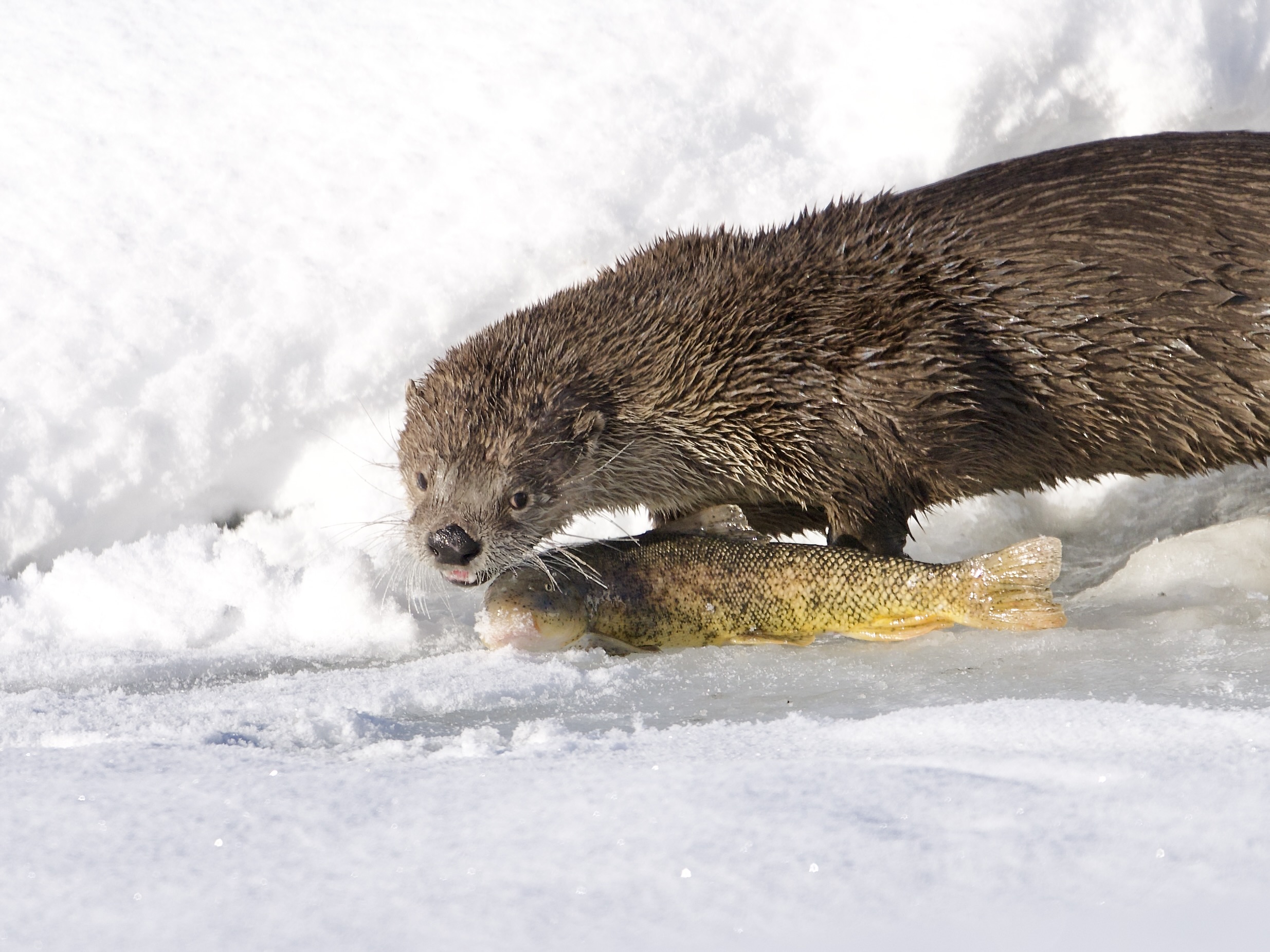
The otter ate this entire fish in about ten minutes, starting with his head and ending with his tail:
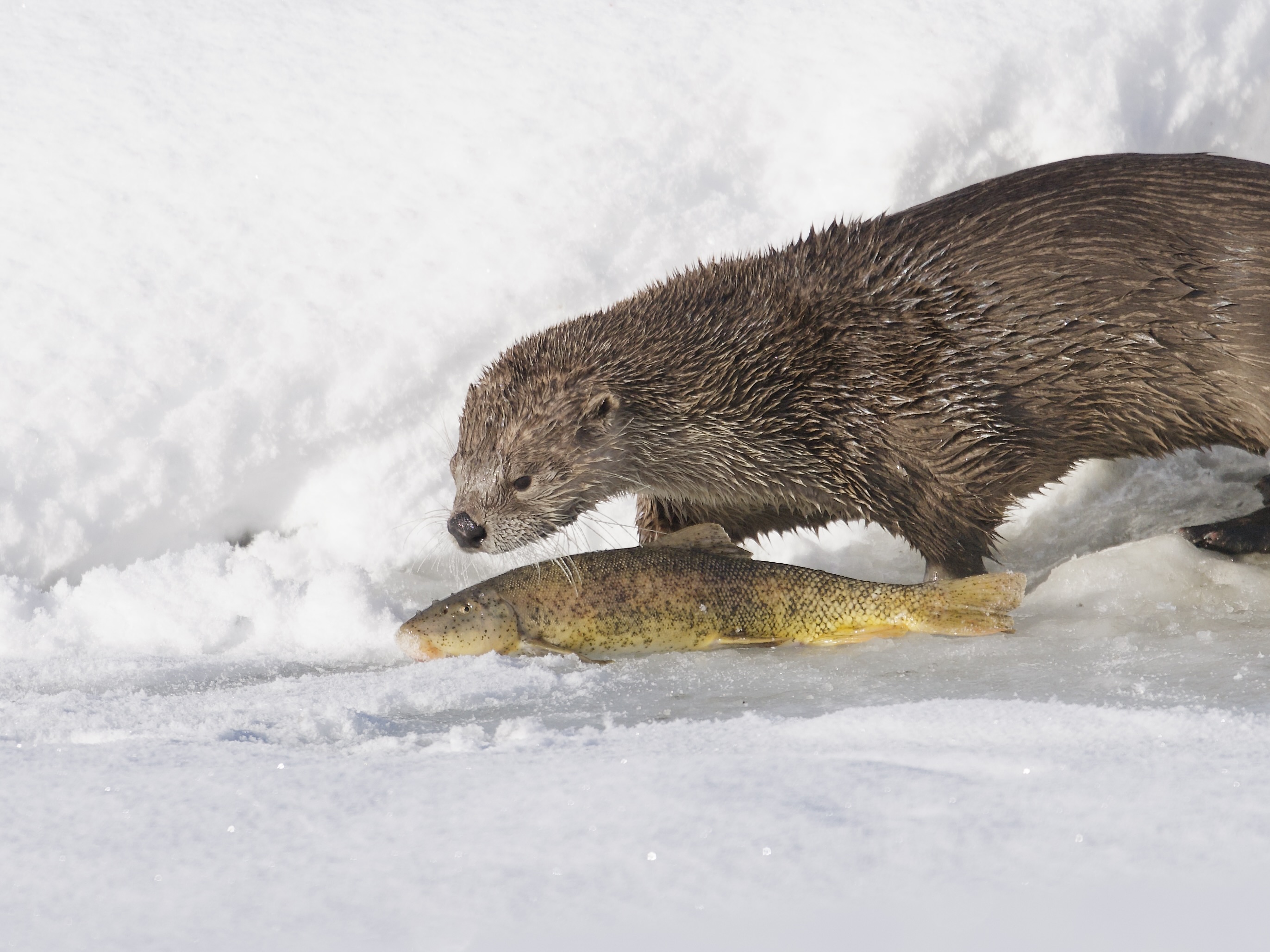
A smiling otter:
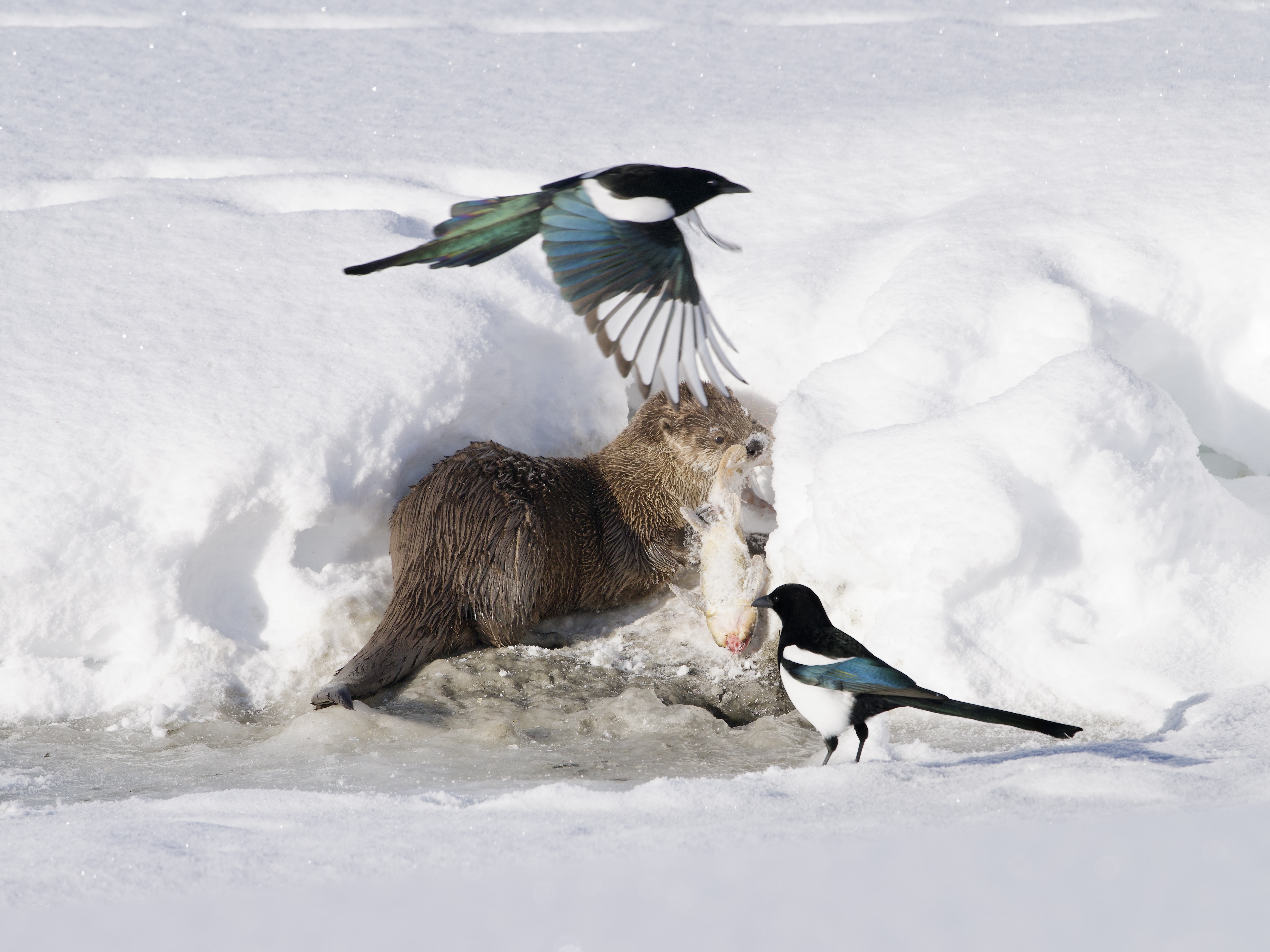
Otter, deceased Utah sucker, and black-billed magpies hoping to share the leftovers:
Wow! These are great photos. Thanks!
You’re welcome. My pleasure!
Cool photos!
I had an encounter with a river otter near a small lake on Orcas Island. I was walking down a trail next to the lake when an otter came onto the trail about 20 feet in front of me. Both of us froze for a few seconds. The otter then moved first, crossing the trail and entering the lake. I restarted my walk down the trail, and when I got to where the otter had entered the lake, the otter stopped swimming, turned around, and started pacing me—the otter in the water and me on the trail. It was disconcerting, as I thought the otter might be aggressive. Eventually, the crisis passed as the two of us passed on our own ways. A river otter is a big animal, especially it seems to be chasing you!
Otters are very curious critters who generally aren’t phased by humans. I’ve been “watched” by both river otters and sea otters. But they have never been aggressive to me.
It was probably curiosity, but it did startle me until we retreated to a safer distance.
This is a phenomenal series of photos! What a fantastic story in photos.
I can’t wait for Season 2!
Thanks so much-
I love them! Fabulous!
Many a surfer will tell you that sea otters can be aggressive, nipping at surfers and biting boards.
Male sea otters have also been known to rape and kill harbor seal pups. They also hold pups of their own species ransom to force the mothers into giving up food.
Well, so much for their appearing so cute and innocent. I’ll never look at them the same way.
Thank you for these otterly fantastic photos.
A very good documentary!
Beautiful otter pictures!
Great photos. That was fun!
What a great multi-species action sequence – thanks!
Brilliant photos and story, thank you! Magpies are prettier than I realized (or maybe just male magpies?)
This was a great photographic story, thanks. Sushi! Maybe trout are more mobile (esp. vertically) even in the freezing waters and the suckers are easier pickin’s as they hug the stream bed. Either way, thanks again for these great photos and commentary.