
Greetings from California on Friday, January 19, 2024, and National Popcorn Day. And, so it happens, Chicago has the best popcorn in the world: the “Chicago mix” of caramel and cheese corn from Garrett’s Popcorn Shop, a store exactly as old as I am (get it freshly made, not at the airports). Have a look:
It’s also World Quark Day (quark is “a fresh dairy product that is part of the acid-set cheese group), New Friends Day, Tin Can Day, Gun Appreciation Day (yech!), Husband’s Day (also called “Man’s Day”) in Iceland , and, in Tripura, India, Kokborok Day, honoring the official language of the Indian state of Tripura, also spoken in parts of Bangladesh (the area where Kikborok is spoken is shown in red below)

And here’s what it sounds like:
Readers are welcome to mark notable events, births, or deaths on this by consulting the January 19 Wikipedia page.
Da Nooz:
*According to the WSJ, the Biden Administration is finally doing something about immigration, trying to craft a bipartisan deal (the GOP is holding up funds for stuff like the war in Ukraine until such a deal is struck).
An immigration deal being crafted in the Senate would limit migrants’ ability to claim asylum at the southern border, a White House concession some progressives say shows that President Biden’s leftward shift on immigration as a 2020 candidate was a blip in his long political career.
The deal, which would come in return for new war aid for Ukraine and Israel, is already facing steep odds on Capitol Hill with House Republicans making tougher demands.
“We have talked about the necessary elements to solve this problem,” House Speaker Mike Johnson (R., La.) said after a meeting with Biden on Wednesday at the White House. Among them, he added, “is reform to the broken asylum and parole systems.”
. . .Biden’s willingness to negotiate with Republicans lays bare what many liberal Democrats have long feared—that he is willing to move to the right to cut a deal on immigration and secure funding for the wars.
A CBS News poll conducted earlier this month found Biden’s approval rating on handling immigration issues to be at a record low, with 68% of those surveyed saying they disapproved of his border policies and 63% saying they wanted him to be tougher.
. . . But with mounting political pressure, Biden has reiterated to advisers that his main priority is to see migration plummet and has signed off on certain measures used by Trump, implementing a version of his predecessor’s asylum rule that would make migrants who move through another country on the way and don’t first apply for asylum in that country ineligible for asylum in the U.S.
I’m not sure how much of a role border policies will play in the November election, but any role they do play will be inimical to Biden’s candidacy. Let’s face it: progressives seem to want open borders, and that, coupled with Biden’s reluctance to curb immigration, has led to the greatest number of border crossings, legal and illegal, that I’ve seen in my lifetime. Immigrants are being sent to cities like New York and Chicago, straining their social-support system. It’s time to bite the bullet and enact a humane but strict immigration policy—before November.
*More trouble in the Middle East: Pakistan (which has nuclear weapons but apparently didn’t use them) attacked Iran.
In an expansion of hostilities rippling through the region as the Israel-Hamas war rages on, Pakistan said on Thursday that it had carried out strikes inside Iran, a day after Iranian forces attacked what they said were militant camps in Pakistan.
The Pakistani Foreign Affairs Ministry said that the country’s forces had conducted “precision military strikes” against what it called terrorist hide-outs in southeastern Iran. The Iranian state-owned television network Press TV said that seven foreigners were killed in the strikes.
A senior Pakistani security official, speaking on the condition of anonymity, said Pakistan had struck at least seven locations used by separatists from the Baluch ethnic group about 30 miles inside the border. The official said that air force fighter jets and drones were used in the Pakistani retaliatory strikes.
A day before, Iran conducted an airstrike in Baluchistan Province in Pakistan. The Iranian government later said that the strike in Pakistan, as well as attacks it conducted this week in Iraq and Syria, showed that Iran would hit back forcefully at enemies anywhere.
An emboldened Iran has been using its proxy forces against Israel and its allies since the war in Gaza began in October. Those actions, and now the attacks by Iran itself on other countries in the region, have increased the risk that the upheaval washing over the Middle East could grow. Iran has been trying to project strength after recent attacks inside its borders had made it look vulnerable.
Both Pakistan and Iran (the latter country soon to have nuclear weapons despite the U.S.’s frantic negotiations) are cooling their jets now, so this may be a one-off attack. But both countries have their own troubles, with restive populations that don’t like their governments and are being oppressed by those governments. I don’t know what to make of this one.
*Over at the NYT, Nick Kristof (has he ever been right about anything save the oppression of women throughout the world?) warns us that North Korea may be getting ready to launch a surprise attack on not just South Korea, but also, perhaps, Japan and Guam.
The globe is already pockmarked with crises, and here may be another: North Korea is acting in highly unusual ways, leading some veteran analysts to fear it is preparing a surprise attack on South Korea and perhaps on Japan and Guam as well.
I’ve seen many false alarms since I began covering and visiting North Korea in the 1980s. I wouldn’t write about this latest warning except that it comes from two particularly credible experts who bluntly conclude that “Kim Jong-un has made a strategic decision to go to war.”
That’s speculation without hard evidence to back it up, and they acknowledge that this kind of prediction is fraught. But one of those experts is Robert Carlin, who has been analyzing North Korea for 50 years for the C.I.A., State Department and other organizations. The other is Siegfried Hecker, a nuclear expert at Stanford who has visited North Korea seven times and was given extensive access to that country’s nuclear programs; he’s apparently the only American to have held North Korean plutonium (in a jar) in his hands.
Carlin and Hecker published their warning in an essay on the 38 North website, which focuses on North Korea. They raised the possibility that North Korea might use its nuclear warheads to strike the region (it’s not clear if its warheads could reach the United States and survive re-entry into the atmosphere).
Carlin and Hecker both told me that they don’t know when an attack by Kim, the country’s leader, would happen or what form it might take.
. . .My inclination would be to dismiss these warnings — if they were coming from anyone else. But Carlin and Hecker are pros who deserve to have their alarm taken very seriously.
It has been evident for some time that something is afoot in North Korea. . .
Two problems. First, we’re not sure that the DPRK has both nuclear warheads and and a delivery capability. Second, and more serious, such an attack would be suicidal for North Korea. We have nuclear armed submarines off both Japan and South Korea, and there are American nukes in Okinawa. Why would North Korea invite the destruction of their own country? In the end, Kristof brings this up but tries to get around it:
On the other hand, one reason for skepticism is that it’s hard to see how North Korea benefits by attacking its neighbors. Carlin and Hecker don’t have a solid answer for that, but they note that there is a long history of surprise attacks around the world that were surprising precisely because they didn’t make sense to those attacked.
Hecker observed that North Korea is one of only three countries that constitute potential nuclear threats to the United States — the others are Russia and China — yet North Korea lately hasn’t gotten much high-level attention. It should.
More negotiations to curb the DPRK’s nuclear ambitions? Useless. North Korea is desperate to build a bomb regardless of what we offer them. But they’d be idiotic to use it, especially if they struck first. (Nobody is going to strike North Korea first.)
*We’ve previously discussed the criticism that Native Americans from the Navajo tribe leveled at both NASA and commercial space ventures for sending capsules of human ashes to the Moon, since they considered the Moon sacred and didn’t want that sacredness despoiled. There are good reasons to leave the Moon pristine (though it’s way too late for that; among other stuff up there is jettisoned astronaut poop), but native religion is not one of them, for the Navajo are simply trying to impose their religious beliefs on others. That’s a violation of the First Amendment. However, this week the scientific journal Nature caters to the Navajo hectoring in an op-ed, “Stop sending human remains to the Moon.” Excerpts:
On 8 January, US space company Astrobotic launched the first commercial Moon lander, called Peregrine. Among the spacecraft’s 20 payloads were five instruments built by NASA. Other cargo included the cremated remains of at least 70 people and one dog, sent by two US companies, Celestis and Elysium Space, which give people the opportunity to be interred on the Moon.
The Moon is a shared cultural space for humanity. Many people might instinctively feel uneasy about its incipient commercialization, which has happened with little consultation and remains mostly unregulated. Many Indigenous Peoples, including Diné (the people) of the Navajo Nation such as myself, feel a whole other level of unease. For us, the Moon is an ancient relative — Grandmother Moon is a term of reverence shared by many Indigenous Peoples — and we should be careful, diligent and respectful when visiting her.
This was NASA’s mistake: taking seriously indigenous religious concerns:
A similar issue has arisen before. In 1998, then Navajo Nation president Albert Hale condemned NASA for sending a portion of the remains of planetary scientist Eugene Shoemaker to the Moon aboard its Lunar Prospector. NASA apologized and promised to consult Native Americans if it ever planned similar missions.
. . . But the Lunar Prospector incident shows how Indigenous Methodologies can lead the way to healing and partnership. The ceremonies led to a deeper understanding of how differences in star knowledge are to be celebrated, not ignored, and how Diné youth should not be pushed away from our People’s traditional knowledge when we work in the space community. The ceremonial approach co-led by Native American community leaders made room for the hurt felt by the Diné and laid foundations for future collaborations with a shared goal of furthering our connections with the cosmos. NASA delegates participating in person and following the guidance of Native American leaders made a world of difference in turning the incident into a spark of friendship.
Of course there will be more comity if the government or corporations cater to the superstitions and religions of Native Americans (or anyone who’s a believer), but to say that the Navajos have “star knowledge” that western astronomers don’t is ludicrous. It’s time to stop taking these delusions seriously. There will be more missions to the Moon that leave human ashes behind. I don’t think that’s a good idea, but my reasons have nothing to do with the numinous aspects of “Grandmother Moon” (which, by the way, illuminates Navajo ancestors simply by reflecting the light of Grandfather Sun.):
We now have an opportunity for Indigenous People to help guide the caretaking of space, just as they guide the protection and restoration of environments on Earth. To me, Grandmother Moon is sacred, my relative who has lighted my ancestors’ paths for eons. Weaving together Indigenous and Western science could help in resolving issues and lead to the production of policies and innovative approaches that protect and celebrate our shared Moon. After all, don’t we all want to be good relatives?
Nope. We want to stop this insane identity politics as a way of guiding space exploration.
*In her latest NYT op-ed, “When public health loses the public,” Pamela Paul points out the factors, including public health officials themselves, that have caused the public to mistrust the pronouncements of both scientists and those officials:
We all had our uncalm moments during the pandemic. What rankled me during this one was that the science was on my side. Yet here was someone in my community operating within a completely different framework.
In his new book, “Within Reason: A Liberal Public Health for an Illiberal Time,” Sandro Galea, the dean of the Boston University School of Public Health, looks to his own field to explain the animating forces behind some of those disputes.
Despite remarkable successes, Galea argues, public health succumbed to a disturbing strain of illiberalism during the pandemic. This not only worsened the impact of the pandemic; it also destabilized public health institutions in ways that will serve us poorly when the next crisis comes.
Any pandemic finger pointing has to begin with Donald Trump, whose fecklessness in the face of crisis pinballed between falsehoods and crackpot science before settling into outright denialism.
Much harder for non-Trumpers is to recognize that many on the left, including those in the progressive field of public health, reacted with ideological intransigence. If Gov. Ron DeSantis of Florida said masks off, blue states encouraged mask wearing, even while students competed in sports or sat in preschool classrooms. Last summer, Francis Collins, the former head of the National Institutes of Health, admitted that the “public health mindset” had been too narrowly focused, which he now calls a mistake. “You attach a zero value to whether this actually totally disrupts people’s lives, ruins the economy, and has many kids kept out of school in a way that they never quite recovered,” he said.
Galea’s point is not to relitigate Covid’s sore points but to ask: If Americans have come to distrust public health advice, what role may public health officials have played in fostering that distrust?
Paul particularly indicts public-health officials for recommending school closures, which we now know weren’t really necessary and also hurt children’s well being and education. She seconds Galea’s argument that politicizing public health is not only bad for public health, but creates an unproductive us-versus-them attitude that spreads beyond that area. Finally, it increases the mistrust of science, something I’ve written about before. Look at these figures:
It also undermines public faith in science, one of the few institutions that had maintained a high level of trust into the Trump era. According to the Pew Research Center, the percentage of Americans who believe science has a mostly positive effect on society dropped to 57 percent in 2023, from 67 percent in 2016. Those who say they have a great deal of confidence in scientists dropped to 23 percent, from 39 percent in 2020. And these declines took place among both Republicans and Democrats.
Speaking as a now-retired scientist, I have to say that these figures are disturbing. Science isn’t perfect, as it’s a human enterprise and there are simply some facts that elude is, but it’s a damn sight better than politics at finding facts.
Meanwhile in Dobrzyn, Hili is rationalizing. Malgorzata explains: “Hili likes to go into the wardrobe and sleep there. But she doesn’t want to admit that she is just sleeping so she pretends that she is going into the wardrobe to think. But she is not sure where the thinking goes better: in a closed area of a wardrobe or outside, where she can see the world.
Hili: Sometimes I wonder whether it’s easier to think inside the wardrobe or with a view on the world.A: And what is your conclusion?Hili: It depends on what I’m thinking about.

Hili: Czasami się zastanawiam, czy lepiej się myśli w szafie, czy z widokiem na świat.Ja: I jaki wniosek?Hili: To zależy o czym myślę.

*******************
From Susan:
From Jesus of the Day:

From America’s Cultural Decline into Idiocy; an oldie but a goodie. I can’t find anything wrong with this; it’s truly a perpetual-motion machine.

From Masih, who was in an accident (at least I hope it was an accident!):
I survived a multiple car crash. If it wasn’t for the side barriers, I would’ve fallen off the bridge. I’m lucky to be able to walk away unharmed. I was on my way to DC to participate in an event. It is obvious now I see life differently. Please take care of yourself and stay… pic.twitter.com/vpvOOnDJLK
— Masih Alinejad 🏳️ (@AlinejadMasih) January 18, 2024
From Jay: Duck versus British shorthair (he’s part of the staff of such a cat). I think the duck is winning:
Duck wants all the smoke…🐈🐾🦆😂😂 pic.twitter.com/NWacyT1Vbz
— 𝕐o̴g̴ (@Yoda4ever) January 17, 2024
From Students for Justice for Palestine at Columbia University. They were suspended during the fall semester last year for violating campus rules (not for their speech), but they’re back again, just as nasty, historically oblivious, and Jew-hating as ever. I’ve put the full post below this one:
“Students For Justice in Palestine” takes off its mask. It’s not about Palestinians or Israel. It’s a global movement to incite war and revolution against the western democracies. This is what “globalize the intifada means.” pic.twitter.com/zEdwXbUJKf
— ShipofTheseus (@JewishSpaceLazr) January 18, 2024

From Jon, author Hannah Ritchie:
When you write a book about the environment, the media takes pictures of you next to trees.
Imo, sitting with a cuppa and being photobombed by your kitten is much more fun.
📸 @simonhird_ https://t.co/fD9pnMXxrZ pic.twitter.com/1kfeAw16YZ
— Hannah Ritchie (@_HannahRitchie) January 17, 2024
From Malcolm. I think I may have posted this before, so I’ll add a bonus tweet below:
This cat is broken.. 🤣😂 pic.twitter.com/MMjYhhh23K
— 𝕐o̴g̴ (@Yoda4ever) January 3, 2024
Two others from Malcom; Animal potpourri. Lots to see in the second tweet. I like the cow with milk coming out of its nose.
Fun, Dance, Enjoyment Everything here😂😂😂 pic.twitter.com/CoCIjOQ1WS
— Jaise_Taise (@Jaise_Taise) January 11, 2024
From the Auschwitz Memorial a survivor from a Sonderkommando member who worked in Auschwitz, survived, and later painted pictures of what it was like to do his job. They are horrifying.
The Sonderkommando were groups of prisoners who, in return for better living conditions, were responsible for disposing of the bodies of inmates who had been killed in the gas chambers, including removing gold teeth and sequestering the belonging the prisoners had when they arrived (you can see this in the picture). Because they were witness to the camp’s horrors, the squads were regularly killed and replaced. Only a very few Sonderkommando survived the war, so it’s amazing that David Olère was liberated after several years. Have a look at the four paintings in the tweet.
19 January 1902 | A Jewish artist David Olère was born in Warsaw. In 1918 he emigrated to France.
In March 1943 he was deported to Auschwitz where he was forced to work in Sonderkommando. After the war he showed the horrifying world of gas chambers in drawings & paintings. pic.twitter.com/SEqCB0yWNB
— Auschwitz Memorial (@AuschwitzMuseum) January 19, 2024
One tweet from Dr. Cobb today (yes, we have a lot of cats). Was this moggie trained to start at the beginning, or was it just unsatisfied with the results?
The end… pic.twitter.com/zU48tWBMX5
— place where cat shouldn't be (@catshouldnt) January 18, 2024
Re: calf drinking milk – whoever was giving those calves milk in buckets needs a different system. Calf-teria makes buckets with nipples coming out the sides. Less messy, less waste, and better for the calves.
L
On this day:
1419 – Hundred Years’ War: Rouen surrenders to Henry V of England, completing his reconquest of Normandy.
1607 – San Agustin Church in Manila is officially completed; it is the oldest church still standing in the Philippines.
1764 – John Wilkes is expelled from the British House of Commons for seditious libel. [Wilkes was known as the ugliest man in England but so charming that it “took him only half an hour to talk away his face”. In 1768, a protest by his supporters was suppressed in the Massacre of St George’s Fields. In 1771, he was instrumental in securing the right of printers to publish verbatim accounts of parliamentary debates. In 1776, he introduced the first bill for parliamentary reform in the British Parliament.]
1764 – Bolle Willum Luxdorph records in his diary that a mail bomb, possibly the world’s first, has severely injured the Danish Colonel Poulsen, residing at Børglum Abbey.
1817 – An army of 5,423 soldiers, led by General José de San Martín, crosses the Andes from Argentina to liberate Chile and then Peru.
1829 – Johann Wolfgang von Goethe’s Faust: The First Part of the Tragedy receives its premiere performance.
1853 – Giuseppe Verdi’s opera Il trovatore receives its premiere performance in Rome.
1861 – American Civil War: Georgia joins South Carolina, Florida, Mississippi, and Alabama in declaring secession from the United States.
1883 – The first electric lighting system employing overhead wires, built by Thomas Edison, begins service at Roselle, New Jersey.
1915 – Georges Claude patents the neon discharge tube for use in advertising.
1915 – German strategic bombing during World War I: German zeppelins bomb the towns of Great Yarmouth and King’s Lynn in the United Kingdom killing at least 20 people, in the first major aerial bombardment of a civilian target.
1920 – The American Civil Liberties Union (ACLU) is founded. [Given its current state, it will soon be listed in the Deaths section, sadly…]
1937 – Howard Hughes sets a new air record by flying from Los Angeles to New York City in seven hours, 28 minutes, 25 seconds.
1945 – World War II: Soviet forces liberate the Łódź Ghetto. Of more than 200,000 inhabitants in 1940, fewer than 900 had survived the Nazi occupation.
1946 – General Douglas MacArthur establishes the International Military Tribunal for the Far East in Tokyo to try Japanese war criminals.
1953 – Almost 72 percent of all television sets in the United States are tuned into I Love Lucy to watch Lucy give birth.
1969 – Student Jan Palach dies after setting himself on fire three days earlier in Prague’s Wenceslas Square to protest about the invasion of Czechoslovakia by the Soviet Union in 1968. His funeral turns into another major protest.
1977 – President Gerald Ford pardons Iva Toguri D’Aquino (a.k.a. “Tokyo Rose”).
1978 – The last Volkswagen Beetle made in Germany leaves VW’s plant in Emden. Beetle production in Latin America continues until 2003.
1981 – Iran hostage crisis: United States and Iranian officials sign an agreement to release 52 American hostages after 14 months of captivity.
1983 – The Apple Lisa, the first commercial personal computer from Apple to have a graphical user interface and a computer mouse, is announced.
1986 – The first IBM PC computer virus is released into the wild. A boot sector virus dubbed (c)Brain, it was created by the Farooq Alvi Brothers in Lahore, Pakistan, reportedly to deter unauthorized copying of the software they had written.
1997 – Yasser Arafat returns to Hebron after more than 30 years and joins celebrations over the handover of the last Israeli-controlled West Bank city.
2007 – Four-man Team N2i, using only skis and kites, completes a 1,093-mile (1,759 km) trek to reach the Antarctic pole of inaccessibility for the first time since 1965 and for the first time ever without mechanical assistance.
Births:
1736 – James Watt, Scottish-English chemist and engineer (d. 1819).
1803 – Sarah Helen Whitman, American poet, essayist, and romantic interest of Edgar Allan Poe (d. 1878). [They shared a birthday, see below.]
1807 – Robert E. Lee, American general and academic (d. 1870).
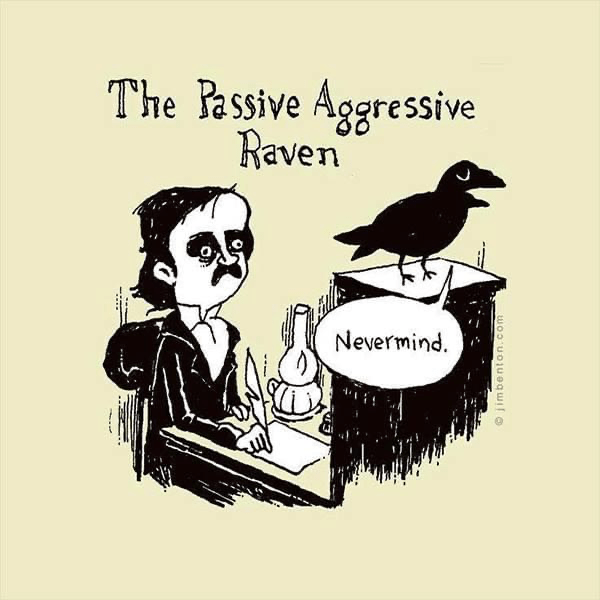
1809 – Edgar Allan Poe, American short story writer, poet, and critic (d. 1849).
1813 – Henry Bessemer, English engineer and businessman (d. 1898).
1839 – Paul Cézanne, French painter (d. 1906).
1848 – Matthew Webb, English swimmer and diver (d. 1883). [First recorded person to swim the English Channel without the use of artificial aids. He died trying to swim the Whirlpool Rapids below Niagara Falls, a feat declared impossible.]
1889 – Sophie Taeuber-Arp, Swiss painter and sculptor (d. 1943). [Today’s Woman of the Day, see next post below.]
1893 – Magda Tagliaferro, Brazilian pianist and educator (d. 1986).
1921 – Patricia Highsmith, American novelist and short story writer (d. 1995).
1923 – Jean Stapleton, American actress and singer (d. 2013).
1925 – Nina Bawden, English author (d. 2012).
1930 – Tippi Hedren, American model, actress, and animal rights-welfare activist.
1932 – Richard Lester, American-English director, producer, and screenwriter.
1933 – George Coyne, American priest, astronomer, and theologian (d. 2020). [Included as per our host’s habit of listing his namesakes.]
1936 – Willie “Big Eyes” Smith, American singer, harmonica player, and drummer (d. 2011).
1939 – Phil Everly, American singer-songwriter and guitarist (d. 2014).
1942 – Michael Crawford, English actor and singer.
1943 – Janis Joplin, American singer-songwriter (d. 1970).
1946 – Julian Barnes, English novelist, short story writer, essayist, and critic.
1946 – Dolly Parton, American singer-songwriter and actress.
1948 – Nancy Lynch, American computer scientist and academic.
1949 – Robert Palmer, English singer-songwriter and guitarist (d. 2003).
1951 – Martha Davis, American singer.
1954 – Cindy Sherman, American photographer and director.
1954 – Esther Shkalim, Israeli poet and Mizrahi feminist.
1955 – Simon Rattle, English-German orchestral conductor.
1956 – Susan Solomon, American atmospheric chemist.
1982 – Pete Buttigieg, American politician.
The stroke of death is as a lover’s pinch, which hurts and is desired. (William Shakespeare): (Speak for yourself, Bill!)
1661 – Thomas Venner, English rebel leader.
1729 – William Congreve, English playwright and poet (b. 1670).
1755 – Jean-Pierre Christin, French physicist, mathematician, and astronomer (b. 1683).
1865 – Pierre-Joseph Proudhon, French philosopher and politician (b. 1809).
1869 – Carl Reichenbach, German chemist and philosopher (b. 1788).
1981 – Francesca Woodman, American photographer (b. 1958).
1983 – Ham, chimpanzee and animal astronaut, first hominid in space (b. 1957).
1998 – Carl Perkins, American singer-songwriter and guitarist (b. 1932).
2000 – Hedy Lamarr, Austrian-American actress, singer, and mathematician (b. 1914).
2006 – Wilson Pickett, American singer-songwriter (b. 1941).
2014 – Azaria Alon, Ukrainian-Israeli environmentalist, co-founded the Society for the Protection of Nature in Israel (b. 1918).
2014 – Christopher Chataway, English runner, journalist, and politician (b. 1931). [A pacemaker, together with Chris Brasher, when Roger Bannister became the first man to run a mile in under 4 minutes.]
Woman of the Day:
[Text from Wikipedia]
Sophie Henriette Gertrud Taeuber-Arp (/ˈtɔɪbər ˈɑːrp/; born on this day in 1889, died 13 January 1943) was a Swiss artist, painter, sculptor, textile designer, furniture and interior designer, architect, and dancer.
Born in 1889 in Davos and raised in Trogen, Switzerland, she attended a trade school in St. Gallen and, later, art schools in Germany, before moving back to Switzerland during the First World War. At an exhibition in 1915, she met for the first time the German-French artist Jean Arp, whom she married shortly after. It was during these years that they became associated with the Dada movement, which emerged in 1916, and Taeuber-Arp’s most famous works – Dada Head (Tête Dada; 1920) – date from these years. They moved to France in 1926, where they stayed until the invasion of France during the Second World War, at the event of which they went back to Switzerland. In 1943, she died in an accident with a leaking gas stove.
Despite being overlooked since her death, she is considered one of the most important artists of concrete art and geometric abstraction of the 20th century.
https://en.m.wikipedia.org/wiki/Sophie_Taeuber-Arp
“World Quark Day”
[ … reads Wikipedia ]
“Dictionaries sometimes translate it as curd cheese, cottage cheese, farmer cheese or junket.”
[ wonders if this is a psyop ]
[ or just needs more coffee ]
[ Burma Shave ]
First I want to say how much I admire and enjoy the effort you put into this website. You are retired, you could go live in Florida with ducks, but you trudge to your office in the cold Chicago gloom and do your level best to both educate and entertain. Thanks for that.
But to the question of trust in science, I despair. There is so much money to be made selling disinformation, and yet it is not practical or advisable to set up a ‘Ministry of Truth’. You really have to depend on individuals with not only the ability to think critically, but be open to understanding they might be wrong. And we all fall short, at some level, to that criteria. Some much more than others. Also, preachers and politicians really don’t want people to think critically, or their game is up.
So I carry on and try to do my best, but it is hard to see any light at the end of this tunnel.
A big +1 in appreciation of our host’s work!
On trust and understanding on the science side of things, I think that one of the problems we have in the U.S. is the conflating in K12 (and beyond!) of science issues with what are really engineering issues. We teach the scientific method in K12 (and have since the 1892 Committee of Ten Report) wherein every student is expected to get the one correct answer in labs. But we do not, in general, teach engineering in which there are several desirements which must be achieved in some balanced way. In engineering, we sometimes speak of an “achieveable design space” in which while no one answer is perfect because a full implementation of one action might be deleterious to some other desired result. Some answers are adequate to meet our needs in total though no answer is perfect. For example, closing schools totally stops transmission of a virus, but has awful social and educational impact. Leaving schools totally open allows unlimited transmission of virus, but some learning and socialization to continue though negatively impacted by absences due to student illness and adult impacts to teachers and parents/grandparents from infected students as vectors. A set of appropriate solutions lie in the engineering design process. The Next Generation Science Standards, in 2013, introduced engineering design as an element of all K12 science courses, but I have lost lock on the uptake by U.S. school systems. NGSS became a partisan political football with Republicans generally against and Dems generally for (Obama Derangement Syndrome). So for schools in pandemic, one solution might be to give each locality control over if and how long they close based on the level and severity of local illness, vaccination levels and general school building demographics as opposed to the illiberal one size fits all binary of totally open or totally closed. But how to do these trade-offs and citizens’ ability to understand these trade-offs should be a component of K12 STEM ed.
Yes. Balancing risks isn’t taught in any science courses that I ever took or taught, even though as a geological scientist there are lots opportunities to teach about it: living in Seattle vs. risk of earthquake, living on Miami Beach vs. risk of hurricane, burning fossil fuels vs. risk of global climate change.
We deal with these competing factors all the time, but the first time I ever encountered risk management as a “thing” it was when I joined the software industry. A typical example is whether or not to fix a software bug. You might think that the solution is obvious: Fix it! But it’s not. About 1/3 of the time (depending on the type of bug and other factors), fixing one bug creates one or more other bugs that are not discovered until the fix is installed on tens of millions of computers around the world. Yikes!
I’d like to see more risk management being covered in science.
If I recall correctly, I think that Richard Feynman said in his dissenting Appendix F of the Rogers’ Commission Report on Space Shuttle Challenger accident investigation, after people complained that the software was 25 years old and thus must be outdated, that that was one of the technical components he had faith in since it had NOT been updated.
Yep. It’s best to leave old code alone. Messing with it will inevitably break it!
Of course this requires some training of all science teachers because virtually none of them has any knowledge of engineering design processes, having been fully schooled in science but not engineering themselves. They do not need to become engineers, but do need to learn fundamentals of the engineering design process. This is not difficult and particularly with current capabilities of video and distance training methods. Virginia has successfully trained interested K-5 teachers in engineering design for 25 years through its Virginia Childrens’ Engineering Program.
Great comment. All of it. I second the appreciation you expressed for Jerry’s website. It’s a gem.
WEIT’s food entries have been hitting it out of the park lately. Donuts! Pastrami!! Caramel cheese popcorn!!! Someday, I’m going to have to take a trip to Chicago for the food.
On NASA and the sacred Moon – Wells Fargo has been promoting their support for indigenous peoples lately on youtube ads – they must think there is some value in that position. Marketing to young adults must be fraught with difficulty. They have this cultural identification with the American ‘West’ and cowboys I guess, so swinging to help the Indians.
“For [Navajo], the Moon is an ancient relative — Grandmother Moon is a term of reverence shared by many Indigenous Peoples — and we should be careful, diligent and respectful when visiting her.”
Could have followed up with something like, “Of course, we now realize the Moon is not our ancient relative, and is not female or her. We learned instead that the Moon is a satellite of Earth made of rock and occasionally smashed by asteroids. So we don’t really revere the Moon any longer. But we share with other people an interest in not trashing landscapes on Earth and on the Moon.”
Lots of us could get behind that.
It’s complicated, and there’s lots of history, but I’m once again floored by the “sacred” argument. Does everything belong to someone just because they can see it (and it’s part of their religion)?
“Osages believed that the horizon itself was a sacred space, and you have to pretty much live on the prairie to see the horizon like Osages do.”
The link below goes to an NPR article about a wind farm that is mandated to be removed because the permitting process ten years earlier didn’t involve the Osage Nation … which has an agreement with the Federal government prohibiting mining and drilling for oil … and the wind turbines have a foundation … which is equated with mining.
https://www.npr.org/2024/01/18/1225446424/wind-turbines-on-sacred-osage-land-must-be-removed-according-to-court-ruling