Readers’ wildlife photos

March 4, 2026 • 8:15 am

We have a few more batches in the queue now, but it’s never enough.

And today we’re featuring lovely bird photos from Ephraim Heller. I had no idea this gorgeous creature existed! Ephraim’s ID and captions are indented, and, as usual, you can enlarge the photos by clicking on them.

I never had a favorite bird. Oh, sure, I’ve seen plenty of bewitching bee-eaters, mesmerizing manakins and motmots and macaws, plummy pigeons, parrots and pheasants, and tangy toucans and tanagers, but they never held my attention.

In Trinidad I first met a tufted coquette (Lophornis ornatus):

My coquette is 6.6 centimeters (2.6 in) long and weighs just 2.3 grams (0.081 oz) – much smaller than my thumb! My coquette doesn’t eat at hummingbird feeders with the big boys – its bill is too short:

Its food is nectar, taken from a variety of flowers, and some small invertebrates. Across hummingbirds, specialization often involves bill length and curvature for particular flowers; my coquette is relatively unspecialized in bill morphology. My coquette often must sneak nectar from the territories of other hummingbirds. With its small size and steady flight, my coquette resembles a large bee as it moves from flower to flower:

Many hummingbird genera have territorial males, but the combination of extreme ornamentation, very small body size, and intense aggression is a hallmark of Lophornis.

There are 11 species in the genus Lophornis, all as beautiful as my coquette. The name Lophornis combines Greek for “crest” (lophos) and “bird” (ornis), calling out a shared trait of all the birds in this genus:

Per the Merriam-Webster dictionary, a coquette is “a woman who endeavors without sincere affection to gain the attention and admiration of men.” But I forgive my coquette. The females are more subdued than the males, but still marvelous:

In French my coquette is called “Coquette huppe-col,” which literally translates to “tufted collar coquette.” That sounds lovely in French. In German it is called “Schmuckelfe,” which combines the literal terms “jewelry or ornament” and “elf or fairy.” To my ear, “jeweled fairy” sounds more pleasant and less insulting than “schmuckelfe”:

Readers’ wildlife photos

March 3, 2026 • 8:30 am

Today we have some singletons, doubletons, and tripletons from readers: that is, miscellaneous photos. The IDs and captions are indented, and you can click on the photos to enlarge them.

From reader Jay, a photo from St. Augustine beach, Florida:

This photo shows two terns (possibly Royal Terns, Thalasseus maximus), in front of four Black Skimmers (Rynchops niger).

From Keira McKenzie:

These photos were taken on a warm afternoon in Hyde Park [Sydney, Australia], sitting beneath the plane trees at the eastern end of the park.

Here you have Australian White Ibis (Threskiornis molucca,  commonly referred to as bin chickens here—which is a bit rude. In the second picture it’s with an Australian wood duck (Threskiornis molucca; there is quite the family here in all their regimental delight), both birds roosting on the island in the eastern pond in the park. While most of the undergrowth was cleared, these birds still manage to find somewhere to roost. The ibis lost their favourite tree in the clearing process, but they have found others. The wood ducks seem happy as well and I love watching the family being marshalled for the march up to the lawns to either graze or look for beetles or whatever. When they come back to the ponds, they fly in a ragged formation careless of persons what might be sitting there chatting and drinking coffee!

And the egret: it’s a Great Egret, either Ardea alba (the western Australian one) or the equally common Ardea modesta: the Eastern Great Egret (subspecies modesta) . The reason I can’t decide is their are supposed to have black legs, but my photos all have them having yellowish legs which doesn’t come up in any descriptions.

I’ve added a pic of the little Baba Yaga in her outside tiger pen just to make you smile (she is currently yelling at me to come to bed!)

And Daniel Baleckaitis, who works for both our department and Organismal Biology and Anatomy, sent three mallard pictures (Anas platyrhynchos)—taken in Botany Pond! I don’t know the ducks but the pictures are great (and clearly taken a few years back when the pond was full of vegetation):

Ducks in action:

Readers’ wildlife photos

March 2, 2026 • 8:15 am

This is the last full batch I have, though I’m saving singletons and the like for a melange post. But today is our first post (as I remember) that features carnivorous plants, from reader Jan Malik. Jan’s captions and IDs are indented, and you can enlarge the photos by clicking on them.

A few species of carnivorous plants grow in New York and New Jersey, primarily in swamps or bogs where it is difficult for plants to obtain nitrogen and phosphorus. Compounds of both elements are highly soluble in water and are poorly retained in waterlogged, low-pH soil. So far, I have found two species, each using a different strategy to catch its prey.

  • Sundew (likely Drosera intermedia).
    “A small plant growing in the Pine Barrens of New Jersey. While there are other Drosera species in the Eastern USA, this one has leaves spaced along a short stem rather than a ground-hugging rosette. The plant must receive a rich payoff for the resources spent producing mucus and protease enzymes, as the remains of digested victims were obvious on many leaves. Research suggests that nitrogen from captured invertebrates can account for 30% to 70% of the plant’s total uptake, depending on prey density.”

  • The “Expensive” Glisten.
    There must be something in the glistening droplets of mucilage on these tentacles that attracts insects. It looks like a lavish investment, but mucilage is mostly water with a small amount of polysaccharides to provide stickiness. The “expensive” enzymes are only produced after a victim is captured. I wonder if this secretion occurs only in the leaf where the victim is immobilized or systemically throughout the plant. In this shot, it even looks like the plant accidentally produced a web of sticky mucilage strands (on the right), mimicking a spiderweb.

  • Digestion in Progress.
    An example of a fresh victim: a species of crane fly being digested. By plant standards, this process is quite fast; in a couple of days, little will remain except for fragments of chitin.

  • Purple Pitcher Plant (Sarracenia purpurea).
    Photographed in the High Peaks region of the Adirondacks, NY, this species is a less “active” predator than the sundew. Both plants form traps from modified leaves, but pitcher plants form jugs that fill with rainwater. When small invertebrates (or occasionally small salamanders) fall in, they drown. Unlike the sundew, the pitcher plant generally doesn’t produce its own enzymes (except in very young pitchers); instead, it relies on a micro-ecosystem within the water—protozoa, mosquito larvae, and bacteria. These organisms decompose the victims, eventually releasing nitrogen and phosphorus for the plant to absorb through the leaf wall.

Carnivorous plants have a dilemma: how to capture invertebrates but let the pollinators live and do the job. The Purple pitcher plant soles it in the most logical way, by extending stems of its flowers so that they are far away from entrances to the pitchers. Apparently, that is the investment that pays off for the plant.

  • Durability vs. Chemistry.
    Pitcher leaves are green in June but eventually turn deep purple. These plants are more cold-hardy than sundews and are likely the most northern-reaching carnivorous plants in North America. In the Adirondacks, they survive harsh winters buried under snow for half the year, and their leaves can remain active traps for several seasons. While Droserainvests in “biochemical weapons,” Sarraceniainvests in durable structures. Nutrient uptake is slower in pitchers but comes at a lower metabolic cost.

  • The Downward Path.
    A close-up of the barbs on the lower lip of the pitcher trap. These guide victims downward, aided by scent and secreted nectar. Because they are downward-pointing, a victim has a difficult time climbing out, especially given the waxy, slippery surface of the leaf. Functionally, these barbs serve the same purpose as the sundew’s mucilage—preventing escape—but they are much “cheaper” energetically since they are part of the permanent leaf structure.

Readers’ wildlife photos

February 27, 2026 • 8:15 am

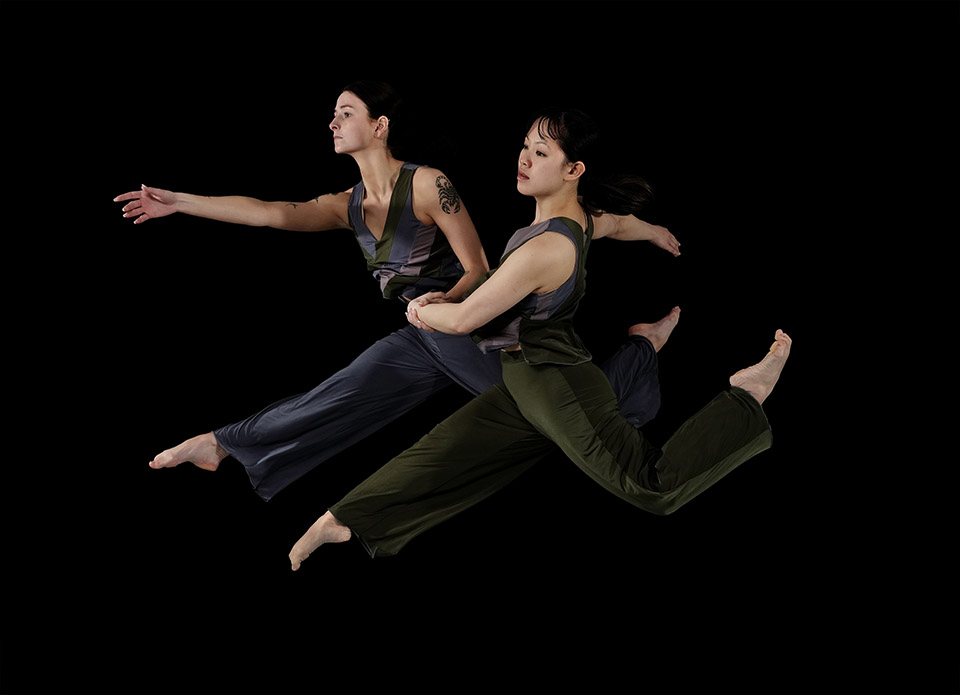
Doug Hayes of Richmond, Virginia, has sent some dance photos (H. sapiens in action). Doug’s captions are indented, and you can enlarge his photos by clicking on them.

The most recent photoshoot with Starr Foster Dance. The company is currently rehearsing new choreography for their upcoming show, “Shouting Distance” which will premiere April 9th – 12th at the Firehouse Theater. Once again, my friend Starrene Foster asked the dancers to perform several leaps, some derived from the choreography that will be performed during the show.

The core company members (L to R) Sarah Carrington, Roya Baker-Vahdani, Madison Ernstes, Molly Huey, Shannon Comerford:

A basic group jump. While it looks simple, it took a couple of tries to get everyone off the ground at the same time:

Roya, Molly and Shannon strike a dramatic pose:

Shannon, Roya and Molly:

Sarah and Madison defy gravity:

Madison makes it look effortless:

Another incredible leap by Madison:

Roya sitting on air:

An aerial split by Shannon:

Molly gives a new meaning to “high kick”:

Floating through air with the greatest of ease:

Molly does an easy leap:

Starr had an idea to photograph Shannon looking into a hallway. The door was featureless, painted dark gray and the floor where Shannon is standing was the same light gray as the hallway floor and walls. Starr asked if I could make the door look like an apartment door and make the floor hardwood. Rather than spend several hours looking for proper flooring and doors, then doing the tedious compositing in Photoshop, I turned to AI. Google’s Gemini AI has a photo editing feature called “Nano Banana” – I’m not making this up. Nano Banana is incorporated into the latest version of Adobe Photoshop, but one has to pay to use it when editing high resolution images. By logging into Gemini AI directly, Nano Banana is free to use unless you need to use some of the more advanced editing features. It only took two prompts to get the result I wanted and only about three minutes to get the final image. There is a second image featuring Shannon at the door, but the AI made two different-looking doors, and the hardwood floor was different in each. It took about three prompts to get Nano Banana to understand that the doors and floors should match, but it finally “understood” and gave me what I wanted. I have been using AI for the past few months to restore old faded and damaged photos. The results have been amazing and saved hours of tedious retouch work in Photoshop. While AI has gotten better, it still requires human input to correct some errors. In the photo of Shannon, the AI put a doorknob and deadbolt on the right side of the door. Sometimes I wonder if the computers are just screwing with us to see if we notice.

Photo information: Sony A1 II mirrorless camera body, Sony GM 24-70 zoom lens, Westcott 400 electronic flash units, Westcott wireless flash controller. Photos edited with Adobe Photoshop and Google’s Gemini AI. The electronic flash units have a “freeze” mode which fires the flash in sync with the camera which is in burst mode – about 15 frames per second or the equivalent of a 1/10,000 of a second shutter speed. ISO 1250.

Readers’ wildlife photos

February 25, 2026 • 8:20 am

Plant lovers and botanists will be especially pleased by today’s selection of lovely photos from Thomas Webber. Thomas’s captions and IDs are indented, and you can enlarge the photos by clicking on them (recommended).

The theme for today’s installment is Gone to Seed. Here are a few north-Florida flowers shown in their prime and afterward, when their glamor parts had been replaced by seed enclosures, bare seeds, or merely the dried remains of the flower bases. All of them grew within Gainesville’s city limits, at sites from semi-pruned to semi-wild. I think I’ve identified them all correctly to species this time, but I invite corrections.

Frostweed, Verbesina virginica. Individual flowers 1 cm. Native:

These bracts, called phyllaries, surround the bases of the flowers. In late February a few of their papery remnants are still aloft on their brittle four-foot stalks:

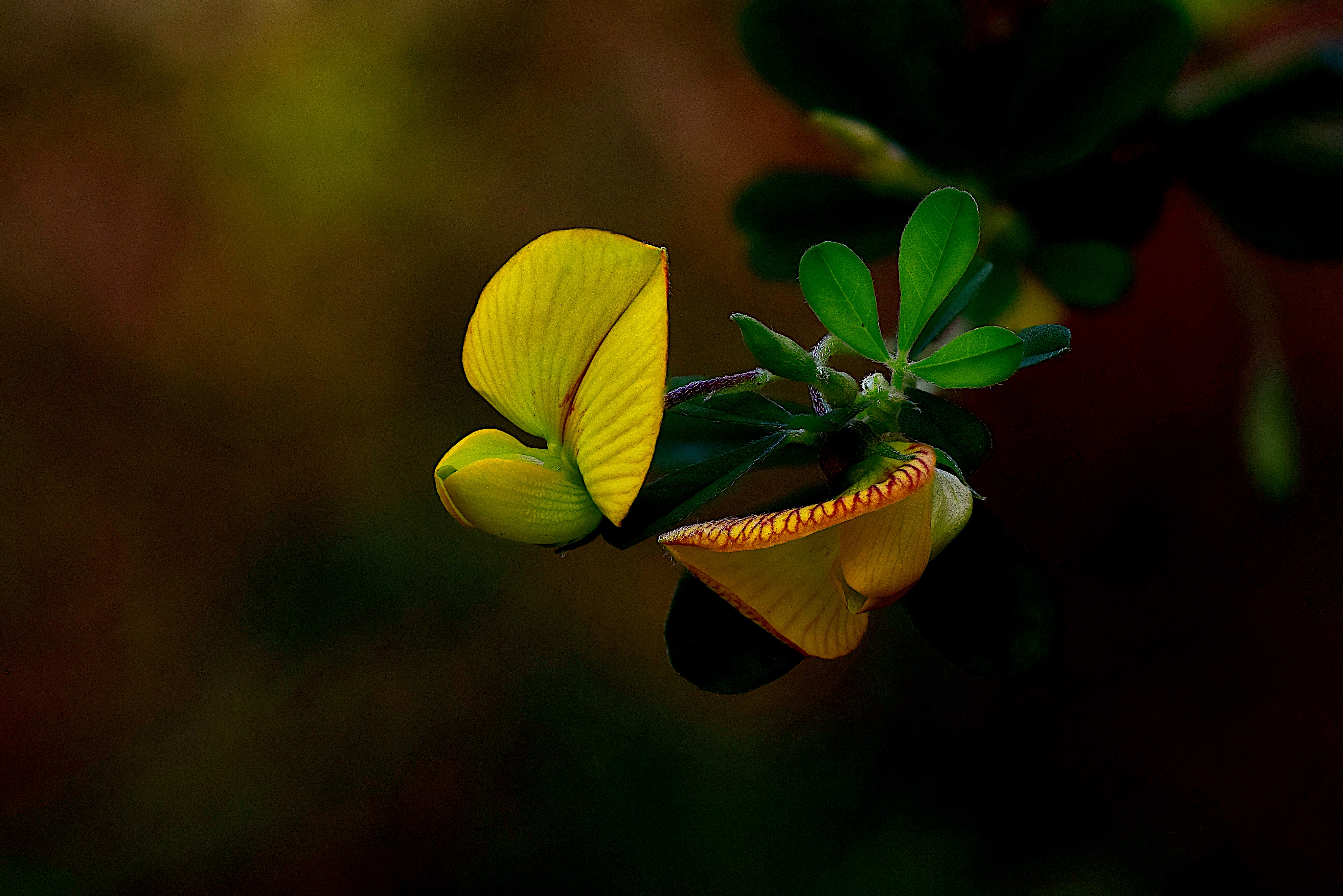
Low rattlebox, Crotalaria pumila. 2.5 cm across. Native. The map in the article linked here is incomplete and does not reflect the herbarium records for Alachua County, where I took this picture.

Showy rattlebox. C. spectabilis. 3.5 cm across. Native to southern and southeast Asia, now widely naturalized in southeastern North America:

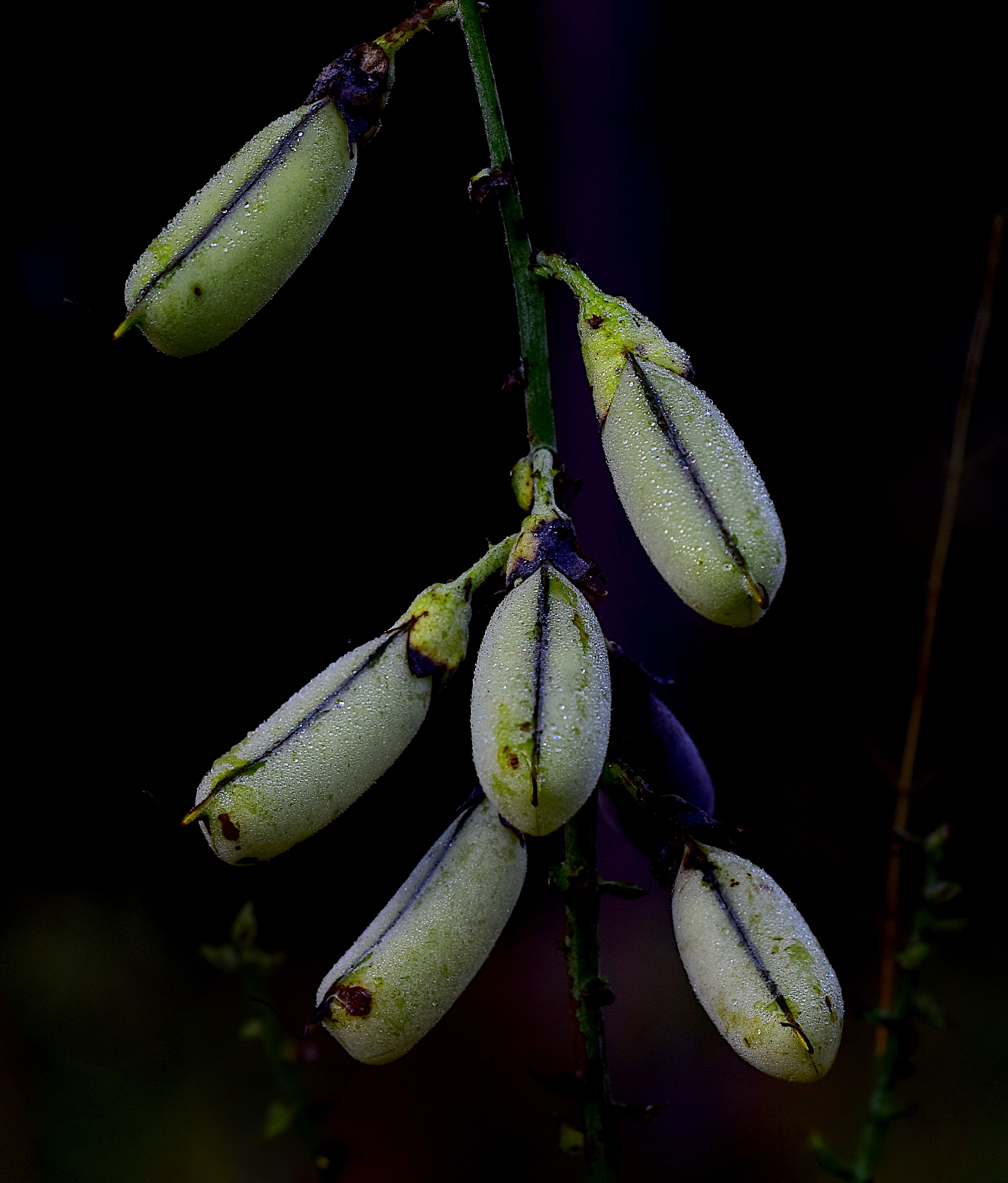
C. spectabilis seed pods. 4 cm long. The pods of C. pumila look similar but are smaller. Crotalaria, and especially their seeds, are laden with toxic alkaloids. Larvae of the rattlebox moth, Utetheisa ornatrix, bore through the walls of the pods and feed on the seeds. Somehow the caterpillars manage to detoxify the alkaloids enough so they aren’t poisoned, while remaining poisonous enough to deter most animals that might try to eat them. The larvae retain the toxins into the flying-moth stage, and at both stages their distinctive vivid color pattern warns predators to leave them alone.

A rattlebox-moth caterpillar. About 3 cm. I doubt that I could have found any of these if I’d gone looking for them, but this one crawled right in front of me while I tried to get a picture of the low rattlebox. It held fairly steady for a few seconds, letting me capture enough detail to identify it. I didn’t have my choice of background:

Tropical sage, Salvia coccinea. 3 cm. Native. At this latitude these remain at their peak through late December:

All that’s left in late February are these cones called calyces, which are fused sepals:

Spanish needles, Bidens alba. 2.5 cm. Native. This is the king weed of these parts, growing everywhere and sometimes in great masses; one dense bunch covers an acre of a low damp lot in the middle of Gainesville:

Seeds of Spanish needles. 1 cm long. The name of the genus, meaning two-teeth, derives from the forks at the tips of the seeds. The barbs on these projections are part of an impressive example of convergent biological and cultural evolution, and have turned out to be just the thing for attaching the seeds to socks and shoelaces:

Dotted horsemint, Monarda punctata. Whole flower head 2.5 cm wide. Native. The most complicated flowers I find around here:

All of that elaborate presentation goes to produce seeds 1 mm in diameter, too small to show well with my basic macro gear. At this stage you can still shake a few of them from the calyces. Thanks to Mark Frank of the Florida Museum of Natural History herbarium for a remedial lesson in the difference between calyces and phyllaries:

Beggarweed, Desmodium incanum. 1 cm across. Native to Central- and South America, naturalized in the southeastern U.S. This year, by means unknown, a few of them showed up for the first time in what passes for my lawn:

Beggarweed pea-pods, 3 cm long:

Scarlet morning glory, Ipomoea hederifolia. 4 cm long. Native:

Morning-glory seed pods, 7 mm. The hard little capsules cleave along their sutures and split open to release black seeds the shape of orange sections, exposing the translucent porcelain-like septa that divided them:

Readers’ wildlife photos

February 24, 2026 • 8:15 am

We have a timely contribution, and a bit of duck-related drama in New Jersey, from Jan Malik, whose captions and story are indented below. (The duck was, in the end, unharmed.) You can enlarge the photos by clicking on them.

Here is a short series of pictures from Barnegat Light that I took about twelve years ago. I was sitting on the rock jetty one February day, scanning for any passing seabirds, when something in the corner of my eye caught my attention: a commotion farther out in the inlet channel. A duck was being attacked by a large gull.

Trigger warning and spoiler alert: the gull went hungry— the duck escaped that morning.

The prey: Long‑tailed Duck (Clangula hyemalis)

This isn’t the actual bird that was attacked; I think I photographed this one later that day. But like the victim, it was probably an immature male. Long‑tailed Ducks form large flocks outside the breeding season, wintering offshore from the Arctic Ocean, Norway, Greenland, and Canada, and reaching New Jersey when the weather turns especially cold. Unfortunately, their IUCN status is Vulnerable, and based on my very unscientific observations over twenty years of winter trips to the Jersey shore, their numbers seem to be declining.

The drama begins: the duck is caught by a Great Black‑backed Gull (Larus marinus).

These gulls—the largest species in the family Laridae—are powerful scavengers and opportunistic predators. I don’t see them often at Barnegat Light or other exposed coastal areas; they seem to prefer city dumps and places with more edible refuse than the clean, wind‑swept inlet.

Each bird pulls in a different direction.  The duck tries to dive, while the gull attempts to lift its prey and carry it to land, where it can kill it properly by violent shaking.

Given the size difference, the duck can’t fight back All it can do is try to slip free:

A second gull arrives The possibility of a meal attracts another gull, which immediately tries to steal the catch. This actually helps the duck—when raptors (if we can stretch the term to include gulls) quarrel over prey, they often drop it:

The gull’s grip is weak.  Here it’s clear that not all is lost for the duck. The gull’s smooth, non‑serrated bill has only a tenuous hold on the duck’s feathers, and it’s far from securing a proper grip:

The gull’s feet offer no help. Like other gulls, Great Black‑backed Gulls have webbed feet built for paddling, not grasping. Their only real weapon is the bill, and in this case it wasn’t placed well enough to subdue the duck:

The hunt ends unsuccessfully.  The duck breaks free and immediately dives. Long‑tailed Ducks can dive 100–200 feet (30–60 m) and swim underwater using both their feet and wings, much like penguins:

Another Long‑tailed Duck in flight.  I include this photo to show why the species is called “long‑tailed,” although this individual doesn’t have the longest tail I’ve seen. These ducks were once called “Oldsquaw” in the United States and “Old Wife” in parts of England, but in the early 2000s the name was changed because it was considered offensive. I agree with the change, though I sometimes wonder whether it marked the beginning of the slippery slope that later led to Audubon being “canceled” and many other biological names being flagged as candidates for revision.

JAC:  All’s well that ends well.

Readers’ wildlife photos

February 23, 2026 • 8:50 am

This is the last full batch of photos I have. 🙁

But today we have a glorious selection of water birds (starring DUCKS) from New Zealand, where reader David Riddell lives. His commentary and IDs are indented, and you can enlarge the photos by clicking on them. Be sure to read the notes; you’ll see that several of these species are endangered.

Knowing how much our host likes ducks, I thought I’d put together a few images of water birds from around New Zealand.  Most of these are from the North Island, where I live, but there are a couple of South Islanders in here as well.

The blue duck (Hymenolaimus malacorhynchos) is one of only two duck species in the world that are mountain stream specialists, the other being the torrent duck (Merganetta armata) of South America. Males have a breathy whistle, which gives them their Maori name, whio, while the female call is a harsh, growling croak.  Like many New Zealand birds they’ve been badly impacted by introduced mammalian predators, but with management they’re holding their own and even expanding in some areas, such as the Volcanic Plateau in the central North Island.  For Tolkien fans, this pair was just below Tawhai Falls in Tongariro National Park, which doubled as the Forbidden Pool where Gollum was captured by Faramir’s men in The Two Towers:

Brown teal (Anas chlorotis) used to be the most abundant waterfowl in the country, but again have declined markedly, although numbers have increased in recent years in a few places. They occupied a wide range of habitats, not all of them aquatic.  This pair (male on the right) is part of a population introduced to Tawharanui Regional Park north of Auckland, which has a predator-proof fence across the base of a peninsula, protecting a 588 ha park from rats, cats, possums, mustelids and other exotic predators:

New Zealand scaup (Aythya novaeseelandiae) is a diving duck with a cute, “rubber duckie” profile. They mostly live in deep, clear waters where they feed on submerged water weeds, though this one was on a eutrophic (nutrient-enriched) lake in the small town of Cambridge:

Pacific black duck (Anas superciliosa) can cope quite well with introduced mammalian predators, but is perhaps now the country’s most endangered duck, as it is being genetically swamped by mallards (Anas platyrhynchos), with which it readily hybridises. This one, on the shore of a remote lake on the Volcanic Plateau, has the typically stripy face, and the green speculum with no white band on its upper margin, but the slight smudging of the facial stripes and orange tinge to the legs suggests that even this one has some mallard ancestry.  Fortunately they are still widespread elsewhere in the Pacific:

Mallards have also been in the news here lately as a few individuals on a high country lake in the South Island recently started preying on the chicks of Australasian crested grebes (Podiceps cristatus australis) and had to be “euthanised” as the local media euphemistically put it. The concern was that, being such adaptable creatures, other ducks would learn the habit and it would spread.  The grebes (a subspecies of the great crested grebe, from which it differs mainly by not having a distinct non-breeding plumage) are considered threatened, although their numbers have increased from a couple of hundred in the 1980s to perhaps a thousand today, with more in Australia.  Once almost entirely confined to the high country they are now well established on many lowland lakes, though they have not yet repopulated the North Island, from which they disappeared in the 19th century.  In 2023 the bird’s international profile was lifted dramatically when it was crowned New Zealand’s Bird of the Century after being championed by comedian John Oliver. “After all, this is what democracy is all about,” he said on his show, “America interfering in foreign elections.”  This one was photographed from the footbridge over the outlet of Lake Tekapo – the lake is fed by glacial meltwater, hence the pale blue colour:

While the crested grebe retreated to the South Island, another grebe, the New Zealand dabchick (Poliocephalus rufopectus) went the other way, becoming restricted to the North Island from the 1940s. More recently it’s been expanding again, and recolonised the South Island in 2012.  This is a pair engaging in a courtship dance:

And another dabchick:

Another small grebe, the Australasian grebe (Tachybaptus novaehollandiae) has been colonising New Zealand since the 1970s, though numbers nationwide are still low. Adults have a prominent yellow spot at the base of the bill that looks almost like a second eye, though the colour hasn’t fully developed on this juvenile:

Pied shags (Phalacrocorax varius) are one of 13 currently recognised New Zealand species of shags and cormorants (all usually called shags in New Zealand), making the country a centre of diversity for the family. The same species in Australia is generally a freshwater bird, although in this country they’re most commonly found on the coast.  This one however was nesting alongside the Karamea River in the north-west of the South Island:

Here are two other shag species, at a small lake near my home in the Waikato region of the North Island. On the left is a black shag (Phalacrocorax carbo novaehollandiae), the local subspecies of the widespread great cormorant, while on the right is a little pied cormorant (Microcarbo melanoleucos).  This is a highly variable species; juveniles are entirely black, while adults can range from a white-throated form through to completely pied.  This individual has a rather unusual motley appearance – I suspect it’s an older juvenile moulting into adult plumage:

American readers may be wondering why I’ve put in a picture of such a common species as a laughing gull (Leucophaeus atricilla) – and one in scruffy non-breeding plumage at that. But this was the first individual of the species ever seen in New Zealand, which my wife, daughter and I found two days before Christmas in 2016, when we stopped for a picnic lunch at a beachside reserve near the small east coast town of Opotiki.  It created huge interest among the local birding community, hanging around for several weeks and allowing many people to see it, eventually moulting into its much more handsome breeding colours, with black head and white-ringed eye.  It eventually moved southwards down the coast as far as Cape Kidnappers in Hawkes Bay, and was reported intermittently until October 2018:

Here’s another shot of it, next to a red-billed gull (Chroicocephalus novaehollandiae scopulinus), which is the species you would expect to see in such a place:

Black-billed gulls (Chroicocephalus bulleri) are our only endemic gull (the southern black-backed or kelp gull, Larus dominicanus, also occurs here). Until recently they were classified as critically endangered due to rapid declines at some of their main breeding colonies on South Island river beds, but they’re holding their own elsewhere, and establishing new colonies in the North Island.  These ones are roosting on an old wharf at the southern end of Lake Taupo, the large lake in the centre of the North Island: