Michael Shermer interviewed on WNYC, sandbagged on the issue of binary sex

January 29, 2026 • 10:30 am

Yesterday we were talking about Michael Shermer’s new book on Truth, but only insofar as I disagreed with his podcast characterization of free will.  Now, however, while promoting his book on the radio, Shermer encountered some misleading “progressivism” about sex from one of public radio’s most well-known announcers and on NPR’s biggest station: Brian Leher on WNYC in New York.  You can read about what happened by clicking on the sceenshot below at BROADview News. And below that you can hear the whole 35-minute interview of Shermer by Lehrer by clicking on the black screenshot and then on the “listen” arrow. You might want to start about halfway in (see below).

First, some excerpts from the article:

Like so many liberals, I grew up with NPR as my soundtrack: BJ Leiderman’s thumping theme songs in the background, or the soothing voice of the late great Susan Stamberg. I loved NPR.

It became difficult to listen to starting in 2016, as the mission changed from reporting to making sure that we all had the same opinion. Then, once Katie Herzog mentioned a game in which you turn NPR on at random times and see if they’re talking about race, NPR started to seem like a joke. But also: it wasn’t funny. It wasn’t funny when they reported on gender—because they often reported activist talking points about the medical interventions as facts, and labeled truths as disinformation.

We’ve seen shifts in other mainstream media outlets, even a kind of two-steps-forward, one-step-back movement in The New York Times’ reporting on gender. But NPR is more dug in than ever. I assume this is in reaction to the defunding of the Corporation for Public Broadcasting. To admit that they were so biased that they didn’t deserve public funding was to retire their pitch for more funding from listeners—although what they should have done was pivot, to do a better job and argue that they deserved the funding.

All this is background for what happened yesterday on WNYC, the most-listened-to public radio station in the country. Journalist Brian Lehrer has hosted a weekday news call-in show for some 35 years, and was widely admired as one of the best out there—fair-minded and willing to engage with different voices. Like many others in the media, he changed.

You can see the change when “Mabel” calls in at 16:23. Mabel apparently didn’t tell the call screener what she wanted to say on the air, because she actually got through to the broadcast.  Mabel then emphasized that there were two biological sexes and members of one cannot become members of the other. As you’ll hear, Lehrer pushed back, saying that biological sex can be changed through “transgender’ hormones and surgery. (Lehrer apoparently doesn’t know the difference between sex and gender.) More from the article:

Mabel likely didn’t tell the screener what she really wanted to say, because it started with how America is becoming a third-world country and complaints about the lack of affordable housing. But then she said “The Democratic Party has let me down,” because they’ve also been untruthful. “Now they’re saying that men can become women and I feel that you are just discounting women as a species,” she said. Dems were “trying to make us believe that you can turn a male into a female.” She added that women were more than their anatomy; they were also shaped by their experiences.

That last part allowed Lehrer to make his case that “trans women would say they had their experience of being a woman before they had any hormone replacement therapy or surgery.” Amazingly, he added: “Maybe you’re just biased against a segment of society who you don’t like.”

Actually, you don’t have the experience of being a woman before you transition; you have the feeling that you are a woman and want to change aspects of your body to conform to that. More:

This was absolutely shocking—to hear Brian Lehrer, the former Voice of Reason, tell a caller that because she feels lied to about this issue she’s hateful was astonishing, and just incredibly unprofessional.

Shermer, on the other hand, handled it like a champ. He went into the difference between subjective truths—I feel like I was born in the wrong body—and objective ones: we cannot change sex, which is binary and based on gametes. Shermer said he worried about the future of the Democratic Party because it cannot distinguish between objective and subjective truths.

Lehrer himself seemed to be in shock, having hermetically sealed his studio to protect against any facts that interrupted the narrative he’d constructed. “This is what the right wing says, that it’s gender ideology,” he retorted. WNYC has worked hard to exclude liberal dissident voices, which has allowed them to maintain that left/right framing.

But Shermer pushed on. He explained the difference between the vanishingly rare occurrence of childhood-onset gender dysphoria and rapid-onset, the theory of social contagion, the poor evidence base, the shift in several European countries. “The facts matter,” he said.

Lehrer: “It sounds like you’re being very dismissive.” He said doctors would disagree that you can’t change sex, or that sex is binary. And finally, when Shermer came back with reasonable answers, Lehrer said: “You’re here supposedly representing science.” That is: Lehrer believed Shermer had lost all credibility by applying the same lens to youth gender medicine that he applied to everything else.

Most shocking about this whole exchange was what happened after it ended. Lehrer invited people who were offended to call in. After Shermer was gone! “Equal time,” he said—as if they’d ever given a minute to any of us wanting to share another side of the story.

And so, the parents and grandparents and uncles of trans kids rang up. . . .

Shermer did handle it like a champ, acknowledging that biology is binary but gender is an “internal, subjective state.”   If you want to just hear the relevant exchange, start the podcast at 16:23.

At the end of the piece, author Lisa Davis gives the emails of the segment’s producers in case readers or listeners want to write them, but you can go to the site above and complain if you wish. Regardless, Lehrer shows how fully NPR has bought into the theory that humans can change from one sex into another. Shermer does a great job correcting Lehrer, emphasizing that gender is an internal, subjective state and, as far as biological sex goes, we are not clownfish: humans can’t change from one sex to another.


Michael Shermer interviews Matthew Cobb on his Crick biography

January 18, 2026 • 9:45 am

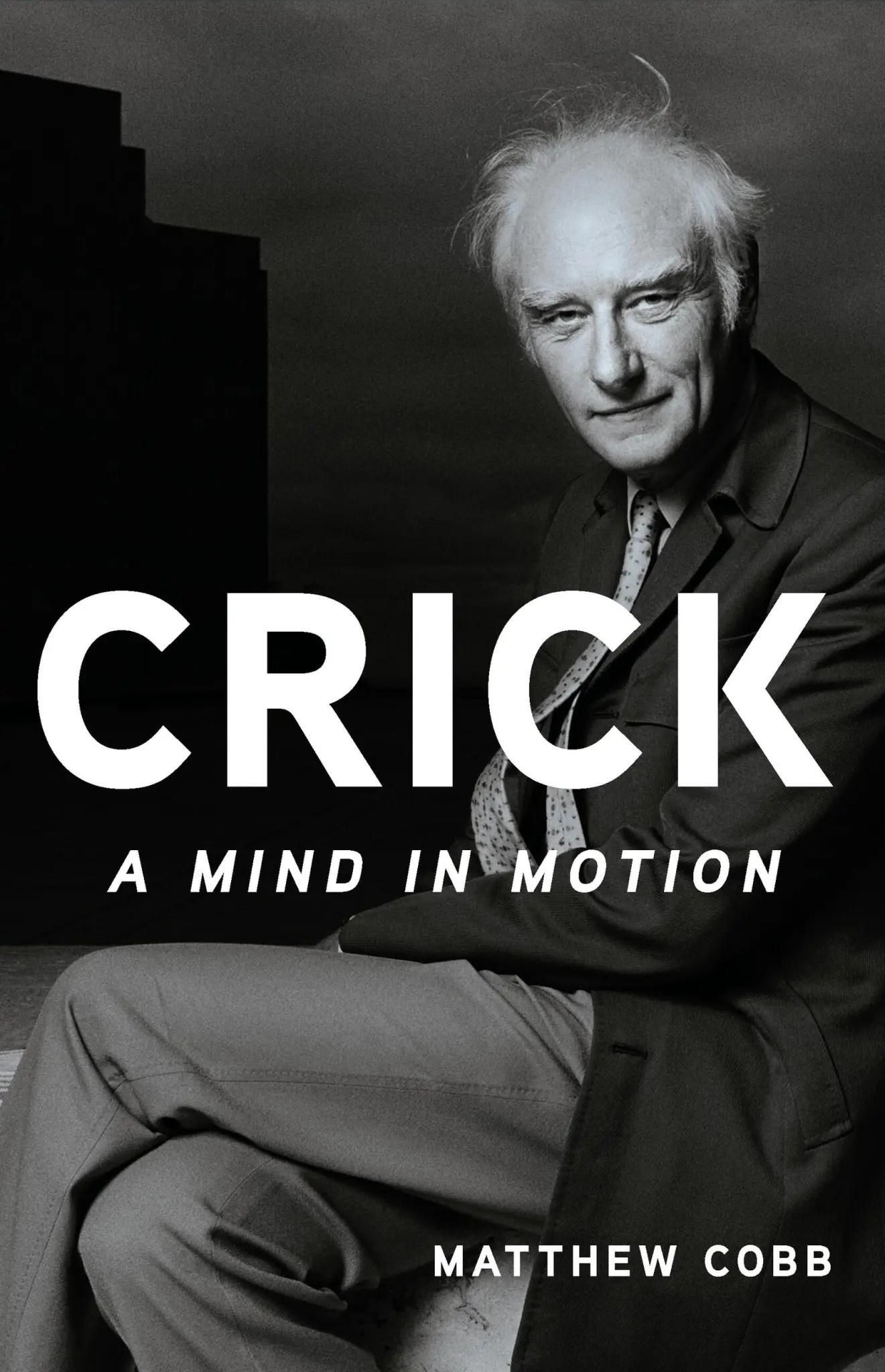
Here we have an 83-minute interview of Matthew Crick by Michael Shermer; the topic is Francis Crick as described in Matthew’s new book Crick: A Mind in Motion. Talking to a friend last night, I realized that the two best biographies of scientists I’ve read are Matthew’s book and Janet Browne’s magisterial two-volume biography of Darwin (the two-book set is a must-read, and I recommend both, though Princeton will issue in June a one-volume condensation).

At any rate, if you want to get an 83-minute summary of Matthew’s book, or see if you want to read the book, as you should, have a listen to Matthew’s exposition at the link below.  I have recommended his and Browne’s books because they’re not only comprehensive, but eminently readable, and you can get a sense of Matthew’s eloquence by his off-the-cuff discussion with Shermer.

Click below to listen.

I’ve put the cover below because Shermer mentions it at the outset of the discussion:

My brief interview of Matthew Cobb about his new biography of Francis Crick

January 7, 2026 • 11:00 am

Matthew Cobb’s new biography of Francis Crick has been out for only a short time, but I’ve never seen a review less than enthusiastic (check out this NYT review). I finished it last week, and was also enthusiastic, finding it one of the best biographies of a scientist I’ve ever read. It concentrates on Crick’s science, but his accomplishments were inseparable from his personality, which focused not only on science but also on poetry (the book begins and ends with a poet), drugs, women, and philosophy (he was, by the way, a hardcore atheist and determinist).

But I digress. I really recommend that if you have any interest in the man and his work, which of course includes helping reveal the structure of DNA, you get this book and read it. It is a stupendous achievement, based on tons of research, sleuthing, and interviews, and only a geneticist could have written it. But it’s not dull at all: Matthew has always written lively and engaging prose. Crick is also a good complement to Matthew’s previous book, Life’s Greatest Secret, about how the genetic code was cracked.

As a complement, a biography of Jim Watson by Nathaniel Comfort is in the works, but hasn’t yet been published.

After I finished the book,  I had a few questions about Crick and his work, and asked Matthew if I could pose them to him and post his answers. on this site  He kindly said “yes,” and so here they are. My questions are in bold; Matthew’s answers in plain text. Enjoy:

What one question would you ask Crick if he could return from the dead? (Perhaps something that you couldn’t find out about him from your research.)

I think I would probably ask him about his view of the state of consciousness research. His key insight, with Christof Koch, was that rather than trying to explain everything about consciousness, researchers should look for the neural correlates of consciousness – neurons that fired in a correlated manner with a visual perception – and ask what (if anything) was special about how they fired, their connections, and the genes expressed within them. Since his death, we have obtained recordings from such neurons, but far from resolving the issue, consciousness studies have lost their way, with over 200 different theories currently being advanced. What did he think went wrong? Or rather, is it time to use a more reductionist approach, studying simpler neural networks, even in animals that might not be thought to be conscious?


Why did it take ten years—until the Nobel prize was awarded—for people to appreciate the significance of DNA?

Most people imagine that when the double helix was discovered it immediately made Watson and Crick globally famous and the finding was feted. That was not the case, mainly because the actual evidence that DNA was the genetic material was restricted to Avery’s 1944 work on one species of bacterium (this was contested) and a rather crappy experiment on bacteriophage viruses (this was the famous paper by Hershey and Chase from 1952; the experiment was so messy that Hershey did not believe that genes were made solely of DNA). So although the structure of DNA was immediately obvious in terms of its function – both replication and gene specificity, as it was called, could be explained by reciprocal base pairs and the sequence of bases – there was no experimental proof of this function. Indeed, the first proof that DNA is the genetic material in eukaryotes (organisms with a nucleus, including all multicellular organisms) did not appear until the mid-1970s! Instead, people viewed the idea that DNA was the genetic material as a working hypothesis, which became stronger through the 1950s as various experiments were carried out (eg., Meselson and Stahl’s experiment on replication) and theoretical developments were made (eg Crick’s ideas about the central dogma). Its notable that the Nobel Prize committee awarded the prize in 1962, just after the first words in the genetic code were cracked and the relation between DNA, RNA and protein had been experimentally demonstrated.


A lot of the latter part of the book is on Crick’s work on neuroscience (and, later, consciousness). You claim that he made enormous contributions to the field that really pushed it forward. Could you tell us a bit about what those contributions were?

Although he did not make a great breakthrough, he helped transform the way that neuroscience was done, the ideas and approaches it used. From the outset – a 1979 article in a special issue of Scientific American devoted to the brain – he focused attention on one particular aspect of brain function (he chose visual perception), the importance of theoretical approaches rooted in neuroanatomy, the need for detailed maps of brain areas and the promise of computational approaches to neural networks. All these things shaped subsequent developments – in particular the work on neural networks, which he played a fundamental part in, and which gave rise to today’s Large Language Models (he worked with both Geoffrey Hinton and John Hopfield, who shared the 2024 Nobel Prize in Physics for their work on this in the 1980s). And, of course, he made the scientific study of consciousness scientifically respectable, taking it out of the hands of the philosophers who had been tinkering with the problem for three thousand years and hadn’t got anywhere. Later, in a perspective article he published on the last day of the old millennium, he reviewed recent developments in molecular biology and predicted that three techniques would become useful: classifying neurons not by their morphology but by the genes that are expressed in them, using genetic markers from the human genome to study the brains of primates (the main experimental system he advocated using), and controlling the activity of neurons with light by using genetic constructs. All these three techniques – now called RNAseq, transcriptional mapping and neurogenetics – are used every day in neuroscience labs around the world. Indeed, within a few months of the article appearing, Crick received a letter from a young Austrian researcher, Gero Miesenböck, telling him that his lab was working on optogenetics and the results looked promising. During his lifetime, Crick’s decisive leadership role was well known to neuroscientists; now it has largely been forgotten, unfortunately.


Is there anything a young scientist could learn from Crick’s own methods that would be helpful, or was he a one-off whose way of working cannot be imitated?

I think the key issue is not so much Crick as the times in which he worked. As he repeatedly acknowledged, he was amazingly lucky. From 1954-1977 he worked for the Medical Research Council in the UK. He did no teaching, no grading, was not involved in doctoral supervision (I’m not even clear how many PhD students he technically supervised – 4? 3? 5? – which highlights that even if he had his name on a bit of paper, he had little to do with any of them). Apart from a couple of periods, he had no administrative duties, and only one major leadership post, at the Salk, which nearly killed him. He wrote one major grant application at the Salk (the only one he ever wrote), but basically he was funded sufficiently well to simply get on with things. And what did he do? ‘I read and think,’ he said. Try getting that past a recruitment or promotions panel today! In a way, the onus for the creation of more Cricks does not lie with young researchers, but with established scientists – they need to allow young people the time to ‘read and think’, and value failure. Most ideas will turn out to be wrong; that’s OK. Or at least, it was to Crick. Many senior researchers (and funders) don’t see things that way. However, even without such changes, young scientists can adopt some of Crick’s habits. Here’s my attempt to sum up what I think were the lessons of his life and work:

  • Read widely and avidly, even engaging with ideas that might seem eccentric or pointless, as ‘there might be something in it’ (one of his favourite phrases).
  • Talk through your ideas with your peers – try to find the weak spots in each other’s arguments.
  • At least in the initial stages of research, don’t get bogged down in the details that might counter your interpretation/theory – Crick and Brenner called this the ‘don’t worry’ approach. They figured that unconnected contrary data points might not undermine their ideas, and would eventually turn out to have specific, varied explanations.
  • Write down your ideas in the form of memos or short documents (keep them short). Writing helps you clarify your ideas and shaped your mind – do not use AI to do this! You can then share your writing with peers, which can be used as a target for discussion and debate.
  • Master the art of clear writing. Avoid jargon, keep your ideas straightforward. Again, the only way to develop this skill is to write – badly at first. So rewrite, edit, recast your writing – it will improve your thinking.
  • Above all, make sure that the science you do is *fun*. That was a word that Crick repeatedly used, and he genuinely got great pleasure from doing science and thinking about it. Seek out an area in which you can have fun and aren’t bogged down by drudgery.

Click below to get the book on Amazon:

Coleman Hughes interviews Carole Hooven

November 12, 2025 • 9:30 am

Here’s a 1.5-hour interview of biologist Carole Hooven by the Free Press’s Coleman Hughes. As you may know, Hooven got her Ph.D. at Harvard, started work as a teaching fellow in biological anthropology, and subsequently wrote the excellent book T: The Story of Testosterone, the Hormone that Dominates and Divides Us (2021).  She was apparently a superb and popular teacher, nabbing a lot of teaching awards. But then the downfall: she got into trouble after she went on a Fox program and spoke the truth, asserting that there are two biological sexes—carefully adding the caveat that pronouns should be respected and that people with non-standard genders should be treated equally. (You can see the 4-minute Fox interview here.)

But of course the assertion that there are two biological sexes, although true, gets you labeled a “transphobe” (even with the proper caveats), and the DEI people in Carole’s department eventually made it impossible for her to work there, so she left.  Harvard should be ashamed of this, and the school has done nothing to rectify its misbehavior. Subsequently, others have been demonized or called “transphobes” for defending the two-biological-sex fact. The demonizers, which include people like Steve Novella and the co-Presidents of the Freedom from Religion Foundation, should also be ashamed of their misbehavior, but they are seeking props for putting ideology over biological truth.

Carole begins by recounting her checkered—or should I say “diverse”—career, describing what happened at Harvard, and then explains the gametocentric definition of sex rejected by gender ideologues.  The rest of the interview, with both discussants showing their characteristic eloquence, is a biology lesson, a lesson on sex determination, what can go wrong with the “normal” forms of development, and how evolution has produced differences in the morphology and behavior of the two sexes.  Testosterone naturally makes an appearance.  You can see why Carole won so many teaching awards.

The YouTube notes are these:

In elite circles, it has become strangely difficult to say out loud what every biology department taught as recently as 10 years ago: that sex is binary, that testosterone matters, and that average differences do not mean categorical rules. That’s why I wanted to sit down with Carole Hooven, an evolutionary biologist who spent 20 years at Harvard teaching hormones, behavior, and evolutionary psychology before she was pushed out for stating precisely that.

In our conversation, Hooven traces how she got here: from her early fieldwork studying chimp aggression in Uganda, to her best-selling book on testosterone, to the moment a single Fox News clip triggered a campus-wide effort to paint her as “dangerous.” She explains what research actually says—about rough-and-tumble play, aggression, libido, and the long-run effects of puberty blockers and cross-sex hormones—and how activists and journalists systematically mislead the public.

Hooven isn’t angry or ideological; she is empirically careful. She draws a distinction almost nobody in public debate seems capable of holding anymore: Sex itself is binary, but sex-associated traits form overlapping distributions. Confusing those two ideas is what produces so much intellectual chaos and so much institutional cowardice.

This episode challenges the comforting myths: that these debates are “just semantics,” that biology can be legislated away, and that open scientific inquiry can coexist with fear of one’s students. What Hooven makes clear is that the science hasn’t changed, only the cost of talking about it.

Jonathan Kay interviews Lawrence Krauss about our anthology, “The War on Science”

November 10, 2025 • 10:15 am

Here’s a 36-minute interview of Lawrence Krauss by journalist and Quillette editor Jonathan Kay, concentrating on Krauss’s new anthology The War on Science, This book has become somewhat controversial for liberals simply because it blames the Left for some ideological erosion of science at a time when, “progressives” argue, everyone should be going after Trump’s damage to science, not the Left’s.

I consider that criticism misguided.  No political side should be free from criticism because it’s your side. As Krauss says in the video, the book’s chapters represent people from all sorts of disciplines and from all segments of the political spectrum.  Nevertheless, it’s still touted by progressives as a “right-wing attack on science”. (Full disclosure: Luana and I have a reworked version of this paper as one chapter in the anthology.)

Here are the YouTube notes:

Astrophysicist Lawrence Krauss joins Quillette’s Jonathan Kay to discuss his explosive new book, The War on Science, featuring essays from 39 leading scholars—including Richard Dawkins, Steven Pinker, and Sally Satel. In this in-depth conversation, Krauss explains how progressive ideology, DEI mandates, and academic cowardice are threatening the foundations of scientific inquiry in universities across the West. He also addresses the political right’s war on vaccine science and funding cuts under the Trump administration.

Topics discussed:
The ideological capture of science (physics, medicine, anthropology)
DEI in academia and its impact on meritocracy
Free speech and academic freedom in STEM fields
The decline of research funding and long-term risks
Why Krauss believes this is a “two-front war” on science

You can see the book’s table of contents here.

Just two comments. First, I think Krauss mentions my own personal holiday, “Coynezaa” (Dec. 25-30), at 4:30. But he may have been trying to say “Kwanzaa”, which is an ethnic holiday.

Kay is a tough interviewer, and asks Lawrence critical questions like “Why is Jordan Peterson in there?”;  “Isn’t there still discrimination against ethnicities, so why are you going after DEAI?”; or Aren’t we past peak wokeness anyway?”

In my view, the chapters are of variable quality (see, for example’s Peterson’s contribution, which is dire), but there are enough good chapters—most of them—to make the book a valuable contribution. Richard Dawkins’s chapter, for example, is alone worth the price of the book. It’s a shame that it came out when Trump is blackmailing universities about science, but of course we had no idea that would happen. Still, I didn’t anticipate the “whataboutery” we’d receive from progressives.

My interview with Scott Jacobsen, part 2 (and a note on faith versus fact)

November 7, 2025 • 9:45 am

Here’s the second part of my interview with Scott Jacobson, published on the Substack site A Further Inquiry (part I is here).  I’ll give just two excerpts below:

Scott Douglas Jacobsen: We’re speaking mainly about Christian-majority countries. However, according to recent census data from Statistics Canada, the total number of Christians in Canada is around 53 to 54%. If you track the trend line from the 1971 data through 2001 and 2021, Canada will fall below half-Christian in terms of its total population sometime this year. That’s a significant shift. The United Kingdom is already closer to 40%. While the United States still reports around 67%, that was different from two decades ago. So, there is a general decline. Does this mean that the acceptance of evolution—or at least theistic evolution—is likely to become more prevalent in these cultures?

Jerry Coyne: Yes, that’s what the statistics suggest. If you look at Gallup polls, you’ll see that the only steady increase is in the acceptance of naturalistic evolution. It started at about 9% in 1982 and has risen to around 25% by 2024. That’s a promising trend, but it’s important to note that more than half of Americans—nearly three-quarters—still oppose purely naturalistic evolution.

Keep in mind that 34% of Americans are theistic evolutionists. They accept evolution, but only up to a point. That point usually involves human evolution because they believe God created humans in His image. This belief skews the data, making the acceptance of evolution seem higher than it truly is. Many people struggle with the idea that what they perceive as a random, accidental process could lead to the complexity of human beings and our brains. This is a mischaracterization of natural selection, but it’s a common barrier to accepting evolution.

. . . \Jacobsen: It’s quite a story. So, when you’re less active on that particular subject, such as tracking the Discovery Institute’s activities, what do you consider the enduring thread from Mencken’s era to the present regarding attempts to infiltrate school systems and advocate for a divine role in evolution? What common themes have persisted over time?

Coyne: The fact that evolution is inherently offensive to many people. Steve Stewart-Williams wrote a book about this—although I can’t recall the title—that delves into the different ways in which the concepts of evolution and natural selection challenge deeply held beliefs. It’s not just about religion. Evolution strikes the core of human exceptionalism and the belief that we are somehow separate from the rest of the natural world.

You don’t have to be religious to believe in human exceptionalism, but religion certainly reinforces it. The idea that naturalism alone is responsible for everything, including consciousness, is unsettling for many.

Some people propose supernaturalism or extranaturalism because they don’t believe naturalism can account for phenomena like consciousness. I remember talking to Steven Weinberg, the Nobel laureate in physics, at a meeting several years ago. My presentation was on free will and why it doesn’t truly exist—because our will originates in the brain, which is composed of molecules that follow the laws of physics. Therefore, we can’t step outside ourselves to make truly independent choices. At any given moment, the arrangement of molecules in the brain allows for only one possible action.

That idea is offensive to many people, including Weinberg. He asked, “Are you telling me I couldn’t have chosen something else when I choose what to eat at a restaurant?” I said, “Yes, that’s exactly what I’m saying.” He objected, saying he didn’t believe it.

That reaction highlights how deeply unsettling naturalism can be, especially when it challenges the notion of free will. Naturalism, which underpins evolution, is inherently challenging. Evolution itself isn’t a philosophical concept, but it embodies methodological naturalism. Darwin’s work epitomized this, especially at the end of On the Origin of Species, where he wrote about the natural laws governing cosmology and biology. He drew a parallel between the laws of physics that dictate planetary motion and the laws that drive evolution, which are based on chemistry and physics.

So, yes, evolution offends people on multiple levels. Even if religion were to disappear—which it won’t, at least not in our lifetimes—people would still find reasons to object to evolution. However, it’s also true that the less people believe in God, the more likely they are to accept evolution. Suppose you graph countries based on religiosity and acceptance of evolution. In that case, you’ll see a clear trend: the more religious a country is, the less likely its population is to accept evolution. This appears to hold globally.

The least accepting countries are typically the most religious ones, such as Muslim-majority countries. Even within Europe, countries like Spain and Italy, which have strong Catholic traditions, are less accepting of evolution compared to more secular countries.

If you analyze the 50 United States similarly, you’ll also see a significant positive correlation between acceptance of evolution and atheism or lack of religiosity. The states most resistant to evolution, such as Tennessee—known for the famous Scopes Trial—are primarily in the American South. These states are also the most religious in the United States. The underlying thread is the tension between materialism and religion, which inherently rejects materialism.

Religion, by its nature, involves the supernatural. This theme has consistently run through the debate over evolution.

Apropos of the negative correlation between religiosity and acceptance of human evolution, below is one figure I gave in my paper in Evolution, “Science, Religion, and Society: The Problem of Evolution in America” (access is free). It was the paper I was allowed to publish in the journal because I was President of the Society of the Study for Evolution.

Now the plot below shows a correlation and doesn’t indicate causality. For example, one could posit that acceptance of evolution in a country erodes its acceptance of religion, or, alternatively, the higher the religiosity of a country, the less likely its inhabitants are to accept human evolution. Or both.  My own view is that the latter is more credible because people get their religion before they learn anything about evolution—if they ever learn anything about evolution. They may simply, as happens often in Islam and Orthodox Judaism, reject human evolution from the outset because that’s what it says in the scripture they encounter.

(From paper): The correlation between belief in God and acceptance of human evolution among 34 countries. Acceptance of evolution is based on the survey of Miller et al. (2006), who asked people whether they agreed with the statement, “Human beings, as we know them today, developed from earlier species of animals.” (Original data provided by J. D. Miller.) “Belief in God” comes from the Eurobarometer survey of 2005, except for data for Japan from (Zuckerman 2007) and for the United States from a Gallup Poll (2011b). “US” is the point for the United States. The correlation is −0.608 (P= 0.0001), the equation of the least-squares regression line is y= 81.47 − 0.33x.


Here’s another excerpt from my paper:

There is ample evidence, then, that aversion to evolution stems from religious belief not just in the United States but in the world as a whole, and no evidence that resistance to evolution reflects a lack of outreach on the part of teachers and scientists. A final bit of data (Masci 2007) supports this conclusion:

When asked what they would do if scientists were to disprove a particular religious belief, nearly two-thirds (64%) of [American] people say they would continue to hold to what their religion teaches rather than accept the contrary scientific finding, according to the results of an October 2006 Time magazine poll. Indeed, in a May 2007 Gallup poll, only 14% of those who say they do not believe in evolution cite lack of evidence as the main reason underpinning their views; more people cite their belief in Jesus (19%), God (16%) or religion generally (16%) as their reason for rejecting Darwin’s theory.

That last bit of data is scary!

There is another section of the paper called “Incompatibilities between science and faith,” which made me have to fight a little to get the paper published. For the mere suggestion that religion and science are incompatible (in my view, the incompatibility lies mainly in their different ways of ascertaining “truth”) gets people riled up.  That section also inspired my book Faith versus Fact, which I published a few years later.

I often hear “liberal” religionists say that true religion doesn’t need evidence, as faith comes from authority, scripture, and revelation, so religion and science occupy “nonoverlapping magisteria,” as Steve Gould maintained. (See my TLS review of Gould’s book about this, which I’ve reposted on this site.) But of course every bit of evidence supporting religious doctrine, like miracles (two are required for sainthood in Catholicism), evidence of life after death  with Jesus (books like Heaven is for Real are invariably best sellers), or bogus evidence of “irreducible complexity” adduced by ID advocates—this “evidence” is eagerly glommed onto by believers, who also often make pilgrimages to holy sites.

Yep, undergirding nearly all faith is acceptance of a set of empirical tenets, tenets without which religion becomes superfluous. (Reread the Nicene Creed if you don’t believe me.)

My interview with Scott Jacobsen, Part 1

November 6, 2025 • 11:15 am

Just to keep the record complete, and at the risk of being self-aggrandizing, here’s an interview I did some time ago with writer and publisher Scott Jacobsen, an interview coming out in two parts. You can read it for free by clicking on the screenshot below, which goes to the Substack site A Further Inquiry. I haven’t yet read it, as I hate both hearing and reading my own interviews, but I’ll try to pick out a few quotes at lunch now.

Oh hell, here’s one exchange:

Jacobsen: Do you ever get pushback—not on the facts, evidence, or the validity of your arguments—but on your tone? People who position themselves as the “tone police,” saying that you come across too aggressively? H. L. Mencken might have faced this if he were writing today, perhaps to an even greater extent. People might say, “We appreciate the sophistication and flair of your language, but it’s too sharp, and you’re turning people off.” Do you get that kind of response?

Coyne: All the time, man. It’s because you cannot criticize religion, however indirectly, without it being perceived as an attack on religion itself. About 60 to 70 percent of Americans believe that God played a role in evolution, so if you make any statement about evolution, you inevitably have to touch on creationism. When I wrote my book Why Evolution Is True, I aimed for a mild tone; I didn’t want to offend religious people. But you can’t discuss the evidence for evolution without discussing the evidence against creationism.

It’s all interconnected. In the “one long argument” in On the Origin of Species, Darwin repeatedly addresses creationist ideas, acknowledging creationism as the alternative hypothesis to evolution. So, if you’re defending evolution, at some point, you have to critique creationism. When you do that, you’re challenging religious belief, and no matter how mild the critique, people will accuse you of using the wrong tone.

What they’re essentially saying is that you should shut up. One example is when I point out the existence of dead genes—we have, for example, three genes for making egg-yolk proteins in the human genome that are nonfunctional because we don’t make egg yolk anymore—so they’re remnants from our reptilian ancestors. Suppose you mention this to convince people that evolution is true. In that case, you must also ask why a creator would put nonfunctional genes in our genomes. Making this argument is thus a quasi-scientific discussion.

When arguing for evolution, you have to present your case while addressing the alternative, which means critiquing creation. That gets people defensive and makes them criticize the tone of the argument. Sometimes, for fun, I try to write like H. L. Mencken because creationism is fundamentally as baseless as flat-earth ideas. There’s so much evidence against creationism that it’s laughable to espouse it. Usually, I am not Mencken-esque when I give evidence for evolution. I choose to either wear my atheist, anti-religious hat or my scientific hat when lecturing, but not both at the same time.

I’ve always been convinced that when teaching the mandatory evolution segment required for biology majors, it was imperative for me to begin with a segment on “why scientists accept evolution”: several lectures on the evidence. I did that because I wanted the students to leave at least knowing that there’s copious and diverse evidence supporting evolution and natural selection. After graduation, they’ll enter a society in which 71% of Americans see the hand of God in human evolution, and I wanted them to know that the truth of evolution dispels the need for supernatural intervention.

I’ll post on part 2 when it appears.