Thursday: Hili dialogue

March 5, 2026 • 6:45 am

Welcome to Thursday, March 5, 2026, and National Cheese Doodle Day. Wikipedia describes the biggest brand Cheez Doodles™, this way:

Cheez Doodles are a cheese-flavored baked cheese puff made of extruded cornmeal and are similar to Frito-Lay’s Cheetos and Herr’s Cheese Curls. The snack was created by Morrie Yohai and is produced by Pennsylvania-based snack foods producer Wise Foods.

The Doodles appear to be yet another Jewish contribution to American culture. Wikipedia adds “The name came to [Morrie] while he sat around the table with other employees sampling different alternatives for the cheese flavoring.”  The snack became popular only around 1964.   I don’t much care for them, but many people are addicted (you know them by their orange fingers.  Here’s a video showing how the crunchy version is made.  I wonder what’s in the “cheese flavoring”.  (The video starts 9 seconds in, so be patient):

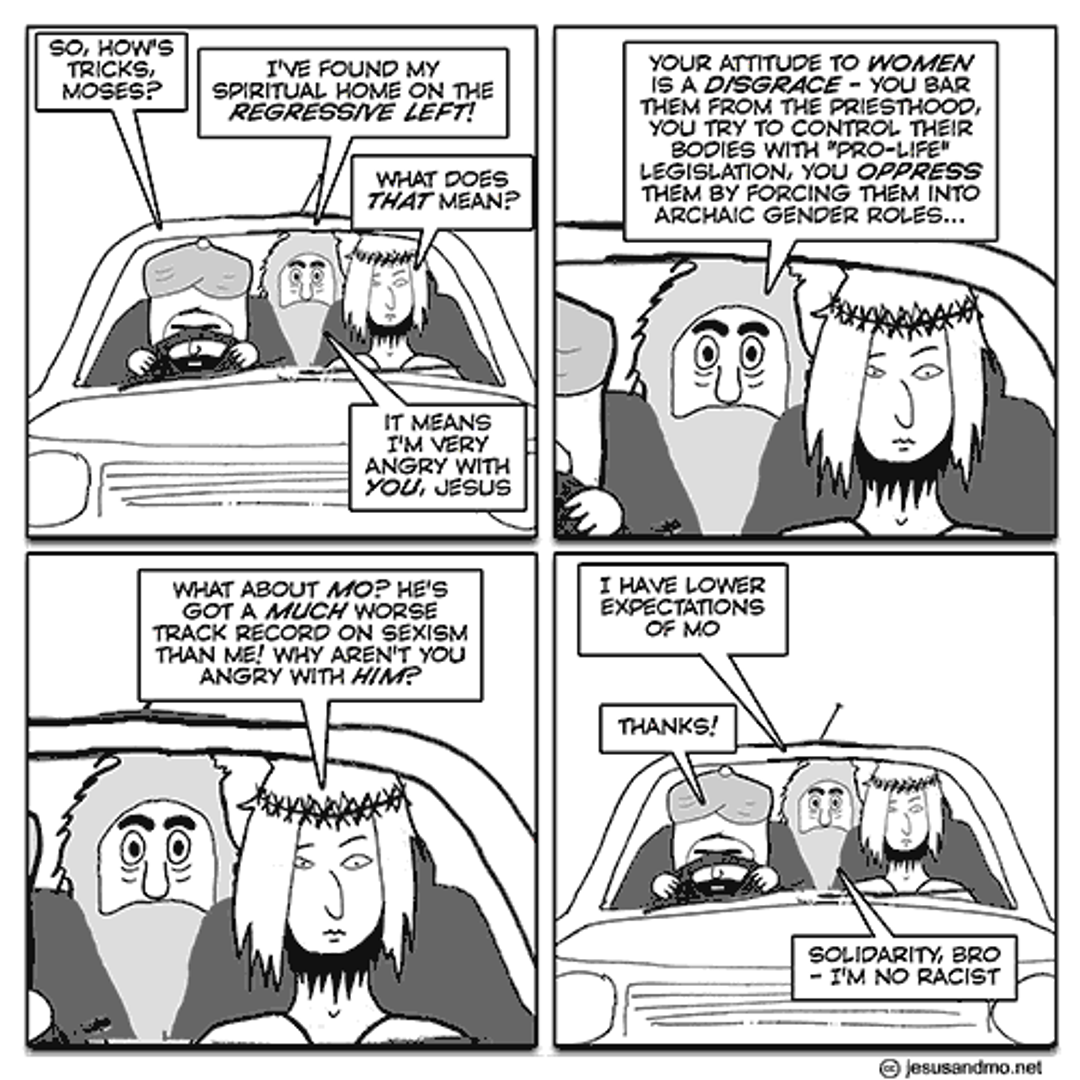
And Stacy sent in this late LOL:

As of yesterday afternoon, our two ducks are still here. I haven’t yet named them.

It’s also National Absinthe Day and National Poutine Day, clearly a cultural appropriation from Canada.

Here is a plate of hot-dog poutine that I wolfed down on March 1, 2016 at La Banquise, perhaps the most famous poutine joint in Montreal (it’s featured in the Wikipedia article on the dish, created in the late 1950s.. There is probably no food worse for you than poutine, but I do love it as a treat (I haven’t found it in America, but I’m sure it’s here somewhere for expat Canucks):

Standing in front of the restaurant are my friends Claude and Anne-Marie, who gave me a five-star tour of the city.

The menu (click to enlarge):

Readers are welcome to mark notable events, births, or deaths on this day by consulting the March 5 Wikipedia page.

Da Nooz:

*The war goes on, and will for a while.  Now Iran has pulled another dumbass move by sending a missile over Turkey (it was shot down). Granted, it could have been aimed at U.S. bases there, but Turkey is the closest country in the Middle East to being a U.S. ally, though it’s also a member of NATO, and thus part of an alliance that includes the U.S.

Defense Secretary Pete Hegseth said Wednesday that the U.S. military campaign against Iran was accelerating, with more warplanes arriving in the region, as he warned Iranian leaders that American forces would deliver “death and destruction all day long.”

Just before Mr. Hegseth briefed reporters on the fifth day of the U.S.-Israeli assault on Iran, Turkey’s defense ministry announced that NATO air defenses had shot down a ballistic missile fired from Iran that had been heading toward Turkish airspace. The ministry did not say what the missile’s intended target was, and Iran did not comment on the claim, but an attack on Turkey, a NATO member, would mark a dangerous escalation in Iran’s retaliatory targeting of neighboring countries.

Hundreds of people in Iran have been killed in the U.S.-Israeli strikes, and Mr. Hegseth said there would be no letup in the attacks. He and Gen. Dan Caine, the chairman of the Joint Chiefs of Staff, said that the United States and Israel would soon establish total control of Iranian airspace and that the strikes were devastating Iran’s ballistic missile program and its naval fleet.

But Iran’s leaders have vowed not to bow to the bombing campaign, and Saudi Arabia, the United Arab Emirates, Qatar and Kuwait all announced new Iranian attacks on Wednesday.

. . . China, the largest buyer of Iranian oil, said it would send a special envoy to the Middle East to help conduct conflict mediation efforts, according to Xinhua, the state news agency. The move came as the United Kingdom, France and Greece said they were deploying military assets to the region to defend their citizens and interests, even as their governments voiced misgivings about the U.S.-Israeli war on Iran.

. . . Mr. Hegseth said that a U.S. submarine-launched torpedo was used to sink an Iranian warship, the first time an American sub has fired a torpedo against an enemy ship since World War II. Dozens were feared dead after an Iranian naval ship with a crew of 180 people sank in the Indian Ocean on Wednesday off the coast of Sri Lanka, according to the authorities in that country.

The Washington Post adds this:

Iran can continue firing missiles at its present pace for “several more days” before its capacity to hit targets in the Middle East diminishes, Western officials said. U.S. and Israeli strikes on Iranian launch sites and missile depots have already caused a drop in the rate of Iranian fire, officials said. “If the current rates continue, we assess that Iran has several more days of capability,” one official said, speaking on the condition of anonymity, citing the sensitivity of the subject.

What’s after that? Boots in the ground?  Iran has clearly lost this one, and it’s far from over. So far most of the U.S. actions seem to have been careful, aimed only at the administration of Iran (they’re going after the police as well as the military, for the police have been a prime instrument of oppression).  So far most of the Democrats are in lockstep against the war, save for Sen. John Fetterman (D-PA), Greg Landsman (D-Ohio), and Rep. Josh Gottheimer (D-N.J.). Pity. The Party’s mantra is “If Trump did it, it’s bad.”

Here’s today’s NYT front page from the web. Note that there’s a “news analysis” in the headline spot (I put in the red box), which is unusual since it’s usually a slot for news, but the NYT doesn’t like the war:

*Meet the New Boss, same as the Old Boss Department. Several sources including the NYT have identified Mojtaba Khamenei, son of the slain Ayatollah, as his dad’s likely successor (article archived here, Wikipedia bio here). That will be the least possible regime change. Given that Trump has said he will not tolerate a continuation of the hardline theocracy, Mojtabi, 56, now has a target on his back.

Mojtaba Khamenei, a son of Ayatollah Ali Khamenei, appears to be a front-runner to become his father’s successor.

The younger Mr. Khamenei, 56, is the second son of the ayatollah, the supreme leader who was killed on Saturday in a strike on his compound in Tehran. Mojtaba Khamenei was born in 1969 in Mashhad, an important religious center in Iran, about a decade before the Islamic Republic was established in 1979.

Known for having close ties to the Revolutionary Guards, Mr. Khamenei first joined the Islamic military corps around 1987 after finishing high school. He served during the latter period of Iran’s long war with Iraq from 1980 to ’88.

The next year, his father was named supreme leader, replacing the deceased Ayatollah Ruhollah Khomeini.

Mojtaba Khamenei went on to study with the country’s most esteemed clerics in Qom, and to teach in a religious seminary himself, forging connections with the religious leadership and gaining esteem in their eyes in part thanks to his father’s position.

But he was not a well-known figure and has operated mostly in the shadows, running the office of the supreme leader from behind the scenes, making headlines only occasionally in recent decades.

. . . In 2024, Iran’s Assembly of Experts met to plan the supreme leader’s succession. The Ayatollah Khamenei said at that time that his son should be excluded from consideration.

His selection could ruffle feathers in Iran because it rings familiar bells. The Islamic revolution in 1979 ousted the shah, Mohammad Reza Pahlavi, and, with him, it seemed, the dynastic passage of power, replacing it with the rule of clerics.

Installing the younger Khamenei in what was once his father’s role could anger Iranians who took to the streets in economic protests that morphed into a referendum on the regime earlier this year.

Here’s the dude:

Tasnim News Agency, CC BY 4.0, via Wikimedia Commons

This guy will surely not stop oppression of the Iranian people, nor does he satisfy Trump’s minimal desire for the country to have a leader that is not strongly anti-American. Don’t expect him–or any replacement–to live too long after they take power.

*Over at the Free Press, Michael Doran,  identified as Director of the Middle East Center at the Hudson Institute and cohost of the Israel Update Podcast, claims to discern “Trump’s endgame” (the subtitle is “Through the fog of war, it’s possible to see where all this is heading”).

. . . This brings us back to Trump’s two promises. The first—neutralizing nuclear capabilities, degrading missile forces, and constraining proxies—is achievable through sustained military, economic, and diplomatic pressure.

The second—freedom for the Iranian people—depends on Iranians themselves: politicians recognizing that survival requires change; security officers refusing to fire on their own citizens; young people willing to risk confrontation. The United States can shape conditions. It cannot create a revolution by remote control.

Trump is giving himself wide latitude to define the endgame. He has repeatedly said the war will continue until its objectives are achieved. When asked Monday night how he would know when that moment had arrived, he replied: “I know a lot, and I will absolutely know when it’s achieved. It’s getting very close, too. We’re doing a lot of damage, we’re setting them back a lot.” This gnomic confidence is vintage Trump—positioning himself as the ultimate decider while preserving maximum freedom of action.

. . . . But ending the war without securing a path to regime change raises three critical follow-up questions. Does Trump force Tehran to accept, as the price of a ceasefire, all three core demands—nuclear dismantlement, missile elimination, and an end to proxy financing? Does he try to settle for progress on the nuclear file alone? Or does he repeat his behavior of last June and end the fighting before receiving any concrete commitment from the Iranians at all?

Tehran, of course, will seek a ceasefire without binding conditions. If forced to make a concrete concession up front, it will discuss, as it did in the recent talks in Geneva and Oman, nuclear compromises while resisting negotiations on missiles and proxies.

Trump cannot afford to blink here. The endgame requires a comprehensive settlement, not tactical trades.

If Iran dismantles its nuclear program in exchange for sanctions relief while retaining its missile arsenal and proxy networks, the regime will simply rebuild. Hezbollah, Hamas, the Houthis, and Iran-backed militias in Iraq would soon be flush with cash. Tehran has demonstrated repeatedly that it can regenerate these capabilities even under pressure.

All three demands must therefore remain a single package.

None of those demands say anything about the freedom of the Iranian people. I wish that were at least consideration 3½.

*This is so heartening.  First, the announcement from the Iran Spectator via Khajida Khan:

From an article in The Guardian:

Iran’s women’s football team declined to sing their national anthem before their opening match of the Asian Cup in Australia on Monday, their first fixture since the war in the Middle East began.

Every member of the team stood silently, facing straight ahead, during the anthem prior to kick-off in their Group A match against South Korea, who went on to win 3-0 at the Gold Coast Stadium in Queensland. Iran’s head coach, Marziyeh Jafari, and her players declined to comment on either the war or the death of their long-serving leader, Ayatollah Ali Khamenei, when asked by the media.

The Iranian team arrived in Australia to prepare for the tournament several days before air strikes began in the Middle East. They will face the host nation on Thursday, before playing their third and final group-stage match against the Philippines on Sunday, both at the same venue.

Iran’s players have been praised for their courage. “Our heart goes out to them and their families, it’s a difficult situation and it’s really brave of them to be able to be here and to perform,” said the Australia midfielder Amy Sayer. “They put on a really strong performance, even with the political climate that’s going on and the struggles that they might be going through.

I hope they aren’t arrested when they go back to Iran (if they are going back to Iran; they could be residents of other countries). And note: they are notmourning the death of Ali Khamenei.

. . . the video of the non-singing:

*The Associated press susses out the likely Oscar winners. Previously, “Sinners” was thought to be a no-questions-asked Oscar winner for Best Picture and Best Director, but things have changed. Here is the AP’s takes on the the top five categories. (I saw “Sinners,” and like it okay, but am not sure it’s a winner, for the second half becomes a zombie movie.

A March 15 Academy Awards may feel late. By then, it will be almost a year since “Sinners” sunk its teeth into moviegoers last April. Some nominees have been on the campaign trail since the Cannes Film Festival in May.

But the upside of a prolonged Oscar race has meant some unexpected late drama. Think about the same movies long enough, and minds can change. For months, Paul Thomas Anderson’s “One Battle After Another” sailed through awards season, picking up prize after prize. But the wins for “Sinners” and Michael B. Jordan at Sunday’s Actor Awards — along with some other recent developments — have given the Oscar race what Smoke or Stack might call fresh blood.

An Academy Awards that had looked like a runaway might be a close call, after all. With Oscar voting ending Thursday, let’s survey the top categories.

Best Picture:

Where things stand:

“One Battle After Another” has won at the Golden Globes, the BAFTAs, the Producers Guild and the Directors Guild. But its nearly unblemished record was shaken up at Sunday’s Actor Awards (formerly the SAG Awards), where “Sinners” took the top prize. You’d have to have quite a few rounds at the “Sinners” juke joint to convince yourself that anything else has much of a chance.

Who has the edge:

The tea leaves are strongest for Anderson’s “One Battle After Another.” The Producers Guild, which uses a preferential ballot like the Academy of Motion Picture Arts and Sciences does, is among the most predictive of bellwethers. Their winners have matched the last five years and in eight of the last 10 years.

I’ve seen that movie, and it was okay but didn’t thrill me. It is of the One Big Chase Scene Genre, although the plot is cleaver.

Best Actor:

Where things stand:

This has been one of the most competitive and hard-to-call races of the season. Look at Leonardo DiCaprio. He gives one of the best performances of his career, in the best picture favorite, and he’s still a long shot. Instead, Timothée Chalamet was widely perceived as in the lead after early wins at the Globes and the Critics Choice Awards for his frenetic performance in “Marty Supreme.” But the BAFTAs muddied the waters (Robert Aramayo, not in the Oscar mix, was the unexpected winner). And “Sinners” star Michael B. Jordan, much to his surprise, won at the Actor Awards.

Who has the edge:

Chalamet’s maybe meta campaign, full of swagger and braggadocio, rubbed some voters the wrong way. At the same time, many in the academy felt the 30-year-old should have won last year, for his Bob Dylan in “A Complete Unknown” — a year when he won with the actors guild but lost to Adrien Brody (“The Brutalist”) at the Oscars. Chalamet will hope the reverse happens this year. But the academy is notoriously resistant to rewarding young stars. Jordan, 39, isn’t much older. But it now suddenly feels like his moment.

I haven’t seen “Marty Supreme,” but my friends who have all like it.

Best Actress:

Where things stand:

Since the fall festival launch of “Hamnet,” Jessie Buckley has been the favorite. She’s won at the Globes, the BAFTAs and the Actor Awards. Her closest competition is probably Rose Byrne, who won at the Globes in the comedy/musical category for “If I Had Legs I’d Kick You.”

Who has the edge:

This one’s easy. Fortunes have fluctuated in most of the top categories, but Buckley has been entrenched as the front-runner for months.

I’ve seen “Hamnet” (and also read the book) and if Buckley doesn’t win for her performance, particularly the last ten minutes, in which her facial expressions are a movie in itself, I’ll give up on the Oscars.

Best Supporting Actor:

Where things stand:

Sean Penn, a two-time Oscar winner, has done nearly no campaigning, yet he finds himself the favorite after winning at the Actor Awards and the BAFTAs. But several other nominees remain in the mix. Stellan Skarsgård (“Sentimental Value”) won at the Globes and is the kind of widely-liked veteran actor the academy likes to reward. But so is Delroy Lindo (“Sinners”), who was a surprise Oscar nominee. In the eyes of many, Lindo has quickly joined the contenders.

Who has the edge:

Penn’s recent wins put him clearly in the lead, and he might stay there. But this remains a category rife with possibilities. The academy’s strong international leanings should help Skarsgård. And it wasn’t an accident that when “Sinners” won best ensemble at the Actor Awards, Lindo gave the acceptance speech.

Penn was good in “One Battle After Another,” but I haven’t seen “Sentimental Value”.

Best Supporting Actress:

Where things stand:

This category has been all over the map. Teyana Taylor (“One Battle After Another”) won at the Globes. Wunmi Mosaku (“Sinners”) won at the BAFTAs. And Amy Madigan (“Weapons”) won at both the Actor Awards and the Critics Choice Awards.

Who has the edge:

Any of those three could win. Two of them — Taylor and Mosaku — have the benefit of co-starring in films the academy obviously loves. “Sinners” and “One Battle After Another” have 29 nominations between them, while “Weapons” has only the one. Yet the 75-year-old Madigan, another celebrated character actor who’s been great for decades, has the momentum thanks to her charming Actors Award speech.

Taylor and Mosaku were bothy excellent in their roles, but again, I can’t compare them to the others.

Meanwhile in Dobrzyn, man and cat are conversing deeply:

Hili: What hides in the darkness, what cunning figures?
Andrzej: Fear sometimes builds deceptive images.

In Polish:

Hili: Co się w mroku ukrywa, jakie podstępne postaci?
Ja: Lęk nieraz buduje złudne obrazy.

*******************

From Annie:

From Stacy. So true!

From The Language Nerda:

Masih calls out Mamdani for what she says is arrant lying:

From Ginger K., Gad Saad under fire on the Piers Morgan show about the definition of the sexes:

From Luana. I’ve tried these (they’re sometimes called “thousand-year-old eggs”) and had the same reaction as the monkey:

From Emma, who has to fill in the blanks:

One from my feed; clearly AI, but it has KITTENS:

One I reposted from the Auschwitz Memorial:

Two from Dr. Cobb. First, Speaker of the House Mike Johnson seems to know the “right” religion:

Mike Johnson says Iranians have "misguided religion"

Aaron Rupar (@atrupar.com) 2026-03-04T15:27:41.911Z

A wonderful murmuration, but not starlings:

You're watching the hypnotic movements of a flock of Red-billed queleas, taken by Johan Vermeulen in Zambia.They're the most populous species of non-domesticated bird, with global population estimated at 1.5 billion.So why move like a rolling cloud?Let's talk about "Africa's feathered locust."

c0nc0rdance (@c0nc0rdance.bsky.social) 2026-03-03T14:04:41.666Z

Wednesday: Hili dialogue

March 4, 2026 • 6:45 am

Welcome to a Hump Day (“Dita e Humpit” in Albanian): Wednesday, March 4, 2026, and National Grammar Day. My tip today is to properly place the word “only.”  Example of wrong usage: “I only ate one donut.” Example of proper usage: “I ate only one donut.” (The Liberty Mutual insurance commercial whose motto is “Only pay for what you need” is also incorrect.)  And don’t put up signs like this, which merely encourages copulation.

Tara Giles at Bad Spelling or Grammar on Signs and Notices

It’s also National Pound  Cake Day, National Snack Day, and of course World Obesity Day.

Readers are welcome to mark notable events, births, or deaths on this day by consulting the March 4 Wikipedia page.

Da Nooz:

*Lots from the conflict with Iran: the U.S. has closed its embassies in Saudi Arabia and Kuwait after Iranian drones hit them, and, in Lebanon, Israel has taken control of southern Lebanon after Hezbollah broke the fragile truce and fired rockets into Israel.

The Israeli military said it had seized areas of southern Lebanon on Tuesday in its escalating conflict with the Iran-backed Hezbollah militia, as the State Department closed its embassies in Saudi Arabia and Kuwait after drone attacks and urged Americans to depart immediately from 14 Middle East countries.

As Iran expanded its retaliatory strikes and the regional conflict widened, the Trump administration signaled that the assault on Iran could go on for weeks. The Israeli military said that it was carrying out additional strikes in Iran, and had targeted weapons storage facilities in Beirut, the Lebanese capital, as Hezbollah said it had fired attack drones at Israel.

Israel’s advance in Lebanon prompted fears that it could be weighing a wider ground assault similar to the one it launched during its yearlong war with Hezbollah that ended in late 2024.

The U.S. Embassy in Riyadh, Saudi Arabia’s capital, sustained minor damage after an attack by what appeared to be two drones, the Saudi Defense Ministry said on Tuesday. A day earlier, a drone attack caused a fire at the American Embassy compound in Kuwait, according to two U.S. officials who spoke on condition of anonymity because they were not authorized to discuss the matter publicly. The sources of the drones in both incidents were not immediately clear.

In another sign of the widening conflict, Qatar’s Defense Ministry said its air force had shot down two Su-24 bombers coming from Iran. It was the first report that, in addition to missiles and drones, Iran has also sent warplanes toward its Gulf neighbors.

Iran has now alienated all of its would-be allies, leaving it with only China, which doesn’t seem to care much about Iran right now. The question about other countries being attacked by Iran raises questions addressed in the next news item. As for what’s happening with Hezbollah, that is totally its own fault for violating the cease-fire agreement, but it’s worth noting that the UN forces there aren’t doing anything to keep Hezbollah from violating the UN’s own mandate. Hezbollah’s new activities are thus partly the fault of the UN itself.  Lebanon was once such a nice country, and it’s a shame that Hezbollah happened to it.

*The WSJ reports an arms race between the Gulf States, who have been shooting down Iranian missiles, and Iran, which may have more missiles than needed to exhaust the Gulf States’  defenses:

Persian Gulf nations targeted by Iran have, so far, managed to limit the damage by deploying sophisticated U.S.-made air defenses against the hundreds of drones and missiles that have rained on their cities.

With costly interceptors and radar, all integrated with the U.S. military, the oil-rich Gulf Arab states have fielded some of the most advanced air defenses in the world, despite their small populations and militaries.

A crucial variable in this war, however, is whether these monarchies start running out of interceptors before the Iranian regime runs out of projectiles.

At current burn rates, it could be very soon.

“The intensity of interceptor usage that we have seen over the last couple of days can’t be maintained for more than another week—probably a couple of days at most, and then they will feel the pain of interceptor shortage,” said Fabian Hoffmann, a missile expert at the University of Oslo.

The other important part of this equation is the speed with which Israel and the U.S., which began the air campaign against Iran on Saturday morning, manage to hunt down and destroy Iran’s missile launchers and missile and drone stocks.

. . .The United Arab Emirates alone said that by Monday evening it has been targeted by 174 Iranian ballistic missiles, eight cruise missiles and 689 drones in three days, with no missiles and 44 drones hitting the country.

Bahrain, Kuwait and Qatar also came under heavy barrages, with Bahrain reporting 70 incoming ballistic missiles. On Monday, the U.S. Embassy in Kuwait and Qatar’s key power station and main liquefied-natural-gas plant were struck by Iranian drones, among other targets.

It usually takes two or even three interceptors, such as missiles for the Patriot or Thaad systems, to shoot down one ballistic missile. Western officials have estimated that Iran possessed well over 2,000 missiles capable of reaching the Gulf nations at the outset of this round of fighting. While the exact number of interceptors deployed in the region is classified, Hoffmann calculated from open sources that the U.A.E. has ordered fewer than 1,000. Kuwait has ordered about 500 and Bahrain fewer than 100.

Here’s the WSJ’s figure showing the defensive capabilities of the Gulf states. Saudi Arabia leads the pack by far, and, all told, the states have enough power to down all the Iranian missiles, but that assumes that they’re all fired at the Gulf states, and mostly at Saudi Arabia. That’s a lousy assumption, and we should worry about Kuwait and Bahrain.

*And some (perhaps unwarranted) optimism about the U.S./Israel strikes and the world’s oil supply:

There are countless ways the U.S. and Israeli attack on Iran could go wrong. Indeed, commentators seem to have dwelt on little else.

Instead, let’s game out everything going right, if only because that would be a game changer for world energy security and geopolitics.

If Iran, along with Venezuela, is soon ruled by a regime friendly or at least not hostile toward the U.S., that would neutralize two oil exporters who have regularly been the cause of supply disruptions in recent generations. Russia would remain the only adversarial oil power with significant sway, and its clout would be diminished.

This is a scenario, not a forecast. A range of outcomes is possible in coming days or weeks, and events in Iran remain fluid.

That said, they have so far gone well for the U.S. and Israel. They killed Iranian Supreme Leader Ayatollah Ali Khamenei on the first day, significantly degraded Iran’s military capabilities, and suffered limited retaliatory damage.

Iranian attacks have left gas facilities in Qatar and an oil refinery in Saudi Arabia damaged. Tanker traffic in the Strait of Hormuz has halted. But the strait technically remains open, and Iran’s ability to close it will likely diminish as the U.S. destroys its navy and missile batteries.

Market reaction Monday suggests disruption has been less than feared. Brent crude oil rose 7% to $77.74 a barrel Monday, below the $80 or higher many analysts had expected. U.S. stocks were little changed.

While President Trump initially called for regime change, he might stop short of that. After removing Venezuelan President Nicolás Maduro, Trump left Maduro’s vice president, Delcy Rodríguez, in charge, in exchange for control of its oil exports and industry.

An interim council now rules Iran while the country seeks a successor to Khamenei. Trump may conceivably let the regime stay in place if it meets his original conditions: an end to nuclear enrichment and ballistic missile development, and a halt to support for proxies such as the Houthis in Yemen and Hezbollah in Lebanon. The regime may conceivably see that as a less-bad option than a continuing air war and threat of domestic revolt. Agreement could pave the way for an end to sanctions.

But if the regime continues along its former lines, it will continue to enrich uranium, no matter it they agrees to. That has always been the case: Iran lies. Perhaps international inspection could stop development for a time, but that has never worked.  A parallel outcome with Venezuela, in which a New Boss is similar to the Old Boss, is simply not acceptable in Iran given the 30,000 or so Iranians murdered by the regime (yes, Venezuela oppressed its people, too, but not nearly to the extent of Iran).  If Iran remains a theocracy and its people remain afraid to protest for fear of being shot, then Trump will have failed.

*For those who want more good news about Iran to cling to, here’s a NYT op-ed by Abbas Milani—director of Iranian studies at Stanford University—called “The coming Iranian revolution.” What revolution, pray tell, would that be? (Bolding is mine.)

The people of Iran wanted a revolution based on the idea of modern citizenship and a social contract, to bring democracy, freedom, independence and a republic, even an Islamic one but without clerical rule. Ayatollah Khomeini promised those ideas, giving Iranians and the Western powers what they were desperate to hear. In the end, what he orchestrated was a counterrevolution. . . .

. . . . For Ayatollah Khomeini, it was not a philosopher that was needed but an expert in Shariah. As he assumed power, Islamic revolutionary courts led by an infamous hanging judge killed members of the old regime and then regime opponents in summary trials. The ayatollah imposed strict social constraints such as mandatory hijab for women. Not surprisingly, women, secular democrats, people on the left and ethnic minorities felt betrayed and began to fight back.

The history of Iran over the past 47 years has been, partly, the tale of the people trying to regain the rights they lost in that bait and switch. One recent scholarly study at the program in Iranian studies at Stanford shows, with granular detail, that from 2009 to 2024 there was one credible, located demonstration every three days, on average, in Tehran alone.

In other words, the real revolution in Iran has been fought, battle by battle, over these nearly five decades. The Green Movement of 2009-10; the Woman, Life, Freedom uprising of 2022-23; and the defiance of over a million people who went to the streets less than two months ago and were murdered in the thousands by the regime are all fronts in this incremental revolution.

. . .This paradigmatic shift in public opinion is not just the result of the gradual grind of more than a century’s fight for democracy but also — even more crucially and perhaps paradoxically — the consequence of 47 years of despotic, dogmatic and misogynist clerical rule. Ayatollah Khomeini’s successor, Ayatollah Ali Khamenei, came to embody the apparently immovable power of divine dogma, particularly when fueled by petrodollars and propped up by brute force.

The most reliable polling on public opinion in Iran, by the Netherlands-based Group for Analyzing and Measuring Attitudes in Iran, indicates that fewer than 12 percent of Iranians support the Islamic republic’s status quo. The data was collected even before the government’s mass murder of citizens in January.

. . . The policies of the new leadership and the identity of the next supreme leader are unknown. The appointment of a hard-liner like Mr. Vahidi does not necessarily mean that the regime will choose the path of widening or prolonging the current war or even continuing in its practices of brutality or sponsoring terrorism. Even if the Revolutionary Guards and the regime try to continue the rigid and failed policies of Ayatollah Khamenei, the population is not likely to be satisfied with their continuation — politically, socially and, especially now, economically.

. . . the new secular women and men of Iran are unwilling to accept anything less than what they were initially promised before being deceived nearly half a century ago. The machinery of the regime may survive today. But the counterrevolution of yesteryear is begetting the revolution of tomorrow.

Milani seems to have a crystal ball! I hope he’s right, but the “coming revolution” seems to be a revolution only in feeling, and who knows what will happened?  I am heartened by the poll showing how few Iranians support the regime, though, for that gives the lie to the contention that only “urban Iranians” are against the government.

*Some levity from the UPI’s “odd news”: the world’s smallest arcade game has been made, and it’s quite tiny—less than an inch tall.

A 24-year-old electronics enthusiast in India has constructed the world’s smallest arcade machine — a .98-inches-tall device that runs Space Invaders.

Kiran Patil said he has been fascinated by electronics since he was a child, and over the years his interest has led him to experiment with multiple microelectronics projects.

“I have built many electronic projects before involving microcontrollers and displays, but this is the first gaming arcade project that I have attempted,” Patil told Guinness World Records.

Patil’s arcade machine measures .98 inches tall, .6 inches long and .59 inches wide. It features four buttons and can run an emulated version of classic arcade game Space Invaders.

He said the idea first came to him during the COVID-19 pandemic.

“I built an initial prototype during that time, but it was fairly rudimentary and I also needed to further develop the software side of the project. University and work commitments paused the progress for a while, but in the summer of 2025 I decided to revive the idea and take it forward,” he said.

Guinness World Records confirmed the result of Patil’s efforts is officially the world’s smallest arcade machine.

Here’s a video showing its tiny-ness—and its inventor.

Meanwhile in Dobrzyn, Hili quotes a feline version of Shakespeare, and Andrzej reminds her that he’s hard of hearing:

Hili: To meow or merely to watch, that is the question?
Andrzej: It’s your choice, yet remember – the deaf cannot hear.

In Polish:

Hili: Miauczeć, czy tylko patrzeć, oto jest pytanie?
Ja: Twój wybór, lecz pamiętaj, że głusi nie słyszą.

*******************

From the Language Nerds, a meme well worth seeing again:

From Diply Trending;

From Now That’s Wild:

Now Masih chews out the Democrats, Kamala Harris in particular:

From Matthew (Note: I couldn’t find this tweet shot but didn’t look hard. However, you can find supporting evidence here (h/t David). Are you surprised

From Luana; sigh. . . Chicago schools:

Two from my feed. Israelis in a bomb shelter singing an appropriate song:

And a parrot doing awesome impressions:

One I reposted from the Auschwitz memorial:

This entire family of German Jews was gassed to death as soon as they arrived in Auschwitz.

Jerry Coyne (@evolutionistrue.bsky.social) 2026-03-04T10:57:31.744Z

Two from Dr. Cobb.  I remember the days of asking players for autographs (I still have one from Harmon Killebrew, a Hall-of-Famer now).

Some guys in uniform just sign a baseball when they're asked to sign a baseball. But if a kid asks Aaron Boone to sign a baseball, he gets a whole conversation..:About baseball!

Jayson Stark (@jaysonst.bsky.social) 2026-03-01T17:00:03.312Z

Matthew adds, “And I bet it tastes good, too!”

I'm addicted to these videos from a bakery in Uzbekistan this bread is beautiful

Jessica (Vittoriya) (@chefjessica.bsky.social) 2026-03-01T04:47:19.001Z

Tuesday: Hili dialogue

March 3, 2026 • 6:45 am

Today is the cruelest day: Tuesday, March 3, 2026, and National Pancake Day (free pancakes at IHOP). Here are two versions I’ve had: a blue-corn blueberry pancake with piñon nuts served in Santa Fe, New Mexico, and a cherry pancake with sour cream I ate in Gdańsk, Poland. The world has a great variety of pancakes!

It’s also 33 Flavor Days, celebrating the anniversary of Baskin-Robbins, Canadian Bacon Day, National Cold Cuts Day, National Moscow Mule Day (an excellent drink when made properly), National Mulled Wine Day (ditto), World Wildlife Day, National Anthem Day (“The Star-Spangled Banner became America’s official anthem on this day in 1931), and Purim, the Jewish holiday commemorating the saving of the Jews from annihiliation by Queen Esther (you may remember our last pair of ducks named Esther and Mordecai, who produced a brood of six that fledged last year). Here is the pair. As I posted yesterday, we have a new pair of mallards that are not Esther and Mordecai.

Readers are welcome to mark notable events, births, or deaths on this day by consulting the March 2 Wikipedia page.

Da Nooz:

*Trump is sending more U.S. troops to the Middle East and now predicts a more extended war: a month or more.  (Article archived here.)

The Pentagon said on Monday that more U.S. forces were headed to the Middle East, amid reports that President Trump declined to rule out sending ground troops into Iran and promised that still bigger waves of airstrikes against that country were coming, in further signs of an expanding, lasting war.

In his first public event since the strikes in Iran began on Saturday, Mr. Trump predicted the attacks against “this sick and sinister regime” would go on for at least a month. “Right from the beginning we projected four to five weeks, but we have the capability to go far longer than that,” Mr. Trump said at the White House. “We’ll do it.”

Listing his objectives, Mr. Trump said, “We’re destroying Iran’s missile capability, and we’re doing that hourly.” He added that the strikes were “annihilating their navy” and ensuring that Iran “can never obtain a nuclear weapon,” and that the country cannot continue to sponsor militant groups across the Middle East.

Internationally, he claimed, “everybody was behind us, they just didn’t have the courage to say so.”

Qatar’s ministry of defense said its air force had shot down two Su-24 bombers coming from Iran, the first report that Iran, which has fired missiles and drones at its Gulf neighbors and Israel in retaliation for the Israeli-U.S. assault, had also sent warplanes into their airspace. President Trump spoke about the war at the White House in his first public event since the strikes began.

Jake Tapper of CNN reported that Mr. Trump had told him in a phone call on Monday that the huge U.S. and Israeli airstrikes against Iran that began early Saturday could soon intensify. “We haven’t even started hitting them hard, the big wave hasn’t even happened,” Mr. Trump said, according to CNN. “The big one is coming soon.”

And the New York Post reported that the president had said in an interview: “I don’t have the yips with respect to boots on the ground — like every president says, ‘There will be no boots on the ground.’ I don’t say it.”

Now in his objectives he doesn’t even mention the Iranian people or regime change, while his announcement of the attack added that the Iranian government was now there for the people to take. He may now have realized that the other objectives are easier to attain.  He also apparently remarked that he’s not ruling out U.S. “boots on the ground.” That would thrown American opinion wholly against the war—once body bags start coming back to the U.S.  At least he has listed a few attainable objectives, but preventing a nuclear weapon for all time? That would require regime change.

*Over at the Free Press, Elliot Ackerman makes “The case against the war.”

. . . President Trump’s strategy of regime change relies on Iranian citizens returning to the streets. Once our air strikes cease, Trump has urged those everyday Iranians to “take over your government,” telling them in a video on Saturday that “this will be probably your only chance for generations.”

We’ve seen regime change before, but not like this. In the lead-up to the Iraq War, then–Secretary of State Colin Powell evoked what’s sometimes called the Pottery Barn Rule: You break it, you own it. Trump’s strategy rejects that logic. Trump’s rule is: We break it, you own it. His message to the Iranian people is clear: Our obligation does not extend past the opportunity we’ve provided for you to topple your regime and replace it with something better.

Trump has already employed a version of this strategy in Venezuela—except in Iran, he’s pushing this strategy to the limit, using it in a high-stakes region, one with a longer and deeper history of resentment toward the United States. In an interview on Sunday, the president said that he would be open to talks with Iran’s post-Khamenei leadership. Perhaps he’ll cut a deal with the ayatollahs, much as he’s done in Venezuela with the government of Delcy Rodríguez. If Trump and the new Iranian regime fail to strike a deal, that leaves only one pathway for success. The regime must topple.

But will the ayatollahs go quietly? Will it be possible for popular street protests to displace violent regime hard-liners? The specter of further American air strikes makes it unlikely that the regime can again repress its people through slaughter on a scale like in January. But what if a significant number of Iranian citizens reject the demands made by protesters? What if the regime still maintains real, durable support? The Arab Spring offers several dire examples of popular protests for democracy mutating into deadly civil wars, chief among them the decade-long civil war in Syria. A civil war in Iran on the scale of Syria would be catastrophic.

. . .If the operation in Iran remains limited, swift, and successful, like the operation in Venezuela, these objections may amount to little. But the enemy always gets a say in war. Already, three U.S. service members have been killed as a result of our strikes. Should the Iranian regime continue its fight against the United States, a key part of their strategy will be to inflict maximum U.S. casualties. This could quickly erode an already fragile base of support for the war.

Trump has made himself particularly susceptible to such a strategy. He has yet to really sell this war to the American people. He didn’t seek congressional approval for the war or make his case in a national address as presidents have often done. Likely, Trump would say this was because he wanted to maintain the element of surprise, but interacting with Congress and the American people aren’t niceties. They are necessities. War is fundamentally a political act. A president who doesn’t wage politics while also waging war may find himself quickly losing a war on the home front, particularly in a republic.

Yes, these are good questions and valid concerns. Civil war, or war of the people versus the military, would be horrific. All this is in the air. Do these considerations mean that the U.S. and Israel should not have attacked Iran? How can we know without a crystal ball?

*Fighting between Israel and Hezbollah has started up again (Hezbollah broke the cease fire, agreement which it’s been doing sporadically), and Lebanon has pledged to stop Hezbollah’s fighting after Israel killed a big Hezbollah official. From the Times of Israel:

Israel said Monday that the head of Hezbollah’s intelligence arm was killed in an overnight strike and Beirut said it would ban the terror group’s military activities, hours after the Iran-backed organization fired rockets and drones at Israel, leading to major retaliatory strikes.

The IDF confirmed that the overnight strike in the Lebanese capital killed Hussein Makled, whom it called “the head of Hezbollah’s intelligence headquarters.”

The military said Makled was responsible for “forming the intelligence picture using various intelligence collection tools to provide the Hezbollah terror organization with intelligence assessments regarding IDF troops and the State of Israel.”

“He also closely cooperated with senior commanders in Hezbollah who planned and advanced terror attacks against Israel and its citizens,” the military added.

The terror group’s overnight attacks — which it said were in retaliation for the killing of Iranian supreme leader Ali Khamenei in the opening minutes of the joint Israeli-US assault on Iran on Saturday — led to waves of Israeli airstrikes across Lebanon, including in the capital.

. . . In a statement after a cabinet meeting, Prime Minister Nawaf Salam said Lebanon rejected any military actions launched from its territory “outside the framework of its legitimate institutions and affirmed that the decision of war and peace is exclusively in its hands.”

This “necessitates the immediate prohibition of all Hezbollah’s security and military activities as being outside the law, and obliging it to hand over its weapons to the Lebanese state,” he said.

Salam ordered the military and security agencies to take “immediate measures” to implement the cabinet decision and prevent “any military operation or the launching of missiles or drones from Lebanese territory.”

Can the government of Lebanon stop Hezbollah? Not bloody likely. Hezbollah is now violating a UN Security Council resolution, too, and there are also UN soldiers (UNIFIL) on the ground in Lebanon—around 10,000 of them—but they have not done a single thing to stop Hezbollah, which they are ordered to do. As usual, the UN has been spineless here, and Israel will once again have to take care of itself.


*There are now twelve countries involved in the Middle East conflict, and Iran seems to have made a big misstep in attacking its Arab neighbors.

The Iranian regime, decapitated in the first hours of the U.S.-Israeli campaign that started on Saturday, has responded by striking at least nine countries across the Middle East, unleashing a truly regional war.

The apparent calculation was that, by targeting rich Persian Gulf monarchies that hold sway with the Trump administration, Tehran could force Washington and Israel into a rapid de-escalation.

Iran’s expectation was that, by squeezing oil shipping through the Strait of Hormuz and disrupting air traffic, it would cause unbearable pain to the Gulf nations that depend so much on expatriate workers, tourism and overseas trade.

So far, this calculus seems to have backfired. Gulf states, rattled by volleys of Iranian drones and missiles targeting their hotels, ports and airports, are concluding the Iranian peril must be confronted. Rather than seeking an offramp, the prevailing mood in the Gulf—at least for now—is that the Iranian regime can’t be allowed to get away with this unprecedented onslaught on its neighbors.

“Iran is coming to the countries and people of the Gulf and saying: ‘You know, I am actually your number-one threat.’ This has long-term implications, regardless of whoever is actually in power in Iran,” Anwar Gargash, diplomatic adviser to the United Arab Emirates president, said in an interview. “Targeting Gulf states is completely irrational, and very shortsighted.”

Iran has struck all six of the oil-rich Gulf Arab states, including Oman, which had mediated nuclear talks between Tehran and the Trump administration. It also hit Jordan, Iraq and Israel. At first, all the Gulf states publicly opposed the U.S.-Israeli assault on the Iranian regime, which has already resulted in the death of Supreme Leader Ayatollah Ali Khamenei and the killing of many Iranian military and intelligence commanders.

The mood changed quickly once the brunt of the Iranian response targeted cities such as Dubai and Abu Dhabi in the U.A.E., Doha in Qatar, and Manama in Bahrain, inflicting widespread damage to infrastructure and civilian casualties. In the U.A.E. alone, Iran killed three people and injured 58 after firing 165 ballistic missiles and 541 drones, most of which have been intercepted, according to the Defense Ministry.

“Many people in the Gulf woke up Saturday pissed off at the United States and Israel, and went to sleep pissed off at Iran,” said William Wechsler, director of Middle East programs at the Atlantic Council in Washington and a former U.S. deputy assistant secretary of defense.

Reading the news about the Middle East is an emotionally exhausting experience, as news like this seems good: Iran has alienated neighboring Islamic countries, and hasn’t advanced its aims by attacking them. I wondered what the deuce was going on when Iran started bombing civilian targets in those states, a blatantly stupid move.  But of course the people of Iran remain under the thumb of the theocracy, and there’s no sign that they’ll “take control” of their government (how could they?), nor that the regime will stop its drive to get a bomb.  This is an emotional roller-coaster for many of us Jews, but imagine how distressed and confused the Iranian people are!

*Finally, a small WaPo poll (1,003 people texted) show that Americans generally oppose the strikes on Iran.

More Americans oppose the strikes than support them, the flash poll found. Perceptions of Trump’s goals vary widely, though a clear majority say his administration has not clearly explained them. Still, about half think the U.S. military’s actions will contribute to long-term U.S. security.

The survey was conducted Sunday between 10 a.m. and 4 p.m. Eastern, coinciding with reports that three American soldiers were killed and five others were seriously wounded.

The results (note the potential bias: only people with cellphones that can accept texts could answer:

There are several questions; here’s one more:

Three-quarters of Americans are concerned about the possibility of a full-scale war with Iran, including 40 percent who are “very concerned.” Those worries are similar to a Post poll after the U.S. and Israel struck Iran’s nuclear facilities in June. Today, about half of Republicans (51 percent) say they are at least somewhat concerned about a full-scale war, rising to 80 percent of independents and 93 percent of Democrats.

I’m in the “somewhat” column here:

Trump needs to keep in touch with the American people more often and more explicitly.  I think he should hold a press conference in which he actually responds to questions. If he keeps his own counsel or keeps changing the timeline, he’ll lose much more support from America.

Meanwhile in Dobrzyn, Hili needs her body fed before her soul. And Szaron shows that he is clearly an educated cat.

Szaron: Have you read Plato’s “The Symposium”?
Hili: No, but I could eat something too.

In Polish:

Szaron: Czytałaś „Ucztę” Platona?
Hili: Nie, ale też bym coś zjadła.

*******************

Fromn Cats Doing Cat Stuff:

From Bad Spelling or Grammar on Signs and Notices; short people closure!

From Stacy, whose caption is: “Wilshire Boulevard in Los Angeles. It’s been going on all day. The boulevard was shut down. Notice the flags. ❤️

From Masih: Two Iranian women blinded by the regime, and still defiant! Kudos for the brave women of Iran.

Also from Stacy, a sarcastic post put up by Peter Boghassian:

But Cenk gave some plaudits to the late Ayatollah. Oy!

Yep, the Students for Justice in Palestine at the University of Chicago is back—not just supporting Iran, but celebrating its striking a U.S. base.  As usual, they are without a moral compass.  They are merely against America and the West.

From my feed: Cuteness quadrupled. I visited this breeding center when I visited Chengdu.

One I reposted from the Auschwitz Memorial:

And two from Dr. Cobb. First, an amazing proto-whale skeleton (a transitional form) found in Egypt. See the video in the original post.

37 million years old whale spine found in the hot dunes of Egypt. This is a complete skeleton, the first-ever find for Basilosaurus, a large, predatory, prehistoric archaeocete whale uncovered in Wadi El Hitan, preserved with the remains of its prey.Original post

Massimo (mirror) (@rainmaker1973-m.bsky.social) 2026-03-01T15:47:35.478Z

Juvenilia from the bollard site:

Grow up.#WorldBollardAssociation

World Bollard Association™️ (@worldbollardassoc.bsky.social) 2026-02-28T22:27:16.478Z

Monday: Hili dialogue

March 2, 2026 • 6:45 am

Welcome to the first Monday in March, March 2, 2026 to be exact, and, like “yesterday” (because I mixed up dates), International Rescue Cat Day. But that just gives me an excuse to show another cat rescue video. ‘This wonderful woman rescued five kittens from under a gas tank as well as their mom outside.  The kittens are being adopted out, though it’s not clear what happened to Mom:

It’s also all the days I said it was yesterday, as I screwed up with the dates:  Casimir Pulaski Day, honoring the Polish man who helped the colonies during the Revolutionary War, but was neither born nor died on this day, and National Banana Cream Pie Day.

Readers are welcome to mark notable events, births, or deaths on this day by consulting the March 2 Wikipedia page.

Da Nooz:

*Lots of news about the conflict in the Middle East: several Israelis and Americans have now been killed by Iranian strikes, and the Iranian regime has now appointed an interim leader. Meet the new boss: same as the old boss. (Pretty much the same as in Venezuela.)

Iran unleashed deadly retaliatory strikes on Sunday against Israel and the countries of the Persian Gulf, home to several U.S. military bases, in a conflict that has drawn in much of the Middle East and that critics say has no clear endgame.

Three U.S. troops were killed in action, the Pentagon said on Sunday, the first Americans to die in President Trump’s war with Iran. United States Central Command did not say where the troops were killed. At least nine people were killed in Israel, and amid fears of a wider conflagration, at least four people were killed in attacks across the United Arab Emirates, Kuwait, Qatar, Bahrain and Oman, according to official reports tallied by The New York Times.

Iran’s top national security official, Ali Larijani, announced that an interim committee would run the country until a successor to the ayatollah was chosen. He also said the death of the ayatollah would not deter Iran, which he said would hit Israeli and American targets “with a force they have never experienced before.” The supreme leader was killed in his home office in the U.S.-Israeli attack on Saturday, Tasnim, the Iranian news agency, reported.

As the United States and Israel pressed on with their high-risk military campaign, the Israeli military said on Sunday that its air force was again bombarding “the heart of Tehran.”

. . .In total, at least four people were killed and more than 100 others were injured in the attacks across the United Arab Emirates, Kuwait, Qatar, Bahrain and Oman, according to official reports tallied by The New York Times.

Many of the most shocking episodes played out in Dubai, the largest Emirati city and the business and tourism capital of the Middle East. Five-star hotels caught fire, explosions shattered the windows of apartment towers and the emirate’s bustling international airport was damaged, injuring four people. Social media influencers and terrified migrant workers shared videos of fiery projectiles in the night sky, streaking past the city’s iconic skyscrapers.

And there are reports of a strike on a girls’ school, though there are some reports that this was a misfired Iranian missile:

The death toll from a strike on a girls’ elementary school in southern Iran rose to at least 115 people on Sunday, according to Iranian state and state-affiliated media. It appears to be one of the worst mass casualty events of the American-Israeli bombing campaign so far. The strike hit Shajarah Tayyebeh school on Saturday, the start of the workweek in Iran, after many Iranians had already dropped their children off there. The school in the southern town of Minab appears to be adjacent to a naval base belonging to the Iranian Revolutionary Guards Corps, according to satellite imagery.

Asked to respond to reports of the strike, a United States Central Command spokesperson said that the United States was “aware of reports concerning civilian harm resulting from ongoing military operations. We take these reports seriously and are looking into them.” The Israeli military did not immediately respond to a request for comment.

Given Iranian news blackouts and restrictions on outside journalists, the strike could not be independently verified, but is sad if true, especially because it would involve girls being educated something against many Islamists’ views. However, a school should not be located next to an Iranian Revolutionary Guard naval base, which is pretty much like protecting the basis with a human shield.

And this morning the NYT announced gleefully that the war had widened (they want nothing more than a Trump failure), but the main widening is that Hezbollah, breaking the truce, struck Israel, and Israel retaliated. Trump also announced that the war could last several weeks. I am getting antsy: how can the Iranian people depose a regime with weapons that is dug in and about to create a successor conservative theocracy?

Here are two maps by Daniel Wood in the NYT, showing where Israel and the U.S. attacked and where Iran attacked in response:

*From the weekly Times of Israel summary, more news:

Large crowds of Iranians took to the streets, cheering with joy and playing celebratory music, Saturday night and early Sunday as reports spread that Supreme Leader Ali Khamenei had been killed.

Internet and phone service are almost entirely down in Iran, making accounts hard to verify and causing difficulties in assessing how widespread the celebratory sentiment was.

Celebrations in Tehran began shortly after 11 p.m., even before Iranian state television confirmed the killing of Khamenei, who brutally ruled over the country for 36 years.

The video player is currently playing an ad. You can skip the ad in 5 sec with a mouse or keyboard

The New York Times, citing video calls with three residents of Tehran, said that “loud Persian dance music filled the streets. Many residents, from their windows and balconies, joined in a chant of ‘freedom, freedom.’”

The newspaper also published videos — with some individuals’ faces blurred — of celebrations in Abdanan, a Kurdish city where many protesters were killed in January — showing men and women cheering and honking their car horns in the middle of the street upon hearing the news.

Here’s a BBC video purporting to show celebrations of Khamenei’s death, including fireworks. First, the English translation:

These images, showing the joy of citizens in Dehgelan, Mehrshahr, and Memseni following the publication of reports on the killing of Ali Khamenei, have been released. After the announcement of the news of Ali Khamenei’s killing, videos published on social media depict the celebrations of citizens in various cities across Iran.

. . .US President Donald Trump authorized Operation Epic Fury against Iran after Washington received intelligence indicating that the Islamic Republic would deploy its ballistic missiles either preemptively or simultaneously with any American action against Tehran, a senior US official said on Saturday.

For their part, Iranian officials have asserted that they would only deploy the country’s arsenal if attacked, which is what ended up happening.

“The president decided he was not going to sit back and allow American forces in the region to absorb attacks from conventional missiles,” the senior US official said, briefing reporters on condition of anonymity.

*If you’ve followed the saga of the unauthorized use of cells derived from Henrietta Lacks (“HeLa cells”, read the story in Rebecca Skoot’s great book, The Immortal Life of Henrietta Lacks, which I reviewed very positively for Barnes and Noble).  At that time the family of Henrietta, a young black woman who died of that cancer, was incensed that her body material had been taken and given or sold to in labs all around the world (her cancer cells did very well in cell culture). Now Novartis has settled with her surviving family for what I assume is big bucks.

The pharmaceutical giant Novartis has reached a settlement with the family of Henrietta Lacks, a Black woman whose cells were taken from her without her consent in 1951, when she was dying of cervical cancer in a segregated ward at Johns Hopkins Hospital in Baltimore.

Ms. Lacks’s cells were the first to reproduce in a laboratory, outside the human body, and have been used in groundbreaking research, including to develop vaccines for polio and Covid-19 and treatments for cancer, Parkinson’s and the flu. The National Institutes of Health found the use of her cells, which were known as HeLa cells, was cited more than 110,000 times in scientific publications between 1953 and 2018.

In August 2024, more than 70 years after Ms. Lacks died at age 31 and was buried in an unmarked grave, her family filed a federal lawsuit in Maryland that accused Novartis, which is based in Switzerland, of amassing substantial profits through the use of the HeLa cell line.

It’s been a long time coming, but hospitals, due partly to Skloot’s book and partly to lawsuite and partly to reconsideration of ethnics, now ask patients to give consent to use any material derived from their bodies. That is how it should be.

I believe this is the only picture of Lacks as an adult.

Oregon State University, CC BY-SA 2.0, via Wikimedia Commons

*Over at the Heterodox STEM website, reader Coel Heller has a piece called “Why do people still not know about genes,” subtitled, “Even right-wing commentators seem oblivious to the role of genetics in human behavior.”

The Blank Slate, the idea that differences in human personality and behaviour are entirely the result of that person’s experiences earlier in life, is utterly dominant in swathes of the social sciences, including sociology, criminology, and anthropology. Left-leaning academics adhere to the blank slate because it implies that humans are fully malleable. If a person’s behaviour, good or bad, is entirely the result of how they have been treated, then one can fix all of society’s problems by re-engineering society to give everyone an idyllic upbringing and so produce a utopia. Indeed, the failure to have done that already can only be attributed to the iniquity of the capitalists who thus need to be overthrown and deposed.

We’ve known for decades that this is utterly wrong. By far the biggest influence on a person’s personality and behavioural traits is their genes [1]. Twin studies, corroborated and supported by adoption studies and other types of study, tell us that about 50% of the variation in behavioural traits is attributable to differences in genes. Everything else – including biological randomness in embryonic development, the influences of families, schools and communities, and all the other influences and experiences specific to each person – only adds up to the other 50% [2].

The heritability of criminality is about 40–50%, which means that whether or not a child is likely to grow up to have a criminal record depends primarily on the genes he was born with, and less than that on his upbringing and childhood environment [3]. So why is this totally ignored in most discussions of the causes of crime?

I was mulling that question while listening to a podcast involving Rob HendersonRafael Mangual and Theodore Dalrymple. The 90-minute discussion about “the real drivers of antisocial behavior and crime” is well worth listening to, but not once did they mention genes, and there was only one passing reference to innate biological factors. I would have expected as much in a discussion among left-wing academics (for whom crime is always explained by “poverty”), but this podcast was sponsored by the Manhattan Institute, a right-wing think tank, and none of the three participants could be described as “left wing”.

To answer my own question, it’s because in today’s universities the arts, humanities and social sciences are completely dominated by left-leaning academics, who either don’t know about biology or have an ideological aversion to genetics when it comes to human personality and behaviour. And since nearly all opinion formers, and nearly everyone in the media, all studied the arts, humanities or social sciences at university, they were never taught about the actual science. And so even those critical of left-wing analyses also end up discussing the topic in Blank Slate terms.

This is one of many examples where people object to what seems to be scientifically true because it’s ideologically unpalatable. (See “The Ideological Subversion of Biology” by Luana and me.) But such genetic studies are becoming increasingly common, and publishable. The research is still largely taboo, however.

*One of the people objecting to the attack on Iran (and to Israel in general) is Andrew Sullivan, whose Weekly Dish column, “The Last War for Israel,” refers to Israel’s participation as “The last gasp of a country that is losing America.”

Why are we on the verge of another regime-change war in the Middle East?

No one really knows. The US already “obliterated” or deeply damaged Iran’s sites that were aiming to build nuclear weapons capacity. The beleaguered Iranian regime currently poses little threat to the US, is not close to having a viable nuke, is nowhere near to constructing ICBMs that can reach America, has a wrecked economy, tattered legitimacy, and has seen its proxies, Hezbollah and Hamas, devastated by Israel to a staggering degree.

How on earth do they pose a threat significant and imminent enough to justify a risky, expensive war of choice?

Beats me. The American people don’t see it either: opposition in the polls ranges from 50 to 70 percent. Trump, for his part, was elected precisely not to do this kind of war, and MAGA could (and should) erupt if he does, especially if it drags on. Trump already pushed his luck with his base with the 2025 attack. And if you thought a State of the Union might be the time to make the case in full, you’d be shocked by Trump’s brief, vague comments toward the end. There was no case made. Because there is no case to be made.

Even the usual pro-Israel suspects have come up empty. Bret Stephens, for example, has spent much of this century calling for war on Iran (you have to admire the energy and consistency), but even he has to concede that everything I wrote above is true:

The [Iranian] regime has lost much of its nuclear infrastructure; watched its regional proxies be overthrown, decimated and incapacitated; presided over the implosion of its economy; and lost whatever domestic and international legitimacy remained to it.

. . . The war the Israelis want is therefore not a war to make the Middle East a nuke-free zone, which might be a legit US aim; it’s a war to ensure Israeli nuclear exclusivity in the region, allowing them to routinely attack their neighbors with relative impunity. Why should we enable that?

Sullivan then gets in a few licks at Israel’s behavior in Gaza (what would he have done differently?) and ends this way:

The only reason we may be on the brink of war is because Netanyahu knows this could be his last chance to leverage the might of the United States for his own ends: unchallenged Israeli supremacy in the region alongside more aggressive ethnic cleansing at home.

This is, in other words, the last chance for the tail to wag the dog. Get ready for the fallout.

He doesn’t dwell on the Iranian people crying for freedom, but entirely on whether Iran posed a danger to the U.S. (he doesn’t mention Islamic intervention, like plots to kill people like Masih.)

Meanwhile in Dobrzyn, Hili wants a little lie-down:

Andrzej: History is interesting.
Hili: Yes. But sleep is more important.

In Polish:

Ja: Historia jest ciekawa.
Hili: Tak. Ale sen jest ważniejszy.

*******************

From the Unitarian Universalist Hysterical Society:

From Give Me a Sign:

From Now That’s Wild:

From Masih. I love that first tweet:

This is Masih’s time (i.e., Iran’s time), so let’s have another. She is SO happy (I’ve been featuring her tweets first in this section for YEARS):

From Luana (sound up if you want to hear the cheering and ululation:

Grok tells us what biological sex is. From Emma:

Two from my feed:

Evolution!

One I reposted from The Auschwitz Memorial:

. . . and two from Emeritus Professor Matthew Cobb. First, his comment on the one below is “Here’s a caterpillar I didn’t know existed.”

The tiny Ramshorn Bagworm moth Luffia lapidella caterpillar in its case on a lichen covered gravestone, Alphington Church Exeter, Devon today.

John Walters (@johnwalterswildife.bsky.social) 2026-02-24T18:50:26.872Z

I didn’t appreciate that escaping squid could squirt their ink in blobby, squidlike patterns:

All ink, no stink!Squid ink is a natural, dark-viscous fluid primarily composed of melanin pigment, mucus & water — like a deep-sea smoke screen for a hasty getaway. These ink-blob shapes are called pseudomorphs. Filmed during #OBVI #LivingBioreactors expedition w/@schmidtsciences.bsky.social.

Schmidt Ocean Institute (@schmidtocean.bsky.social) 2026-02-27T22:15:34.92700215Z

Sunday: Hili dialogue

March 1, 2026 • 6:45 am

The Hili dialogue will be shortened today as I was preoccupied with the war between Iran and every other country.

Welcome to the first day of March: Sunday, March 1, 2026, and International Rescue Cat Day. Here’s the rescue of a kitten in Malaysia, and of course it ends well (the woman who rescued him had nine cat!). Click “play on YouTube” or go here:

It’s also Casimir Pulaski Day, honoring the Polish man who helped the colonies during the Revolutionary War, but was neither born nor died on this day), and National Banana Cream Pie Day.

Here’s the March entry from the Très Riches Heures du Duc de Berry (1412-1416), showing plowing and other spring planting activities at the Château de Lusignan. Almost nothing remains of the castle, château, and town.

Limbourg brothers, Public domain, via Wikimedia Commons

Readers are welcome to mark notable events, births, or deaths on this day by consulting the March 1 Wikipedia page.

Da Nooz:

I’ll feature the latest on the war today, but concentrating on opinion beside the news. First, though, an update from the NYT and the Times of Israel.

First, the NYT headline, which affirms that the Supreme Leader was taken out. Click on headline to read, or find it archived here:

An excerpt:

The Iranian government vowed on Sunday that it would retaliate for the attacks that killed Ayatollah Ali Khamenei, Iran’s longtime supreme leader and an implacable enemy of Israel and the United States, as attacks on the country entered a second day.

The Iranian state news agency confirmed the ayatollah’s death on Sunday morning, and the Islamic Revolutionary Guards Corps — a powerful institution answering to the supreme leader — said that Iran would avenge him. Ali Larijani, a senior leader and Khamenei confidant, vowed that Iranian forces would fight even harder.

The ayatollah’s death prompted a range of reactions within Iran on Saturday. Large crowds poured into the streets of Tehran and other cities to celebrate the toppling of a leader who had ruled with an iron fist for nearly 37 years. Others mourned him.

The killing is a seismic political shift that raises the prospect of chaos and a power vacuum in an already turbulent region.

The United States and Israel said overnight that they were still attacking Iran. President Trump said on social media that U.S. strikes would continue “throughout the week or, as long as necessary to achieve our objective of PEACE THROUGHOUT THE MIDDLE EAST AND, INDEED, THE WORLD!”

In Israel, where the authorities reported one death on Sunday, air-raid sirens warned of further Iranian missile launches. Iran fired waves of ballistic missiles at Israel in retaliation for the initial strikes. The United Arab Emirates, Qatar, Bahrain and Kuwait — all of which host U.S. military bases — said they had come under attack, as did Jordan.

Of course Iran is already retaliating as hard as it can, and I’m not sure how they’ll retaliate even harder.  I am shedding no tears for the death of Khamenei; as he really was a guiding force of Iran and its use of proxies. The council of theocrats he appointed will of course choose a replacement. Iran should have given up its nuclear program, but of course that was never in the cards.

From the Times of Israel:

An excerpt:

US President Donald Trump threatened early Sunday morning to hit Iran with unprecedented force after Tehran warned it would step up attacks in retaliation for the killing of its supreme leader and fired successive volleys of rockets at Israel for a second consecutive day Sunday.

In Iran, the Israel Defense Forces continued to carry out strikes on military sites, including a massive blast in Tehran. The army announced that it had dropped over 1,000 pieces of munition in just over 24 hours of attacks that kicked off Saturday morning with a strike that killed Supreme Leader Ayatollah Ali Khamenei and other top officials.

“Iran just stated that they are going to hit very hard today, harder than they have ever hit before,” Trump wrote on his Truth Social social network. “THEY BETTER NOT DO THAT, HOWEVER, BECAUSE IF THEY DO, WE WILL HIT THEM WITH A FORCE THAT HAS NEVER BEEN SEEN BEFORE!”

His comments came just a few hours after the Iranian regime confirmed that its longtime leader Khamenei had been killed in a strike on his office early Saturday morning.

Iran’s parliament speaker, Mohammad Bagher Ghalibaf, said Sunday morning in a video carried on state TV that Trump and Prime Minister Benjamin Netanyahu have “crossed our red lines” and “will suffer the consequences.”

The elite Islamic Revolutionary Guard Corps vowed in a statement Sunday that Iran’s armed forces would soon retaliate again with the “most ferocious offensive operation in history” against US bases and Israel.

“The hand of revenge of the Iranian nation for a severe, decisive and regrettable punishment for the murderers of the Imam of the Ummah will not let go of them,” the IRGC said in a statement.

Waves of sirens rang out repeatedly across much of central, southern and northern Israel on Saturday night and Sunday morning as Iran fired ballistic missiles at the country, sending millions of Israelis to shelter. Iran’s state broadcaster said 27 US bases in the region, as well as Israel’s military headquarters and a defense industries complex in Tel Aviv, were among the targets in the new wave of strikes.

There were no reports of impacts in residential areas or direct injuries following the salvos, medics said. Magen David Adom said it treated people lightly hurt by falling while running to bomb shelters.

Police said they received reports of missile and interceptor fragments that landed in the Jerusalem area, and the Fire and Rescue Service said it was responding to a gas leak caused by falling shrapnel in the West Bank.

In contrast to the large barrages fired at Israel during the 12-day war with Iran in June, most salvos Saturday and Sunday have consisted of small number of missiles, usually three at a time, with breaks of a few minutes between each launch, according to the IDF.

There has been one Israeli killed, a remarkably small toll for a supposedly big reprisal:

The attacks have caused only a small number of injuries, aside from a particularly large barrage of some 20 missiles toward the Tel Aviv area Saturday night in which one projectile managed to evade air defenses, hitting near a residential building and killing a woman.

The slain woman, a foreign caregiver for an elderly woman, did not manage to reach a shelter in time, the military said Sunday after an initial investigation. The woman she was caring for was extracted by rescue workers from the rubble alive.

According to the NYT, the CIA helped locate the Ayatollah, which led to the attack taking place when it did:

Shortly before the United States and Israel were poised to launch an attack on Iran, the C.I.A. zeroed in on the location of perhaps the most important target: Ayatollah Ali Khamenei, the country’s supreme leader.

The C.I.A. had been tracking Ayatollah Khamenei for months, gaining more confidence about his locations and his patterns, according to people familiar with the operation. Then the agency learned that a meeting of top Iranian officials would take place on Saturday morning at a leadership compound in the heart of Tehran. Most critically, the C.I.A. learned that the supreme leader would be at the site.

The United States and Israel decided to adjust the timing of their attack, in part to take advantage of the new intelligence, according to officials with knowledge of the decisions.

Another NYT piece (archived here), summarizing world reaction, says that most governments in the West, save Australia, have urged restraint in the attacks, and few (save Spain, Turkey, and some Arab states) have outright condemned the attack on Iran.  I’m surprised by the mildness of the reaction, but it seems to come from Iran’s position as a promoter of worldwide terror, combined with the reported killing of up to 30,000 of its own citizens who protested the government.

Those protesting the attacks include the MSM, including the New York Times. whose op-ed yesterday was called “Trump’s attack on Iran is reckless.”

Mr. Trump’s approach to Iran is reckless. His goals are ill-defined. He has failed to line up the international and domestic support that would be necessary to maximize the chances of a successful outcome. He has disregarded both domestic and international law for warfare.

. . .A responsible American president could make a plausible argument for further action against Iran. The core of this argument would need to be a clear explanation of the strategy, as well as the justification for attacking now, even though Iran does not appear close to having a nuclear weapon. This strategy would involve a promise to seek approval from Congress and to collaborate with international allies.

Mr. Trump is not even attempting this approach. He is telling the American people and the world that he expects their blind trust. He has not earned that trust.

The Washington Post is a bit milder, but also faults Trump for having no clear endgame and not getting Congressional approval:

It’s hard to see how “freedom for the people” can be accomplished in any meaningful sense without some U.S. boots on the ground, at least for a time. Yet Trump appears to lack any appetite for doing so. That might give pause to civilians trying to decide whether to risk their lives by rising up.

Whether Trump has made the right call will hinge on factors now beyond his control. No president has ever intended to get drawn into a quagmire.

The Constitution gives Congress the power to declare war. Short of that, the War Powers Act ensures the legislative branch will get a say on this war of choice. It’s essential that the people’s elected representatives get to vote on whether these strikes are justified. A comprehensive case has yet to be made, and better late than never.

Most of the NYT op-eds are critical of Trump and say the attack either was useless or conducted incorrectly. Here’s a screenshot of some the paper’s op-eds (there is at least one pro-attack one, see below):

But then there’s Bret Stephens, whose take on the war seems to be sensible (i.e., it resonates with mine). His column yesterday was called “The case for striking Iran” (archived here). An excerpt:

It’s happening. On Saturday, the United States and Israel jointly launched what President Trump has described as a “massive and ongoing” series of strikes on Iran, aiming not only to destroy the Islamic Republic’s military capabilities but also to overthrow the regime itself. The president may rightly be faulted for barely bothering to spell out the reasons for war in the weeks leading to Saturday’s attack. But it doesn’t mean there isn’t a compelling case for action.

There are three, in fact.

Iran poses a threat to global order by way of its damaged but abiding nuclear ambitions, its deep strategic ties to Moscow and Beijing, its persistent threats to maritime commerce and its support for international terrorism.

It poses a threat to regional stability, not just through its support for anti-Israel proxies like Hamas and Hezbollah, but also by its meddling in Lebanon, Iraq, Yemen and (until the overthrow of the Bashar al-Assad regime) Syria.

And it’s a mortal threat to the life and safety of its own people, many thousands of whom it slaughtered last month. There was a time not long ago when Americans, both left and right, cared enough about human rights to believe it could, in some circumstances, justify military intervention.

Why is a military attack crucial? Look at what hasn’t worked to change the regime’s behavior.

He then lists all the sanctions, economic engagements, failed diplomatic efforts that have failed. Those failures would have simply continued without the US/Israel attack on Iran. Stephens concludes this way:

No wonder protests in Iran have resumed, this time among university students who are bravely undaunted by the terrifying risk. Their protests seem connected to the 40-day memorials for the victims of last month’s massacres. But it’s not a stretch to assume those protests are also a signal to Trump that his promise last month to Iranians that “help is on its way” hasn’t been forgotten, and that ordinary Iranians are prepared to join the fight for their own liberation.

If so, then there is at least a reasonable chance that a sustained military operation that not only further degrades the regime’s nuclear, missile and military capabilities — a desirable outcome in its own right — but also targets its apparatus of domestic repression could embolden the type of sustained mass protests that could finally bring the regime down. Even more so if the leaders who give the orders, including the supreme leader and his circle, are not immune from attack.

For all of its willfulness and the evil it has wreaked over 47 years, the regime does not stand 10 feet tall. It nearly fell during the 2009 Green Movement against that year’s fraudulent elections. It nearly fell again in 2022 during the Women, Life, Freedom protests.

The difference on those occasions was the absence of external military support. Donald Trump now has a unique opportunity to provide it. Despite the risk that military strikes entail, the bigger risk, in the judgment of history, would be to fail to take it.

His sentiments are echoed in the short video below  by Elica Le Bon, an Iranian-American activist and lawyer whose parents fled Iran during the Revolution. Here is her eloquent indictment of the Western media and defense of the attack on Iran. She winds up in tears. (If you can’t see this 3-minute video, go to her X page here.)

In my view, now that the attack has commenced, the horse has left the barn. It has to be seen through because the Iranian people need to live free. All the kvetching by the press seems to me like so much pilpul, writen largely because it was Trump who did it. It also seems that the MSM, and my own Democratic Party, would prefer that there would never have been an attack on Iran, and, though they criticize the Iranian regime, would sit on their hands rather than stop its horrors, its nuclear program, its spread of terror to other countires, including the U.S., and above all, the slaughter of its people.  The kvetchers would, I think, prefer Iran to continue as it has (as Stephens notes, no attempts to change the regimes behavior have worked). And if the results are nuclear weapons in Iranian hands, well, too bad.  Of course Trump needs a viable endgame, and he hasn’t articulated one, nor did he have a decent one in Gaza.  But once the attack was begun—and I was ambivalent about that from the start—it has to be carried through. We can’t simply stop and let Iran go back to how it was. And, in their hearts, I think that most Western countries agree, despite their calls for caution or even a ceasefire. I am moved by Le Bon’s words.

******************

And we can’t forget The Princess!

Meanwhile in Dobrzyn, Hili is befuddled again.

Hili: I’m trying to understand the world and I’m not sure.
Me: What are you not sure about?
Hili: Whether these attempts aren’t a waste of time.

In Polish:

Hili: Próbuję zrozumieć świat i nie jestem pewna.
Ja: Czego nie jesteś pewna?
Hili: Czy te próby nie są stratą czasu.


Saturday: Hili dialogue

February 28, 2026 • 7:30 am

Welcome to CaturSaturday, February 28, 2026: the last day of a grim February, and shabbos for Jewish cats.  It’s also National Science Day, which I’d say is a good day. Go appreciate and hug your local scientist (I’m available in Chicago). Here’s Carl Sagan telling Johnny Carson what was scientifically wrong with “Star Wars”,  beginning with rerunning the tape of evolution.

It’s also Global Scouse Day, celebrating the Liverpudlian stew, National hocolate Soufflé Day, and National Tooth Fairy Day (there more evidence for this supernatural being than for God, so don’t tell me you’re an agnostic about God but an “atheist” about the Tooth Fairy.

Readers are welcome to mark notable events, births, or deaths on this day by consulting the February 28 Wikipedia page.

Da Nooz:

I have described the beginning conflict between the US/Israel versus Iran in the previous post. Stay tuned for updates, but there may not be a Hili dialogue tomorrow.

*Obituaries first: Singer/songwriter Neil Sedaka died at 86.

Neil Sedaka, legendary singer-songwriter behind hits like “Breaking Up Is Hard to Do,” “Bad Blood,” “Laughter in the Rain” and “Calendar Girl,” has died, a rep confirms to Variety. He was 86.

A Brooklyn native and a veteran of the legendary “Brill Building” hit factory of the early ’60s, Sedaka scored three No. 1 hits on the Billboard Hot 100 and nine in the Top 10, primarily during his peak years in the early 1960s and a mid-’70s comeback assisted by Elton John (who performed with him on the 1975 No. 1 “Bad Blood”).

Sedaka also wrote many songs that were hits for other artists, most notably Connie Francis’ 1958 hit “Stupid Cupid” and, 17 years later, the Captain and Tennille’s breakthrough chart-topper “Love Will Keep Us Together.” He continued to tour and record for many years after his commercial peak.

His best song, in my view, is “Breaking Up Is Hard to Do,” written by Sedaka and Howard Greenfield, a toe-tapper that hit #1 in America in 1962.  It is right up there with “So Much in Love“ by the Tymes as a bouncy doo-wop classic (the latter is the best of all doo-wop songs). But I digress: here is the original of the Sedaka song. with the singer lip-synching the original release:


*(Written yesterday afternoon.) One sign that the U.S. is ready to attack Iran is that Mike Huckabee, the US ambassador to Israel has warned his staff that if they are going to leave Israel, they “should do so TODAY.”

https://www.youtube.com/watch?v=f8ndaRoGUjsWith the threat of a U.S. strike on Iran looming, the United States embassy in Jerusalem has told its workers that they may leave Israel and warned them that if they want to, it is vital that they do so immediately.

The directive came from Ambassador Mike Huckabee in an email to embassy workers at the U.S. mission on Friday, a copy of which was reviewed by The New York Times.

Those wishing to leave “should do so TODAY,” Mr. Huckabee wrote, urging them to find flights out of Ben-Gurion Airport to any destination for which they could book passage. “There is no need to panic,” he added, “but for those desiring to leave, it’s important to make plans to depart sooner rather than later.”

The email, which was verified by three people with knowledge of the matter, made no explicit mention of Iran. It followed meetings and phone calls through the night, Mr. Huckabee wrote to employees, and resulted from “an abundance of caution” and conversations with the State Department in which officials agreed that the safety of embassy staff was a priority.

The embassy’s move “will likely result in high demand for airline seats today,” he said in the email. “Focus on getting a seat to anyplace from which you can then continue travel to DC, but the first priority will be getting expeditiously out of country.”

Umm. . . .I think Huckabee knows something the rest of us don’t. Why would he tell the staff to leave TODAY if the attack wasn’t imminent. On the other hand, this could be a bluff to force Iran to give up stuff. But the Islamic Republic will never give up what’s most important to them: the facilities for enriching uranium to the weapons-grade 90%+.

*As always, I’m stealing a few items from Nellie Bowles’s news/snark column in the Free Press, called this week, “TGIF: The situation has snowballed.

→ Bill Gates and Larry Summers: Bill Gates, that poor malaria-curing genius, formally apologized this week to his foundation staff in a big town hall over his Jeffrey Epstein ties and the fact that he had affairs with two Russian women—that we know about. And Larry Summers, the former president of Harvard, resigned from all teaching duties over his friendship with Epstein. I don’t know. I definitely think Epstein was a sex trafficker who deserved his fate (which was for sure that he was murdered), but I also think there’s a moral panic right now around anyone who came into contact with him. Like, Bill Clinton flew on his plane a bunch, but do I think Bill Clinton is a cannibal baby eater? No, I don’t. I think he cheated on Hillary and Jeff was someone to do bad things with. Do I think Bill should be entirely destroyed for that? Well, he was cheating on My Hilz, so, maybe. Wrong example. But to me, the current conniptions are a little manic, a little like a witch hunt. Now it’s become a whole thing about The Epstein Class. Maybe, I’m just defensive, as a member of the Epstein Files Community (I was a New York Times reporter doing a meeting for a story under the supervision of like five editors, I scream into the void, to no avail). Not everyone who emailed with Epstein was eating babies! We are a diverse community. Some are reporters, some are philanderers, and yes, morally that is the same, but still. Larry Summers is (probably?) innocent. Plus, I’m allergic to baby!

→ How dare you use the Naval Yard for military companies: Zohran Mamdani, the new mayor of New York, and his team are ousting military contractors from the city-owned Naval Yard. Here’s a local council member, celebrating the decision: “Easy Aerial is leaving the Brooklyn Navy Yard. [Brooklyn Navy Yard] leadership made the right decision last month to not renew their lease. This public asset should not be leasing space to companies producing drones that are being transformed into weapons of war.” It’s part of a movement to “Demilitarize Brooklyn Navy Yard.” What do we think the word navy means? A deep shade of blue that symbolizes authority? Okay, fine. But genuinely, is the idea that America should not have a military, or just that the people who build our Air Force shouldn’t be allowed to live in Brooklyn? Play it out for me. I’m calling it—a “Let’s Sink the Intrepid Museum” movement (hiring 400 anti-Ozempic individuals to jump on it) is on the horizon.

→ Pack an AR-15 on your vacation, Grandma: Tourists were left stranded in Mexico as cartel violence exploded across places like Guadalajara and Puerto Vallarta, a fabulous vacation destination if you’re a burning tire. It looked like a civil war. Cars were on fire outside of a Costco. Women wearing custom pink trucker hats on girls’ trips were trapped.Hotels were reportedly denying late checkout, even to Marriott Platinum Elite members. Platinum Elites get a more dignified welcome internationally than most public officials. They may have more power than an ambassador. But now, everyone must fend for themselves. For some reason, this really made me laugh:

Gringos, especially members of the 2SLGBTQIA+ community, have been trapped in a drug war, and Canada’s government is like: We especially see you, two-spirit Puerto Vallarta party boys. Stay safe, queens. Because in those shorts? They’re coming for you, specifically.

And from Nellie’s bit on antisemitism. She gives two examples.

Here’s the investigations editor at The American Prospect, a mainstream progressive publication. She was a founding staffer at the popular feminist site Jezebel. And now this is what she explains would be the only way Pennsylvania governor Josh Shapiro could be considered a presidential front-runner:

The key phrase is the idea of mass slaughter to save the human race. Killing off this one people might just save the whole world.

Or here’s Ana Kasparian, another influential progressive commentator, elegantly summarizing the mood of the moment.

Verifying the above (yes, it’s real), I found that Kasparian had commented on that comment:
Antisemitic blockheads speaking! Israel has destroyed the United States?  And no, Kasparian cannot be silenced; she can only be called out for what she is.

*Matthew sent a link to this Nature News and Views about a possible case of sex distortion in a Utah family based on distorted segregation of the X and Y chromosomes (the Y may carry a gene that gets it into the sperm more readily). (The original paper says that twice as many males as females are produced.)

By sifting through an anonymized genealogy database, researchers have discovered a Utah family that has been having twice as many boys as girls for seven generations. It is the first clear evidence that humans might have ‘selfish genes’ that distort the sex ratio of offspring from roughly 50:50, the researchers argue in a preprint posted on bioRxiv earlier this month1. The findings have not been peer-reviewed.

Such sex ‘distorters’ have been discovered — and studied in great depth — in laboratory animals such as mice and flies, in which their effects can be detected through selective breeding. “If you look, more often than not, you find them,” says Nitin Phadnis, an evolutionary geneticist at the University of Utah in Salt Lake City, who co-led the study.

Theoretical predictions suggest that sex distorters probably do exist in people as well, and that they could produce excesses of biological boys or girls at birth. But humans’ long generation times and low birth rates as well as ethical issues have made such genes — and other ‘selfish’ genetic elements , meaning that they bias their own transmission to future generations whether or not they improve an individual’s biological fitness — difficult to spot.

To overcome such issues, Phadnis and his colleagues looked to the Utah Population Database, which contains genealogical, health and other data for people from the late eighteenth century through to the present.

In humans, biological sex is determined by the sex chromosome that fathers pass onto their offspring: each sperm cell typically carries either a Y or an X chromosome, but not both. The mother’s egg cell, by contrast, usually carries a single X. Therefore, when sperm cells fertilize an egg cell, those with a Y chromosome give rise to biological male offspring (people who have both an X and a Y) and those with an X chromosome create biological female offspring (people with two Xs).

It’s likely that in this case the Y chromosome itself carries genes—although it carries few genes—that get it preferentially into a sperm or zygote, but there are several ways this can happen.  We don’t know which one, nor do we yet know the molecular mechanism of sex-ratio distortion. Experiments are hard because these are humans, and you can’t do crosses with them, or manipulate their genes as we can do it in mice or flies. One might wonder if this distortion, if continued, would eliminate females from the population, but there are at least two reasons that won’t happen. I’ll leave you to think of them.

*The WaPo reports that ICE may have misrepresented itself when it arrested a Columbia student (DHS denies that), but they let her go after Trump made that request to NYC’s new Islamist mayor, Zohran Mamdani:

Immigration and Customs Enforcement officials arrested a Columbia University student on Thursday, then released her hours later following a request from New York City Mayor Zohran Mamdani to President Donald Trump.

Federal immigration officers arrested Elmina “Ellie” Aghayeva in an early-morning operation Thursday that led to a federal lawsuit and conflicting accounts of how the federal agents identified themselves to gain entry into her university-owned apartment in New York.

The New York City mayor’s office confirmed her release, saying officials asked ICE not to move her from the city so that she could have her day in immigration court.

“ICE cooperated with the request,” city spokesman Sam Raskin said in an email. “Mayor Mamdani then raised the issue directly with the President at the White House, and shortly after their meeting, the President informed him over the phone that Aghayeva would be released.”

After her release, the university and federal officials gave starkly different accounts of the circumstances of her arrest.

“Once inside the apartment, it became clear they had misrepresented themselves,” Shipman said. “A public safety officer arrived, asked multiple times for a warrant, which was not produced, and asked for time to call his boss, which was not given.

“The agents took our student.”

Shipman called the incident “frightening” and “unacceptable.”

A spokesperson for the Department of Homeland Security said agents from ICE’s Homeland Security Investigations unit identified themselves verbally and displayed their badges. The department did not directly respond to allegations that the agents had entered student housing under false pretenses. Federal officials said the building manager and her roommate let them into the apartment.

ICE placed Aghayeva in removal proceedings, federal officials added, and released her to await a hearing.

This is why ICE agents should wear body cameras, as the Democrats have demanded (that standoff is still going on).  At any rate, this seems to be a tolerable outcome. She isn’t captive, but is awaiting her day in immigration court. I hope that won’t take too long. All immigrants suspected of illegal entry, unless they were convicted of crimes beyond that, should be afforded freedom before they appear before an immigration judge.

*Bill Clinton began his deposition before the Senate about his involvement with Jeffrey Epstein, and was less abrasive than Hillary. He was deposed not in Washington, but in an Arts center in New York.  He maintains his innocence, but I wonder about those 17 visits of Epstein to the White House (why so many?) and the photographs of Clinton with Epstein and women whose faces are redacted (you can see some at the Guardian). The Guardian notes this:

The former president has maintained that he was an acquaintance of Epstein’s but stopped communicating with him at least a decade before his arrest in 2019 on federal sex-trafficking charges. He flew on Epstein’s plane several times in the early 2000s after he left office and says he severed ties in the mid-2000s, several years before Epstein’s 2008 conviction of soliciting prostitution from a minor.

And from the NYT:

Former President Bill Clinton began what was expected to be hours of testimony as part of the House Oversight Committee’s investigation into the sex offender Jeffrey Epstein on Friday, striking a less defiant tone than Hillary Clinton did a day earlier.

In an opening statement posted online, Mr. Clinton acknowledged that he did have a connection with Mr. Epstein and that he was wiling to answer questions about it. But he insisted that he never knew about Mr. Epstein’s crimes and cut off his association with him long before his first guilty plea.

“I saw nothing, and I did nothing wrong,” he said. “Even with 20/20 hindsight, I saw nothing that ever gave me pause. We are only here because he hid it from everyone so well for so long.”

His deposition at the Chappaqua Performing Arts center near his home in the New York City suburbs marked the first time in history a former president was forced to testify before Congress against his will. The Democratic members of the panel have immediately signaled their intention to use it as a precedent to try to force President Trump to also answer questions about his relationship with Mr. Epstein.

Mr. Clinton’s session with House lawmakers was expected to follow the same format that Hillary Clinton, the former secretary of state, sat through on Thursday. Her deposition, which lasted more than six hours, appeared to yield no information about Mr. Epstein.

“I don’t know how many times I had to say I did not know Jeffrey Epstein,” she told reporters after the session ended. “It’s on the record numerous times.”

But Mr. Clinton did have a relationship with Epstein during the years he was building the Clinton Global Initiative, his post-presidential foundation, and Republicans said that they were eager to press him about their contacts. They also said that Mrs. Clinton had referred many of their questions to her husband and that lawmakers planned to follow up with him.

Representative James R. Comer of Kentucky, the committee’s chairman, declared the committee was bringing “some of the most powerful people in the world” to testify in the Epstein investigation.

He said he intended to ask about Mr. Epstein’s 17 visits to the White House while Mr. Clinton was in office, as well as photographs of the men together. “There are a lot of photos,” Mr. Comer said.

The Clintons fought for months to block the subpoenas they called invalid, unenforceable and politically motivated. They ultimately capitulated to Mr. Comer’s demands after some Democrats on the House Oversight Committee voted with Republicans to hold them in contempt of Congress if they failed to testify. Mr. Comer said on Friday that he would release the full transcript and video of Mrs. Clinton’s deposition, which she had requested to be made public, in the coming days.

This is the first time any President, sitting or ex-, has testified before Congress, and he’s the man who said “I did not have sex with that woman, Miss Lewinski.”  Of course that depended on a weaselly definition of sex (fellatio), but like everyone, without a trial, we should presume that Clinton is innocent.

Meanwhile in Dobrzyn, Hili’s getting bathing advice from Andrzej:

Hili: What was I about to wash?
Andrzej: Your ear, I guess?
Hili: The right or the left?

In Polish:

Hili: Co ja miałam teraz umyć?
Ja: Pewnie ucho?
Hili:  Prawe, czy lewe?

*******************

From Stacy:

From Cats Doing Cat Stuff:

From Now That’s Wild:

From Masih, who calls out Ilhan Omar. I can’t embed the tweet but you can go to it by clicking on the screenshot I’ve posted:


From Luana, Britain’s forgotten role in ending slavery:

Two from my feed. First, one of my favorite subspecies: interspecific friendship:

Another act of empathy:

One I reposted from The Auschwitz Memorial:

Two from Dr. Cobb. First, one of his beloved illusions, and a paper about it:

Here's a striking visual illusion – the 9 purple dots.Focus your eyes on the top left dot. That one is more purple than the others, right? Now try another dot… that one becomes the purple one! pubmed.ncbi.nlm.nih.gov/41744429/

Neuroskeptic (@neuroskeptic.bsky.social) 2026-02-27T17:36:31.143Z

I’ve posted this before in English, but the point is the same in French, and I love the video because it shows a savvy mallard. (“Cesars” are the French equivalent of Oscars.)

Et le César du meilleur acteur est attribué à

Ornikkar (@ornikkar.bsky.social) 2026-02-26T21:23:23.091Z

Friday: Hili dialogue

February 27, 2026 • 6:45 am

Welcome to the last Friday in February. It’s the 27th of the month, and I’ll be glad to see that month go.  It’s also National Polar Bear Day, celebrating Ursus maritimus, the world’s largest land carnivore. Here’s a photo I took in the Arctic at about 82° N last year, showing the world’s largest land carnivore dining on the carcass of the world’s largest sea carnivore, a sperm whale whose body somehow found itself atop an ice floe. (The photo was touched up by Mark Richardson):

It’s also National Kahlúa Day, National Protein Day, National Strawberry Day, and The Big Breakfast Day.  I like a shot of Kahlúa in my coffee on a chilly day, but drinking that after noon will keep me awake at night. I just found this in Wikipedia, though:

Since 2004, the alcohol content of Kahlúa is 20.0%; earlier versions had 26.5%.  In 2002, a more expensive, high-end product called “Kahlúa Especial” became available in the United States, Canada and Australia after previously being offered only in duty-free markets. Made with arabica coffee beans grown in Veracruz, Mexico,  Kahlúa Especial has an alcohol content of 36%, has a lower viscosity, and is less sweet than the regular version.

I wonder if the Especial is available around here.

Oh, and there’s an old Jesus and Mo “Friday flashback”, called “track”, showing the bigotry of soft expectation:

Readers are welcome to mark notable events, births, or deaths on this day by consulting the February 27 Wikipedia page.

Da Nooz:

*Oy!  A Cuban patrol boat, in a firefight with a speedboat from America, killed four people and injured six (all people in the speedboat). The Cubans claim the boat was carrying terrorists who wanted to infiltrate the island. Shades of the Bay of Pigs! (Article is archived here.)

The American speedboat that Cuban officials said opened fire on border agents Wednesday was carrying 10 armed Cubans who were attempting to infiltrate the country “for terrorist purposes,” the country’s Interior Ministry said.

Cuban authorities seized assault rifles, handguns, molotov cocktails, body armor and fatigues from the Florida-registered vessel, the ministry said in a statement late Wednesday. The men on board were Cuban nationals who had been living in the United States, the ministry said.

The speedboat was less than a nautical mile off Villa Clara province on Cuba’s northern coast Wednesday morning when Cuban border agents approached and asked for identification, the ministry said earlier. The men on the speedboat opened fire on the Cuban vessel, the ministry said, wounding its commander.

The Cuban forces returned fire, the ministry said, killing four men aboard the speedboat and wounding six. The wounded were evacuated to receive medical attention.

The Washington Post could not independently confirm Cuba’s version of events. Secretary of State Marco Rubio, who was traveling in the Caribbean, said earlier Wednesday that the United States would conduct its own investigation rather than rely on the account of the Cuban government.

“We will verify that independently as we gather more information,” he told reporters in St. Kitts and Nevis, “and we’ll be prepared to respond accordingly.”

In response to a reporter’s question, Rubio said no U.S. government personnel were involved.

“Hopefully it’s not as bad as we fear it could be, but I can’t say more because I just don’t know more,” Vice President JD Vance told reporters Wednesday.

The Cuban ministry said Wednesday the border agents acted in defense of the nation. “Cuba will defend itself with determination and firmness against any terrorist and mercenary aggression that seeks to affect its sovereignty and national stability,” Cuban President Miguel Díaz-Canel said in a post to X on Thursday.

As you can see from this photo in the Post (author at bottom), the boat was right off the coast:

We need more information, of course, but it seems likely that the Cuban version is reasonably accurate given the surprised reaction of the American families of those on the speedboat. But what a stupid move if this is true! How can ten men infiltrate Cuba and do any damage. Even Castro’s infiltration that ultinmately succeeded involved 82 men on a boat.  Sadly, Cuba is a state in decline, and is worse off because the U.S. is preventing oil from getting to the country. I’d love to visit but Americans can’t just up and go there without a professional reason.

*Clickbait from Commentary by Seth Mandel, “Get used to saying it: ‘Israel was right again’.” Yes, it’s about our old friend, Doctors Without Borders (MSF), friend of Gazan terrorists:

In June 25, 2024, a man named Fadi al-Waddiya was killed by a strike in Gaza. Doctors Without Borders immediately claimed him as their own. He was “a medic, a physiotherapist, and a father of three children.” He was just trying to help people, and Israel “assassinated” him.

“This attack is yet another brutal example of the senseless killing of Palestinian civilians and health care workers in Gaza,” the group, also known by its French acronym MSF, thundered. Waddiya was killed “while on his way to provide vital medical care to wounded victims of the endless massacres across Gaza.”

Except Waddiya was the deputy head of the Palestinian Islamic Jihad’s manufacturing unit. Israel posted about Waddiya’s less-than-humanitarian day job. MSF was unmoved. So Israel provided evidence to the group, which said it “had no prior knowledge of Al-Wadiya’s alleged involvement in military activities” and “would never knowingly employ people engaging in military activity.” It demanded “full transparency.”

This week, Palestinian Islamic Jihad included Waddiya on a list of commanders killed during the war. There’s no reason anymore to pretend, nor does PIJ have any incentive to continue protecting Doctors Without Borders’ reputation.

There is added importance to this story. After the cease-fire, Israel moved to tighten vetting requirements for NGOs seeking to continue operating in Gaza. Considering recent history, MSF should have welcomed the regulations in the interest of “full transparency,” not to mention the safety and security of the actual civilian doctors who work for the group. A simple “thank you” would have sufficed.

As you know, MSF is refusing to provide a list of its staff before they’re let back into Gaza to “help.”  Asking for names seems reasonable in light of its history, and Mandel adds this:

Israel’s position here is overly generous. An NGO that is, by its own implicit acknowledgement, incapable of vetting for terrorists should not be operating in a war zone, full stop. Instead of immediately banning MSF, the Israeli government is volunteering to do MSF’s vetting work for it.

But MSF won’t do it.  They have nothing to lose: Israel is even checking the list for terrorists. But of course MSF has hated Israel for a long time. Their loss.

*Casey Means, Trump’s nominee for Surgeon General, revealed herself to be somewhat of an anti-vaxer.during hearings before Senators.

Dr. Casey Means, the president’s nominee for surgeon general, believes the US is a “nation with a broken heart” reckoning with unprecedented amounts of chronic illness and mental illness. But during a lengthy confirmation hearing on Wednesday, she said vaccine policy would not be her priority.

At one point, she sparred with a senator over the benefits of flu vaccination, dodging repeated questions on whether she thinks it’s effective against hospitalization and death.

Means was interrogated by senators from both sides of the dais about her positions on vaccines, abortion and contraception and pesticides. She also fielded questions about her qualifications, conflicts and even her personal use of psychedelic mushrooms.

She was an early ally of now-Health and Human Services Secretary Robert F. Kennedy Jr.’s “Make America Healthy Again” campaign and has several important backers within the Trump administration.

Along with her brother Calley, who serves as an adviser to Kennedy at the US Department of Health and Human Services, Means has championed healthy eating, limited pharmaceutical use and alternative remedies. Means is also a co-founder of a health tech company, Levels, that connects glucose monitors to a health tracking app on users’ phones.

. . . Advocates and some former officials have criticized Means’ nomination because the surgeon general is typically a physician with clinical experience; Means dropped out of her medical residency program, and her Oregon medical license is inactive. Means acknowledged on Wednesday that her license is not active and she cannot write a prescription. She said she has no plans to reactivate her license.

There’s more, but it’s mostly depressing (she does adhere to the MAHA’s salubrious stance on nutrition). Surely Trump could have found someone better, but someone better would not weasel on vaccines.

As evidence, reader Paul, horrified, sent me this Tik Tok video of Senator Tim Kaine (D, VA) questioning the nominee (this is the “sparring” mentioned above). It took her three minutes of persistent questioning before she admitted, “At a population level, I certainly think that [flu vaccines could reduce risk”  She is a horrible WEASEL who won’t discuss the evidence at all,  It would be a crime if she is confirmed! She is almost certainly more extreme than she let slip during the hearing.

@cnn

Democratic Senator Tim Kaine asked surgeon general nominee Dr. Casey Means whether she agreed with HHS Secretary RFK Jr. on his statements that there is “no evidence” that flu vaccines prevent serious disease or hospitalizations.

♬ original sound – CNN

*Representatives of the U.S. and Iran are in Geneva for nuclear talks. The NYT also discusses what Trump has to gain by a military strike in Iran, and, in a separate article, describes the national mood in Israel as it waits for the U.S. to decide what to do.

The United States and Iran began high-stakes nuclear talks in Geneva on Thursday that could determine whether the two countries go to war or strike a deal.

Oman’s foreign minister, Badr Albusaidi, who is mediating the talks, said the two sides were “exchanging creative and positive ideas,” and would resume again after a break. “We hope to make more progress,” he wrote in a post on social media.

President Trump, in his State of Union address on Tuesday, said he preferred to resolve the standoff with Iran through diplomacy. But he added, “I will never allow the world’s top sponsor of terror, which they are by far, have a nuclear weapon, can’t let that happen.”

Iran, however, has said it will never totally give up nuclear enrichment. “Our fundamental convictions are crystal clear: Iran will under no circumstances ever develop a nuclear weapon; neither will we Iranians ever forgo our right to harness the dividends of peaceful nuclear technology for our people,” said the foreign minister, Abbas Araghchi, in a social media post.

Iran is expected to offer a proposal designed to maintain some level of enrichment while also allowing Mr. Trump to declare victory. Four Iranian officials who were not authorized to speak publicly said Iran would offer a suspension of nuclear activity and the enrichment of uranium for three to five years. After that, the country would join a regional nuclear consortium while maintaining a very low level of enrichment, 1.5 percent, for medical research.

If Iran offers to do that, it would be lying, as it always has lied about its “nuclear activity”.  And it already has a level of enrichment of 60%, so it wouldn’t take long to get to the 90% needed for a nuclear warhead.  Given that they are sneaky liars about their weapons program, I don’t know what Trump would accept from Iran to make a deal.

Meanwhile, as the article above notes, worried Israelis are practicing medical drills and ensuring that bomb shelters are equipped and easily accessible.

*Finally, Hillary Clinton testified in the House that she had no knowledge of crimes by either Jeffrey Epstein or Ghislaine Maxwell.

Former Secretary of State Hillary Clinton told U.S. House lawmakers on Thursday that she had no knowledge of Jeffrey Epstein’s or Ghislaine Maxwell’s crimes at the start of two days of depositions that will also include former President Bill Clinton.

“I had no idea about their criminal activities. I do not recall ever encountering Mr. Epstein,” Hillary Clinton said in an opening statement she shared on social media.

The closed-door depositions come after months of tense back-and-forth between the former high-powered Democratic couple and the Republican-controlled House Oversight Committee.

The Clintons agreed to testify after their offers of sworn statements were rebuffed by the Oversight panel and its chairman, Rep. James Comer, R-Ky., threatened criminal contempt of Congress charges against them.

It will be the first time that a former president has been forced to testify before Congress — the latest sign that the demand for a reckoning over Epstein’s abuse of underage girls has become a near-unstoppable force on Capitol Hill and beyond.

Although Bill Clinton was a well-known horndog, and was accused repeatedly in the past of sexual misconduct and assault (he was never convicted), so far no evidence has emerged that he was guilty of malfeasance in Epsteingate.  And we have to remember that those accused, including the Andrew Formerly Known as Prince, should be presumed innocent until found guilty, though it’s perfectly fine to speculate about or even demonize such people on the basis of photos and testimony.  In Britain, though, Andrew has already experience severe repercussions from the Royal Family. I guess it’s their call.

Meanwhile in Dobrzyn, Hili is grasping at straws to make her believe that it will soon be warmer:

Hili: The birds are singing.
Andrzej: Maybe they can already sense the approaching spring?

In Polish:

Hili: Ptaki śpiewają.
Ja: Może już czują zbliżającą się wiosnę?

*******************

From Louvre Art Memes:

From Now That’s Wild:

From America’s Cultural Decline into Idiocy:

From Masih, more documentation of the mistreatment of protestors:

Emma explains why people with Tourette’s aren’t really racists just because they yell the n-word when they see a black person (the latest dumb controversy):

From Simon via J. K. Rowling. Simon says, “True indeed,” and I second him.

From Luana, a spoof video that, she says, shows that we’re “approaching The Matrix.”

One from my feed: a wonder video of cat revival by someone who knew what they were doing:

One that I reposted from The Auschwitz Memorial:

Two from Dr. Cobb. First, I haven’t read the paper yet but it seems that this is considered a precursor to writing. More later:

New research: Paleolithic artifacts hint at earliest protowritingGeometric shapes on 40,000-year-old bone and ivory suggest early European Homo sapiens long possessed cognitive tools for language.www.science.org/content/arti…

Nina Willburger (@drnwillburger.bsky.social) 2026-02-24T09:47:02.483Z

Matthew and I love weasels, stoats, fishers, and other predators of that ilk. Look at this beautiful stoat photo!:

Still my fav unplanned shot as this happened quick as a flash with no time to prepare for this beautiful little stoat. Not the best details but the best memories 👌🏿Canon R5 and RF 100-500mmSS1/5000 F7.1 ISO2500

@macro_action (@birdzandbees.bsky.social) 2026-01-26T20:02:21.014Z