Wednesday: Hili dialogue

March 25, 2026 • 6:45 am

Welcome to a Hump Day (“Haftanın Ortası” in Turkish): Wednesday, March 25, 2026, and Manatee Appreciation Day. There are three living species of the critter. Wikipedia says this:

There are three accepted living species of Trichechidae, representing three of the four living species in the order Sirenia: the Amazonian manatee (Trichechus inunguis), the West Indian manatee (Trichechus manatus), and the West African manatee (Trichechus senegalensis). They measure up to 4.0 metres (13 ft 1 in) long, weigh as much as 590 kilograms (1,300 lb), and have paddle-like tails.

Another sirenian is the dugong, found in the Indo-West Pacific.   Here’s a video about them telling you what you need to know!

I have seen them in Florida, and I love these gentle giants. They’re completely herbivorous and keep getting injured or killed by powerboats.

It’s also  the International Day of Remembrance of the Victims of Slavery and the Transatlantic Slave Trade (a UN holiday), International Waffle Day, National Lobster Newburg Day, and Pecan Day.  Here’s Anthony Bourdain visiting a Waffle House with chef Sean Brock.  At first disdainful, Bourdain is won over. And he eats pecan waffles, which is a celebration of two ot today’s holidays.  This is, I think, one of Bourdain’s better videos.

Readers are welcome to mark notable events, births, or deaths on this day by consulting the March 25 Wikipedia page.

Oh, I need advice. I want to unsubscribe from Andrew Sullivan’s site, and I don’t care if I have to pay for the rest of the year. Could someone tell me how to do it?  I’m tired of the rantings of that old curmudgeon.

Da Nooz:

*Yesterday’s war news summary from It’s Noon in Israel (I recommend that you subscribe; you can get a bunch of news for free here):

  • Trump extended his deadline for an Iran deal to March 27, saying Tehran has agreed to cease uranium enrichment, relinquish existing stockpiles, and remain “low-key on the missiles.” Netanyahu said Trump told him the U.S. sees an opportunity to “leverage the military achievements of the war” to secure all strategic objectives through an agreement. Meanwhile, Iranian parliament speaker Ghalibaf publicly rejected reports of U.S.-Iran negotiations on X—despite reportedly being the official leading Iran’s diplomatic engagement with Washington. The denial may say more about internal Iranian politics than about the state of the talks: Ghalibaf has quietly consolidated enormous influence since the war began, making him both the man most likely to be negotiating and the man with the most to gain from denying it.
  • Vice President JD Vance will be joining U.S. Special Envoy Steve Witkoff in Pakistan to pursue indirect talks with Iranian officials, specifically Iran’s Foreign Minister Araghchi, with Islamabad serving as both mediator and summit venue. Markets responded immediately—oil retreated below $100 a barrel on news of the pause. Tehran is demanding guarantees, base closures, and compensation, while Israeli officials are warning that negotiations could either buy Iran time or fall short of U.S. red lines.
  • According to the AP, Israel used one of Iran’s oppression apparatuses—its extensive system of street cameras—to track and kill Supreme Leader Ali Khamenei. According to intelligence officials briefed on the operation, nearly all of Tehran’s traffic cameras had been hacked for years, with footage streamed to servers in Israel. Algorithms mapped the daily movements of senior officials—their routes, parking spots, and security details—allowing Israel to plan the strike months in advance and expedite it once it was confirmed that Khamenei and his top officials would be at the leadership compound that morning. The irony is stark: the instrument of Iranian oppression ultimately became the tool to end its dictator.
  • Three suspects have been arrested and indicted following the near-fatal lynching of a Jewish teenager in Huwara in January. On January 25, the Shin Bet received intelligence that the teenager had entered the Huwara area and been violently attacked by local residents—left unconscious, with his attackers believing he was dead. There has been a notable uptick in settler violence; to see my take on it, watch the end of the CNN interview at the end of the newsletter.

Now, on to the details

A very senior Israeli official told me last night, “It’s highly doubtful that the Iranians’ minimum will meet Trump’s maximum.” To put it simply: expectations in Israel for a negotiated end to this war are currently close to zero—and here’s why.

Trump has said something consistently about Iran for years: they have never won a war, but they have never lost a negotiation. So why would he suddenly leave his home field—the battlefield, where he is the strongest player in the world—to play an away game, negotiations, where the Iranians are world-class operators? He would only do so if there were a great deal to gain.

I think the negotiations will wind up either noexistent or nonproductive.  Trump’s erratic behavior about the war really is disturbing.

*The Wall Street Journal reports on a series of closed-door meetings in Riyadh involving Middle East diplomats, those meetings  that supposedly led to Trump putting a hold on his threatened strikes on Iran (article archived here).

Foreign ministers from Egypt, Turkey, Saudi Arabia and Pakistan gathered before dawn Thursday in Riyadh for talks aimed at finding a diplomatic off-ramp to the war in Iran.

But there was one big problem, according to Arab officials involved in the discussions: finding a counterpart in Iran to negotiate with. Earlier that week, Israel killed Iran’s national security chief, Ali Larijani, who had been considered a viable partner who could engage with the West.

Egyptian intelligence officials managed to open a channel with Iran’s Islamic Revolutionary Guard Corps—the paramilitary group that protects the Iranian regime and is the country’s most powerful security and political entity—and put forward a proposal to halt hostilities for five days to build confidence for a cease-fire, some of the officials said.

Those discussions laid the groundwork for an abrupt reversal more than 7,000 miles away in Florida.

On Saturday night, President Trump, who spent the weekend at his Mar-a-Lago club, gave Iran an ultimatum to reopen the Strait of Hormuz within 48 hours or the U.S. military would “obliterate” the country’s power plants. Two days later, as word of the discussions in Riyadh made its way to the White House, Trump reversed course, embracing diplomacy with Tehran and putting his threatened strikes on hold.

Trump’s shift Monday morning followed a series of closed-door discussions—through Middle Eastern intermediaries—that U.S. officials said gave them hope an agreement to settle the conflict was possible. It also reflected a growing desire by Trump and some of his advisers to bring the war to a close, according to people familiar with the matter, as the president faces political and economic fallout from the conflict.

“These are sensitive diplomatic discussions, and the U.S. will not negotiate through the press,” said White House press secretary Karoline Leavitt. “This is a fluid situation, and speculation about meetings should not be deemed as final until they are formally announced by the White House.”

. . . But Arab mediators privately expressed skepticism that the U.S. and Iran could quickly reach an agreement, noting that the two sides remained far apart. Trump’s assertion that the talks were productive was met with pushback from Iranian officials, who denied that the discussions were taking place.

What’s not clear is whether the U.S. has even had any negotiations with either the Middle Eastern foreign ministers or with Iran. If so, who is negotiating on the part of the U.S.  This is all we have:

Messages continued to be exchanged, with Qatar, Oman, France and the U.K. working their back channels, European and Arab officials said. Among the proposals bandied about was Pakistan hosting a meeting between U.S. and Iranian senior leaders, the officials said, adding that the U.S. quickly warmed to that idea.

The U.S. could be represented by special envoys Steve Witkoff and Jared Kushner, although there was also a possibility that Vice President JD Vance could come if a deal was close, a U.S. official said.

It we negotiate, I think we’ll lose, for the regime will stay in power (do you think Iran would agree to regime change?), and so will the uranium enrichment program. Yes, Trump’s approval rating is tanking, so perhaps that’s pushing him to end the war, but will it be a Hamas-like end to the war, with the terrorists still in power? (Nobody seems to think about what’s going on in Gaza any more. Well, Hamas, sworn to destroy Israel still controls much of the territory, despite having supposedly promised to lay down their arms. LOL.

*Curiously, according to the NYT, Saudi Crown Prince Mohammed bin Salman has been urging Trump to continue the war with Iran as a way of remaking the Middle East. What? Read the article right above,

Saudi Arabia’s de facto leader, Crown Prince Mohammed bin Salman, has been pushing President Trump to continue the war against Iran, arguing that the U.S.-Israeli military campaign presents a “historic opportunity” to remake the Middle East, according topeople briefed by American officials on the conversations.

In a series of conversations over the last week, Prince Mohammed has conveyed to Mr. Trump that he must press toward the destruction of Iran’s hard-line government, the people familiar with the conversations said.

Prince Mohammed, the people familiar with the discussions said, has argued that Iran poses a long-term threat to the Gulf that can only be eliminated by getting rid of the government.

Prime Minister Benjamin Netanyahu of Israel also views Iran as a long-term threat, but analysts say Israeli officials would probably view a failed Iranian state that is too caught up in internal turmoil to menace Israel as a win, while Saudi Arabia views a failed state in Iran as a grave and direct security threat.

But senior officials in both the Saudi and American governments worry that if the conflict drags on, Iran could deliver ever more punishing attacks on Saudi oil installations and the United States could be stuck in an endless war.

In public, Mr. Trump has swung wildly between suggesting that the war could end soon and signaling it would escalate.

Saudi Arabia, with its oil, is probably the most important country involved in this conflict besides the U.S., Iran, and Israel, and its thinking ahead about its oil. Israel is think ahead about whether Iran will pose an existential threat after the war is over. And Trump, what is he thinking about.  Probably Trump himself, and how the world views him. But how can Saudi Arabia be involved in pushing the U.S. to topple the Iranian regime on the one hand and negotiating a non-toppling cease fire on the other?

*An article by Milan Singh at The Argument site  makes “The liberal case for voter ID,” which does not support the SAVE Act but does support the use of IDs (h/t Reese).  The SAVE Act is a Republican-sponsored House Bill, HR 22, which requires people who register to vote have proof of U.S. citizenship. It’s controversial because people suspect that Republicans are doing this because people who would vote Democratic, namely blacks and the impoverished, could not vote because they don’t have access to the documents necessary to prove citizenship. (Presumably you’d have to provide proof of citizenship only once, and from then on just show proof of who you are with a “voter ID” like a driver’s license or state ID card.)

. . . .at its core, this is an argument about election administration: Republicans say the bill is necessary to prevent immigrants from voting illegally. Democrats say this kind of voting fraud is so rare as to be a non-issue and that it will make it more difficult for American citizens to cast their ballots.

But the article argues that in 2024, those who didn’t vote leaned towards Trump and that voters with higher socioeconomic status, and thus more likely to have proof of citizenship, are more likely to vote Democratic.  There’s more: studies show that voter ID laws don’t really suppress many votes, and that voter ID laws are very popular in the US (over 2/3 of people support them).

The upshot is that a strict voter ID law designed to suppress turnout among low-SES voters would probably net votes for Democrats. Specifically, higher-income voters are more likely to own a valid passport, which is one document the SAVE America Act could require people to present when registering to vote for federal elections (the alternative is to present a birth certificate and valid driver’s license).

And taking the sports and youth transition issues off the table [Trump’s trying to make these part of the bill] would also help Democrats, since the party’s stances on both issues are incredibly unpopular.

I do not believe that we should “nationalize elections” or end mail-in voting.2 But I do think there is a case for Democrats to embrace voter ID laws (though not the SAVE Act itself, which is now chock full of poison pills). Not because these laws would suppress Republican votes, but because they might restore trust in the electoral process.

And to the extent that Democrats are resisting voter ID out of concern that it will skew the electorate in a MAGA direction, that’s a fear they should get over.

. . .The final point about conspiracies is important. Voters having faith in the system matters, just as making voting broadly accessible matters.

That doesn’t mean Democrats should swallow the existing SAVE America Act as written; among other things, it would make it harder for married women who changed their last names and students who move out of state for college to vote. But it would make sense for Democrats to work with Republicans to enact voter ID laws that are popular with the public, allow all eligible voters to cast a ballot, and bolster faith in elections.

. . . it’s worth saying that the call for voter ID is defensible, and it’s simply not true that enacting it would give Republicans a daunting advantage — or even any advantage at all — in elections.

Rhetoric from Democrats like Chuck Schumer comparing the legislation to Jim Crow suggests something so abhorrent as to be beyond dealmaking, and it gives a false impression of the stakes — both moral and in terms of electoral outcomes. Democrats should instead give the people what they want on voter ID and start rebuilding faith in the integrity of the democratic process.

I understand the difficulties of getting proof of citizenship, but, really, you have to be a U.S. citizen to vote in U.S. elections. Period. Shouldn’t you have to document that at least once? After that, once you’re in the system, all you have to do is prove that you’re the same person who’s a citizen, and that can be done with driver’s licenses or other documents. And that’s what 36 states already do: after you prove citizenship once, you just have to show who you are.  I may have had to get a copy of my birth certificate to register in the first place (I can’t remember, but I do have a copy), and that required just my name, date of birth, and a few dollars sent to Missouri (I was born in St. Louis). Once I did that, I was good to go, and never had to show proof of citizenship again. So what’s the big deal? Is it all about getting votes for Democrats or Republicans? If so, that’s not a good motive. But you have to be a citizen to vote, and if you don’t have to prove that at least once, it’s pretty bad.

*Antisemitic attack of the day.  Both the BBC (archived link) and CNN report a case of four ambulances from a London Jewish aid service being set on fire on Monday Morning. From CNN:

Several ambulances belonging to a Jewish volunteer rescue organization were set on fire outside a synagogue in a neighborhood home to London’s largest Jewish community early on Monday, in an antisemitic attack.

Flames lit up the night sky and residents of the northern suburb of Golders Green were woken by loud explosions, as dozens of firefighters rushed to the area.

Counter-terrorism police are leading the investigation into the attack even though it has not yet been deemed a terrorist incident, police said during a press conference on Monday morning.

An Islamist group called Harakat Ashab al-Yamin al-Islamia has allegedly claimed responsibility for the attack. It posted a video on Telegram showing the location of the incident and footage of the ambulances in flames.

. . .However, this has not been confirmed by police. At the press conference, Detective Chief Superintendent Luke Williams said: “We are aware of an online claim from a group taking responsibility for this attack. Establishing the authenticity and accuracy of this claim will be a priority for the investigation team, but it is not something we can confirm at this point.”

Earlier, police said the attack was being treated as an “antisemitic hate crime,” adding that some residents had been evacuated as a precaution.

Security camera footage shared with CNN showed three masked people approach an ambulance belonging to the Hatzola Northwest organization and set it on fire.


Note that the BBC calls it a “suspected antisemitic hate crime” while CNN apparently has laxer standards for proof of hate crimes.  Regardless, the level of antisemitism in Britain is increasing. Some of that may be due to Muslim immigrants, but there are plenty of homegrown Brits joining the protests (though they probably aren’t enacting this kind of violence.  The explosion at the only Orthodox Jewish school in the Netherlands on March 14 has also been claimed by an Islamist group (nobody was hurt, and the claim hasn’t been verified), and that was after an explosion at a synagogue in Rotterdam the day before. Again, how many times have you heard of Jews in Europe attacking mosques or other Muslim-associated buildings or schools?  This all raises the questions about whether we can stop the attacks and the hate without limiting immigration.

Meanwhile in Dobrzyn, Hili is worried about the upstairs d*g:

Hili: It’s spring, don’t let the dog go out.
Andrzej: The dog also needs its freedom.

In Polish:

Hili: Jest wiosna, nie wypuszczaj psa.
Ja: Pies też potrzebuje wolności.

*******************

From Things With Faces:

From Now That’s Wild:

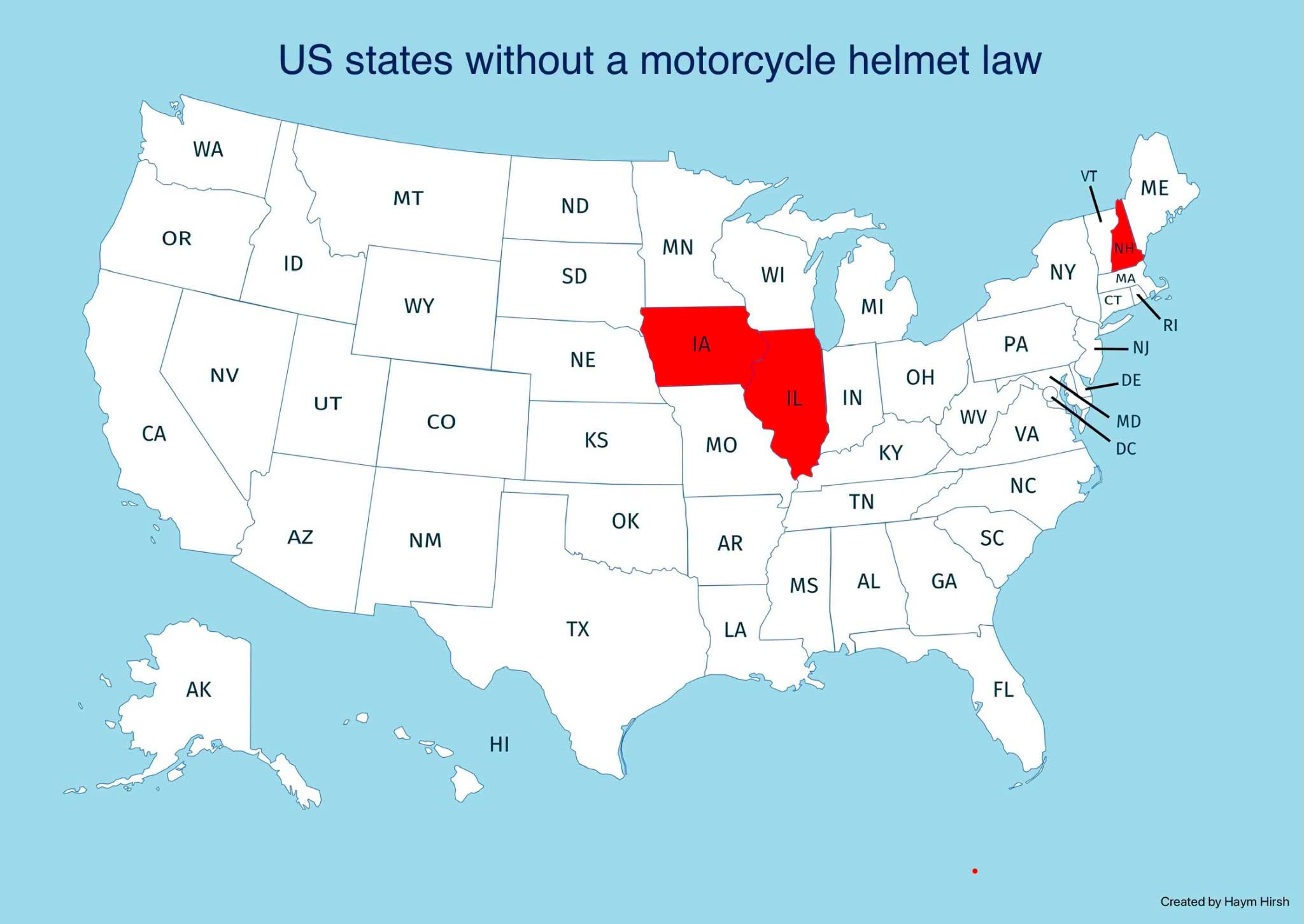
From Terrible Maps:

An un-embeddable tweet reposted by Masih (click to go to the original). The execrable Mehdi Hasan accused Masih in the second tween of being partly responsible for the war against Iran:

From Barry. Oy!

Elsie was hands down the most affectionate cow at the petting zoo.

Runs with scissors in the dark (@tevistickles.bsky.social) 2026-03-24T14:49:33.010Z

From Luana, a nonpolitical tweet. She says that as a child she had a cat who did the same thing to her pet rabbit.

Two from my feed. The first one is freaking amazing:

This cat likes veggies with his meat. I thought cats were afraid of cucumbers.

One I reposted from The Auschwitz Memorial:

And two from Dr. Cobb. First, the Internet being funny.

(@wwxwashere.bsky.social) 2026-03-24T12:00:52.153Z

Matthew made this one. The point is that Sagan thought that there might be nocturnal Martian creatures whose footprints you could see in the daylight but you couldn’t see the perps because it was too impractical to put lights on the lander.

Sagan's nightmare was that because they had been unable to put lights on the lander (weight), they would get photos back each Mars morning showing lots of tiny footprints in the sand around the machine… Sadly it didn't happen.

Matthew Cobb (@matthewcobb.bsky.social) 2026-03-24T13:00:40.653Z


Tuesday: Hili dialogue

March 24, 2026 • 6:45 am

Welcome to the Cruelest Day: Tuesday, March 24, 2026, and National Cheesesteak Day, celebrating a fine sandwich and exemplar of American cuisine.  It’s best sampled in its home, Philadelphia. Here’s a one-day attempt to find the best cheesesteak in Philly (Pat’s is touted as the city’s best version, but how does it rate here?). John’s and Dallesandro’s are tied for the top spot.

It’s also National Chocolate Covered Raisins Day and National Cocktail Day.

Readers are welcome to mark notable events, births, or deaths on this day by consulting the March 24 Wikipedia page.

Da Nooz:

*NOTE: See below. Trump put a five-day hold on the bombing of infrastructure. It looks like Israel and the U.S. are about to striking Iranian infrastructure, including power plants, as per their promise if the Straits of Hormuz remained closed by Monday evening (US time). . And the new Ayatollah is out of action. From It’s Noon in Israel: (bolding is theirs)

  • The Washington Post reported that Iran’s new Supreme Leader, Mojtaba Khamenei, is injured, isolated, and unresponsive, according to intelligence officials from both Israel and the United States. Despite his apparent incapacitation, Israeli officials say the remaining clerical leadership and the Revolutionary Guards have managed to consolidate their grip on the country. Both the U.S. and Israel assess that Mojtaba is still alive; intelligence indicates that senior Iranian officials have attempted to arrange face-to-face meetings with him—efforts that have so far failed, reportedly for security reasons.
  • Netanyahu and Defense Minister Israel Katz have ordered the destruction of all bridges over the Litani River in an effort to cut off Hezbollah’s supply and movement routes. The IDF has more than doubled its troop deployment along the northern border, expanded ground operations—eliminating dozens of fighters and seizing weapons—and is conducting targeted raids on evacuated villages to dismantle Hezbollah’s military infrastructure.
  • Trump’s ultimatum expires at 7:44 PM EDT (1:44 AM Israel time). Iran must fully reopen the Strait of Hormuz or the United States will begin striking its power stations.

It seems that after securing concessions over the Panama Canal, Trump has developed a fondness for critical waterways. Israel and the United States have now settled on a new war goal: ending the conflict with the Strait of Hormuz under American control—not just temporarily.

The operation appears to have two parts. The first is seizing Iran’s most valuable card—the small island in the Persian Gulf that processes over 90 percent of its oil exports: Kharg Island. The second is securing the strait itself.

The question is how. The plan seems to combine Marine forces expected to arrive on Friday, ongoing airstrikes targeting Iran’s naval and drone capabilities, and advanced monitoring technologies to prevent any disruption to shipping.

The operation is expected to take roughly two to three weeks. That gives Israel enough time to complete the destruction of the remaining military industry and regime targets.

According to the NYT, there are already blackouts in Tehran:

Residents reported blackouts across large parts of Tehran, the Iranian capital, after heavy airstrikes struck multiple areas of the city early Monday. The outages came shortly after Israel announced it would target infrastructure in Iran.

But wait!  On the other hand, the NYT now reports “productive” peace talks between the U.S. and Iran:

President Trump said Monday that the United States and Iran were negotiating a “total resolution of our hostilities in the Middle East,” and that he would postpone American attacks on Iranian power plants by five days after the two countries traded threats over the weekend.

Iran did not immediately comment. It was unclear what kind of communication might be taking place and who might be mediating; Iran has previously denied seeking a cease-fire. Mr. Trump had threatened on Saturday to bomb Iran’s energy infrastructure within 48 hours unless Iran agreed to open the Strait of Hormuz in the Persian Gulf, a critical shipping route for the global oil trade.

Mr. Trump did not elaborate on the details of the talks, but analysts have said it is difficult to see a straightforward offramp for the American-Israeli air war with Iran, which began on Feb 28. and has morphed into a wider conflict in the Middle East. Despite Mr. Trump’s calls for the ouster of the Islamic Republic and his vow to help Iranian protesters overthrow their leaders earlier this year, the Iranian government is still very much in place, as is much of its nuclear program.

The Truth Social announcement:

Back and forth, back and forth.  The erratic and contradictory pronouncements of Trump make this military action confusing and distressing. Whatever he does, he has to create regime change, which was originally one of his goals. And he has to stop the enrichment of uranium and the ongoing program of Iran to create nuclear weapons. Apparently Iran denies that these talks are even going on.

*The Times of Israel reports that a March 13 anti-Zionist rally in NYC, taking place near a pro-Israel rally, accused the Jews of—wait for it—eating babies! It’s one of the oldest blood libels: the accusation that Jews used the blood of non-Jewish children to make Passover matzos.

On Friday, at an Al Quds Day protest in Times Square, a protest leader directed the crowd to chant “Stop eating babies” toward a handful of mostly Jewish counter-protesters.

As surprising as it was to hear the charge that Zionists “eat babies” in New York City in 2026, equally surprising was the willingness with which the crowd took up the chant. There was no confusion or hesitancy about the outlandish allegation — the hundreds in attendance repeated the chant with enthusiasm, without skipping a beat.

“Stop eating babies! Stop raping kids!” they chanted toward counter-protesters holding Israeli flags across the street behind a line of police officers and metal barricades, recalling the age-old blood libel that says Jews murder and consume children for ritual purposes.

The rally illustrated how anti-Israel activists incorporate historical manifestations of anti-Jewish discrimination under the guise of anti-Zionist political activism, from the blood libel to Nazi-era tropes, mixed with contemporary academic theories. Anti-Zionism acts as a container for these historical tropes, blending them together with progressive talking points.

A cadre of scholar-activists has argued that anti-Zionism is the third major iteration of discrimination against Jews. The first was anti-Judaism, based on religion, the second was antisemitism, focused on race, and the third, anti-Zionism, is a hatred of Jewish peoplehood, the activists say.

The worst part of all this is indeed the crowd joining in.  What the hell are these people thinking?  And is there any doubt that this is antisemitic?  Eating babies? Is it only Israelis who eat babies, and not Jews in America? Or is it only Zionist Jews who eat babies?  And what is this about “raping kids”? That’s something I haven’t heard in these protests.

I couldn’t find that chant online, but here

*At Chicago’s Cook County Jail, a place I visited when I was helping public defenders with DNA evidence, inmates are falling ill—and even dying—after ingesting drugs smuggled into the jail soaked onto paper.

The body lay slumped on the jail floor, curled around a metal toilet.

Investigators found no evidence of homicide, just a few scraps of rolled-up paper, singed and scattered on the floor like scorched confetti.

For months, inmates had been falling ill at the Cook County jail in Chicago. Officials said they had heard rumors that extremely toxic drugs were infiltrating the facility, delivered on something so ordinary that it seemed impossible to stop.

Then the body appeared, and “something clicked,” said Justin Wilks, the head investigator at the jail.

The paper itself must be the culprit — and it was deadly.

More overdoses soon followed. The next month, in February 2023, another inmate died from smoking paper laced with mysterious new drugs. In April, one more.

“People were dying so fast,” Mr. Wilks said. But when officials at the jail told their law enforcement colleagues about it, they said, some found it hard to believe.

By year’s end, at least six people had died of overdoses, putting the jail at the vanguard of a new kind of drug war, one in which extraordinarily powerful drugs can be invented faster than the authorities can identify them.

And where something as ubiquitous as paper can become lethal.

The drugs are new synthetic drugs, dissolved in a solvent that is then used to soak sheets of paper that were smuggled in.

. . . . . Today, fringe chemists are ushering in a total transformation of the illicit drug market. Operating from clandestine labs, they are churning out a dizzying array of synthetic drugs — not only fentanyl, but also hazardous new tranquilizers, stimulants and complex cannabinoids. Sometimes, several unknown drugs appear on the streets in a single month. Many are so new they are not even illegal yet.

Nearly all of them are harder to trace than conventional drugs, less expensive to produce, much more potent and far deadlier, according to scientists and law enforcement officials across the globe.

After that first death in the Cook County jail in January 2023, it took months for Mr. Wilks’s team to realize that these mysterious new drugs were being sprayed onto the pages of the most innocuous-seeming items: books, letters, documents, even photographs.

The sheets of drugs, worth thousands of dollars a page, were being torn into strips and smoked by inmates who went into crazed, exorcistic fits, as if possessed by a phantom narcotic the authorities could not see, much less stop.

Just figuring out what the paper had on it was maddening. The specialized labs needed to run the tests often took months to send back mind-boggling chemical formulas that left some officers scratching their heads.

There are chemists out there synthesizing new compounds similar in structure to existing compounds. But some may be toxic, and were. And the prisoners are the guinea pigs.

*We’re several weeks into the partial government shutdown in which Democrats won’t give additional money ICE unless stringent conditions are imposed on officers’ behavior, Republicans won’t put up with it, and the Coast Guard and TSA agents are still not getting paid. (ICE, however, has a comfortable backlog and is still operating.  Now Trump is demanding that any compromise be tied to voter-identification legislation.

President Trump has rejected one of the possible offramps for the standoff over funding the Department of Homeland Security, leaving an impasse unresolved that has led to hourslong lines at some airports as security staff don’t show up for work.

White House staff briefed the president on an idea to fund all parts of DHS except for the agency responsible for enforcing immigration law, according to a person familiar with the matter.

Republicans could separately fund Immigration and Customs Enforcement through a procedural move—known as reconciliation—that would allow the money to clear the Senate on a simple-majority vote instead of requiring the 60 votes needed to pass most legislation. But not all Republicans think this is necessary because ICE received billions of additional funding in Trump’s sweeping tax cuts and spending bill passed along party lines last year.

Senate Majority Leader John Thune (R., S.D.) walked Trump through the strategy in a weekend conversation, the person said, but Trump rejected the idea. Some top Senate Republicans had met on Sunday with White House liaison James Braid to discuss ideas for ending the shutdown. The conversation between Thune and Trump was reported earlier by Punchbowl News.

Over the weekend, the president said he would send ICE agents to select airports around the country to assist with security lines. Trump on Monday said that move brought Democrats to the table to negotiate, but he told his negotiators to hold firm until a spending bill is paired with legislation requiring proof of citizenship to vote, along with other requirements.

Trump also indicated that he wanted to use the funding fight as leverage to pass what he considers his top legislative priority, the SAVE America Act. That legislation would ratchet up ID requirements to vote in federal elections and mandate proof of citizenship when registering to vote. Trump also wants to add a ban on most mail-in voting and restrictions on gender-transition procedures for minors.

ICE in airports is going to anger a lot of people, who will suspect that they’re really in airports to spot and arrest people accused of entering the U.S. illegally (a Guatemalan woman was apprehended yesterday). But if they’re just there help move security lines, which have extended to four hours in busy airports like Newark and Atlanta, that would be okay. As for showing proof of citizenship to register to vote, I have no problem with that, but I’d have to see the rest of the demands , especially about gender transition, as I think that surgery and drugs should be allowed only for people “of age” (I’m settling on 18).  Mail-in ballots are okay by me; I’ve used them for years, and that’s made me lazy.

*The video of a cat beauty competition in Romania is the most-watched video on the Associated Press site, but fortunately it’s also on YouTube. The AP also has a great page of photos from that competition, though I can’t find any news beyond what is in the videos. (I can’t reproduce the photos because of possible copyright issues, but you can see them at the link, and don’t miss them if you like cats (the huge Maine Coon is spectacular).

Meanwhile in Dobrzyn, Hili thinks she’s fixing the world:

Szaron: It’s a bit boring here.
Hili: Start fixing the world, you’ll see what great entertainment it is.

In Polish:

Szaron: Trochę tu  nudno.
Hili: Zacznij naprawiać świat, zobaczysz jaka to fajna rozrywka.

*******************

Reader Pratyadipta Rudra vindicates me on Facebook. His caption:

A couple weeks ago, Jerry Coyne wrote about his “new law”: ” At least half of new medicines advertised on t.v. have the letters “x”, “y”, or “z” in them.”
Obviously, as he argued, this is much higher than their frequency in the English dictionary, or what would happen if letters of a medication name were picked randomly with each letter in the English alphabet having equal probability.Now, what are the chances that I see this at Costco the very next day?
I was a little sad that they did not call it XYZAB.
I was right!

From Funny and Strange Signs:

From Stacy: It’s Larry!!!!

From Masih, speaking on behalf of Iranians who want the present regime out:

From Luana; you can find the details here.

From Sciencegirl via Keith.  Would you drink this coffee? (I’m sure it would be expensive.) I’ve tried kopi luwak coffee made from beans that have transited the digestive tracts of palm civets (it was just ok), but not elephants.  It’s all hype, I suppose:

Two from my feed. First, gimme the cat massage option!

Yes it’s d*gs but it’s heartwarming. Kudo to Chairman Corgi, but I hope the photographer lent a hand as well:

One I reposted from the Auschwitz Memorial:

. . and two from Dr. Cobb. First, a holy moggy:

Here's your moment of zen: A "holy" cat named Coco stands at the entrance of a church in Mexico, seemingly blessing everyone who walks in 🐱

Laura Martínez 🥑 (@miblogestublog.bsky.social) 2026-03-23T14:26:55.587Z

An itchy duck, but not a dead one:

I promise, I am NOT photographing a dead duck here. 😜This Northern Shoveler just decided to flop over in the water and scratch that itchy chin in the midst of the red duckweed.#BirdOfTheDay #Preeners&Scratchers#MallardMonday📷🪶🦆

Mstreefrog (@mstreefrog.bsky.social) 2026-03-23T11:55:40.534Z


Monday: Hili dialogue

March 23, 2026 • 6:45 am

Welcome to another damn Monday: it’s March 23, 2026, and the temperature in Chicago is 31°F, just below freezing, but with the wind it feels like 15°F. My ducks! (Vashit didn’t show yesterday; I hope she’s not incubating eggs at this early date.) It’s also National Melba Toast Day. Why this thin rusk deserves celebrating is beyond me, but at least it’s in the same subspecies as Peach Melba (named after the same person):

It is named after Dame Nellie Melba, the stage name of Australian opera singer Helen Porter Mitchell. Its name is thought to date from 1897, when the singer was very ill and it became a staple of her diet. The toast was created for her by a chef who was also a fan of her, Auguste Escoffier, who also created the peach Melba dessert for her. The hotel proprietor César Ritz supposedly named it in a conversation with Escoffier

I’ve had it a few times, and it’s okay, but it’s best if you smother it with goodies, like this plate served with goat cheese and tomato jam:

Elin, CC BY 2.0, via Wikimedia Commons

It’s also Cuddly Kitten Day, National Chip and Dip Day, National Tamale Day, and World Meterological Day.

Readers are welcome to mark notable events, births, or deaths on this day by consulting the March 23 Wikipedia page.

Da Nooz:

*Former FBI director Robert Mueller died at 81.  Perhaps his biggest accomplishment was revitalizing the FBI, but he’s most famous for investigating claims that Russia (possibly with the cooperation of Trump) interfered with the 2016 Presidential election. (His report concluded that Russia did but Trump didn’t.)

Robert S. Mueller III, who led the Federal Bureau of Investigation for 12 tumultuous years, brought politically explosive indictments as a special counsel examining Russia’s attack on the 2016 presidential election, and then concluded that he could neither absolve nor accuse President Trump of a crime, died on Friday. He was 81.

His family confirmed the death in a statement but did not say where he died or specify the cause. Last August, the family disclosed publicly that Mr. Mueller was diagnosed with Parkinson’s disease in the summer of 2021. The law firm WilmerHale, from which Mr. Mueller retired in 2022, said he died on Friday night in Charlottesville, Va.

A button-down, lockjawed, rock-ribbed exemplar of a vanishing caste, the liberal Republican, Mr. Mueller became the F.B.I. director just a week before the terrorist attacks of Sept. 11, 2001.

He went on to impose the most significant structural and cultural changes in the history of the F.B.I., seeking to transform the bureau into a 21st-century intelligence service that could protect both national security and civil liberties. And his counterterrorism agents were the first to blow the whistle on abuses at the secret prisons that the C.I.A. had established after 9/11 to detain, interrogate and, in some cases, torture terrorism suspects.

But he may be best remembered for what he did after he left the F.B.I., when he was summoned to investigate a sitting president.

The Justice Department named Mr. Mueller special counsel on May 17, 2017, eight days after Mr. Trump dismissed the F.B.I. director, James B. Comey, who was investigating the interactions between the Trump campaign and a Russian covert operation to help him win the White House.

The president’s reason for dismissing Mr. Comey was no secret. The next day, in the Oval Office, he told the Russia foreign minister and the Russian ambassador: “I just fired the head of the F.B.I. He was crazy.” Mr. Trump continued: “I faced great pressure because of Russia. That’s taken off.”

And here, ladies and gentlemen, brothers and sisters, and comrades, is Trump’s reaction from Truth Social:

Maybe some people can express glee at the death of a person, but it’s inappropriate for a U.S. President, and it’s inappropriate with respect to Robert Mueller. He was not, after all, like Jerry Falwell, whose death Christopher Hitchens celebrated. And of course Mueller had a family who is grieving, and the President makes a public pronouncment like this. It’s reprehensible.

*A reader told me of what looks like a good site for news from the Middle East, It’s Noon in Israel by Israeli journalist Amit Segal.  The reader touted it for its “solid facts and anlysis”, and that seems about right. Curious that Israeli sites often give more objective news than, say, the New York Times. A summary from yesterday.

  • Last night Iranian ballistic missiles struck the southern cities of Dimona and Arad, injuring nearly 200 people—11 of them seriously—after Israeli air defenses failed to intercept two missiles. Iran said it was targeting Israel’s Negev Nuclear Research Center near Dimona, claiming the strikes were in retaliation for an alleged U.S. attack on Natanz, which the IDF denied. As a result of the attacks, in-person schooling—which had resumed in certain areas of the country—has been canceled for the next two days.
  • Fifteen people were wounded—most lightly—in an Iranian missile strike on central Israel this morning. The ballistic missile carried a cluster bomb warhead, scattering bomblets across a wide area.
  • Trump threatened last night to destroy Iran’s power plants “starting with the biggest one first” if the Strait of Hormuz is not fully opened within 48 hours. The ultimatum follows signs of growing international acceptance of Iran’s position. Iranian Foreign Minister Araghchi told Japan’s Kyodo News that Tehran has begun talks with Tokyo about possibly allowing Japanese-linked vessels through the strait. Meanwhile, Iran is reportedly considering a separate proposal to levy transit fees on ships passing through—an attempt to monetize its grip on the waterway.
  • The Pentagon is deploying a second amphibious ready group to the Middle East in as many weeks—adding roughly 2,200 to 2,500 troops. This follows last week’s deployment of a 5,000-strong force based in Japan, bringing total U.S. troop levels in the region to approximately 50,000.
  • Iran fired two ballistic missiles at the joint U.K.–U.S. base at Diego Garcia in the Indian Ocean—and missed. One missile failed in flight; the other was intercepted by a U.S. warship. The attempted strike revealed something significant: the missiles traveled roughly 4,000 kilometers, double Iran’s previously declared self-imposed limit of 2,000 kilometers—putting most of Western Europe within range.

And some commentary:

The prime minister (or his avatar, if one is to believe the Iranians) believes that Trump needs many more achievements in this war than Israel does. Israel’s war aims are regional: nuclear capabilities, missiles, terror proxies. America’s war aims include severing the threat Iran waved around for decades and has now been pushed to use: closing the Strait of Hormuz and sending oil prices soaring. The Gulf states are pressing Trump to eliminate that threat once and for all. They do not trust a future regime not to extort the entire region and the world with the threat of shaking the energy market.

And so Israel finds itself helping the United States achieve that goal. The rationale, beyond returning a favor for a favor, is clear: every joint action against Iran frames the Middle East as a story of fundamentalists versus moderates, not Jews versus Muslims. The broader implications of the event are only beginning to emerge. For example, Qatar’s warnings to senior Hamas figures that the Palestinian issue is dropping off the agenda and that they must immediately choose which side to support. For example, the expanding IDF operation up to the Litani River. Is this a temporary, isolated event? Soldiers who went deeper into Lebanon this week should think again, and remember that IDF forces have now been on the summit of the Syrian Hermon since the end of 2024, with no expiration date.

The newsletter is giving a day-by-day account of the doings; what’s above is the report sent Sunday. I’d get a subscription to this news letter (some are free) if you want to follow the war without cant.

*Even if the Strait of Hormuz is secured, that doesn’t mean the danger to oil shipments is over, for there’s still the narrow Red Sea. The WSJ reports on the possibility that the Houthis could start attacking shipping there.

Iran has successfully strangled the Persian Gulf, the most critical maritime route for energy supplies in the world. It hasn’t yet prevented its foes from using a workaround that runs through the Red Sea.

That could change if the Houthis get involved.

The U.S. and its partners in the Middle East are keeping a close eye on the Yemeni militant group which—armed and funded by Iran—crippled shipping through the Red Sea for much of two years.

The Houthis have recently stepped up threatening rhetoric that has caught officials’ attention. While they haven’t started shooting yet, the militants are an important lever for Iran, if it decides to further squeeze the global economy or expand its targets to Saudi Arabia and nearby U.S. assets, such as a base in Djibouti.

“If the Houthis enter the conflict, it really raises the stakes,” said Adam Baron, a fellow at think tank New America who specializes in Yemen and the Gulf. “It pulls the Suez Canal and the Egyptians in, it brings Saudi further in.”

Iran has long cultivated militia allies across the Middle East as a way to project power and as a deterrent against attack. Hezbollah, in Lebanon, and Iran-aligned militias in Iraq have jumped into the war to attack Israel and U.S. bases.

The Houthis are a notable holdout but have signaled they could jump in at any moment.

Here’s a digram from the region, showing the Strait of Hormuz at 3 o’clock (the passage with the pointy bit), and the Red Sea and Suez Canal to the left. The narrowest passage at the southern end is about 20 miles wide.

Public domain via Wikimedia Commons

The Suez Canal is owned by Egypt, which makes billions of dollars per year from ships taking that short cut.  Closing it will bring Egypt into the conflict, when it’s already been dragged into the war between Israel and Hamas.  And if the Houthis start firing on ships, then the war with Iran will expand into Yemen.

*An article from the Los Angeles Times (archived link) describes the hasty dismantling of Cesar Chavez’s legacy after he was credibly accused of sexual predation on both adults and minors.

It took three decades of battles and lobbying for Cesar Chavez’s name and likeness to grace hundreds of buildings, roads, parks and schools.


It is taking just days for them to come down.

In the two days after allegations emerged that the famed farmworker rights leader and Chicano figure sexually assaulted minors and fellow labor icon Dolores Huerta, Chavez is being erased at an unprecedented rate. This is especially true in California, where his fight for agricultural workers’ rights was cemented in state history.

In San Fernando, a completely covered Chavez statue was pulled off its pedestal and put into storage. Murals depicting Chavez in Los Angeles were unceremoniously painted over. In Fresno, the City Council voted to strip his name from a major street — just three years after its controversial decision to rebrand it in his honor. Soon, the old street names — Kings Canyon Road, Ventura Street and California Avenue — will return to the nearly 10-mile-long corridor.

. . . On Thursday, L.A. Mayor Karen Bass and members of the City Council announced they would abandon the holiday honoring Chavez’s birthday and instead rename it “Farm Workers Day” to honor laborers who toil in the fields.

. . . There has been talk within some communities to removed the Chavez name and replace it with a more generic honor for farmworkers and activists, placing the movement above any individual.

In an interview with Latino USA, Huerta said that streets named for Chavez should be renamed instead after the movement.

“Everything should be named for the martyrs of the Farm Workers Movement. Every street should be named after them,” Huerta said.

There has been a steady drumbeat to honor Chavez after his death in 1993. One of the first was renaming old Brooklyn Avenue on L.A.’s Eastside for Chavez. That faced some controversy from the community who argued the city was erasing their history and burdening them with the cost to change stationery. But over time, naming things after the labor leader became shorthand for honoring Latino civil rights and activism.

Historians and educators of history, including Gudis, said instead of zeroing in on one person to encapsulate a historical movement or event, there should be a greater effort to uplift lesser-known figures in the community who have contributed to a broader cause. These are people whom the community can actually resonate and connect with.

The Cesar Chavez Foundation and family said on Friday that it is aware of the city of Los Angeles’ intent to rename the holiday that once celebrated its namesake to instead honor farmworkers and supported it.

“The decision about how to commemorate the movement and its participants rests with the local communities who organize those recognitions, events and commemorations. That has always been the case,” the foundation’s statement said. “We support and respect whatever decision they ultimately make.”

Nobody is contesting the allegations or even arguing over them (at least I haven’t heard any criticisms of the cancellation): the evidence is too pervasive.  It’s being handled well, and they’re replacing Chavez as the symbol of the movement with the farmworkers as a group, as well as Dolores Huerta (now 90), a largely unrecognized force in the farmerworkers movement (she was also assaulted by Chavez and had two of his children).  Of all the cancellations I’ve seen, this is the one that most saddens me, as Chavez was a hero to me and many of my peers. I even boycotted grapes.

*The baseball season is about to begin, and with it is the advent of the robot umpire.  The NYT explains (free archived link.)

Ready or not, the robots are here … in … the … house. You can find them in a big-league batter’s box near you, fully locked and loaded to decide baseball’s most important question: What’s a strike?

Technically speaking, of course, they won’t be whizzing around the field like your Roomba, wooing batters, catchers and paying customers with their robotic charms. They’re actually invisible, lurking in the background, waiting for somebody to tap his cap, challenge and ask their opinions.

But this is not the latest “Star Wars” installment, and it’s not a laughing matter. Those robot umpires are here to stay.

MLB’s Automated Ball-Strike challenge system (ABS) is up and running this spring. And unlike last year, when this was just a fun experiment, this time that challenge system will remain once the real games start. It will be ball-striking away in every game, in all 30 parks, from Opening Day through the postseason and then (theoretically) …

The system is a series of cameras honed in on a player’s strike zone, which differs from player to player.  And it doesn’t call every pitch: each team gets two challenges of an umpire’s call in each game:

This is the easy part. The rules will be the same as the ones used in Triple A and in big-league spring training last season. Each team gets two challenges per game. If it gets a challenge right, it keeps that challenge. If it gets that challenge wrong, it loses a challenge.

Only hitters, catchers and pitchers have the power to challenge — and they need to do that within two seconds of the umpire’s call. They’re being told they have to both tap their head and verbally challenge so there’s no confusion. Hmm, think we’ll make it through a whole season with no confusion? Why do I think that answer is … no! 

Here’s a video showing it in action; note the pitcher challenging the umpire’s call by tapping his head and calling “challenge that!” as per the rules.

Here’s a called ball in the tweet: note that the ball is wholly outside the strike zone

I used to watch a lot of baseball, both live and on television (my dad was a big fan).  I am not a huge fan of this, but we do have instant replays in football that can be reviewed by referees. But other changes in the game have upset me more, including having to vacate the stadium during double header and pay twice to see two games, as well as starting each half-inning with a man on second if a game is tied after the ninth inning. These rules were made to speed up the game, and probably at bottom involve revenue.  It’s not right to start with a man on second when he didn’t do anything to get on second.  And of course pitchers haven’t batted in years!

Meanwhile in Dobrzyn, Hili is angling for some pets, but Andrzej turns her request around:

Hili: Everyone enjoys a gentle stroke from time to time.
Andrzej: You can stroke me.

In Polish:

Hili: Każdy lubi być czasem pogłaskany.
Ja: Możesz mnie pogłaskać.

*******************

From The Language Nerds: Pay attention! There will be a quiz. “Enormity”, “nauseous,” and “peruse” are especially important.

From Things with Faces:

From Now That’s Wild:

From Masih: a disturbing look at how the families of executed Iranian protestors are treated:

Matt Ridley gave a lecture at the NIH defending his view that the SARS coronavirus was engineered in the Wuhan virus lab.  I haven’t followed this controversy, but it seems that scientific opinion is coalescing around  the “wet market” origin theory.  Matthew sent me a tweet about Ridley’s talk and discussion (see link below), and a virologist, who participated in the discussion below, also took apart Ridley’s arguments on a Bluesky thread. You can find the thread by clicking on the screenshot below, which leads to the rest of the comments:

Click on the screenshot below to see three evolutionary virologists vs. Ridley in an NIH-sponsored “Freedom from Science” lecture, all taking apart Ridley’s claims in real time (i;e., his lecture is sporadically interrupted and corrected; it’s a bit hectic). This annotated video was put up on virologist Angela Rasmussen‘s private Substack site, and you can see her and two colleagues take strong issue with not only Ridley’s claim of lab engineering, but also with similar claims by NIH director Jay Bhattacharya.  I have watched only part of the video as it’s 4½ hours long!

From Luana, public prayer in New York, promoted by Mayor Mamdani. It’s legal, of course, and should be, but I see it as a way to parade Islam in public. Group prayers in public are prohibited in some Muslim countries if they obstruct traffic or are a disruption, and in most of them group prayer is encouraged to take place in mosques, not in the streets.  I’ve always thought as Mamdani as an Islamist, and that impression has only been strengthened by his encouragement of public religious activities.  As I mentioned a few days ago, the Freedom from Religion Foundation has rebuked Mamdani for mixing religion with public business.

From Keith, a CatCam:

One from my feed:  A young girl doing a lovely Iranian dance, but I wonder how she gets away with it. I thought public dancing by women was forbidden in Iran.

One I reposted from The Auschwitz Memorial:

And two from Dr. Cobb (besides the one above). The first one is amazing, and not fake:

Doomscrolling break…A pantropical spotted dolphin about 15 feet / 4.5 metres in the airPhoto by Jessica McCordic, MSc around 2017, a research biologist for the Pacific Whale Foundation at the time – now working at NOAA fisheries monitoring marine acoustics

Russell England (@russellengland.bsky.social) 2026-03-22T08:52:38.444Z

. . . and a graceful exit:

Luke Knox (@lukeknox.me) 2026-03-20T23:26:16.965Z

\

Sunday: Hili dialogue

March 22, 2026 • 6:45 am

Welcome to Sunday, March 22, 2026: Sabbath for goyische cats and International Day of the Seal.  Here’s a seal—I forgot the species)—resting on a piece of iceberg (photographed off Svalbard last July):

It’s also Buzzard Day, National Bavarian Crêpes Day, National Broccoli Day, and World Water Day.

Readers are welcome to mark notable events, births, or deaths on this day by consulting the March 22 Wikipedia page.

Da Nooz:

*War news: according to the Wall Street Journal, “Iran believes it’s winning—and wants a steep price to end the war.”

Three weeks into the war, the Iranian regime is signaling that it believes it is winning and has the power to impose a settlement on Washington that entrenches Tehran’s dominance of Middle East energy resources for decades to come.

This attitude may prove to be a dangerous misreading of President Trump’s determination, or of Israel’s capacity to inflict strategic blows on the Islamic Republic’s surviving leadership and military capabilities.

Trump and Israeli Prime Minister Benjamin Netanyahu have given mixed signals on how long the war would go on, as they try to talk markets down and keep Tehran guessing. Netanyahu said Thursday that the war would end “a lot faster than people think.” Trump said this week the U.S. would wrap up the conflict in the “near future” even as the Pentagon dispatched thousands of additional Marines to the Middle East.

The problem is, Iran also has a say in when the guns fall silent—and, for now, it seems to think time works to its benefit.

Despite optimistic U.S. and Israeli pronouncements about destroying launchers and missile stocks, Iran has retained the ability to fire dozens of ballistic missiles, and many more drones, every day across the Middle East.

Instead of declining, the rate of fire actually picked up in recent days compared with 10 days ago. Iranian strikes inflicted catastrophic damage this week on key energy installations in Qatar, Saudi Arabia, Kuwait, Bahrain and the United Arab Emirates—while Iran’s own oil exports kept booming.

Shipping through the Strait of Hormuz, the Persian Gulf’s chokepoint, remains only possible with Iranian permission. Surging oil and gas prices, meanwhile, are exacting growing pain on economies worldwide—and putting pressure on Trump to end the war that he began in expectation of swift victory on Feb. 28.

One can hope this will change, but Iran thinks it’s winning, well, what can you say? It’s lost all of its navy, its uranium-enriching facilities, most of its ballistic-missile launching sites, most of its leadership (including leaders of the Revolutionary Guards), and I have a feeling that things in the Strait of Hormuz will change within a week or two. But what do I know? I’m a biologist, not a political pundit.

*In the NYT op-eds, Lis Smith and John Guida discuss “The future of the Democratic Party” (the IDs: “Ms. Smith is a senior adviser to the political organizations Majority Democrats and the Bench. Mr. Guida is an editor in Opinion.”) The article is archived here.

Democrats hardly need reminding that, however unpopular President Trump is at the moment, the Democratic Party is right there with him.

For the midterms, the party is attempting something of a makeover on the fly.

Guida: . . . what good or bad or other practices are you seeing among Democrats in their responses to the war?

Lis Smith: This is exhibit A of why we don’t need more lawyers in Congress and need people who bring different life experiences to Washington. Too many Democrats, when something like this happens, default to playing legalistic hall monitor and complaining about how Donald Trump didn’t fill out the right paperwork before launching strikes. That’s technically true and important, but that is not at all a persuasive argument.

The best messaging we’ve seen on this issue, by far, has come from post-9/11 war veterans like Platner [Graham Platner, a candidate for the Democratic nomination for the U.S. Senate in Maine]. They don’t sound like lawyers, but like people who actually understand what’s at stake because they’ve lived it.

Guida: What about Democrats outside the campaigns?

Smith: We’re seeing a new generation of leaders emerge in this moment. One person I’ve been really impressed by is Representative Pat Ryan of New York (and a Majority Democrats member) — a former Army intelligence officer who served in Iraq and earned two Bronze Stars. He did an interview recently on “Pod Save America” that I sent to all my friends and family because his messaging on Iran was so searing in its simplicity.

He talked about it in language that was plain, visceral and at times profane.

. . . Smith: Yes, you simply cannot succeed in today’s media environment if you can’t communicate in both long-form and short-form mediums. You can’t skate by with tightly scripted, five-minute-friendly cable hits. People want to see politicians who can have two-hour plus conversations that get them off their talking points. They want to see if their politicians are actually real people, willing to engage in cultural conversations.

Ideology in this context matters less than, say, age. Older generations of politicians were taught to always stick to a script, never have a hair out of place, never show any vulnerability and avoid controversial topics at all costs. Younger politicians like Pete Buttigieg and Mamdani, who certainly come from different wings of the Democratic Party, have really thrived in the new media environment. They are incredibly disciplined communicators, but it’s not because someone handed them a script — it’s because they know who they are, they’re comfortable in their own skin, they have very defined values and worldviews.

They’re also willing to let their guards down and have conversations that would give most old-school political consultants heart attacks. Think about Pete on the Flagrantpodcast — in between serious conversations about transportation policy and income inequality, he fielded questions from the hosts about whether the food in Afghanistan turned him gay.

Smith also touts Mamdani as a master of communicating (these are politicians who, like AOC, grew up knowing how to use the Internet), but I’ll let you read that for yourself. As for me, I remain a big fan of Pete Buttigieg. Yes, I know that polls show that gay candidates are largely unelectable as President, but for crying out loud, it’s 2026. Put Mayor Pete up against Vance and see what happens!

*Virtually every column that Andrew Sullivan writes now is against Israel or in favor of leaving Iran alone, and he does seem to become pretty monomaniacal about this, writing virtually the same column again and again. Still, I’ll give him some airtime, but he’s become a curmudgeonly sourpuss about everything. His latest column is “A war against our own values.

it’s worth asking if Operation Epic Fury is a just war — on classical just war grounds? Let’s investigate.

Jus ad bellum — the first of two just war categories — refers to starting a conflict. Was the process legit? And even many war supporters concede it wasn’t. With no debate by the Congress, let alone a vote, and no attempt even to inform, let alone persuade, the American public in advance, the war is in a constitutional void. Yes, presidents have launched conflicts with no Congressional debate in the past century. But one that could cost well over $200 billion? With all our global alliances and the world economy in the balance? With a global recession possible? Nah, this is more George III than George Washington.

The war was also begun by a surprise attack: Israel’s sudden assassination of the entire Iranian leadership, which Marco Rubio said mandated our involvement (because it would have led to an immediate Iranian attack on us). But a just war requires an explicit declaration or ultimatum beforehand. The Iran War of 2026 is therefore the equivalent of what the Arab states did to Israel in 1967 and 1973, what Russia did to Ukraine in 2022, and what Japan did to the US at Pearl Harbor. FDR called that kind of surprise attack “unprovoked and dastardly.” For a reason.

Just war theory and international law also require an “imminent threat” to justify self-defense. So ask yourself: last month, how was the US “imminently threatened” by Iran? We weren’t. The only faint threat to the US — Iran’s potential nuclear weaponry — had already been “obliterated” last year. Sure, Iran’s conventional weaponry is still dangerous, but a sovereign state is allowed a military and, as we’ve seen, it’s no match for the mighty US and Israeli forces. And no, a potential threat for 47 years does not equate to an imminent one, unless the word imminent is drained of its entire meaning.

That is Sullivan playing “legalistic hall monitor” in the way Lis Smith decries right above.  But wait! There’s more:

Was [the war] motivated by the right reasons? There is indeed a case for the war that is a righteous one: it is designed to remove a toxic theocracy that menaces its neighbors and terrorizes its own people. I sympathize with that case — as it’s the one I made passionately for war against Saddam (and the Dish doggedly covered the Green Revolution against the ayatollahs). But what I learned then is that good intentions are not enough. Regime change in Iraq happened for sure. But over 100,000 civilian deaths, over 3,000 American deaths, over 30,000 wounded, a cost of $2 trillion, and an empowered Iran came with it. And Saddam’s nuclear threat — the casus belli — didn’t exist. Neither does Iran’s anymore.

Is he really sure about Iran? They still have their 60% enriched uranium stockpile, and if the war ended today, as Sullivan wants it to, the bomb program would immediately resume, and, presto, within a few years Iran would have nukes.

Is there a chance of success commensurate with the cost? Another jus ad bellum test. Hard to tell. But right now, it’s clear that a war for regime change without ground troops has no guarantee of success. It could lead to something worse: an entrenched, more extreme Islamist government shutting the Strait of Hormuz and wreaking havoc on the global economy. A war to demolish Iran’s ability to defend itself conventionally? That’s achievable, it seems. Almost done, in fact. But it’s unjust. A world in where a superpower can use force to ensure others cannot defend themselves is raw imperialism.

Well, the “others” trying to defend themselves are a tyrannical regime that not only exports terror throughout the Middle East (and the world), but kills tens of thousands of its own people. Do we need to ensure that that regime can defend itself?

*After two months of investigating Harvard, the Trump administration is suing the school for antisemitism (I thought it already had). The article is archived here.

The Trump administration sued Harvard University on Friday over claims that the school was violating the civil rights of Jewish and Israeli people, an escalation of the government’s yearlong clash with the Ivy League university.

The administration has spent months investigating Harvard and trying to force a settlement on the university, the largest target in the White House’s campaign to remake American higher education. But the lawsuit Friday — more than six months after a judge blocked the administration’s opening push to strip Harvard of federal research funding — represented a new threat to the nation’s wealthiest university.

In its lawsuit, filed in Federal District Court in Boston, the Trump administration said that Harvard had “turned a blind eye to antisemitism and discrimination against Jews and Israelis.” The administration said Harvard had strictly enforced policies against other forms of bias, but had allowed anti-Israel protesters to violate rules “with impunity” after the war in Gaza in 2023.

“Instead of arresting the students or even timely stopping the occupation in violation of university policy, Harvard fed them,” according to the lawsuit, adding that faculty members ”brought them burritos for dinner” and “gave them candy.”

The administration said Harvard had failed to protect Jewish and Israeli students from severe harassment, including physical assault, stalking and exclusion from campus facilities like libraries and classrooms. Some of the episodes, including one where an Israeli student said he was assaulted during a “die-in” protest, have been contested.

“The United States cannot and will not tolerate these failures and brings this action to compel Harvard to comply with Title VI, and to recover billions of dollars of taxpayer subsidies awarded to a discriminatory institution,” the suit added.

The lawsuit asks a court to declare that Harvard is “in material breach” of its responsibilities under Title VI and, therefore, the government does not have to pay Harvard any existing grants. The suit further asks the court to force Harvard to pay back grants it has already received. And it asks for an independent monitor, approved by the government, to oversee the school’s compliance.

Well, the accusations seem valid to me, though Harvard says it’s already doing a lot to reduce antisemitism.  In fact, the “burrito” accusation is true: in November 2023, when pro-Palestinian protestors illegally occupied the administration building, two Harvard deans, Rakesh Khurana and Salmaan Keshavjee, bought burritos for those students. However, even Harvard itself admitted it wasn’t doing enough for its Jewish students, and enrollment of Jews is down substantially as they are voting with their feet.  Harvard’s response:

A Harvard spokeswoman, Sarah Kennedy-O’Reilly, said Friday that the university had “taken substantive, proactive steps to address the root causes of antisemitism and actively enforces anti-harassment and anti-discrimination rules and policies on campus” and that its “efforts demonstrate the very opposite of deliberate indifference.”

“We will continue to prioritize this important work,” she added, “and will defend the university against this lawsuit, which represents yet another pretextual and retaliatory action by the administration for refusing to turn over control of Harvard to the federal government.”

Taking away the grant money was heavy-handed, but a lawsuit accusing Harvard of civil rights violations is not itself “turning over Harvard to the federal government,.” It’s ensuring that a university that takes federal money does not tolerate discrimination.

*The U.S. mint may produce a gold coin with Trump’s mug on it, which is both inappropriate and illegal. But so, probably, was the demolition of the East Wing of the White House. Here is what you need to know!

A federal arts commission on Thursday voted to approve a commemorative U.S. gold coin featuring Donald Trump, the administration’s latest effort to celebrate the president, even as Democrats and members of another federal committee say the idea is deeply inappropriate and potentially illegal.

The proposal calls for a 24-karat gold coin depicting Trump leaning on a desk with clenched fists, based on a photograph taken by his chief White House photographer and now displayed in the Smithsonian’s National Portrait Gallery. Such gold coins from the U.S. Mint typically sell for several thousand dollars. A Mint official told the panel that Trump had personally approved the design.

Members of the Commission of Fine Arts — composed entirely of Trump appointees, including a 26-year-old executive assistant whose only listed credential for the post was managing Trump’s portrait project — spent several minutes discussing potential changes to the coin, including how big to make it, before officially endorsing it.

“I think the larger the better, and the largest of that circulation, I think, would be his preference,” said Chamberlain Harris, Trump’s executive assistant. Harris also said that the image captured Trump looking “very strong and very tough” and that it would be “fitting” to have him on a coin to mark the nation’s 250th anniversary.

James McCrery II, who served as Trump’s first architect on his planned ballroom before wrangling with the president over its size, encouraged Treasury officials to make the coin “as large as possible, all the way to three inches in diameter” as he led the vote to approve it.

But new coin designs are supposed to receive approval from two panels — and that second panel, the bipartisan Citizens Coinage Advisory Committee, refused last month to consider the proposed gold coin. In interviews, members opposed putting a sitting president on currency, saying it would break with democratic norms and reek of subservience to royalty.

“It’s wrong. It goes against American culture and the traditions that drive what we put on our coinage,” said Michael Moran, a Republican coin collector who then-Senate Majority Leader Mitch McConnell (R-Kentucky) recommended for appointment. “I didn’t sign up for this.”

Yep, it’s wrong, it’s big (look at a rule to see the diameter of a three inch coin; half the length of a dollar bill), and have a look at one design below posted online by the U.S. Mint (in the WaPo). I find it particularly funny that right under Trump is the motto “In God We Trust”. And look at that scowl! Although federal law says no living President can appears on U.S. currency, NPR notes that “Megan Sullivan, the acting chief of the Office of Design Management at the Mint, said the Treasury secretary has authority to authorize the minting and issuance of new 24-karat gold coins, which Scott Bessent has used to get around that prohibition and put Trump on a coin.”

The final size and denomination haven’t yet been determined.

Meanwhile in Dobrzyn, Hili and Andrzej are discussing noms (Hili is making a purrito):

Hili: Whenever I come across a problem I cannot understand, I remind myself that I have not eaten in a long time.

Andrzej: That is an interesting phenomenon, it should be properly studied on a large, transnational representative sample of cats.

In Polish:

Hili: Ilekroć natrafiam na problem, którego nie mogę zrozumieć przypominam sobie, że dawno nic nie jadłam.

Ja: To ciekawy fenomen, powinien być porządnie zbadany na dużej, ponadnarodowej próbie reprezentacyjnej kotów.

*******************

From CinEmma, a floury cat:

From Stacy:

From Give Me a Sign:

From Masih.  The excuse the Iranian regime used to execute this man and two others is this:

The three men — whom Mizan identified as Mehdi Qasemi, Saleh Mohammadi and Saeed Davoudi — were convicted for their role in the killing of two law enforcement officers at a police station. According to Mizan, they used swords, knives and machetes in separate assaults on the two officers.

I don’t believe it, and neither does Masih:

The cancellation of Cesar Chavez has begun. This may be the biggest set of cancellations we see this decade:

Luana found this one put up by Colin Wright:

Two from my feed. First, kindness to kitties:

FOUR YEARS OLD!

One I reposted from The Auschwitz Memorial:

And two from the estimable Dr. Cobb. First, Bastet!:

This bronze statue, made in Egypt between 715 and 343 BCE, represents the Egyptian cat-goddess Bastet. While Ancient Egyptians worshipped several male and female lion deities, Bastet is the only who came to be depicted as a domestic cat.

Ashmolean Museum, Oxford (@ashmoleanmuseum.bsky.social) 2026-03-21T08:00:56.996Z

Sinkfrog! Click to go to the video on Bluehair:

Saturday: Hili dialogue

March 21, 2026 • 6:45 am

Welcome to CaturSaturday, March 21, 2026:  shabbos for Jewish cats. it’s also the first full day of Spring, as well as National Corn Dog Day. You probably haven’t had one of these cornmeal-batter-dipped and deep-fried hot dogs on a stick, and, indeed, I’ve never had one, either. (I would be delighted to try one.) The problem is that in America you can get them only at local fairs.  Wikipedia has an article on them, and I’ll give a quote and a photo. I was surprised to find that they’re made outside the U.S.A., though of course such a dubious food item have been invented only in America.

German immigrants in Texas, who were sausage-makers finding resistance to the sausages they used to make, have been credited with introducing the corn dog to the United States, though the serving stick came later.  A US patent filed in 1927, granted in 1929, for a Combined Dipping, Cooking, and Article Holding Apparatus, describes corn dogs, among other fried food impaled on a stick; it reads in part:[8][9]

I have discovered that articles of food such, for instance, as wieners, boiled ham, hard boiled eggs, cheese, sliced peaches, pineapples, bananas and like fruit, and cherries, dates, figs, strawberries, etc., when impaled on sticks and dipped in batter, which includes in its ingredients a self rising flour, and then deep fried in a vegetable oil at a temperature of about 390 °F [200 °C], the resultant food product on a stick for a handle is a clean, wholesome and tasty refreshment.

A “Krusty Korn Dog” baker machine appeared in the 1926 Albert Pick-Barth wholesale catalog of hotel and restaurant supplies.[10] The “korn dogs” were baked in a corn batter and resembled ears of corn when cooked.

Wholesome? Here’s a photo: of two, one in cross-section (note the ketchup topping, which wouldn’t be available in Chicago):


It’s also International Tiramisu Day, Maple Syrup Saturday (this is what you want), National California Strawberry Day, National Flower Day, National Crunchy Taco DayNational French Bread Day, National Vermouth Day, and World Poetry Day.  Here’s a famous passage from a world poem, and of course you’ll know who wrote it:

Under bare Ben Bulben’s head
In Drumcliff churchyard Yeats is laid,
An ancestor was rector there
Long years ago; a church stands near,
By the road an ancient Cross.
No marble, no conventional phrase,
On limestone quarried near the spot
By his command these words are cut:
               Cast a cold eye
               On life, on death.
               Horseman, pass by!

And, sure enough, here’s his grave in Drumcliff:

Andrew Balet, CC BY-SA 3.0, via Wikimedia Commons

The Auschwitz Memorial is marking Poetry Day by putting up poems from Auschwitz inmates. One is below.

Readers are welcome to mark notable events, births, or deaths on this day by consulting the March 21 Wikipedia page.

Da Nooz:

*First, here are the results of the poll I presented in yesterday’s article about the most taboo topic in science (the possibility of genetic difference in IQ among human populations):

*The New York Times has only negative news about the war on its front page again. Perhaps this is an objective view of the war, but I often think otherwise. At any rate, here’s their summary as of yesterday afternoon.

U.S. warplanes and attack helicopters have ramped up assaults against Iranian drones and naval vessels in an effort to reopen the Strait of Hormuz, American officials said, as oil prices remained high on Friday amid new attacks on energy sites in the Persian Gulf.

As the U.S.-Israeli war on Iran approached the three-week mark, American commanders have been scrambling to accelerate plans to thwart Iran’s ability to choke off the strait, the critical passageway in and out of the Persian Gulf. Iran has used a lethal combination of mines, missiles and armed drones — or the threat of using them — to all but shut down shipping through the strait, through which passes a large part of the world’s oil and natural gas.

The war cast a pall over celebrations for Eid al-Fitr, a holiday marking the end of the Ramadan fasting month, and Nowruz, the Persian New Year. Iran fired more retaliatory strikes, with several U.S. allies saying they were responding to incoming drones and missiles.

The state-owned Kuwait Petroleum Corporation said a drone attack had caused fires at the Mina al-Ahmadi refinery, for the second consecutive day. Israel said it had launched targeted attacks on Tehran after Iranian missile fire set off sirens in Jerusalem and northern Israel overnight.

The sustained and wide-ranging strikes on energy sites have prompted the Trump administration to scramble for solutions. Treasury Secretary Scott Bessent said on Thursday that the United States was planning to lift sanctions on Iranian oil in an effort to shore up the global market, reversing years of U.S. measures to cripple Tehran’s economy.

President Trump said he had told Prime Minister Benjamin Netanyahu of Israel to stop attacking Iran’s energy fields. He also tried to reassure Americans on the economic impact of the war, saying on Thursday, “It will be over soon,” without explaining.

It’s clearly early days of the war, but I don’t see anything positive in the NYT when it’s reporting on what’s happening, even though we’ve destroyed much of Iran’s military capabilities already and have given them a severe setback in enriching uranium.  We don’t have regime change yet, but the new hard-line government has threatened several times to kill anybody who protests (was that in a NYT headline?). Anyway, I’ll try to balance it off a bit with the next item.

*The Free Press‘s reporter on the war is Israeli journalist Amit Segal, but his war coverage doesn’t rub me the wrong way—probably because he’s sym,pathetic to Israel and, unlike the NYT, doesn’t want the U.S. and Israel to lose the war (yes, I do think that about the NYT). Segal’s latest piece is “How Trump can buy time for his Iran war.

While military commentators focus on flight paths and interception systems, historians will likely define the current campaign against Iran in entirely different terms: the first global energy war. This is not a war over territory, but over the ability of the West—and especially the Far East—to continue functioning.

At the center of the arena are oil prices. Any spike in commodity market charts for crude oil quickly translates into drama at gas stations in the United States and Europe. Those who thought natural gas would act as a brake to prevent economic escalation have discovered the opposite: Gas is not moderating prices—it is becoming fuel that intensifies international pressure. This follows Qatar’s decision to halt liquefied natural gas production (LNG) early on in the war, a dramatic move for a country that holds a third of the world’s natural gas reserves.

For a change, the most significant pressure on the Trump administration is not coming from campus protesters, but from Taiwan, Japan, and South Korea. These three technological powers have made it clear to the Americans: If the energy market does not stabilize, the global semiconductor industry will suffer a severe blow. When chips are hit, everything is hit—from the smartphone in your pocket to the most advanced weapons systems. This is a supply chain that begins in the Persian Gulf and ends in factories in Taipei, Taiwan, and any disruption in the Hormuz Strait echoes all the way to Silicon Valley—especially as President Donald Trump has made clear that the chip war with China is the most important global issue of his presidency, and everything is judged in relation to it.

So how to buy time? Here’s Segal’s “solution”:

. . . The West is looking for insurance. Of the 12 million barrels of oil produced by Saudi Arabia and effectively stuck, 5 million already have a solution in the form of an old pipeline from the Persian Gulf to the Red Sea. It was built during the Iran-Iraq War and stood largely unused for decades, but it is now serving as a partial yet important solution.

. . .But the long-term strategic solution—the one that has already caused oil prices to drop sharply in contracts for two years and beyond—is the plan to double that pipeline and connect it to the ports of Haifa or Ashdod. This would be a historic shift: Saudi oil reaching the Mediterranean through an Israeli port, bypassing Iranian threats and creating a global energy security corridor. In short: The market anticipates short-term disruption, but also a long-term solution that bypasses the Hormuz bottleneck and strips Iran of its most important strategic asset.

At the end of the day, international pressure to reopen the Strait of Hormuz for oil is significantly higher than pressure regarding gas. The world can “hold out” for about a week—perhaps 10 days—of a closed strait; that is the maximum tolerance of the global economy. This is why Israel, in coordination with Trump, raised the stakes yesterday and has begun targeting Iran’s economy, signaling that blocking the strait will lead to the complete collapse of the ayatollah regime’s economic model. It is a high but calculated gamble.

If Trump reaches the end of March with oil prices stable—or even declining—a radical shift will occur across the entire region. If not, the Iranians can breathe easy.

Who will run out of oil first?

Okay, fine, but how long will it take to “double the pipeline” and “connect it to Haifa or Ashdod”?  Not two weeks for sure.  As for a short-term solution—the one we need now—we hear nothing. I didn’t predict that this war would become about oil, but I am not a pundit, just a country biologist. Iran is clearly cleverer than I.  But you may read about the war and the oil markets at the linked article in The Economist.

*Boston University is in hot water for removing gay pride flags from several windows.  But it’s a defensible move if it falls under the University’s policy of institutional neutrality, and that’s what seems to have happened.

Boston University President Melissa Gilliam said there was “no targeting of any particular population” when school officials removed several pride flags from public view, insisting that the university’s public signage policy is “content neutral.”

“I want to be very clear that we have unequivocal support for our LGBTQIA plus community,” Gilliam said during a town hall-style event at the George Sherman Union Thursday morning.

Gilliam took about five minutes to address the topic following an hourlong presentation by senior level administrators regarding the financial health of the institution and plans for growth.

Gilliam invoked her years working as a pediatric and adolescent gynecologist in defending the university’s support for LGBT rights.

“The experience of queer and non-conforming young people, all young people, minoritized groups, is my life’s work,” Gilliam said. “So to suggest that we as an administration do not see and value this community is frankly untrue.”

She said working in a university community, however, “means that people have lots of different ideas and the privilege of being in an academic community is you get to say what you want no matter how wrong headed it is.”

“ But you speak as an individual,” Gilliam added. “We have time, place, and manner of rules, and these are content neutral. And so we’ve decided that if you have the privilege of having a window that faces campus, you don’t get the privilege of speaking for the university.”

Gilliam’s remarks come days after several faculty members sent her a letter decryingthe removal of pride flags from several windows, including one at the Women’s, Gender & Sexuality Studies department.

Some professors said they received prior warning from the administration to remove their pride flags under a BU policy that prohibits any placard, banner or sign to be posted where the public could see it unless it’s in an approved location like a “Free Expression Board.”

The BU chapter of the faculty union American Association of University Professors sent a letter to Gilliam on Monday, urging a reversal of the policy. They also sent her a document listing at least a dozen examples in which they said the administration had chilled free expression around campus in the past year, including imposing discipline for actions taken by members of groups like Students for Justice in Palestine.

Here we have a clash between free expression and institutional neutrality.  It’s a tough one, and even the University of Chicago’s policy is not completely clear.  As far as the flags go, it depends on whether they were flying from University flagpoles. Although any rational person is in favor of gay rights, being on that side remains a moral and ideological position. An institutionally neutral university can say that it doesn’t discriminate against people based on sexual orientation, but flying Pride flags probably violates institutional neutrality.  Likewise, I think Pride flags displayed in administrative offices of the University, like in the windows of a President or Dean, violates institutional neutrality. This was the policy of the University of Chicago when the dean’s office at our Divinity school had a keffiyeh on display (yes, the Div school seems pro-Palestinian to me), and it could be seen by students entering the office or looking at the window from outside. It was removed. Likewise, I’m told that a faculty member was forced to remove a sign saying “Deport Israelis” on their office door probably because it advocated discrimination against national origin/religion and thus violated the Civil Rights act. On the other hand, a faculty member can stand in the quad with a sign saying the same thing, or “Gas the Jews,” and the University would probably do nothing about it, as that is individual free expression, not an expression of institutional values. 

*I cringed when I saw, on last night’s news, that Trump made a joke about Pearl Harbor when he met with the Prime Minister of Japan.

For decades, American presidents have avoided speaking harshly about Japan’s attack on Pearl Harbor in 1941, eager to focus instead on deepening ties with Tokyo, which has been a steadfast ally since World War II.

Not so with President Trump.

At an otherwise congenial meeting with Japan’s prime minister, Sanae Takaichi, in the Oval Office on Thursday, Mr. Trump invoked the Japanese attack on Dec. 7, 1941, which led the United States into World War II. He was responding to a question from a reporter about why Japan and other allies had received no advance notice of the U.S.-Israeli assault on Iran.

“We didn’t tell anybody about it because we wanted surprise,” he said. “Who knows better about surprise than Japan, OK? Why didn’t you tell me about Pearl Harbor, OK? Right?”

There was some laughter from the officials and journalists gathered in the room. “You believe in surprise, I think, much more so than us,” he added.

As Mr. Trump spoke, Ms. Takaichi widened her eyes and appeared to take a deep breath. She kept her arms crossed in her lap and did not speak.

The remark was the latest example of Mr. Trump’s penchant for tossing aside diplomatic norms.

After the end of World War II, President Harry S. Truman used the attack on Pearl Harbor to justify American efforts to remake Japanese society and to impose a pacifist Constitution. (The United States led the Allies’ occupation of Japan from 1945 until 1952.) The Constitution forced Japan to renounce war and put limits on its military, making Tokyo reliant on the United States for protection.

But during the Cold War, the United States shifted its official portrayal of the attack, describing it as a historical tragedy rather than pointing fingers at Japan. American officials were eager to keep Tokyo as an ally as communism spread in Asia, and to form security and economic pacts.

Here’s a video of the cringeworthy statement, and you can see Takaichi’s reaction.  Japan is a valuable ally now, and may be even more so if (or rather, when) China goes after Taiwan. There’s no sense in alienating the country with gaffes like Trump. It’s like the old joke, “Why did Bach have so many children?” The answer is, “Because his organ had no stops.” In Trump’s case, the organ is his tongue.


*As usual on Fridays, I’ll post a few items from Nellie Bowles’s news-and-snark column at the Free Press, called this week, “TGIF: Bring them back from Palm Beach.”

→ This bakery feels a little Jewish, if you ask me: There’s a bakery chain in England called Gail’s, founded by an Israeli British woman, and later bought by Bain Capital. But it was founded by an Israeli British woman. So it is constantly protested, splattered with red paint, windows smashed and such. And still Gail’s has the gall to expand, even expanding to an area with a Palestinian-owned café. Here’s how The Guardian described that: “Even though Gail’s describes itself as ‘a British business with no specific connections to any country or government outside the UK,’ its very presence 20 meters away from a small independent Palestinian cafe feels quietly symbolic, an act of heavy-handed high-street aggression.” That’s exactly what I think when I see a pain au chocolat made by someone who once knew a Jewish person. And in related but non-bakery news, Belgium is deploying the military to protect Jewish spaces. (My bet is they don’t have enough cops willing to do it.)

→ Shoplifting for revolution: Activists across Britain staged a coordinated shoplifting spree, calling it “liberating” food from supermarkets. Take Back Power—basically the sequel to Just Stop Oil—hit Tesco, Sainsbury’s, and Morrisons across three cities this past Saturday, calling it a “non-violent action to resist” billionaires hoarding wealth. Labeling cardboard boxes full of food with “these things are going to those who need them,” they gave them to food banks and members of the public. Watch one of them explain their actions here, but basically there’s an idea that holding food hostage in a store is inherently illicit. (Wait till they see the squalid living conditions of toothpaste on a CVS shelf.) It might make sense if we all agree to eat porridge except for a little shaving of chicken skin on Sundays. But how do we expect society to sustain my $27 anchovy three-pack? I’m not going to even talk about my cultured French butter. What’s your plan for me, guys? After I’ve liberated all my anchovy packs, who is gathering more?

→ NYC bond ratings in trouble: New York City’s new socialist mayor is getting kicked in the shins by credit agencies. An analysis by S&P Global Ratings said that Mamdani’s budget plan “could make it difficult to sustain budgetary balance beyond fiscal years 2026 and 2027.”

And Moody’s changed its outlook on the city’s finances from “stable” 😐 to “negative.” :/

Mamdani is trying to get tax revenue up—and fast. One of his ideas is an “overhaul” of New York State’s estate tax. Bring it to 50 percent! His recommendation is for the state to lower the exemption of $7.35 million to $750K and raise the top rate from 16 percent to 50 percent. So I need to be very clear: You cannot die in New York. Do not do it. As soon as you feel a little ache in your knees or see a few age spots on the back of your hands, you need to move out of New York immediately. Here’s Kathy Hochul this week encouraging people to stay in New York to pay taxes—and asking them to please bring their friends back from Florida.

I need people who are high-net worth to support the generous social programs that we want to have in our state. Right? Now, there are some patriotic millionaires who stepped up. Okay, cut me the checks. If you want to be supportive, but maybe the first step should be to go down to Palm Beach and see who we can bring back home because our tax base has been eroded. . . . And I would say remote work changed everything. There were people who could only work in an office in Manhattan or work in New York State and they were captives to our state. They were going to stay. We saw that that’s not the case.

In other words: Tell them it’s fun here!! I know the mayor’s wife is kinda Hamas, but seriously come back, it’s actually fun now. I would tell you if it wasn’t fun.

* You may remember that Rama Duwaji, the wife of NYC mayor Zohran Mamdani, was criticized for celebrating terrorism—in the form of “liking” social-media posts that celebrated Palestinian terrorism.  Hizzoner responded (quote from the Times of Israel), and now there’s a new allegation:

“My wife is the love of my life,” Mamdani said at a press conference when asked about the social media activity, “and she’s also a private person who has held no formal position on my campaign or in my City Hall.”

Last week, another report found that Duwaji illustrated a book for a prominent anti-Zionist writer, Susan Abulhawa, who has called Jews “supremacist vampires,” supported terrorism against Israelis and made other antisemitic statements.

Inflammatory social media activity by members of Mamdani’s staff and inner circle, much of it directed at Israel, has caused repeated controversy since he launched his run for mayor last year.

There’s little doubt that Mamdami’s wife is an antisemite and promoter of anti-Israel terrorism, and I have equally little doubt that Mamdami himself is an Islamist and is also antisemitic. I also doubt whether he’ll keep his promises about childcare, public transit, and city-run grocery stores—the promises that got him elected (even Jews voted for him!).  But we shall see.

At any rate, Luana sent me this tweet; noting that Duwaji closed her account (it was this month). There were also homophobic and “n-word” tweets from 2013.  The second tweet below was taken from The Onion:

Meanwhile in Dobrzyn, Hili’s maintaining her privacy:​

Andrzej: What are you doing here?
Hili: I am longing.
Andrzej: Longing for what?
Hili: That’s my business.

In Polish:

Ja: Co tu robisz?
Hili: Tęsknię.
Ja: Do czego?
Hili: To  moja sprawa.

*******************

From Kitty Litterposting. Is this real?


From Give Me a Sign:

From Cats that Have Had Enough of Your Shit (remember about cats and hair ties from yesterday, though):

From Masih. It’s ineffably sad to see these young men when they were still alive, and now they’ve been hanged—simply for protesting.

From Luana, a tweet showing how much more religious America is than Europe. Even Catholic Ireland is less religious than Maine!

Don’t say that this is antiwoke stupidity, for there is indeed a forthcoming book arguing that Shakespeare was a black woman, and a Jewish black woman!

Two from my feed.  First, a real ailurophile:

From Brianna Wu, a diehard Democrat:

One I reposted from The Auschwitz Memorial:

This Czech Jewish boy was murdered at 14 years old in Auschwitz, but managed to write a poem in the camps.

Jerry Coyne (@evolutionistrue.bsky.social) 2026-03-21T10:15:39.151Z


Two from Dr. Cobb. I like the first one:

Kenny Logins (@kennylogins.bsky.social) 2026-03-10T13:11:58.344Z

. . . and a lovely fox (we love foxes):

Magnificent . Today’s #FoxOfTheDay from @ antoniasalter.co.uk

Chris Packham (@chrisgpackham.bsky.social) 2026-03-19T07:01:02.003Z

Friday: Hili dialogue

March 20, 2026 • 6:45 am

Welcome to Friday, March 20, 2026, and Spring begins at 9:46 a.m. Chicago time. And it’s World Frog Day: here’s my eponymous frog, Atelopus coynei, photographed by Jordy Salazar in Ecuador. Isn’t it a beaut? But it’s critically endangered! You can help hsave it by making a donation to Fundación Ecominga.

It’s a big day for holidays, including Atheist Pride Day, Crawfish Cravers Awareness Day, French Language Day, the Great American Meatout, National Bock Beer Day, National Ravioli Day, and Red Nose Day in the UK.

Readers are welcome to mark notable events, births, or deaths on this day by consulting the March 20 Wikipedia page.

Da Nooz:

*Over at the Free Press, Michael Doran (director of the Hudson Institute’s Middle East Institute) offers irresistible clickbait: “Trump can deliver a lasting victory in Iran. Here’s how.” (Don’t you hate these patronizing titles?) But here’s his solution:

. . . . Iran’s conventional navy and air force were never the real threat. Those forces were outdated, limited, and secondary to the Revolutionary Guards’ asymmetric arsenal: missile arrays, drone swarms, coastal batteries, and an advancing nuclear program. The route to decisive victory runs through its destruction.

The U.S. and Israeli strategy of decapitation has brought to a head a deeper transformation that has been underway for two decades: the steady conversion of the Islamic Republic into a system dominated by the Revolutionary Guards. The question that once defined the regime—who guards the guardians—has now been answered in practice. The Guards guard themselves.

. . .The succession of Mojtaba Khamenei only reinforced the point. Lacking the clerical stature or governing record traditionally expected of a supreme leader, he emerged as the candidate of the security apparatus. Credible reports indicated that the selection process was shaped, if not effectively controlled, by the Guards. What began as a revolutionary state is hardening into a military dictatorship, and the war has speeded up the process.

One major obstacle therefore persists: The IRGC’s missile and drone teams remain active and effective. They conduct target acquisition, threaten neighbors, and—most critically—hold the Strait of Hormuz at risk. China and India can still obtain Tehran’s assurances of safe passage for their tankers; nations Iran deems hostile cannot, and no shipping firm will take the risk. The drone and missile teams have not only survived; they remain embedded in a larger, resilient system that continues to hold global energy supplies hostage.

. . .Iran foresaw this war and built its strategy around a single ace in the hole: the ability to disrupt global energy flows. It dispersed capabilities, decentralized command, and built redundancy into every layer of the system. The route to decisive victory runs through the destruction of that system.

The first step is to break the back of the missile and drone teams. Yet this remains extraordinarily difficult. High-profile leaders can be tracked—through communications, intelligence penetration, or fixed locations—and eliminated. These teams are different.They are elusive by design.

. . . Until those teams are defeated, the United States cannot take Kharg Island. Seizing the island and controlling Iran’s export infrastructure would be the most elegant end to the war. It would sever Iran’s role as an energy supplier to China and, more importantly, starve the regime of revenue. If Donald Trump arrived in Beijing with Kharg Island in American hands, he would not be negotiating at gunpoint—but he would be close.

But Marines cannot conduct an amphibious landing on Kharg unless the missile and drone threat is suppressed. Otherwise, they would be exposed to sustained attack from shore-based systems and mobile launch teams. The United States would also have to push back Iranian forces along the coast opposite the island and along the Strait of Hormuz, creating a buffer zone deep enough to prevent interdiction.

. . . The United States and Israel will be marching toward decisive victory only when they break the back of the IRGC’s system—its missile and drone teams. Anything short of that will fail to impress Xi Jinping. The Chinese leader will see that, in a future war over Taiwan, he can still rely on Iran and its proxies to close the Strait of Hormuz to Western shipping while securing safe passage for China’s tankers. Until then, Trump steps off Air Force One with a strong hand only if that system lies shattered, not merely bloodied.

And that’s it: easier said than done.  I believe Bret Stephens also said that seizing Kharg Island was an important step in ending the war.  To do that, we need ground troops, and that means American military killed—in a war that’s already unpopular. But anything short of that is a loss.  Curiously, China has not done much during the conflict, but I suspect it’s just sitting back and observing, trying to suss out what the U.S. will do when its inevitable invasion of Taiwan occurs.

*But “War Secretary” Pete Hegseth just said that there is no time limit for the war with Iran, and that we’re fightint to the finish, and Trump vowed not to put boots on the ground:

President Trump said he wouldn’t “put troops anywhere” when asked about moving forces toward Iran. Trump added that he told Israeli Prime Minister Benjamin Netanyahu not to attack oil and gas fields in Iran, a day after Israel struck facilities linked to Iran’s South Pars gas field.

Trump’s comments came as Iranian retaliatory attacks on Middle Eastern energy infrastructure have sent oil prices sharply higher. Qatar said missiles caused extensive damage at a major hub for liquefied natural gas, while Saudi and Kuwaiti refineries were also hit. Defense Secretary Pete Hegseth said the war in Iran is different from previous U.S. operations in the Middle East and that Tehran couldn’t be trusted to abandon its nuclear program on its own terms, adding, “We will finish this.”

Eaerlier [sic] Thursday, Hegseth added that no time has been set on ending the conflict and confirmed the Pentagon would ask Congress for more money. Asked if the funding request would be $200 billion, he said, “I think that number could move.” Such a request is sure to meet stiff resistance on Capitol Hill since the Trump administration largely bypassed Congress in attacking Iran.

This is a strategy for a U.S. loss. We won’t get regime change with our present strategy; we’ll only make the Iranian people more nervous. If the Revolutionary Guard or the wounded Khamenei Jr. stays in power, and we stop attacking, Iran will rebuild itself, including continuing to enrich uranium.  That leaves only Israel to deal with Iran.

*Cesar Chavez, a hero in my youth for his work in improving conditions for farmworkers, has been revealed to be the Jeffrey Epstein of Grapes, a diehard sexual predator as well as a tireless worker for the rights of agricultural laborers. He founded the union that eventually became the United Farm Workers, and, for several years, people who admired his efforts, including me, boycotted grapes in solidarity with the five-year Delano Grape Strike. Now, however, we learn he had a very dark side thanks to a thorough investigation by the New York Times (article archived here).

Ana Murguia remembers the day the man she had regarded as a hero called her house and summoned her to see him. She walked along a dirt trail, entered the rundown building, passed his secretary and stepped into his office.

He locked the door, as he always did when he called her, and told her how lonely he had been. He brought her onto the yoga mat that he often used in his office for meditation, kissed her and pulled her pants down. “Don’t tell anyone,” he told her afterward. “They’d get jealous.”

The man, Cesar Chavez, one of the most revered figures in the Latino civil rights movement, was 45. She was 13. Ms. Murguia said she was summoned for sexual encounters with him dozens of times over the next four years.

. . . Ms. Murguia and another woman, Debra Rojas, say that Mr. Chavez sexually abused them for years when they were girls, from around 1972 to 1977. He was in his 40s and had become a powerful, charismatic figure who captured global attention as a champion of farmworker rights.

The two women have not shared their stories publicly before, and an investigation by The New York Times has uncovered extensive evidence to support their accusations and those raised by several other women against Mr. Chavez, the United Farm Workers co-founder who died in 1993 at the age of 66.

Ms. Murguia and Ms. Rojas, both of whom are now 66, were the daughters of longtime organizers who had marched in rallies alongside Mr. Chavez. He used the privacy of his California office to frequently molest Ms. Murguia, she said. He had known her since she was 8 years old. She became so traumatized that she attempted to end her life multiple times by the age of 15.

. . .The abuse allegations appear to be part of a larger pattern of sexual misconduct by Mr. Chavez, much of which has never been publicly revealed. The Times investigation found that Mr. Chavez also used many of the women who worked and volunteered in his movement for his own sexual gratification. His most prominent female ally in the movement, Dolores Huerta, said in an interview that he sexually assaulted her, a disclosure she has never before made publicly.

Many of the women stayed silent for decades, both out of shame and for fear of tarnishing the image of a man who has become the face of the Latino civil rights movement, his image on school murals and his birthday a state holiday in California.

The findings are based on interviews with more than 60 people, including his top aides at the time, his relatives and former members of the U.F.W., which he co-founded with Ms. Huerta and Gilbert Padilla. The Times reviewed hundreds of pages of union records, confidential emails and photographs, as well as hours of audio recordings from U.F.W. board meetings.

The account is heartbreaking: go to the article, for example, and read the letters to Chavez from Debra Rojas when she was 13, ending “Do you think of me?. . . I don’t know what to tell you, but you know I still love you. . p.s. Write me.  Love, Debbie Rojas.” This is a case of a guy who, unlike Epstein, did enormous good but, like Epstein also had a dark side that was very, very bad.  And remember that dozens and dozens of streets, schools, and institutions have been named after Chavez. Those will all have to be changed, and heretofore you’ll never see his name or deeds mentioned without adding that he was a predator.

Here’s Chavez in 1979 (he died in 1993):

Trikosko, Marion S., photographer, Public domain, via Wikimedia Commons

*The WaPo has an editorial board op-ed about how problems in France have led to increasing victories for far-right extremist political parties.

The momentum is with the radicals in France, and that dynamic risks repeating itself in America if politicians keep pandering to the extremes.

Parties once considered outside the mainstream gained ground over the weekend, as the country held its final major elections before next year’s presidential. All 35,000 of France’s towns and cities held municipal elections, and runoffs will be held Sunday in the 4 percent of them where no one earned a majority.

The hard-right National Rally — which advocates for more economic protectionism and heavy crackdowns on immigration — won in around 60 municipalities, up from 11 in 2020. Louis Aliot, the second most senior figure for the party, was reelected as mayor of Perpignan in the first round of voting, while National Rally candidate Franck Allisio forced the left-wing incumbent mayor of Marseille into a runoff.

. . .Many French find this radicalism appealing because they believe their low-growth, high-unemployment reality is a failure of free markets. President Emmanuel Macron won a convincing victory nearly a decade ago promising to open the sclerotic French economy. Attempts to reform the French state and put public finances on sustainable footing have been met with massive resistance, including large-scale protests after he increased the retirement age in 2023 from 62 to 64. Macron’s modernization agenda was largely defeated by opposition forces by an unstable left-right coalition.

France has suffered from economic stagnation during most of Macron’s tenure, averaging under 2 percent annual GDP growth. The pandemic didn’t help. Unable to deliver on the benefits of full-scale reform, a growing number of voters are now willing to experiment with extremism.

Both the far left and far right are proposing tried-and-failed economic strategies that will push France down the path of further decline. The lesson is that it’s not good enough to make the case for freer markets and a more open economy. Politicians need to make the case and deliver better results.

It’s curious that the op-ed dwells almore entirely on economics rather than immigration, and it’s unrestrained immigration, with the failure of many immigrants to assimilate, that’s moving much of Europe to the right. And yes, economic well-being ranks above immigration in the minds of Americans. But the Democrats have basically taken immigration off the table, and for all one can guess they seem to be in favor of open borders.  That impression has to vanish if Democrats are going to take back the Presidency and the Congress.

*The UPI’s reliable “Odd news” recounts how a Florida cat was sent to a shelter to be euthanized for intestinal blockage, but it was a no-kill shelter and they operated instead. What they found was amazing:

A Florida animal rescue said a 6-year-old cat underwent surgery for an intestinal blockage, and veterinarians ended up removing 26 hair ties.

The HALO No-Kill Rescue Shelter in Sebastian said on social media that staff learned of a 6-year-old cat signed over for euthanasia due to a blockage, and decided to take custody of the feline.

The cat, named Midnite, underwent surgery and veterinarians were shocked to discover the cause of the blockage was 26 hair ties.

“Ever wondered where all your hair ties disappear to? Sometimes they end up in places you would never imagine. Like your pet’s stomach,” the post said. “It likely wasn’t intentional, but this is an important reminder that small objects around the house can be incredibly dangerous for pets. Hair ties, rubber bands, strings and other tiny items can quickly become life-threatening.”

The post said Midnite is now recovering from her surgery and is once again showing a healthy appetite.

A Facebook post from the HALO Shelter showing what was removed from the cat during the operation, and the recovering cat. And because she was named “Mighnight”, of course you know her color. The lesson is to keep your hair ties away from cat predation.

Meanwhile in Dobrzyn, Hili is getting quite thoughtful—and sassy.

Hili: I imagine the relief Sisyphus felt watching the stone fall to the foot of the mountain.
Andrzej: I don’t understand.
Hili: What don’t you understand? He could now calmly, whistling, go down, eat something, rest, talk with friends, and then return to work by the decree of the gods.

In Polish:

Hili: Wyobrażam sobie ulgę jaka Syzyf odczuwał patrząc jak kamień spada do podnóża góry.|
Ja: Nie rozumiem.
Hili: Czego nie rozumiesz? Mógł teraz spokojnie, pogwizdując, zejść na dół, coś zjeść, odpocząć, pogadać z przyjaciółmi, a potem wrócić do pracy z wyroku bogów.

*******************

From Stacy:

From CinEmma:

From My Cat is an Asshole:

From Masih, Iran executed a wrestler for protesting when it had promised that such executions would stop:

From Luana: progressive propagandizing in schools:

This post from The Onion shows that God is fallible:

Two from my feed. First, one from the estimable Science Girl. These ladders should be widely adopted worldwide:

An Irish girl and her concertina lures the cows in:

One I reposted from The Auschwitz Memorial.

And two from Herr Doktor Professor Cobb. First, Hegseth violates the First Amendment. He even touts the Christian God.

Hegseth: "May almighty God continue to bless our troops in this fight. To the American people, please pray for them every day on bended knee with your family, in your schools, in your churches, in the name of Jesus Christ."

Aaron Rupar (@atrupar.com) 2026-03-19T12:18:25.680Z

One Matthew posted himself. We don’t understand static electricity? We need to do some experiments with cats!

TIL we have no idea how static electricity works! PHYSICISTS! GET YOUR ACT TOGETHER!

Matthew Cobb (@matthewcobb.bsky.social) 2026-03-18T19:31:45.526Z

Thursday: Hili dialogue

March 19, 2026 • 6:45 am

Welcome to Thursday, March 19, 2026, and it’s National Poultry Day, and you know what “poultry” includes:

Today we celebrate poultry: domesticated birds that are raised for their meat and eggs, and sometimes also for their feathers. Besides referring to the bird itself, the name may also refer specifically to the meat of the bird. Birds such as chickens, turkeys, ducks, and geese are considered to be poultry, while birds such as parrots and songbirds are not. Other birds considered poultry include quail, pheasants, and guineafowl. Birds that are hunted, known as game birds, are usually not included in the definition. The word “poultry” goes back to the Latin word pullus, which means “small animal.”

And so I’ll declare it National Duck Day, a celebration of wild ducks—ducks not raised for meat or eggs.  And here again is the photo of the World’s Finest Mallard, Honey, celebrated in three Chicago Tribune columns by Mary Schmich. Honey had a big brood but also, in 2020, ducknapped the entire brood of another hen, Dorothy—and raised them all (17 ducklings) to fledging! (Dorothy, initially bereft, went on to nest again and raise her own brood of seven.) Here’s Honey and her 17 babies resting on the cement circle that used to be in the middle of Botany Pond:

It’s also Certified Nurses Day, National Chocolate Caramel Day, and Oranges and Lemons Day.

There’s a Google Doodle celebarating men’s college basketball (click to see where it goes):

Readers are welcome to mark notable events, births, or deaths on this day by consulting the March 19 Wikipedia page.

Da Nooz:

*Here’s a WSJ clickbait headline for those following the war in Iran, “Israel is hunting Iranian regime members in their hideouts, one by one.”

Ali Larijani, Iran’s top security official, strolled confidently in dark sunglasses and a black coat Friday through a rally of regime loyalists in central Tehran. It was his first public appearance in a war in which he was a known target. “Brave people. Brave officials. Brave leaders. This combination cannot be defeated,” he wrote later on X.

Four days later, he was dead. Early Tuesday morning, Israel’s intelligence services found Larijani gathered with other officials at a hideout on the outskirts of Tehran and killed him with a missile strike.

That same night, Israel got a tip from ordinary Iranians that the leader of the feared Basij militia, Gholamreza Soleimani, was holing up with his deputies in a tent in a wooded area in Tehran. It was the sort of payoff Israel had been hoping for after blowing up Basij headquarters and command posts for more than two weeks, forcing its members to gather out in the open. Soleimani, too, was struck and killed.

Israeli and American leaders said at the outset that the war with Iran would create the conditions for Iranians to topple their regime. The killings early Tuesday——followed by the Israeli announcement a day later that Iranian Intelligence Minister Esmail Khatib had also been killed—were milestones in that campaign made possible by the fast-accumulating damage from airstrikes and a growing harvest of intelligence about possible targets.

With thousands of regime members killed—from top leaders to street-level grunts—Iranians are reporting that a sense of disorder is starting to take hold. Security forces are under stress and on the run as they threaten protesters to stay off the streets and direct strikes at the U.S., Israel and Arab neighbors across the Persian Gulf.

But where there’s good news, there’s also bad news:

So far Israel says it has dropped 10,000 munitions on thousands of different targets, including more than 2,200 related to the Islamic Revolutionary Guard Corps, Basij and other internal security forces. It believes thousands have been killed or wounded.

The advanced technology deployed by Israel and the penetration of Iranian society by its agents are combining to create the greatest threat yet to a deeply entrenched regime.

But decades of military experience show it is difficult if not impossible to dislodge a government from the air. And if the Iranian regime survives, it could emerge emboldened and more dangerous. “It will be a clear victory for the regime with both predictable and unforeseen circumstances,” said Farzin Nadimi, an Iran-focused senior fellow with the Washington Institute, a U.S.-based think tank.

I didn’t realize that ordinary Iranians could tip off Israel with the whereabouts of high state officials. How do they do that?  Or are there Iranians spying for Israel? It is true that everybody with any power in the regime has a target on his back—they’re all men, of course—but it’s also true that regime change simply by bombing would be very hard. How would the people take control of their government. They’d need both organization and a leader, and they have neither, save for the son of the late Shah who is not in Iran.

*For those like me feeling down about the war with Iran, it’s heartening to read Bret Stephen’s op-eds at the NYT. Today’s is called, “For once, with fight with an equal ally.” That ally, of course, is Israel, and I’ve noticed an increasing number of claims that Israel manipulated Trump into this war, something I don’t believe. Stephens:

For most of the postwar era, the United States has gone to war with partners whose military contributions ranged from moderately helpful to mainly symbolic. Britain in Afghanistan and Iraq comes to mind in the first case. Germany in the 1999 Kosovo war comes to mind in the second.

The war against Iran is different. As of Monday, Central Command reports that the United States had struck over 7,000 targets inside Iran. Israel, for its part, had carried out some 7,600 strikes, according to a representative of the Israeli military. This may be the first time since the Second World War that Washington has had an equal partner with which to share the burdens of war.

That’s a good starting point from which to consider the claim that the U.S. war with Iran is really a war for Israel. Past administrations have, in fact, gone to war for other countries. In the early 1990s, we went to war in the Persian Gulf for the sake of freeing Kuwait and defending Saudi Arabia — two countries that couldn’t defend themselves — from Iraq. Later that decade, we went to war in the Balkans after Europe proved shamefully unable to police its own neighborhood.

In both cases, American presidents believed they were serving the national interest. But the military helplessness of our allies was a major factor in the decision to intervene.

As for Israel, the charge that the United States has gone to war for it isn’t new. . .

. . .Those charges always sat awkwardly with the facts. Israel stayed out of the gulf war under heavy U.S. pressure, despite being hit by Iraqi missiles. As for Iraq, Ariel Sharon, then the Israeli prime minister, told the journalist Nadav Eyal that George W. Bush was fighting “the wrong war.” Sharon thought Iran was the more dangerous enemy in what was then called the war on terror.

In the case of Iran, the idea that crippling its capacity to threaten its neighbors is some sort of purely Israeli interest is belied by every Iranian missile or drone that falls on Dubai, Doha, Manama or Riyadh, not to mention U.S. and NATO military bases in the region. In October 2024, Kamala Harris called Iran our “greatest adversary,” adding that one of her “highest priorities” as president would be to ensure that Iran never became a nuclear power. Was she, also, just another of Benjamin Netanyahu’s little stooges — a manipulated American politician with no mind of her own?

That charge is now being leveled at Donald Trump, never mind that the president first expressed a desire to thwack the Iranian regime in 1980, during the hostage crisis at the U.S. Embassy in Tehran, and repeated the point over decades. Whatever one thinks about the wisdom or the timing of Trump’s decision to go to war, it was, plainly, his decision — one for which he needed little convincing from Netanyahu, or, for that matter, Crown Prince Mohammed bin Salman of Saudi Arabia, who, The Times reports, is urging Trump to “keep hitting the Iranians hard.”

. . . What is true is that the United States is going to war with Israel, not for it. That’s something many Americans, MAGA-type conservatives most of all, often claim to want: an ally that pulls its weight, shares the risk and contributes meaningfully to victory.

. . .But the central point is that Israel, population 10 million, is behaving as an equal partner to America, population 342 million, in a war that the elected leadership of both countries believe is in their respective national interests. Whatever else that is, it isn’t the tail wagging the dog.

The killing of Larijani may help dispel the odd gloom that’s descended on a war that is persistently dismantling Iran’s ability to put up a meaningful fight, beyond the desperate play of seeking to shut the Strait of Hormuz. That, too, won’t last long, thanks to the United States achieving what’s known among war planners as “escalation dominance.” Good thing that, in this war, the United States for once had a bold and competent ally to help us achieve it.

The accusation that Israel manipulated Trump into going to war smells of antisemitism—the view of Jews as puppeteers who control Hollywood, the press—indeed, all of America. And the accusation doesn’t jibe with the facts. As far as the “odd gloom” goes, well, it’s because it looks like we’re in a war that is going to last a lot longer than we though, and against a regime that, like Hamas, is unwilling to surrender. Stephens does a good job here of dispelling the myth of Israel as a puppeteer, but, given the situation, I find his column oddly optimistic.

*More war news, but pessimistic. Israeli historian Benny Morris, whose takes on the war seem accurate and sensible, if not optimistic, has his latest take in Quillette: “War in straitened circumstances,” with the subtitle, “After nineteen days of war, Israel and America face a grinding conflict with Iran and Hezbollah, and there is no clear end in sight.” The long but well-worth-reading article is also archived here, so I don’t have to give extensive quotes. Some short excerpts (the piece is pessimistic):

After a fortnight of war-making against Iran and its Lebanese proxy, Hezbollah, the rocketing of Israel by the Islamists has come to seem almost routine. Here in the Jewish state, people have been growing increasingly pessimistic. Some are despondent. The widespread jubilation that characterised the first days of the war—which saw the surprise Israeli–American decapitation of the Iranian military leadership, including the assassination of Iran’s Supreme Leader, Ali Khamenei, on 28 February and the subsequent devastation of the Islamic Republic’s air defences and ballistic missile capabilities—has given way to a realisation that neither Iran nor Hezbollah will be easily brought to heel. We have reached Day 19 of the conflict and both adversaries are still proclaiming that they will continue the fight until Israel and America are defeated. Meanwhile, people in Israel’s populous centre around Tel Aviv and in the frontier villages and towns bordering Lebanon continue to live under periodic, albeit small, barrages of ballistic missiles and short-range rockets and drones, which continue to disrupt the economy and education system, and render normal life impossible.

Yesterday (17 March), Israelis had a moment of uplift when Defence Minister Israel Katz announced the assassination in Tehran of Iran’s strongman, Ali Larijani, head of the Supreme National Security Council, and the almost simultaneous killing of Gholamreza Soleimani, the commander of the Basij militia, which was prominent in January’s brutal repression of the Iranian opposition demonstrations. But such killings are unlikely to have any effect on the emerging strategic big picture.

At the start of the war, Israeli Prime Minister Benjamin Netanyahu declared that the joint Israeli–American assault on Iran would pave the way for an uprising of the Iranian masses and the fall of Tehran’s internally tyrannical and externally aggressive Islamist regime. And should Hezbollah join the fray, he added, Israel would demolish or at least disarm the Lebanese fundamentalists once and for all. But the brutal suppression of the mass anti-government demonstrations by the Islamic Republic’s police, Basij militia, and Iranian Revolutionary Guard Corps (IRGC) in early January, which claimed many thousands of lives, left would-be protesters afraid to return to the streets, while Hezbollah began rocketing Israel on Day 3, in revenge, they declared, for Khamenei’s assassination. On 9 March, the Islamic Republic named Ali Khamenei’s son, Mojtaba Khamenei, the new Supreme Leader—but Mojtaba has yet to be seen in public and is believed to have been seriously wounded on 28 February. In effect, Larijani managed the war. Meanwhile, despite massive Israeli and American bombardments, neither the Ayatollahs nor Hezbollah have even hinted that they might eventually concede defeat.

. . . For the moment, it is unclear whether and how Trump intends to continue his war-making. Given his mercurial personality, he could well order a halt tomorrow or the day after and claim victory. If the Americans called things off, Israel would almost certainly have to do so, too—though it would probably continue its counter-offensive against Hezbollah. But if, as appears likely, Trump is resolved to continue the war for weeks or even months, he could deploy Marines to occupy the coastal area of Iran bordering the strait to enable its re-opening or to attempt to conquer Kharg. Marine battalions are already on their way to the Middle East. But any such operation would run counter to Trump’s traditional opposition to any war involving boots on the ground.

. . . according to reports, the Israelis are suffering from munitions shortages, especially of long-range Arrow Two and Arrow Three anti-ballistic missile interceptors. Israel’s anti-missile defences are bolstered by one or two American THAAD anti-missile interceptor batteries. But America reputedly also has only a relatively small stockpile of THAADs. This may turn out to be a major factor in determining the length of the war, alongside the international and internal American pressures bearing down on Trump. Over the past few days, both Trump and Netanyahu have spoken of “two or three more weeks” of warfare. But at the moment it is unclear whether Iran will accede to such a timetable.

Morris is clear-headed and experienced, and a good historian of the Middle East. When he’s pessimistic, I’m pessimistic. But it’s in the nature of Jews to be pessimistic.  Jewish pessimist: “Oy, things couldn’t get any worse!”  Jewish optimist: “Sure they could!”

*We will have a vacant Senate Seat in Illinois (Democrat Dick Durbin is retiring), and there was a bitter Democratic primary for it, for whoever wins the primary will likely, given that Illinois is a diehard Democratic state, wind up in the Senate. Yesterday Juliana Stratton, the sitting Lieutenant Governor, won that primary. (I didn’t vote for her as she’s a progressive, but I did vote for a good left-centrist.)

Lt. Gov. Juliana Stratton won the Democratic primary race for Senate in Illinois on Tuesday, according to The Associated Press, riding the power of political and financial help from her chief patron, Gov. JB Pritzker, to prevail in a bitter three-way contest.

Ms. Stratton defeated two veteran members of Congress, Representatives Raja Krishnamoorthi and Robin Kelly, in a race marked by efforts from Mr. Krishnamoorthi’s allies and Mr. Pritzker’s detractors to split Black voters and hand the nomination to Mr. Krishnamoorthi.

I watched a lot of ads and read the stands of the candidates, but I didn’t see anything that looked remotely like an attempt to split black voters (Stratton is black). What I did see were completely negative campaign ads, with every one of them mentioning the promoted candidates’ opposition to both Trump and ICE I guess it’s more effective to attack someone than to promote the positive things in your platform. (I think psychology has shown that.)  And here’s what I saw:

Ms. Stratton, 60, will be heavily favored to win the general election in deep-blue Illinois, where no Republican has won a statewide election since 2014. She would be just the sixth Black woman to serve in the Senate, and her potential arrival could mean that three Black women serve together in the chamber for the first time in U.S. history.

She has spent most of her political career inside Mr. Pritzker’s orbit, having won election to a single term in the Illinois State House before he chose her to be his running mate in the 2018 election.

The primary in Illinois to fill the seat being vacated by Senator Richard J. Durbin, who is retiring after five terms, was defined early by personal animosity among the candidates and Mr. Pritzker.

After President Trump sent federal agents to Chicago last fall, the three contenders jostled to be viewed as the most hostile to his deportation agenda.

And in the closing weeks, groups backing Mr. Krishnamoorthi and Ms. Stratton unleashed large amounts of spending on ads — with some Krishnamoorthi allies trying to elevate Ms. Kelly in an effort to tank Ms. Stratton.

The three candidates had no major policy differences, only degrees of separation. Mr. Krishnamoorthi pledged to “abolish Trump’s ICE,” Ms. Stratton said she would eliminate U.S. Immigration and Customs Enforcement entirely and Ms. Kelly introduced legislation to impeach Kristi Noem, the homeland security secretary who was later fired by Mr. Trump.

It must be nice to be a shoo-in for the Senate, for I’d bet big bucks that Stratton beats whoever runs on the Republican side. Well, she’s not an AOC type of progressive, and for sure I’ll vote for her over whatever hapless Republican is chosen to lose.

*A meteor streaked through the sky over Cleveland, Ohio, yesterday, and then exploded with a large “boom.” It was a big ‘un: about two meters in diameter and an estimated weight of seven tons.

A meteor exploded Tuesday morning north of Cleveland over Lake Erie.

The American Meteor Society received hundreds reports of a visible meteor from the Eastern Shore of Maryland to Kentucky; it was widely visible across Pennsylvania, Illinois, Ohio, Michigan and western New York state, too.

Though the meteor occurred during the daylight hours, it was bright enough to be seen for about 5½ seconds. Tens of thousands of people across northern Ohio heard a loud boom, and some people even felt the ground shake. That may have been the meteor’s sonic boom orthe sound of it actually exploding. A seismometer, or earthquake-measuring instrument, detected subtle shaking of the ground at 8:56 a.m. in Lorain County, Ohio.

. . .It’s too early to know the approximate size or trajectory of the meteor, or whether any fragments reached the ground.

This does happen from time to time, however. On Jan. 16, 2018, a meteor exploded over Michigan, producing shaking equivalent to that of a 1.8-magnitude earthquake. Fragments were found after the fact, and debris could even be seen on weather radars.

And here’s a news report showing several videos of the meteor:

Meanwhile in Dobrzyn, Hili looks as if she doesn’t want Andrzej to be too skeptical. But look at that cute cat!

Hili: Careful, you’re losing your sense of proportion.
Andrzej: In what?
Hili: In how suspiciously you examine reality.

In Polish:

Hili: Uważaj tracisz miarę.
Ja: W czym?
Hili: W podejrzliwym przyglądaniu się rzeczywistości.

*******************

From The Language Nerds:

From Give Me a Sign:

From Stash Krod:

From Masih, who explains what Iran’s now-blown-up intelligence minister did, while showing pictures of two of his victims:

Amazing!  Harvard has lost a lot of Jewish students in recent years:

Luana found this from the world’s wokest physicist. What does “non-trinary” mean for neutrinas. And who ever said the binary is “inherently natural” in the laws of the universe? The biological sex binary is an observation, not a law, but it happens to be true.

Two from my feed.  First, the care taken with Israeli strikes:

Oy! A pile of small d*gs!

. . and I have to add this one. The sign reads “A cat may appear”

One I reposted from the Auschwitz Memorial:

. . and two from Dr. Cobb. This one had its anniversary yesterday, and it’s a good one:

128th anniversary today of this rather important story appearing in the Lawrence Daily Journal, Kansas

Odd This Day (@oddthisday.bsky.social) 2026-03-18T13:10:17.608Z

An an adorable wasp larvae. It even has a cute little face!

Meet the king of the Weird Little Guys, the Butternut Woollyworm (Eriocampa juglandis), native to North America.They're the larval form for a wasp-like sawfly & they secrete tufts of wooly substance from epidermal glands to aid in camouflage.All hail the king!(📷: Robert Gromotka)

c0nc0rdance (@c0nc0rdance.bsky.social) 2026-03-18T13:31:17.209Z