Why Evolution is True is a blog written by Jerry Coyne, centered on evolution and biology but also dealing with diverse topics like politics, culture, and cats.
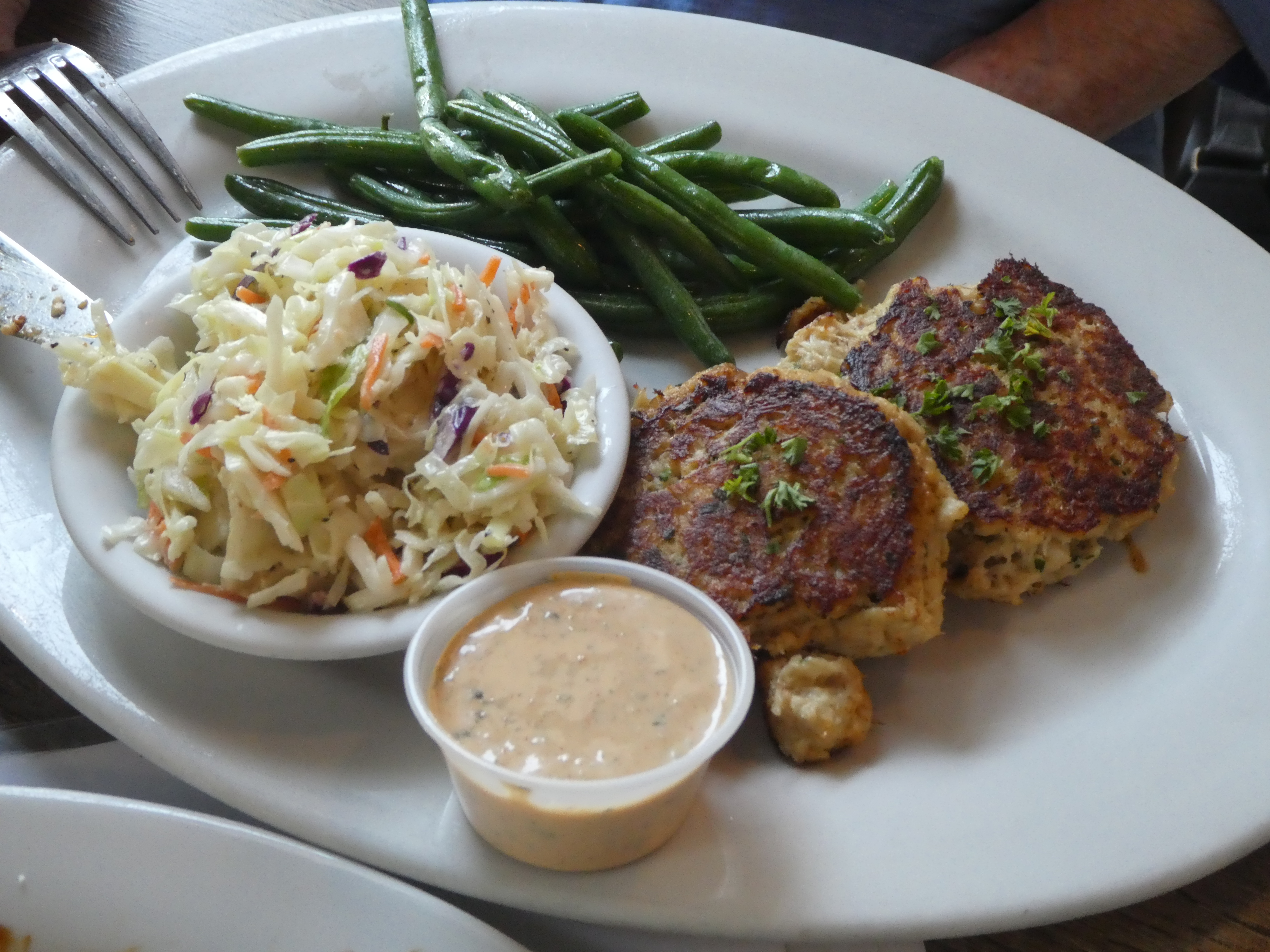
Welcome to CaturSaturday, October 24, 2026, shabbos for Jewish cats and Food Day, during which you’re suppose to think about stuff like a healthy diet, starvation in parts of the world, animal welfare, and so on. Here are some crab cakes we had not long ago in Georgia. They were good. All local crabmeat with just enough stuff added to hold the meat together. The other food is healthy.
First produced in 1893 by the Quaker City Confectionery Company in Philadelphia, it is now made by The Hershey Company. Good & Plenty’s memorable Choo Choo Charlie commercials first aired in 1950. They featured Choo Choo Charlie the train engineer powering his locomotive with Good & Plenty, shaking a Good & Plenty box in a circular motion, and singing a jingle based on “The Ballad of Casey Jones.”
Here’s one of those commercials:
Readers are welcome to mark notable events, births, or deaths on this day by consulting the October 24 Wikipedia page.
Iran’s message is stark: If the U.S. and Israel restart their air campaign, Tehran will respond with strikes not only on American bases and warships but on airports, pipelines and other civilian targets in the neighboring countries of the Persian Gulf.
The warnings, issued publicly and in private diplomatic communications, are clearly aimed at deterring any attack with tough talk. But they also signal a real threat. Iran retains significant missile and drone stocks and the ability to use them.
Analysts estimate Iran has hundreds to thousands of ballistic missiles, and U.S. and regional officials believe it has resumed production of ballistic missiles in limited numbers using stockpiled components and working in underground facilities.
In the opening phase of the war, Iran inflicted significant damage on U.S. air bases, embassies and the headquarters of the U.S. 5th Fleet in Bahrain. It also hit energy and industrial facilities in the United Arab Emirates, a major gas plant in Qatar and airports in Dubai, Kuwait and Bahrain.
Tehran says it would seek to cause more pain in any new round, at a time when stockpiles of the air-defense interceptors the U.S. and Arab militaries need to absorb any attack have been running down. Israel’s interceptor supplies have also been under pressure.
. . .Raising the ante in any new fight would expose Iran’s infrastructure to attack when its economy is teetering. Its missile arsenal and launchers were battered by U.S. and Israeli attacks early in the war—the Pentagon said in September the U.S. had destroyed up to 90% of Iran’s drone, ballistic missile and naval industrial base—limiting its ability to sustain a long exchange.
Still, analysts believe it would run the risk.
“The consensus in Tehran now believes that deterrence requires imposing immediate, sustained and substantial costs on its adversaries,” said Sina Toossi, an Iran expert at the Center for International Policy, a Washington think tank.
I suppose the object is to make Iran surrender without putting U.S. troops on the ground. Perhaps even bombing Kharg Island, which I’ve suggested, might be intolerable to the U.S. because, while destroying Iran’s ability to export oil, it could raise U.S. gas prices by $2-$3 per gallon even though we get virtually no gas from Iran. And that price rise is not acceptable to Americans. If this attack doesn’t make Iran surrender—and I don’t think it will—the U.S. and Israel will have failed.
*Speaking of Iran, Reuel Marc Gerecht and Ray Takeyh, two experts on foreign relations, tell us in the WaPo “Why Trump is failing to make Iran flinch” (article archived here). The answer is not obvious from the text. A few excerpts:
Locked in a war of attrition with the United States, the Islamic republic has clear objectives. President Donald Trump’s recent decision to send another aircraft carrier to the region and threaten the resumption of a significant bombing campaign after the midterms won’t alter these aims. The ruling clerics and the commanders of the Islamic Revolutionary Guard Corps seek to create a new tributary order, imposing tolls on ships traversing the Strait of Hormuz and severing security ties between the United States and the Arab Gulf states.
The regime also wants to find a means to deter Washington and Jerusalem from attacking. Until Tehran can revive its nuclear weapons program, domination of the Persian Gulf — having the capacity to control or destroy its hydrocarbons — is the only way to possibly checkmate the country’s primary foes. Any diplomatic compact that ends this war — and despite Iran’s awful economic state, Tehran seems in no rush to find a diplomatic solution — must, from Tehran’s perspective, bring about American capitulation. Indeed, this is how the Iranian regime saw the Islamabad Memorandum of Understanding — the interim peace agreement signed on June 17.
The Iranians have given up on neither their proxies nor their atomic aspirations. We can’t gauge how serious the regime’s current nuclear efforts are, but it is engaged in “high levels of activity” at important bombed sites, according to the Institute for Science and International Security. The IRGC’s arguments for nukes as the ultimate deterrent are no less convincing just because alternative strategies — pressure on Hormuz and attacks by its proxies — have proved so useful against enemies.
With its proxies, Tehran has reshuffled its priorities to focus more on Saudi Arabia. Iran’s Yemeni Shiite allies, the Houthis, have become its most effective foreign asset. Their clarion call — “God is the Greatest, Death to America, Death to Israel, Curse Be upon the Jews, Victory to Islam” — shows a movement deeply imbued with Tehran’s spirit. As important, the Houthis have successfully deployed Iranian-designed and -manufactured missiles and drones to bedevil Saudi oil shipments and spread terror in Saudi cities.
. . .it’s Iran’s internal problems, even more than Trump’s economic coercion, that most concern the Islamic republic. The theocracy’s priorities — proxies, missiles, drones and nuclear weapons — reflect this internal weakness: The regime can no longer stir a faithful nation to spread the revolution. Militant foreigners and technology have to save the regime’s sense of purpose.
The Islamic republic’s aspirations have always revolved around the challenge of how to do more with less. If the regime can survive Trump’s attempt to strangle it and provoke an uprising, the theocrats and guardsmen just might figure it out.
I suppose the point is that the U.S. assumes that military and economic pressure would compel Iran to surrender or stop its nuclear program. But the authors appear to argue that that won’t happen: all that’s occurred is that Iran has cracked down on its populace. But this gives not a clue about how we’re supposed to make Iran flinch.
Palestinian gunmen opened fire on Israelis in the West Bank on Friday, prompting Prime Minister Benjamin Netanyahu to threaten a major offensive in the Israeli-occupied territory days before a pivotal national election.
The Israeli military said that two soldiers had been killed and that its forces had shot dead two Palestinian assailants near Hebron, the most populous city in the West Bank. Three other people were wounded in the attack, according to Magen David Adom, Israel’s ambulance service.
Mr. Netanyahu visited the site of the attacks and said Israel would carry out a major operation in a neighborhood of Hebron, where he said the attackers had come from. “We are going to implement the successful and aggressive model that we employed in the refugee camps,” he said, referring to the Israeli military’s offensive in camps in the northern West Bank.
And from Segal:
The [Israeli] families whose Shabbat preparations turned into hospital vigils already know how this story ends: quietly. New York politician Brad Lander will not jump halfway across the world to escort Israelis to work and back. No delegation of diplomats will tour the junction or express outrage over constant Palestinian violence. Those families also are all too familiar with what Lander himself observed this week: “violence unfortunately is never far away.”
The reasoning for this blindness is simple, if morally bankrupt. Israeli presence in the area is seen as illegitimate, and so violence against Israelis is treated as justified, though such things are not said in polite society, merely implied. Never mind that men who intended to bypass the checkpoint are unlikely to be fussy about where the international community draws its borders. Ironically, that justification is the same logic that drives the nationalist violence those same voices are so fond of condemning.
If it was not entirely self-evident, I will state it clearly: You do not discourage violence by deciding whose lives are expendable.
An eloquent exposition of “the soft bigotry of low expectations.”
*As always, I’ll steal three items from Nellie Bowles’s news-and-snark column in the Free Press, called this week, “TGIF: the Deepfake of the Deepfake.” First, the title item:
→ The flag really was upside down: Nafisa Fai, a Washington County, Oregon county commissioner, gave a talk in Minnesota where she was speaking with an American flag behind her—but it was upside down. Footage of the event went viral, with people pointing out the major flag faux pas. Quickly, proper media companies and some Democrats ran with a story about how the footage was a racist deepfake. That it was fake news.
Here’s the Oregon Democrats’ official X statement: “The racist deepfake video of Washington County Commissioner Nafisa Fai circulating on social media is abhorrent. This is one more reason Al needs to be regulated, to prevent bad actors from causing real harm through misinformation.” Here’s Congresswoman Maxine Dexter: “This is a racist, disgusting attack and yet another example of how misleading and malignant Al deepfakes can be.”
There was even footage published, credited to Nafisa Fai’s team, showing that the flag was correctly hung.
The candidate now denies circulating the fake image of the flag hanging properly, even though news sources say they got the image from her. I just love it all.
Remember that Bari Weiss is editor of CBS News:
→ Perfect headline:
Scuffles! Scuffles about high school student grievances (they later deleted the post). Right. That’s what’s happening there. Gotta say, I love my wife’s new job. She’s a normie lib running a completely normie lib news operation, yet is held up as the World’s Great MAGA leader. What I humbly suggest: It’s time for me—me and the 15 most active members of the TGIF comments section, and you know who you are—to run CBS News. I want 60 Minutes to be doing a long meditation on whether voting should require a fitness test. That’ll give the media blogs something to really sink their teeth into! I want a deep dive into the first moon landing and what exactly happened there. They say she’s doing evil propaganda for the Jews yet all I see are stories about West Bank settlers, my sweet, gentle wife. The kids need more of your time, honey. We can do this power transfer with dignity. Just leave the laptop open when you go to sleep, and I’ll know it’s your sign for me to take a swing at it.
→ In defense of stoning: An Oxford-educated pediatrician and NHS trainee, Abdul Qader Ismail, created the “Palestine poppy” pin, borrowing the memorial symbol from Britain and citing the some-12,000 Arab Palestinians who he says fought for the Brits during WWII. He also says the poppy is the national flower of Palestine. That’s nice.
But did you know he’s also an author? He wrote a series of helpful books for young adults called An Introduction to Challenging Topics for Muslim Teens. He tackles some challenging topics in the books, like when to crucify or stone people, or when you should just cut their hands off. From the UK Times this week:
Let’s dive a little deeper: “In the first volume, Ismail defends hudud punishments, which include stoning, whipping, crucifixion, hand amputation, and the cross-amputation of diagonally opposite hands and feet.” Crimes worthy of these punishments: “stealing something valuable, highway robbery. . . fornication or adultery (having sex before marriage, or with someone other than your husband or wife), accusing someone of fornication or adultery without proof, drinking alcohol.” All the major religions have crazy punishments in their history, so I’m not calling this out specifically, but it’s rare to see someone educated arguing for this type of penalty in the present. Anyway, watch out when you go to the NHS and they ask about your sexual history.
A good week for Nellie.
*Finally, a take on the changes in the pick-your-own apple outing. When I was a kid living in Indiana, my parents would take us to the orchards for an outing like this, and it was always big fun. (I’m not sure why; perhaps it’s the mistaken notion that you’re getting the apples for almost free, and ones that you choose.) But things have changed, as WSJ reporter Ellen Gamerman tells us. Before reading, can you guess how they’ve changed? Well, here you go:
The first sign of trouble at the apple orchard wasn’t the state troopers directing traffic, the guy in the neon vest sending us to park in a far-off field or the enormous battalion of portable toilets. It was the woman in the crowd by the entrance, leaning on a rustic fence post, barfing up a whole lot of apples. If Hieronymus Bosch went apple picking, this would be his spot.
I don’t remember when apple picking turned into such an unleashed expression of autumnal id. Are we overindulging our manic search for connection in an orchard of earthly delights? Could we be making up for all our screen time by commanding group bonding between the Idareds and the Golden Delicious? Breathe deep, we say. Isn’t the air crisp?
Apple picking has become for families what “leaf peeping” is for new couples on their first weekend away: A high-stakes quest for joy that simultaneously raises a host of not-as-advertised realities. Yes, it is a maker of family memories and a key revenue source for small farms. And yes, the line is too long for the cider doughnuts, you do need to pay extra for the corn maze and your apples are growing heavier by the minute, if not in your bag, then at least in your mind.
Dispatches from the orchard front include complaints of apple theft that have required searches at the exits. Last year, Lynd Fruit Farm in Pataskala, Ohio, warned visitors it would call the sheriff’s office on offenders who hid their pickings at checkout, reporting apple thefts of $80, $160 and $400 at a time. On social media, the orchard described a car riddled with stolen apples tucked under seats and blankets, in the glove compartment and “under/behind the man’s wife.” Alex Patton, a co-owner of the farm, said he’s seen wives sitting on $20 worth of produce. “From their shoulders to their butt, it’s just apples,” he said.
. . . Going apple picking today, at least in the pale of New York, can feel a little like lunging for a seat on a crowded subway. Two families eyeing the same tree. Who will get there first? How quickly can we walk without looking like we are sprinting? Get your own tree, my eyes have said more than once. This one’s mine.
Oy! Well, her solution is not to go apple-picking at all—just buy apples at the groce
Meanwhile in Dobrzyn, Hili’s been reading Jared Diamond:
Hili: Are humans really the third species of chimpanzee? Andrzej: I have no doubts about that.
In Polish:
Hili: Czy ludzie naprawdę są trzecim gatunkiem szympansa?
Ja: Nie mam w tej sprawie żadnych wątpliwości.
Several people blinded by Islamic thugs, including Salman Rushdie, will be with Masih at a “Games of Freedom” conference held in Łódź, Poland, On October 23-25. Here Masih makes the announcement again:
Salman Rushdie lost sight in one eye in a Islamist terrorist attack. Three brave women from Iran and Afghanistan were blinded under Islamism. I survived three assassination plots of the Islamic Republic on U.S. soil.
Now we stand together in Poland with one question: Why??
The moment I learned that I would be receiving an award in Poland and sharing the stage with Salman Rushdie, I reached out to the organizers with one request: Please allow me to bring women who were blinded under Islamic Ideology onto that stage. Because the real award belongs to them.
Farideh Salavatipour lost both eyes to pellet gunfire during the Woman, Life, Freedom uprising.
Kosar Eftekhari lost one eye when the Islamic Republic shot her in the face with pellets for demanding freedom. And Fahimeh, from Afghanistan, was blinded when her husband threw acid in her face for defending women’s rights.
I want the world to look into their eyes and understand the true cost of normalizing the Islamic Republic, the Taliban, and violent Islamist extremism.
Oppression begins with compulsory hijab, lashes, prison cells, and the systematic humiliation of women. It escalates into torture, mass killings, and executions and public lashes or public hanging. And it does not stop at national borders. These regimes and their networks have also threatened, hunted, and plotted to assassinate their opponents abroad.
Salman Rushdie is a living symbol of how Islamist terrorists reaches far beyond the borders of dictatorships. He was brutally stabbed on American soil and lost sight in one eye. I have survived three plots to kidnap or assassinate me on US soil and I can testify firsthand that the Islamic Republic and other authoritarian regimes use transnational repression to hunt down and silence their opponents abroad.
That is why tonight, I will dedicate my award to brave Freedom Fighters especially these women who were blinded for freedom.
Tomorrow, these extraordinary women will have something rare: an entire one-hour panel to tell their own stories. I will have the honor of interviewing them. Too often, the world speaks about survivors. This time, the world must listen to them.
We also visited Auschwitz together. Standing there, surrounded by the evidence of unimaginable crimes, one truth became painfully clear: “Never again” must never become an empty slogan. We cannot honor the victims of yesterday while turning our backs on those facing atrocities today.
And our solidarity must cross borders.
I have also invited a woman from Africa to stand alongside the women of Iran and Afghanistan, to remind the world that sexual violence is still being used as a weapon of war and repression. Different countries, different forms of brutality, but one shared struggle for dignity, equality, and freedom.
We cannot expect women facing prison, bullets, acid attacks, rape, and execution to defeat these systems of oppression with their bare hands while the rest of the world stands aside.
And here is my message to the world:
South Africa’s apartheid did not fall because its victims fought alone. It fell because courageous people inside the country resisted, and the world joined their struggle.
In the history Poland gave the world Solidarność. Now the women of Iran Afghanistan and Africa need the world to live up to that word.
If the world could unite to help end racial apartheid in South Africa, and end tyranny in Poland, it can unite to end dictatorship everywhere.
The time for solidarity is not after the atrocities. It is NOW.
An advisory from the Number Ten Cat. And don’t forget the snacks!
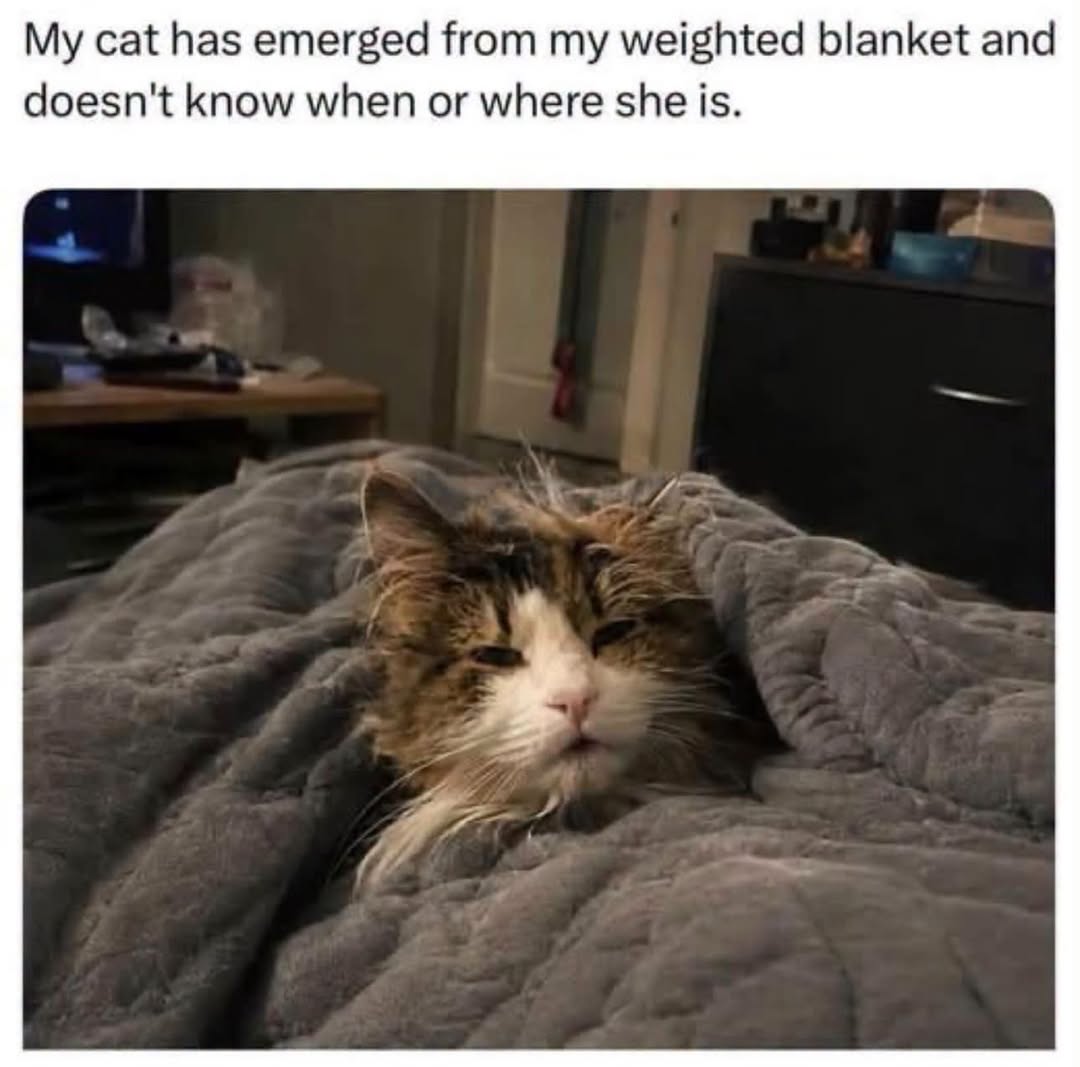
CAT ADVISORY: Storm Austen has brought strong winds and rain to Wales and the South of England. Cats are advised to find the cosiest spot in the house and stay there. Humans are advised to bring them snacks.
Music: A fantastic video of Stevie Nicks (accompanied by her sister-in-law) spontaneously singing “Wild Heart”—a song she wrote—to a recorded background, all while she was being made up for a Rolling Stone photography session. I know of no better video showing extemporaneous singing of rock music. You won’t find this version on any recording or album.
I love that Stevie Nicks’ clip; there’s something about spontaneous music that delights us all. As I get older, it’s harder to find live music now that I don’t go clubbing anymore. Makes me love the local festivals and churches where music still exists. https://www.facebook.com/share/p/1EAeQ2MCwb/?mibextid=wwXIfr
There is a very good discussion (once you get past the first three minutes of ads and ark media self promotions) on Dan Senor’s Ark Media Call Me Back video-cast with Michael Moynahan and Simone-Rodan Benzaquen on France..current street protests and riots and politics at url




I love that Stevie Nicks’ clip; there’s something about spontaneous music that delights us all. As I get older, it’s harder to find live music now that I don’t go clubbing anymore. Makes me love the local festivals and churches where music still exists. https://www.facebook.com/share/p/1EAeQ2MCwb/?mibextid=wwXIfr
There is a very good discussion (once you get past the first three minutes of ads and ark media self promotions) on Dan Senor’s Ark Media Call Me Back video-cast with Michael Moynahan and Simone-Rodan Benzaquen on France..current street protests and riots and politics at url