
Bruce Lyon, who’s now retired and is an emeritus professor of Ecology and Evolution at UC Santa Cruz, sent a batch of bird photos. His captions are indented, and you can enlarge the photos by clicking on them.
I have already shared some recent photos of seabirds (here) and foxes (here) on St Paul Island, Alaska. In addition to these treats, the island is a mecca for bird watchers who keep regional bird lists. Various islands in Alaska are magnets for vagrants from Asia and birders who are serious about keeping lists visit the Island to beef up their official American Birding Association species lists for North America. Specifically, vagrants are birds that show up beyond their typical breeding, migration or wintering areas.
I am not normally a lister, but friends on St Paul bird are local guides who fid amazing vagrants, which they then very generously share with biologists such as me. I have also learned that the list of vagrants is not completely random—some species are pretty regularly visitors from Asia. Some species are more likely in spring, while others are in fall. If you are interested in the biology of vagrants I can recommend Steve Howell’s Rare Birds of North America. Howell has a nice section that goes through various patterns and the different reasons for why birds become vagrants.
This post will focus mostly on shorebirds, because they are pretty common vagrants, and I will also include some species that breed on the island. All of the vagrants I feature are birds that breed in northern Asia.
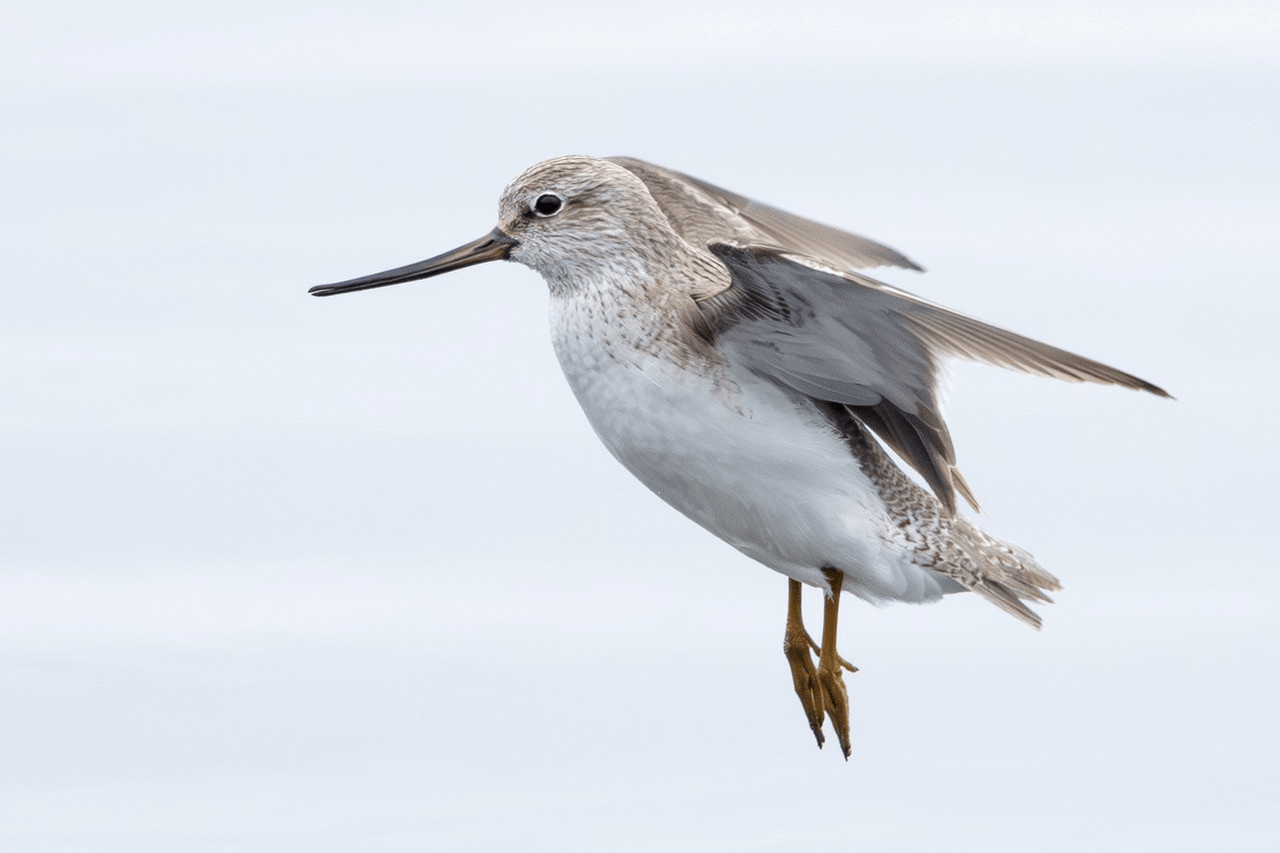
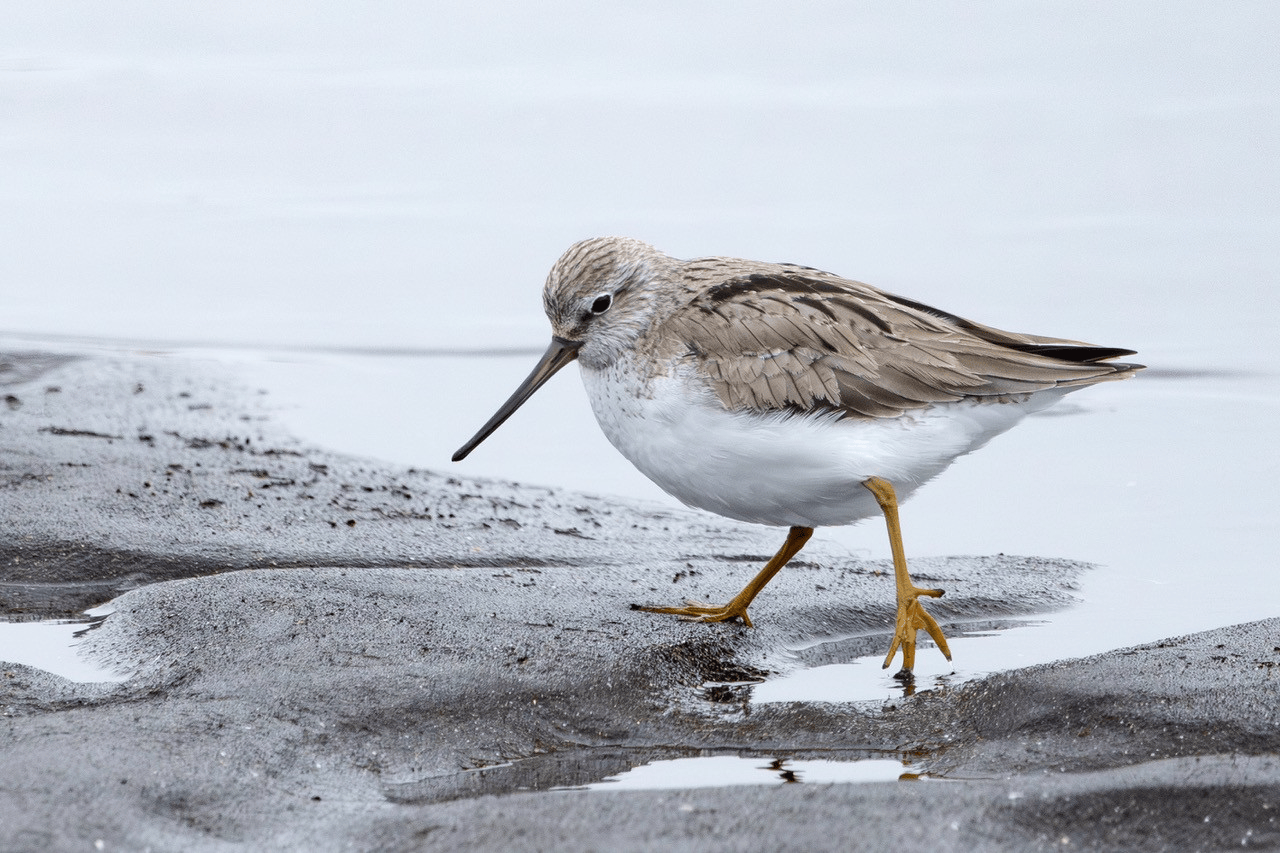
The Terek sandpaper (Xenus cinereus) was the show stopper for me this year. We initially got really crappy views but then it showed up on the mudflats in front of our lodging and actually flew towards me and landed 20 feet away. What a cool shorebird!:
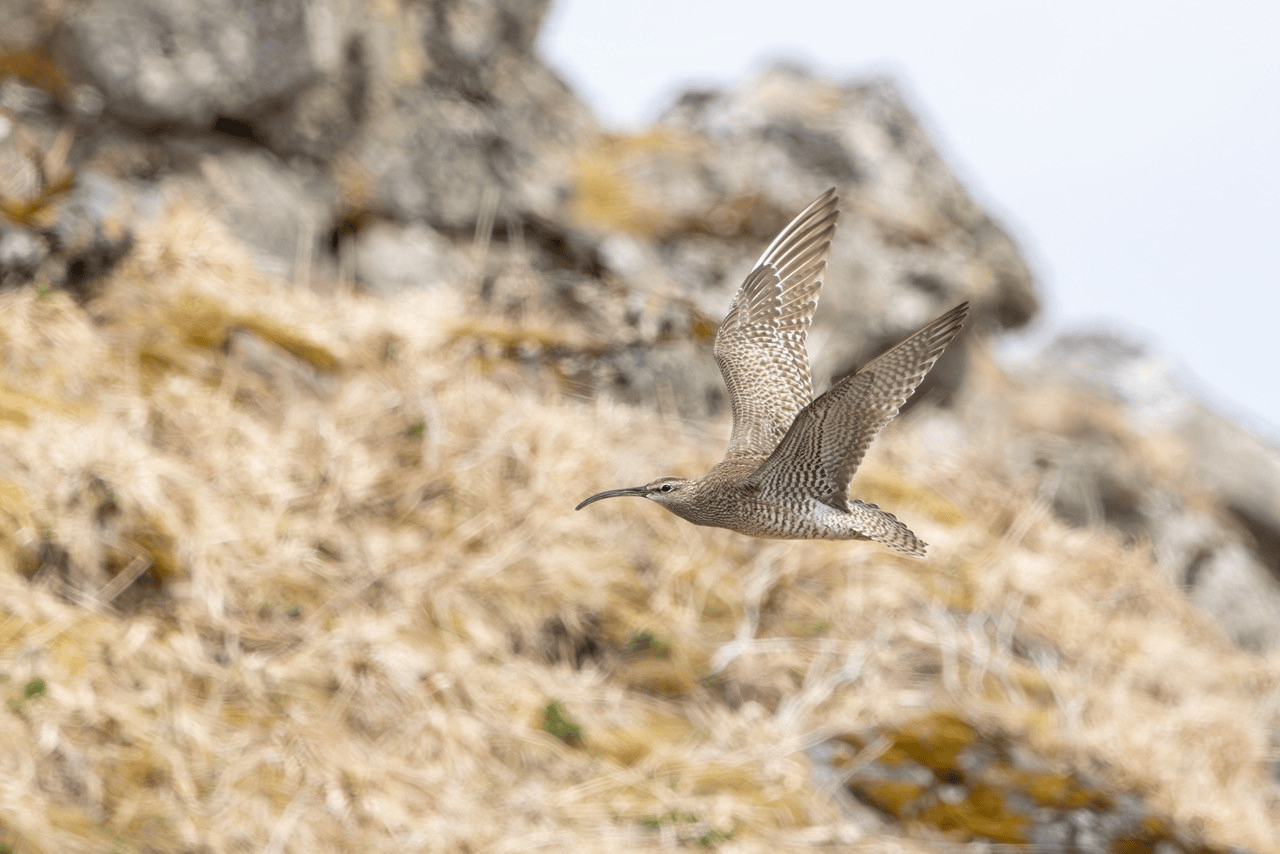
Eurasian whimbrel (Numenius phaeopus) (the result of a recent split into two species, the North American species is now Hudsonian whimbrel). The Eurasian has white rump and white stripe up the back. Sadly the photos do not show the white on rump because bird was always tilted the wrong way:
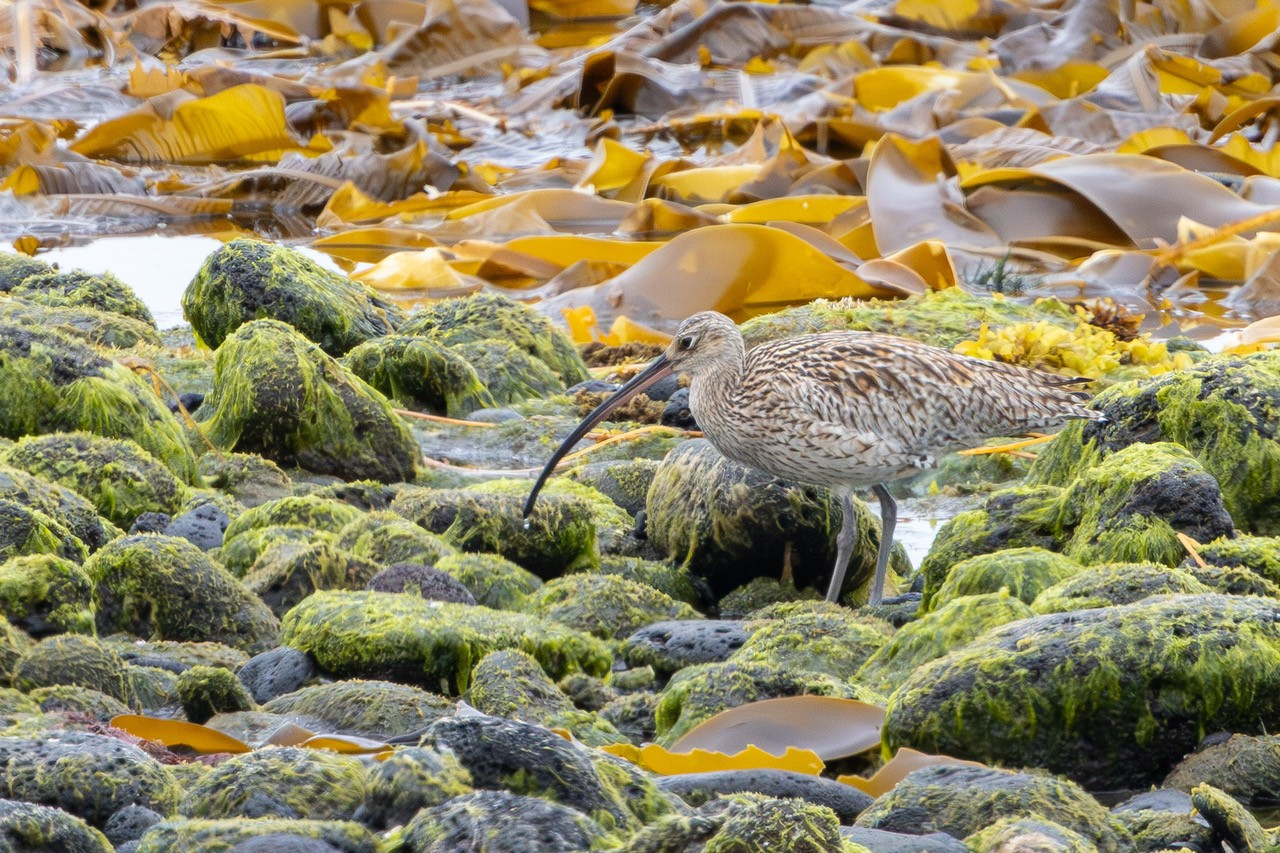
Far Eastern Curlew (Numenius madagascariensis). This is a rare bird everywhere and was a really good bird to get. It was using its long beak to access giant isopods hiding under the rocks that none of the resident shorebirds could get:
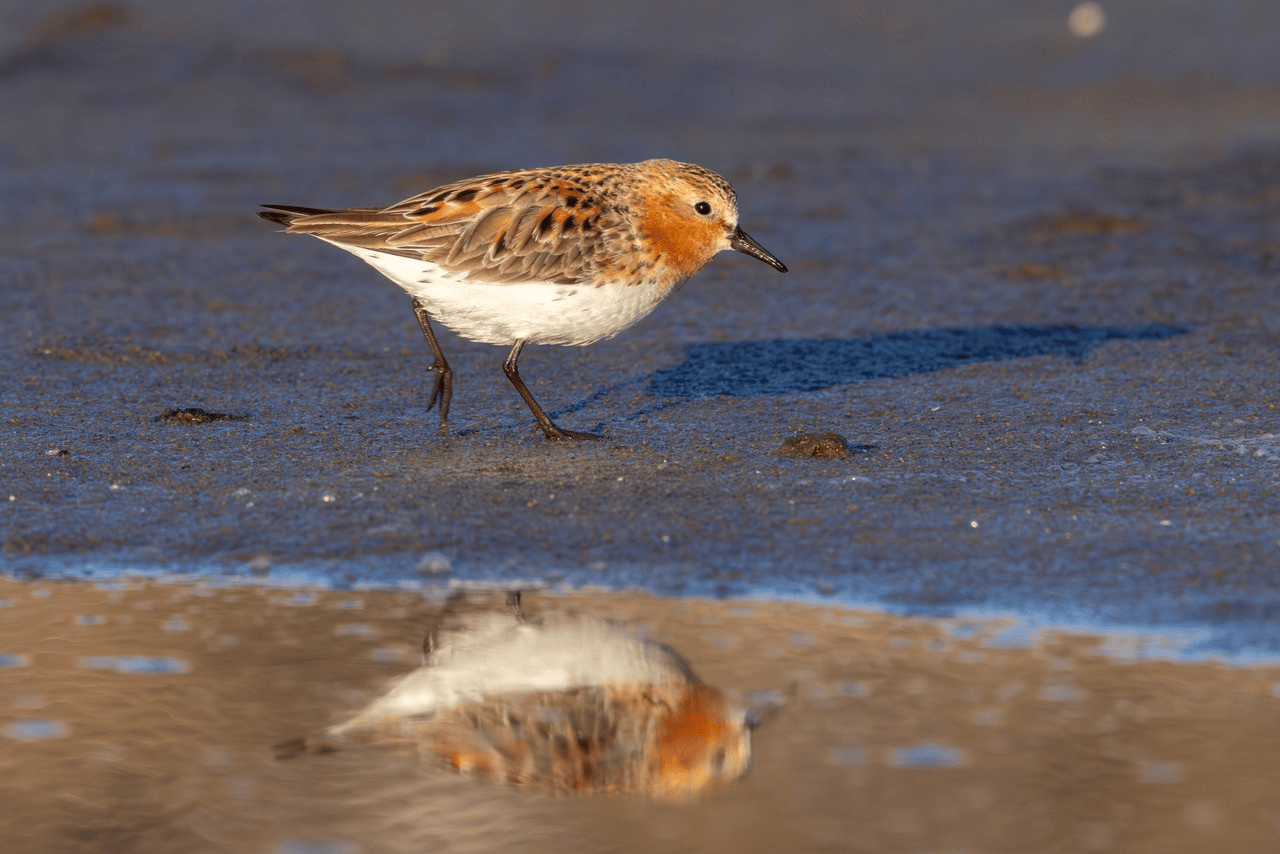
Red-necked stint (Calidris ruficollis). This species was particularly common this year and up to 5 at a time hung out on the mudflats in front of our lodging:
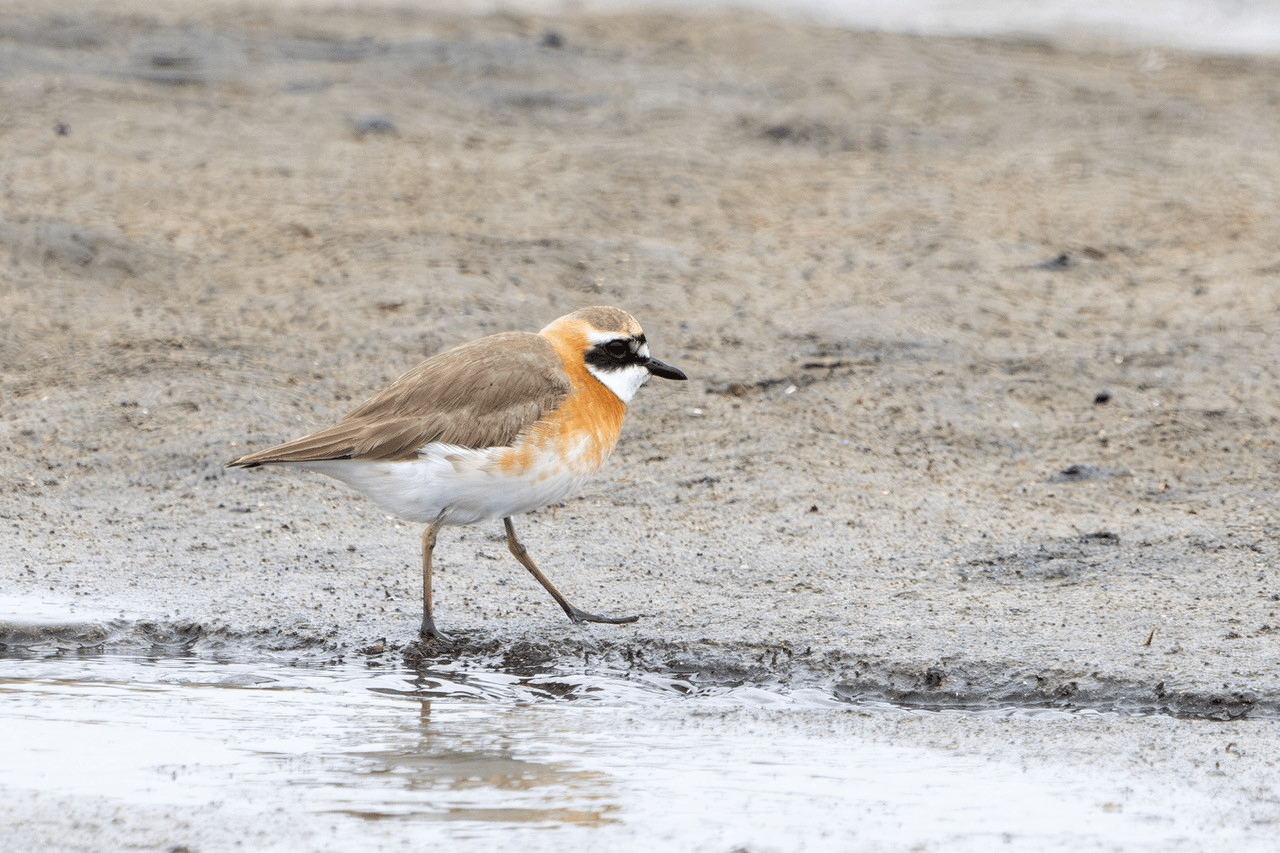
Siberian sand-plover (Anarhynchus mongolus):
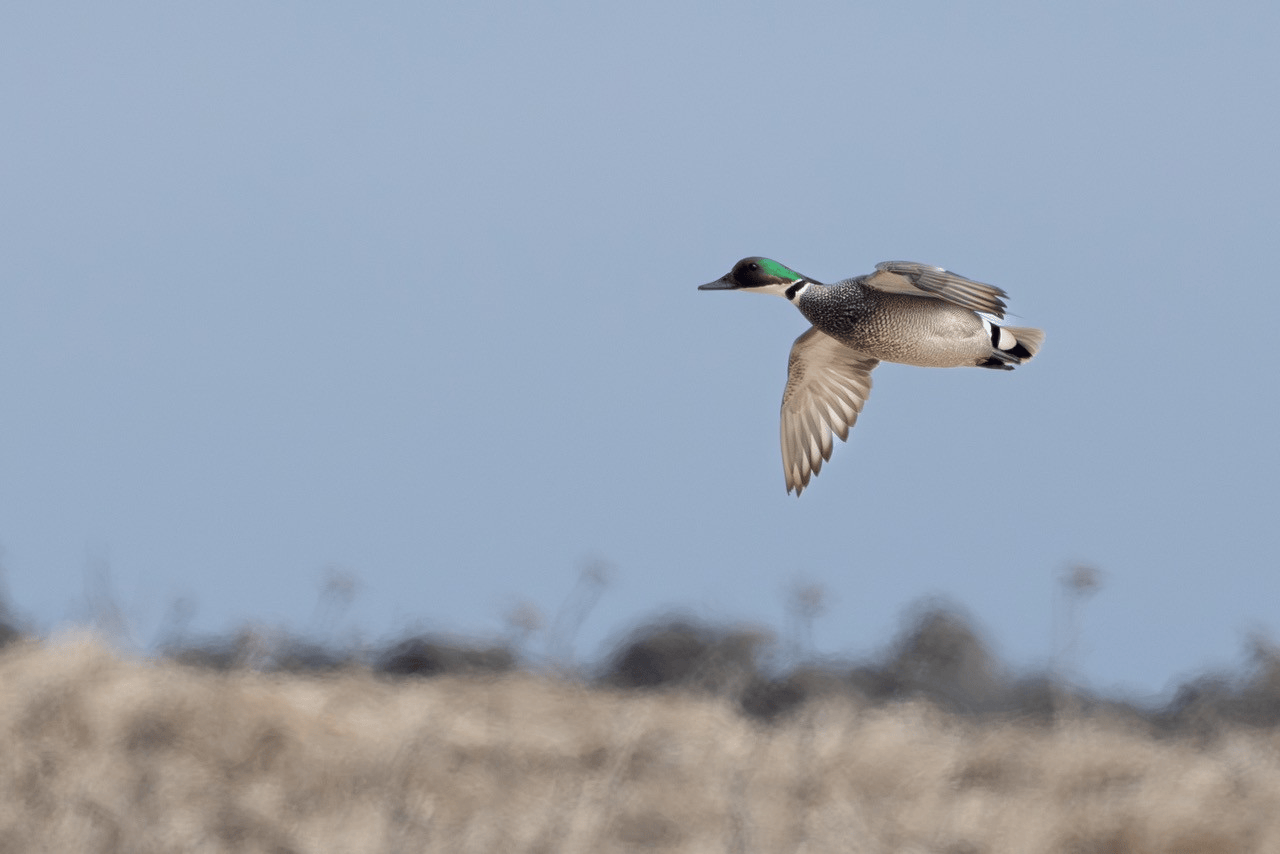
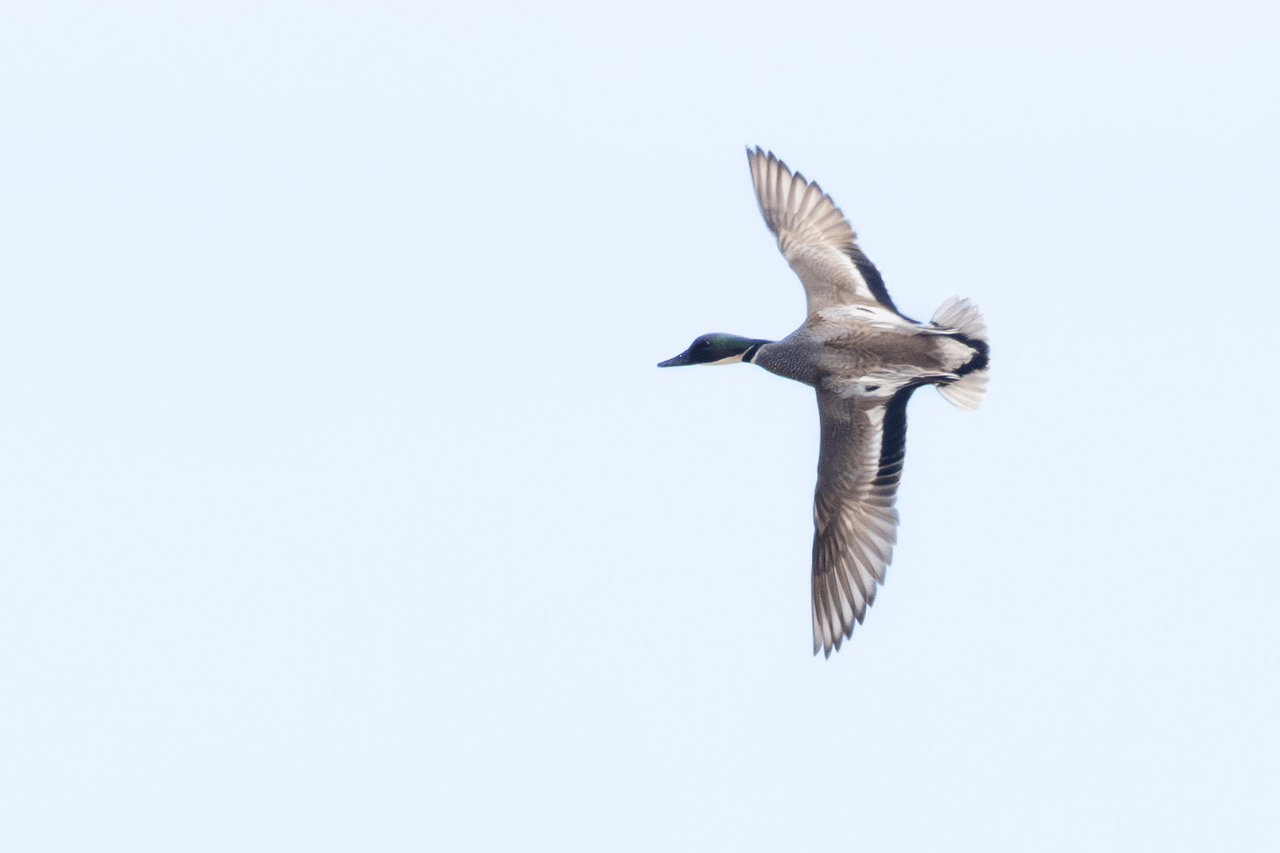
Falcated duck (Mareca falcata)—pretty stunning bird:
It was very windy, and the duck flipped over and showed the cool plumage pattern on its back:
The remaining birds are birds that breed on St Paul or nearby mainland Alaska.
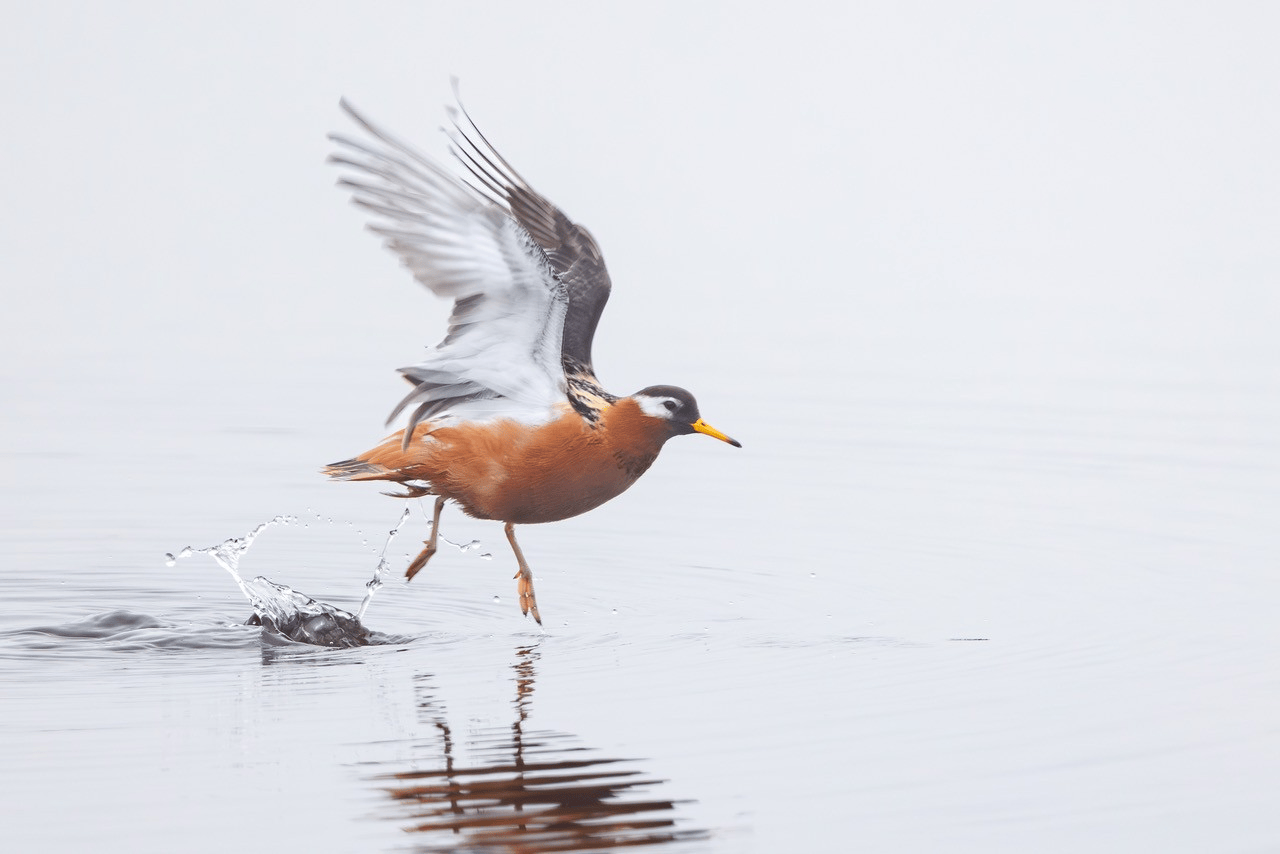
A gorgeous and very tame female red phalarope (Phalaropus fulicarius) that hung out in front of our lodging. This species doesn’t breed on the island. This is a ‘role reversed’ species, where females are more colorful than males, compete for males, and the males then do all of the work of incubating the eggs and raising the chicks:


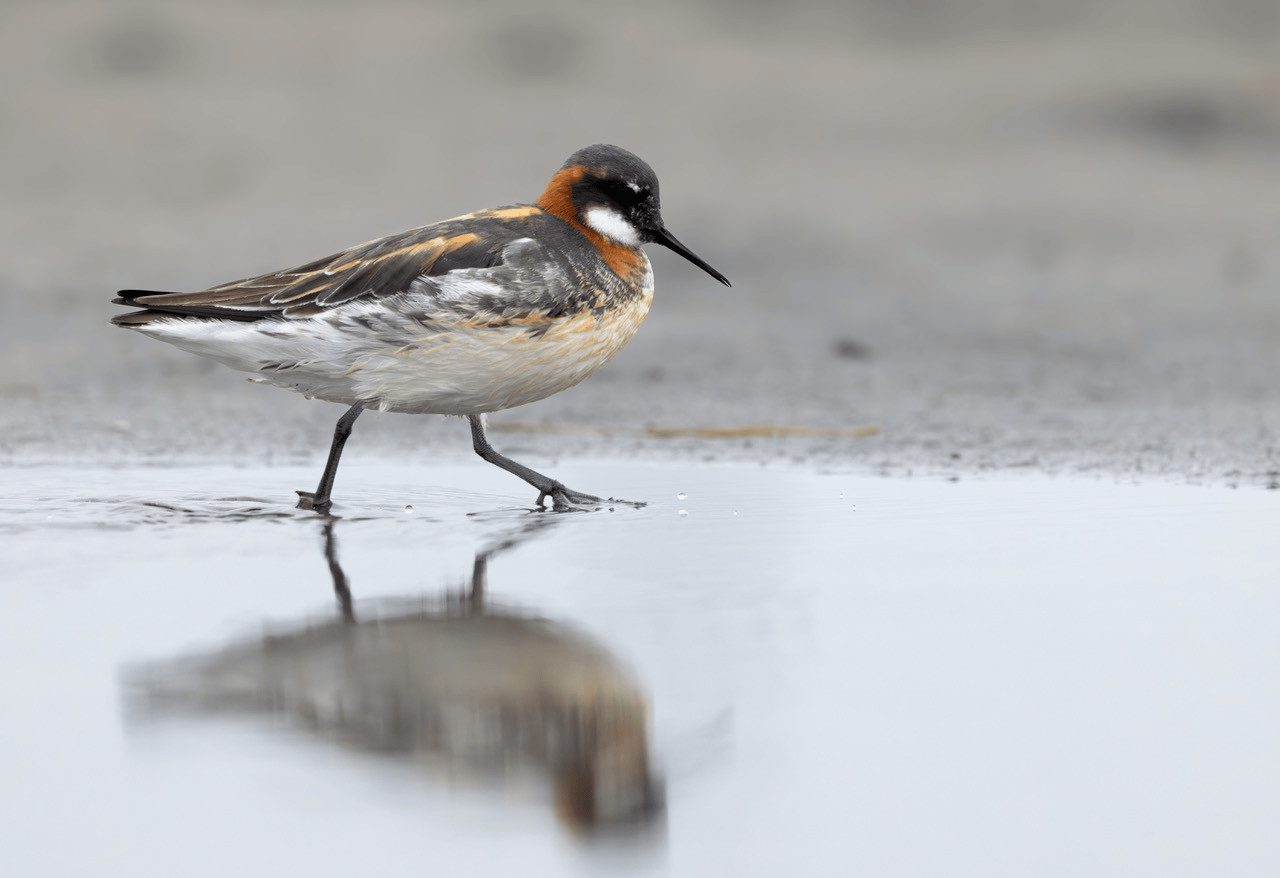
A red-necked phalarope (Phalaropus lobatus), also in front of our lodging. These breed locally:

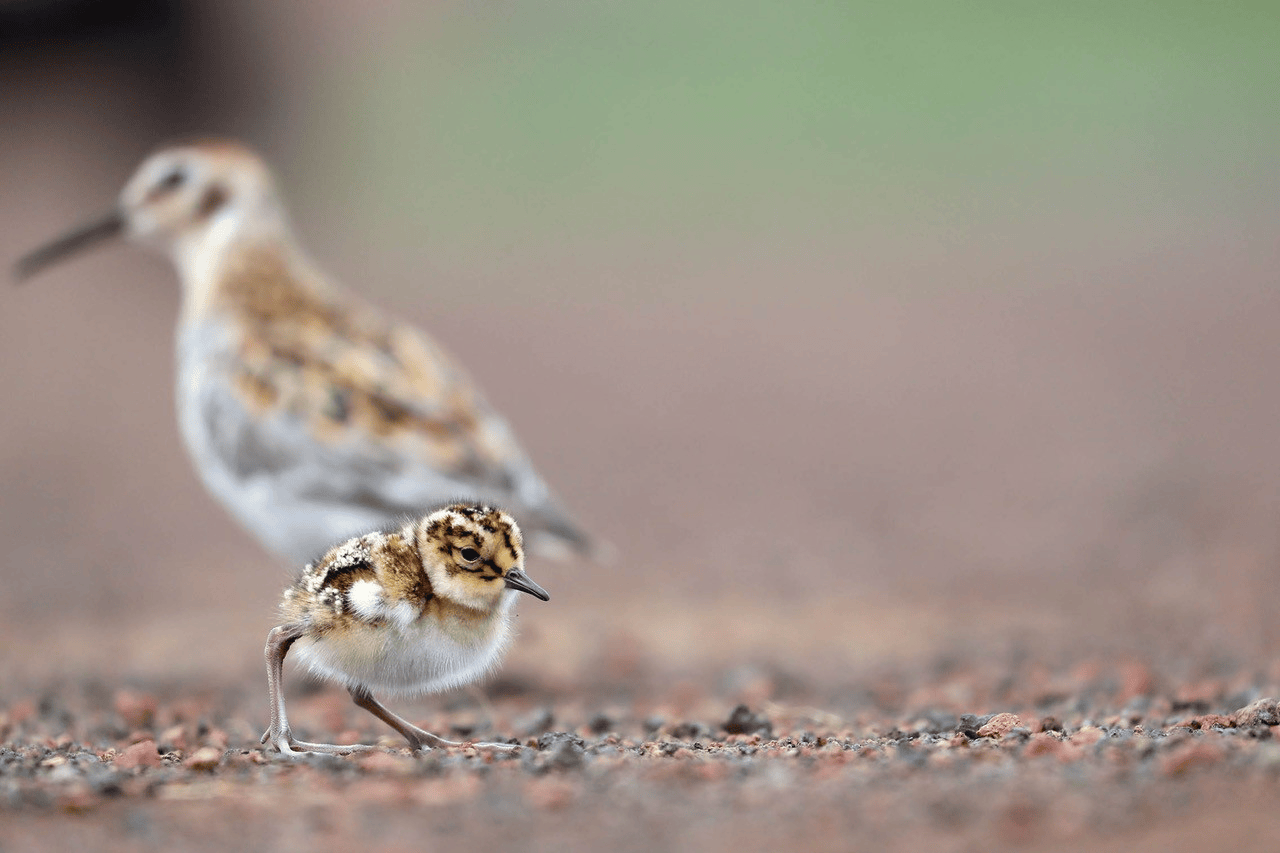
Rock sandpiper (Calidris ptilocnemis) chick and parent. Unlike most shorebirds, which are neurotic when they have chicks, these particular parents were very relaxed and the chicks were running around and feeding right in front of us on the road without the typical alarm calls that cause the chicks to hide. I lay on the road to get a nice out of focus bokeh background:
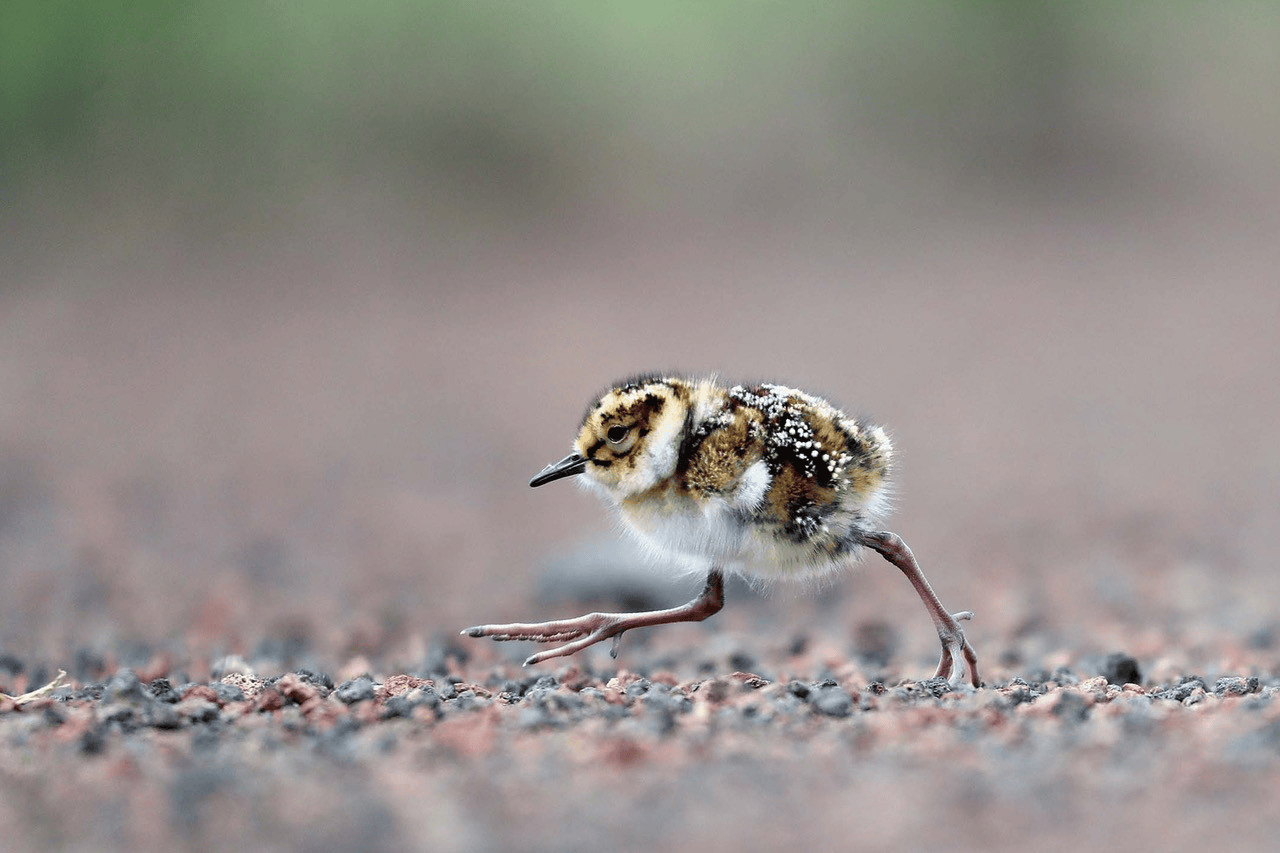
Sandpiper chicks have a beautiful plumage that makes them very camouflaged when they are hiding on the ground (tundra, grasses). They are also all leg!:
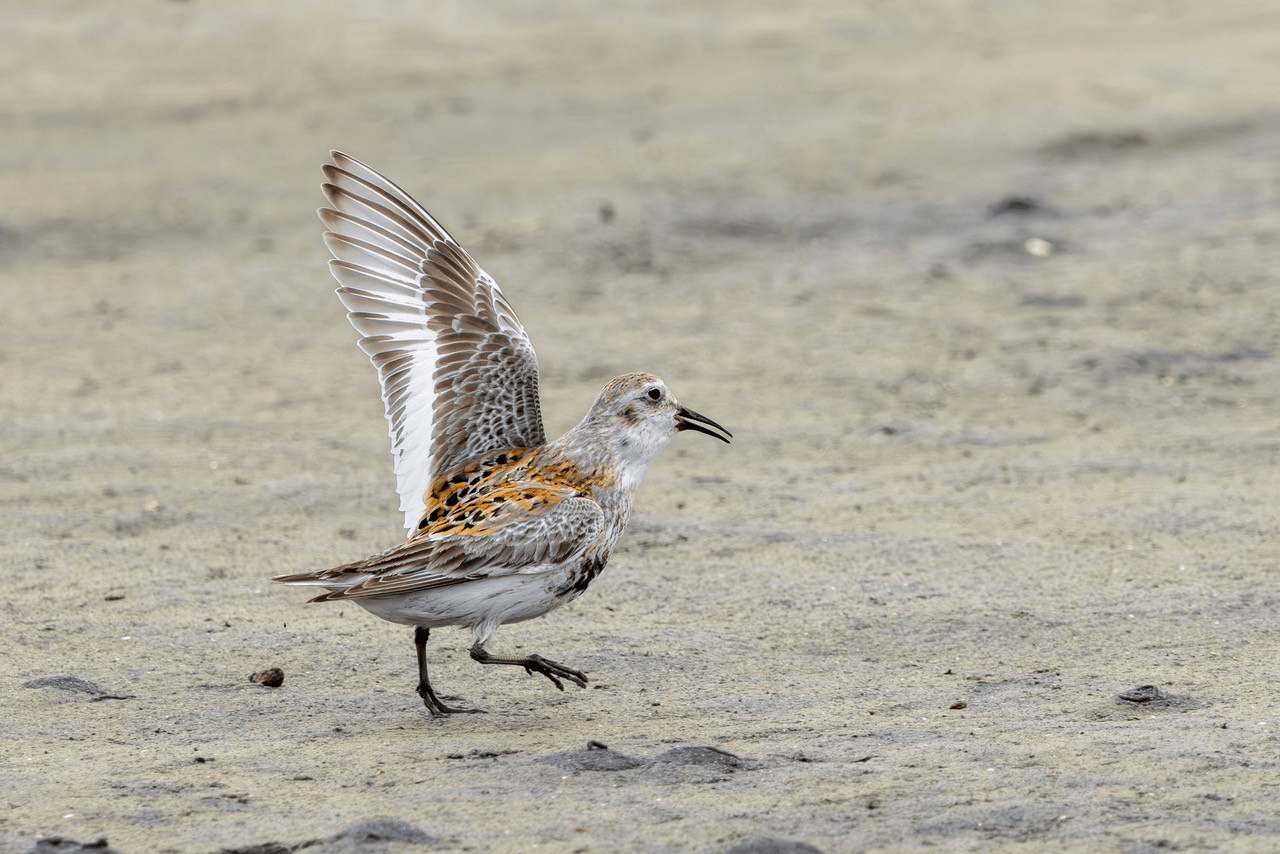
Rock sandpiper with a ‘wingup’ display used in courtship. Who knew that armpits are sexy!:
Semipalmated plovers (Charadrius semipalmatus) trying to lure me away from their nest with a broken-wing display. Many shorebirds use a display that fakes having an injured wing to lure predators away from the nest. To a predator, a bird with an injured wing should be an easy dinner and worth following. The faker leads the predator far from the nest, keeping its distance all the while, and then eventually returns to its nest. This first bird is the male—his eyering is orange:

Here is the female with a more yellow eyering and slightly more subdued plumage:

Looking at these spectacular photos reminds me that a new season of Feeder Watch is about a month away–I wonder if I’ll see any vagrants among the hordes of House sparrows at my feeders. Hey, you never know!
Fantastic shots! And excellent commentary. Thank you!
I enjoyed studying every one of these photos.
Great photos. Lovely birds.
The colours and composition in the second picture of the Terek sandpiper are beautiful – reminds me of a Robert Bateman painting.
What gorgeous birds! Thank you. The sandpiper chicks are aboslutely adorable. I wonder whether they hatch with disproportionately long legs or whether the legs just grow faster than the rest of them.
The chick in the photo just hatched. They come out of egg that way.
The chick in the photo just hatched. They come out of egg that way.
Excellent photos! Thanks for sharing.
Wonderful photos! A lot of these birds are migrants that turn up here in New Zealand in greater or lesser numbers. Up until the early 1990s I used to see one or two terek sandpipers each year at the local wader spot (Miranda), but with coastal development along the East Asia flyway they’ve become increasingly rare and very few now reach this country. We still get a few Eurasian whimbrels (not unusual to see three of four at a time), but far eastern curlews are much less common than they were – haven’t seen one in years, although one has been hanging around the nearby town of Thames for the last couple of seasons. Red knots are still in reasonable numbers, and there are generally a few red-necked stints at Miranda, although both species are declining. New Zealand usually gets a few Siberian sand-plovers each year, though they’re usually in non-breeding plumage so difficult to spot – I’ve tried for them a few times but never managed to see one. On the other hand I’ve seen two semi-palmated plovers, which turn up here much more rarely.
Thank you Bruce! The sandpiper chick is both gorgeous and hysterical.
Fantastic photos of the birds.
You know you are a red-neck (phalarope) when you are sometimes seen at the Werribee sewerage farm wetlands in southern Victoria, Australia, 12,500 kilometers from St. Paul, Alaska.
By happenstance I was in the area of the wetlands some years ago (2016), and one of dozens of excited twitchers showed a red-necked pharalope to me through the enormous telephoto lens of his camera. I am still amazed at how it was spotted in a flock of hundreds of other wading birds of similar size.
Amazing photos. Thanks!
Lovely photos, thanks!
A Terek sandpaper? That’s a bit rough.
I am a crummy photographer, and cannot hope to come up to the standards of these and other pics sent to this site.
As a small contribution:
Israel is on the flight path of several migratory bird species, and many use the “rest stop” of the Hulah Lake in Northern Israel, so much so that it is a preferred destination for birders. I cannot go there this yer, but there is an article on a major Israeli news site on the first cranes arriving, which usually signals the beginning of the autumn migratory season. Here is a link to the article.
https://www.ynetnews.com/environment/article/hynlh2ejfl#autoplay
I hope that this post is not out of place—didn’t know where to put it.
#16 was supposed to be a reply to your post.
Just recently, I read that this spot is really popular with tourists in Israel (probably most of them birders) during migratory season.
It’s quite fortunate that there are still areas like this on their route to Africa where they can rest without much human interference. In Lebanon they do shit like this:
https://x.com/BenGoldsmith/status/2105725622114783263
😡