
The Jason Arday mess his died down (I hope), there’s not much news save the U.S. national debt is pushing 40 TRILLION dollars, so now is a good time for some restful and beautiful wildlife photos.
Today we present part 2 of the photos that Bruce Lyon of UC Santa Cruz posted; the photos were taken during his field work in Alaska on birds. (Part 1 is here.). There’s one video at the beginning. Bruce’s captions and IDs are indented, and you can enlarge the photos by clicking on them.
Here’s Bruce’s introduction to the last part, and I forgot to put the video in. This time it’s here:
I spent the summer researching songbirds on St Paul Island, one of the Pribilof Islands way out in the Bering Sea in Alaska. On a few different days I took a break from our study of songbirds to enjoy the fabulous seabirds. St. Paul is famous for it seabirds and a lot of naturalists visit the island to see several seabirds that are endemic to the Bering Sea. By my count, 13 species of seabirds breed on St Paul.
Here is a video to give a sense of the seabird cliffs. At some of the best cliffs one can see most of the seabird species at at single location.
Bruce added this:
The video shows Ridge Wall, a favorite with naturalists and photographers because several species are easily observed at eye level from a fairly close distance. The trumpeting noises are murres.
And today’s photos:
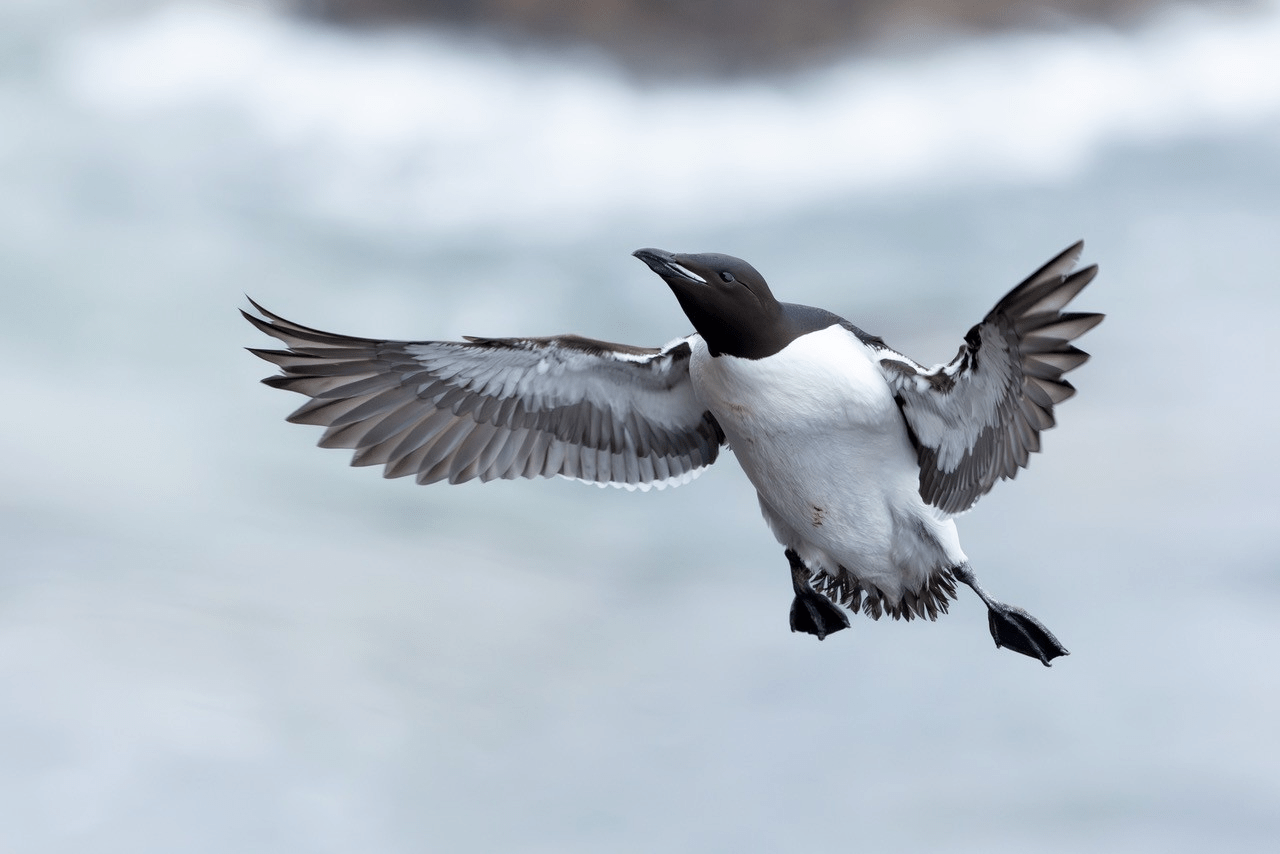
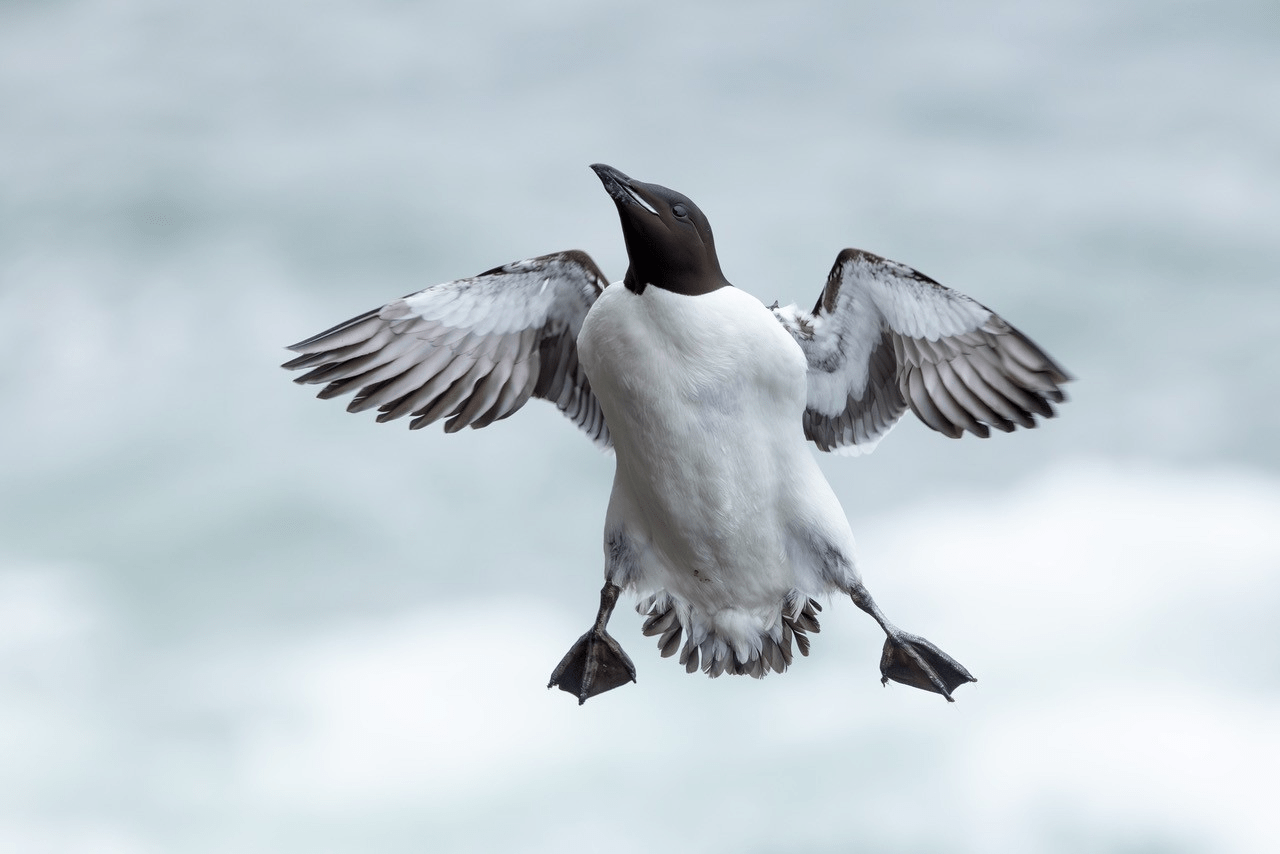
Thick-billed murre (Uria lomvia) with its penguin-like plumage. Murres are completely unrelated to penguins but a relative of the murres, the great auk, did give its name to the penguins. Apparently the Welsh called great auks pen gwyn and the name was given to the lookalike penguins by early south polar explorers:
Murre eggs are hypervariable for individual recognition and some individuals have particularly gorgeous eggs. This murre has the prettiest of the colors—bright turquoise:

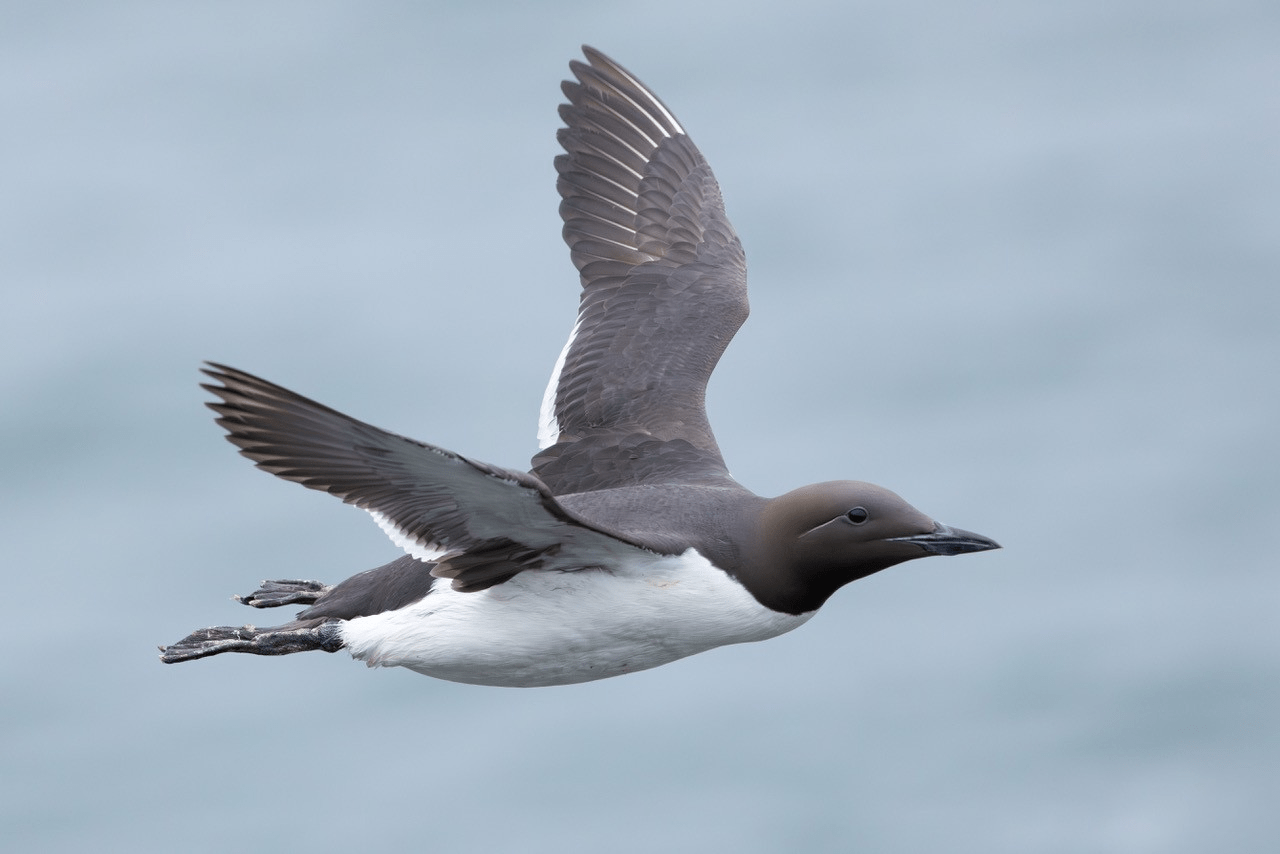
Common murre (Uria aalge). This species lacks the white line on the beak and is browner than thick-bills. In some lighting they almost look coppery:
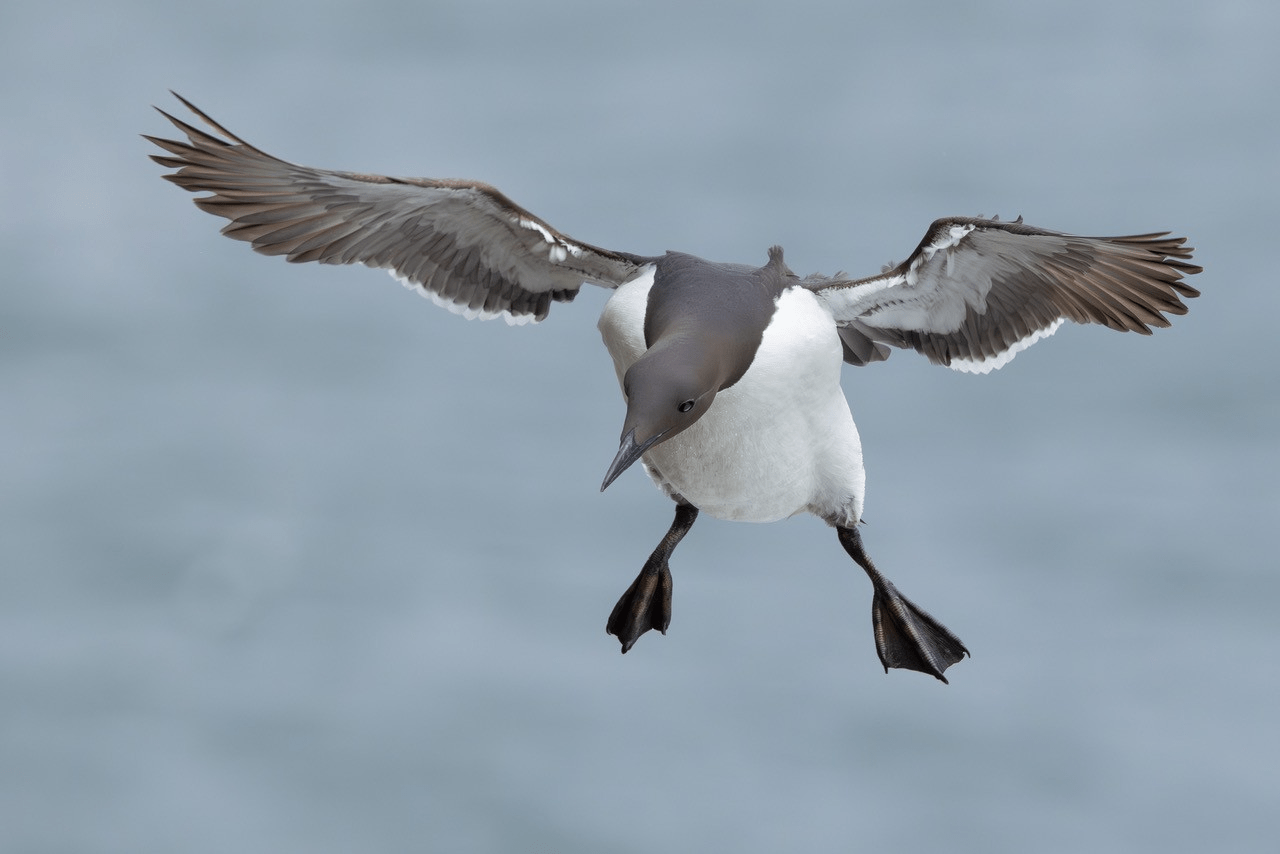
Common murre trying to land in a strong upblast:
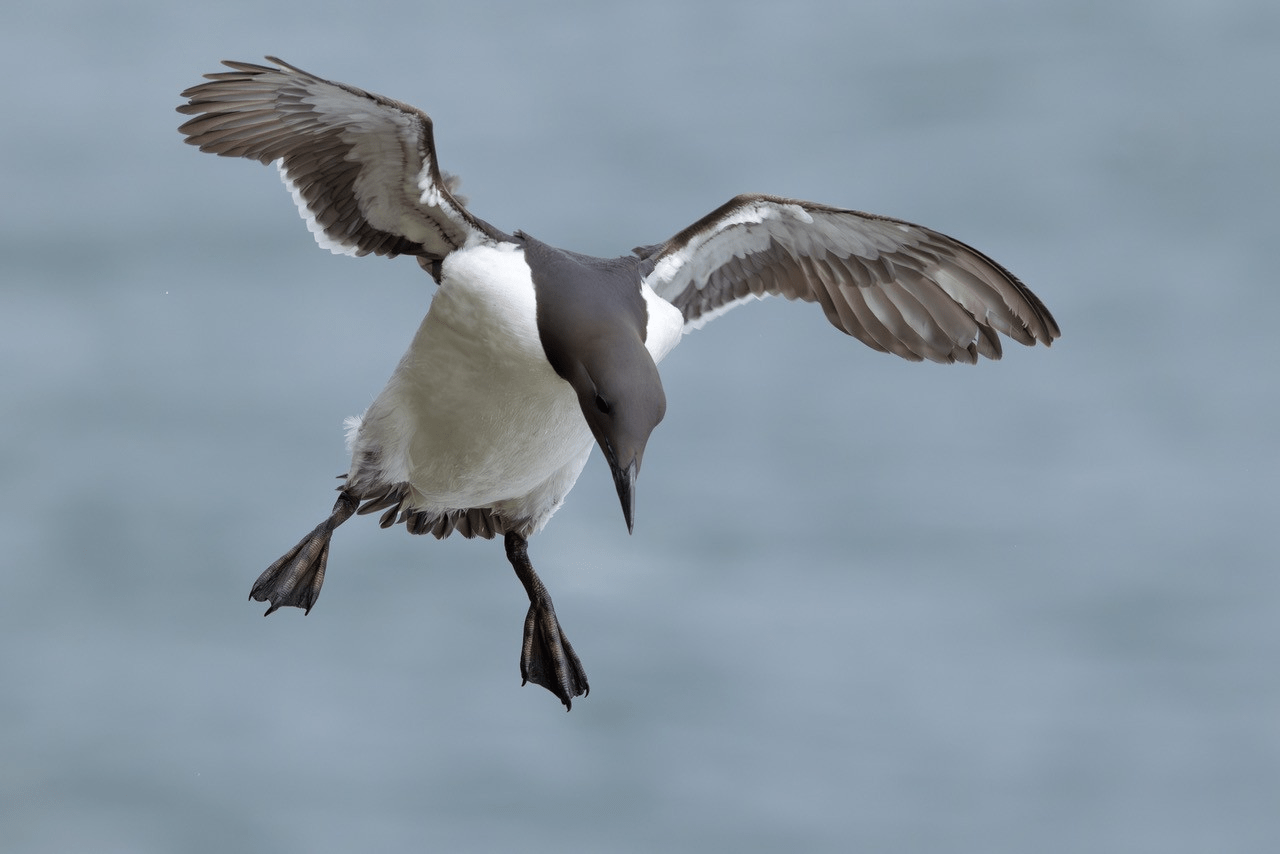
We even had a dovekie (Alle alle), extremely rare for St Paul Island. These are convergent with least auklets (tiny) but come from the murre lineage in the auks, not the auklets:

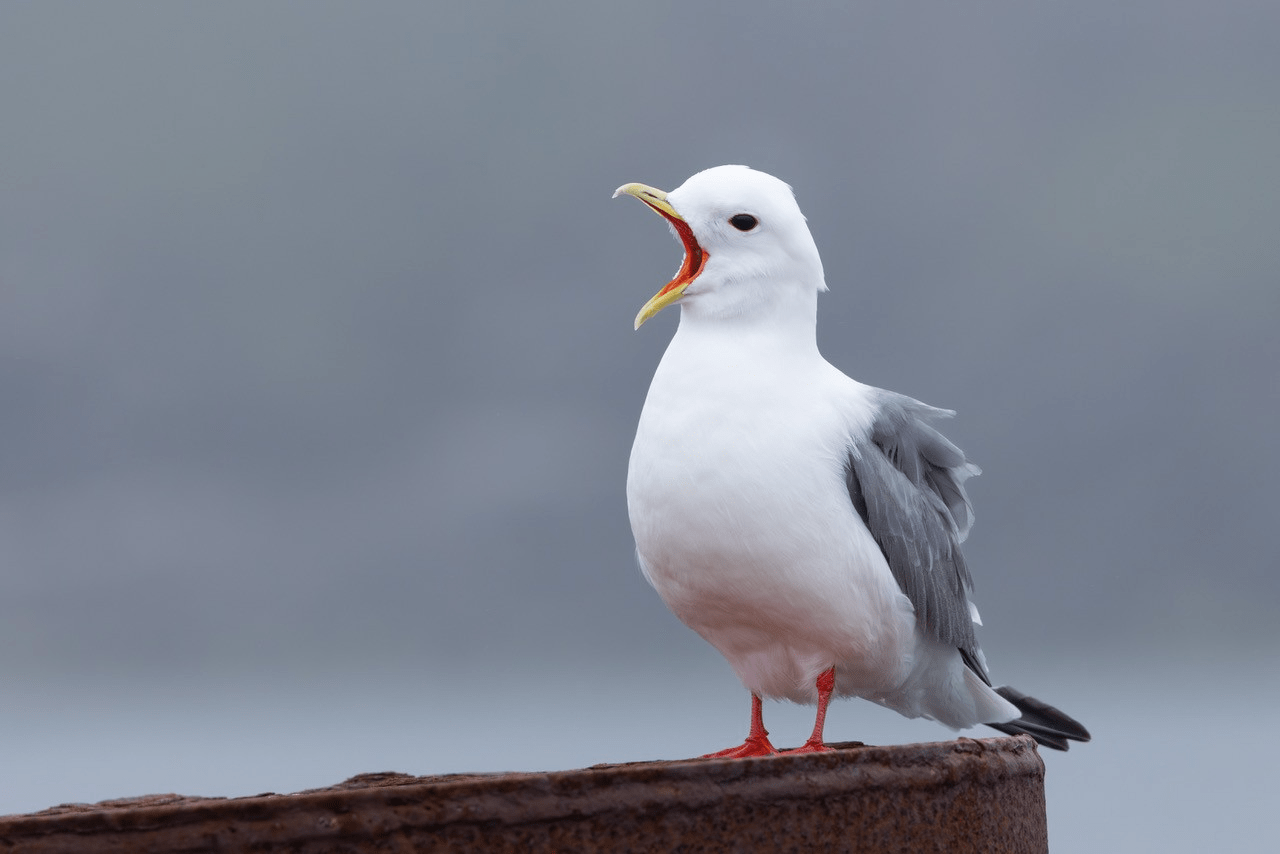
Black-legged kittiwake (Rissa tridactyla), a small cliff-nesting gull. When I took the kittiwake photos below it was very windy and the kittiwakes were playing in the updrafts. They would sit in one place and spin around like tops and sometimes even flip upside down. I love the bright orange mouth-lining and tongue, both of which are prominently displayed when the birds are screaming (which is most of the time).
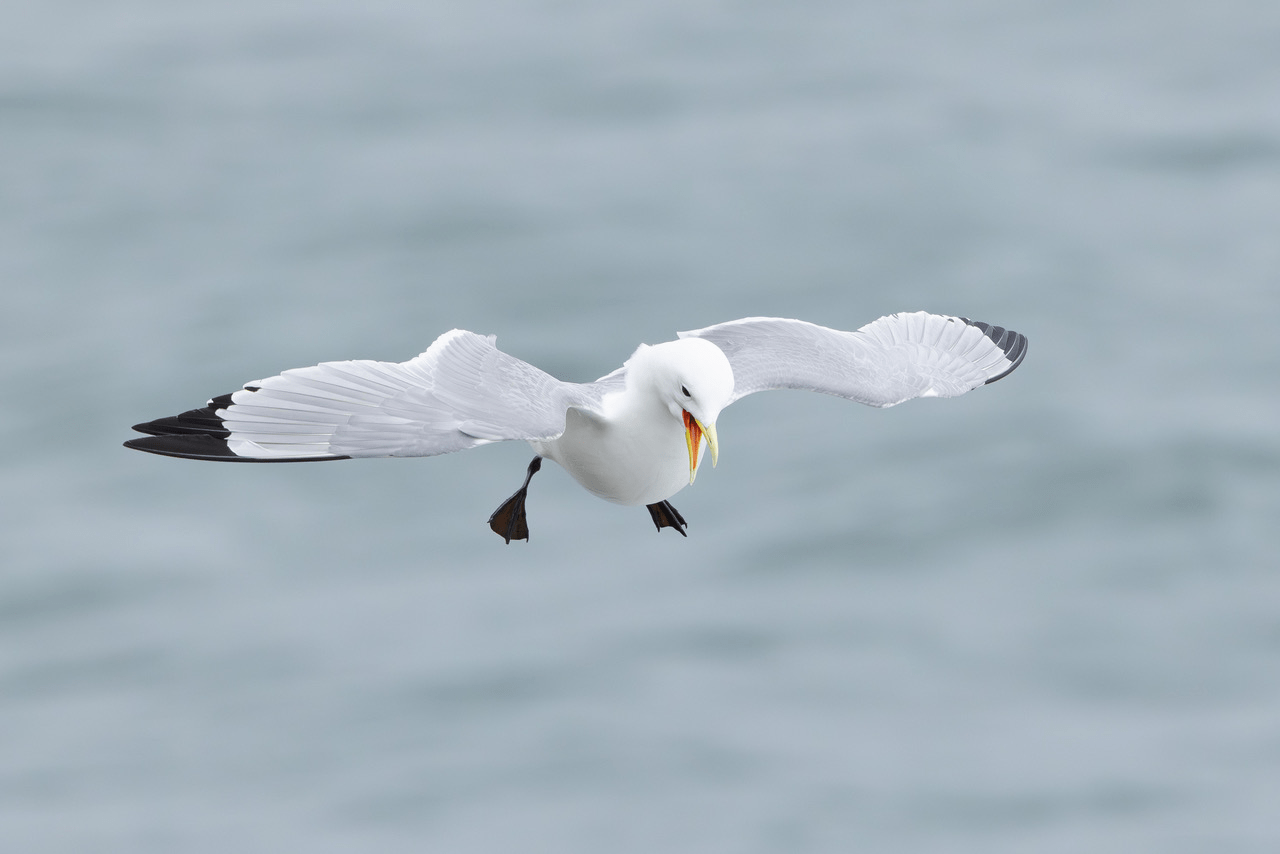
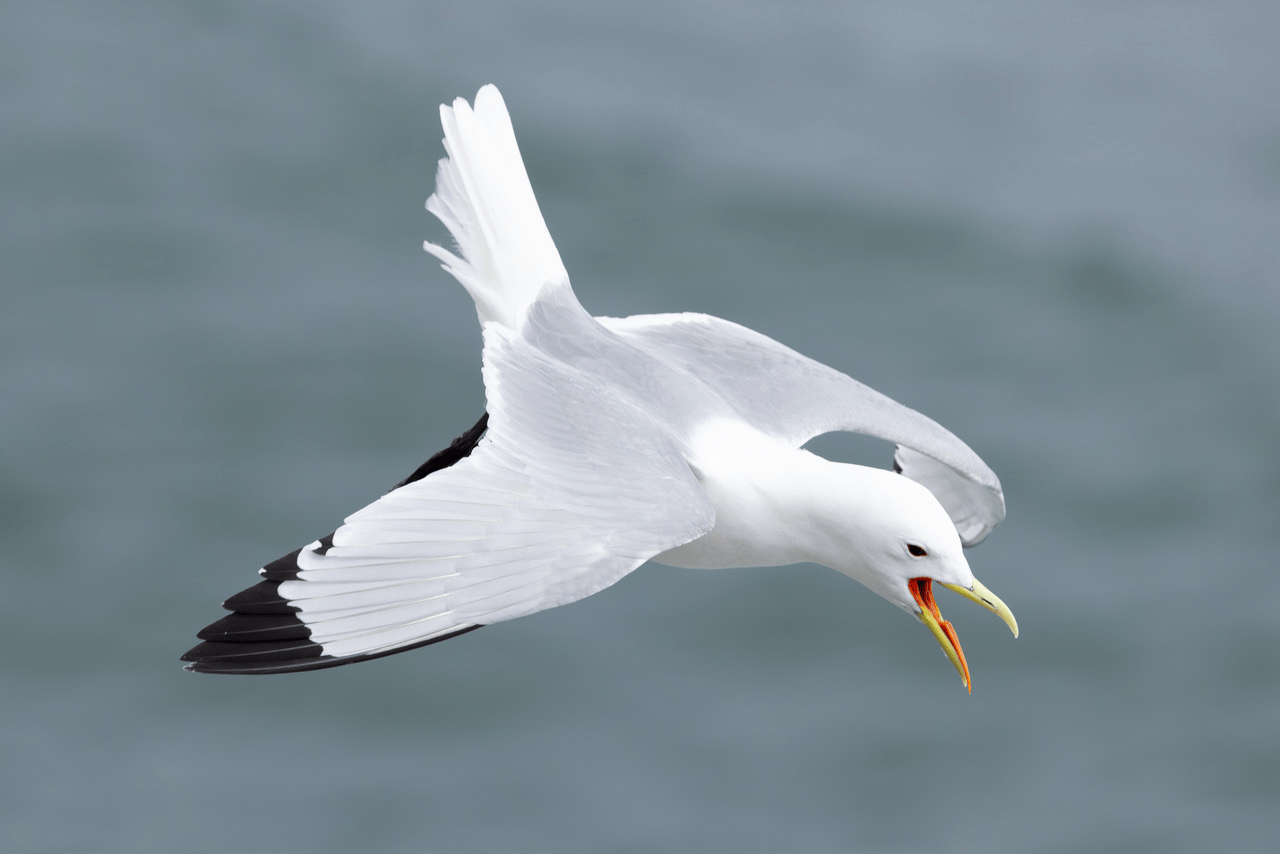

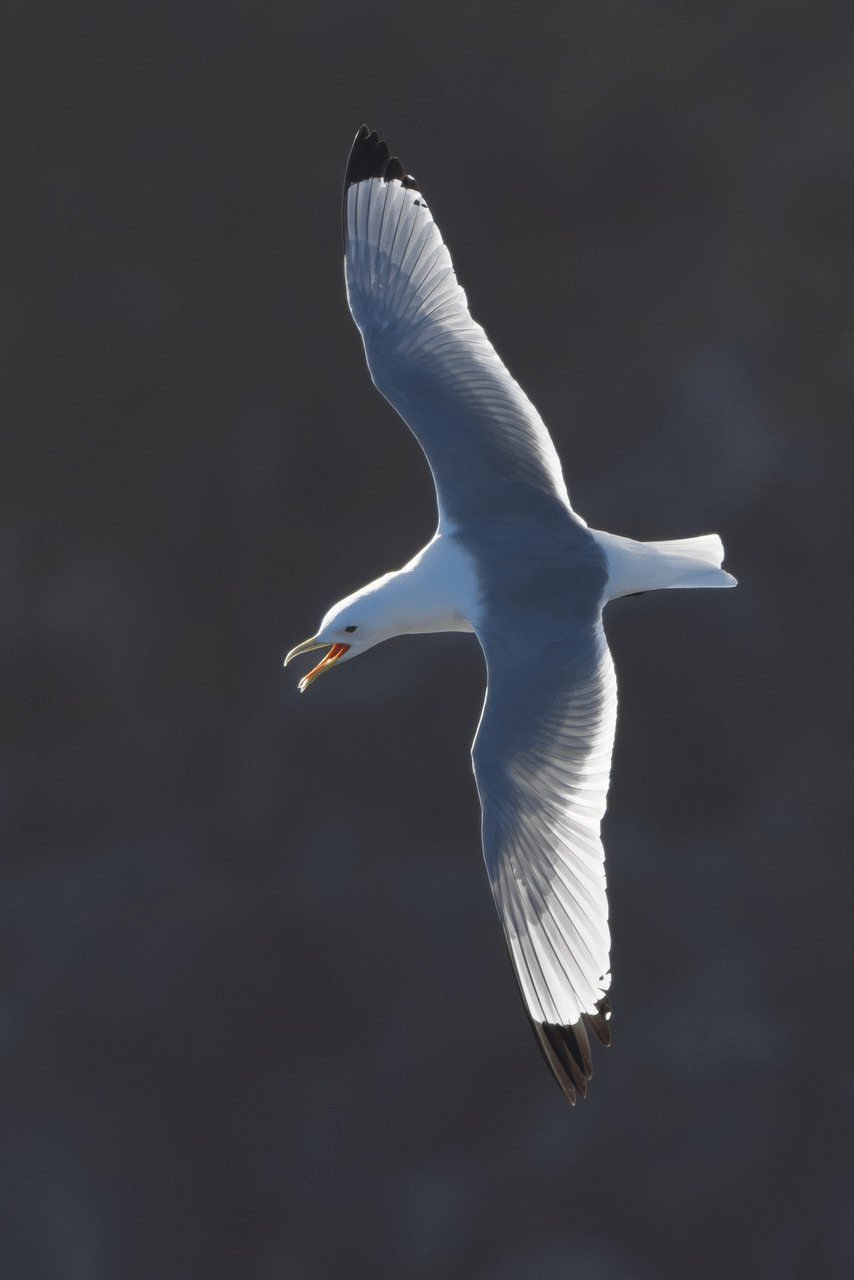
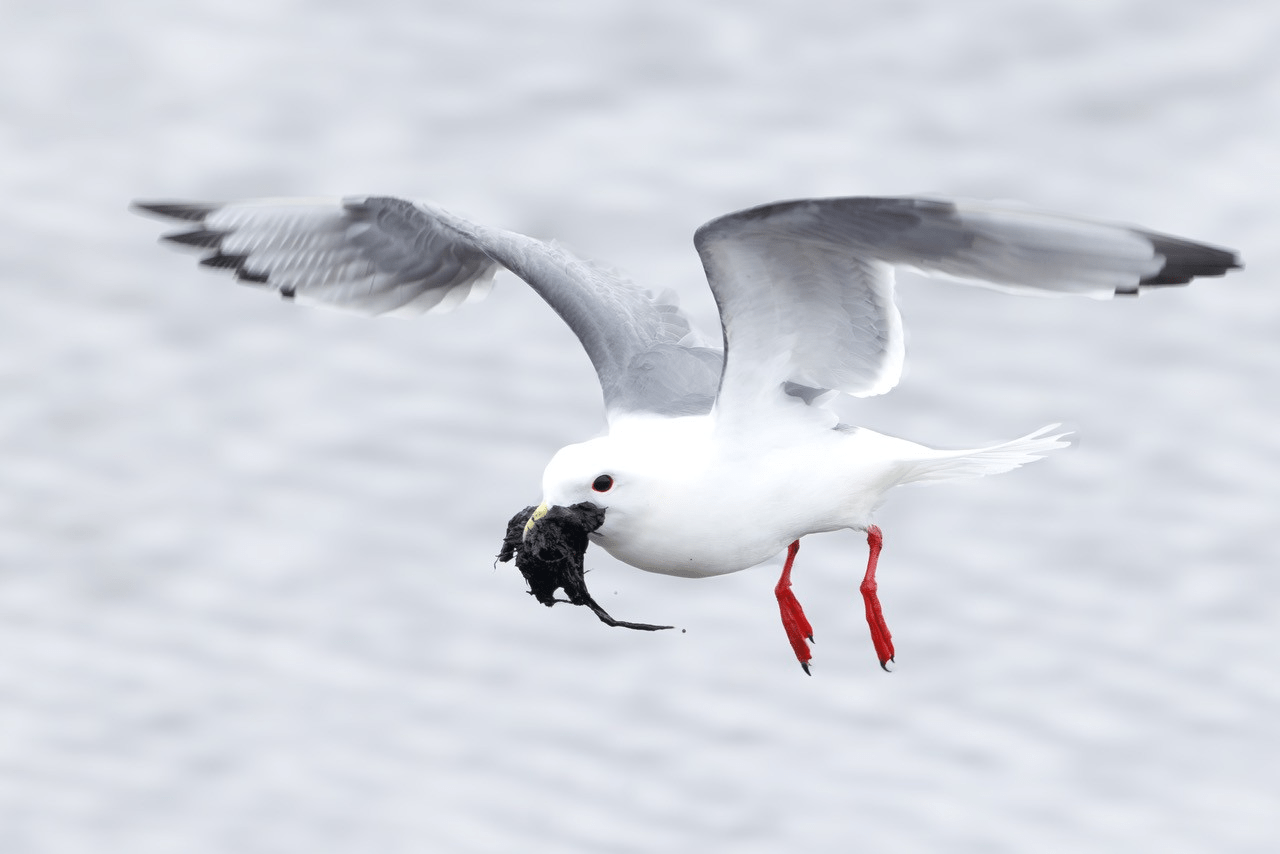
Red-legged kittiwake (Rissa brevirostris), another Bering Sea endemic. Note the very short legs; the beak is shorter than in black-legged. 90% of the world’s population of red-legged kittiwakes breeds on nearby St George Island:

Kittiwakes use mud and wet vegetation to build their nests on the cliffs:
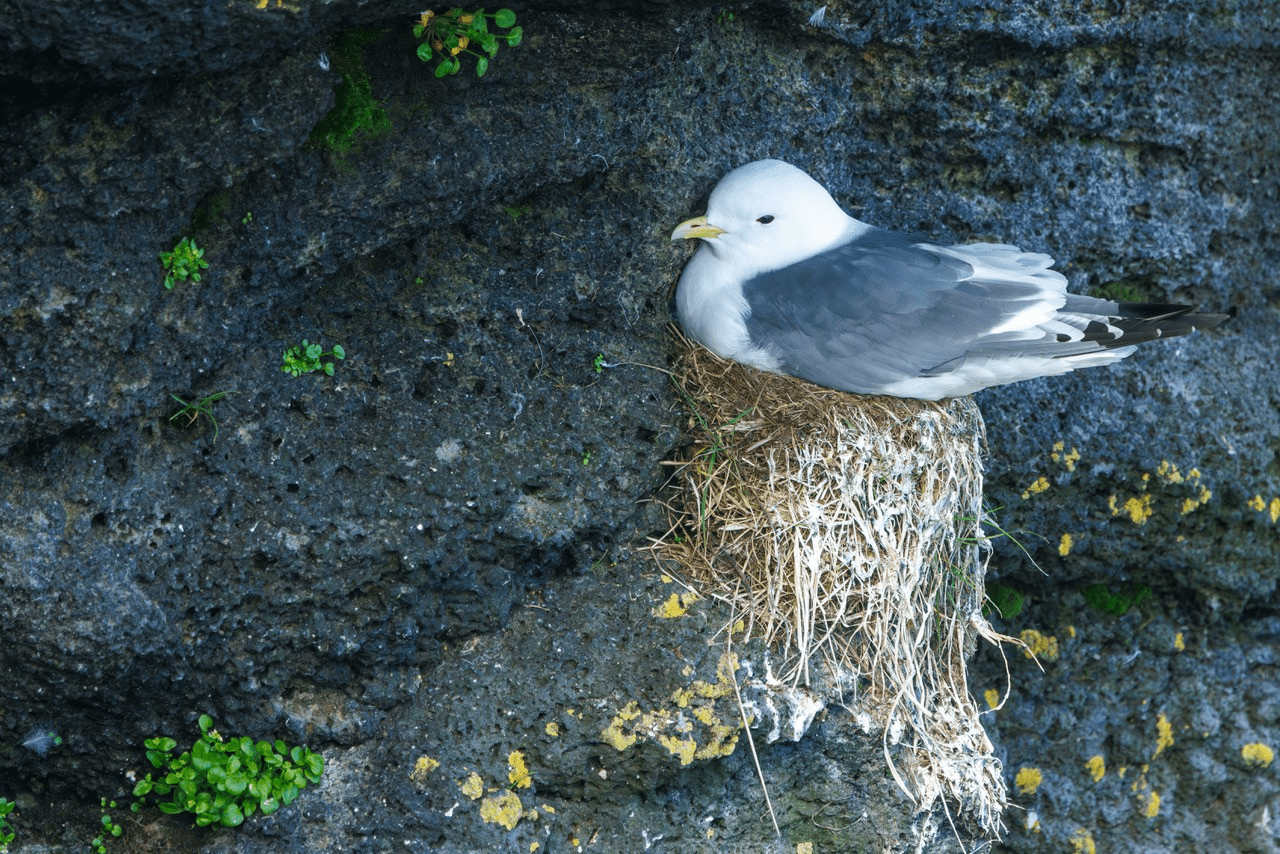
And kittiwakes build pretty substantial nests, plastered onto the rock so the nest does not fall off and plunge into the sea. Red-leggeds prefer sites that are tucked under overhangs:
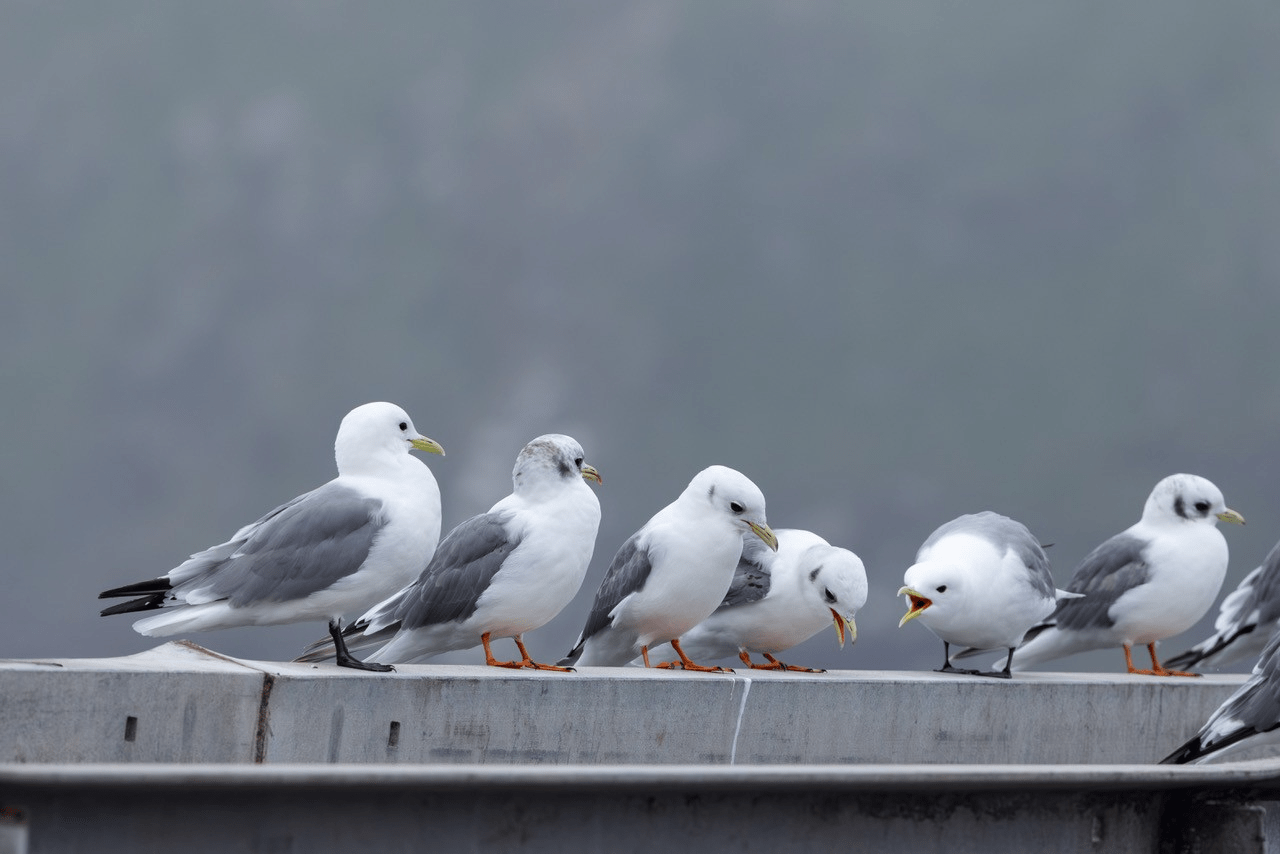
A gathering of both species of kittiwakes on a beam in the harbor:
A glaucous-winged gull (Larus glaucescens) nest, apparently the first successful nest of this species on St Paul Island although they have bred on nearby islands:
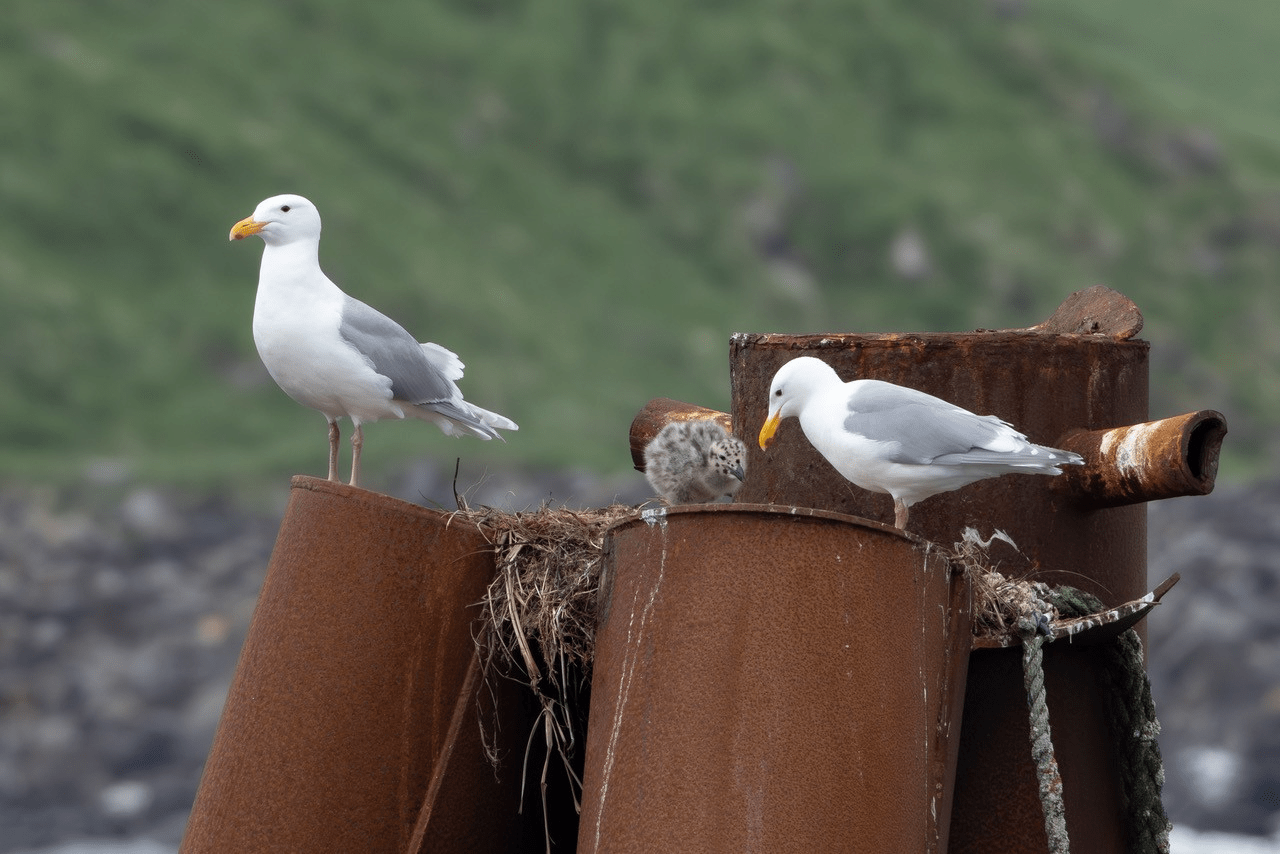
Head shot of one of the parents. Close ups of gull heads show that gulls are rather nice birds. Gull species differ in the color of the iris and the fleshy eyering:

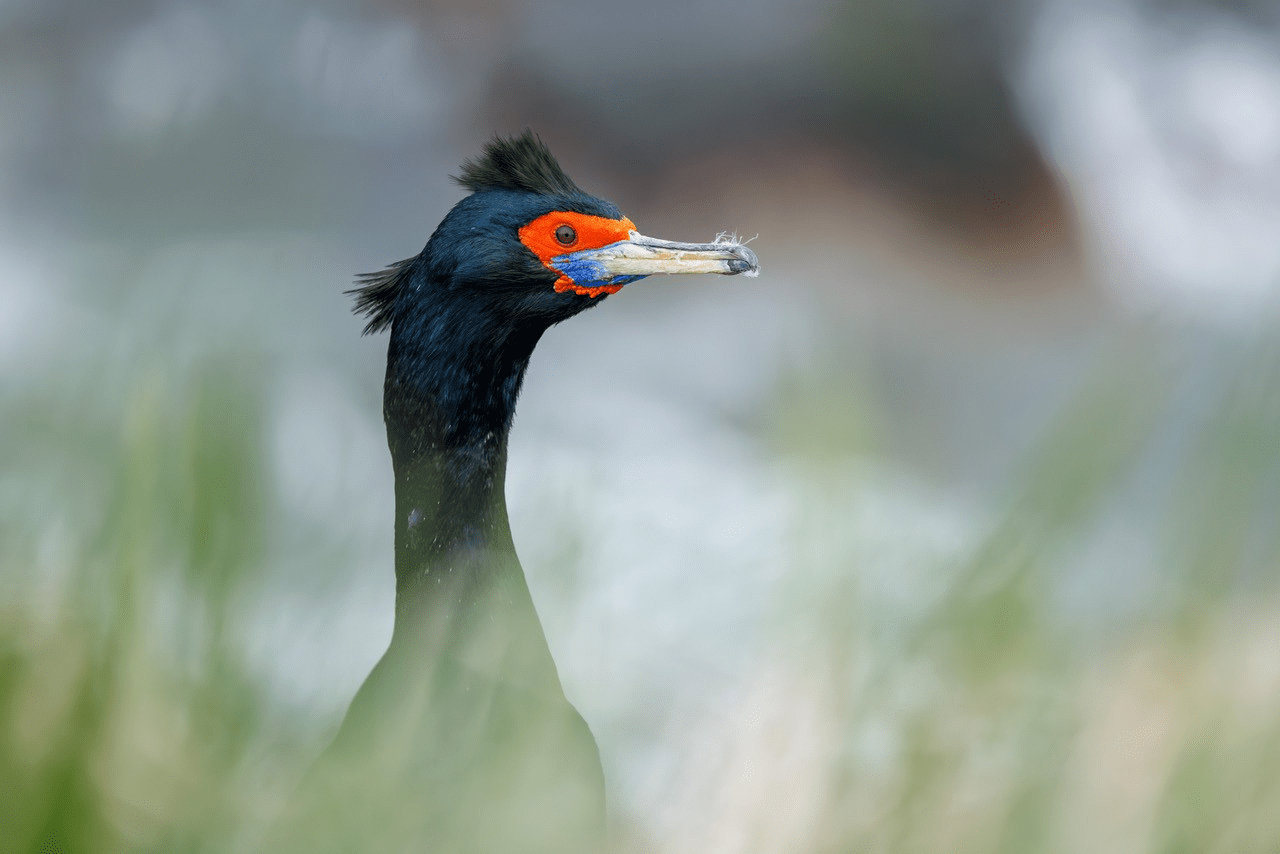
The aptly named and permanently embarrassed red-faced cormorant (Urile urile). Endemic to the Bering Sea:
A couple of red-faced cormorants with a nice rock arch and nesting seabirds in the background:

These are so excellent. Thank you for bringing them to us, in part b/c you’ve saved me the trip there and it must have been a MUTHA of a journey!
best,
D.A.
NYC
Sometimes trips are smooth (get to island or off island first time). But sometimes weather or airline SNAFU make things tough. A few years back it took 7 cancelled flights and 12 extra days to get off island.
Comment by Greg Mayer
Bruce– great pics!
But as an island biogeographer, I’d really like to see the songbirds (and other land birds), too! Any pics of them you can share for a future post?
GCM
I will get there eventually. But note that there are only four resident songbird species.
Now I know what songbird means. Thanks!
Thank you for these wonderful photos–up close and personal! Much better than my bird identification books (they are good, but nothing beats up-close photos) ….
Thanks so much for the great photography and explanations on the birds.
That diving Black-legged kittiwake is an exciting photograph. What a gorgeous bird with the white/black coloring.
That rock arch is a fantastic formation.
Nice! Lots of cool action shots!
Very good set! The pictures are very sharp and perfectly composed.
Fabulous pictures. Thank you!
Your hope is not in vain (“The Jason Arday mess has died down”). You can actually go on Twitter (now called X) and see other topics. The pictures are quite nice. I actually had my daughter look at one bird. Of course, it was only one. Just as bad, it was twilight (preventing pictures).
GREAT PICTURES!
I love the action shots. Your love of birds comes through in your commentary.
Nice photos! Does the variability of Murre eggs result from a variation in genes on the female sex chromosome as it does for cuckoos?
I don’t the answer to that. I suspect that the studies may not have been done yet.
Wonderful pictures from yesterday and today. The variety of seabirds are just fascinating. But I’m awfully jealous that I don’t have wings and can never play in the wind.
Amazing pictures. Thanks!
The Arday mess has not died down, unless you view it as turning into the Cofnas mess.