
Today on Thanksgiving, we have pictures of MOOSE from Ephraim Heller. Ephraim’s captions are indented, and you can enlarge the photos by clicking on them.
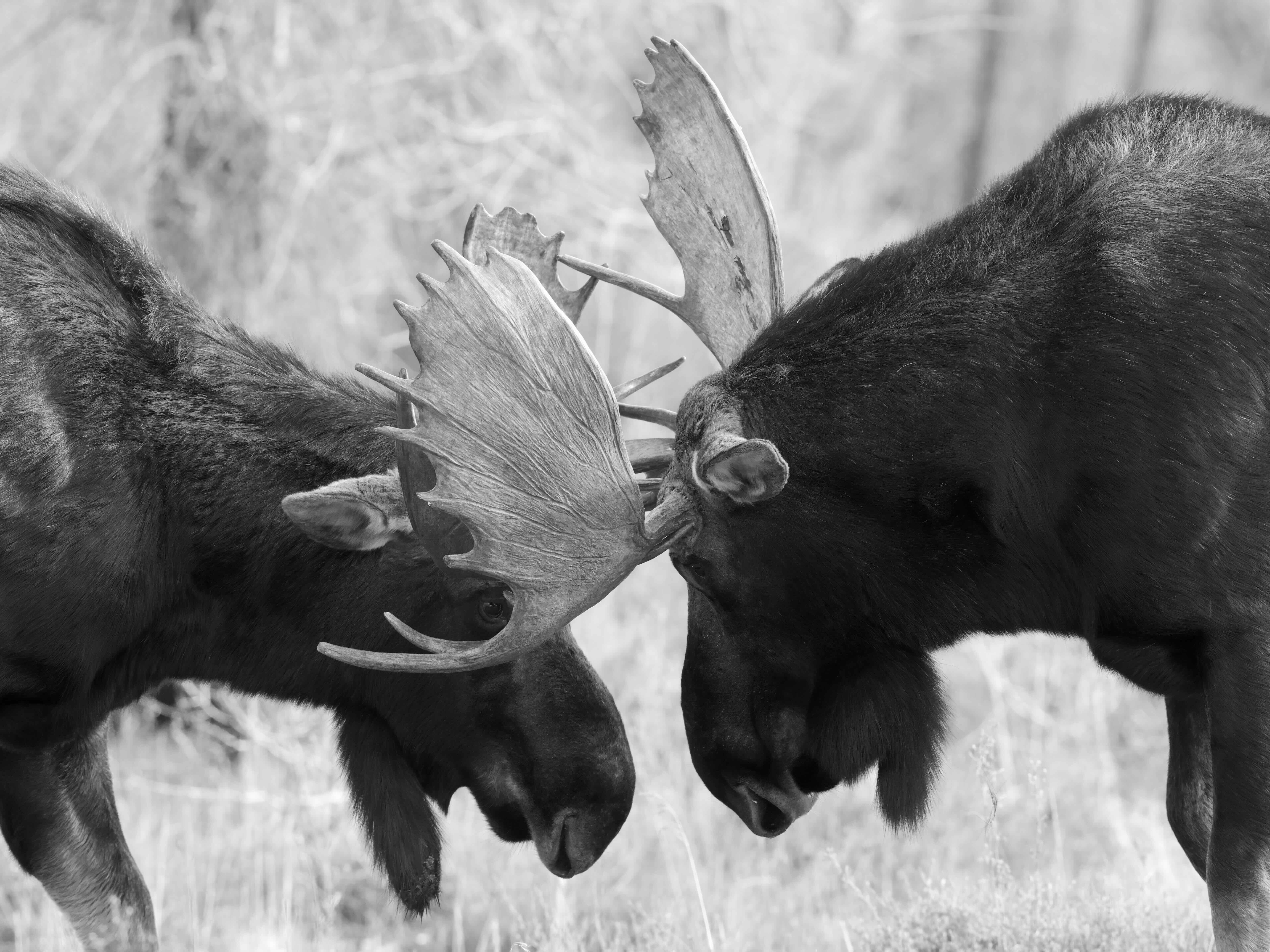
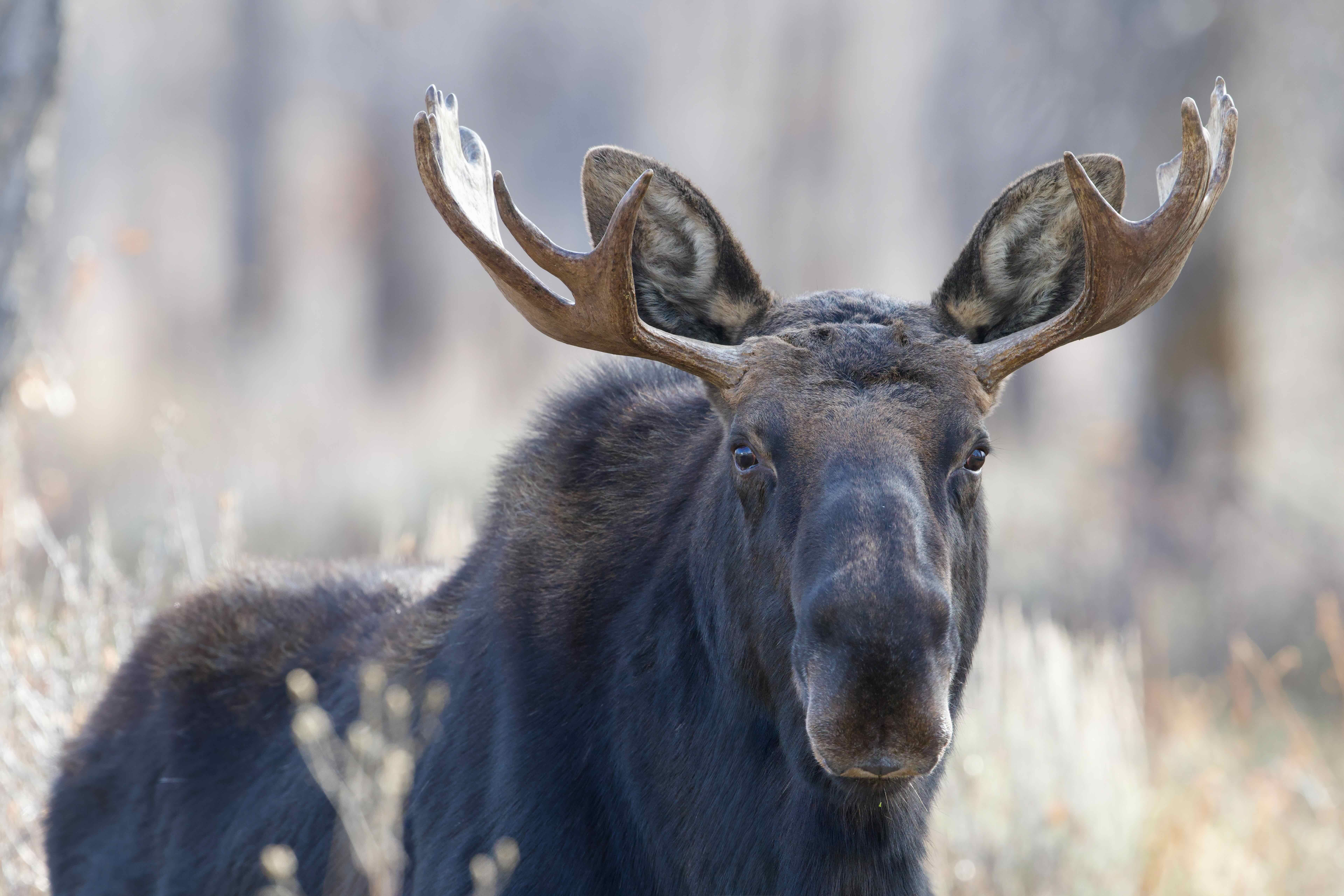
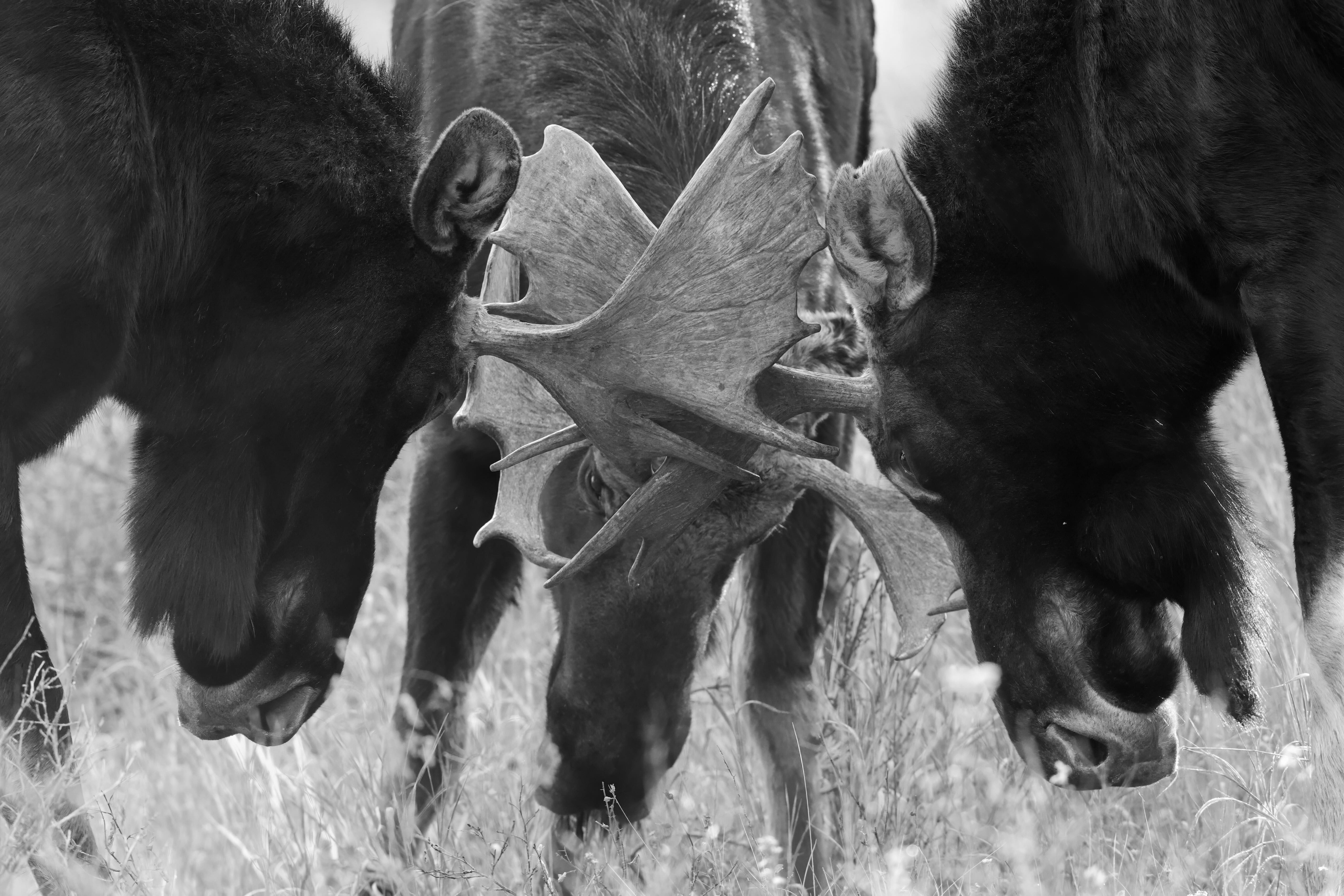
On a chilly early morning in late October I came across a group of seven bull moose [Alces alces] in Grand Teton National Park, not far from my home. It was late in the rut and they were busy sparring with each other while I watched.
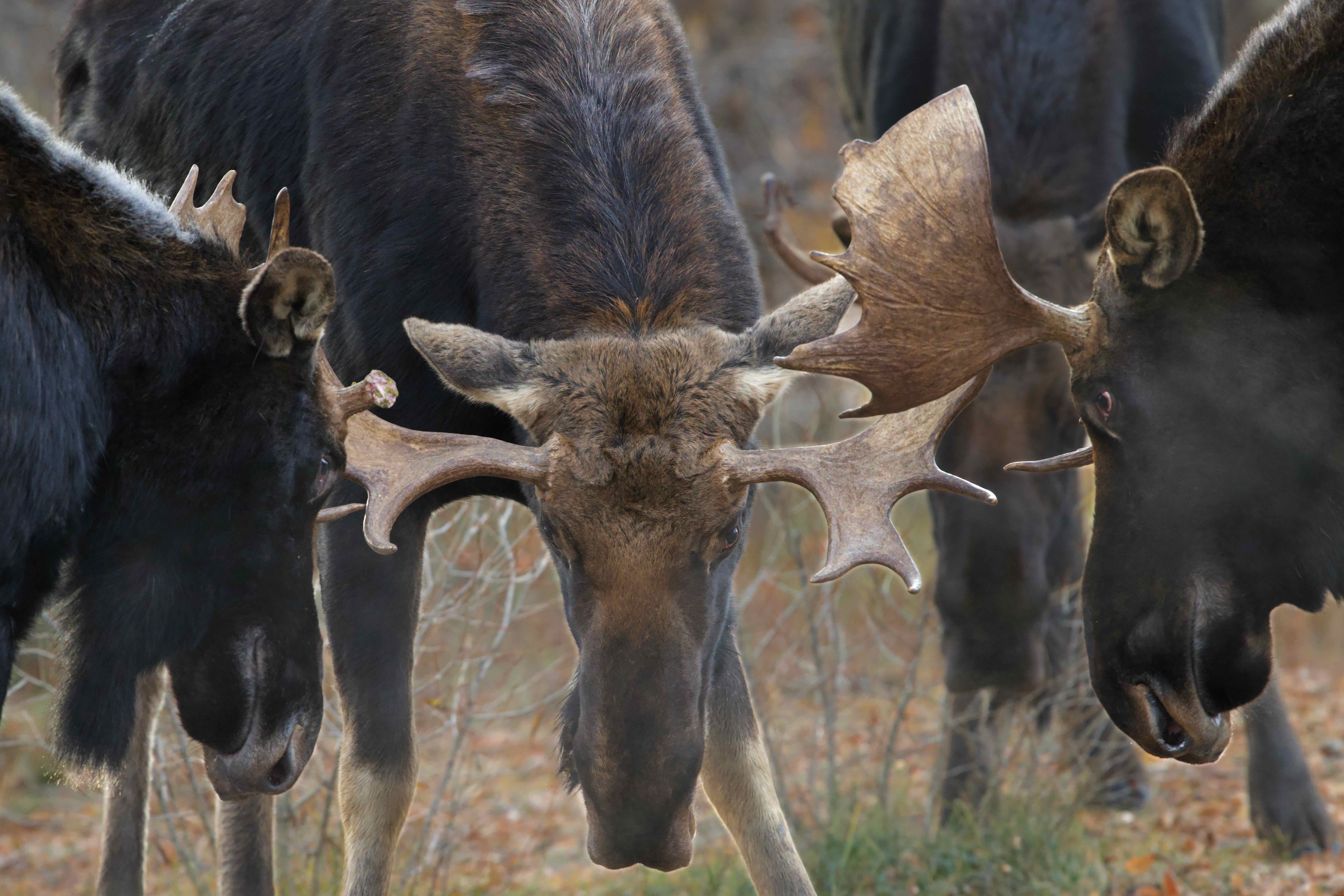
Most often two individuals would bang heads, but sometimes they decided that three is the right number. Note that the individual on the left has a broken right antler, but that didn’t deter him.
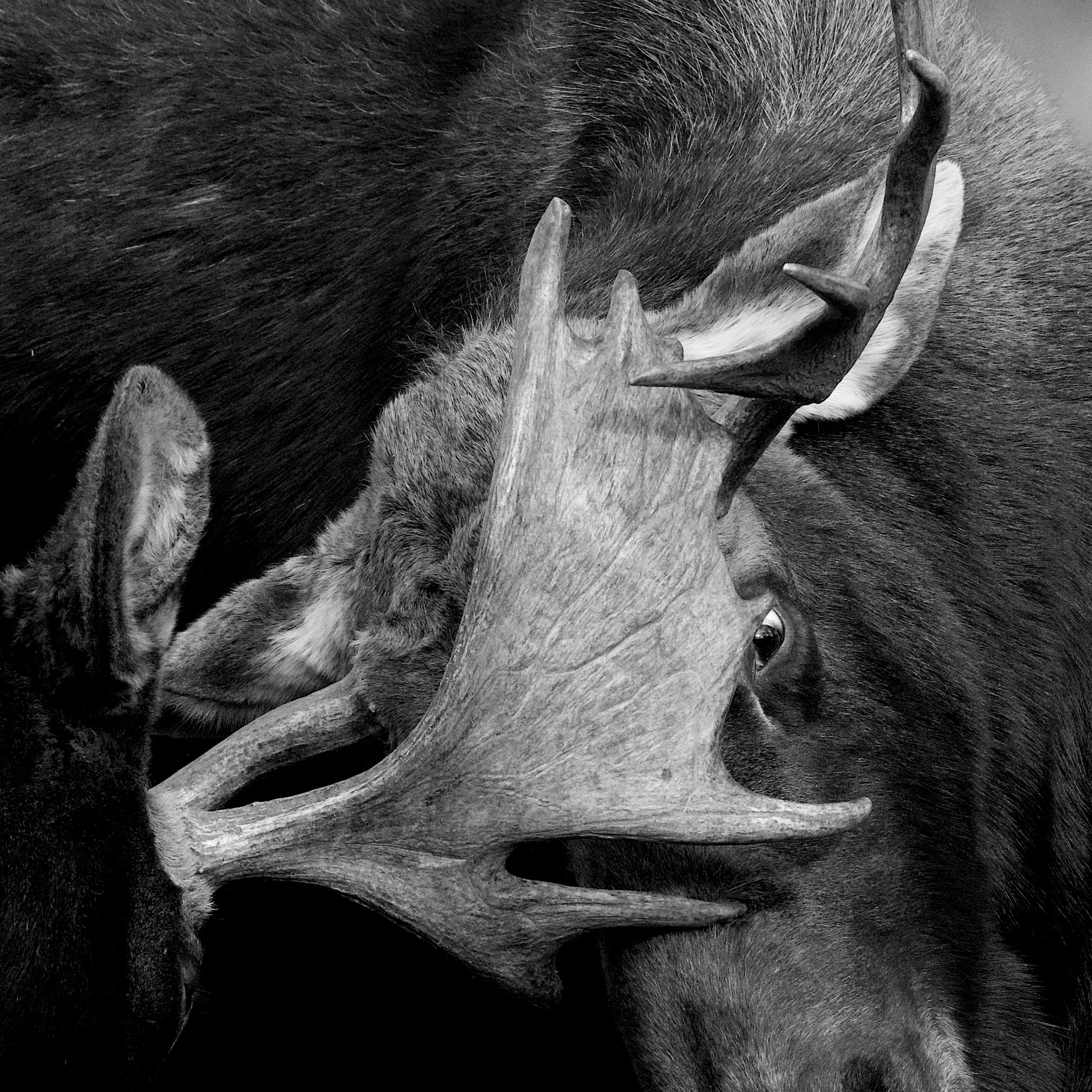
The Shiras moose (Alces alces shirasi), also known as the Wyoming or Yellowstone moose, is the smallest of North America’s moose subspecies.
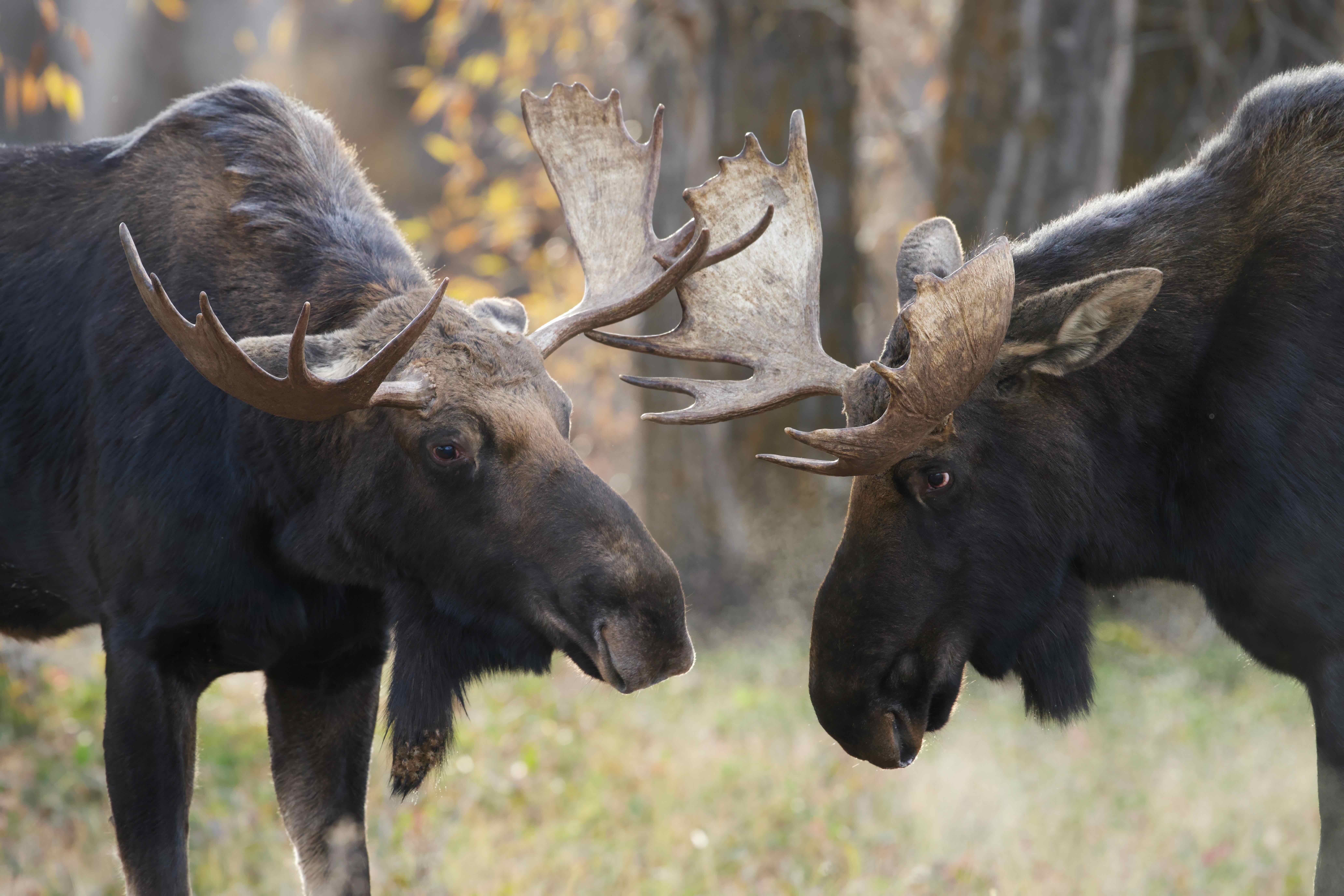
The moose rut in Wyoming occurs in September and October. The rut is triggered by photoperiod — the ratio of daylight to darkness. As day length decreases the pineal gland responds by releasing increasing amounts of melatonin, which stimulates testosterone production in bulls and triggers estrous cycling in cows. This hormonal cascade is so precise that the rut rarely deviates more than a few days from year to year in any given location.
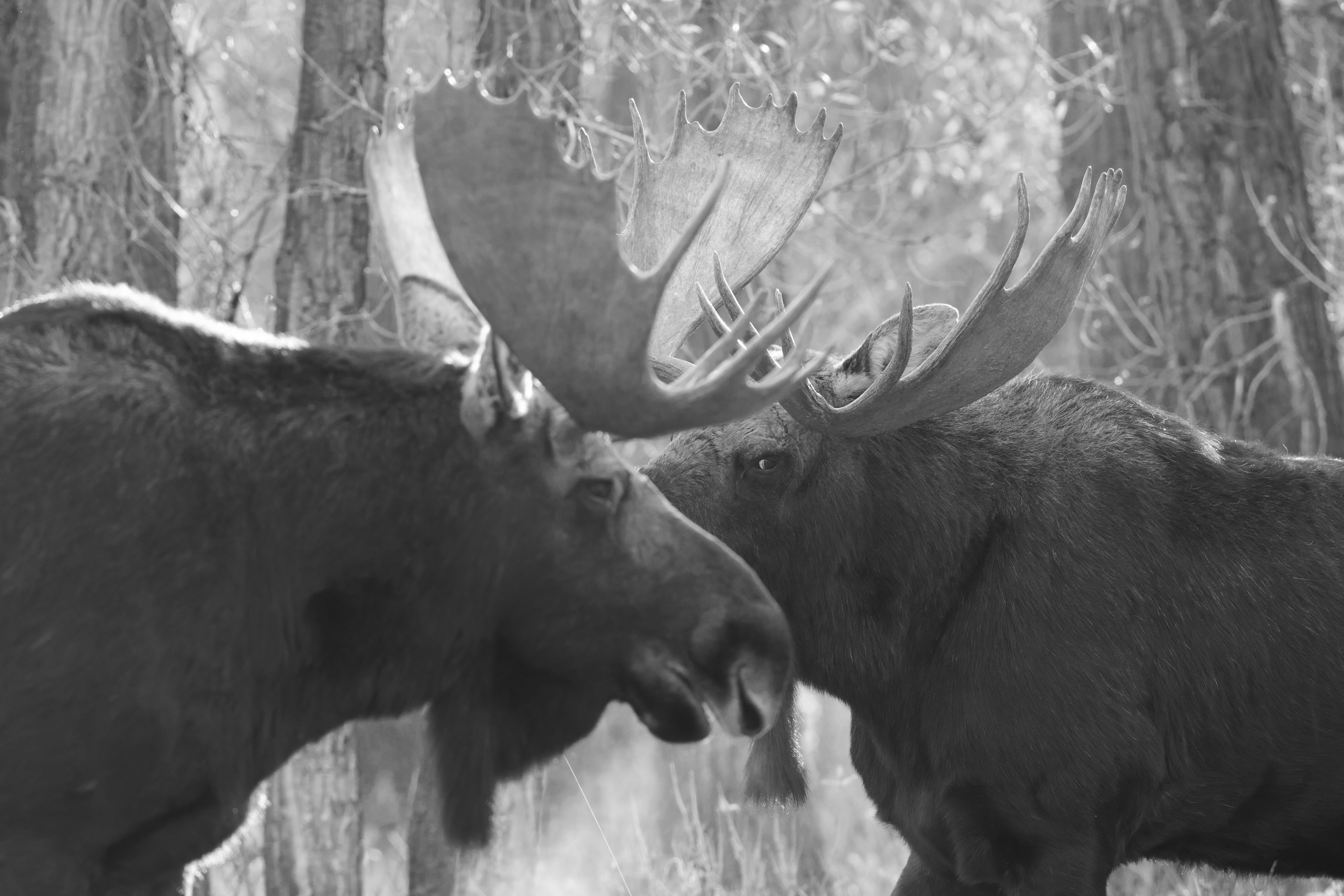
Female moose are seasonal polyestrous mammals, with the estrous cycle averaging 24 days and ranging from 22–28 days. The period of standing estrus—when a cow will accept a bull—is brief, lasting only 1 to 36 hours. If not successfully bred, cows may experience up to six recurrent estrous cycles, though approximately 83% of conceptions occur during the first estrus.
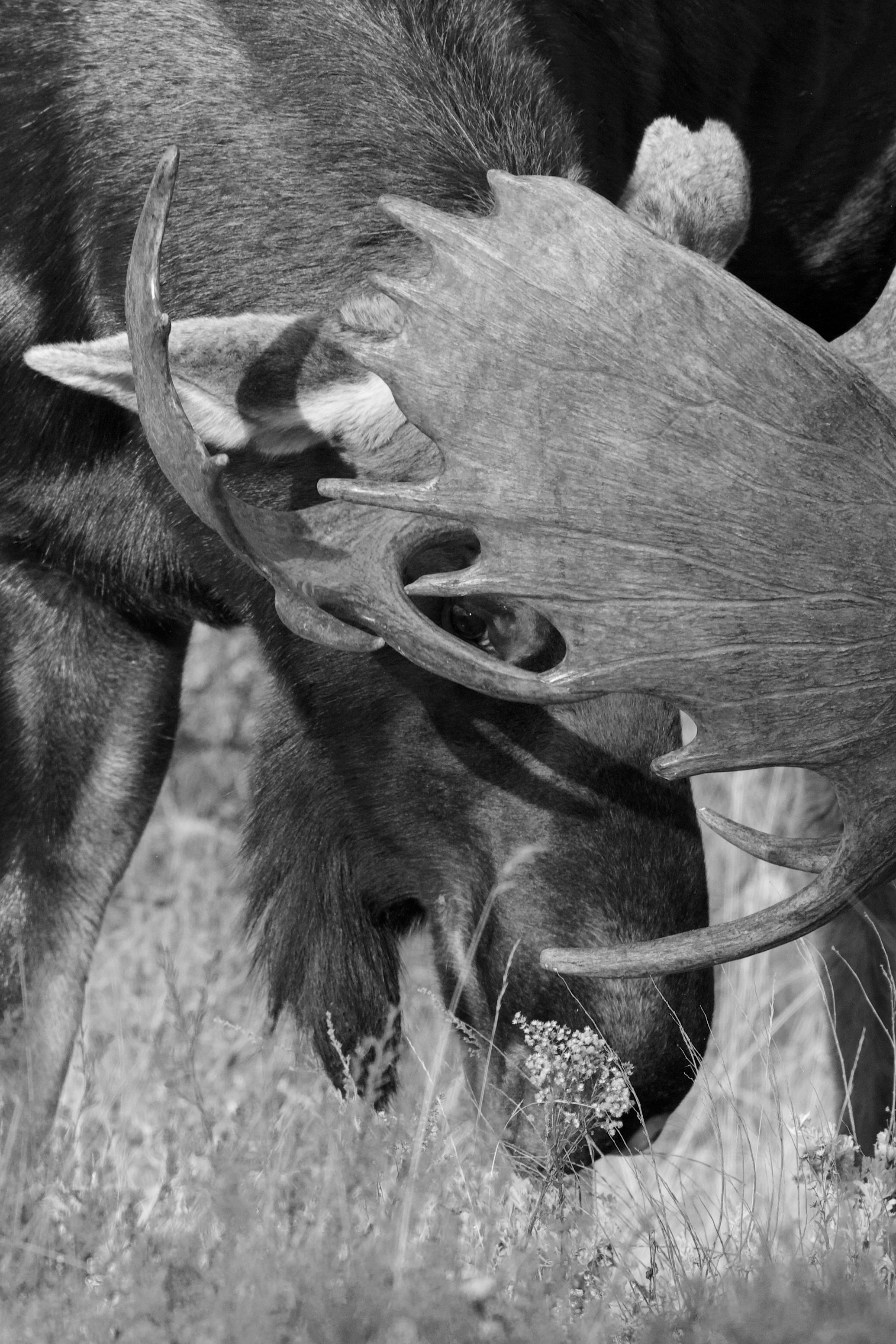
The rut induces a spike of up to twentyfold in bull testosterone levels. Neck muscles expand to approximately twice their normal size. Bulls may enter the rut having gained up to 250 pounds of fat and muscle during summer foraging, then largely cease eating during the breeding period, surviving entirely on stored reserves.
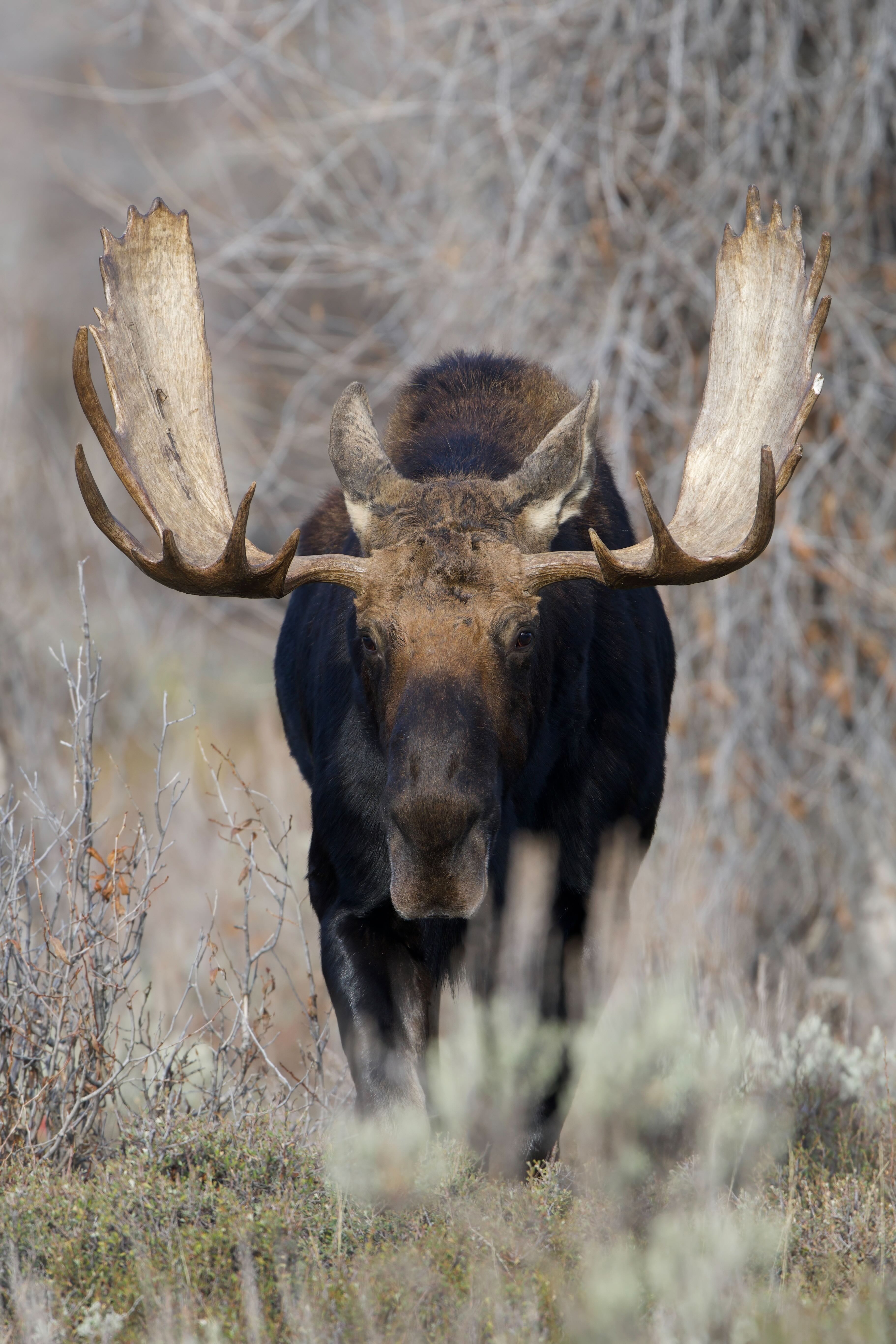
By late August, bull moose shed the velvet covering from their antlers revealing hard bone that darkens from white to chocolate brown within days. These antlers serve multiple functions: impressing females, intimidating rivals, and as weapons during combat.
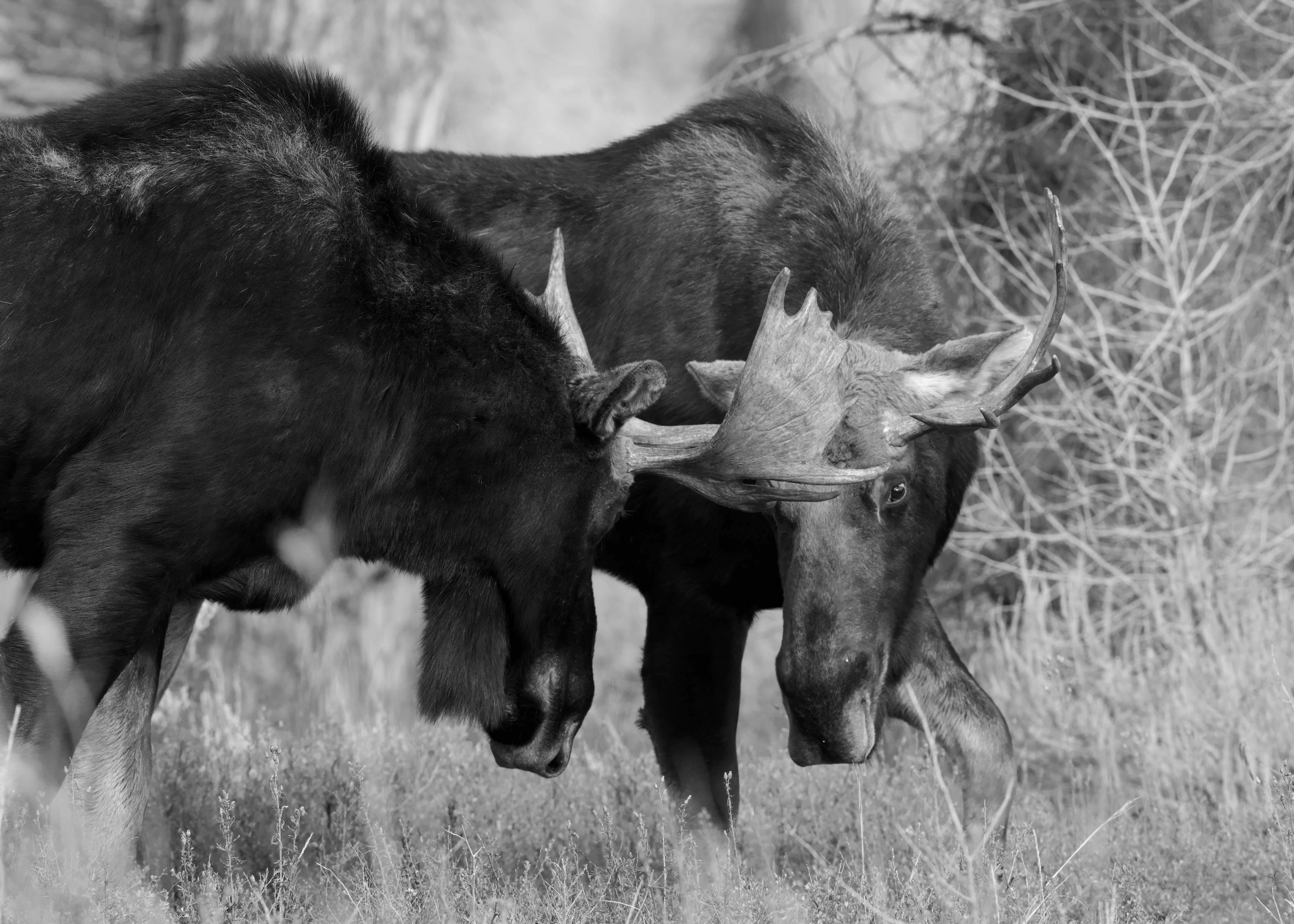
Unlike elk, which assemble harems, moose do not collect groups of females or form large social aggregations during breeding. Instead, bulls travel widely to locate receptive females, typically staying with a single cow for several days to approximately one week before moving on to seek additional mates. Large, highest-ranking bulls perform approximately 88% of all copulations.
Bulls emit bellows, roars, and grunts—with grunts audible up to 500 meters away. Cows attract mates using long, drawn-out moaning calls. These acoustic signals are particularly important because moose have poor vision but excellent hearing.
Other than sparring, scent-marking is the most impressive element of moose courtship. Bulls dig shallow depressions called rutting pits or wallows—typically 1.5 to 3.5 feet long and 3 to 6 inches deep—into which they urinate before wallowing to anoint themselves with their musky odor. Naturally, this “perfuming” behavior attracts cows, who may compete with other females for access to a preferred male’s wallow. Both sexes also scent-mark by rubbing their heads against trees.
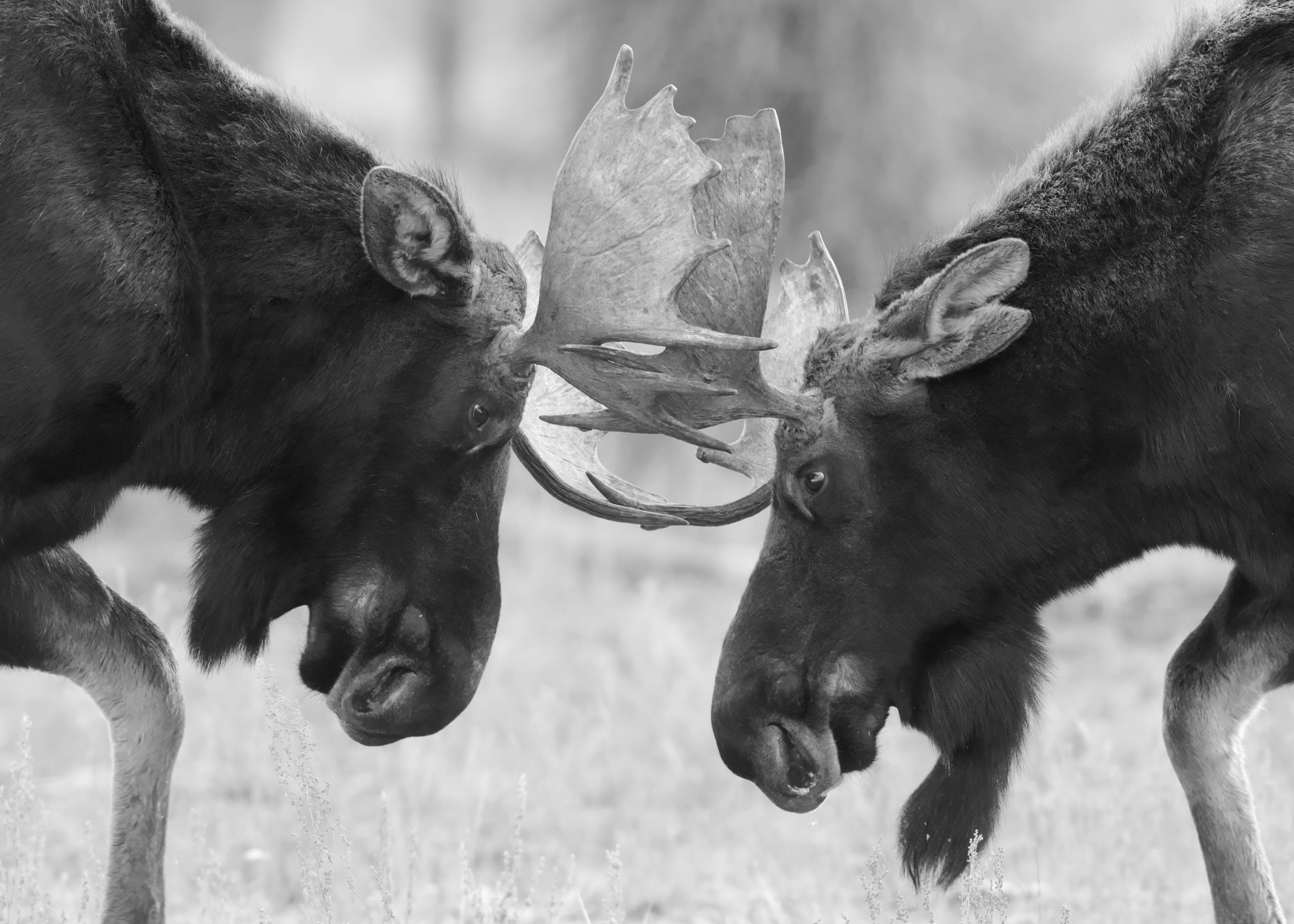
Bull moose engage in two distinct forms of physical competition: sparring and fighting. Sparring occurs primarily early in the rut as a mechanism for males to assess relative strength without risking injury. Fighting, by contrast, is violent and can result in injuries ranging from minor wounds to fatalities. Most fights occur between mature bulls of approximately equal size; when size disparities are obvious, smaller bulls typically withdraw before combat ensues, bowing out through displays rather than physical confrontation. If the bulls’ antlers become interlocked during combat then both animals will die.
Wow. What incredible pics – they stand out in a competitive field – WEIT’s wildlife section.
I grew up in Australia so I’m no stranger to weird-assed animals… but moose always seem…. kinda scary to me. Maybe it is their sheer power and weight, could be the wild “YOU WANNA EFF WIT’ ME?” antlers… but I wouldn’t keep one as a pet, say.
Thx for the photos,
D.A.
NYC
Moose are indeed powerful. I always treat them with respect!
The scariest moose interactions I have seen all involve bad interactions between dogs and cows with calves.
Coming back to your post later in the day Mr. Heller…
Were it not for the antlers… would we see moose more as overgrown cows, or humpless camels? Something for the Moose Marketing Department to consider. 🙂
Funny about dogs. I’m a big time dog parent (see below) and I grew up in Australia. I see a lot of stuff online about kangaroo fights – with other ‘roos and people. But the secret, like with mooses evidently, is that apparently MOST fights with kangaroos start with dogs.
Some guy’s dog, or a ‘roo, take a disliking to each other and then it is all on. I guess that’s the same for moose.
best,
D.A.
NYC
(with dog – https://whyevolutionistrue.com/2020/06/10/photos-of-readers-93/ )
And they are HUGE. Bulls can get up to 6.5 feet (~2 meters) tall at the shoulders!
I only saw a moose in the wild once (in B.C.). It was huge.
Nice photos! Testosterone!
Very well done! They seem pre-historic. When in my late teens, I encountered a female in the woods in the Tetons area. I pressed as close as I could to take pictures with my cheap camera. This was probably very dumb.
Three years ago, I was driving on a dirt road in Michigan’s upper peninsula, and two female moose crossed the road just in front of me.
Go and read Elizabeth Bishop’s wonderful “Moose”, and feel how wonderful to be in a bus and have a moose come right out of the woods and over to the bus and sniff it. “Sure are big creatures!” It is a poem of everyone’s joy at being there and seeing this great creature.
What a beautiful poem! Thank you for the suggestion. I was not aware of Elizabeth Bishop.
Thank you for that suggestion!
Wow. Great pictures and commentary on the love-lives of Moose. Bullwinkle is my favorite moose of all time.
HA! Just add Rocky and we’re back in our childhoods again, Norman! (US rerun cartoons of the 60s were popular in Australia in (my) 1970s!
Best,
D.A.
NYC
Very nice! I have never seen more than two at a time, but I had heard that you could see several sparring at the same time in the Tetons.
Terrific, thanks.